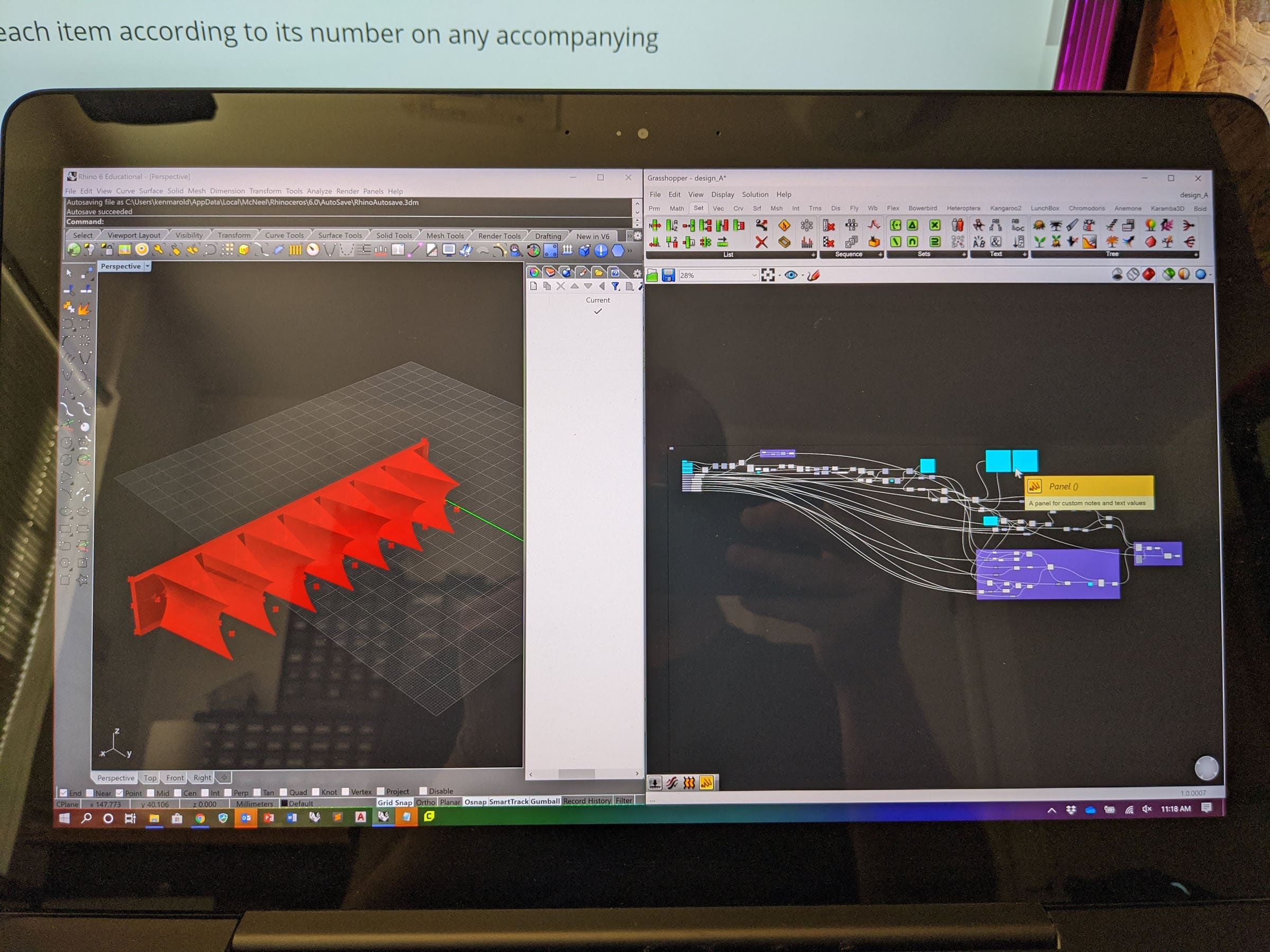
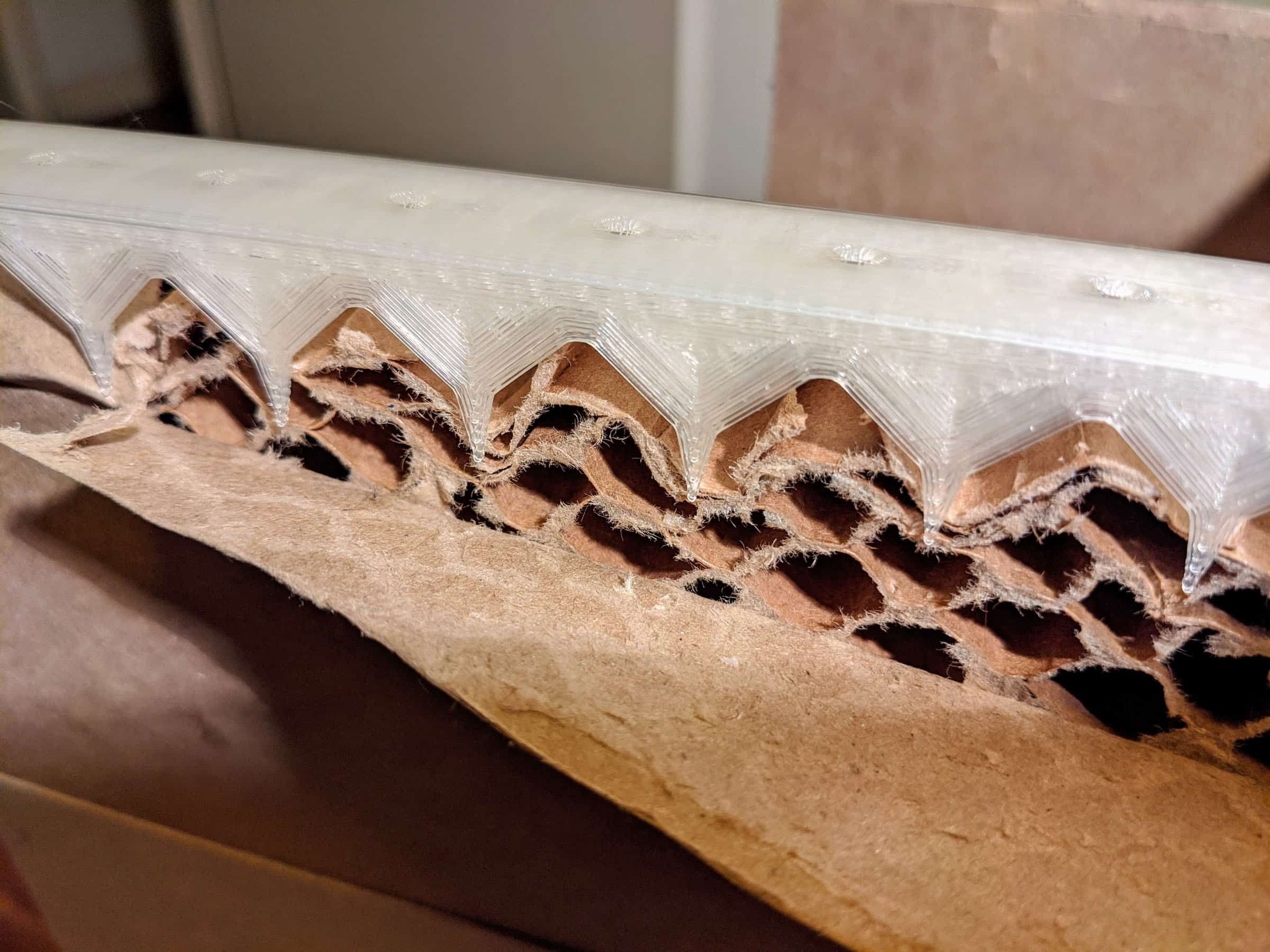
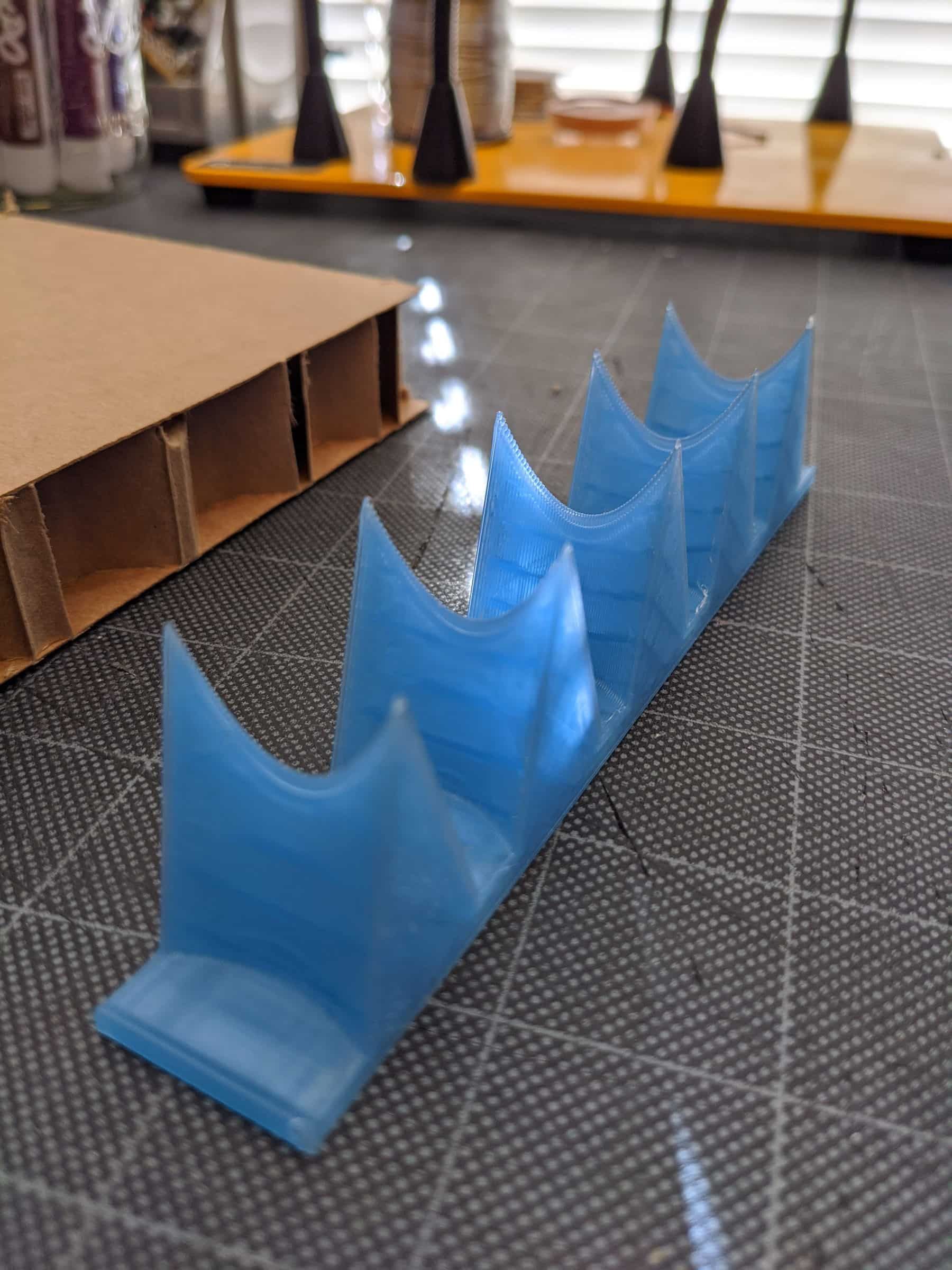
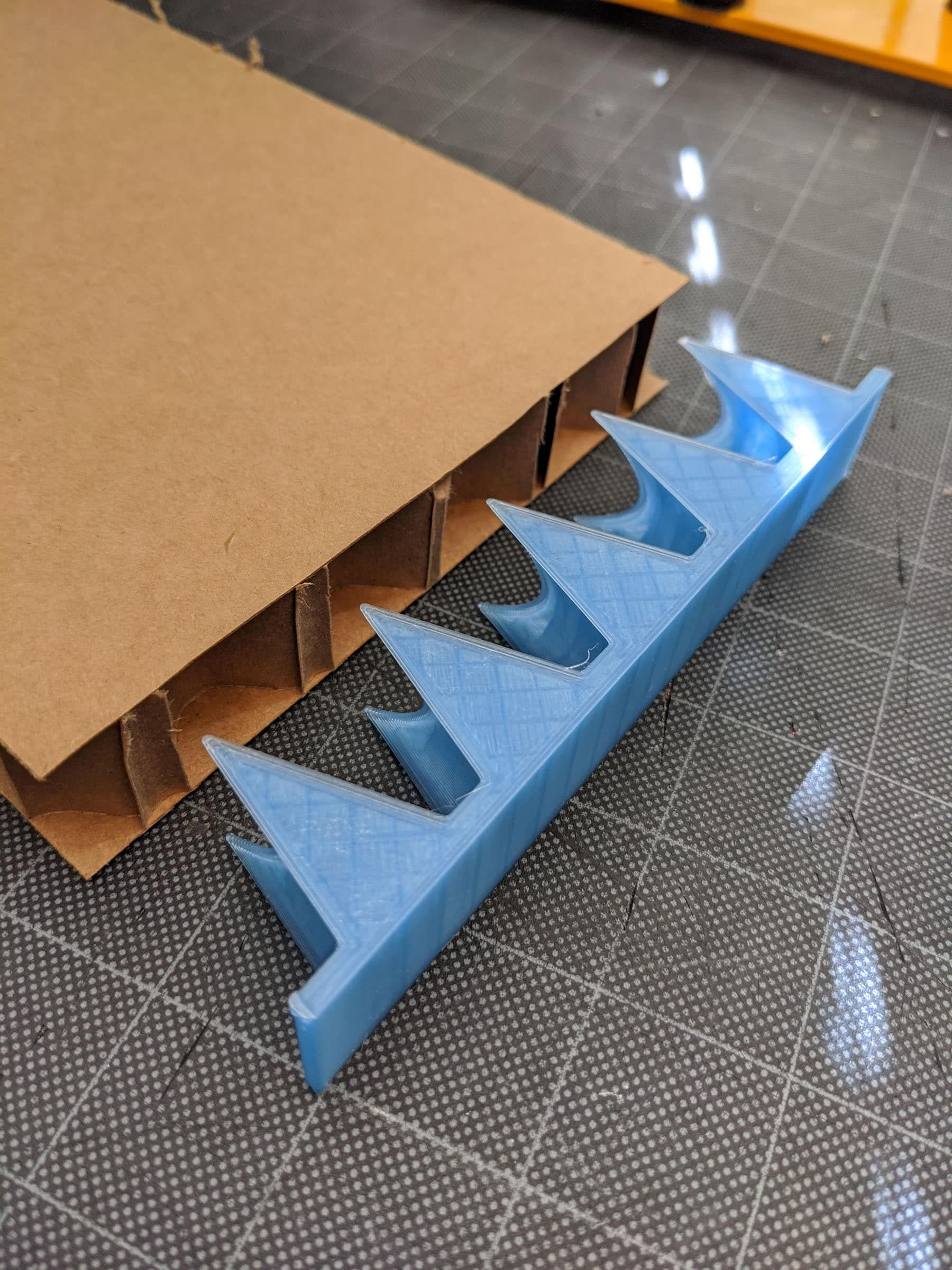
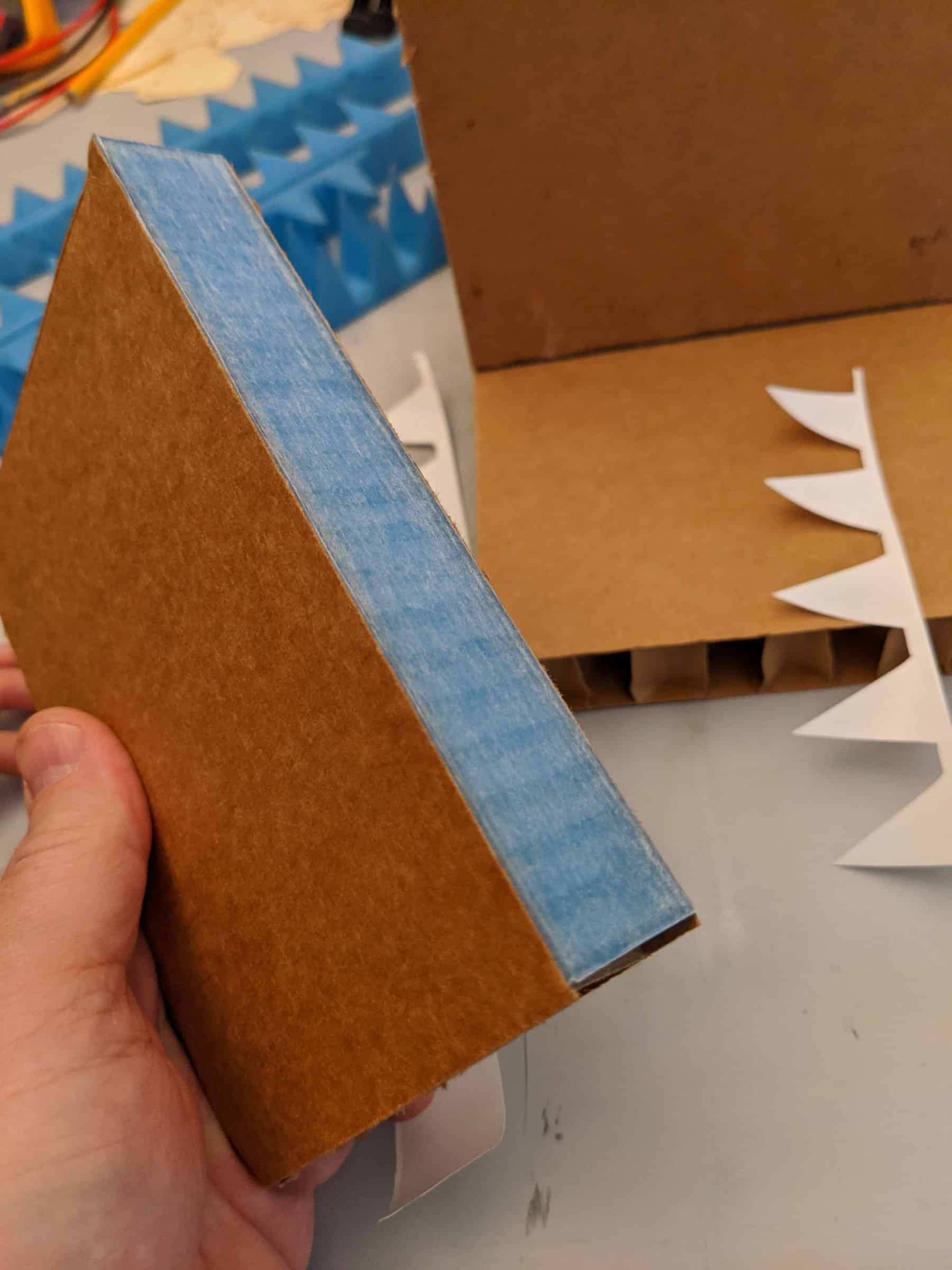
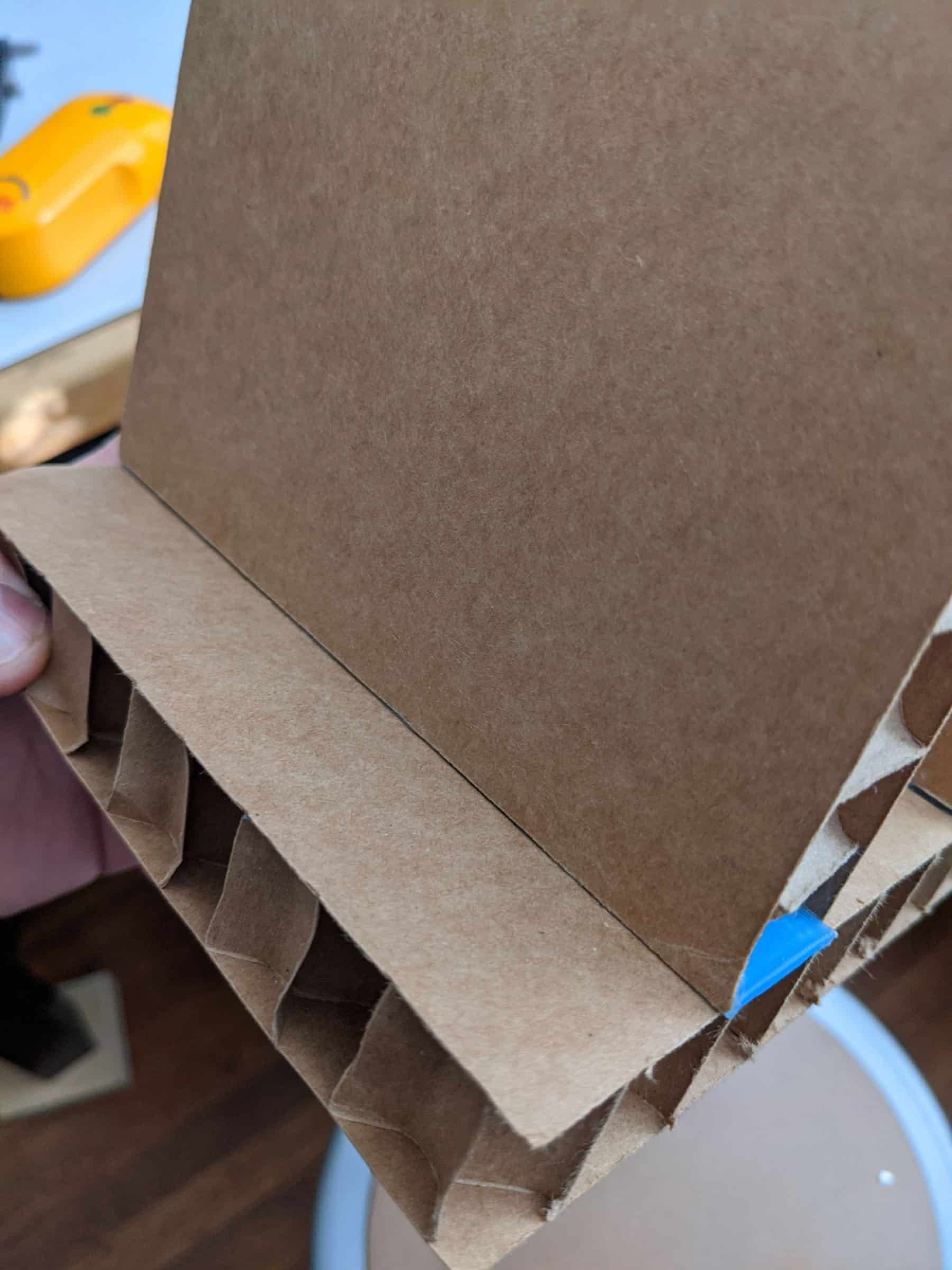
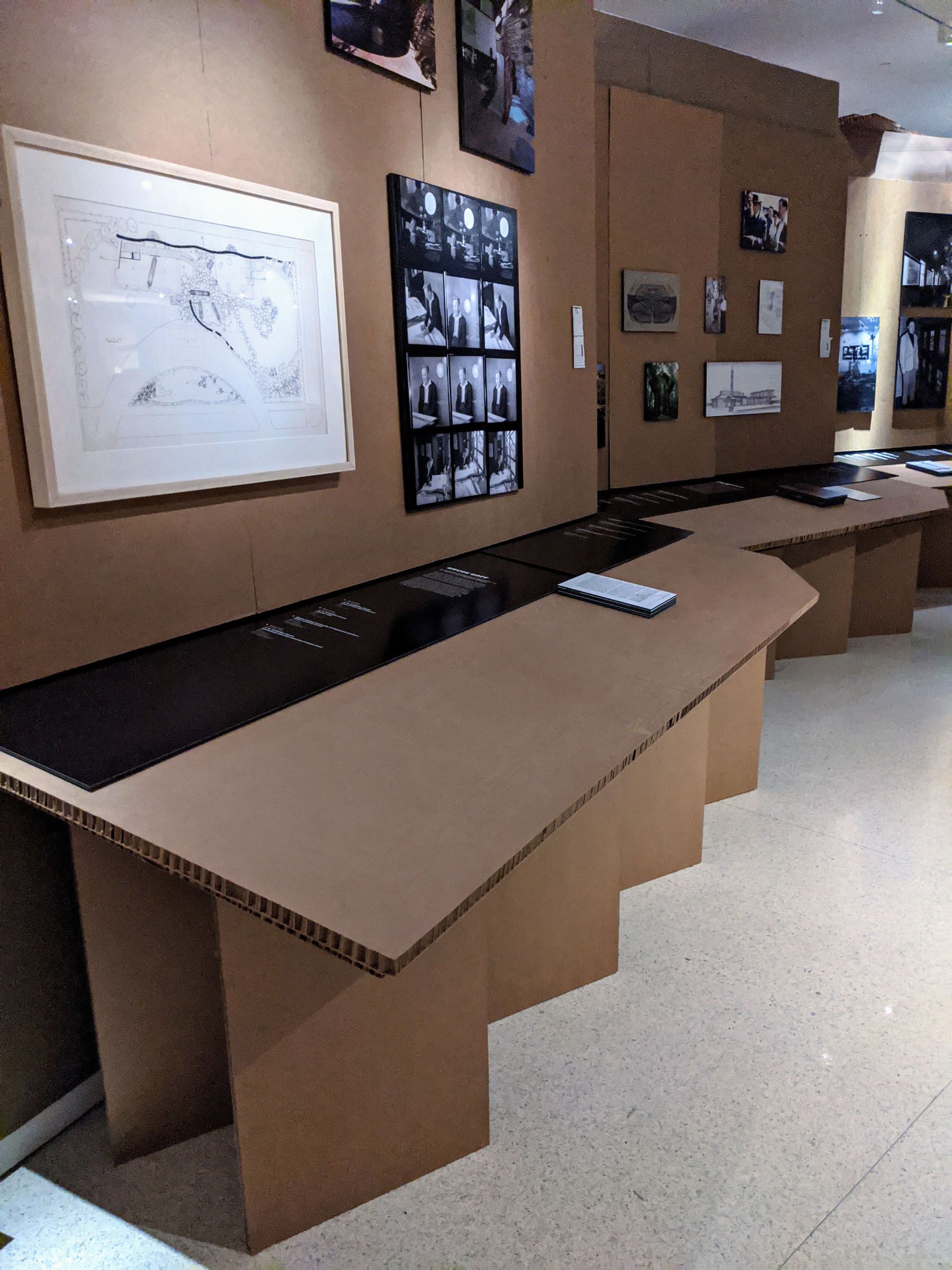
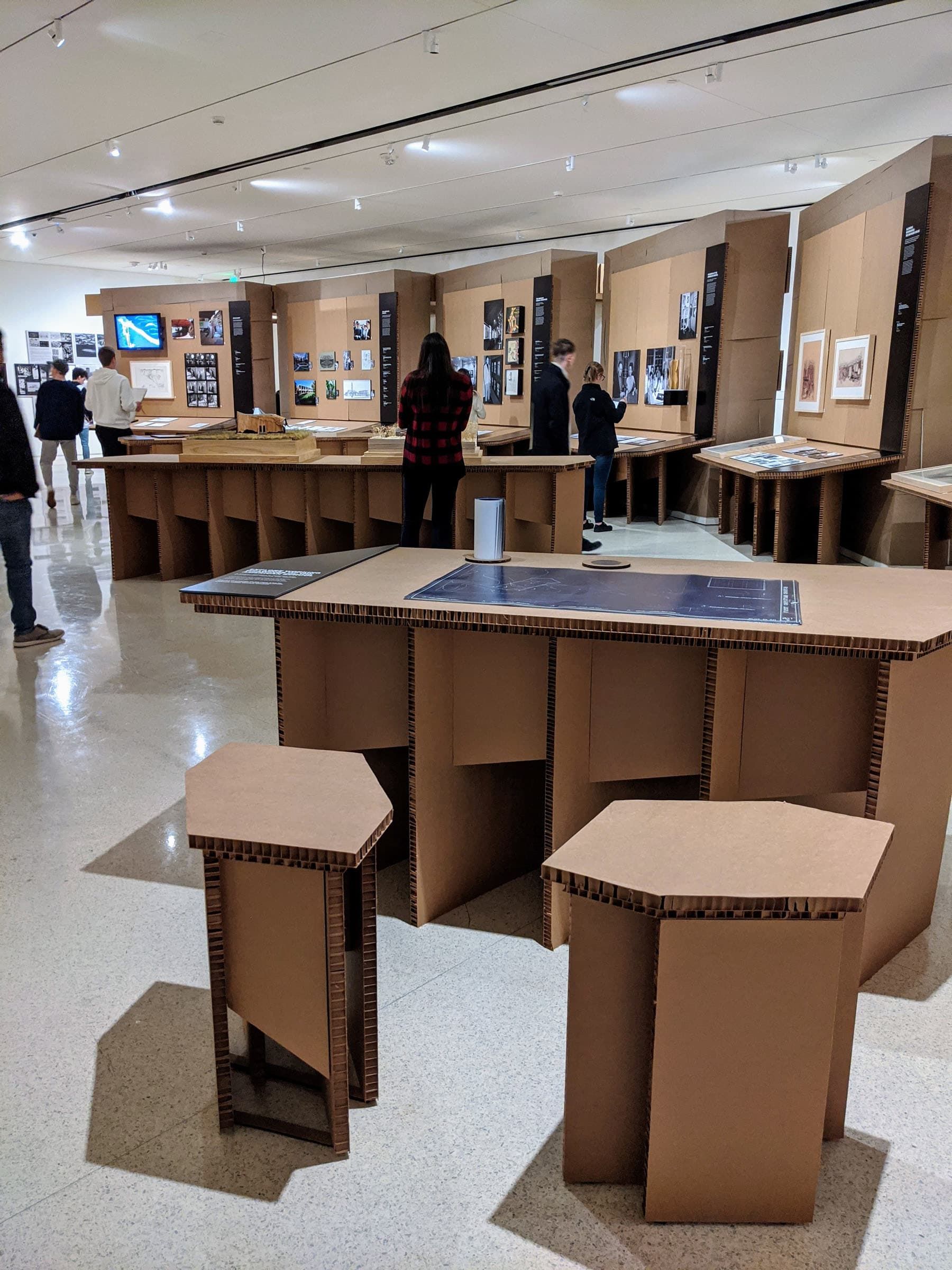
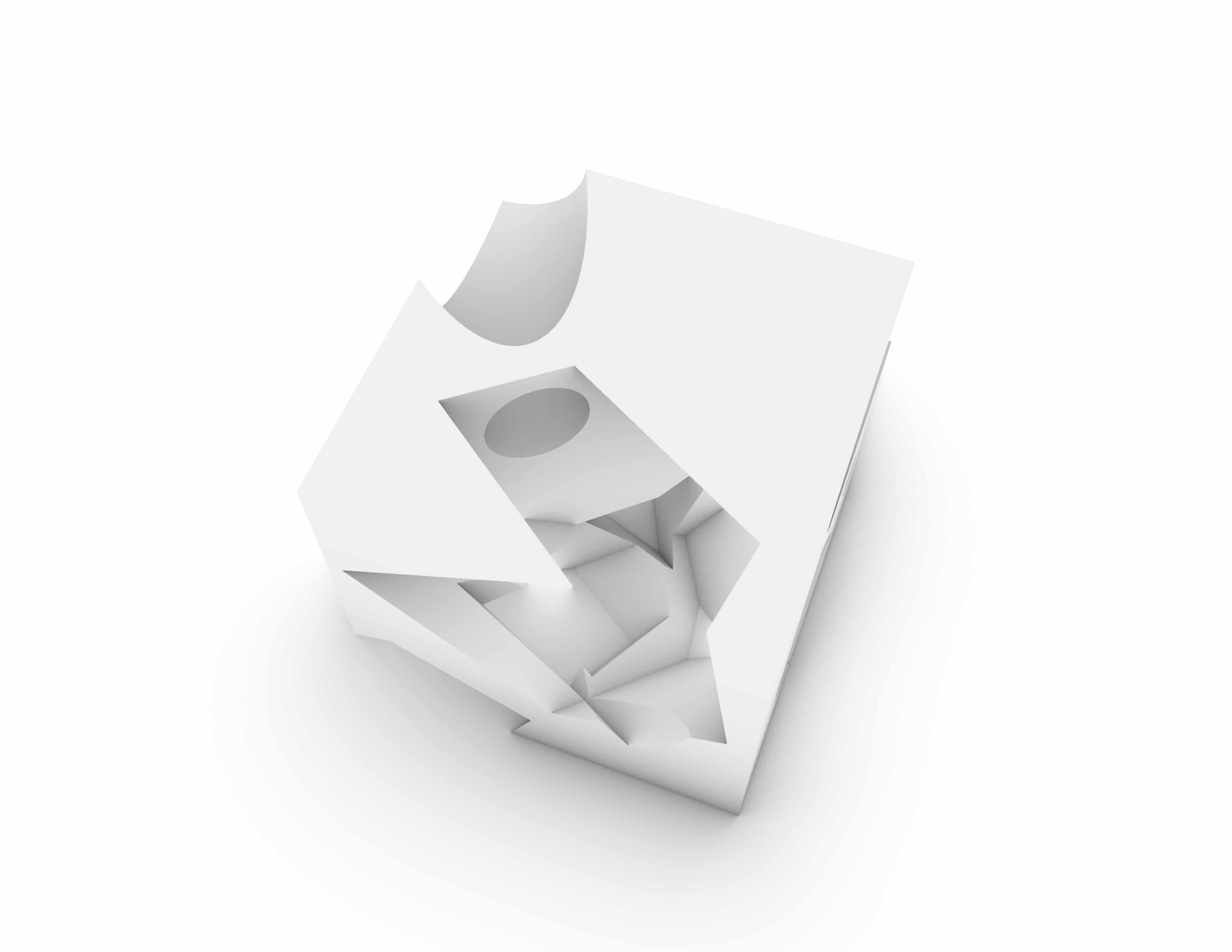
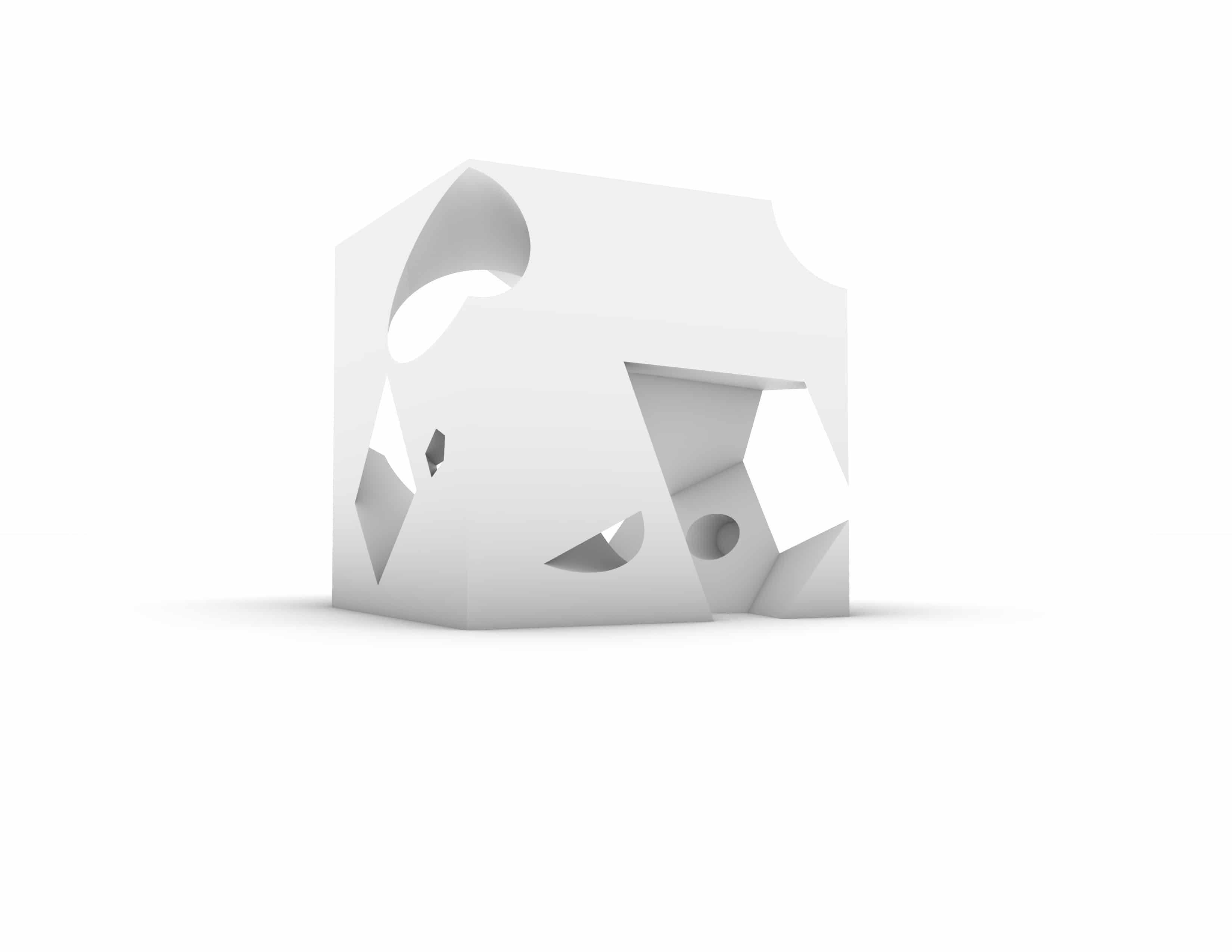
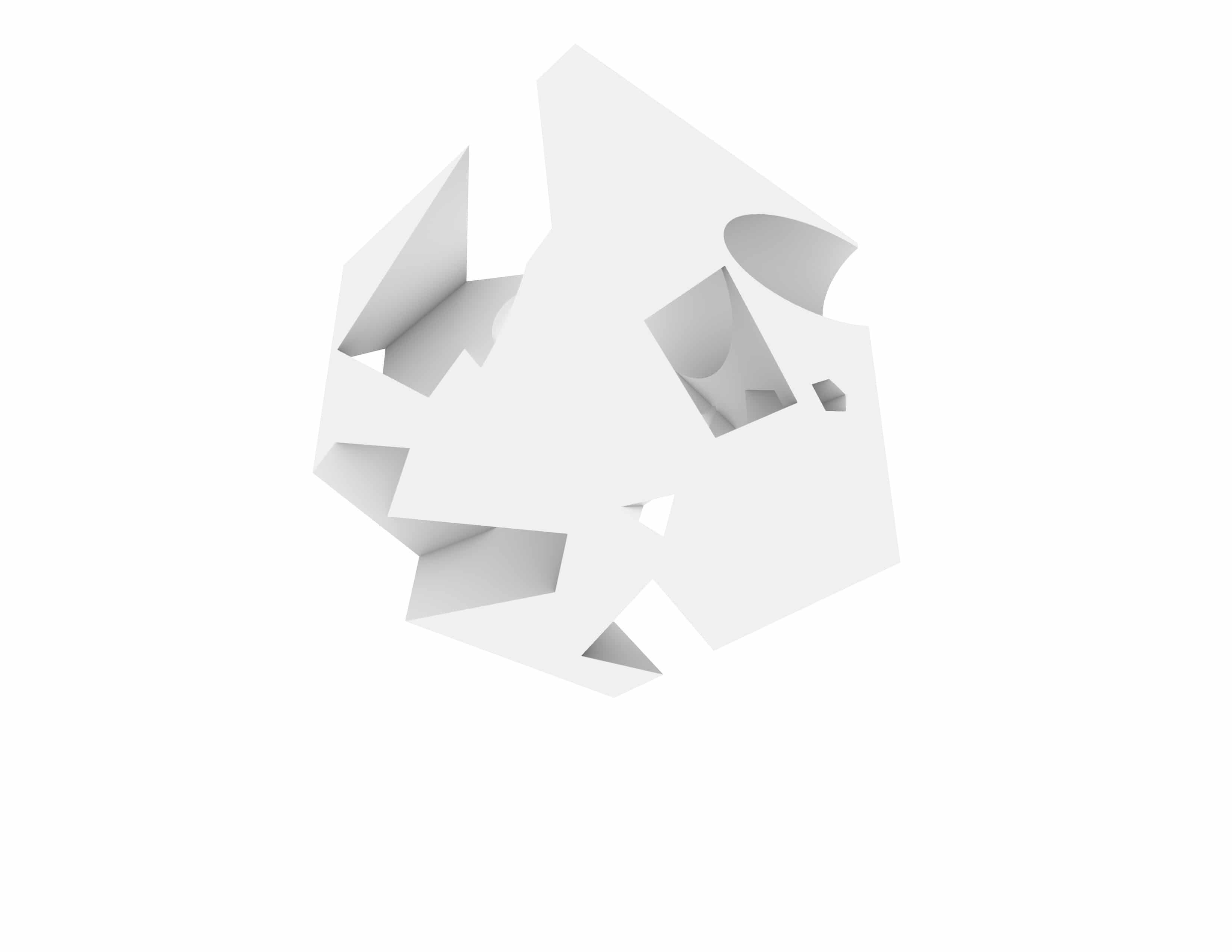
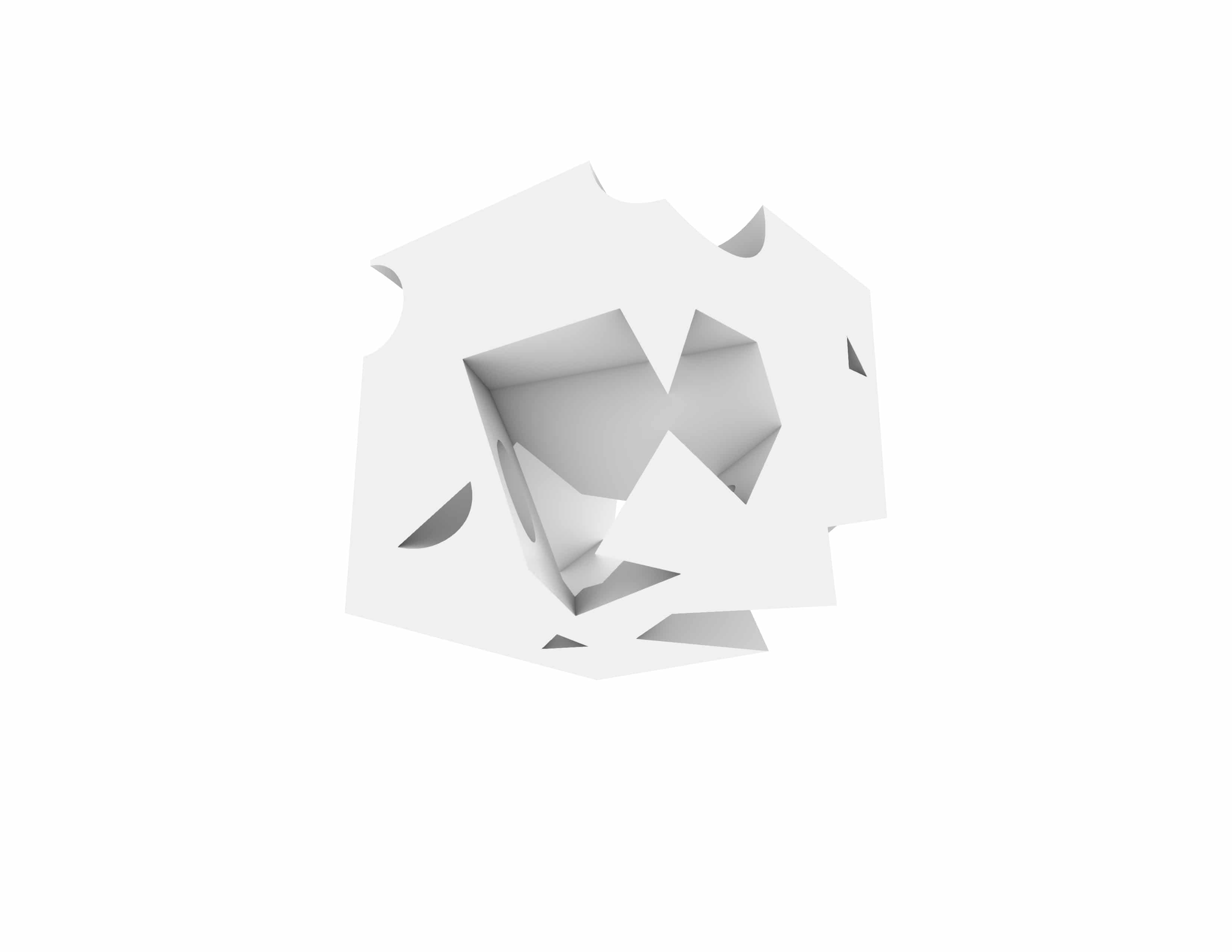
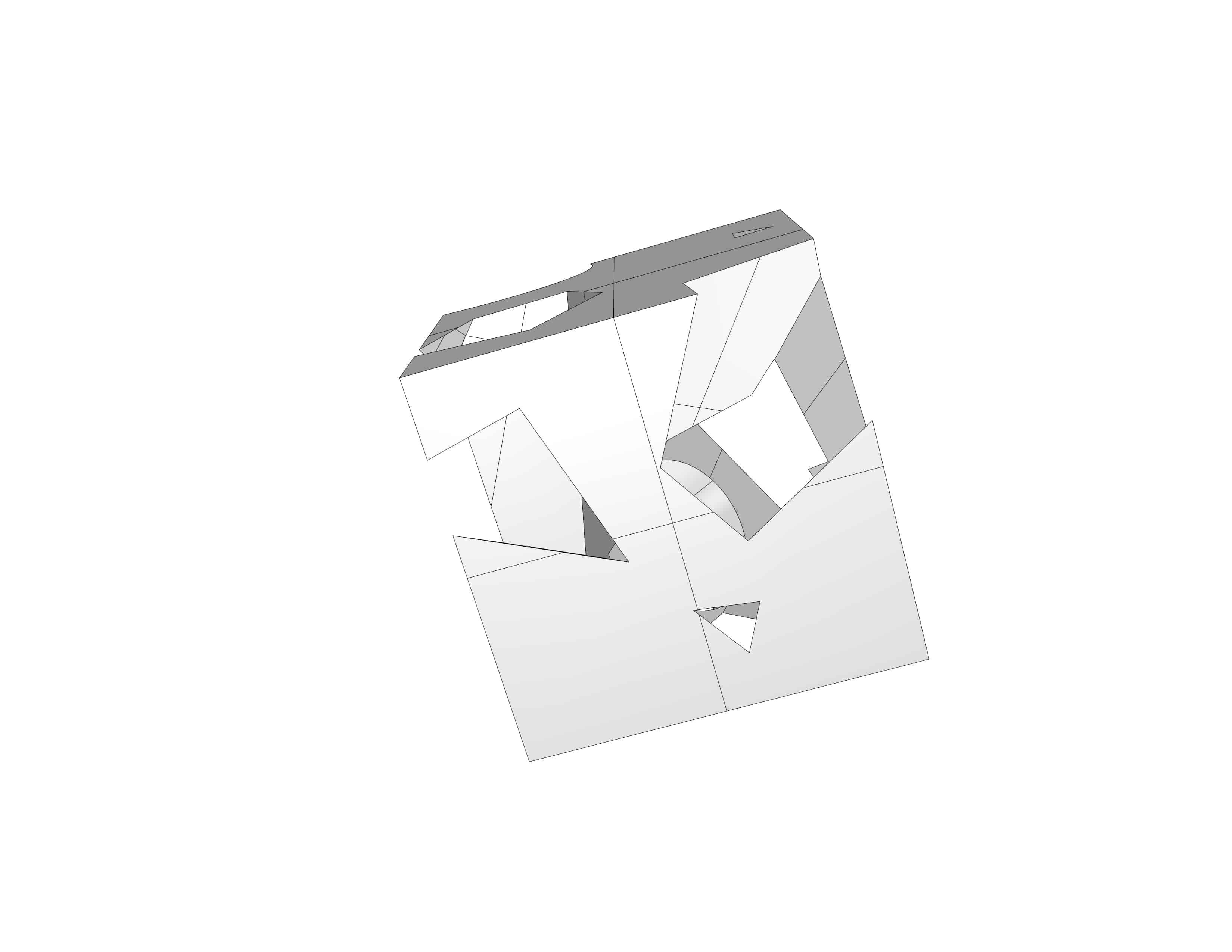
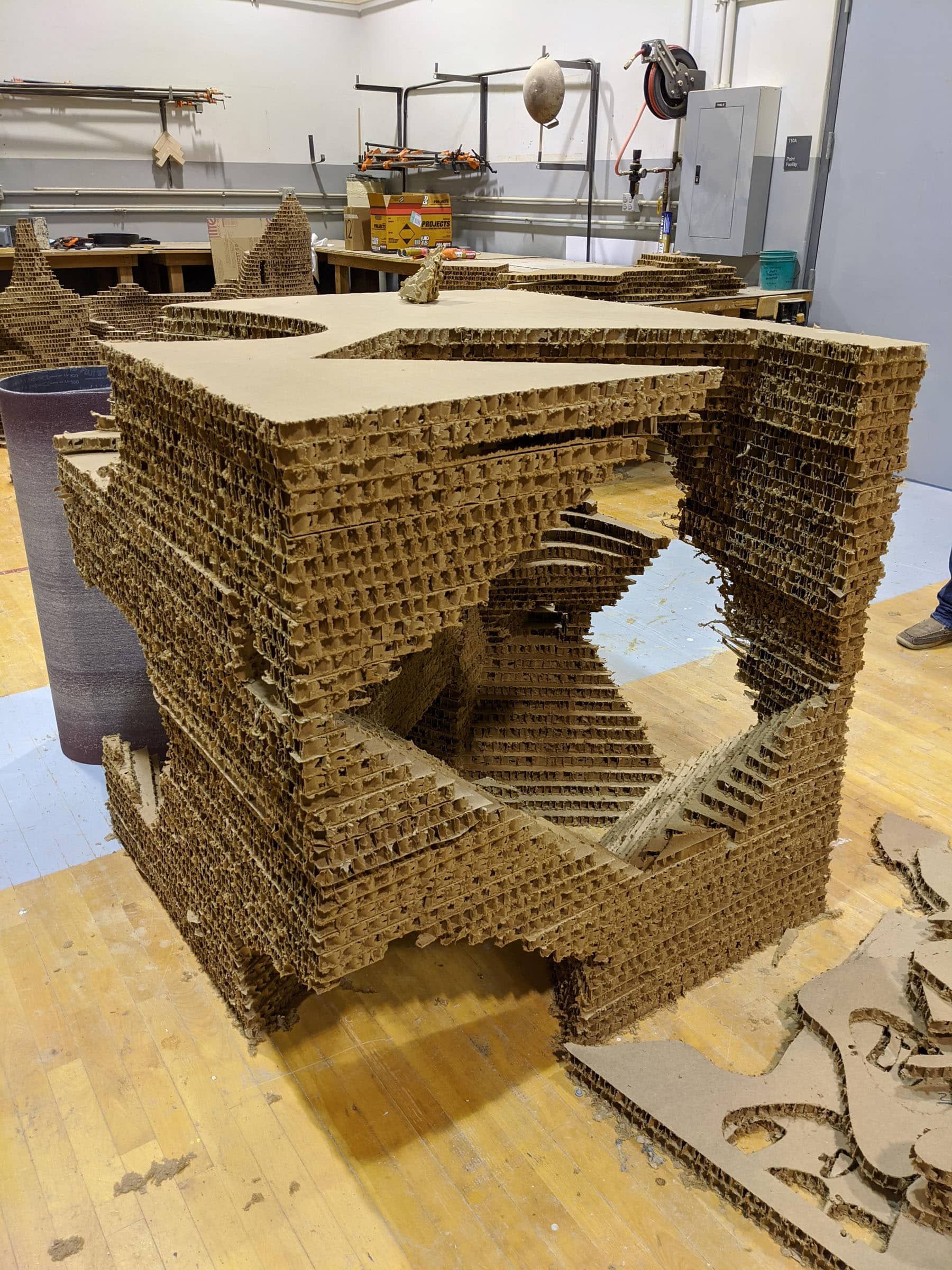
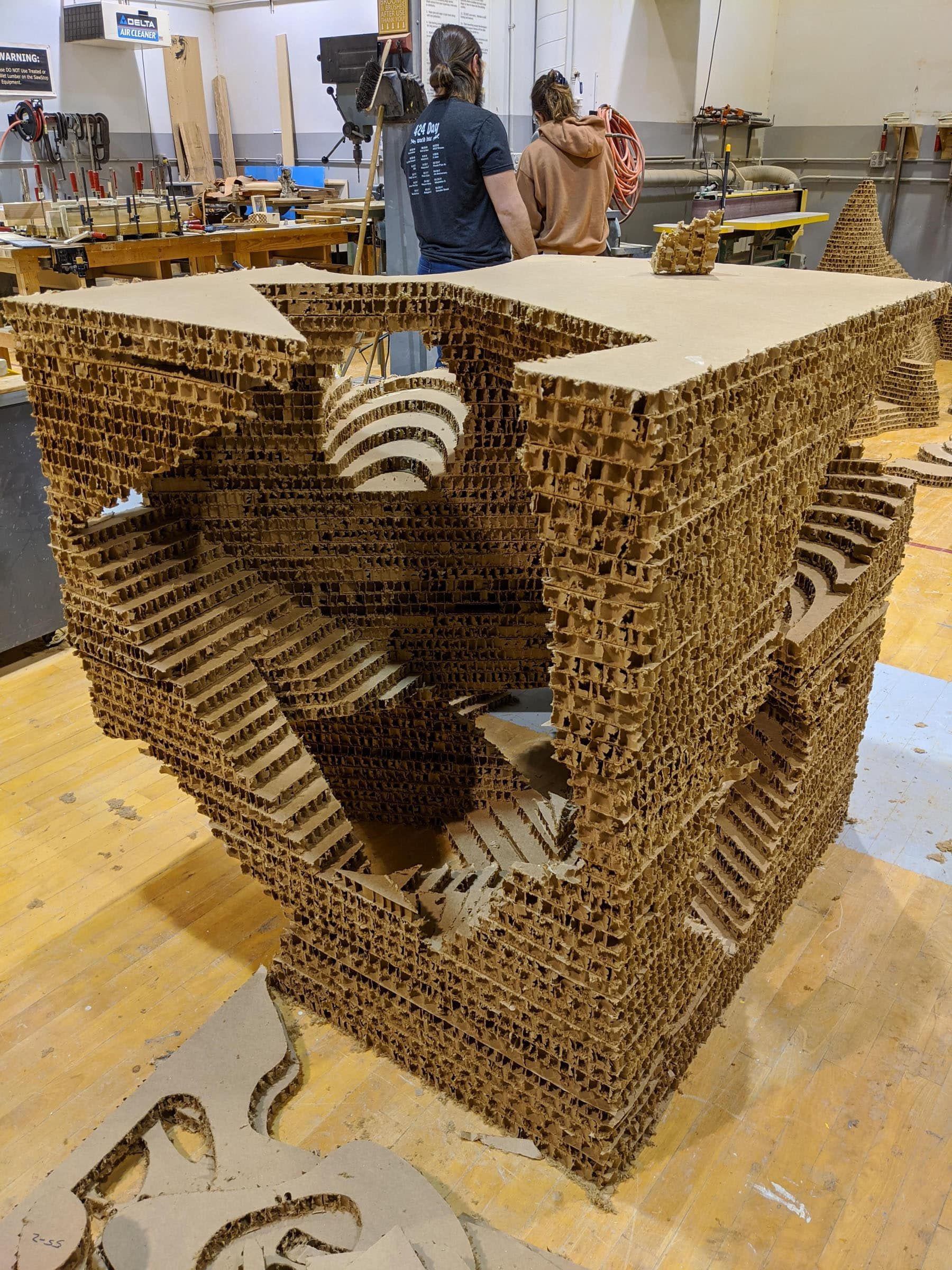
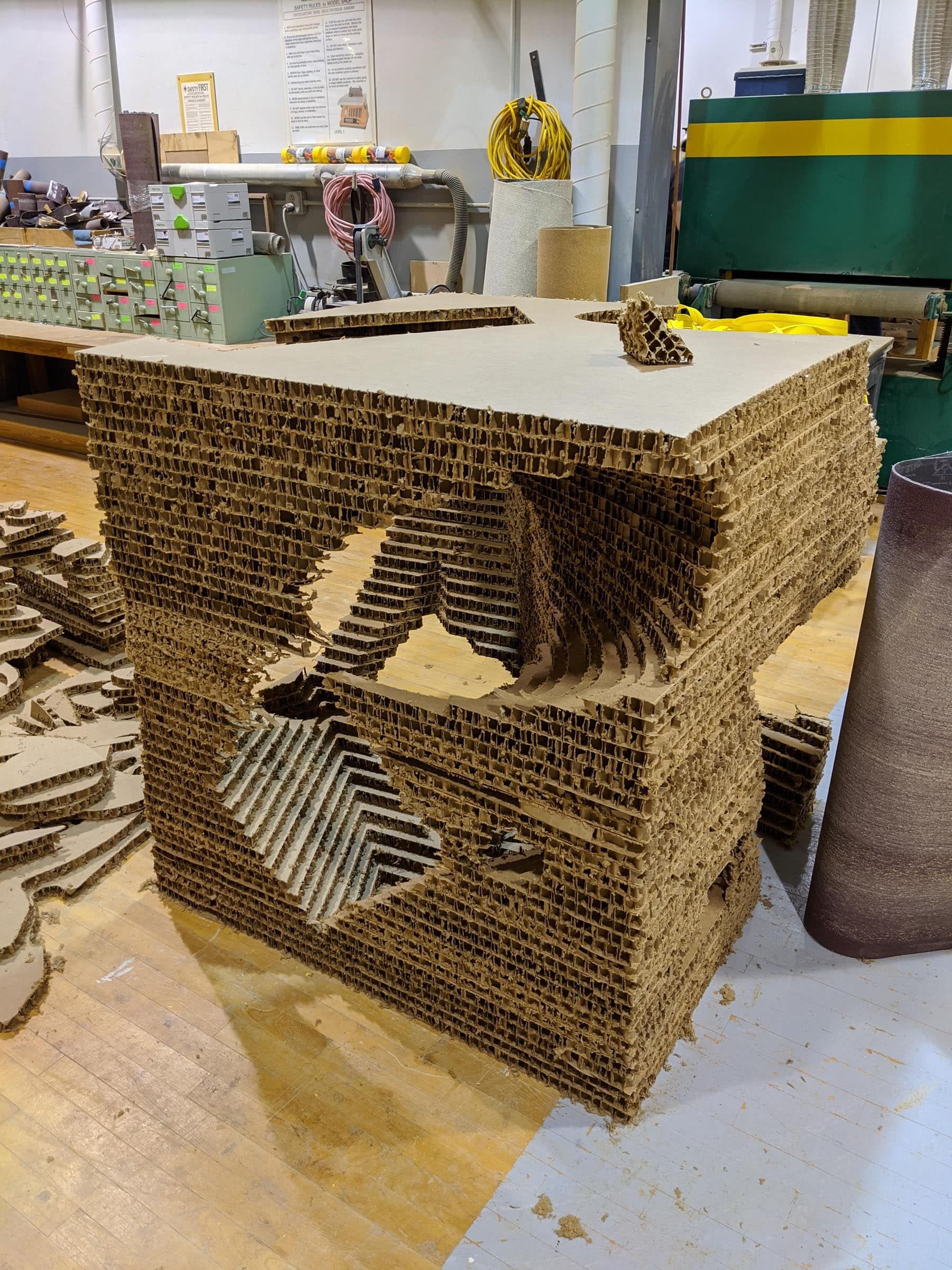
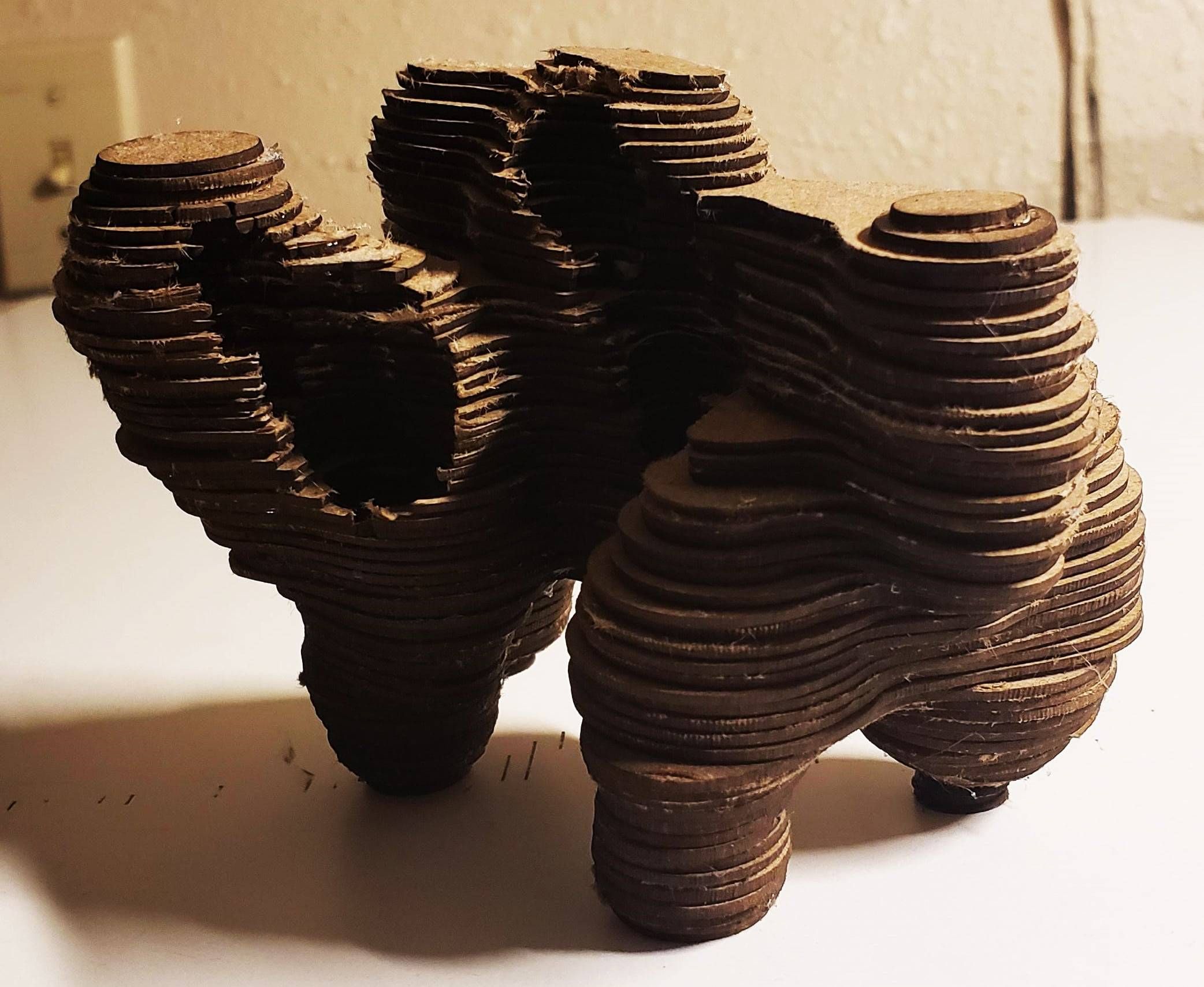
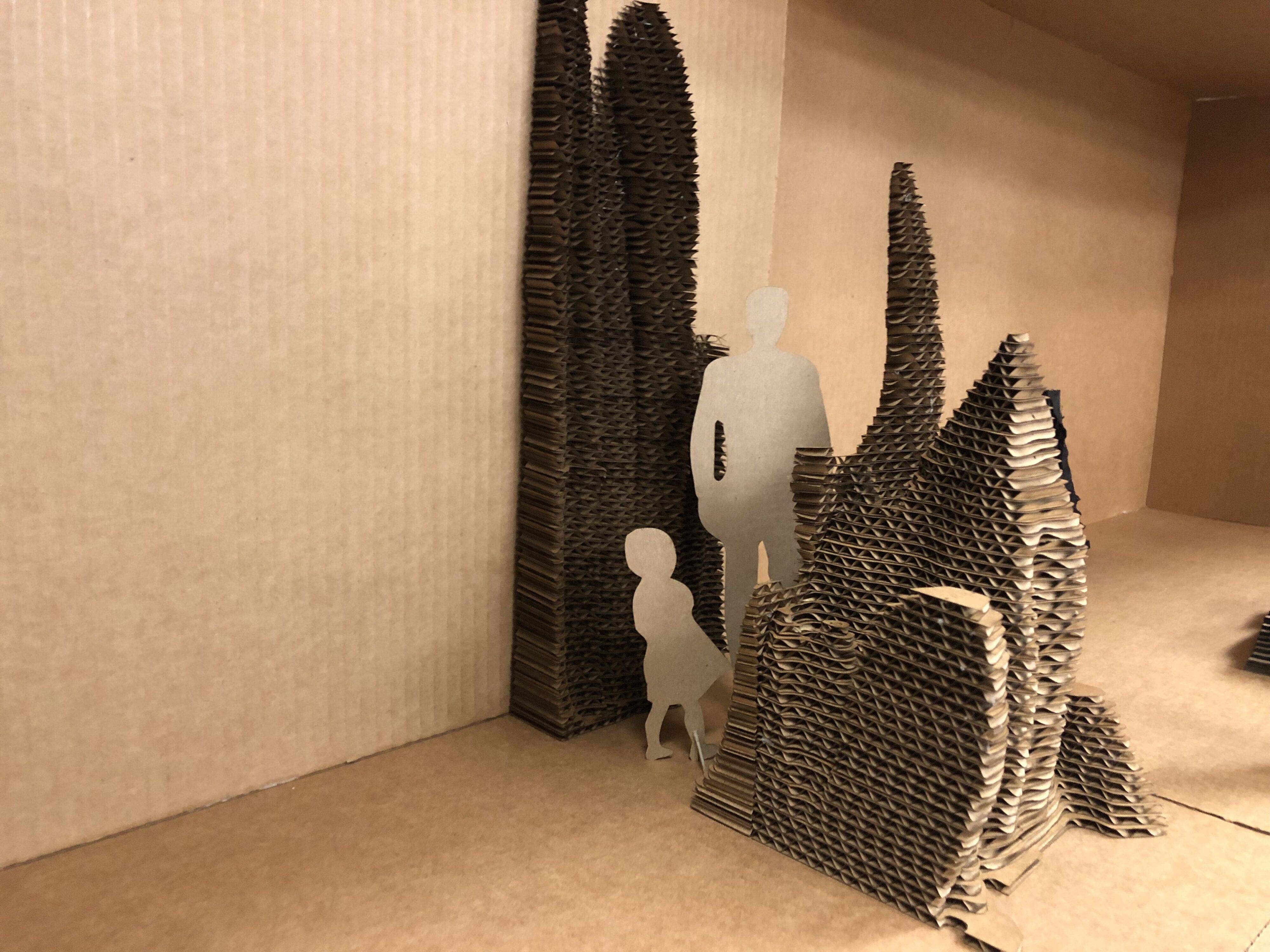
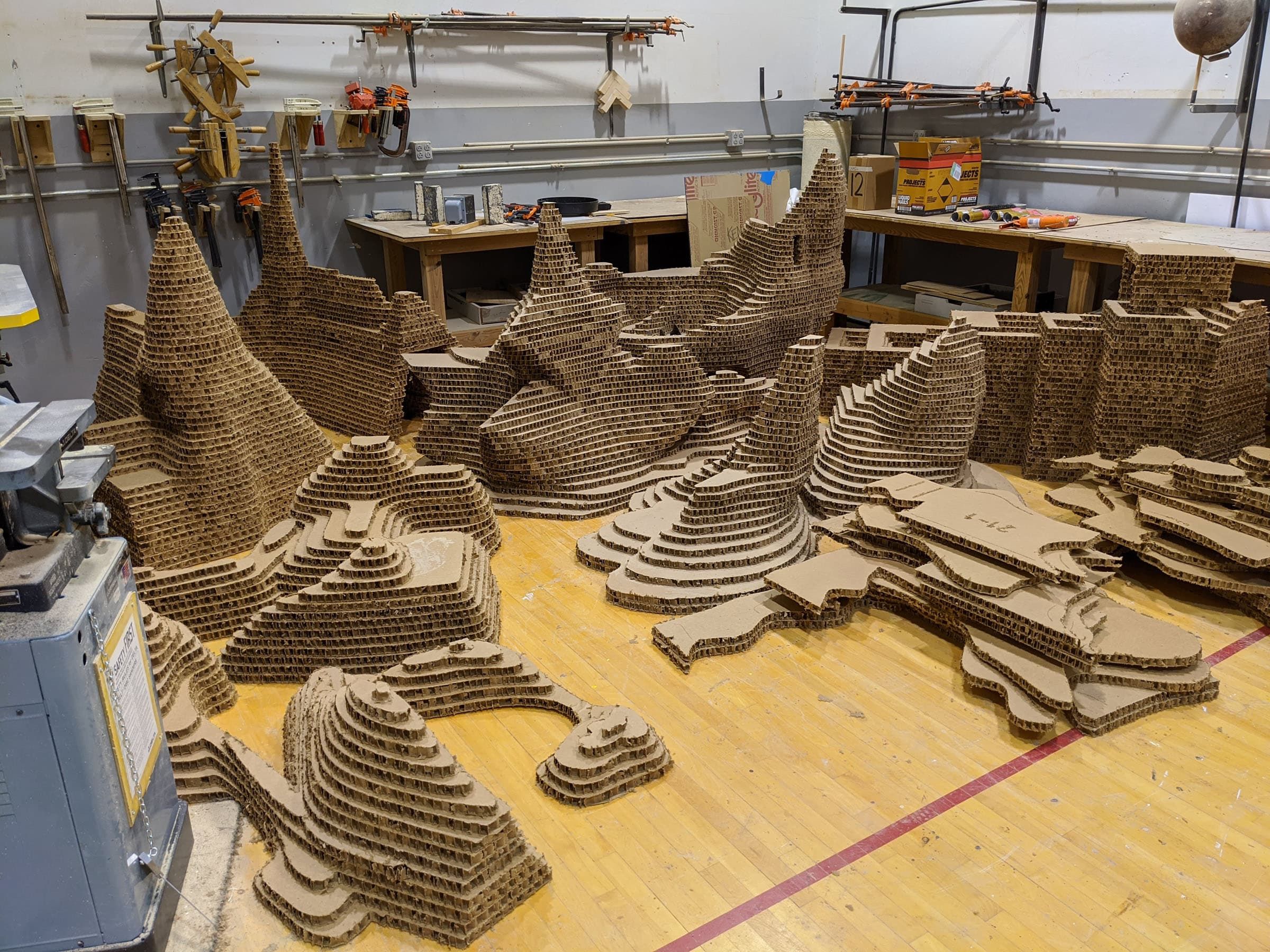
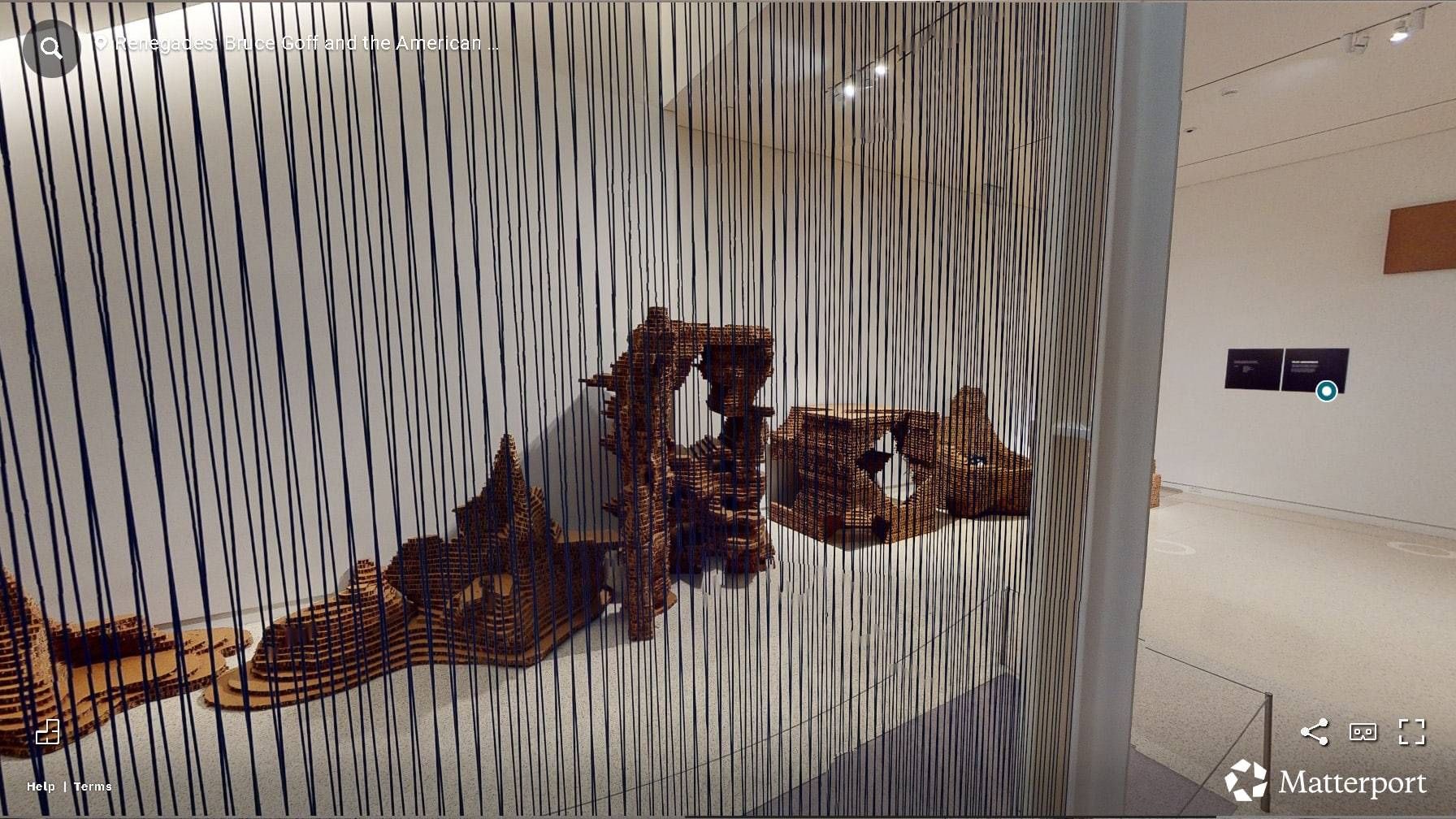
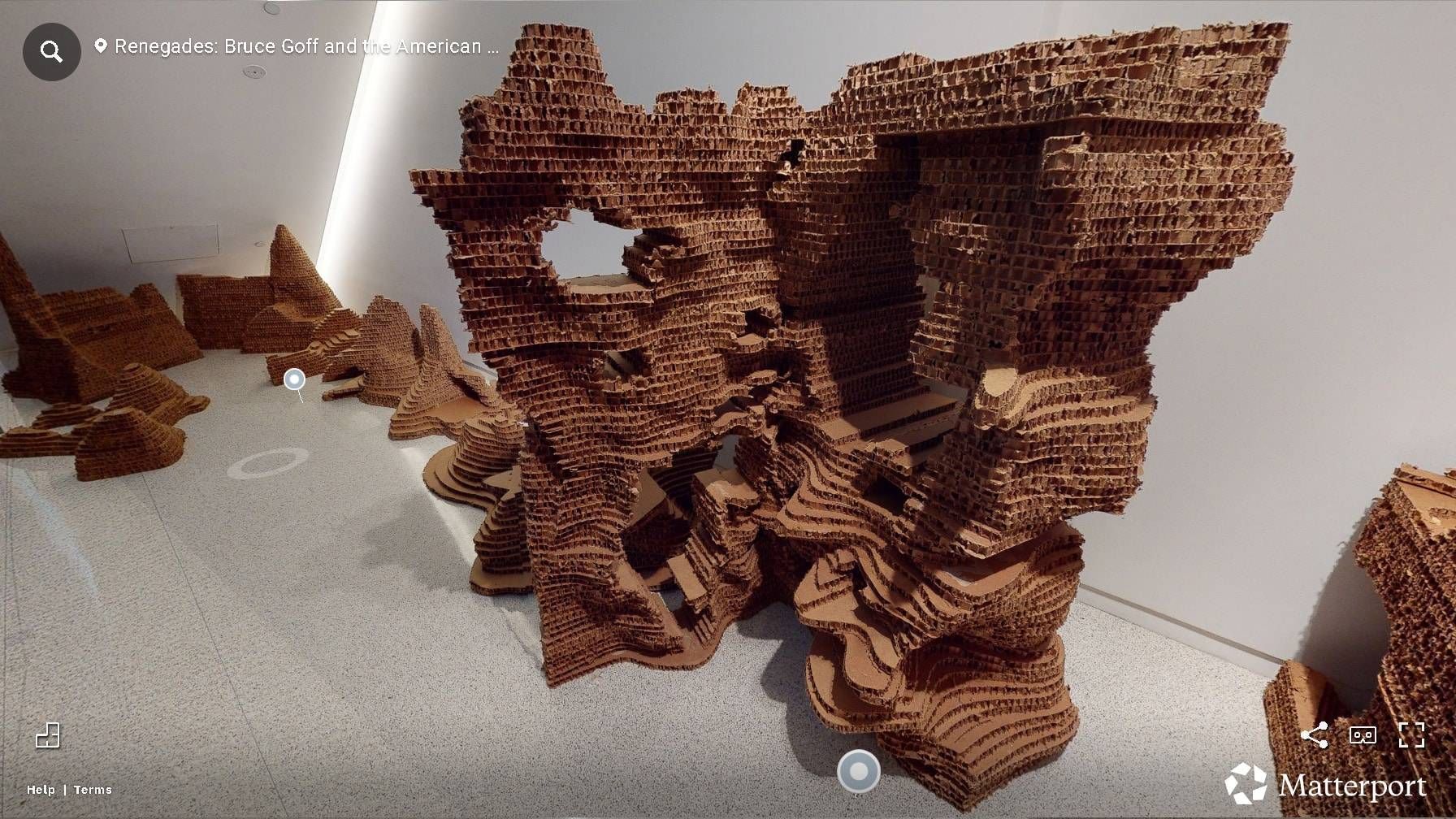
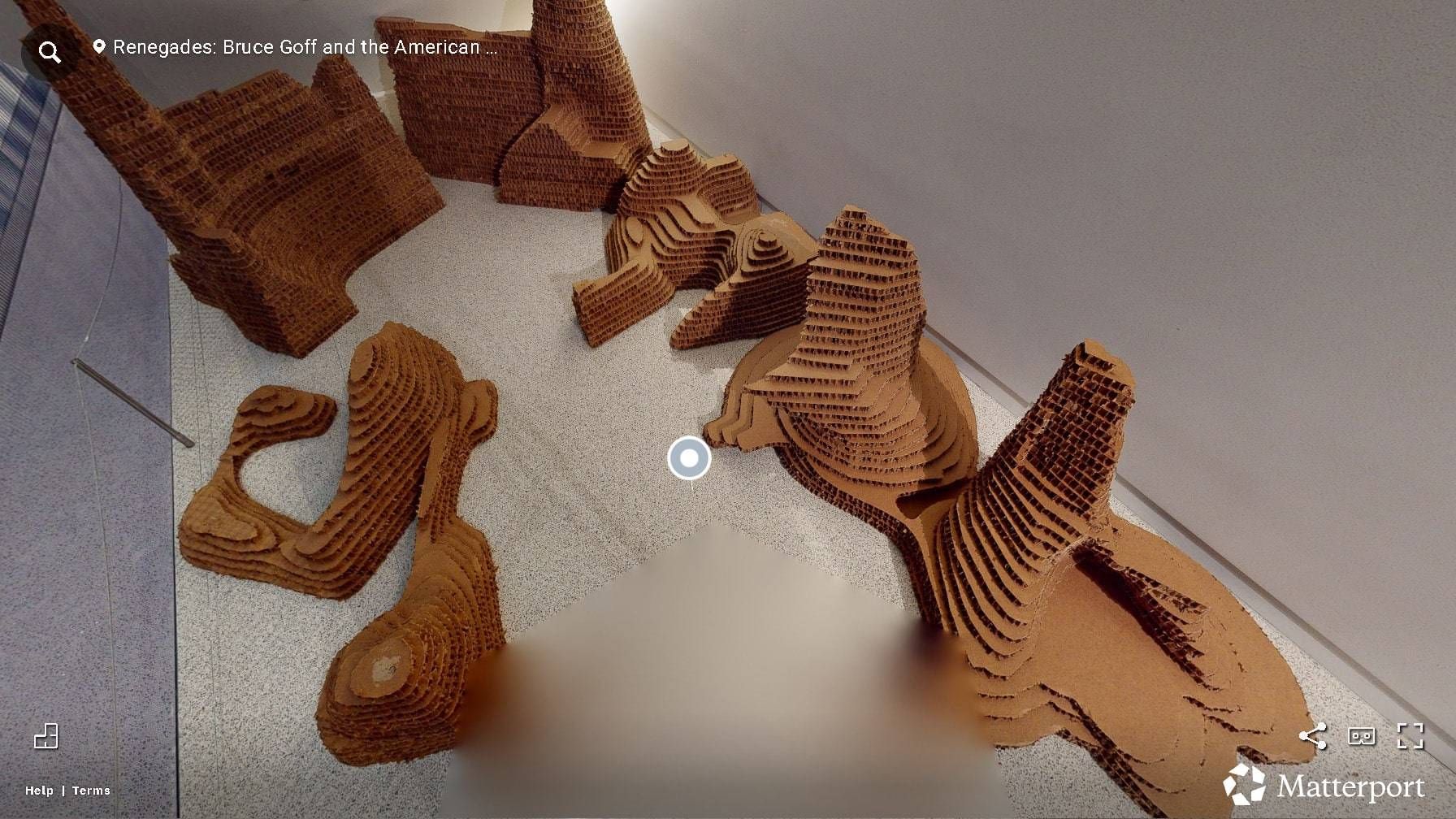
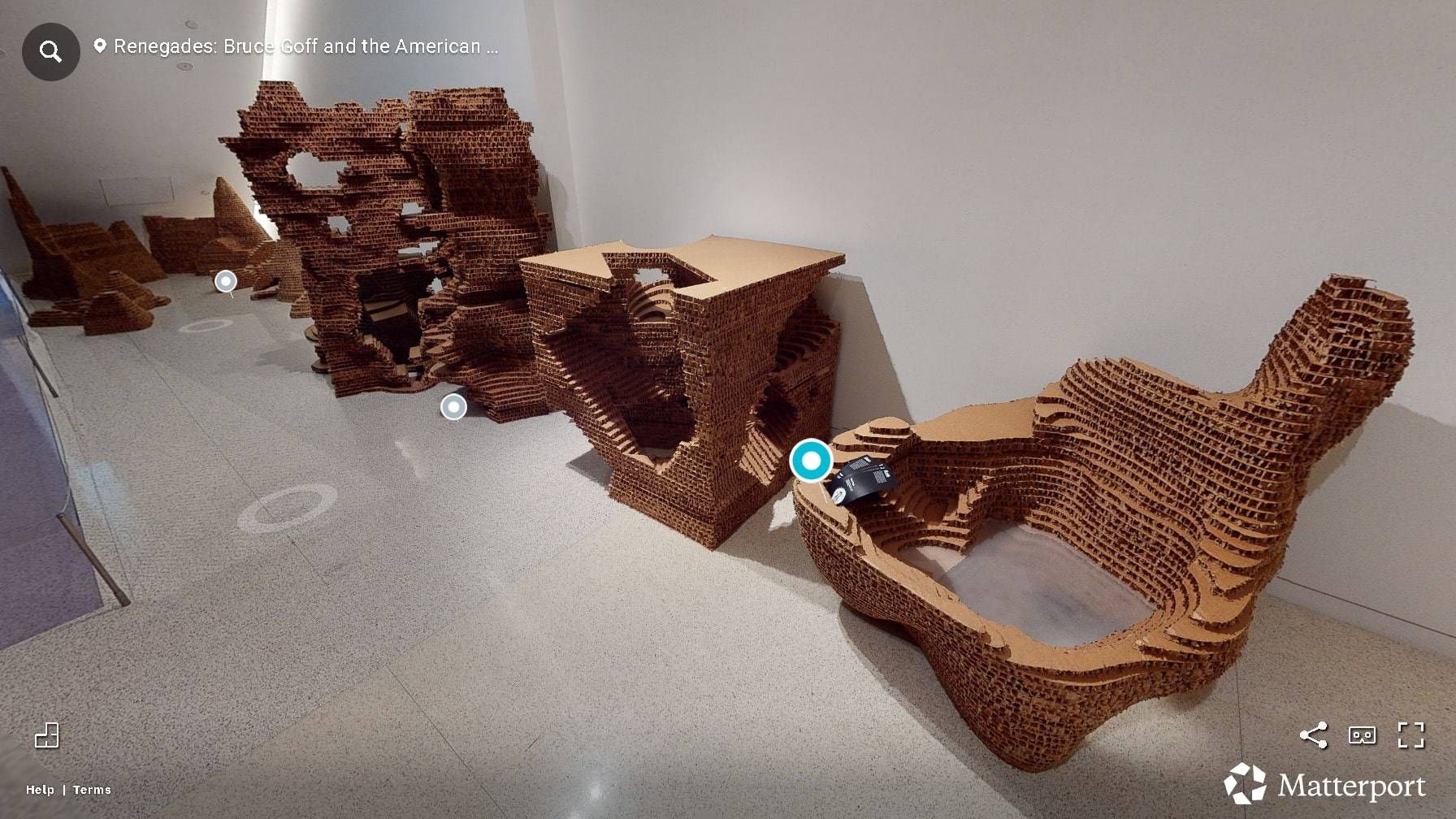
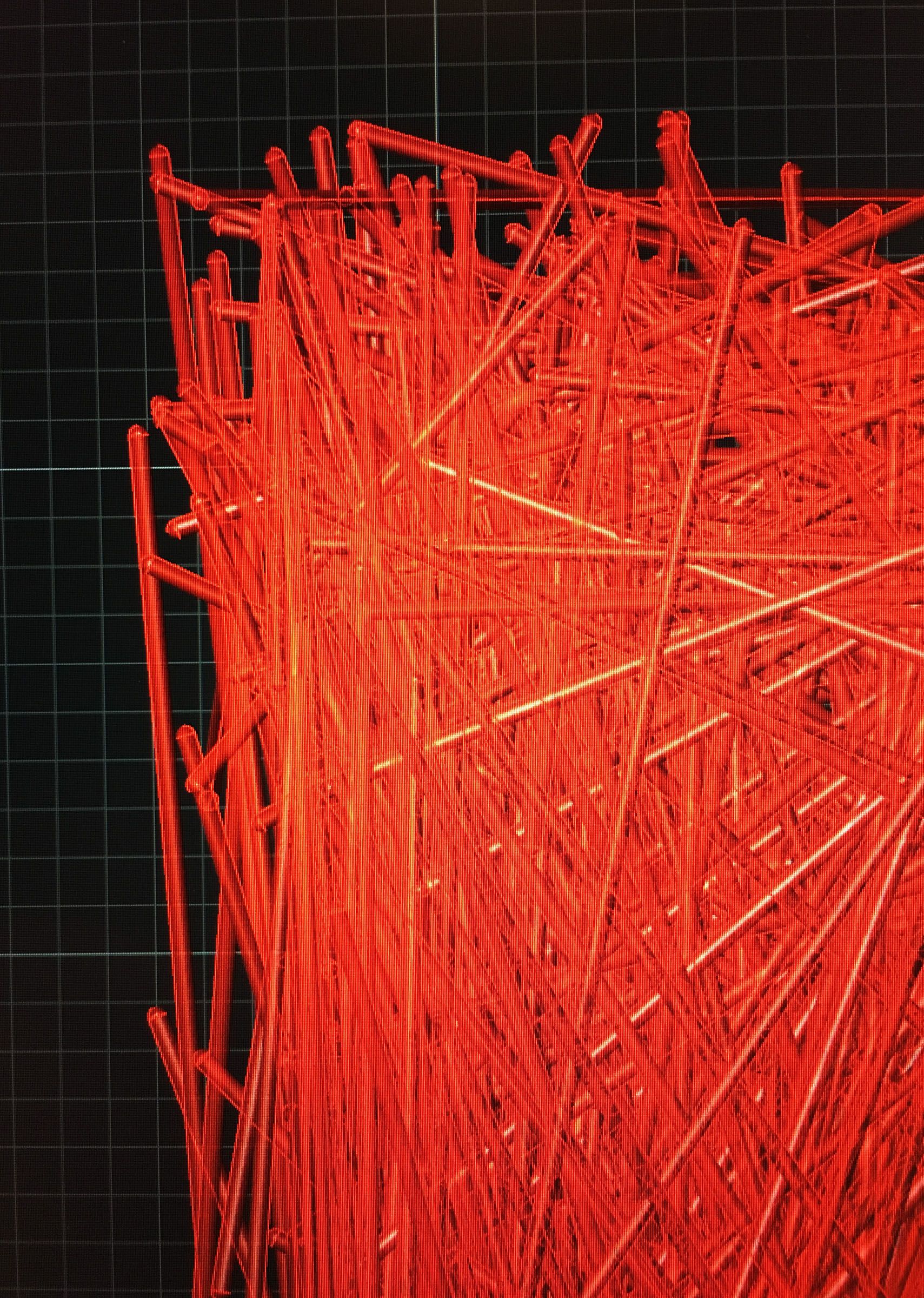
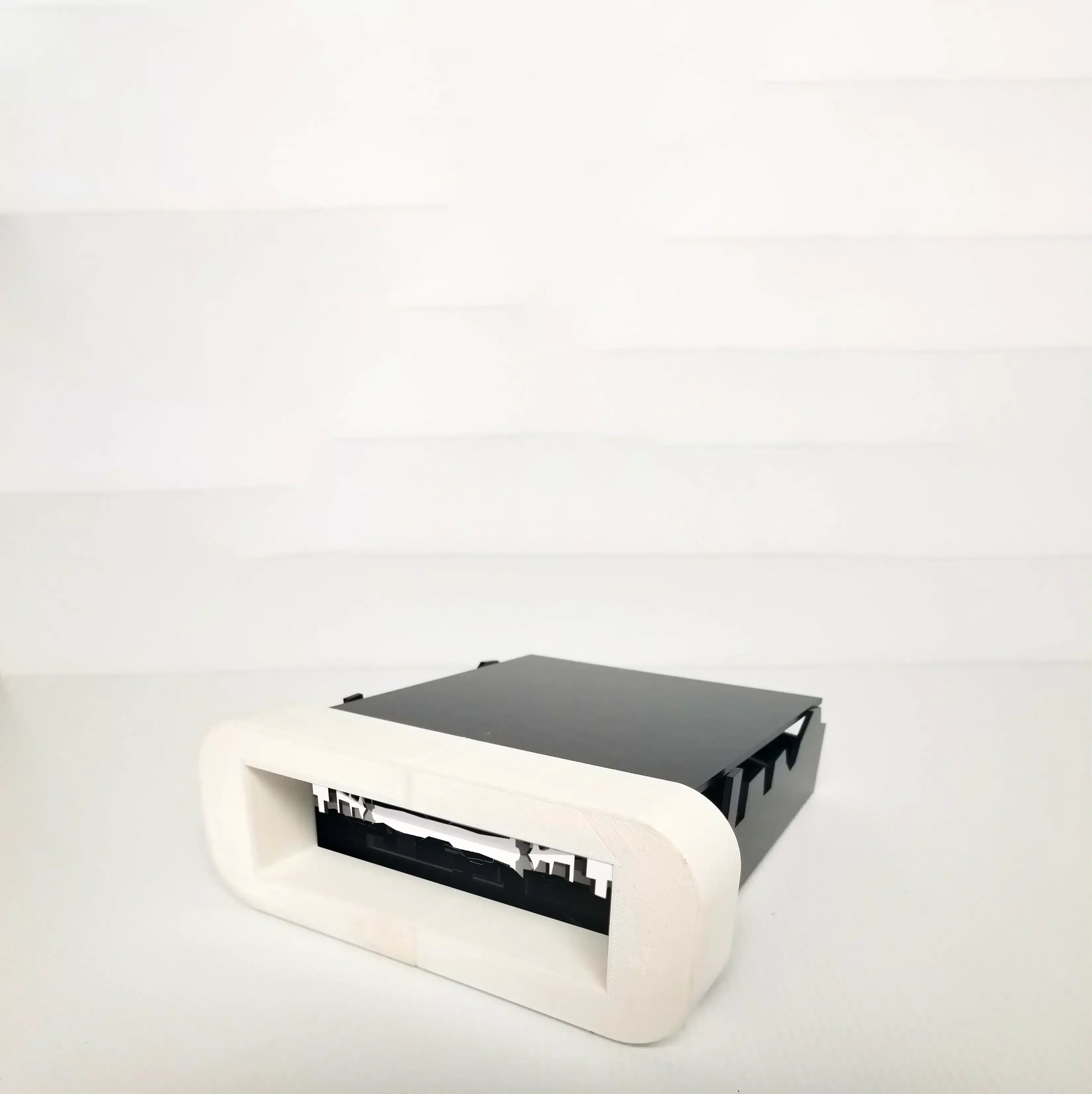
The structural limitations of honeycomb cardboard led to a focused material investigation that advanced into funded research and a provisional patent. Using Rhino, Grasshopper, and 3D printing, a digitally parameterized Honeycomb Cardboard Edge Insert was developed to reinforce and stabilize the material’s vulnerable edges. This computationally designed component addressed issues of crushing and delamination by bridging the internal cells of the cardboard core with interlocking ribbed geometries.
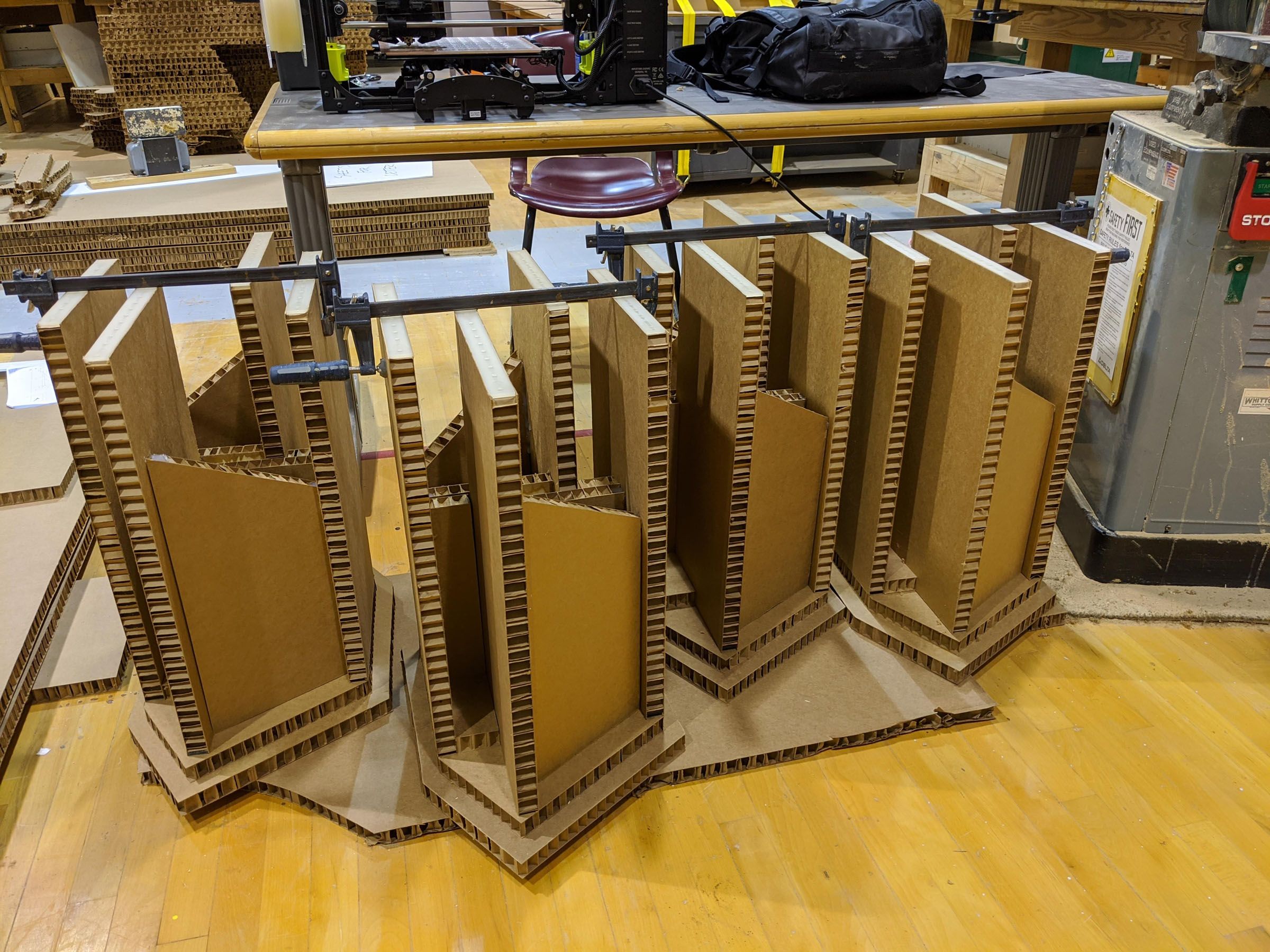
Each insert was algorithmically generated to adapt to varying panel geometries, creating seamless transitions between edge-to-edge and edge-to-face connections. 3D-printed from PLA, the inserts friction-fit within the cardboard structure, distributing loads evenly while maintaining the lightweight and recyclable nature of the material. This work culminated in the research grant Integral Connections for Structural Applications of Honeycomb Cardboard and the U.S. Provisional Patent (No. 62/954,239).
The Honeycomb Edge Insert transformed honeycomb cardboard from a fragile display substrate into a high-performance structural material. More broadly, it exemplified how computational design and additive manufacturing can extend the life of sustainable materials through digital precision, situating fabrication research within the experimental tradition of the American School—where craft, curiosity, and technological ingenuity converge.