SA Architects

Cranston, RI
Construction Completed: 2004

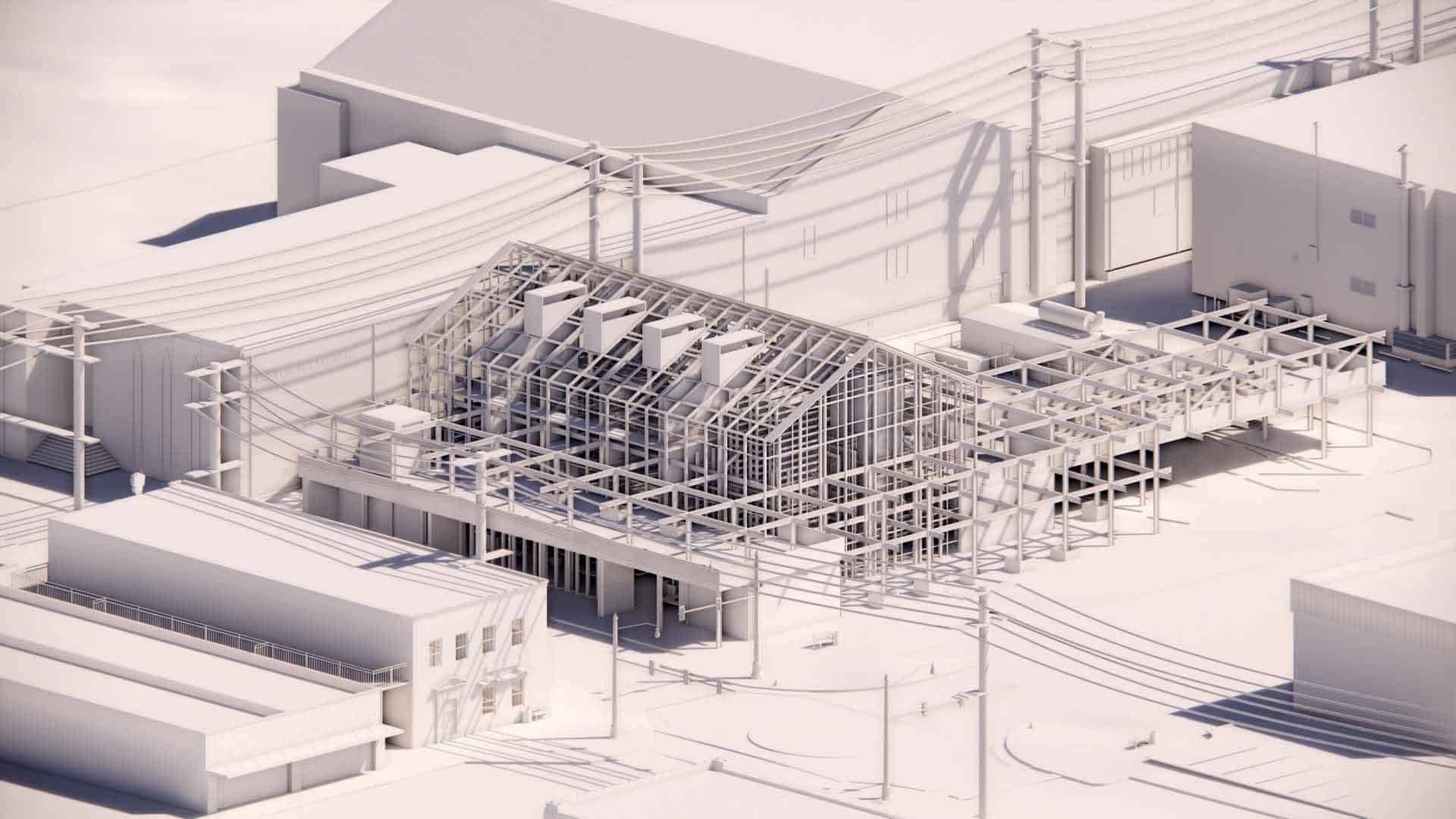
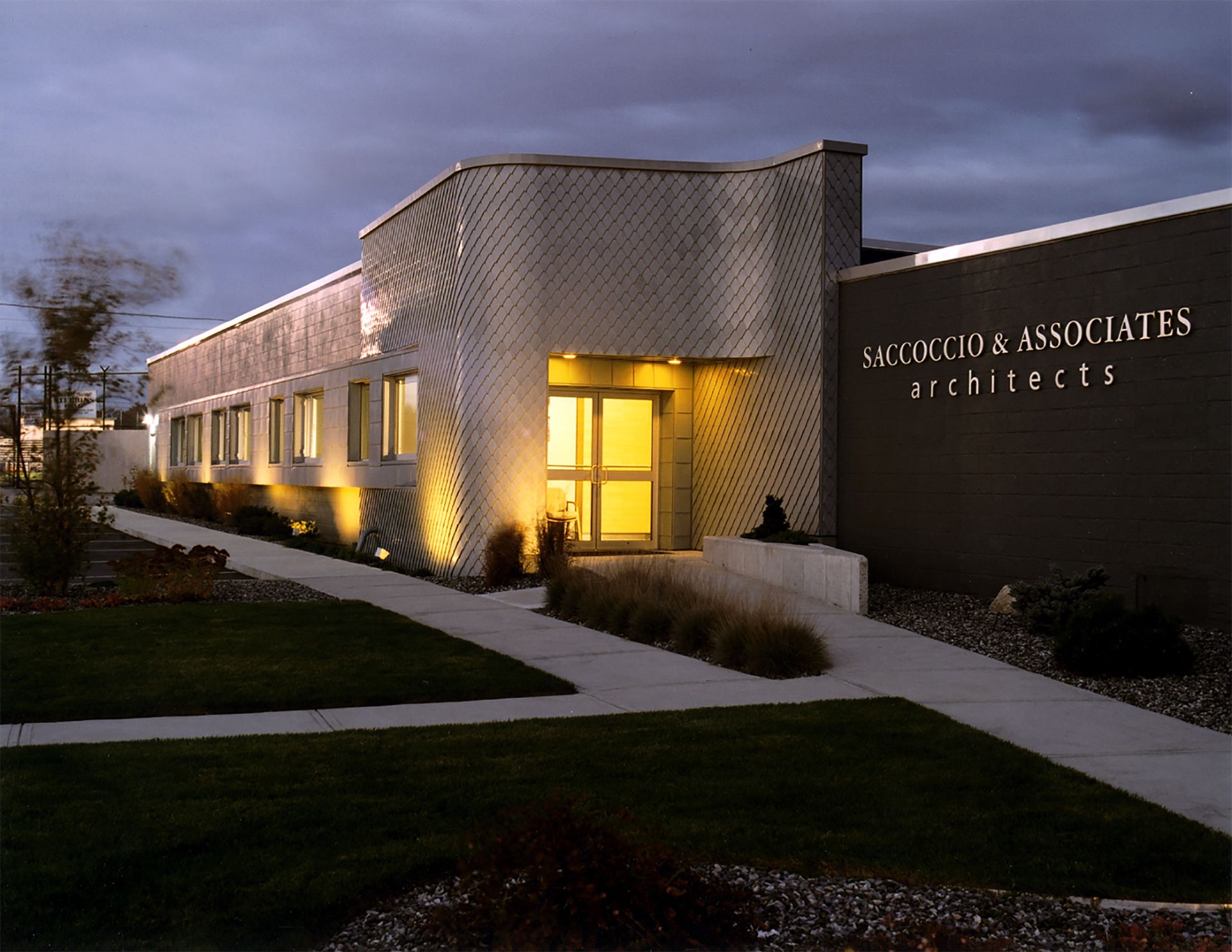
This project repurposes a vacant concrete block furniture warehouse as the new studio and office space for SA Architects. The design operates through a strategy of measured intervention, retaining the pragmatic simplicity of the original structure while marking new insertions through material and spatial contrast.

Key modifications to the building envelope occur along the north and west facades. A sculptural extrusion marks the main point of entry, while a linear strip of new operable windows introduces rhythm, daylight, and ventilation into the deep-plan interior. These interventions are clad in Rheinzink, selected for its material contrast, environmental durability, and ability to register time and weathering across its surface. The rainscreen cladding wraps the additions as a continuous skin, visually separating the new elements from the retained concrete shell.


SA Architects

Cranston, RI
Construction Completed: 2004

Adaptive Reuse of Material, Memory, and Movement

The SA Architects Studio transforms a vacant concrete block warehouse into a contemporary workspace through a process of measured intervention. Rather than conceal its industrial past, the project treats the building’s utilitarian character as a generative condition, something to be revealed, reinterpreted, and extended. The existing structure remains intact, yet its spatial logic is redefined through a series of precise insertions that engage material, light, and movement.

Along the north and west facades, new architectural gestures mark moments of entry and occupation. A zinc-clad extrusion defines the main entry, while a linear band of operable windows brings daylight and ventilation deep into the plan. Rheinzink panels wrap these additions, creating a continuous rainscreen that contrasts the matte texture of the concrete block. Over time, the zinc will patinate, allowing the new surfaces to register age and weather alongside the existing shell—a quiet acknowledgment of architecture’s evolving temporal life.
Exterior Transformation and Landscape Interface

The landscape is treated not as an afterthought but as an extension of the building’s formal and material vocabulary. Along the western edge, a narrow strip of concrete geometries defines seating, planting, and movement in a field of intersecting planes. These ground-level interventions echo the building’s interior faceting, establishing a visual and tactile continuity between inside and out.

The exterior strategy is defined by restraint, each material introduced has purpose. Concrete, zinc, and glass form a disciplined palette that privileges legibility over decoration. Subtle shifts in texture, reflectivity, and scale distinguish the hand of the new from the inherited framework. The result is an exterior condition that balances durability with refinement, allowing the building to express its own process of transformation.

Interior Structure and Spatial Composition

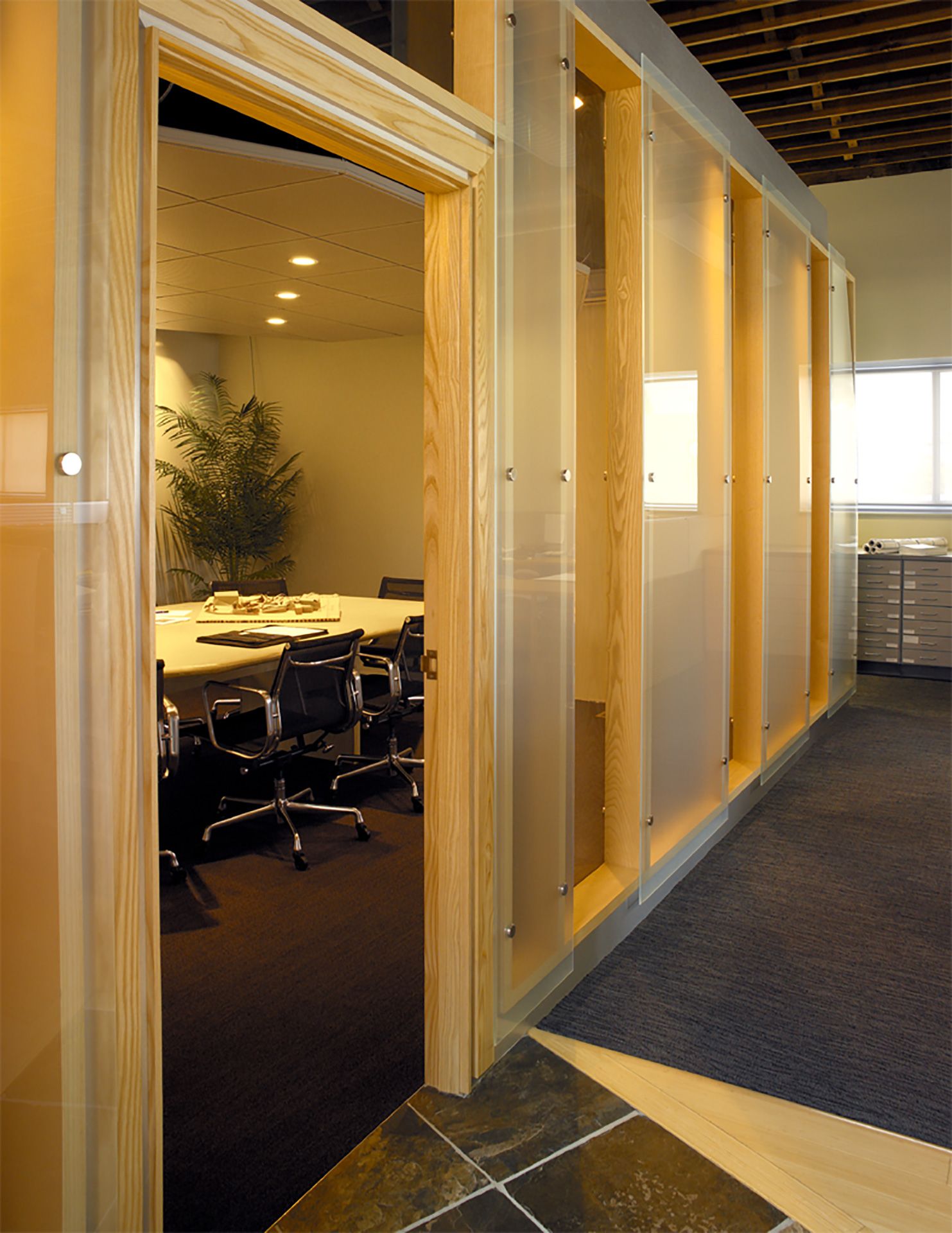
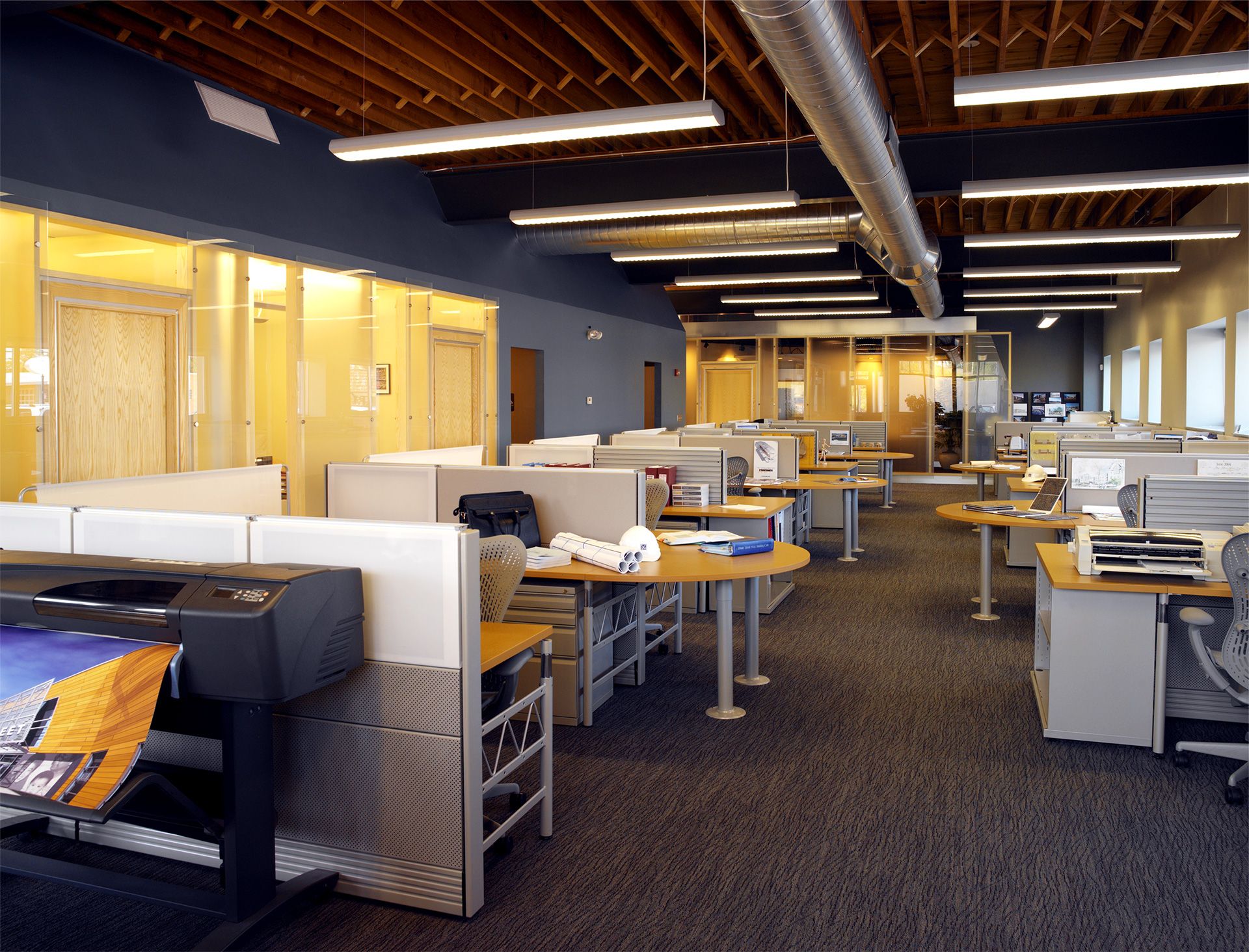
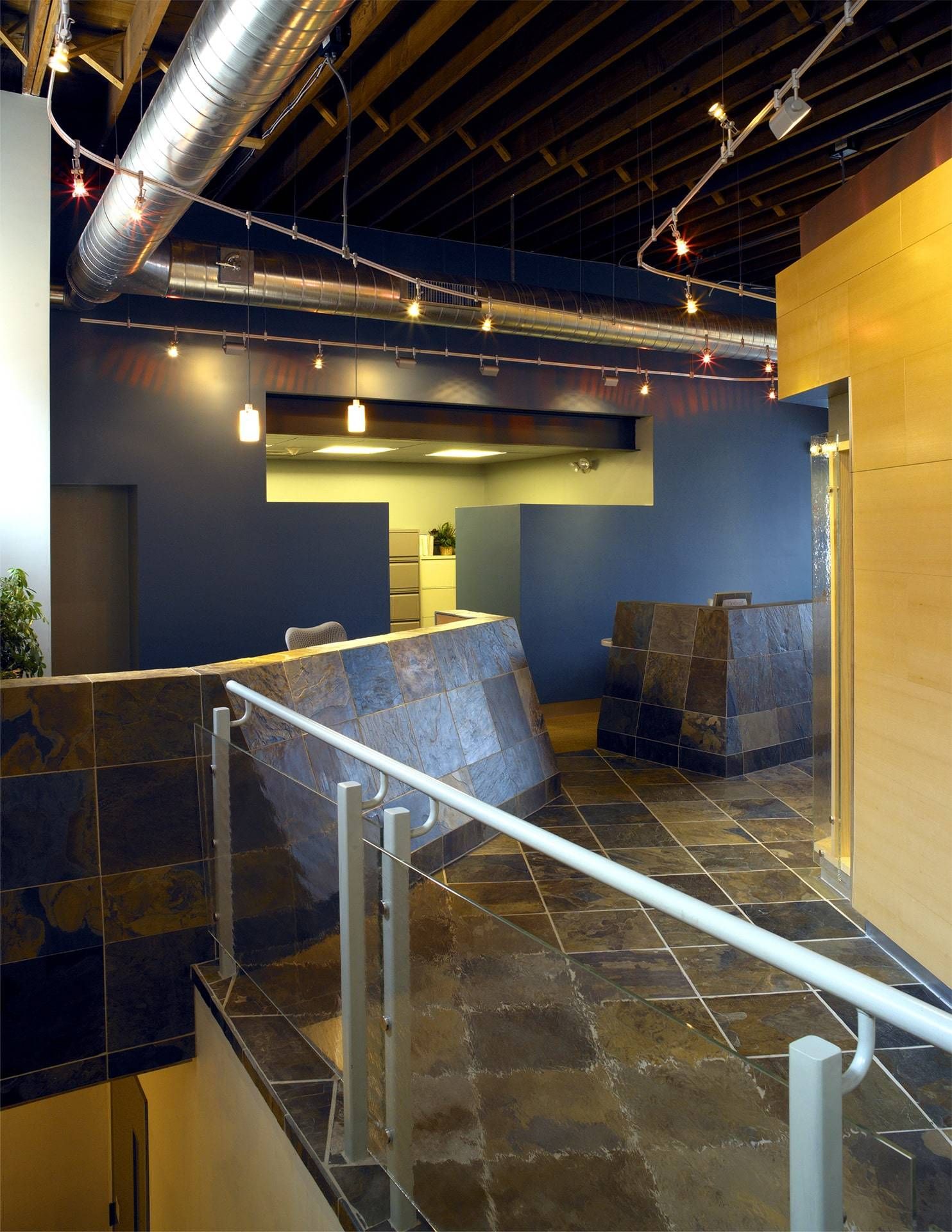
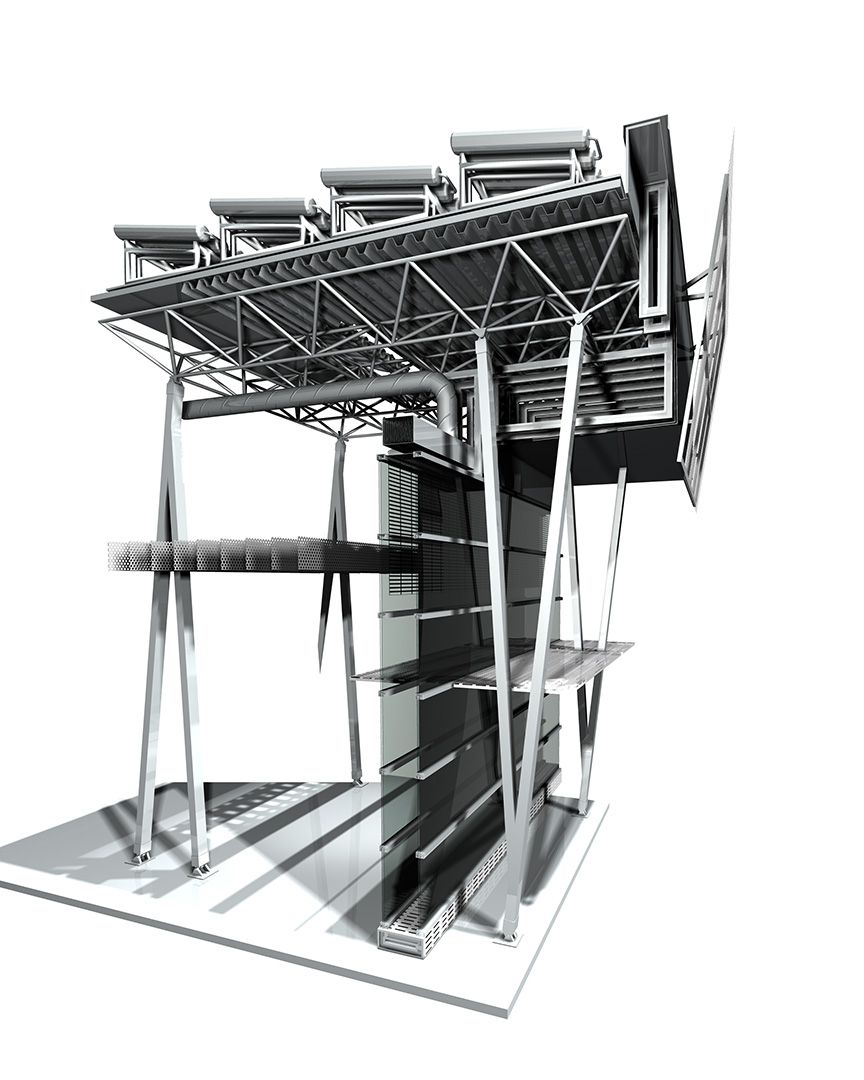
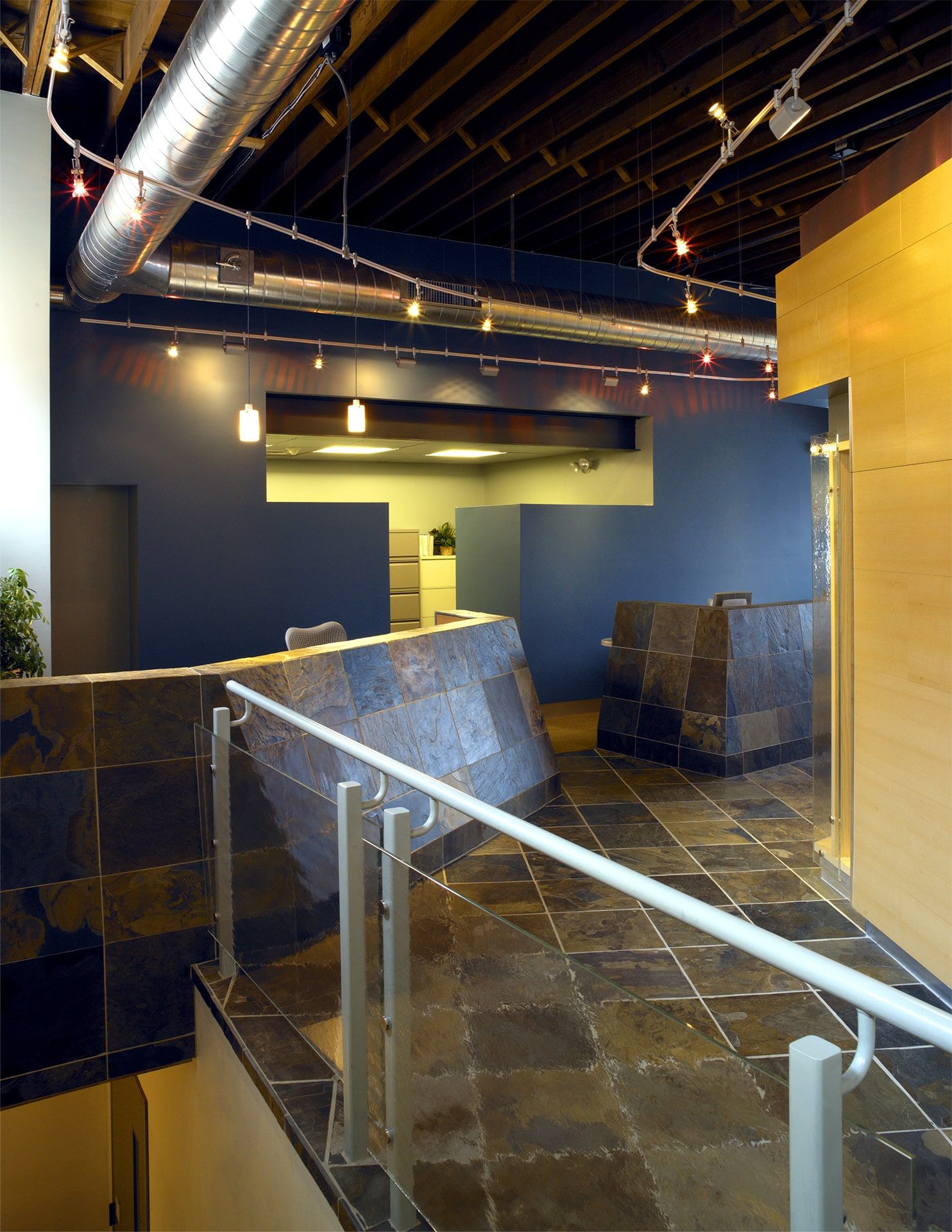
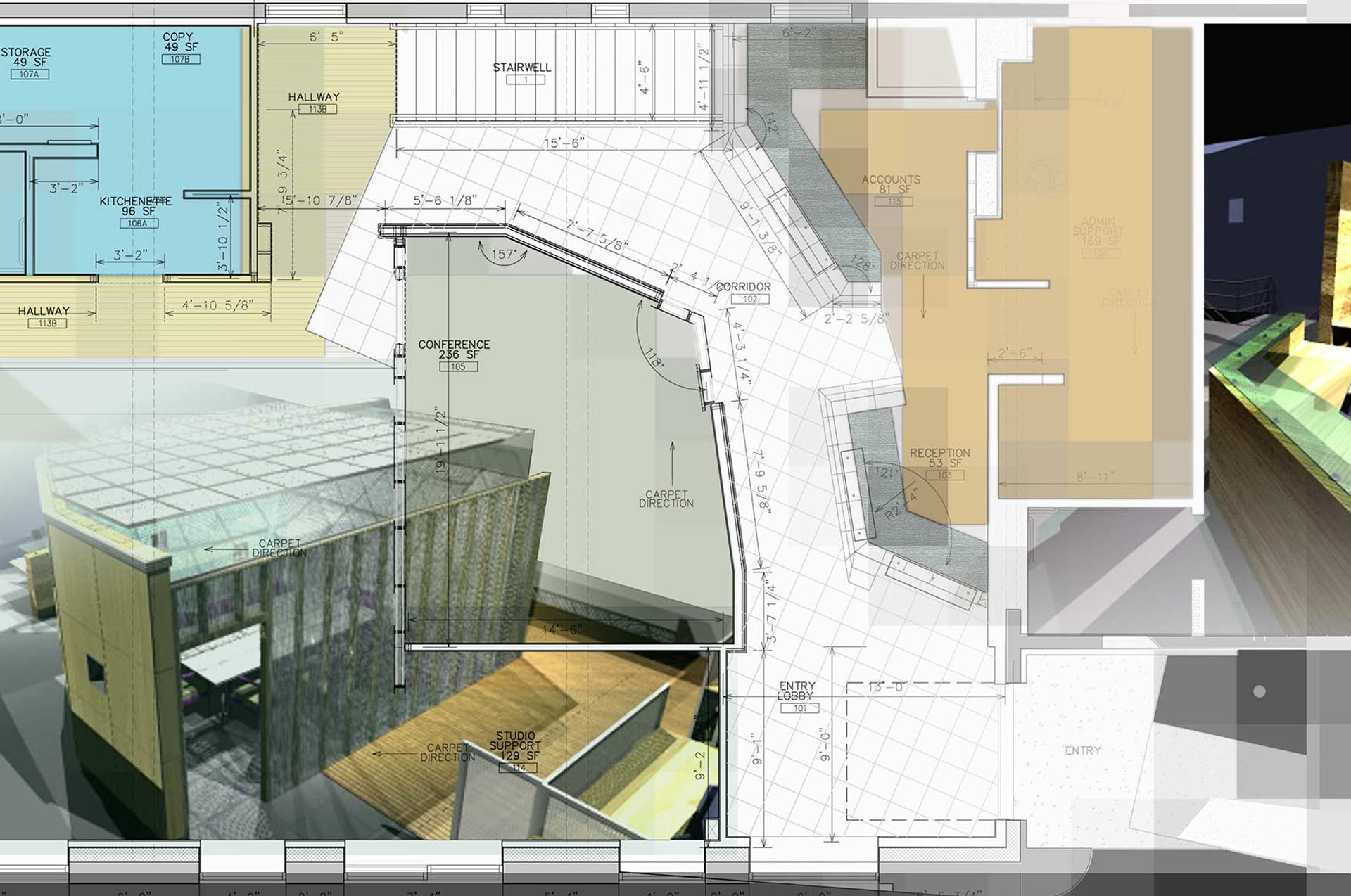
Inside, the open volume of the former warehouse is reinterpreted through a composition of inserted forms that shape rather than subdivide space. These angular, faceted assemblies define the conference room, reception, and studio support zones. Pulled away from the perimeter and the exposed timber truss ceiling, they hover as independent objects within the larger field. This strategy preserves the legibility of the original structure while layering new spatial readings through light, texture, and geometry.

Circulation is conceived as a continuous experience of compression and release. Visitors are guided through a bending corridor that wraps the central conference core before expanding into the main studio volume. This sequence is deliberately choreographed to create tension and release, intimacy and openness—an architectural rhythm that mirrors the dynamics of creative practice. Material junctions are celebrated: slate tile meets glass, timber meets metal, each surface contributing to a dialogue between raw construction and refined finish.


Workplace Identity and Environmental Integration

The studio is designed as a living workspace, one that performs as both a tool and an environment for architectural production. The material palette of wood, zinc, slate, and glass establishes a balance between industrial honesty and crafted precision. Natural light enters from multiple orientations, filtering across angled surfaces and reflecting from the zinc cladding, animating the space throughout the day. Exposed ducts and structural systems are carefully organized, emphasizing performance as an aesthetic of clarity and control.

This project represents a belief that adaptive reuse is an act of editing rather than erasure. By allowing the original structure to remain visible, the new design operates as a continuation rather than an interruption, an architecture that builds upon the memory of use while redefining its contemporary identity. The result is a studio that embodies both discipline and freedom, a space where material, structure, and light converge to frame the ongoing work of architectural imagination.

© Ken Marold USA, Inc. All rights reserved.