Course Overview
Design IV: Structure and Form extends the conceptual and technical skills developed in Design III: Crafting Place toward projects of greater spatial and structural complexity. The studio positions architecture as an interplay of material, context, and performance. Students learn how design decisions at every scale—from the detail to the urban block—impact form and experience.
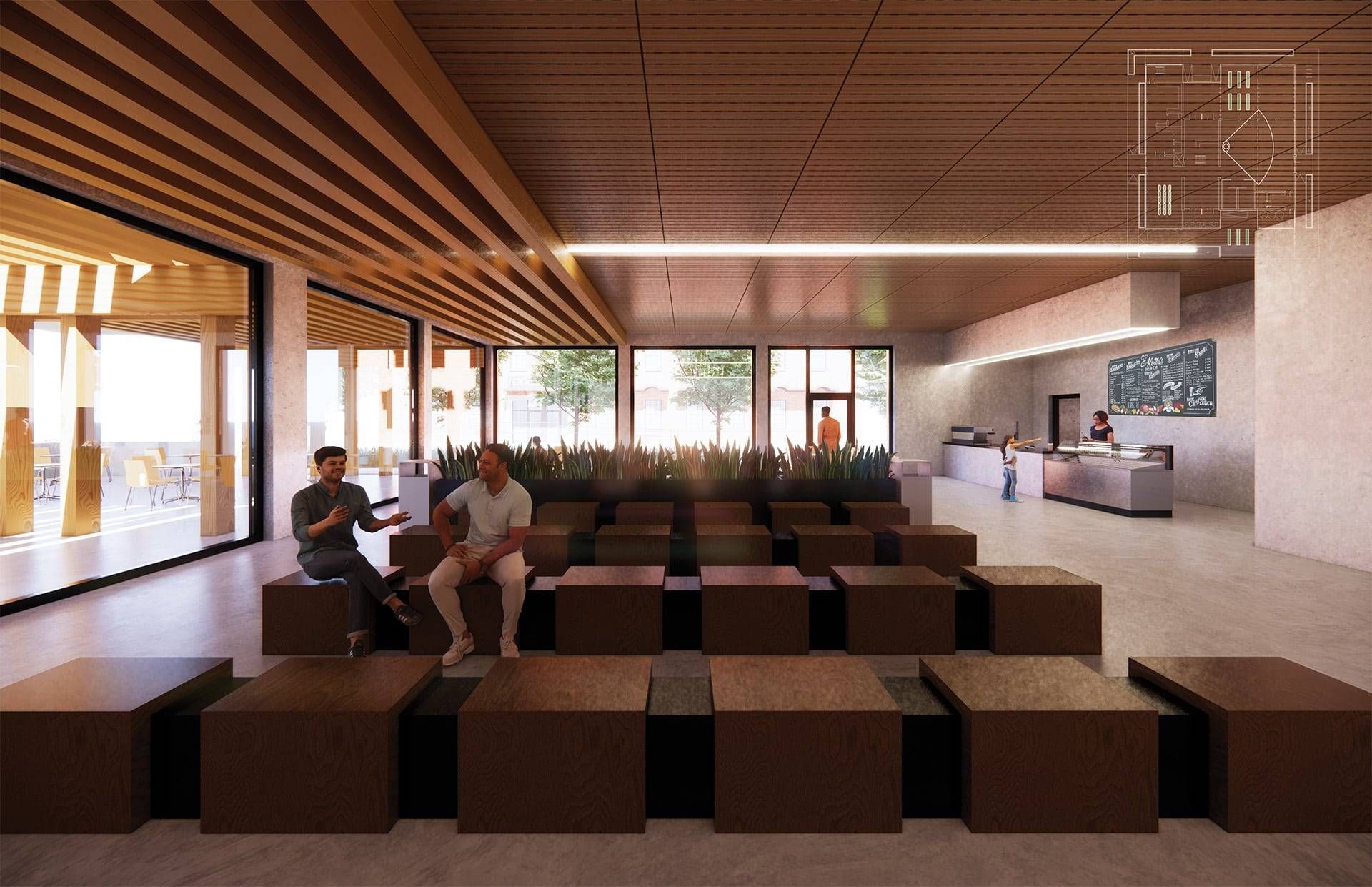
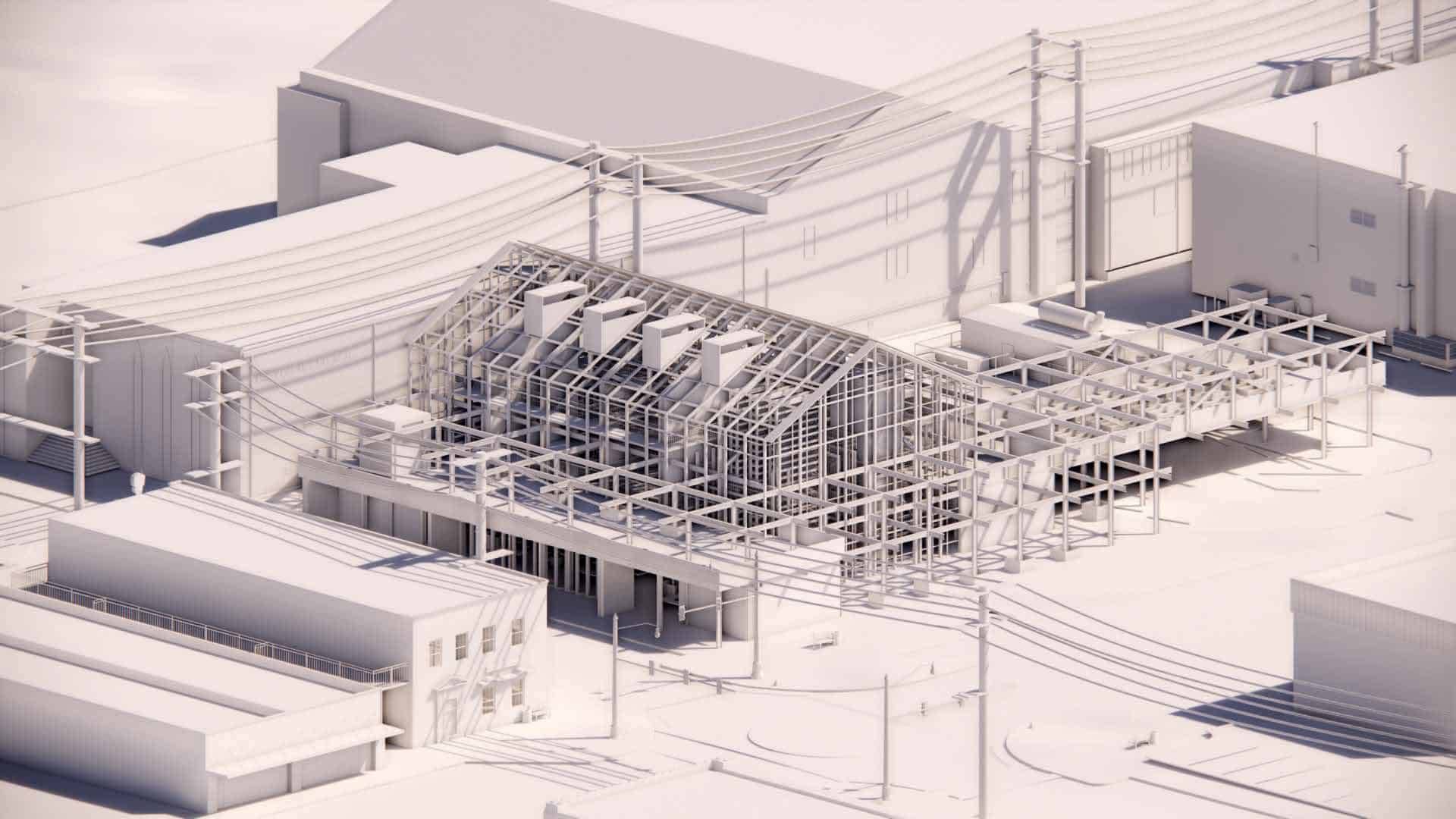
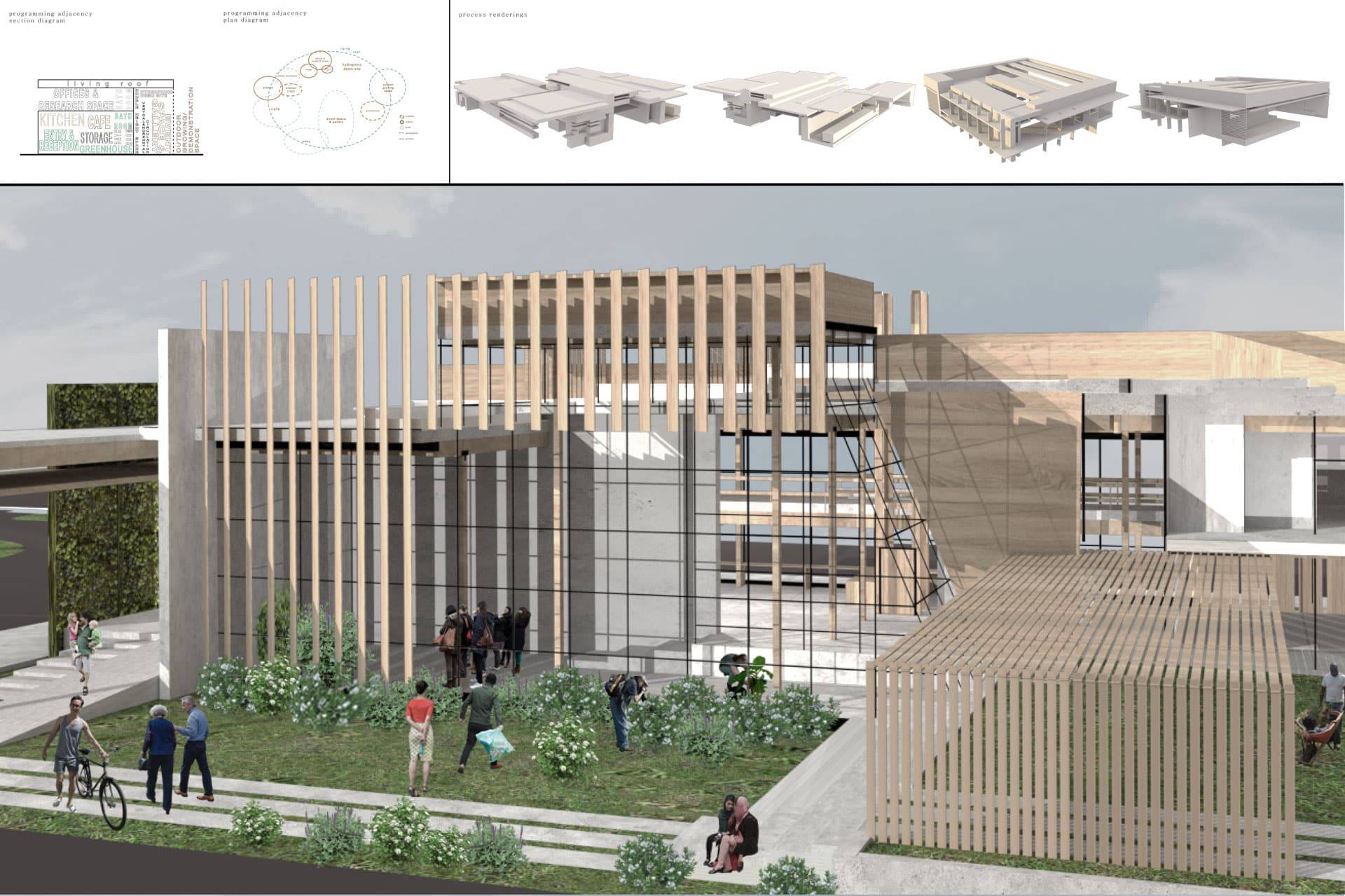
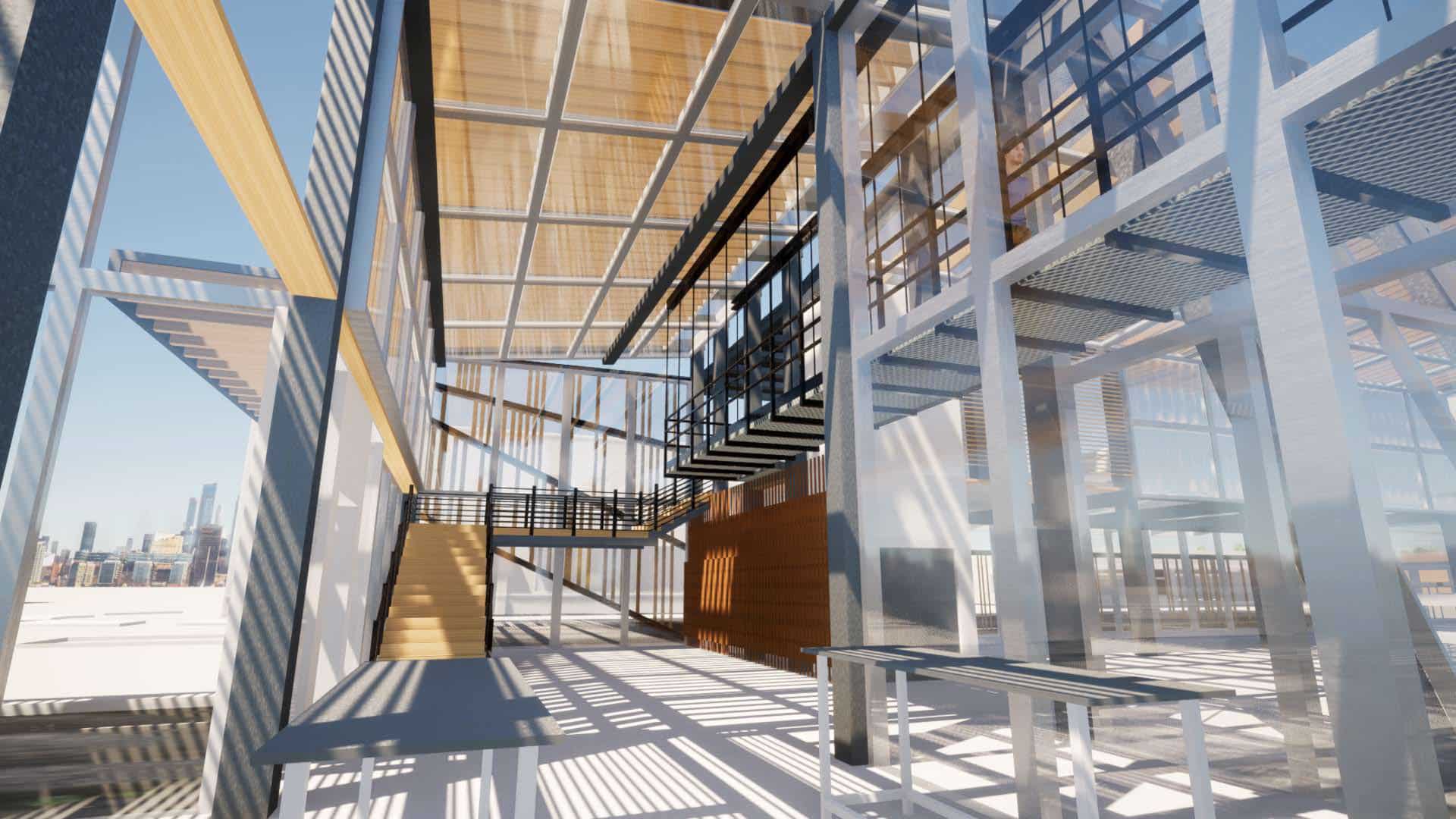
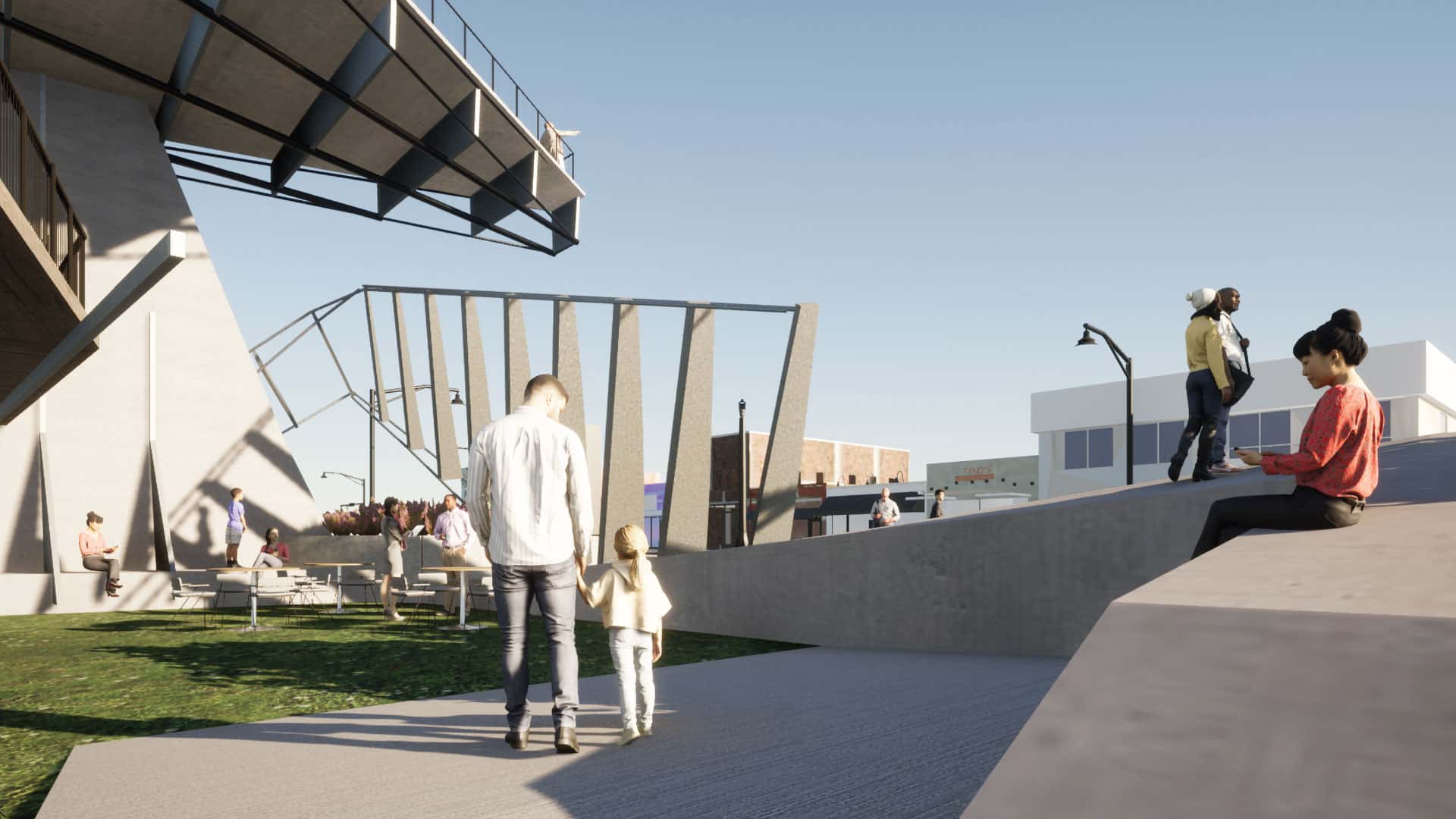
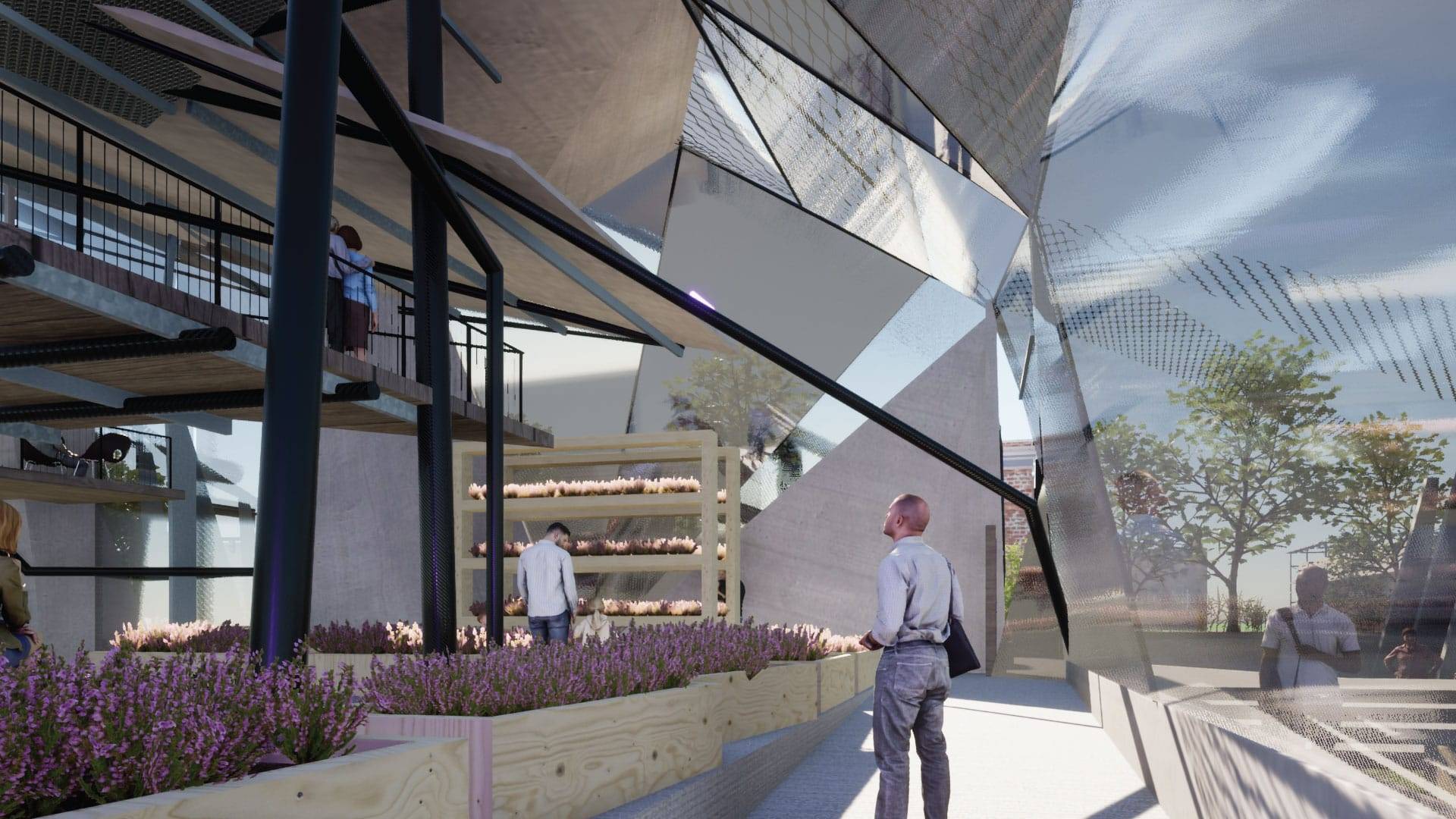
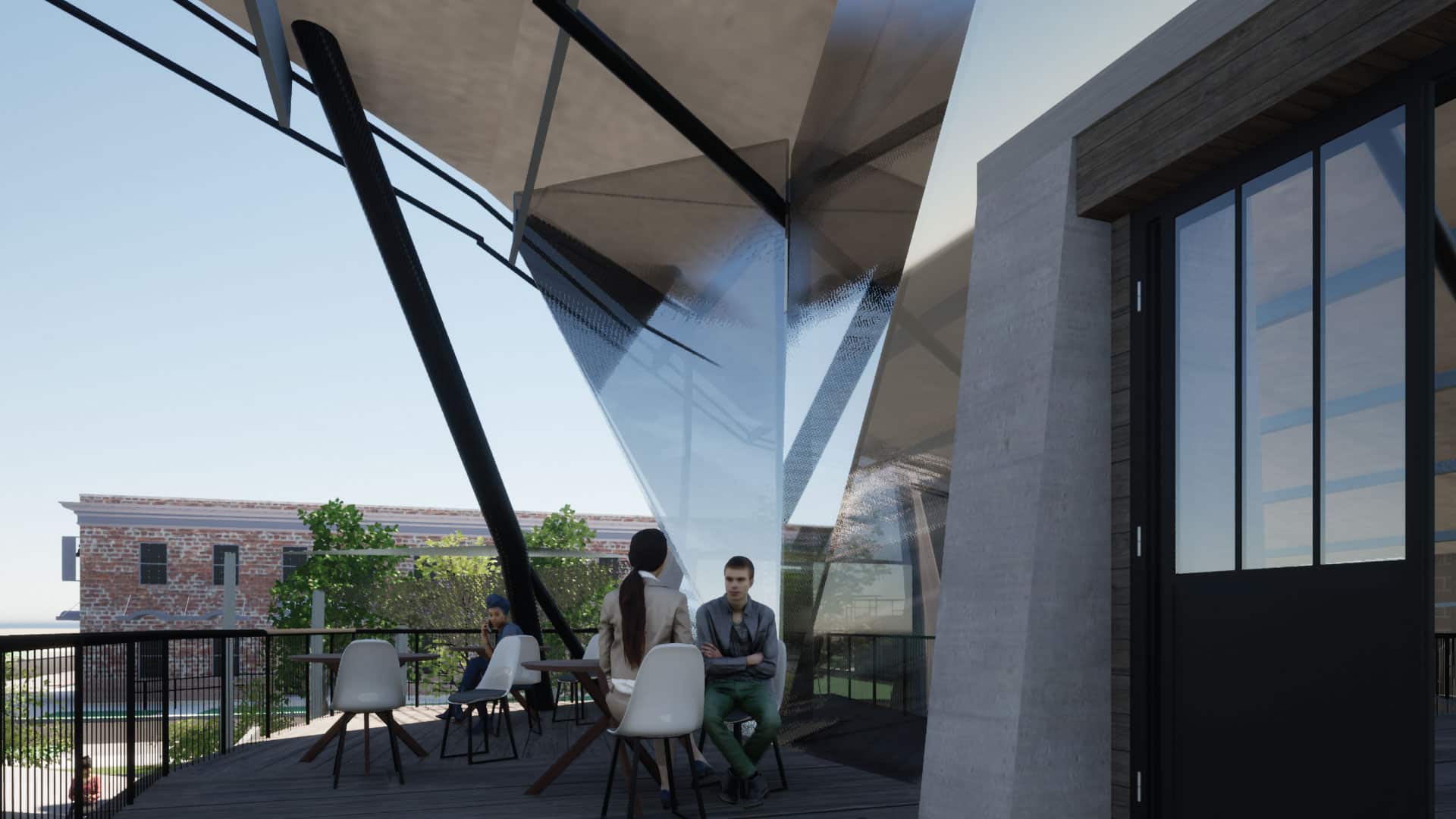
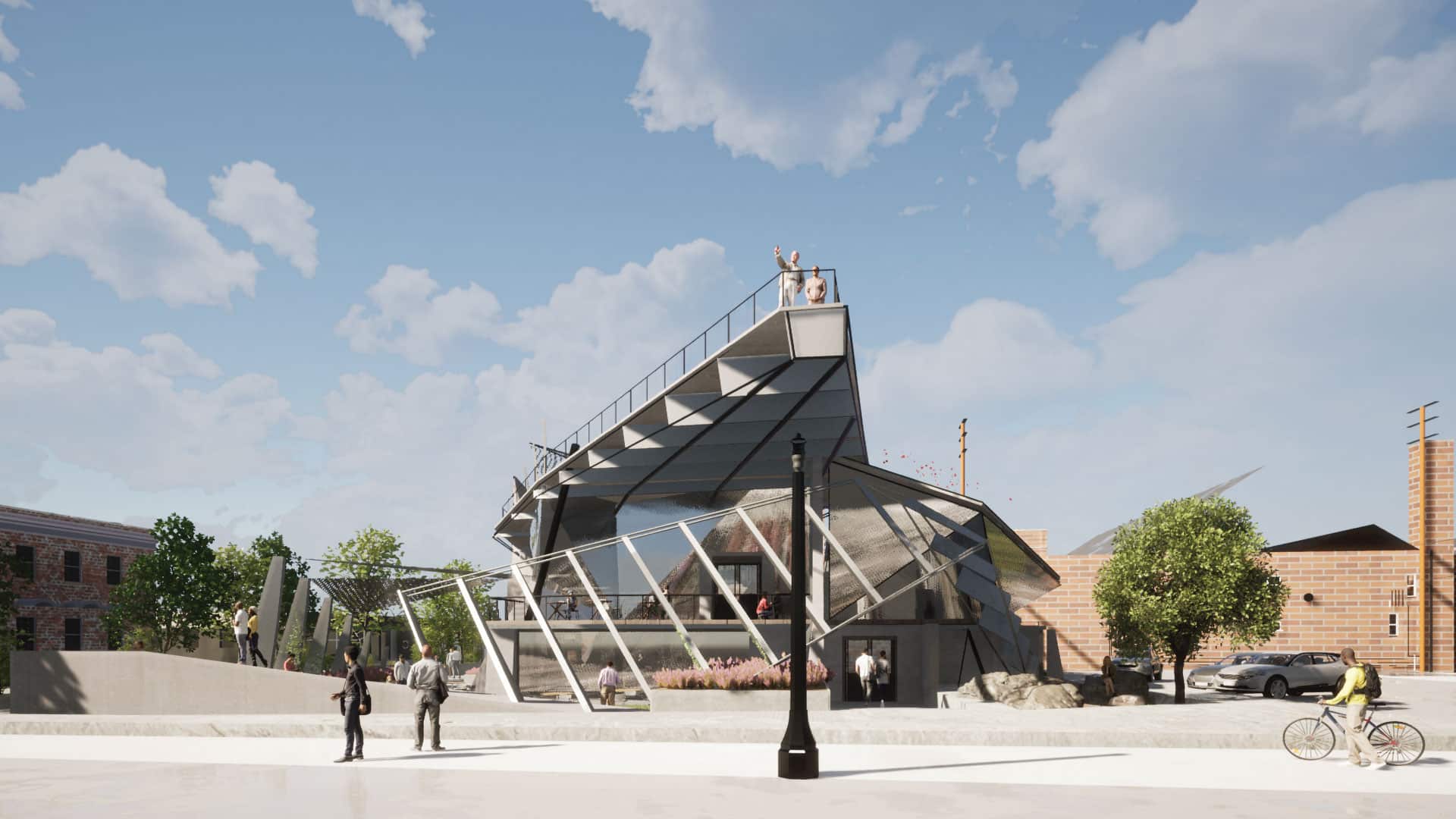
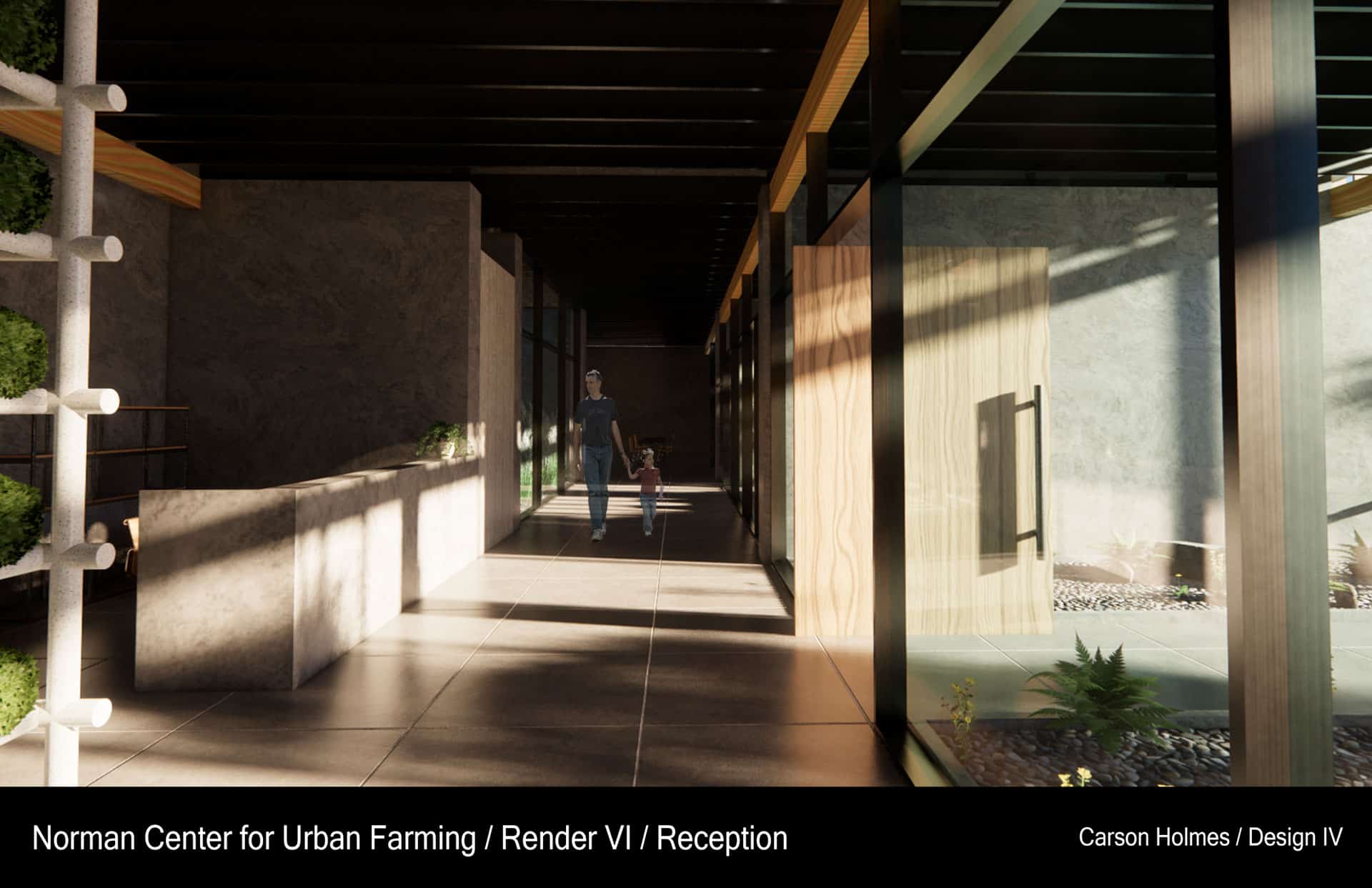
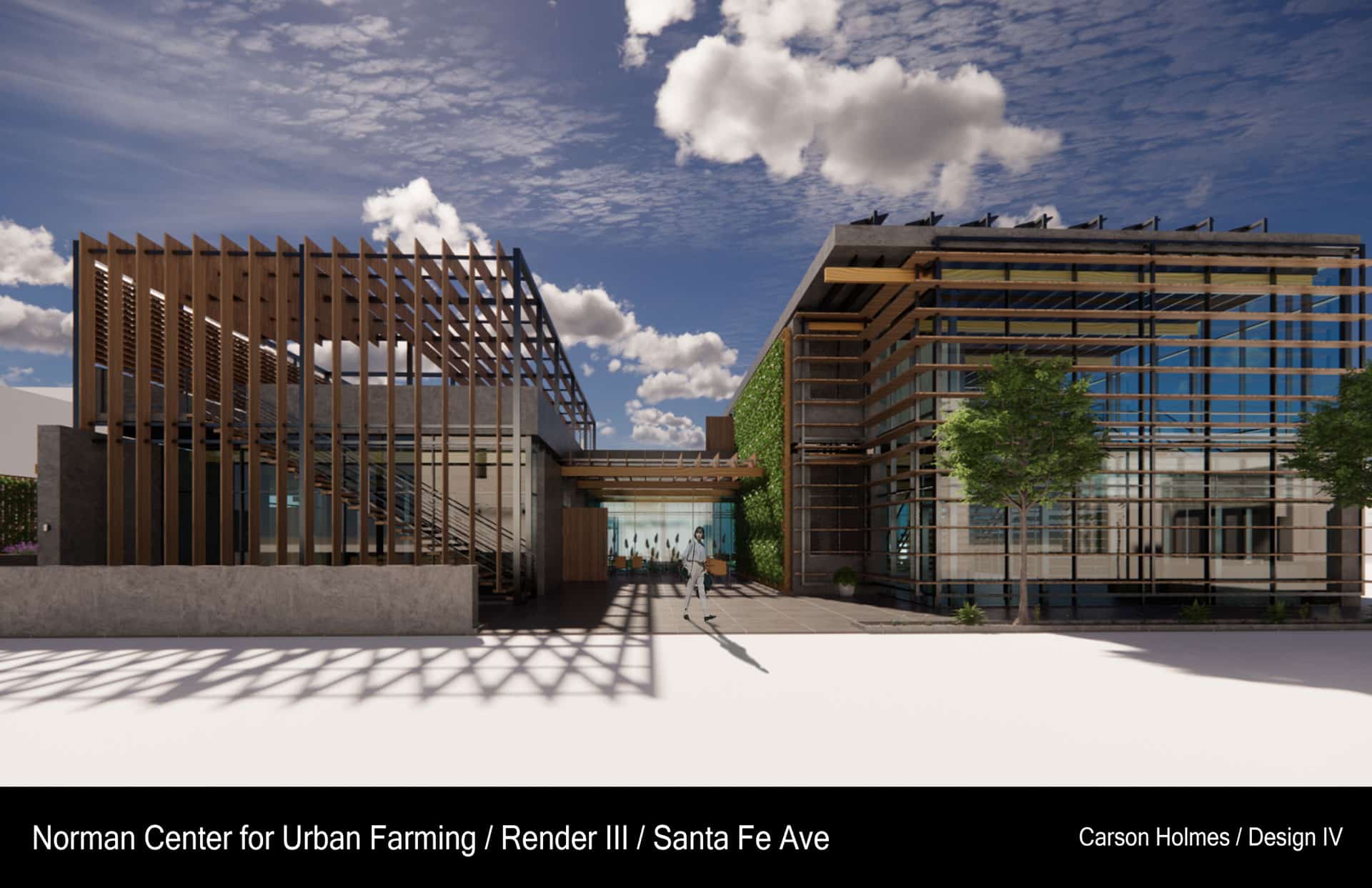
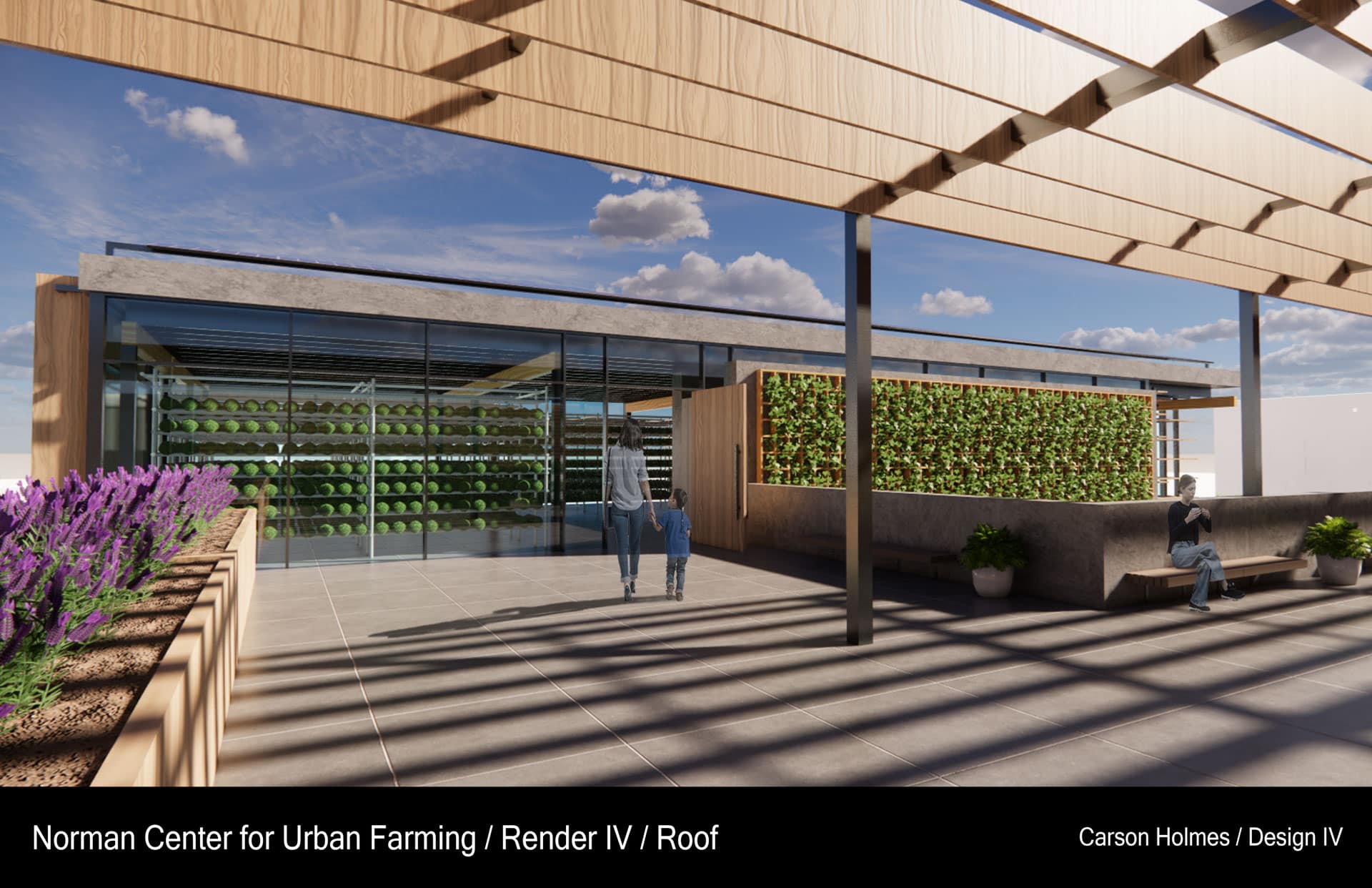
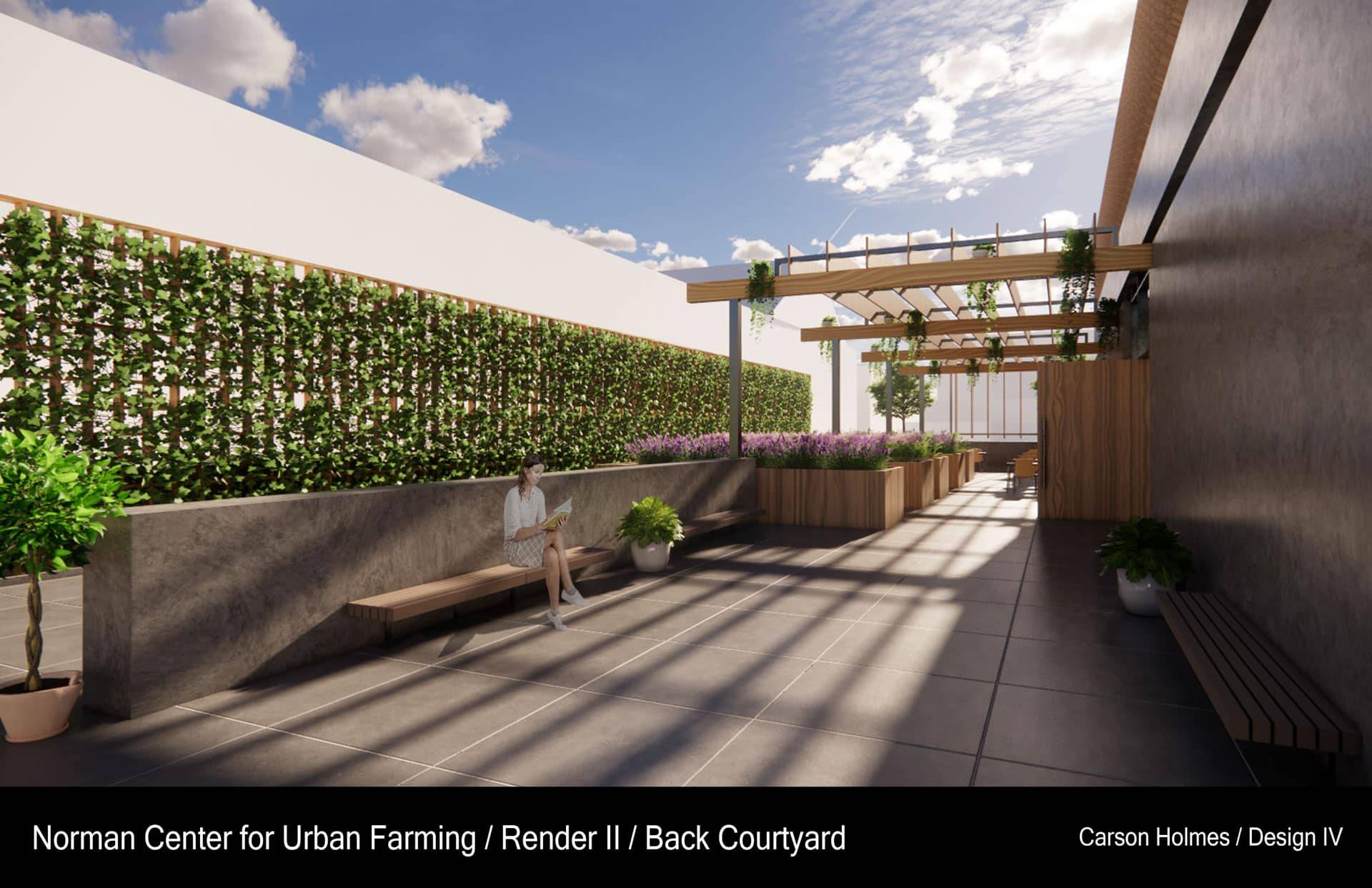
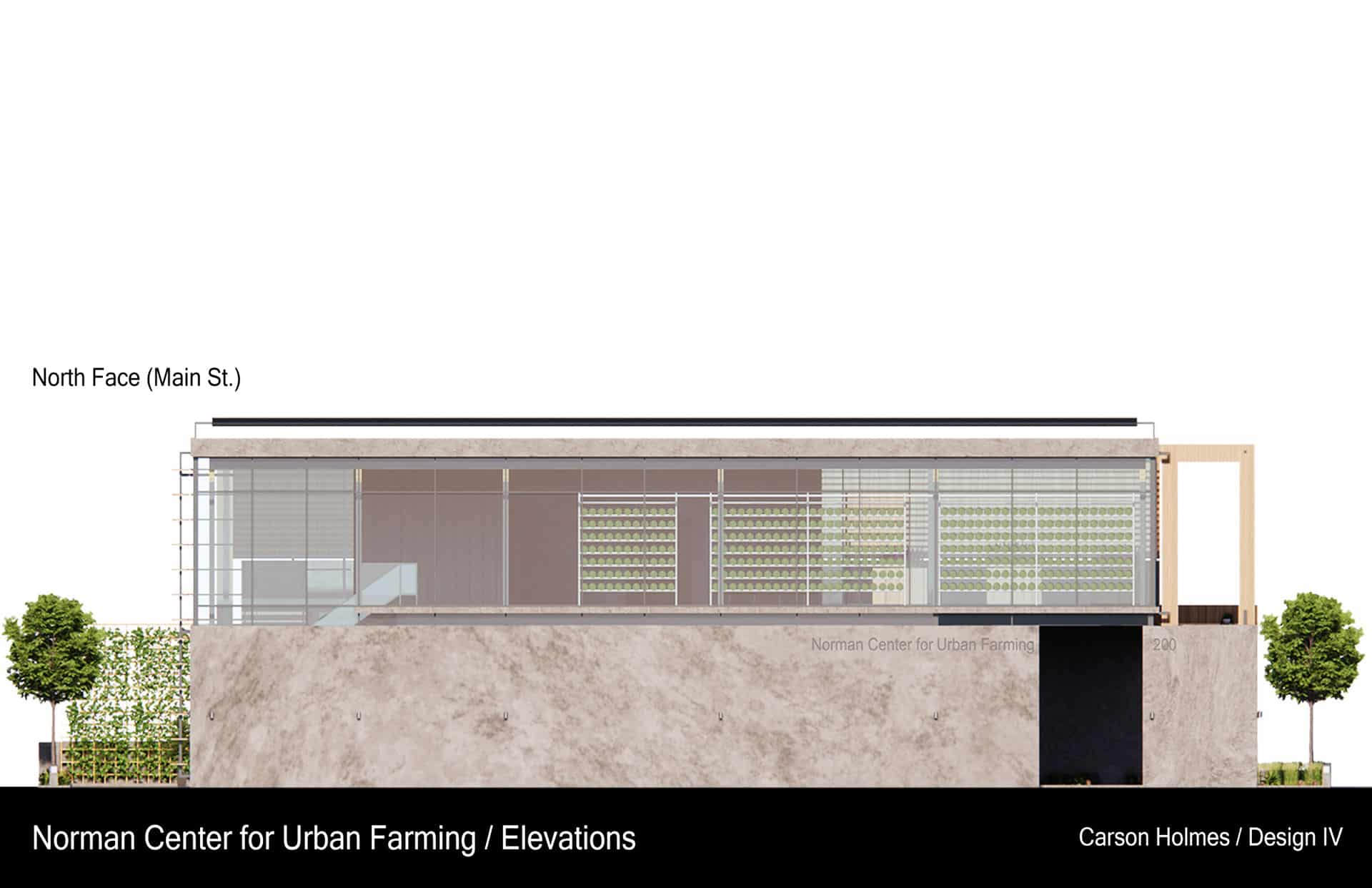
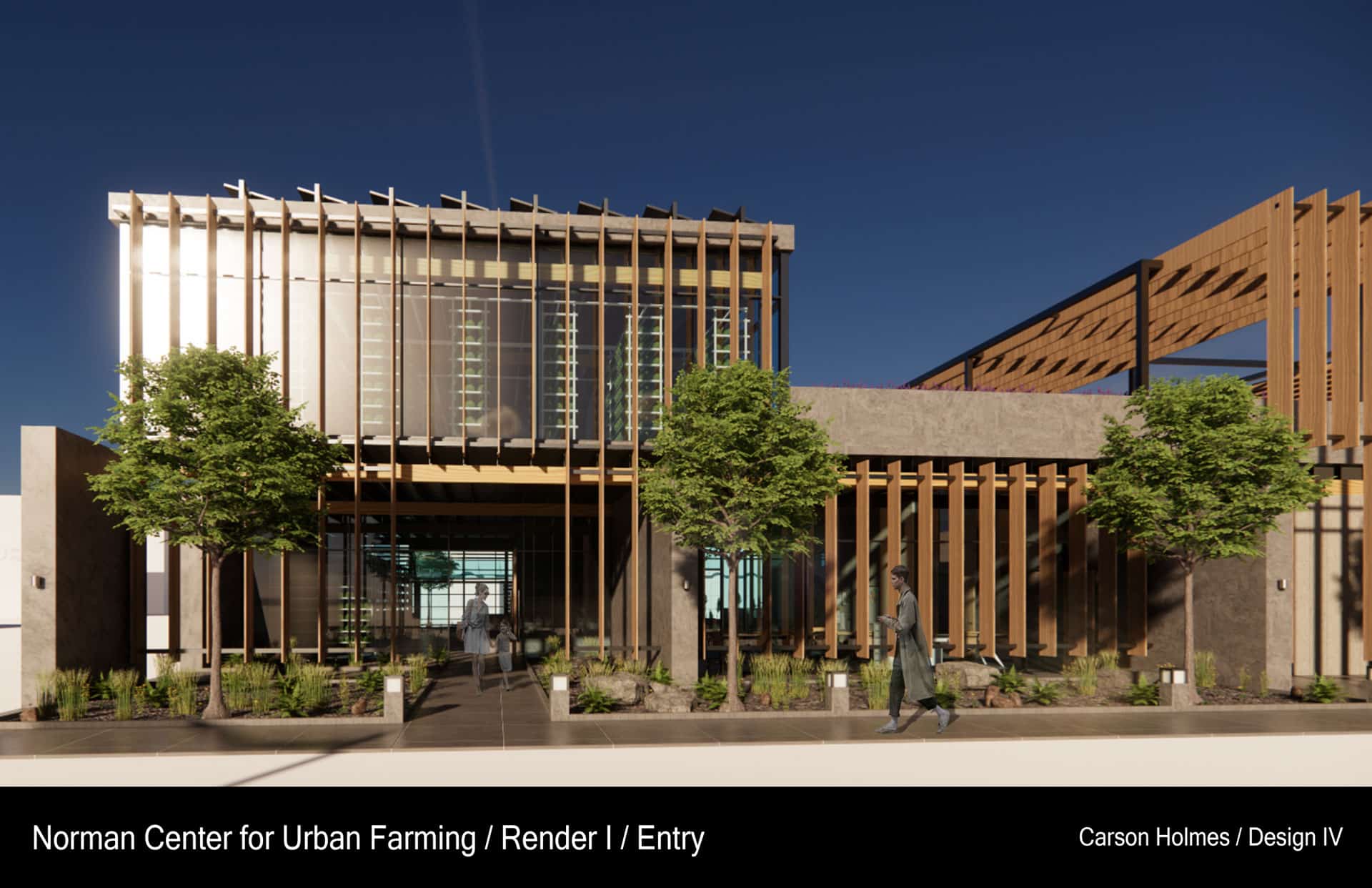
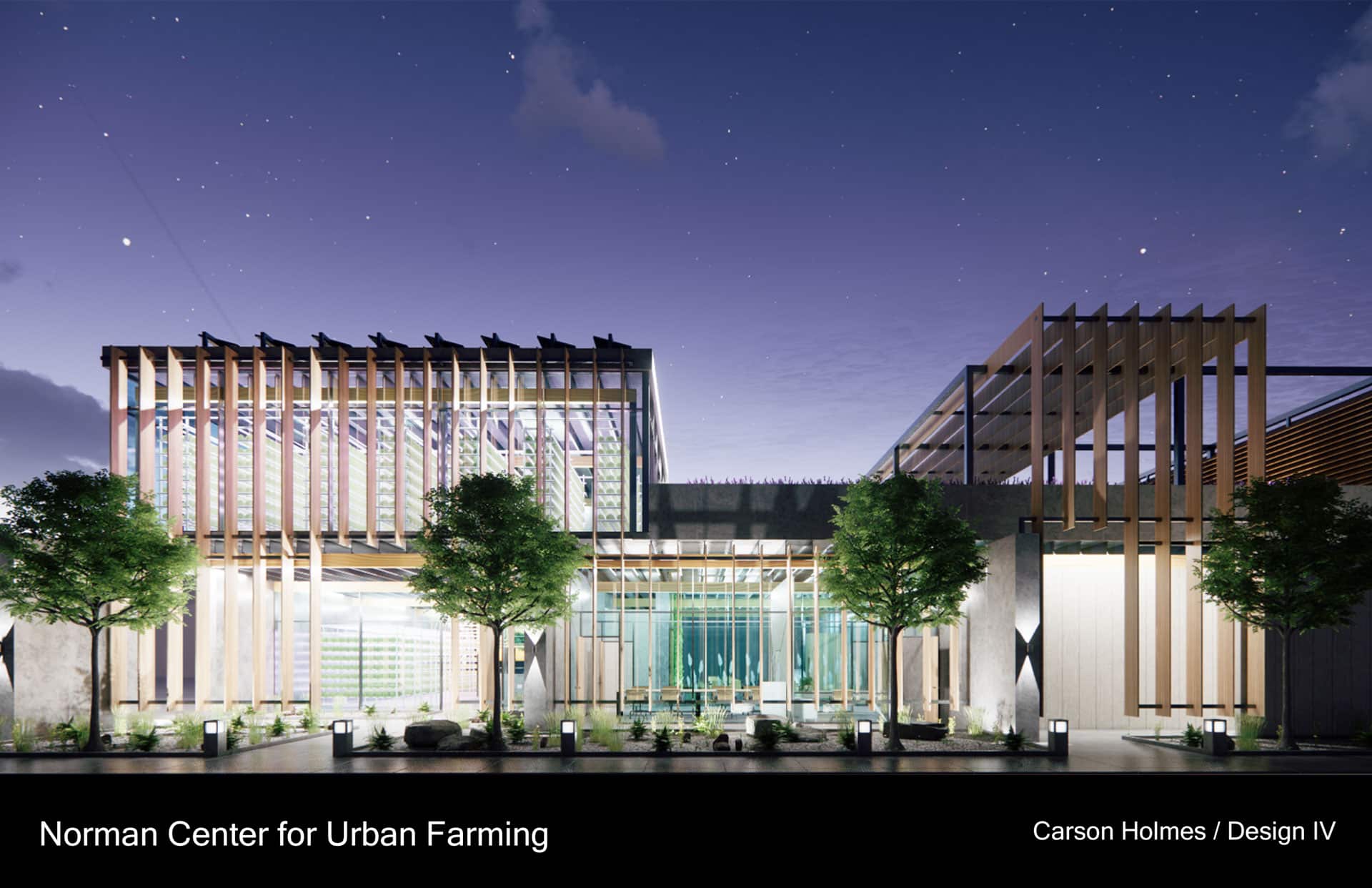
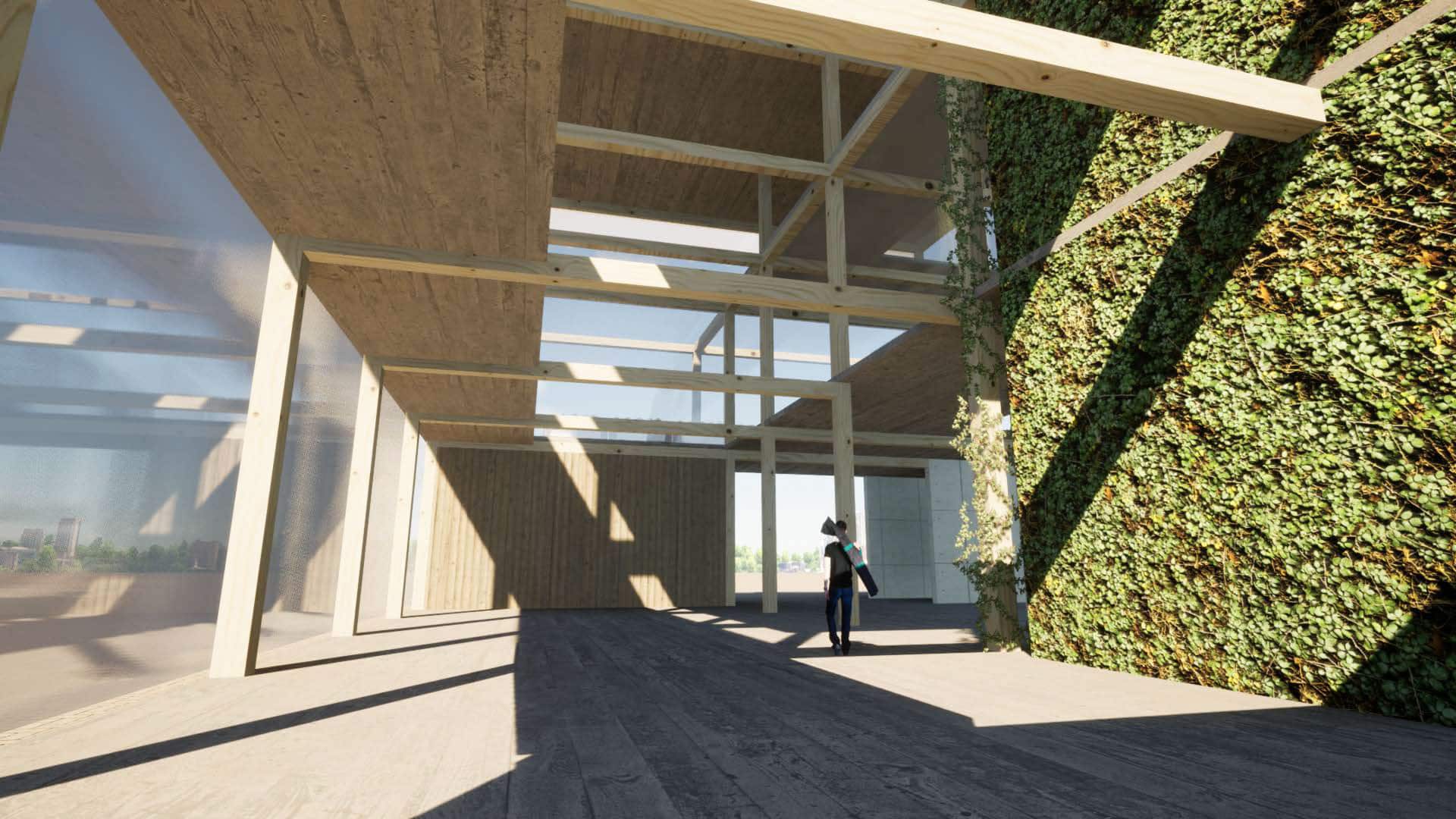
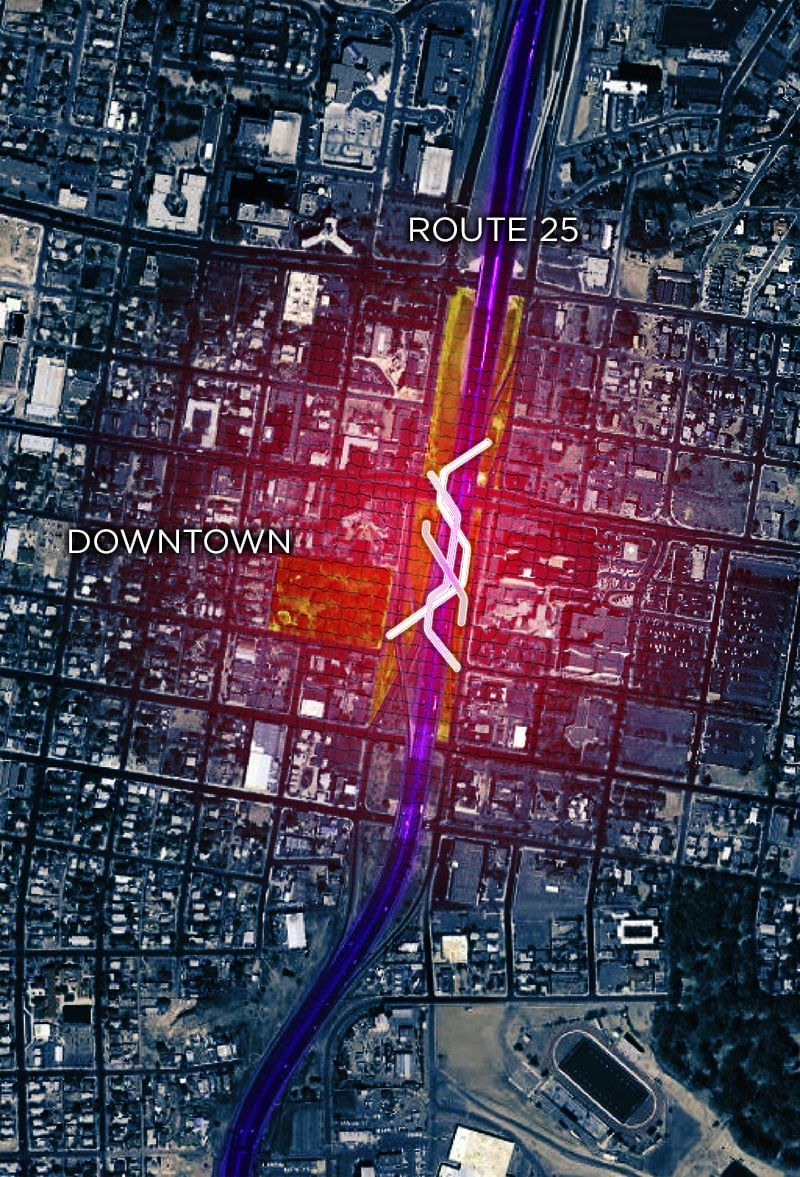
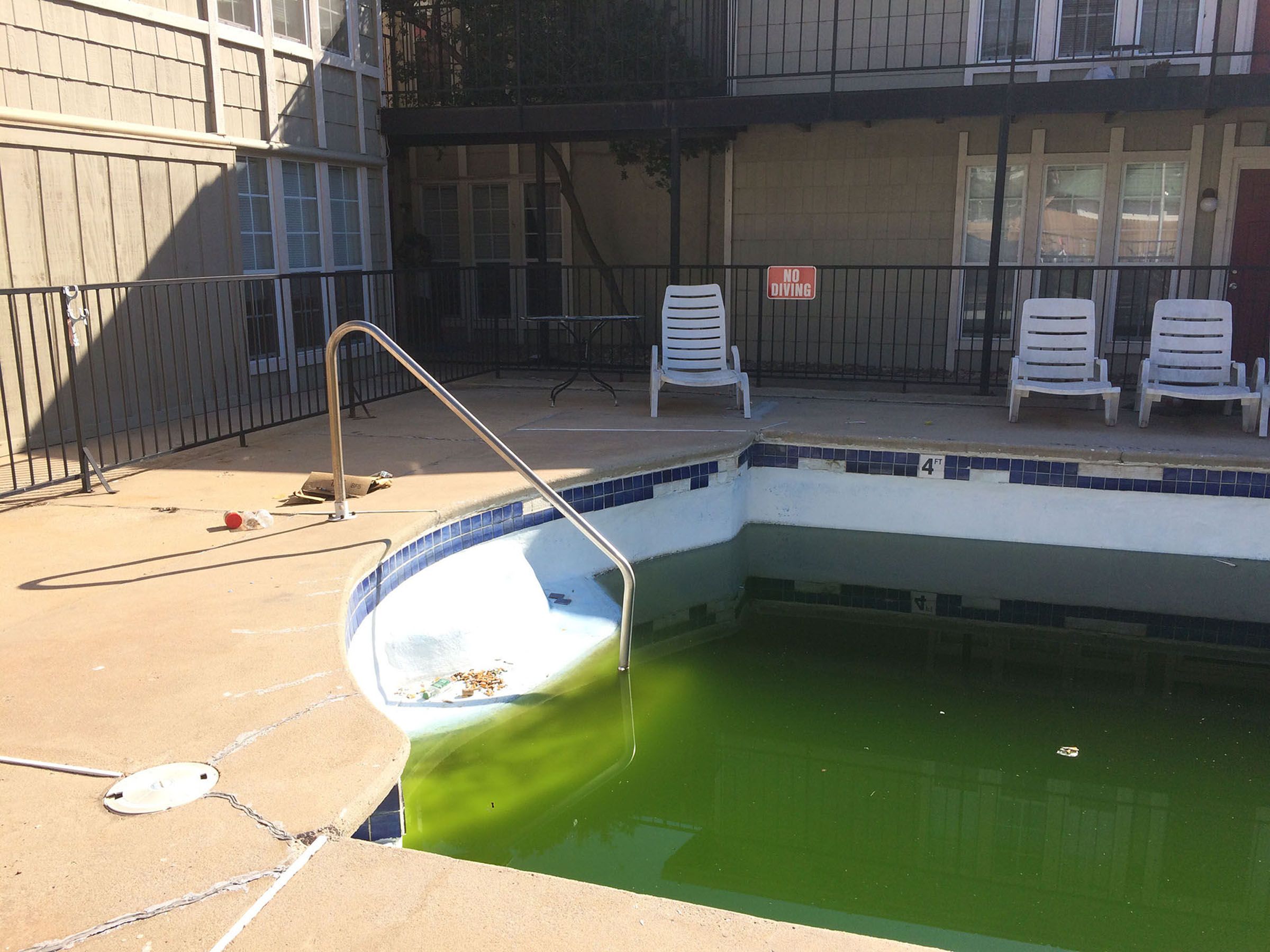
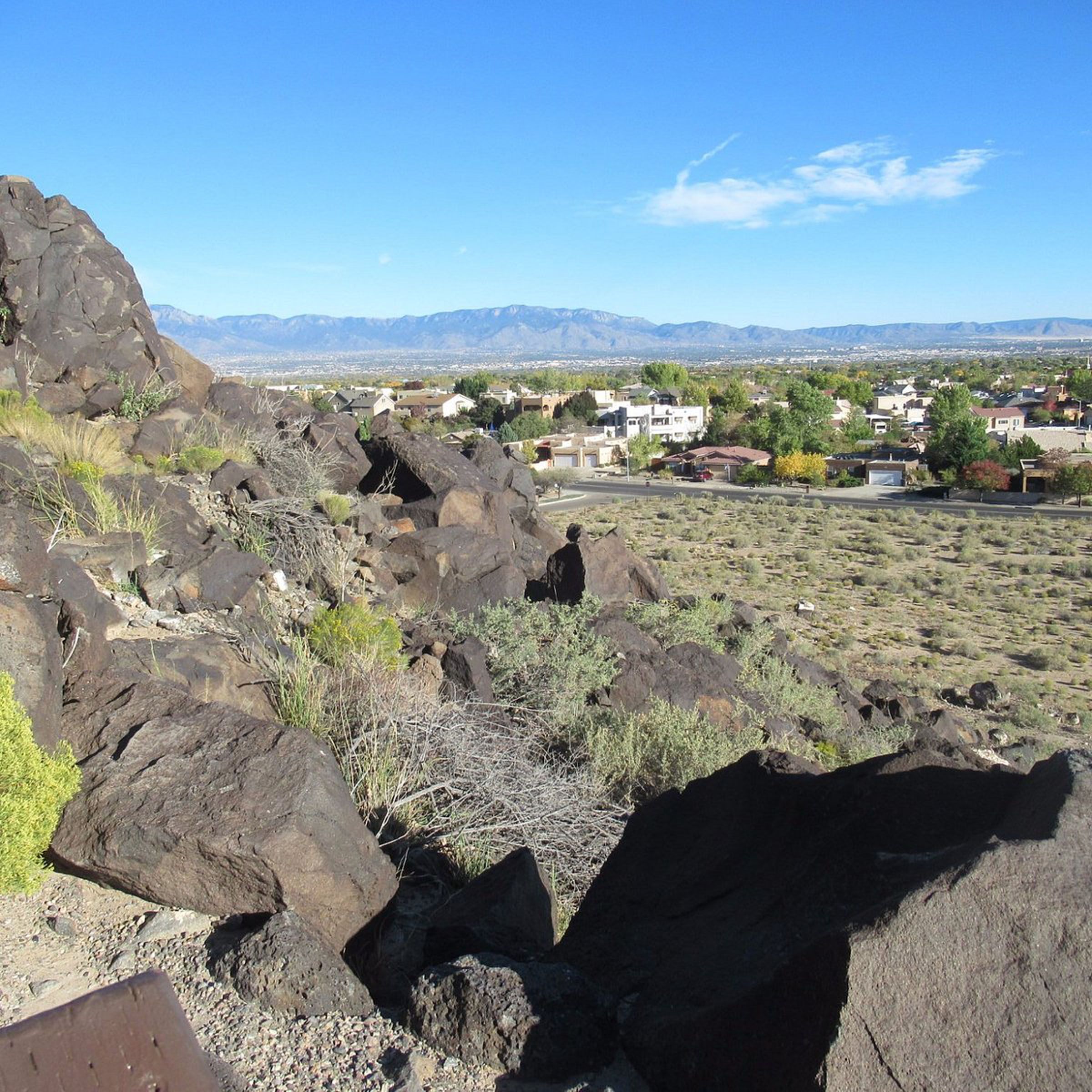
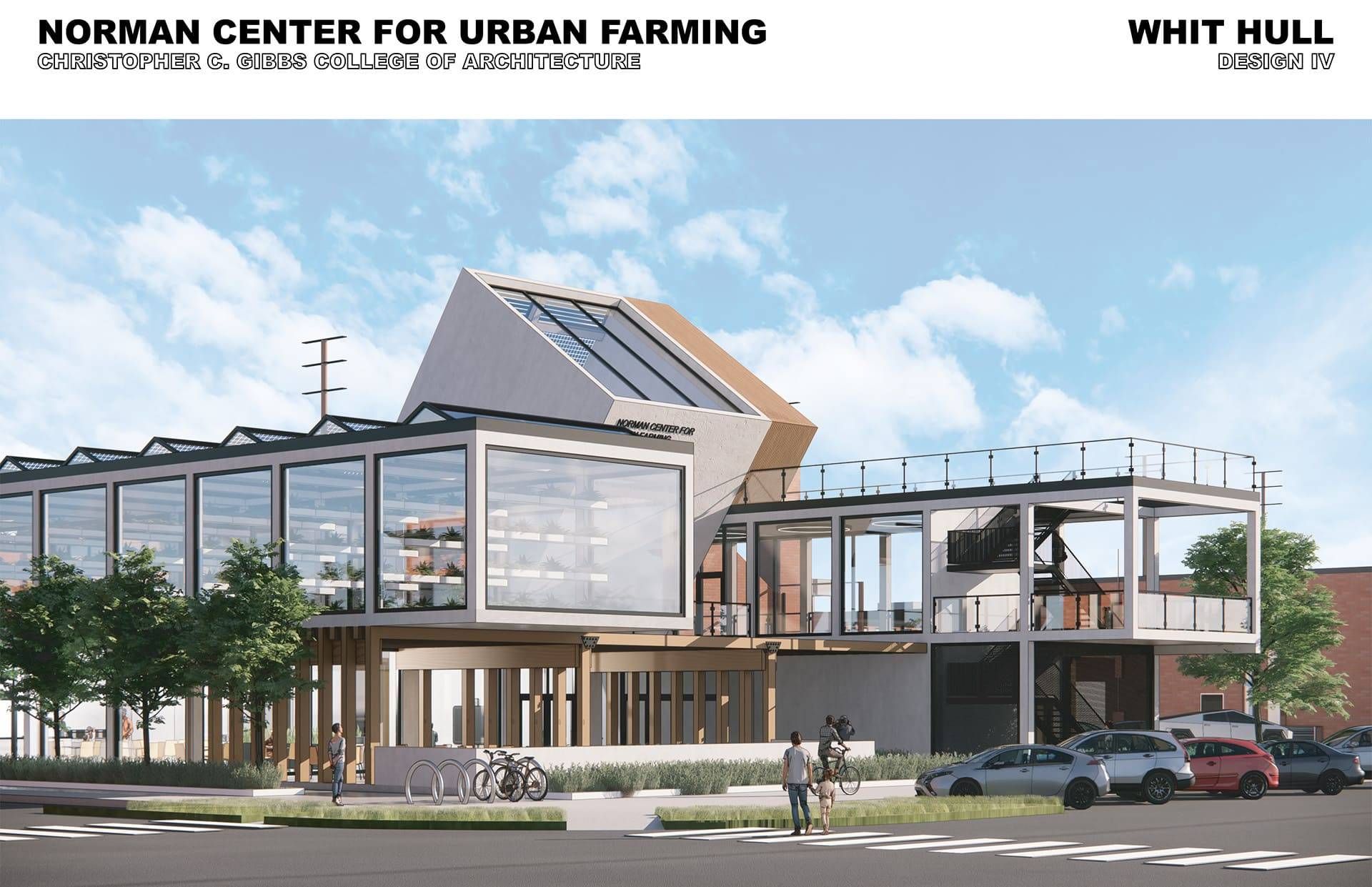
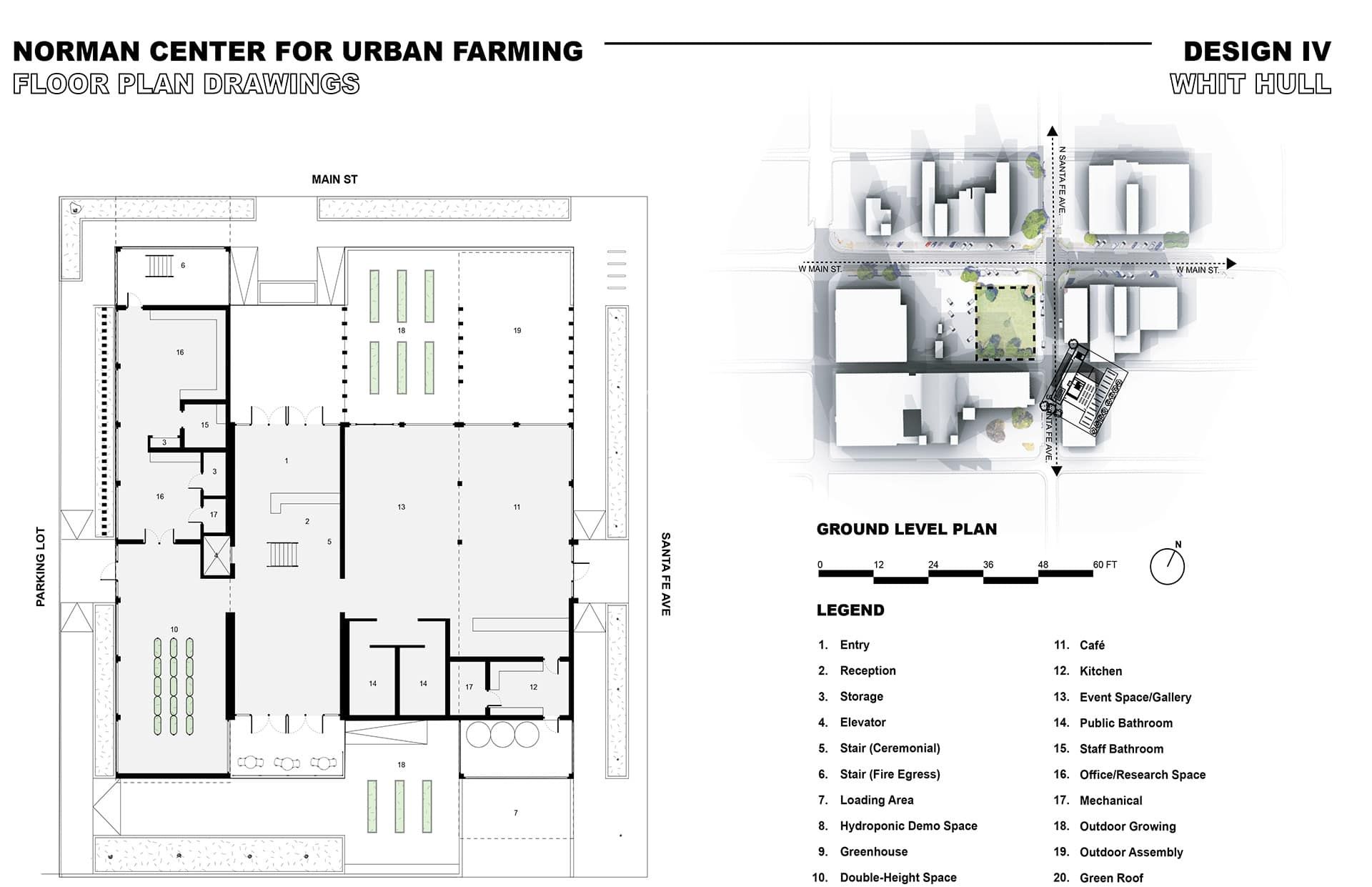
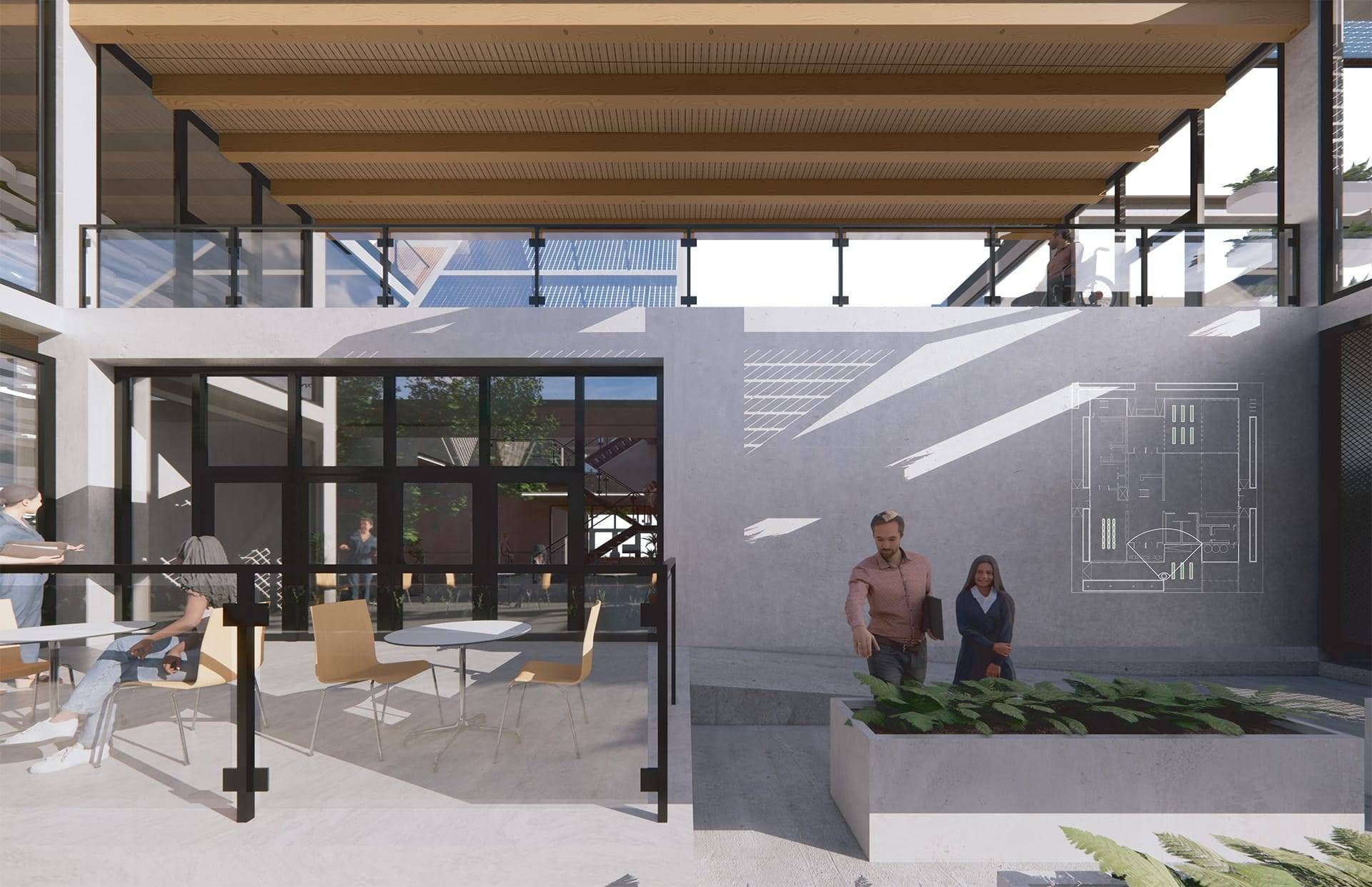
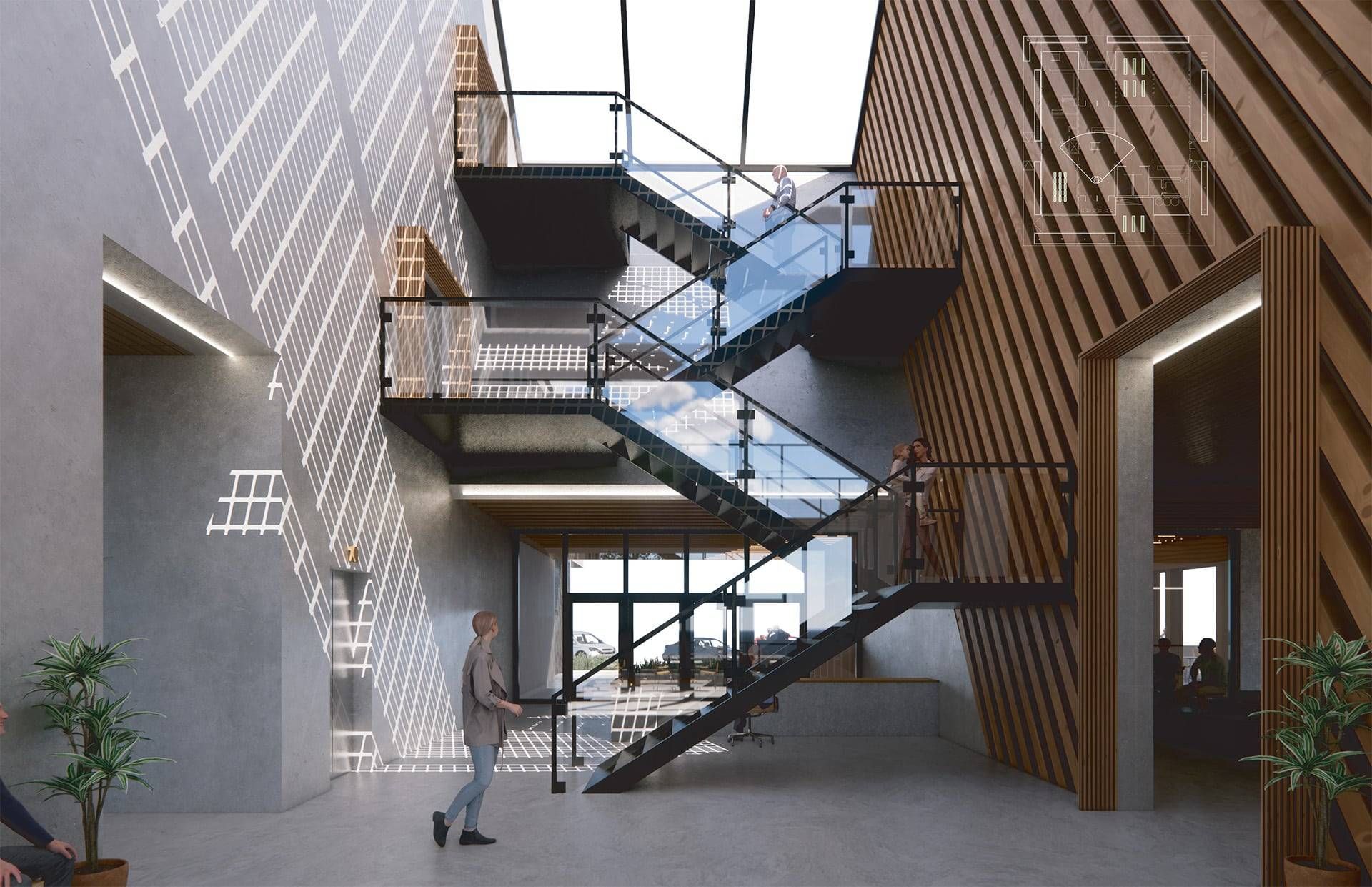
The studio emphasizes architecture as a synthesis of concept, structure, and site. Students analyze urban patterns and environmental conditions to understand how context shapes design opportunity. They investigate tectonic systems through modeling, digital simulation, and material testing, uncovering how architectural form can emerge from forces of gravity, light, and use. The semester culminates in a comprehensive building design sited in downtown Norman: the Norman Center for Urban Farming, a hybrid of educational, civic, and agricultural spaces that embodies sustainable design principles and structural expression.
Objectives
The goals of Design IV are to develop the student’s capacity to integrate conceptual design, technical precision, and representational clarity. Students learn to balance creativity with constraint by using structure as a generator of architectural form. By the end of the semester, they can:
-
Translate analytical studies of site, context, and environment into spatial strategy.
-
Incorporate structural systems as an integral component of architectural composition.
-
Use iterative physical and digital modeling to test design hypotheses.
-
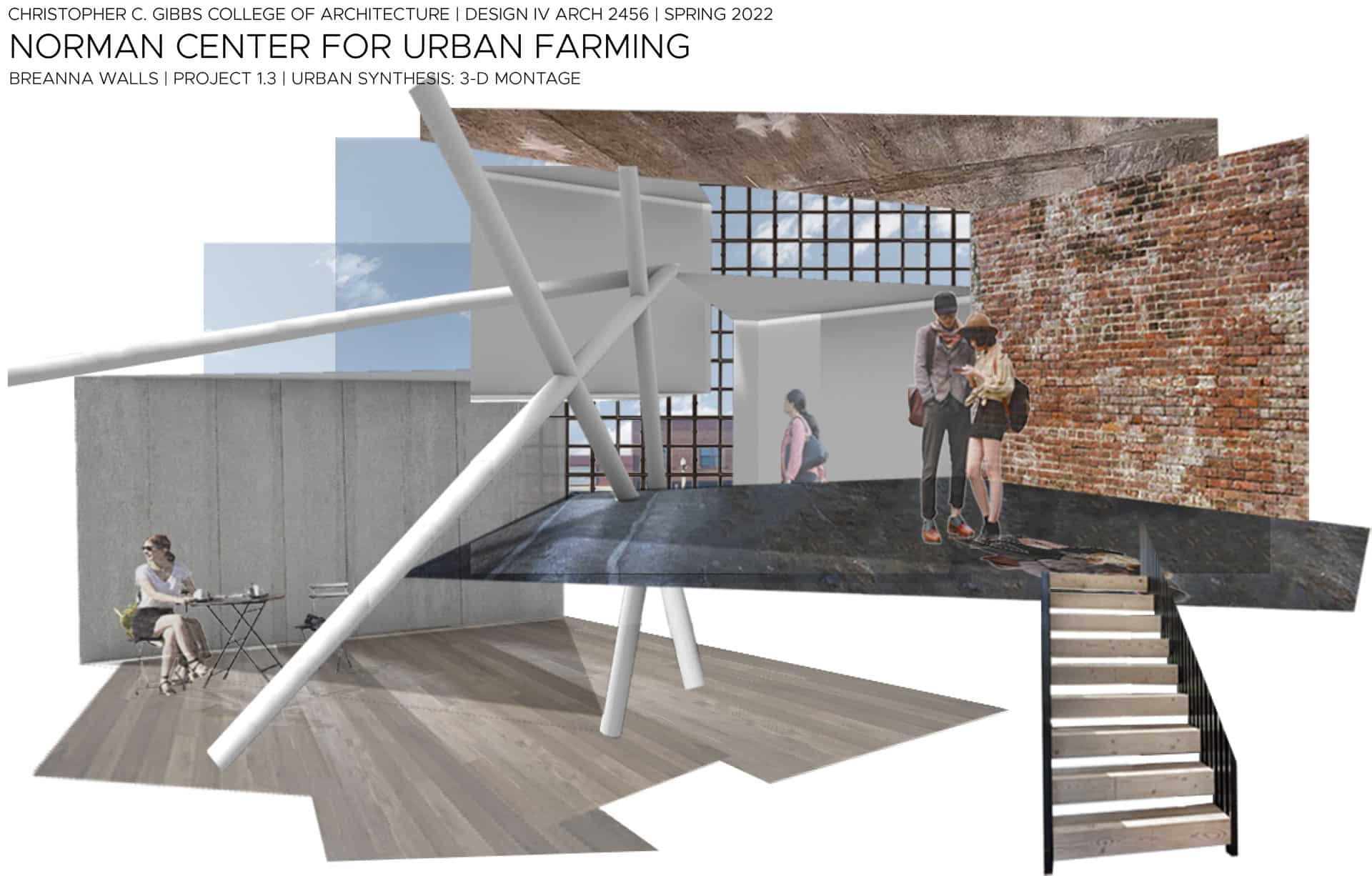
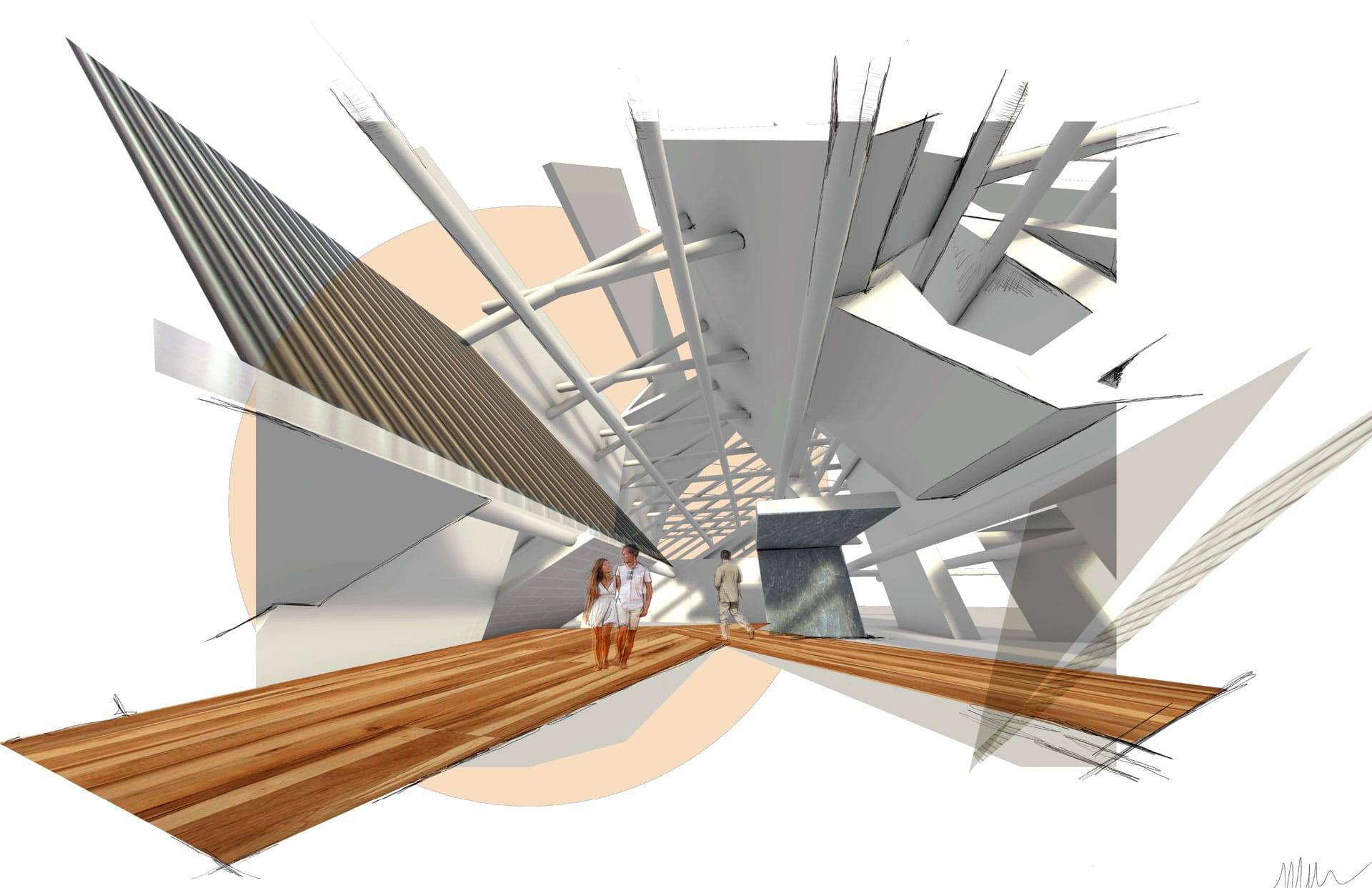
Apply hybrid modes of representation—plans, sections, montages, renderings—to communicate design intent.
-
Develop a design process that is iterative, reflective, and grounded in making.
Students leave the studio with a refined understanding of how architectural form operates as both technical system and spatial experience, preparing them for advanced design exploration.
Projects
Projects in Design IV bridge conceptual ambition with structural precision. The semester begins with analytical exercises that build contextual understanding and culminates in a comprehensive architectural proposal. Each project stage introduces a new mode of inquiry—research, analysis, synthesis, and refinement—while reinforcing the relationship between design intent and tectonic expression.
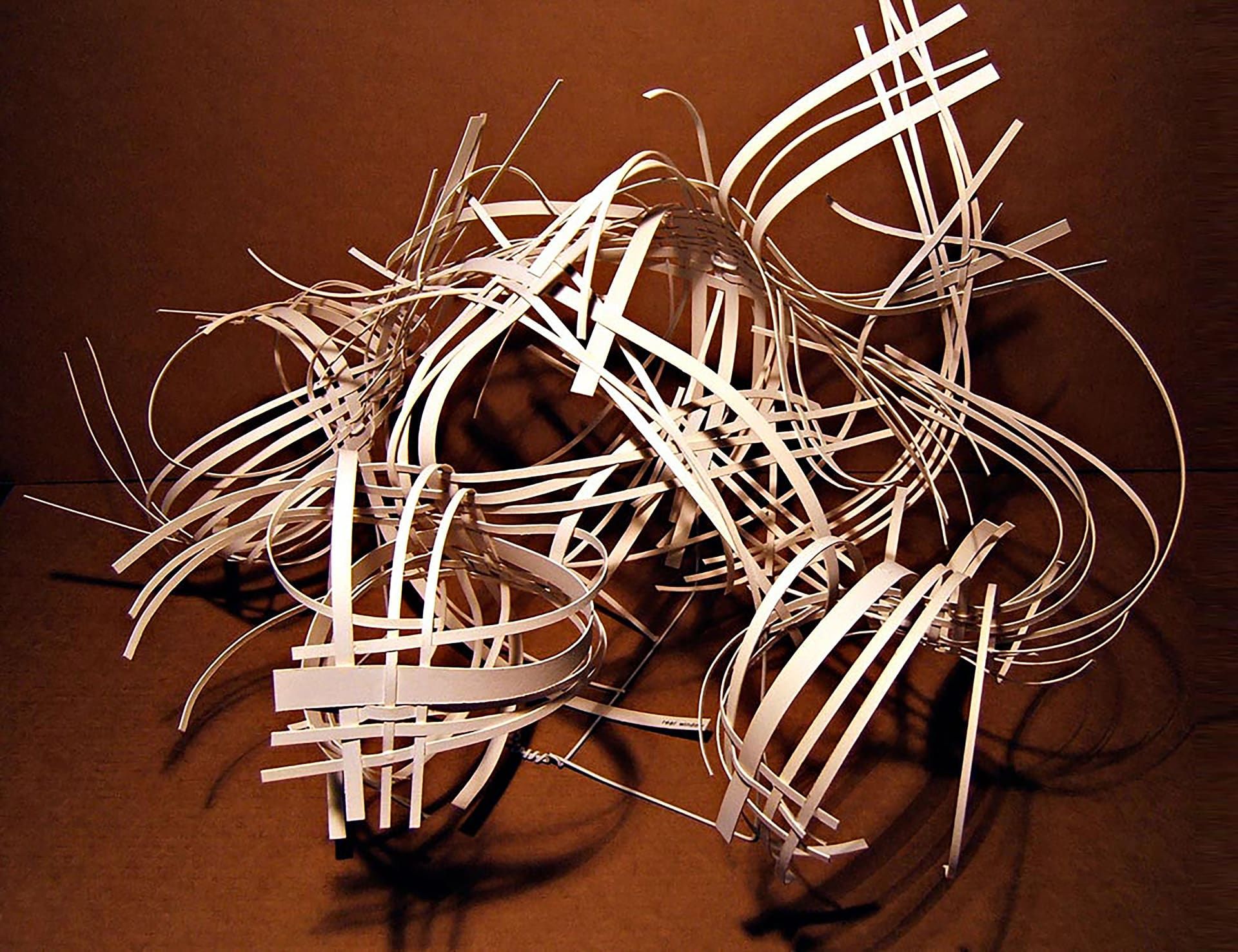
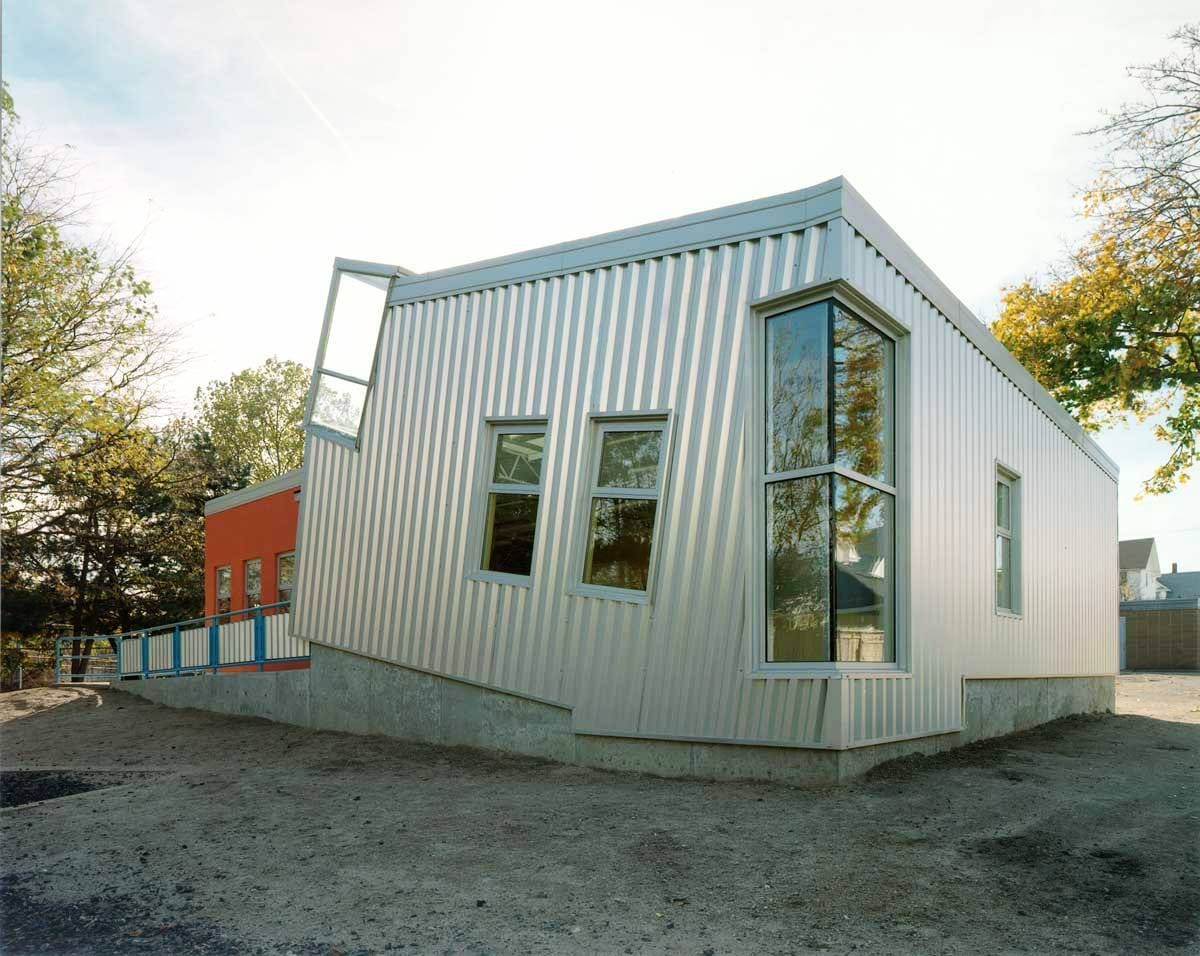
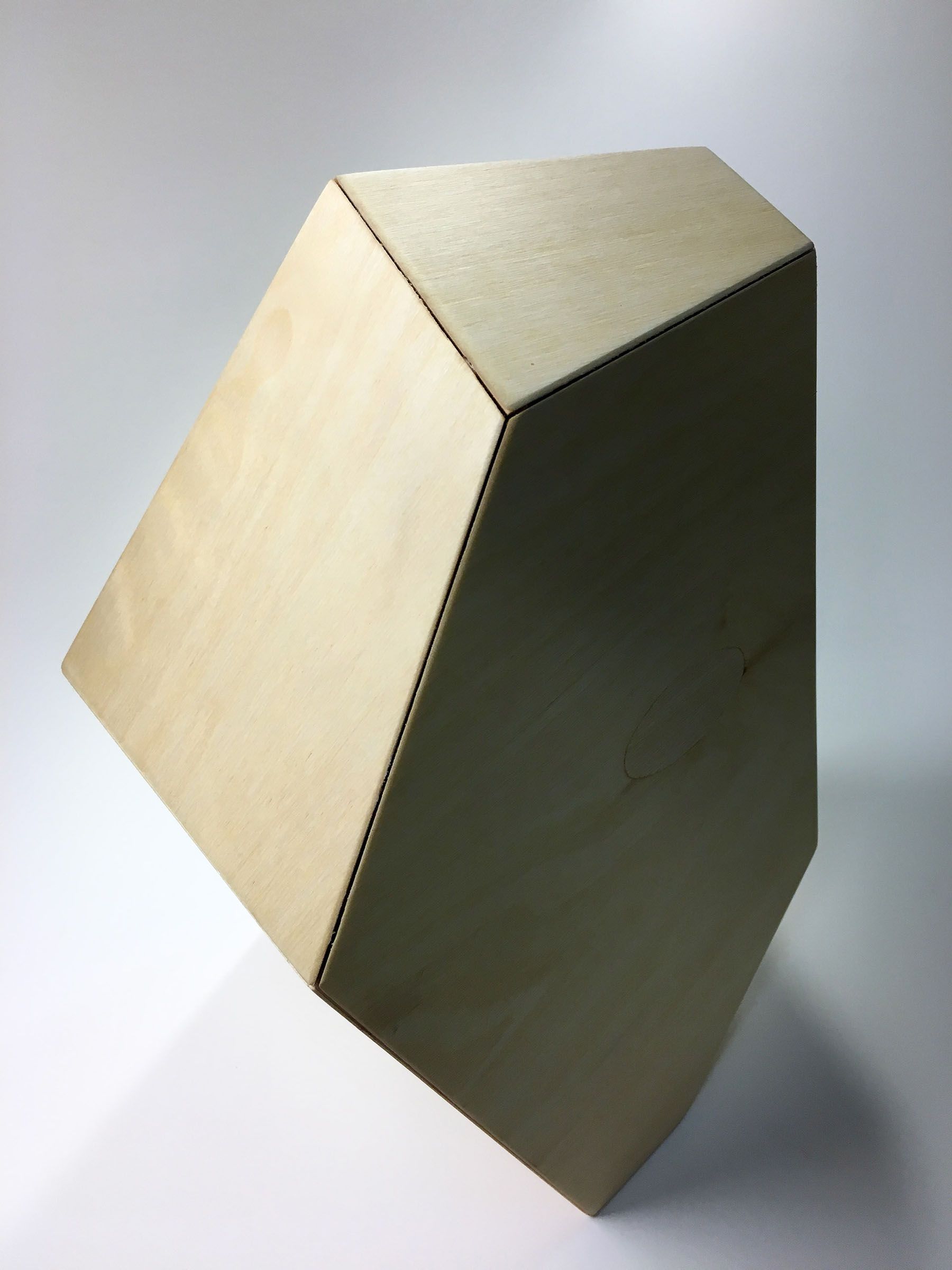
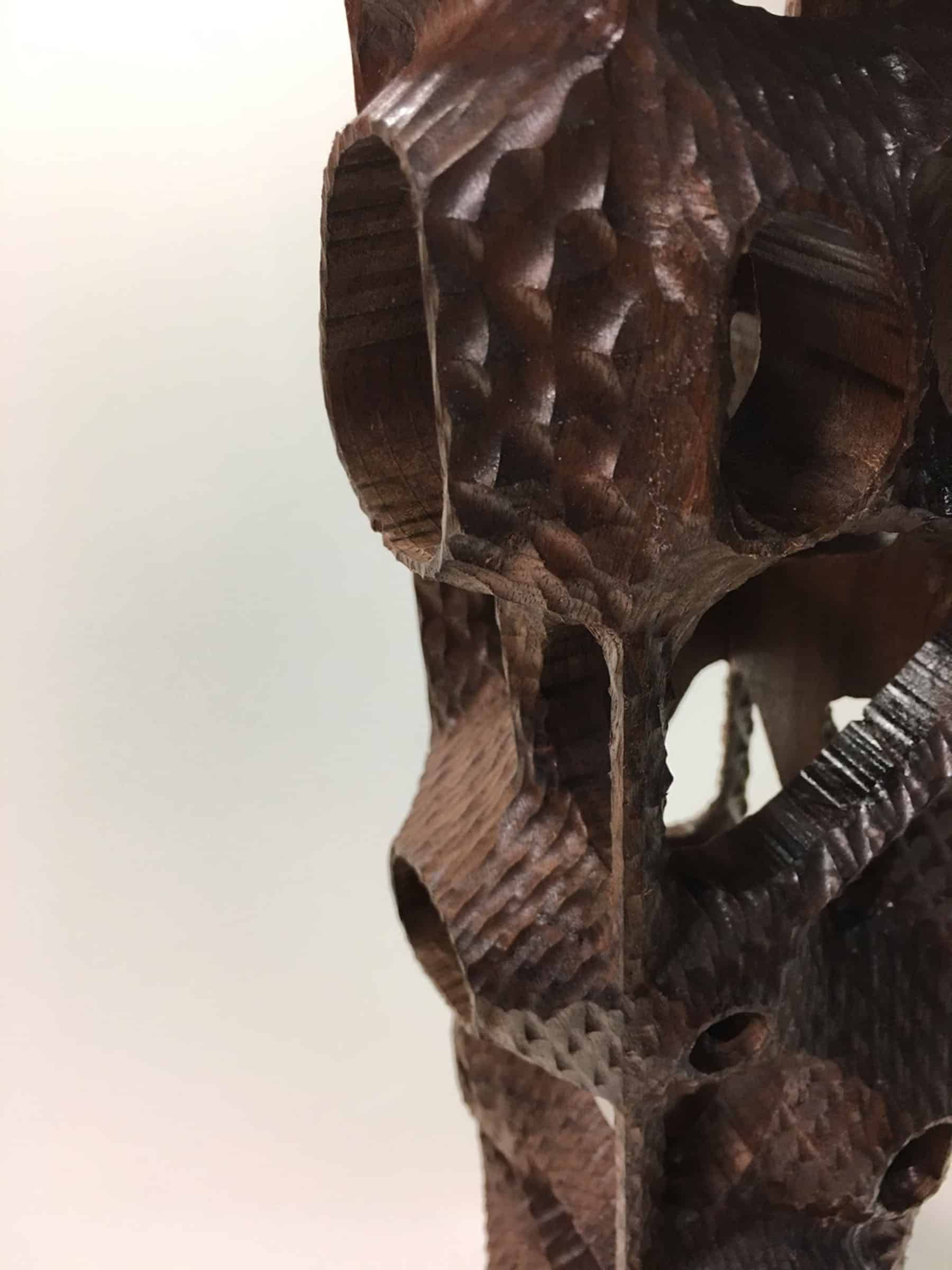
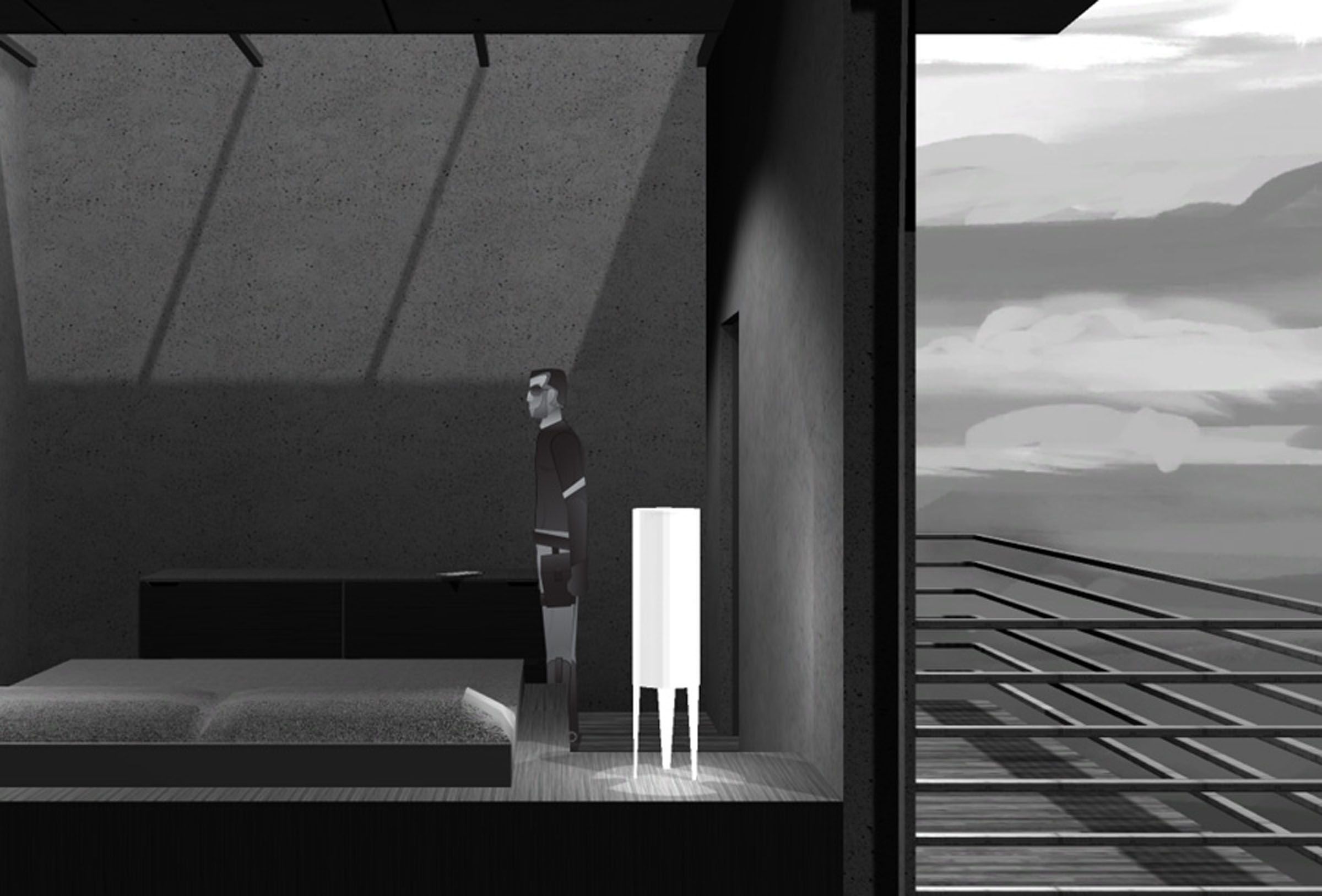
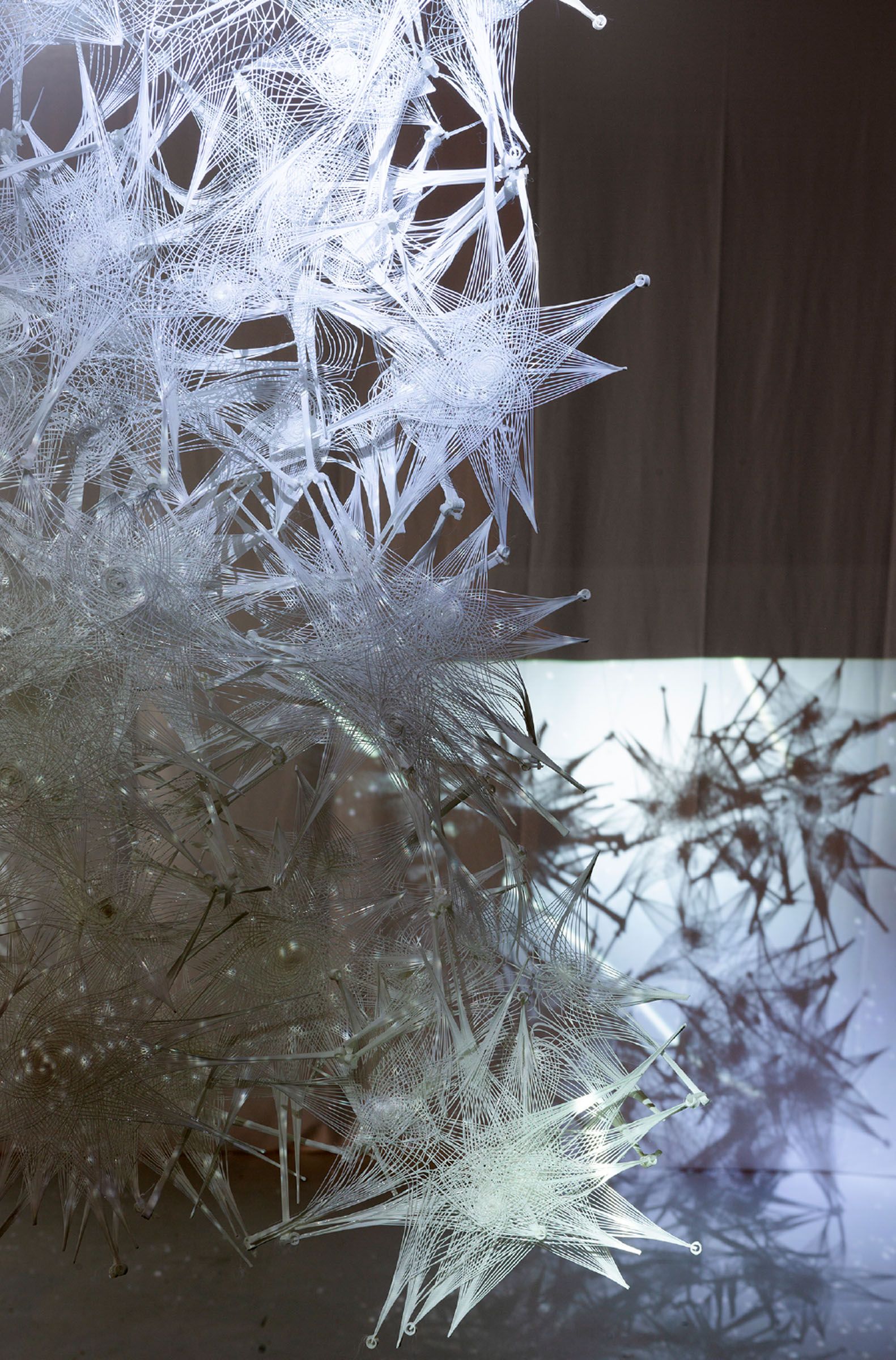
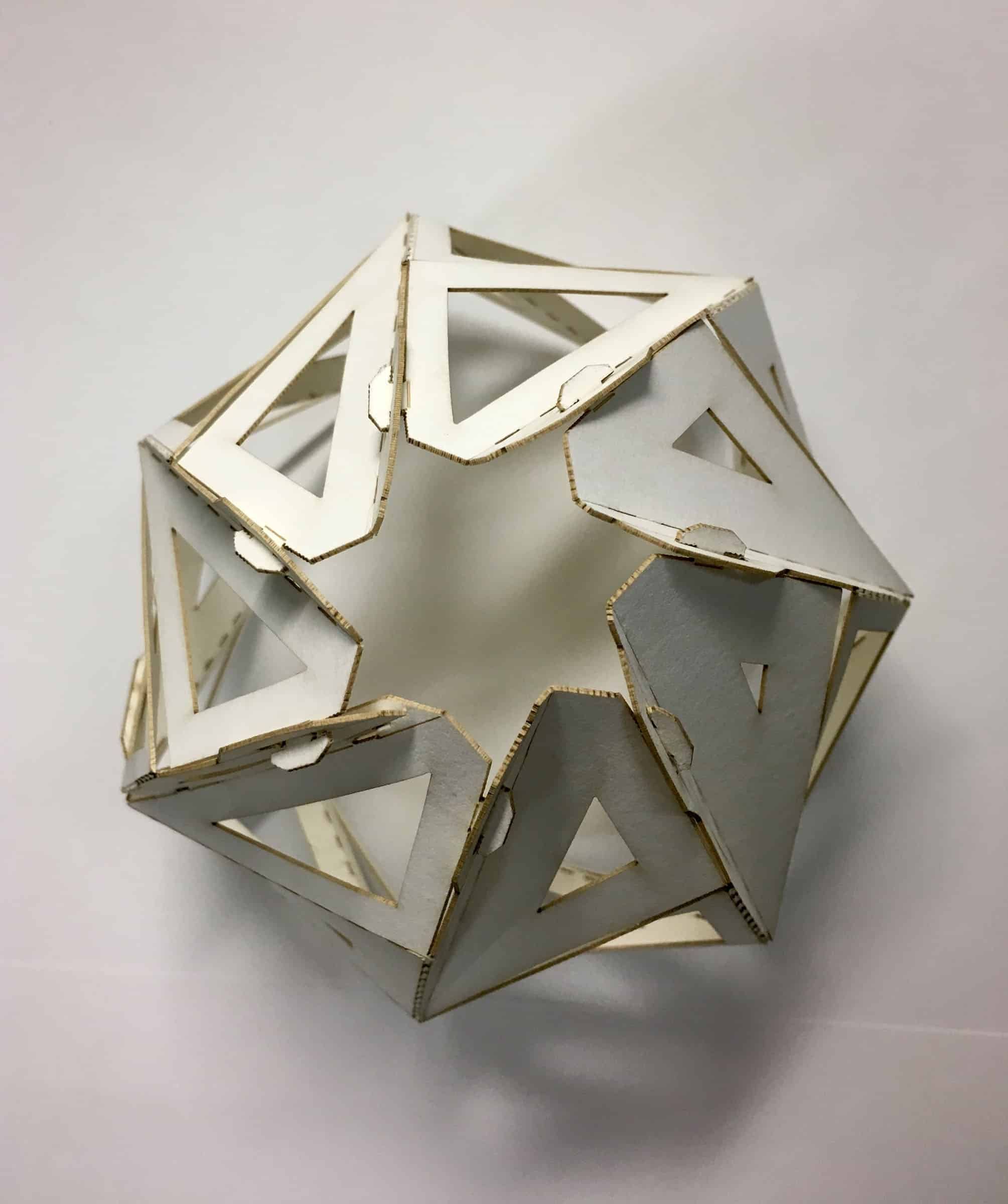
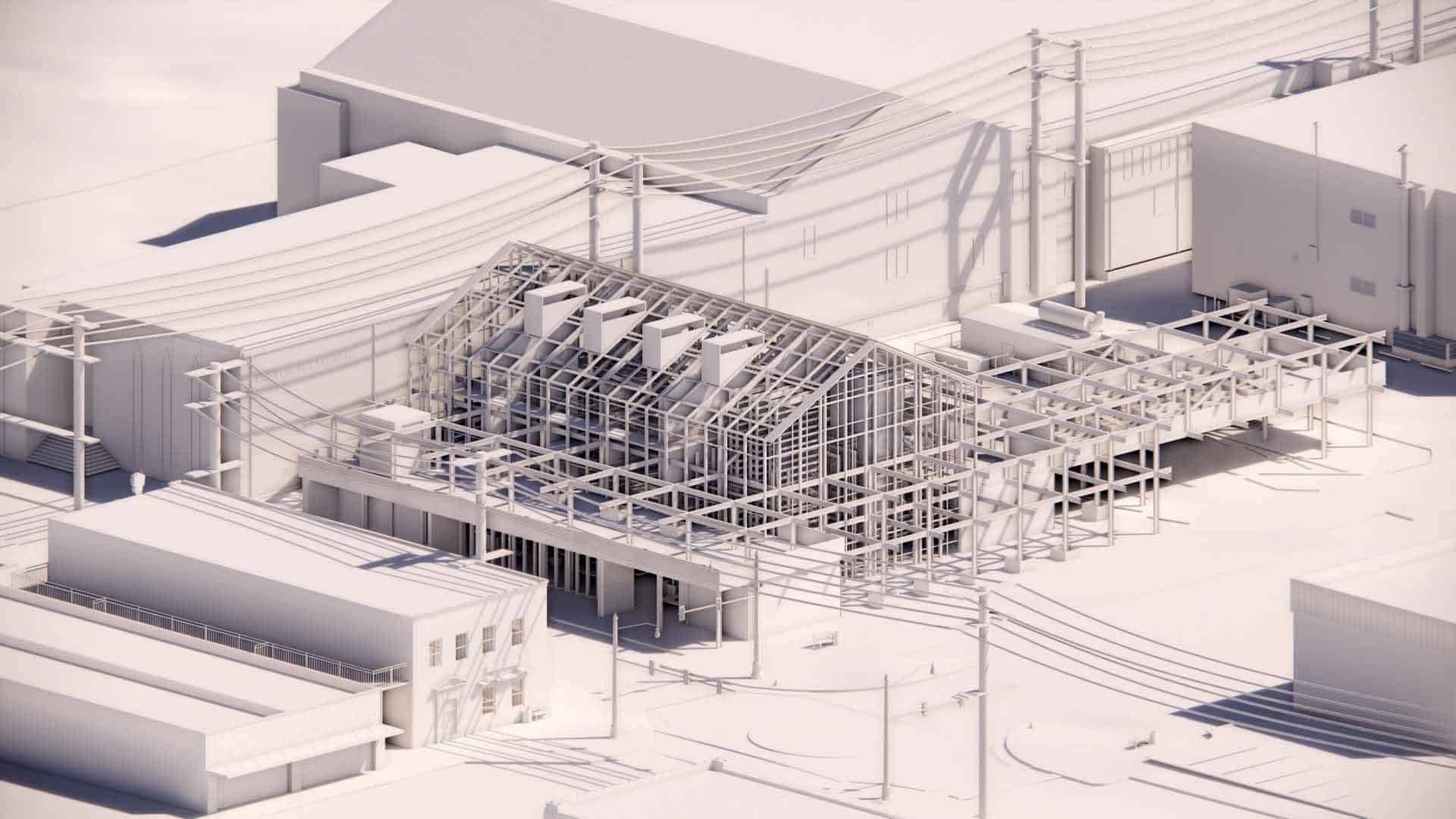
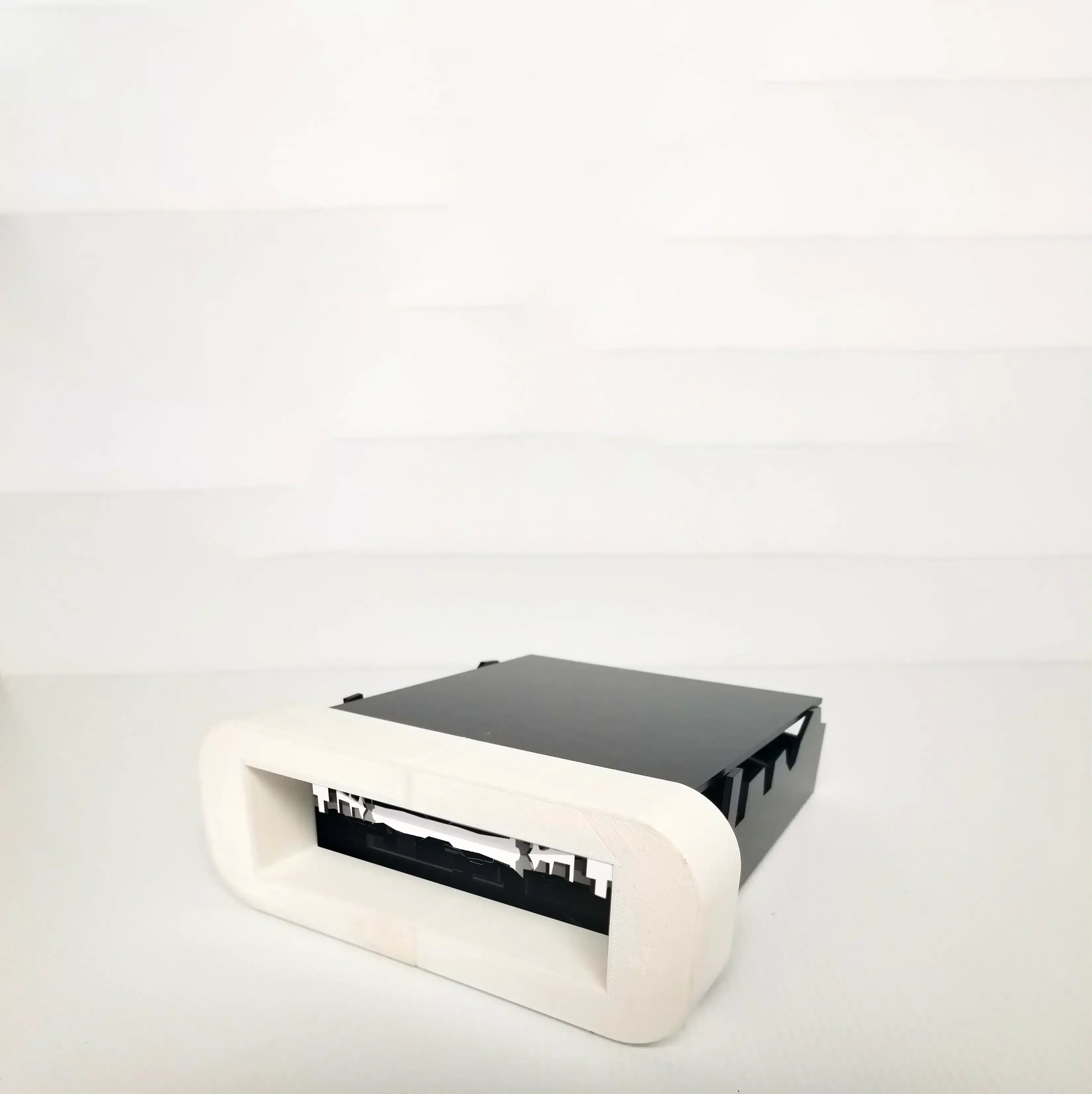
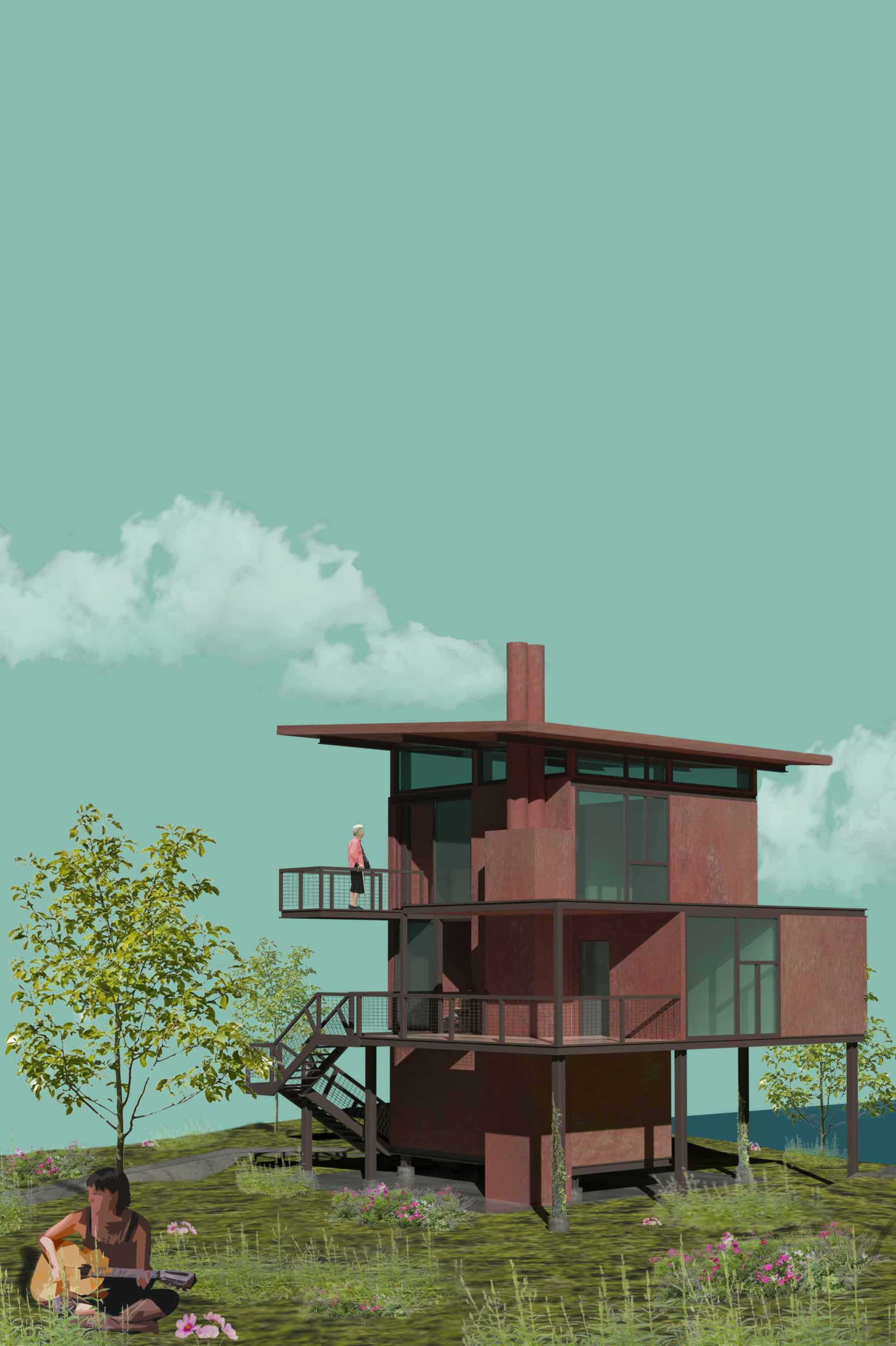
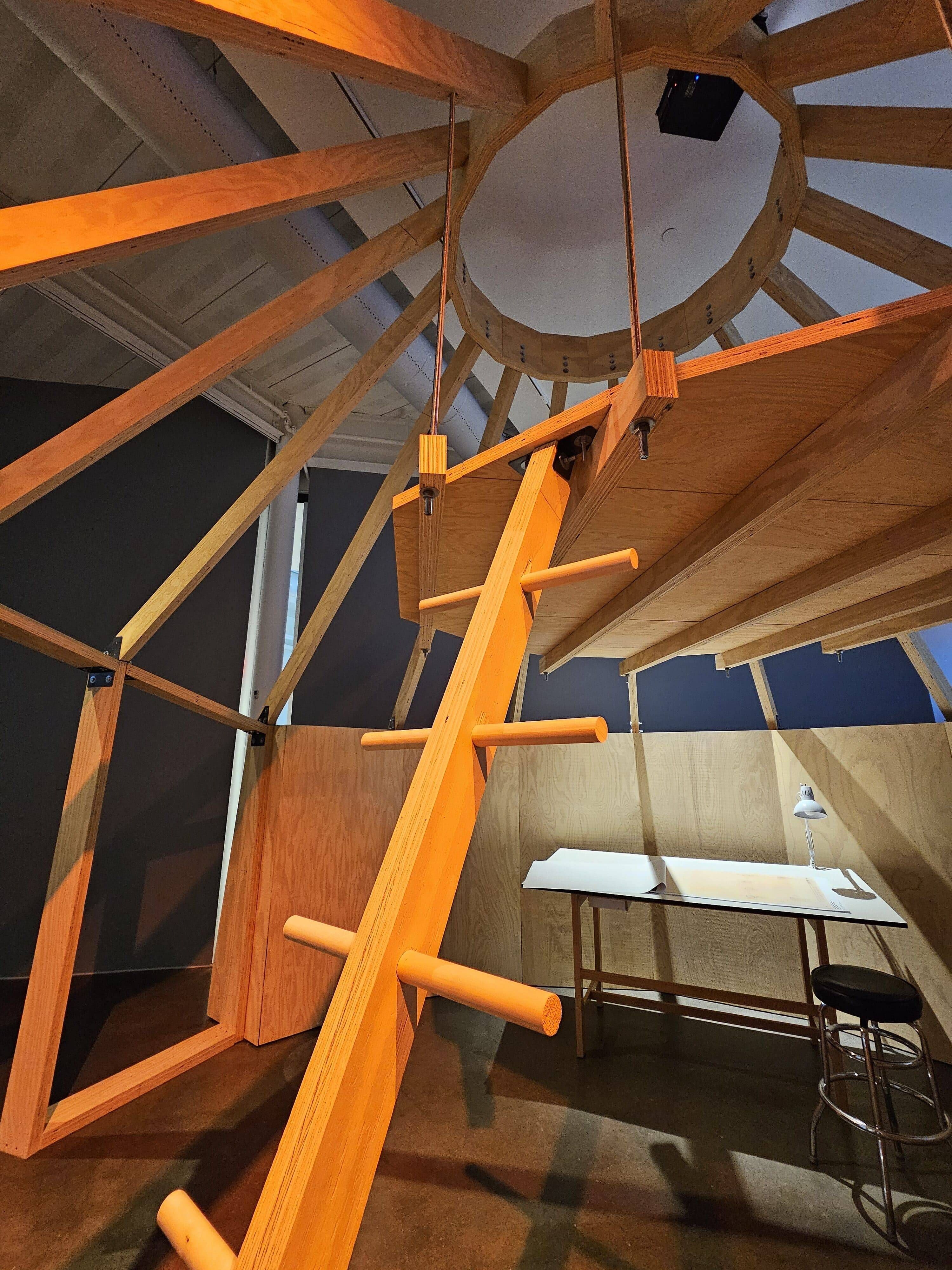
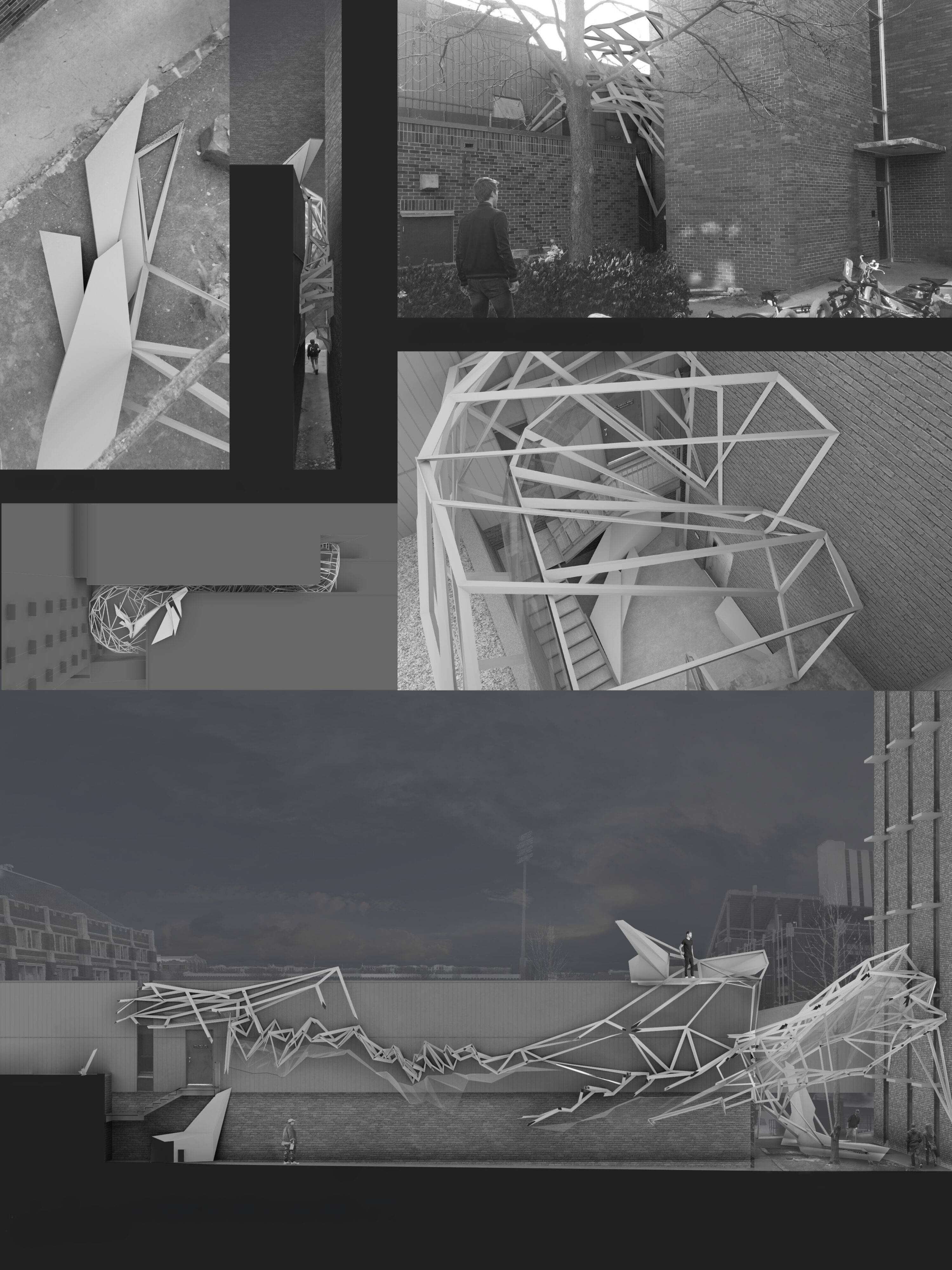
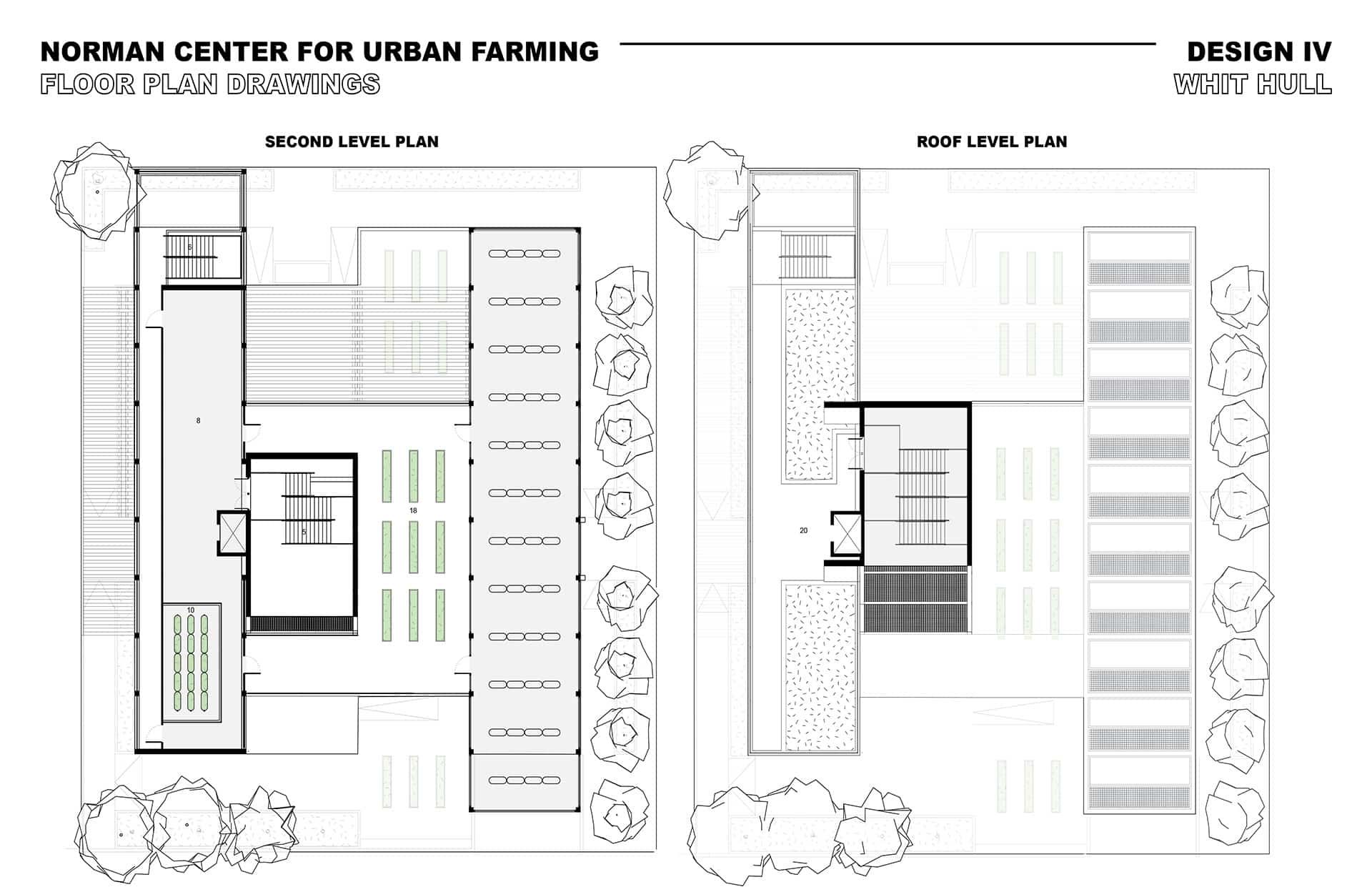
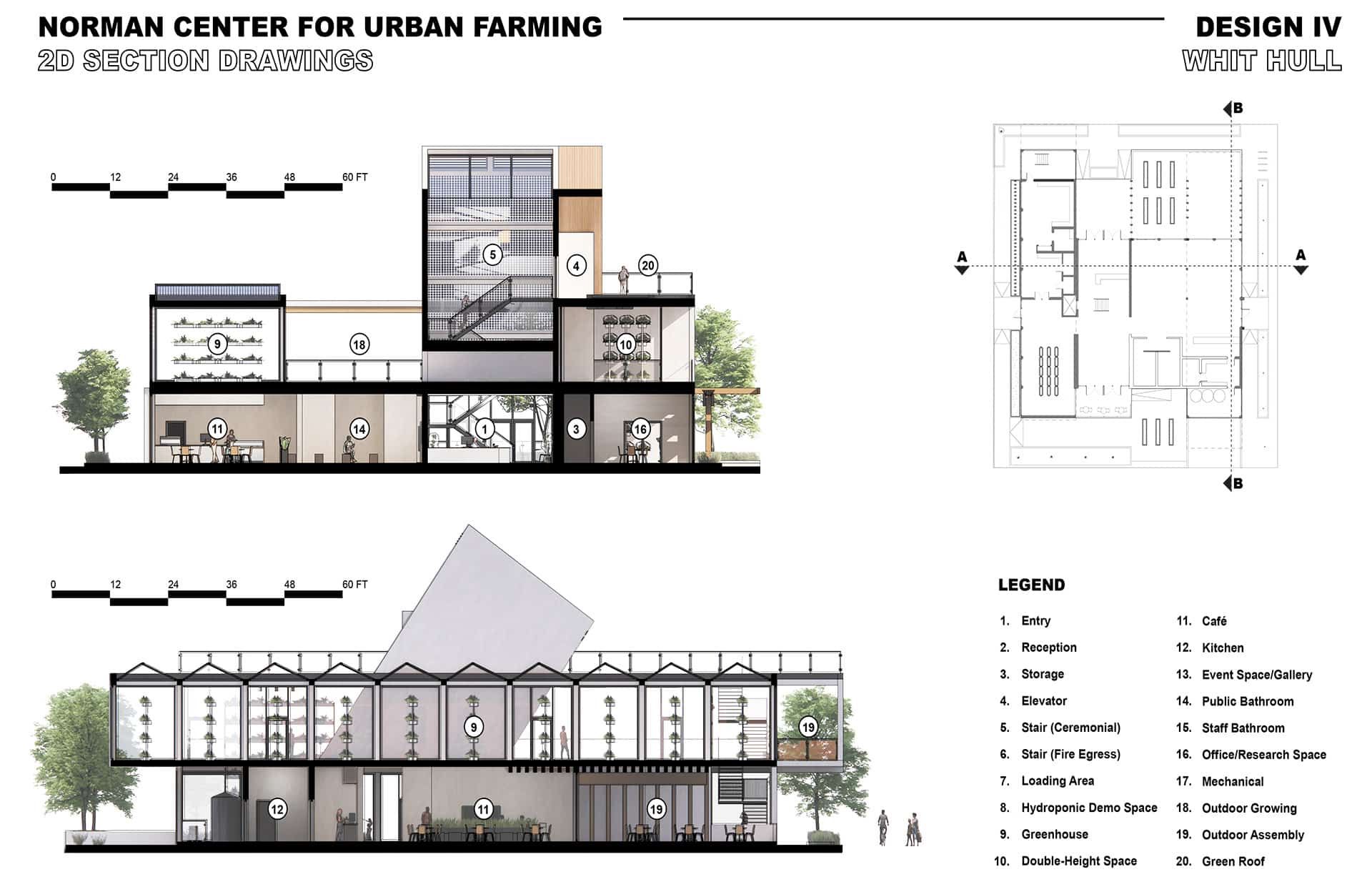
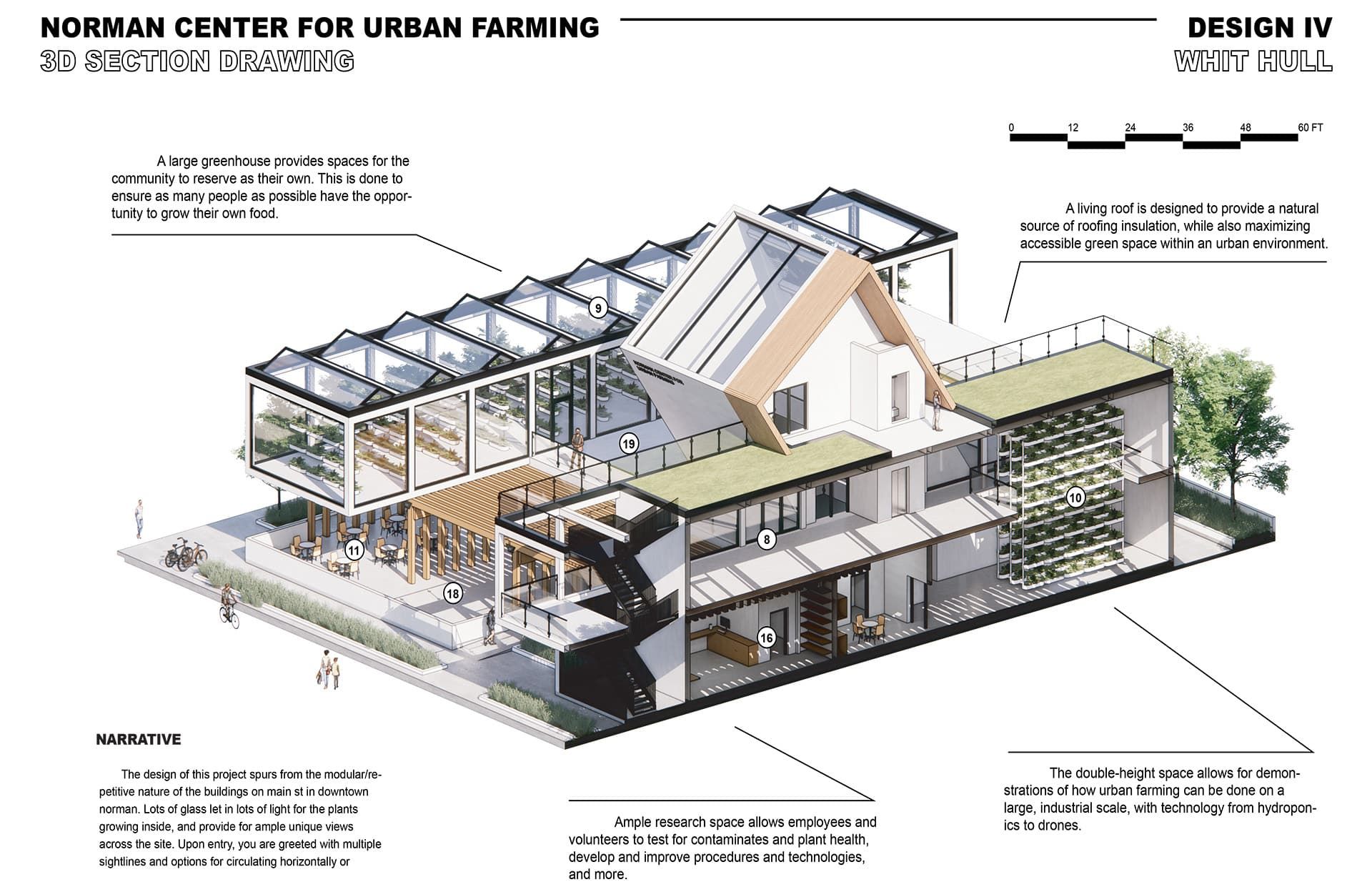
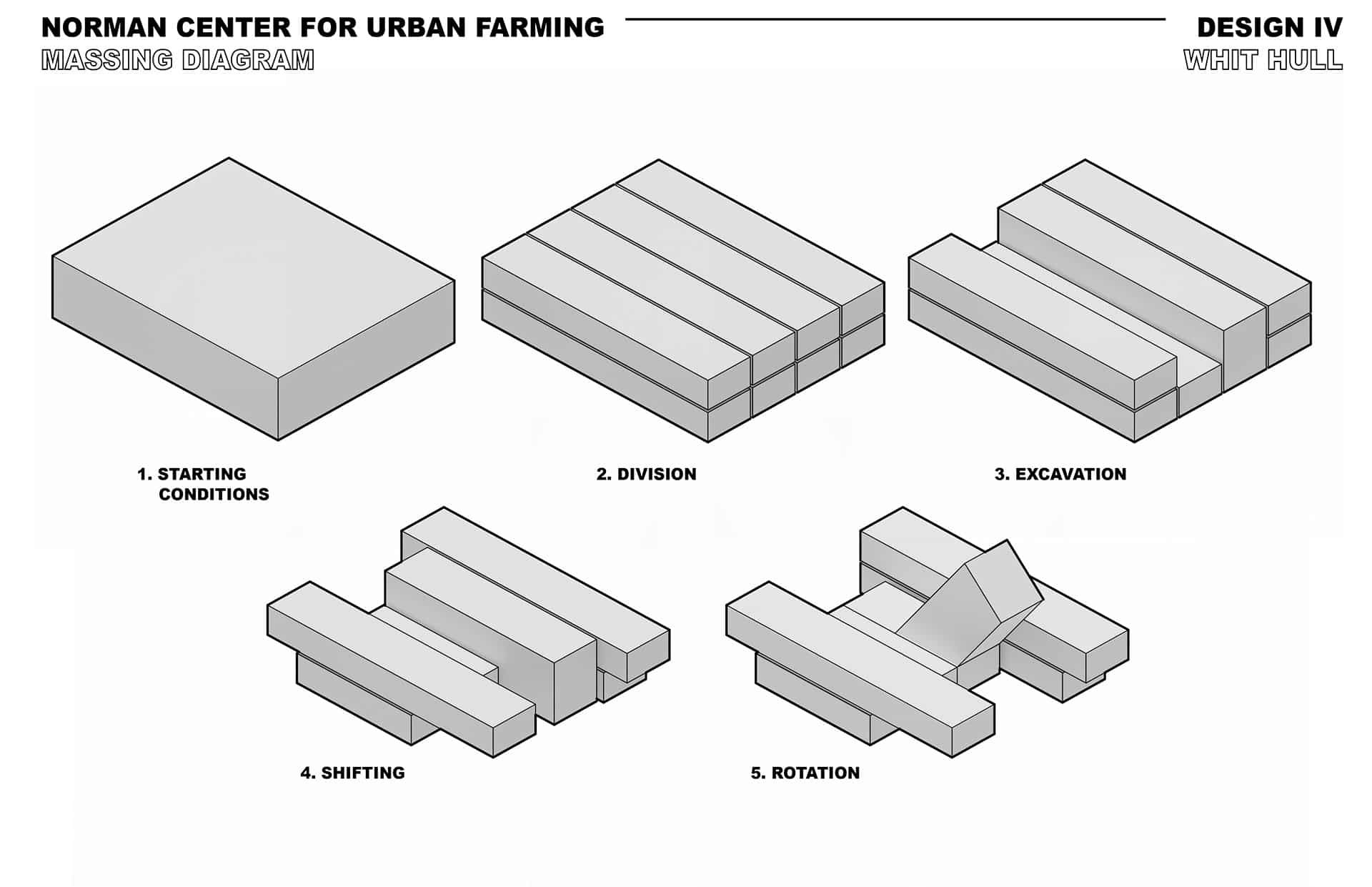
Representative projects include Material Systems Study, Spatial Frames Pavilion, and the Norman Center for Urban Farming. The final project integrates urban analysis, environmental performance, and material experimentation to produce an 8,000-square-foot community and educational facility dedicated to sustainable food production. Students explore programmatic complexity, circulation, and sectional organization while testing structural and environmental systems through drawings, digital models, and iterative fabrication.
Across all phases, projects emphasize critical thinking, technical accuracy, and representational clarity. Through this progression, students develop the ability to translate conceptual design into structural and material resolution.
Intent
The intent of Design IV is to foster an architectural understanding rooted in structure, material, and context. The studio positions construction not merely as technique, but as a medium for spatial and cultural expression. Students are encouraged to see architecture as both an intellectual discipline and a physical practice—where making and meaning reinforce one another.
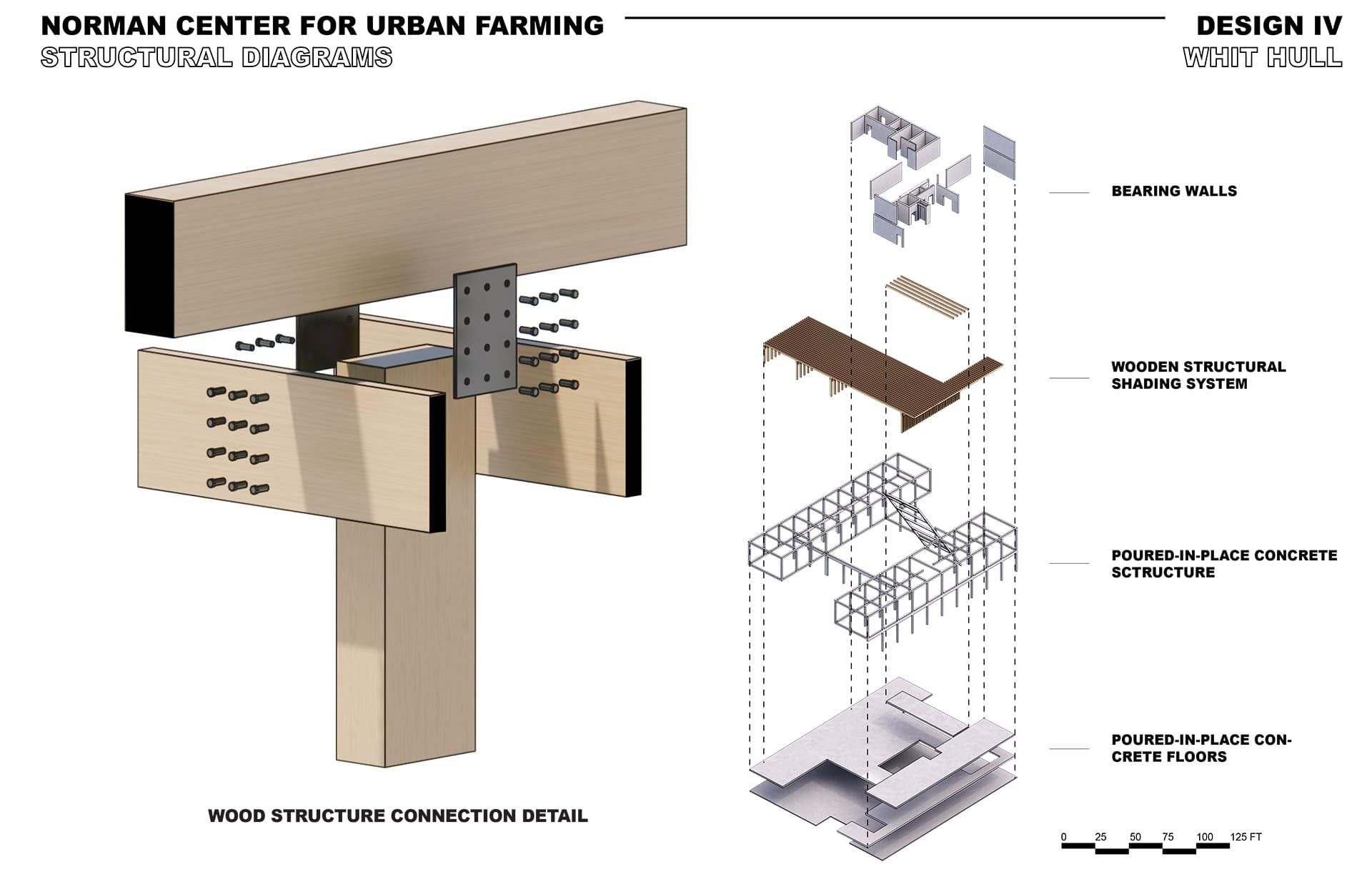
Through rigorous experimentation, students engage with construction as a poetic act. They learn that structural systems are not constraints but opportunities to give architecture coherence and presence. The course invites reflection on how buildings occupy place, respond to light, and express material honesty. By engaging technical reasoning alongside conceptual depth, students learn that design is at once speculative and grounded—a process of shaping the tangible and the experiential.
Pedagogy
The studio operates as both workshop and think tank. Weekly lectures, discussions, and reviews anchor an iterative design process that values exploration as much as refinement. Assignments build sequentially, integrating research, precedent analysis, site documentation, digital modeling, and fabrication.
Critiques are structured to promote dialogue and reflection. Students are challenged to present and defend their design logic through verbal, visual, and physical representation. Readings and case studies from contemporary and historical architecture situate studio work within a broader discourse of tectonics, sustainability, and form-making.
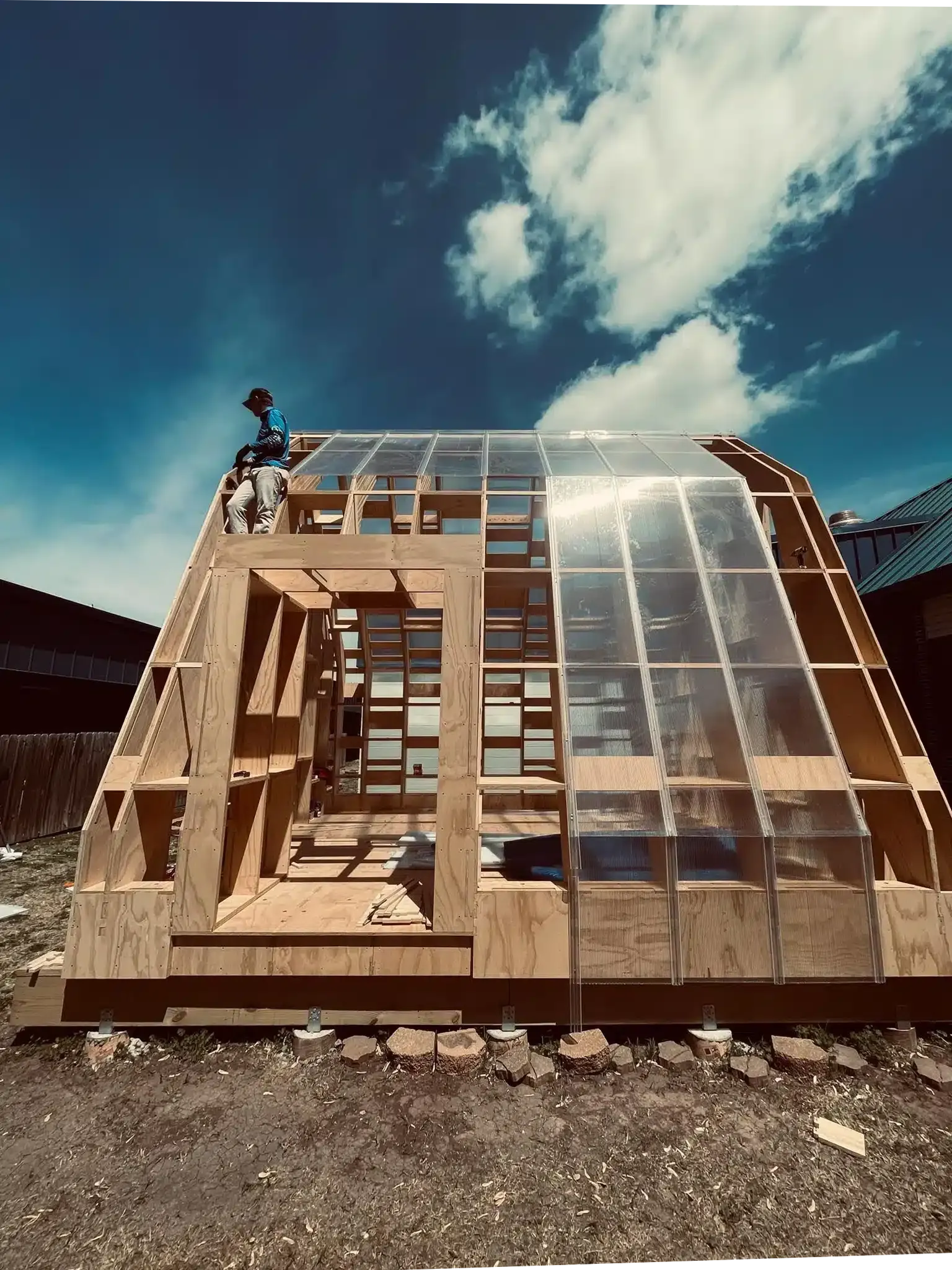
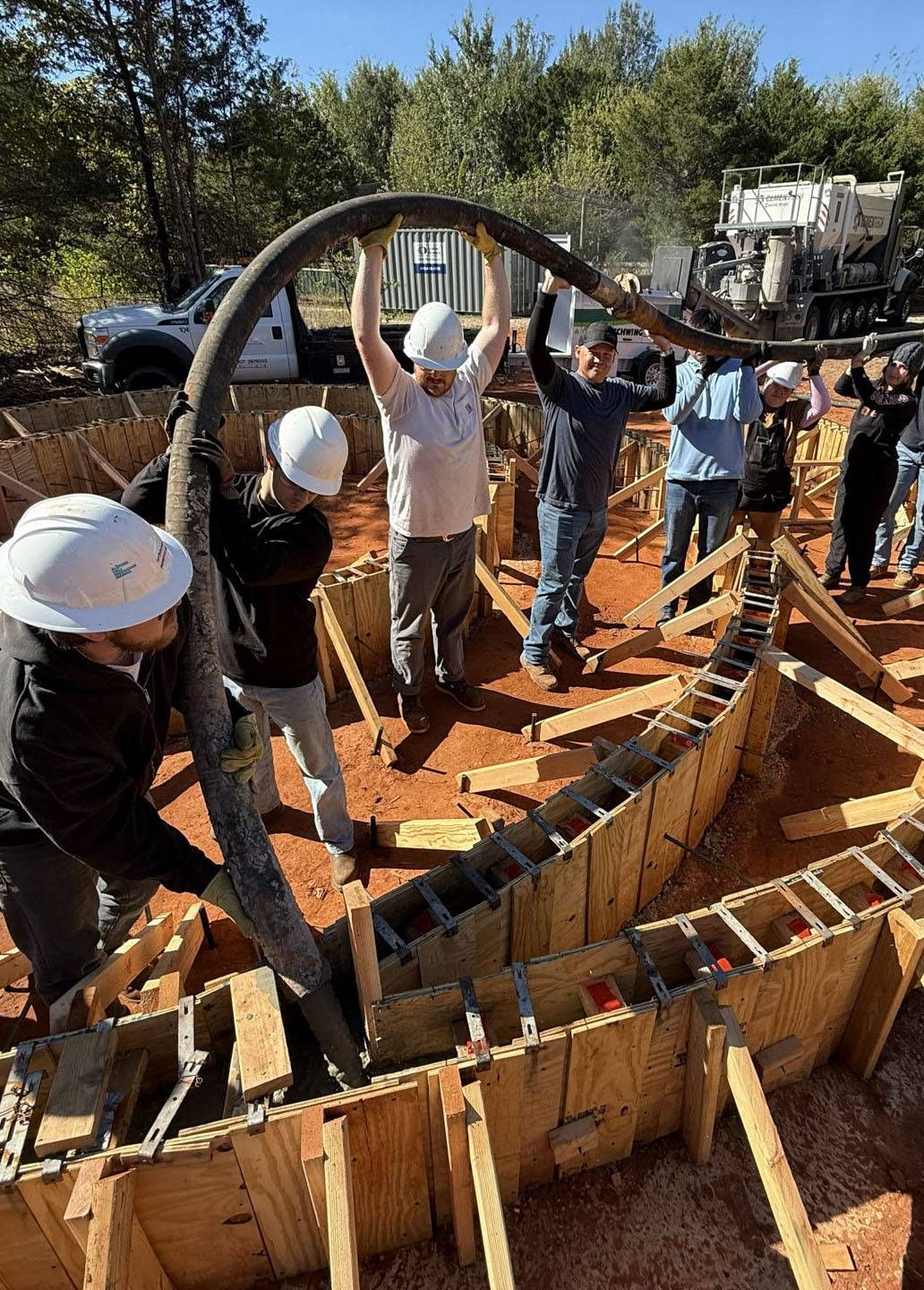
The pedagogical structure emphasizes learning through making, encouraging full-scale testing, model fabrication, and material experimentation. This process not only builds technical literacy but also cultivates curiosity and the confidence to approach design as an iterative act of discovery.
Tools and Methods
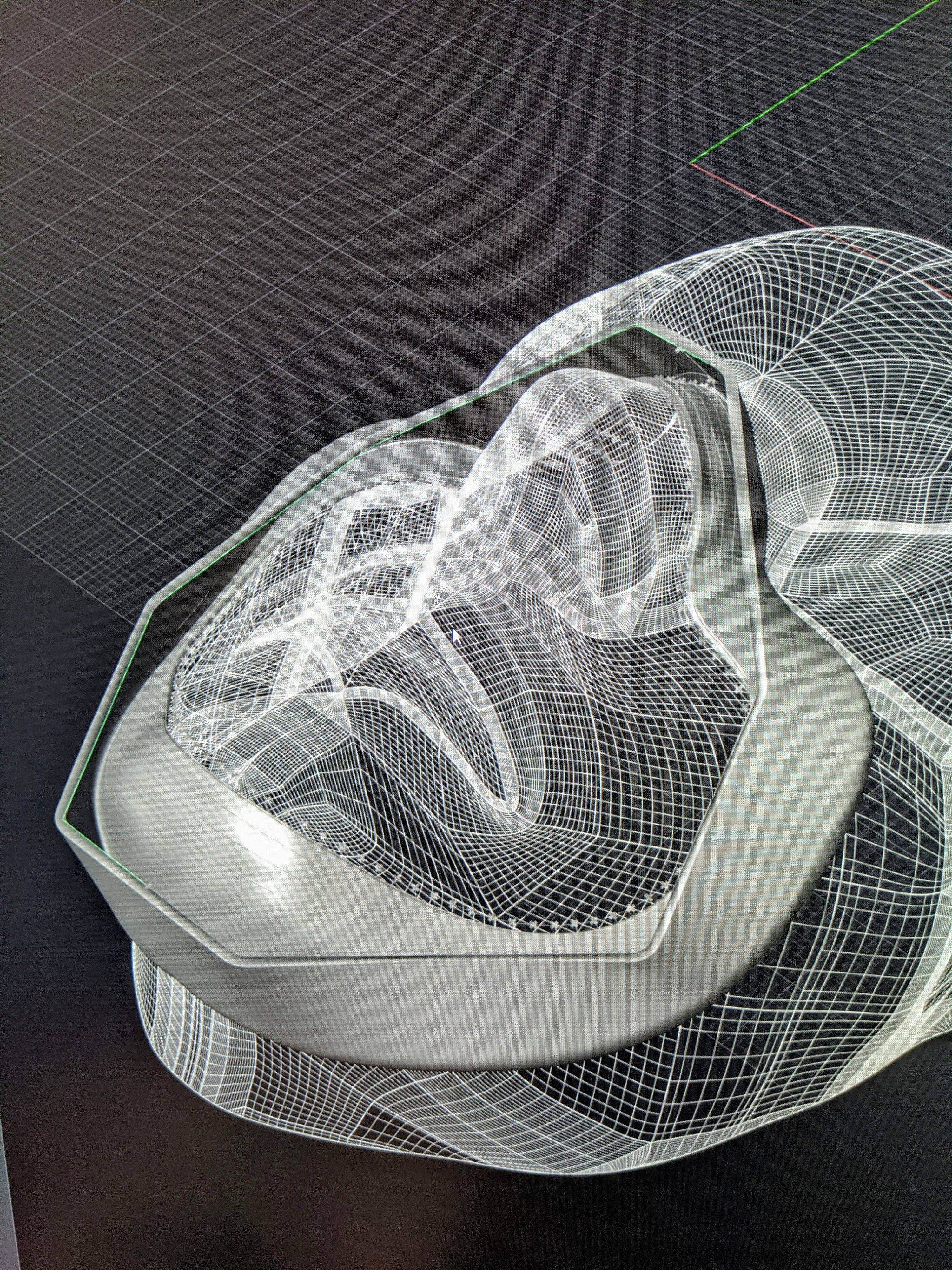
Students engage a broad toolkit that spans analog and digital practices. Rhino, Revit, and Adobe Creative Suite are used for modeling and visualization, while fabrication tools such as CNC routers, laser cutters, and 3D printers allow for precision prototyping. Environmental modeling software supports daylight and performance studies, integrating environmental awareness into the design process.
Hybrid representation is central to the studio’s workflow. Students create drawings and models that function simultaneously as design tools and analytical instruments. Emphasis is placed on detail, scale, and craft—reinforcing the connection between representation and construction. By the end of the semester, students demonstrate fluency across drawing, modeling, and making, capable of articulating architectural ideas from concept to fabrication.
Outcomes
Students completing Design IV are able to synthesize design, structure, and material into coherent architectural proposals. They demonstrate technical competency, conceptual rigor, and a developed ability to communicate complex ideas through visual, physical, and digital media.
Projects reflect an understanding of how architecture mediates between structural necessity and experiential richness. Students learn to orchestrate circulation, light, and enclosure through structural strategy, and to articulate their designs as both built systems and spatial experiences. The course cultivates emerging designers who can balance conceptual invention with technical precision—those prepared to approach future design challenges with confidence, adaptability, and craft.