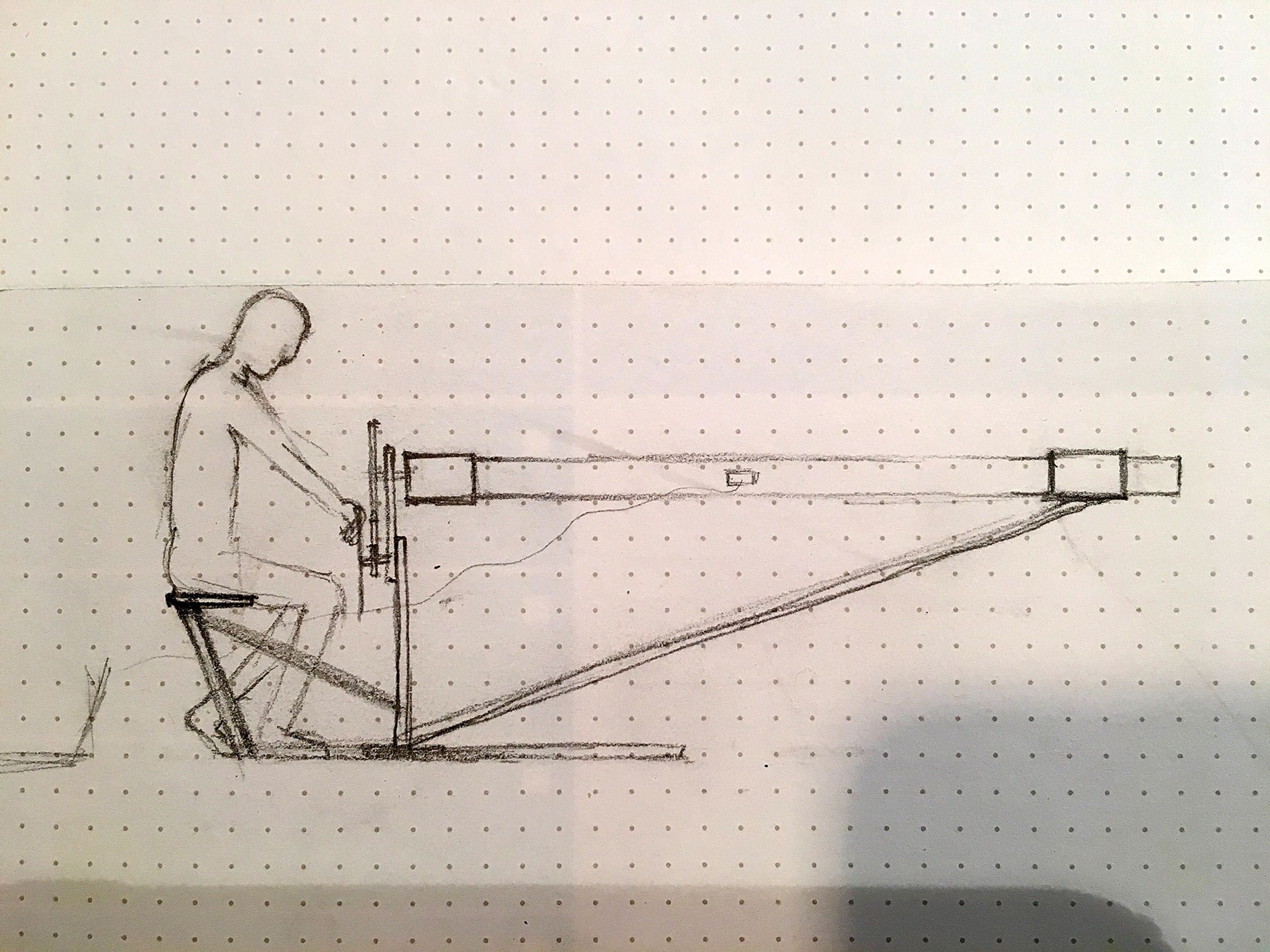
A Line of Force

force-failure_1-1

A Line of Force

arduino, grasshopper, firefly, java, plywood

status : on-going

Visualizing the threshold of failure

  • force-failure_1-1
  • IMG_3735
  • IMG_3688
  • IMG_1394

More Work

Architecture


  • Wichita Mobile Clinic

    anadarko, oklahoma

  • SA Architects

    cranston, rhode island

  • OKC Greenhouse

    oklahoma city, oklahoma

  • Pawtucket Day Nursery

    pawtucket, rhode island

  • Meeting Street Center for Excellence

    providence, rhode island

  • Norterly Island Nature Center

    Chicago, Illinois

  • National Institute of Flamenco

    old town plaza, santa fe, new mexico

  • Corrales Comunity Pathway + Pedestrian Park

    corrales, new mexico

  • CRCUIT

    albuquerque, new mexico

  • The Construction of Art

    providence, rhode island

  • Santa Fe Univeristy School of Fine Arts

    Santa Fe, New Mexico

Design + Fabrication


  • Flatpack Foldable Structural Connections

    rhino, grasshopper, mild steel

  • Renegades

    Fred Jones Jr Museum of Art

  • Surface Flux

    python, c#, grasshopper, pla, wood, steel

  • Carbon Fiber Connections

    grasshopper, rhino, pla, carbon fiber

  • Acoustic Diffusion Panel

    grasshopper, rhino, cnc, rigid insulation

  • Hyperbolic Bending

    grasshopper, rhino, laser cut acrylic, bristol board

  • Filtration : Infiltration

    python, grasshopper, rhino, 3d printing

  • Recursive Paneling

    laser cut mylar

  • Sweet Crude

    python, c#, grasshopper, wood, plasti-dip, carbon, gelatin

  • Ruling Lines

    laser cut cell cast acrylic, stainless steel braided wire

  • Volumetric Aggregations

    processing, grasshopper, rhino, cast acrylic, black walnut, hickory

  • Cellulose Bookcase

    pine, black walnut, compressed wood fiber board, stain

  • Asher Chair

    rhino, pla, birch plywood

  • Andraditic Mass

    arduino, firefly, rhino, 3d printed pla, baltic birch plywood

  • Cholla

    grasshopper, rhino, black walnut

  • Folding Attractors

    grasshopper. rhino, white museum board

  • Grain Chair

    rhino, cnc milled birch plywood

  • Tracking Parallelograms

    grasshopper, rhino, hickory

  • Infiltration Table

    processing, spalted birch plywood, poplar, enamel, lacquer

Art + Code


  • Prairie Fire

    acrylic, ink, plywood

  • Surface Flux

    python, c#, grasshopper, pla, wood, steel

  • Dixieland Death Cult

    acrylic, plywood

  • Approximation of a Generation

    private tremendous

  • Elemental Worlds

    science museum oklahoma

  • Gonzo Cubes

    solidity, html, css, javascript, illustrator

  • A Line of Force

    arduino, grasshopper, firefly, java, plywood

  • The Drift

    html, css, javascript

  • Gear Institute

    illustrator, photoshop, php, css, html

  • Prism

    unity, c#, spine2d, illustrator

  • Squall

    petroglyphs national monument, albuquerque, new mexico

  • Galileo’s World Interactive

    c#, unity3d, illustrator, photoshop

  • Steel + Light

    convergence arts festival masterworks project, providence, rhode island

  • The God of Skiing

    book design
© [wpsos_year] Ken Marold USA, Inc. All rights reserved.

Continue reading

Elemental Worlds

IMG_1798

Elemental Worlds

unity, c#

status : complete

Unity, C#

Project Overview
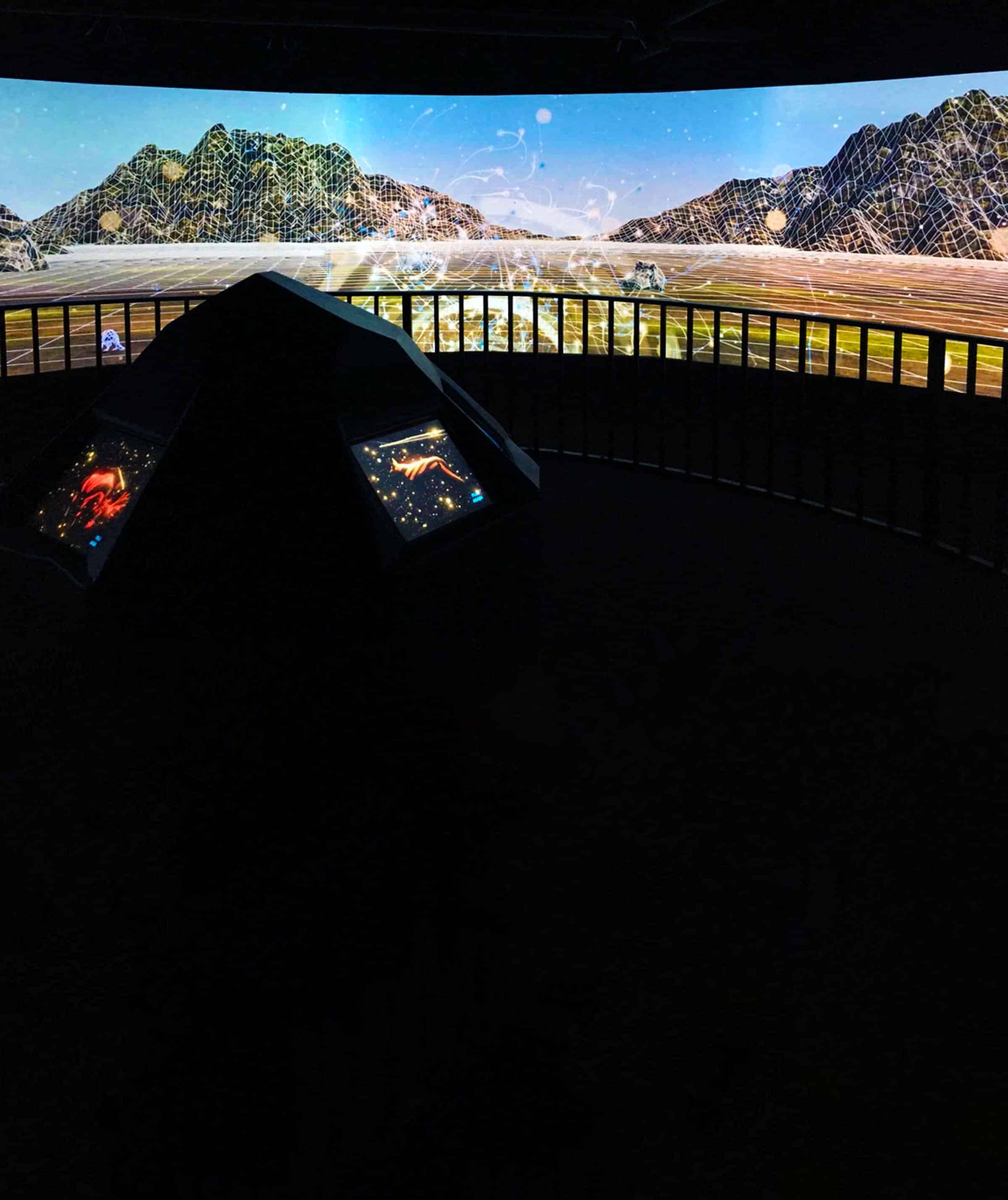
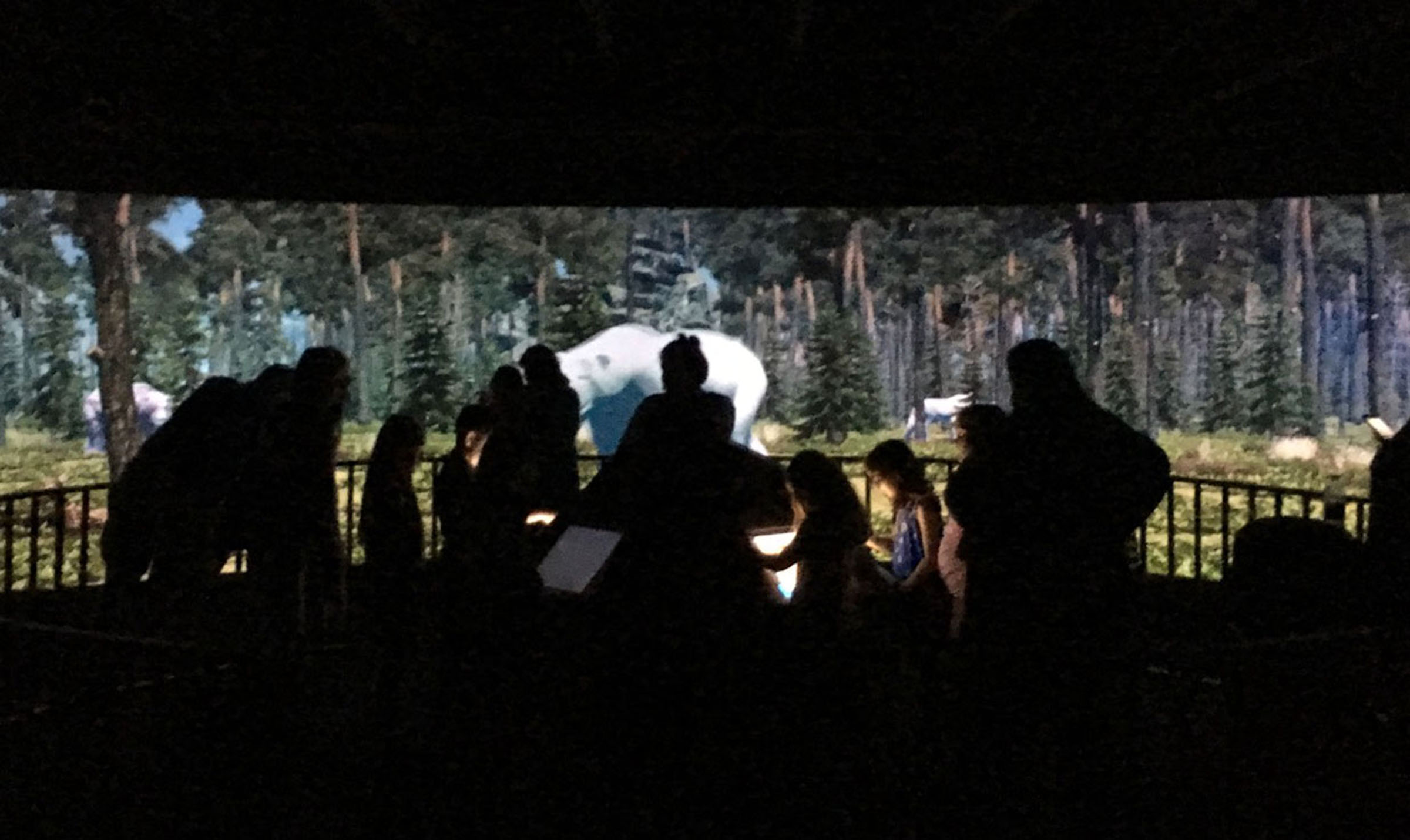
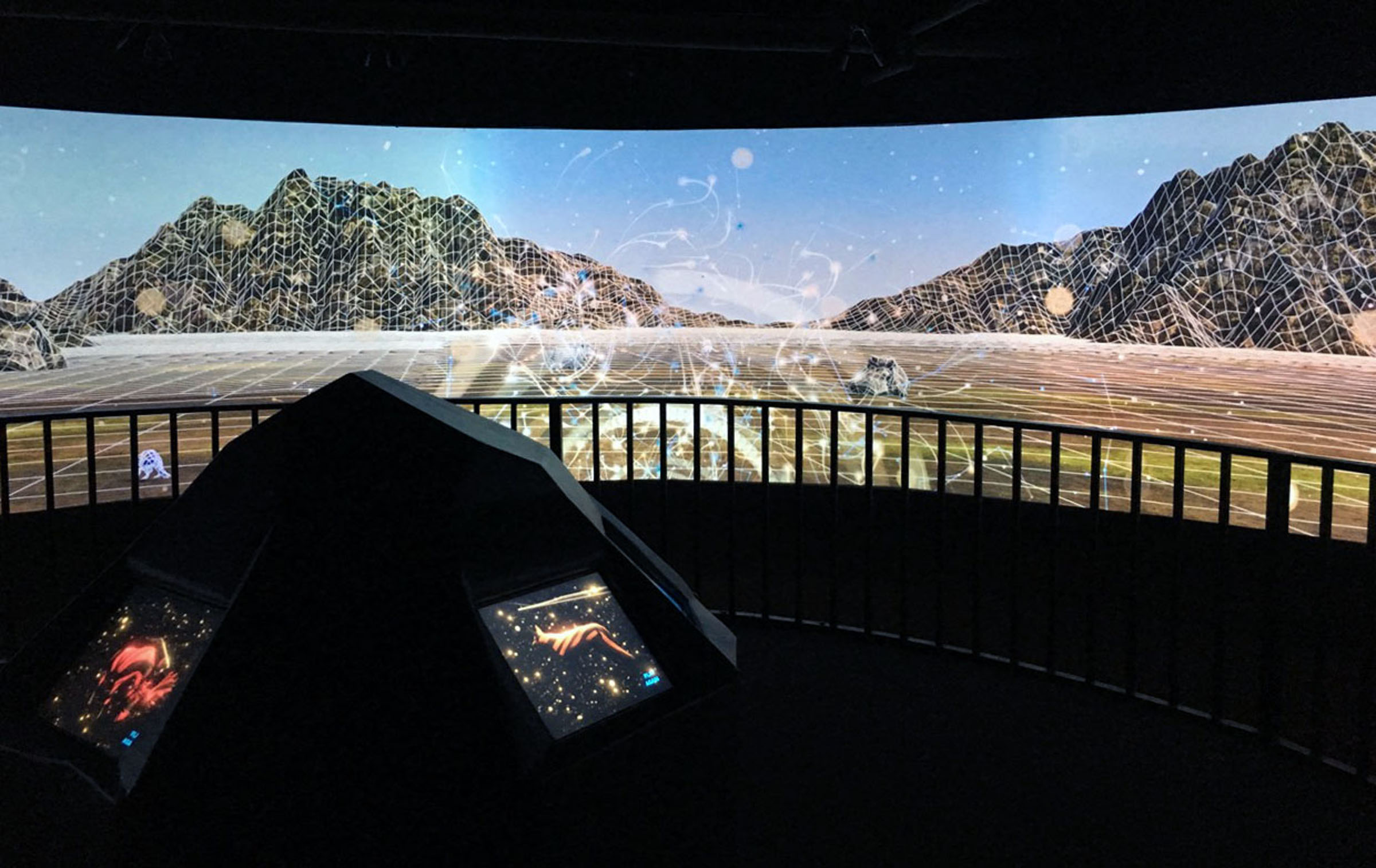
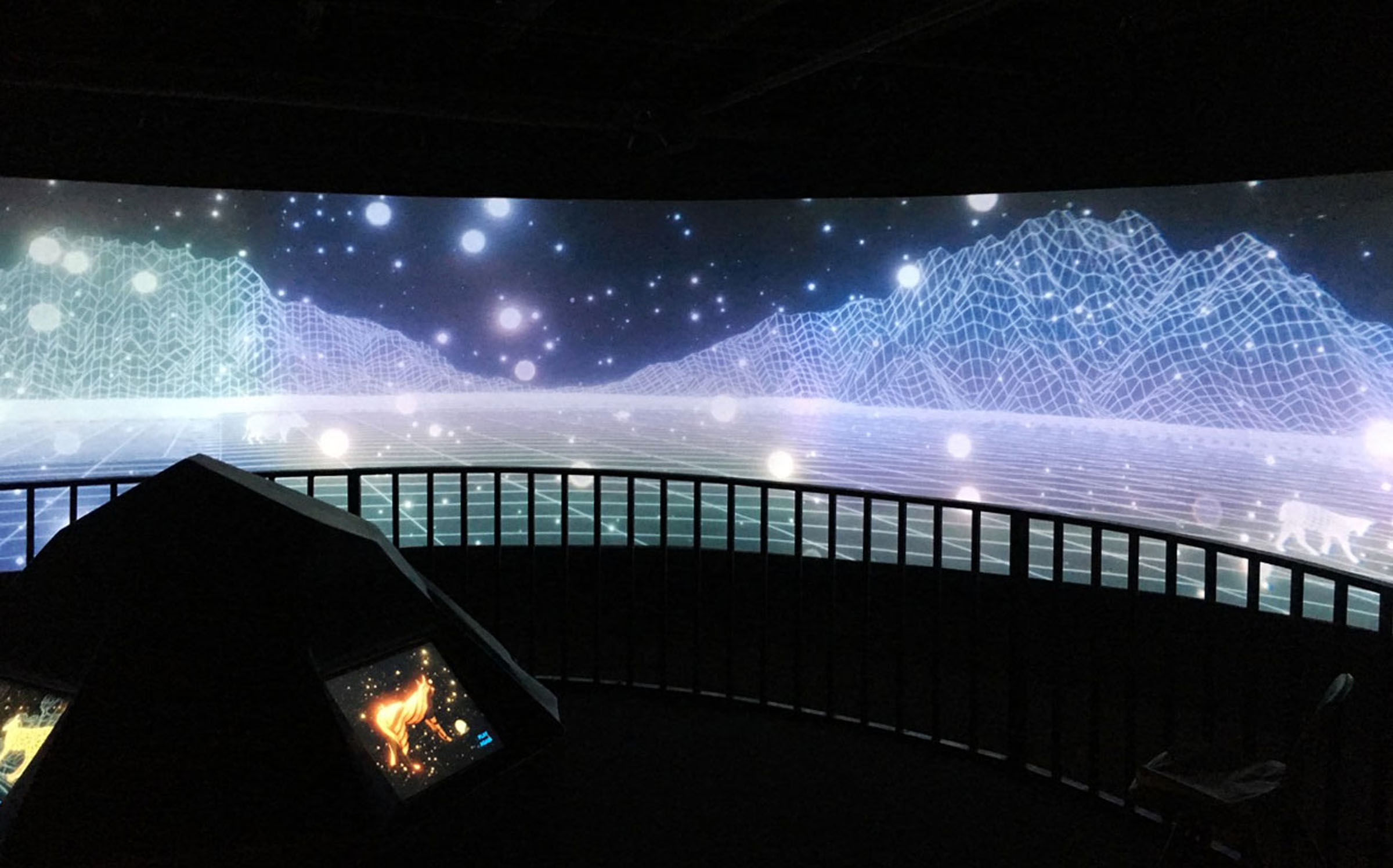
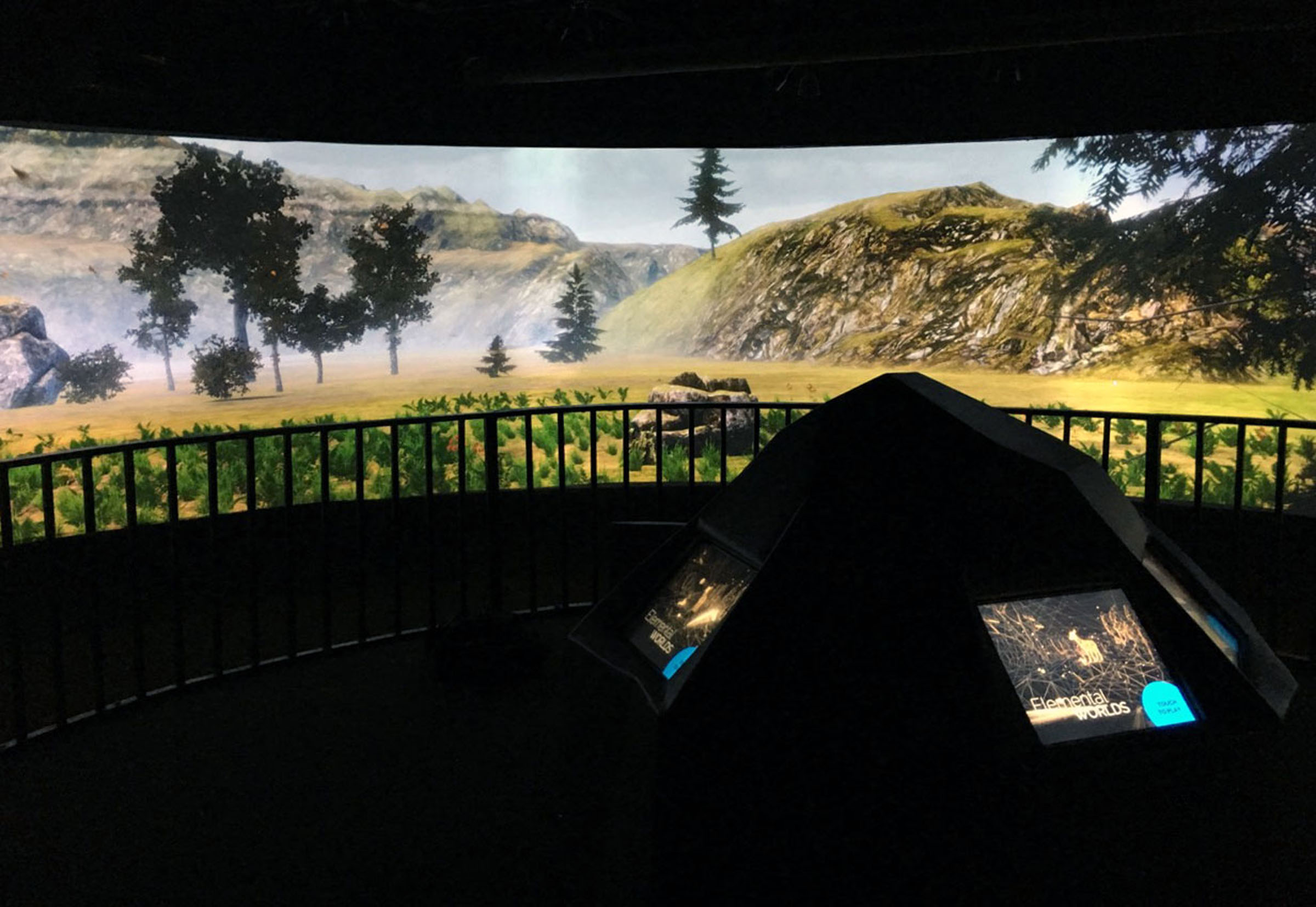
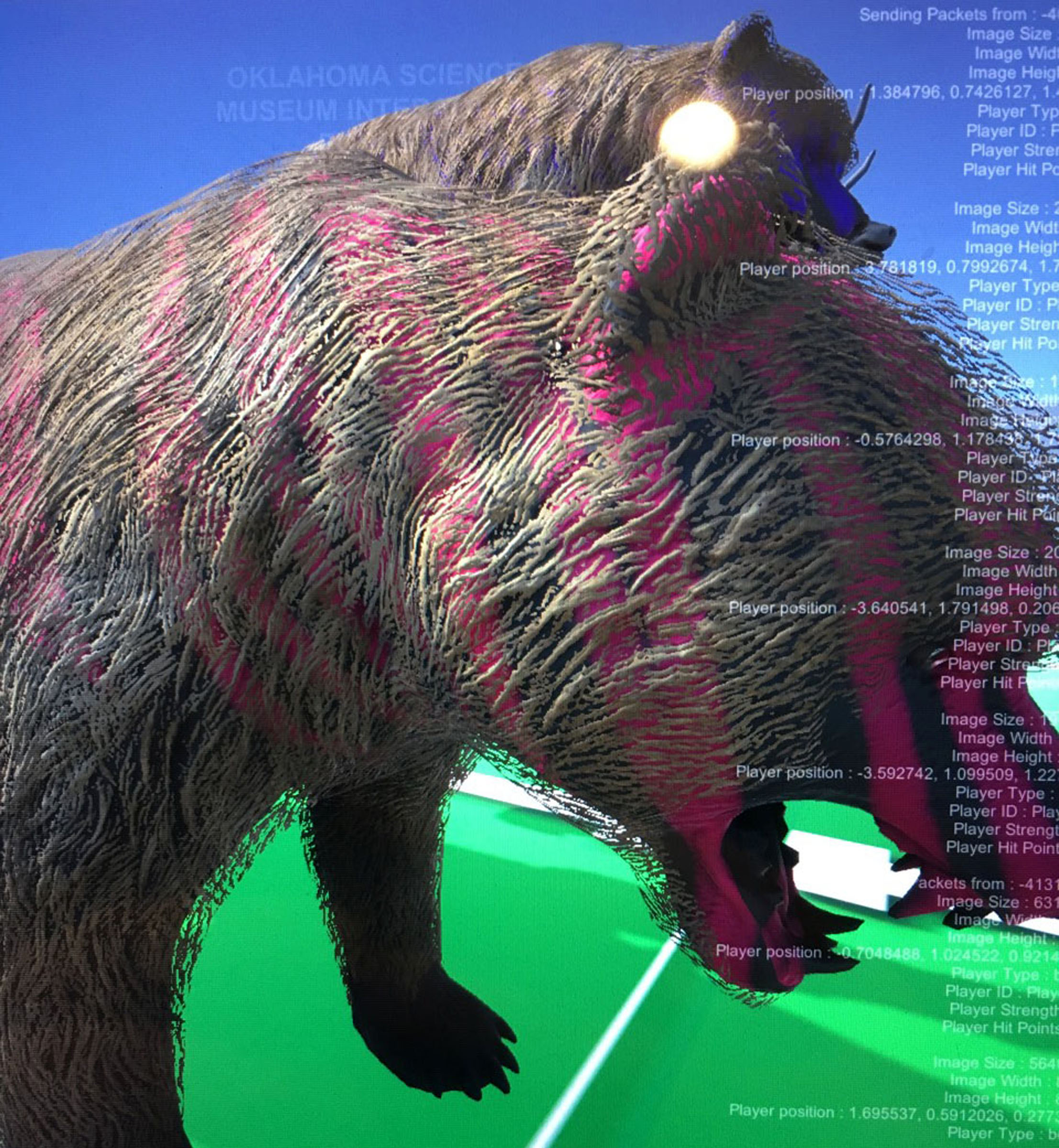
Elemental Worlds, an interactive exhibit at Science Museum Oklahoma, is a two-part hardware and software system co-authored with Pete Froslie. Designed as both a playful environment and a research platform, the installation immerses visitors in a dynamic, ultra-wide panoramic projection where custom-designed digital creatures inhabit a living, responsive virtual landscape. Visitors move fluidly between designing their own creatures at touchscreen stations and seeing those creations come alive within a richly simulated ecosystem projected across a 180-degree panoramic screen.

Interaction Design
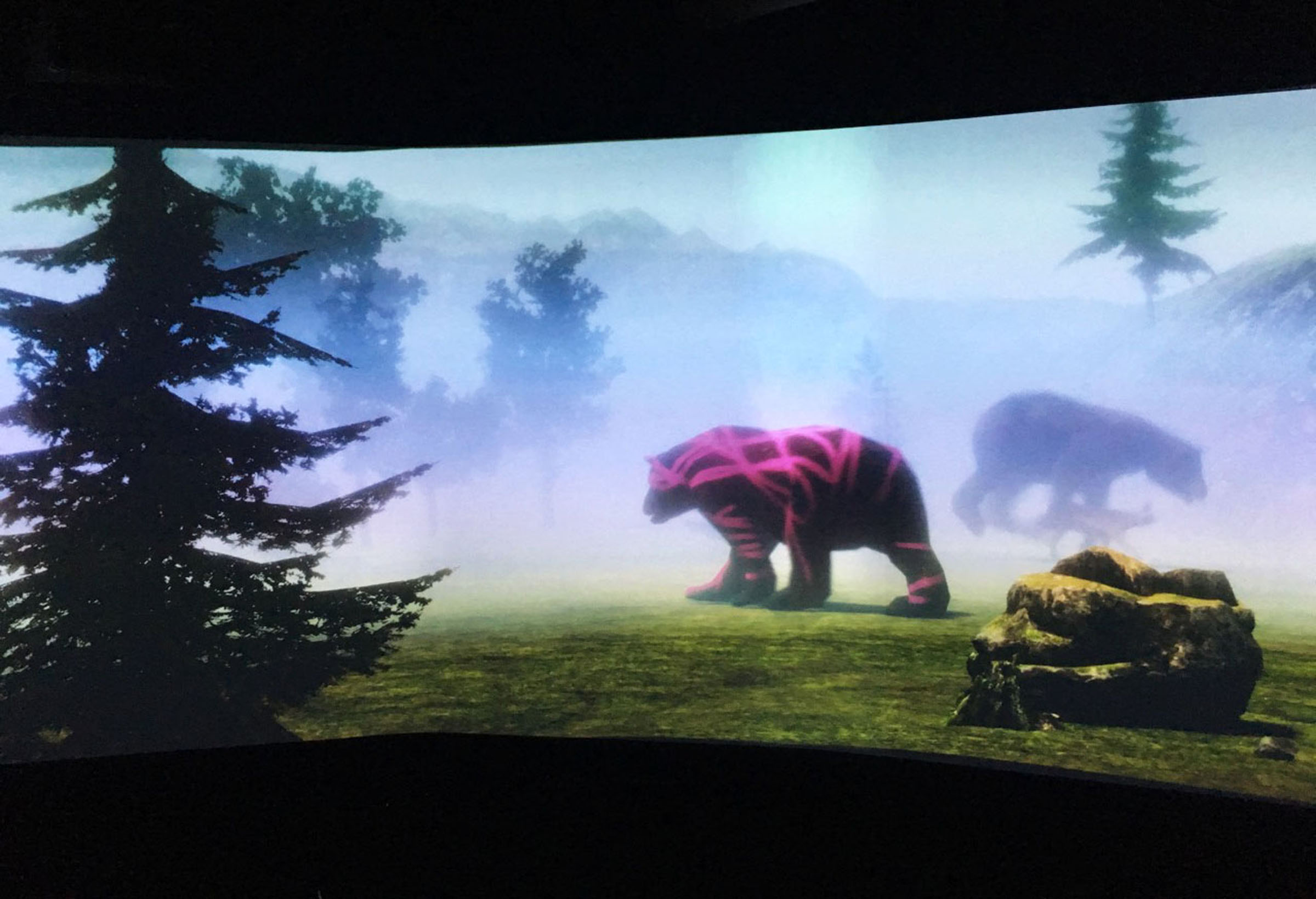
The experience begins with drawing: visitors use a touchscreen interface to design digital creatures through intuitive tools for shape, pattern, and color. Touch gestures are employed to sketch forms, apply colors, and select from a library of drawing tools. Once complete, the 2D drawings are dynamically mapped as surface textures onto procedurally generated 3D bodies, instantly transporting the visitor’s creature into the surrounding environment. This act of creation bridges personal authorship with collective play, as multiple creatures from different visitors populate the same shared world.

Virtual Environment and AI Ecology
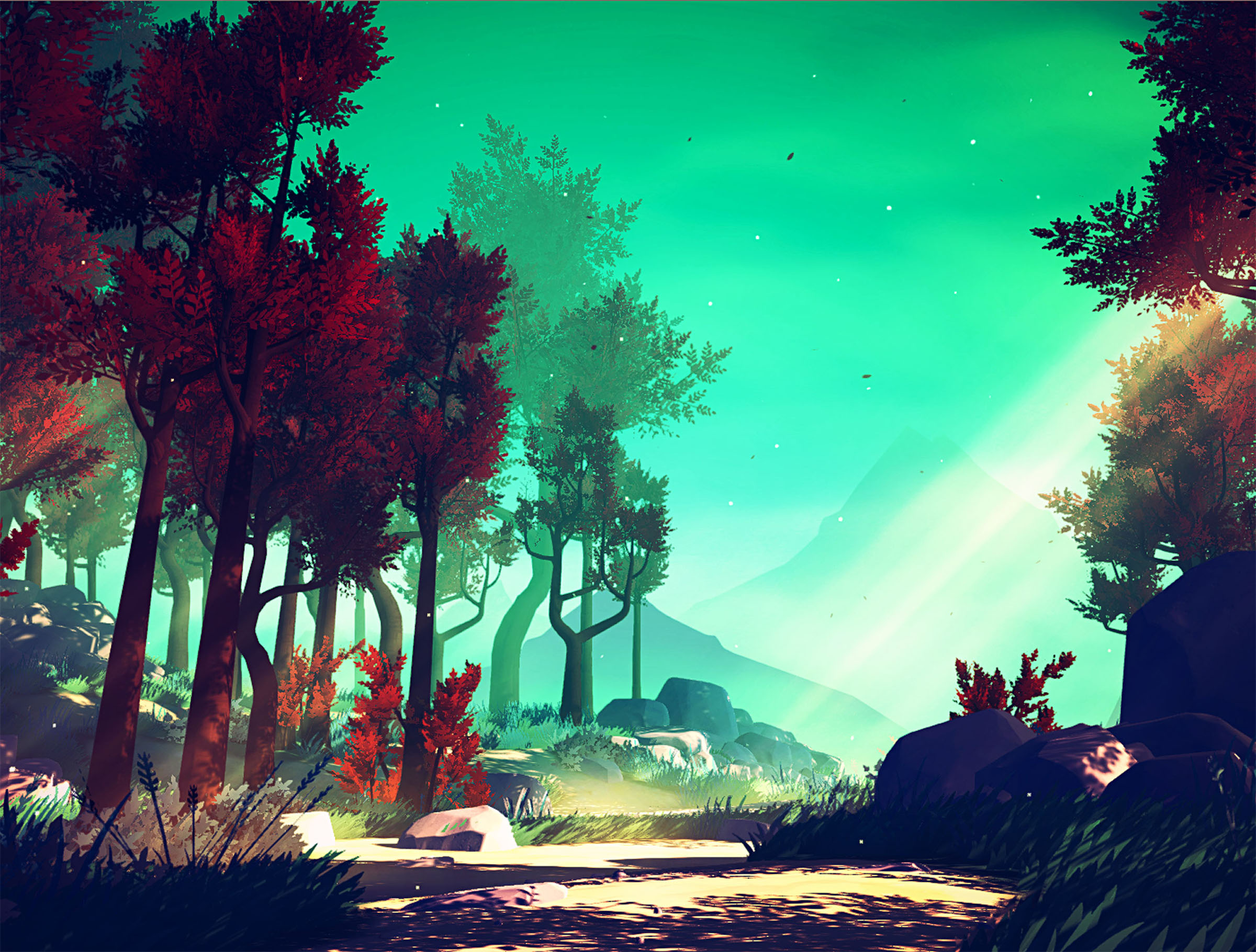
The immersive projected environment is a dynamic simulation that evolves across time and condition. Day and night cycles, changing weather, and atmospheric effects modulate light, shadow, and color, producing a sense of environmental continuity. AI-driven wildlife behaviors animate the creatures, allowing them to graze, wander, or interact with one another in ways that feel spontaneous and lifelike. The system blends authored rules with emergent unpredictability, offering visitors the experience of watching their creations adapt within a collective ecosystem.

Technical Development
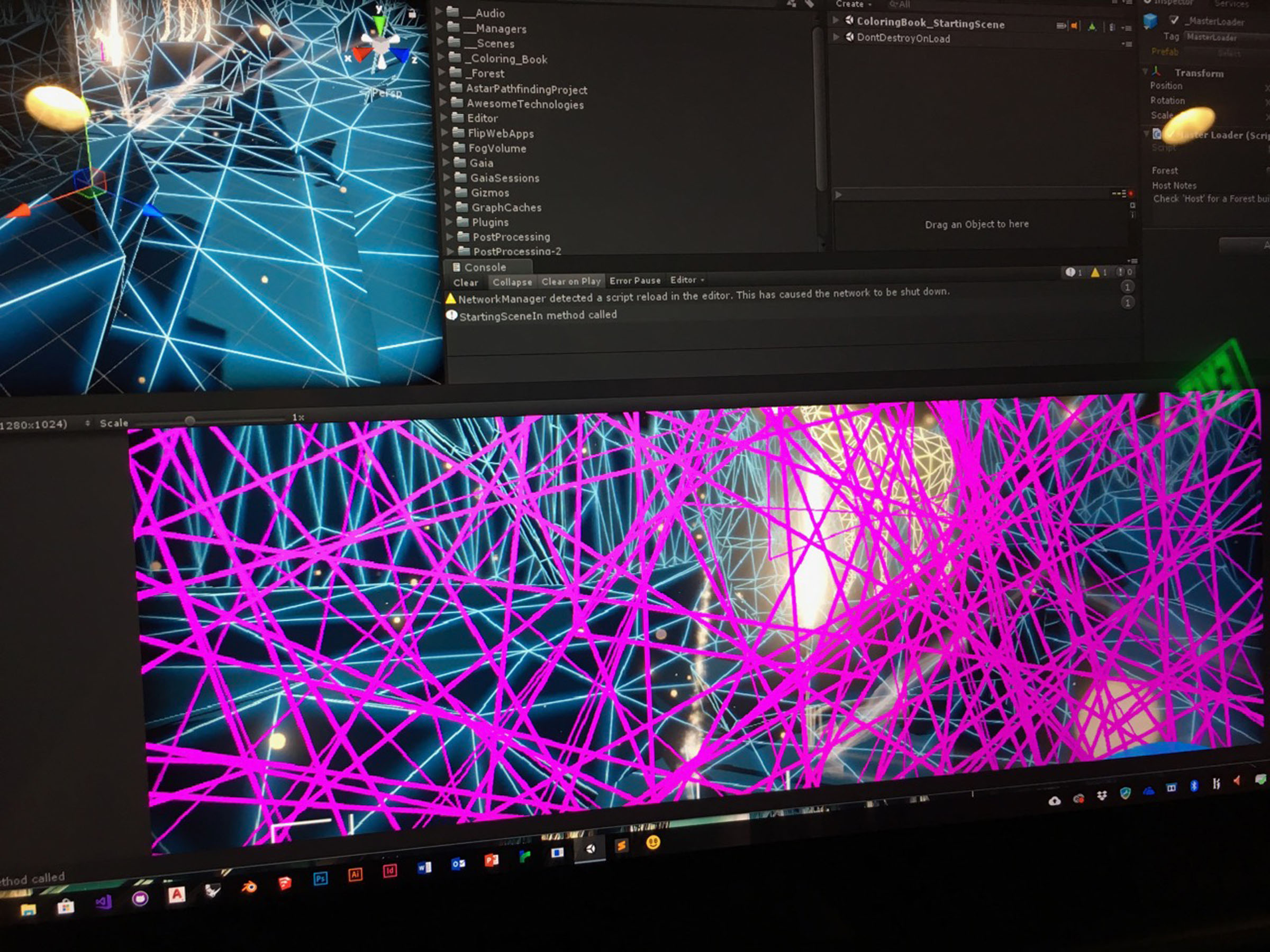
A key research contribution of Elemental Worlds was the development of custom processes for real-time texture mapping — consuming two-dimensional visual input and wrapping it dynamically onto three-dimensional geometry. This workflow required bridging drawing systems with generative modeling, creating a seamless pipeline from human gesture to real-time simulation. Additional technical layers included AI behavioral modeling, environmental simulation, and the integration of multi-projector edge-blended panoramic visuals, producing a cohesive immersive experience.

Spatial and Experiential Design
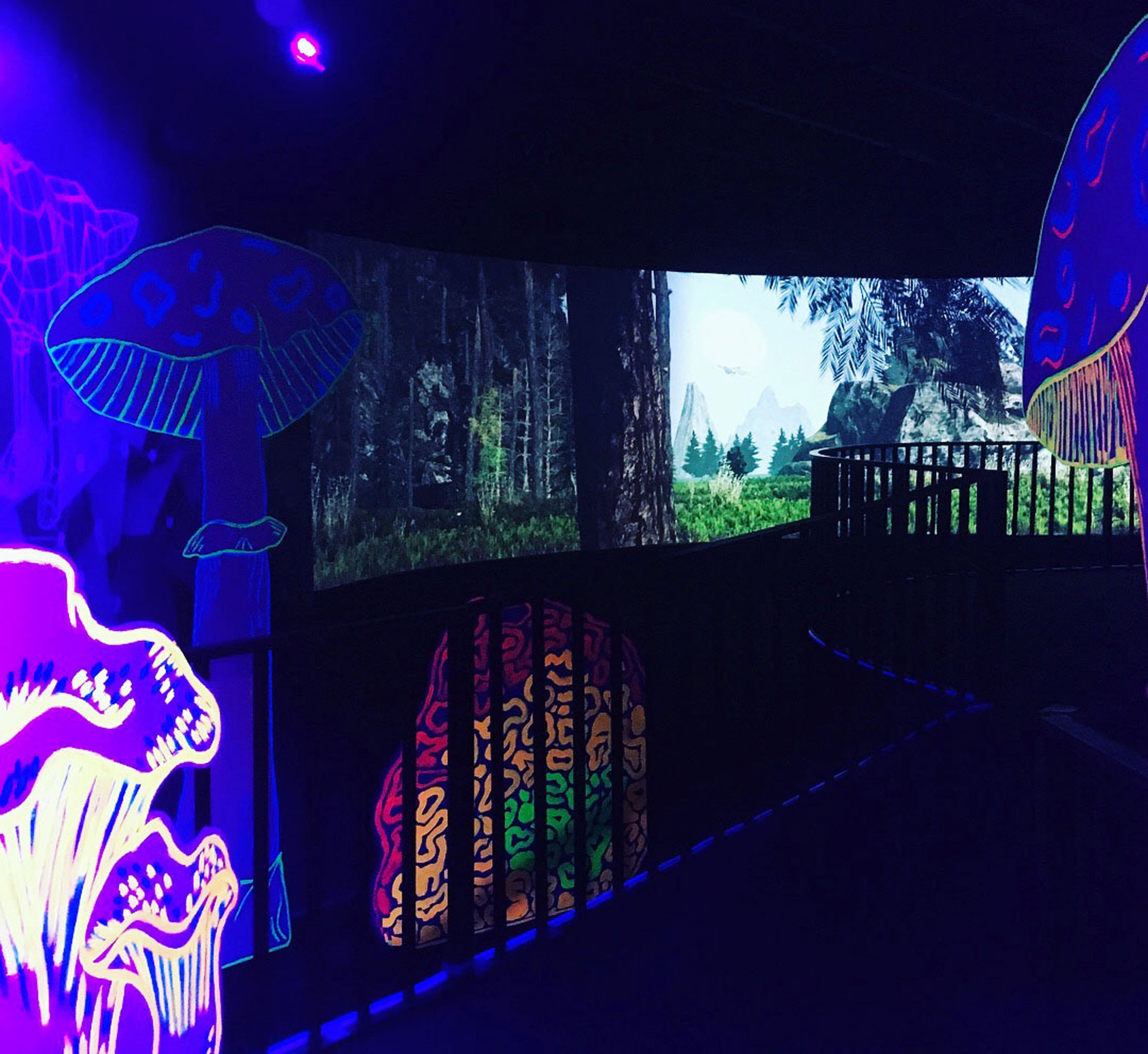
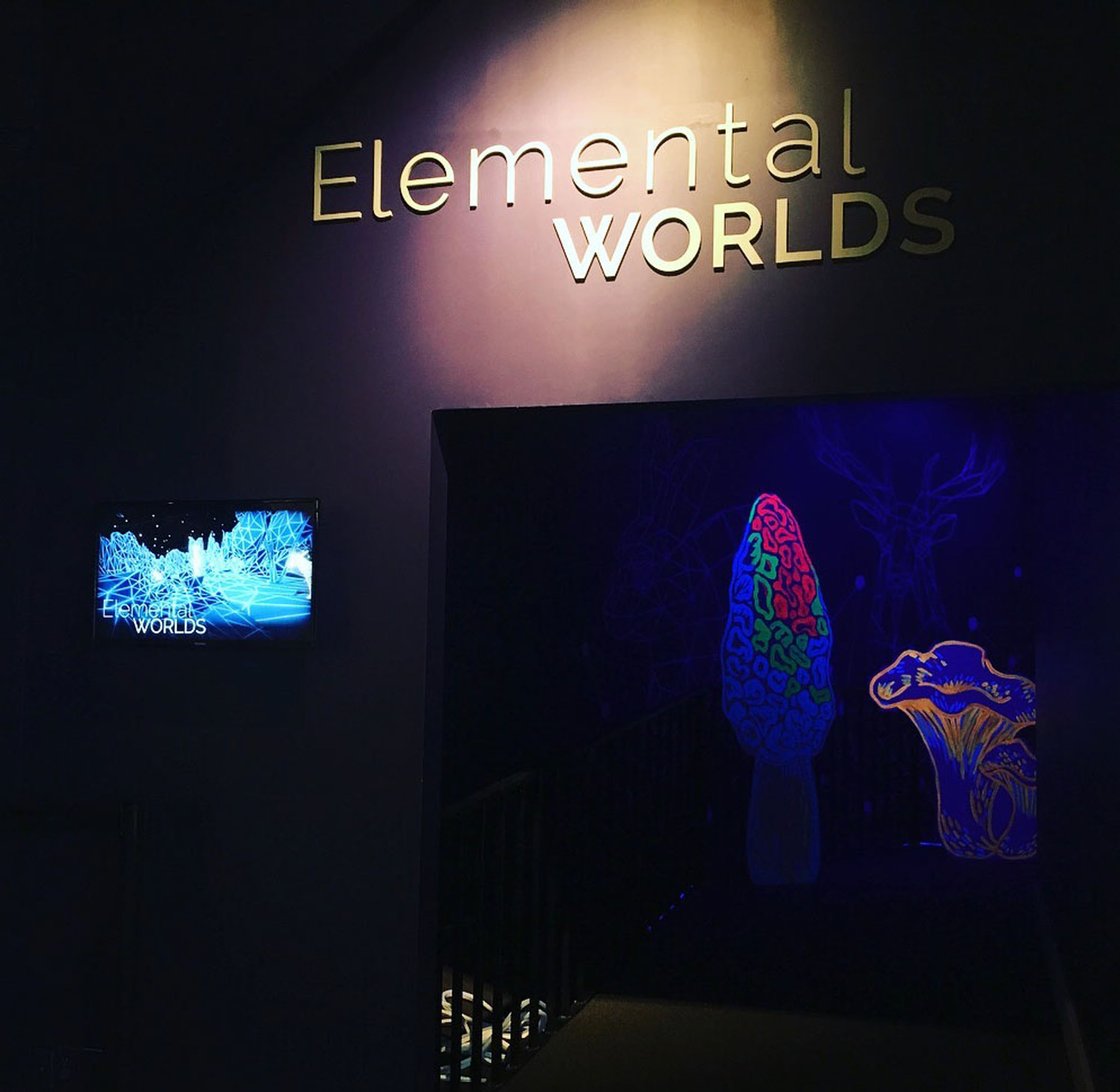
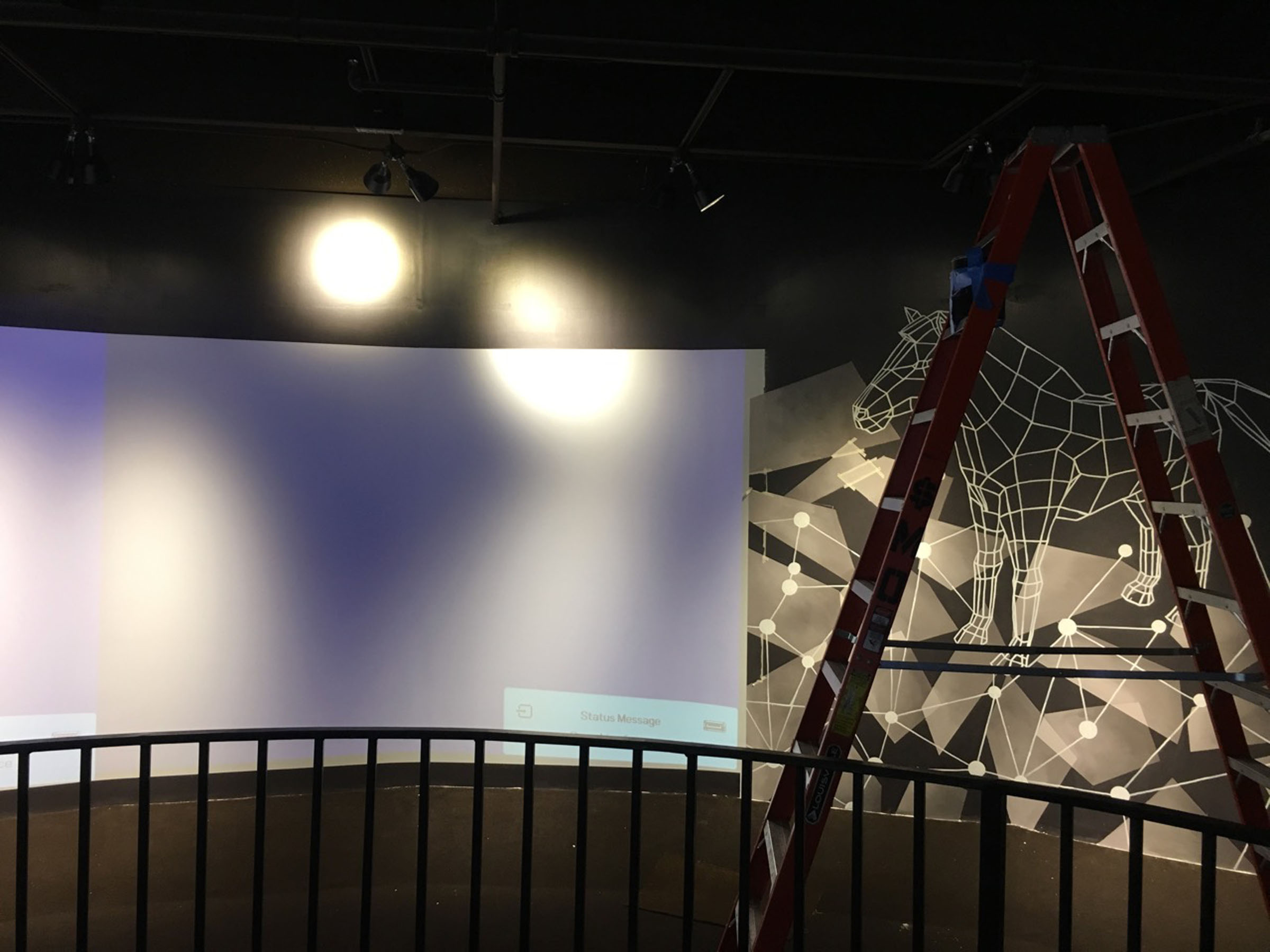
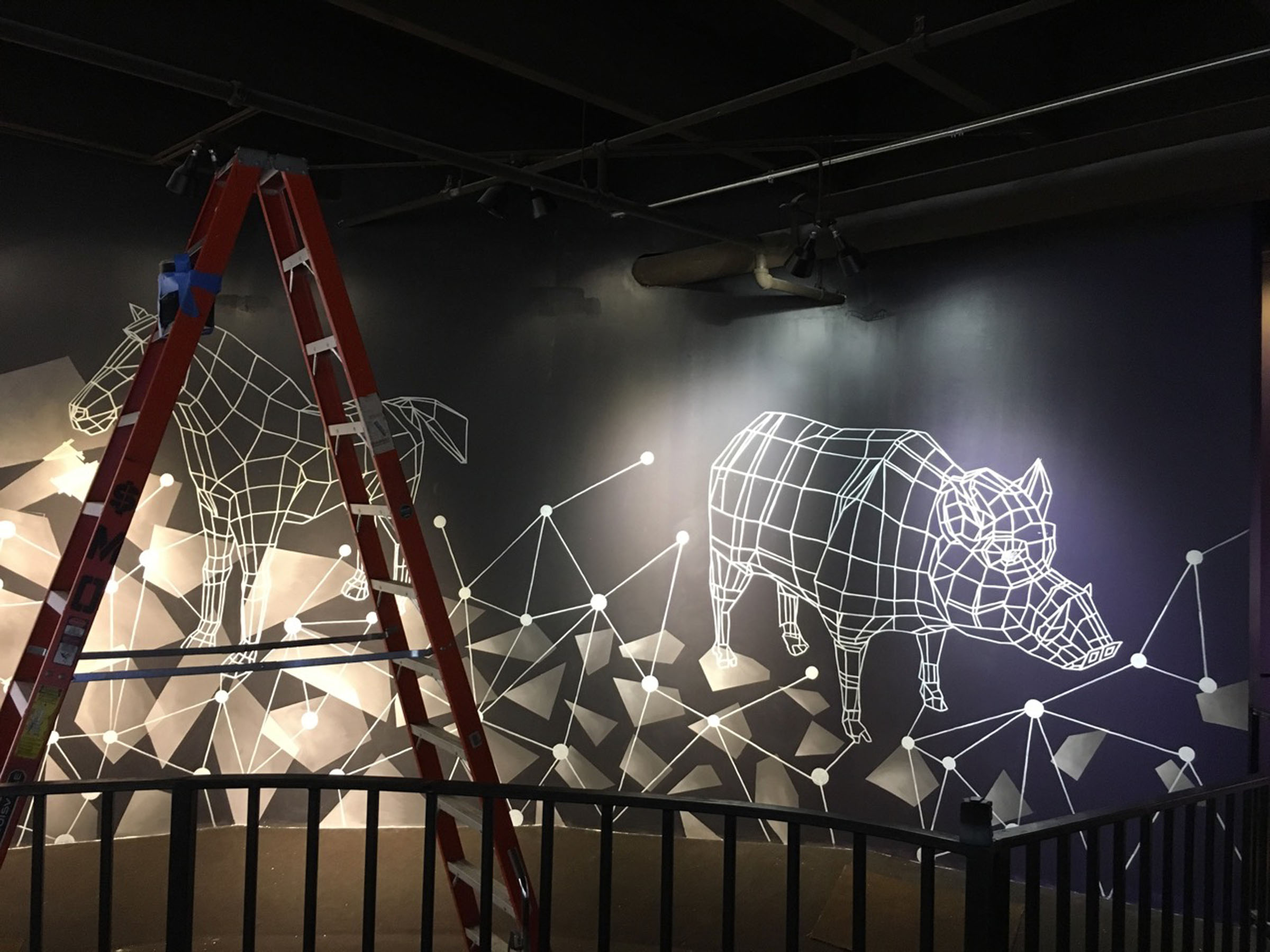
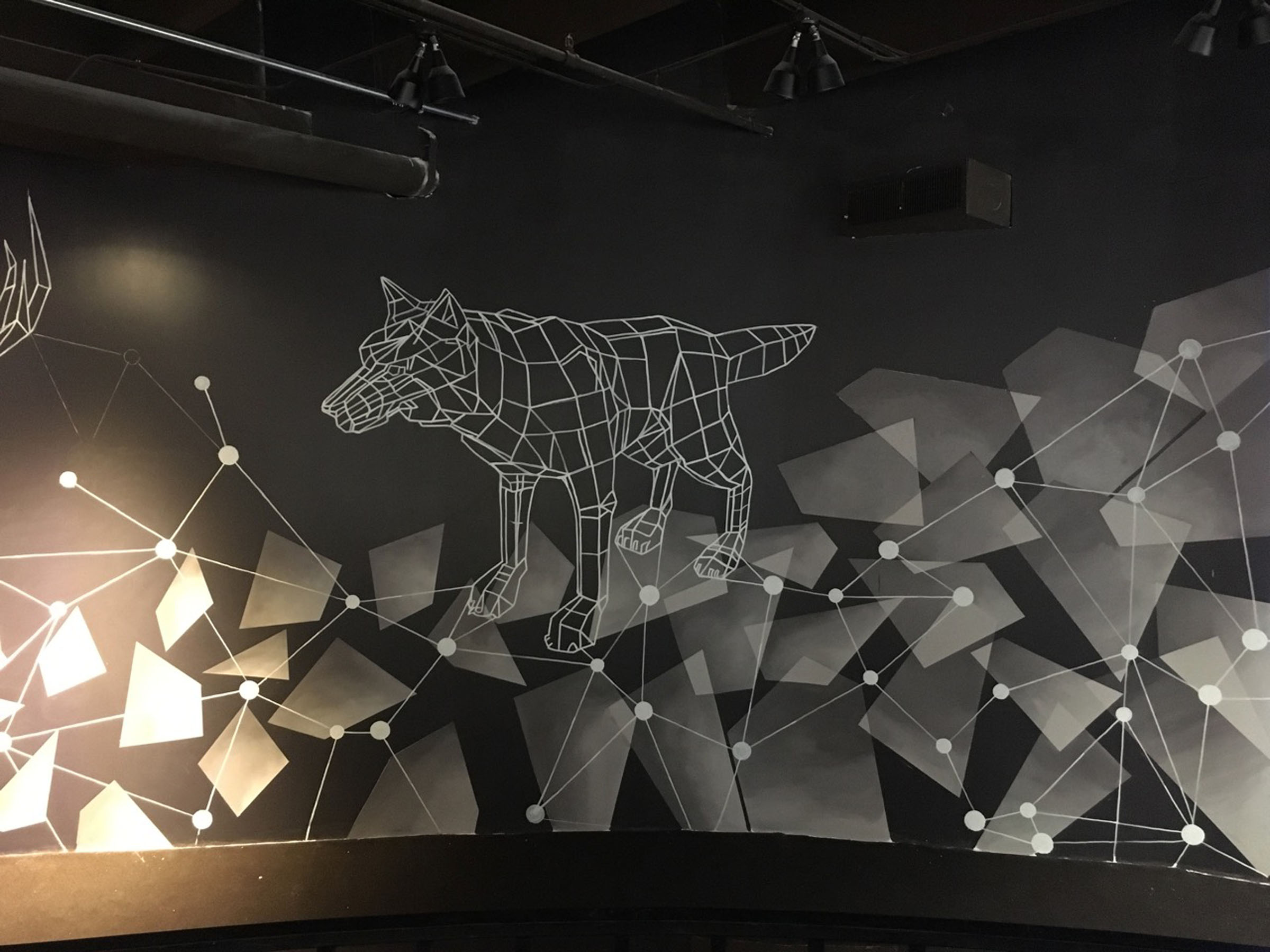
The environment itself was conceived as both spectacle and stage. Visitors stand within a circular platform enclosed by railings, surrounded on all sides by projected landscapes. Blacklight-reactive murals and sculptural interventions frame the entry sequence, extending the sense of immersion into the physical space. Once inside, visitors are enveloped in the projected world, their silhouettes often overlapping with the virtual terrain — blurring distinctions between physical presence and digital environment.

Impact and Engagement
Though playful and lighthearted in tone, Elemental Worlds functions as a deeper exploration of human–computer interaction, collective authorship, and ecological simulation. For children, it is a place of delight and discovery. For researchers, it demonstrates how digital systems can capture and replay public creativity, transforming ephemeral gestures into persistent, evolving artifacts within a shared world. The installation reframes the museum as a laboratory for experimentation, where visitors are both audience and co-creators.

Conclusion
Elemental Worlds demonstrates how immersive media, responsive ecosystems, and participatory design can converge into an architectural-scale experience. By turning drawing into digital life, and spectatorship into ecological participation, the project challenges the boundary between creator and environment, offering instead a vision of museums as places where play and research fuse into a single, shared experience of wonder.

  • IMG_1798
  • IMG_1719
  • IMG_1073
  • IMG_1070
  • IMG_0712
  • IMG_0749
  • IMG_1799

Process


  • IMG_0696

  • IMG_1056

  • IMG_0704

  • IMG_0703

  • IMG_0702

  • IMG_0701

  • Forest_Screenshot_2

  • projector_alignment_overlap_diagram_6_8

© [wpsos_year] Ken Marold USA, Inc. All rights reserved.

Continue reading

Surface Flux

Surface Flux

Surface Flux

Factory Obscura, OKC
Exhibited: May 2 – June 2, 2019

python, c#, grasshopper, pla, wood, steel

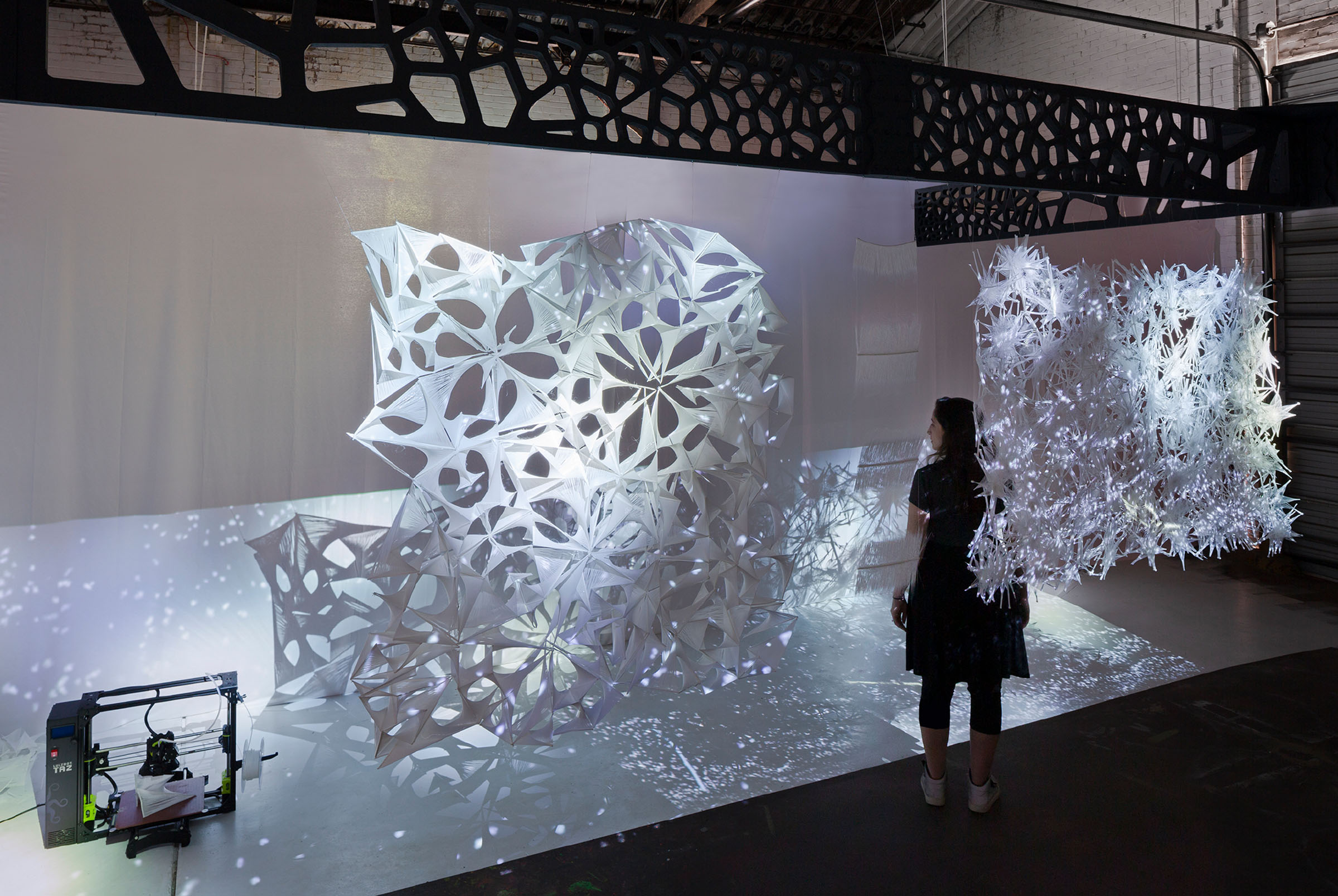
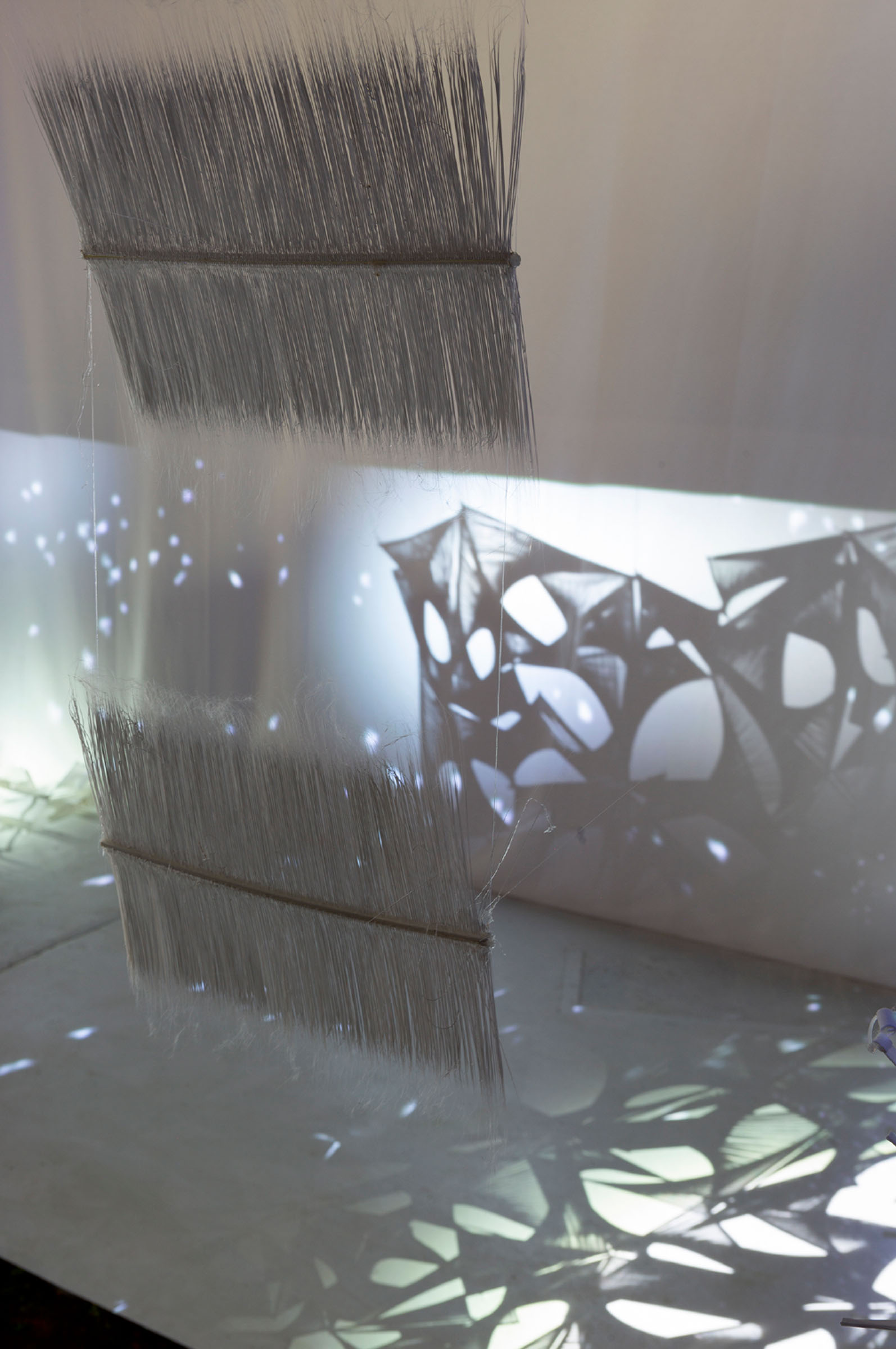
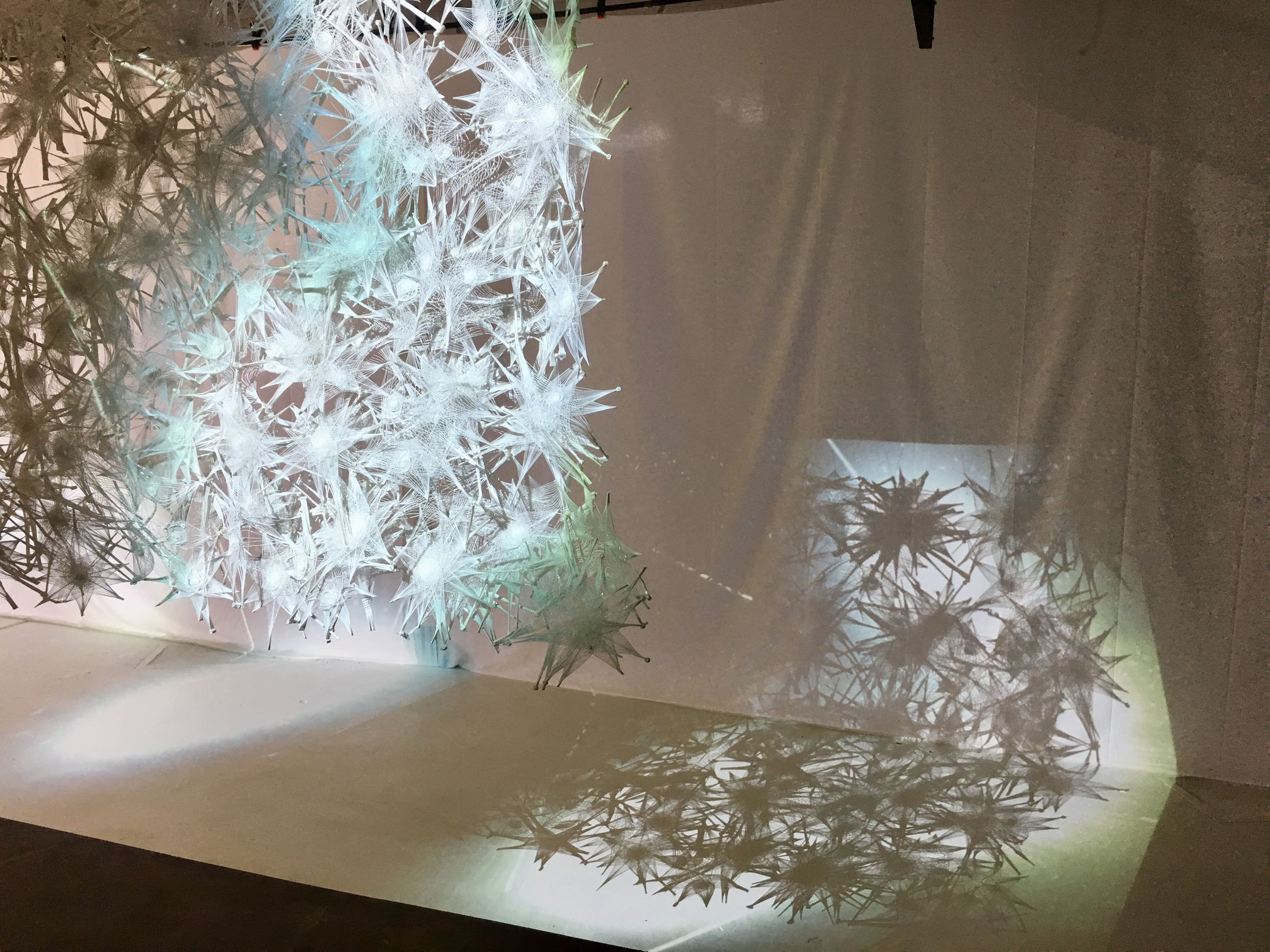
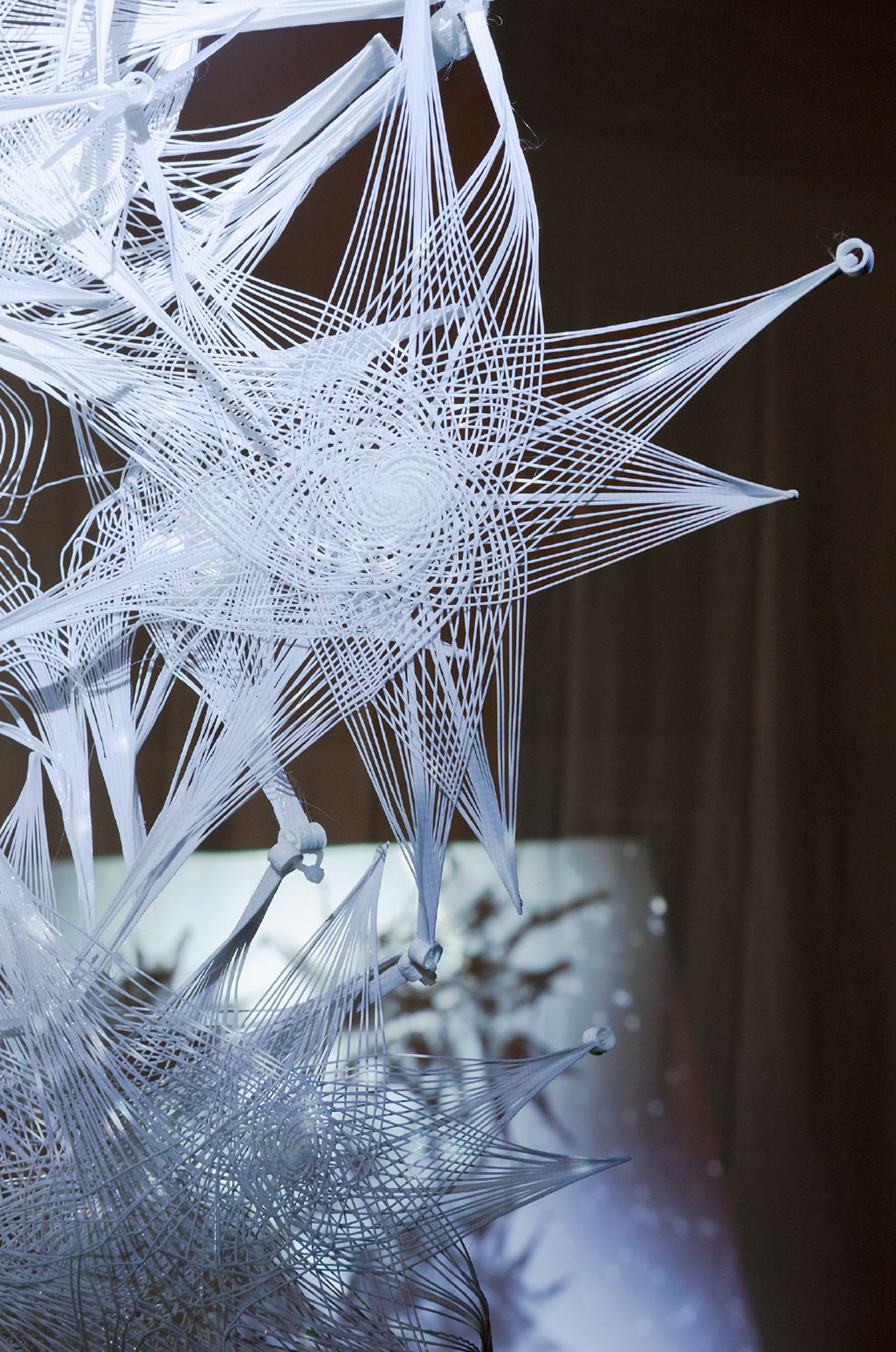
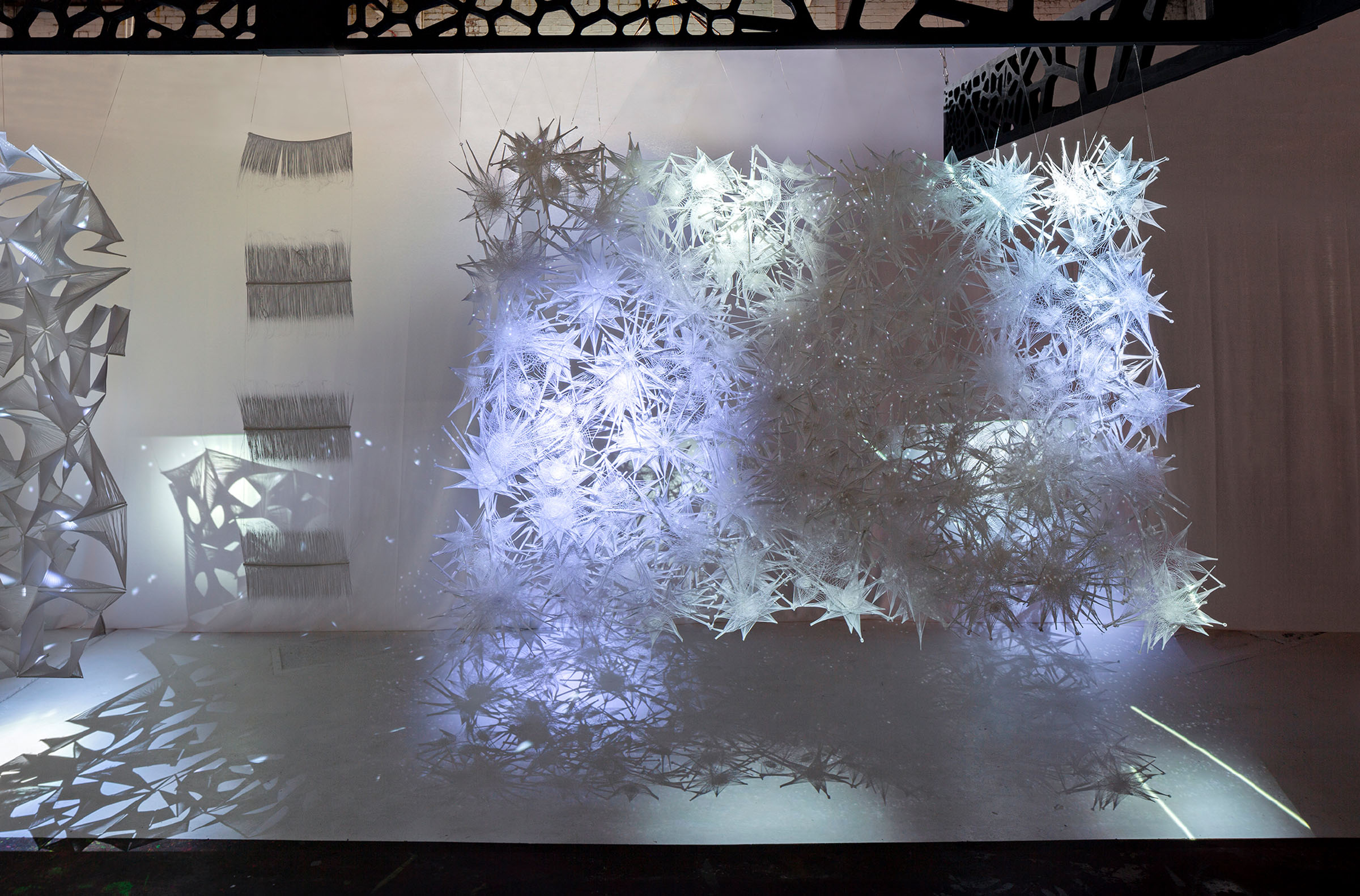
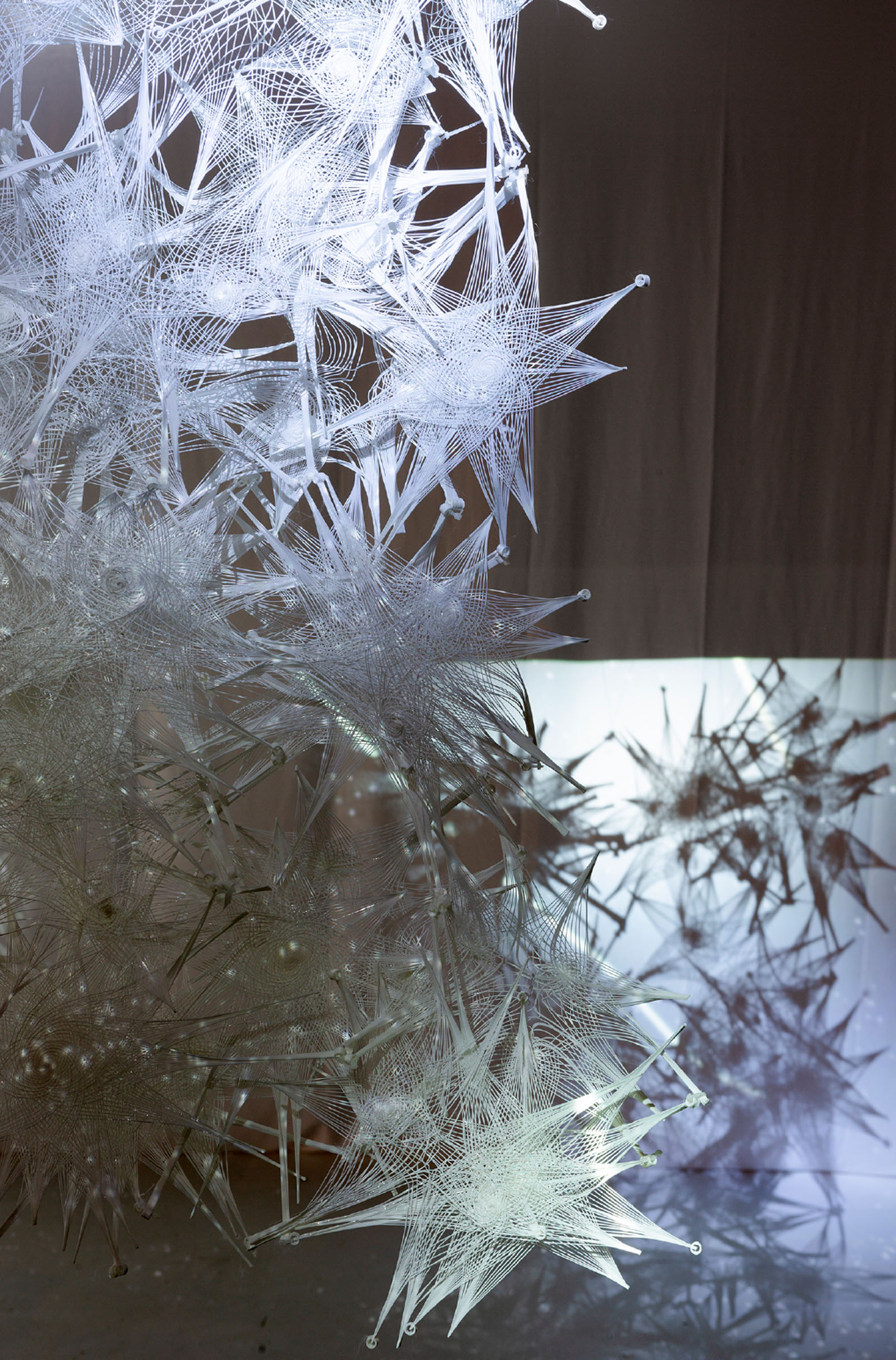
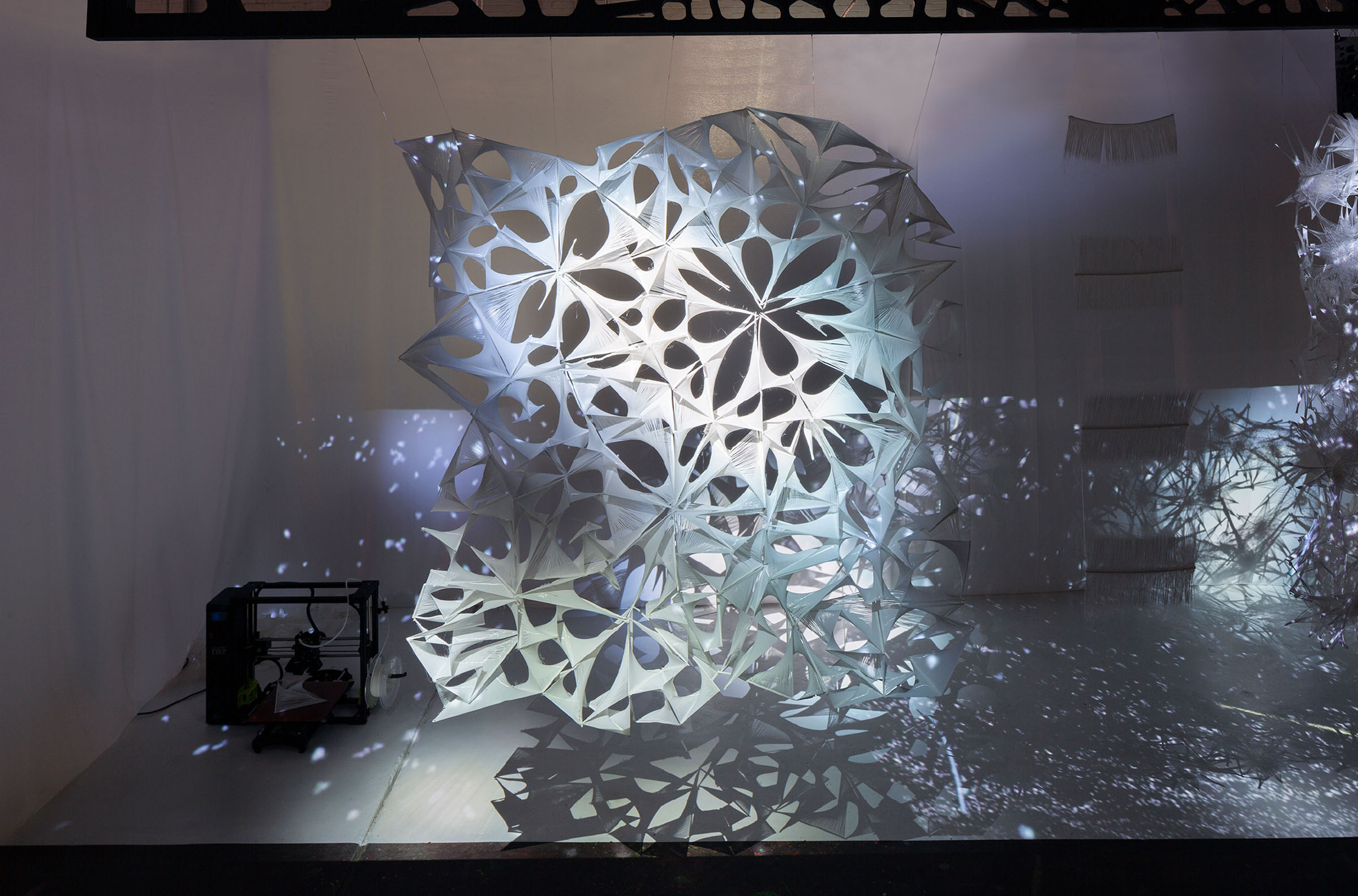
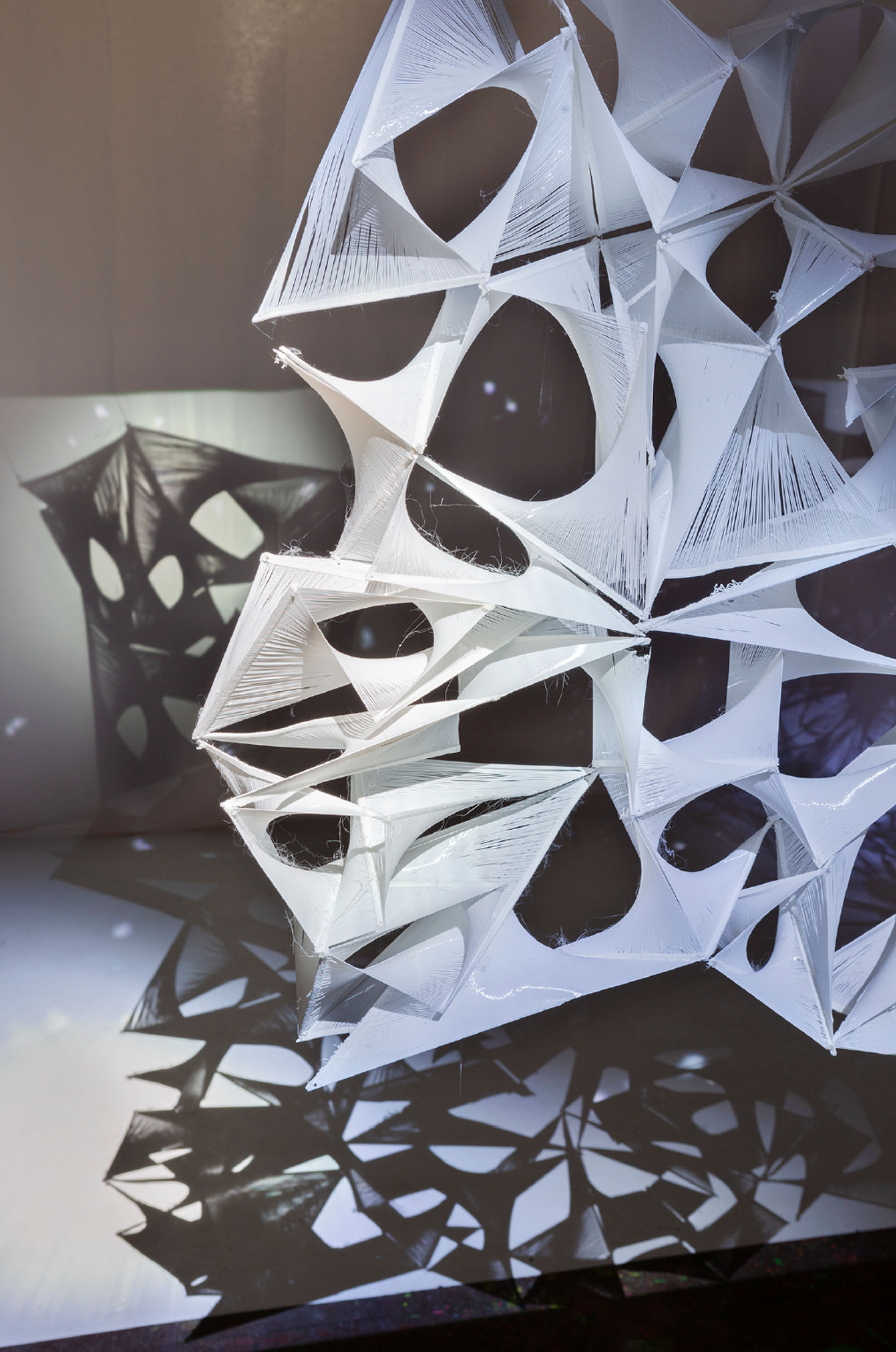
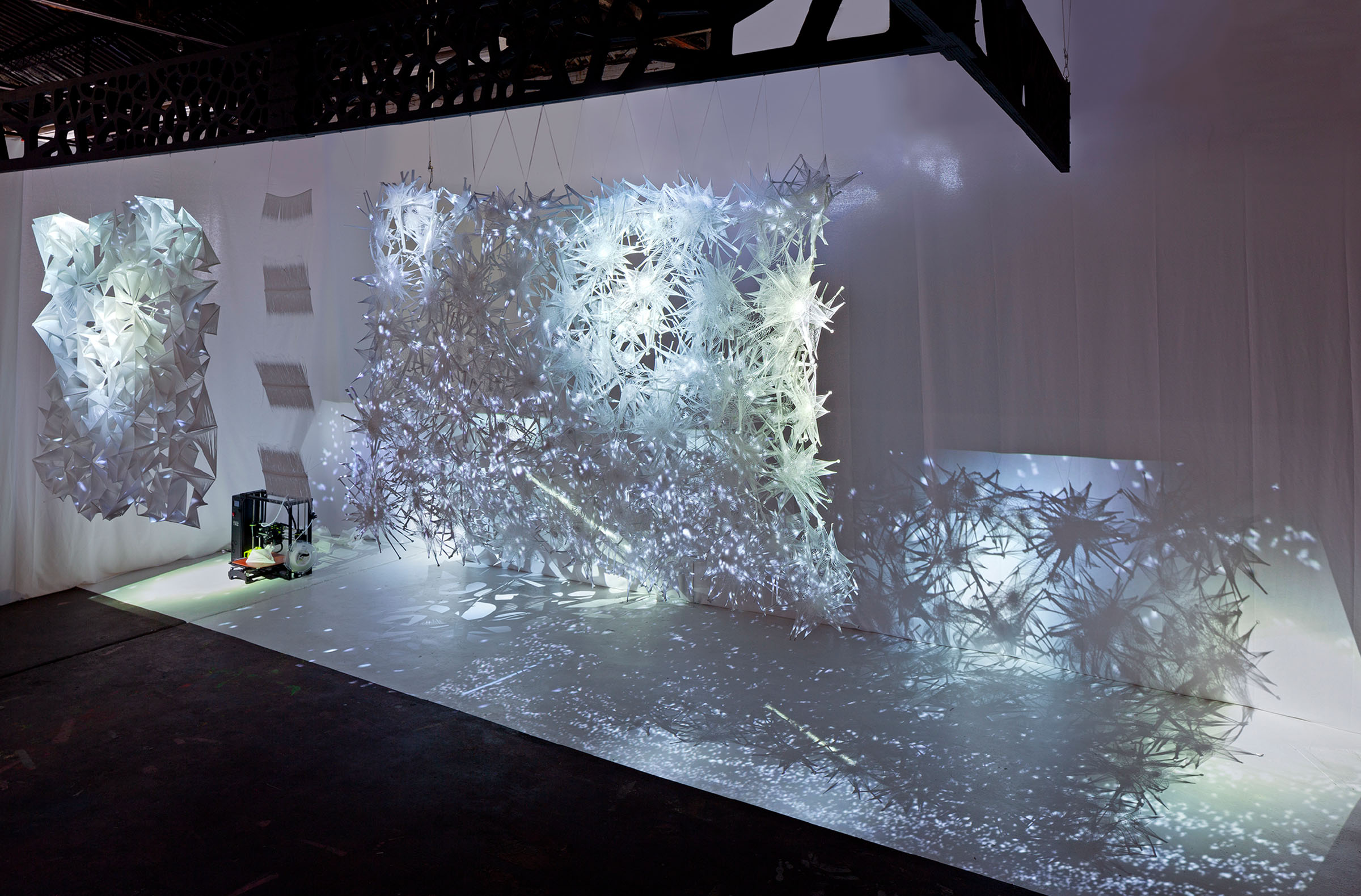
Surface Flux is an immersive installation that investigates computationally generated surfaces as both physical constructions and dynamic fields of projection. Developed collaboratively with architect Deborah Richards, the project merges experimental 3D printing, parametric modeling, and CNC fabrication to produce three unique components—each engaging the relationships between matter, code, and perception. The work explores how digital design processes can be made tangible through material experimentation and spatial performance. A CNC-milled truss system provided the structural framework, integrating digital precision with a handcrafted assembly process.


Conceptual Framework

The conceptual foundation of Surface Flux draws from philosophical readings by Gilles Deleuze, Graham Harman, and Bruno Latour, each addressing the entanglement of material, perception, and agency. Deleuze’s The Fold inspired the notion of continuous surfaces in constant transformation, while Harman’s The Quadruple Object informed the project’s treatment of artifacts as autonomous entities existing beyond direct human access. Latour’s Politics of Nature introduced the idea of nonhuman actors—suggesting that form, light, and data themselves possess agency within the installation. Together, these ideas frame Surface Flux as an exploration of how design operates between the visible and invisible, the digital and the embodied, the constructed and the emergent.


Computational Design and Material Systems

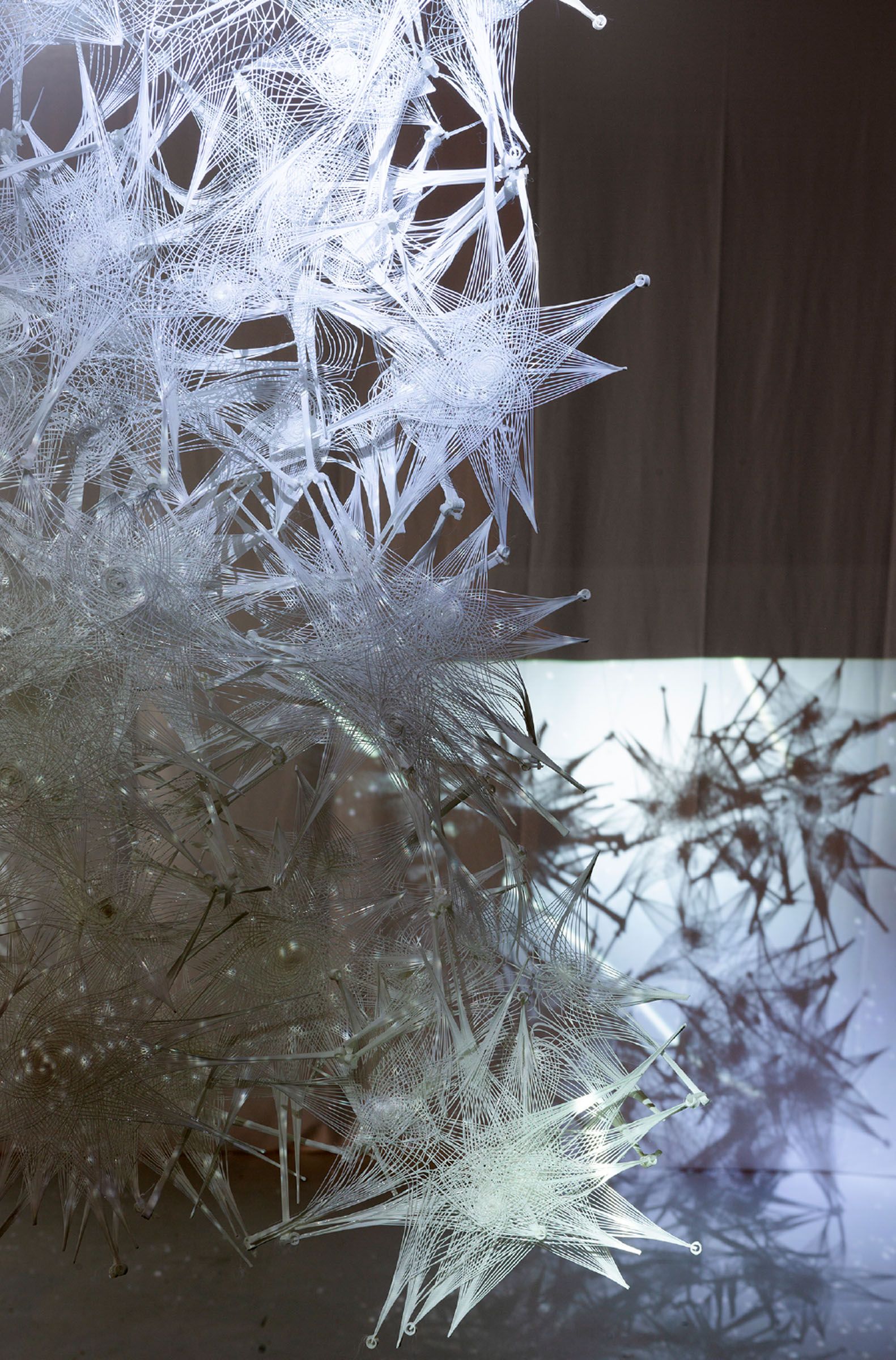
The installation’s fabrication relied on a fully digital workflow using Python, C#, and Grasshopper scripts to generate self-organizing geometries. These algorithms produced surfaces that could shift between discrete objects and continuous fields, simulating natural aggregation processes within artificial systems. Components were 3D printed from PLA and supported by CNC-milled wooden and steel trusses, which extended the computational logic into the structure itself. Every element—from lattice density to lighting alignment—was defined by parametric relationships, translating algorithmic data into architectural materiality. The result is both a precise technical artifact and a study in how fabrication can reveal rather than obscure the complexity of computational form.

This fabrication strategy also emphasized the interplay between precision and emergence. Rather than treating the digital model as a static template, the workflow allowed for continuous recalibration between digital simulation and physical behavior. As the printed components were assembled and suspended, small variations in material tolerance, flex, and lighting revealed new spatial effects that were neither fully predetermined nor accidental. This feedback loop between computation and material testing became an essential part of the design process, demonstrating how digital tools can be used not to fix outcomes, but to orchestrate evolving relationships among geometry, light, and perception.


Immersive Experience & Public Engagement

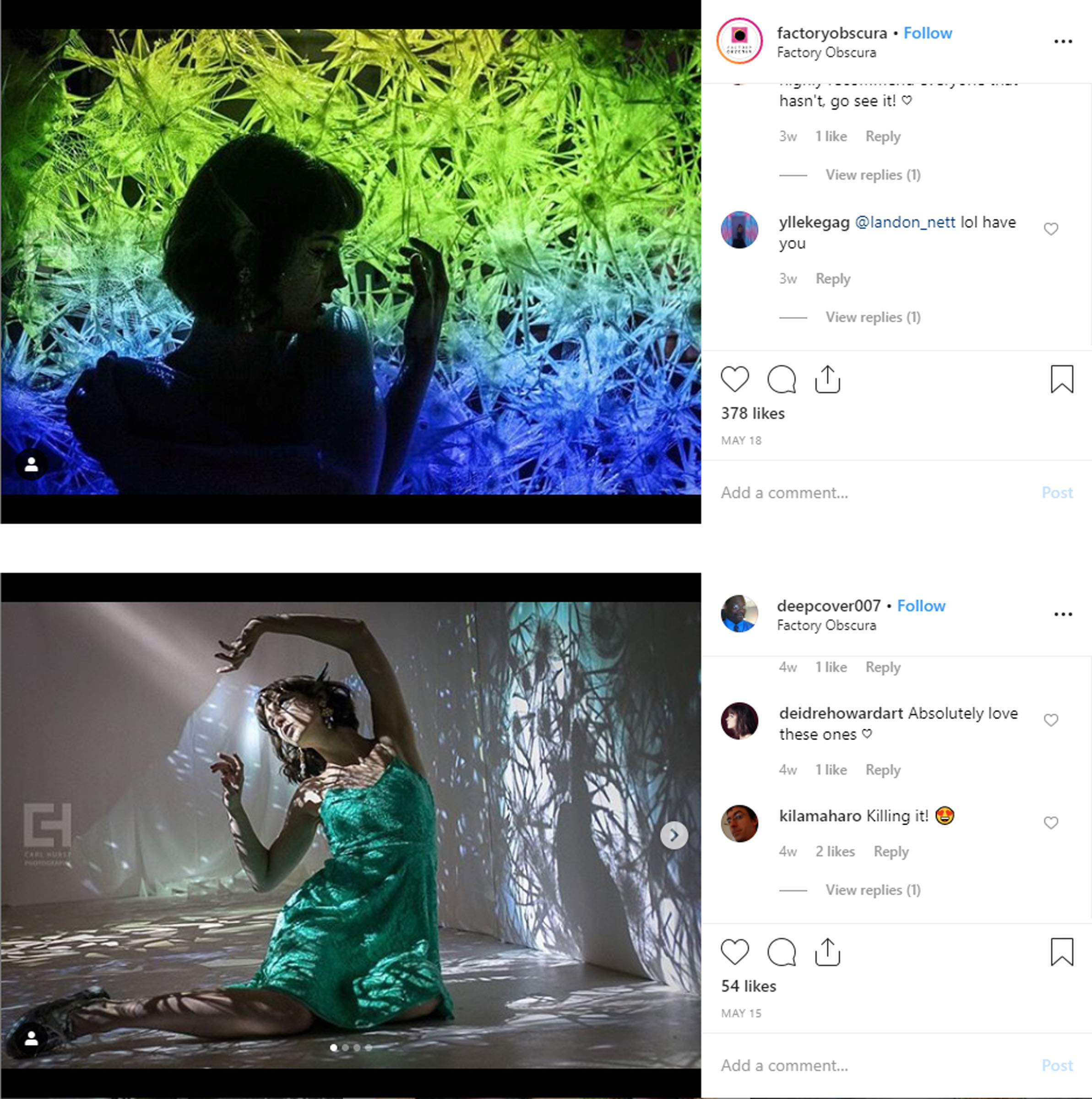
Projection mapping extended the installation into dynamic environments. As light interacted with the translucent plastic and string geometries, shadows multiplied across surfaces, enveloping visitors in shifting networks of pattern. These overlays amplified the computational logic of the assemblies, producing a heightened sense of flux, depth, and atmosphere.

Presented publicly at Factory Obscura in Oklahoma City, Surface Flux invited audiences to move through and around the suspended structures, encountering changing alignments of geometry, shadow, and projection. The installation’s wall text described it as “a space where digital matter performs, revealing how computation might become perceptual experience.” By merging computational research with public exhibition, the project bridged academic inquiry and collective experience. It demonstrated how experimental fabrication processes, when paired with immersive light and atmosphere, can generate spaces of shared reflection and engagement.


Interpretation

Surface Flux positions architecture as both a medium and a mediator—one that exists equally in digital code, material structure, and sensory encounter. By merging philosophical inquiry with computational experimentation, the project demonstrates how design research can act as a bridge between disciplines, translating theory into embodied experience. It proposes a model of practice where making is a form of thinking, and where architecture’s capacity lies not in static form but in its ability to generate new modes of perception and participation.


  • Untitled-11
  • Untitled-10
  • Untitled-9
  • Untitled-8
  • Untitled-7
  • Untitled-4
  • Untitled-6
  • Untitled-3
  • Untitled-1

More Work


Architecture

Art + Code

Design + Fabrication

Courses + Student Work

© Ken Marold USA, Inc. All rights reserved.

Continue reading