Yakisugi: Material and Process Research

Yakisugi: Material and Process Research

Tradition, Transformation, and Regional Adaptation


Project Overview

This material research investigates Yakisugi—the traditional Japanese technique of wood charring—as both cultural and a contemporary design process. Historically developed in Japan to preserve sugi (Japanese cedar), the method carbonizes the outer surface of wood to increase resistance to water, insects, and decay while intensifying texture and grain. This research reinterprets Yakisugi as a system of sustainable material transformation, connecting historical craft with modern fabrication methods and environmental priorities.

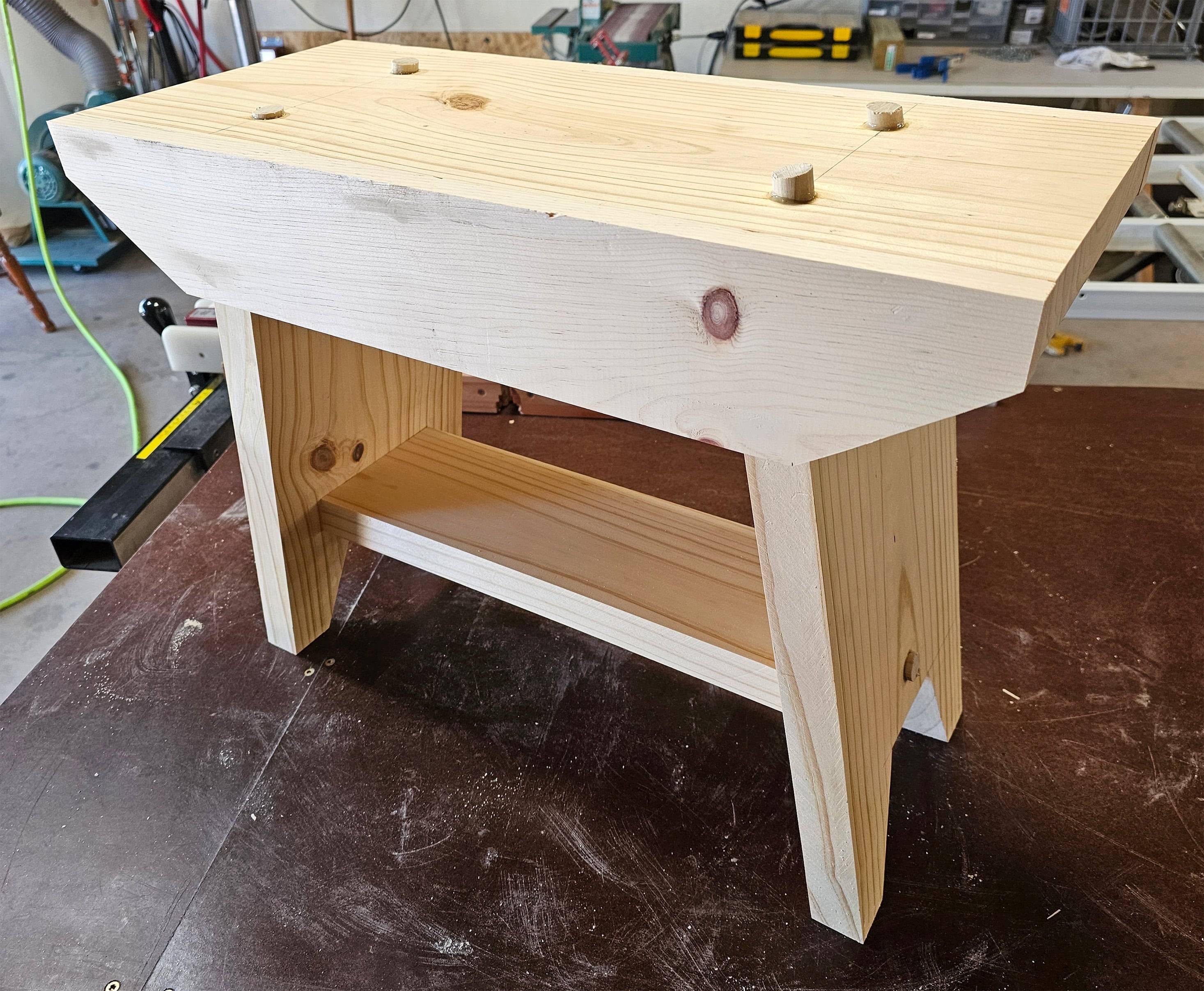
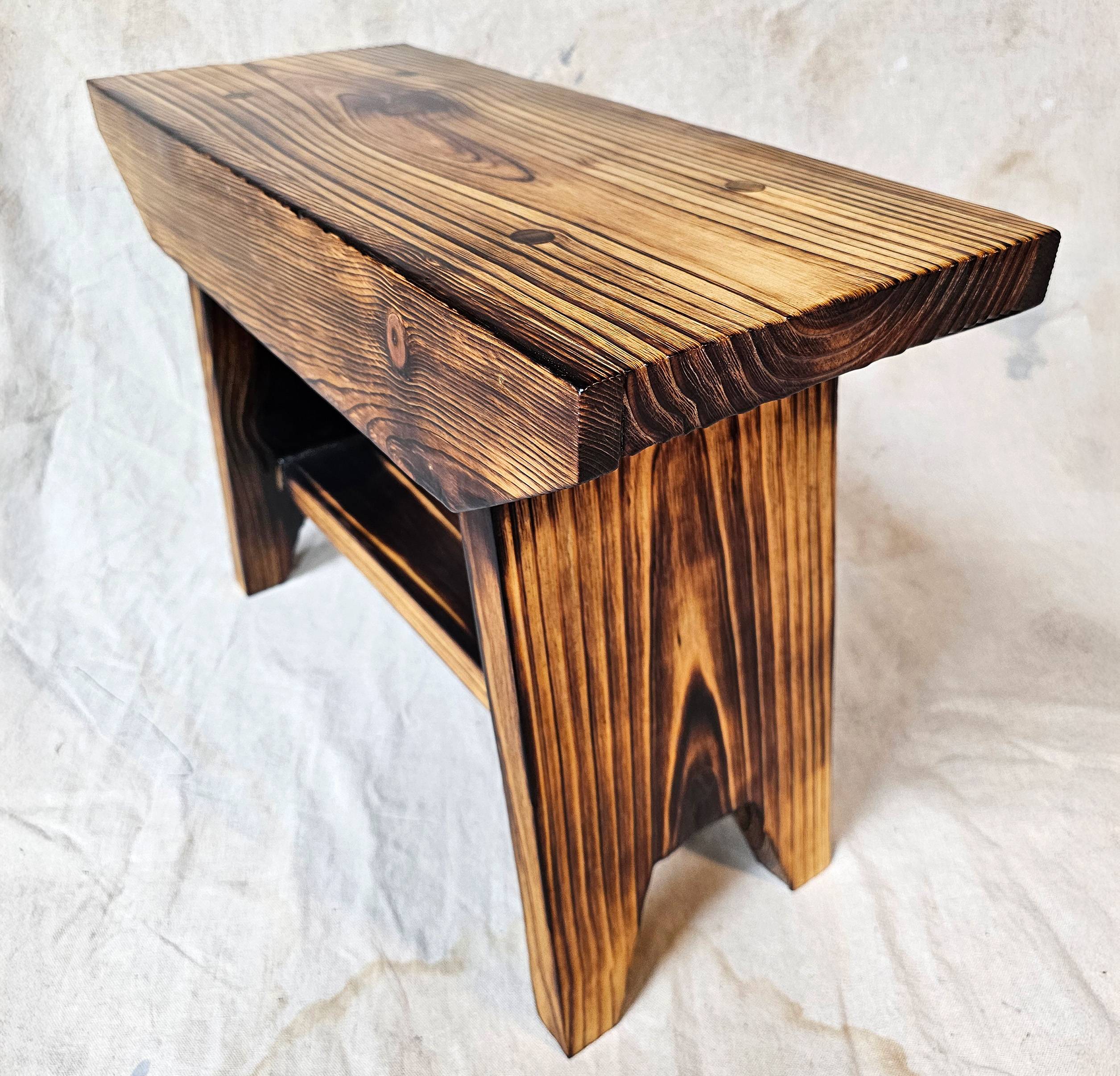
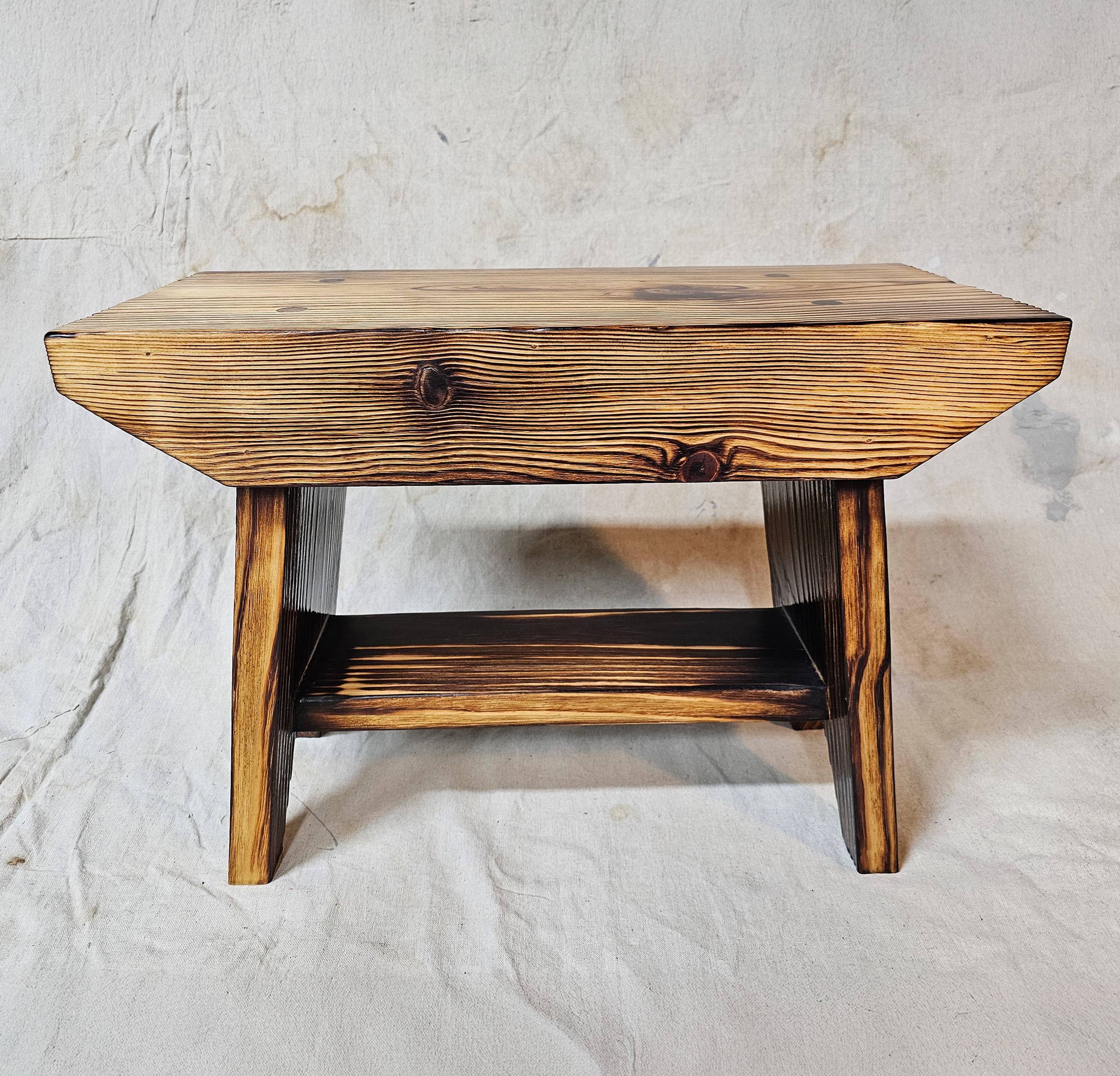
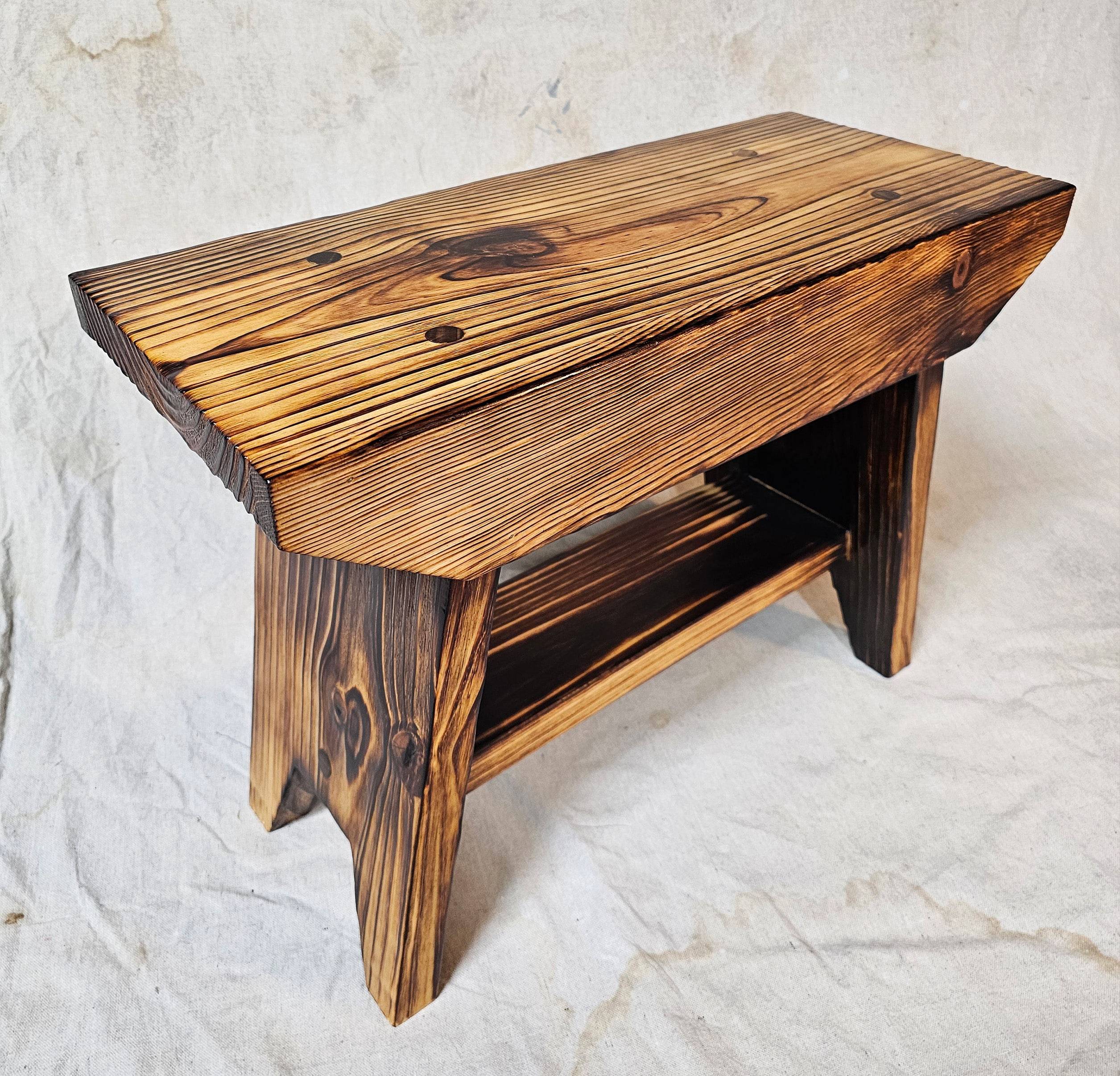
The study focused on regionally available materials, using southern yellow pine as the test species. This wood, abundant and cost-effective in the southern United States, provide a realistic foundation for advancing Yakisugi’s application within contemporary construction and community-scaled design-build work. Across a series of prototypes—including birdhouses, benches, stools, and a full bathroom vanity—the project explored how traditional thermal modification can be refined, adapted, and expanded for modern architectural and furniture-scale applications.


Yakisugi: Material and Process Research

Tradition, Transformation, and Regional Adaptation

This material and process research investigates Yakisugi—the traditional Japanese technique of wood charring—as both a preservation method and a contemporary fabrication process. Originally developed in Japan to extend the life of sugi (Japanese cedar), the technique carbonizes the wood’s surface to enhance durability, water resistance, and insect repellence while revealing its grain through contrasting layers of texture and tone. This research reinterprets Yakisugi for the southern United States using southern yellow pin as regionally sourced, affordable materials.

Through a series of prototypes—birdhouses, stools, benches, and a custom bathroom vanity—the project explores how controlled combustion, hybrid finishing, and tactile craftsmanship can merge historical techniques with modern design sensibilities. The study serves as a bridge between tradition and experimentation, advancing Yakisugi as both ecological method and expressive material language.

Historical and Material Context

Yakisugi—known in the West as Shou Sugi Ban—emerged in 18th-century Japan as a sustainable alternative to chemical treatment for wood siding in humid and coastal climates. Builders discovered that controlled surface charring, followed by brushing and oiling, sealed the grain and protected against decay. The result is a material that ages gracefully, combining resilience with a meditative sense of impermanence.

This research began with a study of Yakisugi’s cultural and material history before turning toward adaptation for regional conditions and species. Experiments compared southern yellow pine and cedar, assessing their burn behavior, grain response, and color variation under controlled torching conditions. Documentation included char depth, texture variation, and tonal contrast, forming a base of empirical data to inform further development. The goal was to retain the process’s original environmental logic—protection through transformation—while reinterpreting it through the lens of contemporary craftsmanship and regional availability.
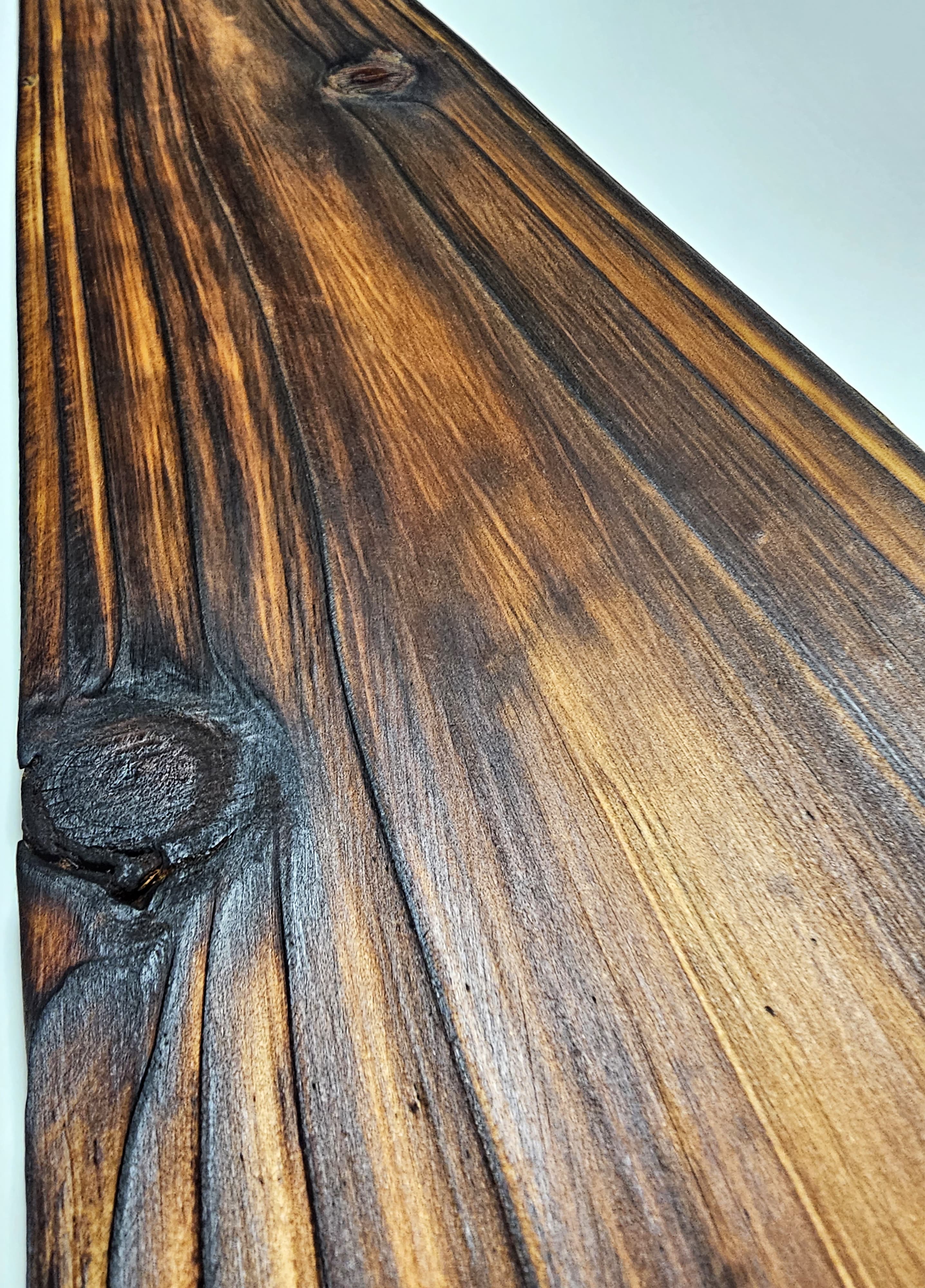
Yakisugi treated with Tung Oil. Tung oil creates a water-resistant barrier that protects wood from moisture, preventing cracks and warping. Worn or damaged areas can be easily repaired by simply cleaning the surface and applying another coat of oil, which is a significant advantage for exterior projects


Process Development and Fabrication Strategy

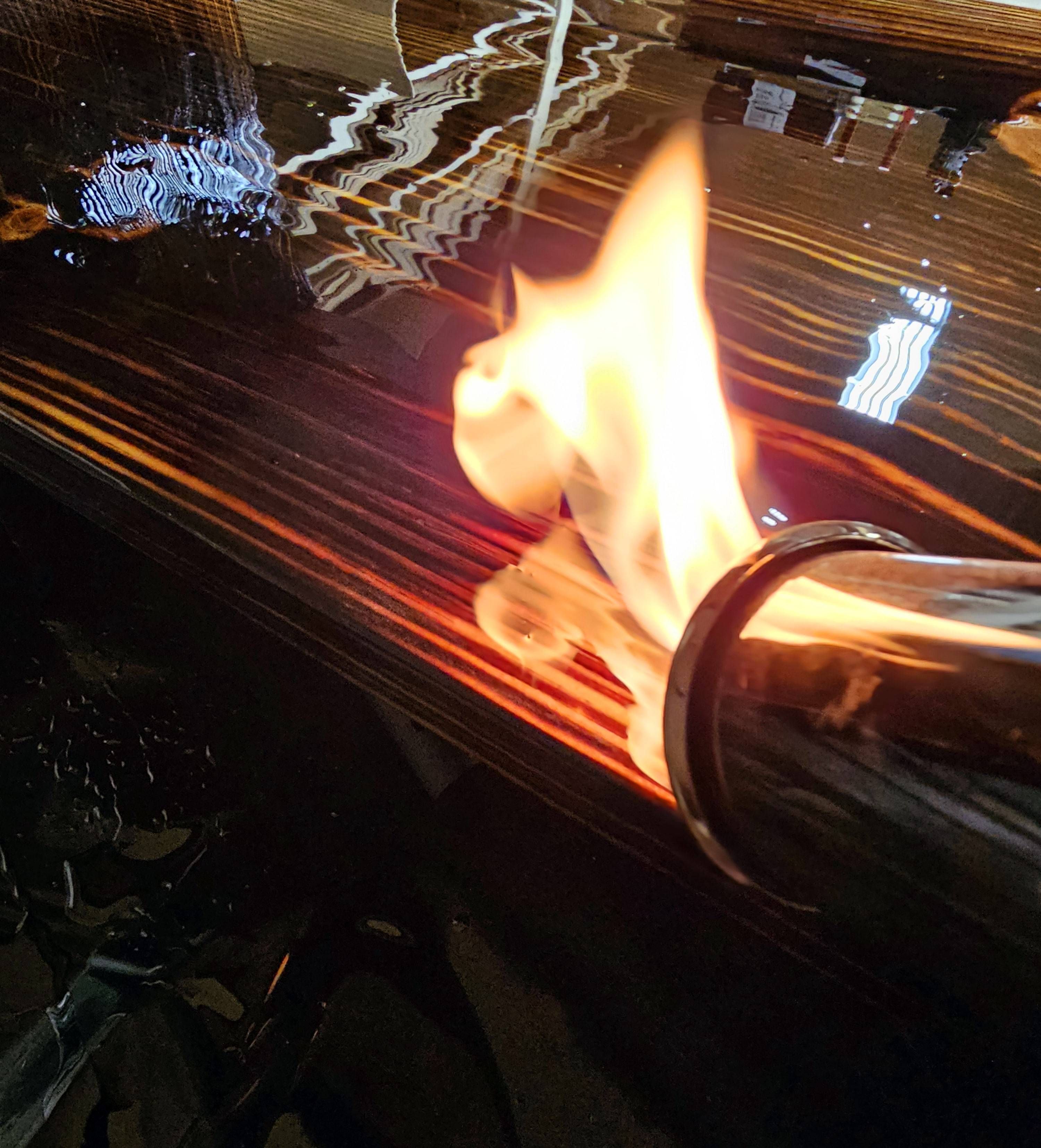
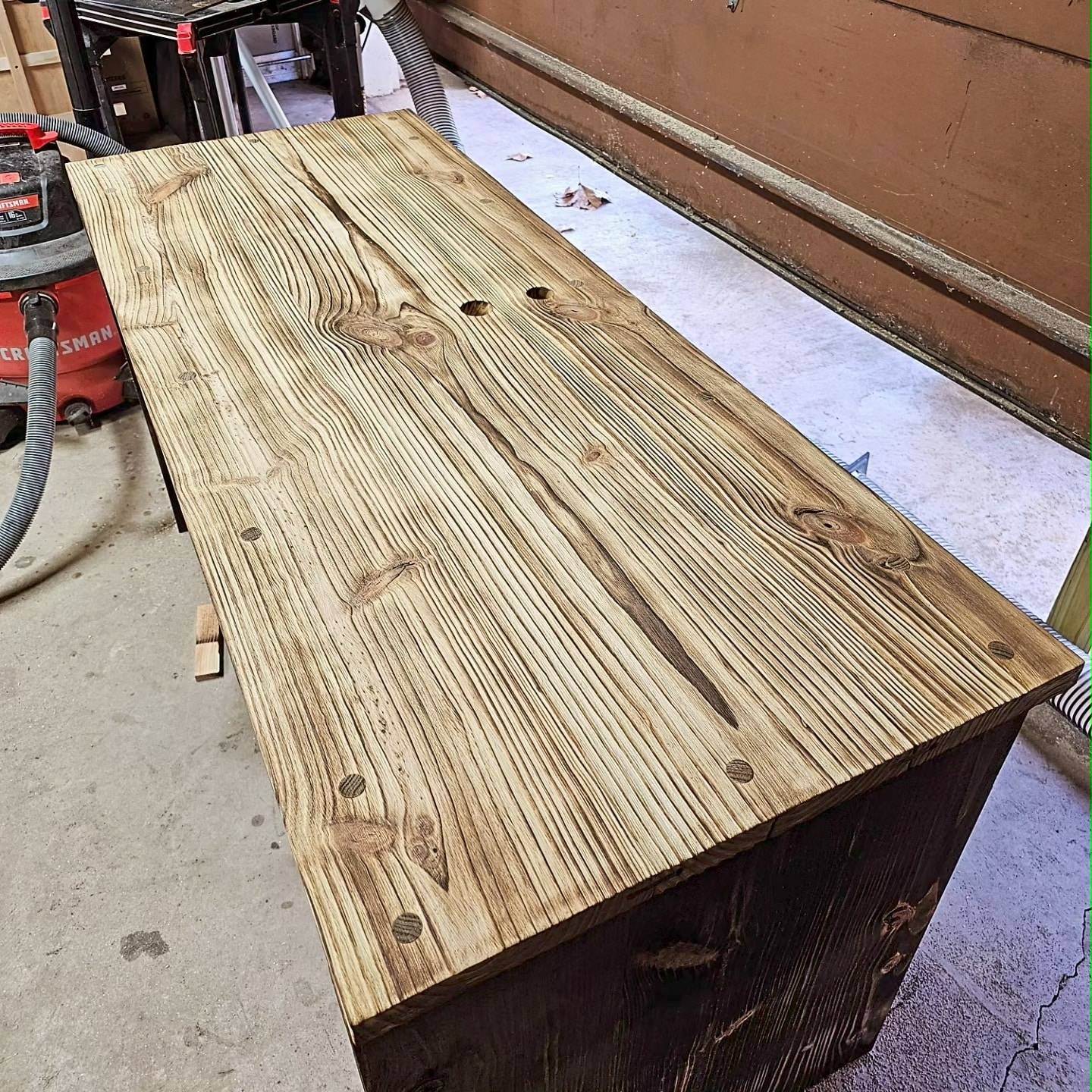
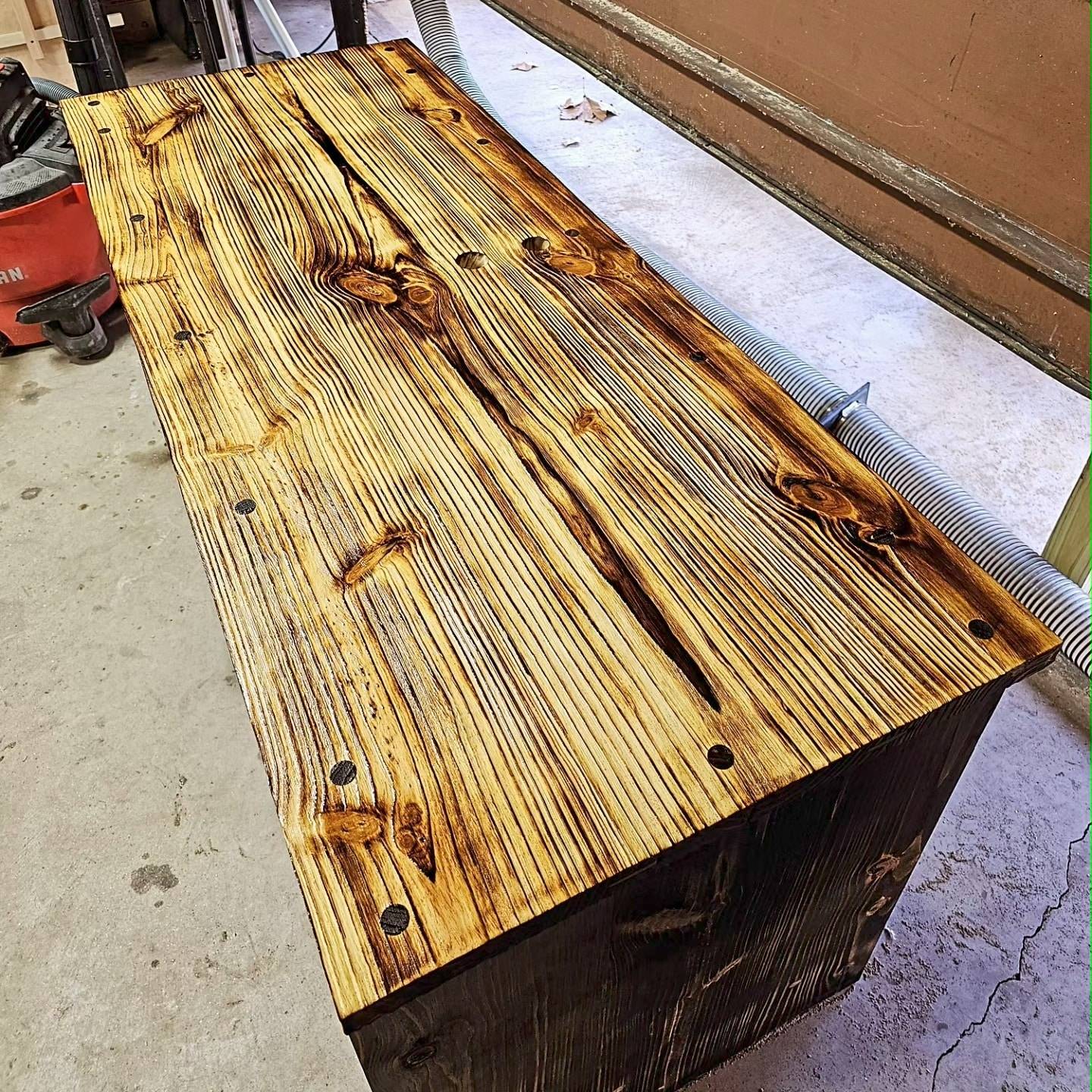
The fabrication process followed a structured series of experiments to refine the relationship between flame, surface, and tool. Each piece underwent calibrated burning at specific temperature ranges to achieve consistent carbonization without over-penetration. The process of Yakisugi relies on heat to seal the wood by carbonizing its outermost surface, shrinking its cellular structure and forming a hard, protective layer. This transformation alters the wood at a molecular level, neutralizing cellulose and surface sugars that attract moisture, insects, and microbes, while the charred layer itself serves as a physical barrier against decay and fire.

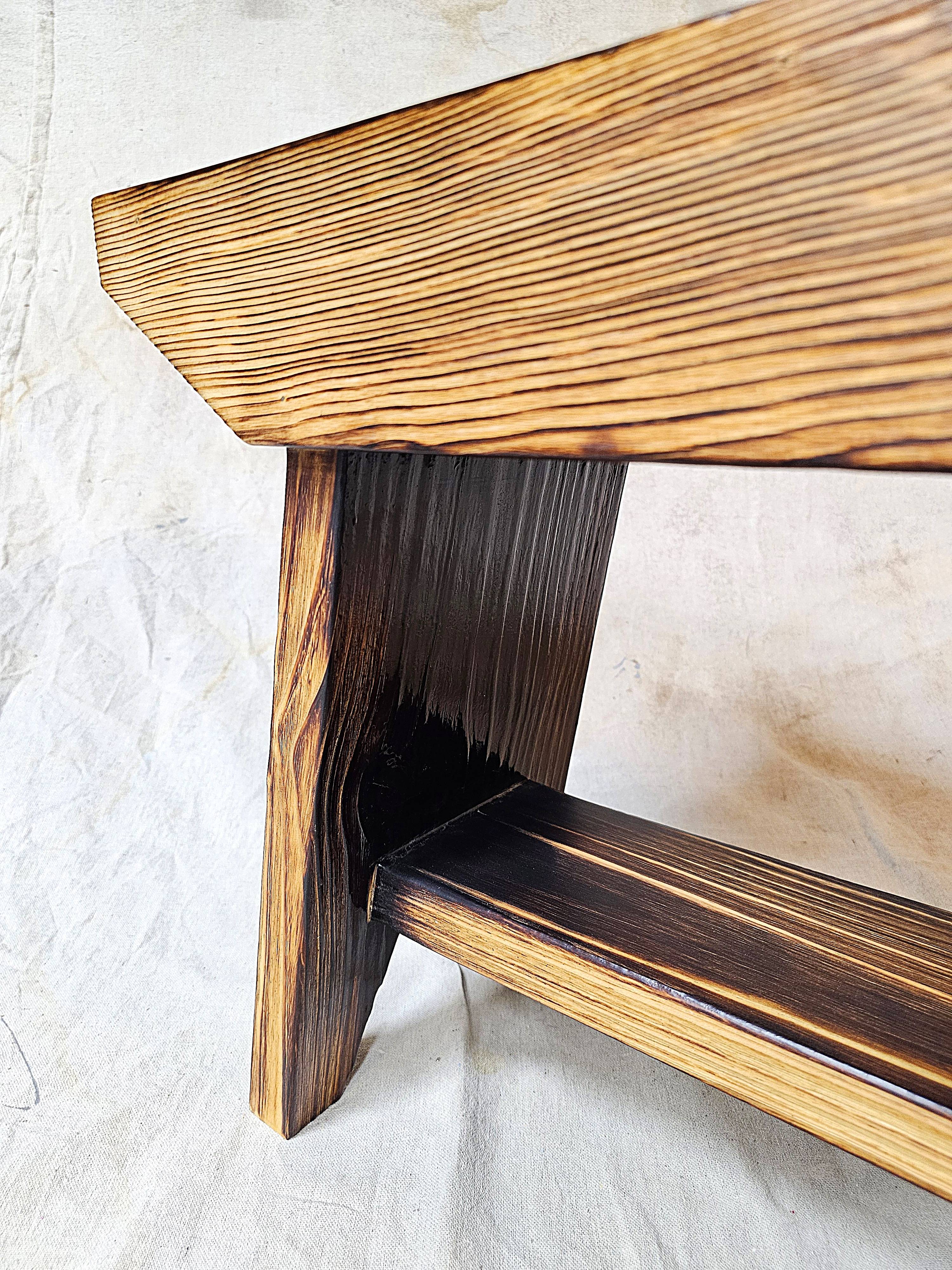
A combination of mechanical scraping and hand brushing proved most effective for achieving a uniform char layer with optimal texture and depth. This hybrid technique produced controlled variations in grain exposure and relief while maintaining the integrity of the carbonized surface. Through these iterative refinements, the process revealed the dual nature of Yakisugi—both a technical preservation method and a form of material expression. The act of burning became a form of inscription, transforming wood into a record of heat, time, and craftsmanship.
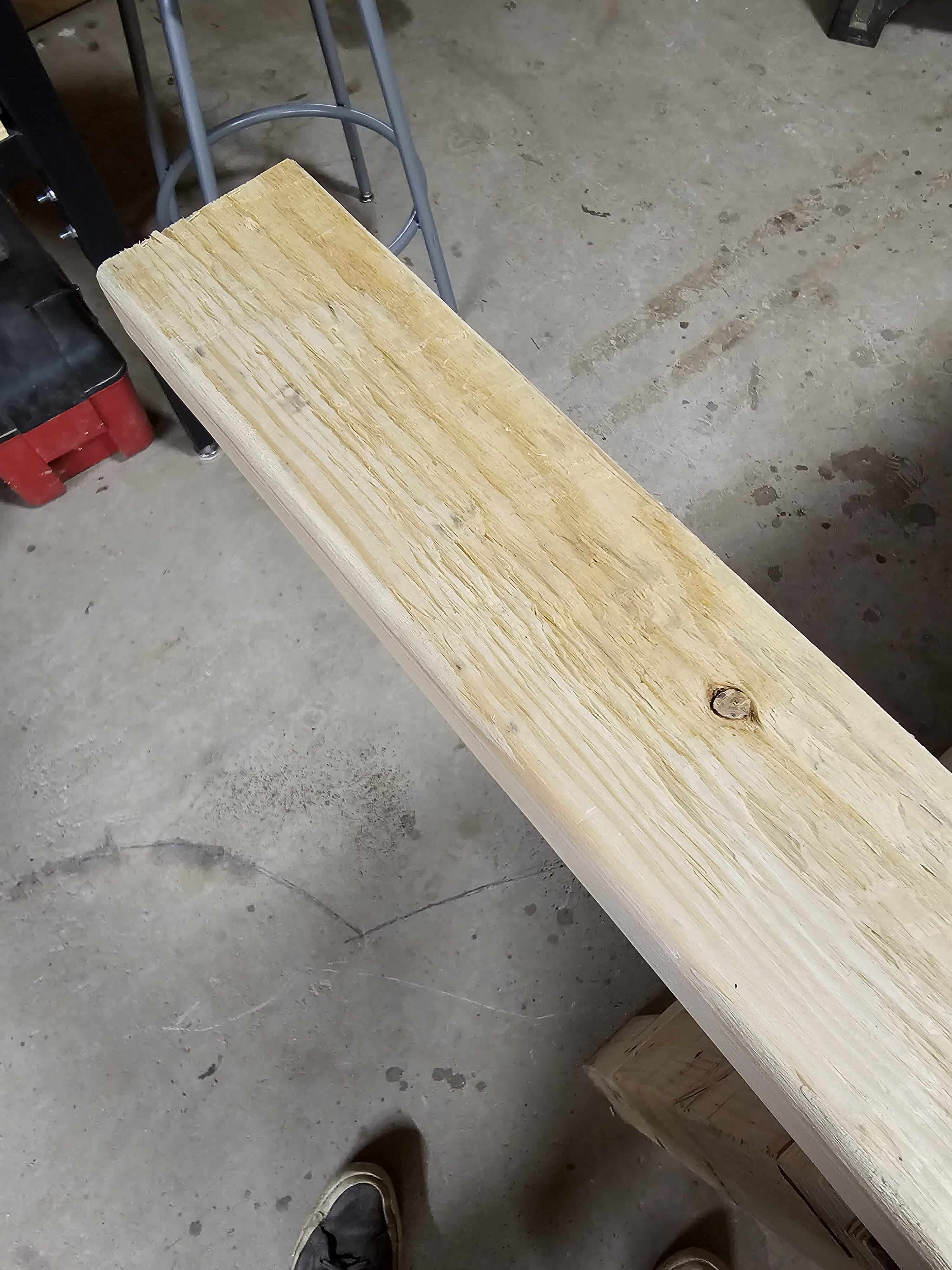
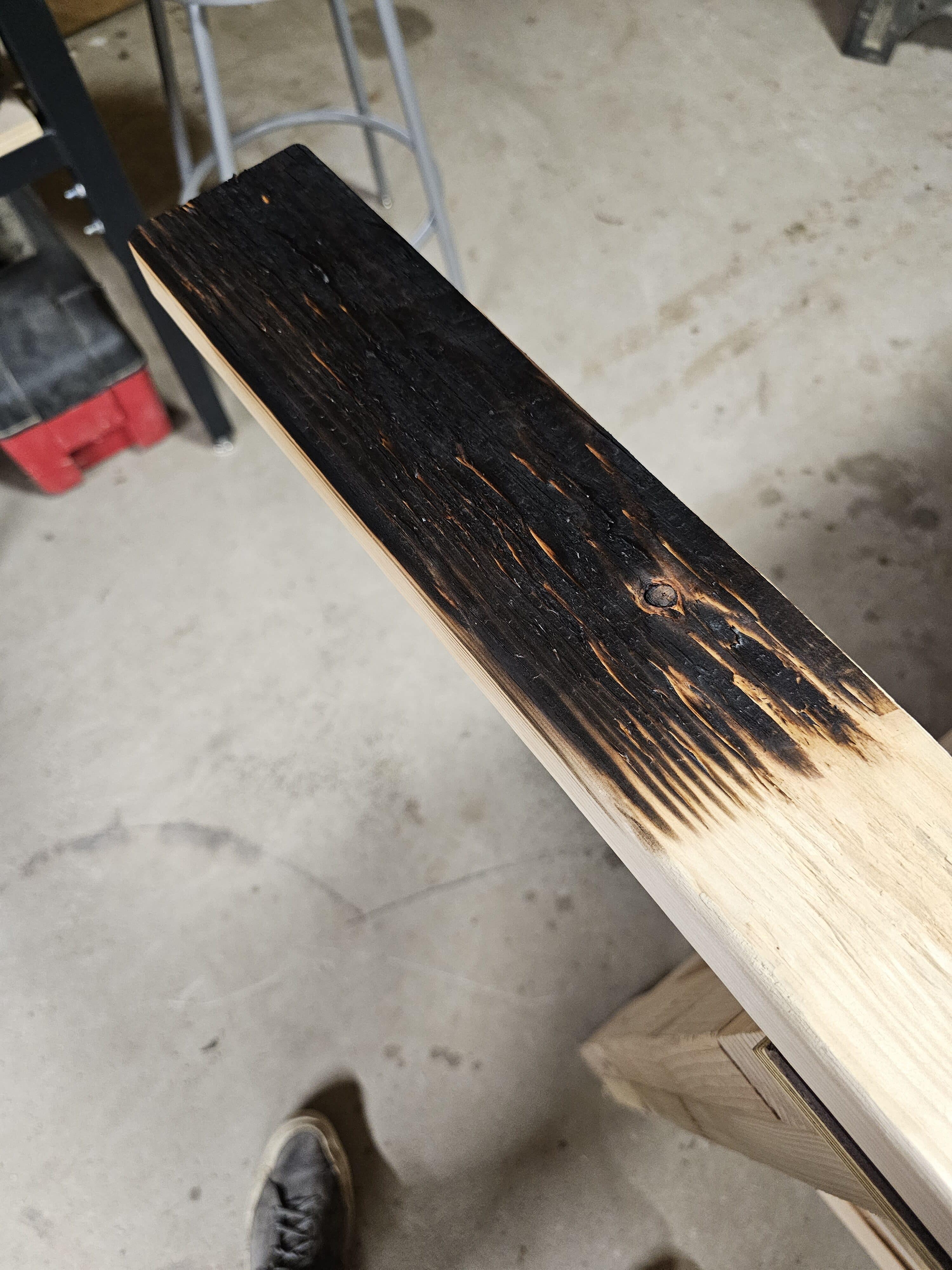
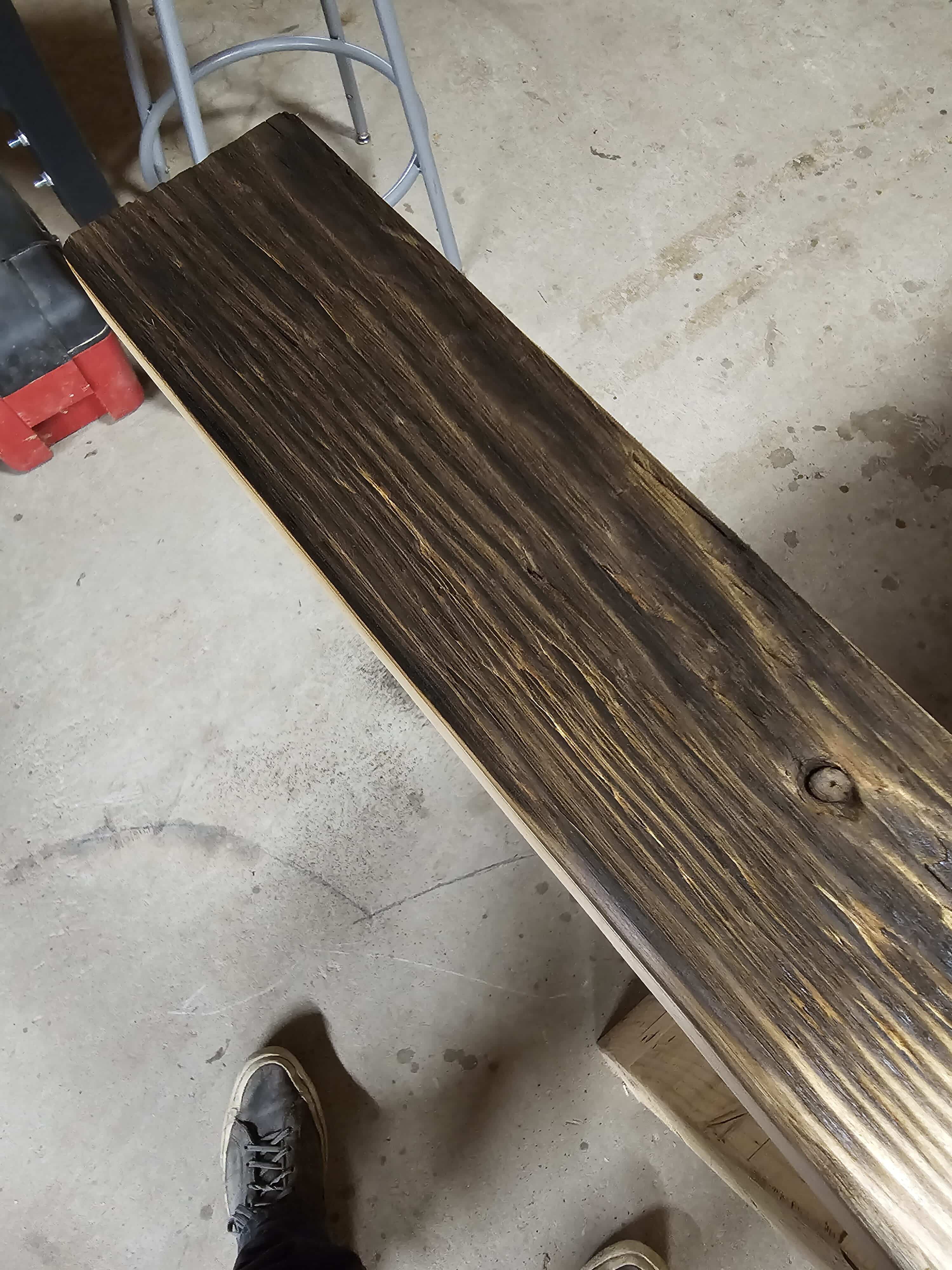
Sequential documentation of the Yakisugi process on fir. The series captures the transformation from raw lumber, to carbonized surface, and finally to the brushed and finished stage. Controlled torching seals the wood through surface carbonization, while hand and mechanical brushing reveal the underlying grain, producing a durable, moisture-resistant finish with distinctive depth and texture.
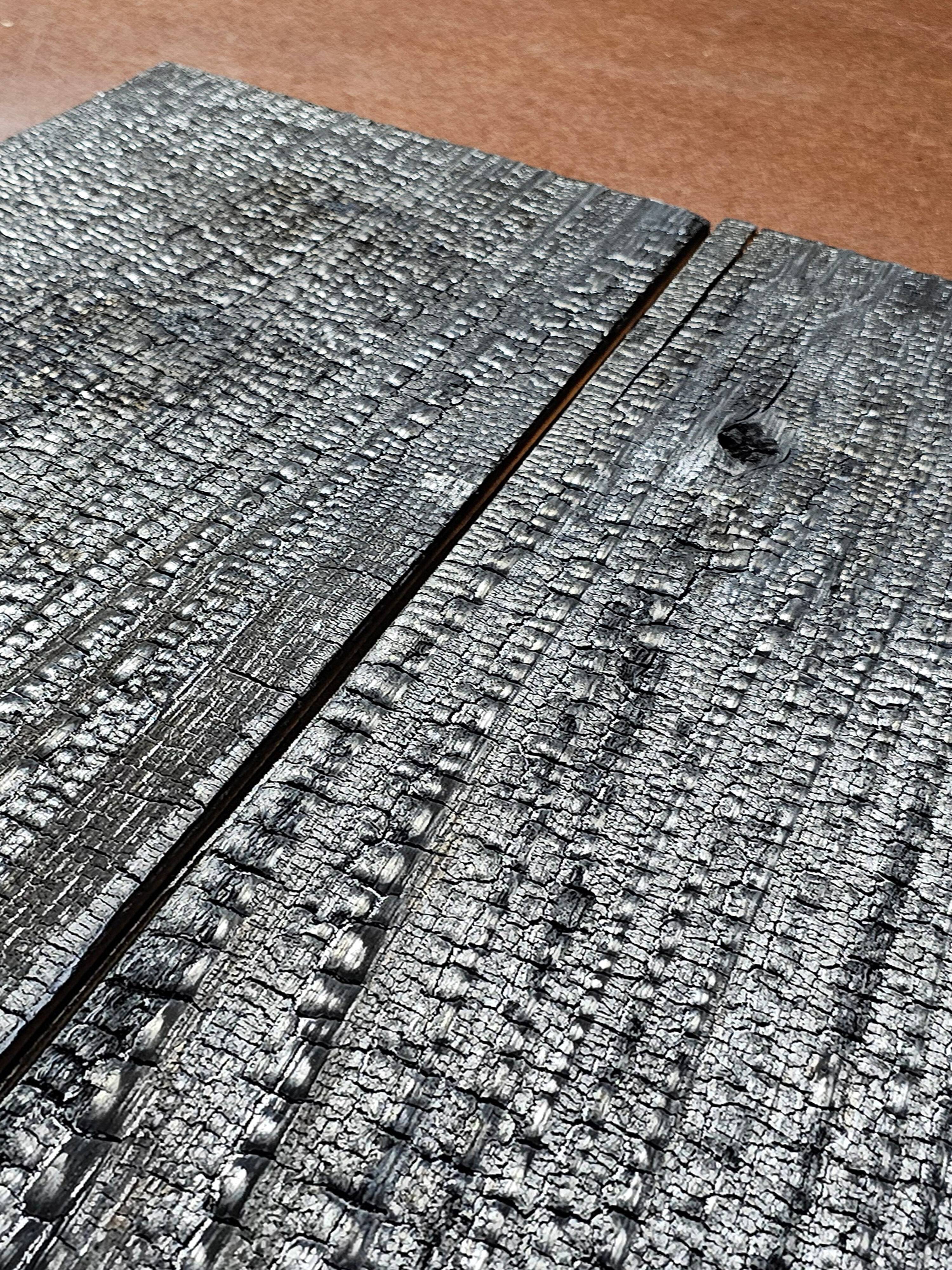
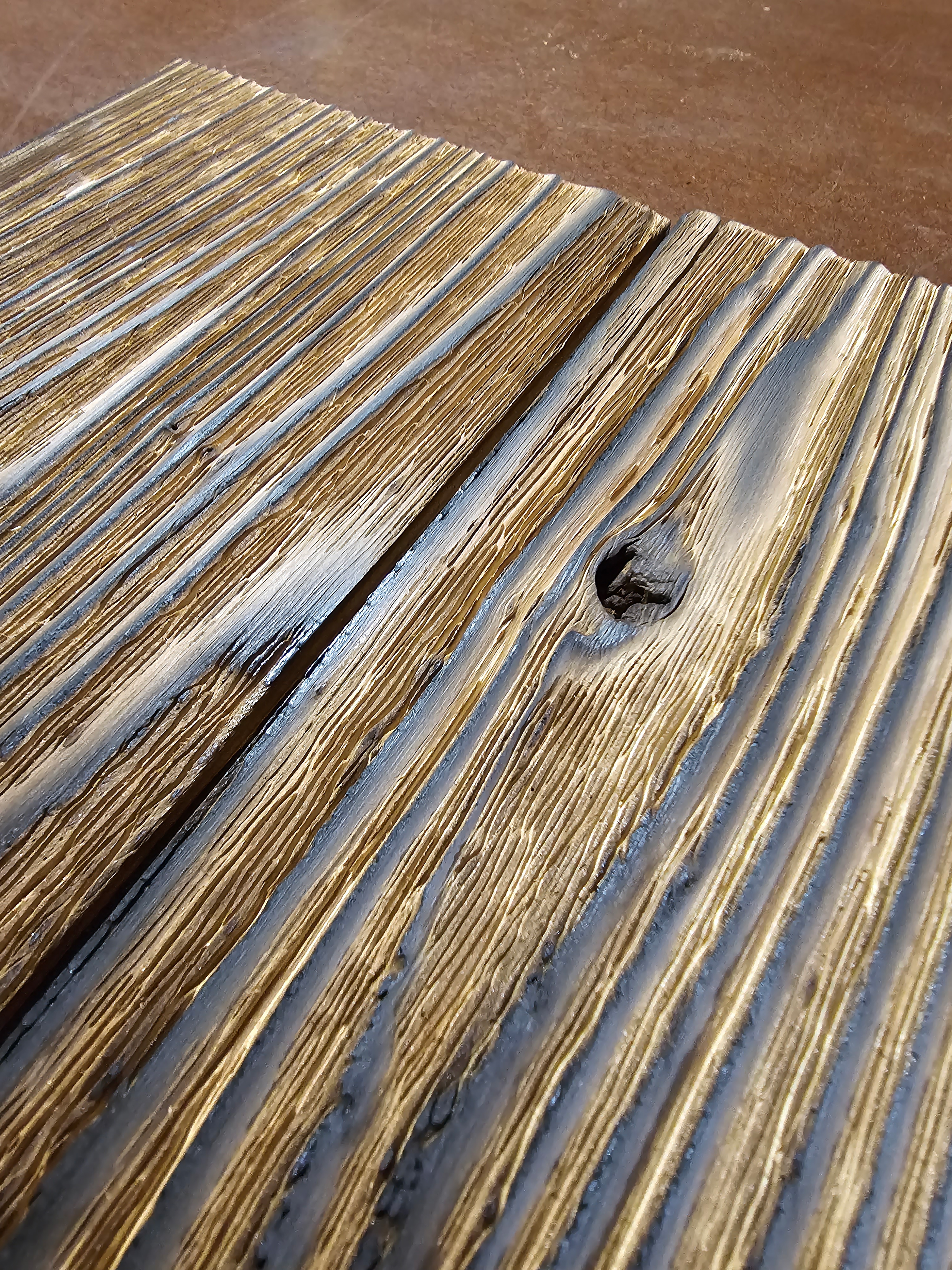
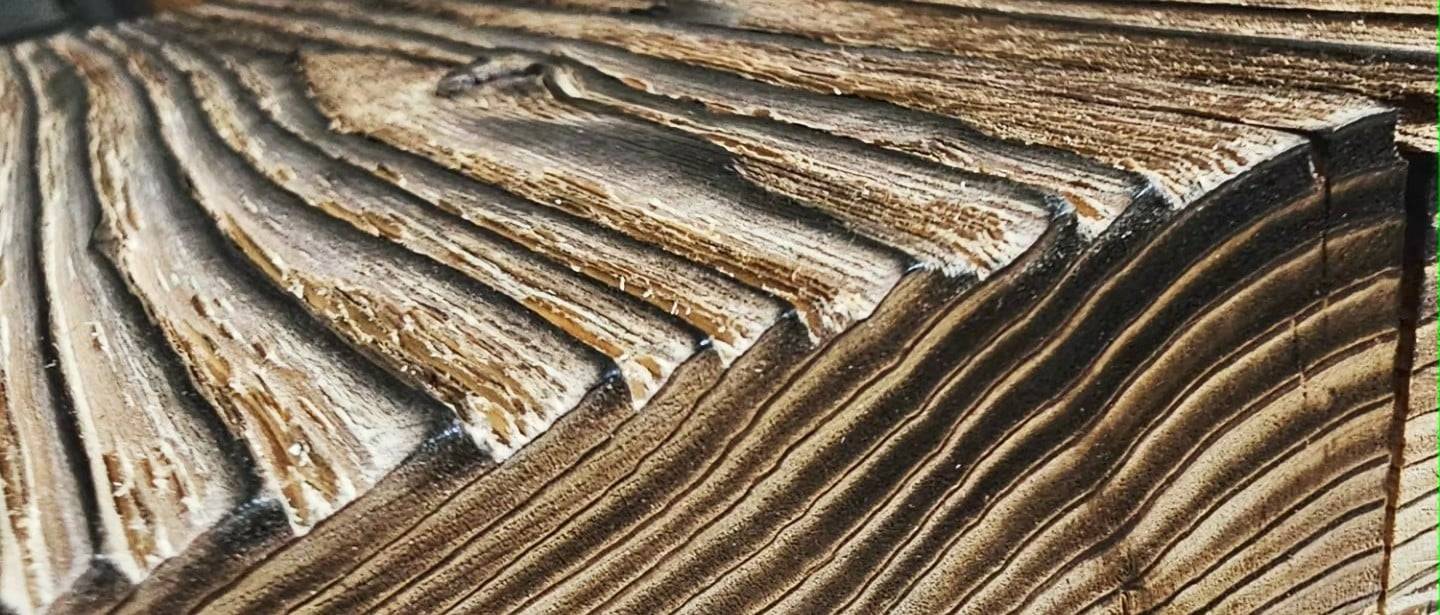
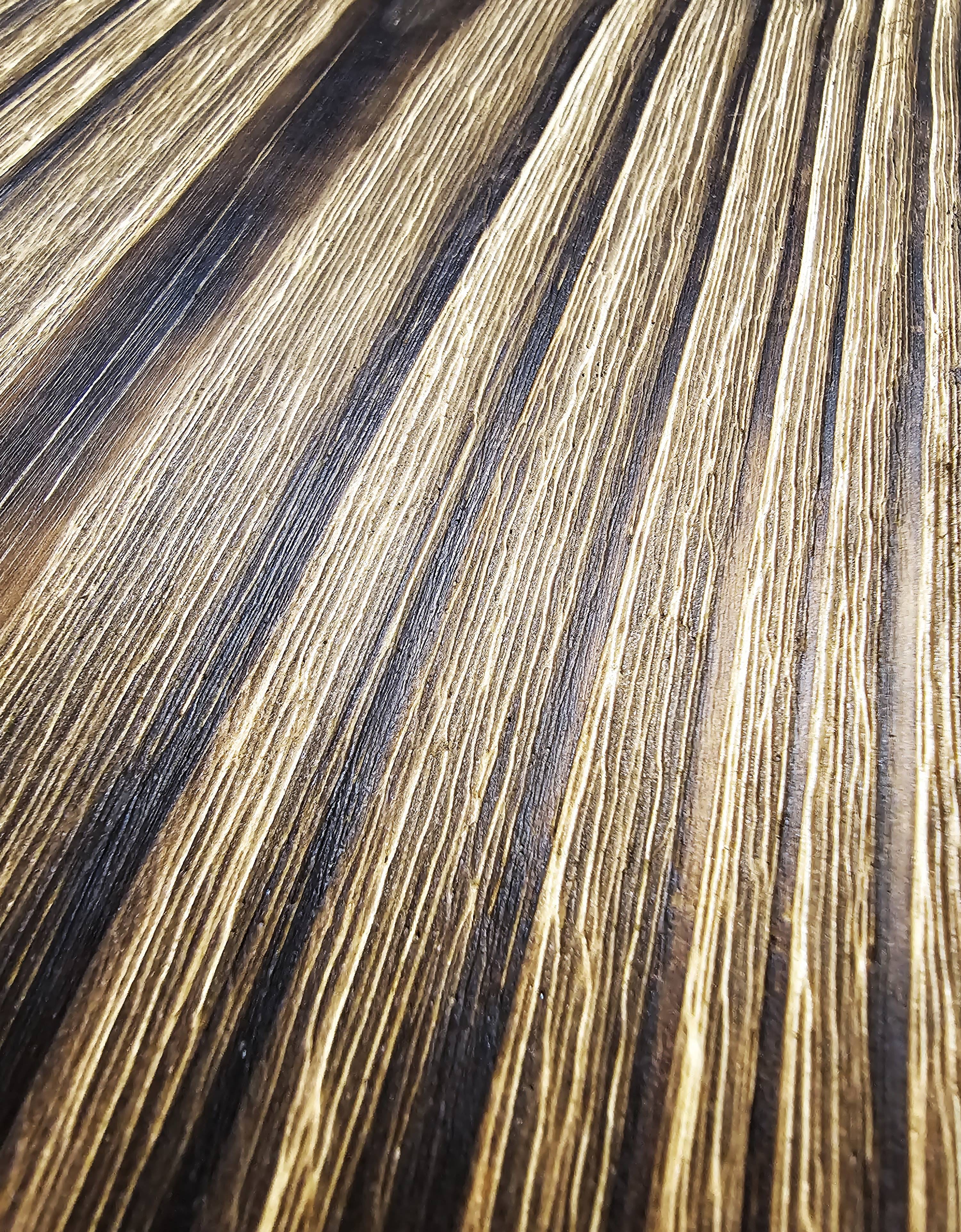
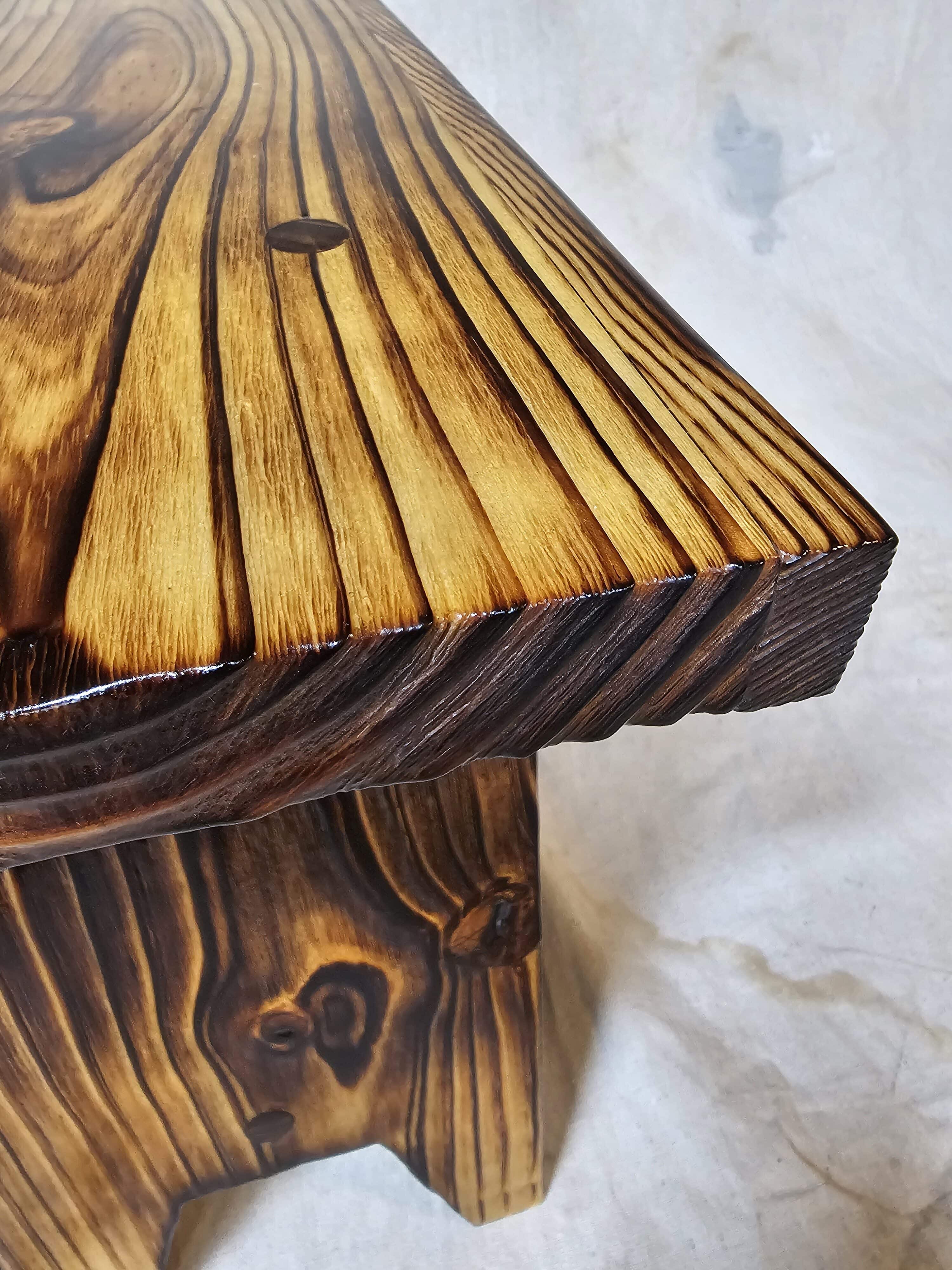
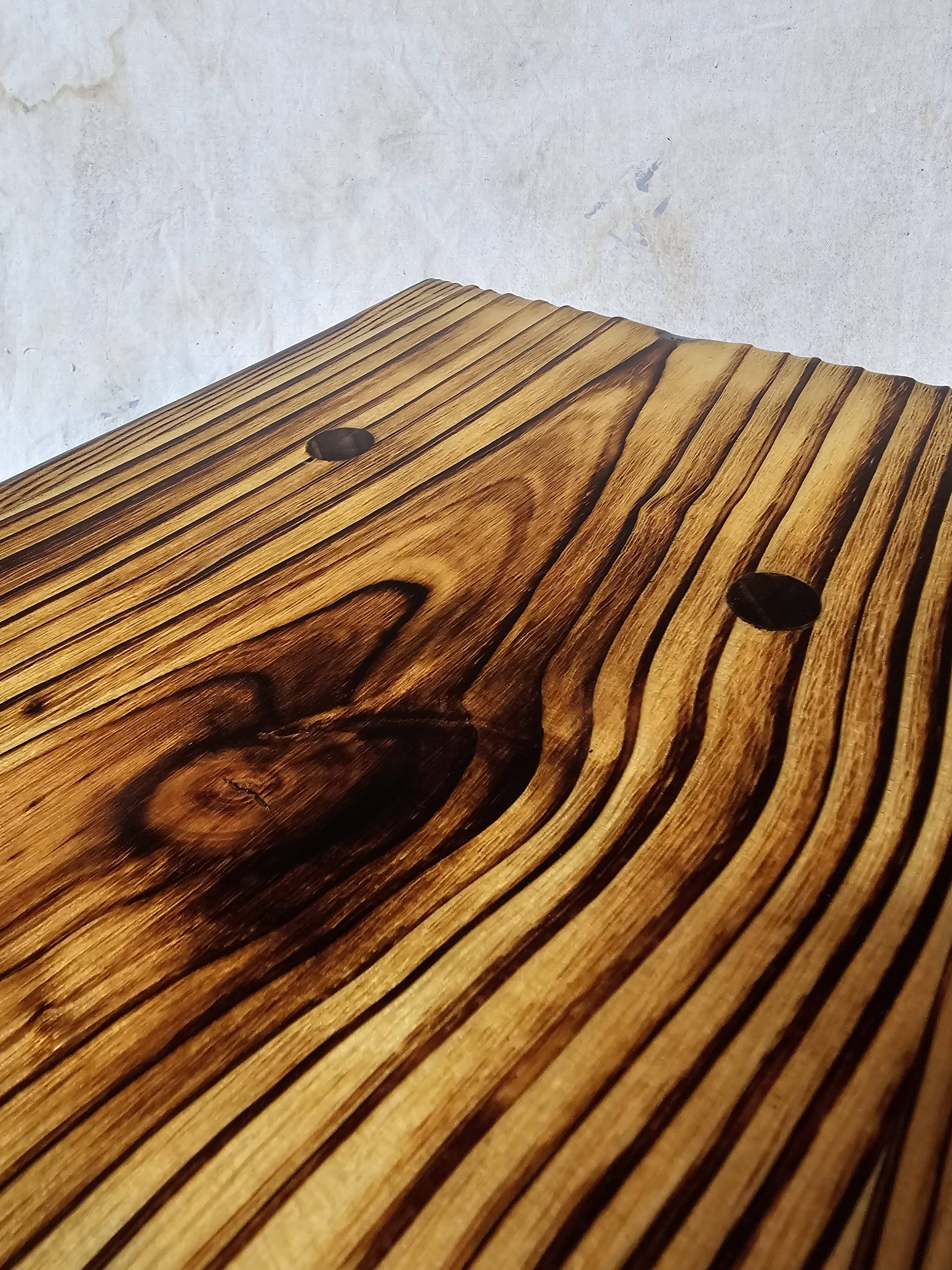
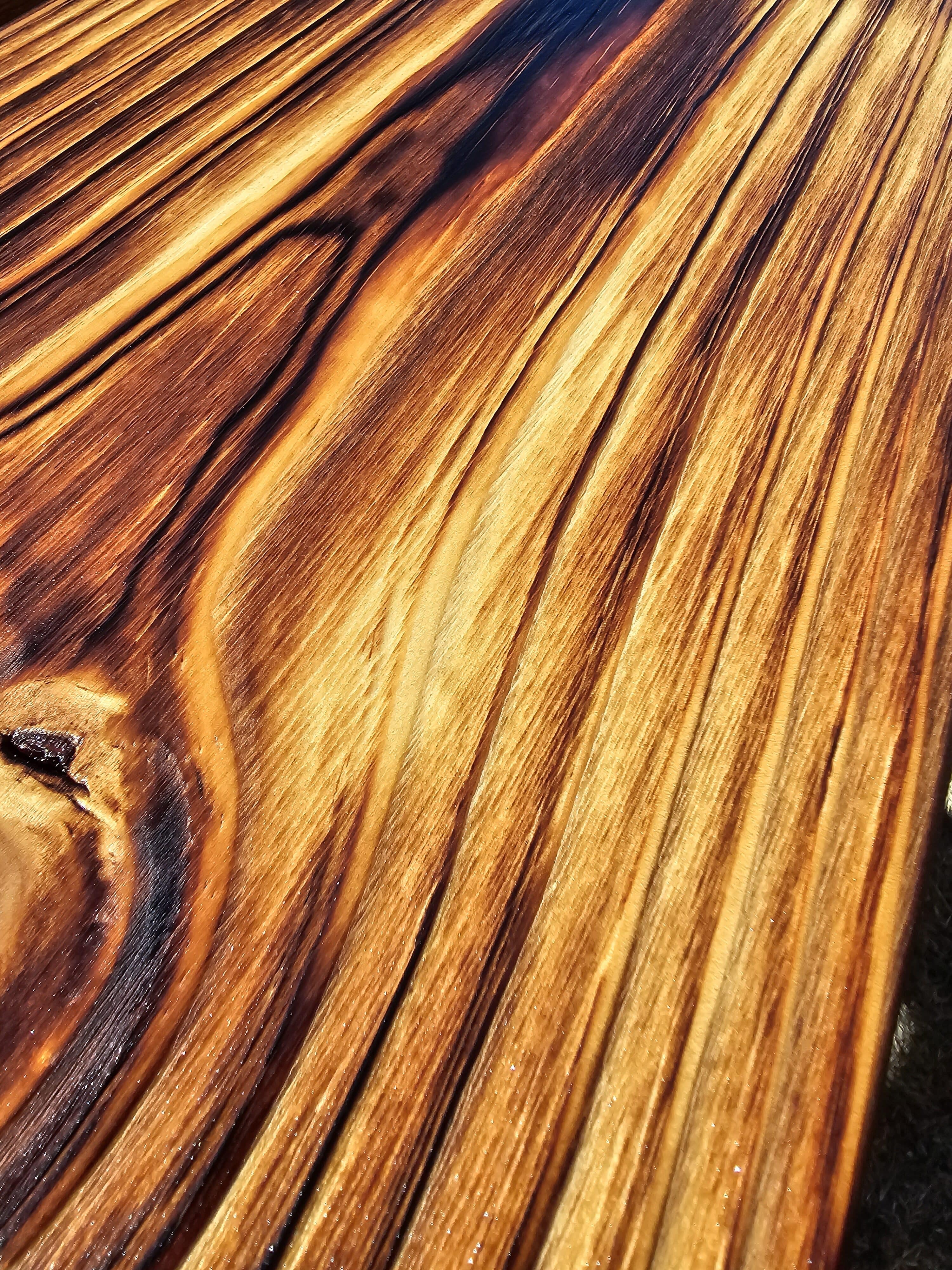
Progressive surface refinement following heavy charring and deep brushing. The first image shows a fully carbonized southern yellow pine surface, where the heat-formed shou-sugi crust has sealed the wood’s cellular layer. Subsequent passes with a stiff wire brush remove the fragile outer char while exposing the heat-hardened ridges of latewood fibers. The final surface reveals a rhythmic relief pattern—alternating valleys of soft earlywood and raised lines of dense latewood—producing a sculptural grain topography that captures both the aggression and precision of the Yakisugi process.
Color Studies and Playful Adaptations

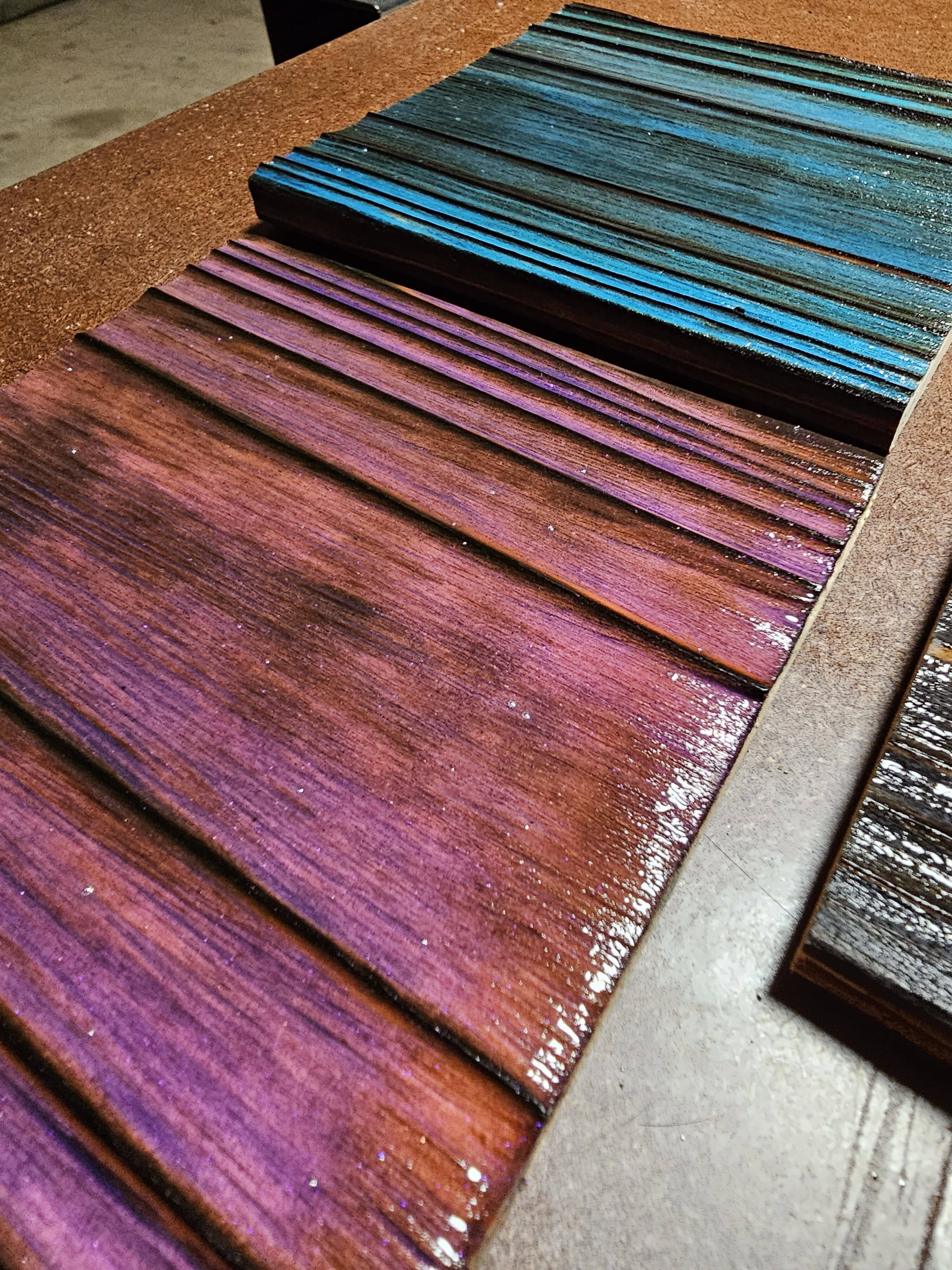
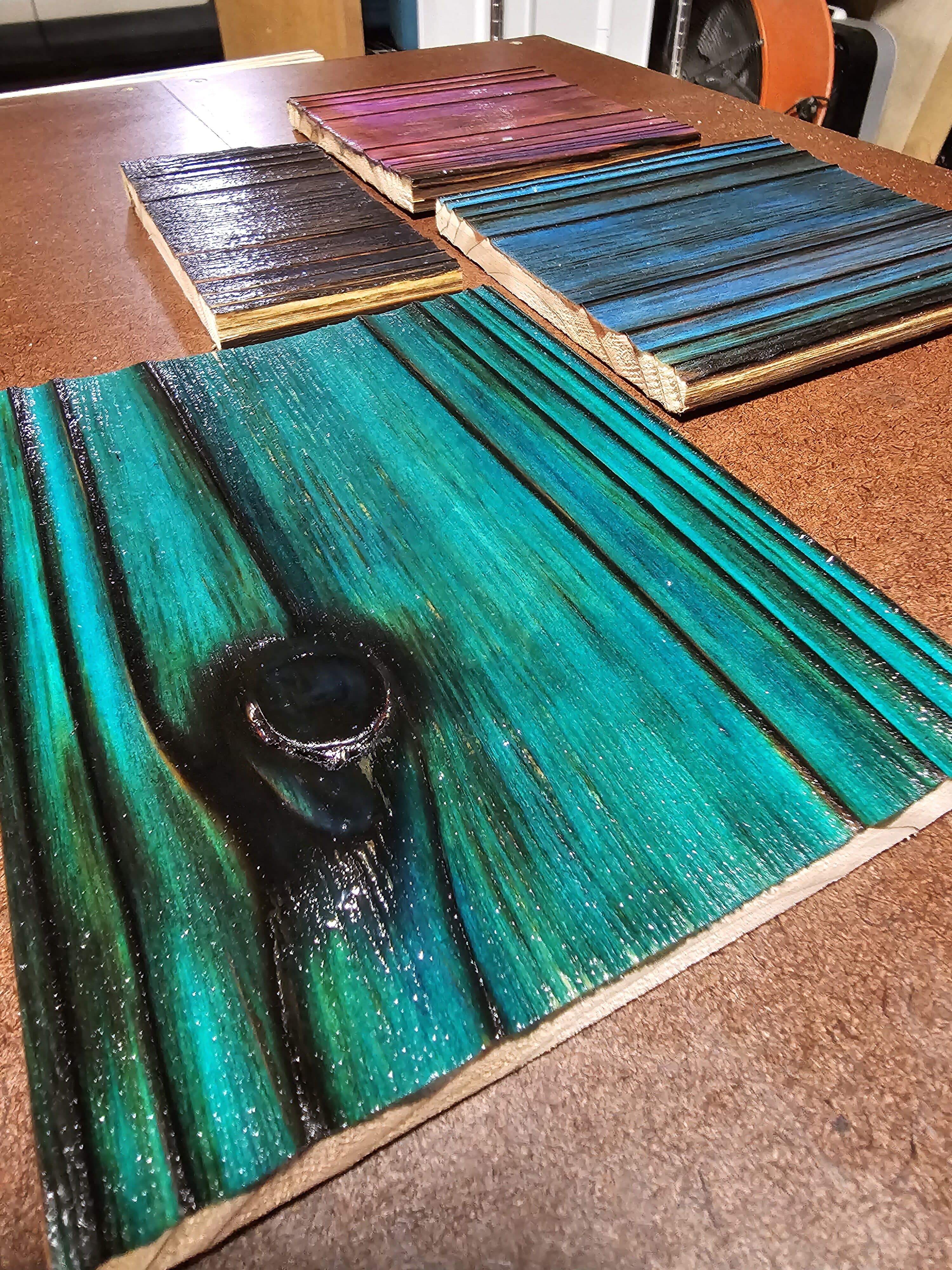
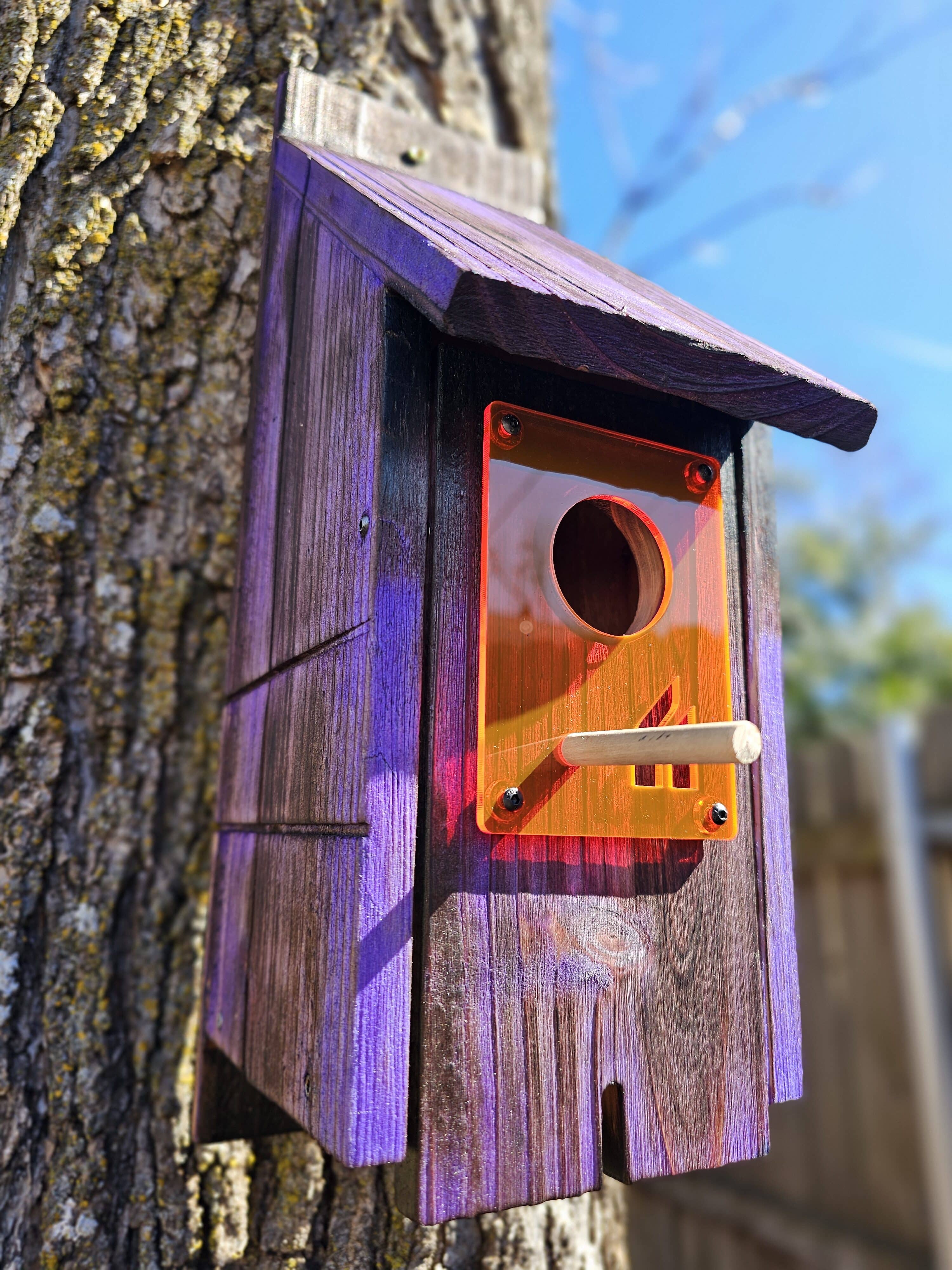
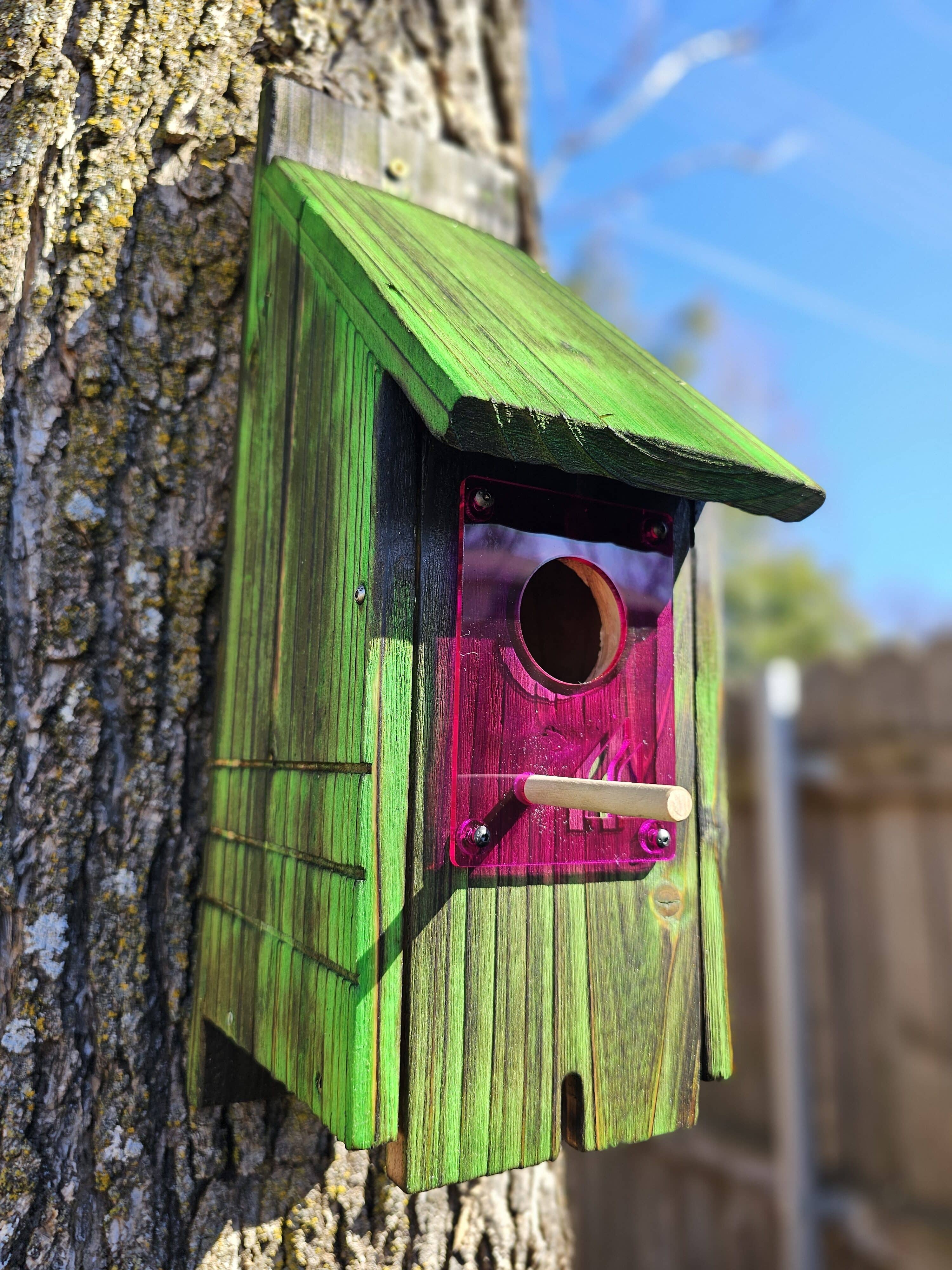
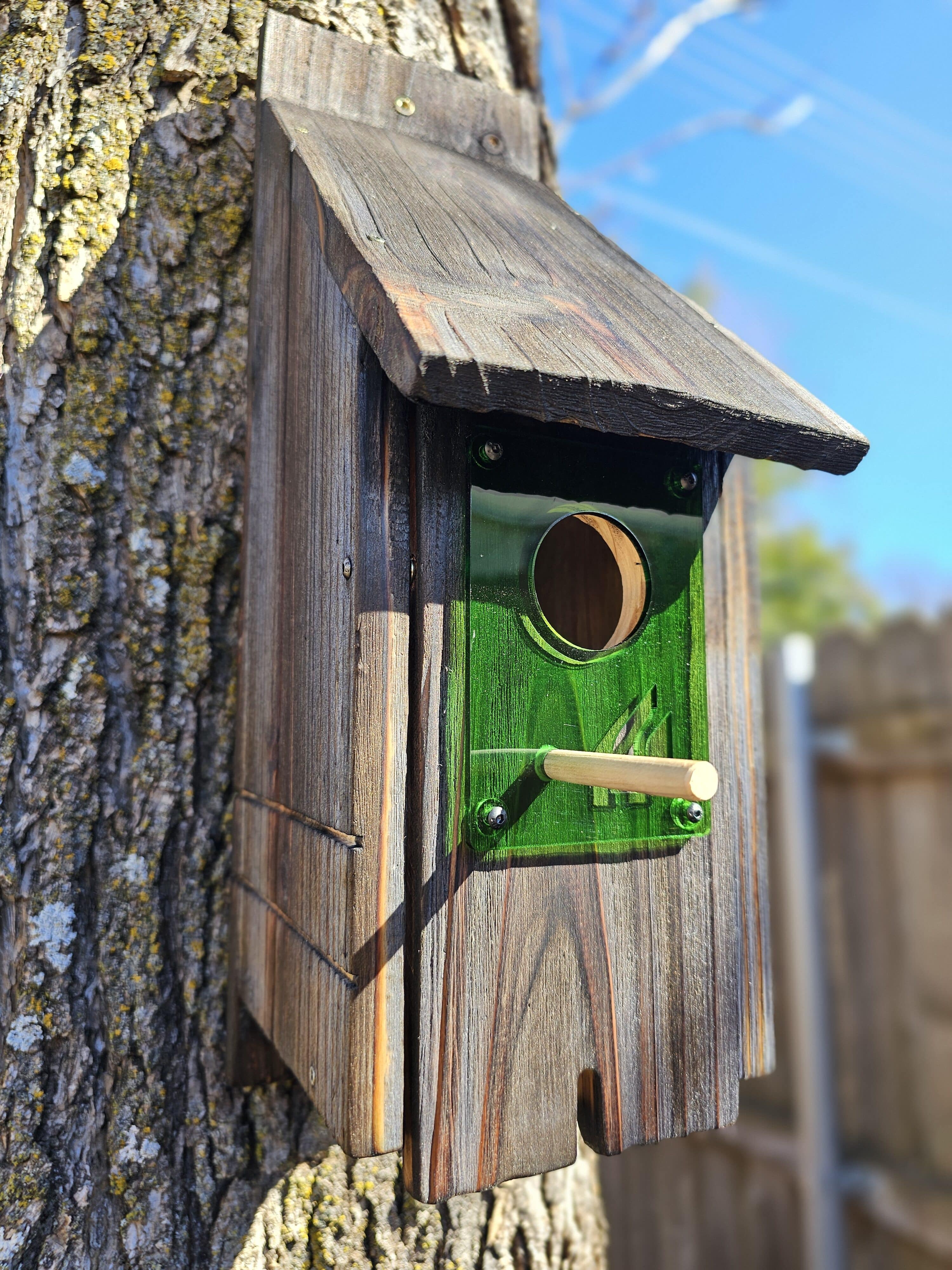
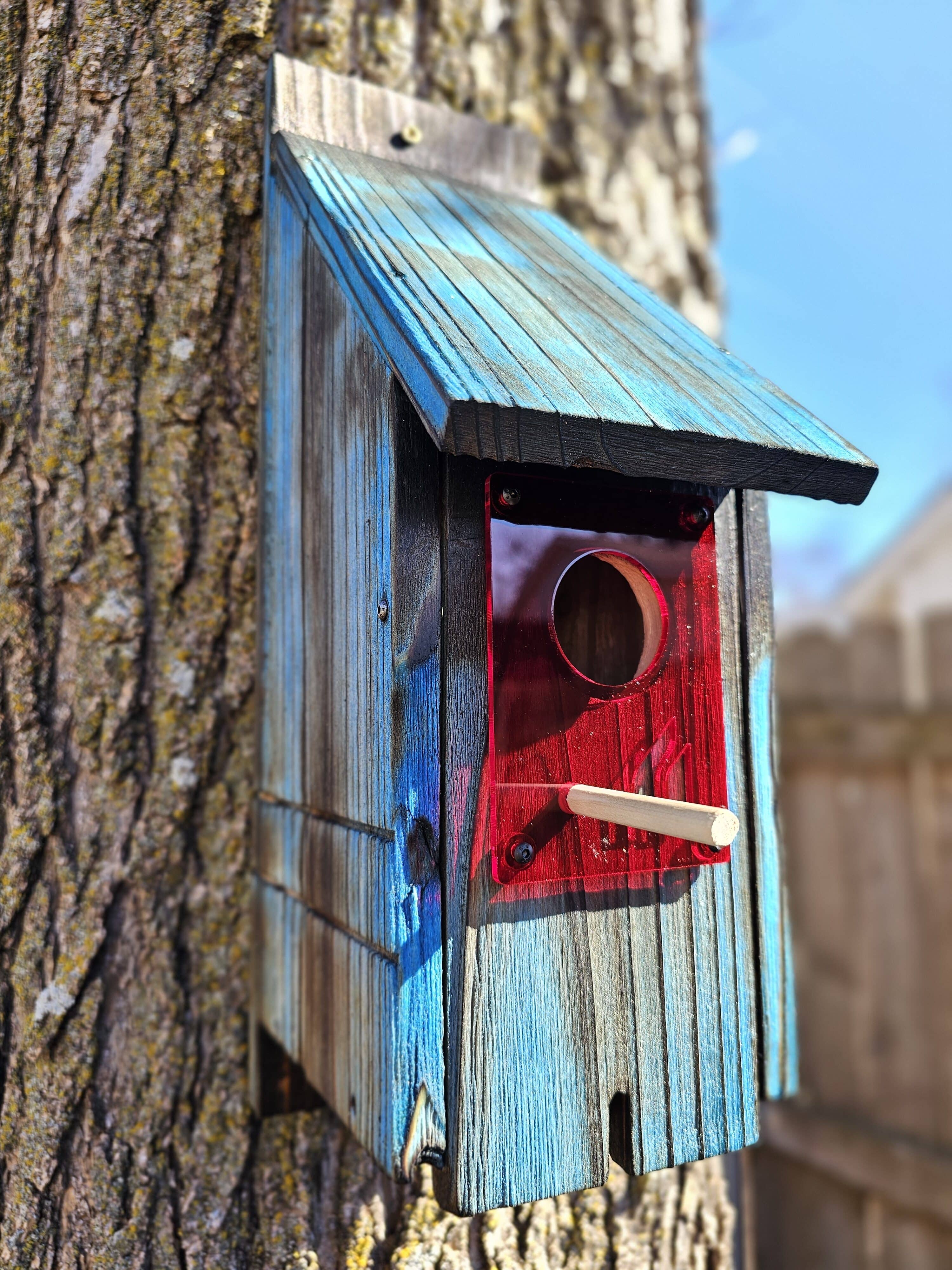
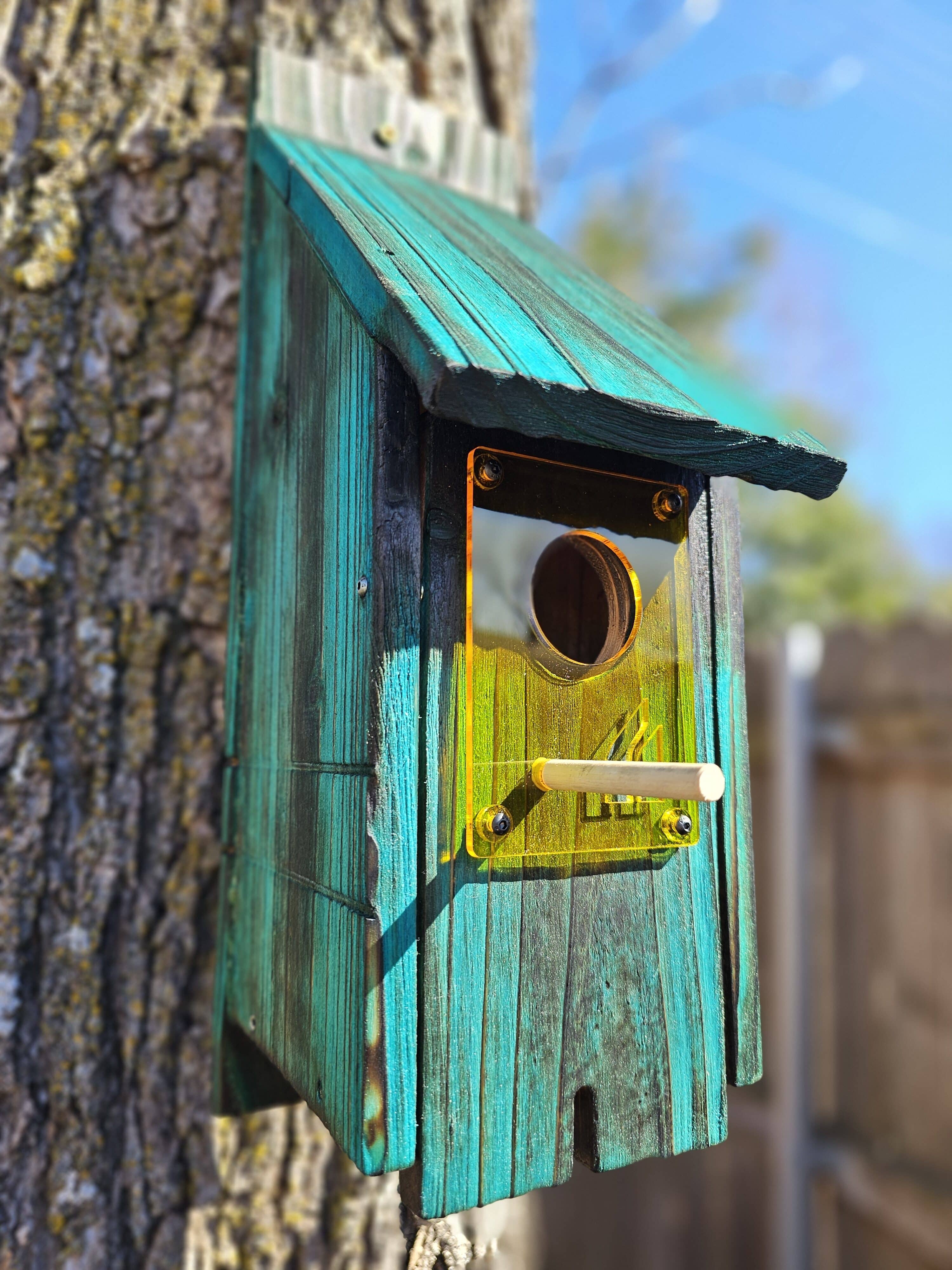
Following the controlled material research and surface experimentation, a second phase explored the expressive potential of Yakisugi through color and composition. Using leather dyes mixed with denatured alcohol as a penetrating medium, this series of tests sought to achieve vibrant, translucent finishes that could integrate with the depth and texture of the charred wood grain. The alcohol base allowed pigments to bond within the softened cellulose fibers of the brushed surface, producing a range of dynamic hues that maintained the tactile qualities of the underlying carbonized layer. Each tone shifted in response to the grain’s density and the degree of brushing, creating visually active surfaces that balanced material honesty with experimental coloration.

These chromatic studies culminated in a collection of Yakisugi birdhouses—small-scale architectural artifacts combining traditional craftsmanship with modern fabrication techniques. The birdhouses employed charred cedar and southern yellow pine components, paired with laser-cut translucent plexiglass to introduce moments of contrast and luminosity. The use of colored acrylic fronts against the blackened wood established a playful dialogue between tradition and contemporary aesthetics. While whimsical in form, the birdhouses retained Yakisugi’s performative durability and environmental resilience, serving as both research objects and crafted prototypes. This phase demonstrated how surface research could transition into expressive design outcomes, bridging cultural technique, fabrication experimentation, and sculptural form.

Design Applications and Prototyping

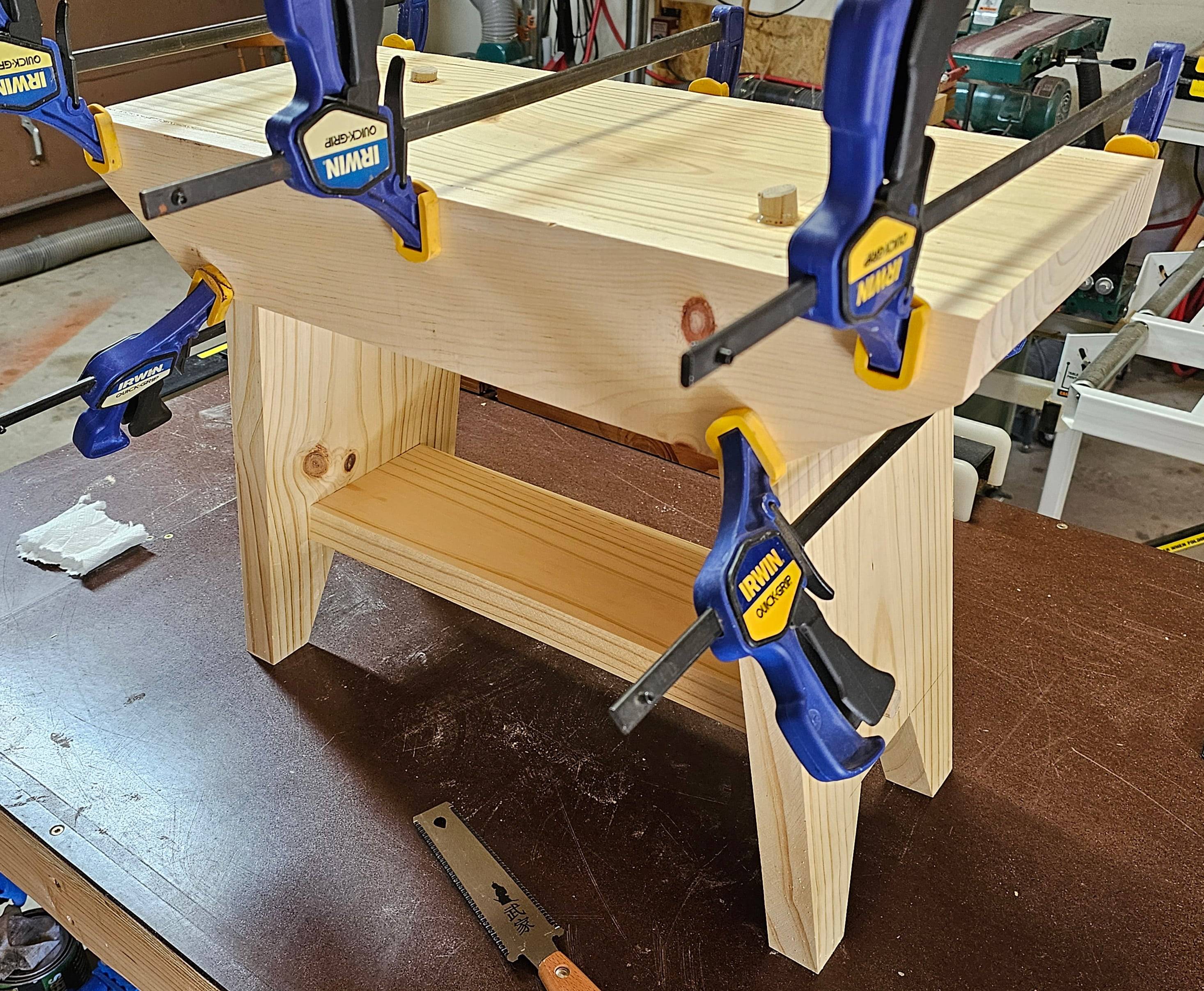
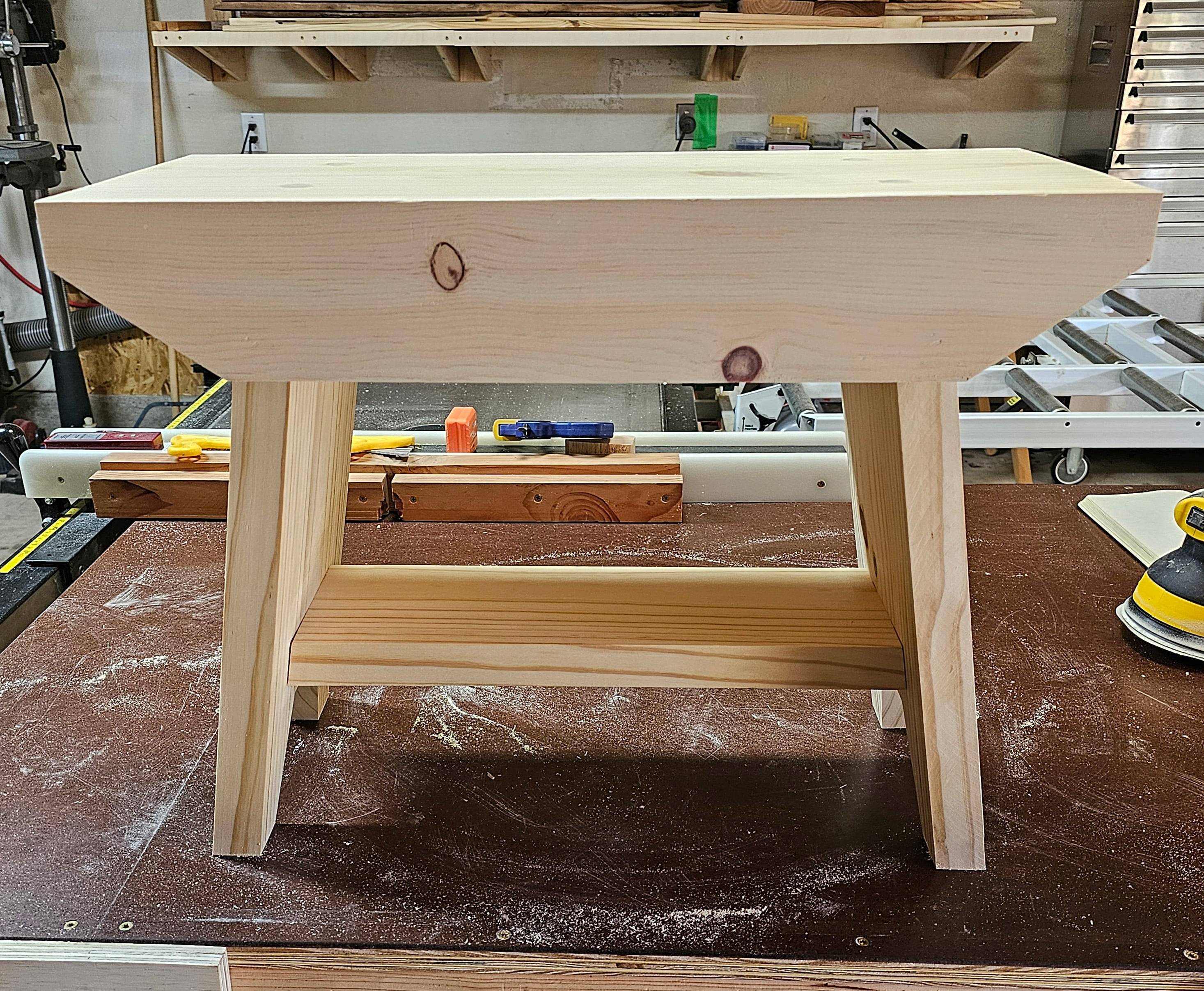
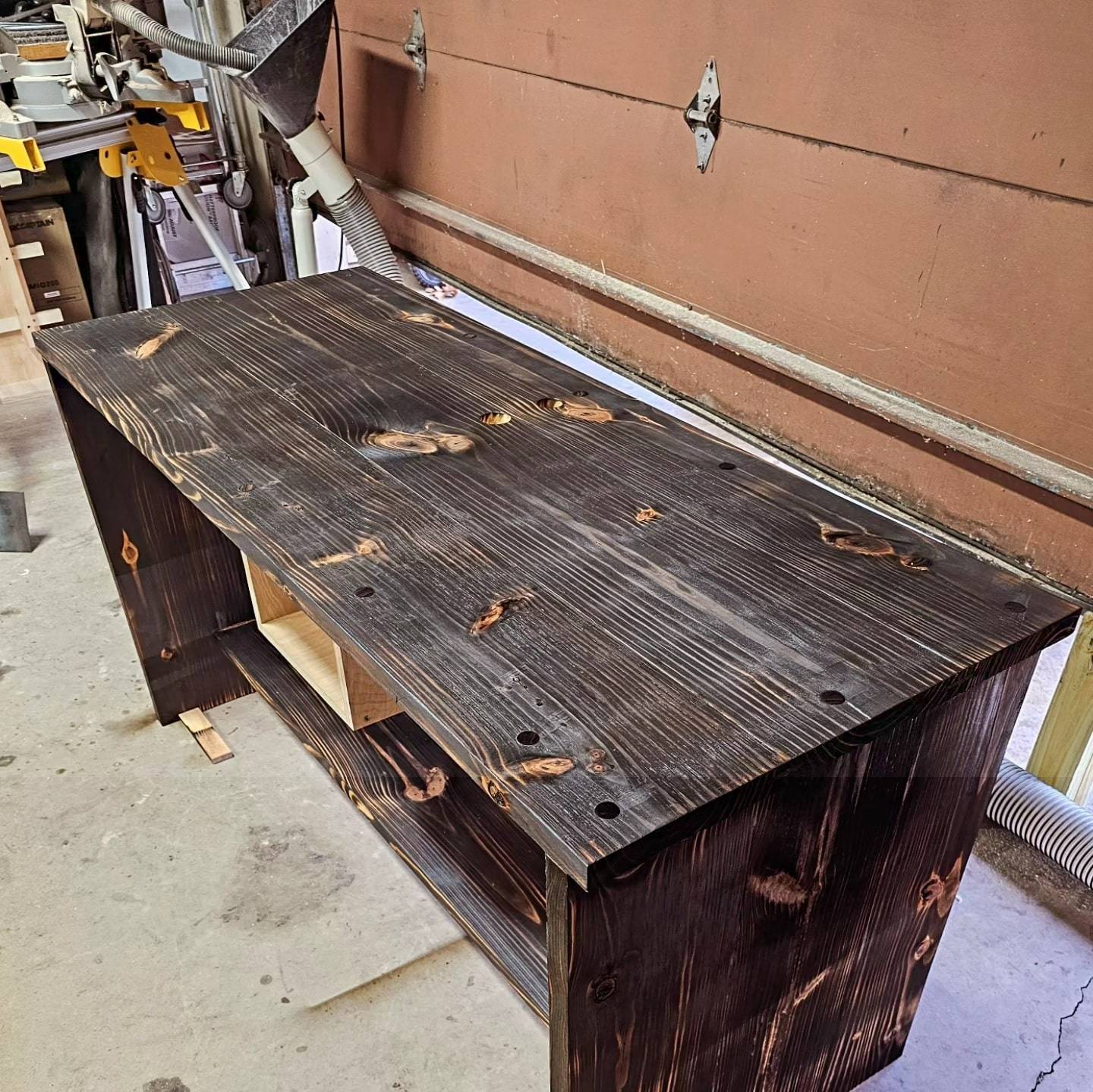
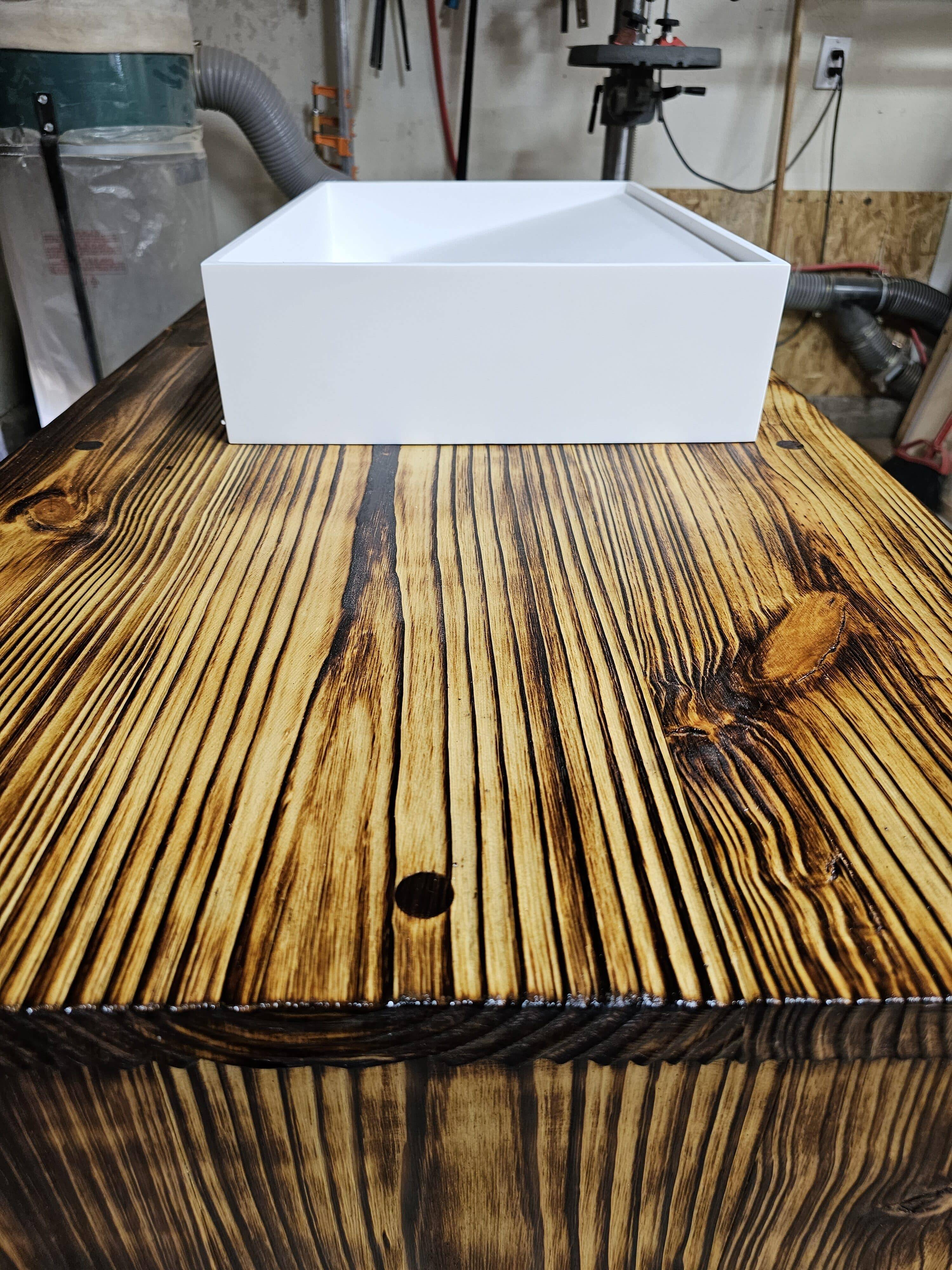
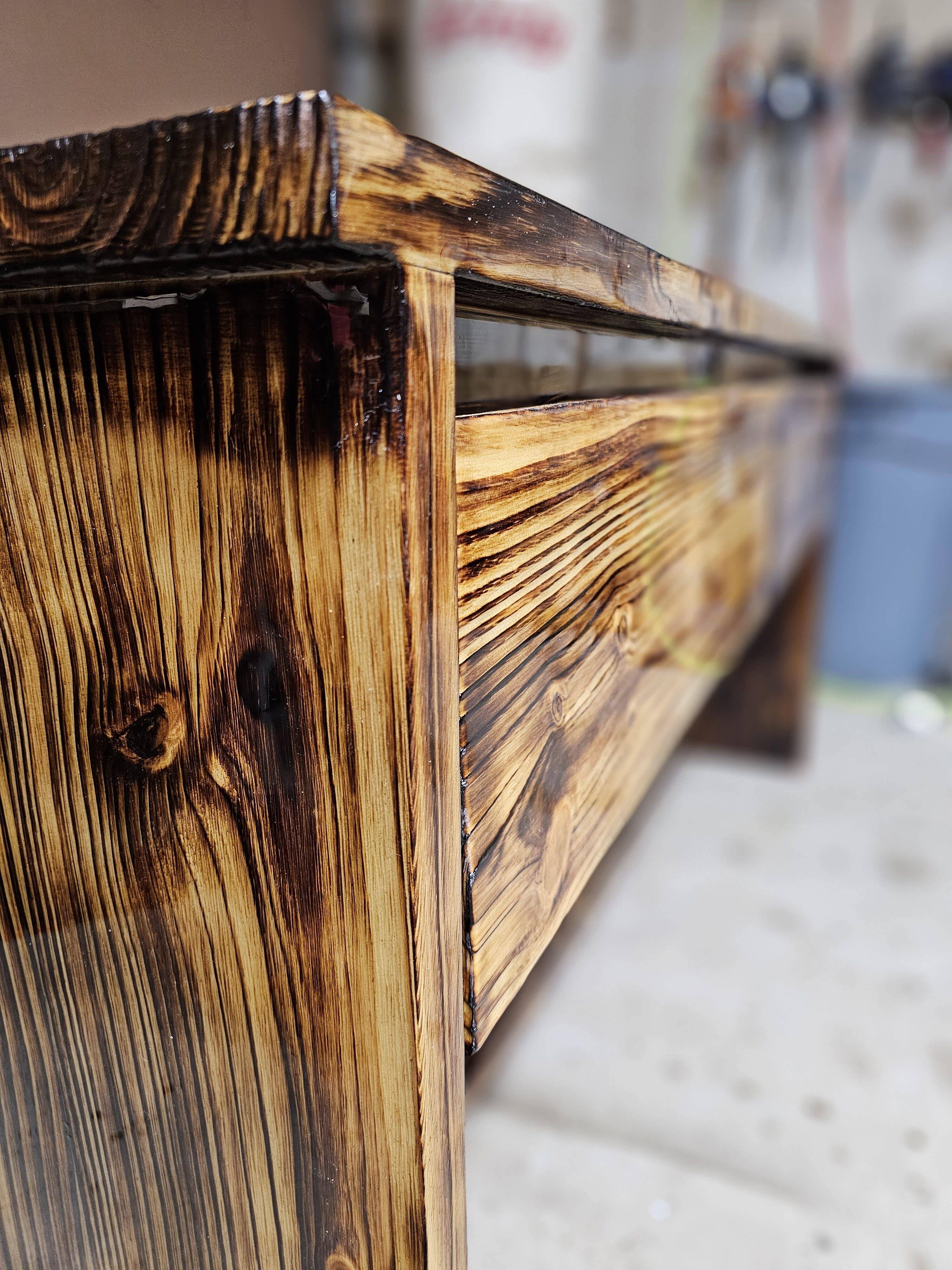
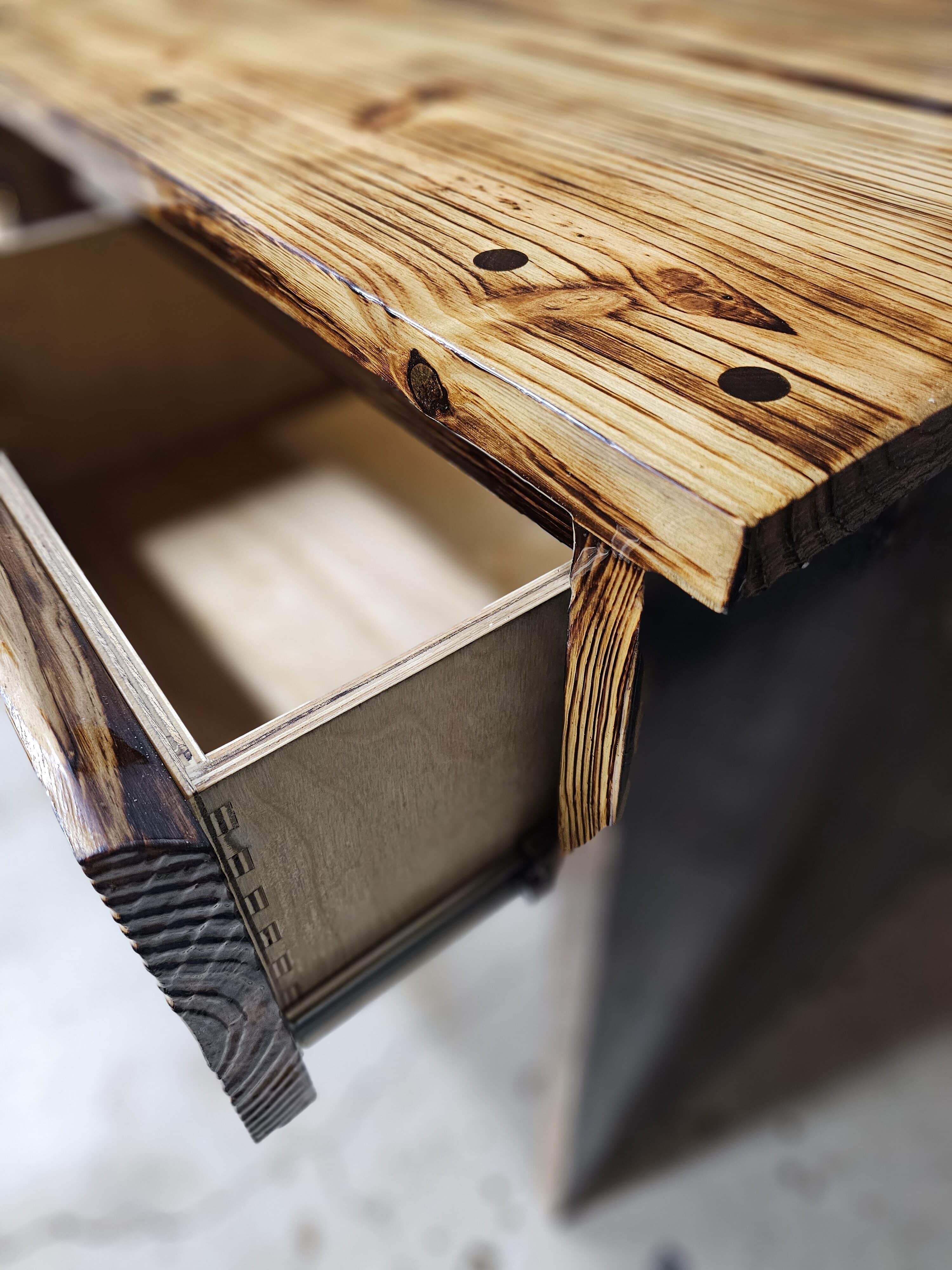
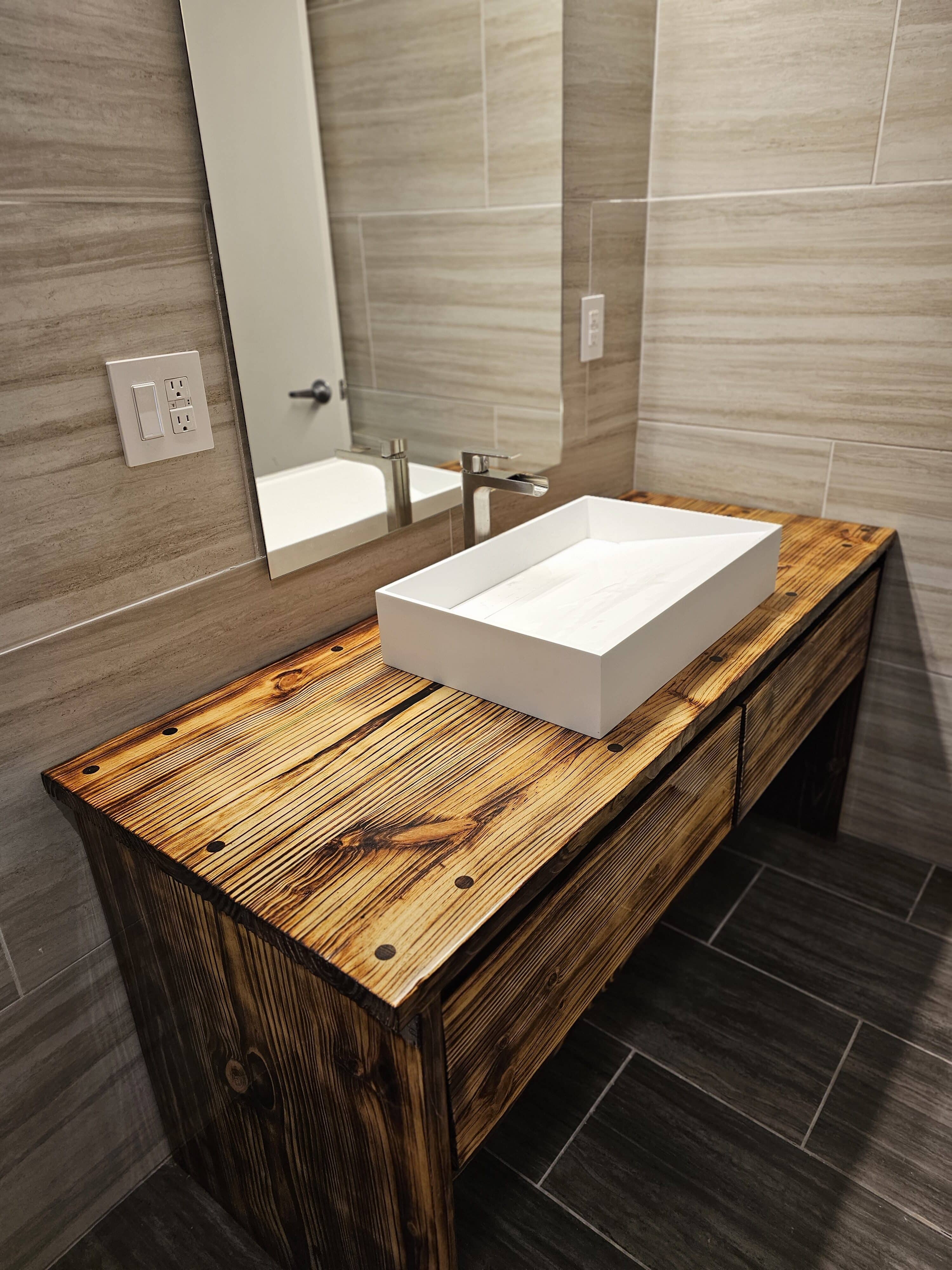
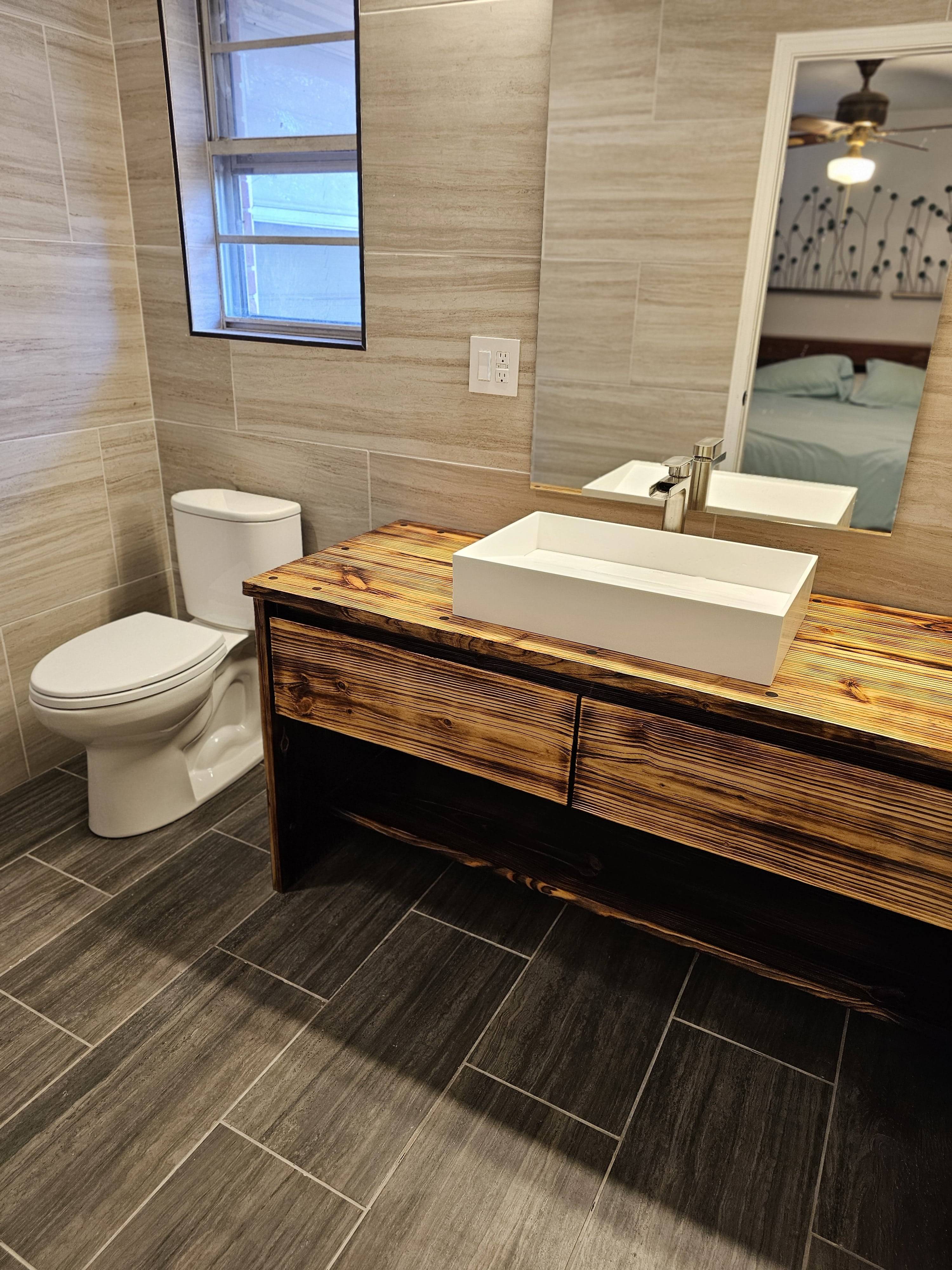
The first phase produced a sequence of prototypes scaling from object to furniture. The birdhouses functioned as small-scale burn calibration tests, while the stools and benches explored Yakisugi’s potential in joinery, ergonomics, and pattern variation. The final bathroom vanity applied the technique to an interior architectural surface, combining charred pine with high-gloss epoxy finishing for a moisture-resistant, visually rich result.

Each prototype acts as both artifact and experiment—capturing fire, grain, and craftsmanship within a single process. Together, they demonstrate how Yakisugi’s core principles—layering, oxidation, and protection—can inform contemporary approaches to sustainable fabrication and tactile design.

Preliminary Findings and Next Research Phase

The first phase of research confirmed Yakisugi’s potential as a sustainable surface treatment for locally sourced softwoods. Both southern yellow pine and cedar demonstrated increased dimensional stability, water resistance, and tactile richness following charring and brushing. These findings point toward the viability of Yakisugi as a regional construction and finishing method adaptable to small-scale fabrication and architectural applications.

The next phase of this work will expand into systematic finishing and performance testing. Planned experiments include comparative studies of natural oils—tung oil, pine tar oil, hardwax oil, linseed oil, and rosin-based blends—evaluated for durability, moisture resistance, and UV stability under exterior exposure. Interior finishing research will focus on two-part epoxy and marine varnish systems, using TotalBoat products and modified formulas that combine traditional epoxy resin with 35% acetone for deep grain penetration. Once cured, surfaces will undergo level sanding, finish sanding, wet sanding, and buffing, followed by a three-layer marine-grade varnish topcoat to test aesthetic and structural performance in interior environments.

By combining analog craftsmanship with controlled scientific testing, the next stage will quantify Yakisugi’s protective and expressive capabilities, linking craft intuition to measurable performance. This expanded research seeks to move Yakisugi beyond aesthetic surface treatment toward verified application as a sustainable cladding, furniture, and architectural finish system.

Regional Relevance and Future Direction

This work positions Yakisugi within a broader regional discourse on sustainable material practice in the American South. By adapting the method to southern yellow pine, the research demonstrates that a centuries-old craft can be localized through accessible species, minimal tooling, and measurable outcomes.

Future research will extend into outdoor environmental testing, monitoring surface performance over time under natural conditions. These studies will inform future design-build projects, where Yakisugi could serve as both a pedagogical tool and a construction strategy for community-scaled architecture. The ongoing research bridges cultural heritage, ecological thinking, and material innovation—proposing a future where ancient craft and contemporary science coexist within the same act of making.
More Work


Architecture

Art + Code

Design + Fabrication

Courses + Student Work

© Ken Marold USA, Inc. All rights reserved.

Continue reading

Infiltration Table

IMG_0001_2

Infiltration Table

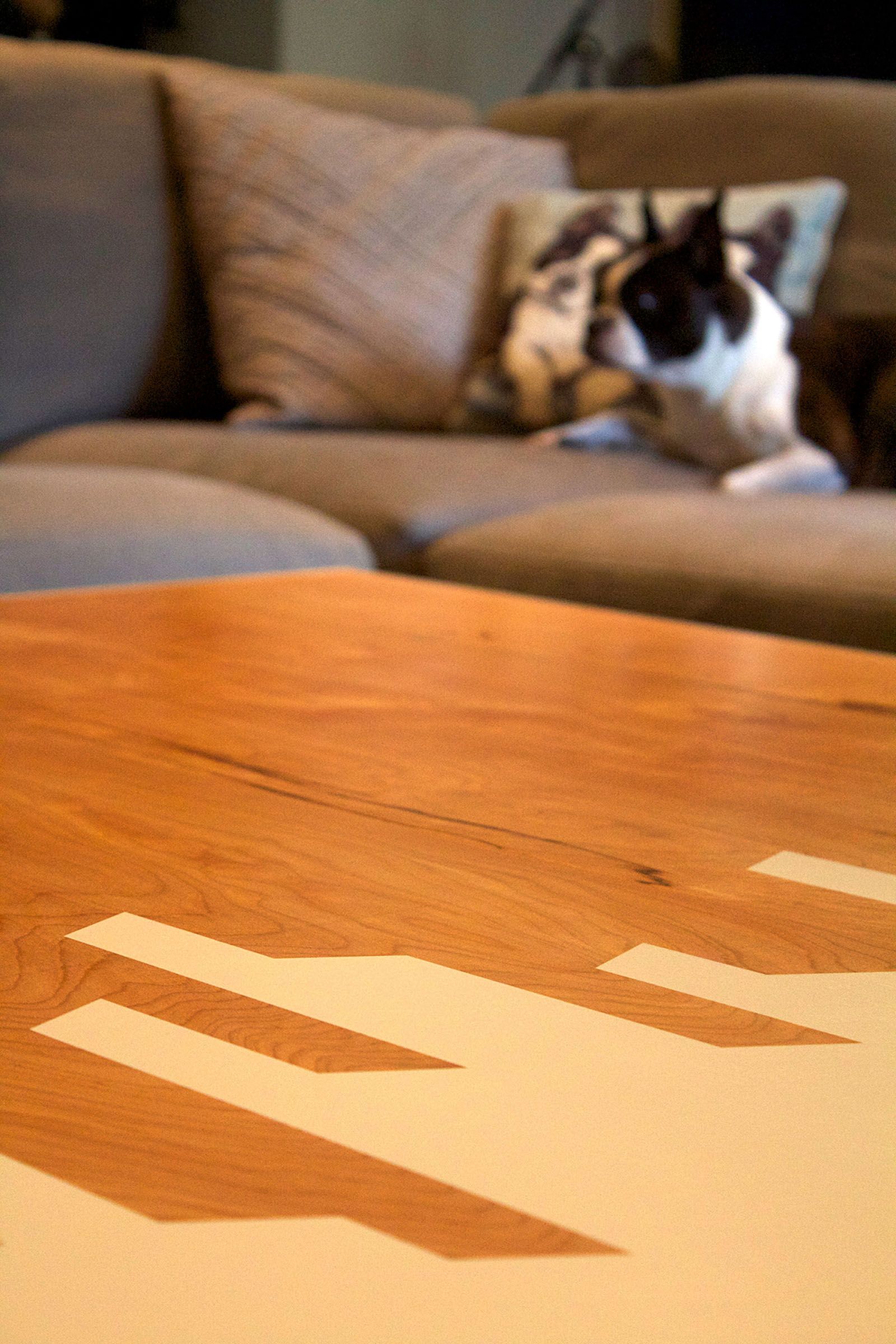
processing, spalted birch plywood, poplar, enamel, lacquer

status : complete

  • IMG_0001_2
  • IMG_0012
  • IMG_0006
  • IMG_0007
  • IMG_0014

Process


  • IMG_2389 (1)

  • IMG_2399 (1)

  • IMG_2391 (1)

More Work

Architecture


  • Wichita Mobile Clinic

    anadarko, oklahoma

  • SA Architects

    cranston, rhode island

  • OKC Greenhouse

    oklahoma city, oklahoma

  • Pawtucket Day Nursery

    pawtucket, rhode island

  • Meeting Street Center for Excellence

    providence, rhode island

  • Norterly Island Nature Center

    Chicago, Illinois

  • National Institute of Flamenco

    old town plaza, santa fe, new mexico

  • Corrales Comunity Pathway + Pedestrian Park

    corrales, new mexico

  • CRCUIT

    albuquerque, new mexico

  • The Construction of Art

    providence, rhode island

  • Santa Fe Univeristy School of Fine Arts

    Santa Fe, New Mexico

Design + Fabrication


  • Flatpack Foldable Structural Connections

    rhino, grasshopper, mild steel

  • Renegades

    Fred Jones Jr Museum of Art

  • Surface Flux

    python, c#, grasshopper, pla, wood, steel

  • Carbon Fiber Connections

    grasshopper, rhino, pla, carbon fiber

  • Acoustic Diffusion Panel

    grasshopper, rhino, cnc, rigid insulation

  • Hyperbolic Bending

    grasshopper, rhino, laser cut acrylic, bristol board

  • Filtration : Infiltration

    python, grasshopper, rhino, 3d printing

  • Recursive Paneling

    laser cut mylar

  • Sweet Crude

    python, c#, grasshopper, wood, plasti-dip, carbon, gelatin

  • Ruling Lines

    laser cut cell cast acrylic, stainless steel braided wire

  • Volumetric Aggregations

    processing, grasshopper, rhino, cast acrylic, black walnut, hickory

  • Cellulose Bookcase

    pine, black walnut, compressed wood fiber board, stain

  • Asher Chair

    rhino, pla, birch plywood

  • Andraditic Mass

    arduino, firefly, rhino, 3d printed pla, baltic birch plywood

  • Cholla

    grasshopper, rhino, black walnut

  • Folding Attractors

    grasshopper. rhino, white museum board

  • Grain Chair

    rhino, cnc milled birch plywood

  • Tracking Parallelograms

    grasshopper, rhino, hickory

  • Infiltration Table

    processing, spalted birch plywood, poplar, enamel, lacquer

Art + Code


  • Prairie Fire

    acrylic, ink, plywood

  • Surface Flux

    python, c#, grasshopper, pla, wood, steel

  • Dixieland Death Cult

    acrylic, plywood

  • Approximation of a Generation

    private tremendous

  • Elemental Worlds

    science museum oklahoma

  • Gonzo Cubes

    solidity, html, css, javascript, illustrator

  • A Line of Force

    arduino, grasshopper, firefly, java, plywood

  • The Drift

    html, css, javascript

  • Gear Institute

    illustrator, photoshop, php, css, html

  • Prism

    unity, c#, spine2d, illustrator

  • Squall

    petroglyphs national monument, albuquerque, new mexico

  • Galileo’s World Interactive

    c#, unity3d, illustrator, photoshop

  • Steel + Light

    convergence arts festival masterworks project, providence, rhode island

  • The God of Skiing

    book design

© [wpsos_year] Ken Marold USA, Inc. All rights reserved.

Continue reading

Cellulose Bookcase

featured

Cellulose Bookcase

pine, black walnut, compressed wood fiber board, stain

This shelving system was created to explore the cellular alignment found in wood and plants. The shelving and sides are made of yellow pine, black walnut, and compressed wood fiber board. All of these components represent the cellular walls of of wood.

The voids, typically filled with water at a cellular level are replaced at a macro level with man-made refined cellulose — books. The pine shelf ends are oriented to expose the end grain thereby developing a dialogue between it and the highly magnified graphical representation of offsetting and volumetric variability that is present but imperceptible in the yellow pine to the naked eye.

  • IMG_0073
  • IMG_0072
  • IMG_0059
  • IMG_0055
  • IMG_0019
  • IMG_0015
  • IMG_0013
  • IMG_0009
  • IMG_0005

More Work

Architecture


  • Wichita Mobile Clinic

    anadarko, oklahoma

  • SA Architects

    cranston, rhode island

  • OKC Greenhouse

    oklahoma city, oklahoma

  • Pawtucket Day Nursery

    pawtucket, rhode island

  • Meeting Street Center for Excellence

    providence, rhode island

  • Norterly Island Nature Center

    Chicago, Illinois

  • National Institute of Flamenco

    old town plaza, santa fe, new mexico

  • Corrales Comunity Pathway + Pedestrian Park

    corrales, new mexico

  • CRCUIT

    albuquerque, new mexico

  • The Construction of Art

    providence, rhode island

  • Santa Fe Univeristy School of Fine Arts

    Santa Fe, New Mexico

Design + Fabrication


  • Flatpack Foldable Structural Connections

    rhino, grasshopper, mild steel

  • Renegades

    Fred Jones Jr Museum of Art

  • Surface Flux

    python, c#, grasshopper, pla, wood, steel

  • Carbon Fiber Connections

    grasshopper, rhino, pla, carbon fiber

  • Acoustic Diffusion Panel

    grasshopper, rhino, cnc, rigid insulation

  • Hyperbolic Bending

    grasshopper, rhino, laser cut acrylic, bristol board

  • Filtration : Infiltration

    python, grasshopper, rhino, 3d printing

  • Recursive Paneling

    laser cut mylar

  • Sweet Crude

    python, c#, grasshopper, wood, plasti-dip, carbon, gelatin

  • Ruling Lines

    laser cut cell cast acrylic, stainless steel braided wire

  • Volumetric Aggregations

    processing, grasshopper, rhino, cast acrylic, black walnut, hickory

  • Cellulose Bookcase

    pine, black walnut, compressed wood fiber board, stain

  • Asher Chair

    rhino, pla, birch plywood

  • Andraditic Mass

    arduino, firefly, rhino, 3d printed pla, baltic birch plywood

  • Cholla

    grasshopper, rhino, black walnut

  • Folding Attractors

    grasshopper. rhino, white museum board

  • Grain Chair

    rhino, cnc milled birch plywood

  • Tracking Parallelograms

    grasshopper, rhino, hickory

  • Infiltration Table

    processing, spalted birch plywood, poplar, enamel, lacquer

Art + Code


  • Prairie Fire

    acrylic, ink, plywood

  • Surface Flux

    python, c#, grasshopper, pla, wood, steel

  • Dixieland Death Cult

    acrylic, plywood

  • Approximation of a Generation

    private tremendous

  • Elemental Worlds

    science museum oklahoma

  • Gonzo Cubes

    solidity, html, css, javascript, illustrator

  • A Line of Force

    arduino, grasshopper, firefly, java, plywood

  • The Drift

    html, css, javascript

  • Gear Institute

    illustrator, photoshop, php, css, html

  • Prism

    unity, c#, spine2d, illustrator

  • Squall

    petroglyphs national monument, albuquerque, new mexico

  • Galileo’s World Interactive

    c#, unity3d, illustrator, photoshop

  • Steel + Light

    convergence arts festival masterworks project, providence, rhode island

  • The God of Skiing

    book design

© [wpsos_year] Ken Marold USA, Inc. All rights reserved.

Continue reading

Grain Chair

Grain Chair

rhino, cnc milled birch plywood

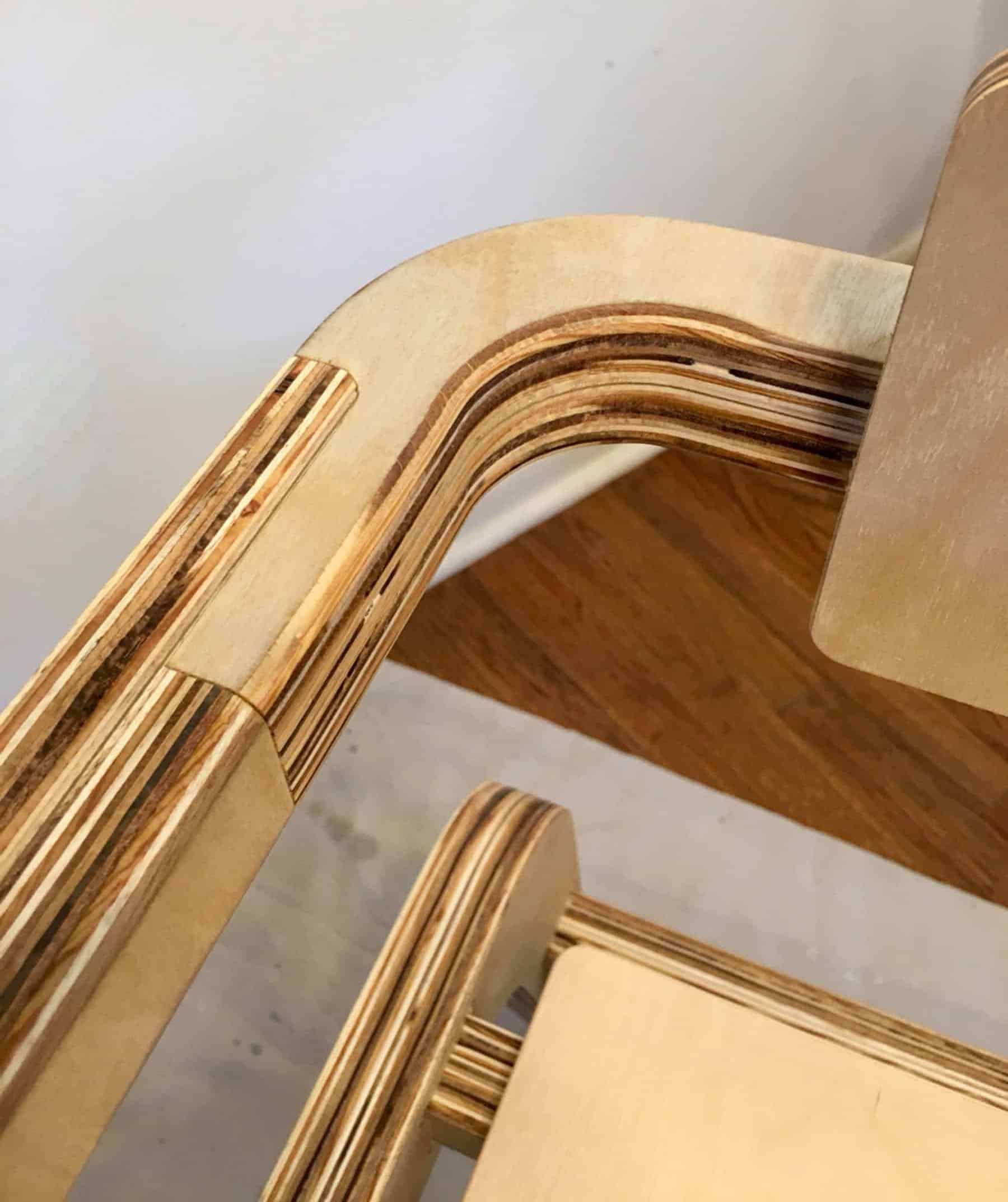
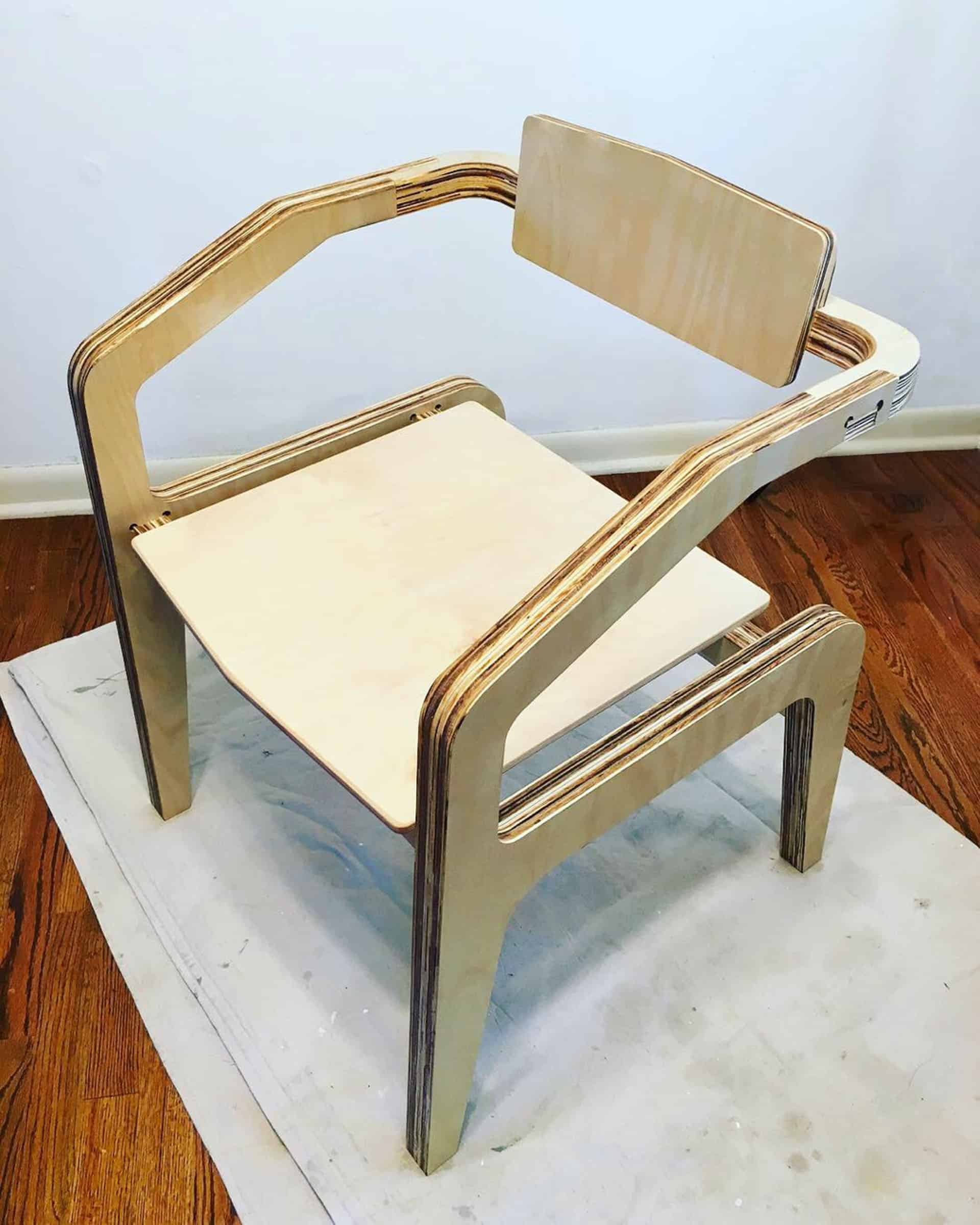
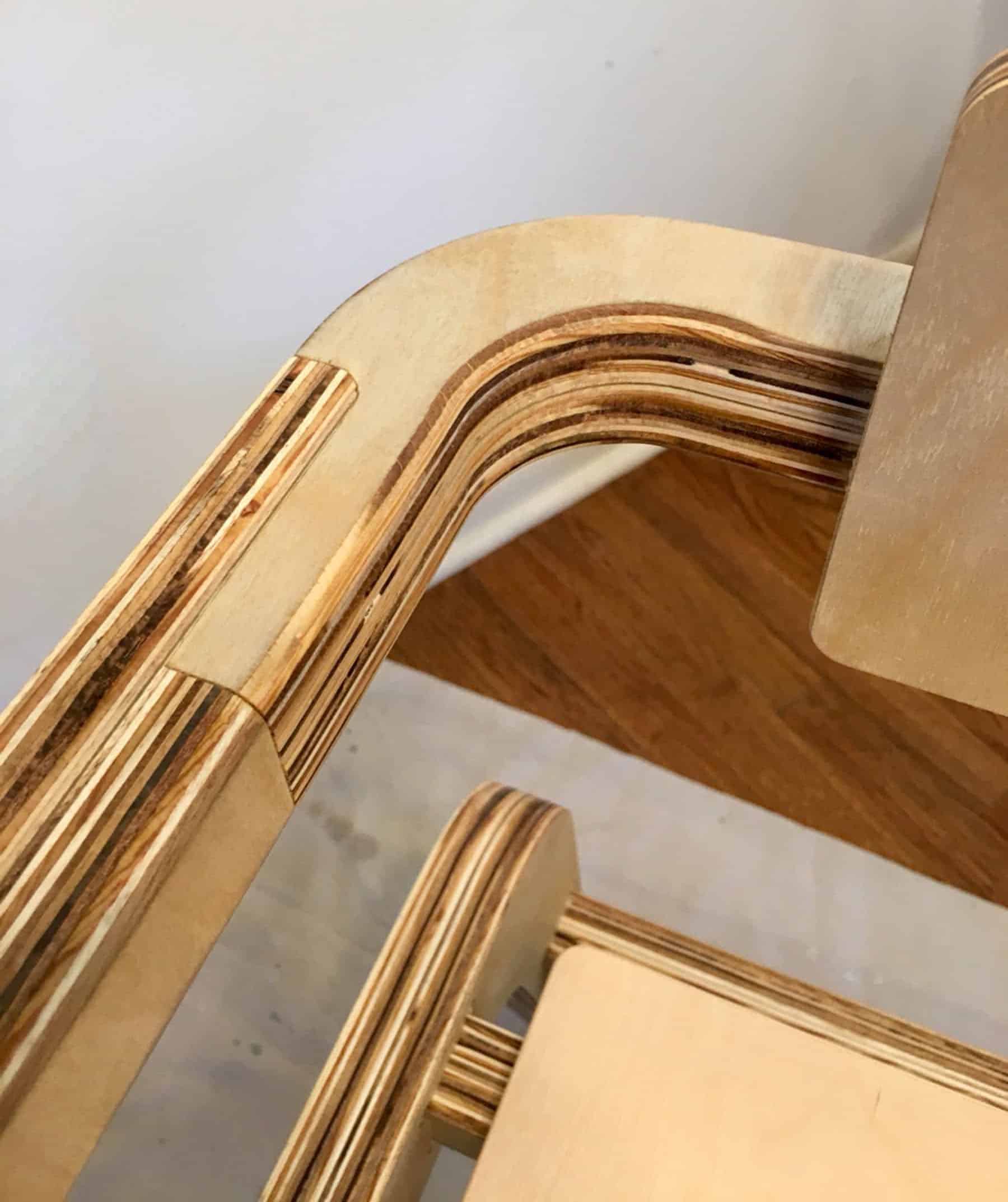
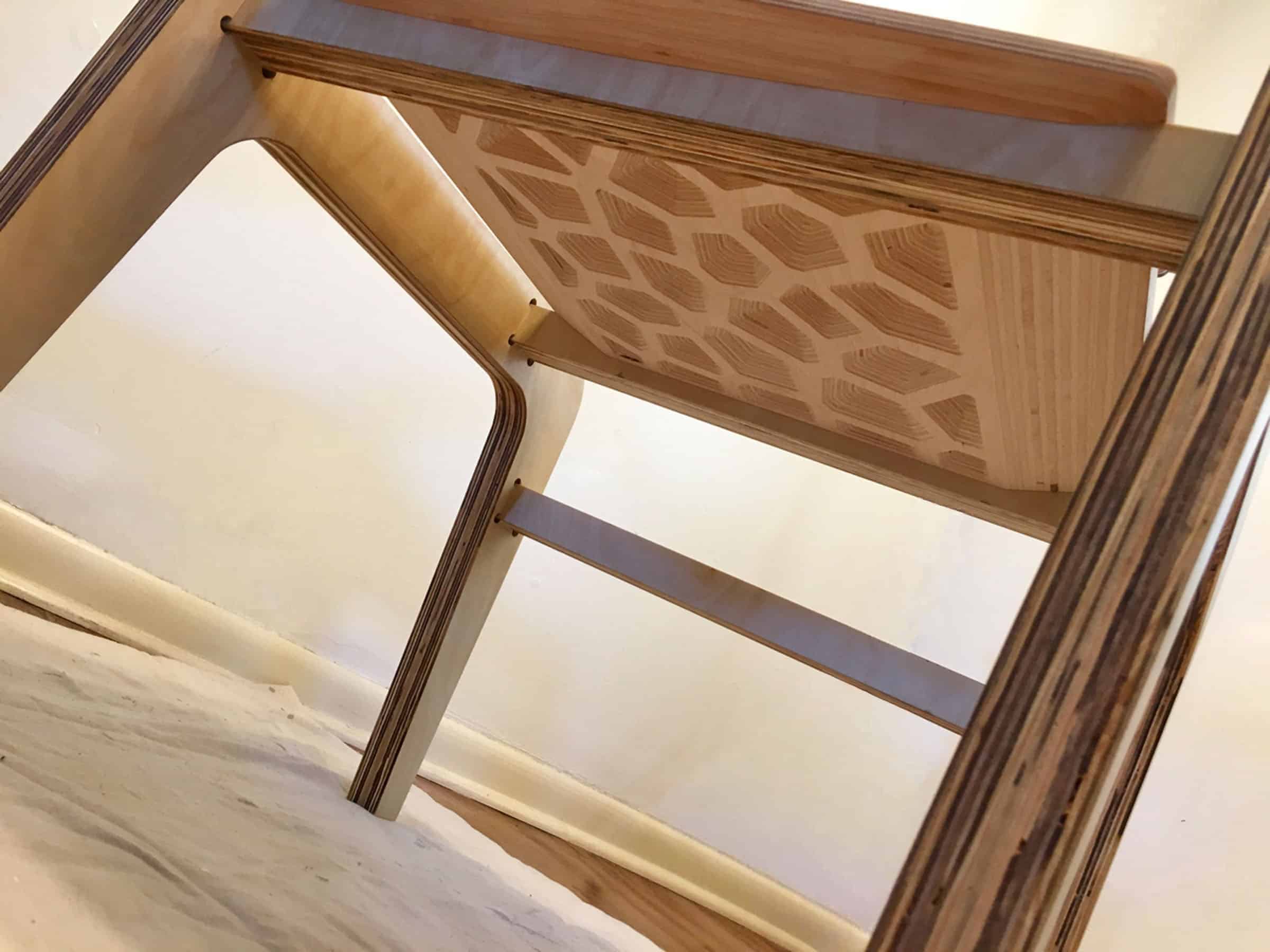
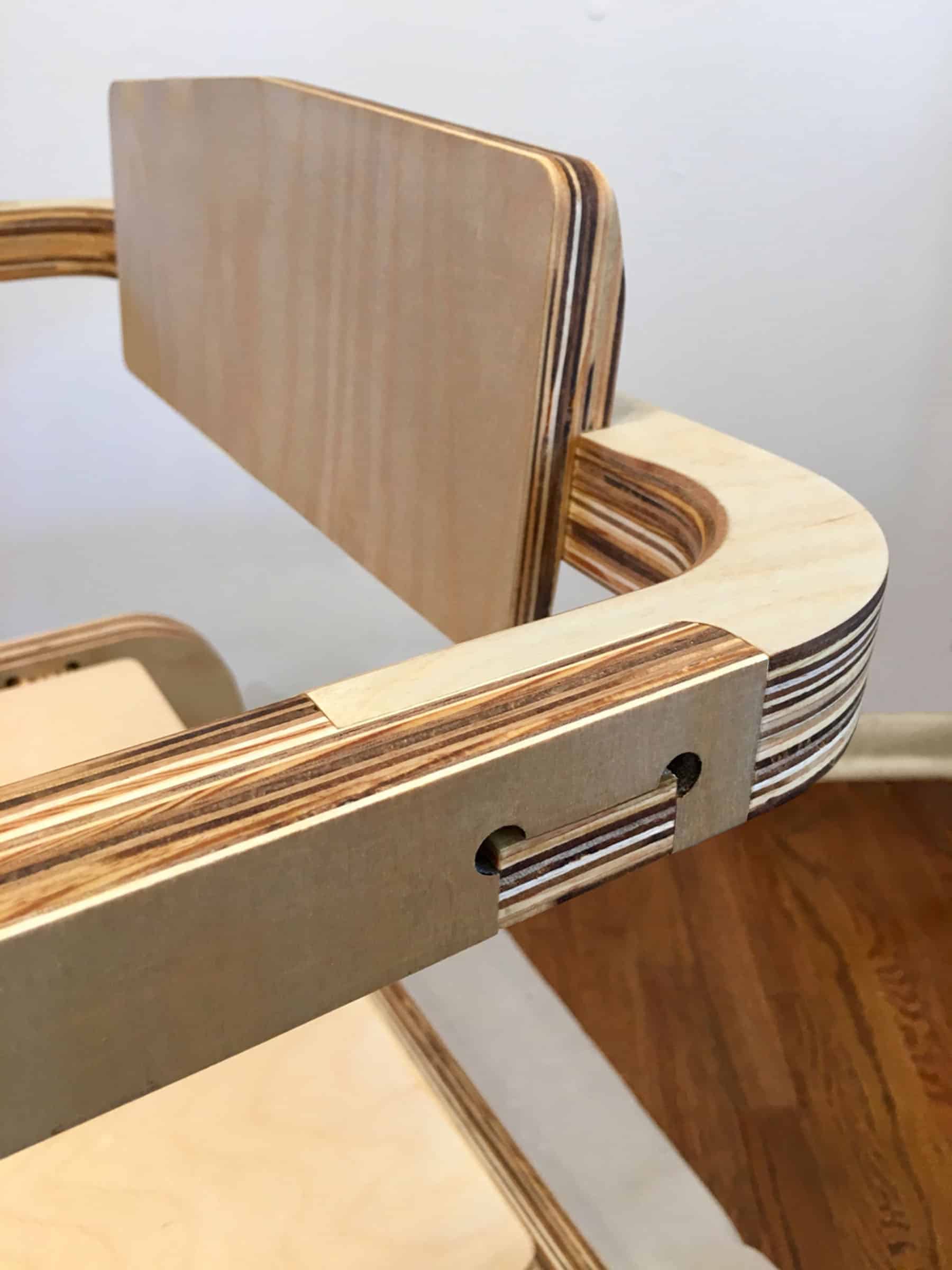
Grain Chair investigates the intersection of material economy, fabrication logic, and aesthetic restraint through the disciplined use of flat-stock plywood. Conceived as both a study in joinery and an experiment in spatial ergonomics, the chair reconsiders how sheet material can be composed, layered, and articulated to achieve structural complexity from limited means. The design explores plywood not as a neutral substrate but as an expressive medium defined by its alternating grain and lamination pattern. By orienting these layers strategically at each joint, the chair emphasizes the tectonic logic of its own construction, revealing a rhythm of material strata that performs both visually and structurally. Every component—arm, leg, and back—emerges from the same ¾-inch stock, CNC-cut to minimize waste while achieving a fluid and continuous profile.


Grain Chair

Material Economies and the Reconfiguration of Flatstock
Rhino, CNC-milled birch plywood

Grain Chair emerged from an independent research inquiry into material efficiency and digital craftsmanship. The project examines how flat-stock plywood—often treated as a pragmatic material—can be reimagined as both a structural and expressive medium. The design explores the grain as an organizing logic, using lamination patterns, orientation shifts, and edge exposure to articulate how structure and surface interrelate. Each component is generated from a limited sheet stock, challenging how a single material system can yield variation through precision and restraint. Rather than disguising plywood’s layered anatomy, the chair foregrounds it, allowing the edges and joints to act as visual records of the fabrication process.

Digital Workflow and Fabrication Process

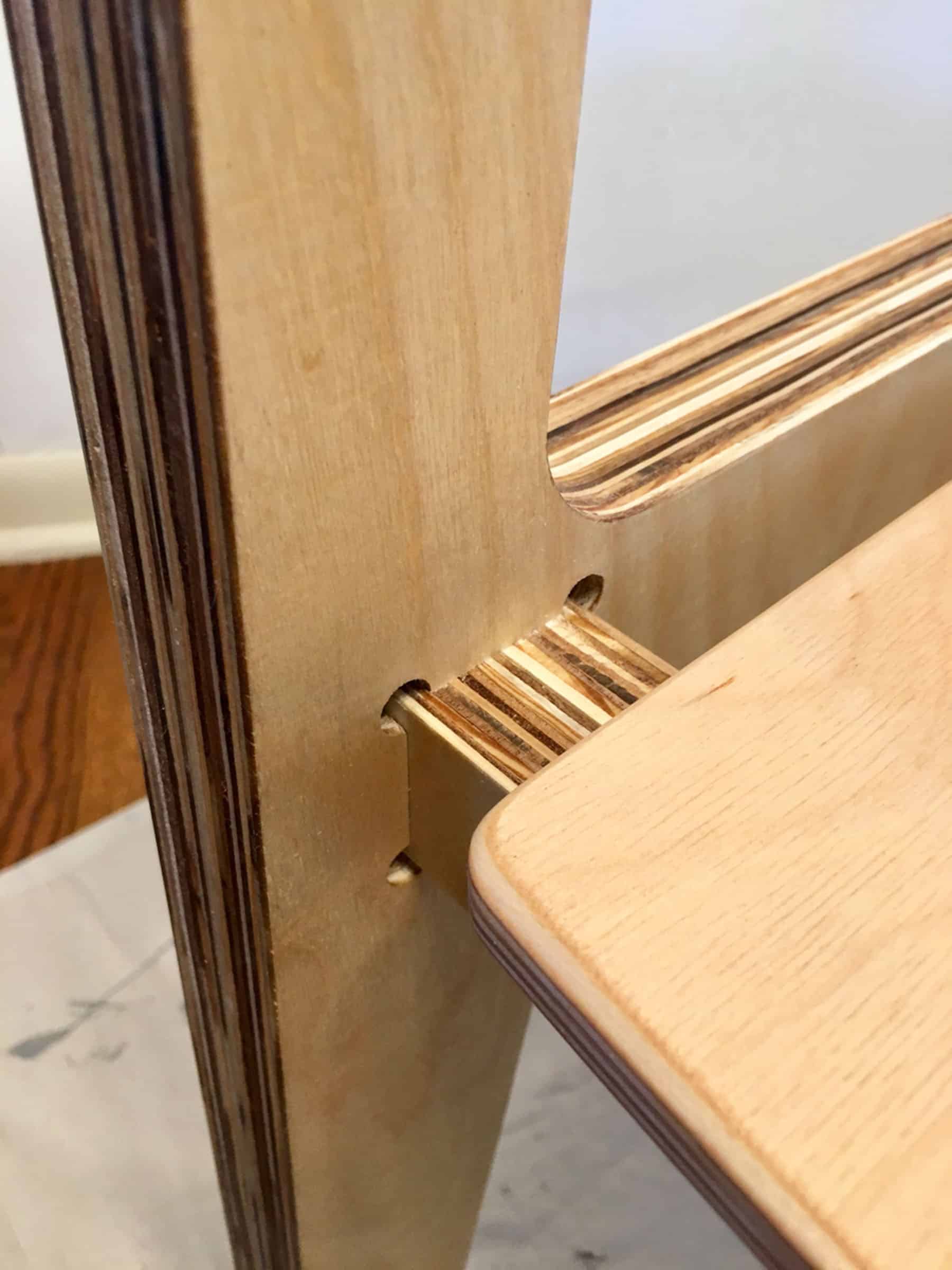
Developed in Rhino and fabricated using RhinoCAM, the chair’s geometry and fabrication logic were fully integrated within a single parametric workflow that linked design exploration directly to the act of making. Each joint was modeled for precise tolerance and calibrated friction-fit assembly, producing an interlocking system that could be fabricated and constructed entirely without adhesives or mechanical fasteners. This approach positioned joinery not as a hidden connector but as a visible expression of geometry and craft. Toolpaths were carefully aligned with the direction of the grain, allowing subtle shifts in orientation to influence both the structural performance and the tactile character of each component. The nesting strategy organized every part with surgical precision, ensuring the seamless translation of digital form into physical assembly while preserving formal continuity and proportion. A concealed feature—a CNC-carved, three-dimensional pattern milled into the underside of the seat—serves as both signature and discovery, a moment of quiet ornament that reveals the potential for beauty and authorship within a tightly disciplined fabrication process.


Structural Logic and Tectonic Detail

The project investigates how flat material can achieve continuity and curvature through digital control. Each connection negotiates between rigidity and flow, using compound notches and soft radii to simulate the behavior of bent wood without compromising planar fabrication. The result is a hybrid structure that feels monolithic yet remains fully demountable. Every corner and joint is calibrated to reveal the intersection of geometry, grain, and fabrication sequence—a dialogue between mechanical precision and craft intuition.

Material Expression and Reflection

In its final form, Grain Chair presents plywood as a material of elegance rather than economy. The visible stratification of lamination becomes a kind of topography, while the smooth curvature of the milled edges introduces a tactile warmth that contrasts with its digital origin. The project blurs boundaries between object and experiment, furniture and prototype. It embodies a search for integrity between process and outcome, where design precision, fabrication control, and material honesty converge into a singular expression.


Convergence of Craft and Code

Through precedent research and extensive exploration of flat-stock material applications, Grain Chair represents a personal investigation into how digital fabrication can evolve traditional understandings of craft. The project reframes plywood as a medium capable of both efficiency and refinement, transforming a material often associated with utility into one of precision and invention. By merging computational design, toolpath logic, and hands-on fabrication, the chair demonstrates how digital workflows can yield results that are not only technically rigorous but also materially expressive.

The piece embodies an inquiry into the continuum between drawing, modeling, and making, where each stage informs and refines the next. Grain Chair reveals that the intelligence of fabrication lies not only in efficiency or accuracy but in the dialogue between code and material behavior, the way design intent adapts to the resistance and rhythm of the tool. What begins as a digital construct becomes a tactile artifact that records its own process through surface, grain, and joint. As a result, the project extends beyond furniture design, positioning itself as a study in architectural thinking at the scale of the hand: an exploration of how computation, structure, and craft can converge to produce new forms of spatial and material understanding.


More Work


Architecture

Art + Code

Design + Fabrication

Courses + Student Work

© Ken Marold USA, Inc. All rights reserved.

Continue reading

Asher Chair

IMG_5676 (1)

Asher Chair

rhino, pla, birch plywood

status : ongoing

Concept for a furniture system that functioned as a didactic assemblage – to illustrate connectivity and analog/digital relationships. Both of these factors influenced the ideas that went into this chair.

Version 1 of the system (green connections) was first envisioned as a modular kid’s chair. Wanting to work with wood but also developing and manufacturing a printable connective system that could snap together (and unsnap) so that as an individual grew, they could swap out the wooden panels to adjust to their size – to re-engaging the furniture in order to actively modify its dimensions.

In version 2 (white connections), snap-fit parts were swapped with bolt though connections for a more robust connection system necessary for adult sizes while still maintaining the ability to flat-pack the system for shipping.

  • topshot
  • IMG_5676 (1)
  • IMG_5674
  • IMG_5670 (1)
  • IMG_5669
  • IMG_0093
  • IMG_9327
  • IMG_9328
  • IMG_9329
  • IMG_9332
  • IMG_9333
  • IMG_9334
  • IMG_9336

Process


IMG_9331

More Work

Architecture


  • Wichita Mobile Clinic

    anadarko, oklahoma

  • SA Architects

    cranston, rhode island

  • OKC Greenhouse

    oklahoma city, oklahoma

  • Pawtucket Day Nursery

    pawtucket, rhode island

  • Meeting Street Center for Excellence

    providence, rhode island

  • Norterly Island Nature Center

    Chicago, Illinois

  • National Institute of Flamenco

    old town plaza, santa fe, new mexico

  • Corrales Comunity Pathway + Pedestrian Park

    corrales, new mexico

  • CRCUIT

    albuquerque, new mexico

  • The Construction of Art

    providence, rhode island

  • Santa Fe Univeristy School of Fine Arts

    Santa Fe, New Mexico

Design + Fabrication


  • Flatpack Foldable Structural Connections

    rhino, grasshopper, mild steel

  • Renegades

    Fred Jones Jr Museum of Art

  • Surface Flux

    python, c#, grasshopper, pla, wood, steel

  • Carbon Fiber Connections

    grasshopper, rhino, pla, carbon fiber

  • Acoustic Diffusion Panel

    grasshopper, rhino, cnc, rigid insulation

  • Hyperbolic Bending

    grasshopper, rhino, laser cut acrylic, bristol board

  • Filtration : Infiltration

    python, grasshopper, rhino, 3d printing

  • Recursive Paneling

    laser cut mylar

  • Sweet Crude

    python, c#, grasshopper, wood, plasti-dip, carbon, gelatin

  • Ruling Lines

    laser cut cell cast acrylic, stainless steel braided wire

  • Volumetric Aggregations

    processing, grasshopper, rhino, cast acrylic, black walnut, hickory

  • Cellulose Bookcase

    pine, black walnut, compressed wood fiber board, stain

  • Asher Chair

    rhino, pla, birch plywood

  • Andraditic Mass

    arduino, firefly, rhino, 3d printed pla, baltic birch plywood

  • Cholla

    grasshopper, rhino, black walnut

  • Folding Attractors

    grasshopper. rhino, white museum board

  • Grain Chair

    rhino, cnc milled birch plywood

  • Tracking Parallelograms

    grasshopper, rhino, hickory

  • Infiltration Table

    processing, spalted birch plywood, poplar, enamel, lacquer

Art + Code


  • Prairie Fire

    acrylic, ink, plywood

  • Surface Flux

    python, c#, grasshopper, pla, wood, steel

  • Dixieland Death Cult

    acrylic, plywood

  • Approximation of a Generation

    private tremendous

  • Elemental Worlds

    science museum oklahoma

  • Gonzo Cubes

    solidity, html, css, javascript, illustrator

  • A Line of Force

    arduino, grasshopper, firefly, java, plywood

  • The Drift

    html, css, javascript

  • Gear Institute

    illustrator, photoshop, php, css, html

  • Prism

    unity, c#, spine2d, illustrator

  • Squall

    petroglyphs national monument, albuquerque, new mexico

  • Galileo’s World Interactive

    c#, unity3d, illustrator, photoshop

  • Steel + Light

    convergence arts festival masterworks project, providence, rhode island

  • The God of Skiing

    book design

© [wpsos_year] Ken Marold USA, Inc. All rights reserved.

Continue reading