Conceptual Framework
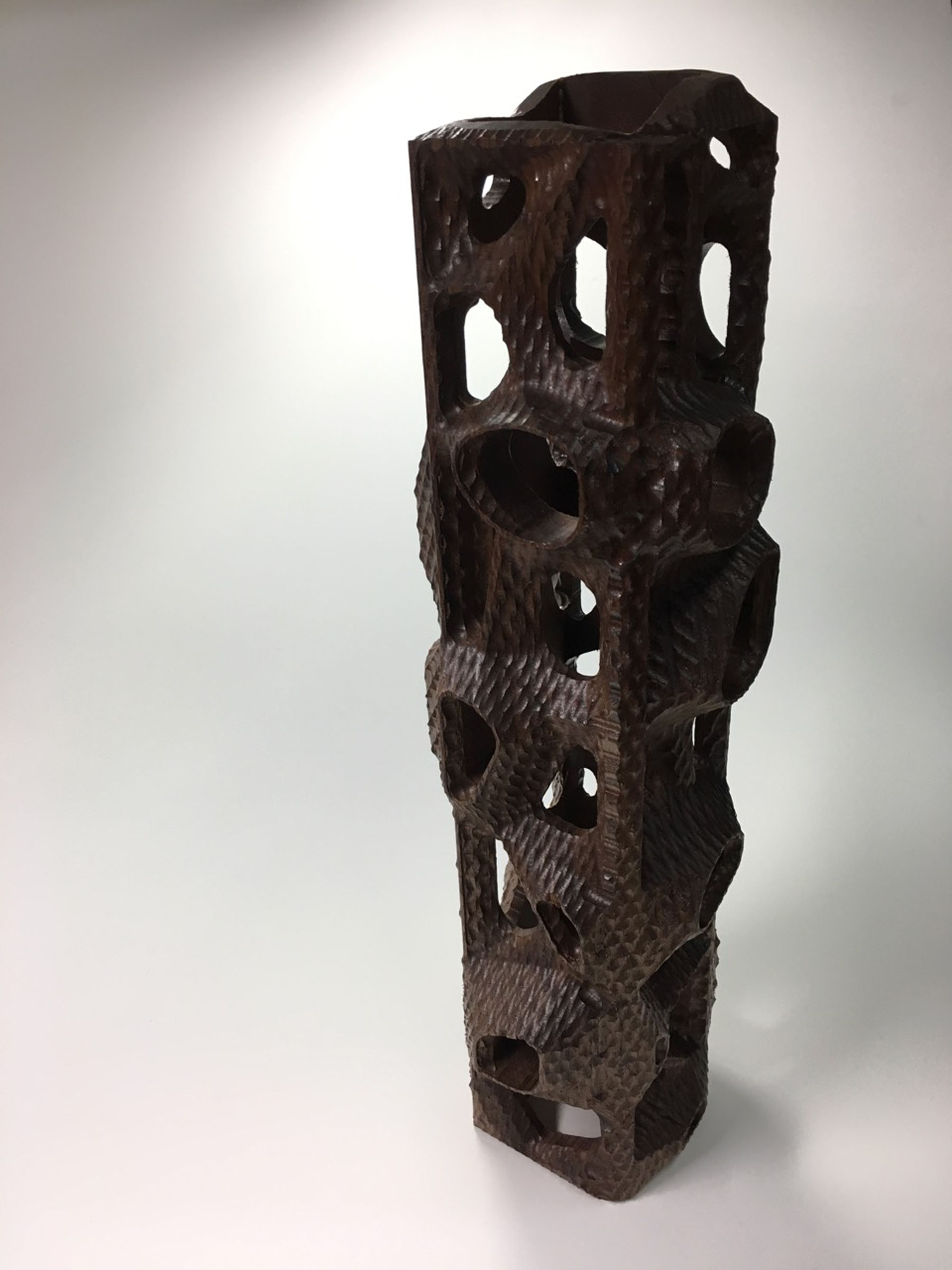
The project asks how code can become a generative proxy for natural processes. By studying the pore distribution and cellular organization within hardwood species, Cholla sought to encode these biological dynamics into a parametric model. The result is a porous, lattice-like geometry that reflects not only the flow and porosity of vascular systems, but also the capacity of digital fabrication to reveal new scales of legibility within familiar materials.
Computational Design and Modeling
Grasshopper and Rhino were employed to generate a recursive patterning logic derived from xylem structure. The script organized voids in varying densities, simulating the irregular yet systematic quality of pore distribution across wood cross-sections. This algorithmic process produced an evolving set of apertures and connections, creating both surface depth and volumetric porosity.
Fabrication and Material Tactics
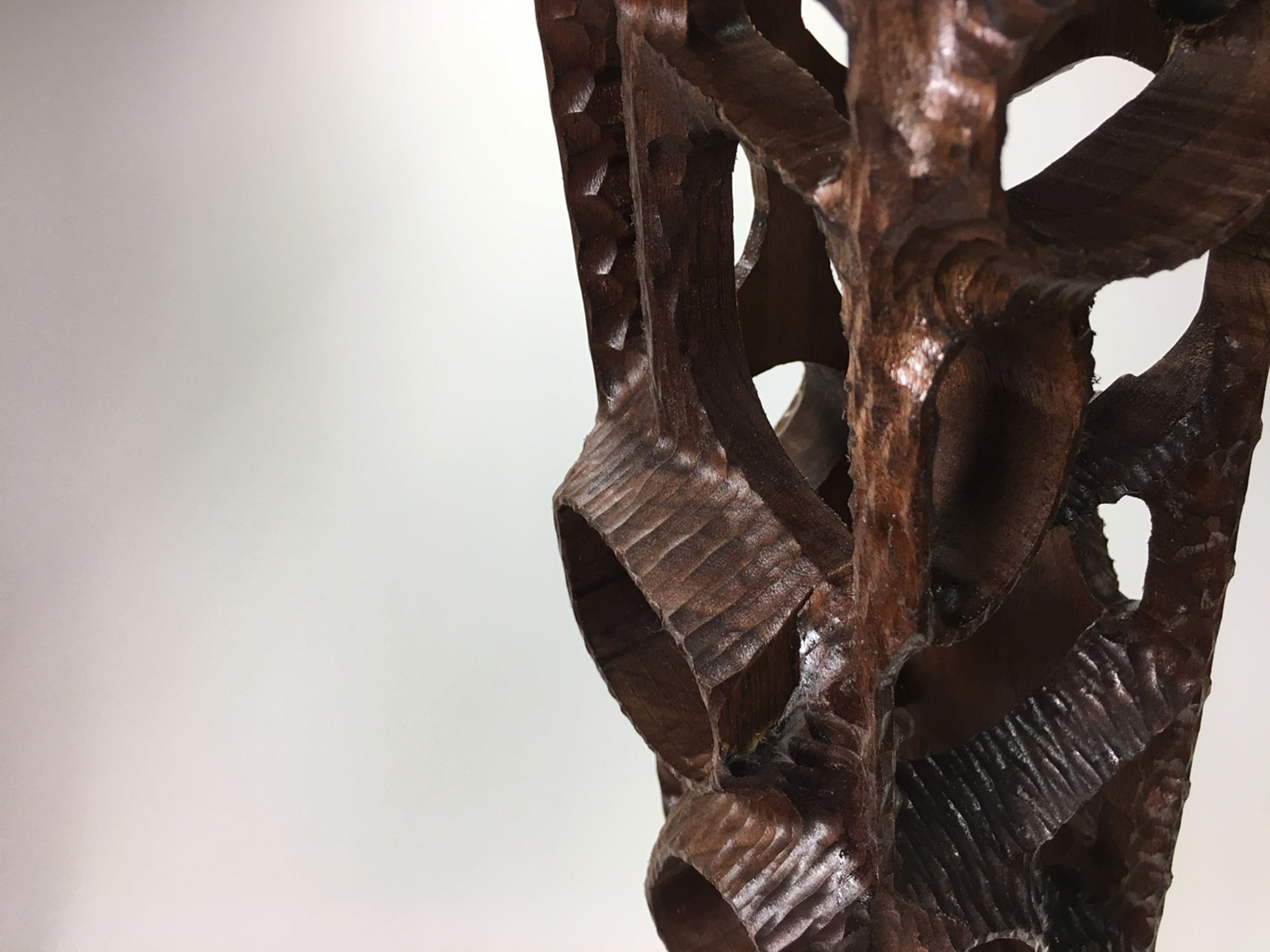
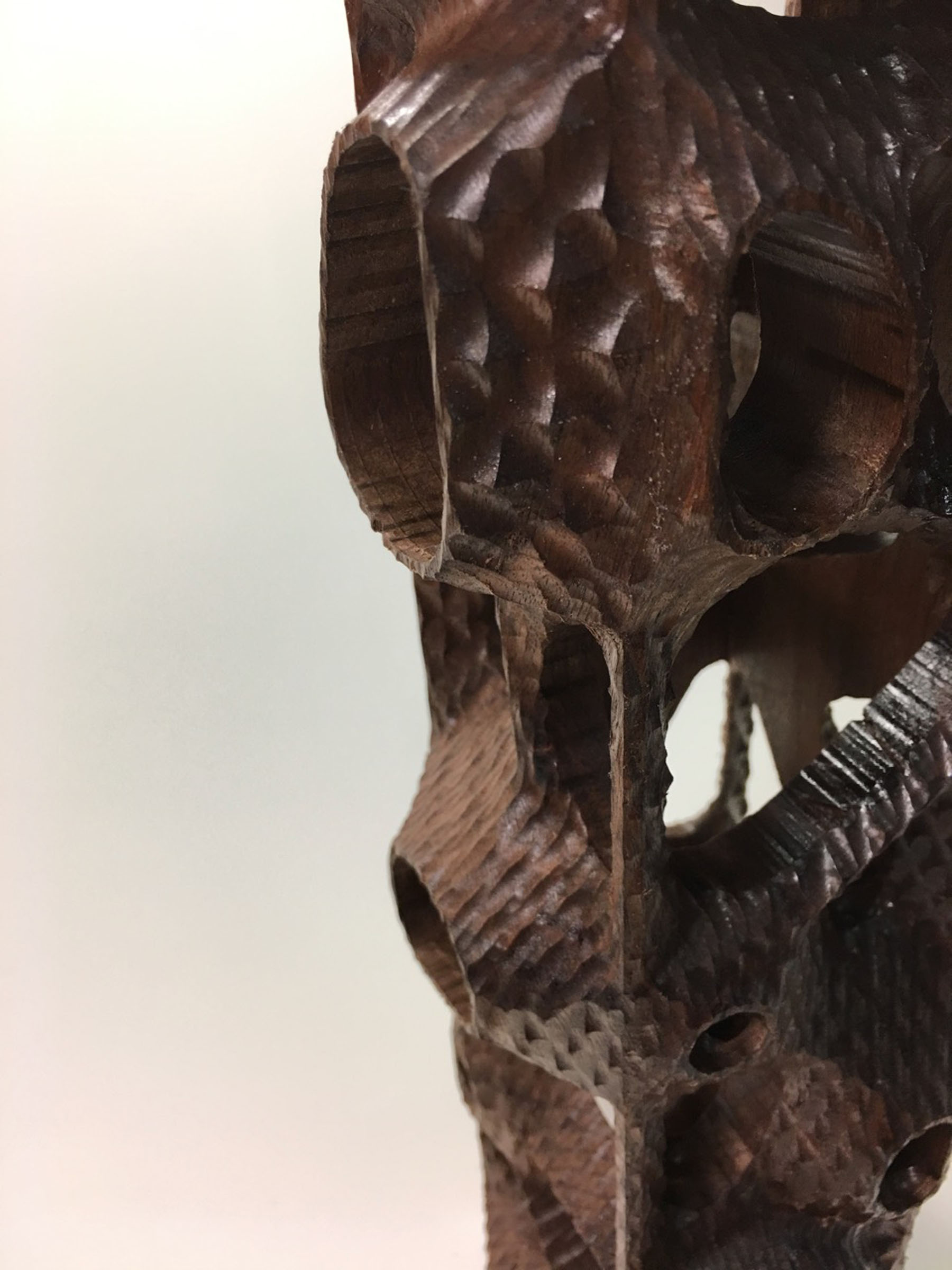
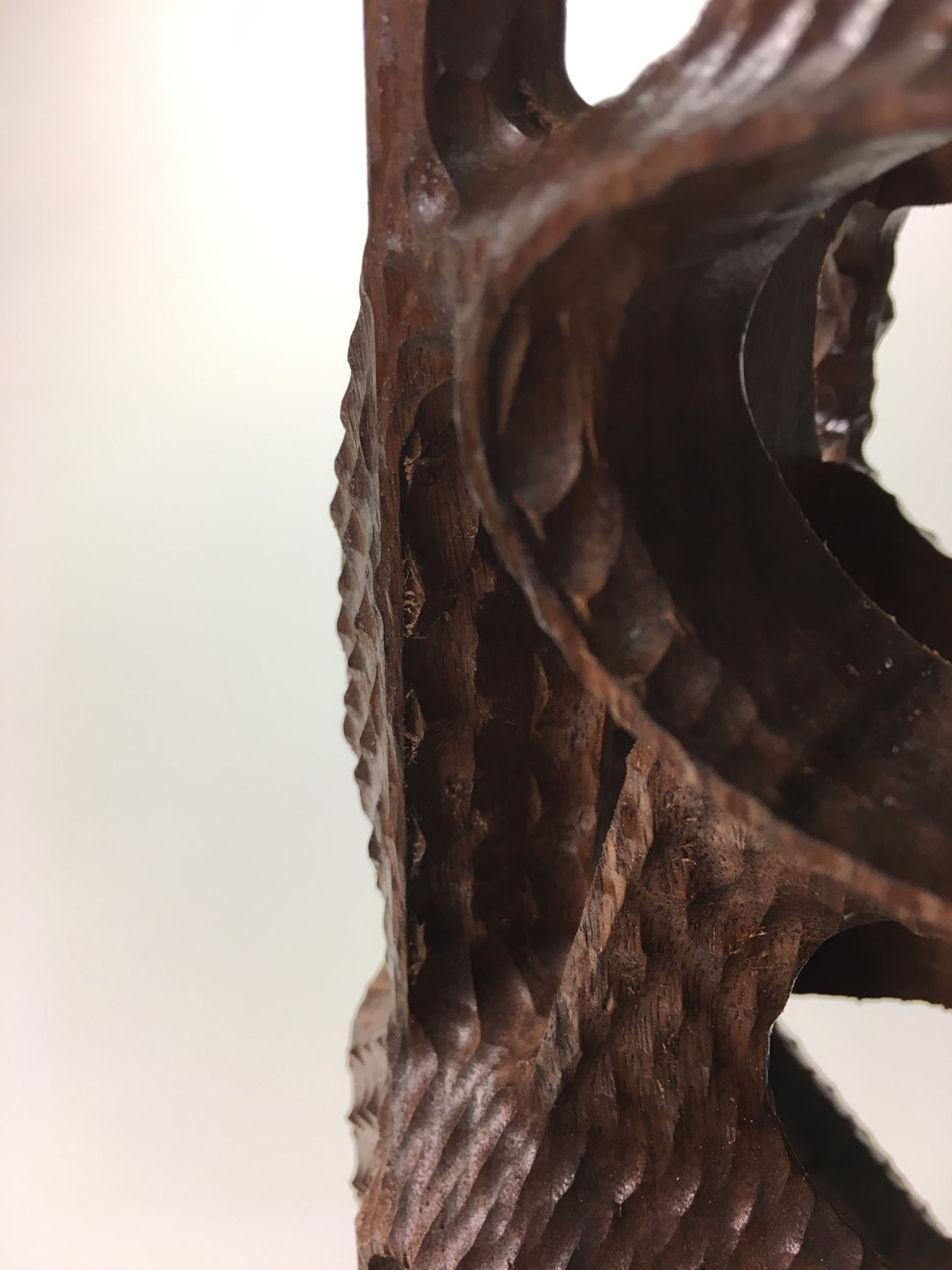
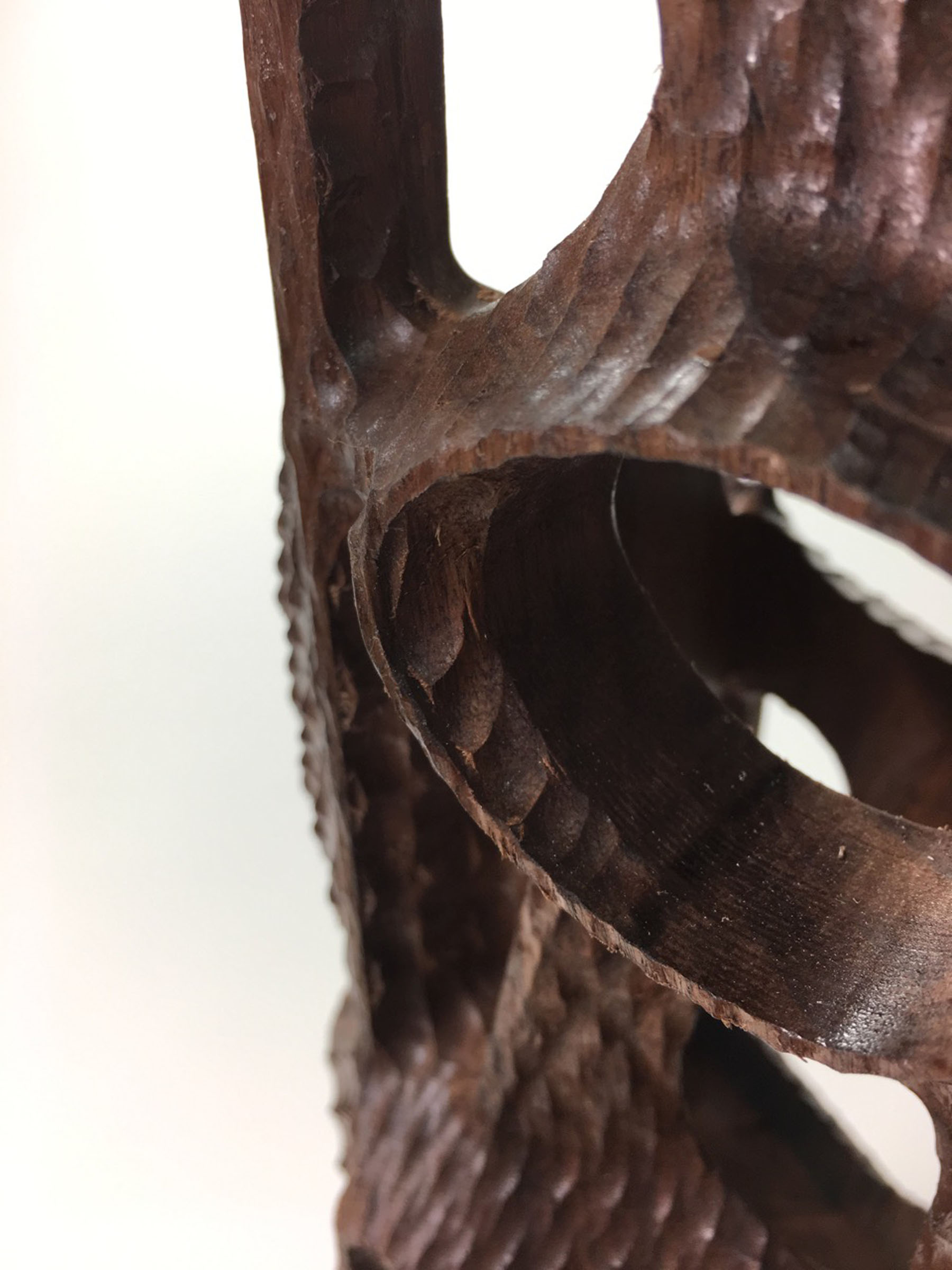
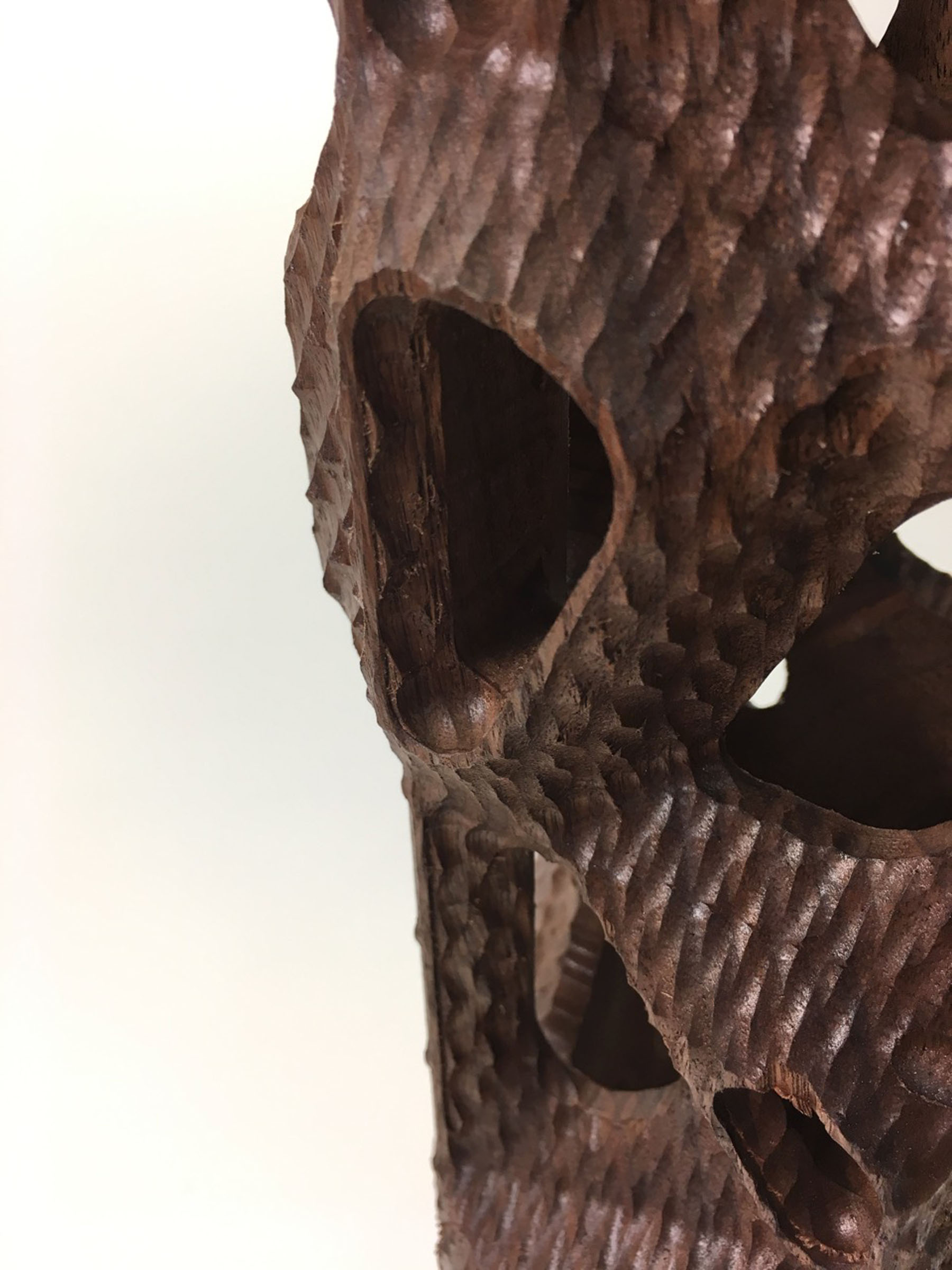
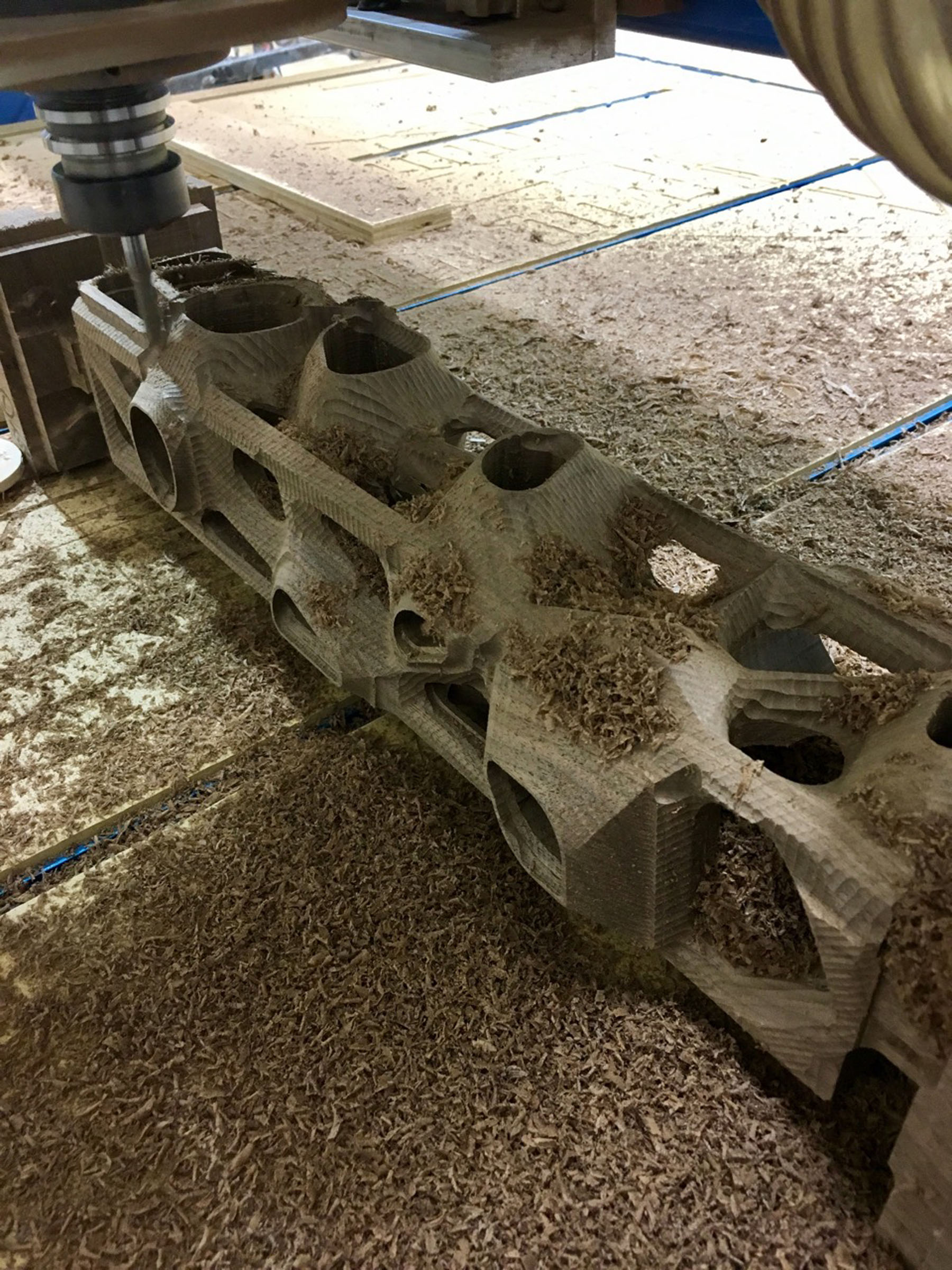
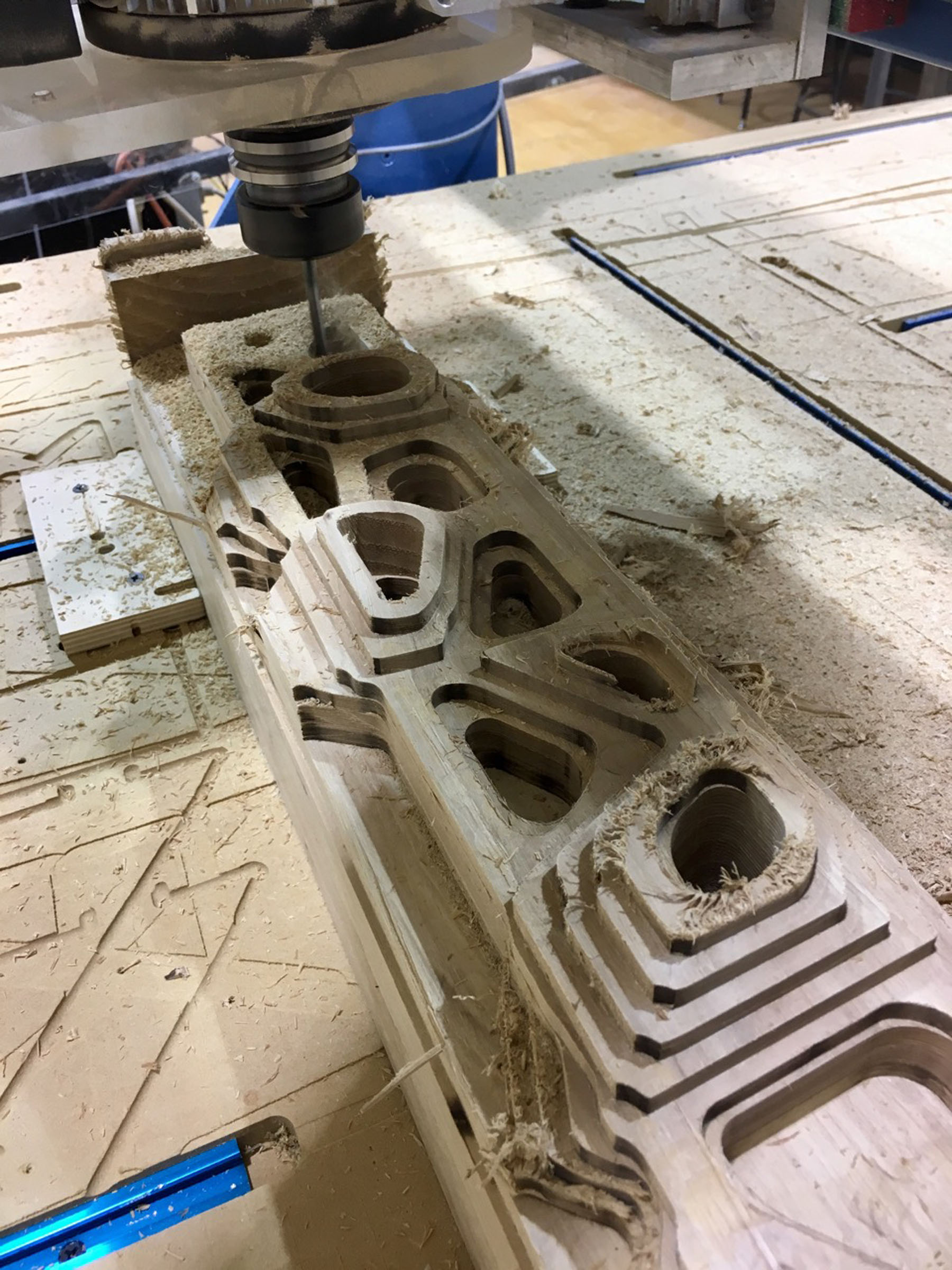
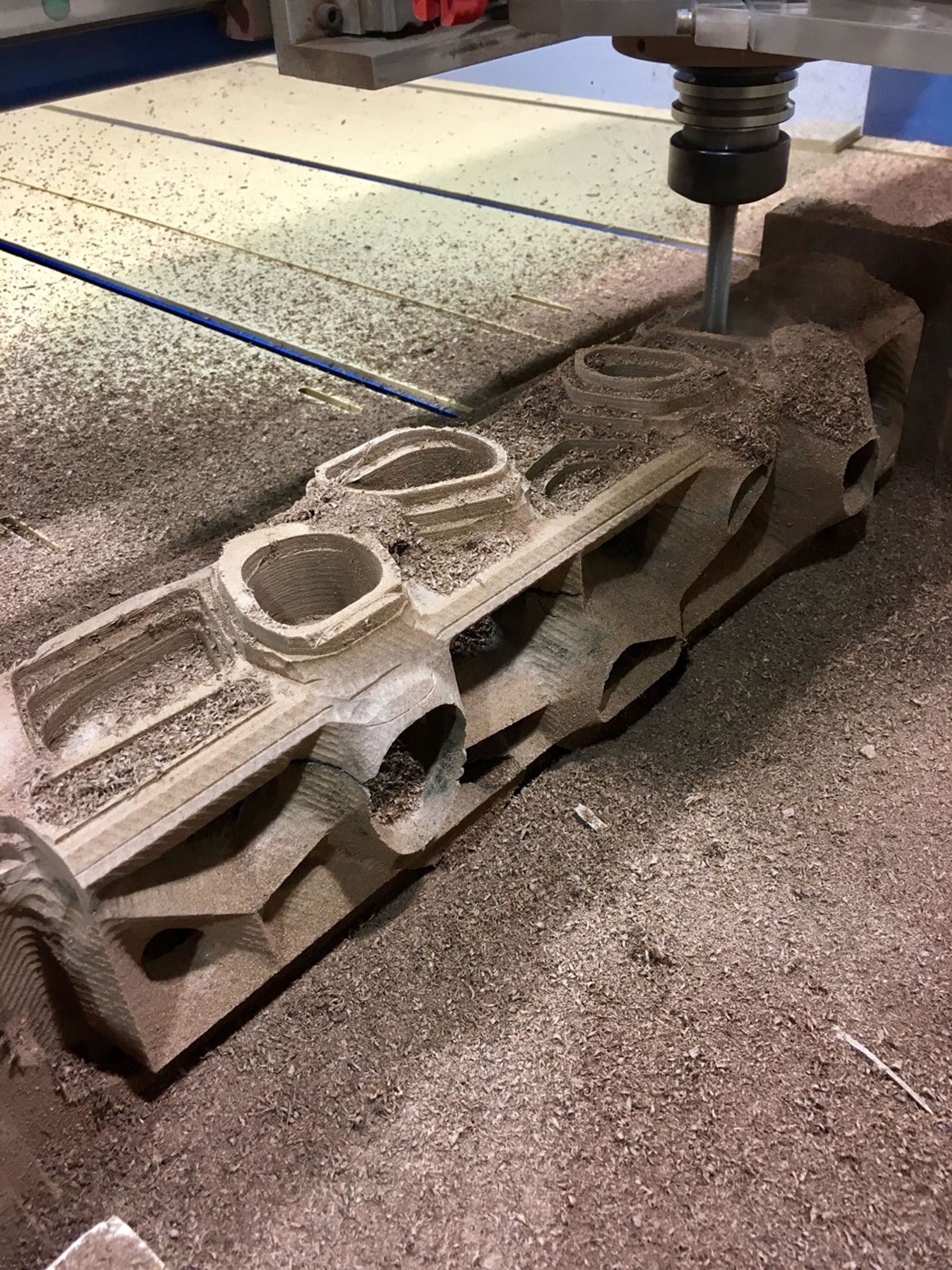
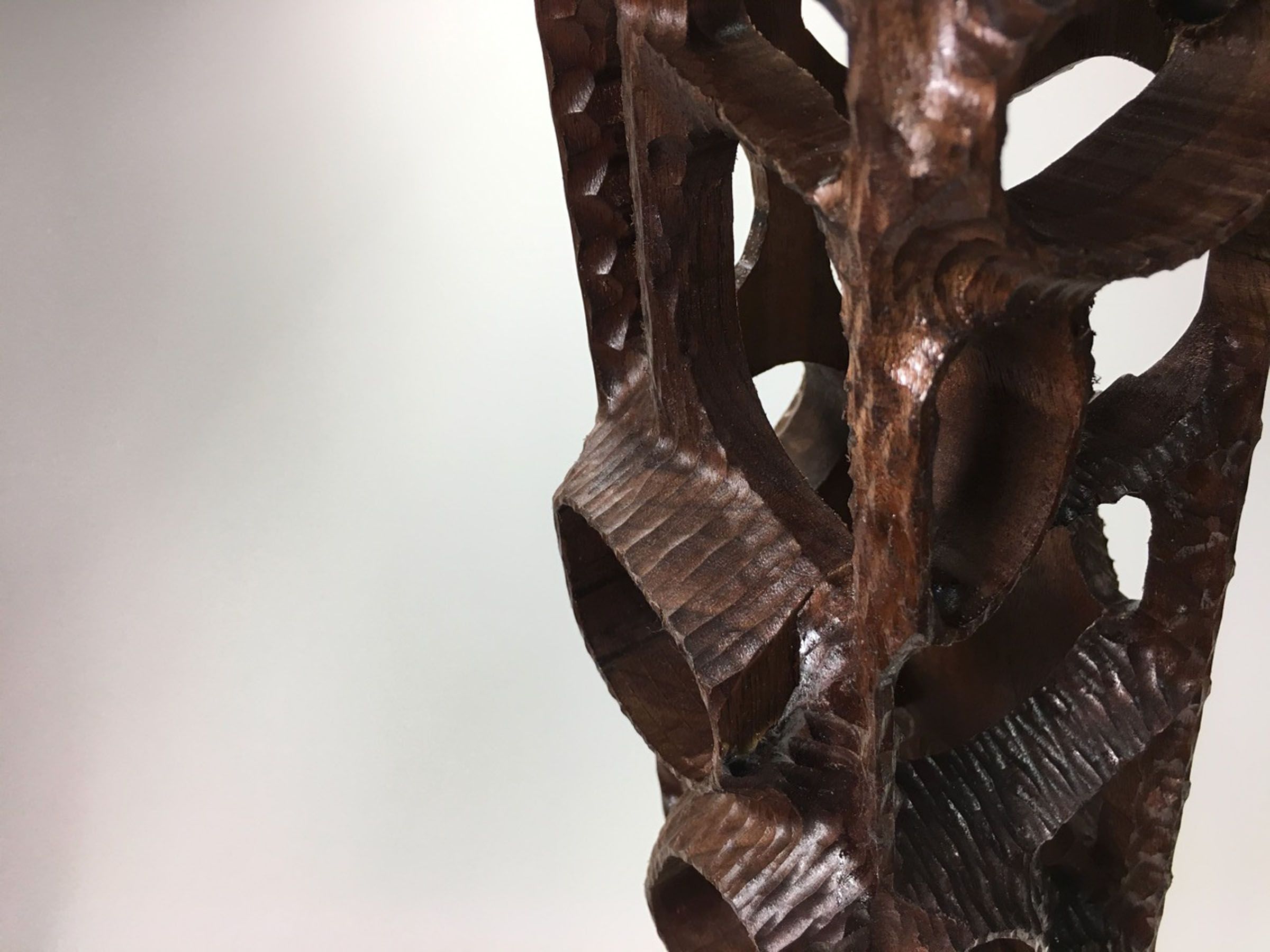
The final artifact was milled on four sides from a single mass of black walnut. Multi-axis CNC machining allowed the lattice to wrap continuously around the object, with each side revealing different densities and orientations of apertures. The toolpath itself became a form of surface definition: the ridged texture of the carving process remained legible, amplifying the dialogue between natural grain, coded geometry, and machine inscription.
Material Expression
The use of walnut heartwood emphasized the tension between natural substance and digital intervention. Its rich tone and organic grain contrast with the mechanical regularity of the CNC-milled apertures, creating a hybrid expression that is at once natural and artificial, grown and coded. The porous structure recalls the cholla cactus skeleton — a vascular remnant of another species — highlighting cross-material resonances between plant forms.
Conclusion
Cholla bridges microscopic biology, computational modeling, and material craft. By encoding xylem structures into parametric logic and fabricating them through CNC milling, the project foregrounds both the unseen dynamics of natural systems and the expressive potential of digital fabrication. It proposes a new lens for understanding wood — not simply as a material to be cut or joined, but as a living archive of flows, pores, and patterns that can be amplified through design.