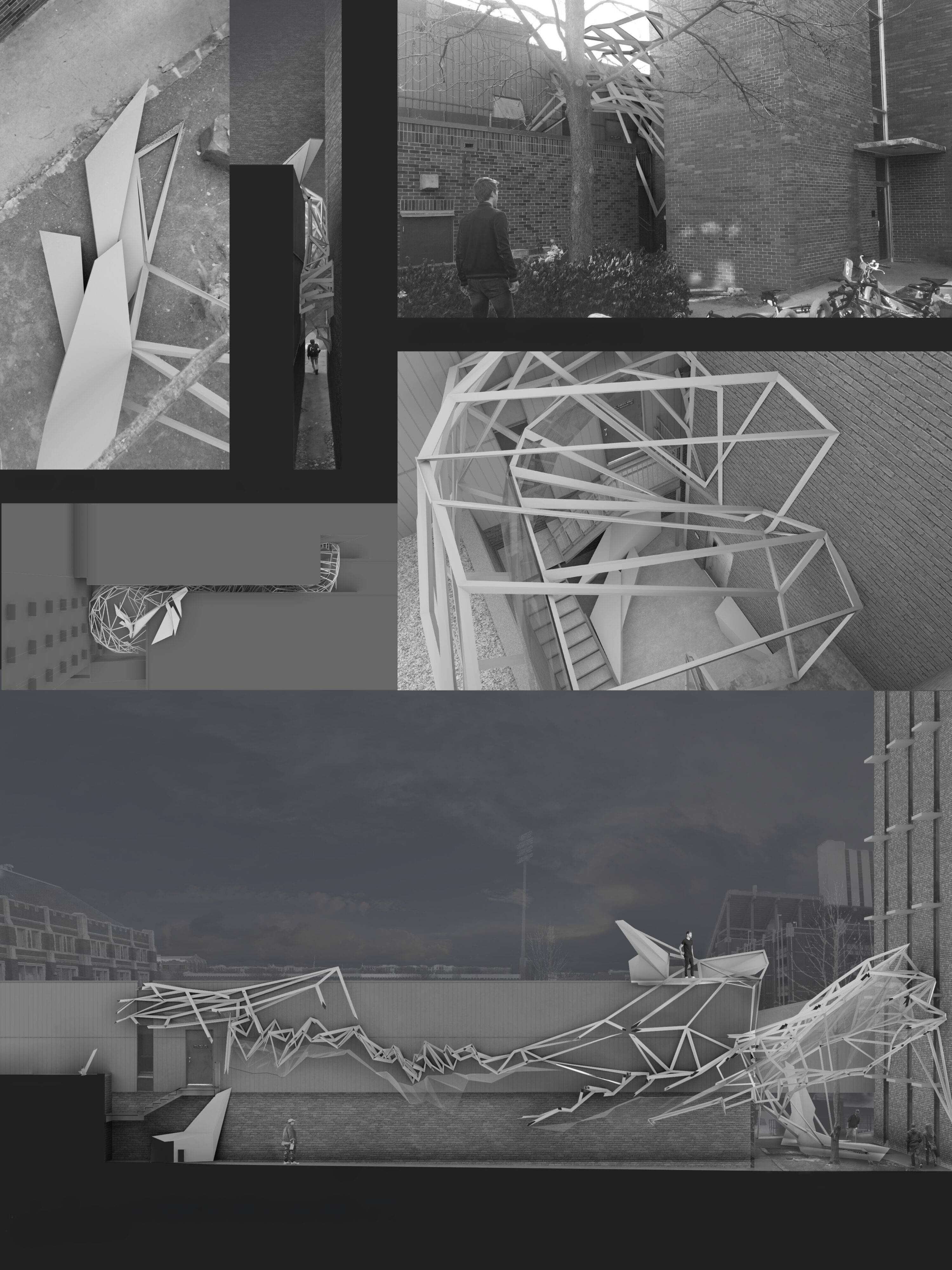
Grain Chair

rhino, cnc milled birch plywood

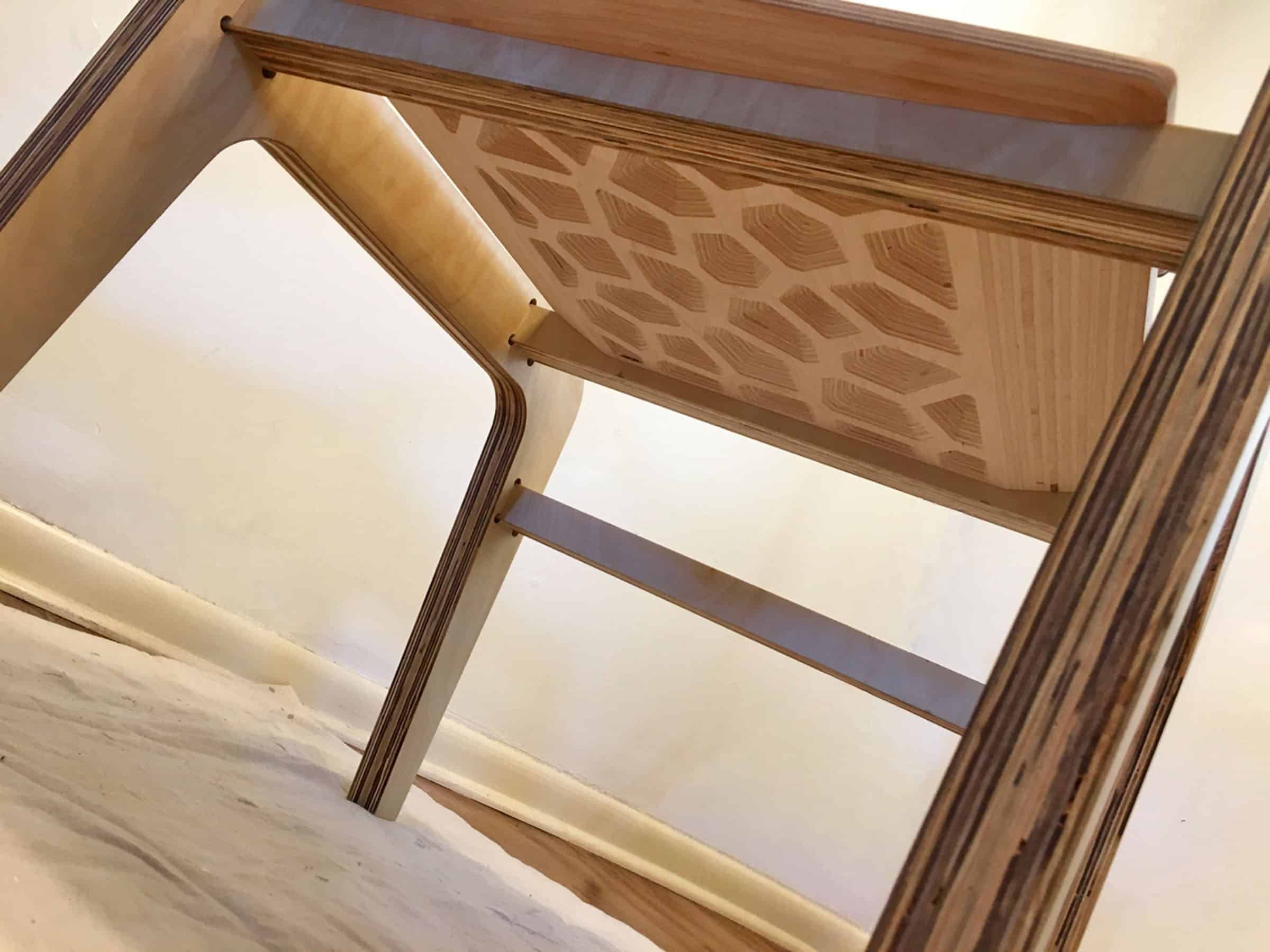
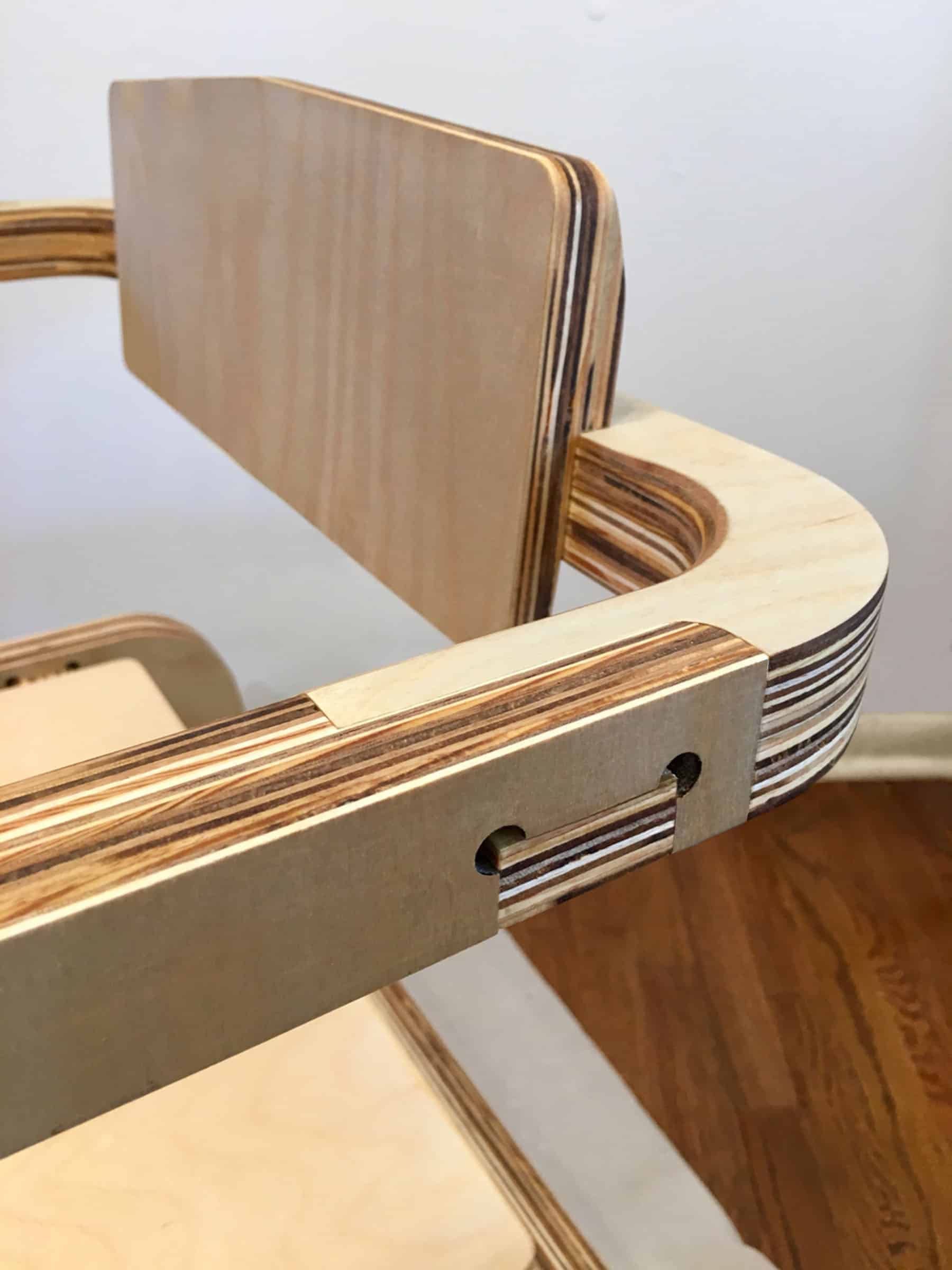
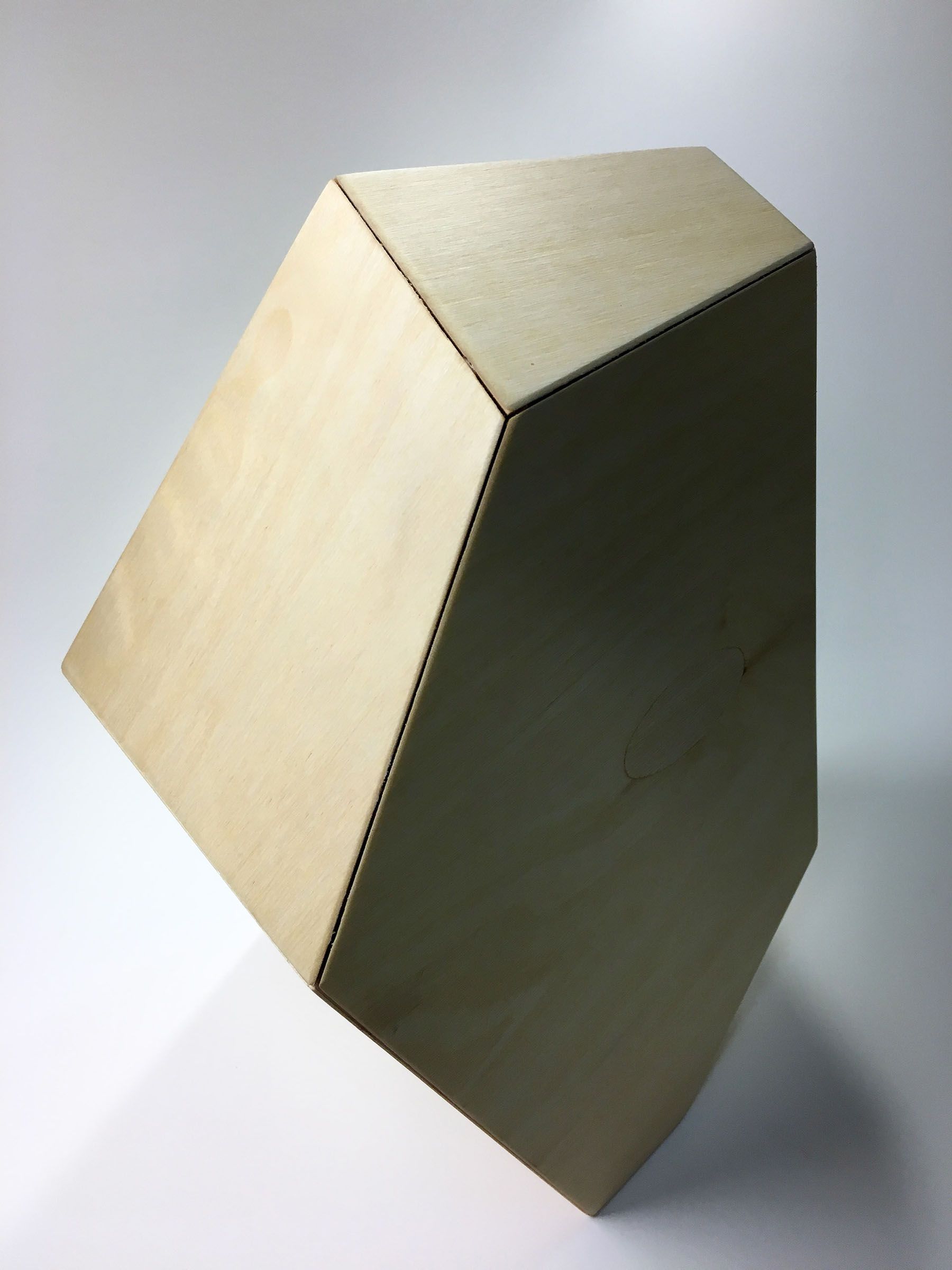
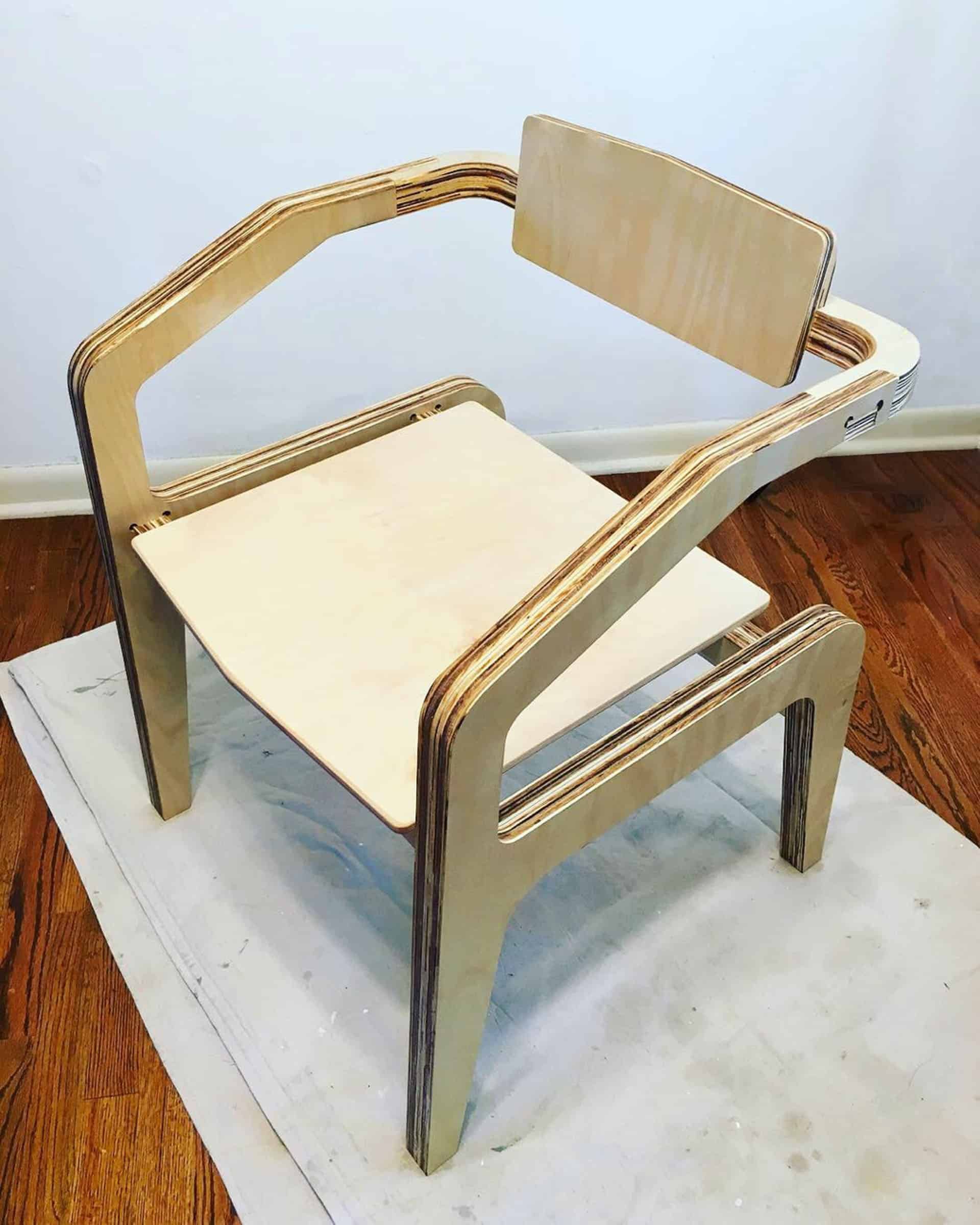
Grain Chair investigates the intersection of material economy, fabrication logic, and aesthetic restraint through the disciplined use of flat-stock plywood. Conceived as both a study in joinery and an experiment in spatial ergonomics, the chair reconsiders how sheet material can be composed, layered, and articulated to achieve structural complexity from limited means. The design explores plywood not as a neutral substrate but as an expressive medium defined by its alternating grain and lamination pattern. By orienting these layers strategically at each joint, the chair emphasizes the tectonic logic of its own construction, revealing a rhythm of material strata that performs both visually and structurally. Every component—arm, leg, and back—emerges from the same ¾-inch stock, CNC-cut to minimize waste while achieving a fluid and continuous profile.


Grain Chair

Material Economies and the Reconfiguration of Flatstock
Rhino, CNC-milled birch plywood

Grain Chair emerged from an independent research inquiry into material efficiency and digital craftsmanship. The project examines how flat-stock plywood—often treated as a pragmatic material—can be reimagined as both a structural and expressive medium. The design explores the grain as an organizing logic, using lamination patterns, orientation shifts, and edge exposure to articulate how structure and surface interrelate. Each component is generated from a limited sheet stock, challenging how a single material system can yield variation through precision and restraint. Rather than disguising plywood’s layered anatomy, the chair foregrounds it, allowing the edges and joints to act as visual records of the fabrication process.

Digital Workflow and Fabrication Process

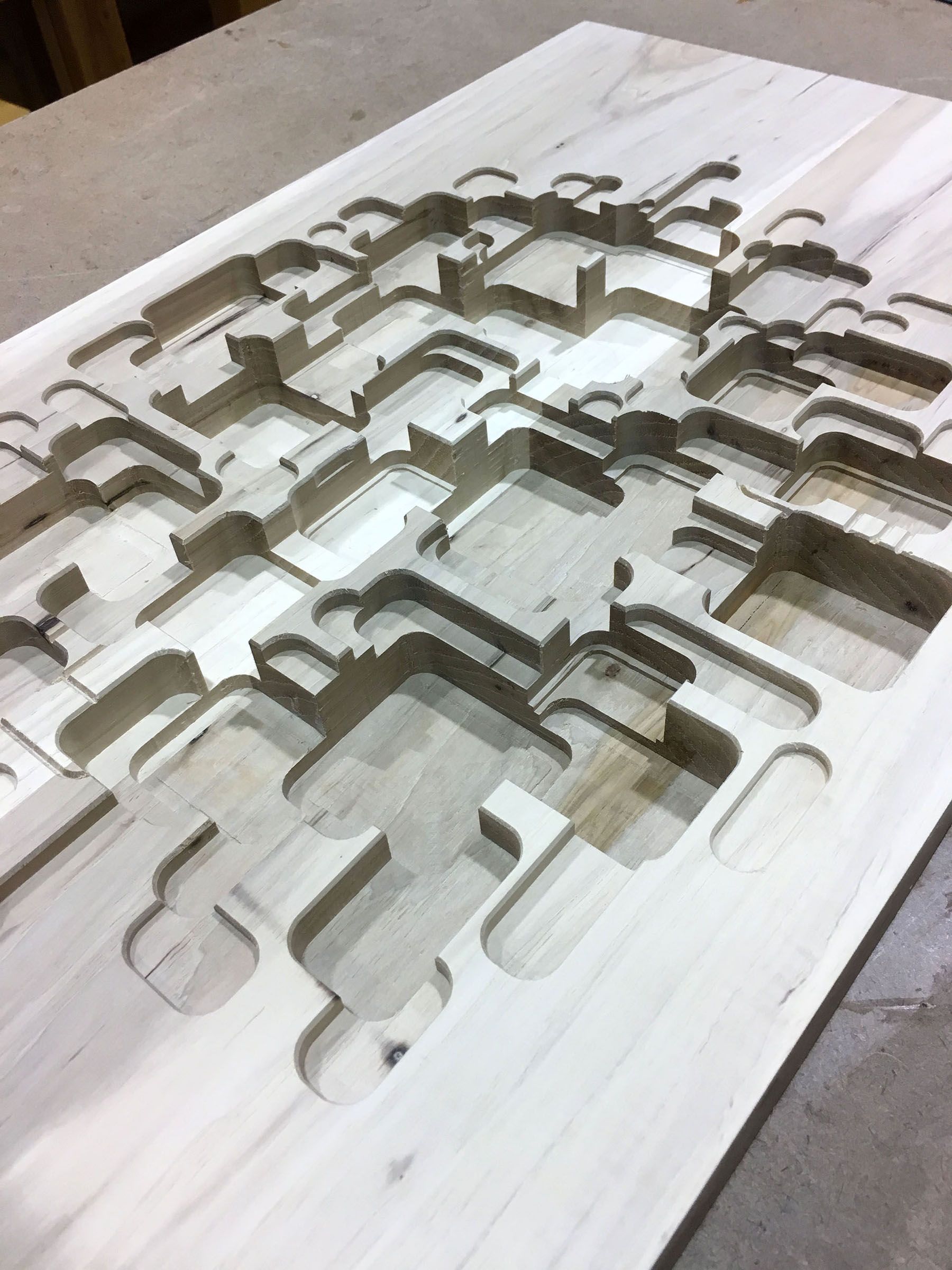
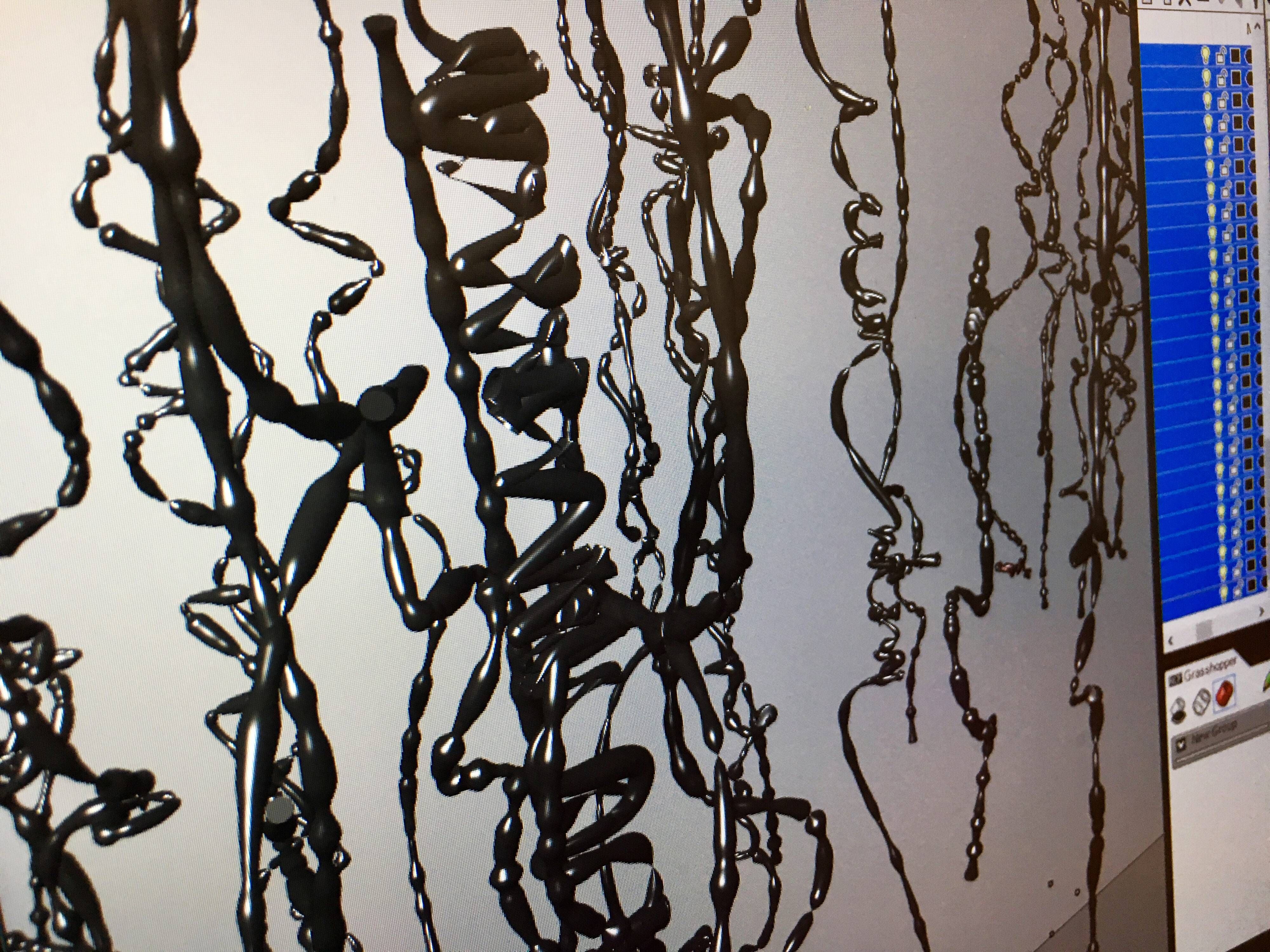
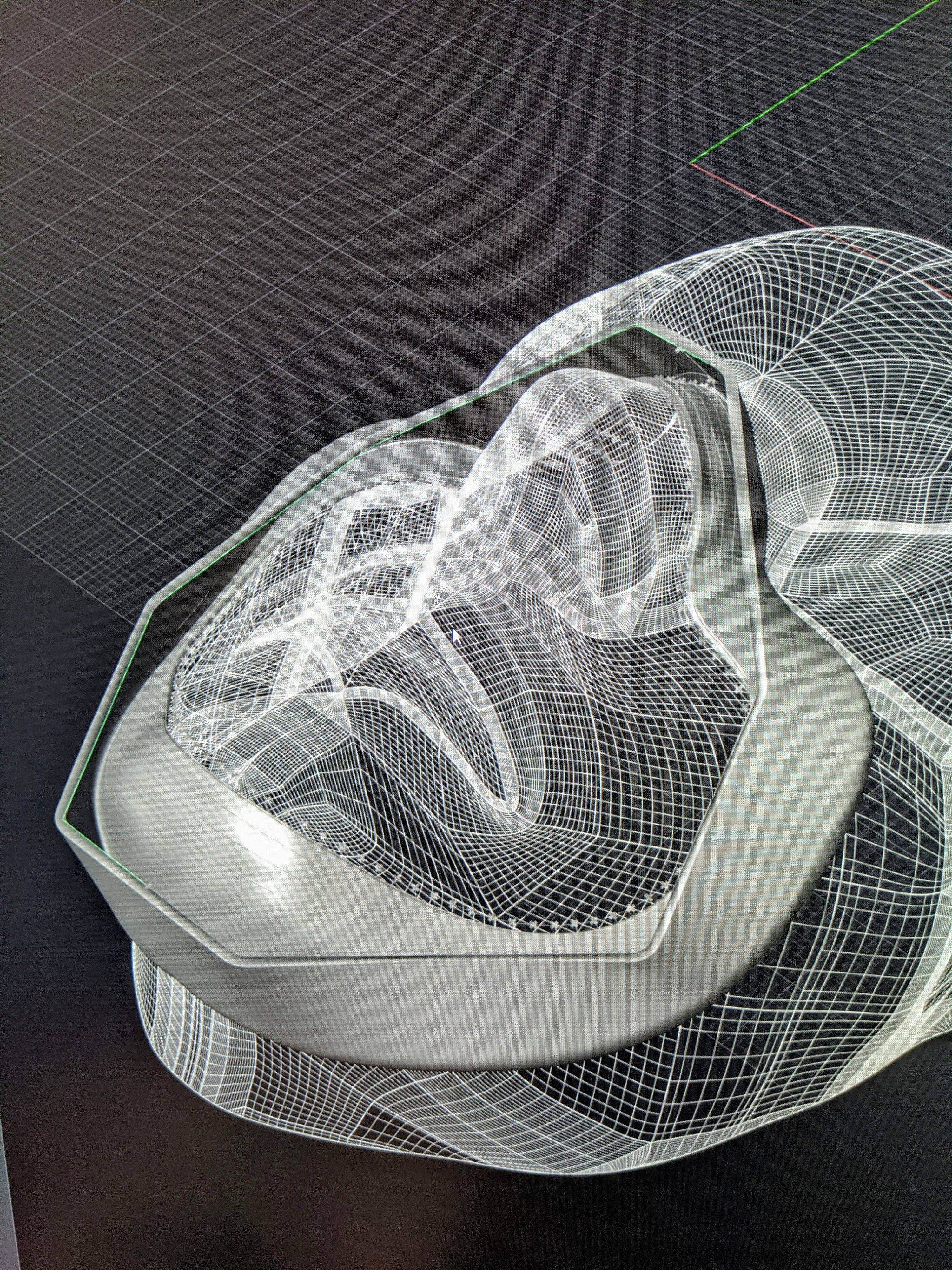
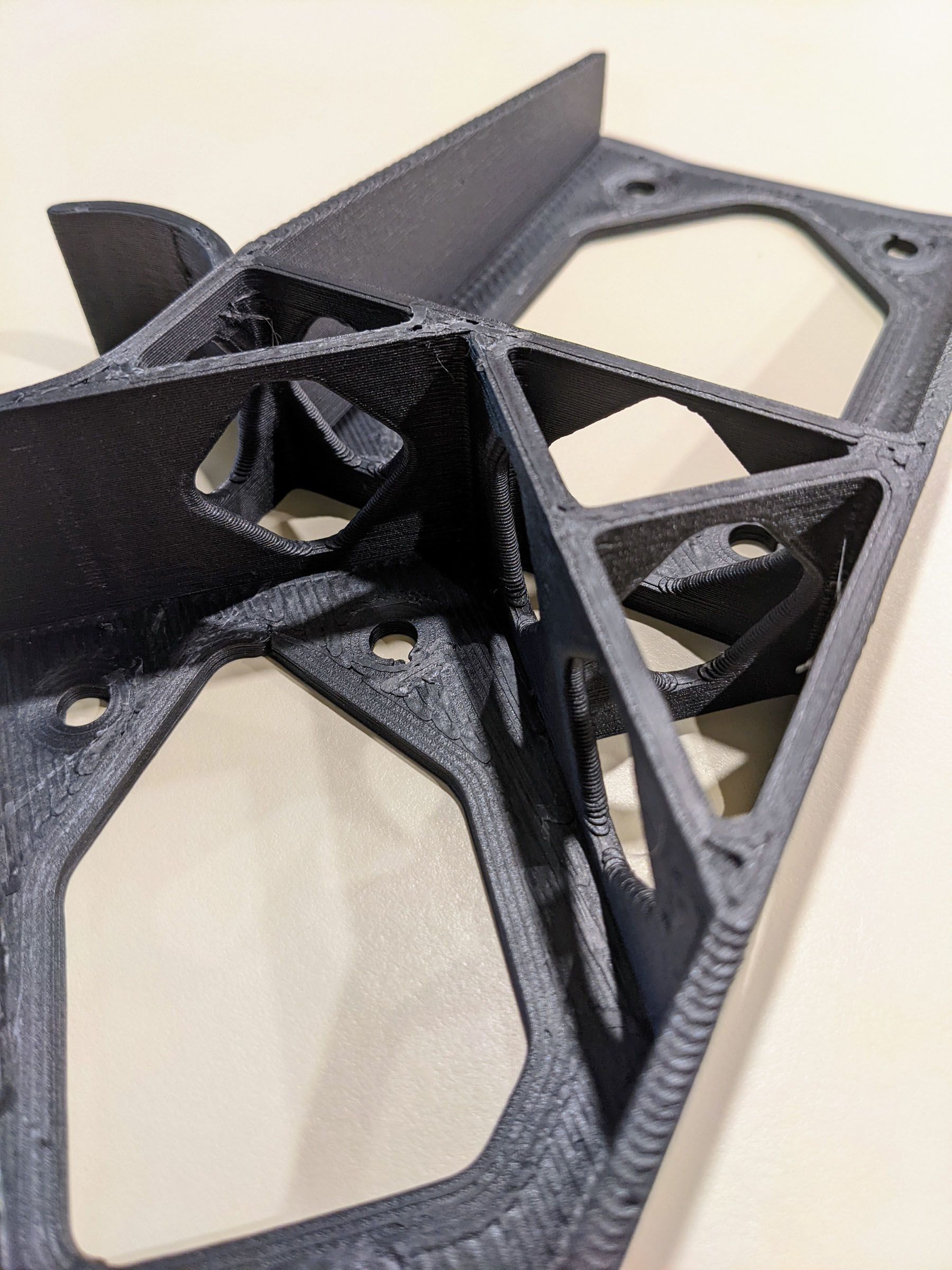
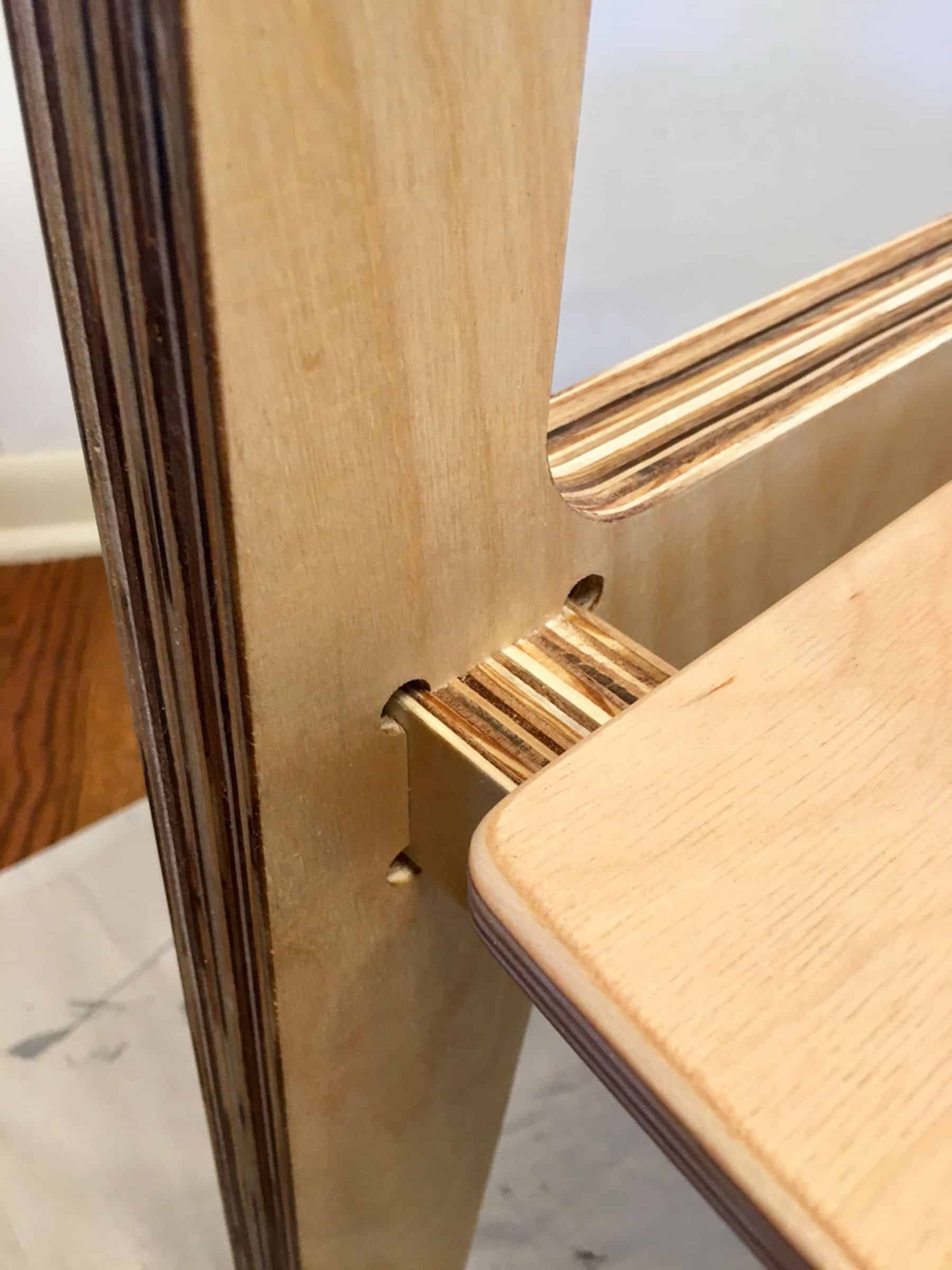
Developed in Rhino and fabricated using RhinoCAM, the chair’s geometry and fabrication logic were fully integrated within a single parametric workflow that linked design exploration directly to the act of making. Each joint was modeled for precise tolerance and calibrated friction-fit assembly, producing an interlocking system that could be fabricated and constructed entirely without adhesives or mechanical fasteners. This approach positioned joinery not as a hidden connector but as a visible expression of geometry and craft. Toolpaths were carefully aligned with the direction of the grain, allowing subtle shifts in orientation to influence both the structural performance and the tactile character of each component. The nesting strategy organized every part with surgical precision, ensuring the seamless translation of digital form into physical assembly while preserving formal continuity and proportion. A concealed feature—a CNC-carved, three-dimensional pattern milled into the underside of the seat—serves as both signature and discovery, a moment of quiet ornament that reveals the potential for beauty and authorship within a tightly disciplined fabrication process.
Structural Logic and Tectonic Detail

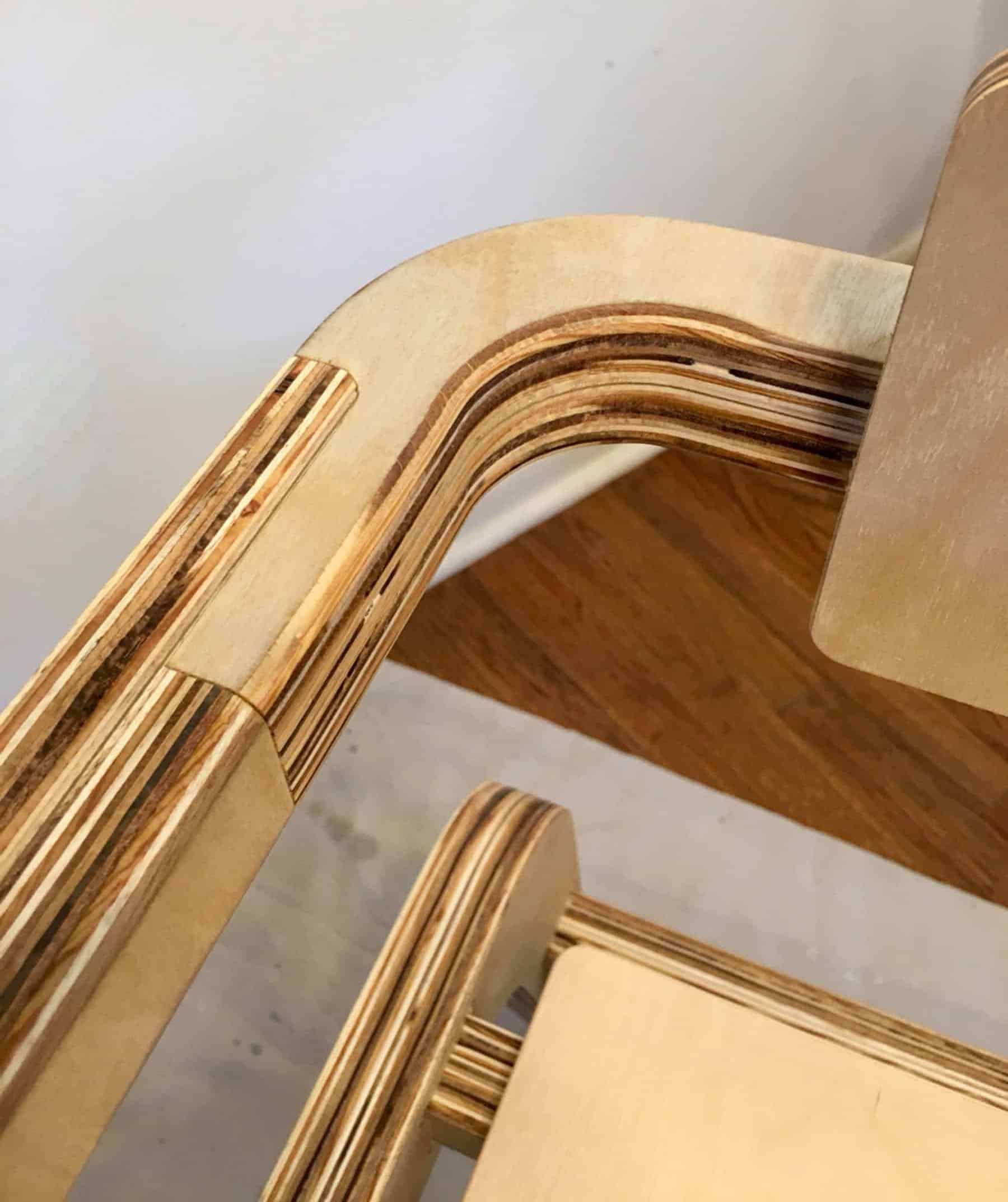
The project investigates how flat material can achieve continuity and curvature through digital control. Each connection negotiates between rigidity and flow, using compound notches and soft radii to simulate the behavior of bent wood without compromising planar fabrication. The result is a hybrid structure that feels monolithic yet remains fully demountable. Every corner and joint is calibrated to reveal the intersection of geometry, grain, and fabrication sequence—a dialogue between mechanical precision and craft intuition.

Material Expression and Reflection

In its final form, Grain Chair presents plywood as a material of elegance rather than economy. The visible stratification of lamination becomes a kind of topography, while the smooth curvature of the milled edges introduces a tactile warmth that contrasts with its digital origin. The project blurs boundaries between object and experiment, furniture and prototype. It embodies a search for integrity between process and outcome, where design precision, fabrication control, and material honesty converge into a singular expression.


Convergence of Craft and Code

Through precedent research and extensive exploration of flat-stock material applications, Grain Chair represents a personal investigation into how digital fabrication can evolve traditional understandings of craft. The project reframes plywood as a medium capable of both efficiency and refinement, transforming a material often associated with utility into one of precision and invention. By merging computational design, toolpath logic, and hands-on fabrication, the chair demonstrates how digital workflows can yield results that are not only technically rigorous but also materially expressive.

The piece embodies an inquiry into the continuum between drawing, modeling, and making, where each stage informs and refines the next. Grain Chair reveals that the intelligence of fabrication lies not only in efficiency or accuracy but in the dialogue between code and material behavior, the way design intent adapts to the resistance and rhythm of the tool. What begins as a digital construct becomes a tactile artifact that records its own process through surface, grain, and joint. As a result, the project extends beyond furniture design, positioning itself as a study in architectural thinking at the scale of the hand: an exploration of how computation, structure, and craft can converge to produce new forms of spatial and material understanding.

© Ken Marold USA, Inc. All rights reserved.