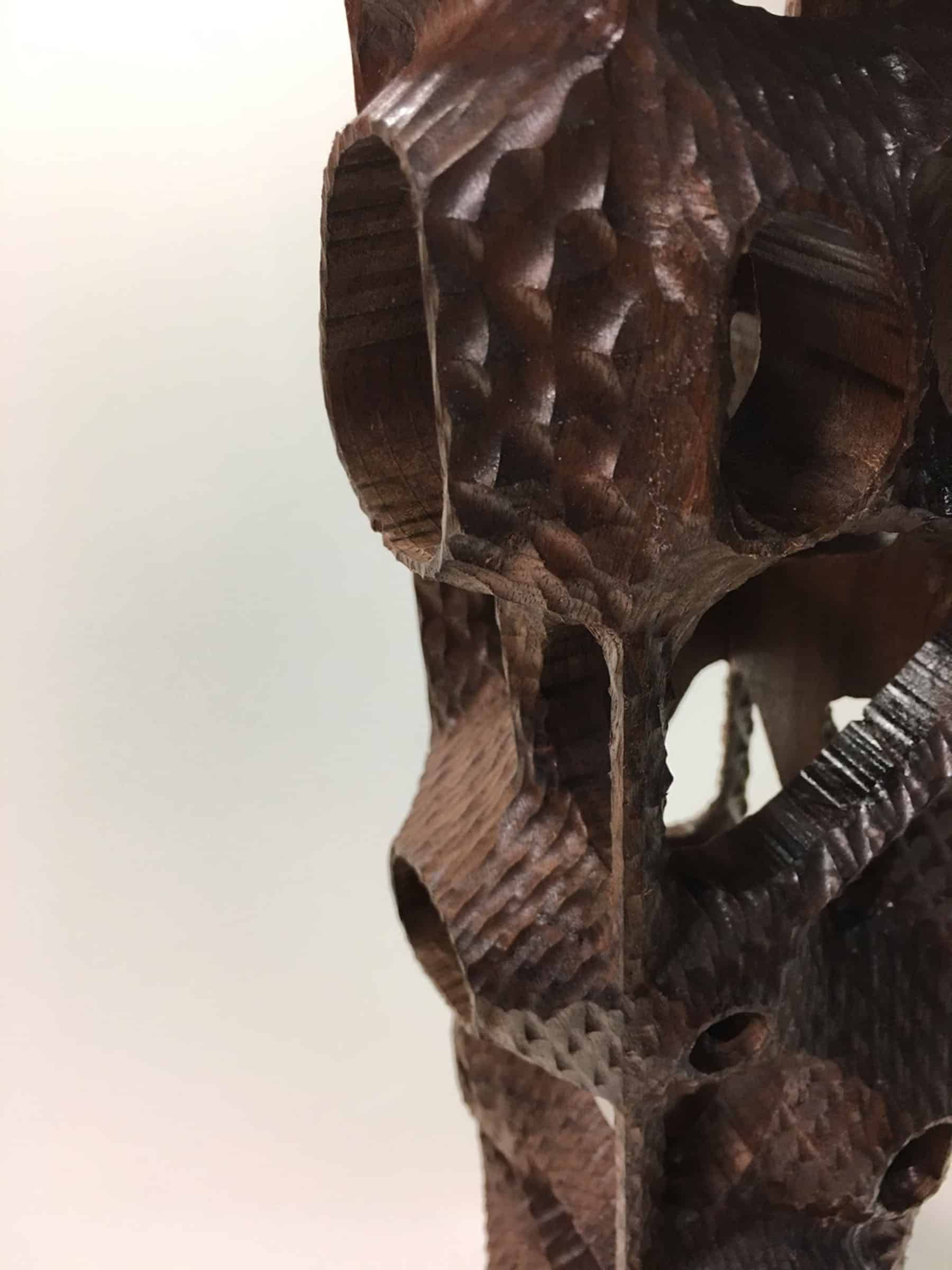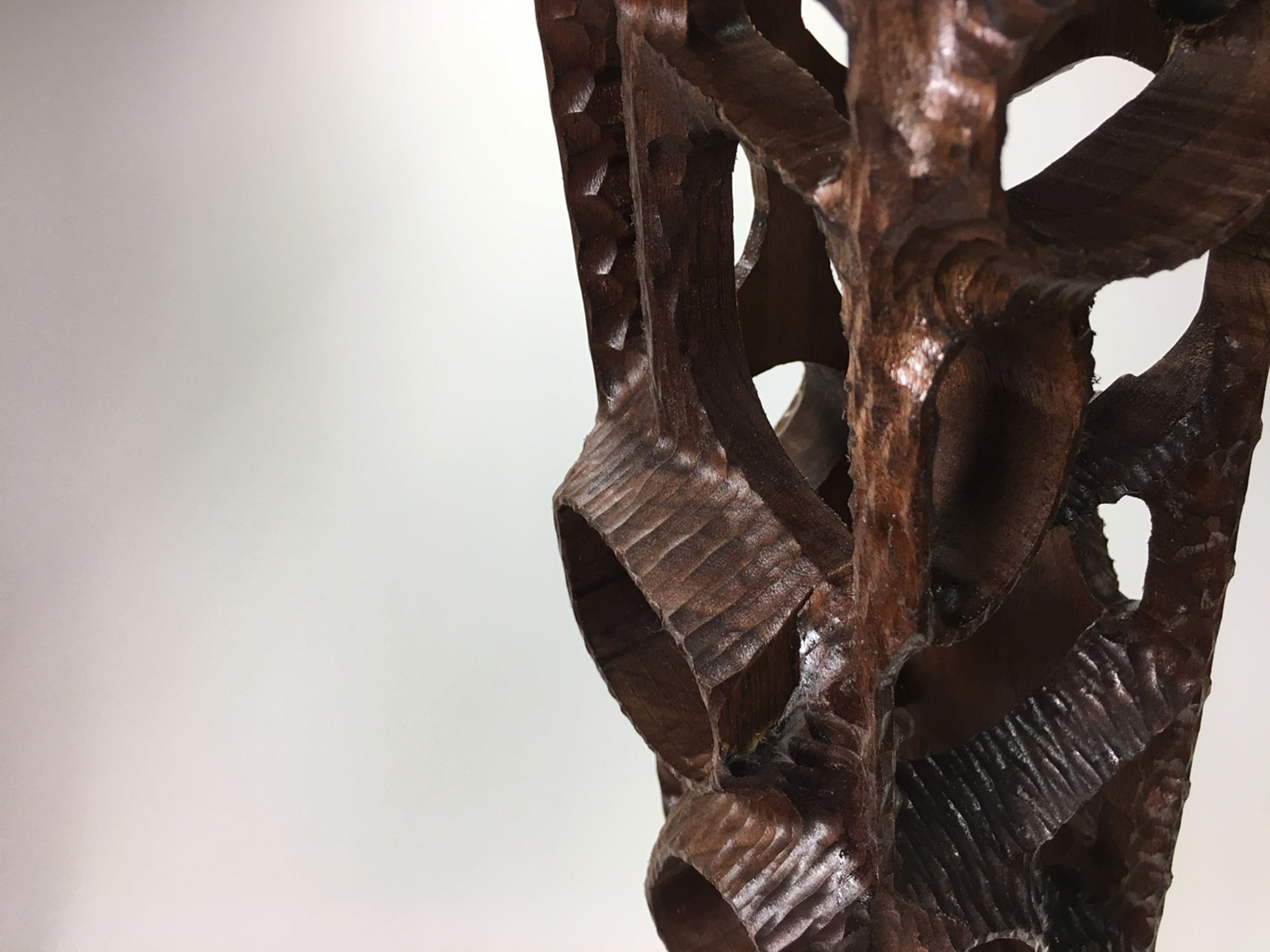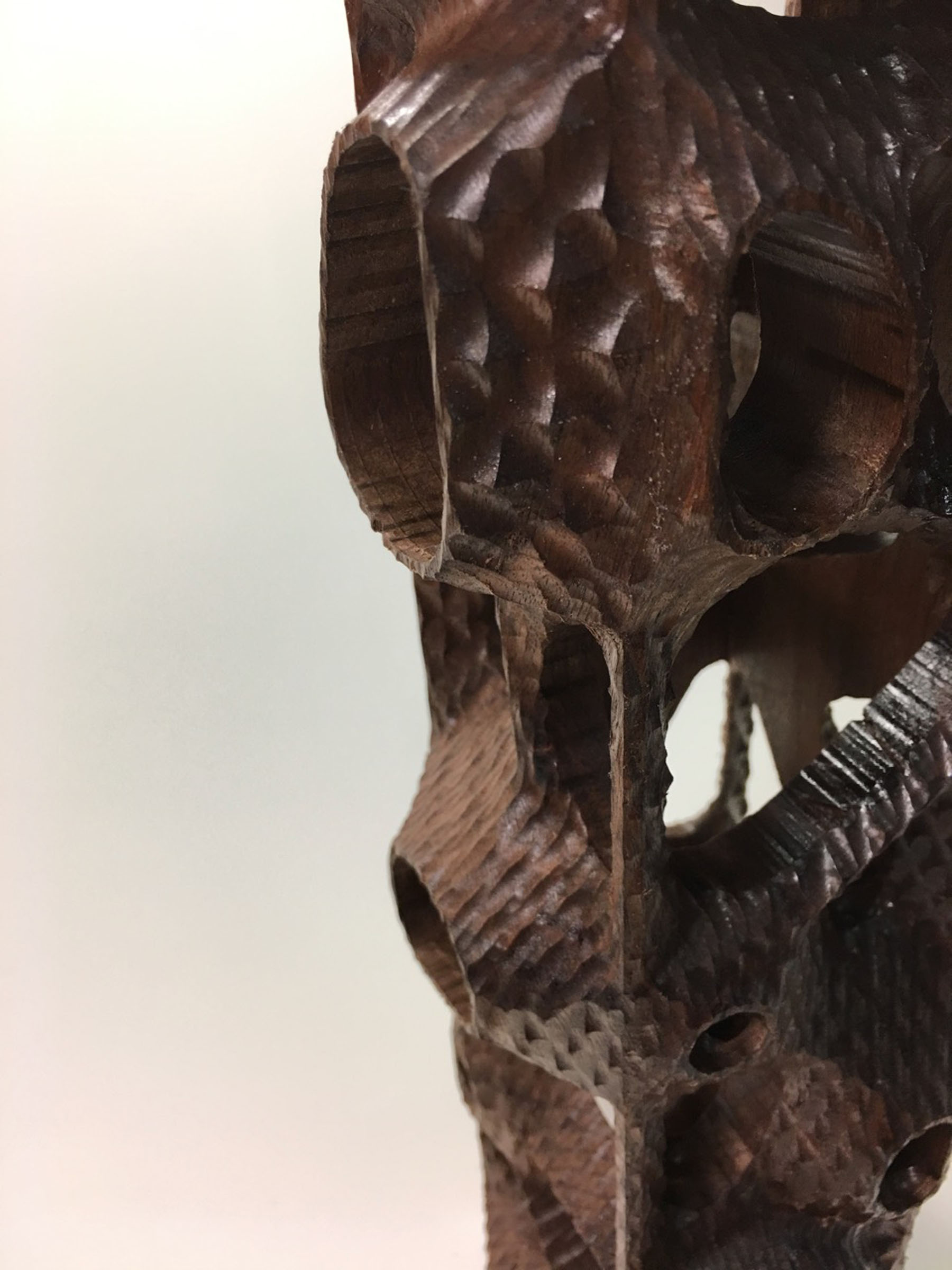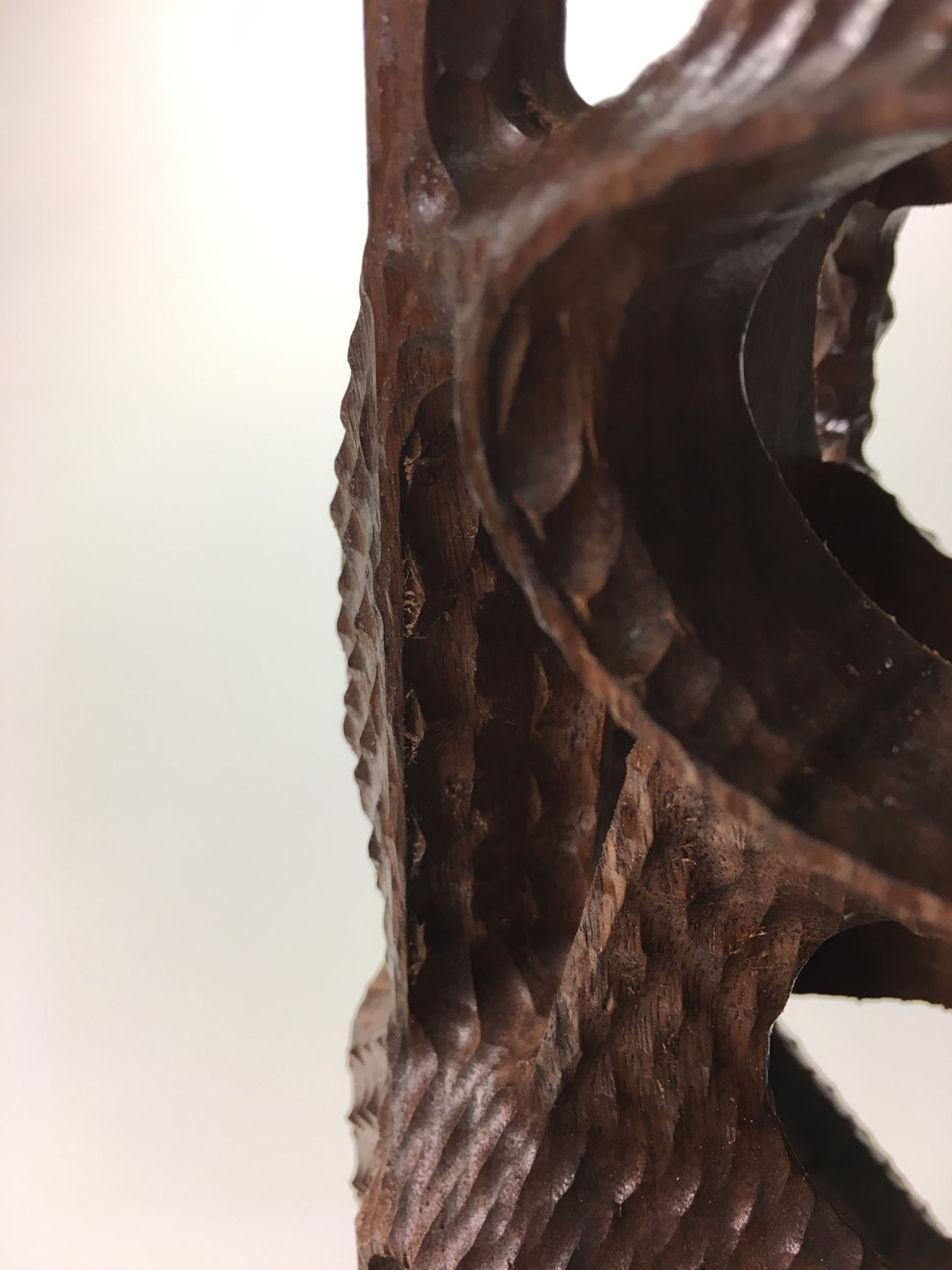
Wichita Mobile Clinic
Wichita Mobile Clinic
Anadarko, OK
Construction Completed: May 2021
Developed in collaboration with the Wichita and Affiliated Tribes, based in Anadarko, Oklahoma, this project reimagined healthcare infrastructure through cultural precedent and contemporary fabrication. Conceived during the height of the COVID-19 pandemic, the Wichita Mobile Clinic was designed as a rapidly deployable unit to expand vaccination access and essential medical services across rural and tribal regions of Oklahoma. The initiative sought to strengthen healthcare equity while honoring Wichita traditions of building, community, and stewardship of land.
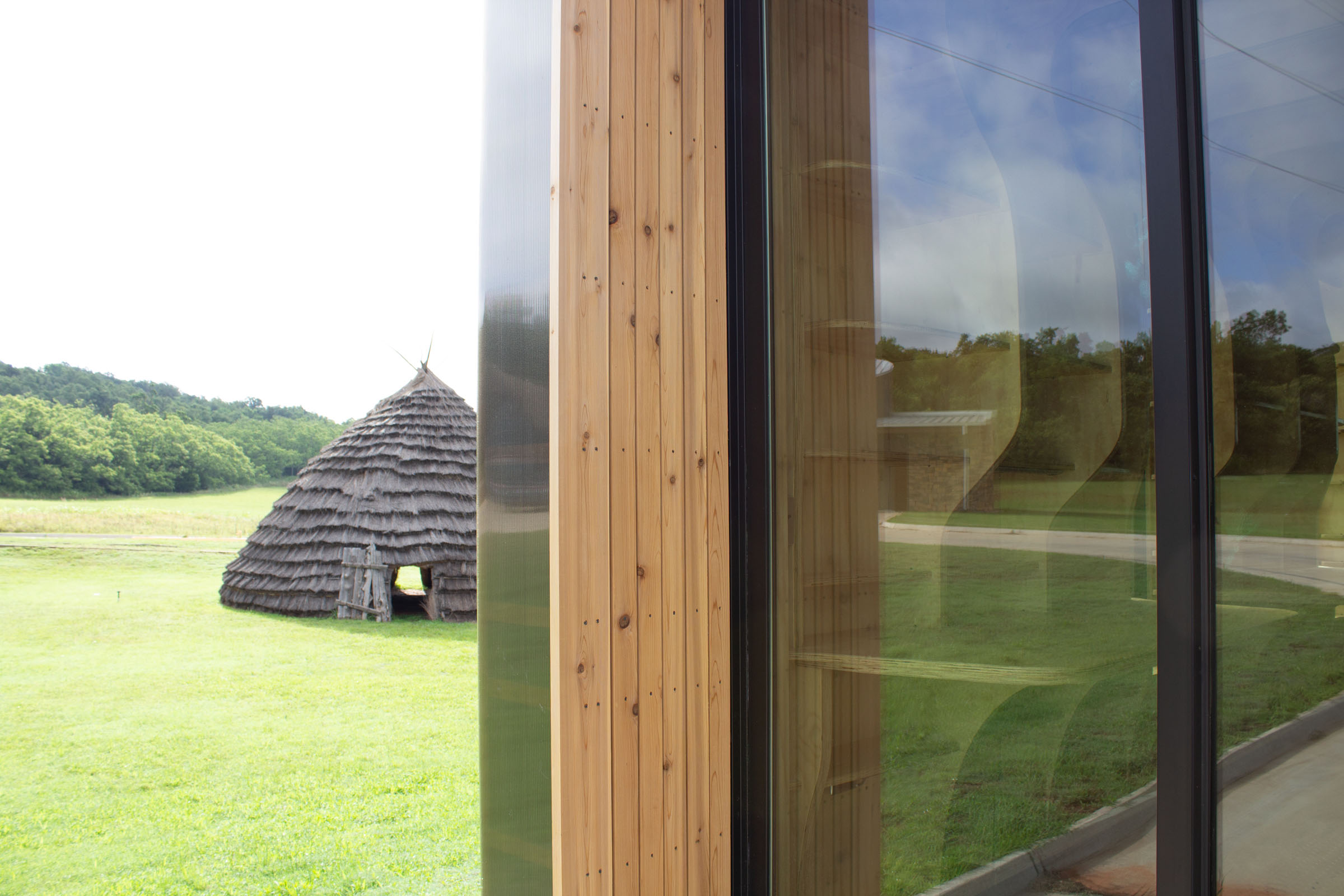
Central to the design study was the Wichita grass house—a domed shelter of cedar, willow, and reed that embodies systemic clarity, resilience, and symbolic connection to place. Inspired by the historic form, the project adapted the patterns and assembly logic of the grass house’s layered construction into a mobile clinic that merged indigenous knowledge with digital fabrication. As a proof of concept, the design team developed the project’s parametric logic, fabrication sequences, and assembly strategies in close collaboration with tribal leaders and elders, supported by student participation in prototyping and testing. More than a functional unit of care, the Wichita Mobile Clinic demonstrated how cultural wisdom and digital tools could converge to produce a responsive healthcare infrastructure while modeling a cross-disciplinary pedagogy that linked design and construction at the University of Oklahoma’s Gibbs College of Architecture.
Wichita Mobile Clinic
Anadarko, OK
Construction Completed: May 2021
Project Overview
The Wichita Mobile Clinic was conceived during the height of the COVID-19 pandemic as part of an applied research initiative investigating the intersection of digital fabrication, modular construction, and community-based healthcare design. Developed in collaboration with the Wichita and Affiliated Tribes, the project produced a rapidly deployable healthcare unit to deliver vaccination access and essential medical services to rural and tribal communities in Oklahoma. Beyond its immediate purpose, the work served as a design research prototype exploring how computational processes and cultural precedent could converge to create responsive, adaptable architecture.
All design, digital modeling, and fabrication were executed within the Gibbs College of Architecture’s digital fabrication lab as part of ongoing research into parametric systems and modular assemblies. Once the prefabricated components were completed, Construction Science students performed the on-site assembly and finishing, developing coordination and sequencing skills through collaboration with fabrication research. This workflow established a hybrid model that united precision-based digital research with construction education in the field, creating a precedent for future interdisciplinary design-build pedagogy.
Cultural and Structural Precedent
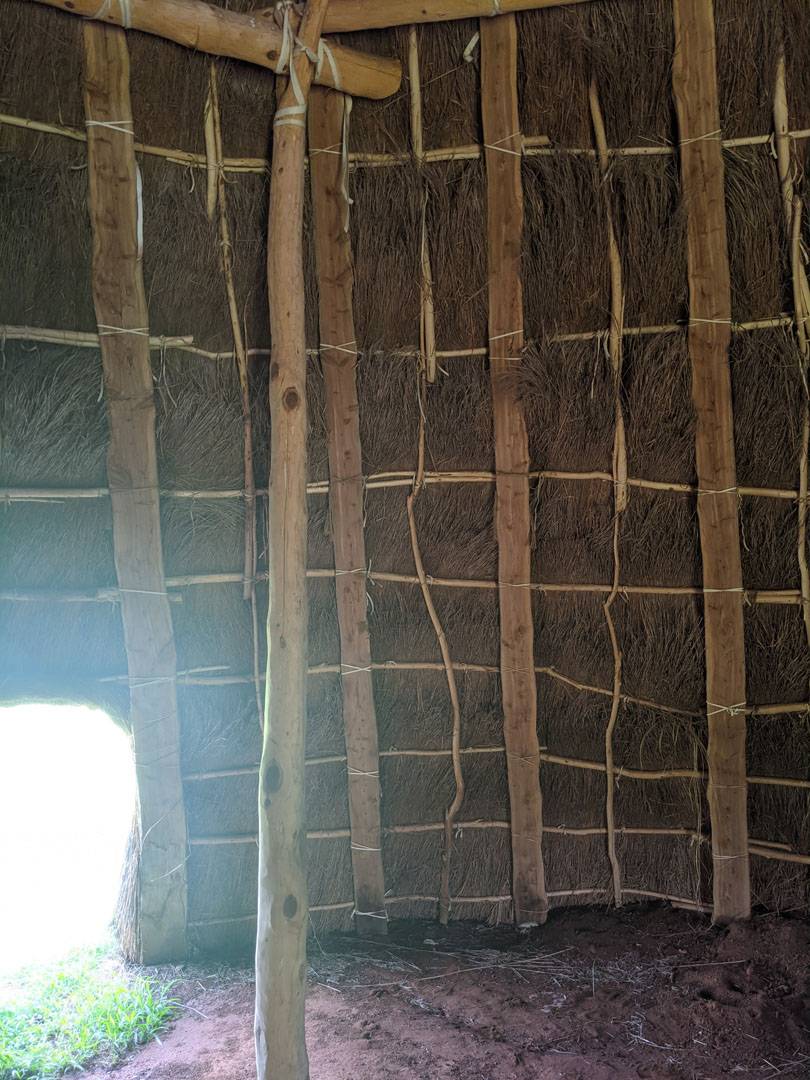
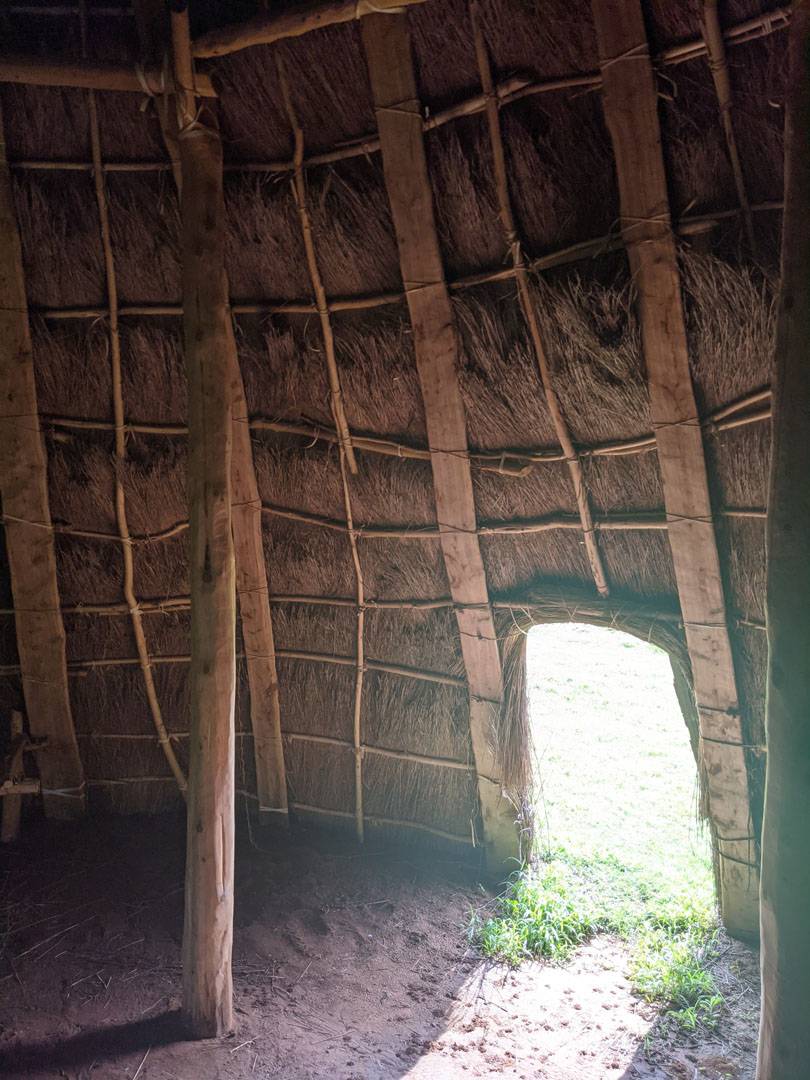
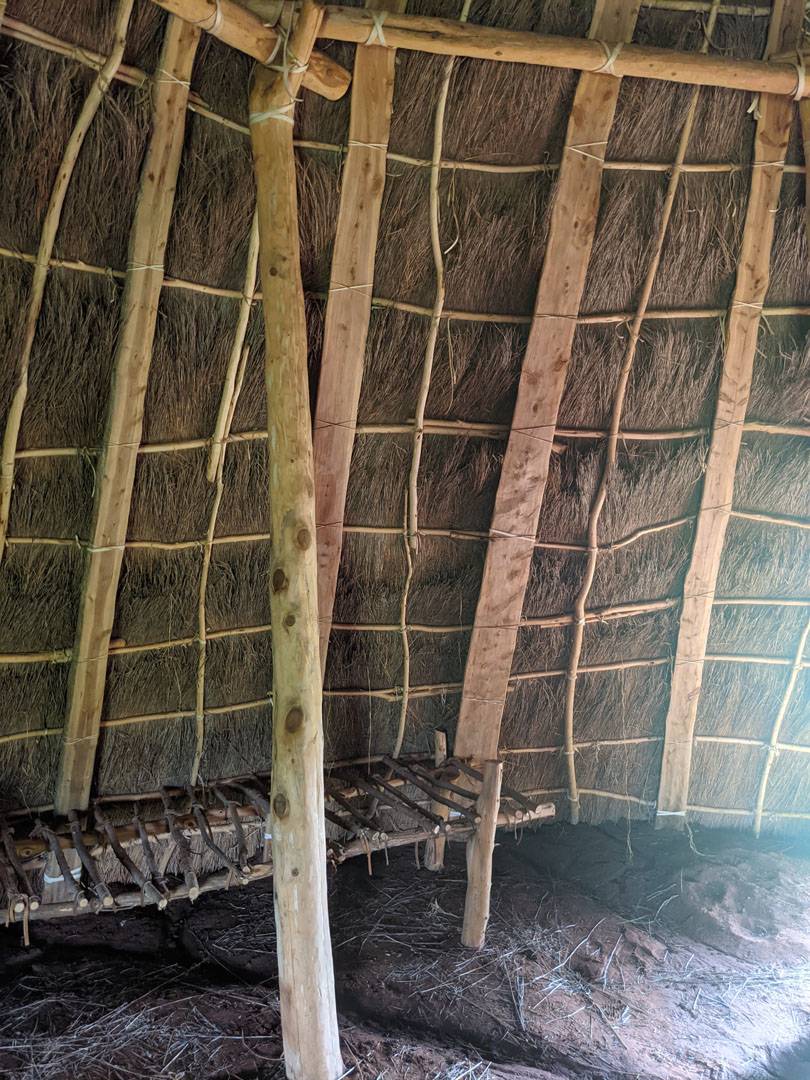
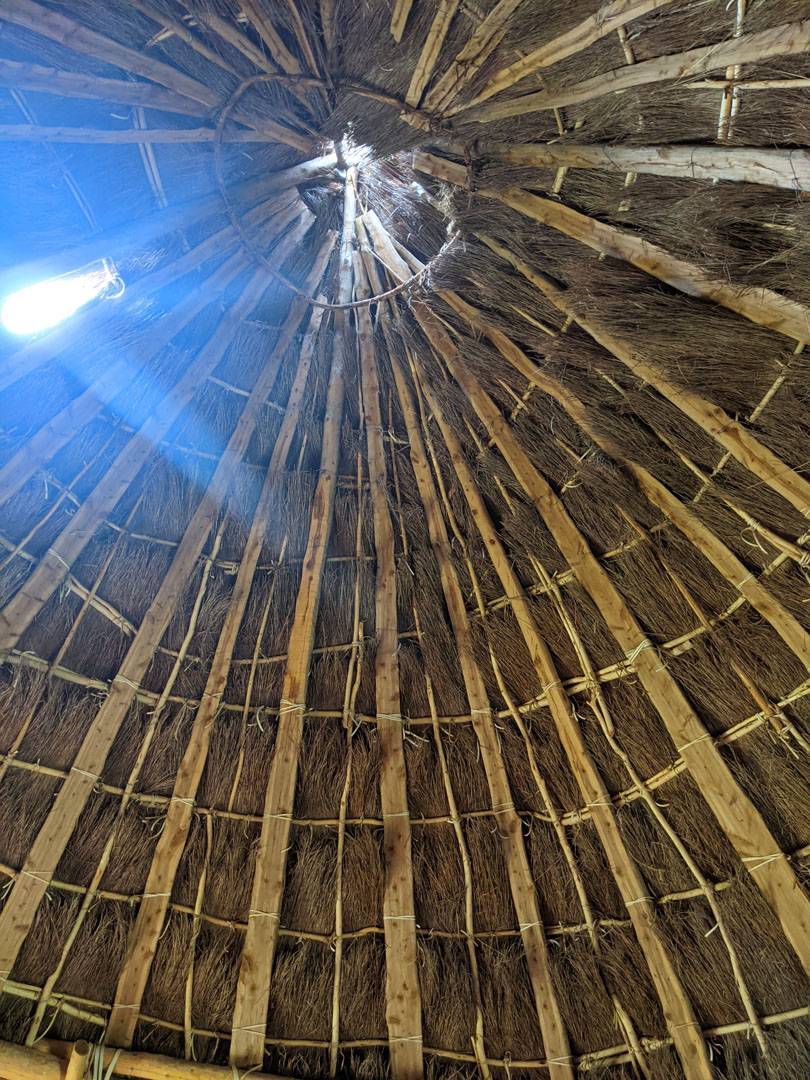
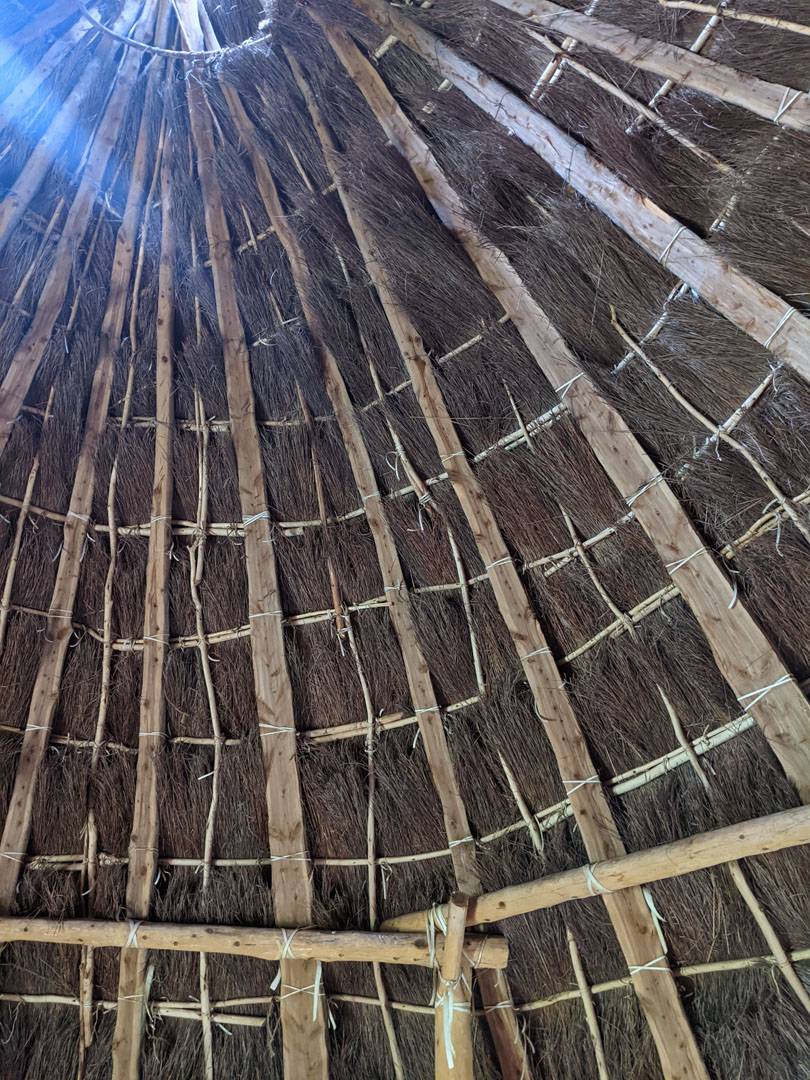
The Wichita grass house—a domed, ribbed structure formed from a sequence of vertical stakes, horizontal poles, and lattice weaving—served as both structural and cultural precedent. The project reinterpreted this assembly logic through a CNC-fabricated plywood system, translating the layered, interdependent construction of the traditional grass house into a digitally modeled and prefabricated framework. The result preserved the Wichita tradition’s systemic order and communal assembly process while extending it into a modern context through digital precision and modular adaptability.
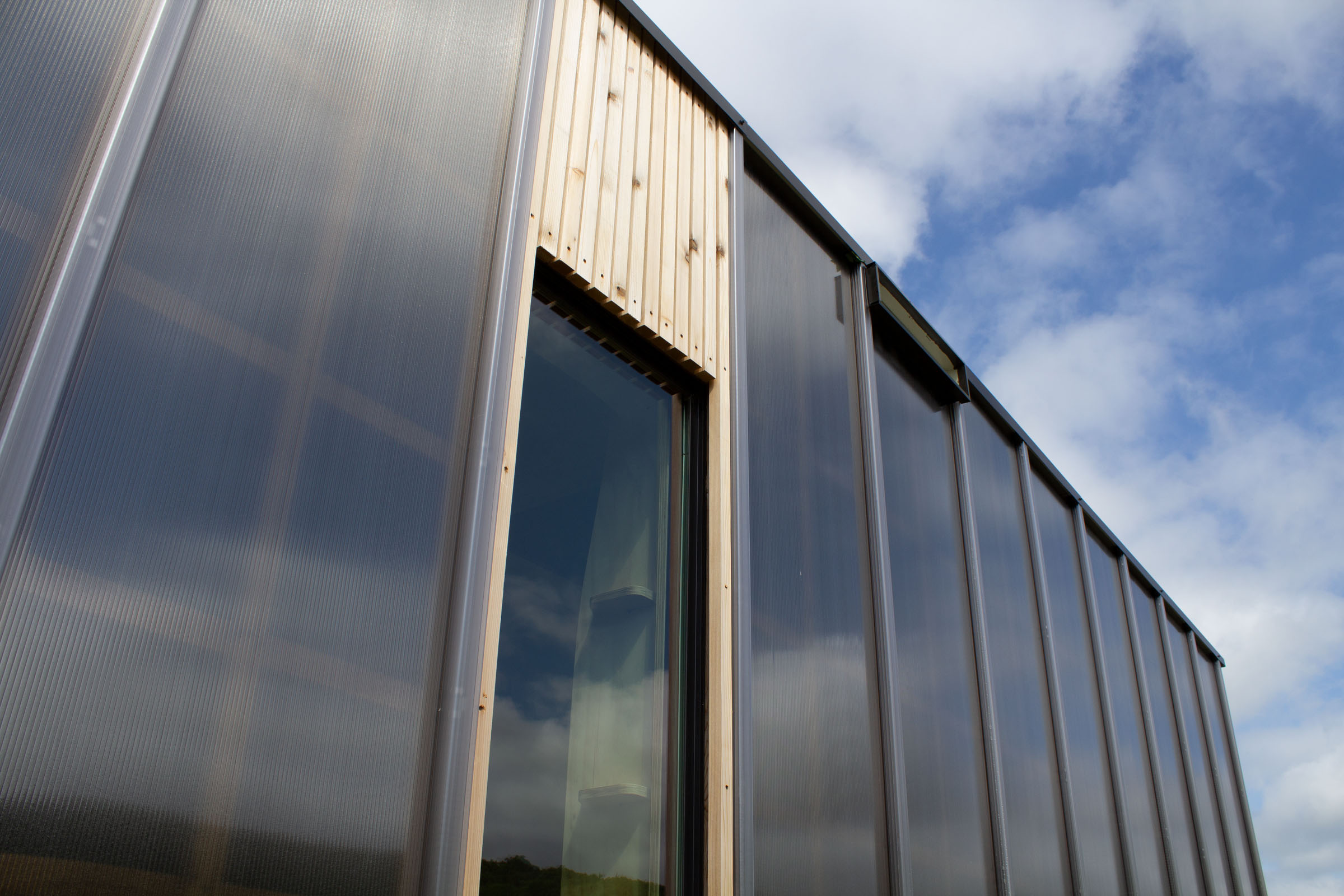
A primary design objective was to maintain the logical construction order inherent in the traditional Wichita building method. The project followed this sequence—erecting primary ribs first, then weaving the secondary elements to complete the enclosure. This rational progression was recast in a digital model where each structural layer stabilized the next, producing a holistic and fully encapsulating form. Openings were calibrated within this order, aligning with the rib pattern to modulate light and maintain continuity. The use of translucent cladding across select window areas diffused daylight and reinforced the rhythmic interplay of structure, surface, and illumination found in the original grass house.
-
PXL_20210630_145527425
-
PXL_20210630_145517767
-
PXL_20210630_145632185
-
PXL_20210630_145613491
-
PXL_20210630_145623169
Historic Wichita grass house interior, showing the ribbed assembly of cedar and willow that informed the clinic’s digital reinterpretation.

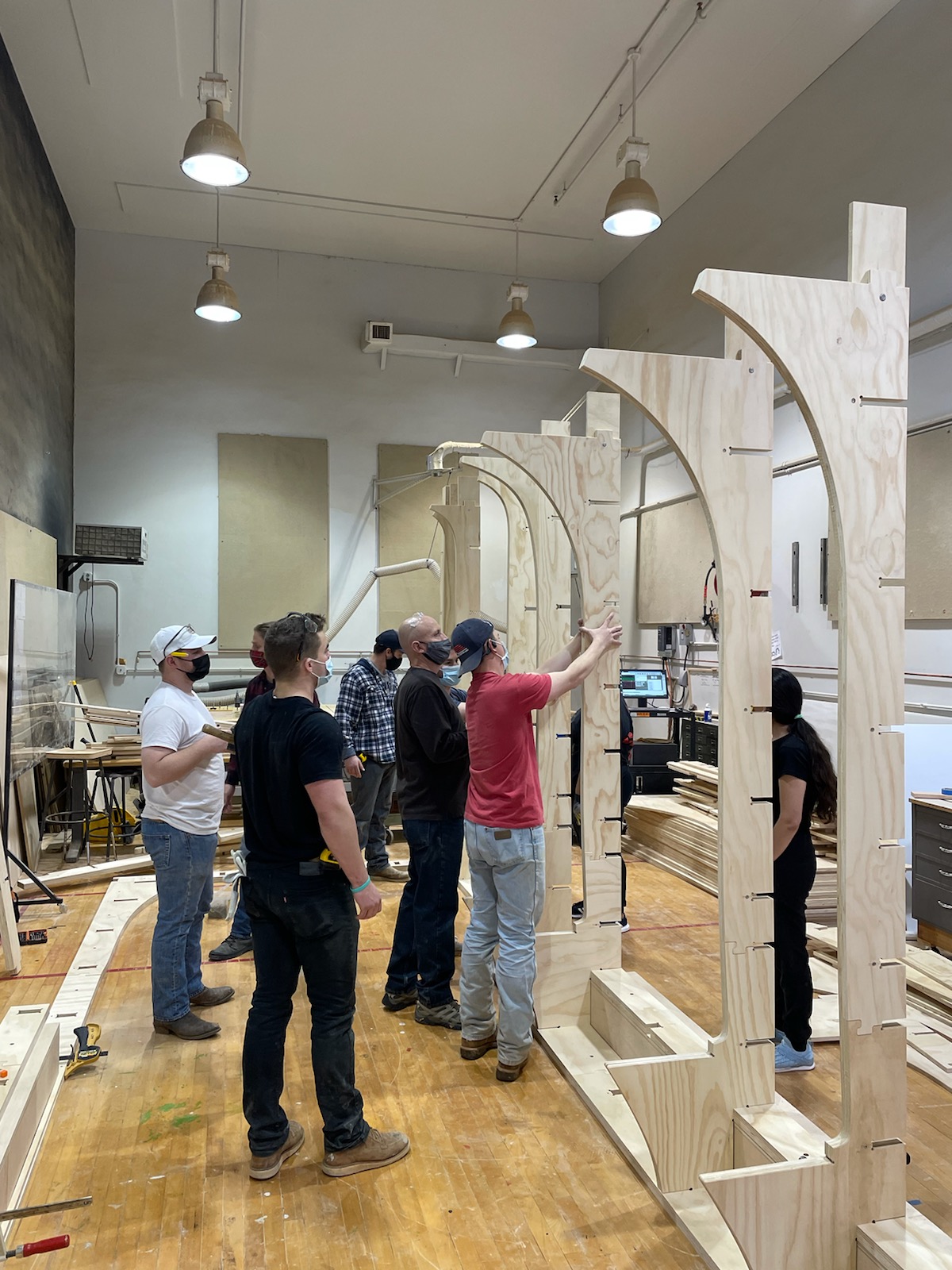
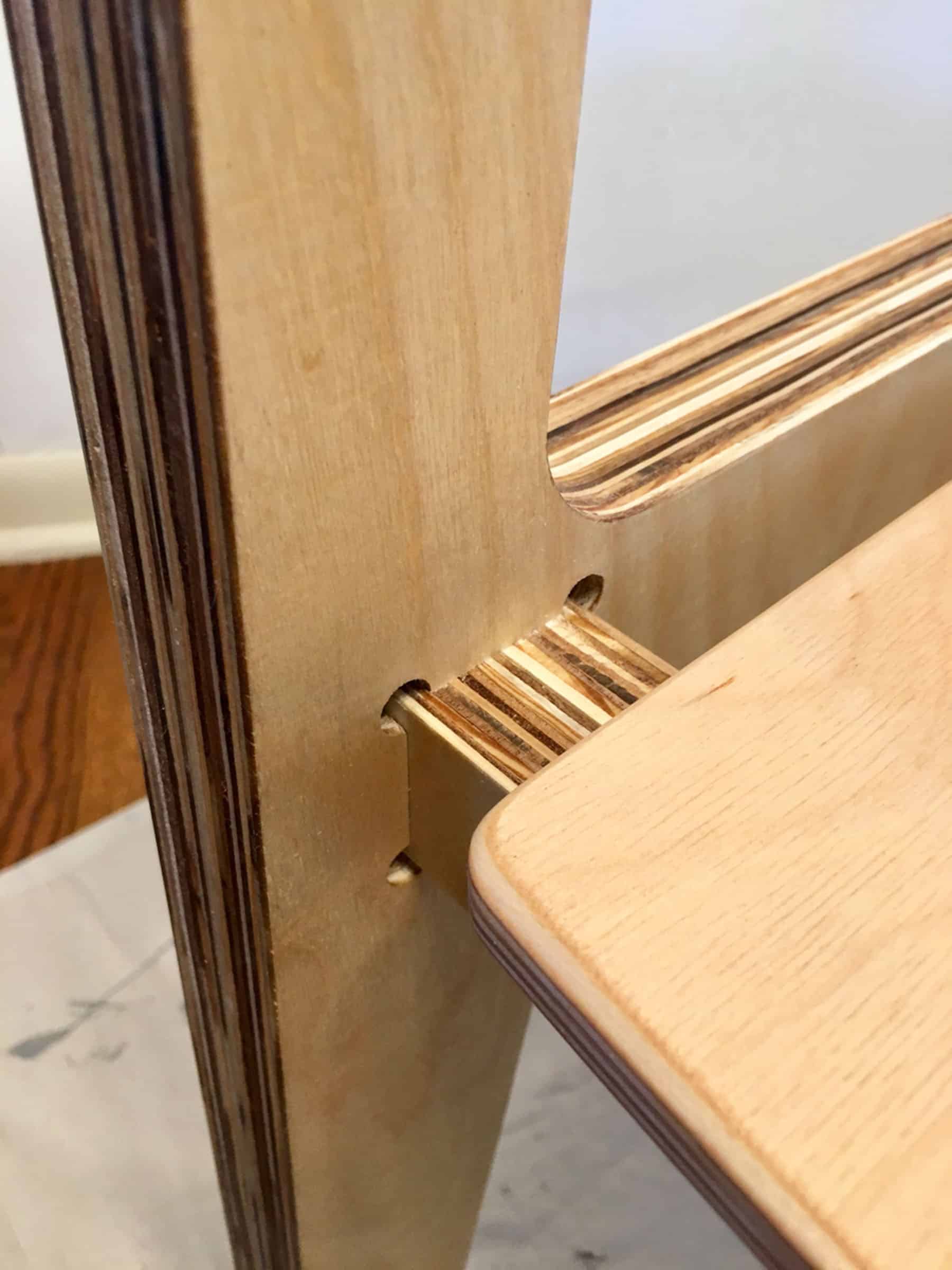
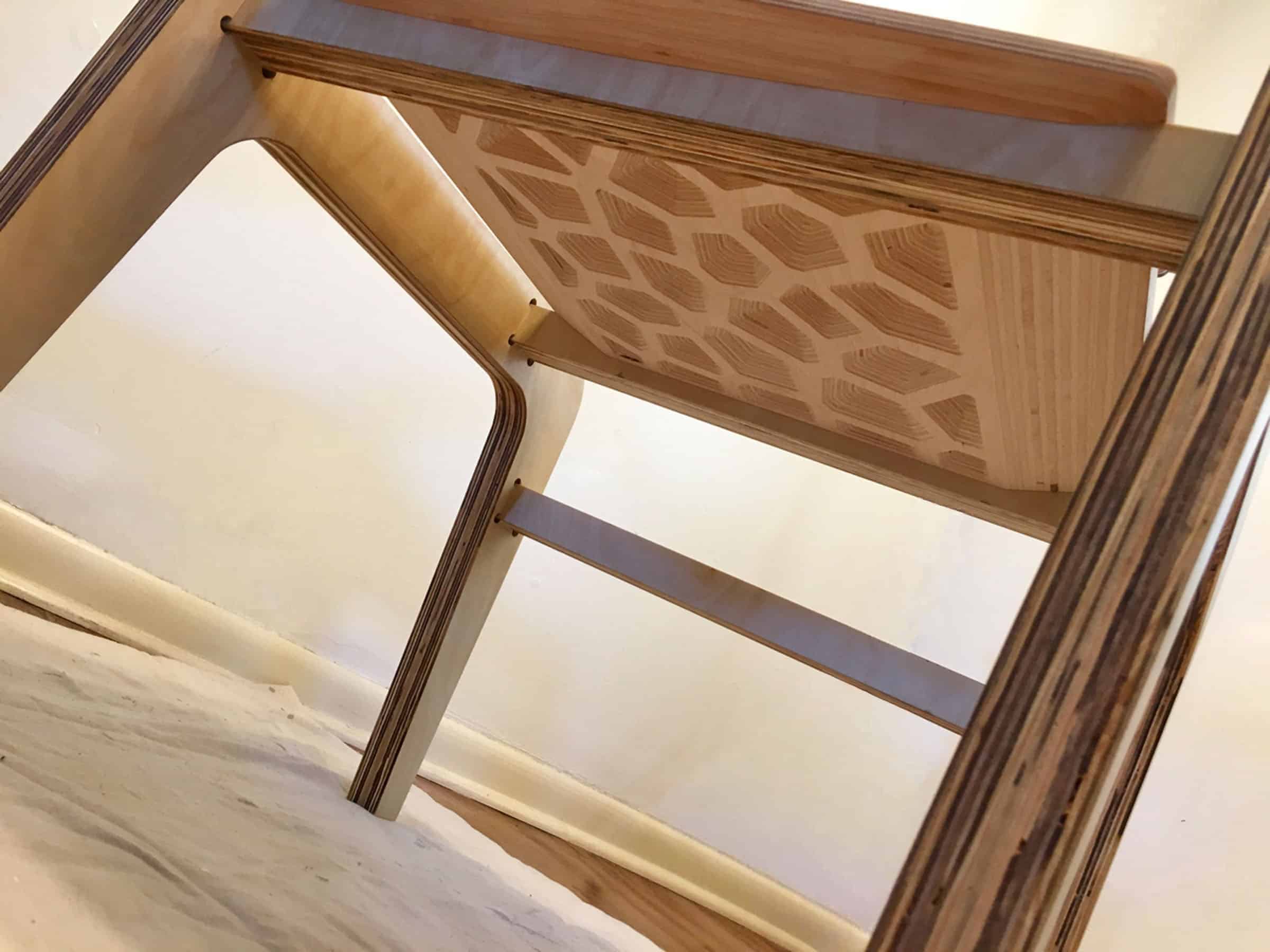
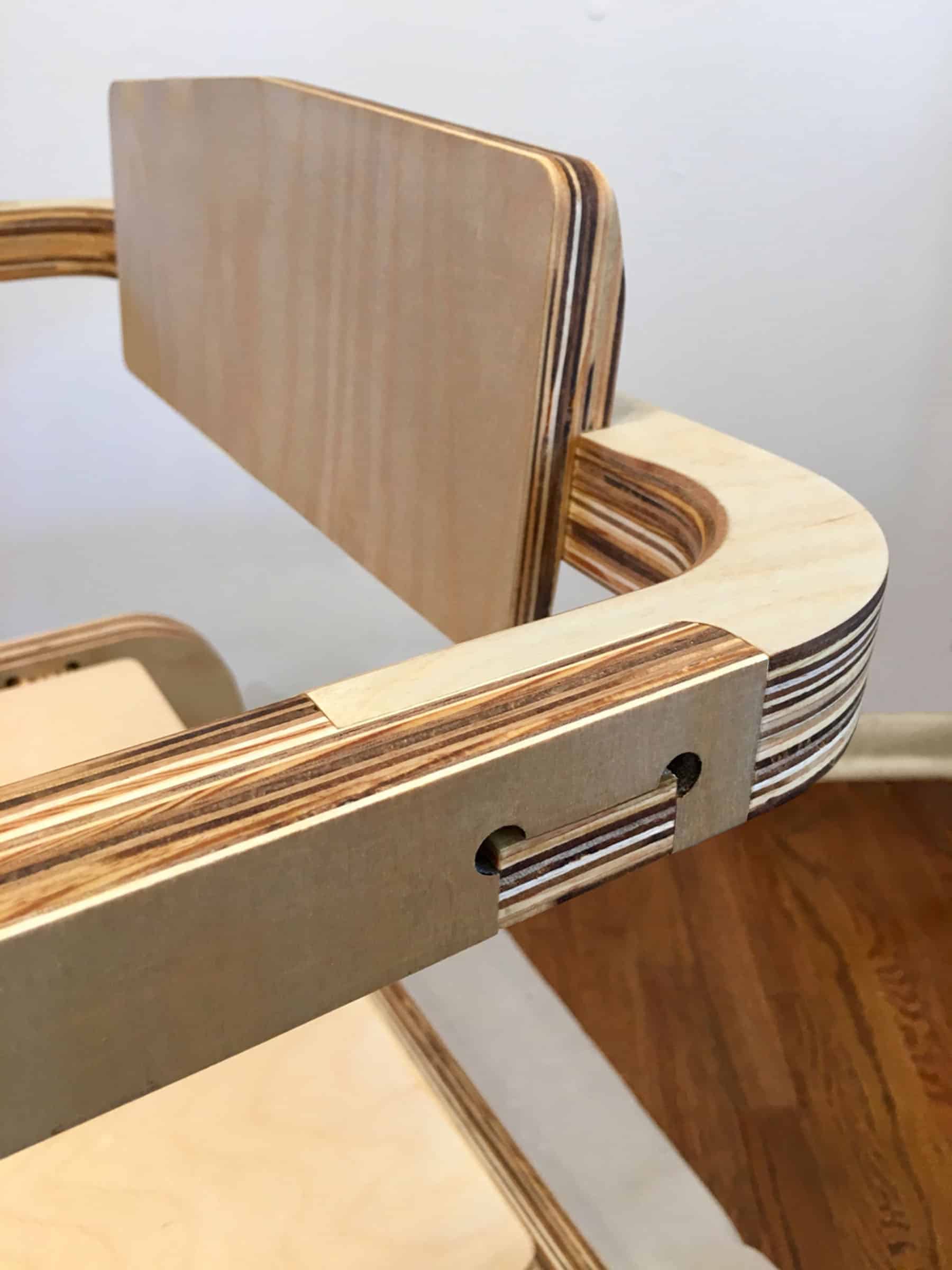
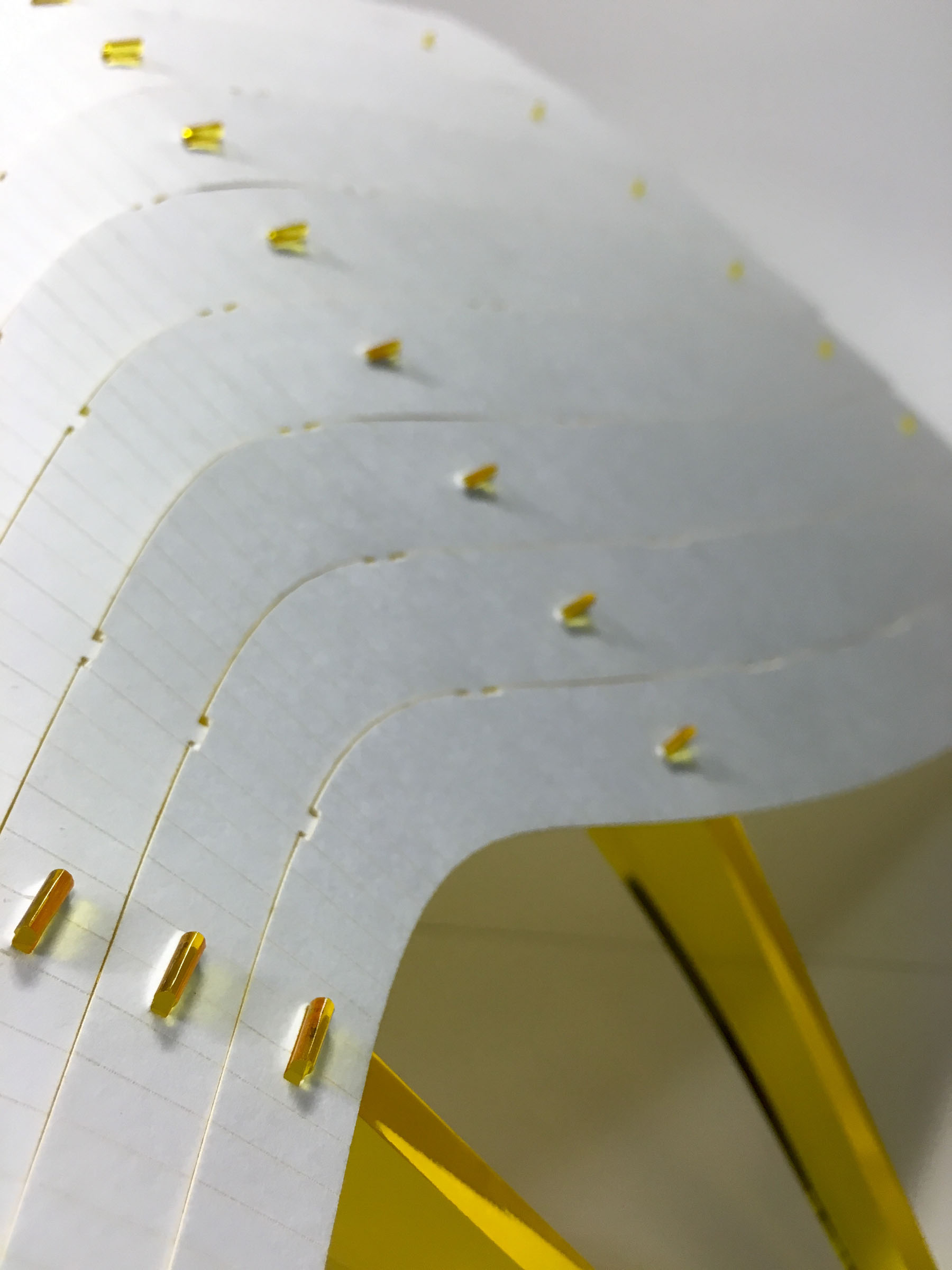
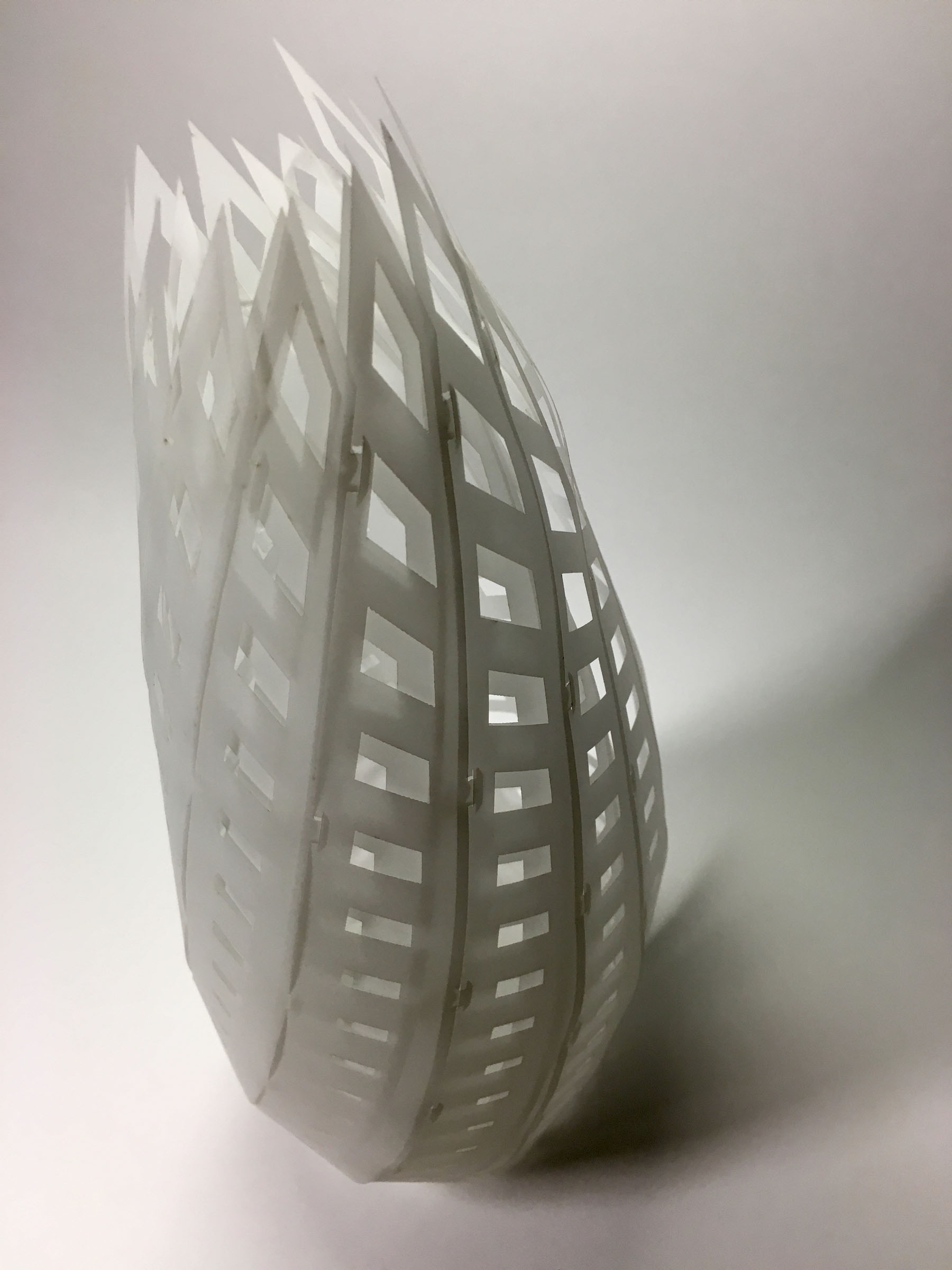
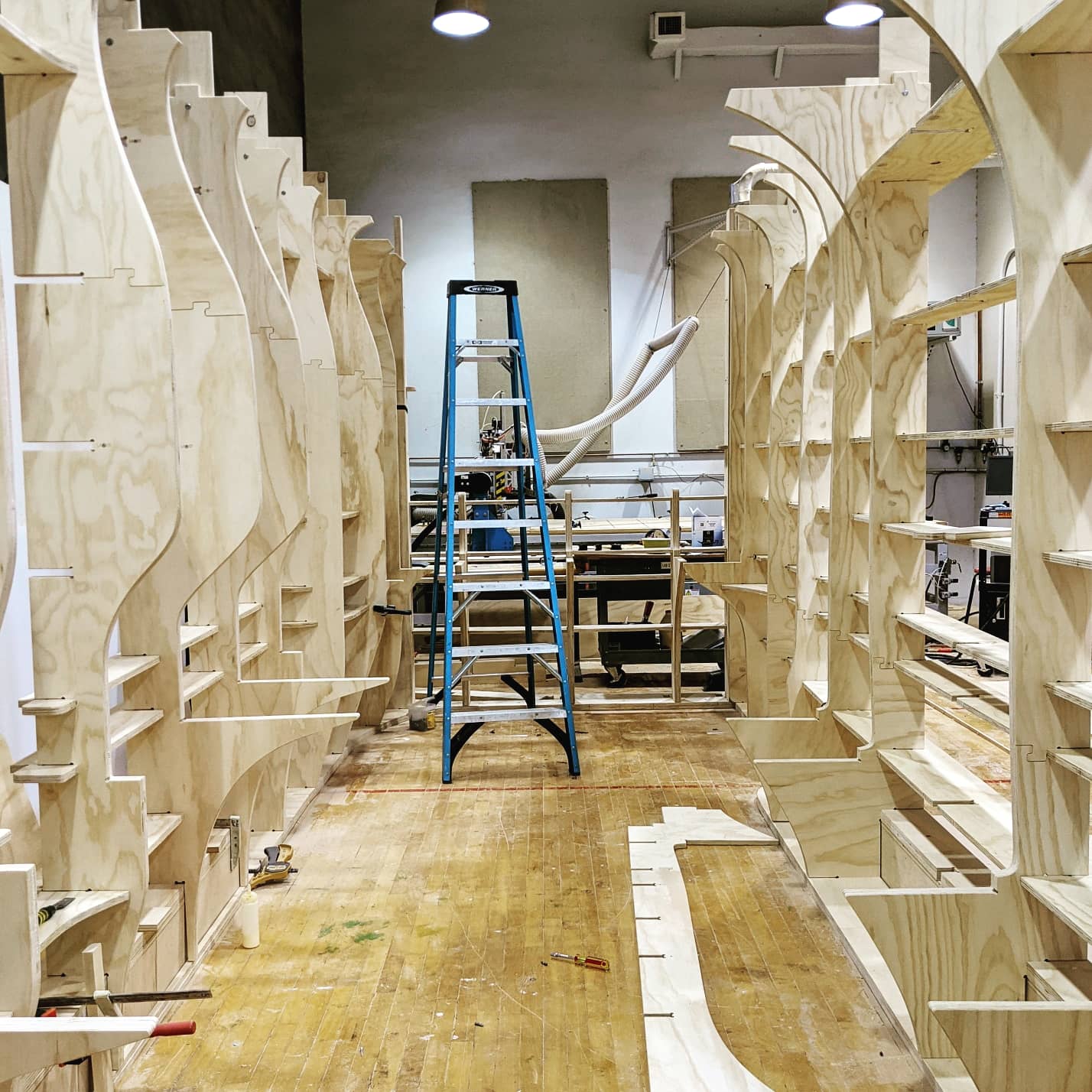
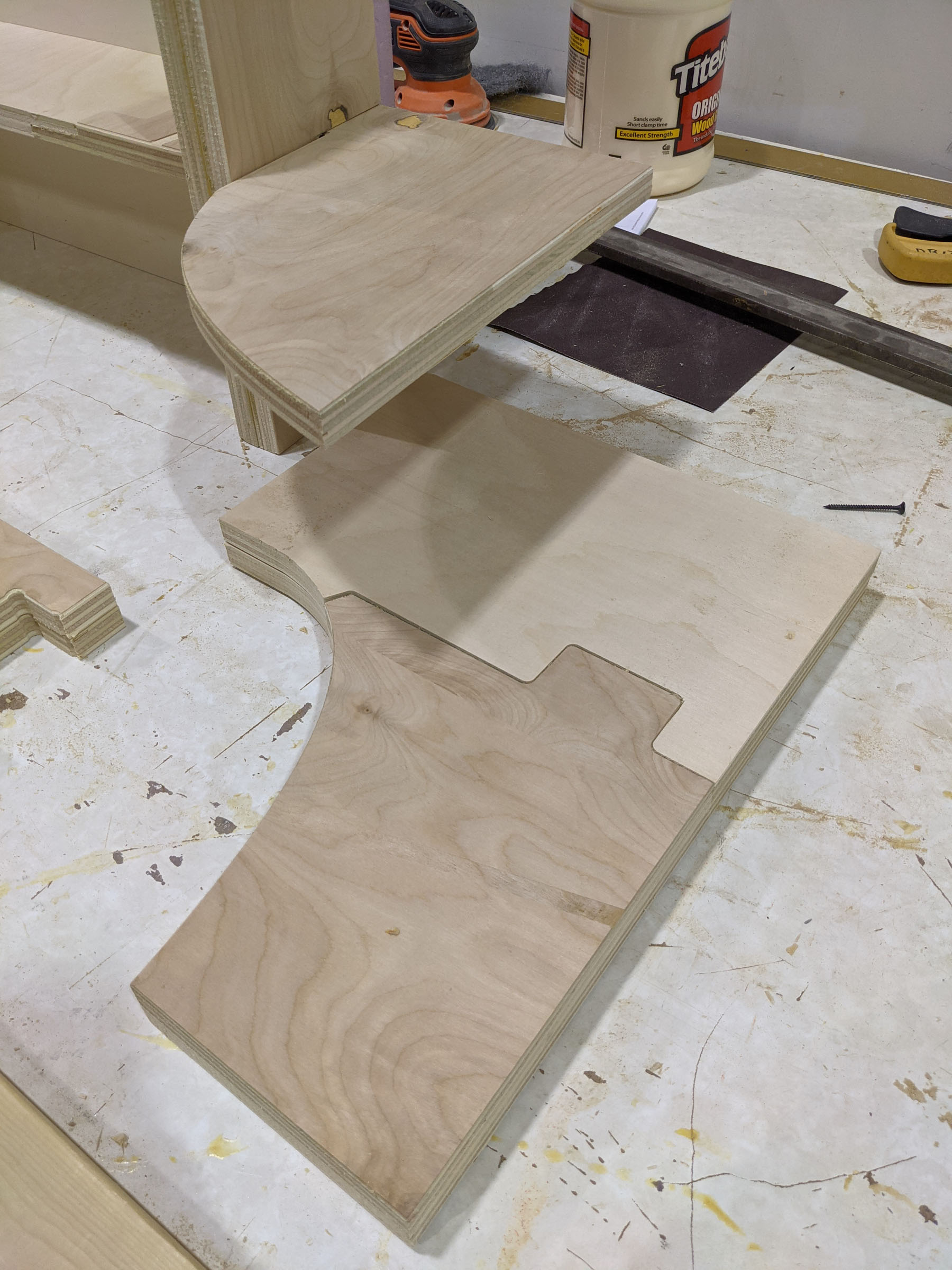
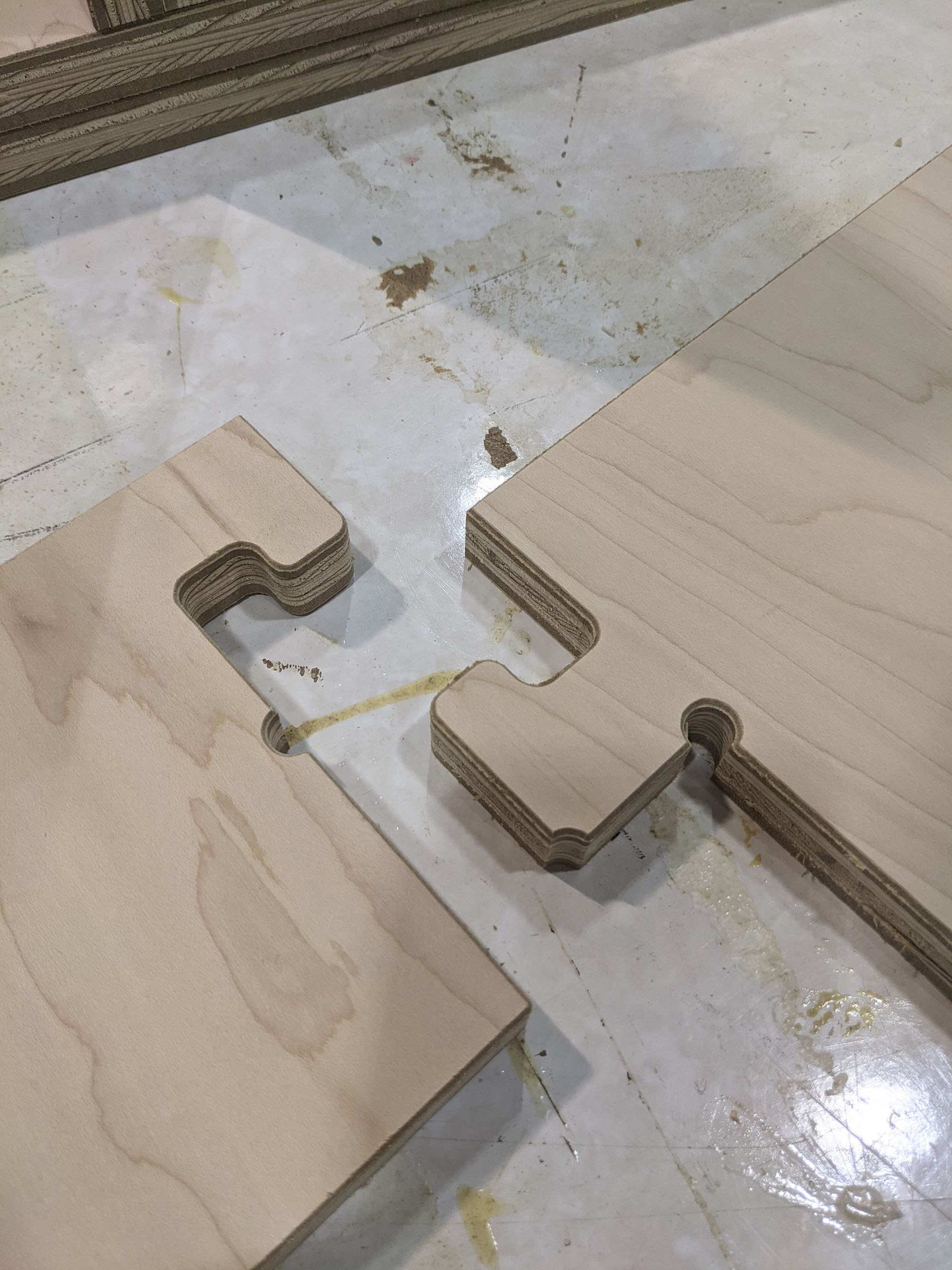
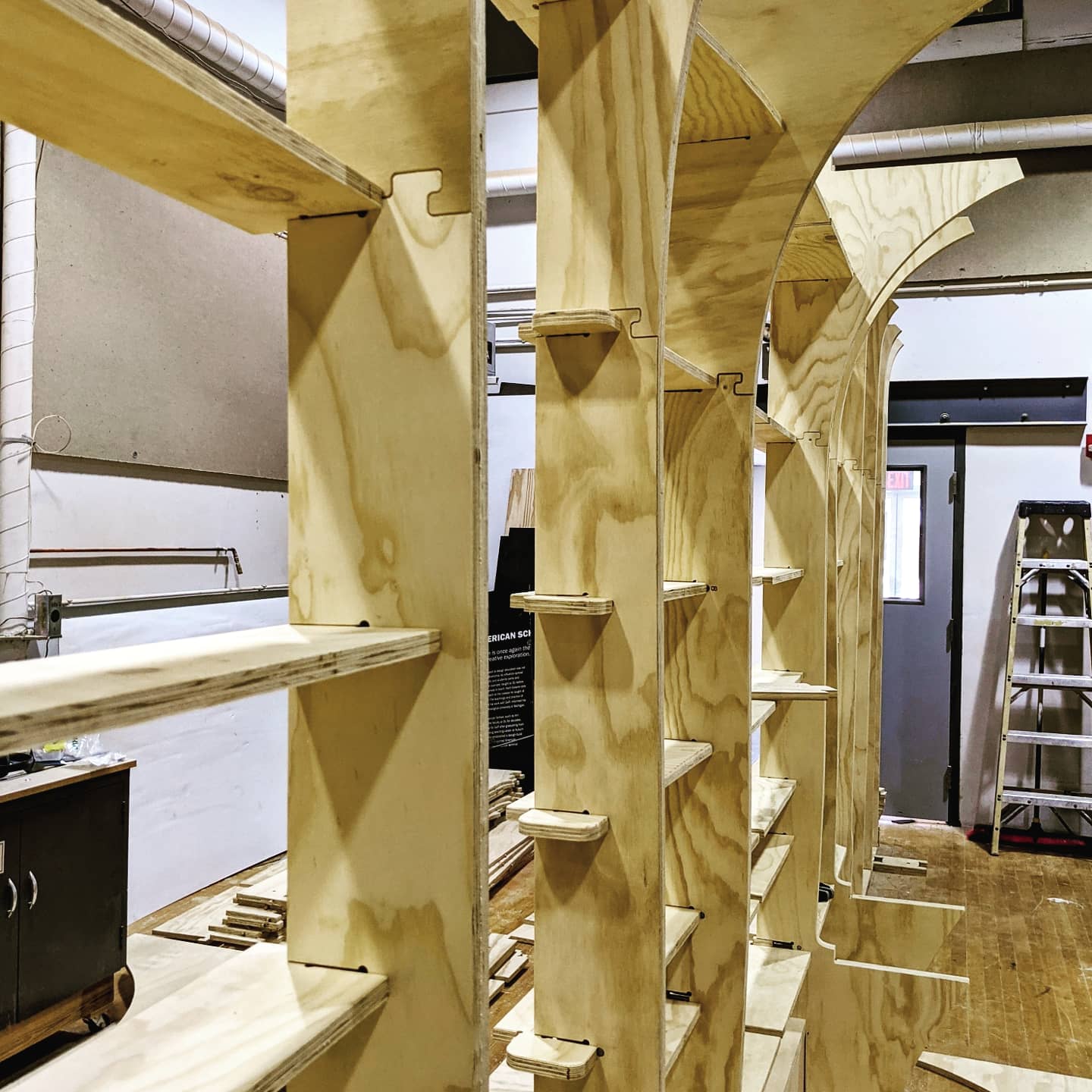
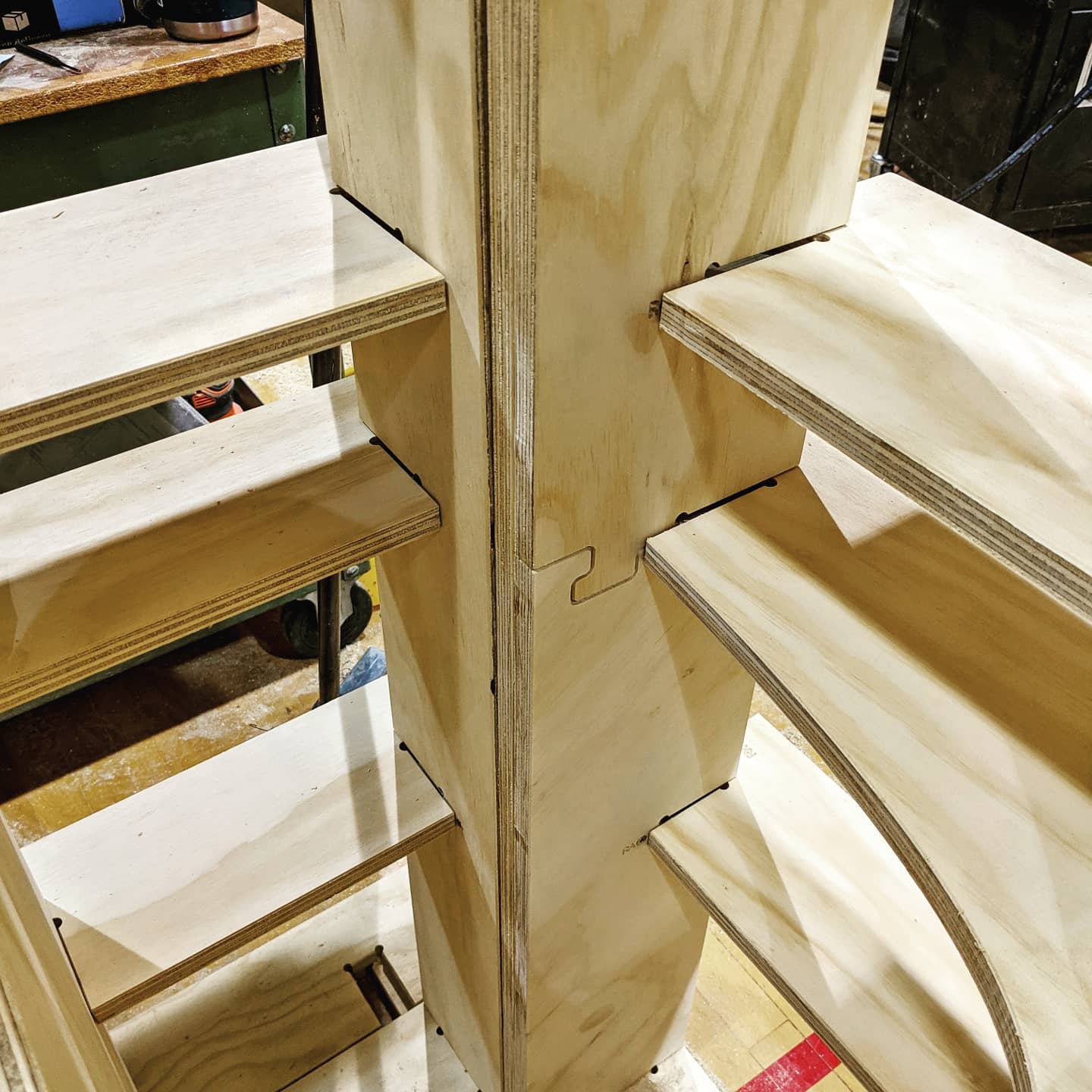
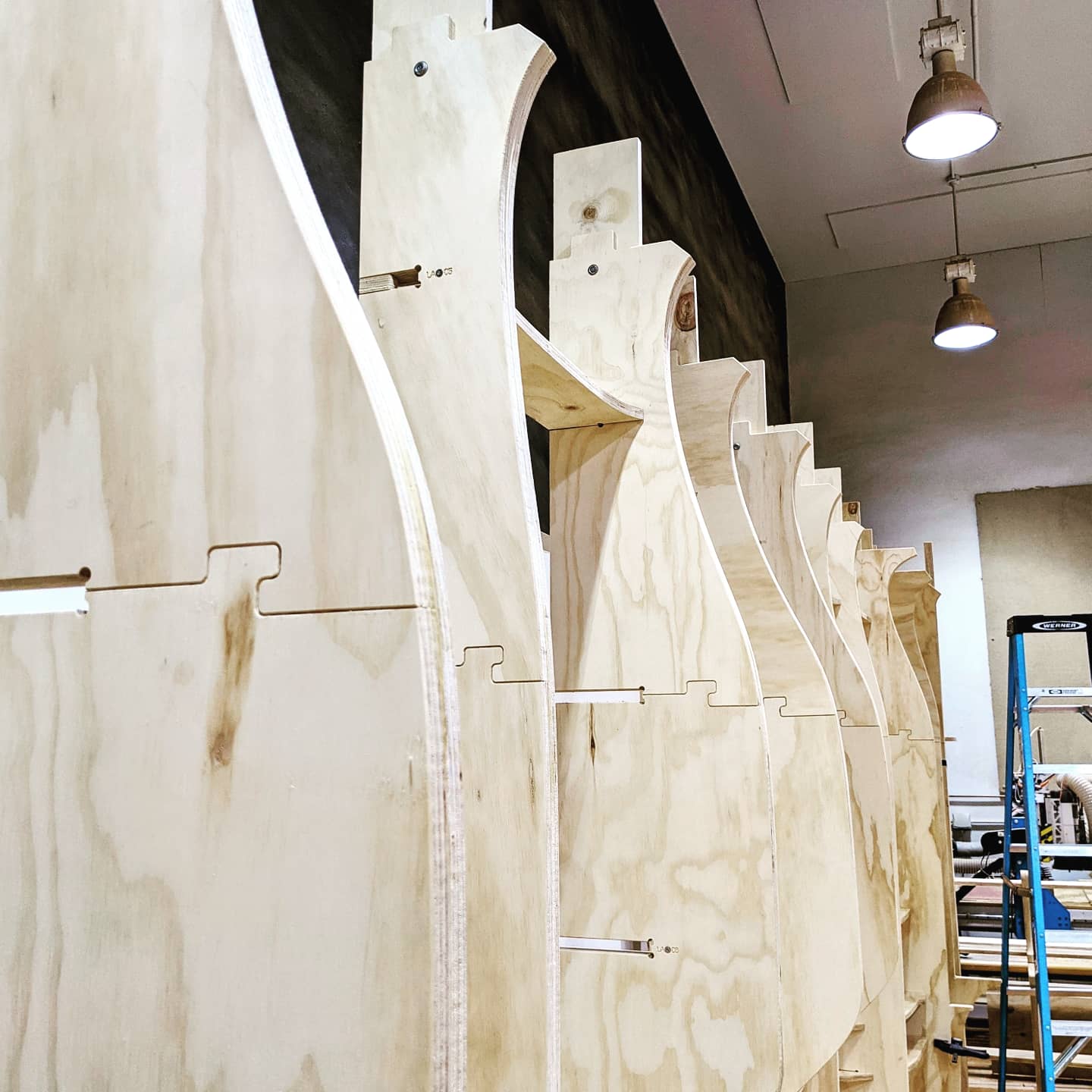
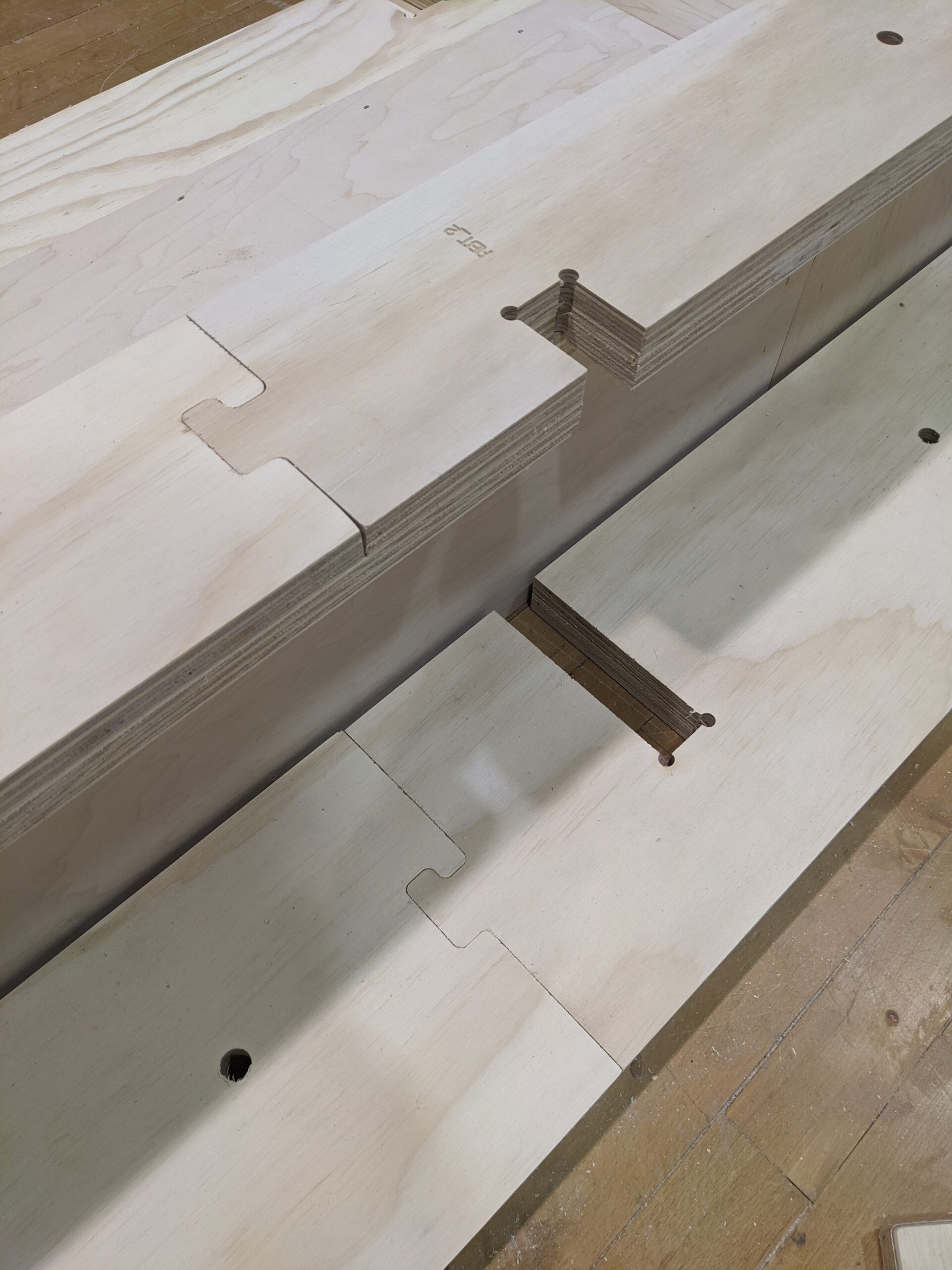
Hands-on fabrication, assembly-logic and test-fit, highlighting the friction-fit joinery that minimized fasteners while maximizing structural stability.
Digital Fabrication and Programming Workflow
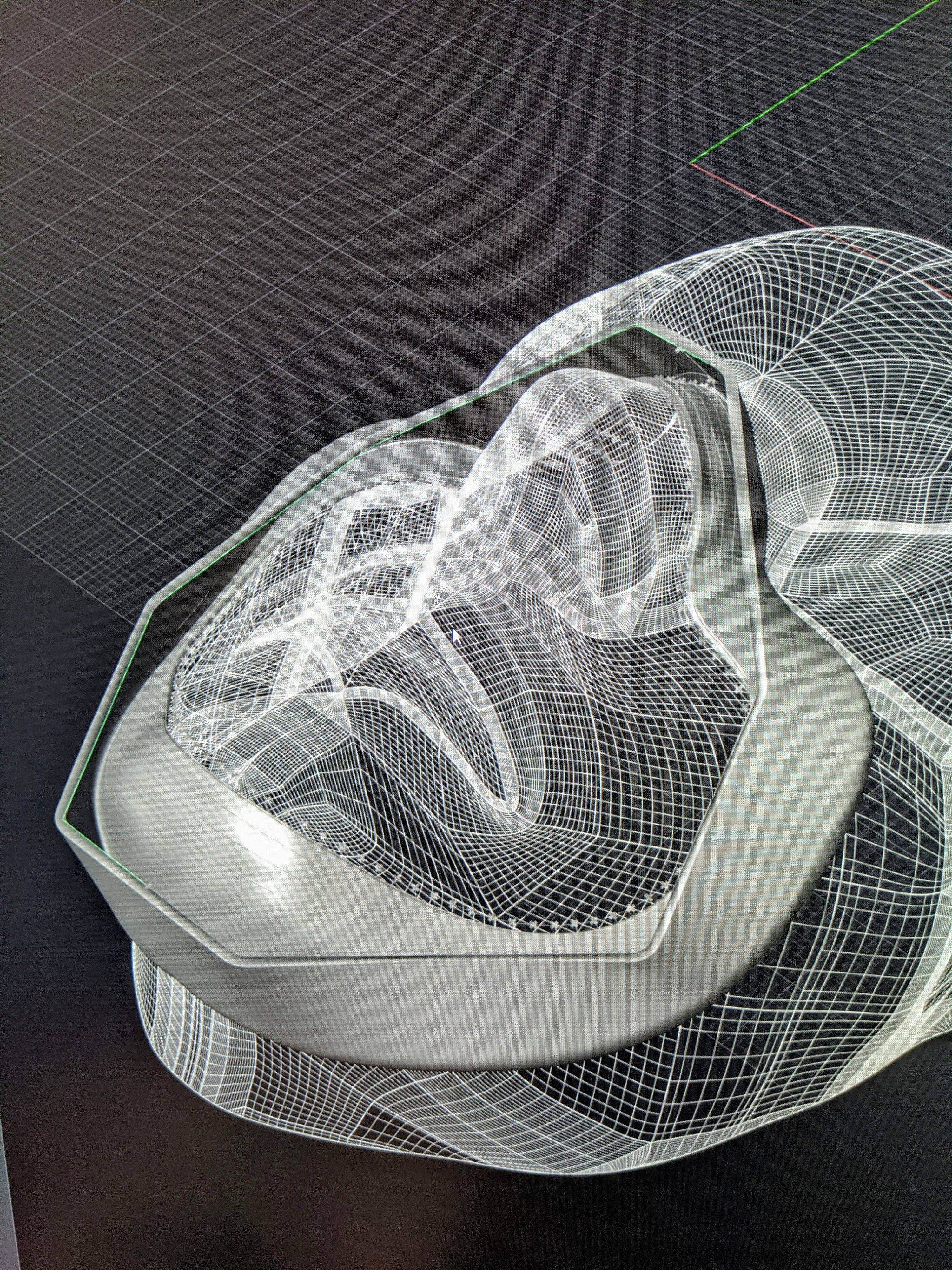
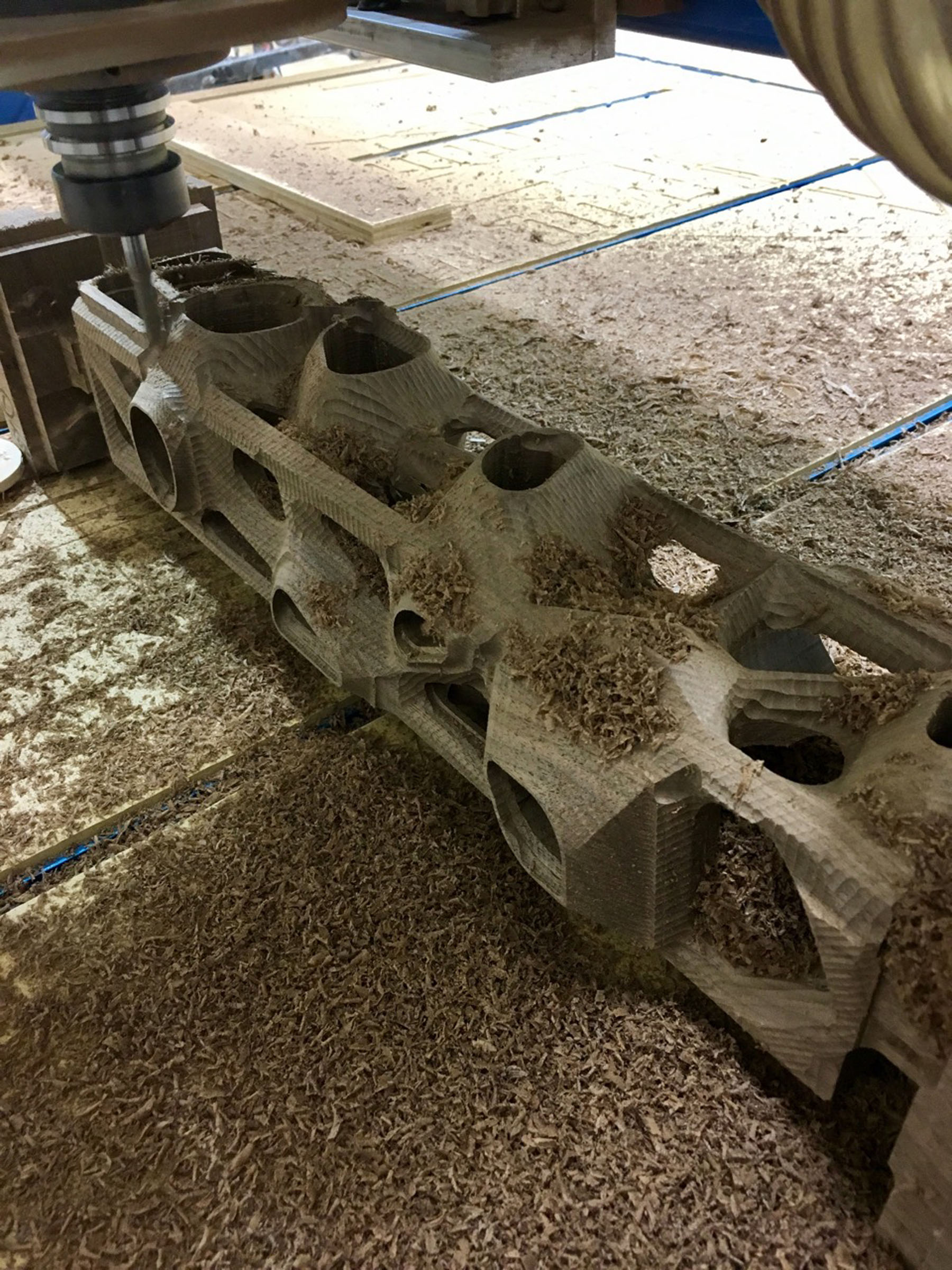
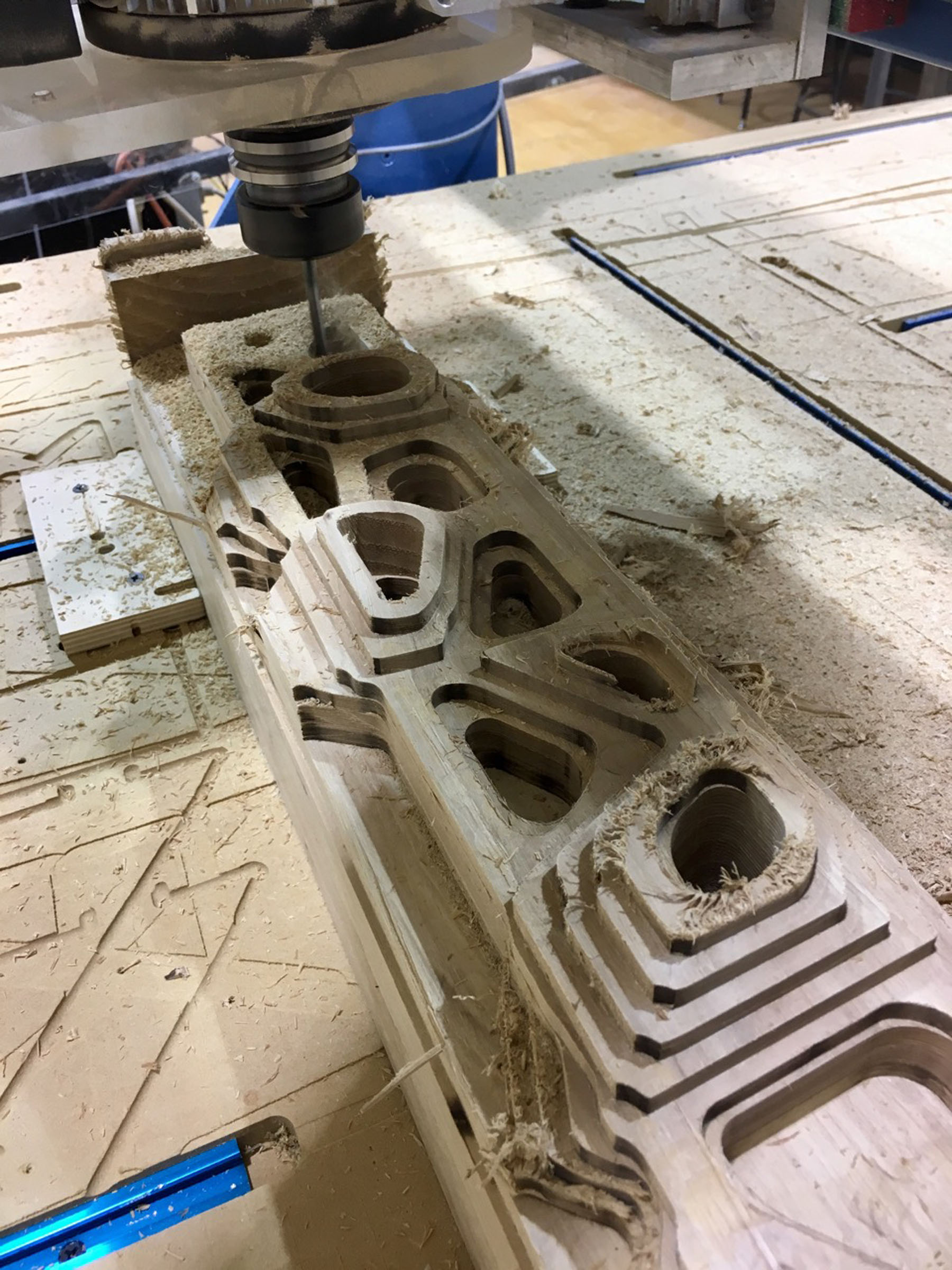
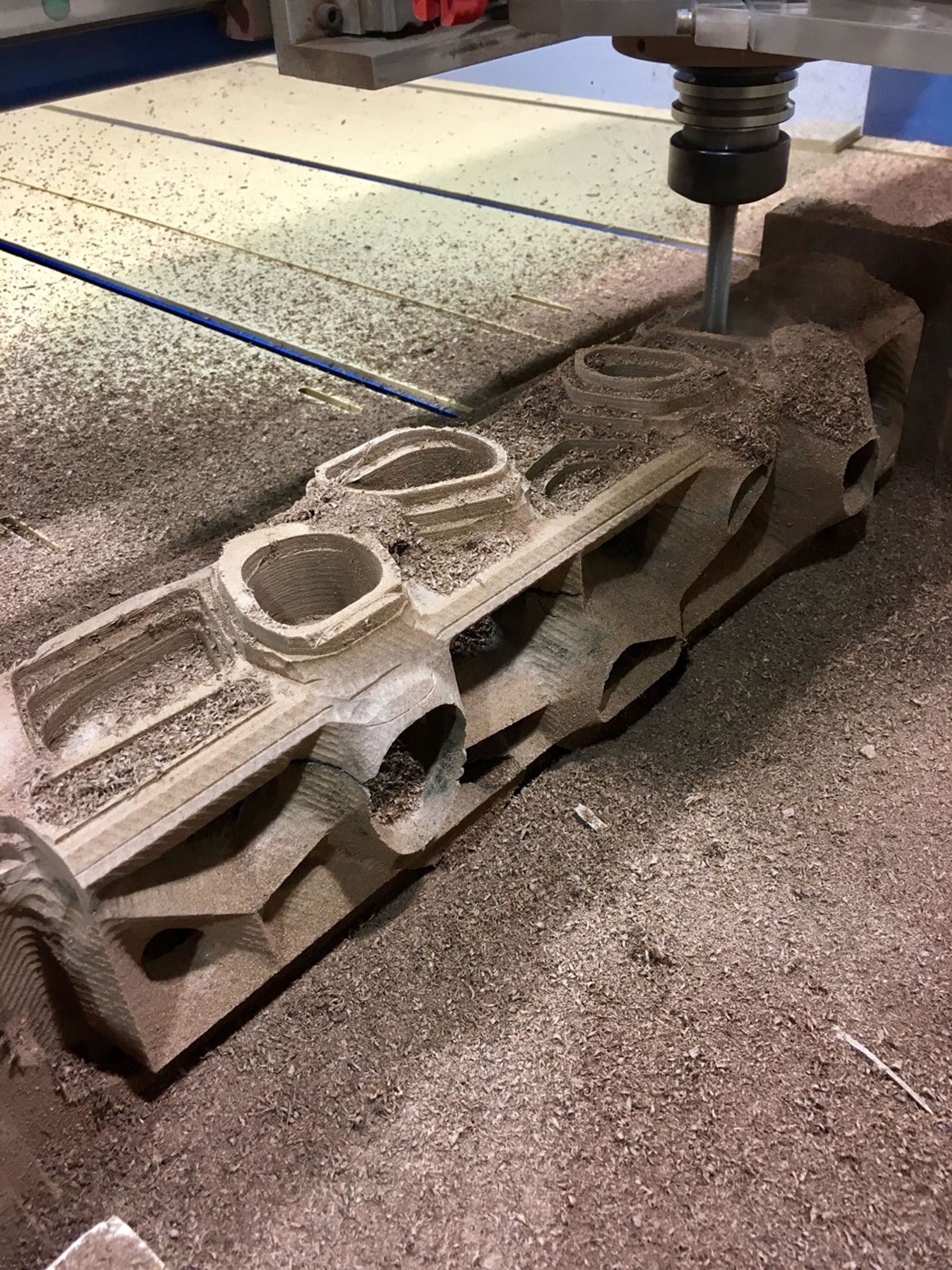
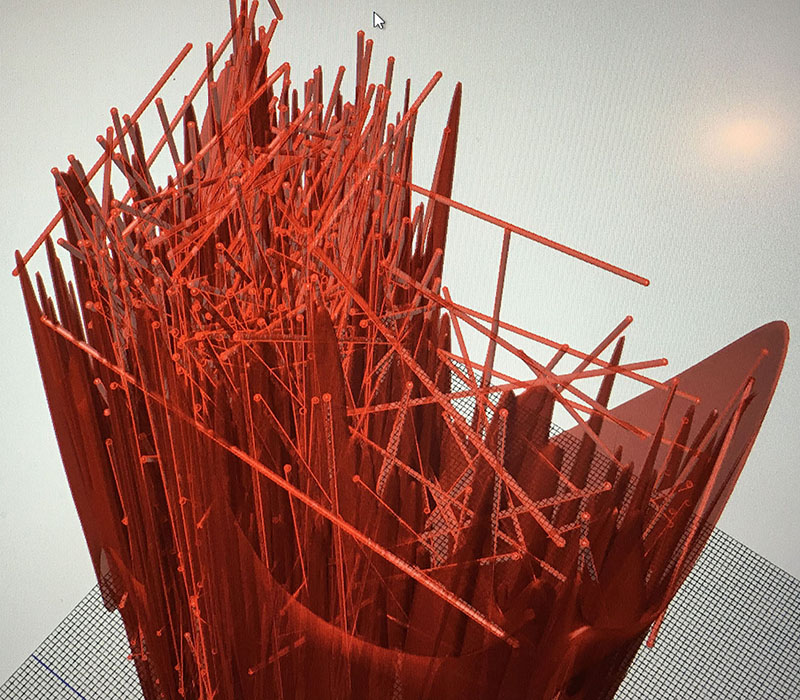
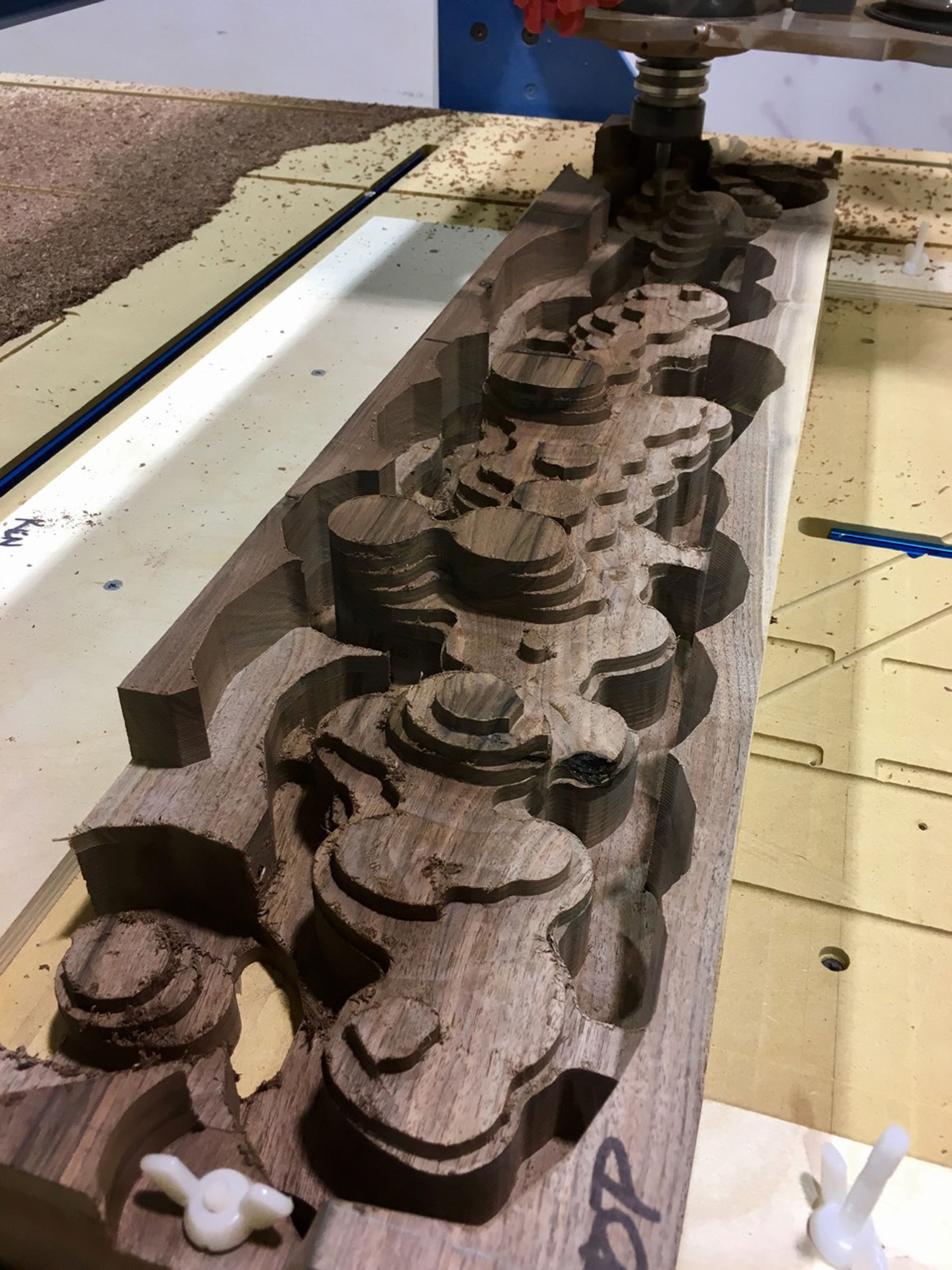
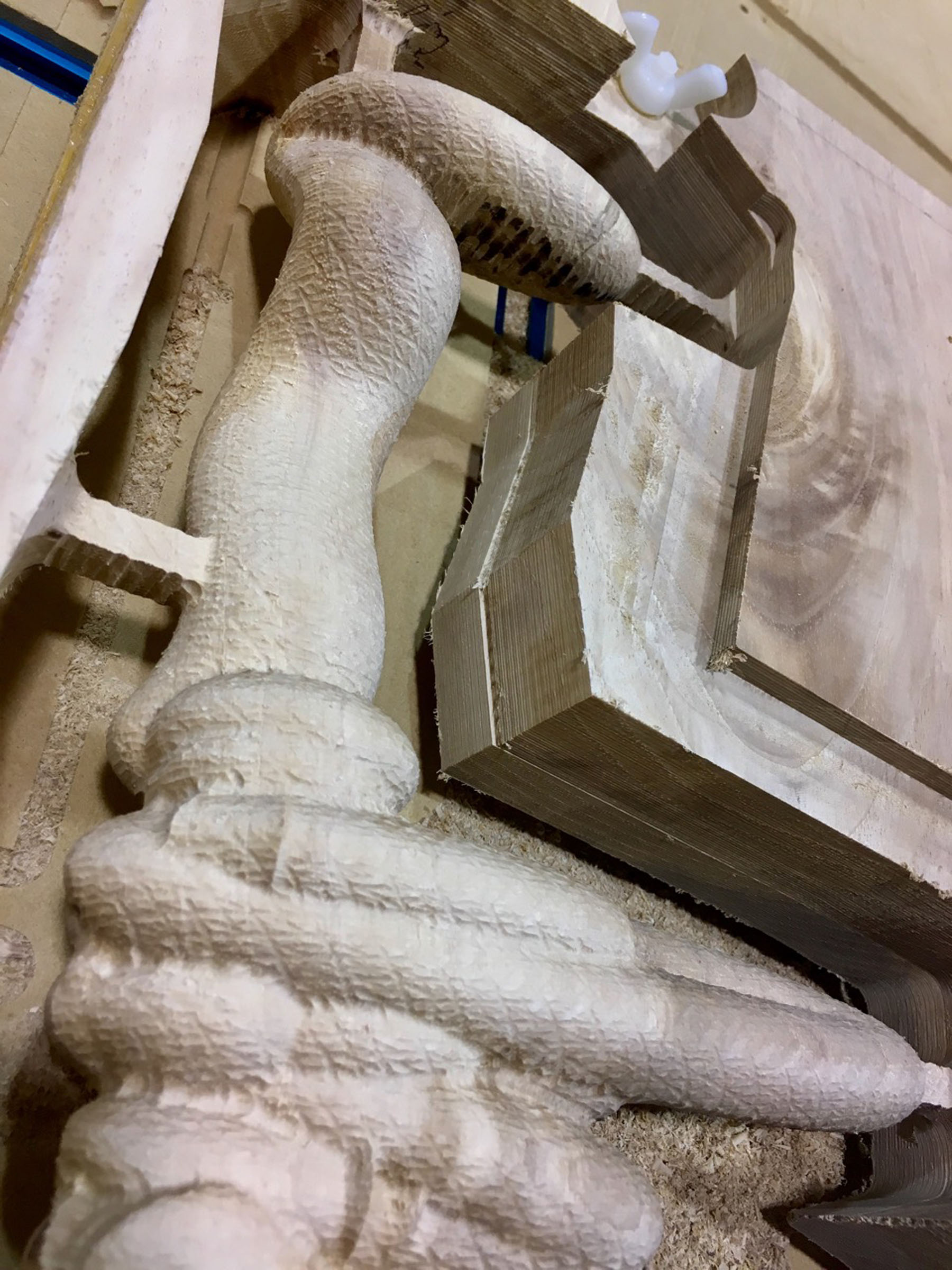
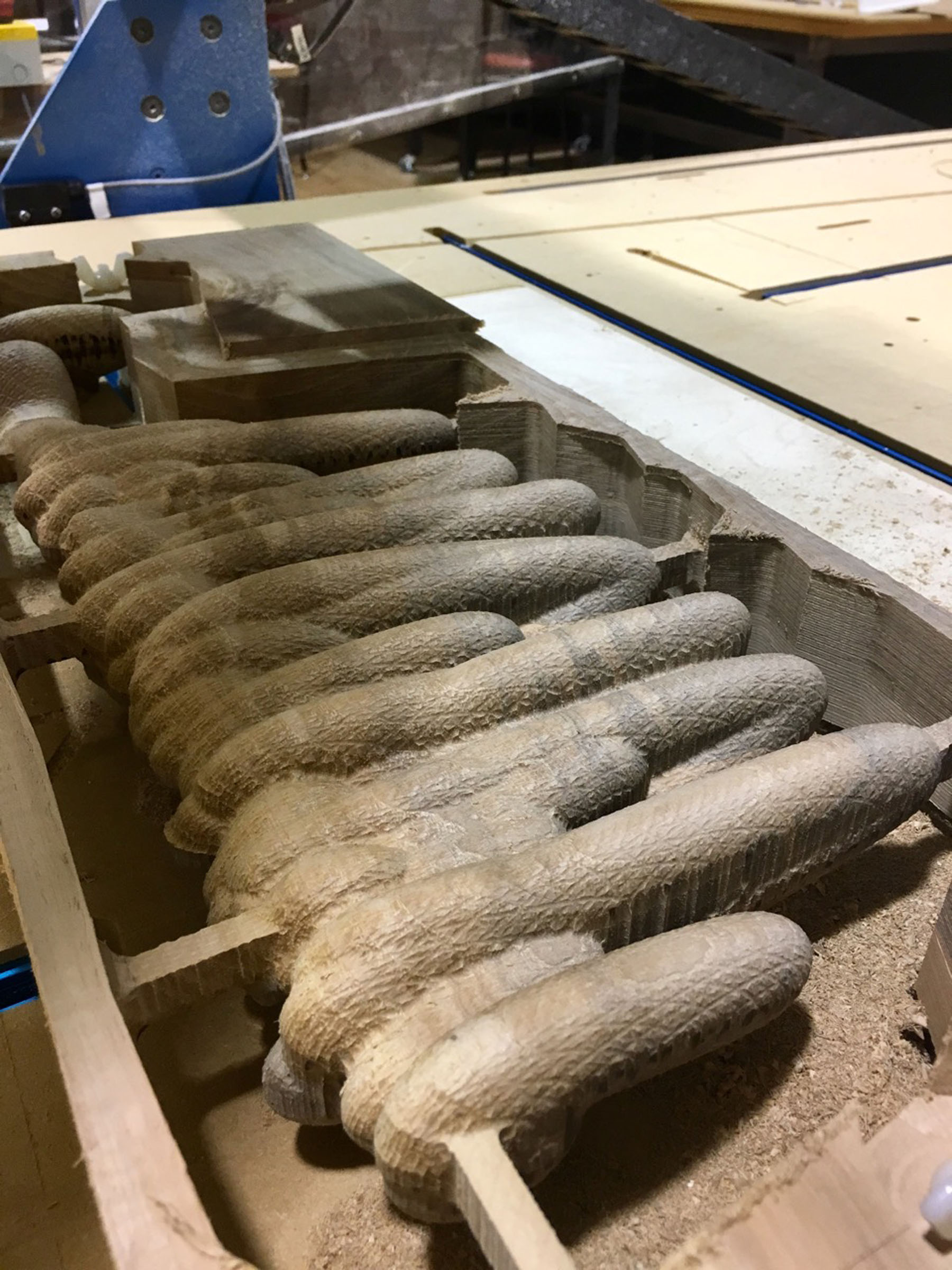
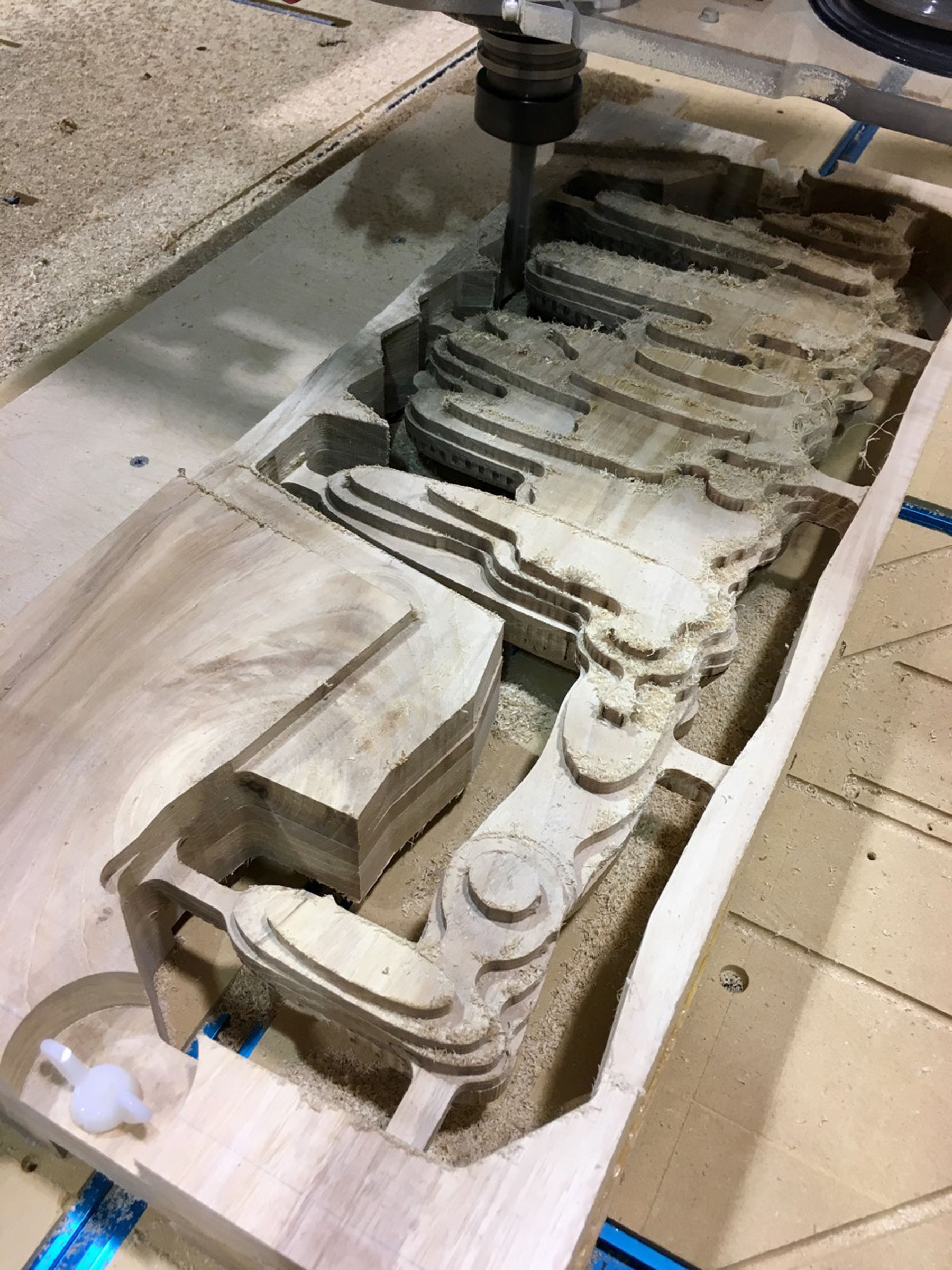
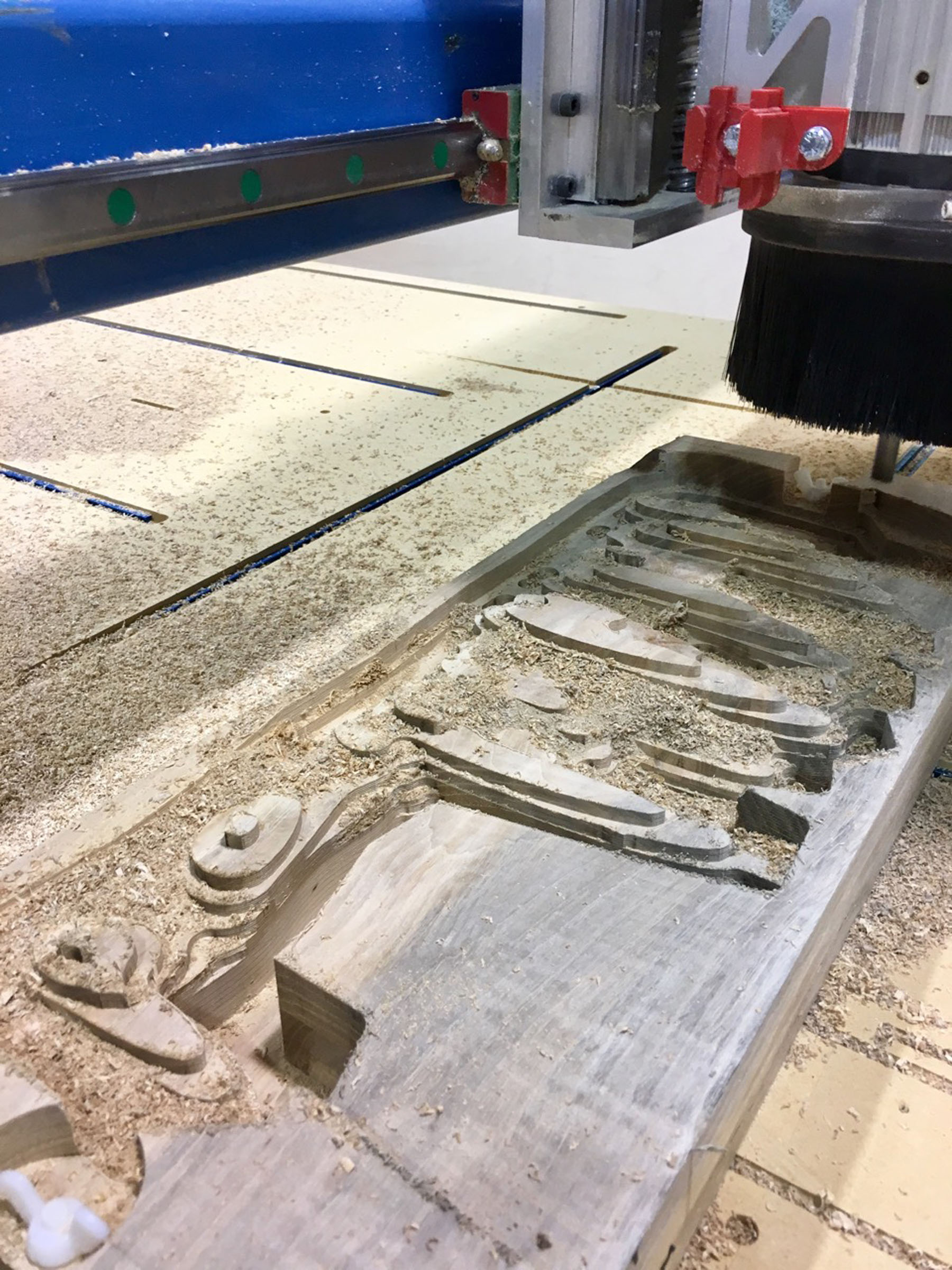
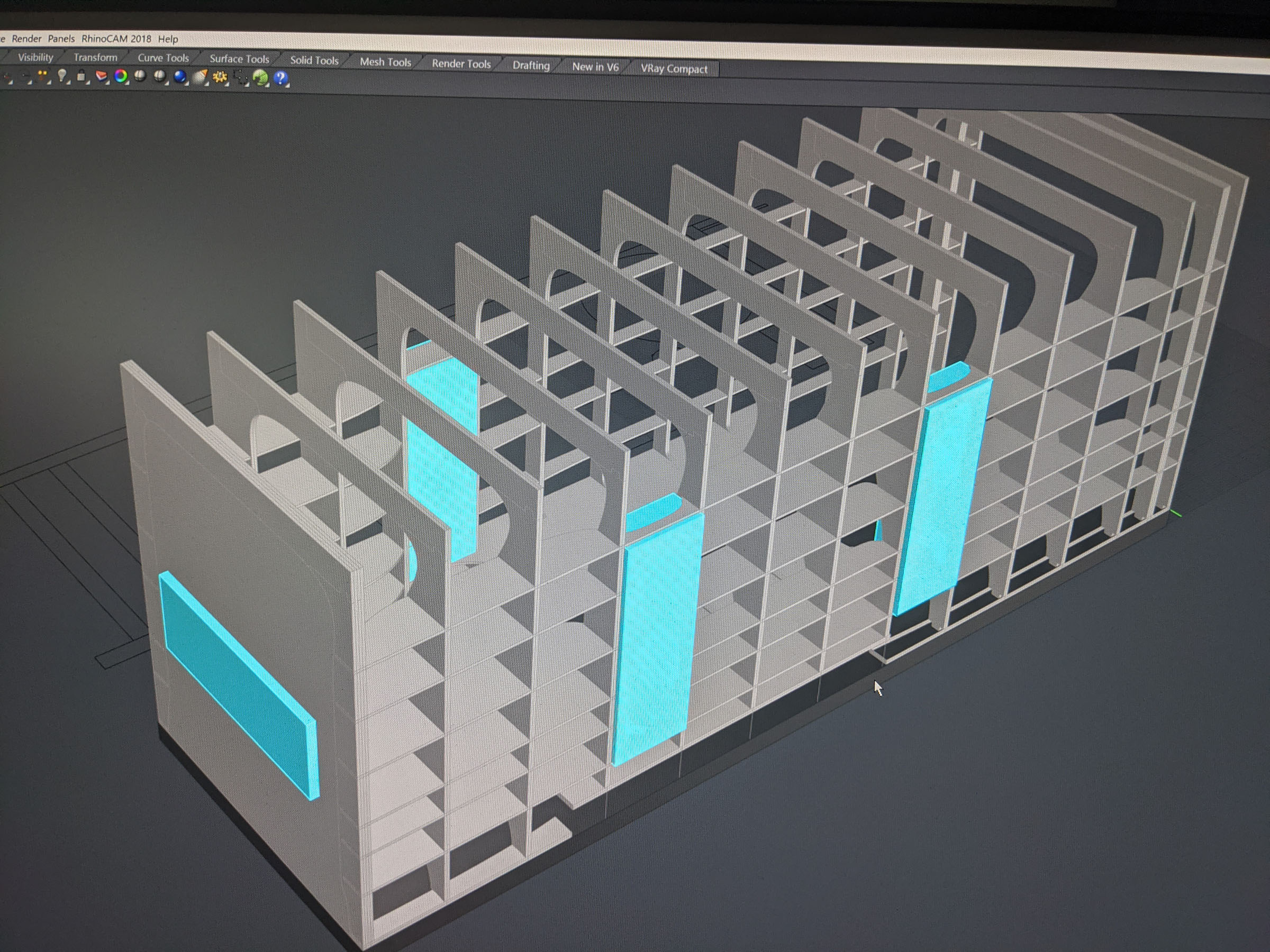
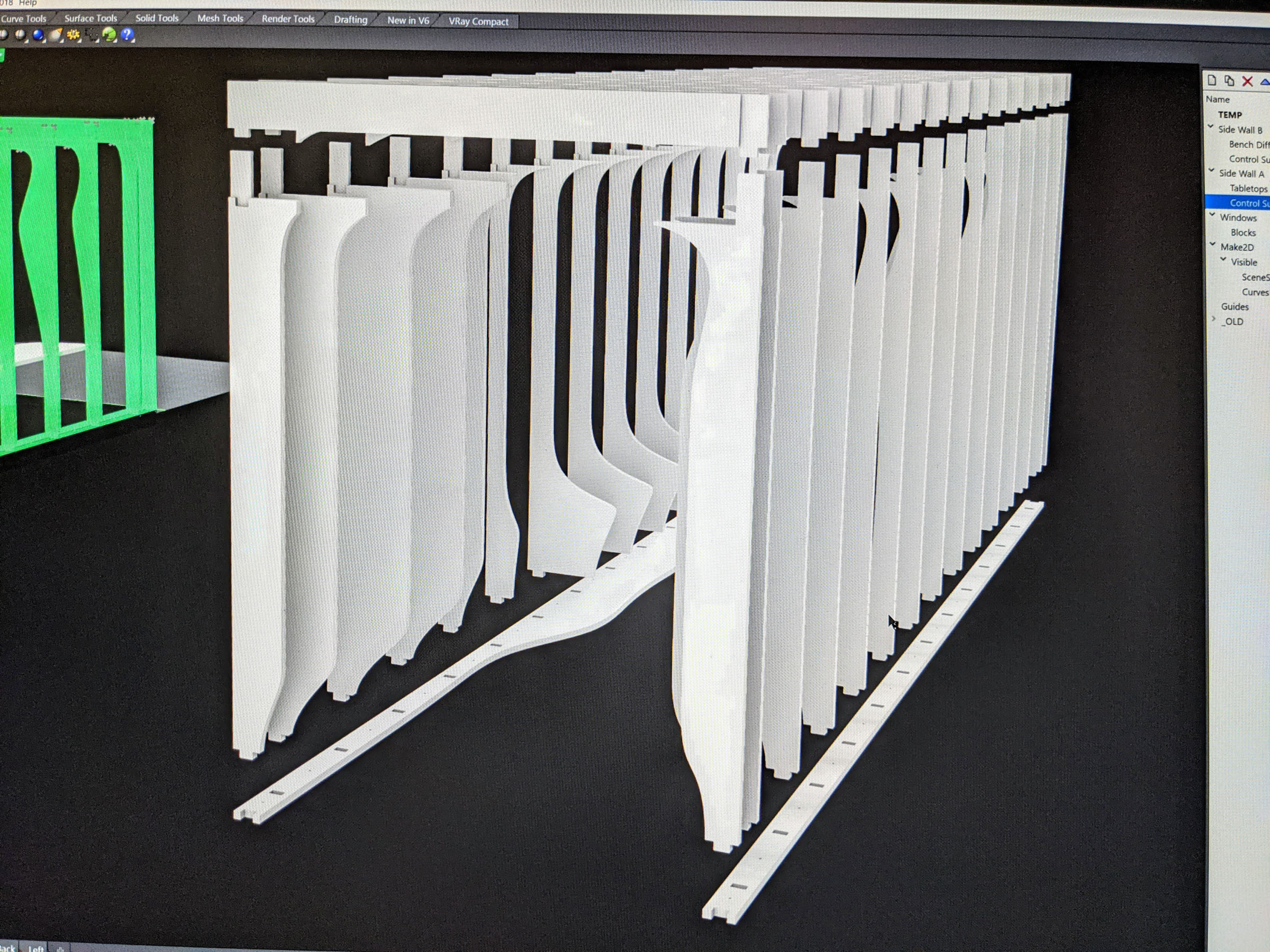
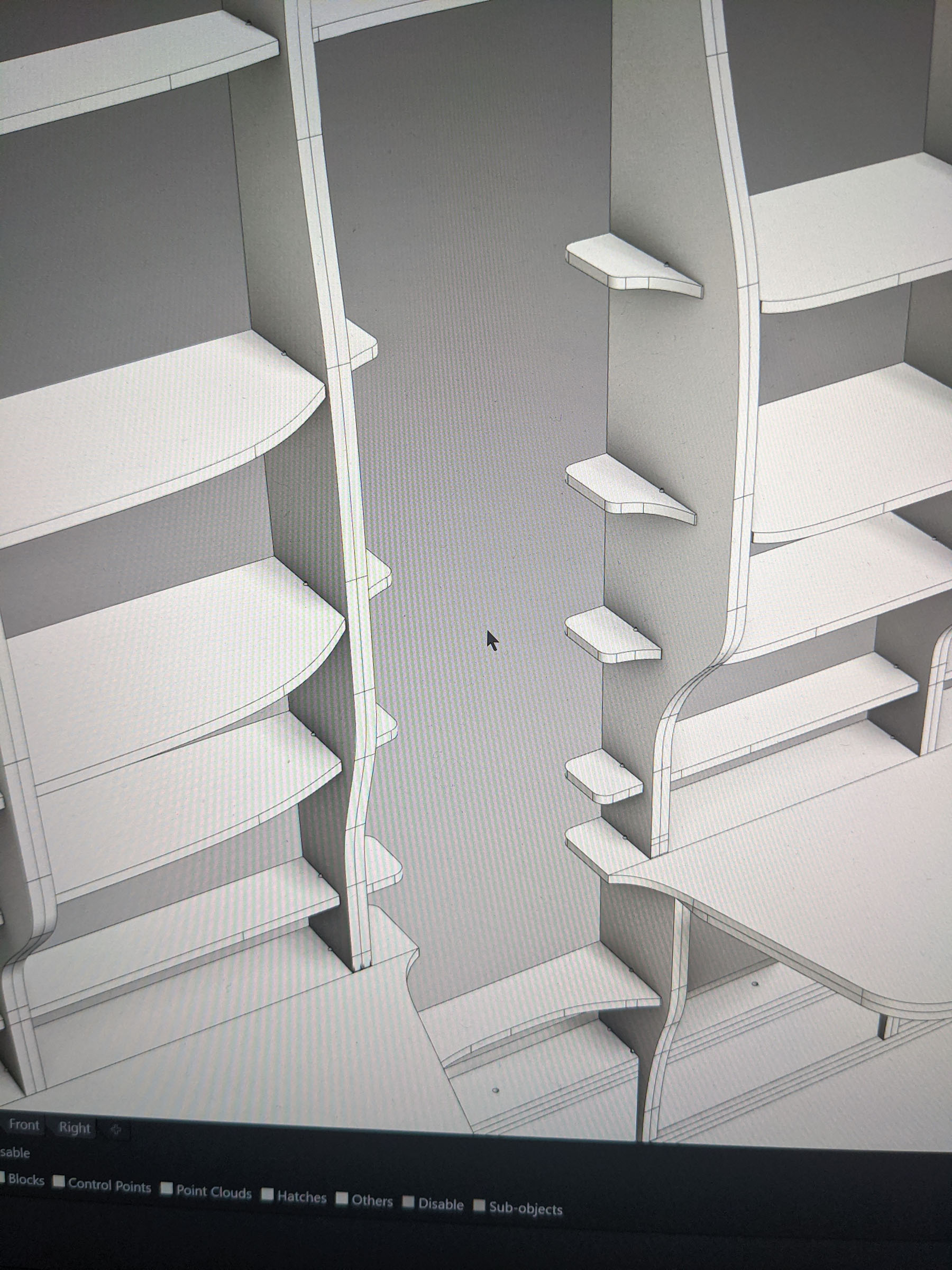
The design was developed through a computational workflow that integrated geometry, structure, and fabrication data within a single parametric model. Generative scripts defined the geometry’s responsive behavior, controlling rib spacing, curvature, and panel thickness to ensure precision during CNC milling. Each connection—every notch, tab, and offset—was embedded within the model to automate fabrication detailing and maintain consistency throughout production.
This process established a feedback loop between design and material performance, allowing rapid iteration and verification prior to fabrication. Once finalized, the panels were milled, labeled, and organized for delivery and on-site assembly. The outcome was a fabrication system where cultural sequence and computational logic operated in parallel—each reinforcing the other to produce an architecture that was both technically advanced and rooted in tradition.
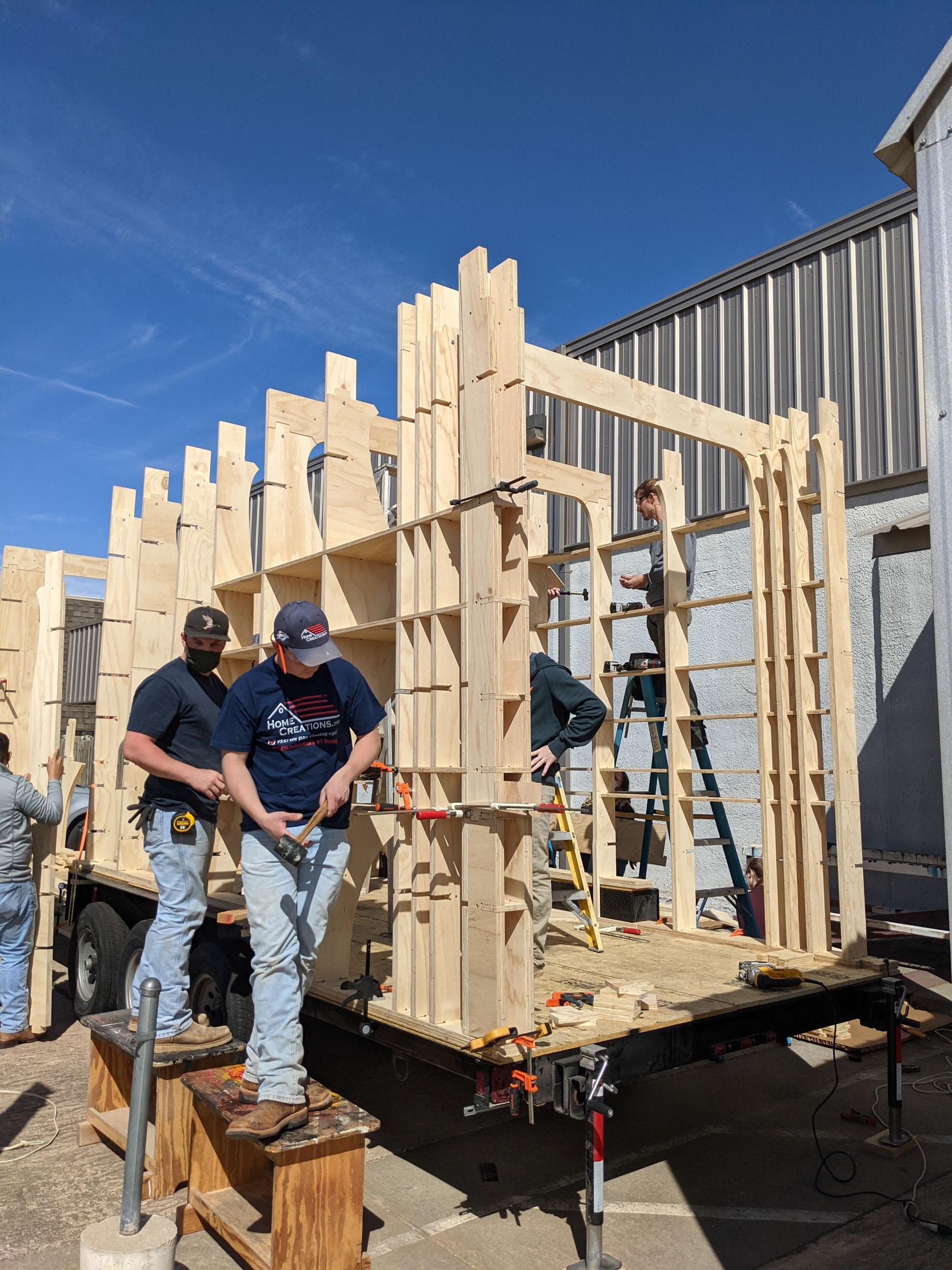
Students and faculty assembling CNC-cut ribs onto the mobile platform, confirming sequencing, tolerances, and joinery strategies in real time.
Assembly Logic
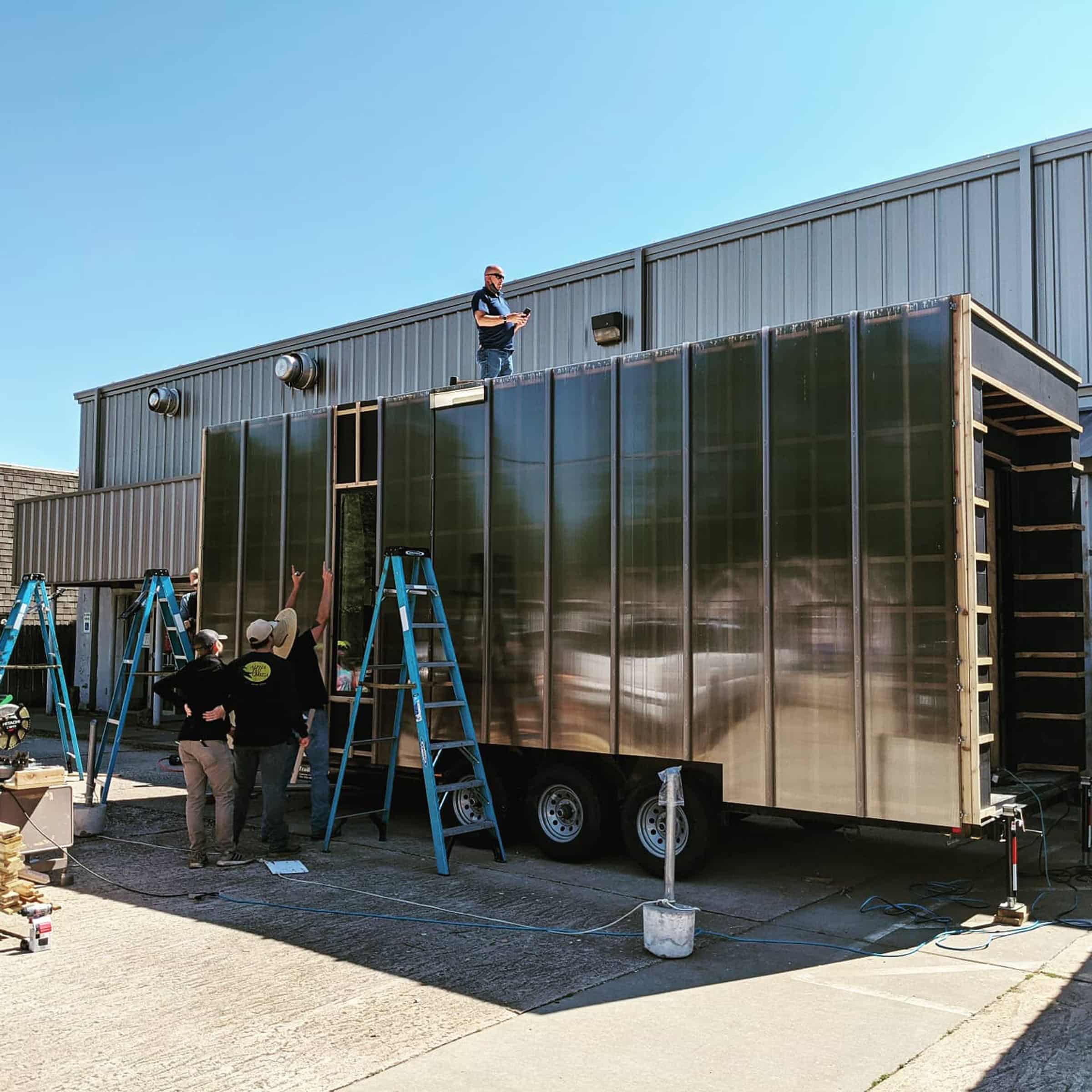
The Wichita Mobile Clinic was designed for rapid on-site assembly with minimal labor and tools. The prefabricated ribs and panels were delivered with detailed instructions, allowing Construction Science students to complete the structural assembly in a single workday. The efficiency of the system reflected the project’s broader research goals—demonstrating how digital precision can accelerate construction timelines while maintaining spatial and material integrity.
Every surface and element was part of an interlocking whole, eliminating the distinction between framing, enclosure, and furnishing. This continuous assembly logic echoed the Wichita grass house, where enclosure and structure were inseparable. The process proved that fabrication-led research can create systems that translate from digital production to field construction seamlessly, providing a model for deployable, community-centered architecture.
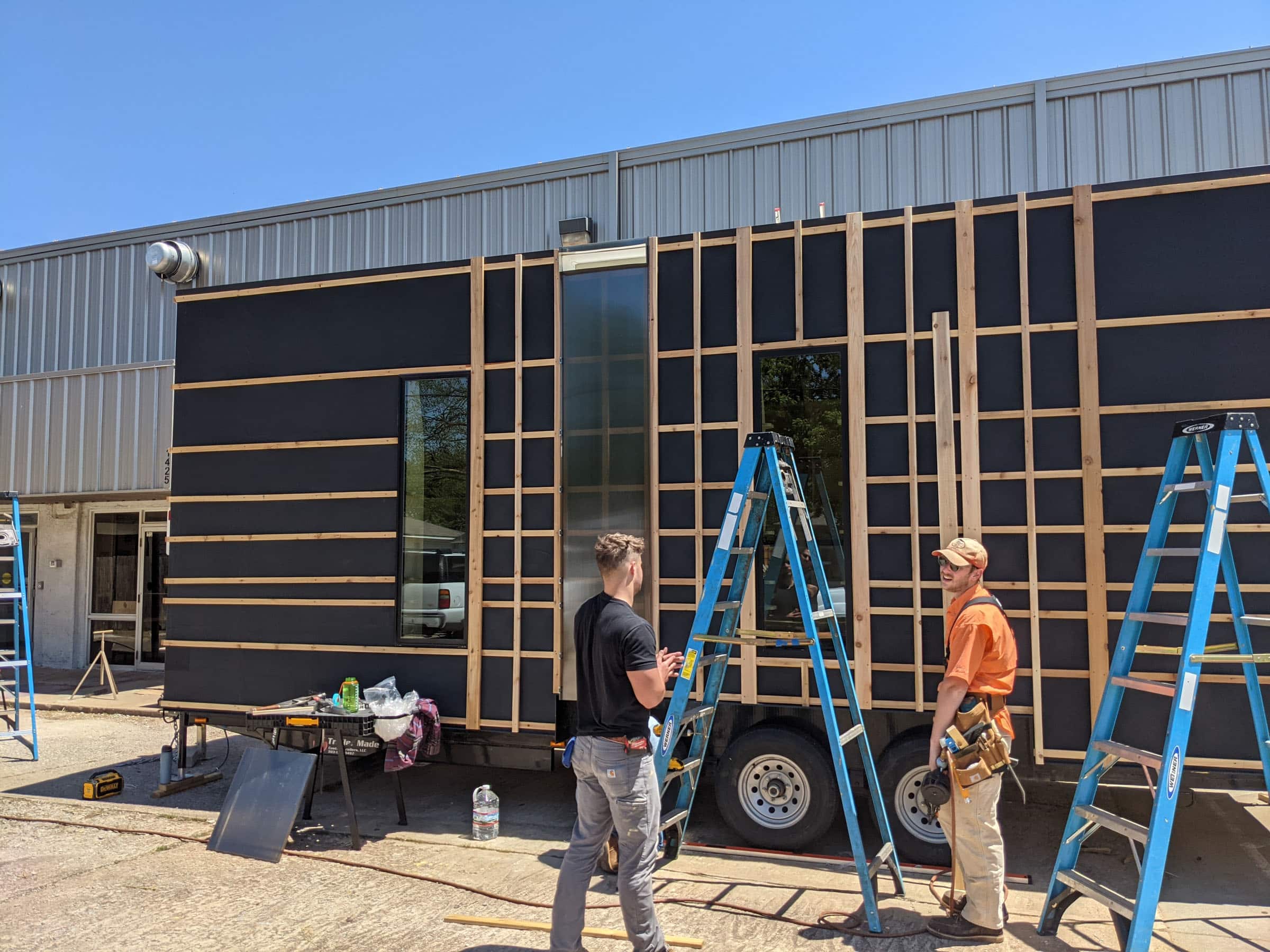
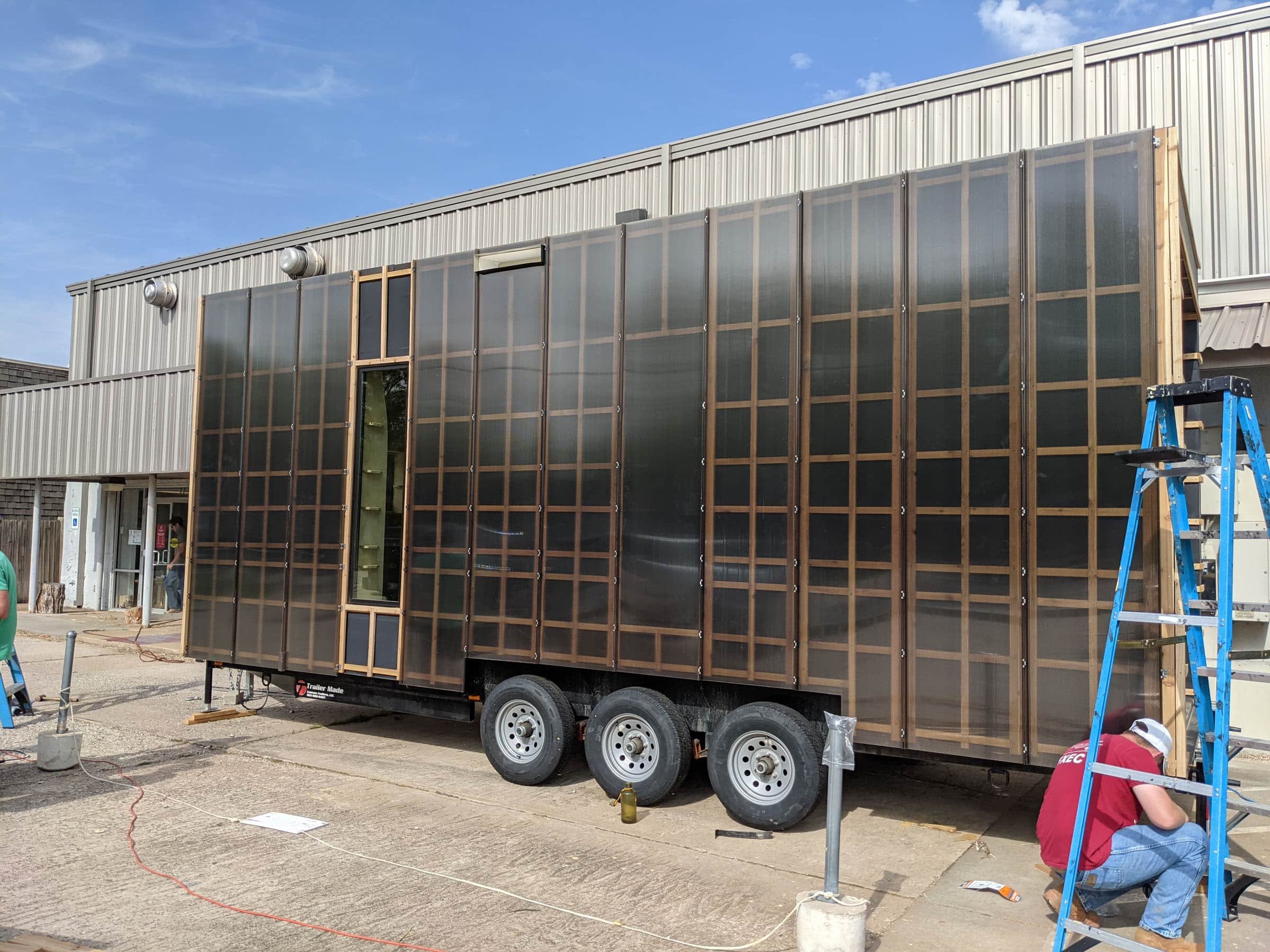
Wichita Mobile Clinic during final stages of cladding, demonstrating how digital fabrication workflows translated into field-ready construction.
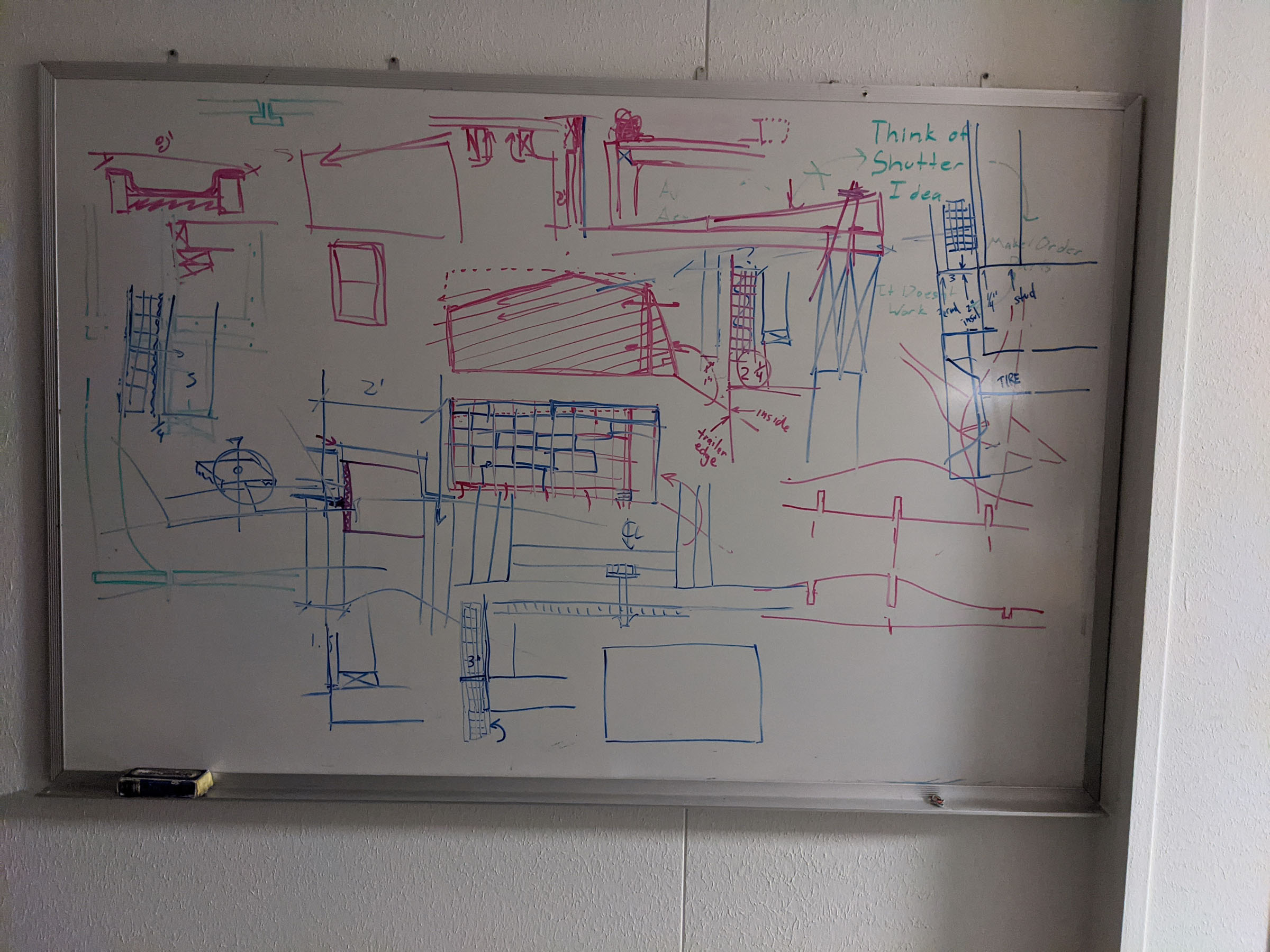
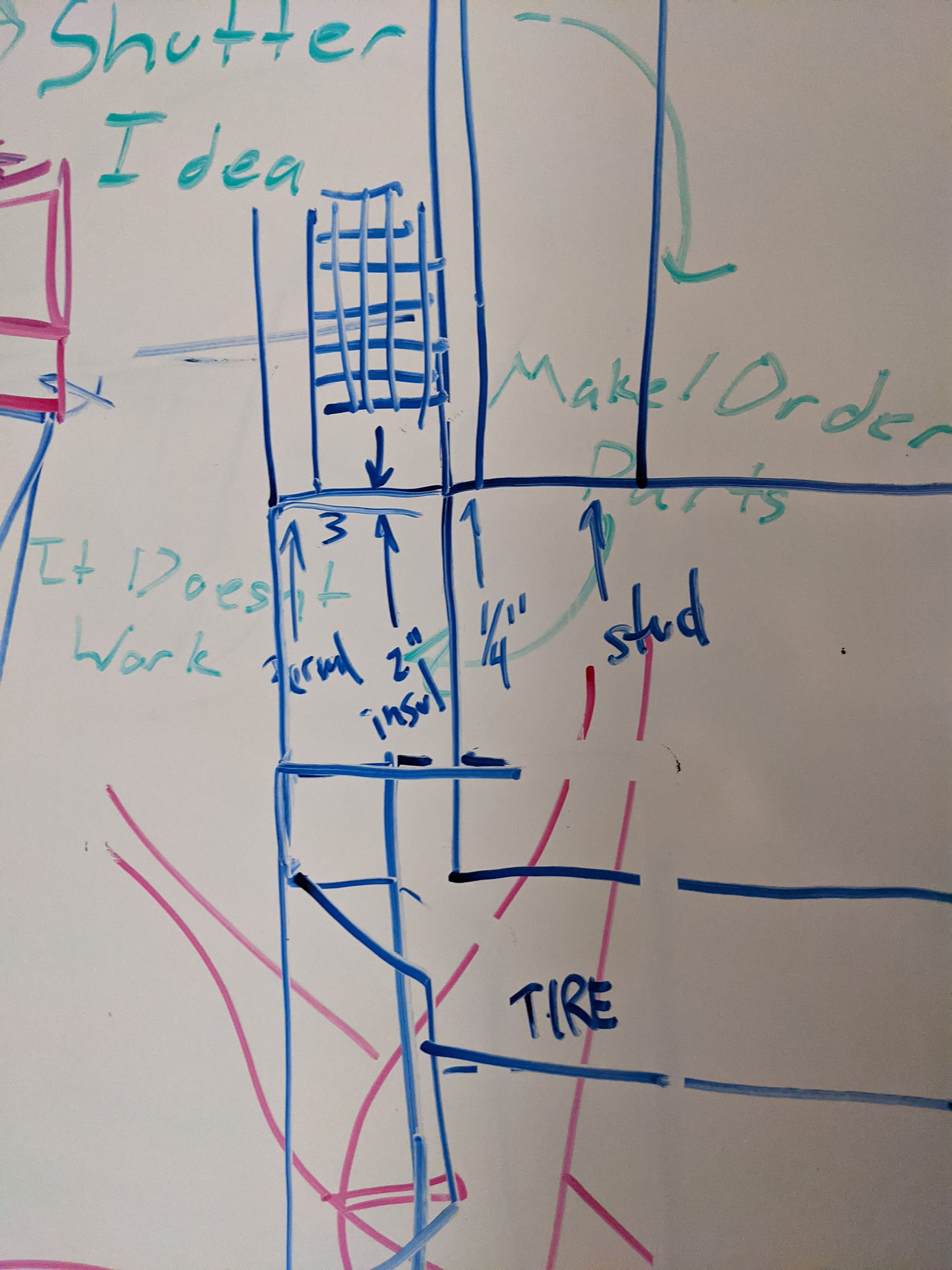
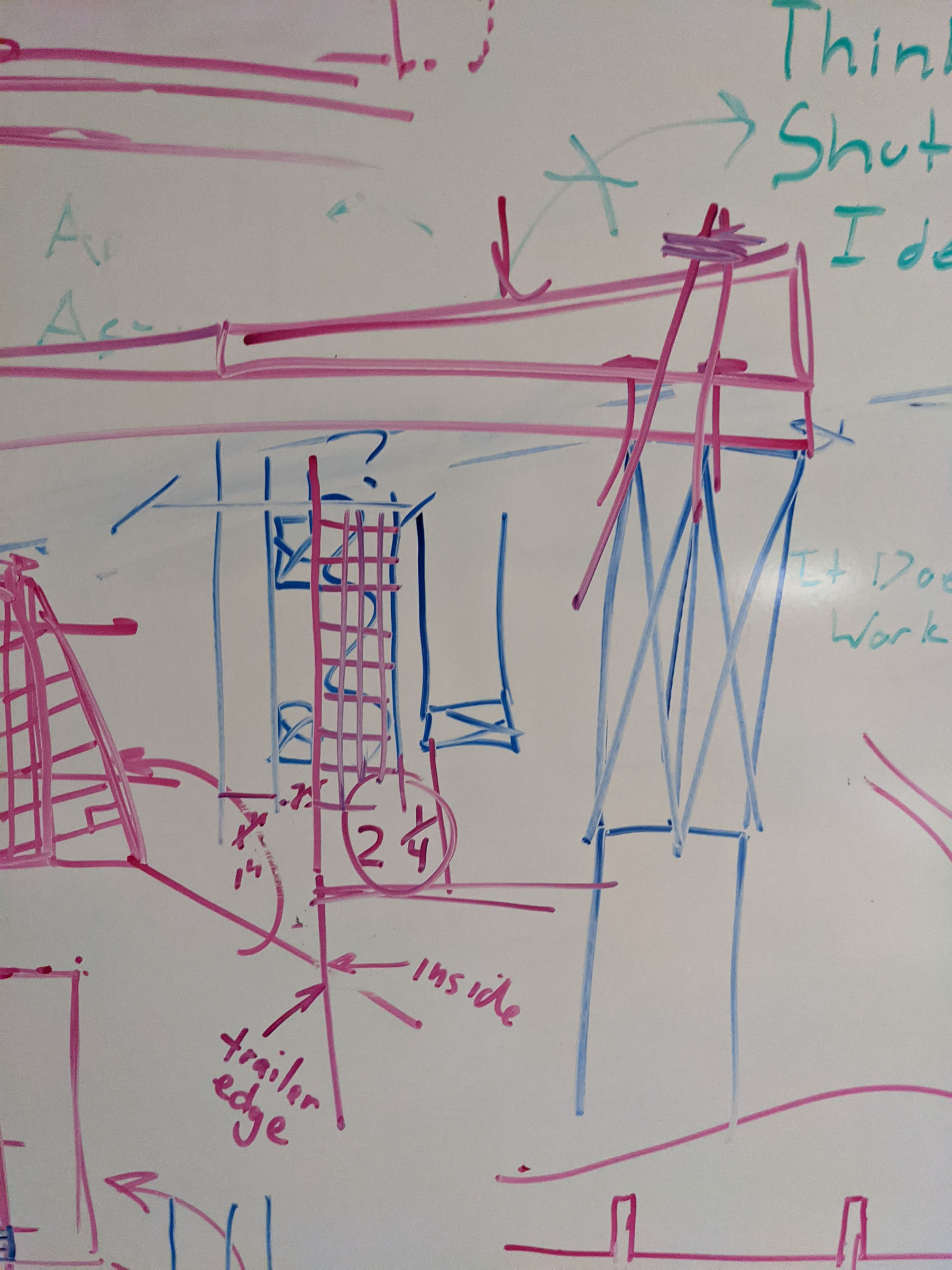
Concepts + Prototyping
-
PXL_20201230_191653790
-
PXL_20201230_191526268
-
PXL_20201230_185653738
-
PXL_20210106_195401951
-
PXL_20210102_035032070
-
PXL_20210102_034753226
-
IMG_20210130_103431_01
-

IMG_20210130_104534_01
-
PXL_20210115_195851836
-
PXL_20210126_173845135
-

PXL_20210126_173630933
-

PXL_20210115_194430327
Mockup + Testing
-
IMG_20210301_202527
-
IMG_20210313_091229_911
-
IMG_20210313_091229_889
-
IMG_20210313_091229_859
-
IMG_20210313_091229_743
-
PXL_20210225_172519031
Material Expression
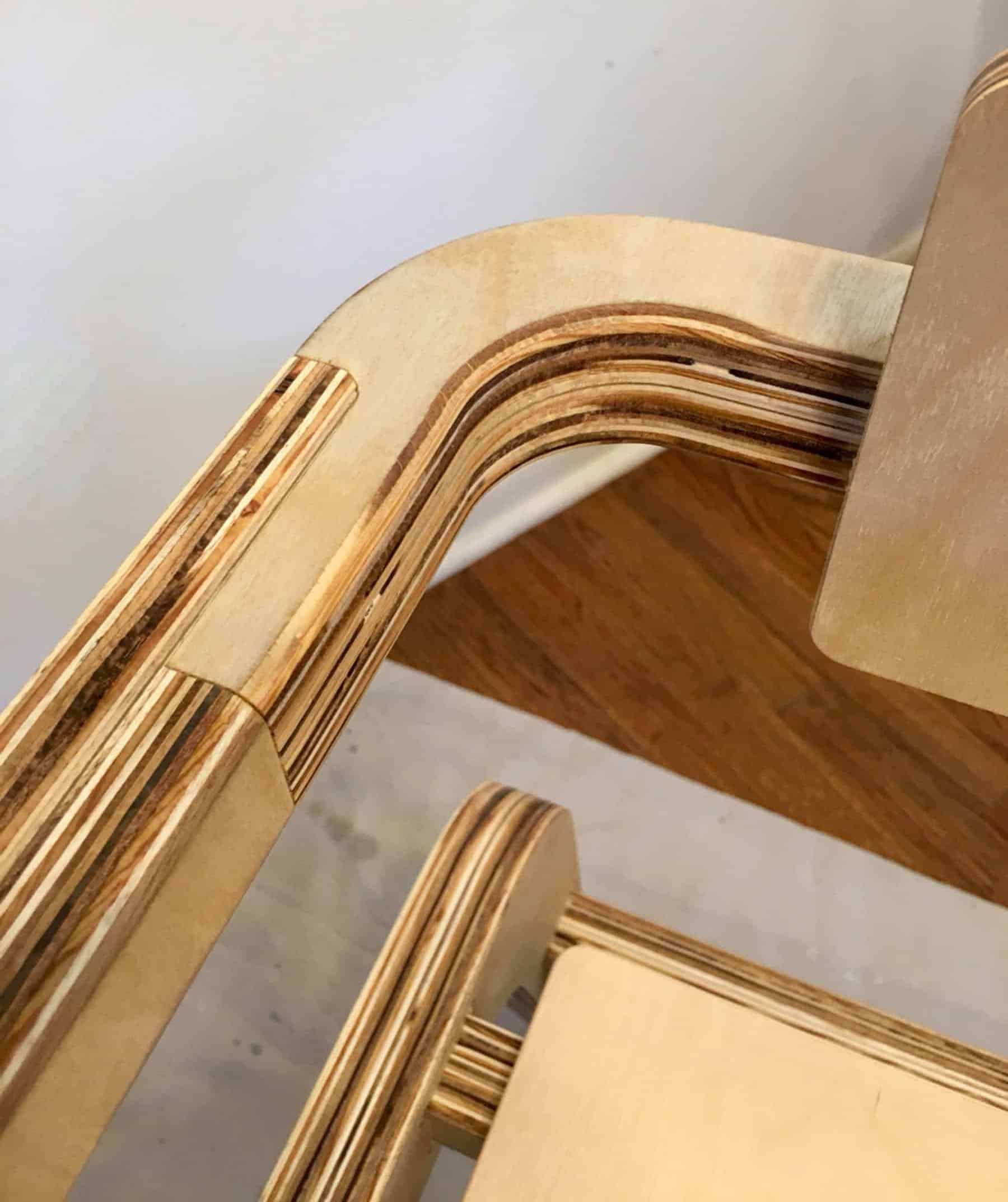
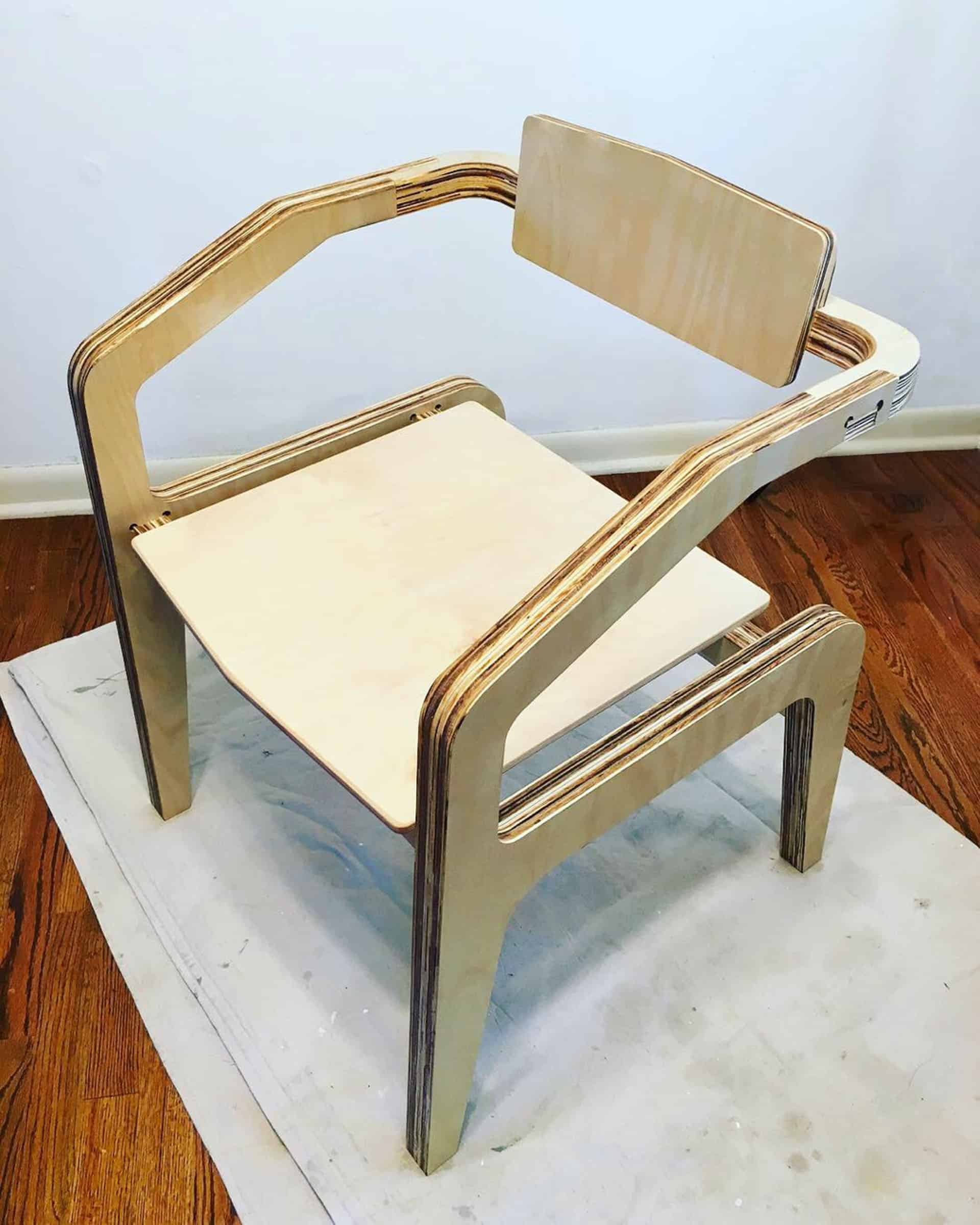
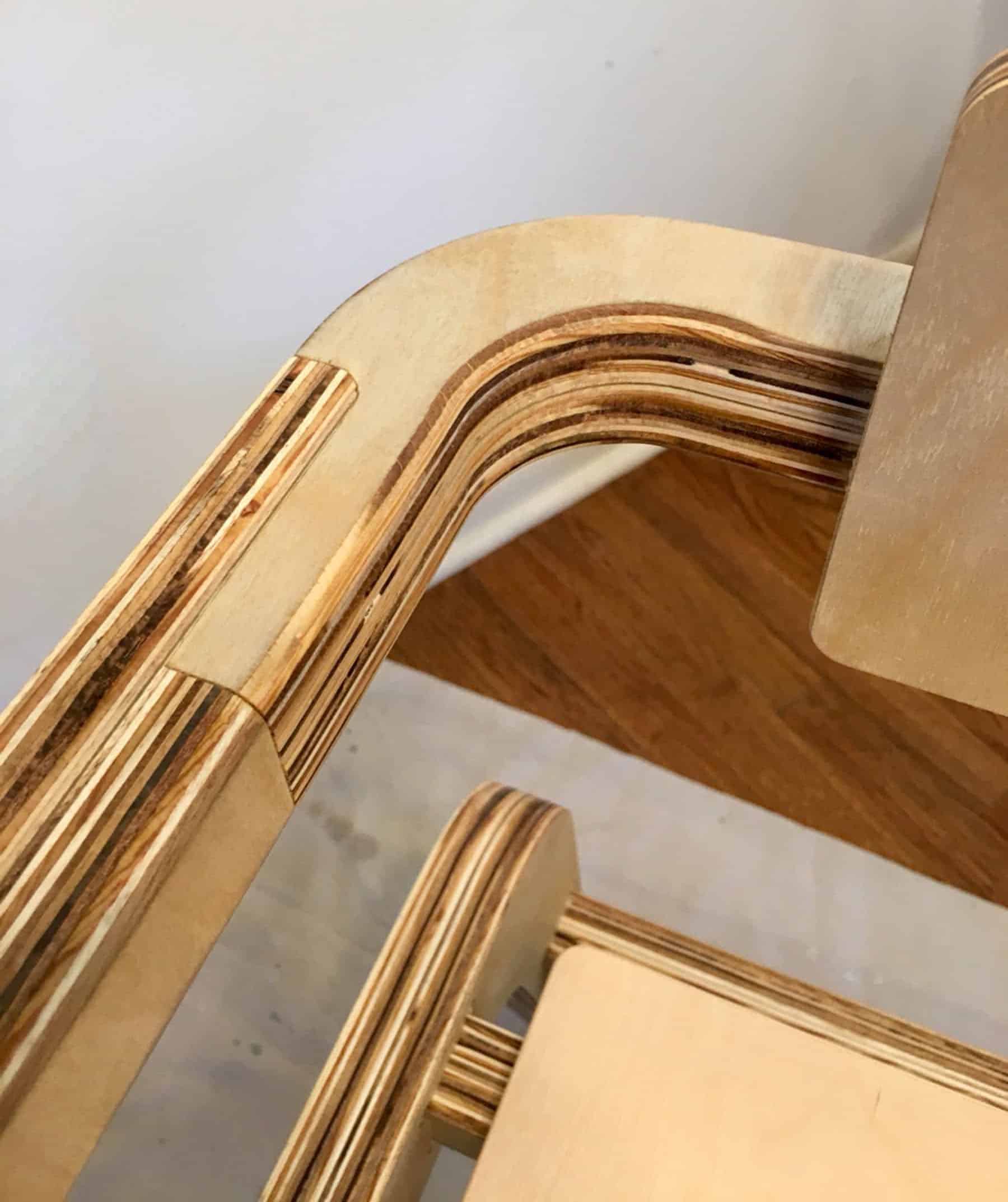
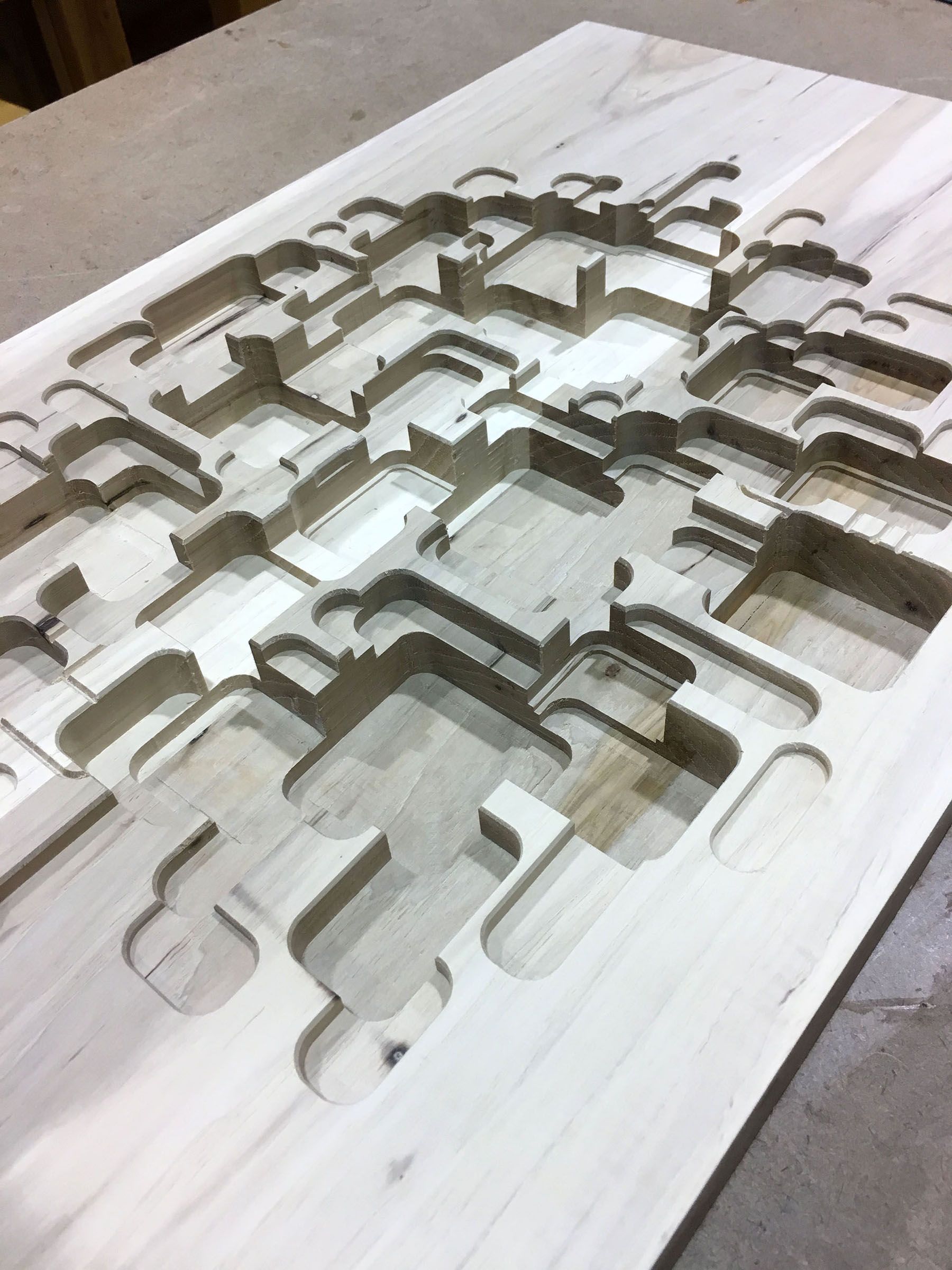
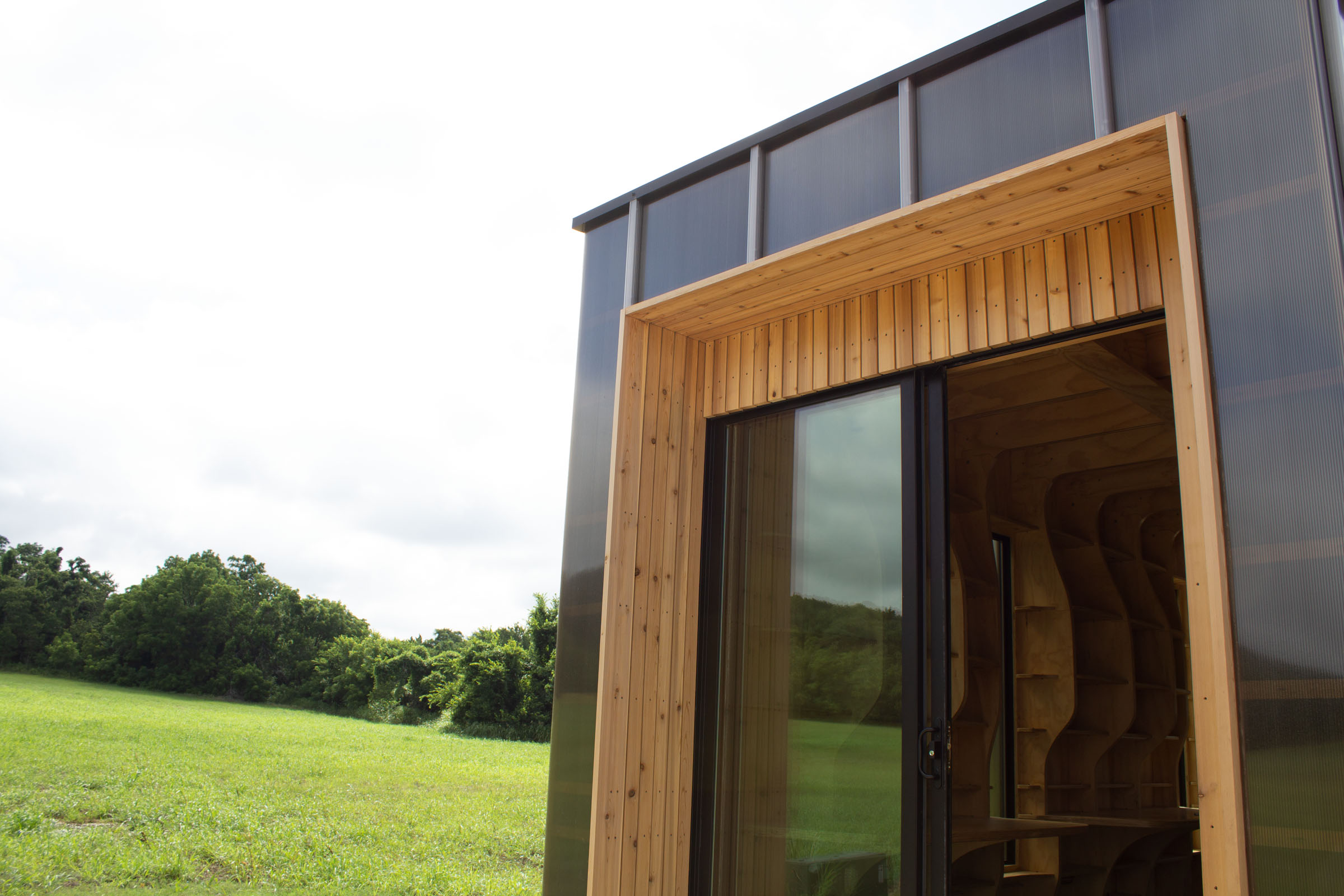
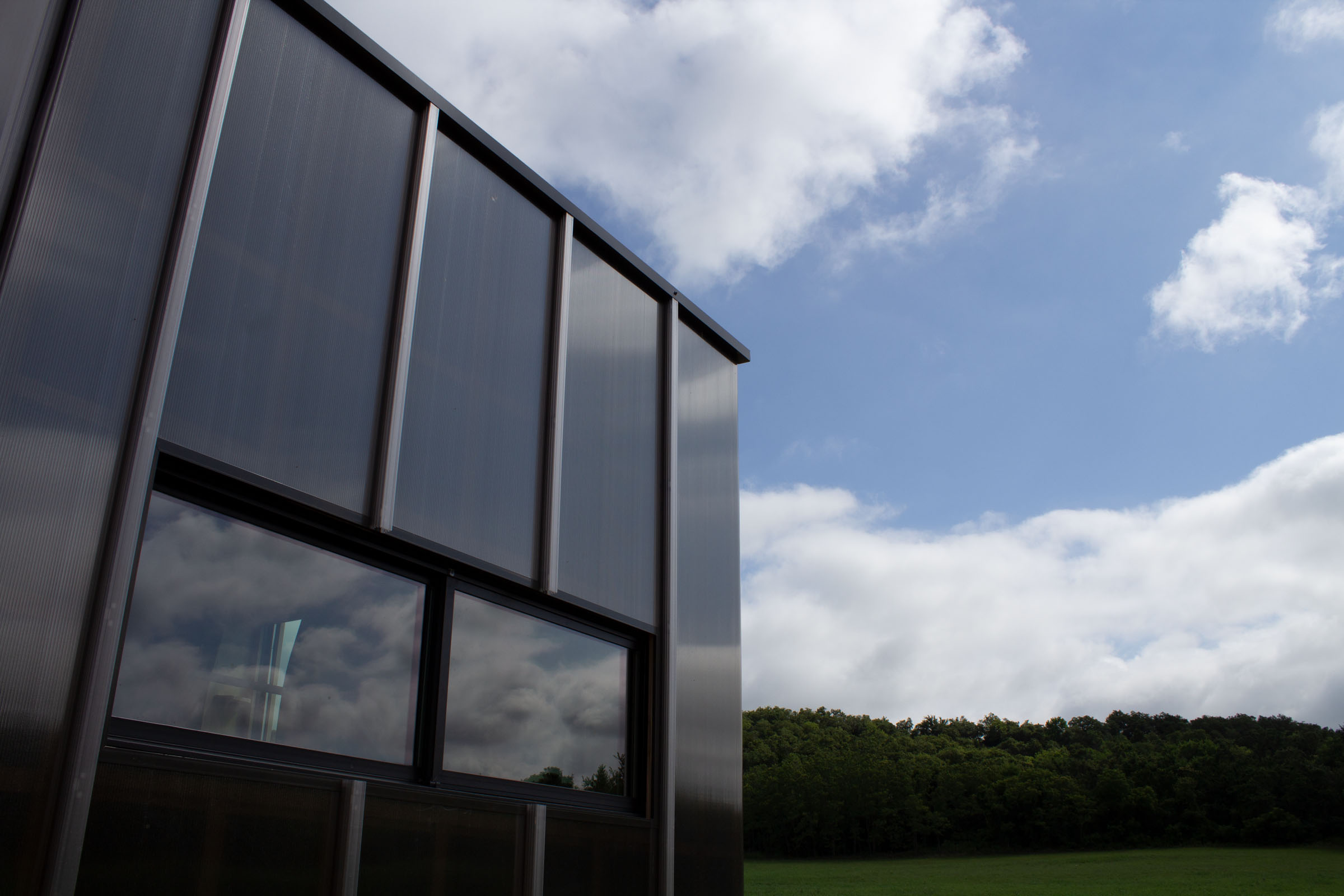
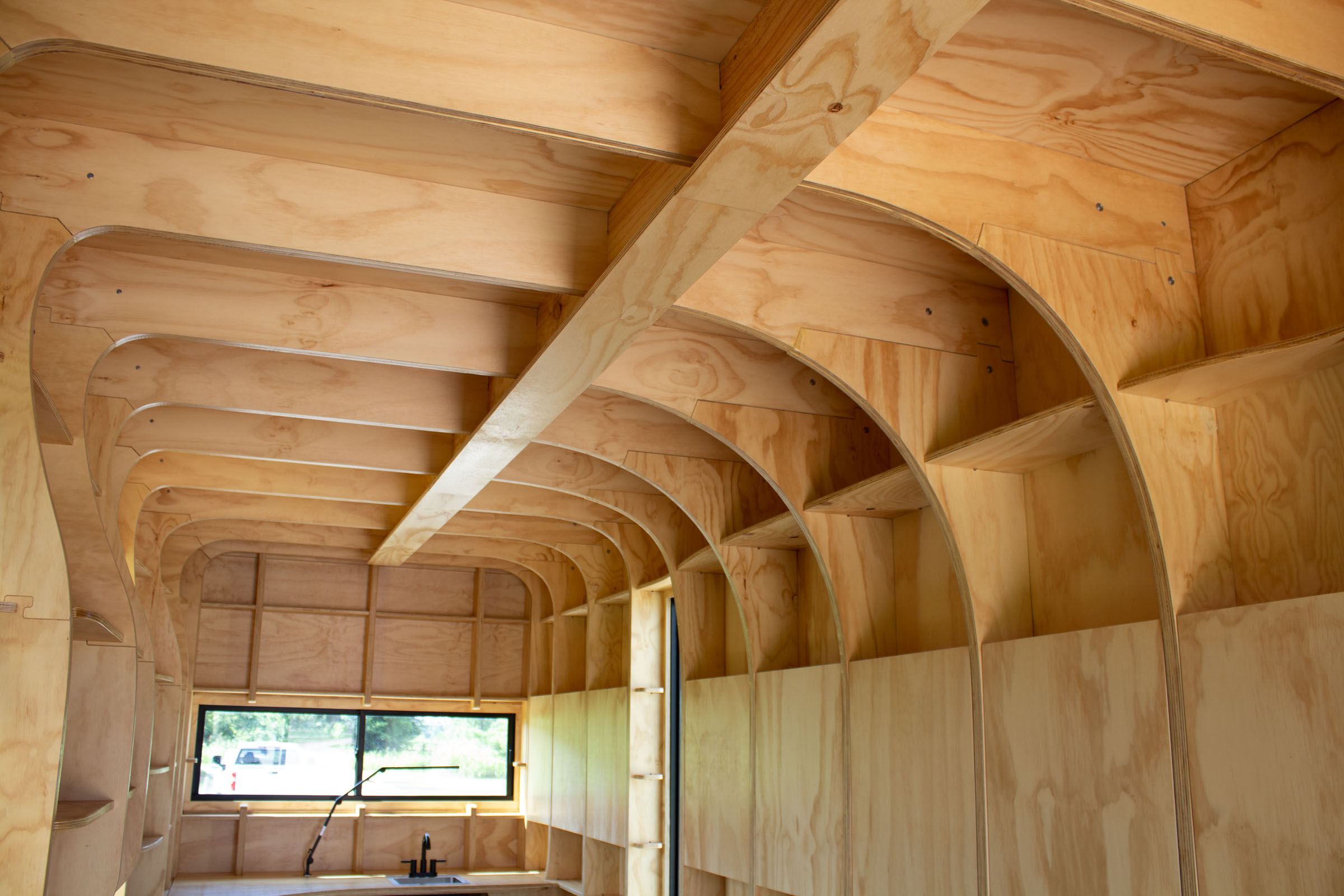
All components were CNC-milled from standard plywood sheets using nested cutting strategies that maximized structural precision and continuity. The exposed plywood grain revealed the logics of fabrication and assembly, while the natural tone and finish created a sense of warmth and legibility throughout the interior. The exterior was clad in translucent polycarbonate panels that provided weather protection and diffused illumination. In specific areas, the cladding extended across windows, creating a screened texture that filtered daylight and preserved the integrity of the structural rhythm.
The cladding system functioned as both surface and environmental register. As light moved across the shell, the structure’s geometry became visible in shadow, transforming the building into a dynamic expression of its own construction. The interplay between structure, light, and surface established an architecture that was simultaneously precise and atmospheric—expressive of both fabrication and environmental performance.
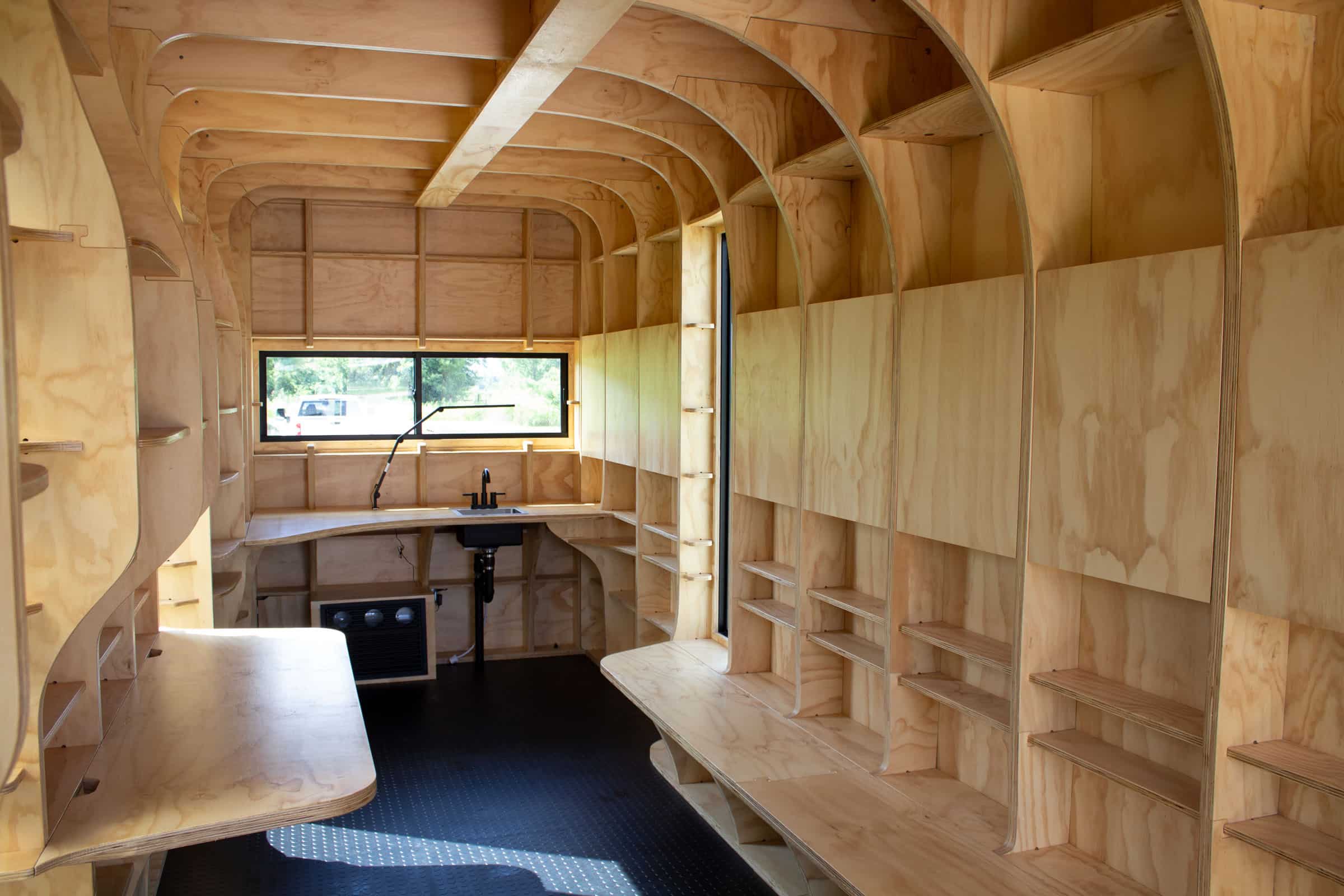
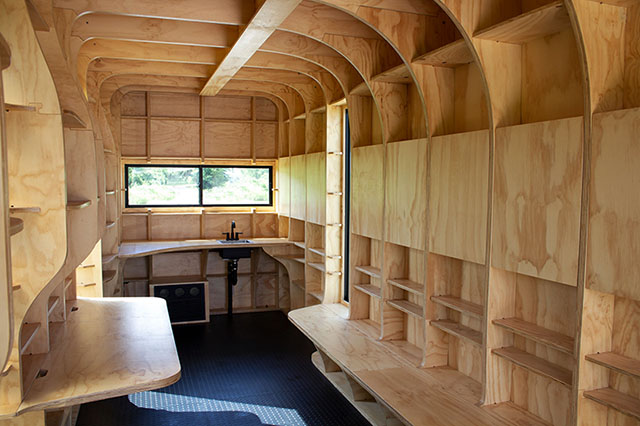
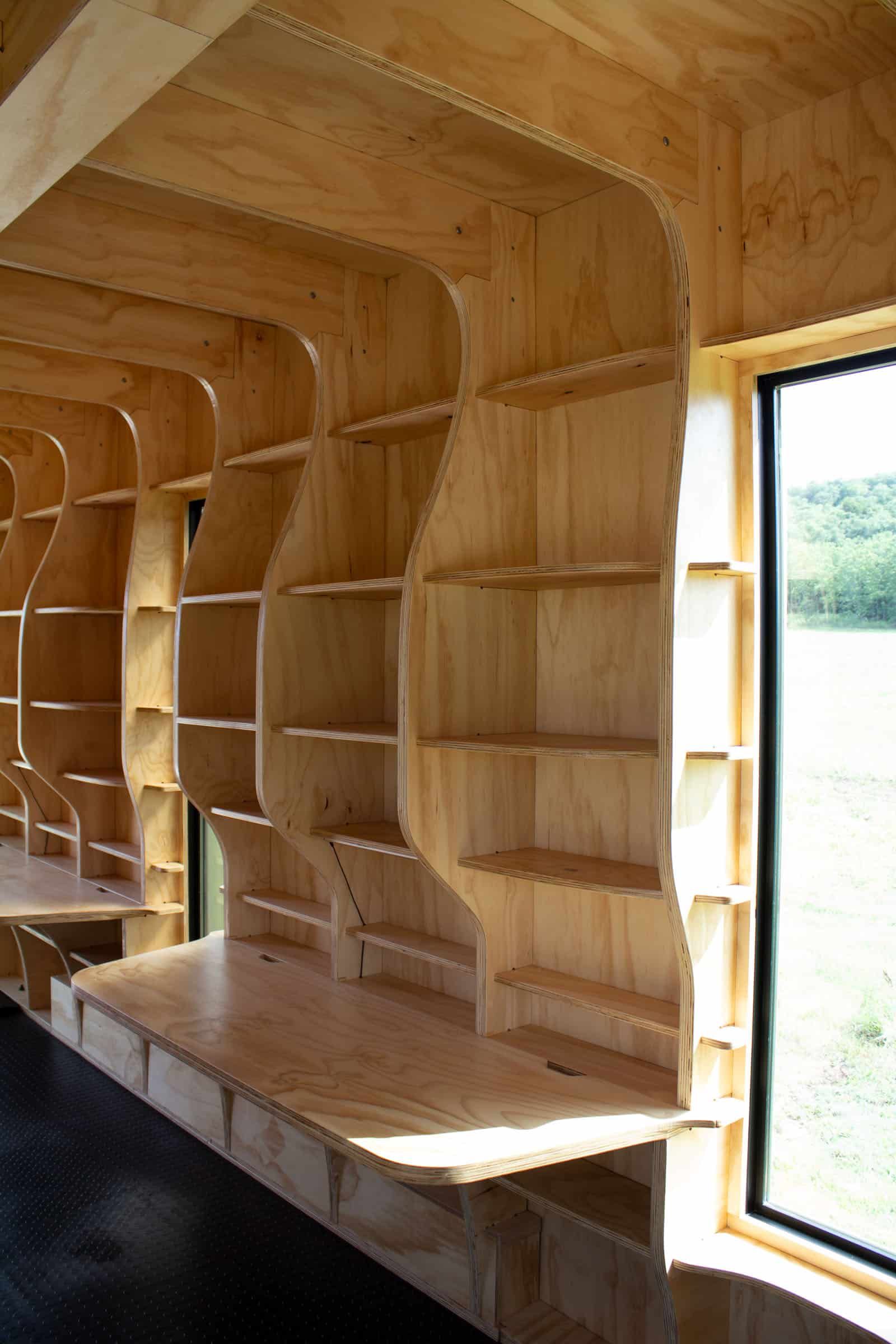
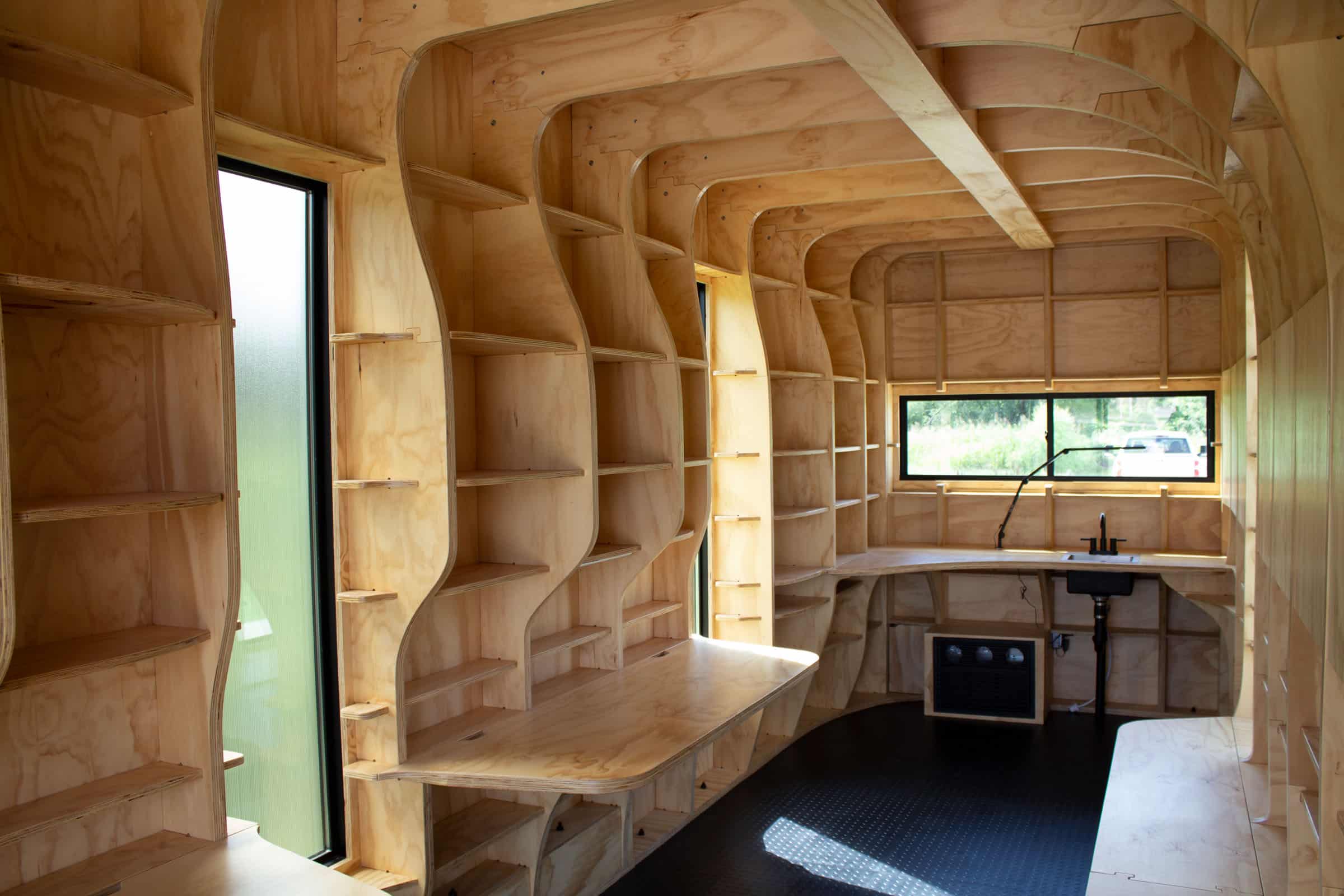
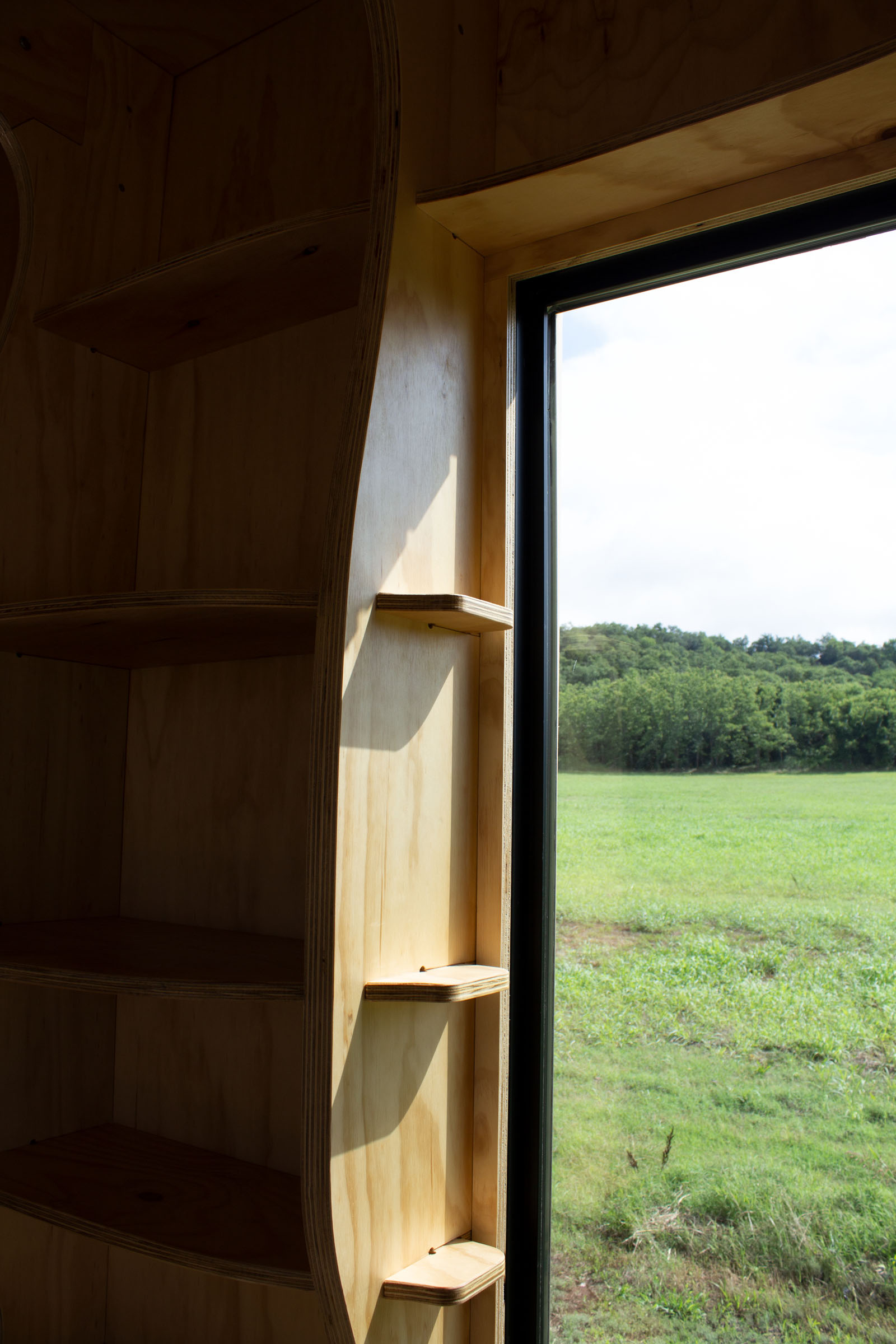
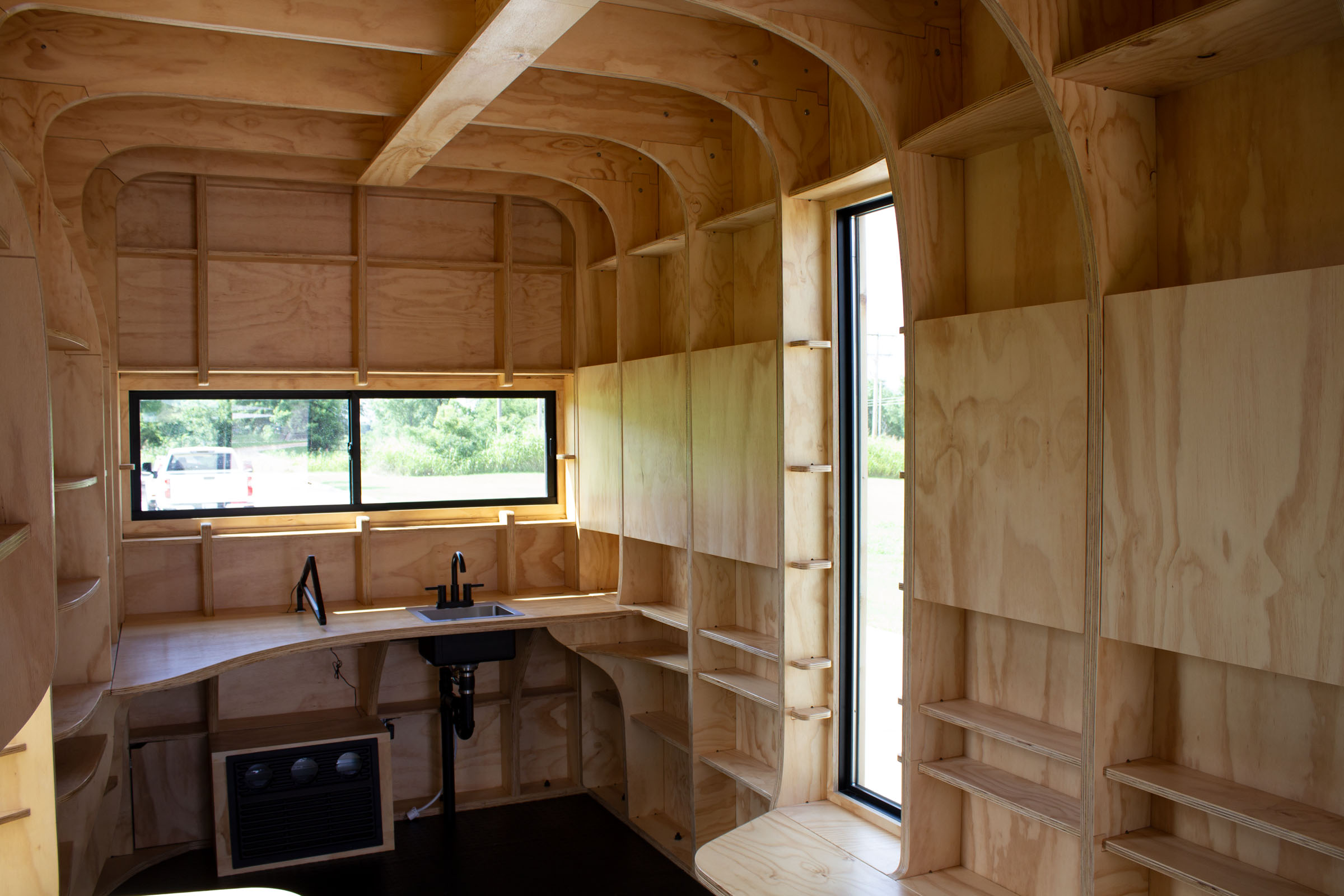
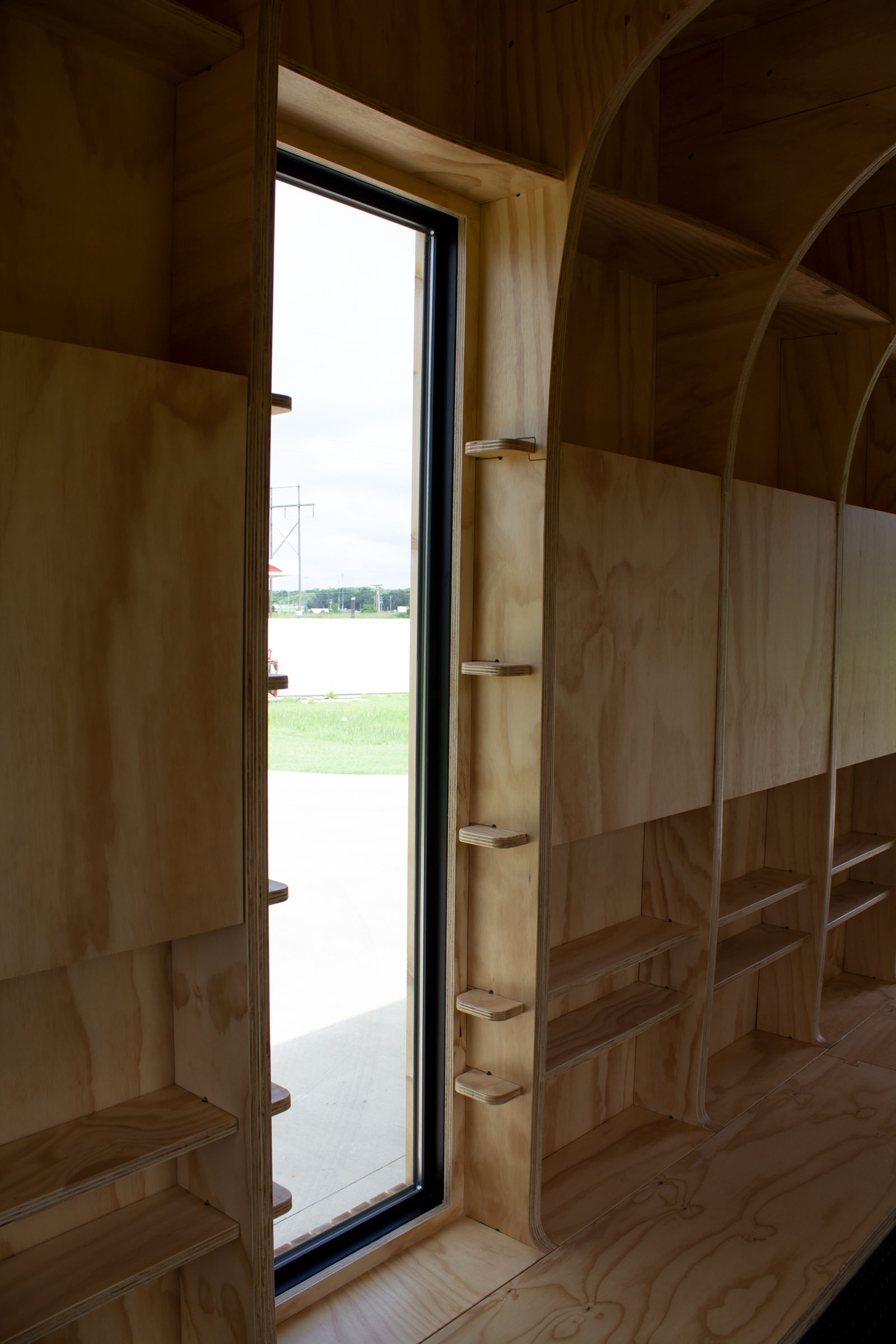
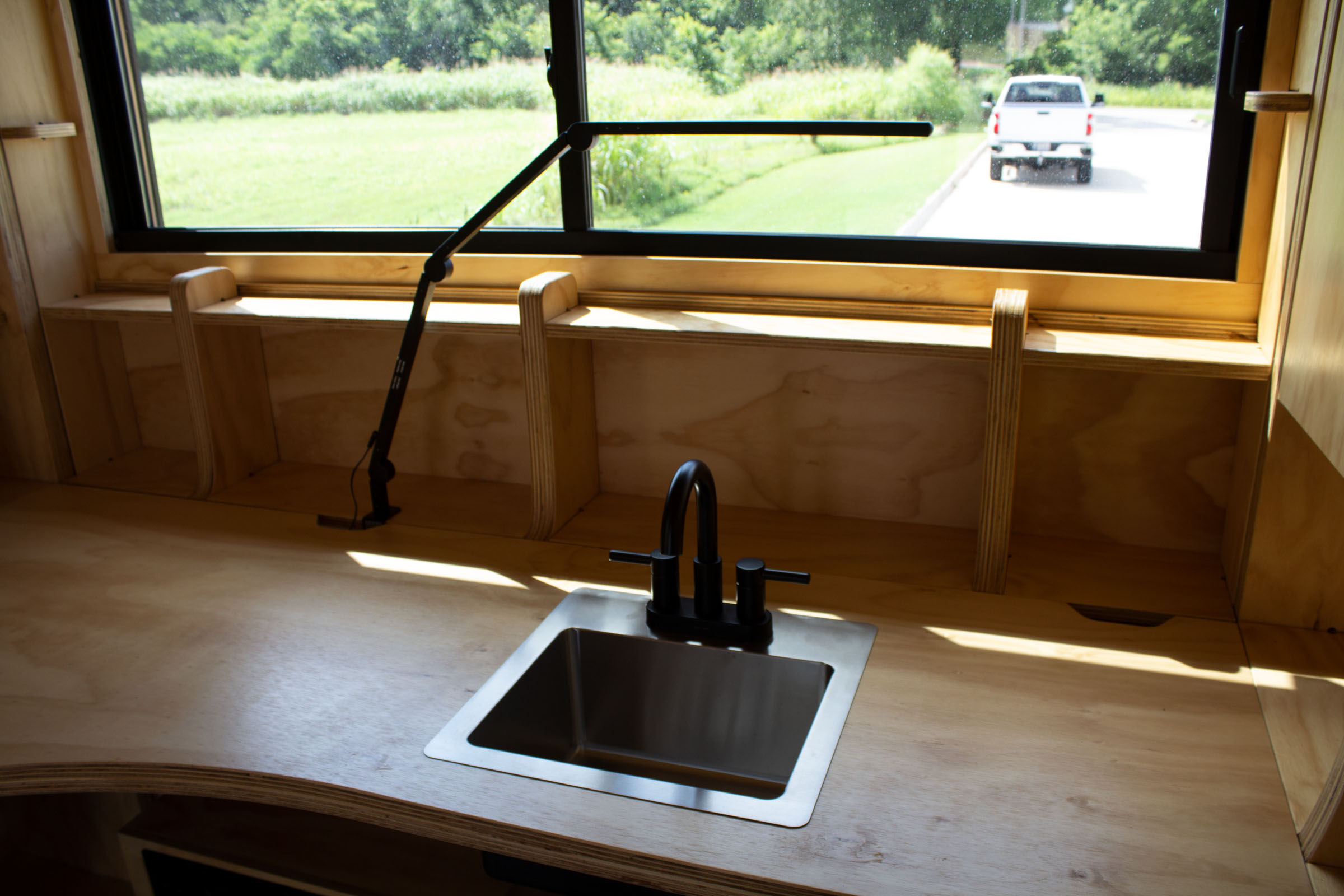
Finished workspace inside the mobile clinic, where integrated plywood cabinetry and a compact plan support healthcare use in rural communities.
Interior Architecture and Integrated Systems
The interior was conceived as a direct extension of the structural system, where geometry, material, and space were unified. The ribbed plywood frame defined both the enclosure and the spatial rhythm of the interior, generating a seamless relationship between structure and inhabitation. The curvature of the panels created a sense of enclosure while directing movement through the space, achieving both intimacy and openness within a compact footprint.
Light became the primary agent of spatial definition. Diffuse illumination, filtered through the translucent shell and screened windows, revealed the geometry and emphasized the continuous rib pattern. Functional elements such as shelving and work surfaces were integrated into the structural system, reinforcing the project’s core principle that space, structure, and detail should operate as one.
Educational Collaboration and Pedagogical Outcomes
The Wichita Mobile Clinic introduced a hybrid model of research-based design-build pedagogy that merged fabrication-led inquiry with construction science education. All aspects of design, digital modeling, detailing, and fabrication were conducted as part of applied research in computational design and modular systems. The on-site construction phase, executed by Construction Science students, provided experiential learning through field assembly, sequencing, and coordination.
This model established a replicable framework for collaboration between research and teaching, demonstrating that advanced fabrication processes can align with construction education to produce socially relevant architecture. The project functioned as both a community prototype and a pedagogical experiment, illustrating how faculty-led research can extend beyond theory to produce tangible, interdisciplinary outcomes.
Cultural and Community Impact
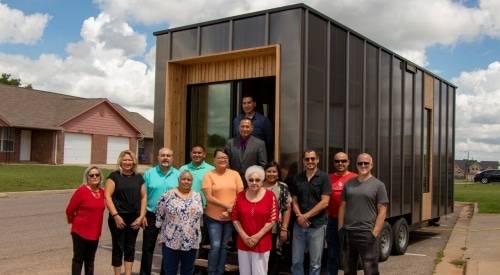
Developed in partnership with Wichita tribal leadership, the mobile clinic translated cultural knowledge into a contemporary healthcare environment. The project’s form and assembly logic drew from traditional Wichita building methods, ensuring that cultural continuity informed every stage of design and fabrication. Its deployment provided a flexible, dignified setting for vaccination and medical outreach during the pandemic, serving communities that often lack access to healthcare infrastructure.
As a collaborative effort, the project modeled how university research can engage directly with cultural and civic needs. It exemplified the role of architecture as both design innovation and public service, expanding the reach of academic research into the realm of social impact and community resilience.

ABOVE: Replica of Donald MacDonald’s City Sleeper, a CNC-cut, kit-of-parts that could be fabricated, transported, and rapidly assembled for the exhibit.
Reflection and Legacy
The Wichita Mobile Clinic marked an important moment in ongoing research into digital fabrication, modular systems, and design-build pedagogy. It demonstrated how fabrication-led inquiry can produce meaningful outcomes that are at once technical, cultural, and educational. By merging computational precision with traditional building logics, the project redefined how architecture can serve as a tool for translation between past and present, research and practice.
As a prototype, the project laid the foundation for subsequent design-build initiatives within the Gibbs College of Architecture, including the Crutcho Elementary Greenhouse Classroom and the Urban Learning Greenhouse. It continues to inform research into computational fabrication and hybrid pedagogy, affirming that architecture’s most significant role lies in connecting technology, education, and community within a single, integrated process.
-
IMG_0120
-
IMG_0139
-
IMG_0171
-
IMG_0166
-
IMG_0163
-
IMG_0157
-
IMG_0153
-
IMG_0142
-
IMG_0146
-

IMG_0147
-
IMG_0158