Renegades: Bruce Goff and the American School of Architecture
Renegades: Bruce Goff and the American School of Architecture
Renegades: Bruce Goff and the American School of Architecture
Fred Jones Jr. Museum of Art, Norman, OK
Exhibited: Jan 23 – Apr 5, 2020
Renegades: Bruce Goff and the American School of Architecture was a landmark exhibition at the Fred Jones Jr. Museum of Art celebrating the visionary legacy of Bruce Goff and the experimental pedagogy that defined the American School. The exhibition brought together drawings, models, and archival material that revealed Goff’s enduring influence on design education rooted in creativity, material innovation, and individual expression.
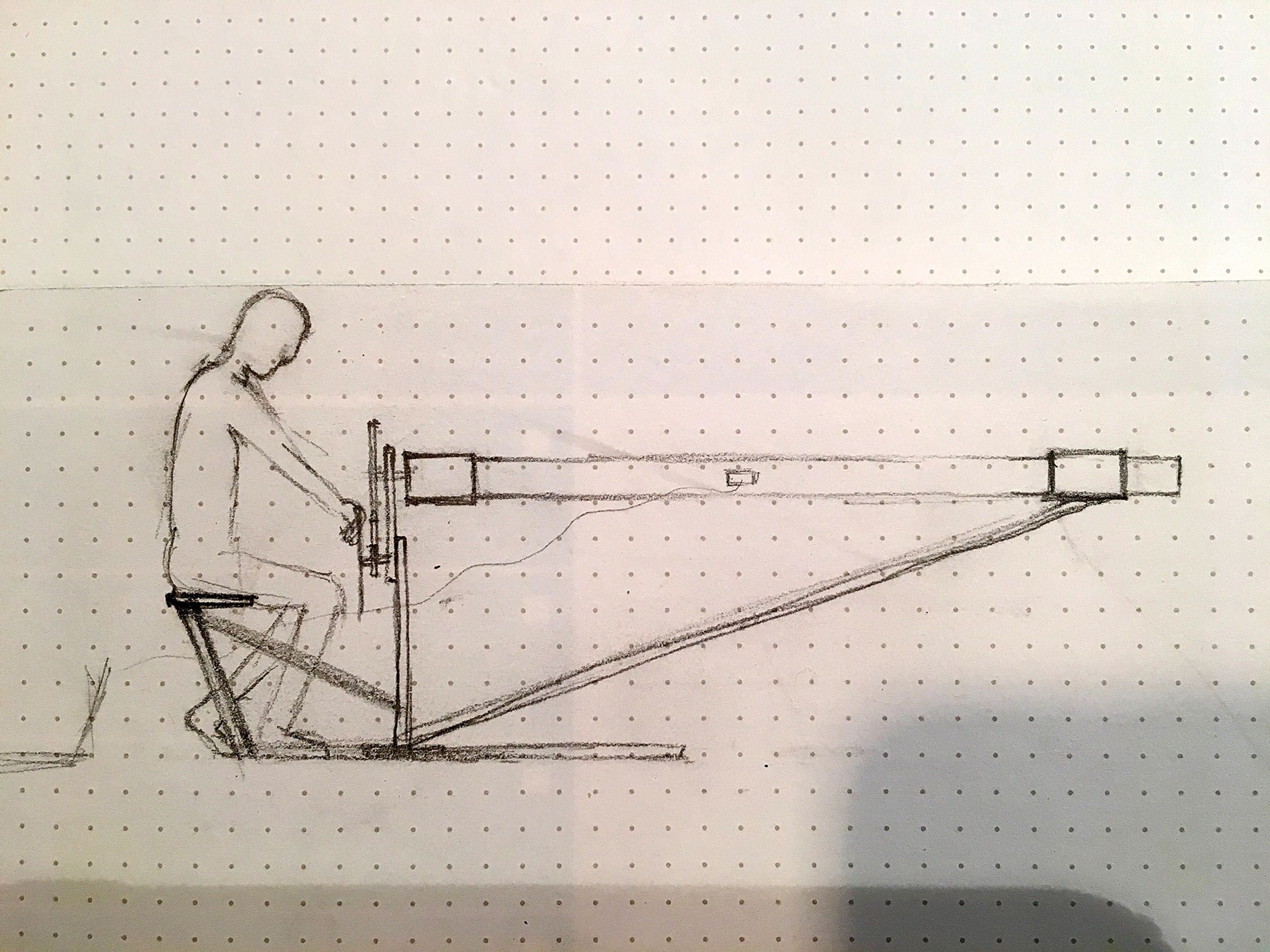
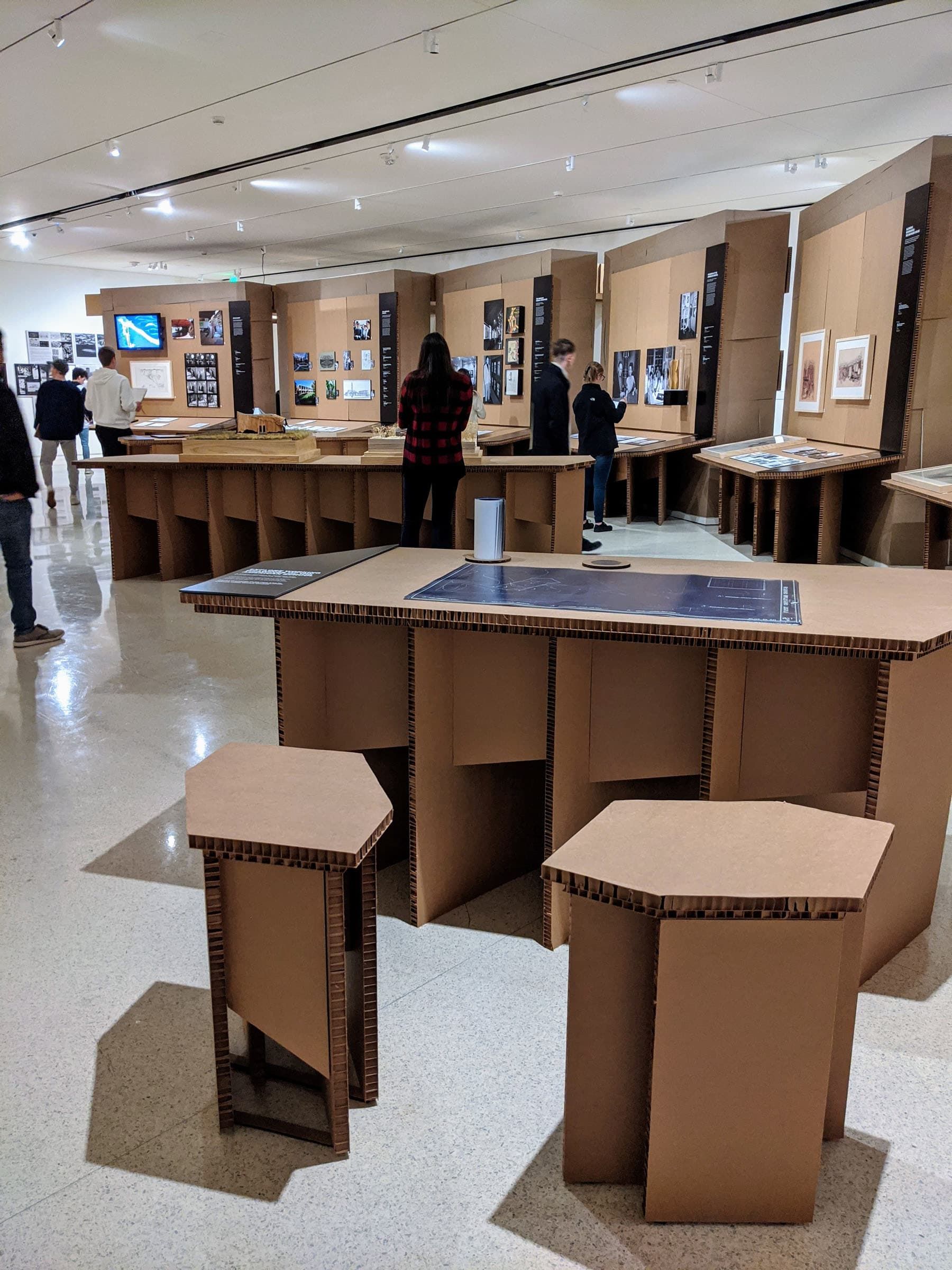
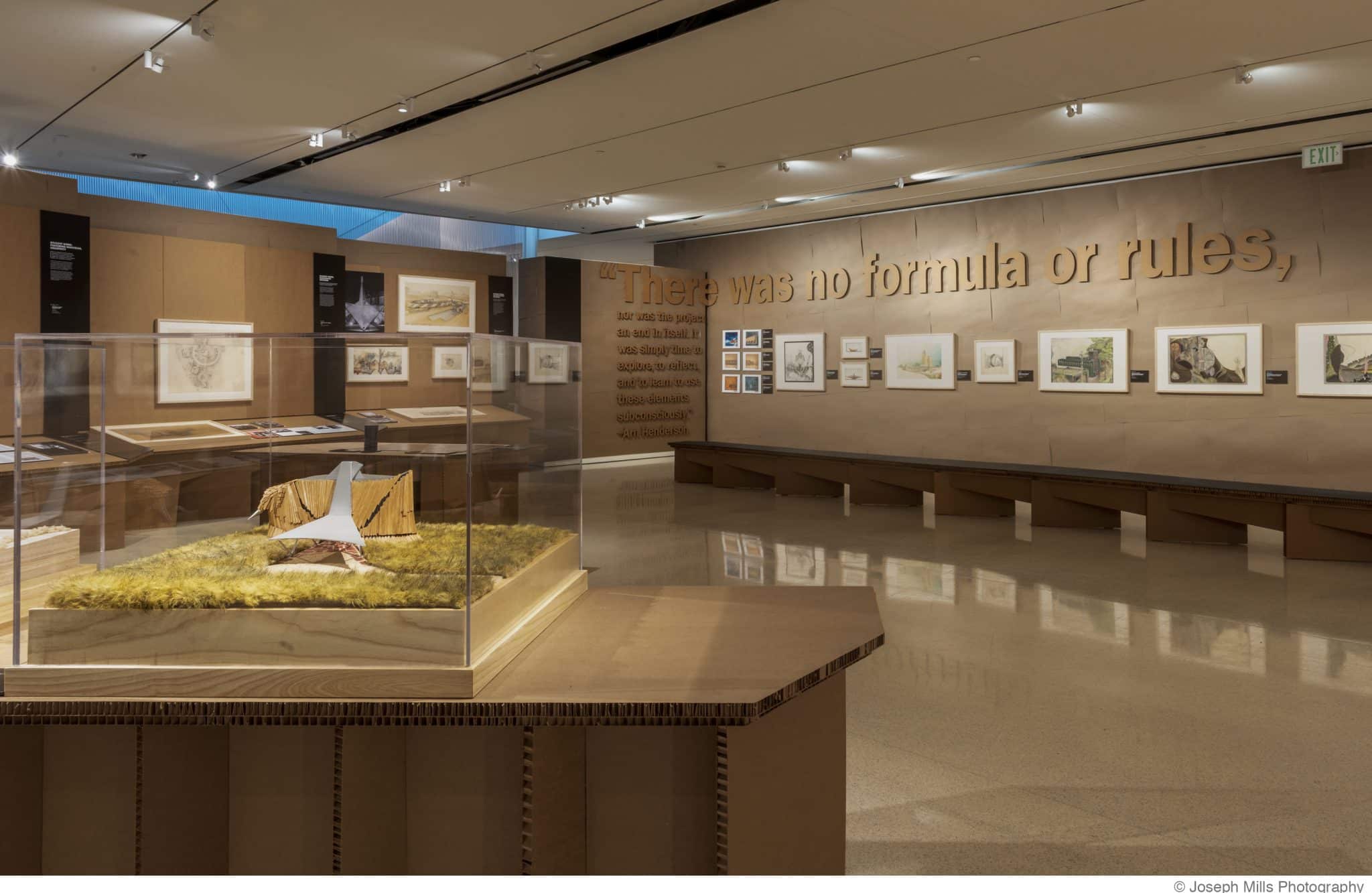
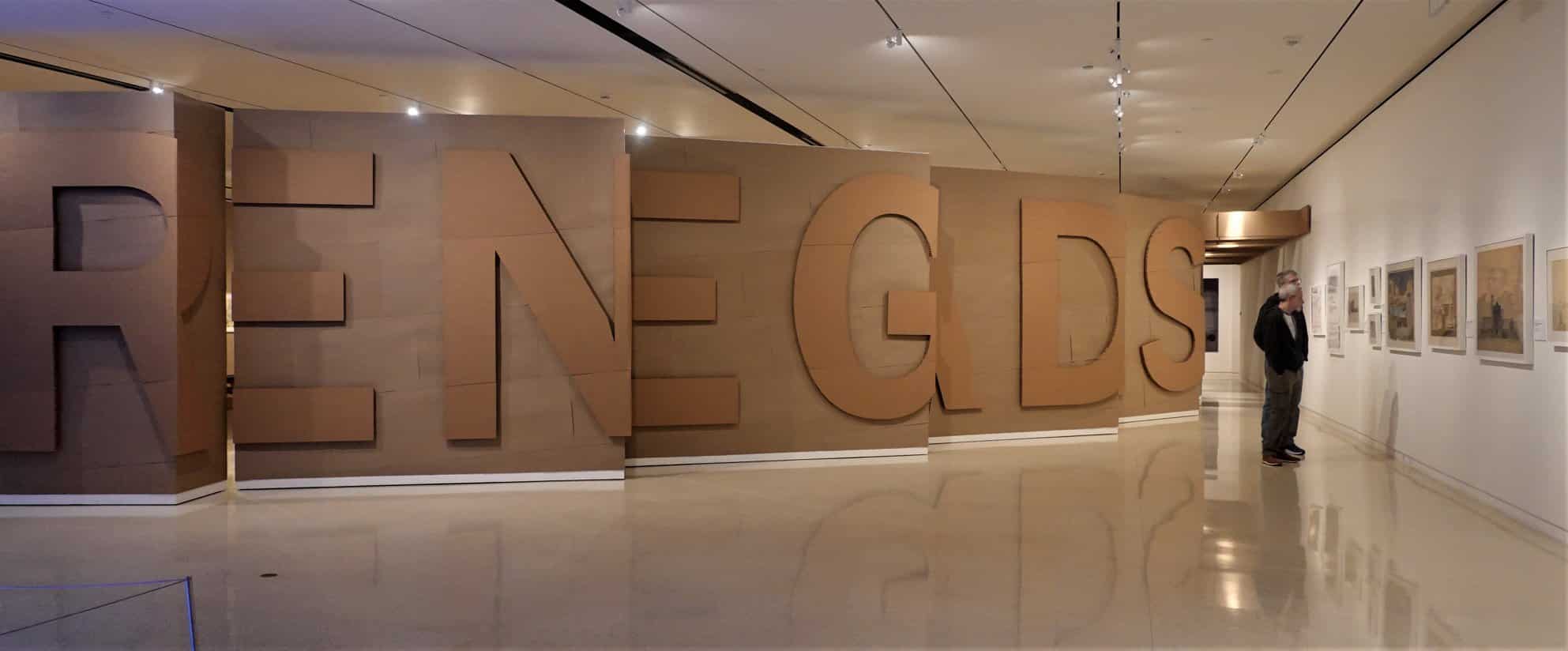
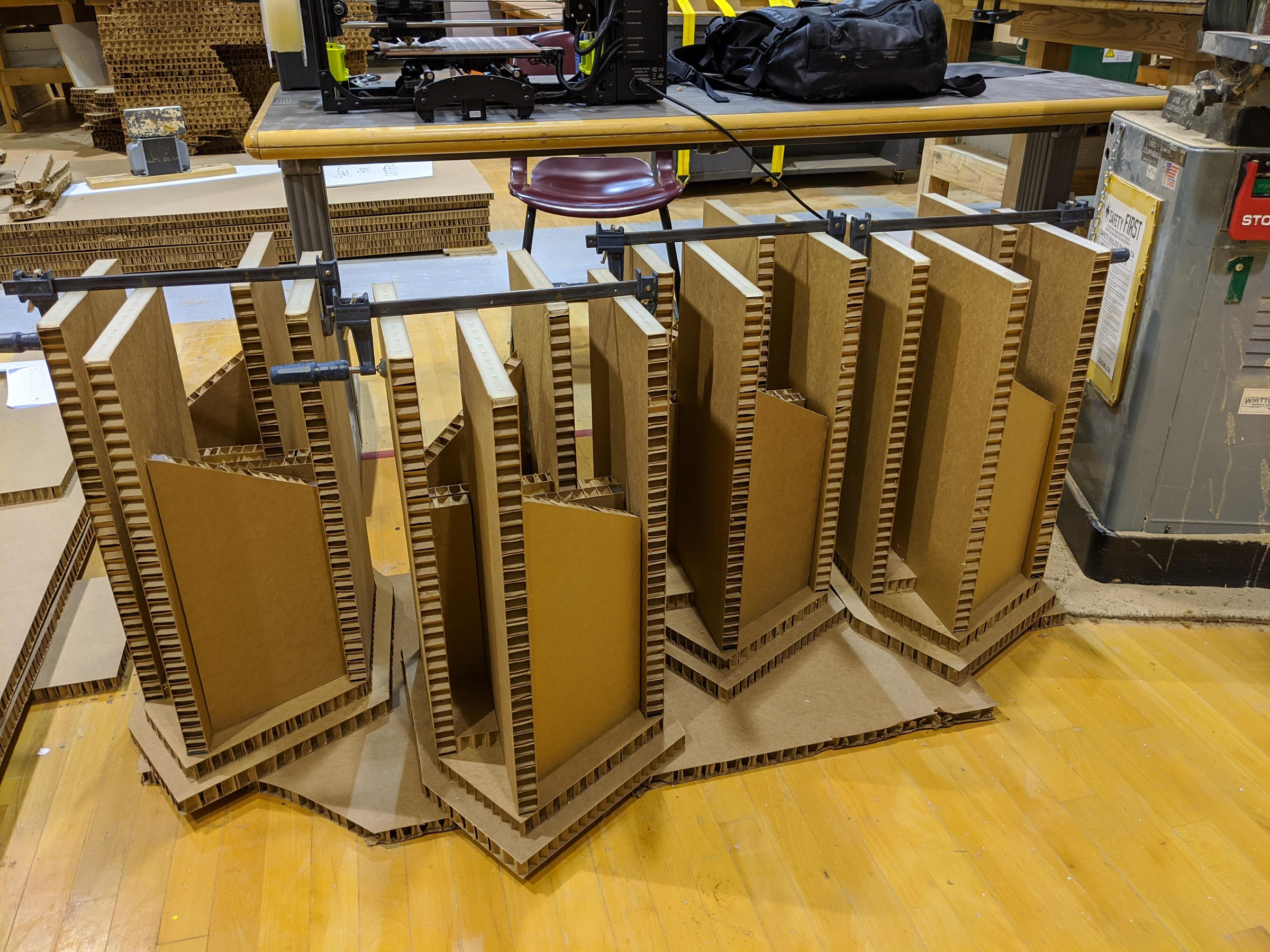
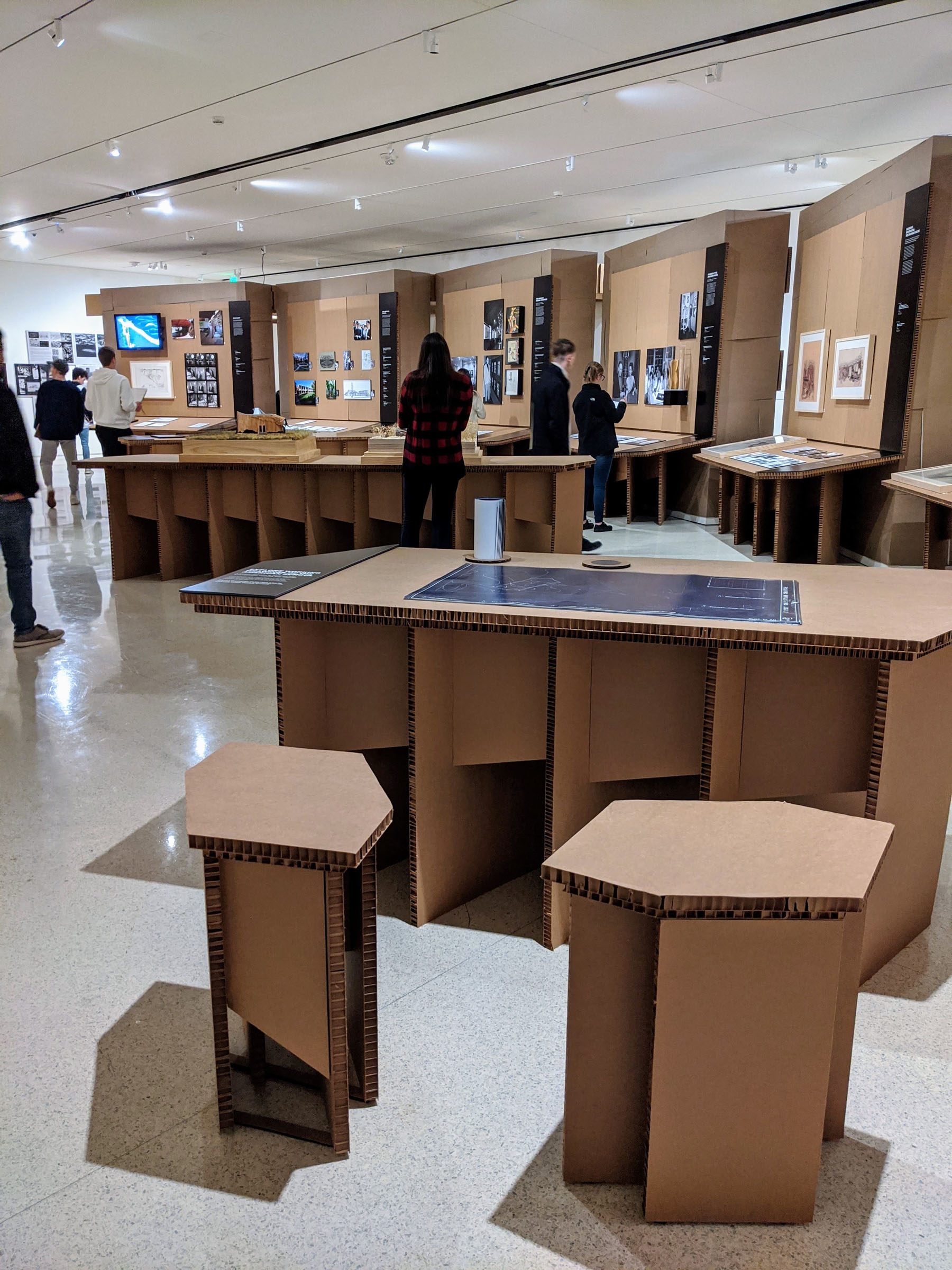
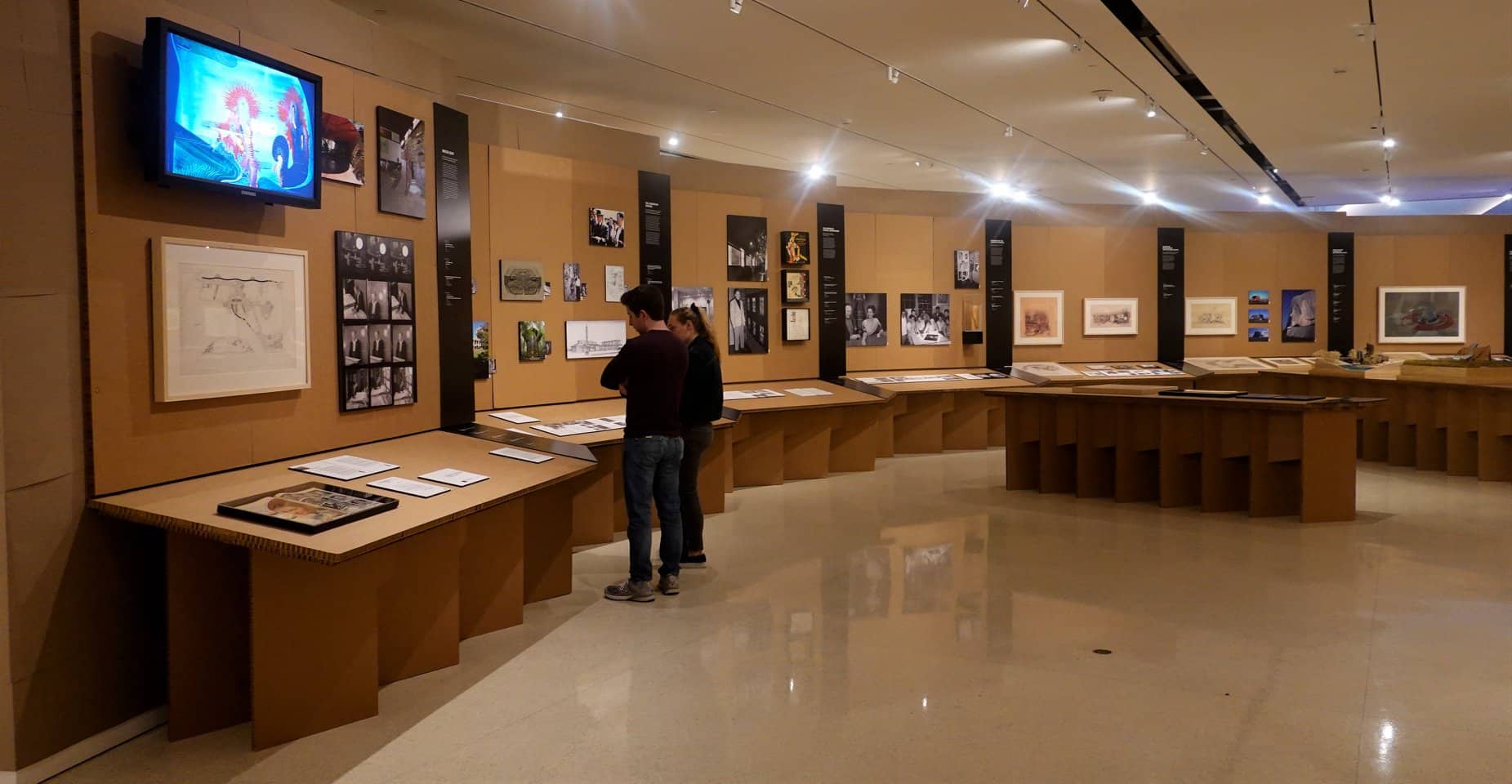
As principal fabricator, the work focused on translating exhibition designer Michael Hoffner’s curatorial drawings into physical form through hand fabrication. This included nine eight-foot-tall typographic totems, nine nine-foot-long freestanding workstations, a thirty-two-foot-long bench, three architectural drawing display tables, one virtual reality station, and four stools. All components were hand-fabricated from honeycomb cardboard and wood, using custom joinery and material strategies developed through extensive research into modular assembly and lightweight structural performance. The resulting suite of furniture and display elements embodied the American School’s improvisational ethos, where material curiosity and experimentation serve as forms of architectural inquiry.
Exhibition and Fabrication
The fabrication process became an act of architectural translation, bridging the gap between Hoffner’s design intent and the physical constraints of the exhibition material. Each element was hand-cut, laminated, and assembled in the Gibbs College of Architecture’s fabrication studios, transforming simple materials into refined museum-grade installations. The workflow balanced precision and immediacy, relying on analog tools, physical mockups, and iterative testing to resolve structural stability, assembly logic, and visual consistency.
Rather than hiding process, the exhibition celebrated it. Exposed joints, seams, and edges revealed the construction logic and conveyed the spirit of Goff’s pedagogy: that making is itself a form of discovery. The fabricated installations were both display infrastructure and spatial instrument, guiding visitors through the gallery while performing as sculptural artifacts in their own right.
Material Research and Honeycomb Edge Insert Development
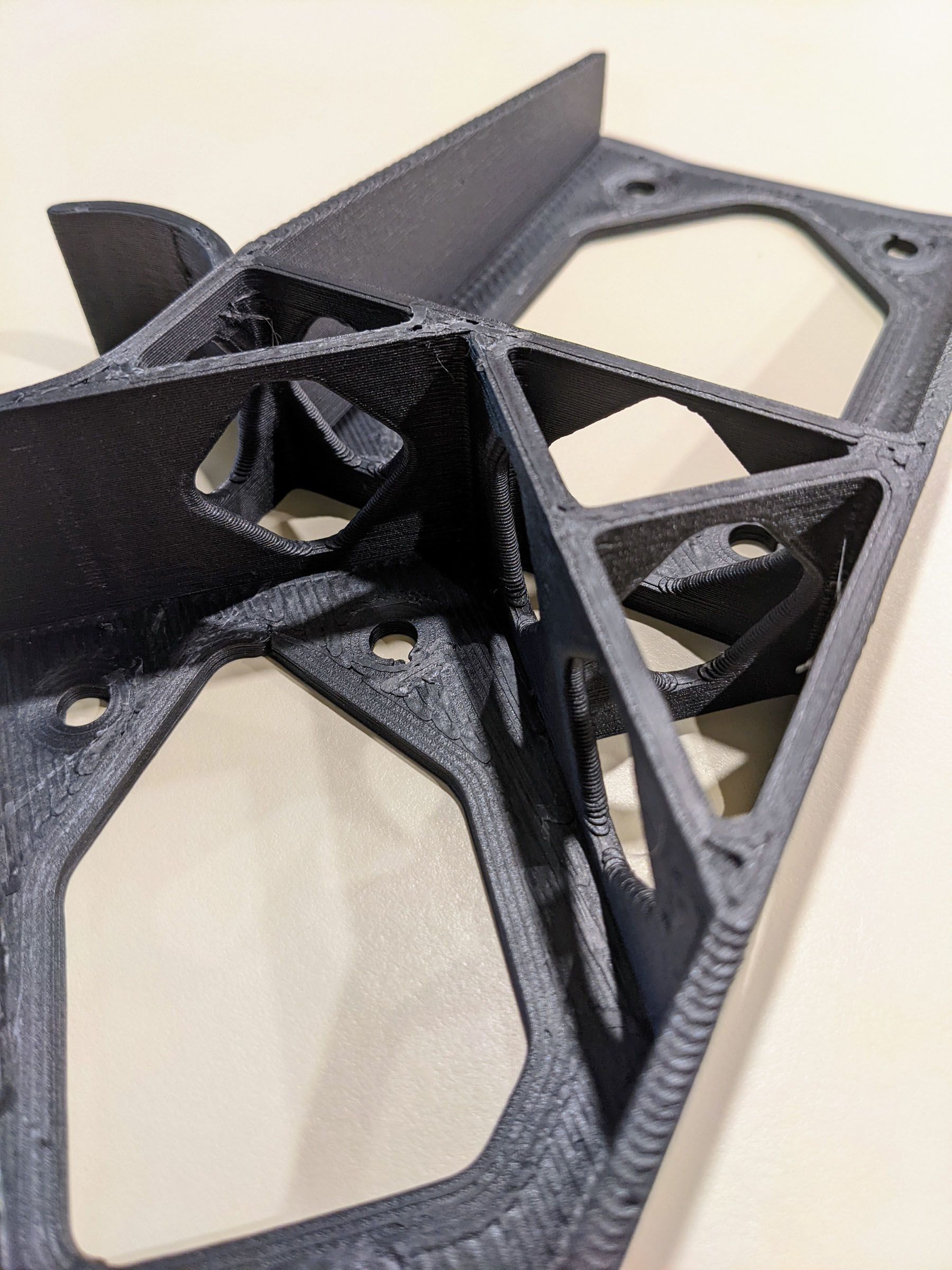
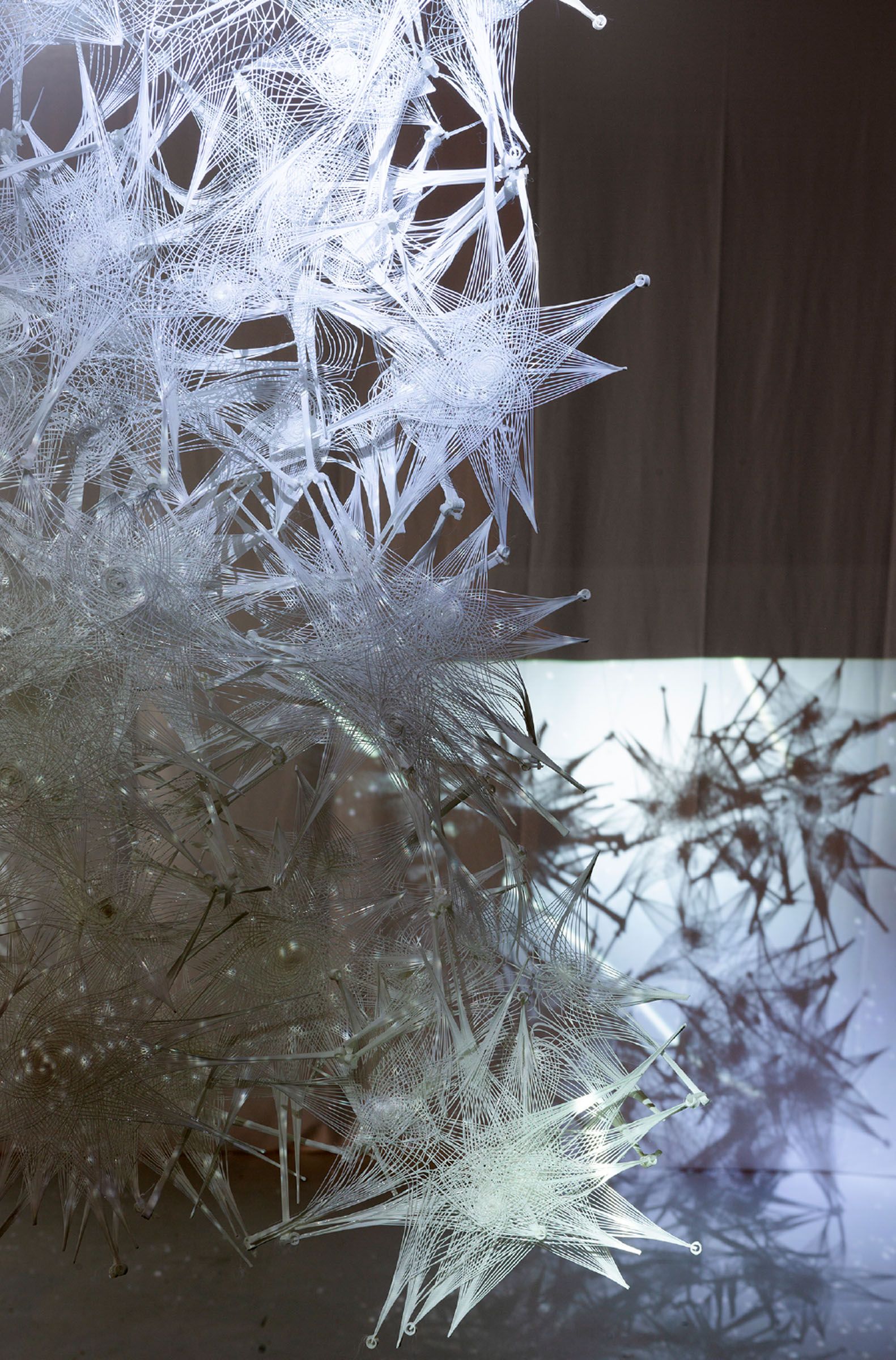
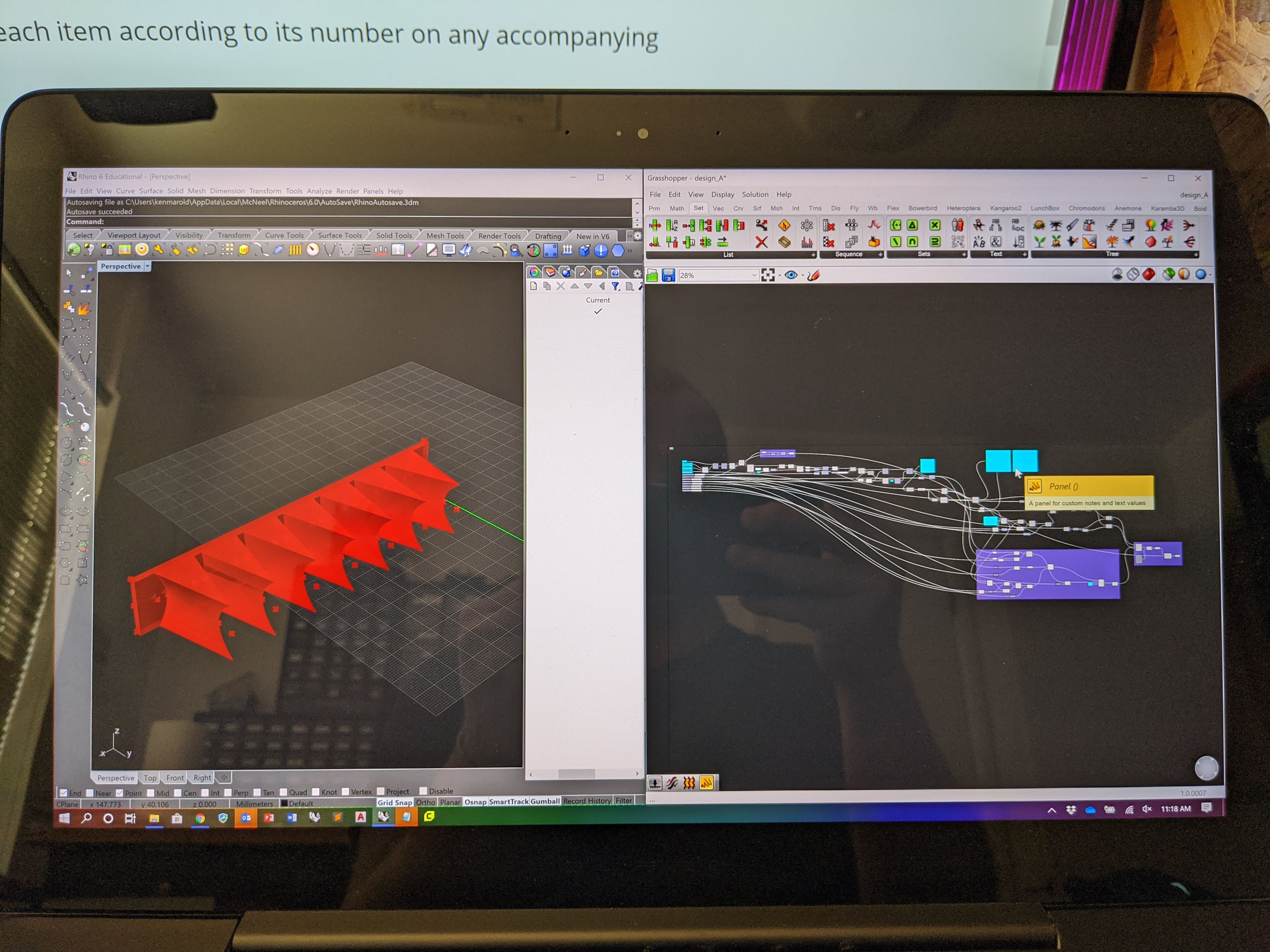
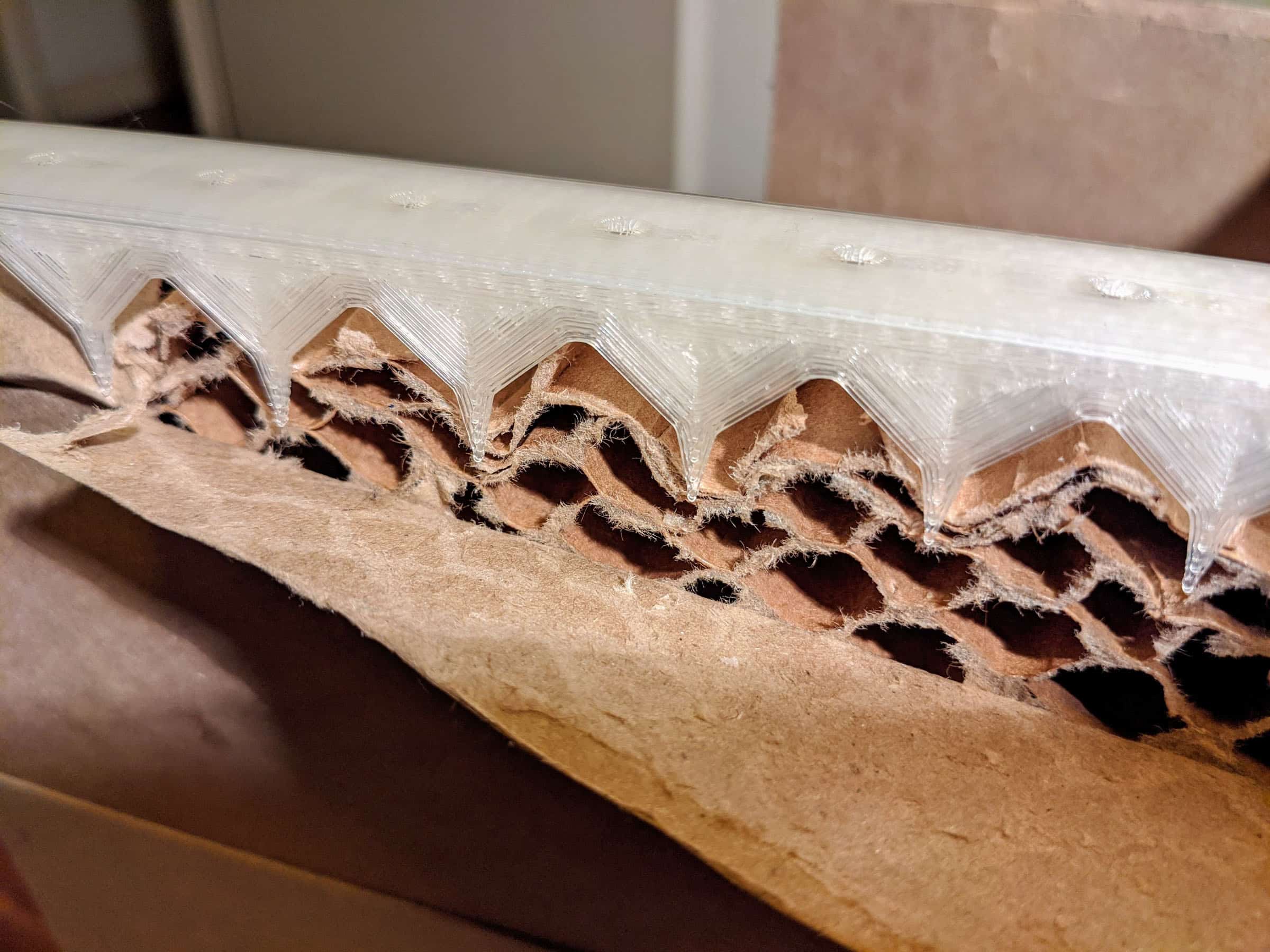
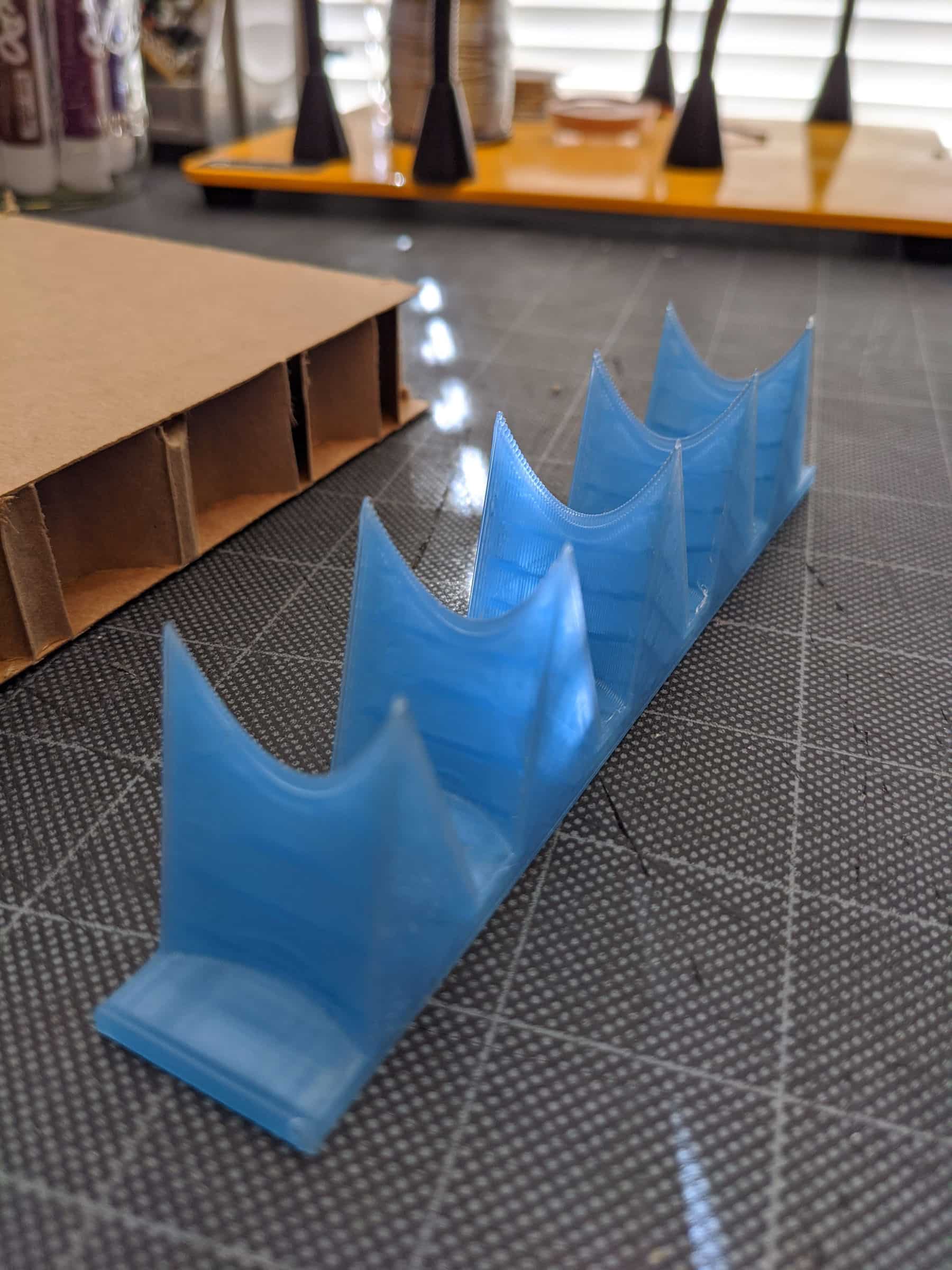
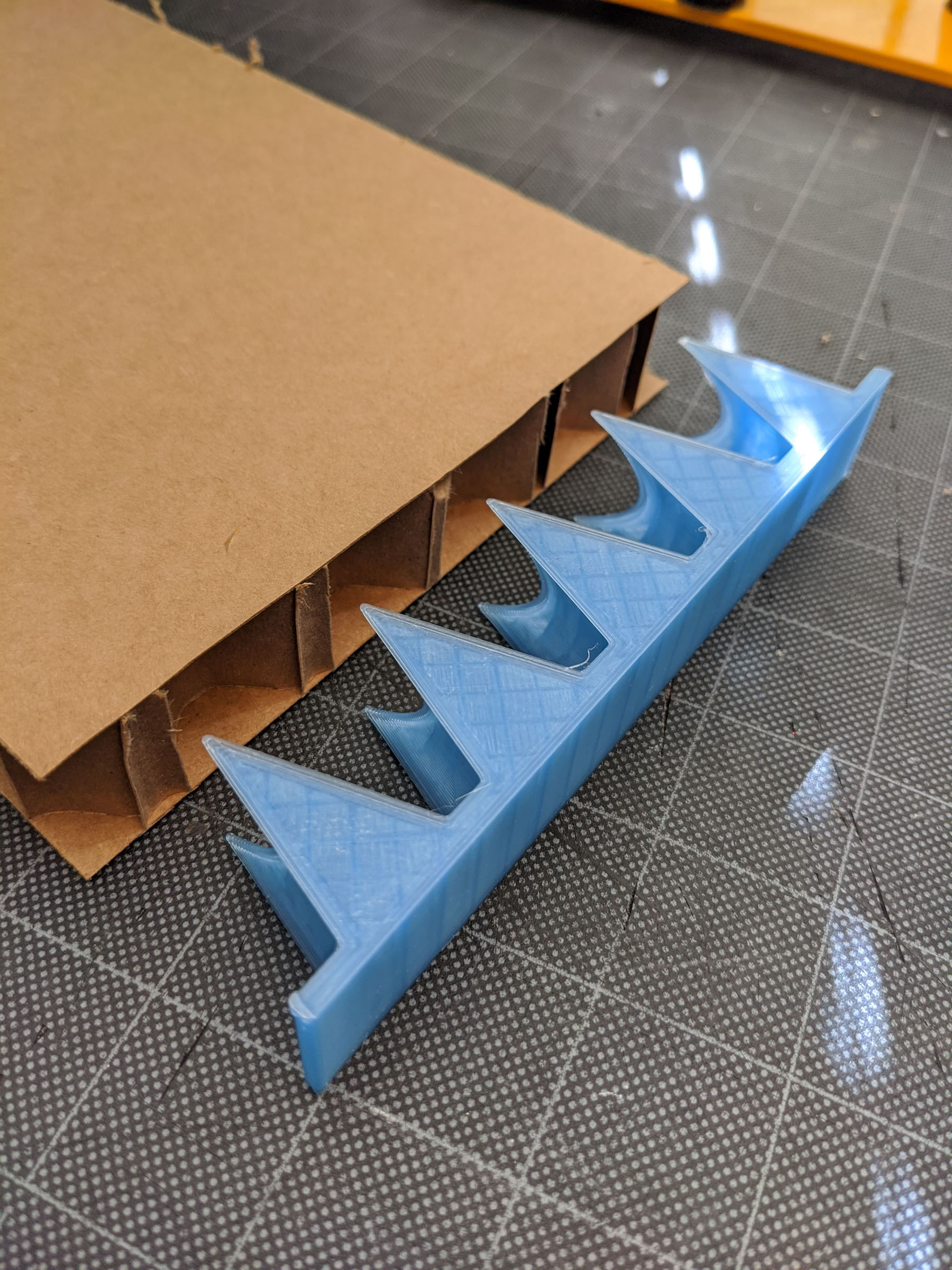
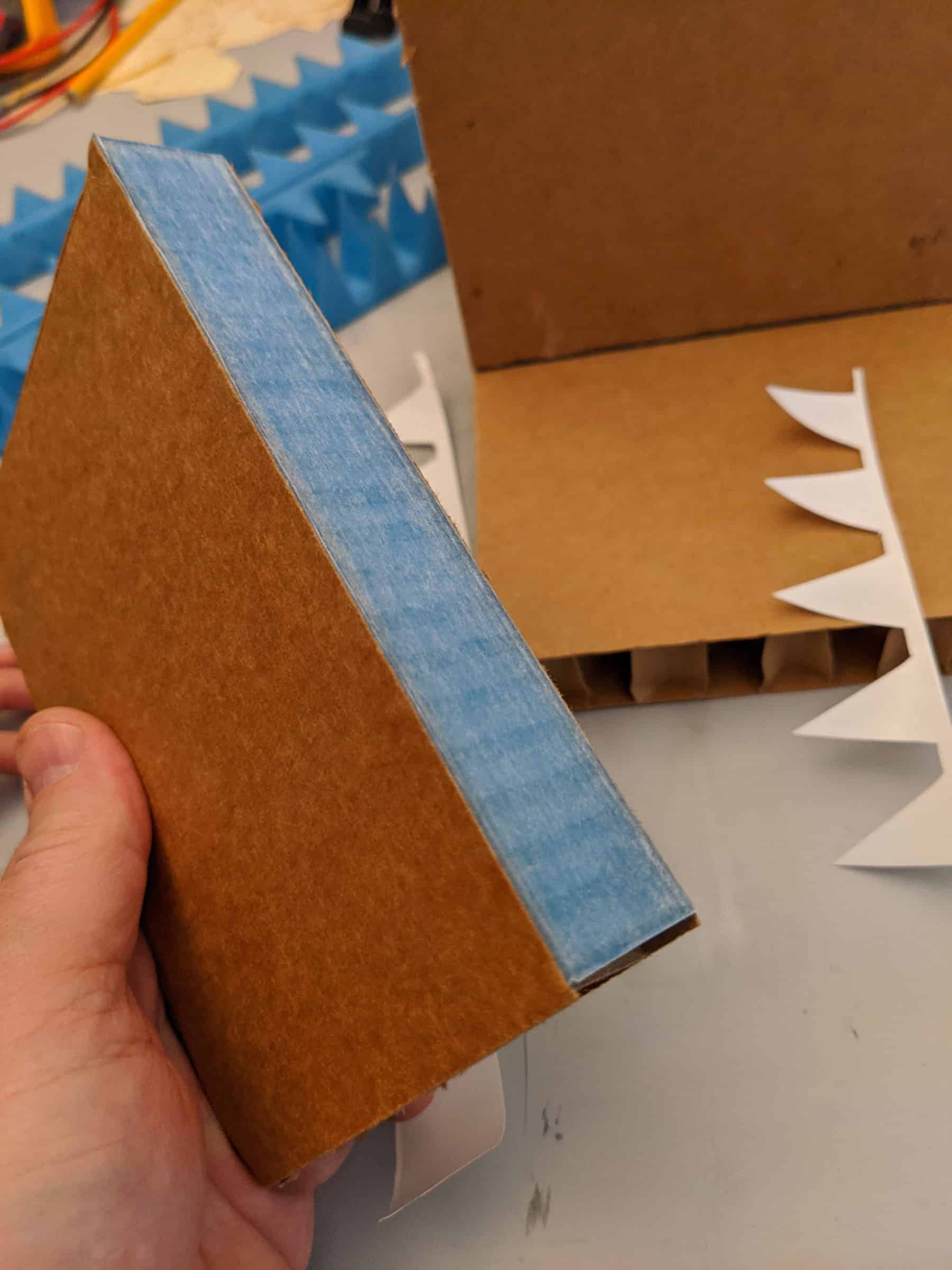
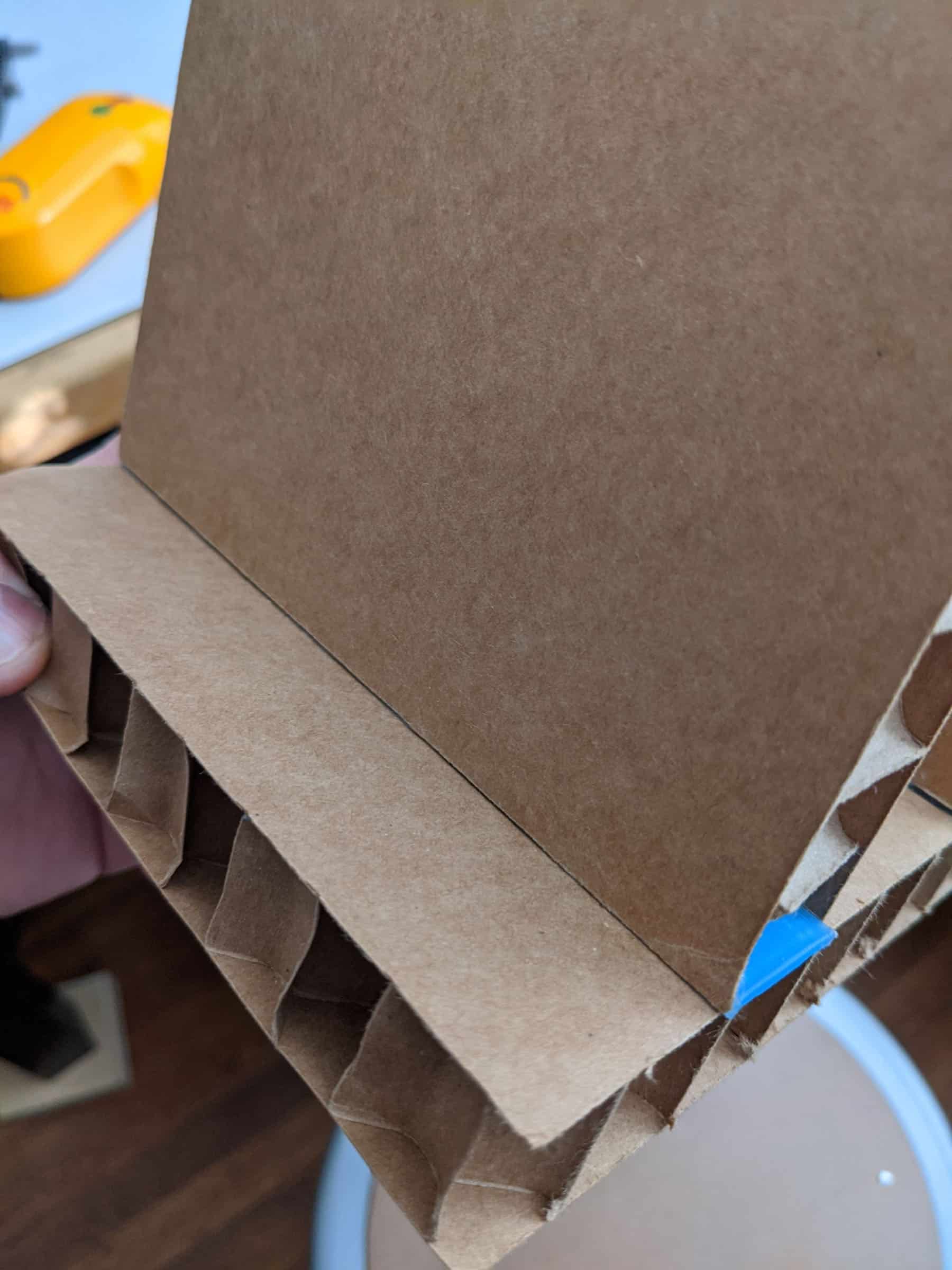
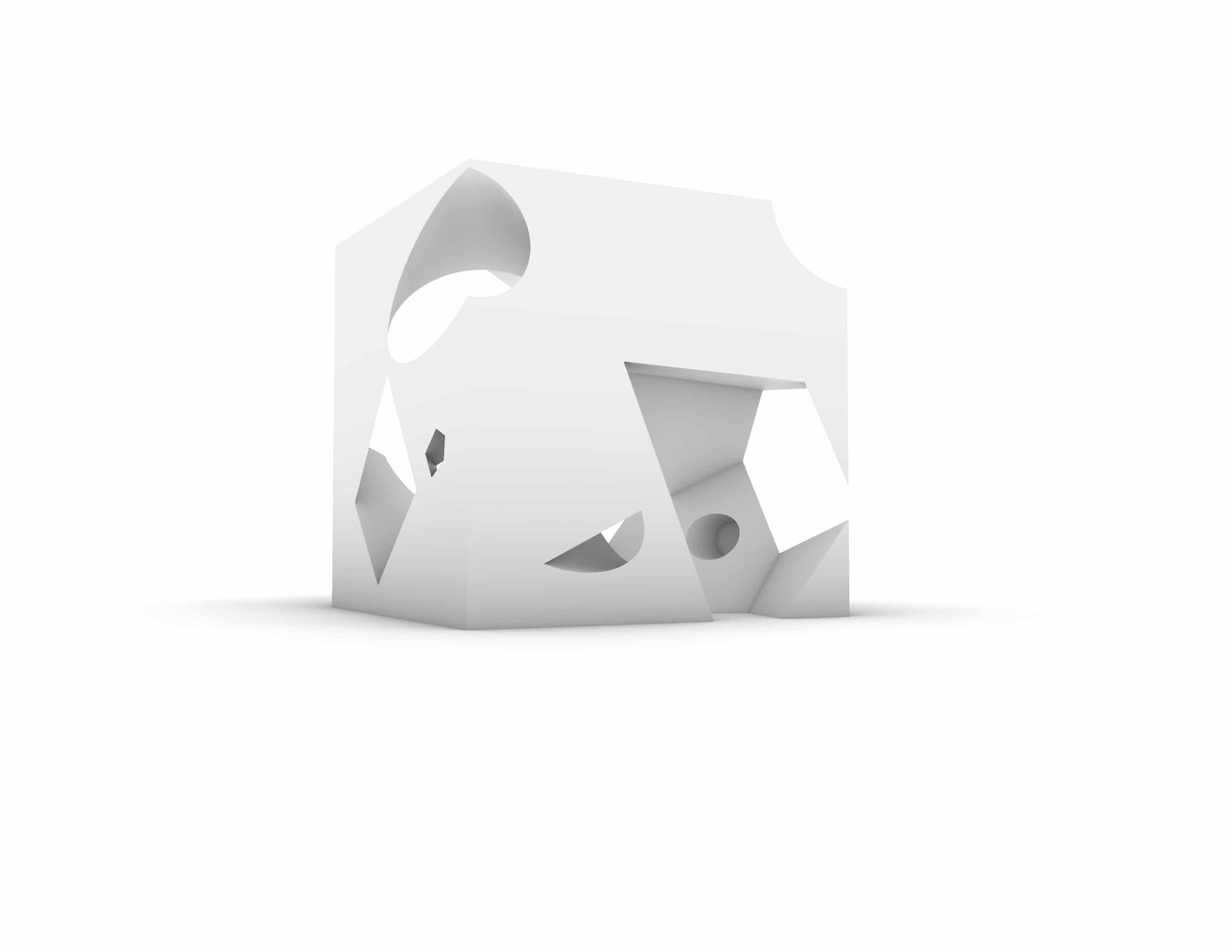
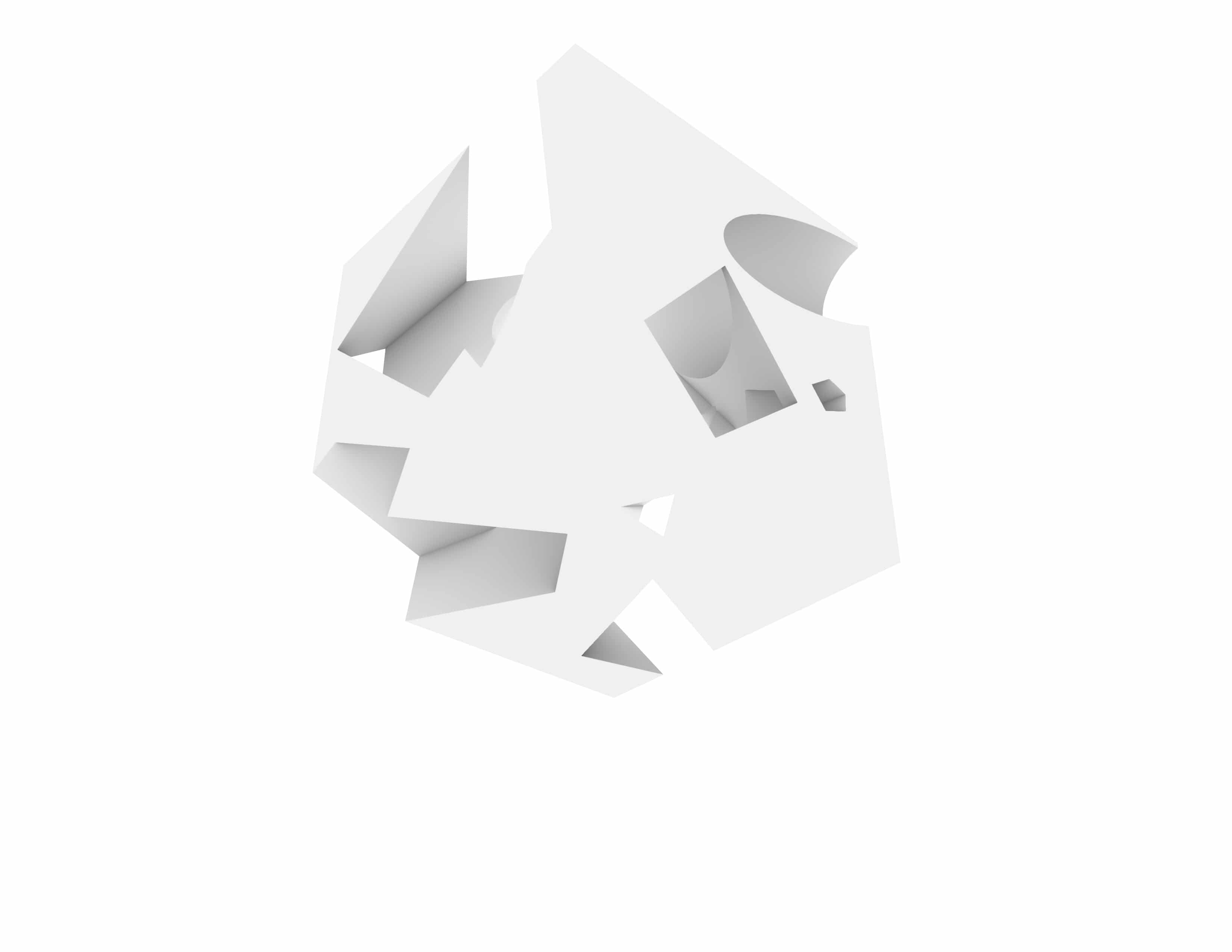
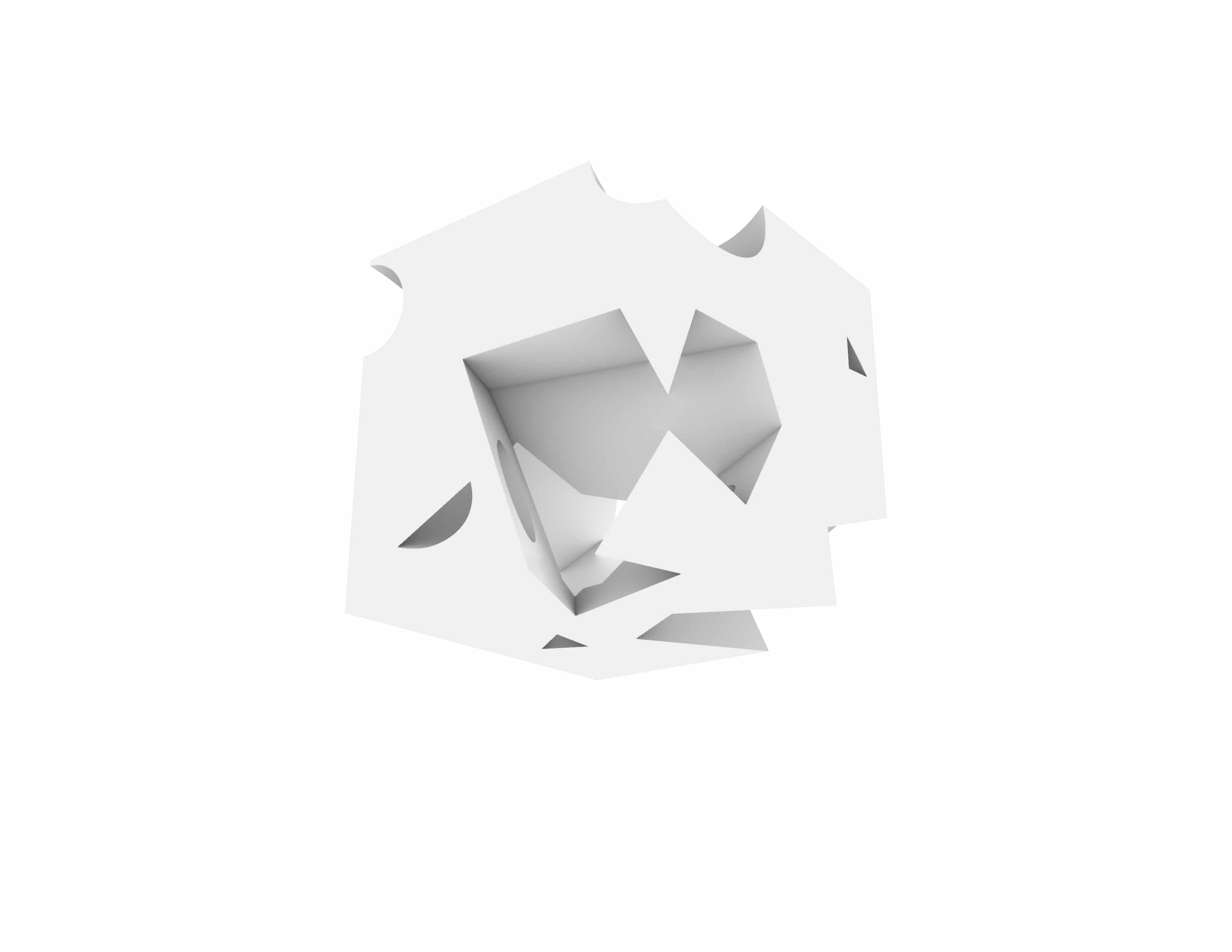
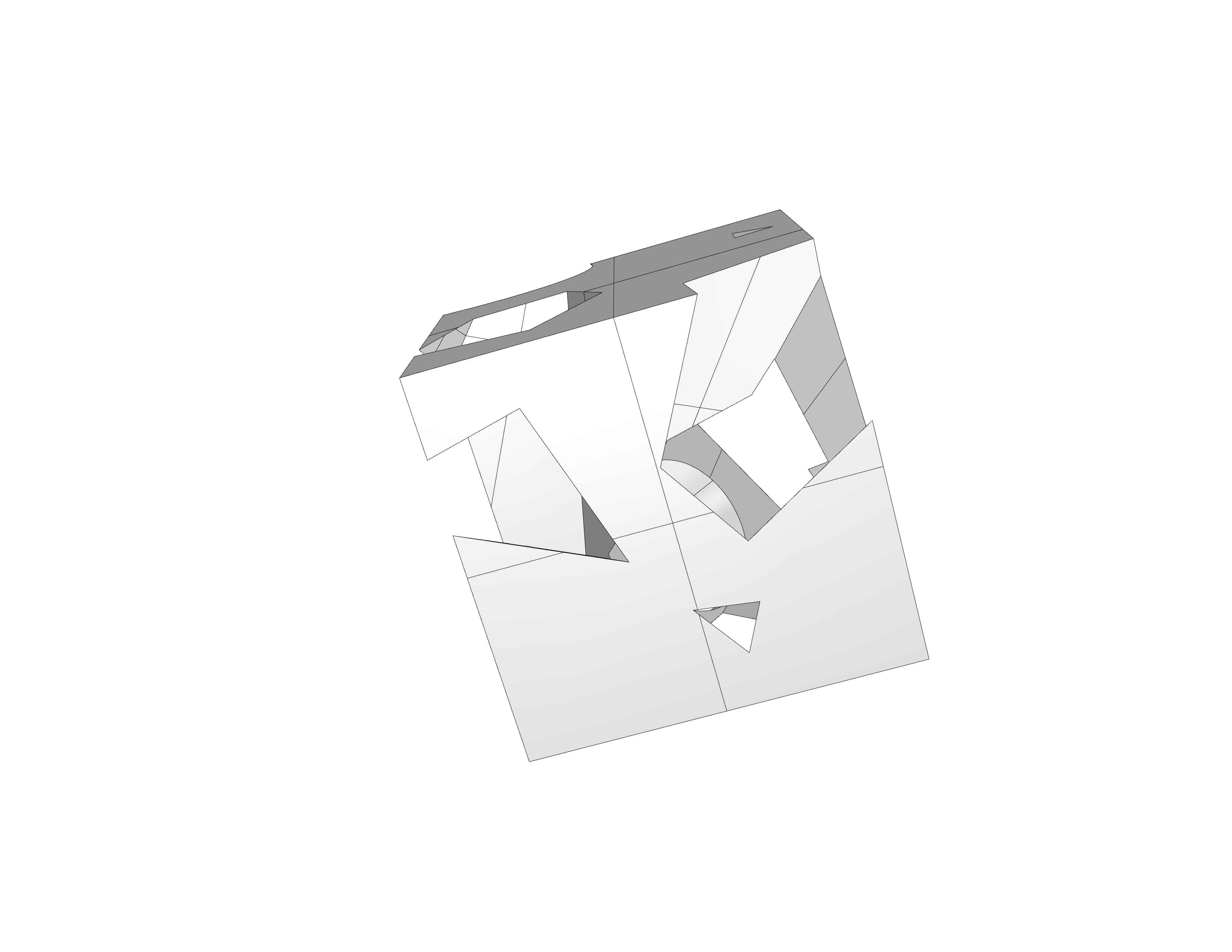
The structural limitations of honeycomb cardboard led to a focused material investigation that advanced into funded research and a provisional patent. Using Rhino, Grasshopper, and 3D printing, a digitally parameterized Honeycomb Cardboard Edge Insert was developed to reinforce and stabilize the material’s vulnerable edges. This computationally designed component addressed issues of crushing and delamination by bridging the internal cells of the cardboard core with interlocking ribbed geometries.
Each insert was algorithmically generated to adapt to varying panel geometries, creating seamless transitions between edge-to-edge and edge-to-face connections. 3D-printed from PLA, the inserts friction-fit within the cardboard structure, distributing loads evenly while maintaining the lightweight and recyclable nature of the material. This work culminated in the research grant Integral Connections for Structural Applications of Honeycomb Cardboard and the U.S. Provisional Patent (No. 62/954,239).
The Honeycomb Edge Insert transformed honeycomb cardboard from a fragile display substrate into a high-performance structural material. More broadly, it exemplified how computational design and additive manufacturing can extend the life of sustainable materials through digital precision, situating fabrication research within the experimental tradition of the American School—where craft, curiosity, and technological ingenuity converge.
Computational Workflow and Digital Production
Although fabrication was performed entirely by hand, the process was informed by digital workflows that established geometric accuracy and coordination across hundreds of unique parts. Each component was modeled digitally, translated into full-scale cutting templates, and refined through analog methods of assembly and testing. This combination of computational design logic and manual craftsmanship exemplified the exhibition’s central theme: the intersection of intuition and precision in creative production.
By merging digital and tactile methodologies, the fabrication process embodied a hybrid model of production that echoes Goff’s experimental philosophy. It demonstrated how computation can serve as a conceptual framework, guiding human craft rather than replacing it, and reaffirmed that architectural intelligence resides equally in the process of making as in the final artifact.


Fabrication Seminar: Topographical Ecotones
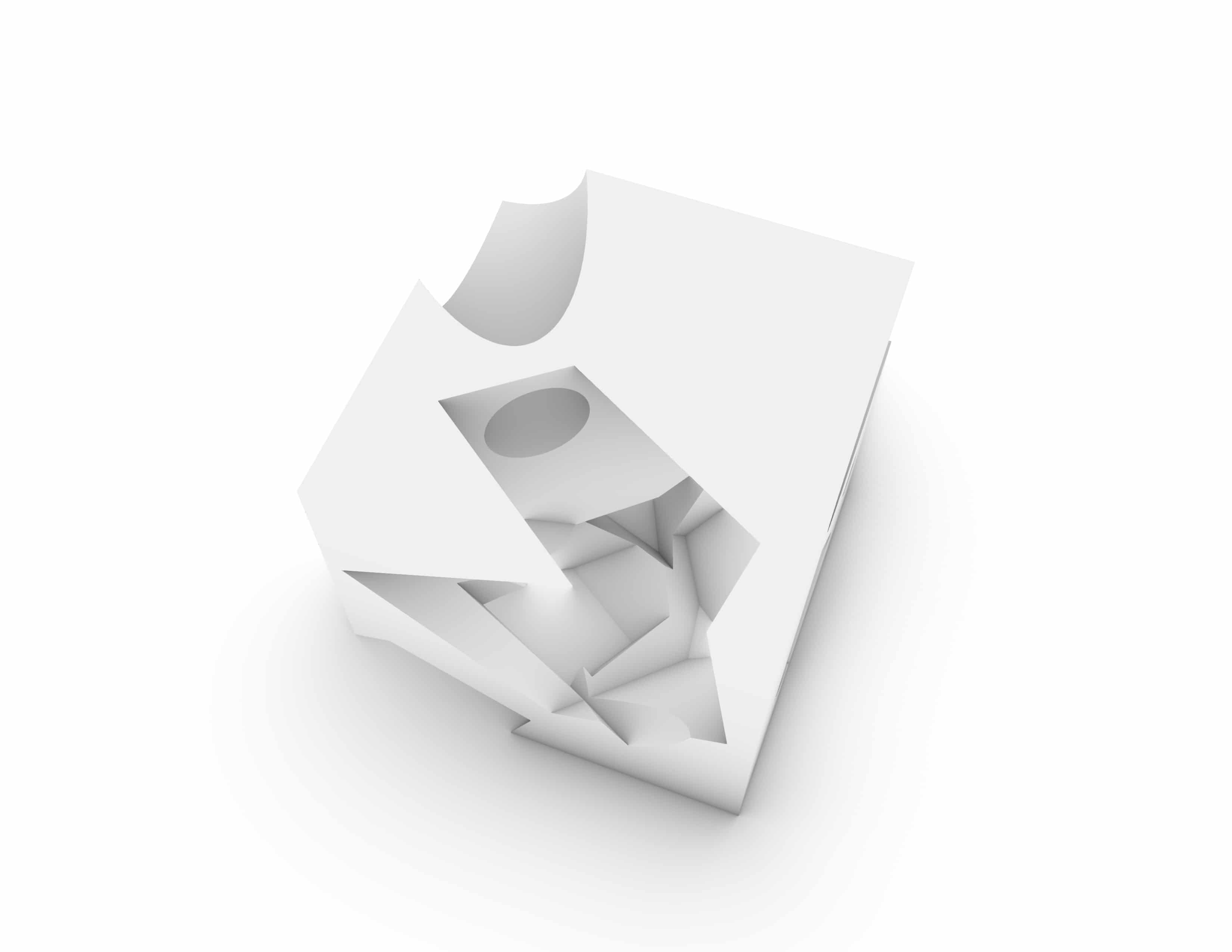
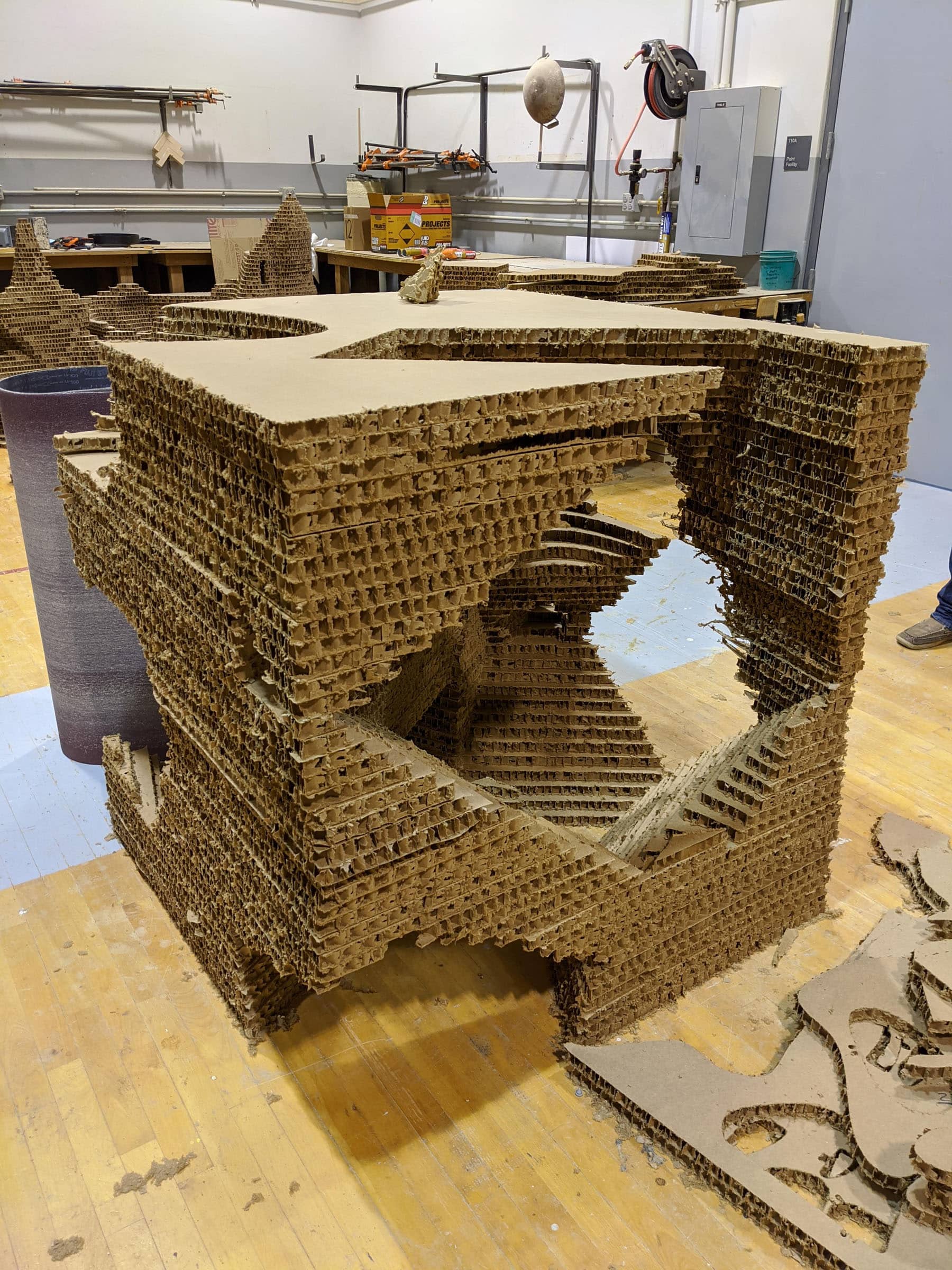
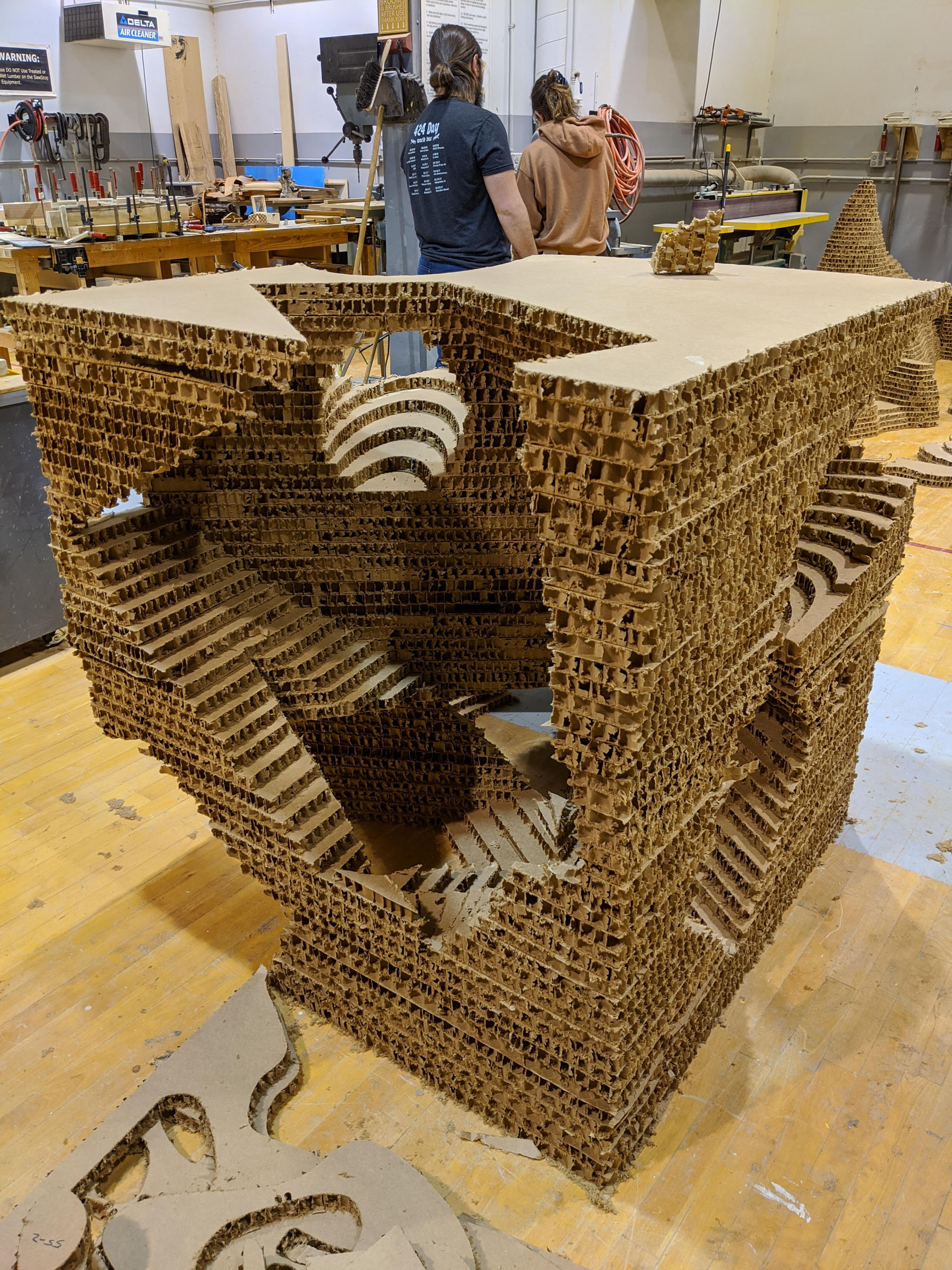
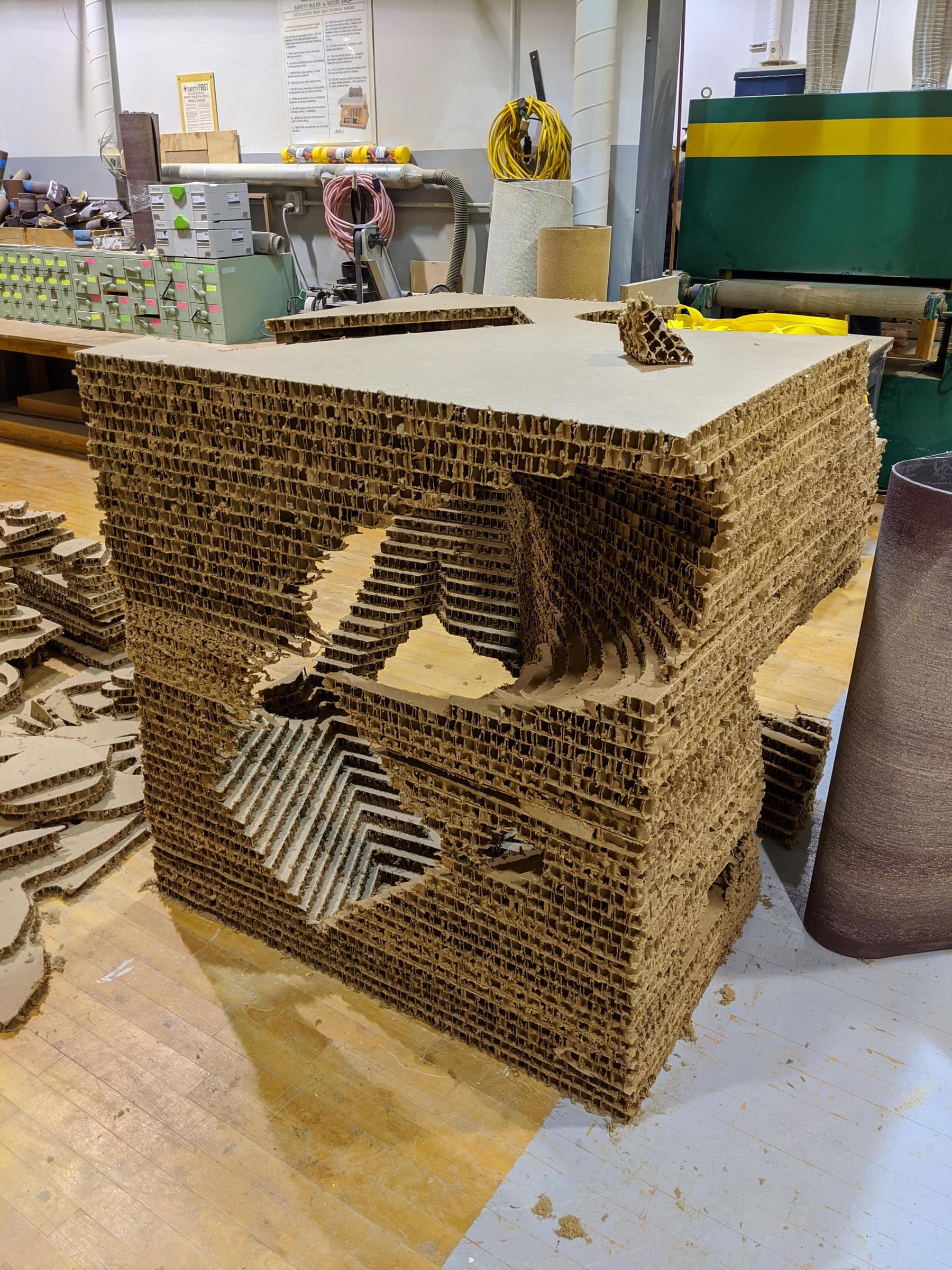
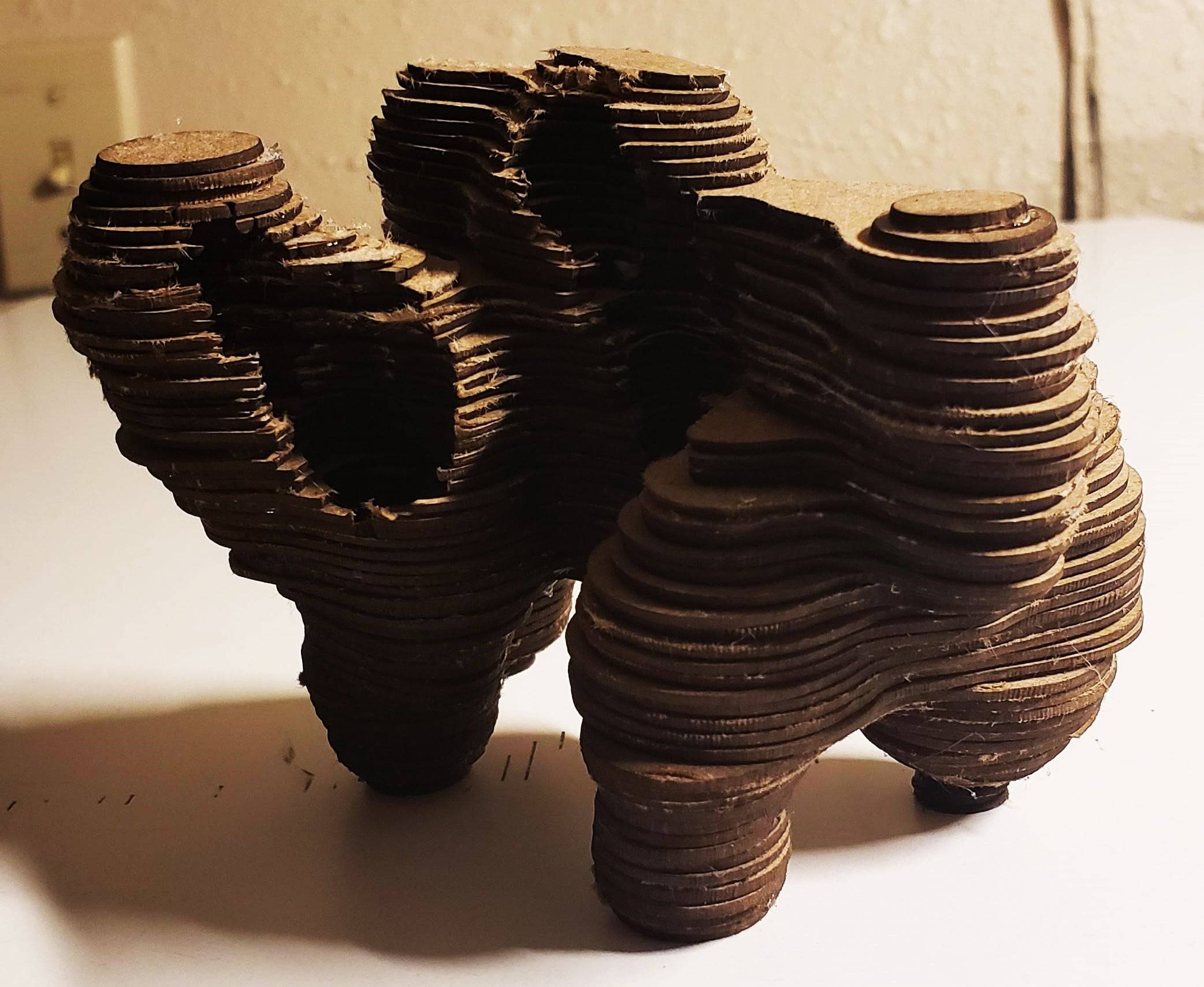
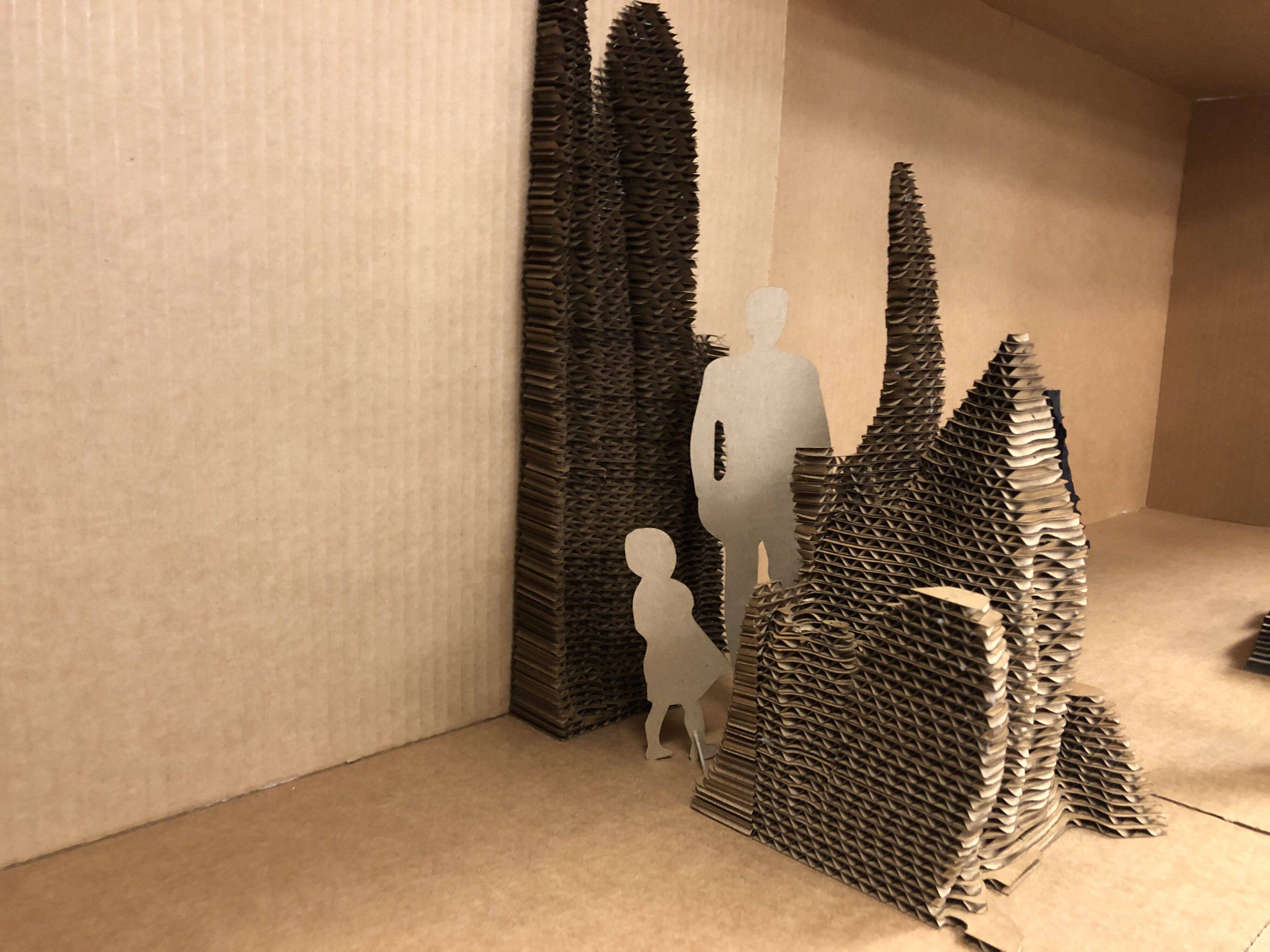
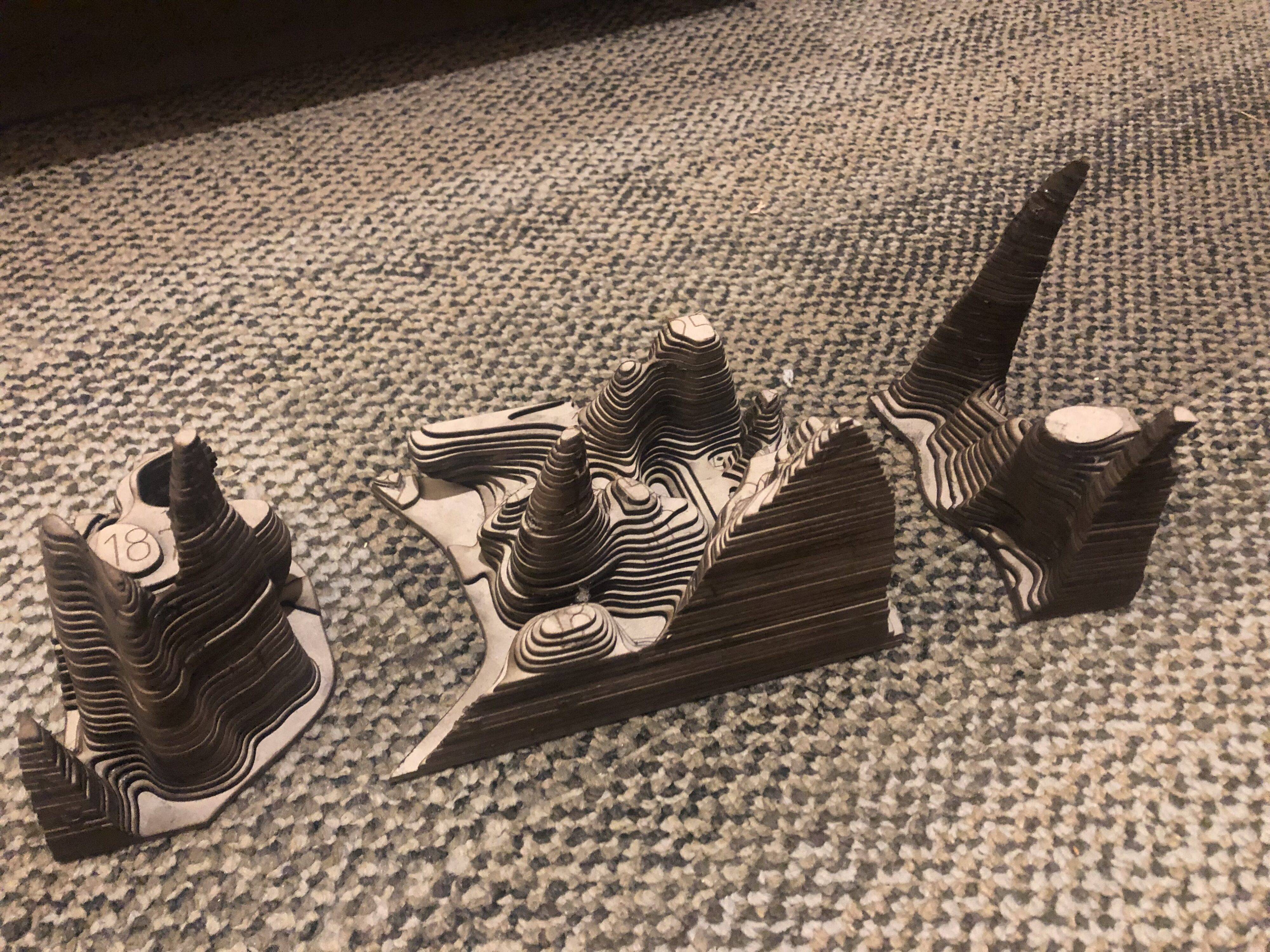
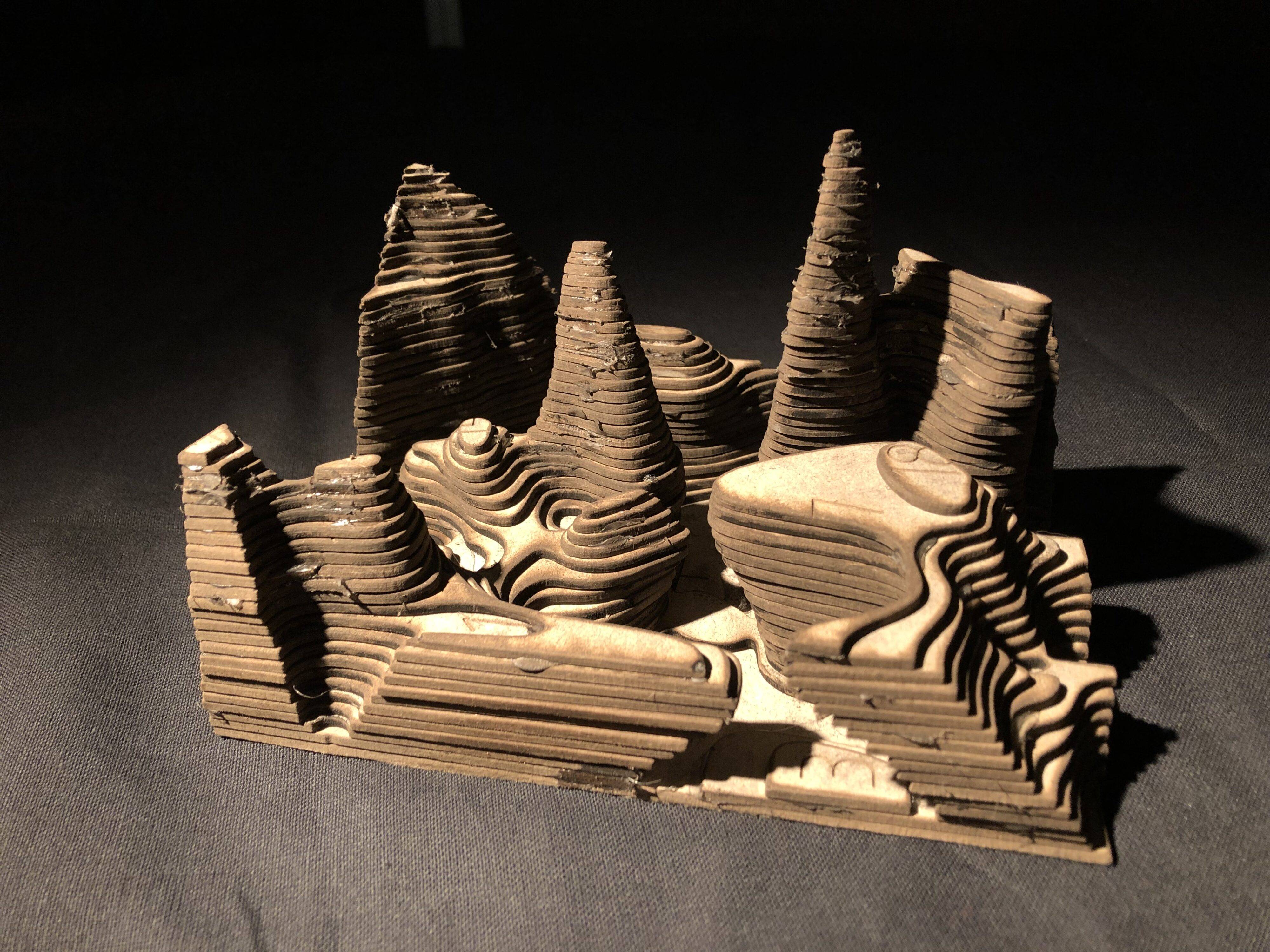
Developed as an academic extension of the Renegades exhibition, the Topographical Ecotones Fabrication Seminar translated the exhibition’s material research into a pedagogical framework. The seminar introduced students to Rhino, Grasshopper, and CNC fabrication as tools for investigating transitional spatial and ecological conditions. Using the concept of the ecotone—a threshold where two or more systems overlap—students designed and fabricated terrains that explored ideas of intersection, adjacency, and transformation.
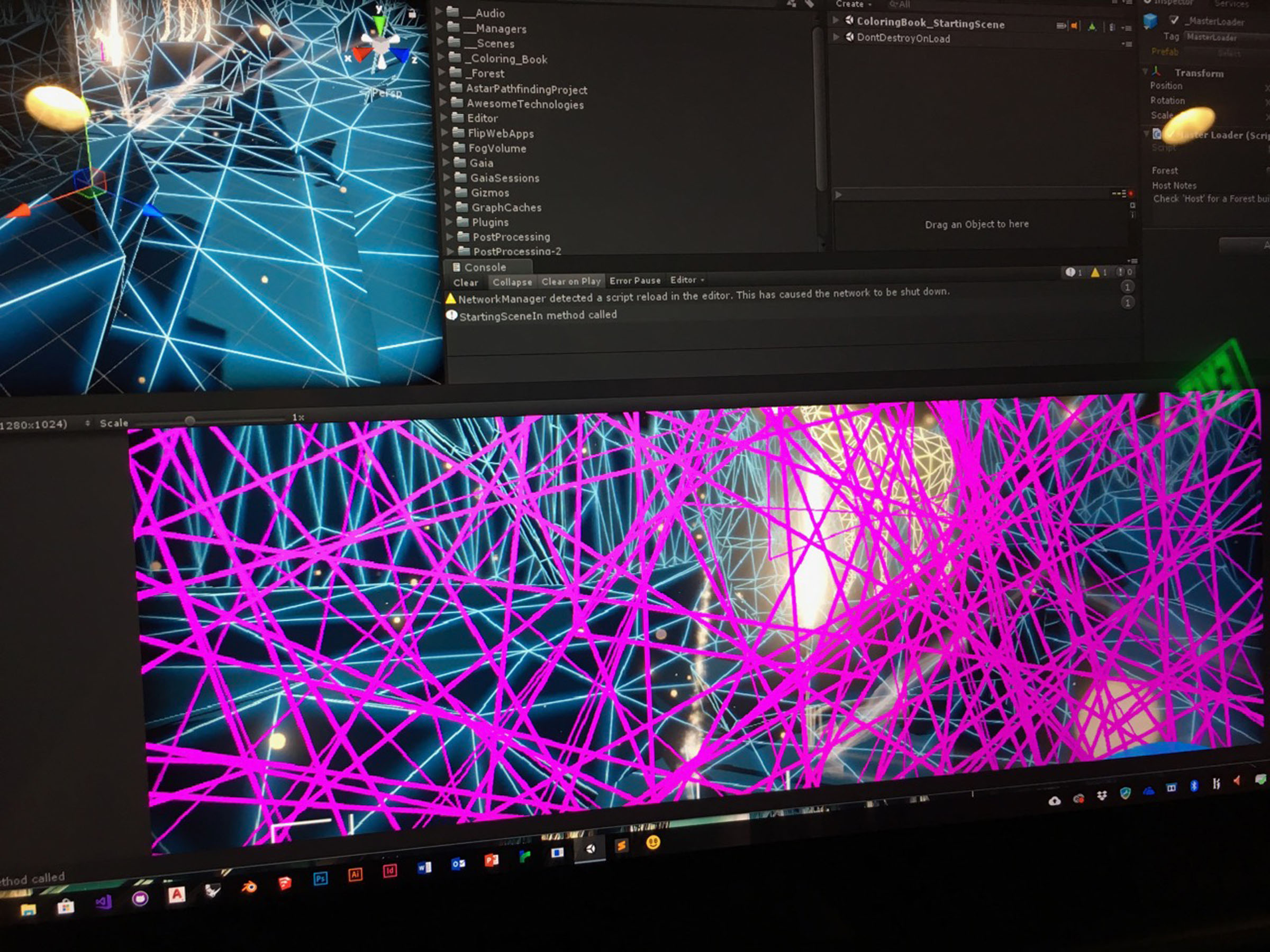
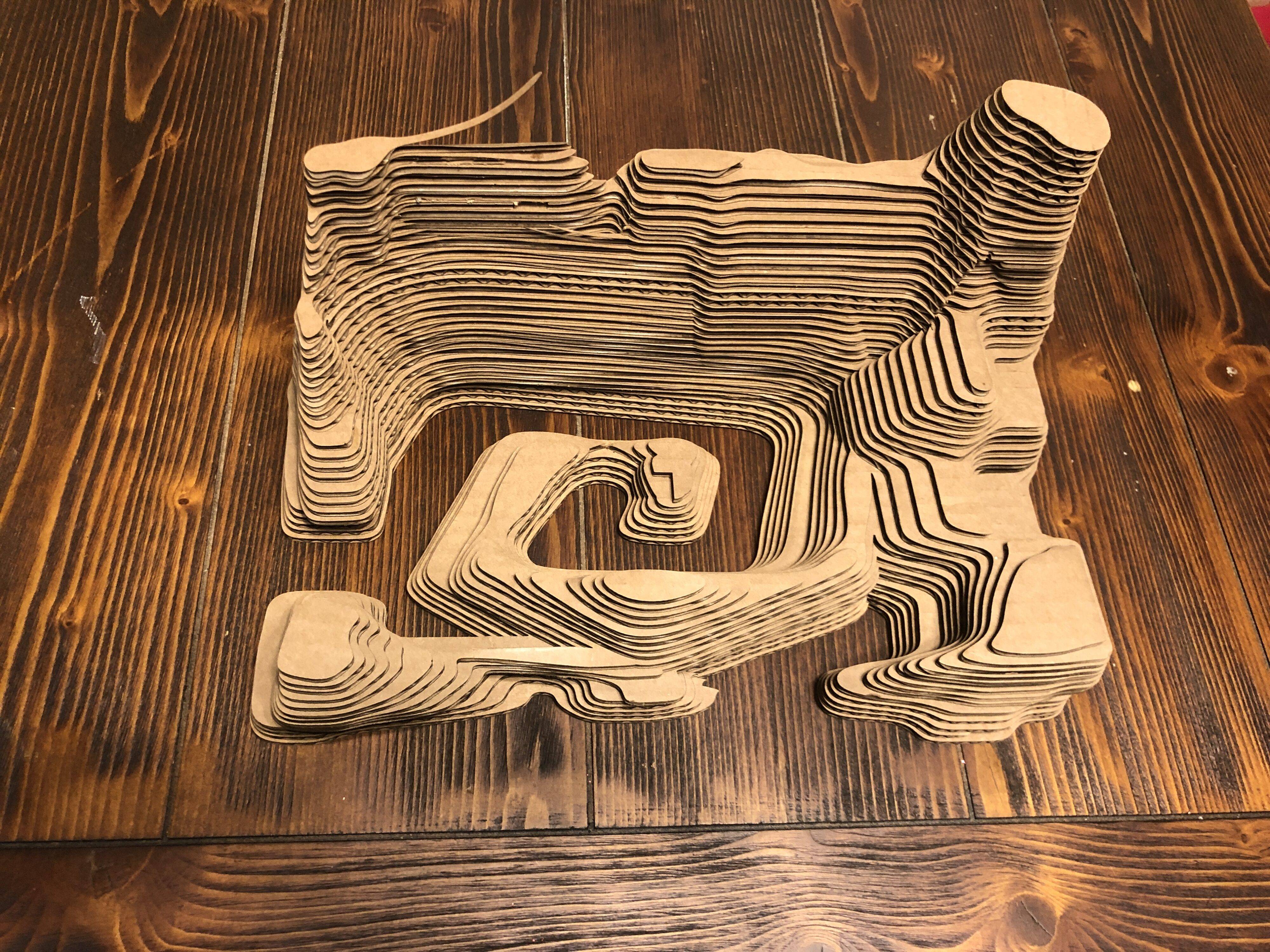
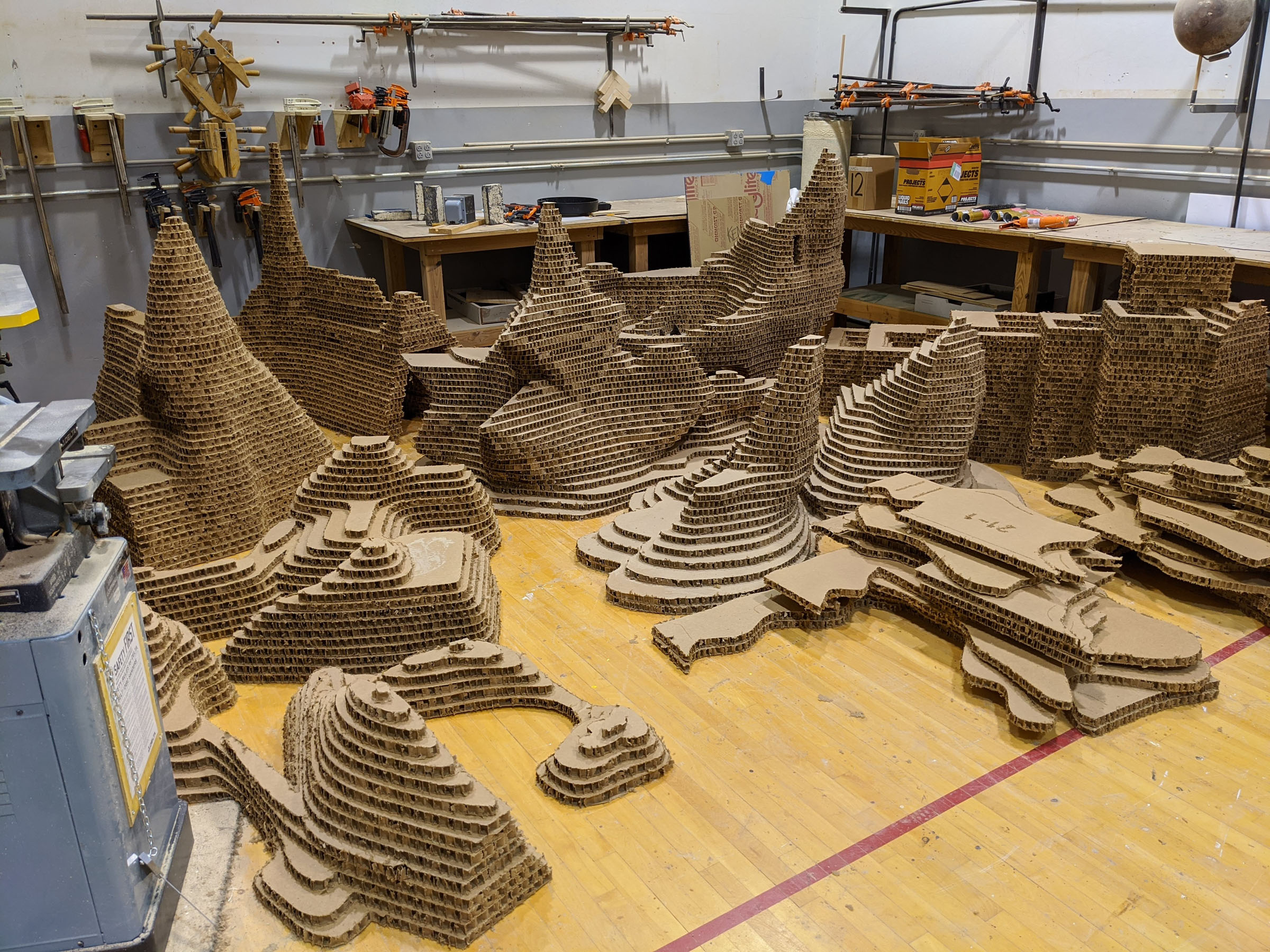
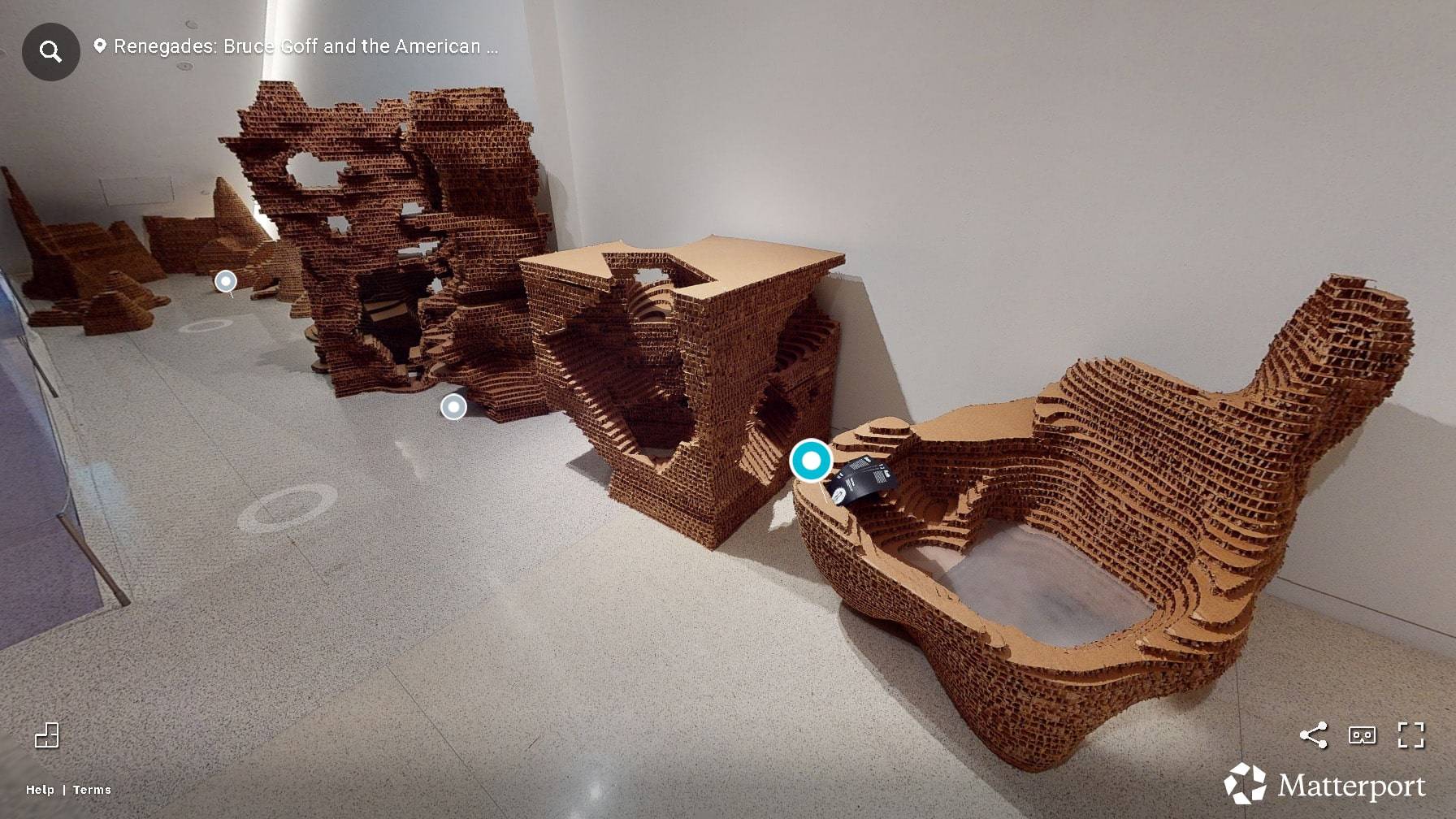
Each team developed parametric models that balanced computational precision with physical experimentation. Through iterative prototyping, students studied how form, material layering, and digital tooling could simulate topographic and architectural conditions. CNC milling was used to generate stacked terrains from sheets of honeycomb cardboard, translating algorithmic data into a tactile, layered landscape. The workflow emphasized problem-solving, tool literacy, and the translation of digital logic into large-scale fabrication. By linking design computation to material outcomes, the seminar demonstrated how digital fabrication can serve as both an analytical and generative act of design research.
Topographical Ecotones: Exhibition and Virtual Experience
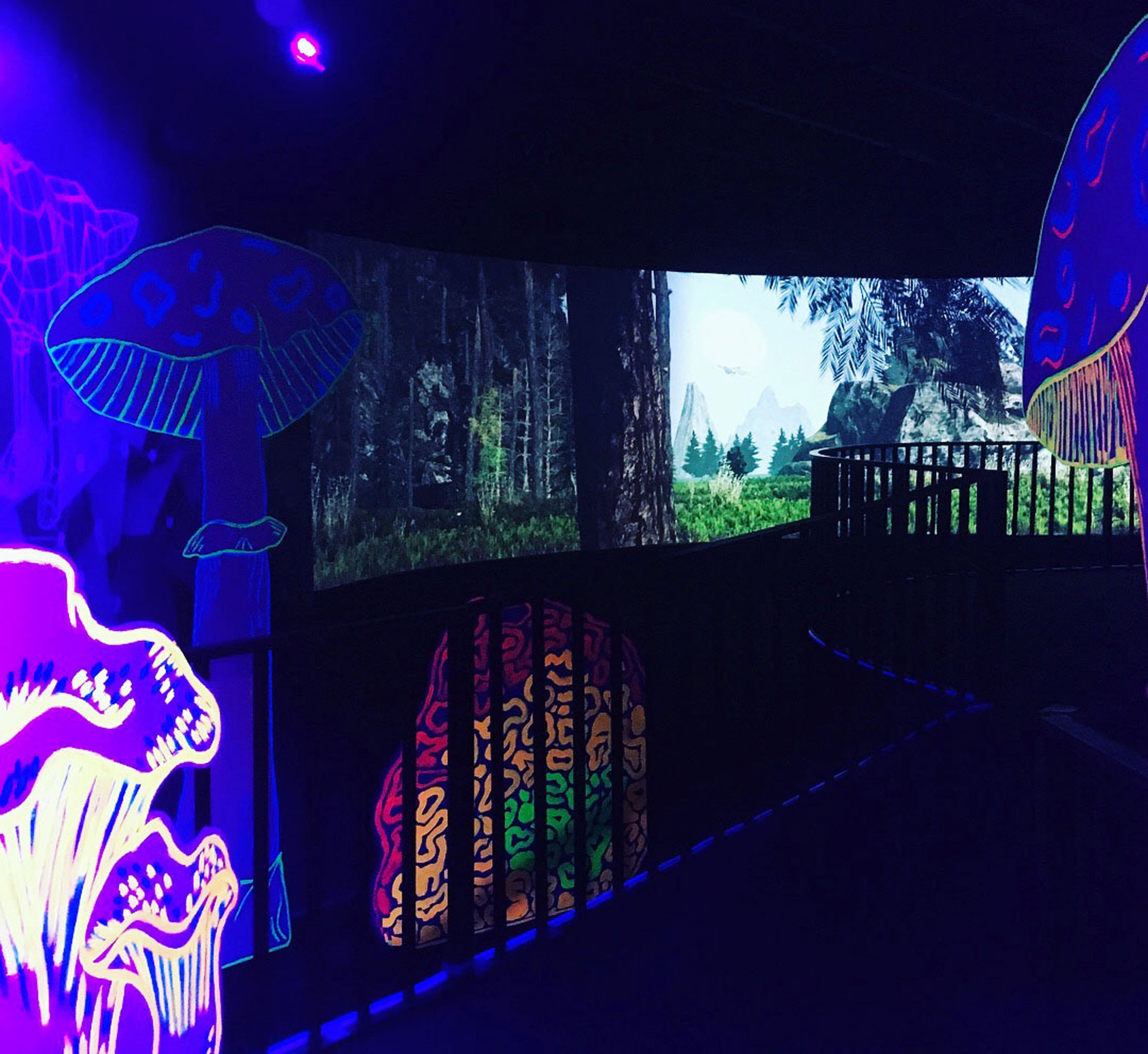
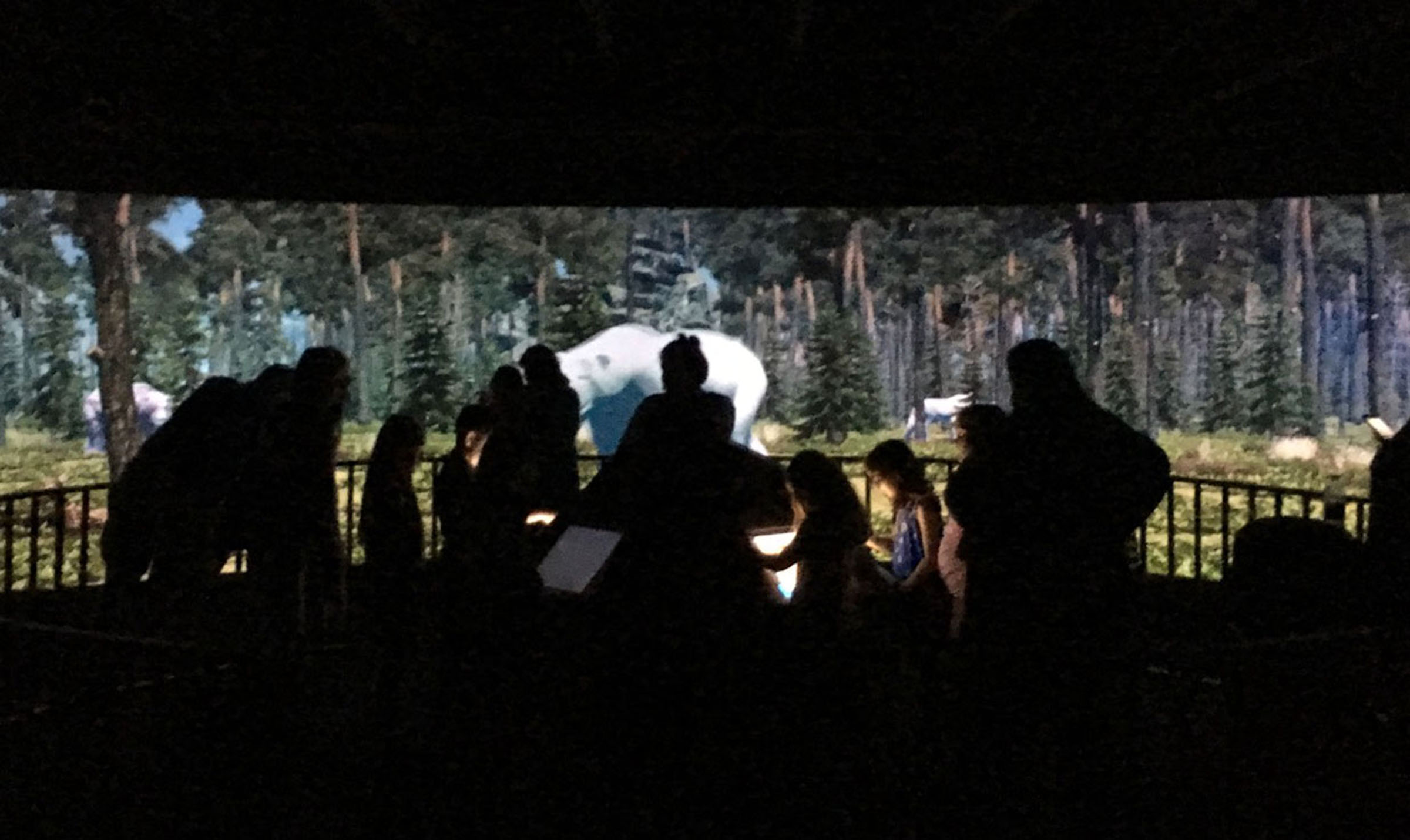
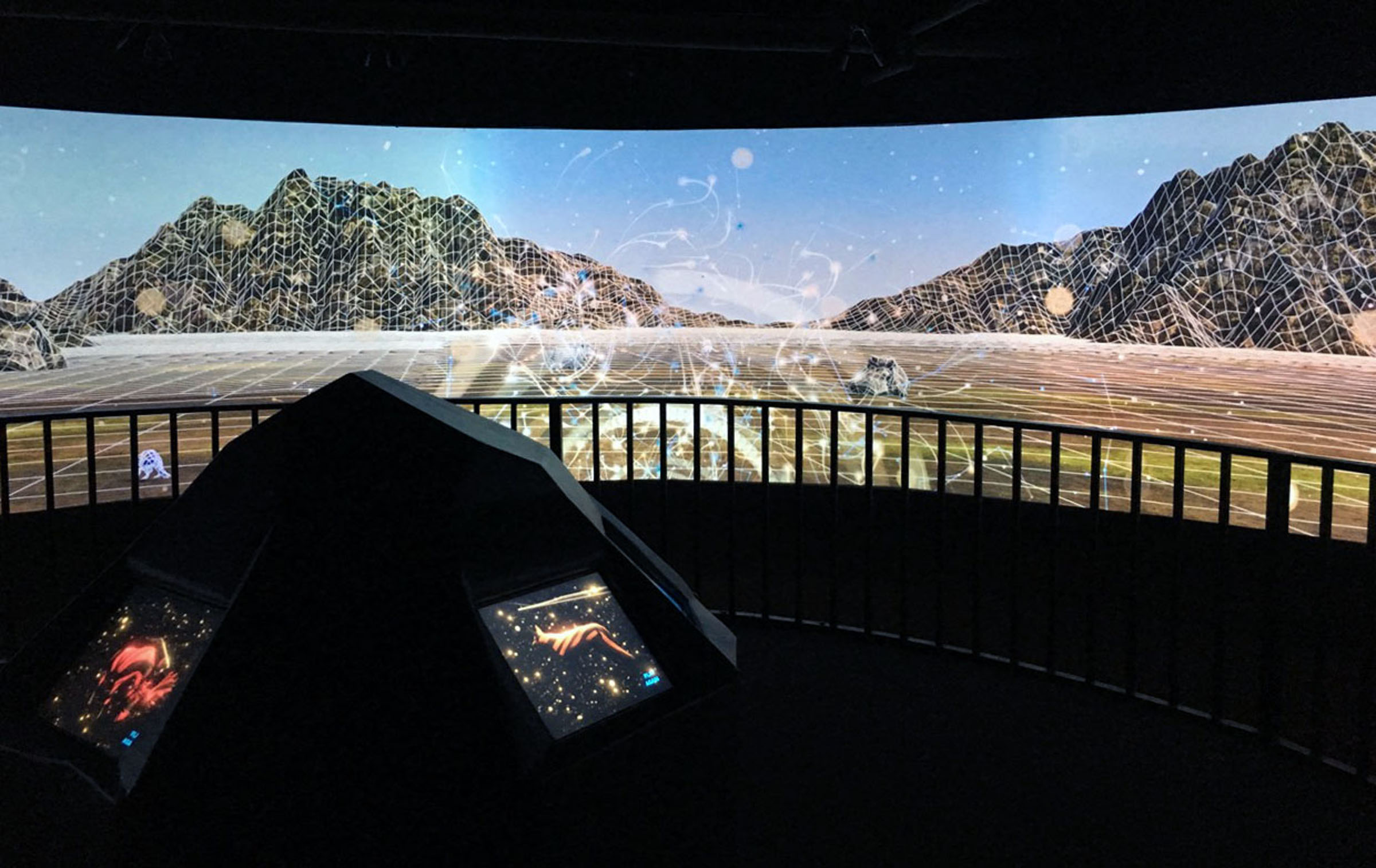
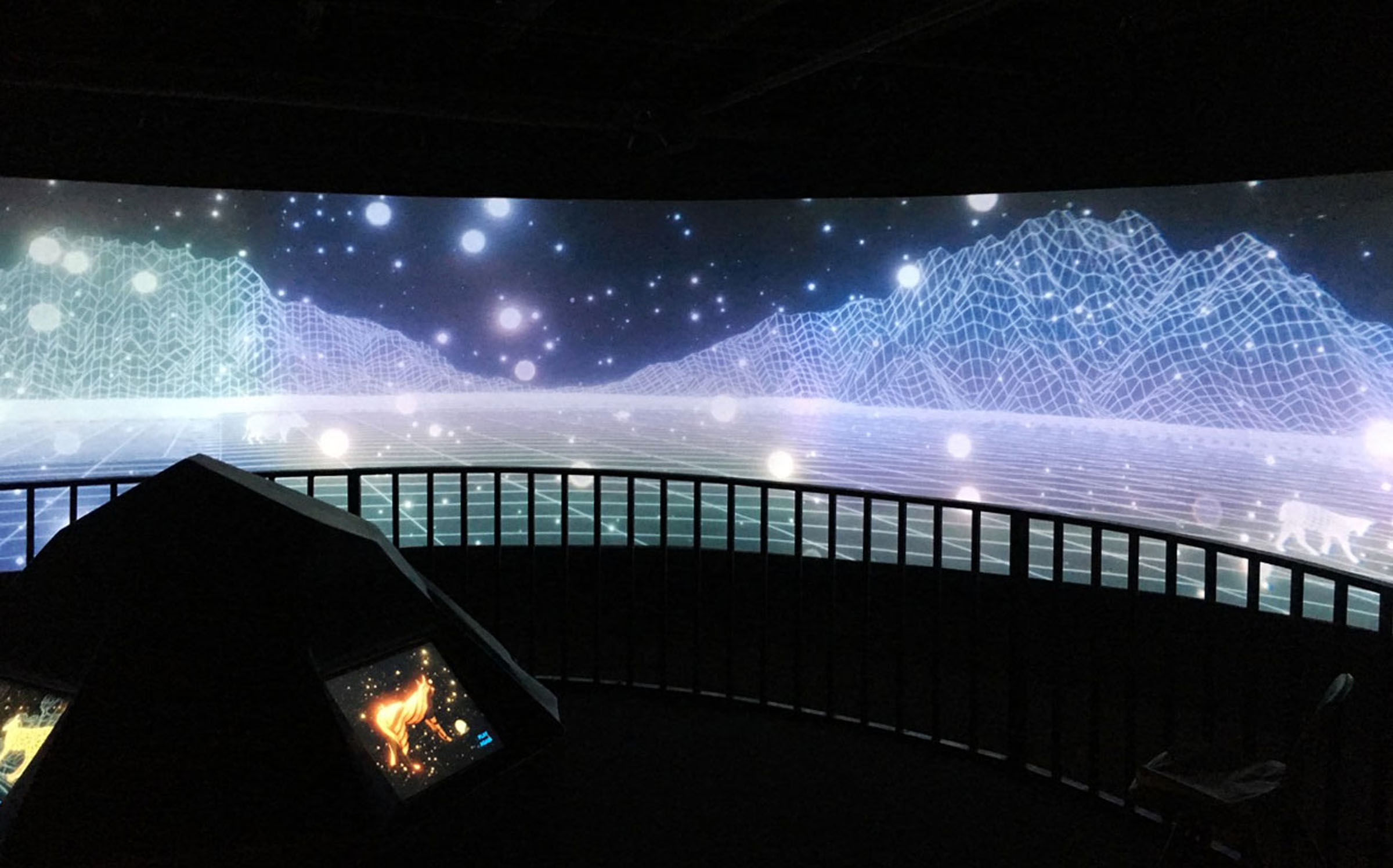
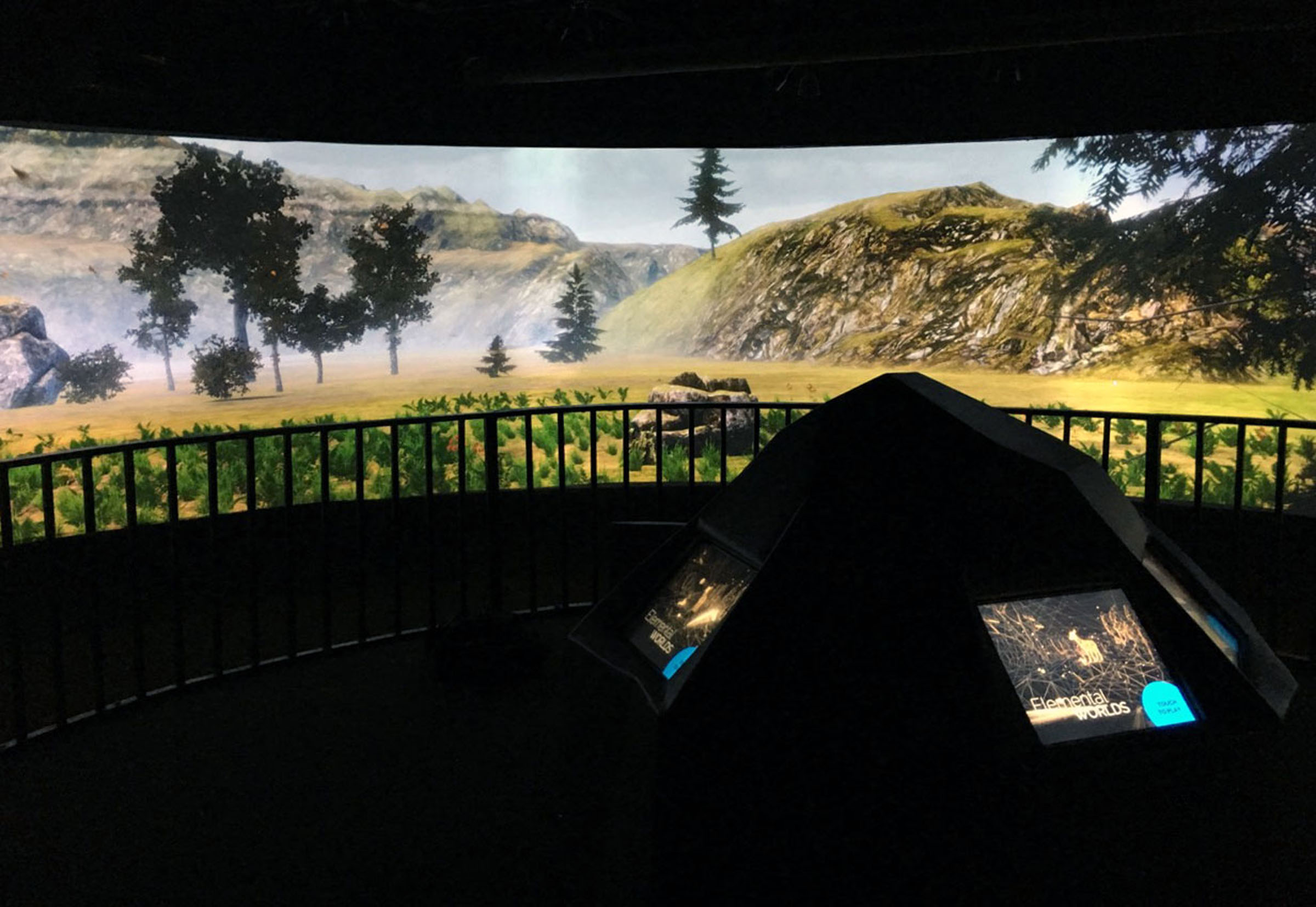
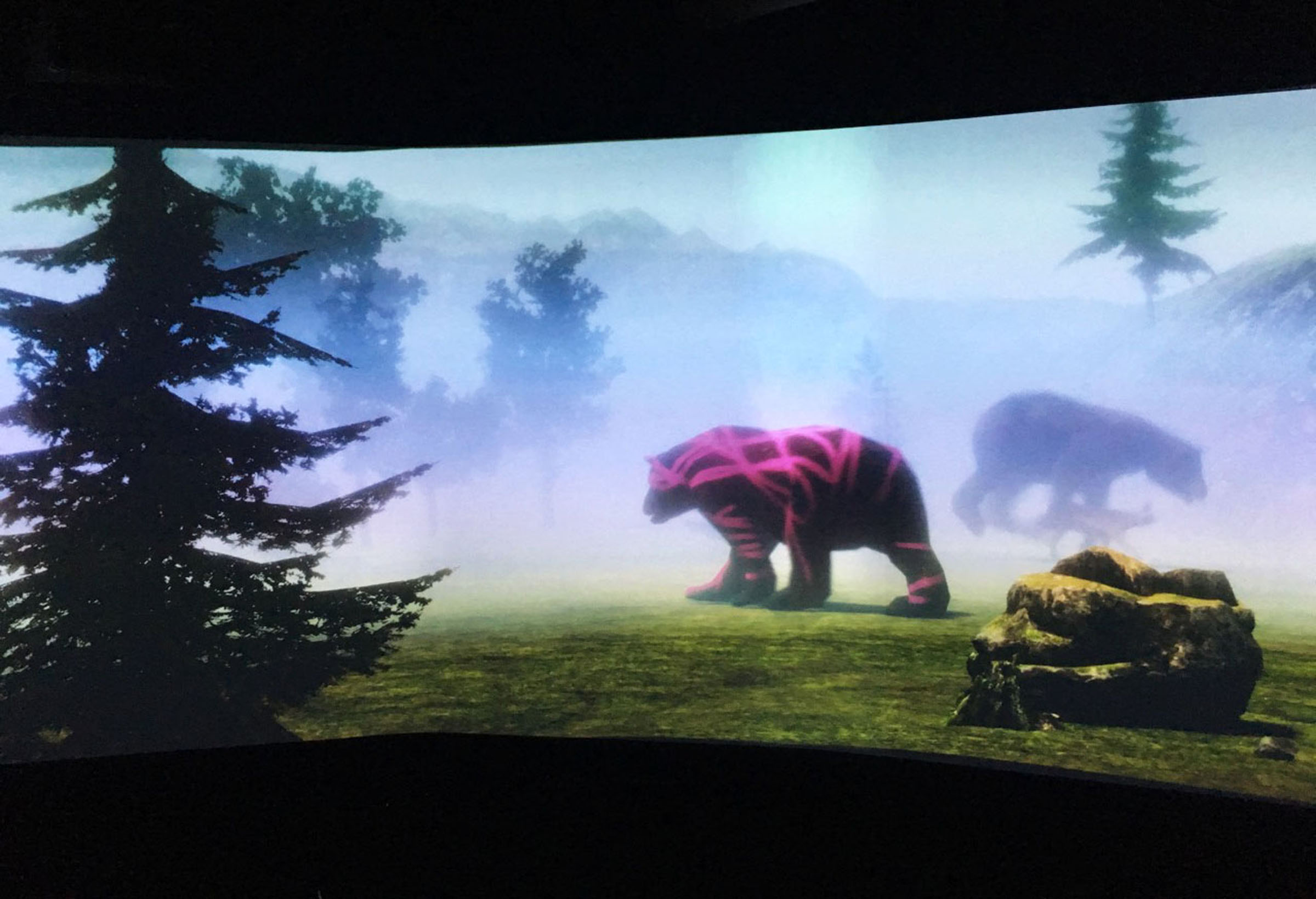
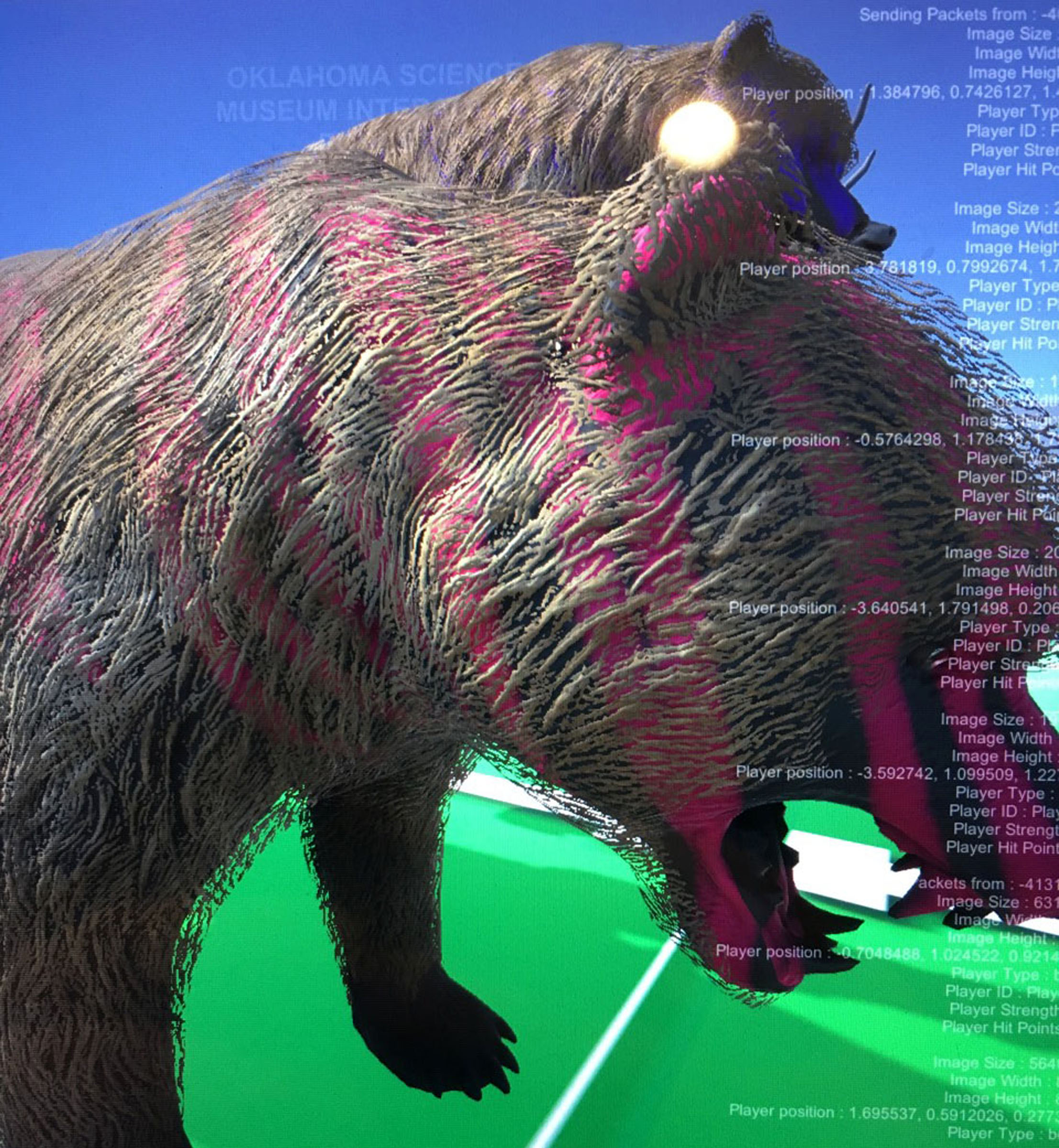
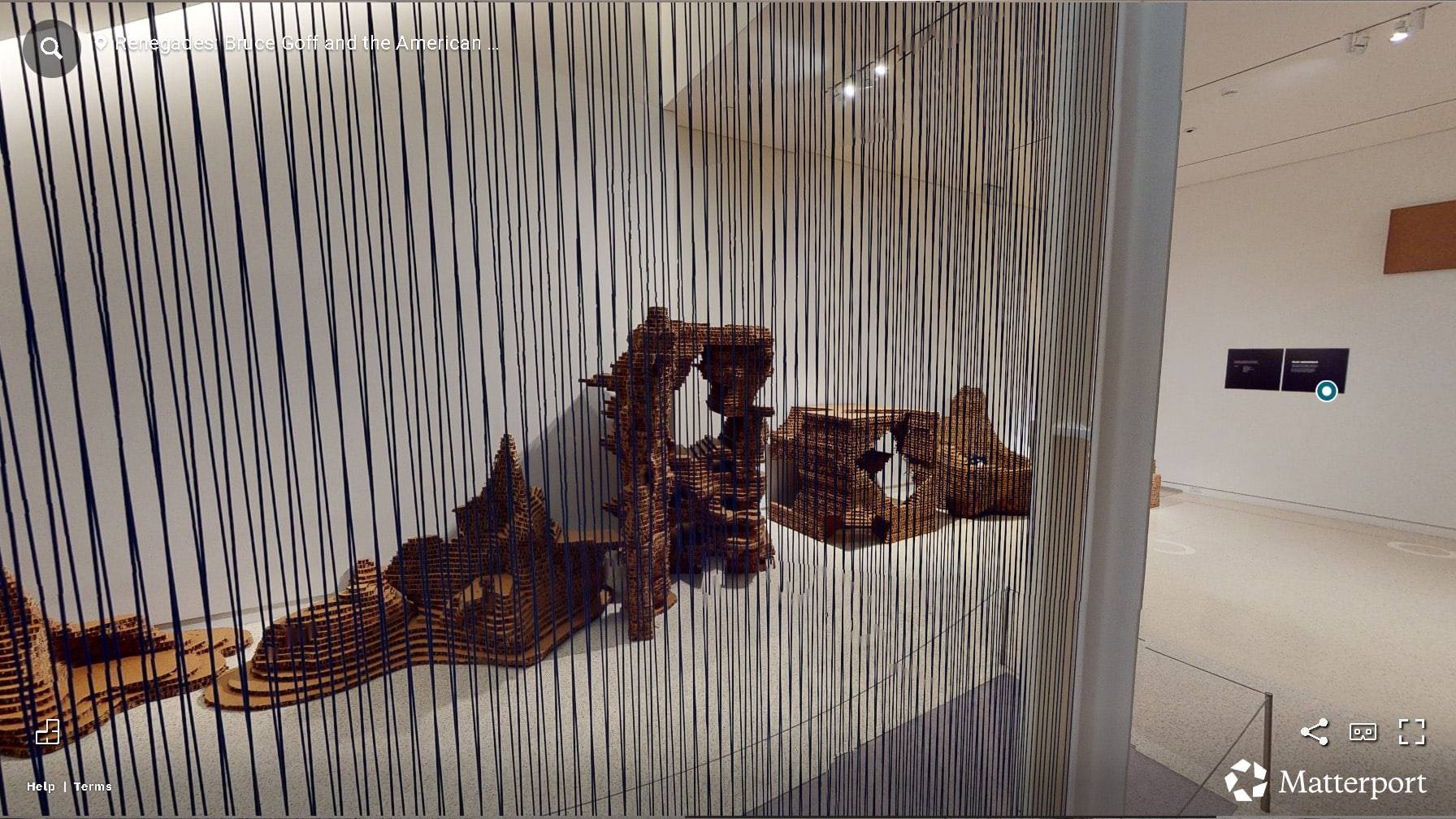
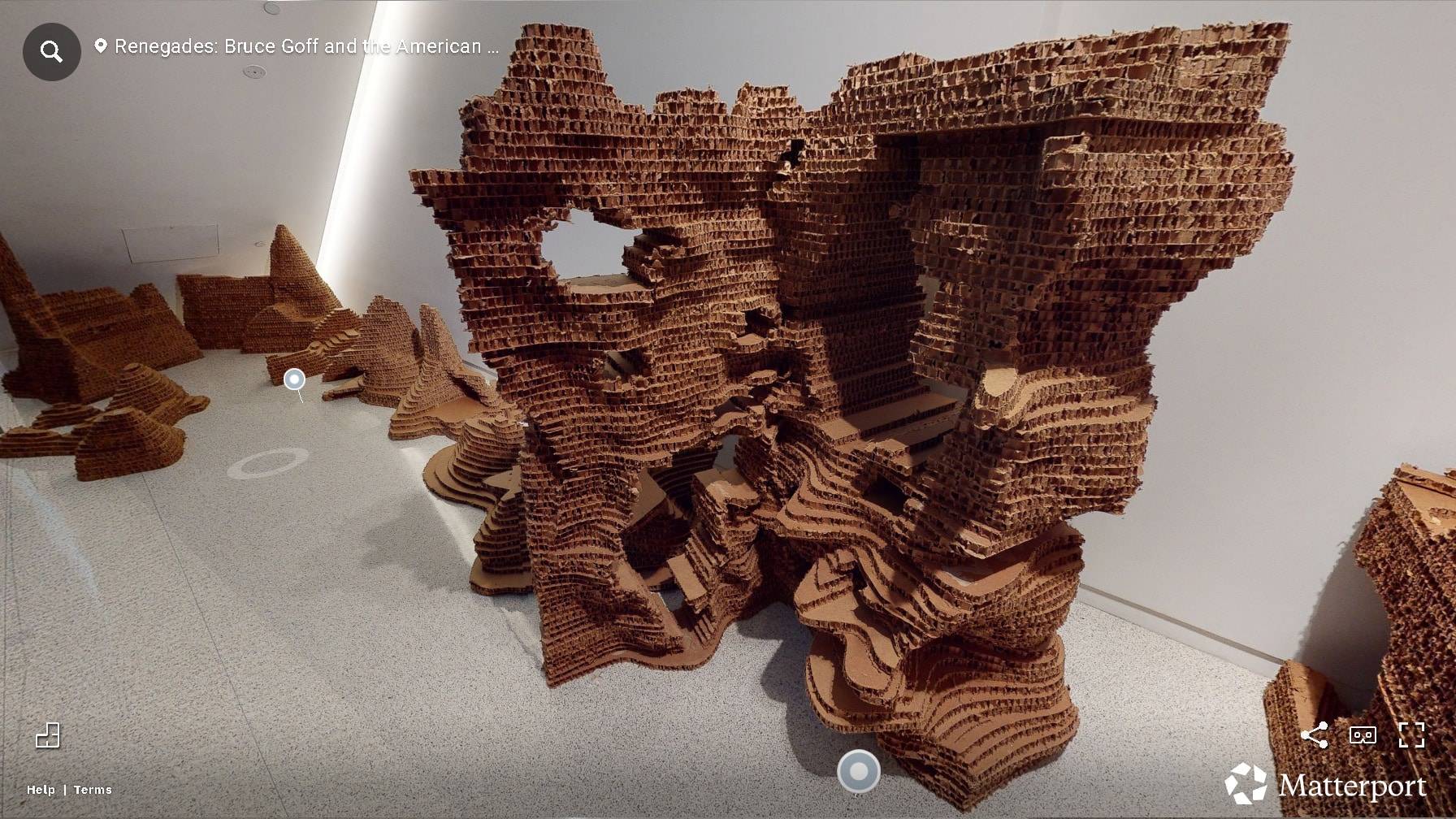
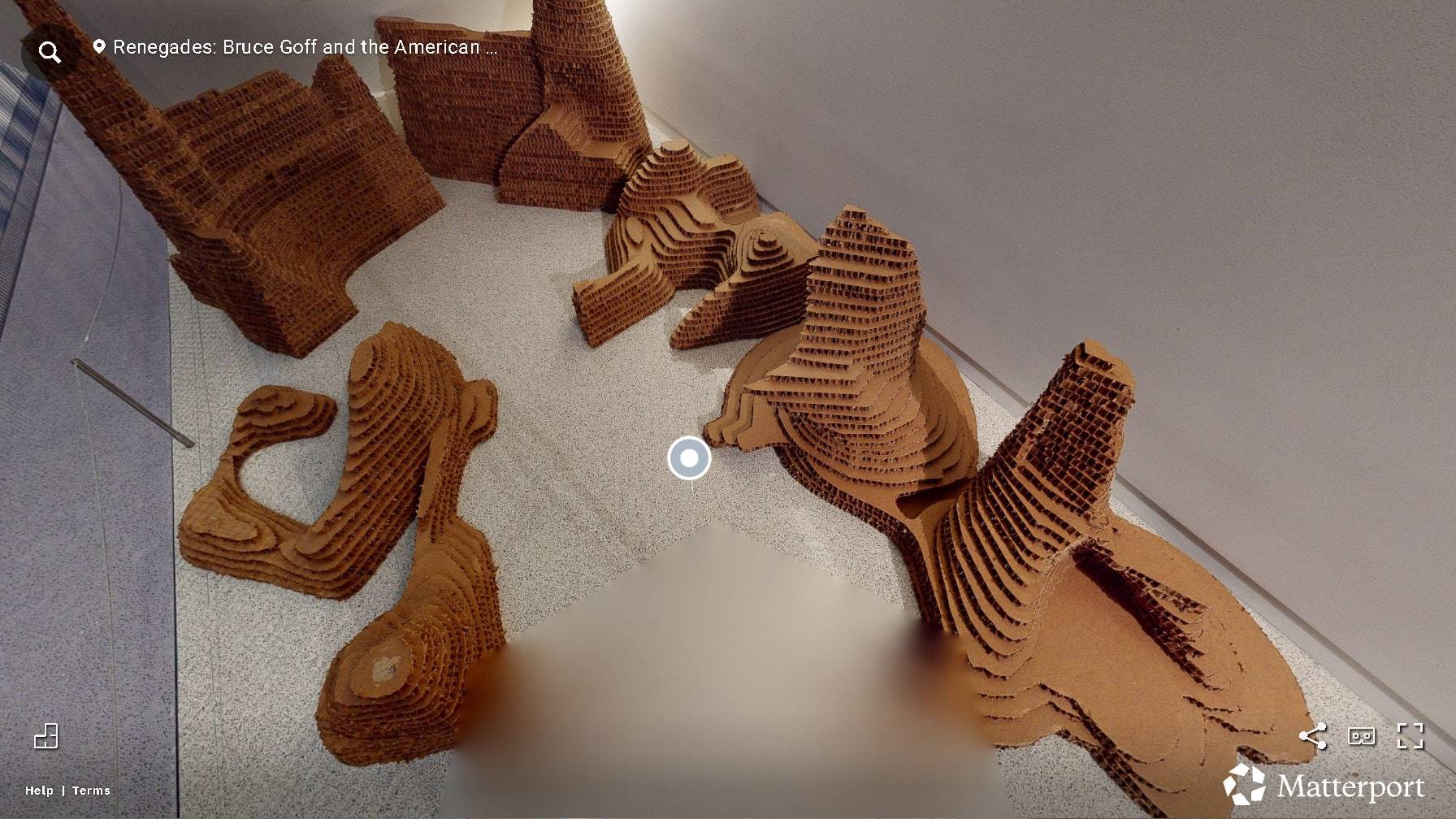
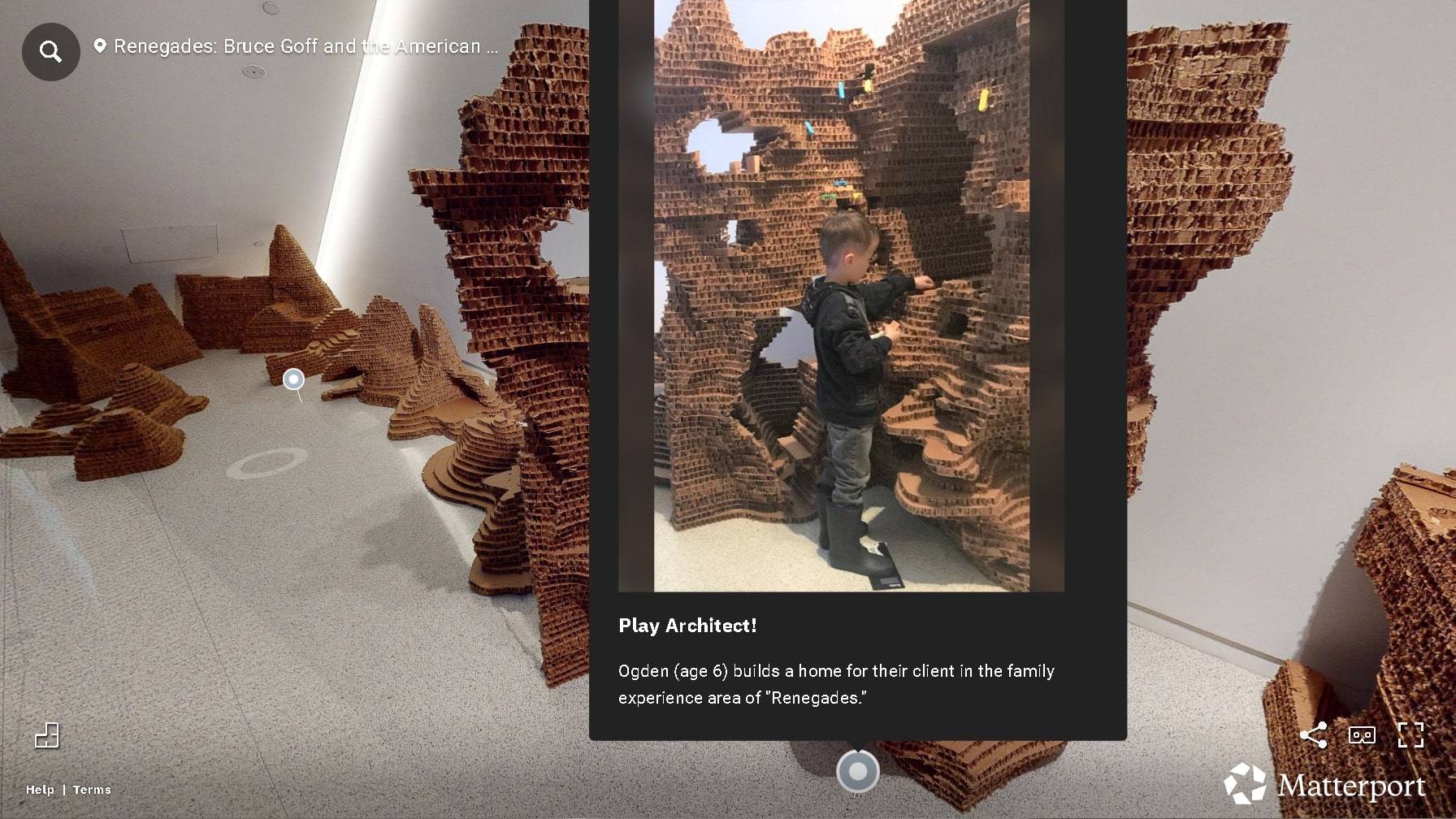
The resulting student work was realized as a full-scale installation within the Renegades: Bruce Goff and the American School of Architecture exhibition at the Fred Jones Jr. Museum of Art. Fabricated from hundreds of CNC-cut honeycomb cardboard profiles, the installation occupied the museum’s Family Experience Gallery as a continuous, inhabitable terrain. Visitors were encouraged to explore the work physically—walking around, climbing over, and even modifying the topographies with blocks and materials provided as part of the interactive Play Architect! activity. This participatory framework extended the ethos of the American School, positioning making as a shared, exploratory process.
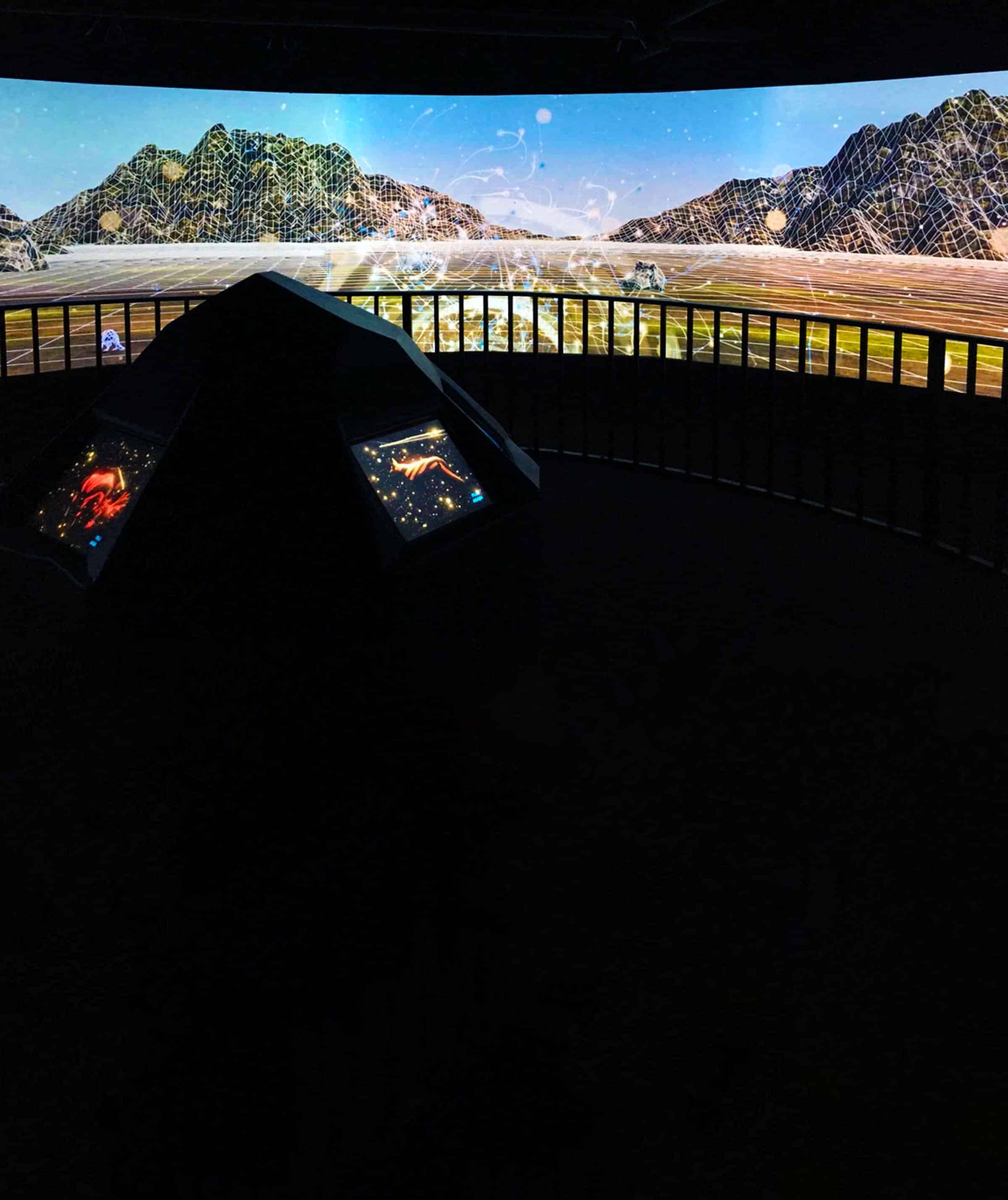
The installation was also documented through a virtual Matterport experience, which allowed audiences to navigate the environment online. This digital extension expanded the project’s accessibility, enabling broader engagement beyond the museum walls. The combination of physical immersion and virtual interactivity reinforced the central themes of the project—collaboration, adaptability, and invention through material engagement. As both exhibition and educational experiment, Topographical Ecotones transformed the museum into a site of collective discovery, bridging research, pedagogy, and public participation through design.
Interpretation and Impact
The Renegades exhibition and its associated research exemplify a synthesis of fabrication, pedagogy, and material innovation. The honeycomb cardboard installations revealed how material limitations can generate new forms of architectural expression, while the Edge Insert research advanced this work into technical and patentable innovation. The accompanying seminar and exhibition installation translated those ideas into a participatory format, transforming the exhibition into a living educational platform.
Together, these efforts expanded the scope of what an architectural exhibition can be: not only a display of history and objects, but a space for invention, learning, and public engagement. Renegades stands as both a tribute to Bruce Goff’s legacy and a continuation of his experimental spirit, demonstrating that the act of fabrication remains one of architecture’s most profound modes of research.