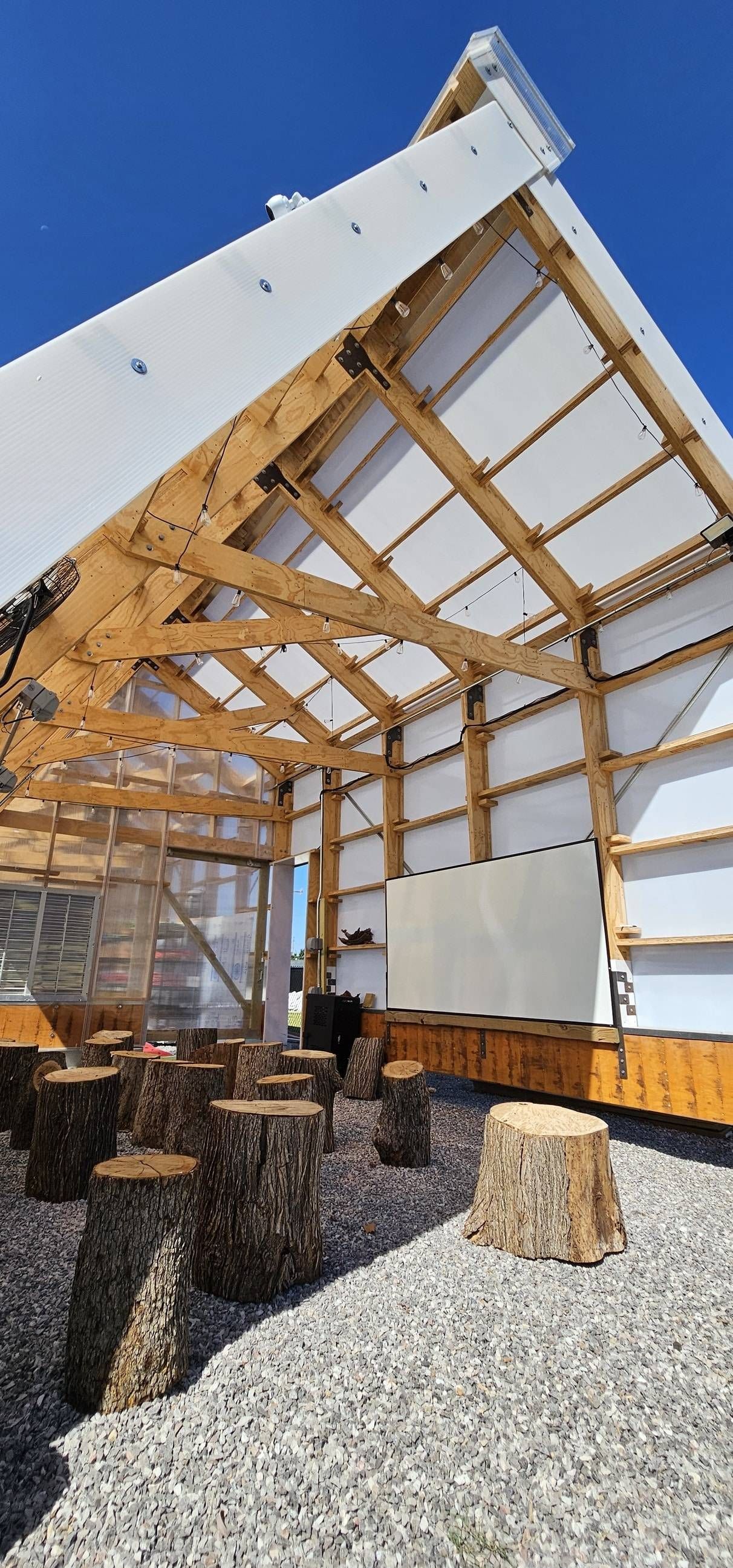
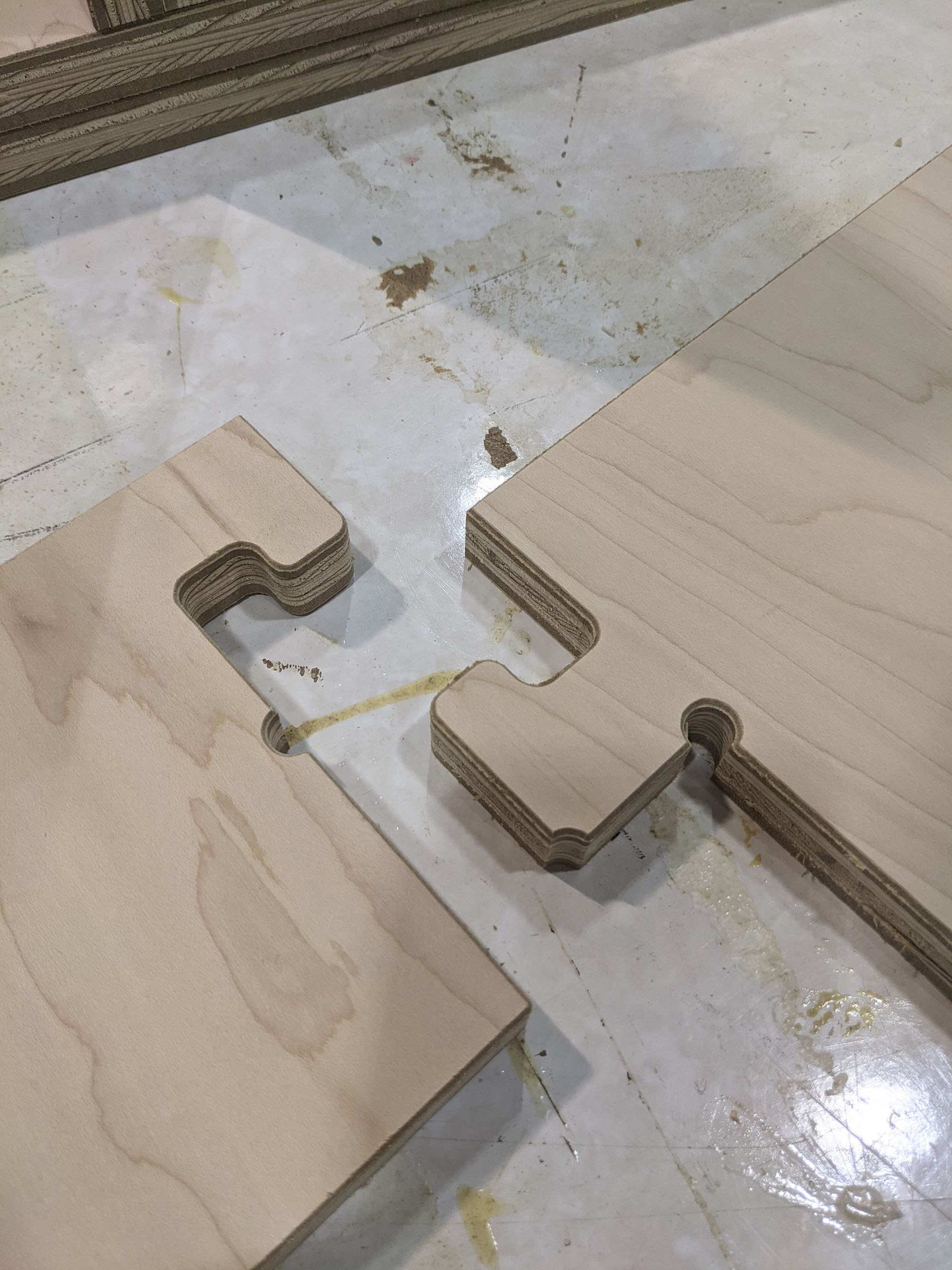
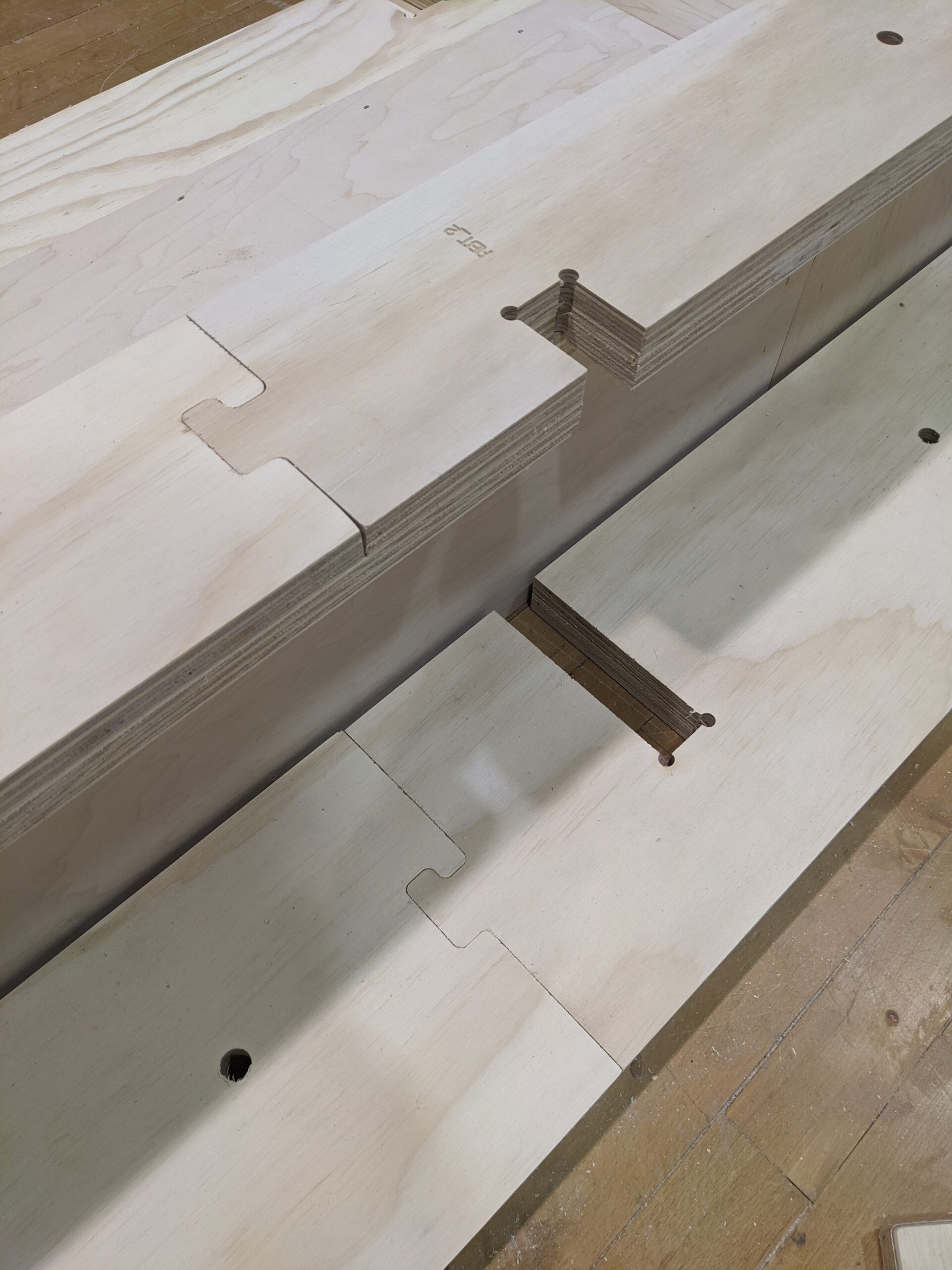
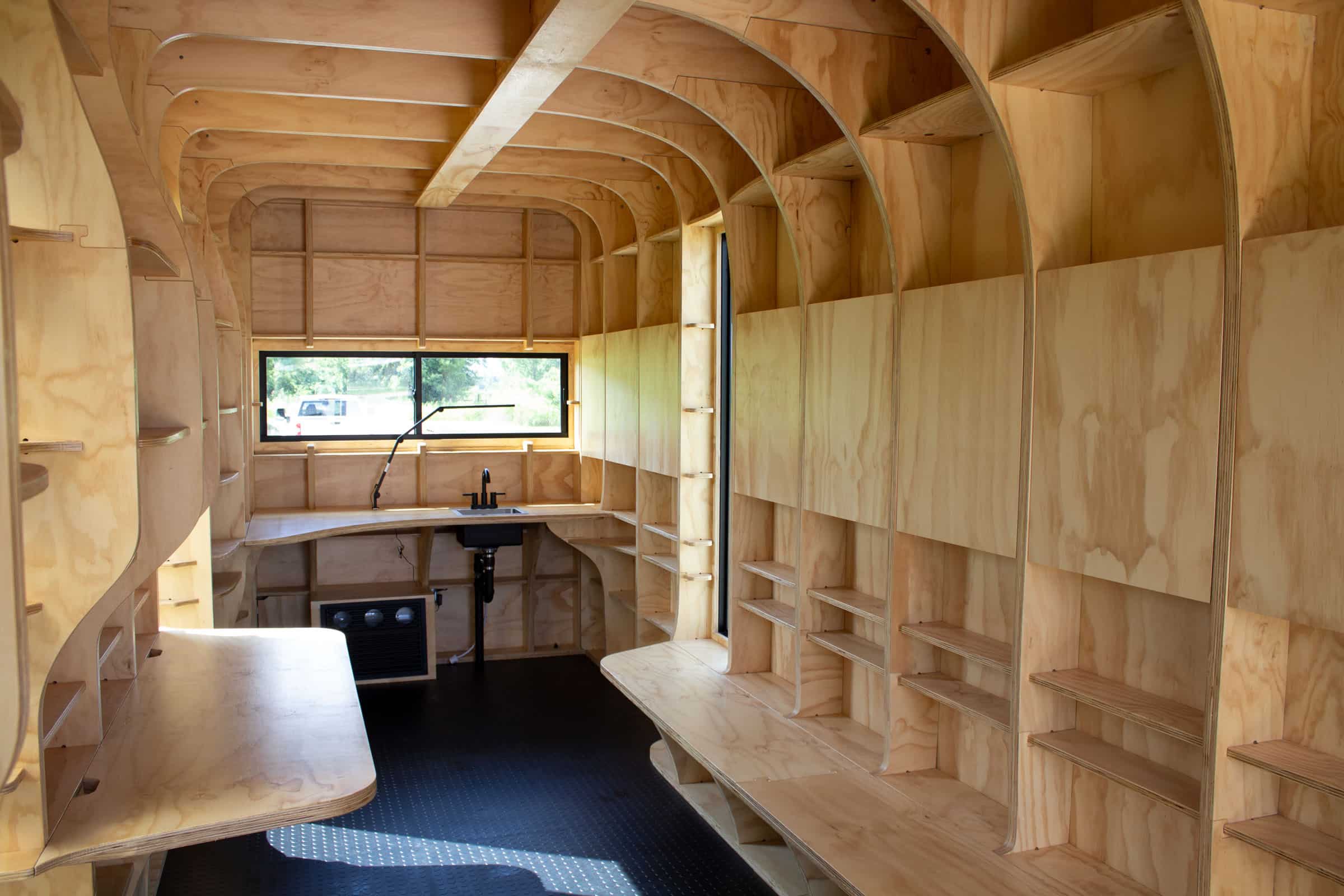
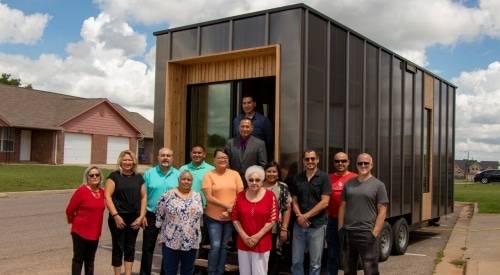
WildCare Oklahoma Bat and Chimney Swift Rehabilitation Facility

WildCare Oklahoma Bat & Chimney Swift Rehabilitation Facility

WildCare Oklahoma Bat & Chimney Swift Rehabilitation Facility

Noble, OK
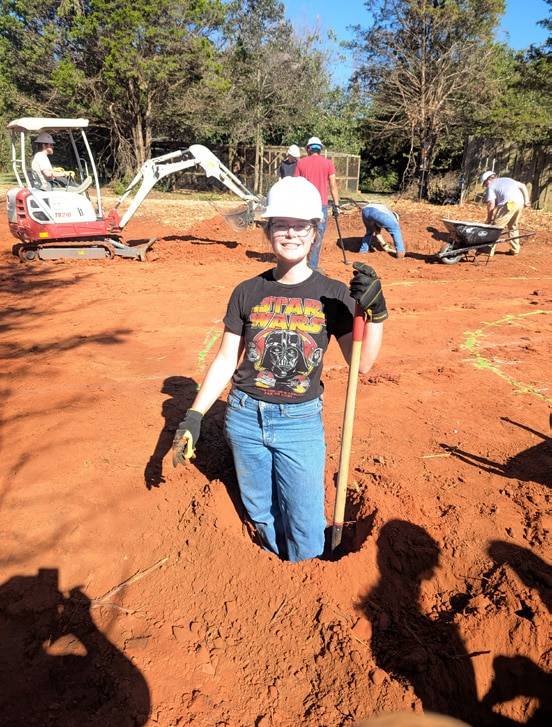
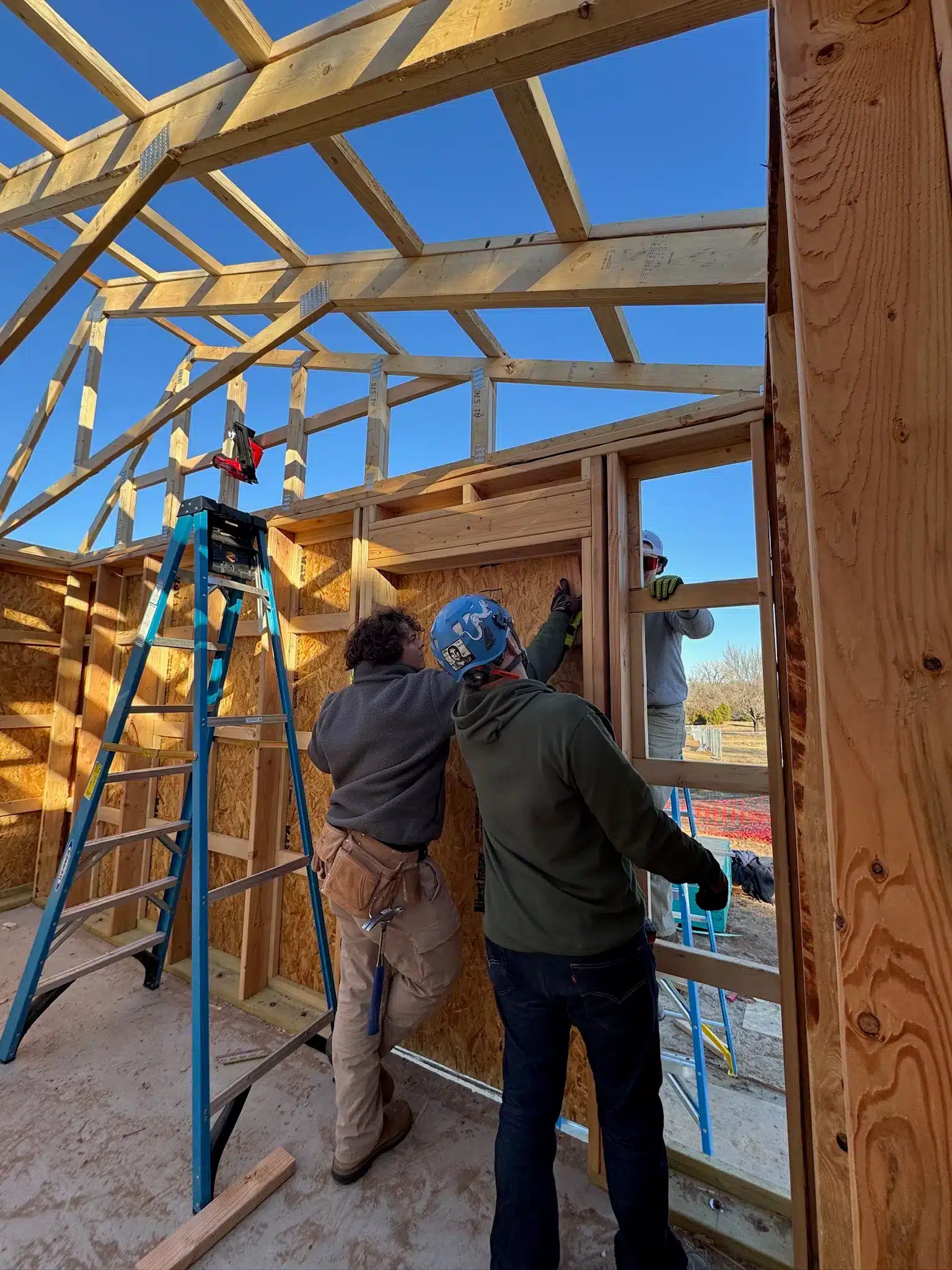
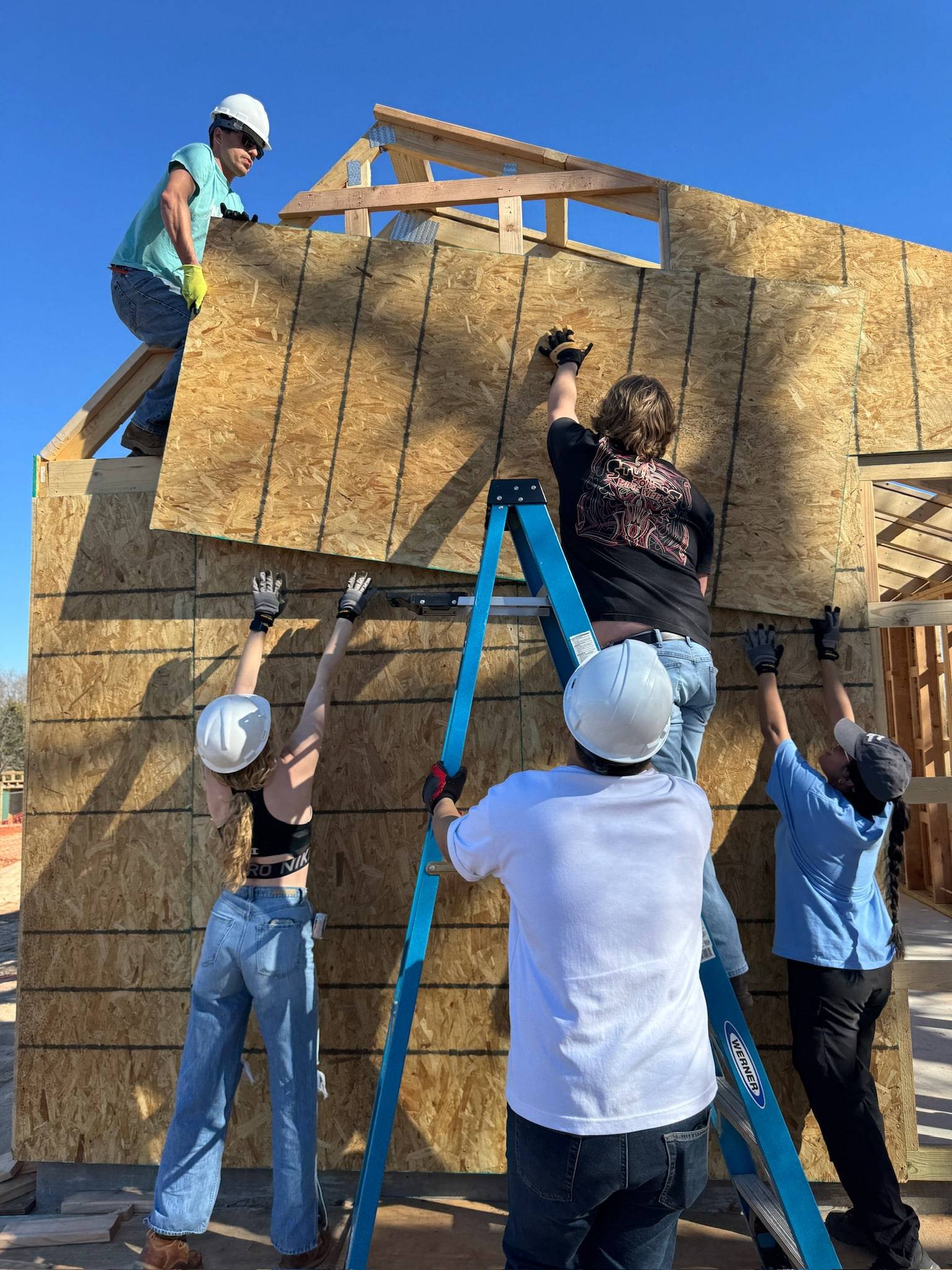
Construction In-Progress: Anticipated Completion May 2026

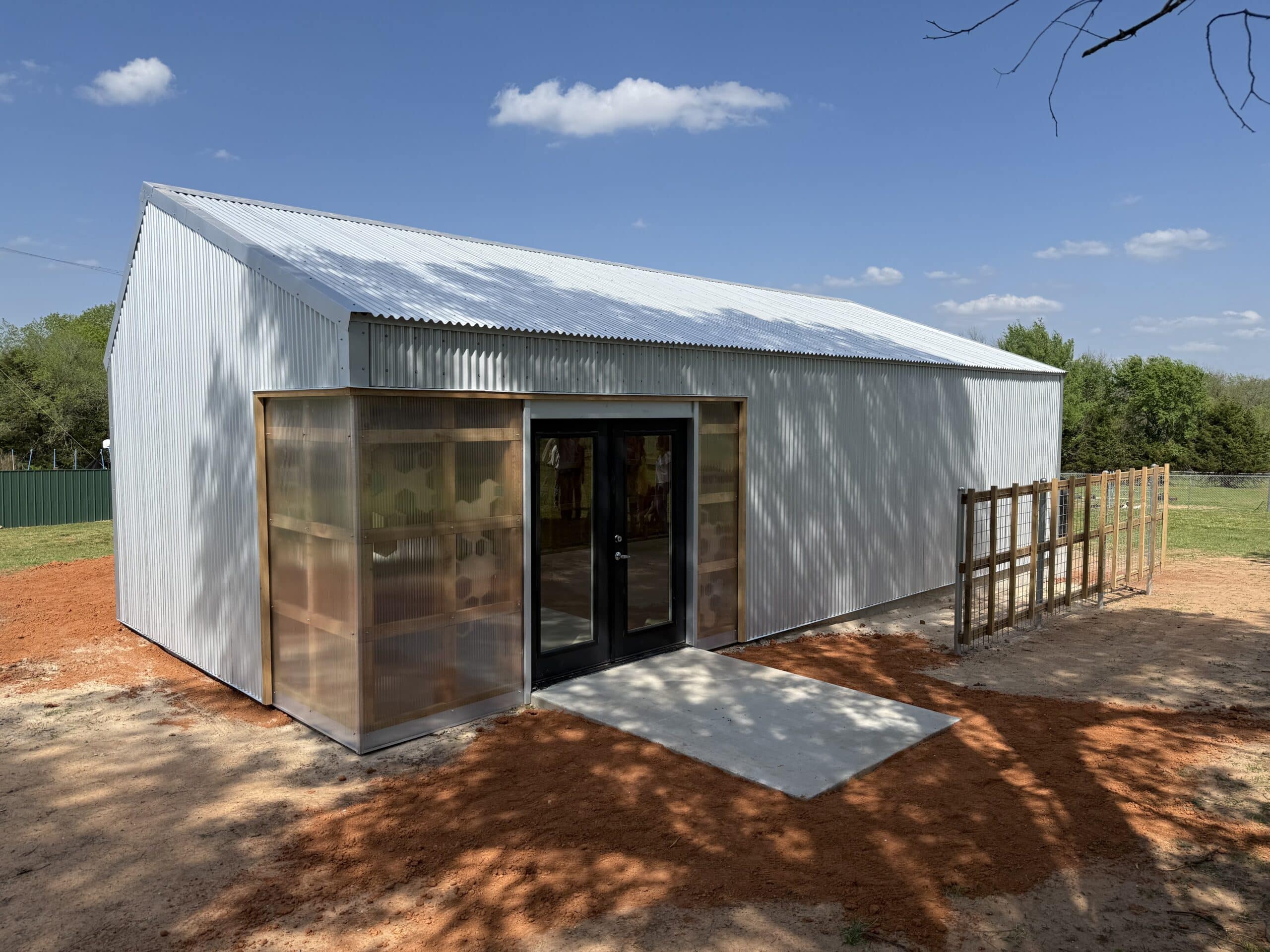
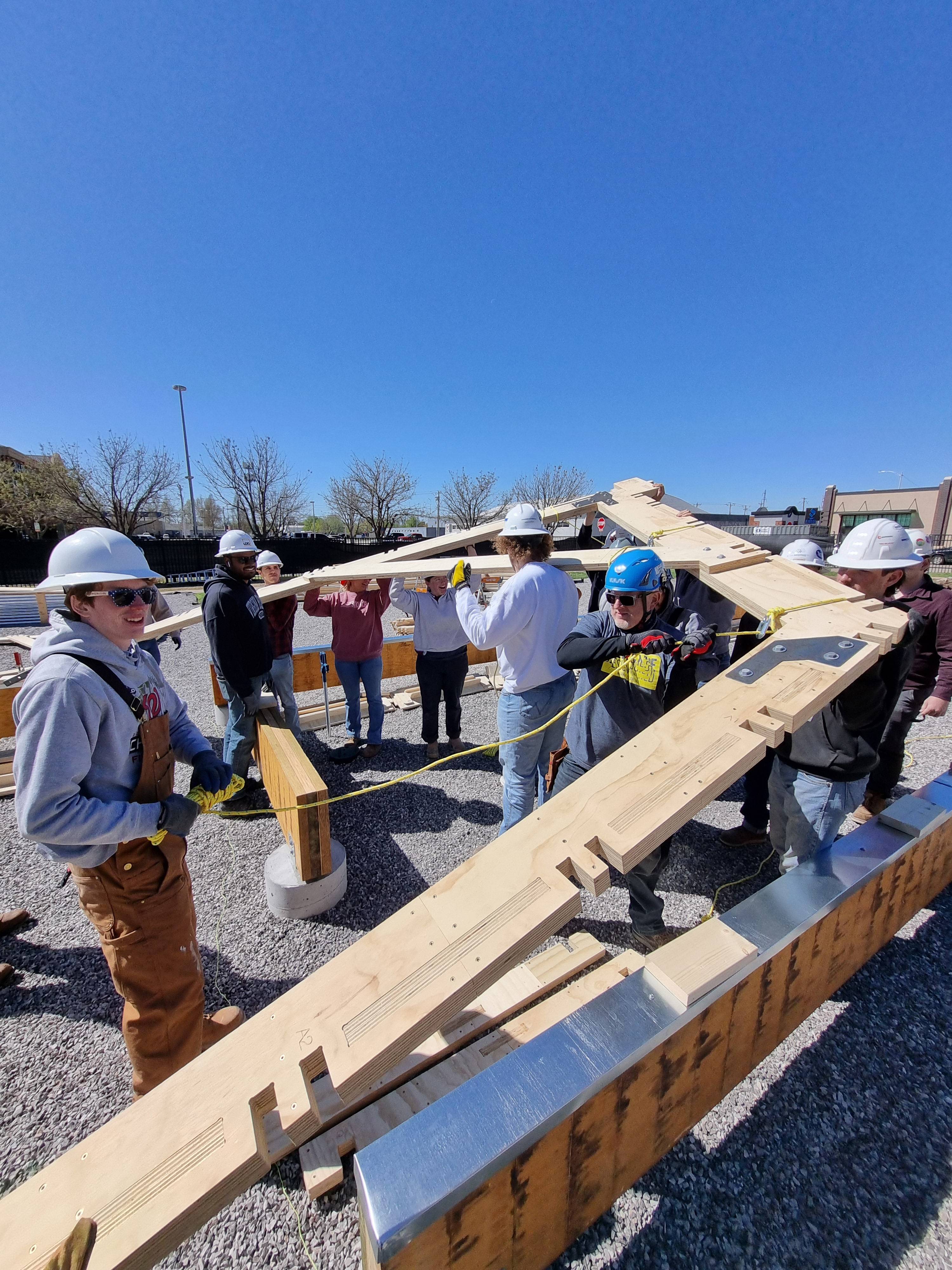
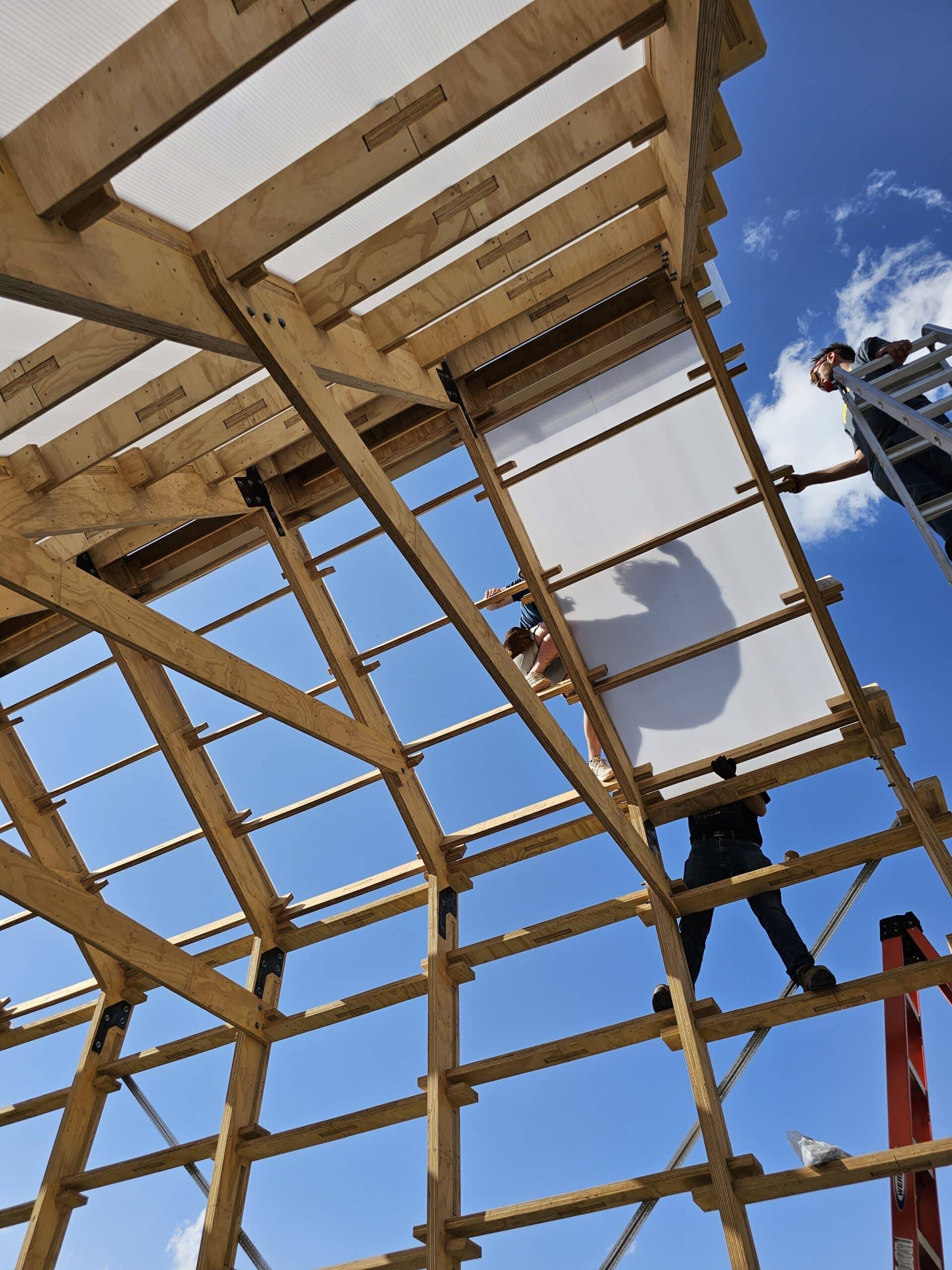
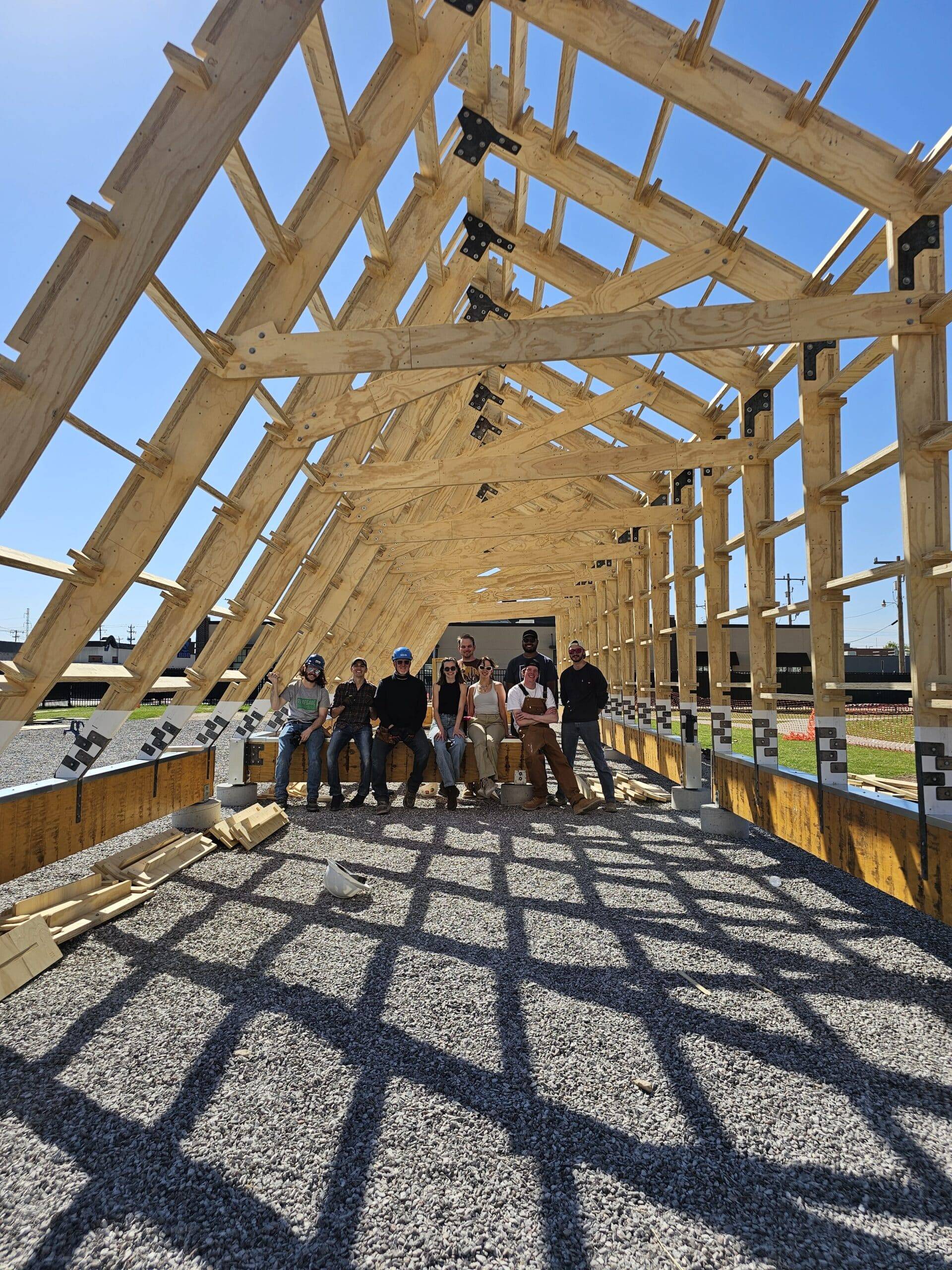
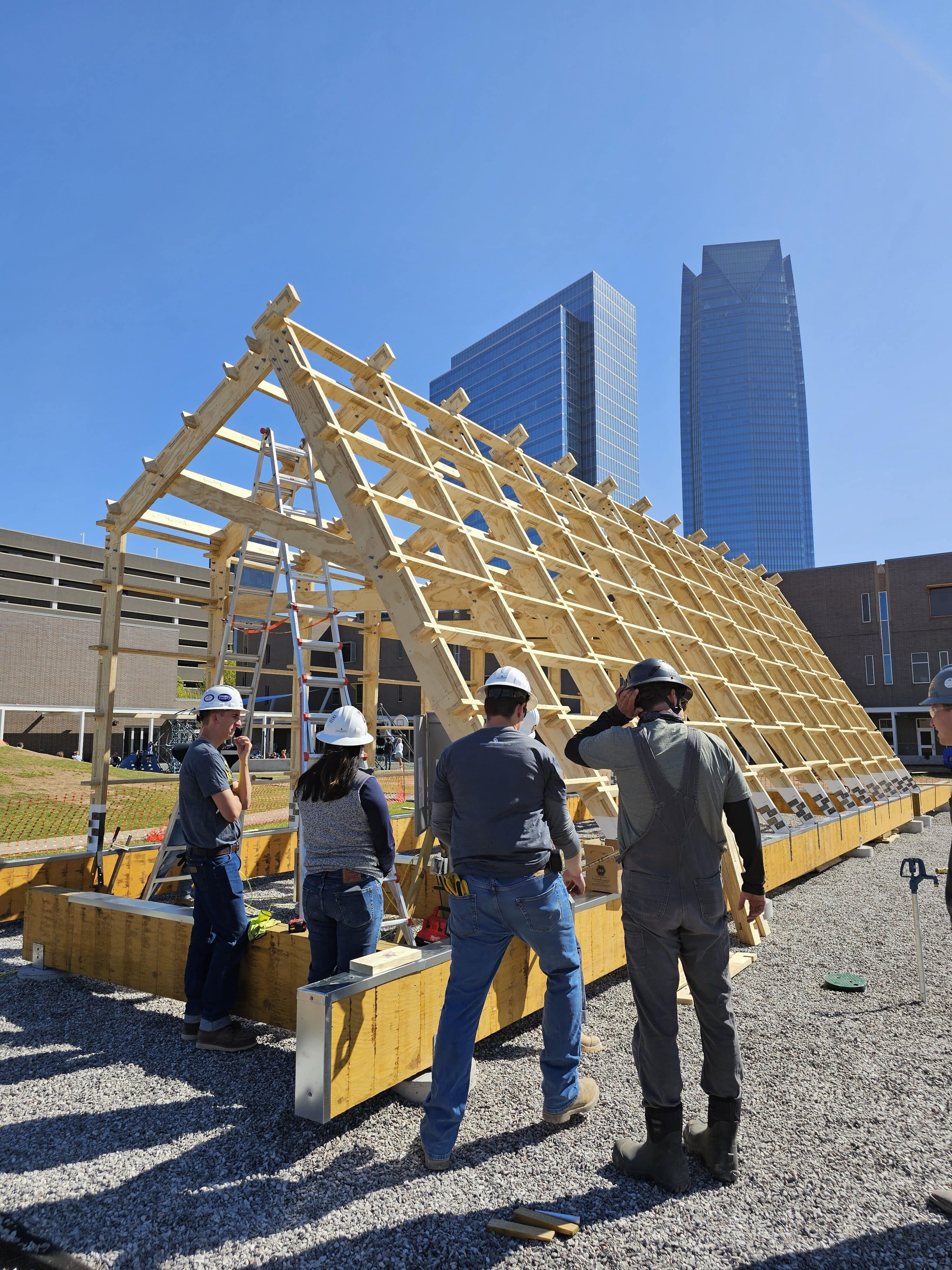
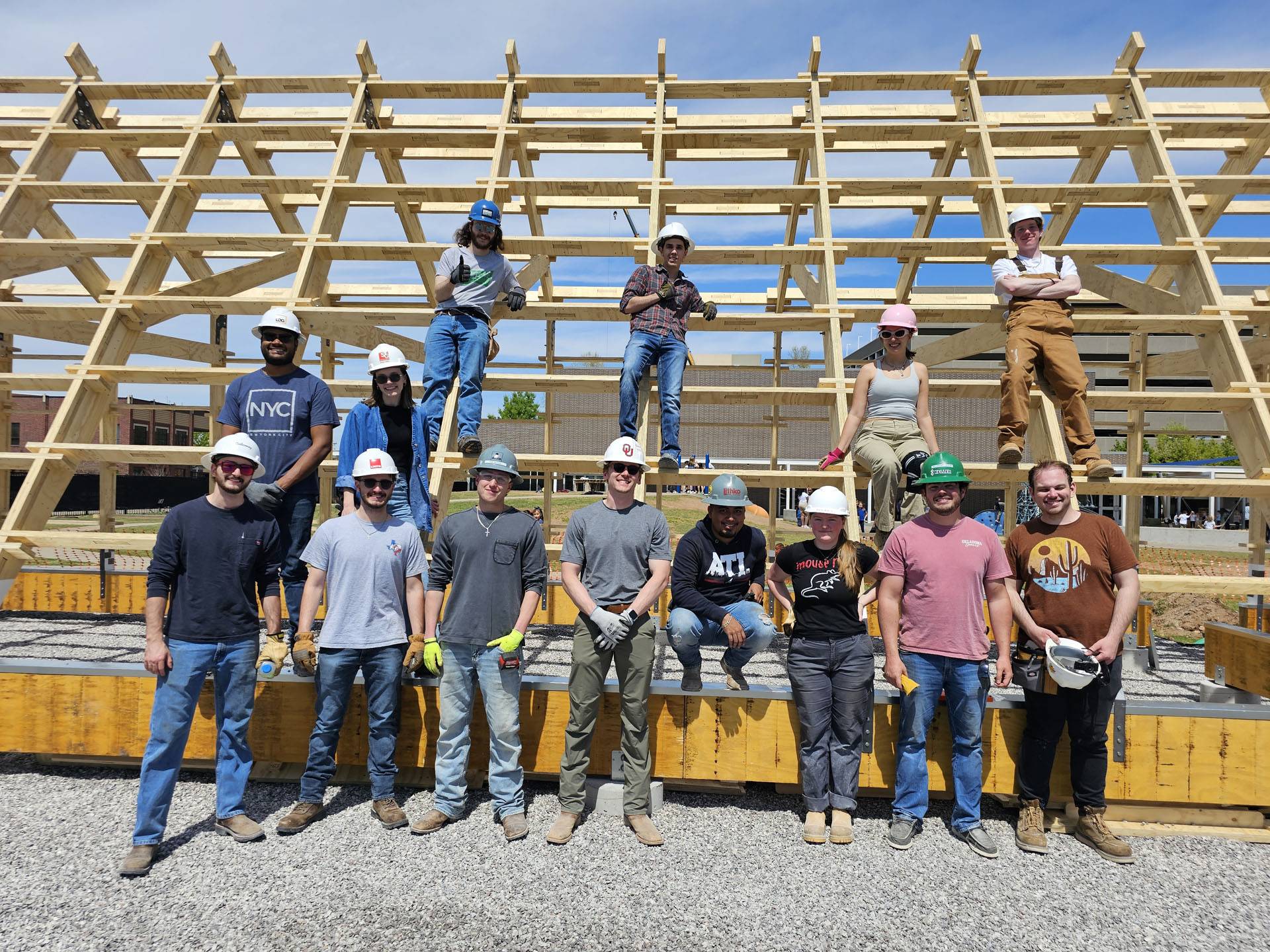
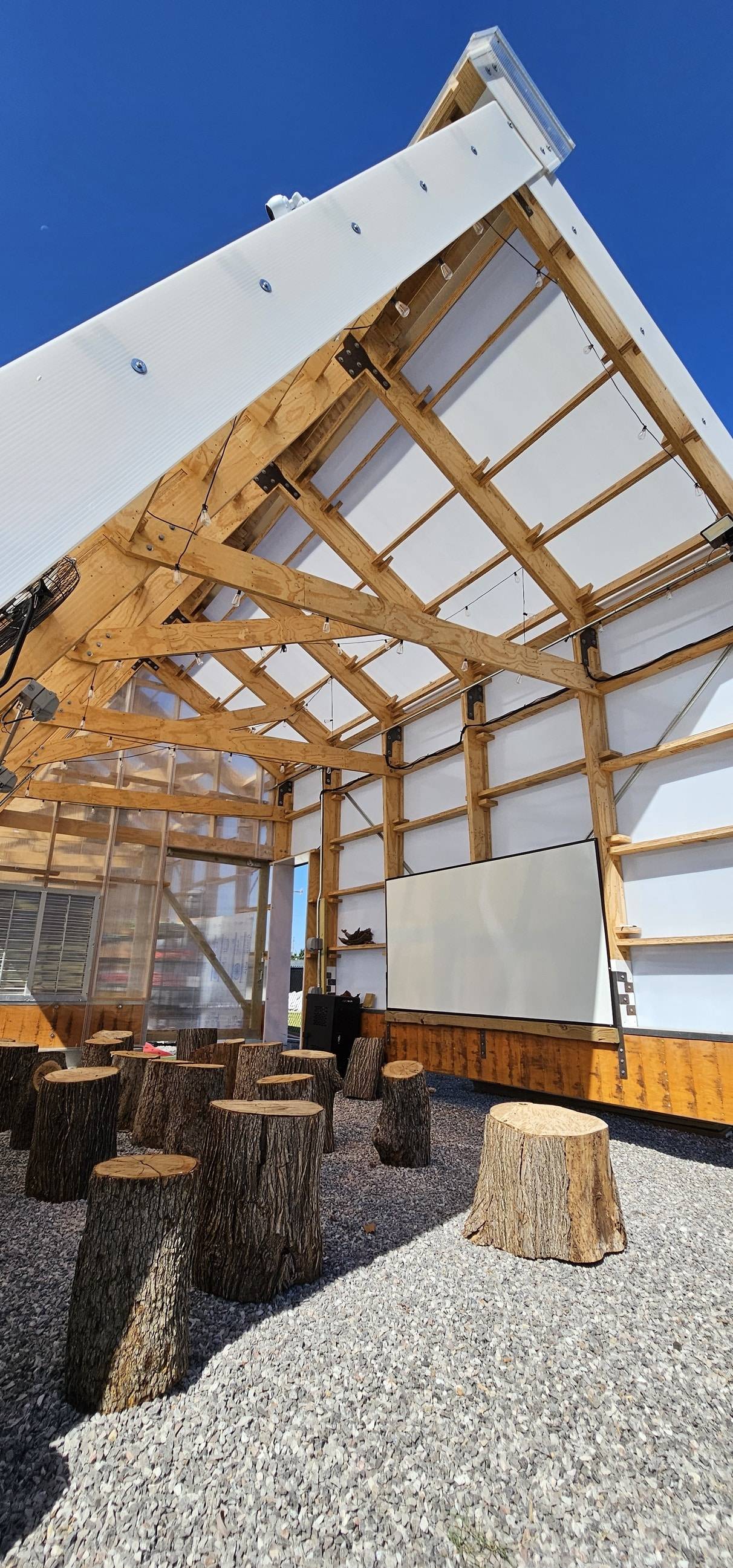
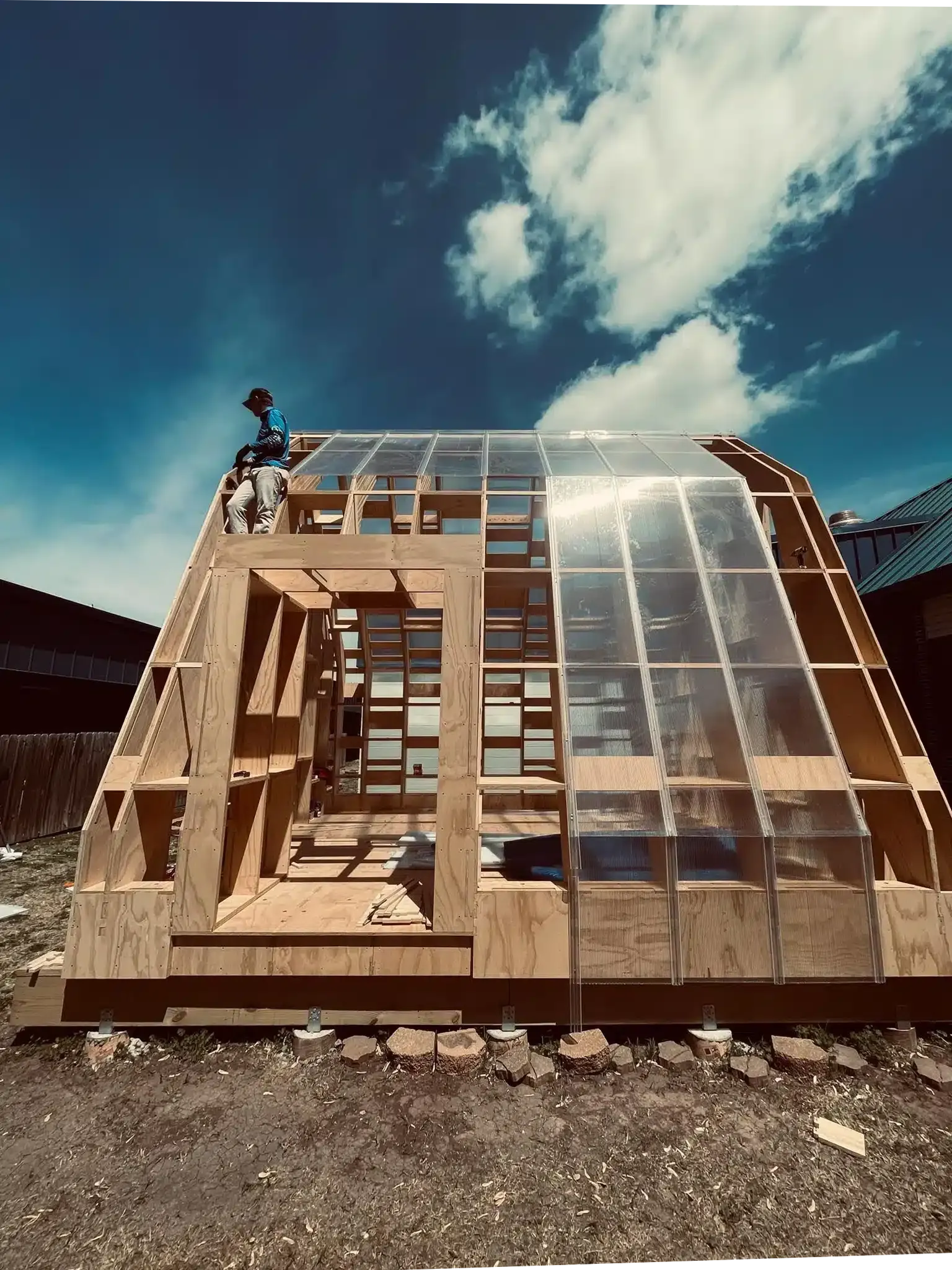
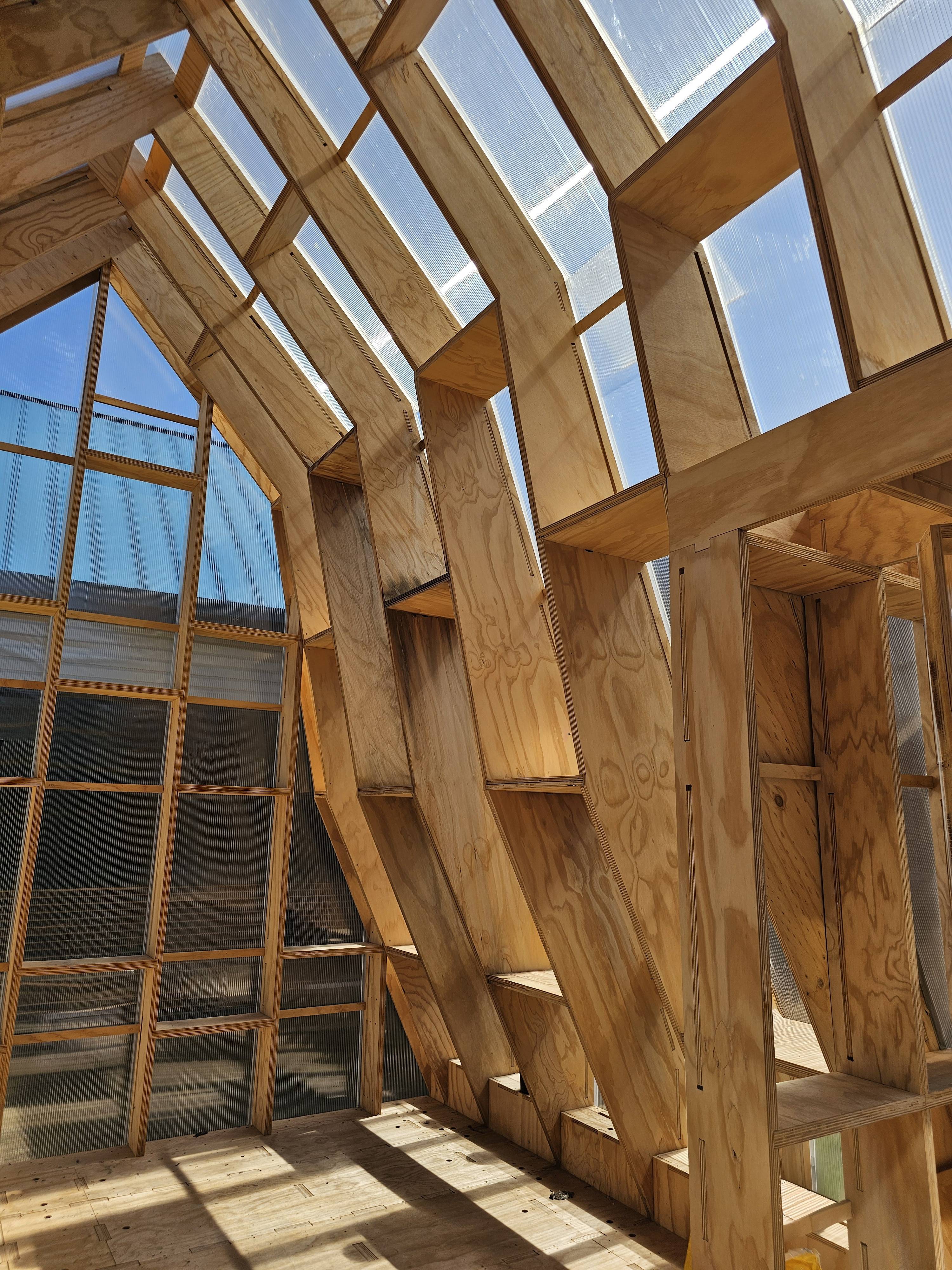
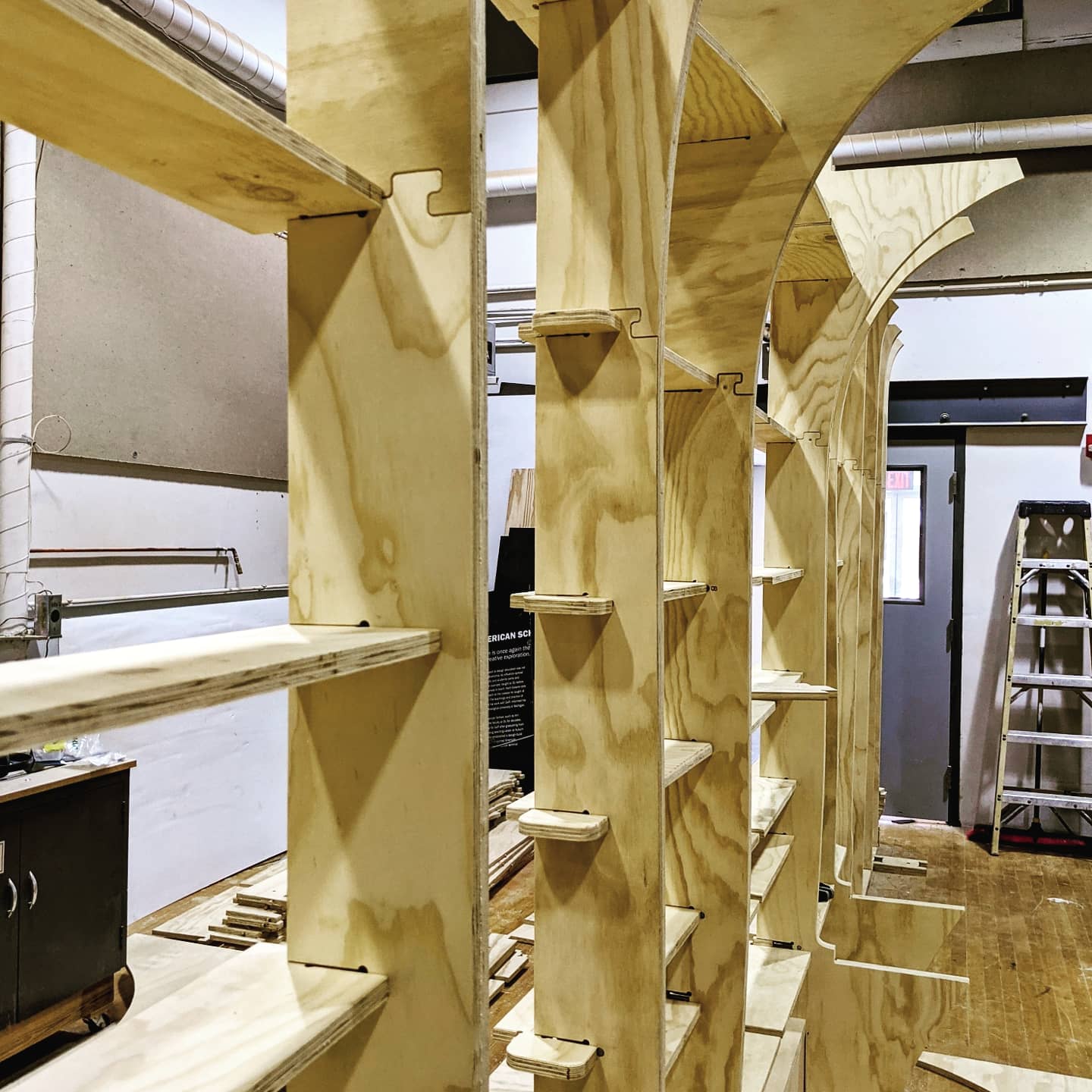
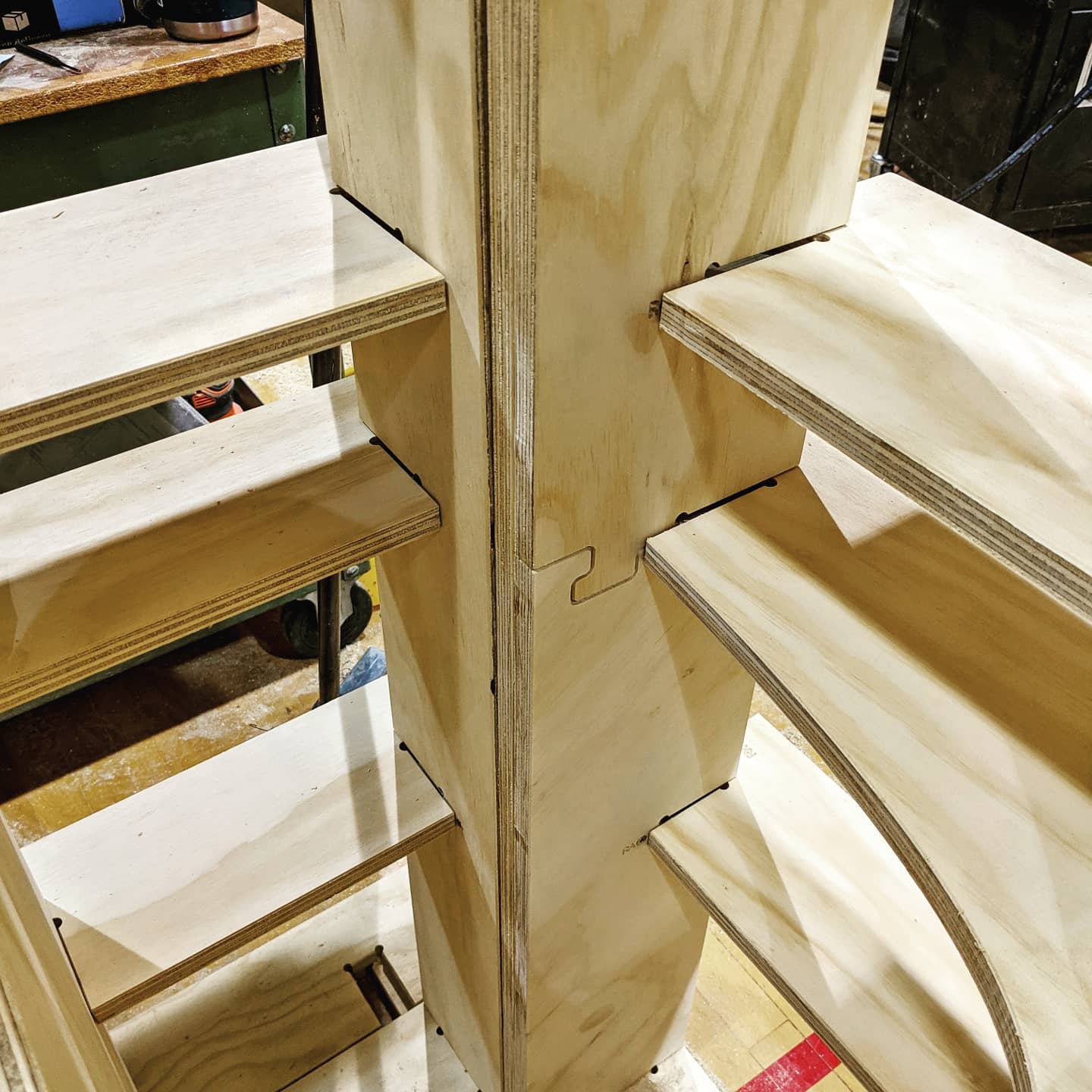
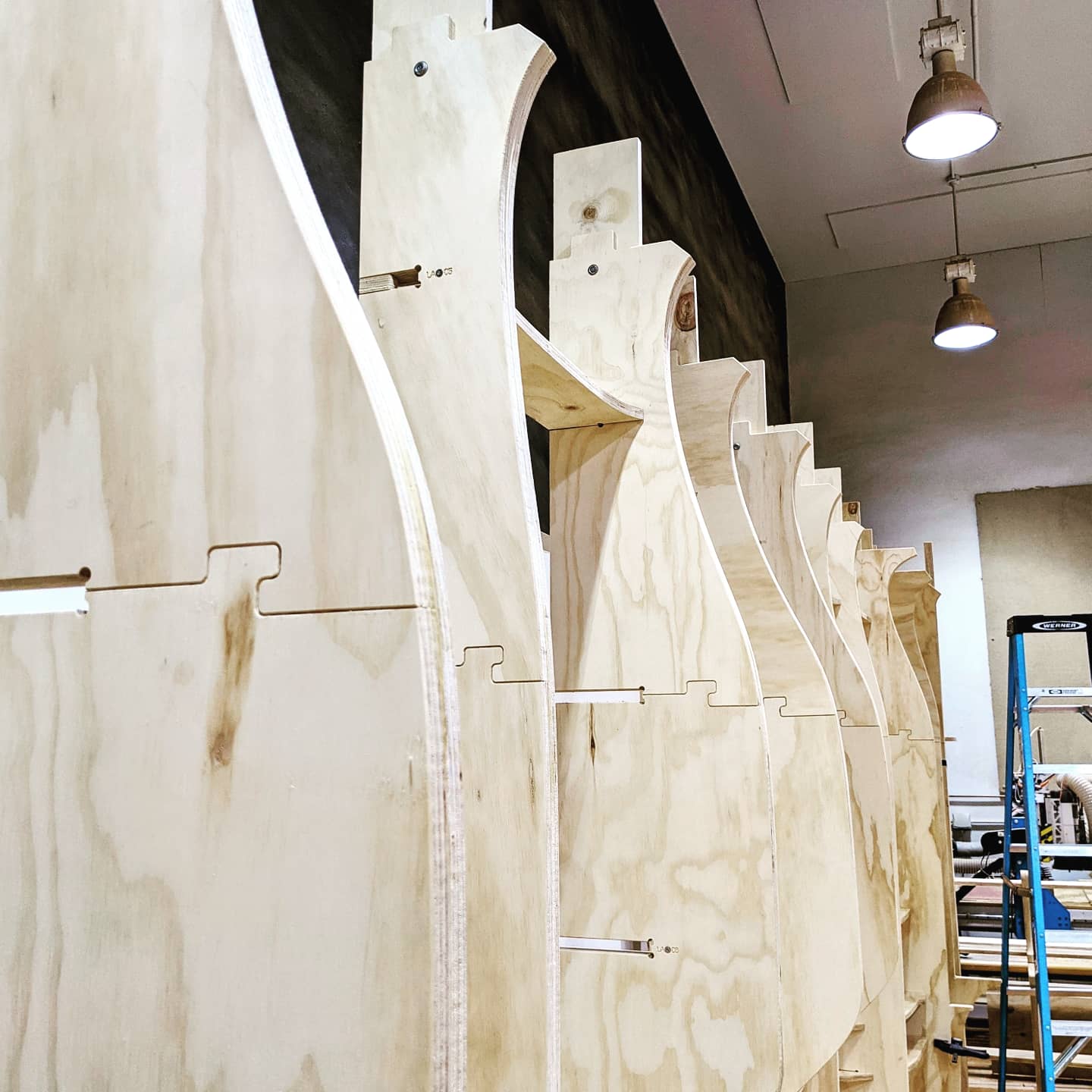
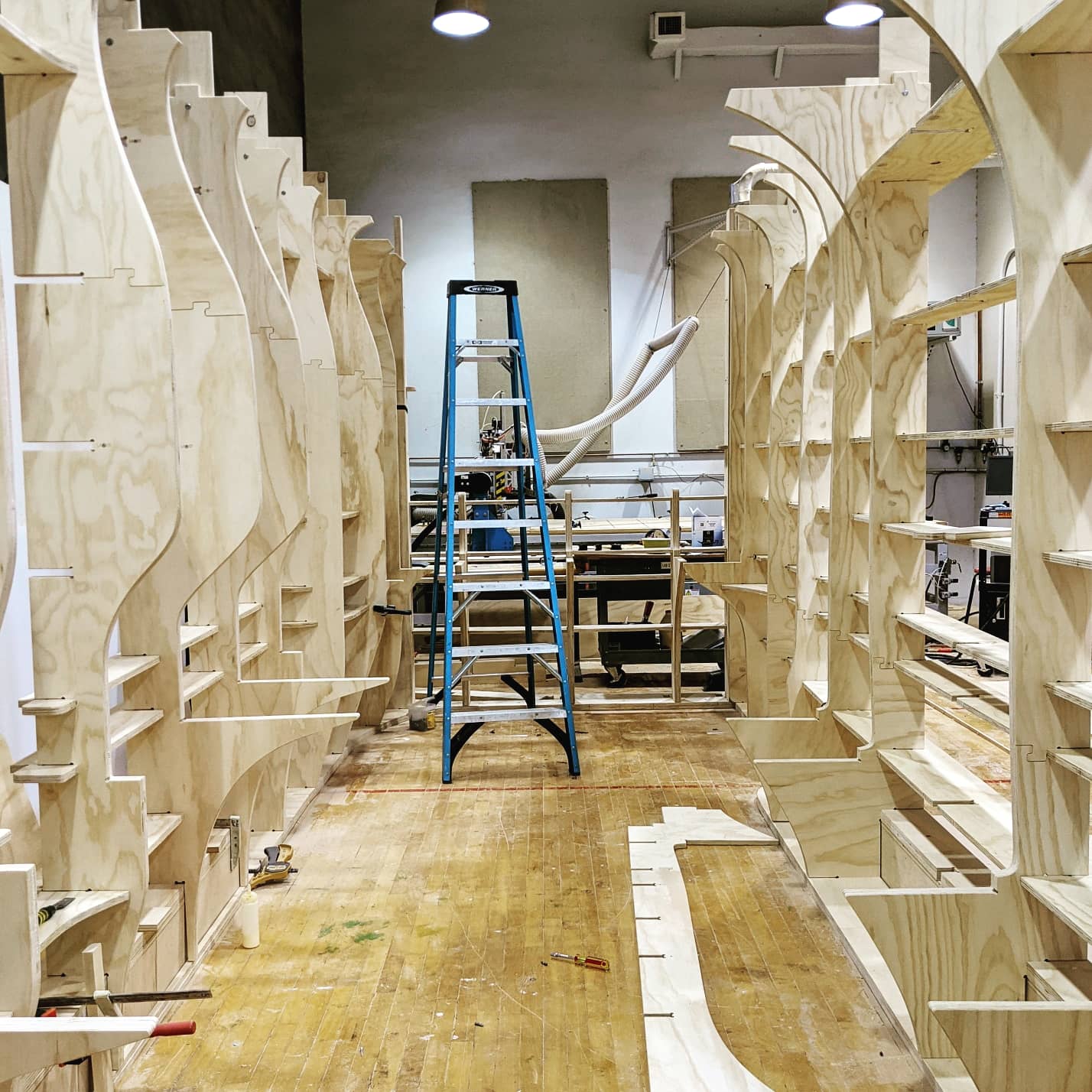
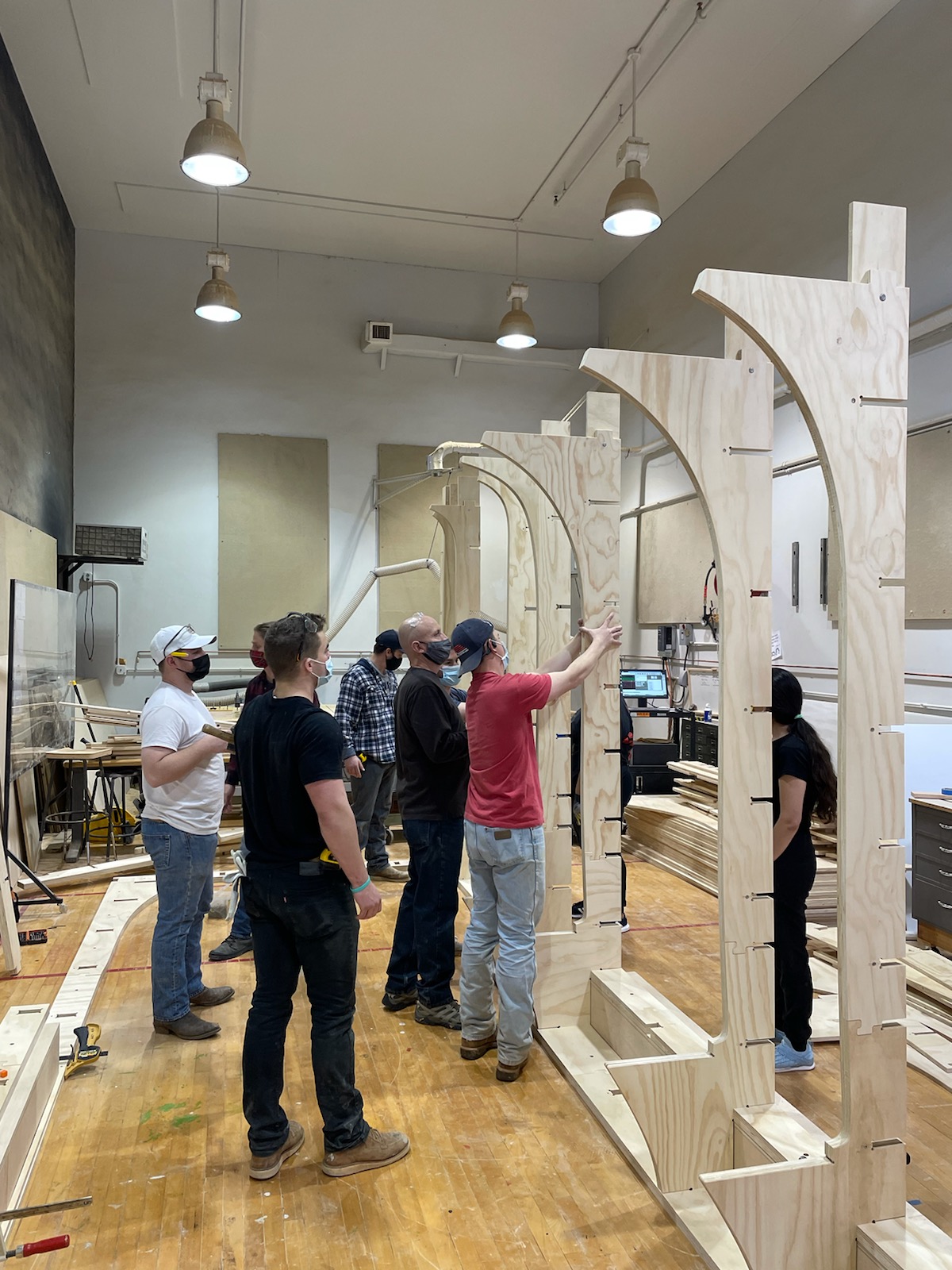
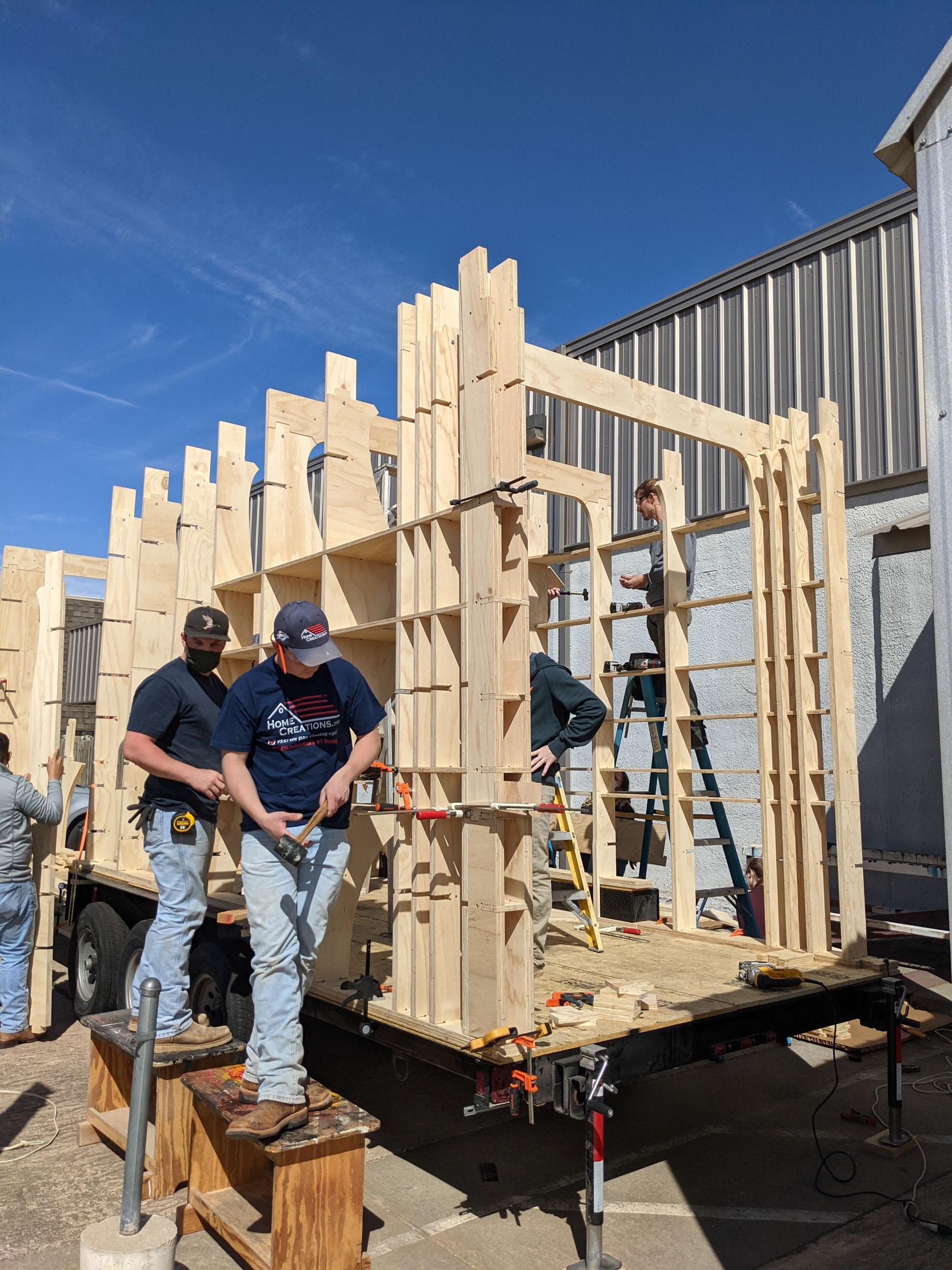
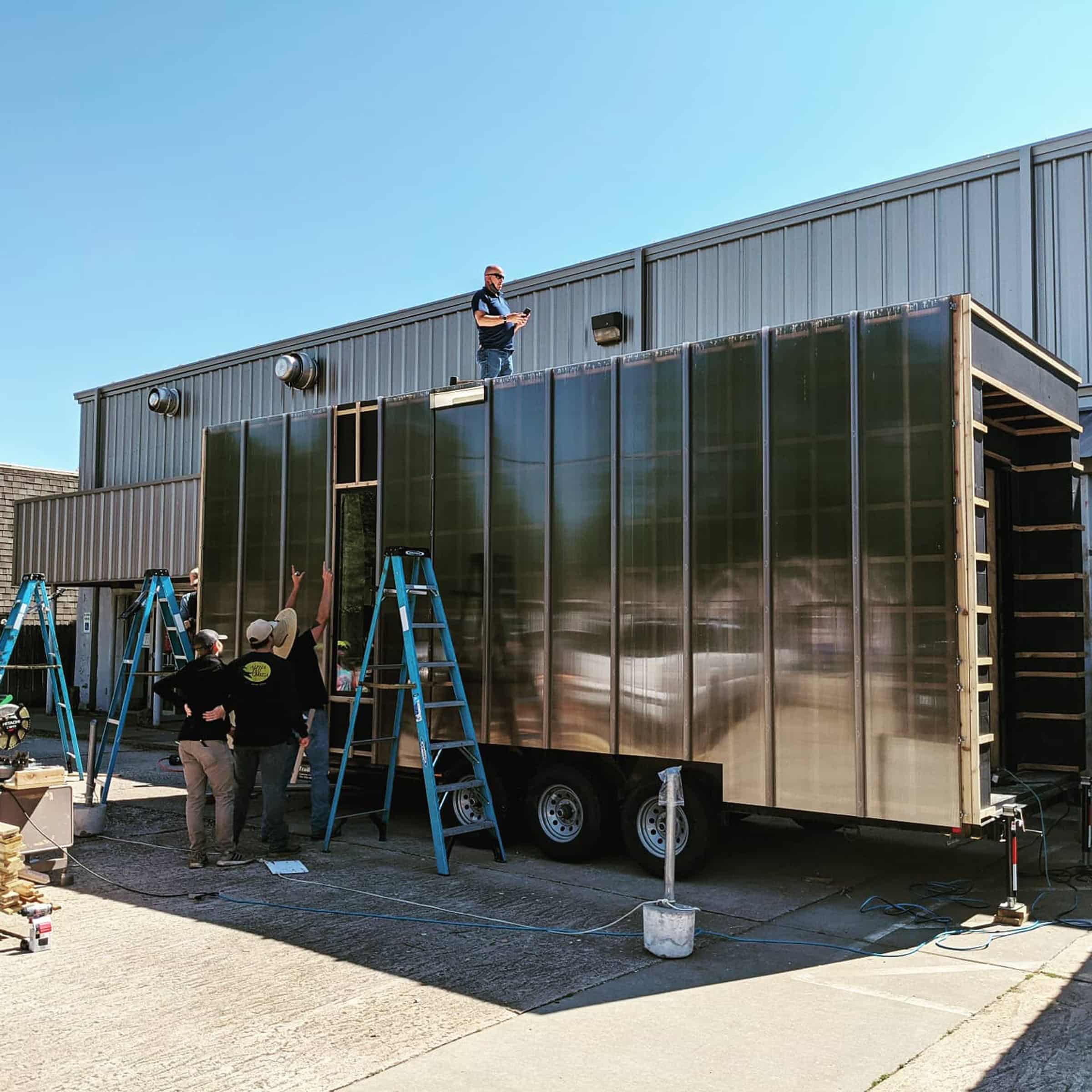
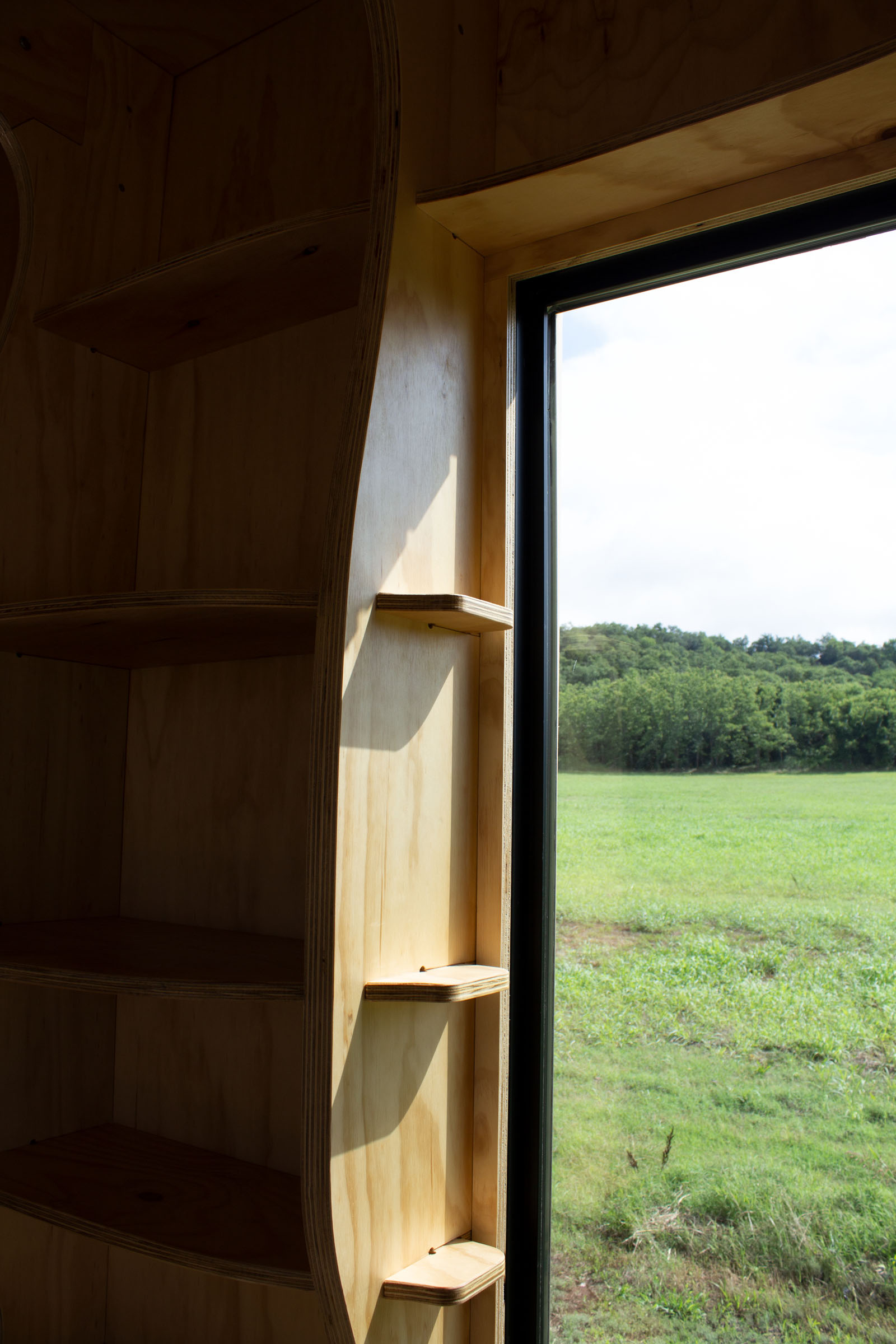
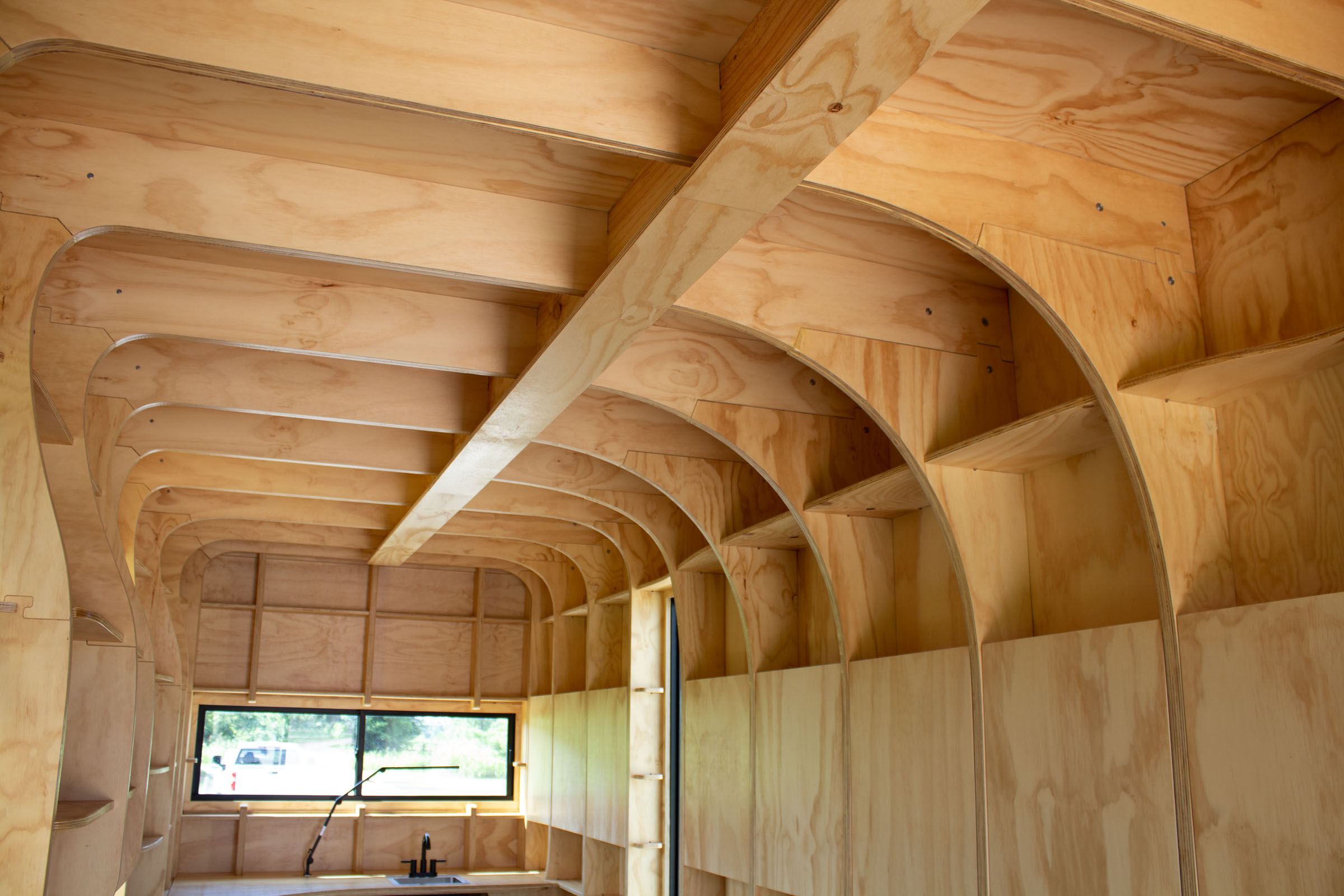
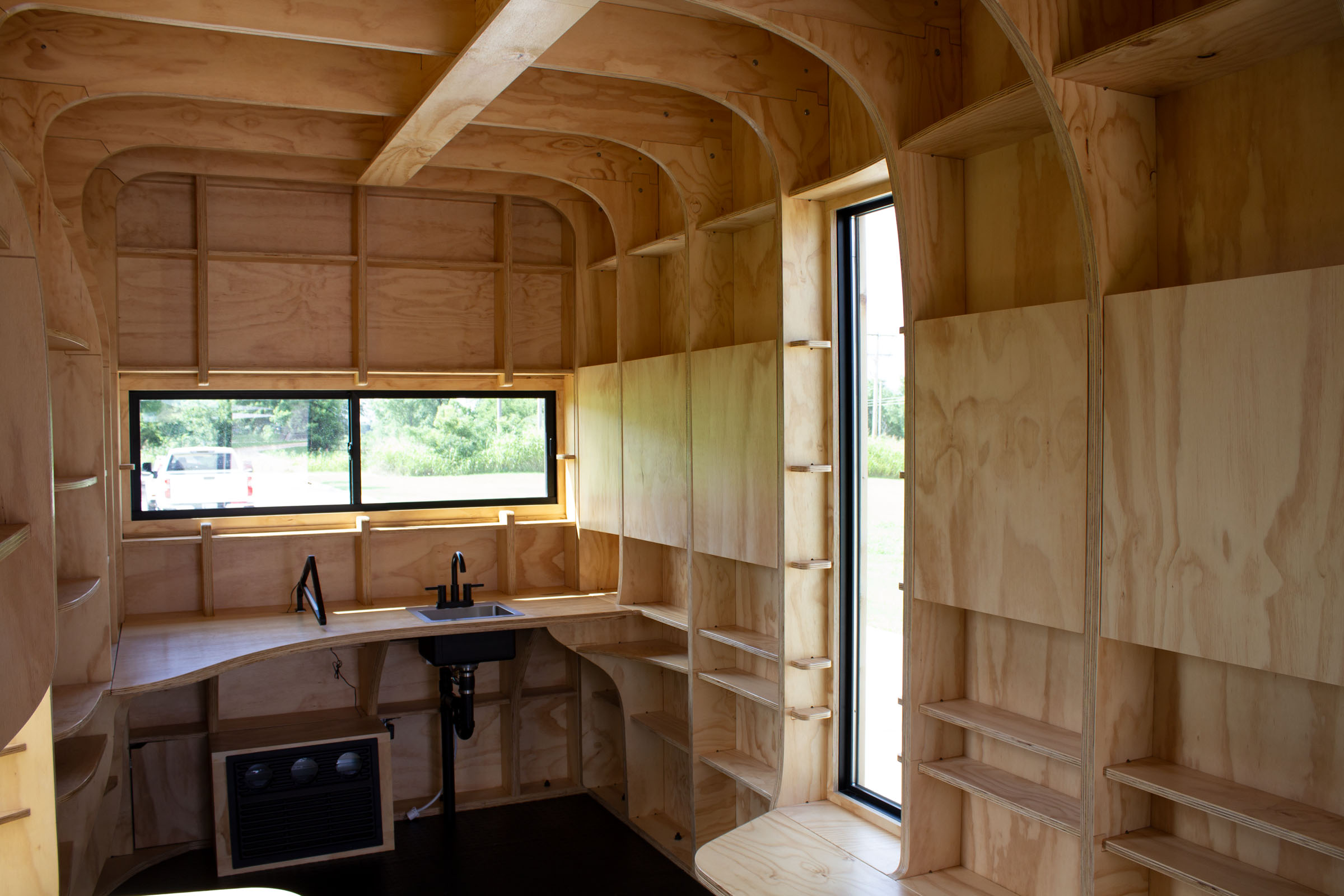
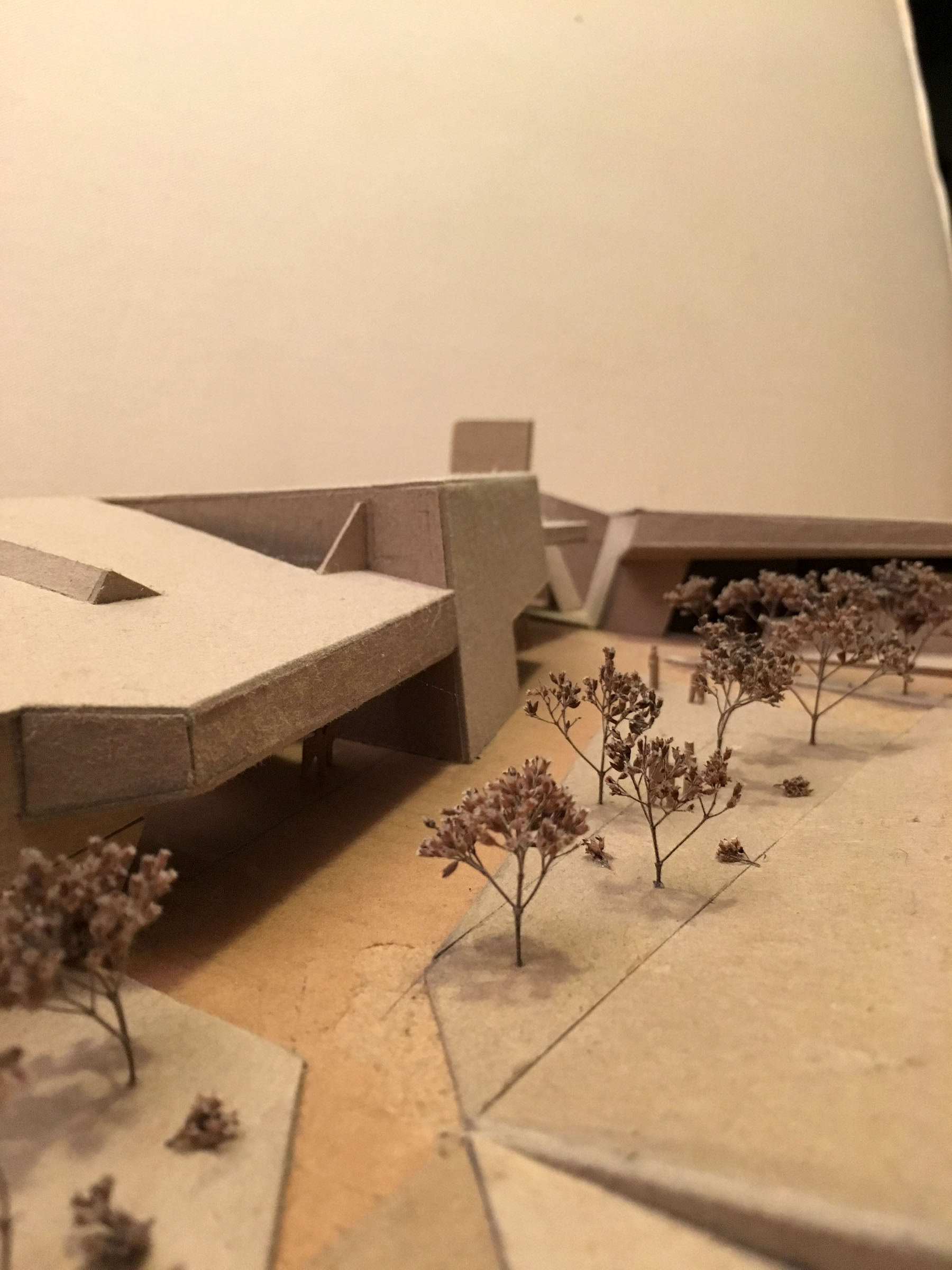
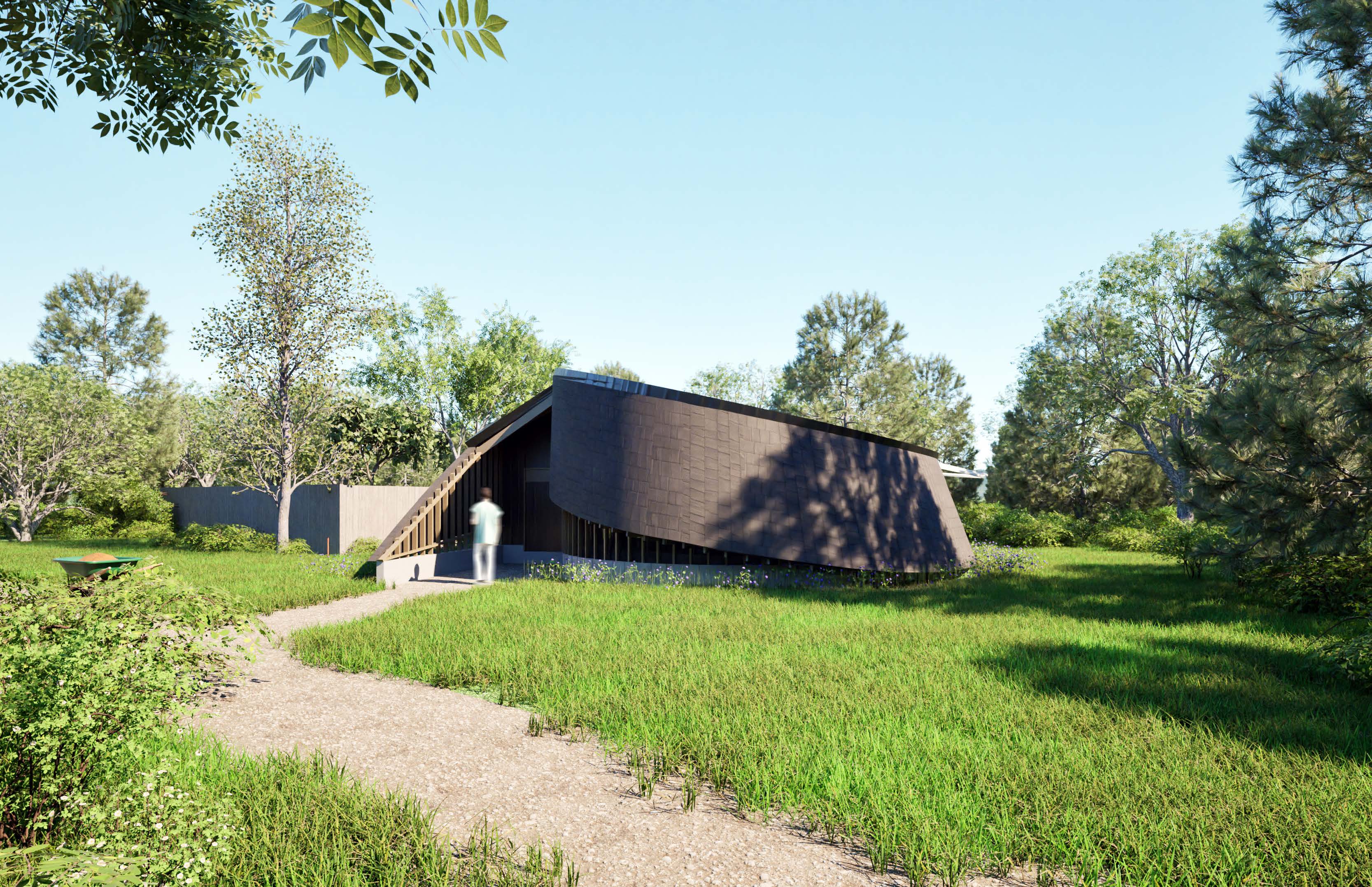
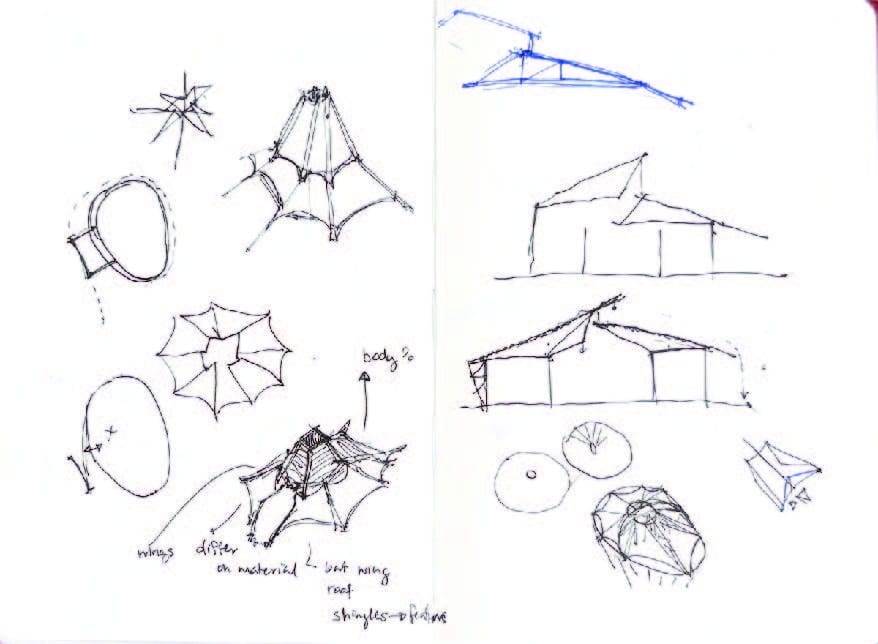
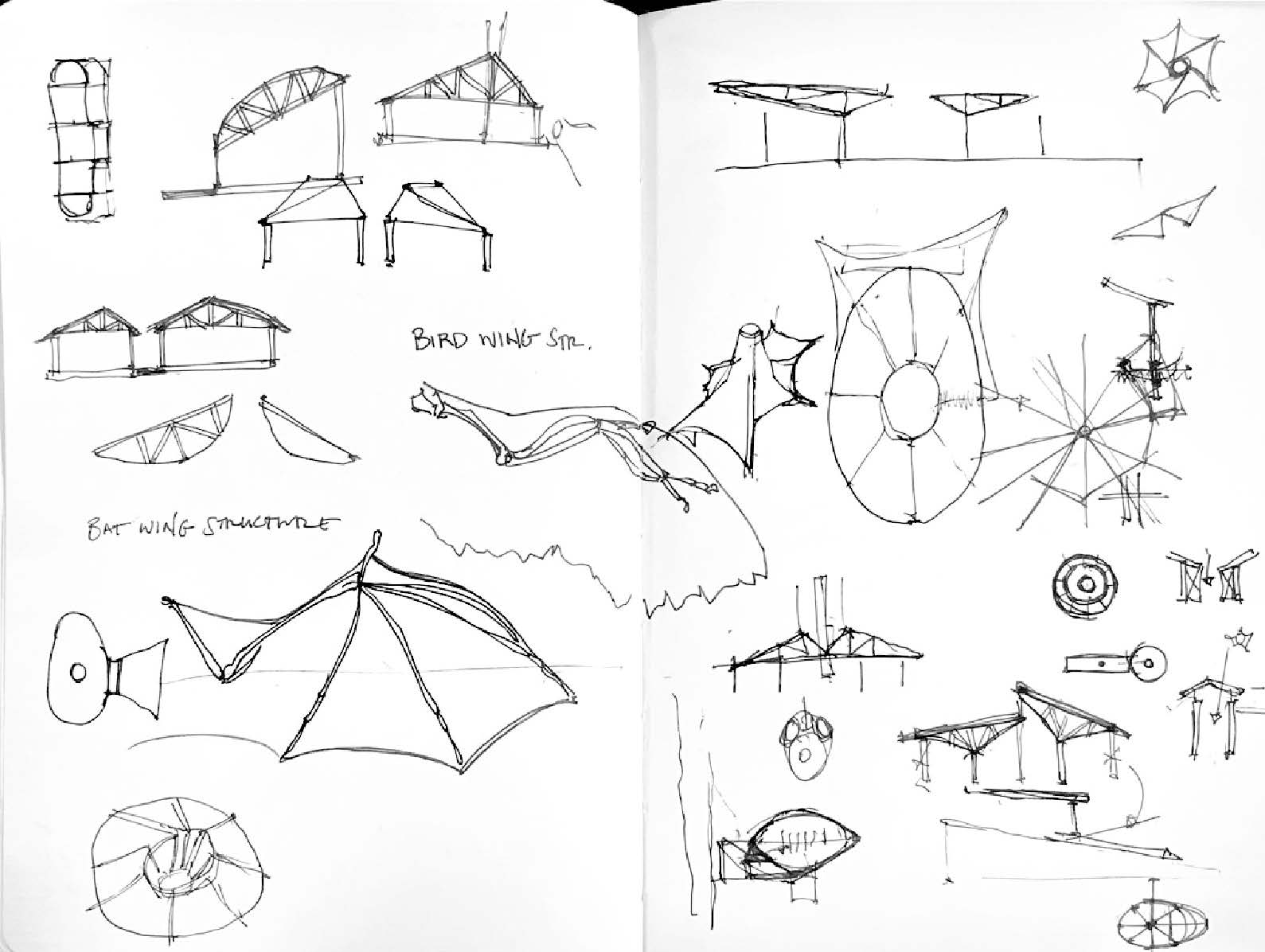
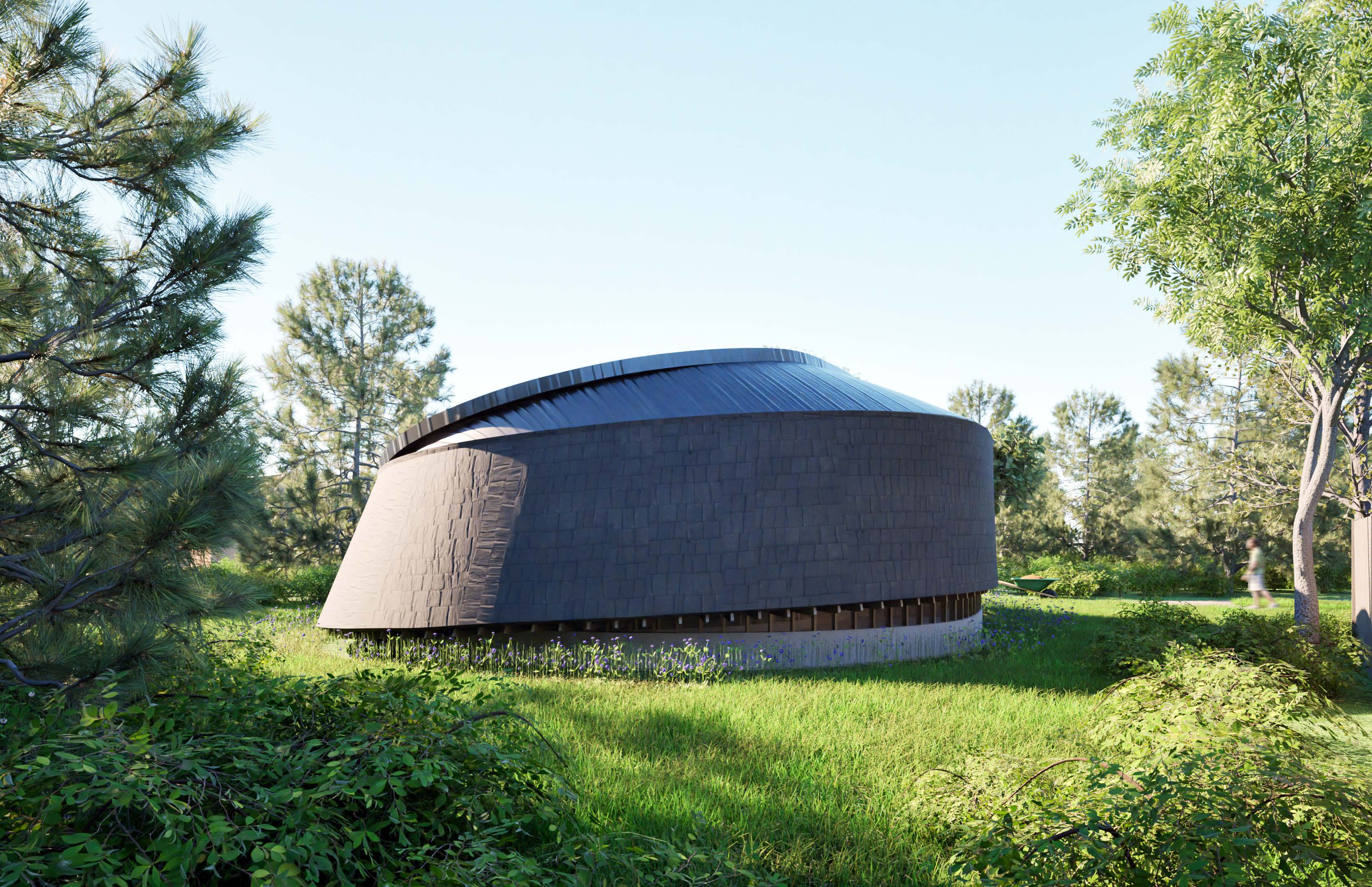
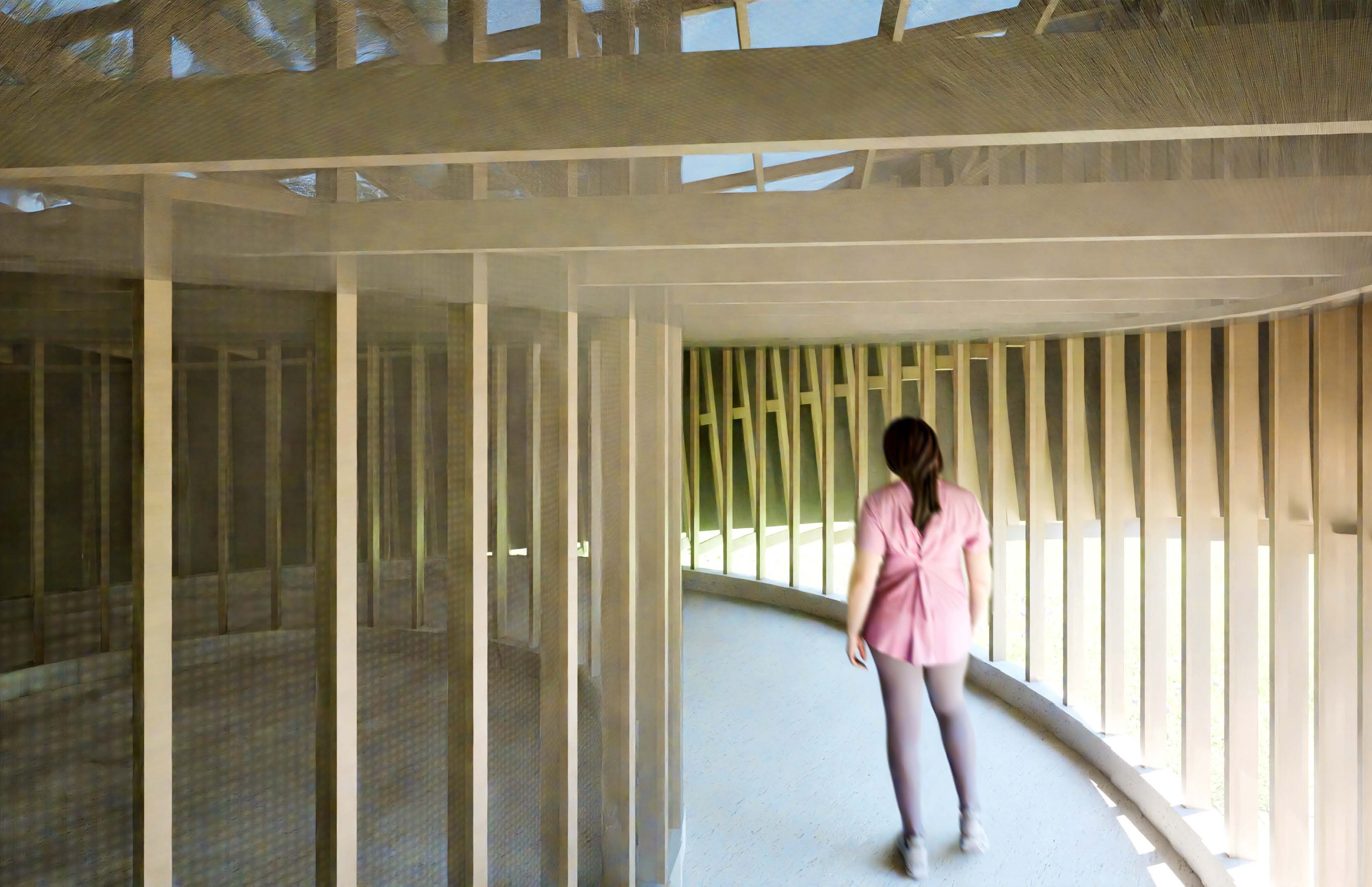
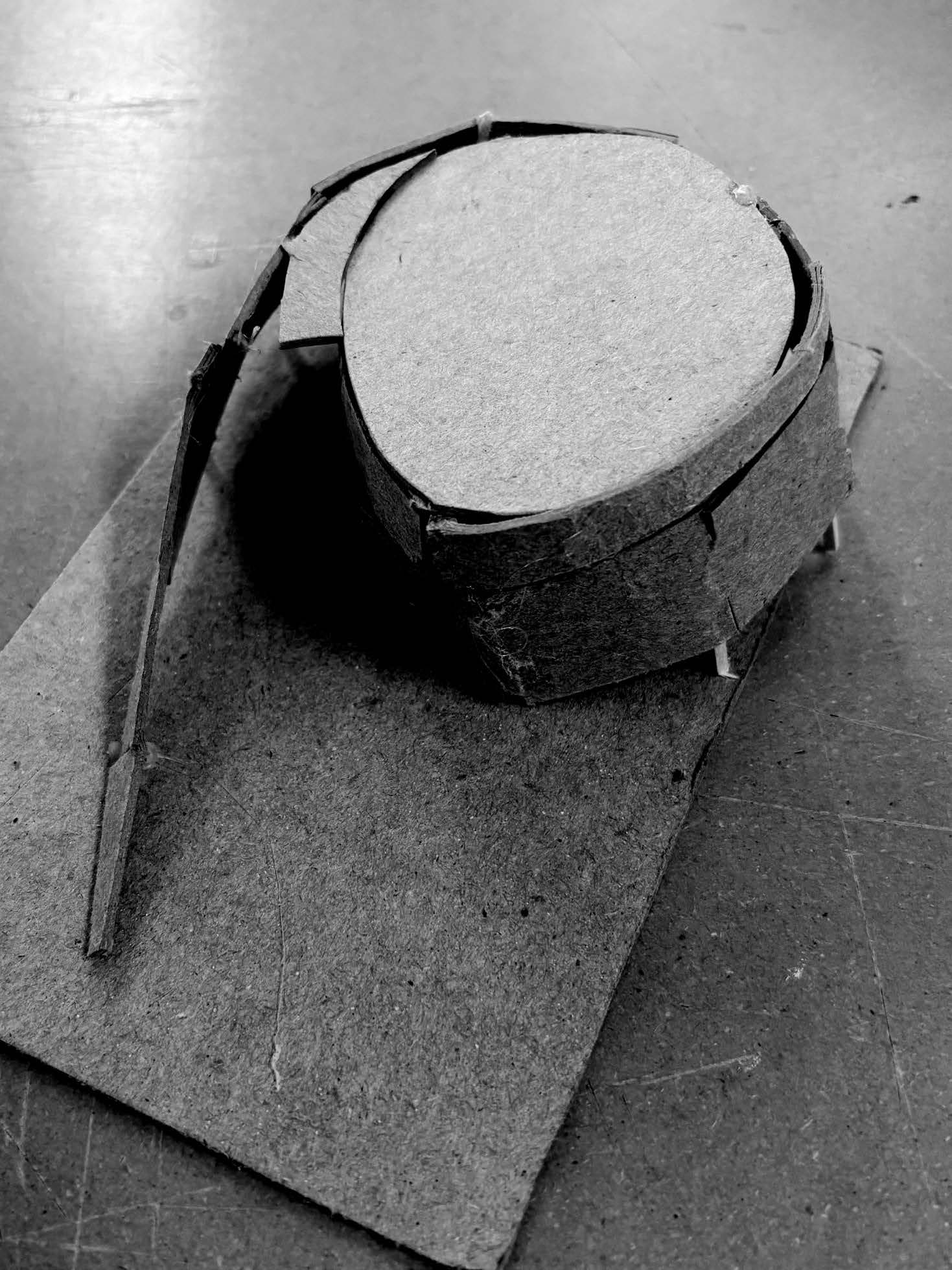
The WildCare Oklahoma Bat and Chimney Swift Rehabilitation Facility is the 2025–26 project of the American School Design Build studio at the University of Oklahoma Gibbs College of Architecture. Created in partnership with WildCare Oklahoma, the state’s leading wildlife rehabilitation organization, the project embodies ASDB’s mission to merge design, ecology, and construction. Officially titled C.O.M.M.A. — Conservation of Oklahoma’s Mammals and Migratory Avians, the facility is the first in the nation to serve both bats and chimney swifts within a single structure. Its spiral form, drawn from the curve of a wing, reflects protection and movement while fostering natural light, air, and habitat flow.

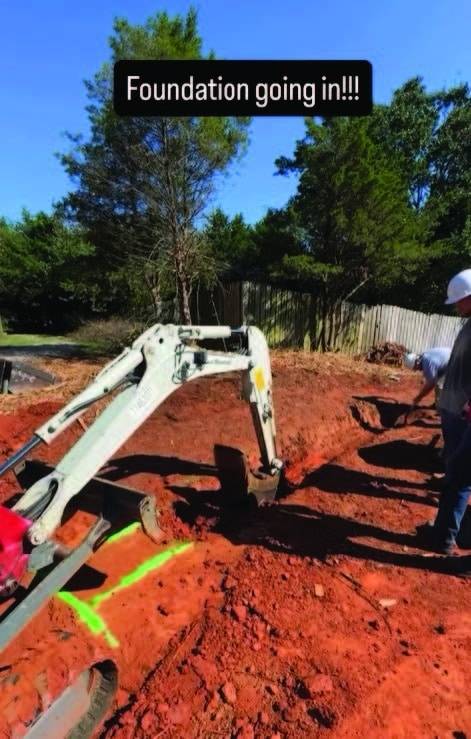
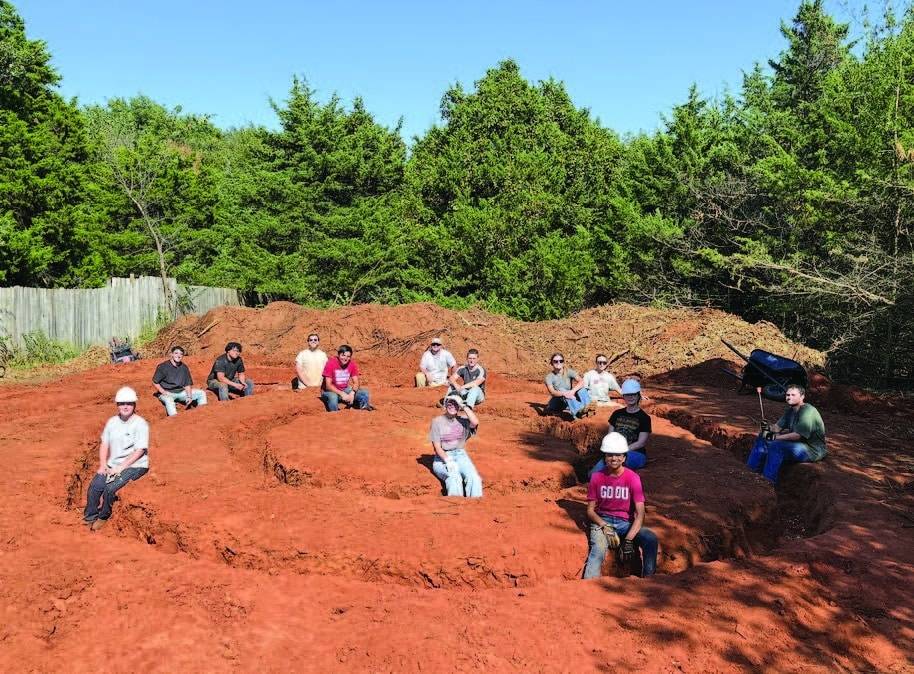
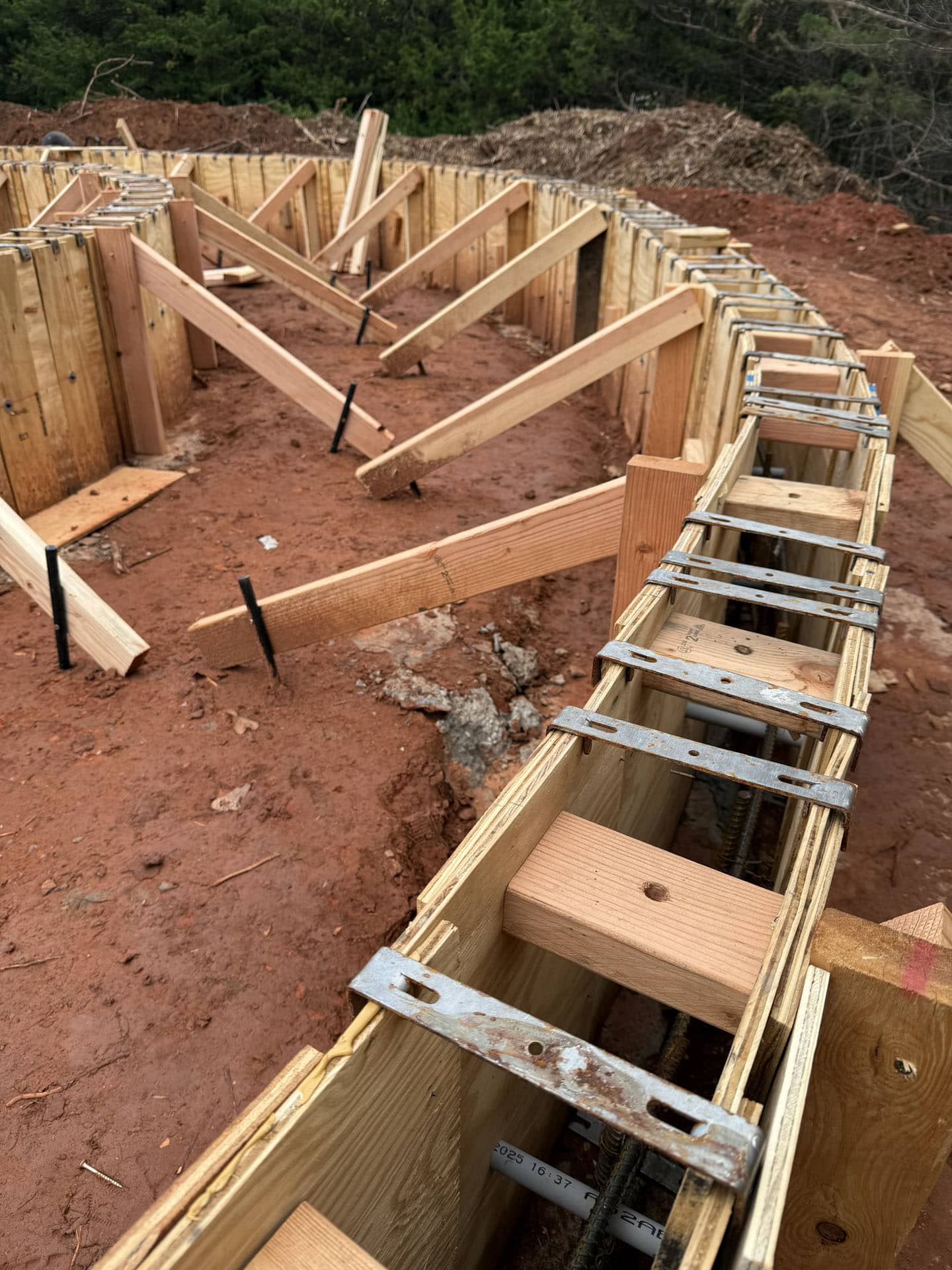
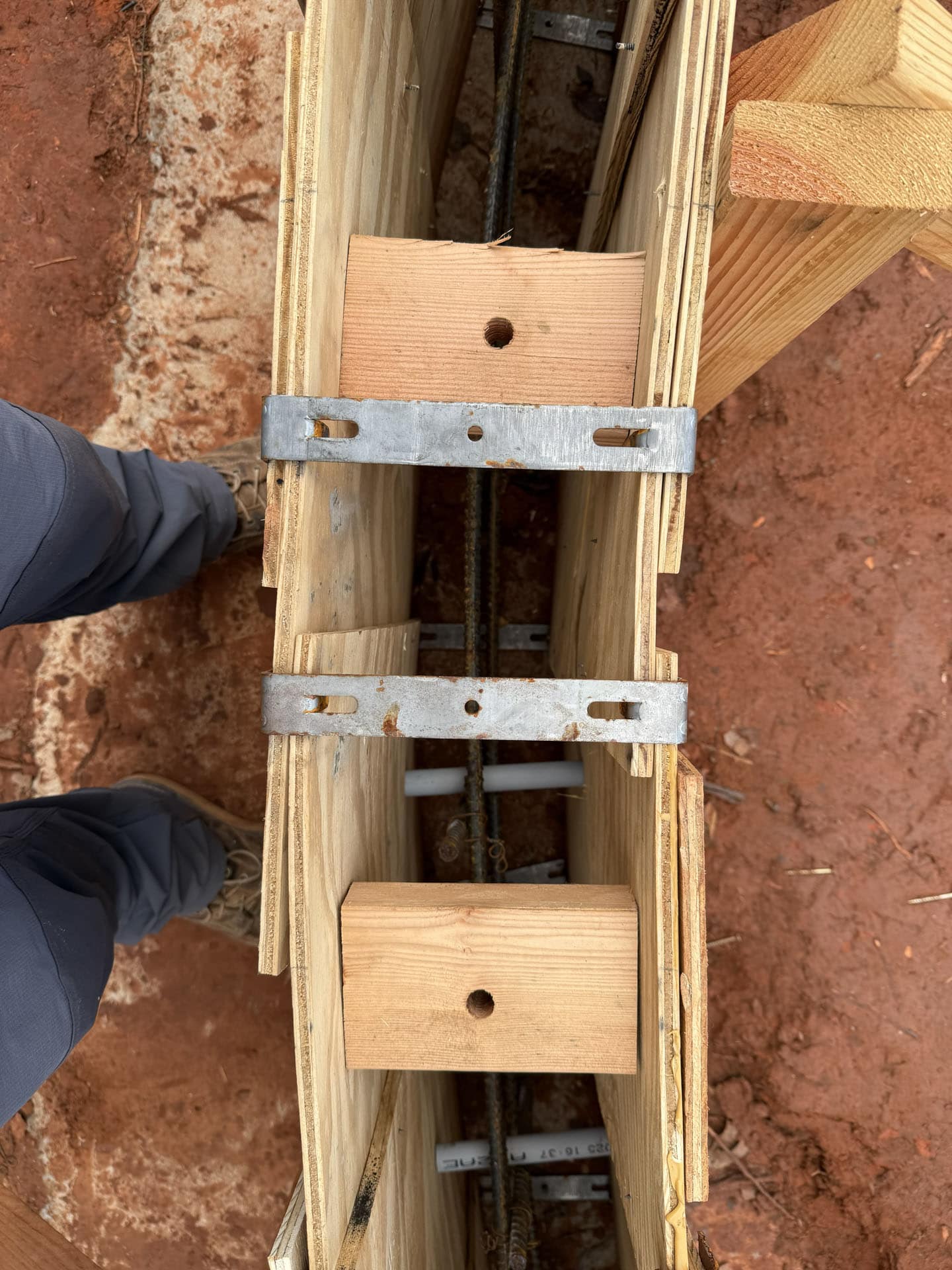
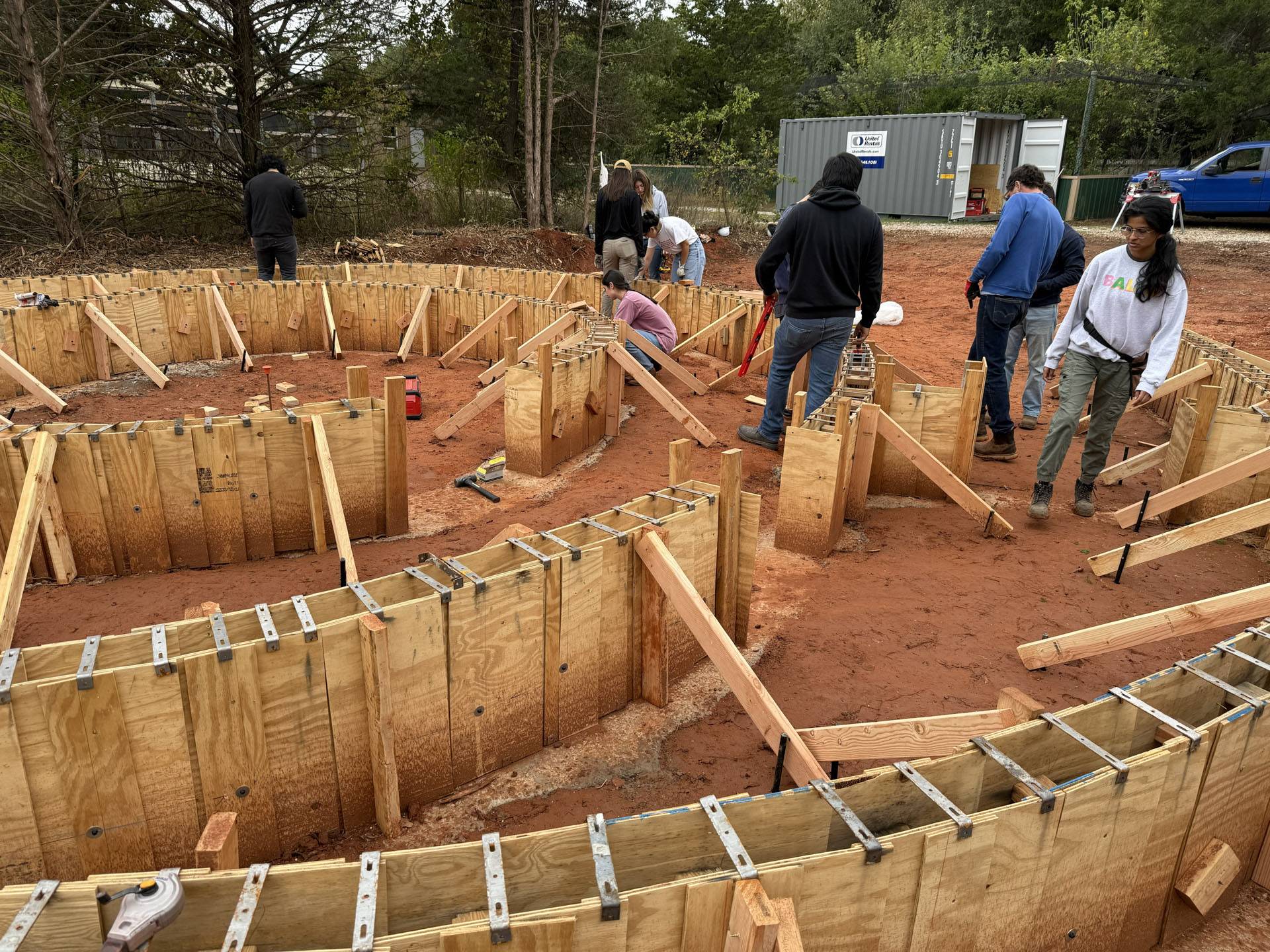
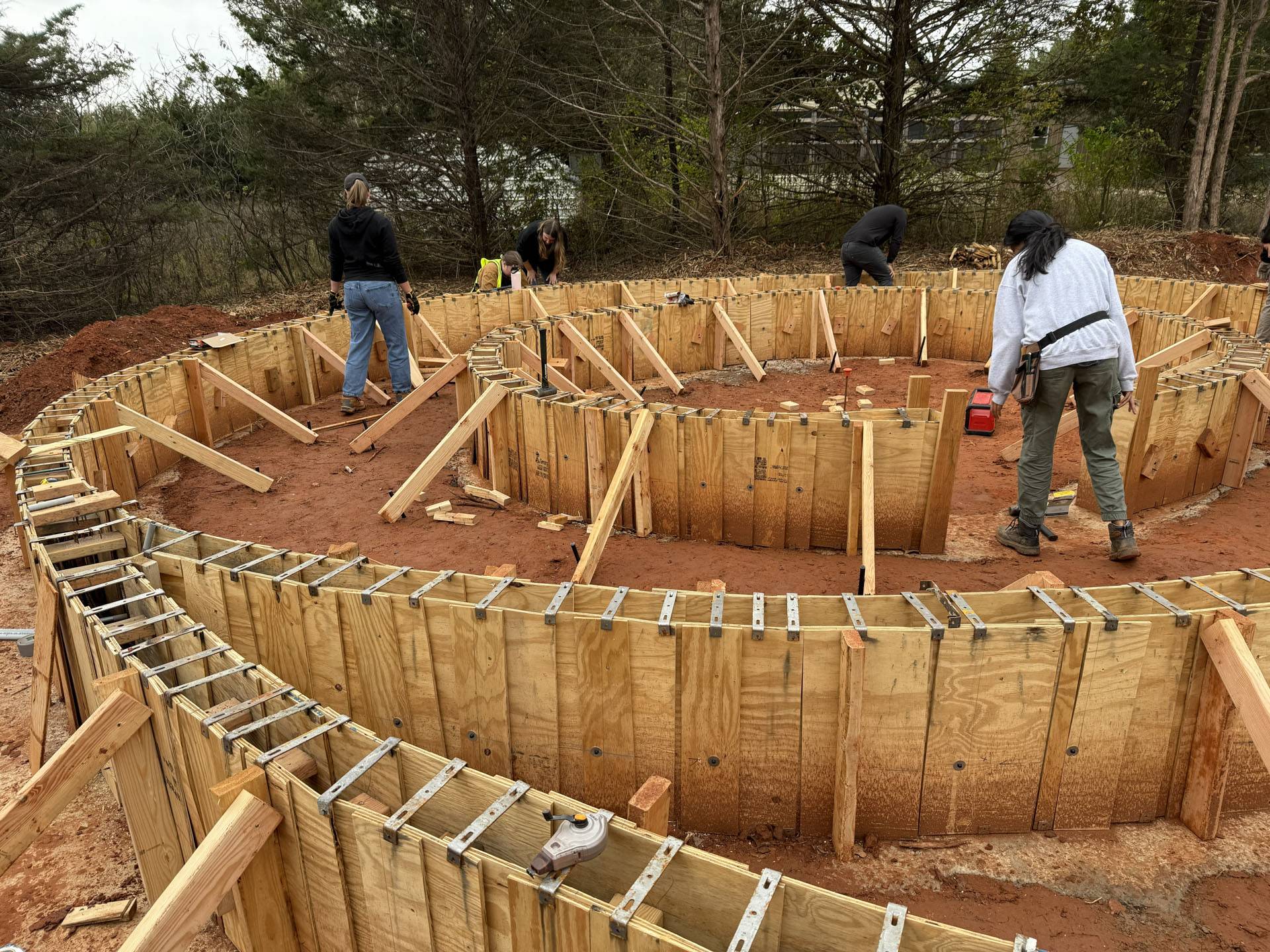
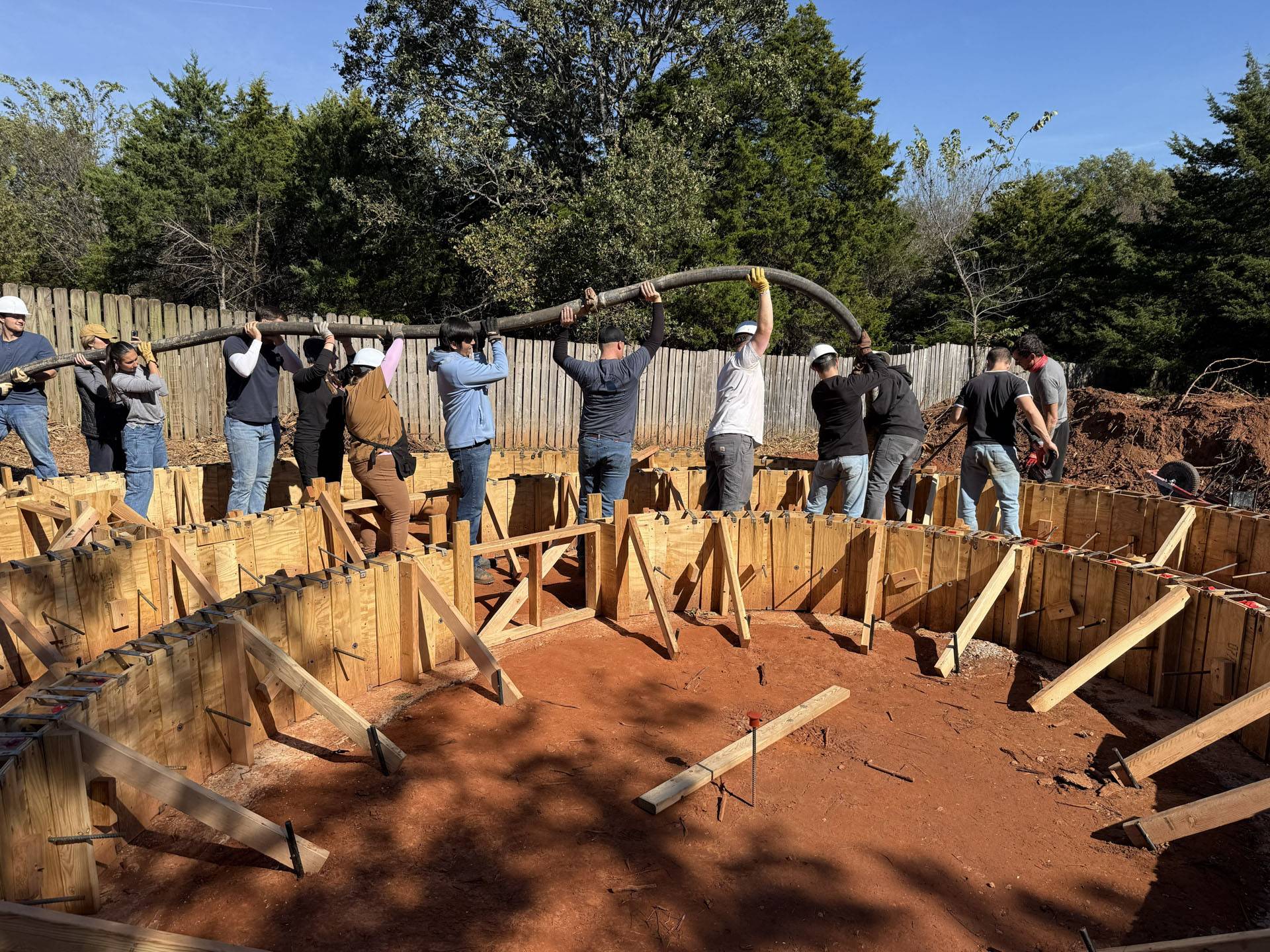
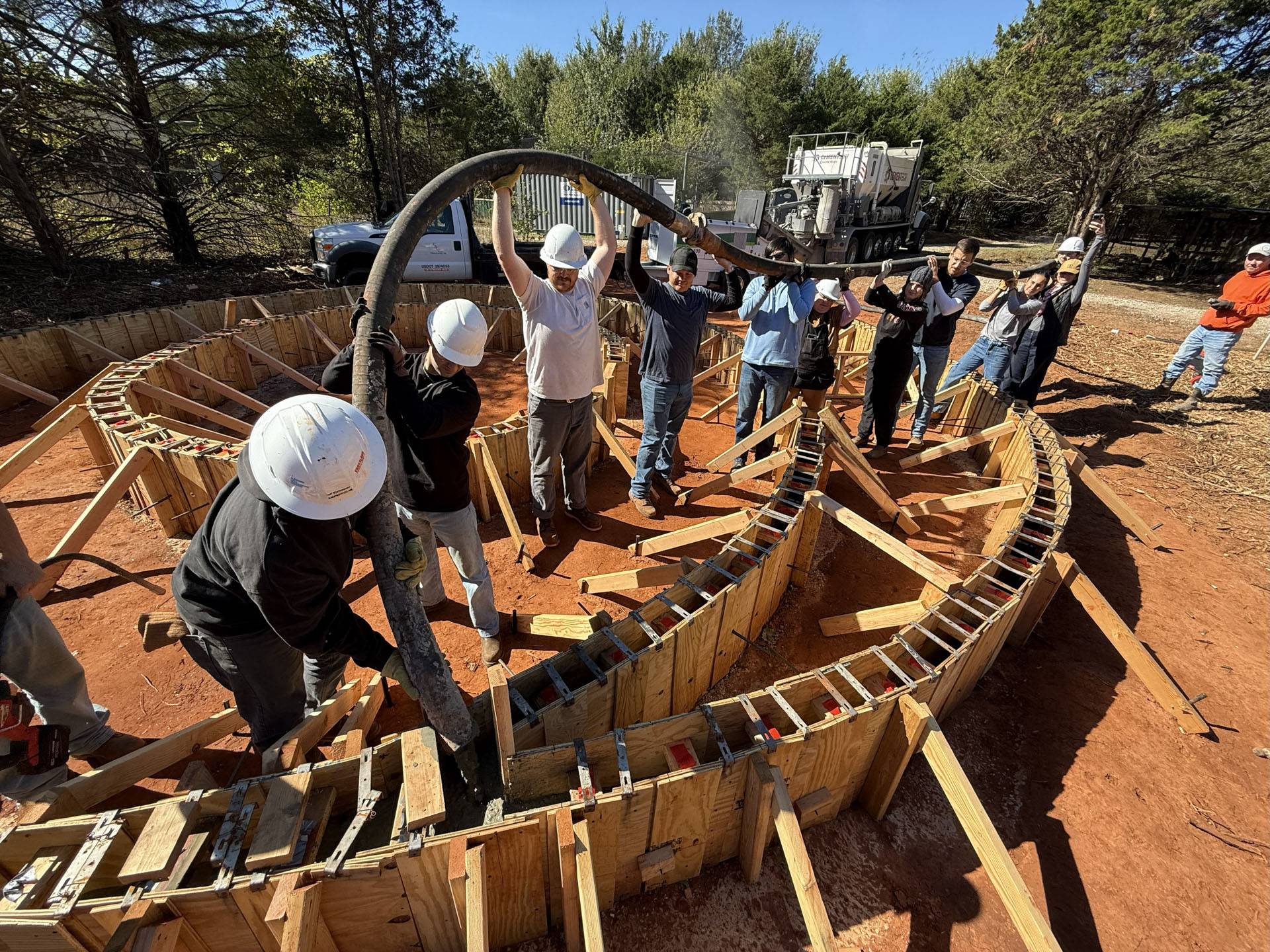
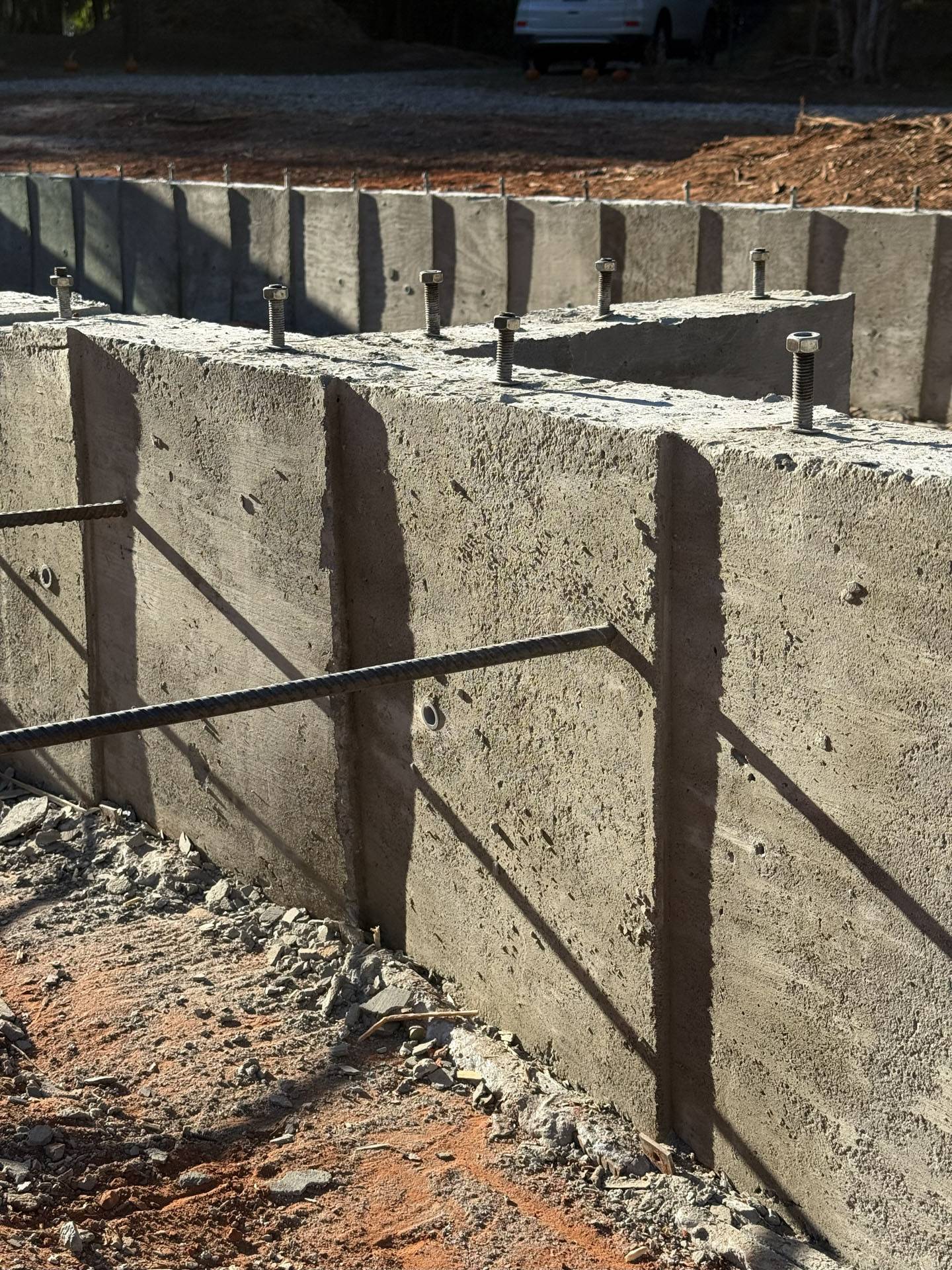
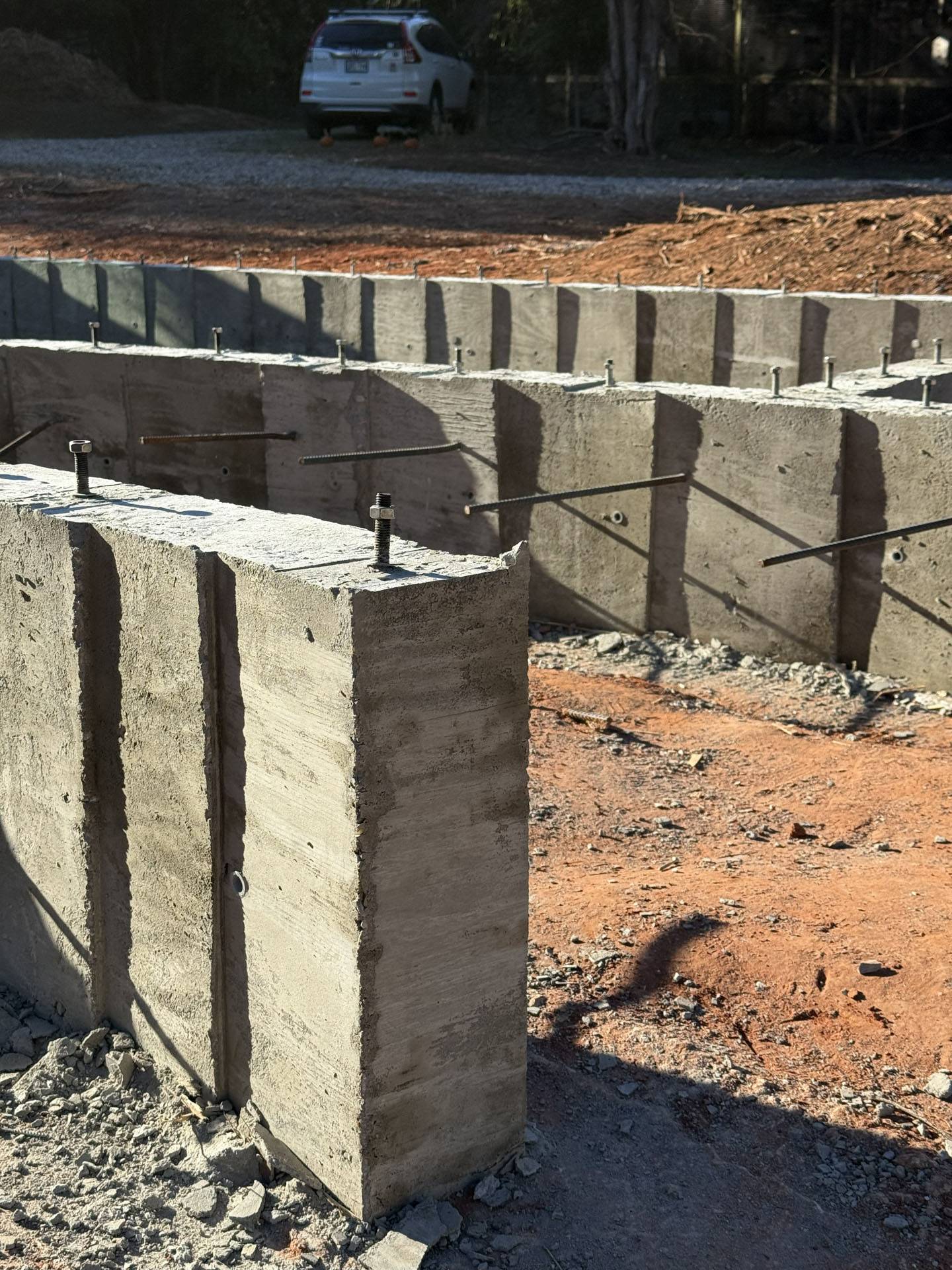
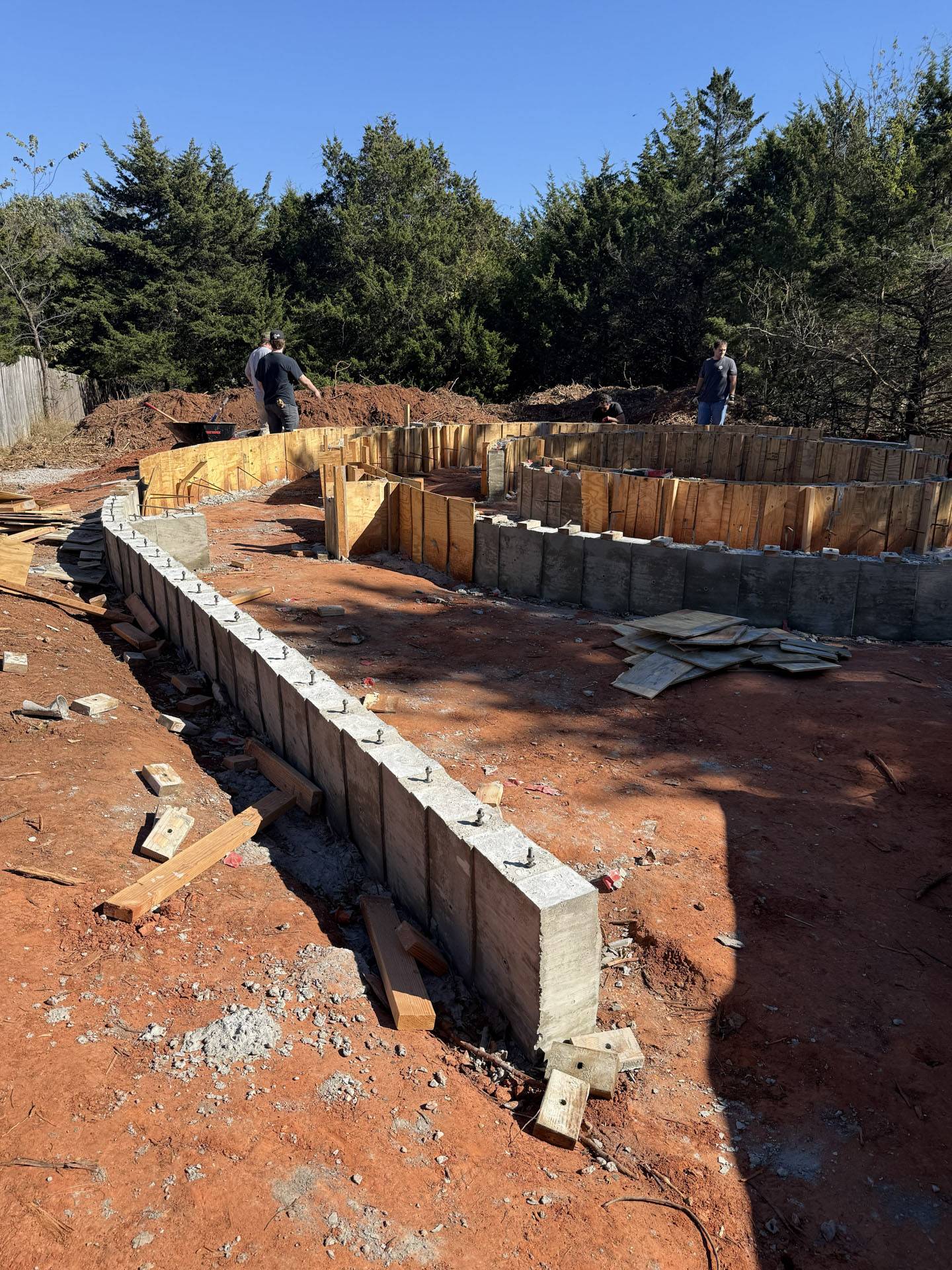
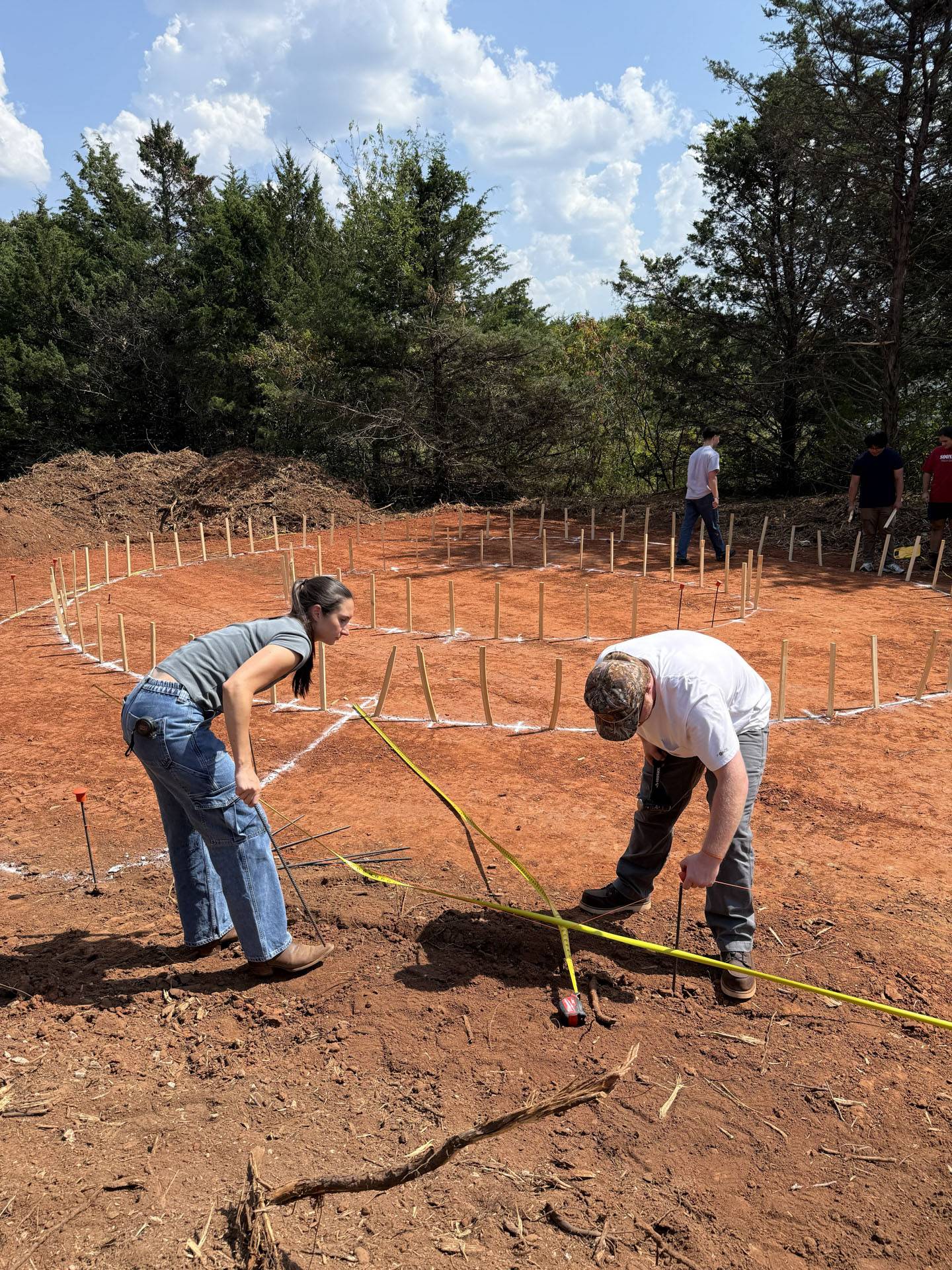
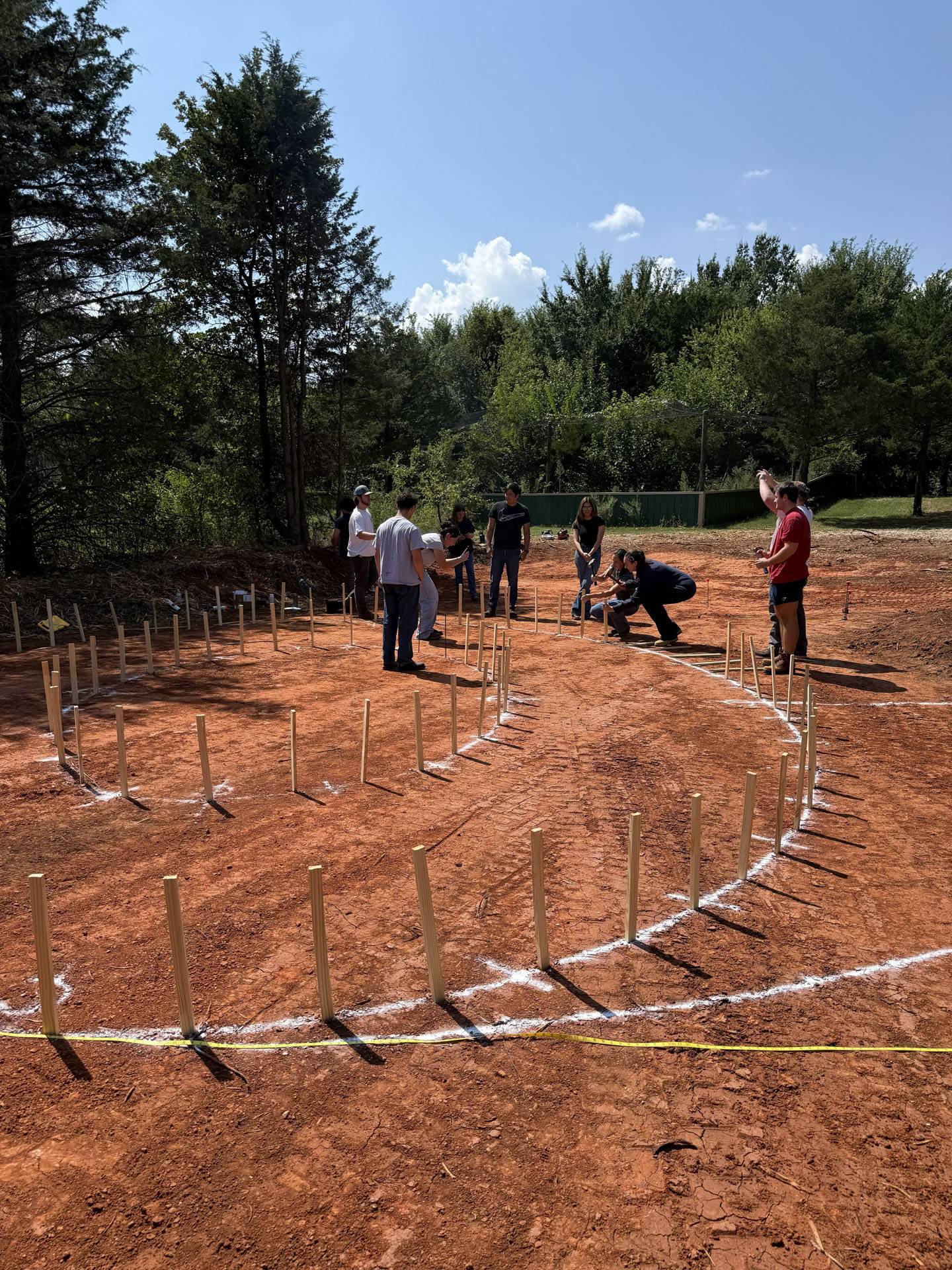
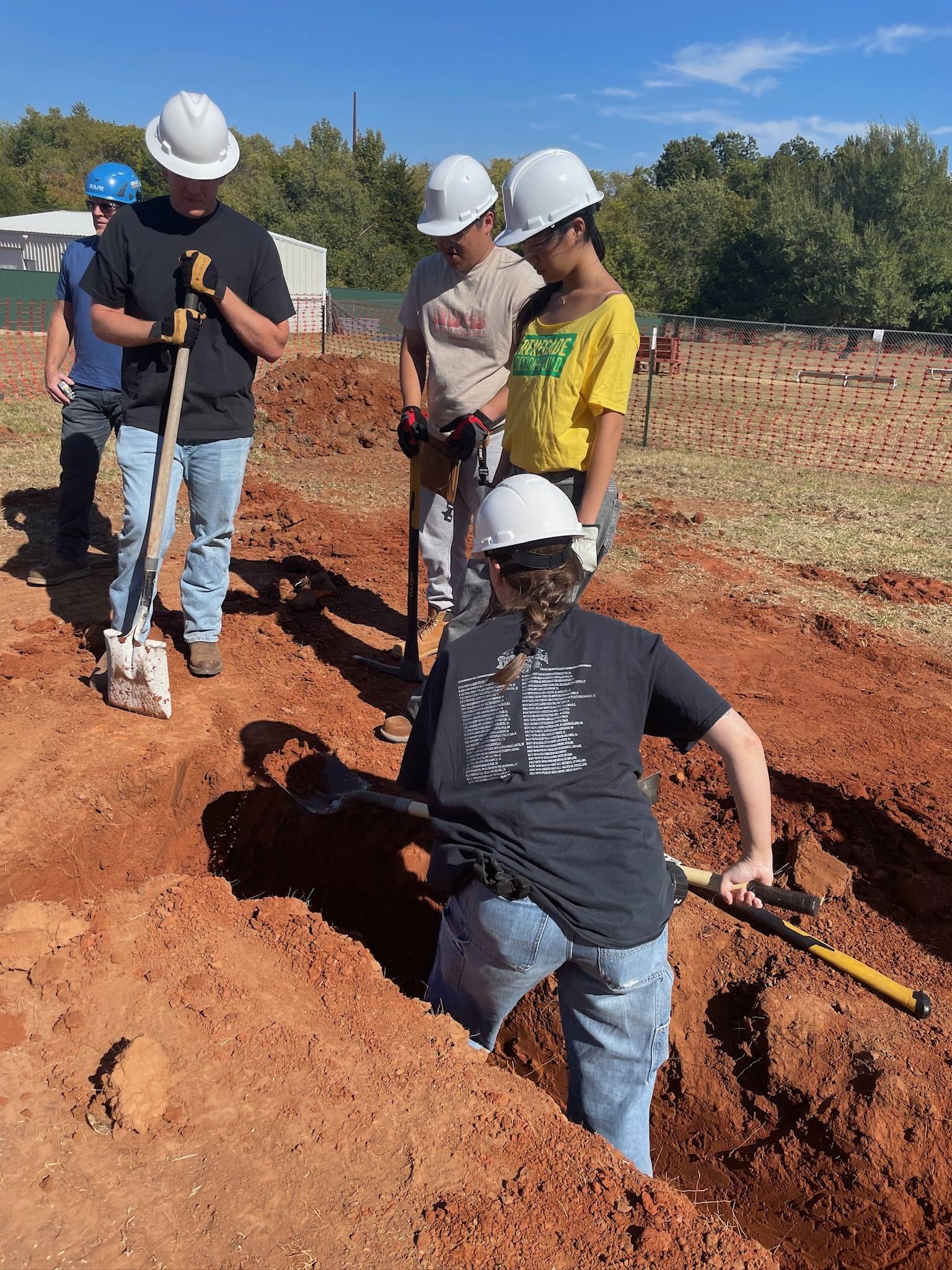
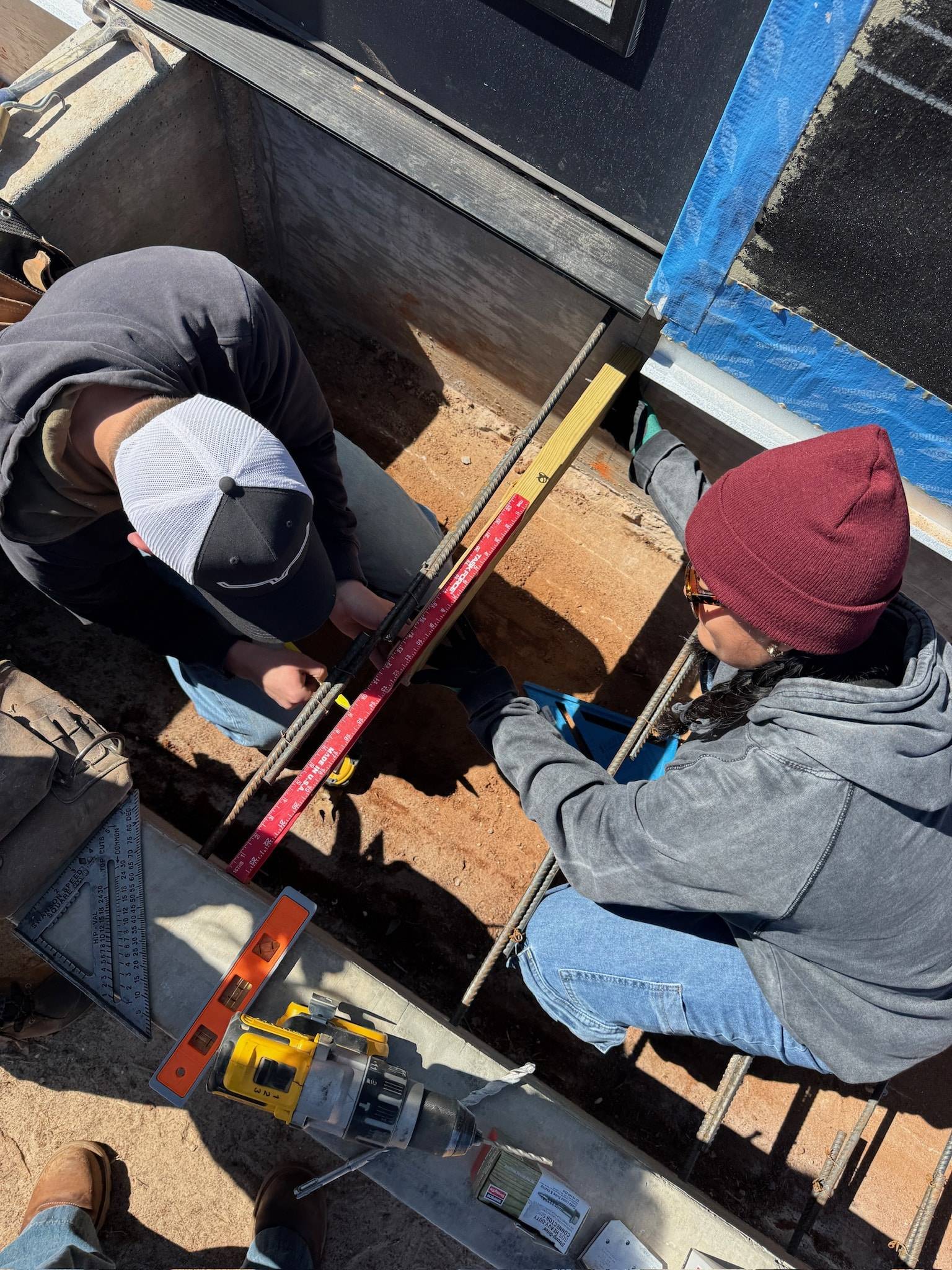
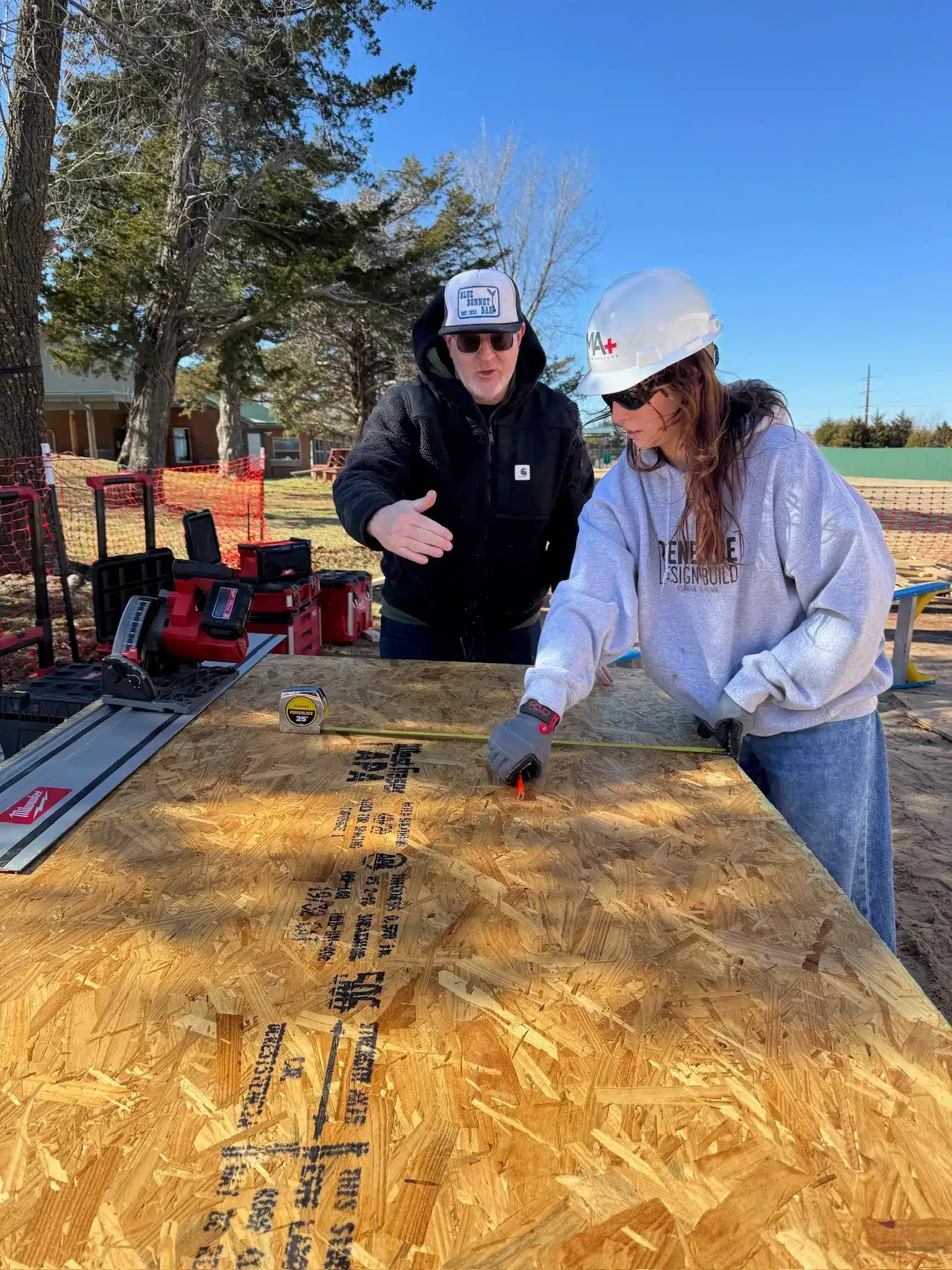
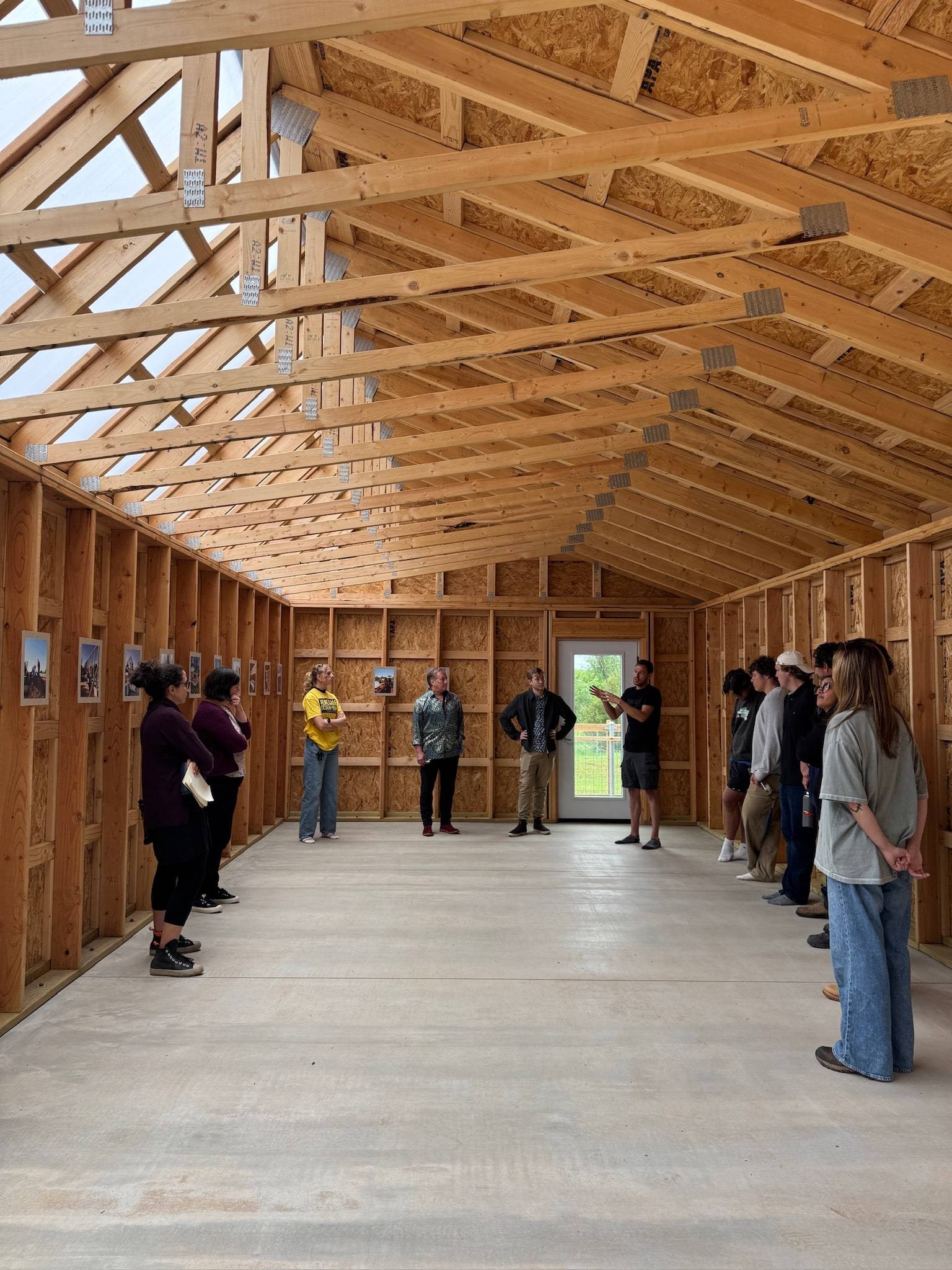
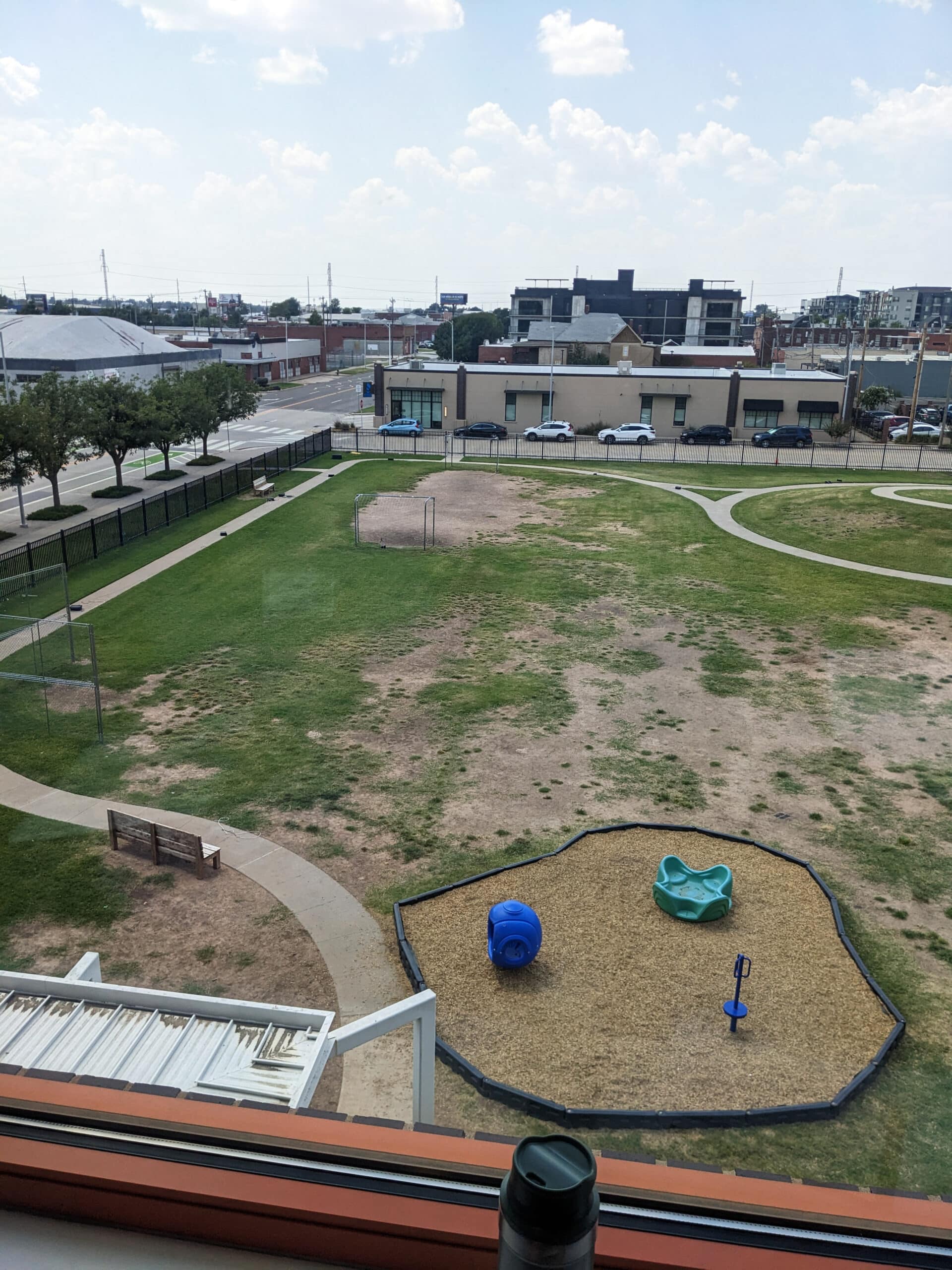
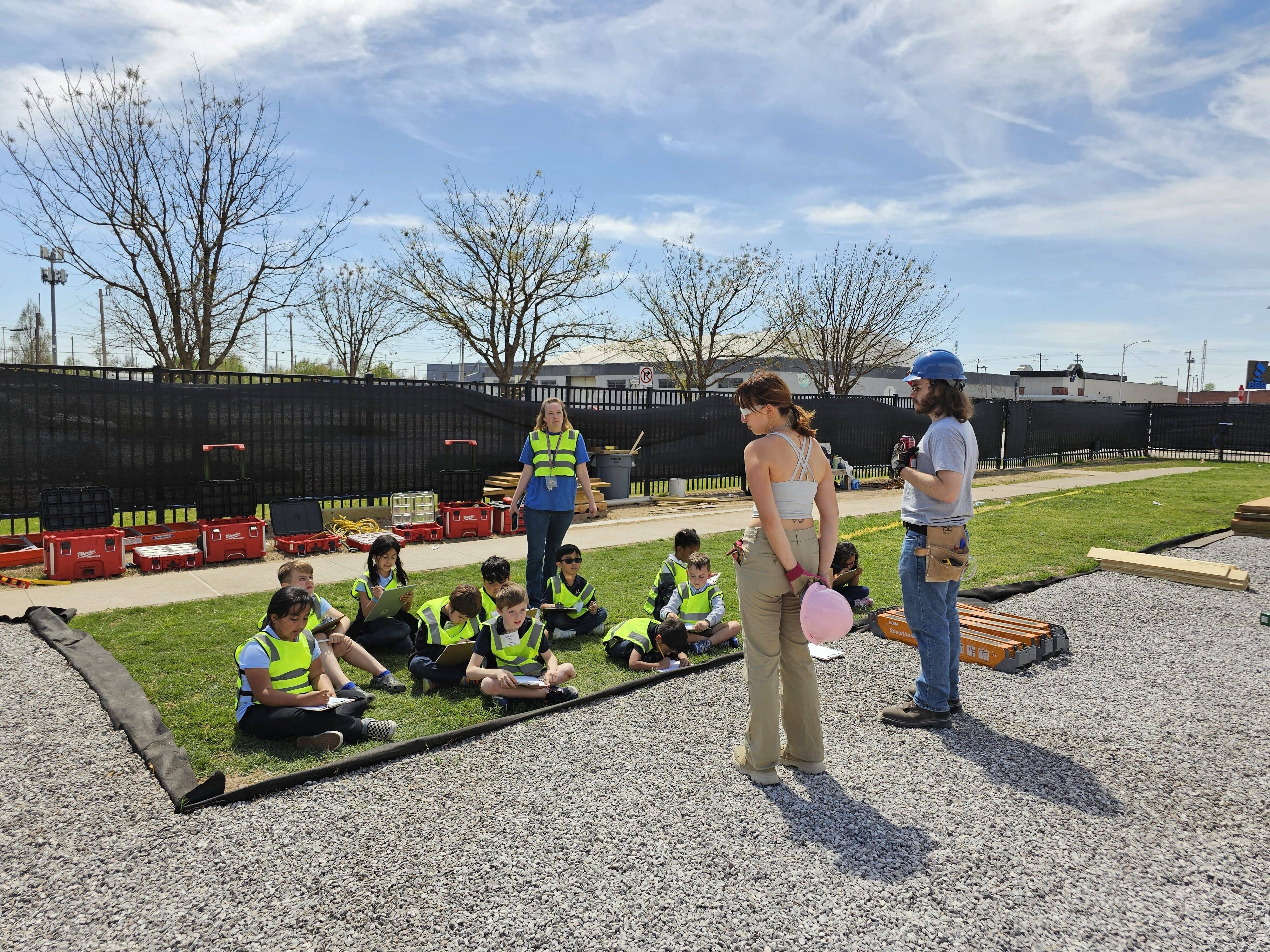
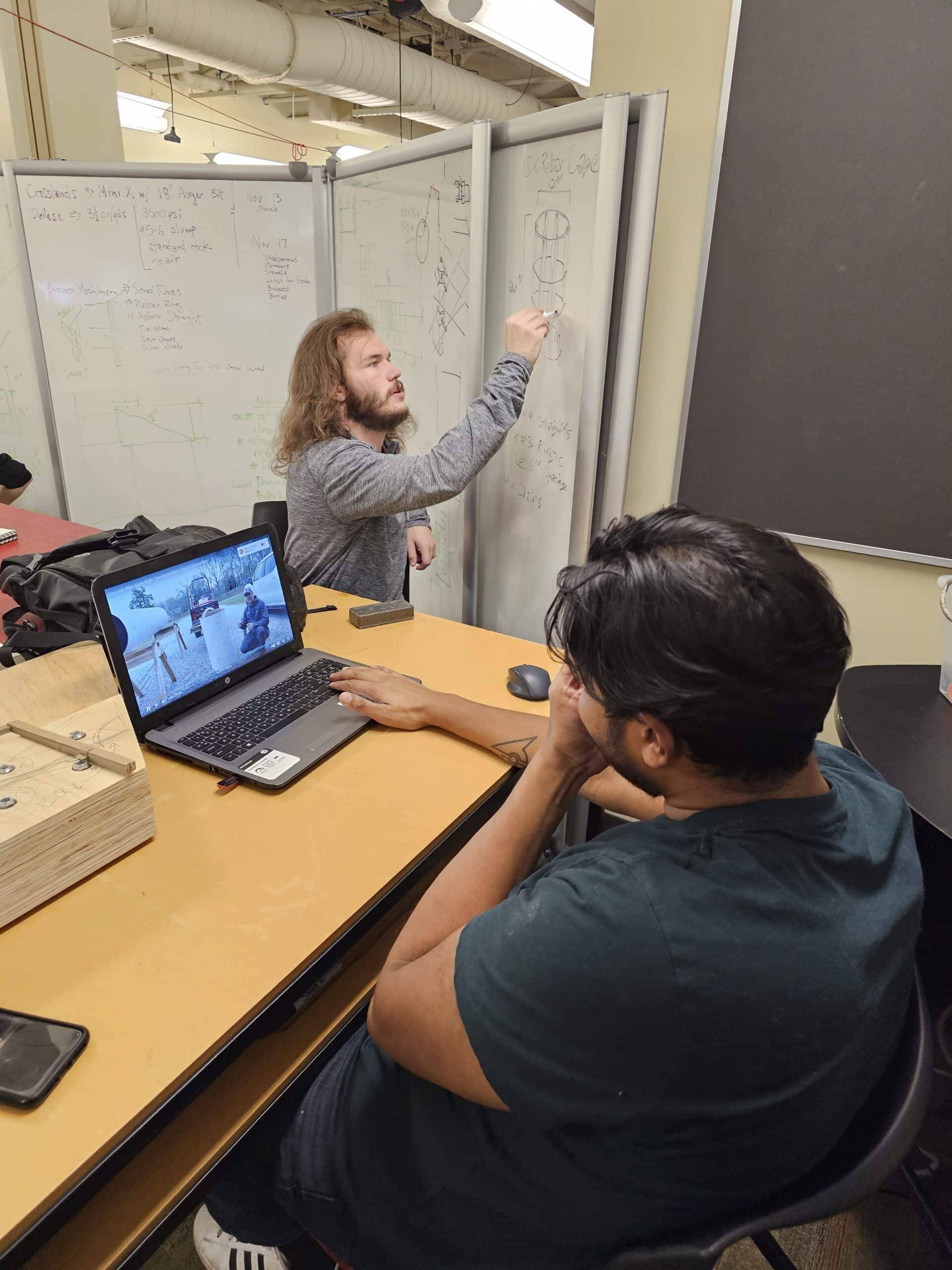
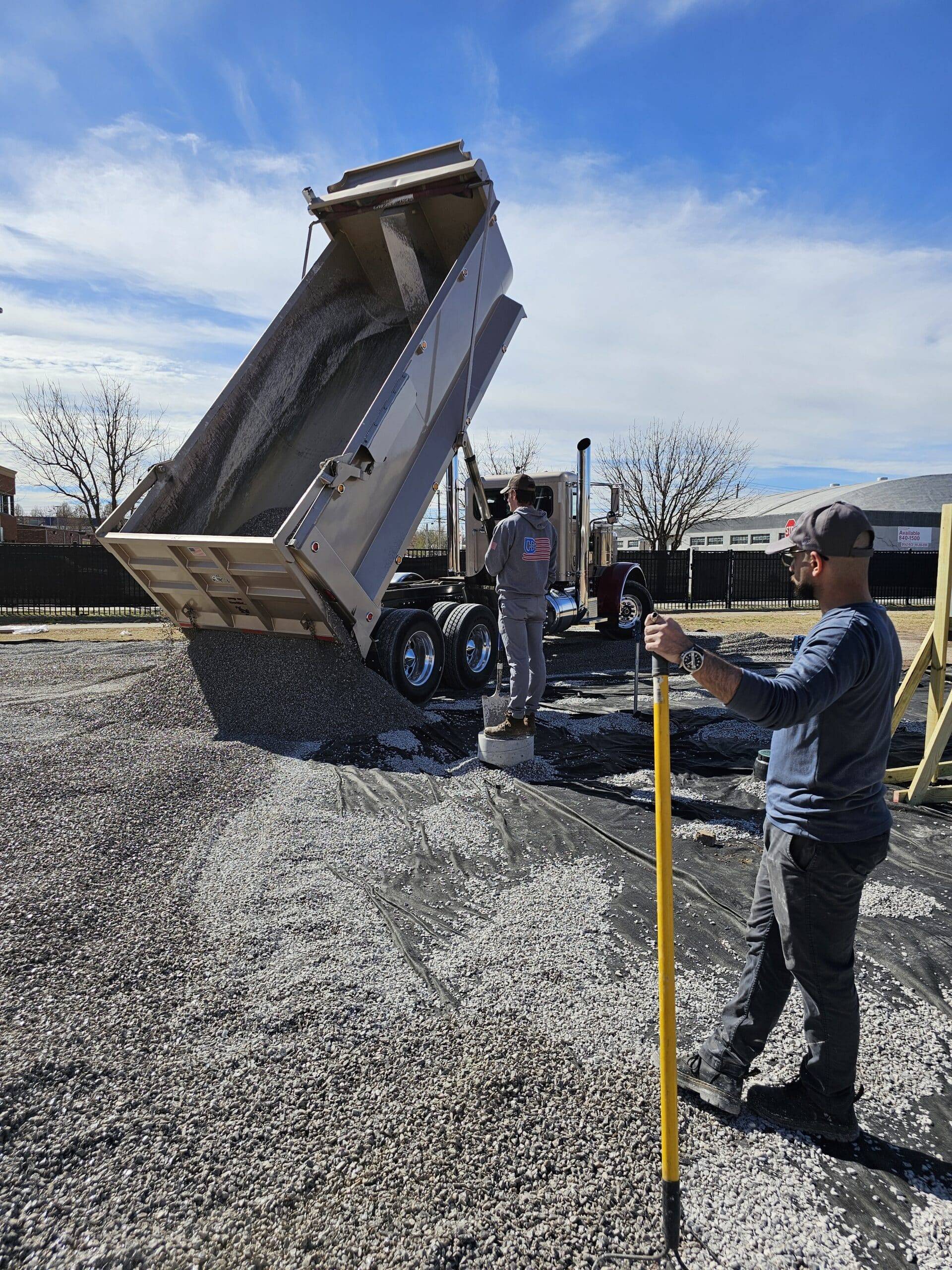
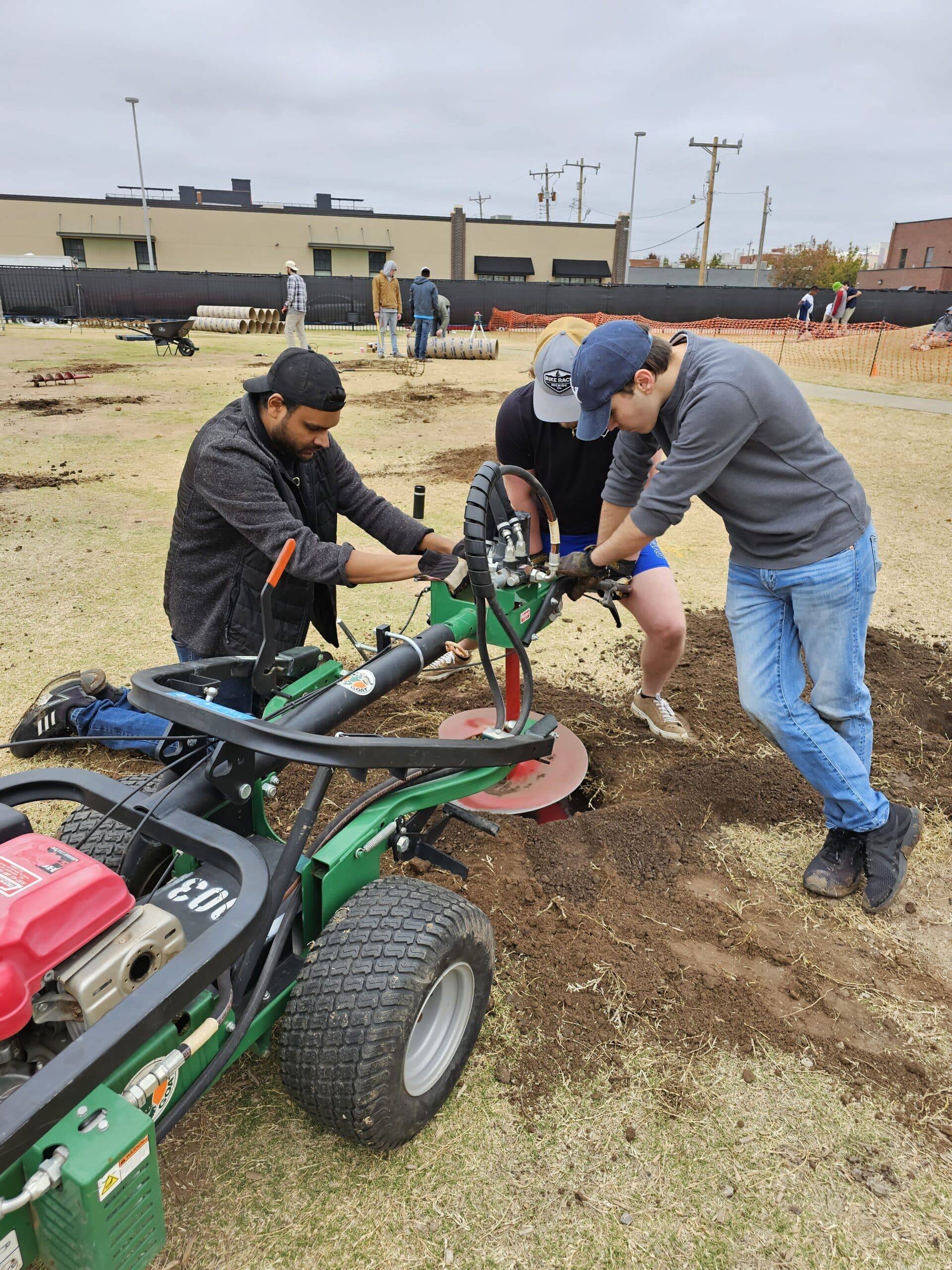
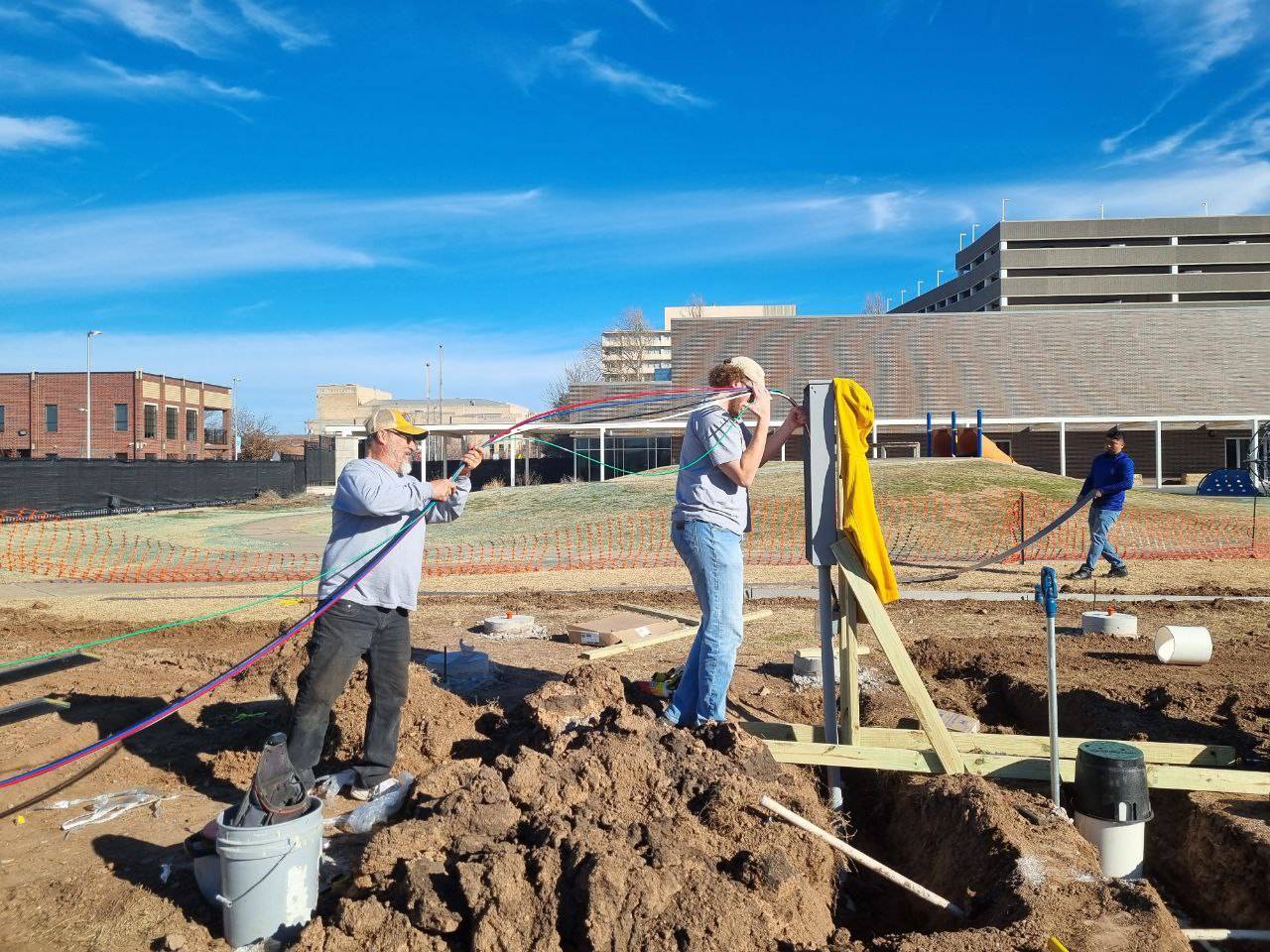
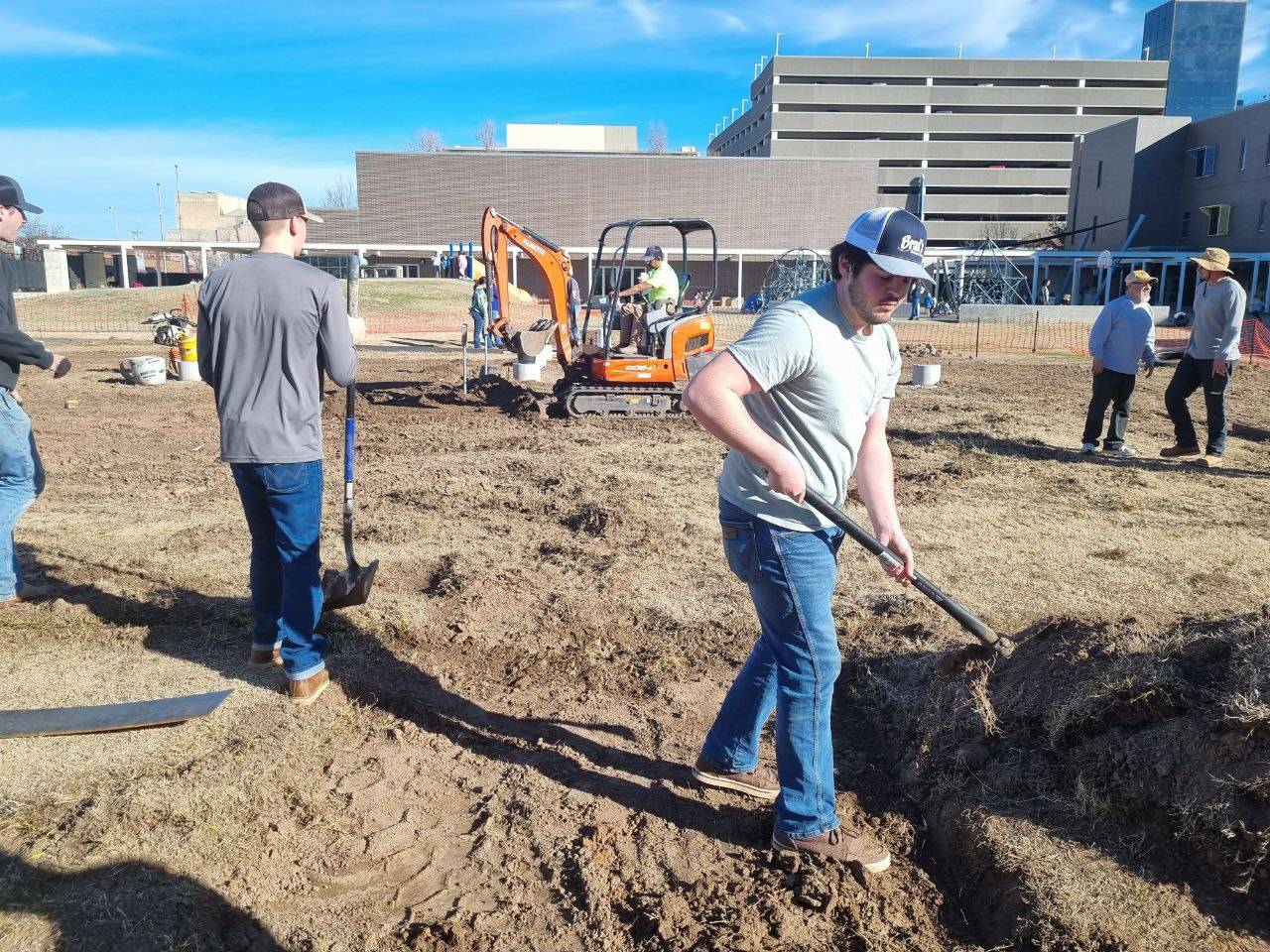
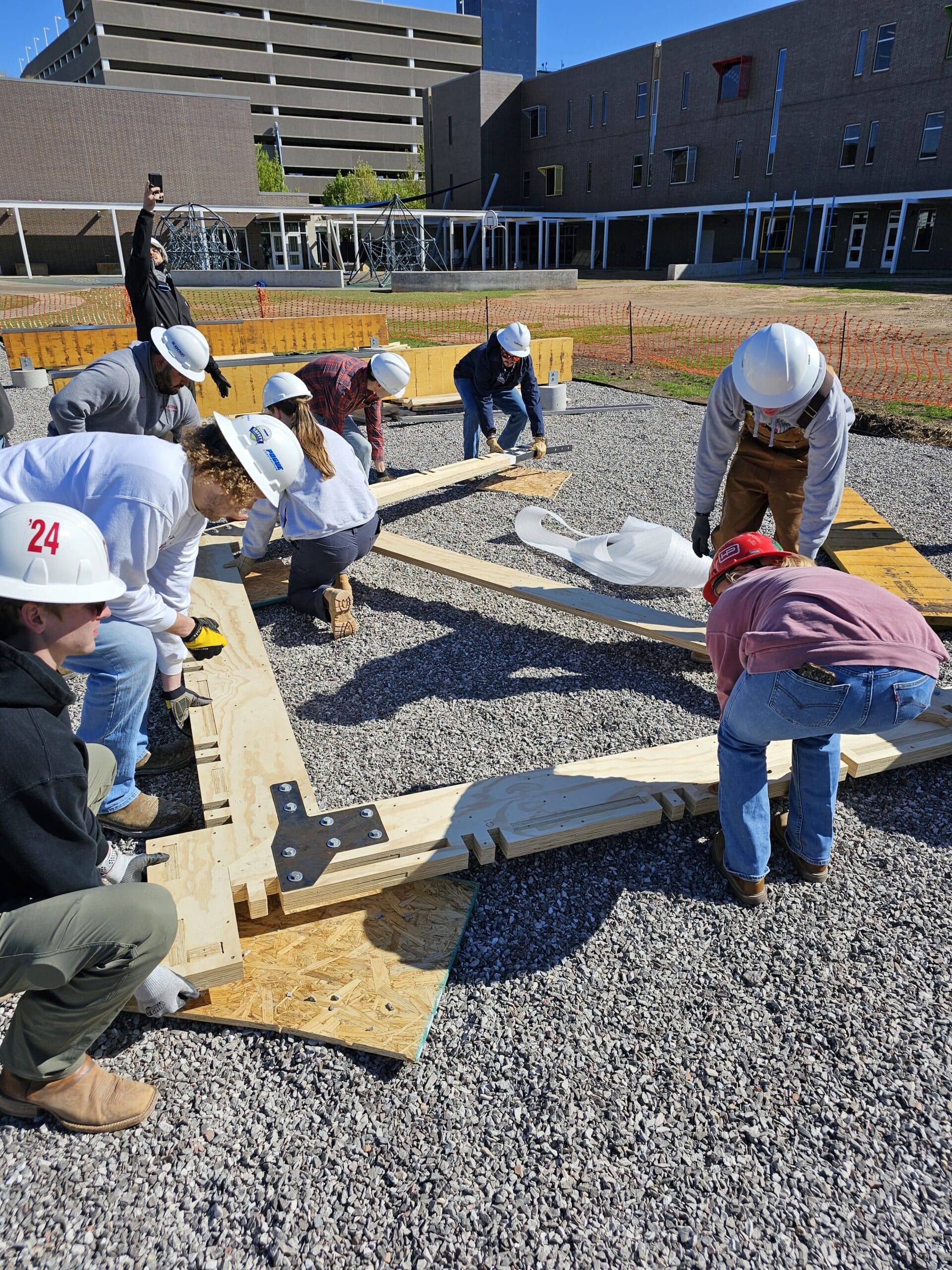
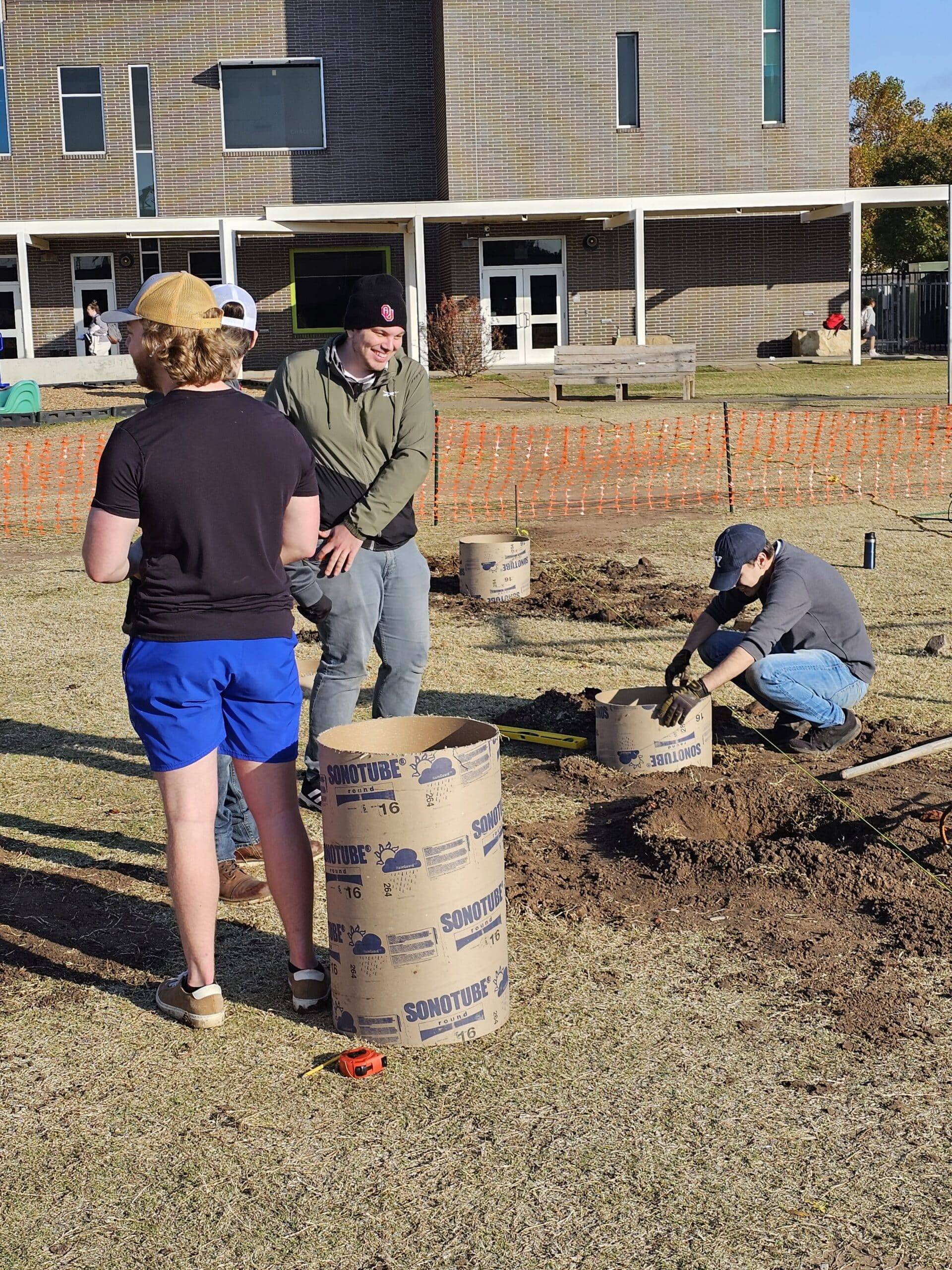
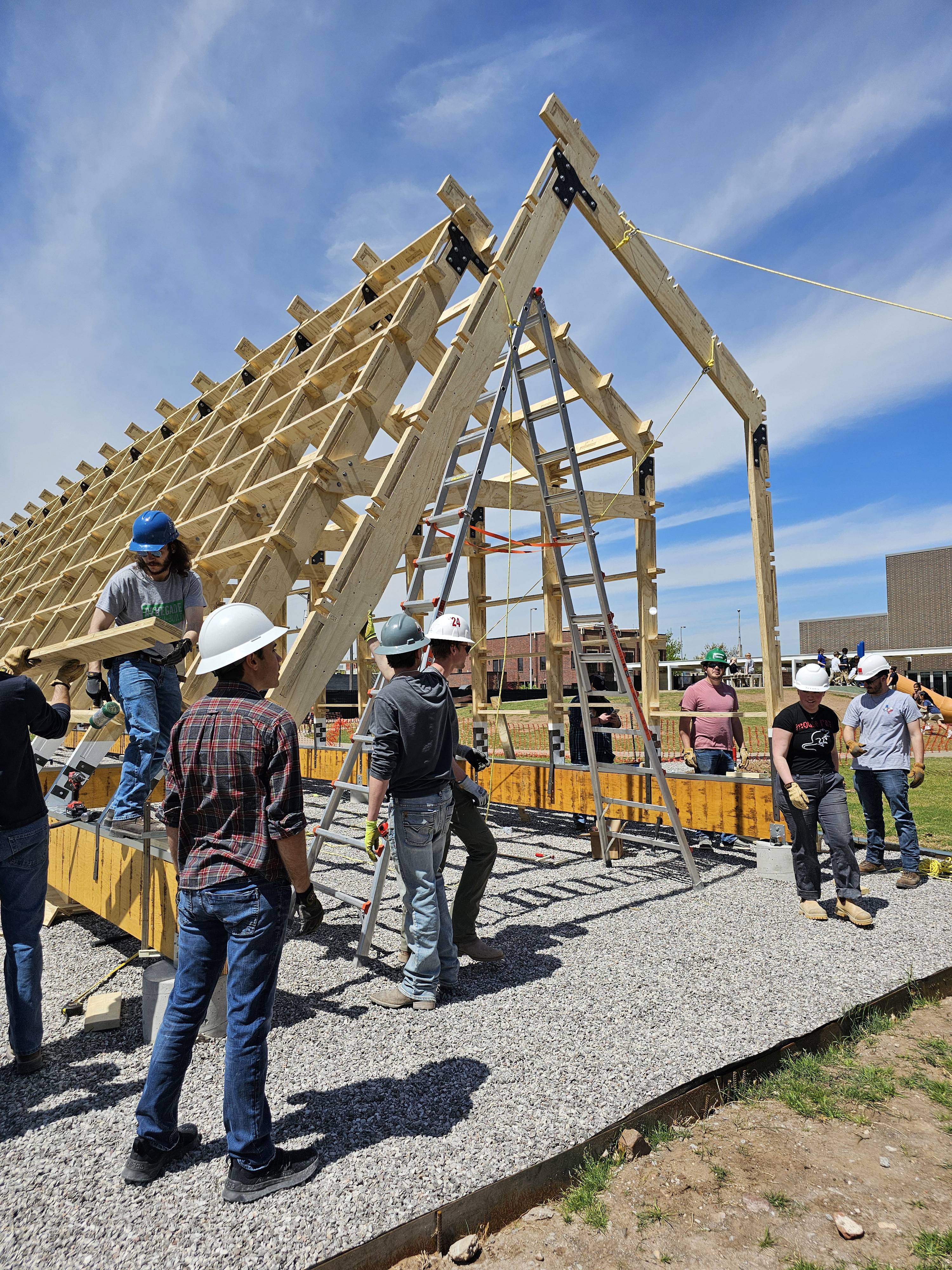
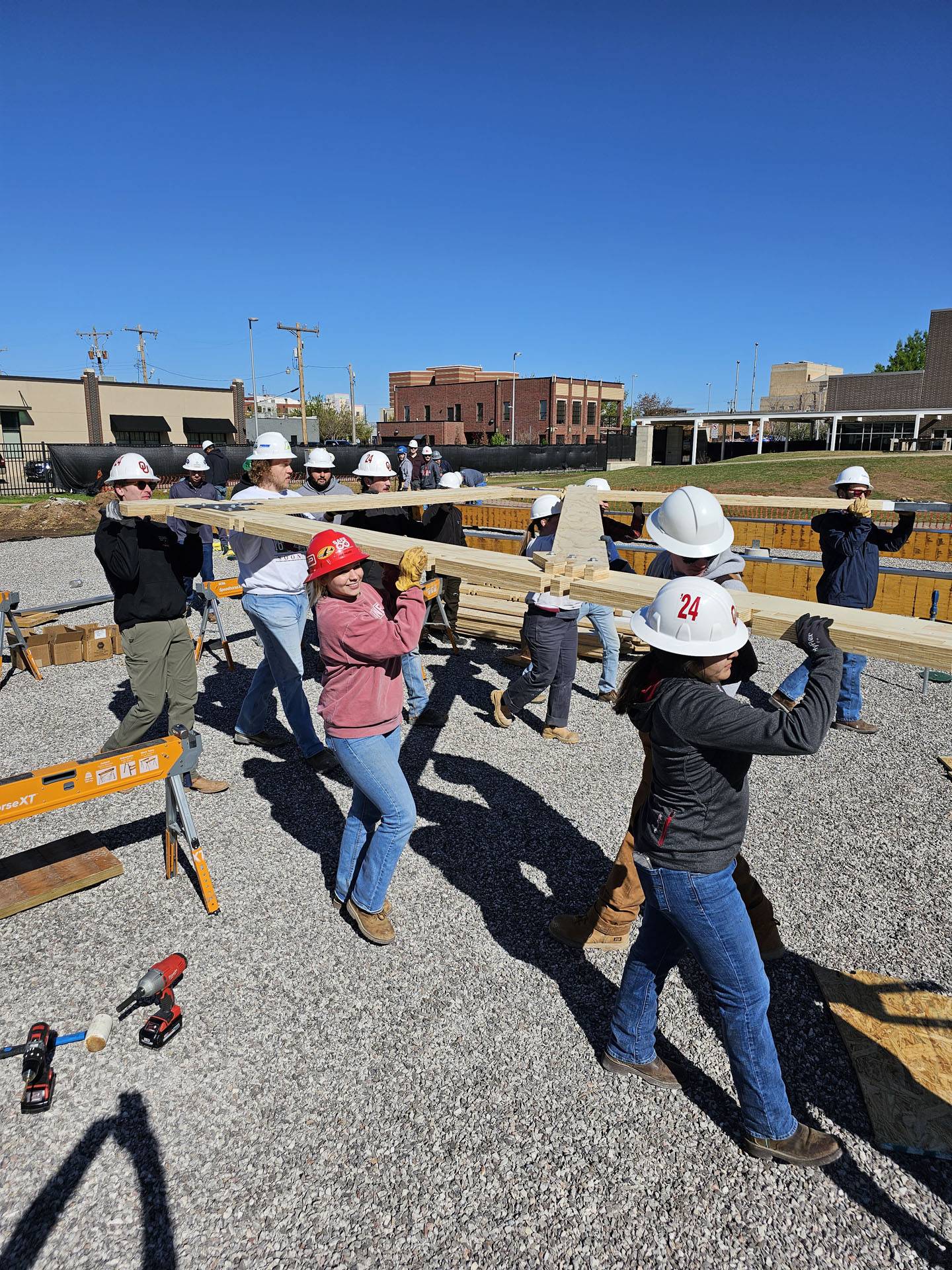
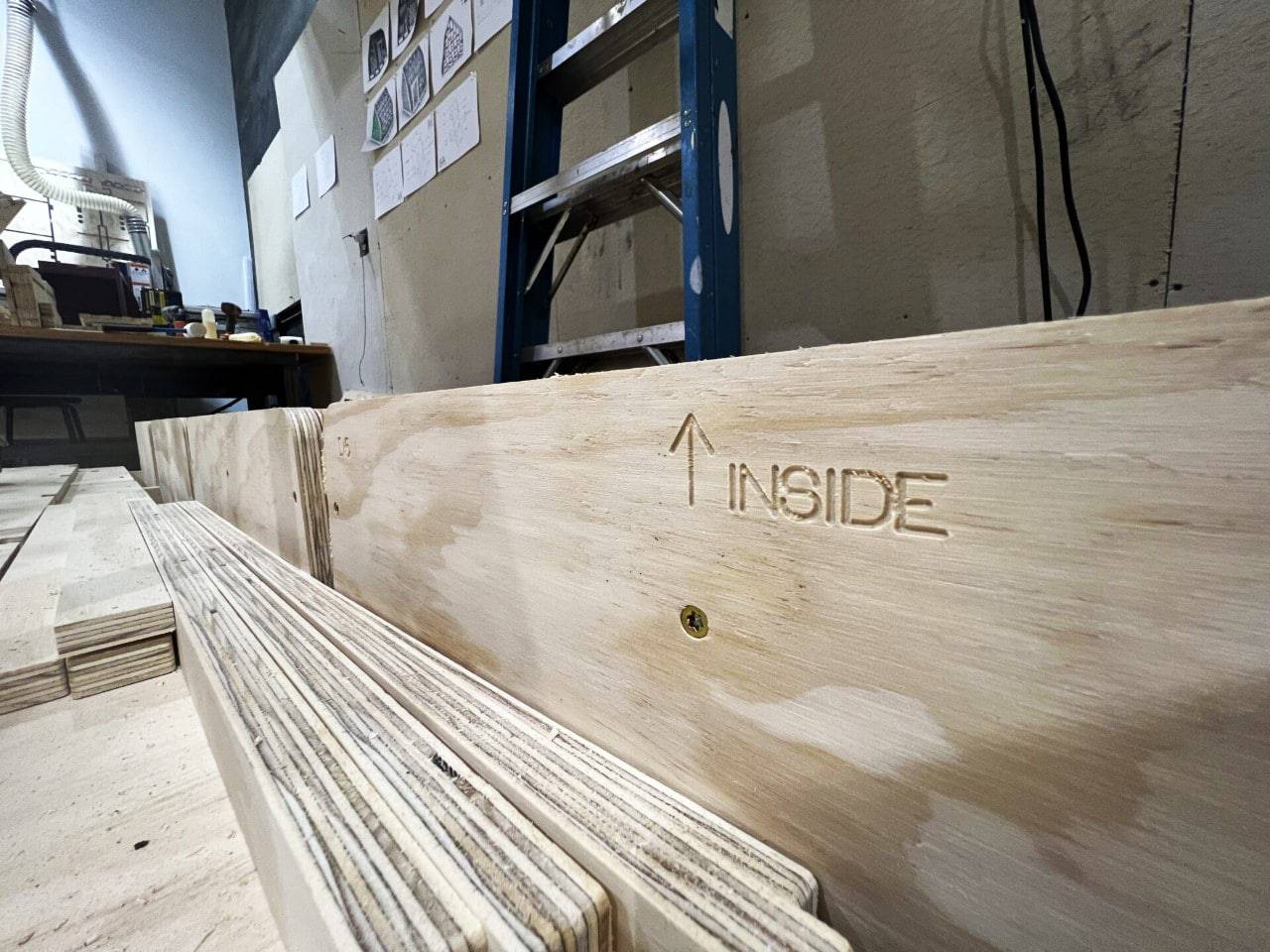
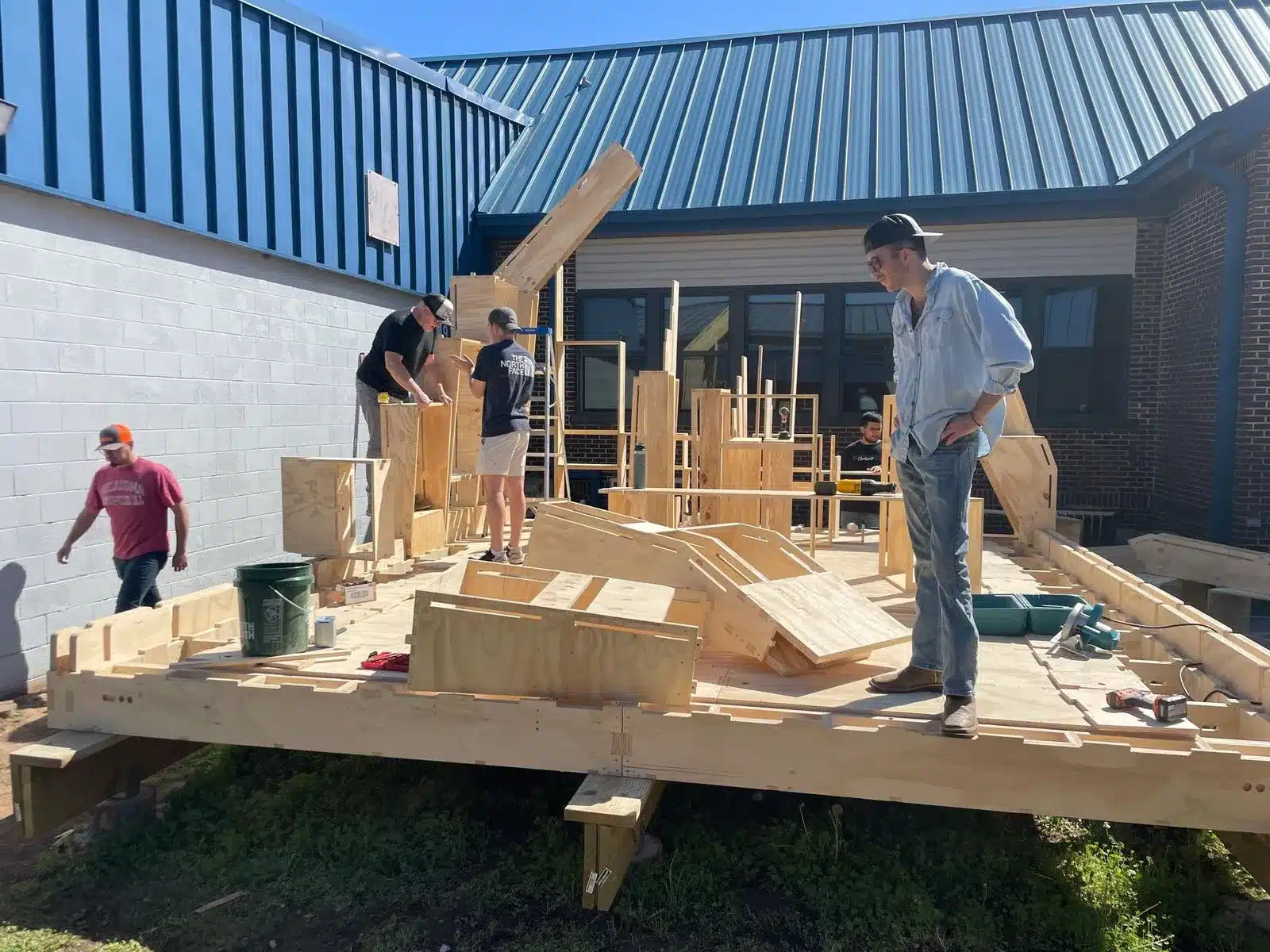
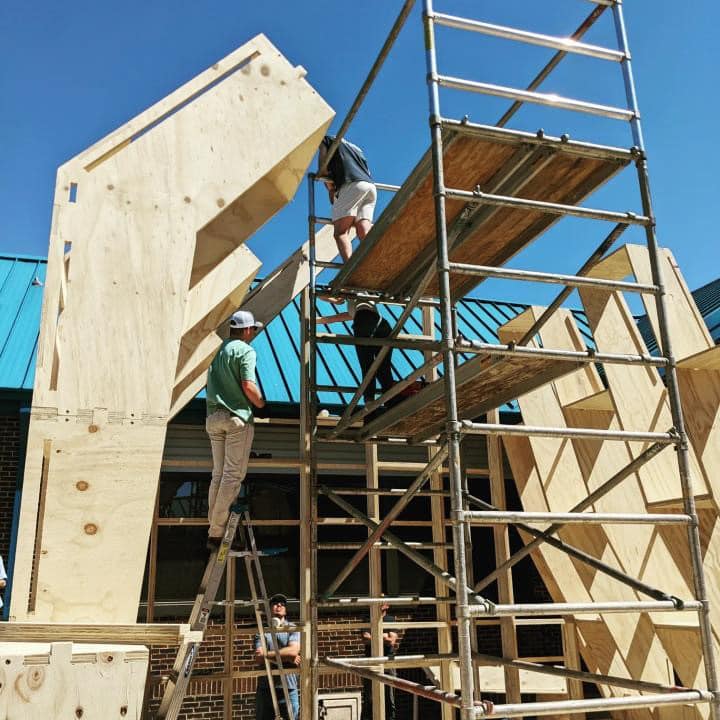
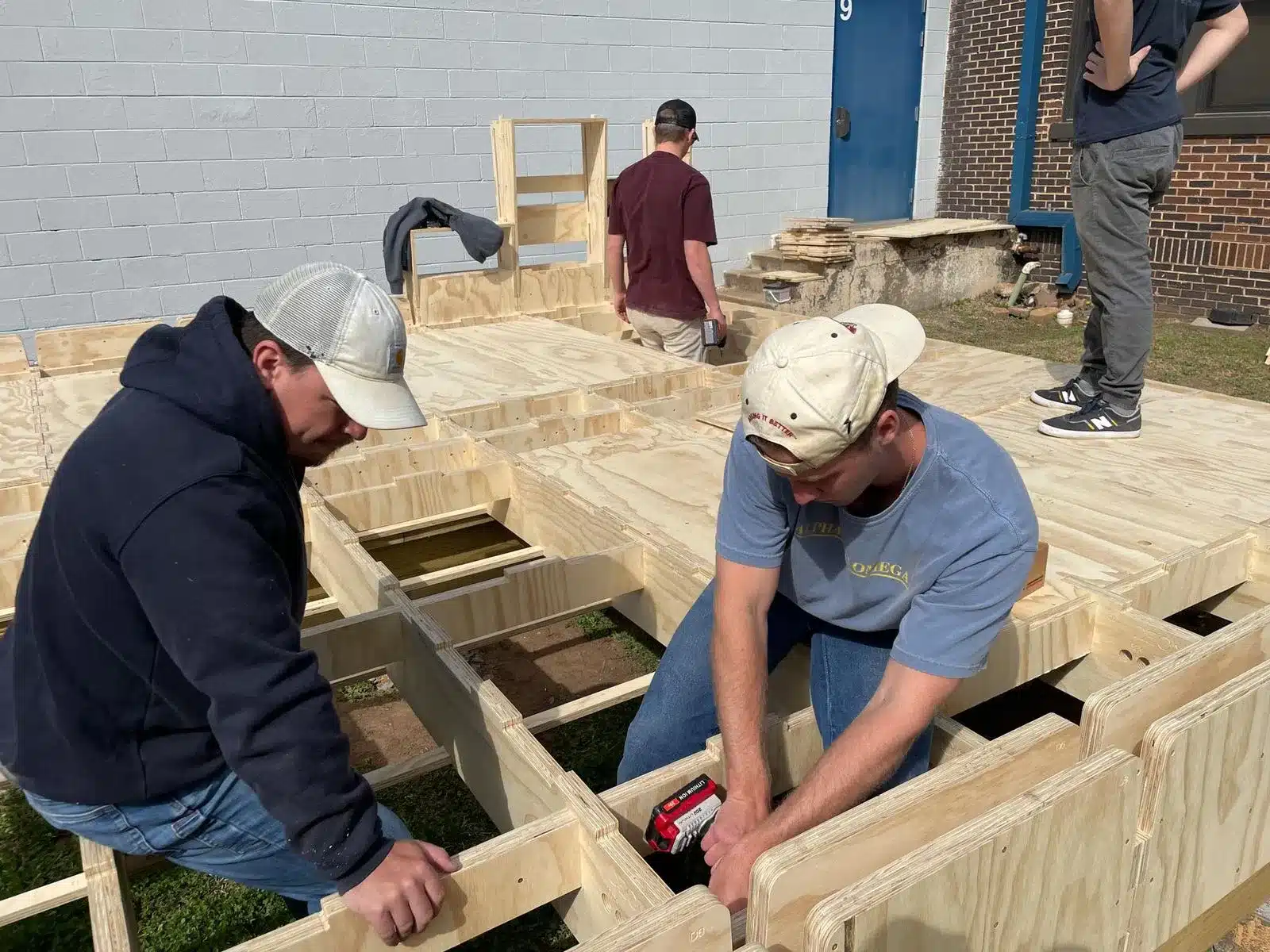
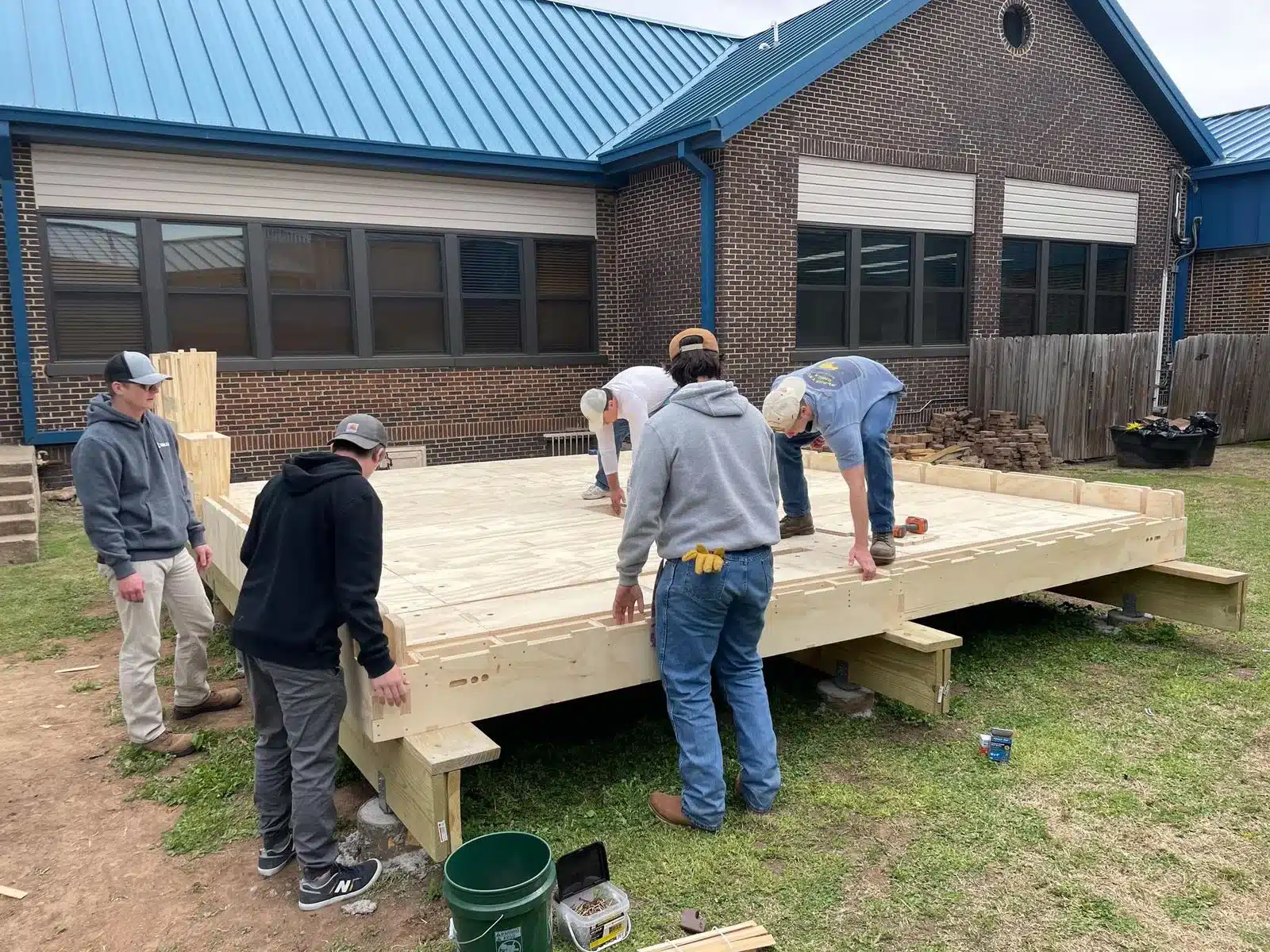
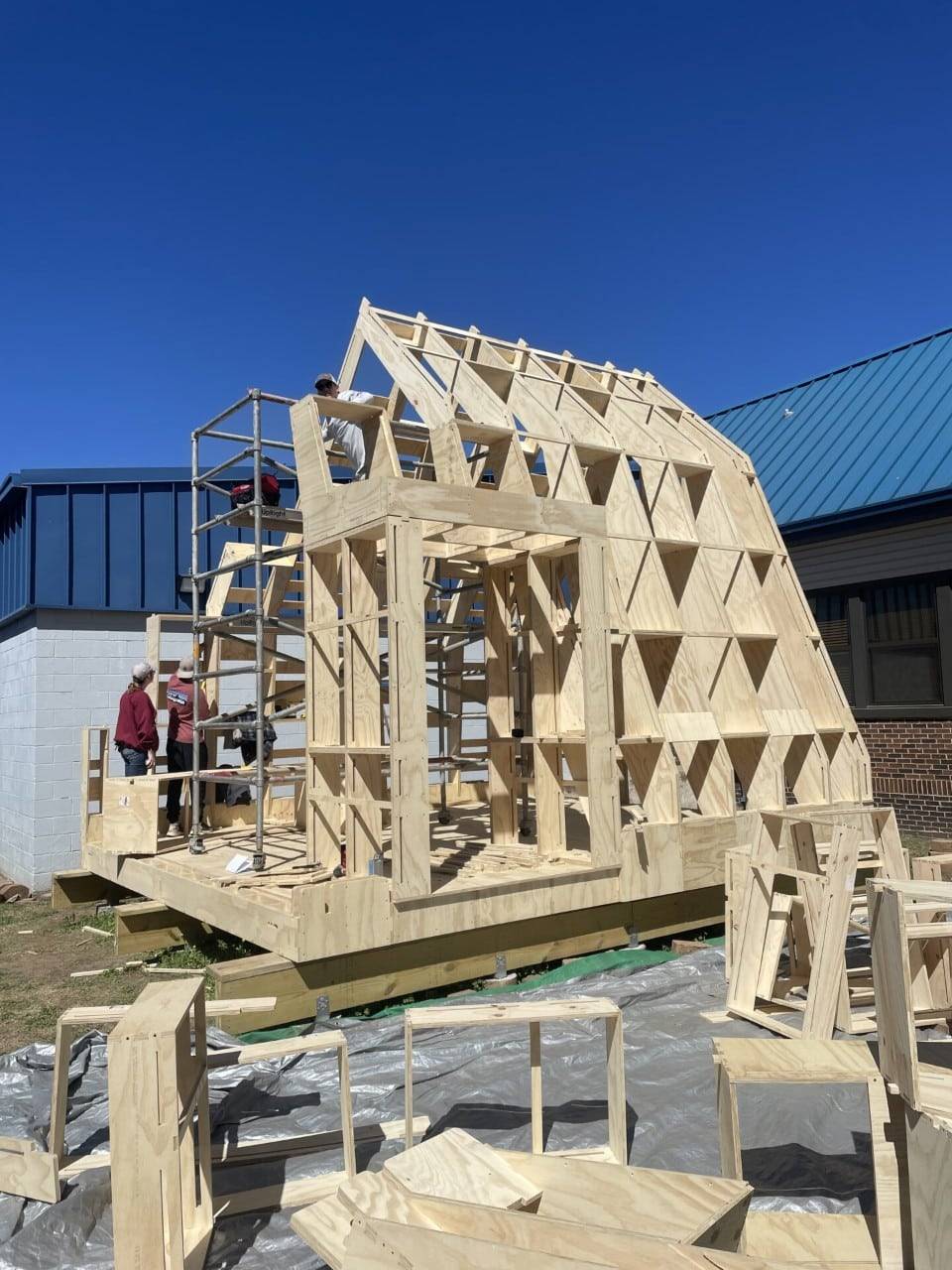
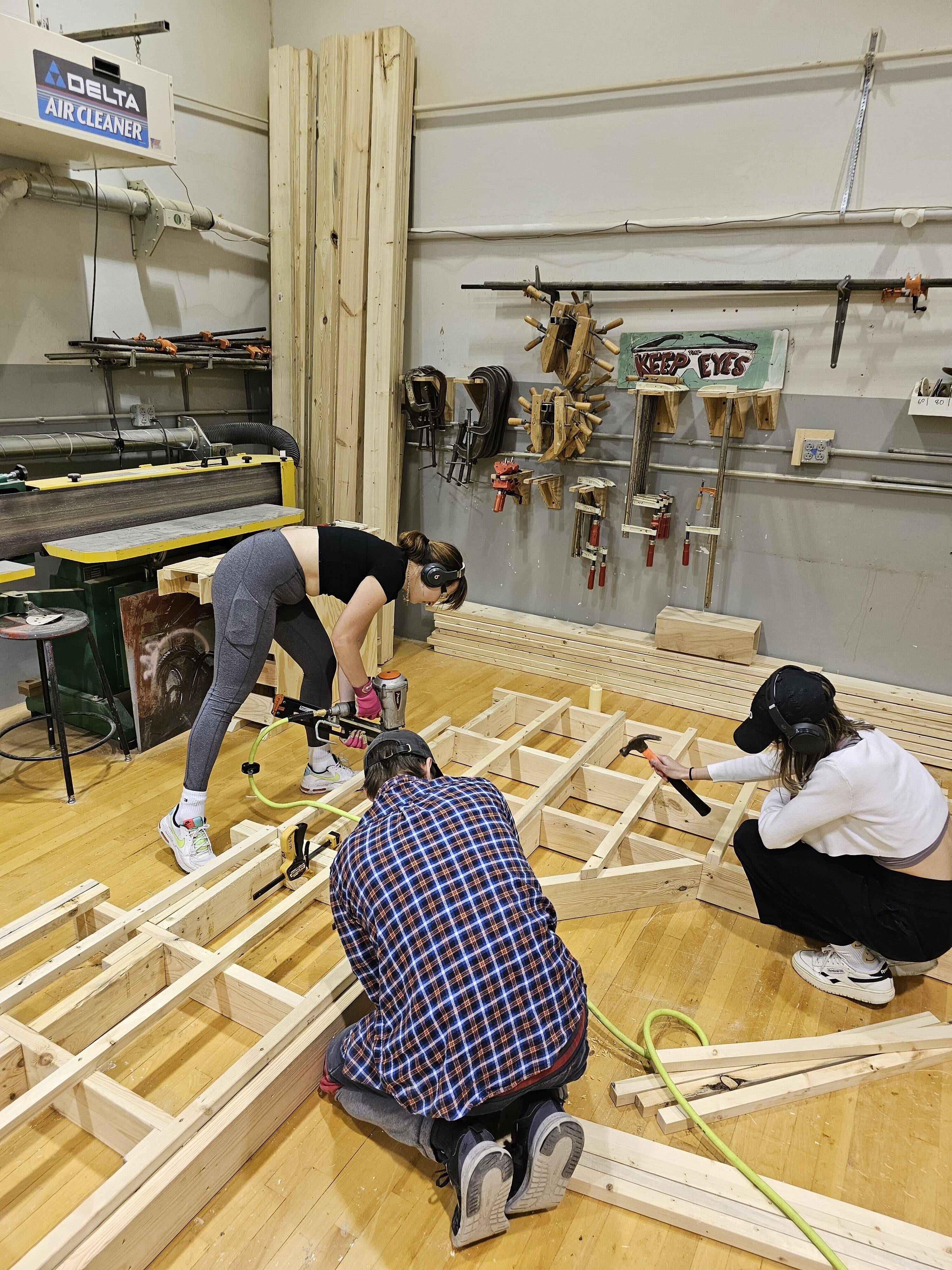
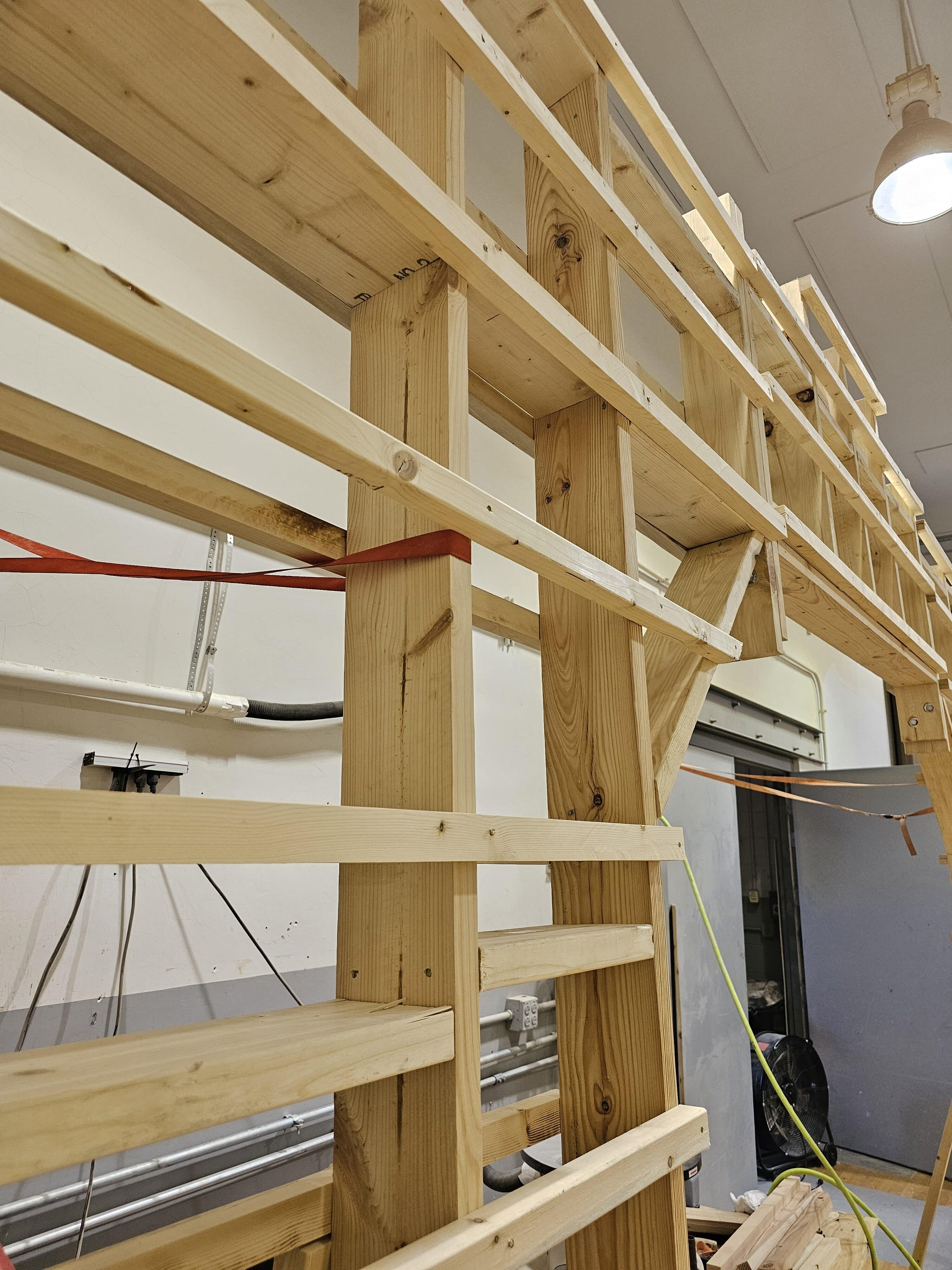
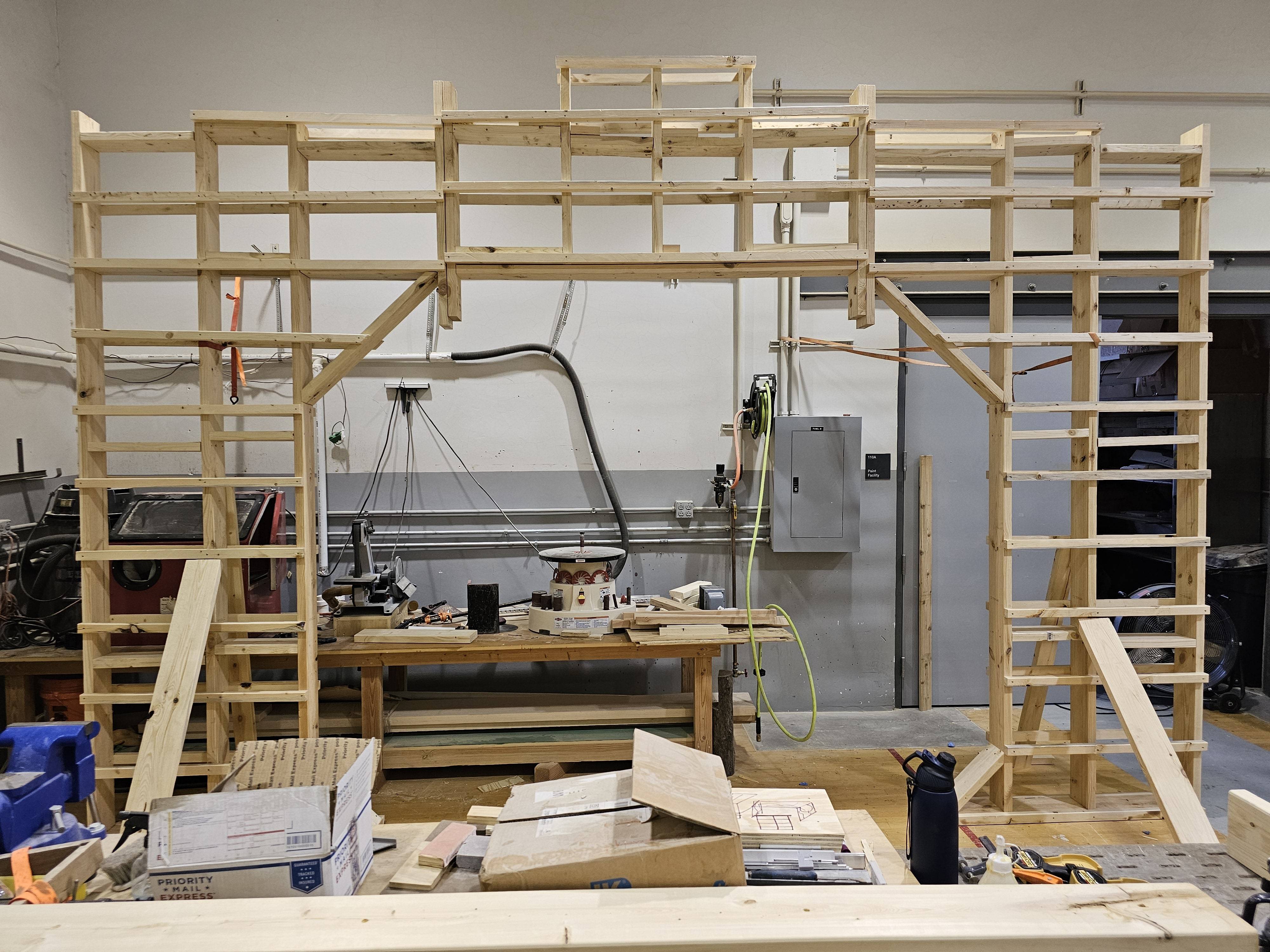
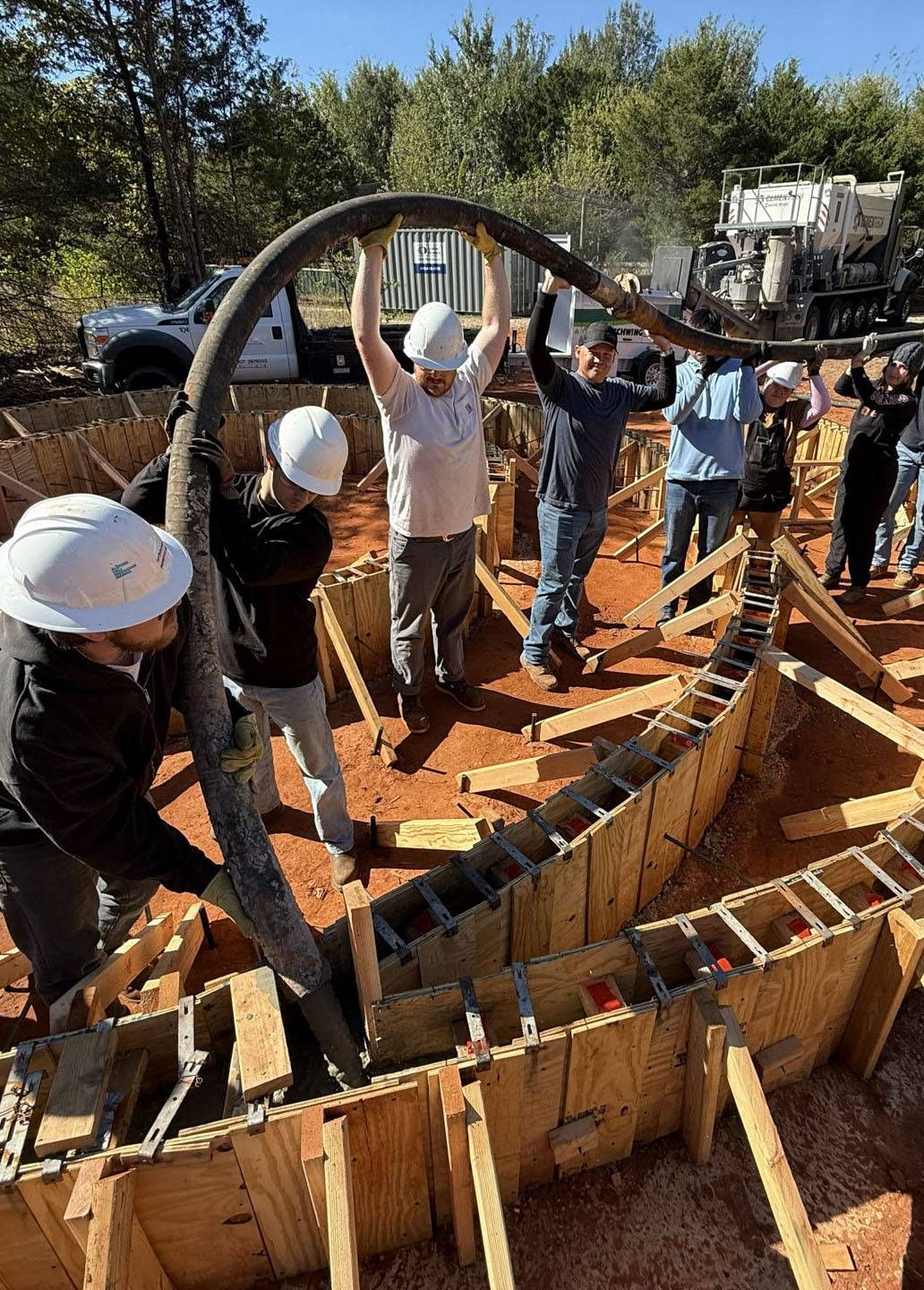
Now at mid-construction, the team has completed earthwork, footings, and a custom cast stem wall, establishing the foundation for framing and enclosure. This wall, formed through layered dimensional boards, produces a sculpted concrete surface that captures light and depth. The fall phase has transformed the site into a hands-on lab for material innovation and precision building. As construction moves into spring, students will raise the framing and roof, bringing the project closer to completion as the nation’s first dual-integrated bat and chimney swift rehabilitation facility.


Design Intent

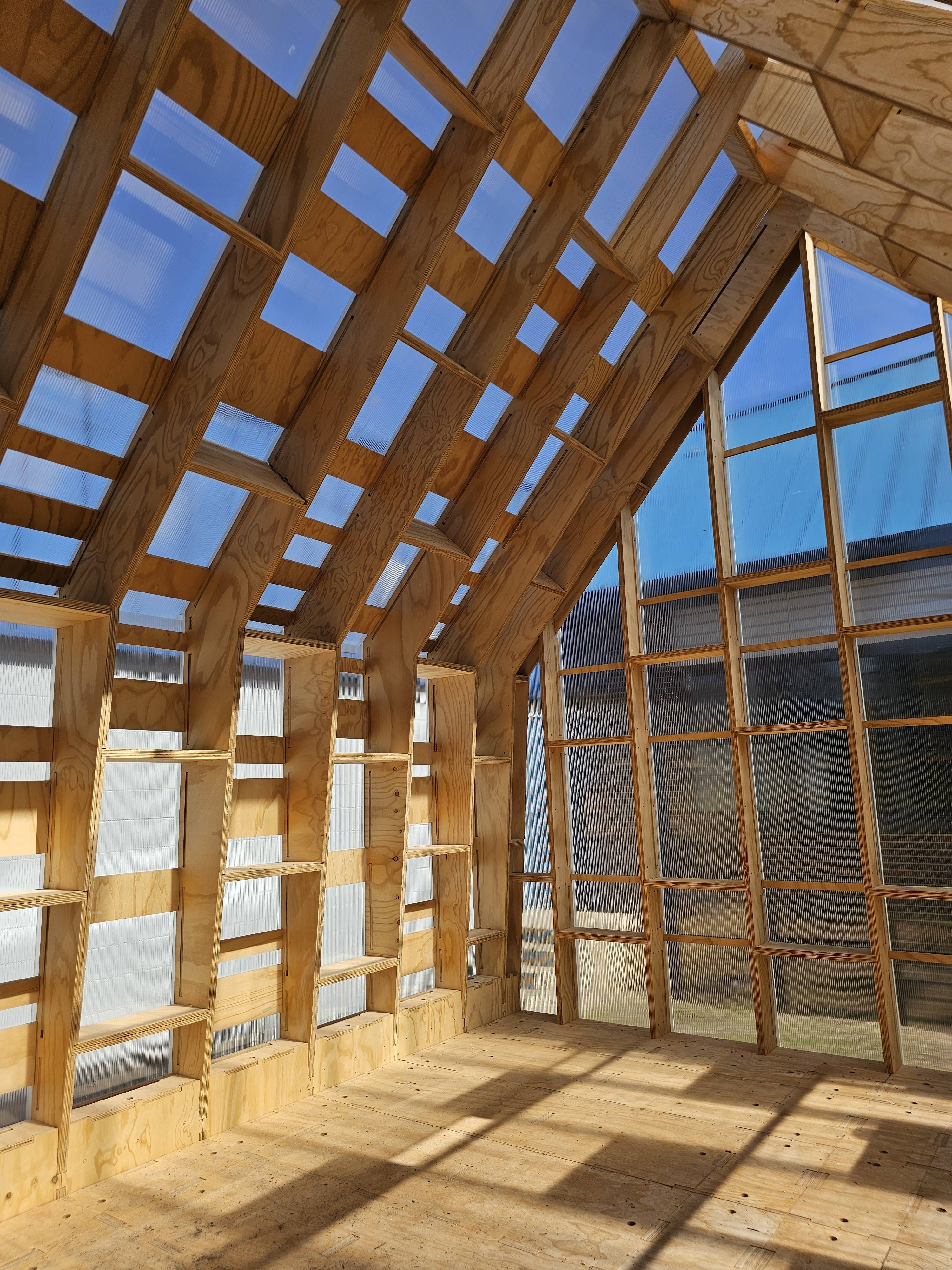
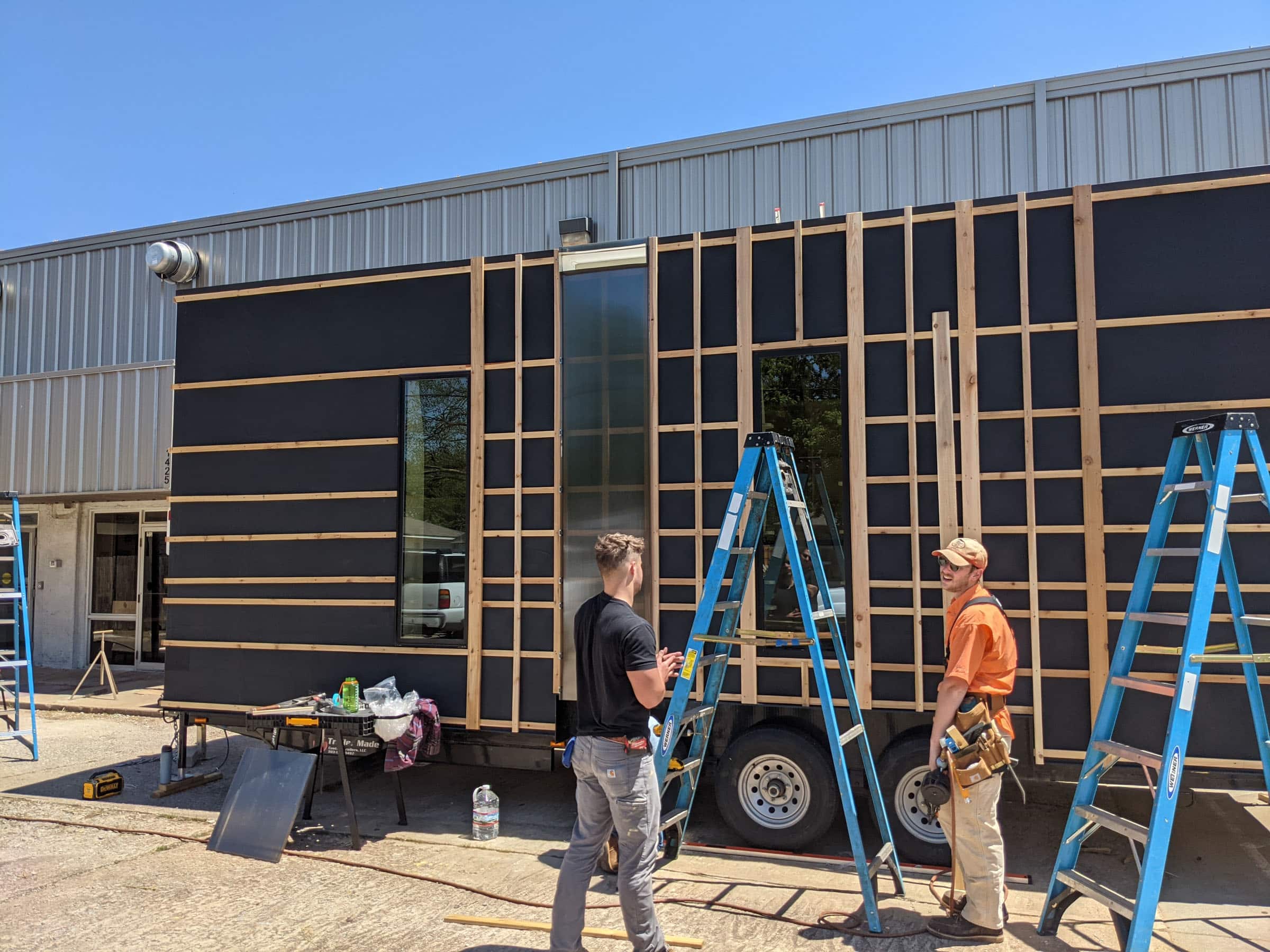
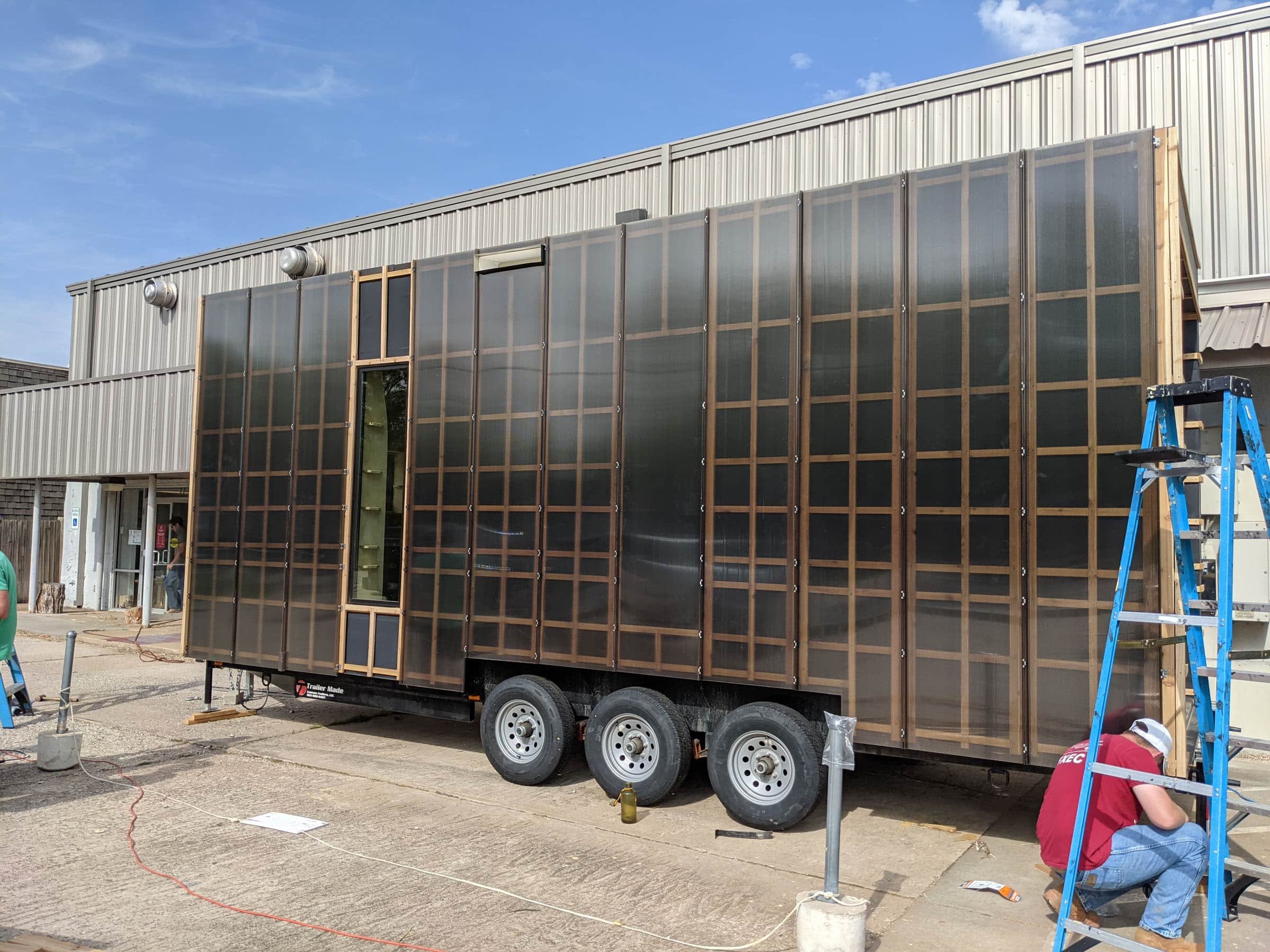
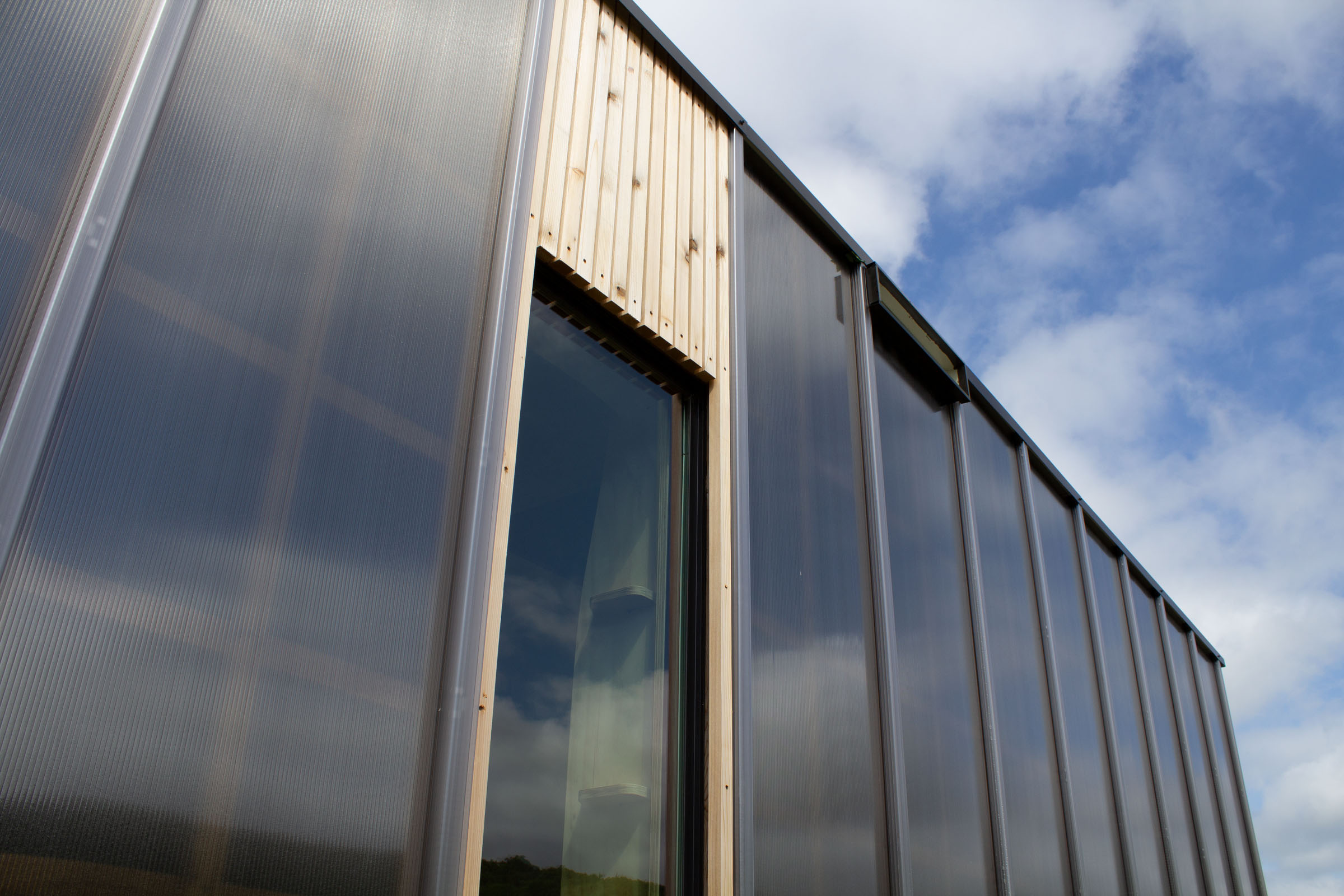
The architecture operates as both refuge and research instrument. Within its spiral geometry, polycarbonate panels, synthetic cedar shingles, and finely woven mesh compose a breathable enclosure tailored to the needs of migratory and nocturnal species.

Programmatically, the building is divided into three interlocking volumes — a vestibule for human access and monitoring, a bat enclosure calibrated for shade and quiet airflow, and a chimney swift tower defined by height and natural light gradients. Together, these spaces establish a living laboratory for rehabilitation and education, blending form and function through an ethos of care as design logic.


Project Data

Project Title: WildCare Oklahoma Bat and Chimney Swift Rehabilitation Facility
Location: Noble, Oklahoma
Semester/Year: Fall 2025 – Spring 2026
Anticipated Completion: May 2026
Client Presentation & Open House: May 2026

Primary client: WildCare Oklahoma, a nonprofit wildlife rehabilitation center serving over 7,500 animals annually. 

Student Participation

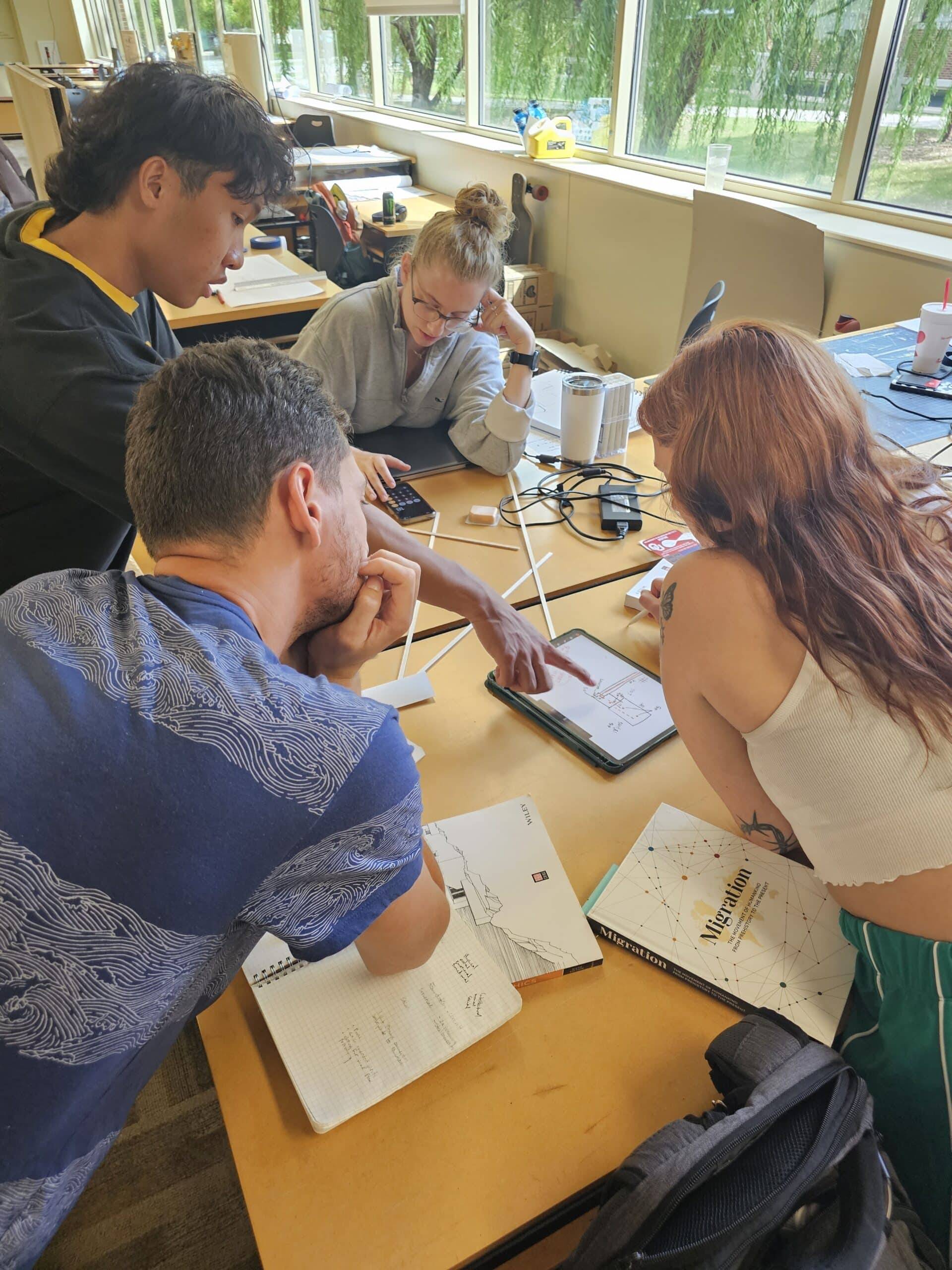
13 undergraduate architecture students in a 6-credit design–build studio, and 5 undergraduate construction science students in a 3-credit design-build seminar, combining Architecture and Construction Science programs. Students collaborated across all project phases—from concept modeling and material testing to full-scale fabrication and construction documentation. All participants earned academic credit under faculty supervision; no unpaid labor.

Project Type: Full-scale design–build habitat and rehabilitation structure; ecological design and construction pedagogy; experimental formwork and material research.

Duration: Two semesters, including site analysis, structural and environmental design, 3D modeling, foundation and stem wall fabrication, framing, and enclosure construction culminating in client handoff and open house.


Material Innovation and Craft

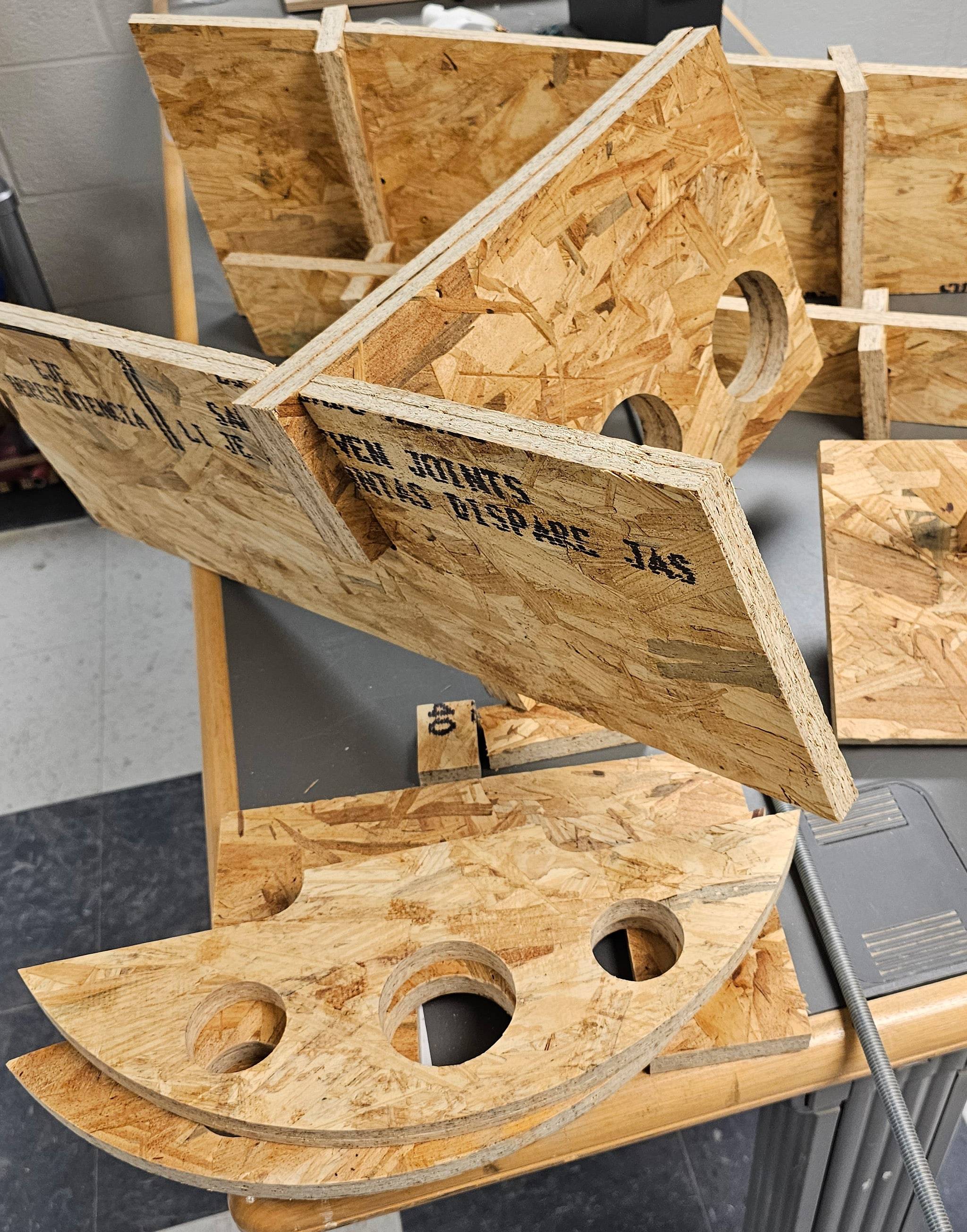
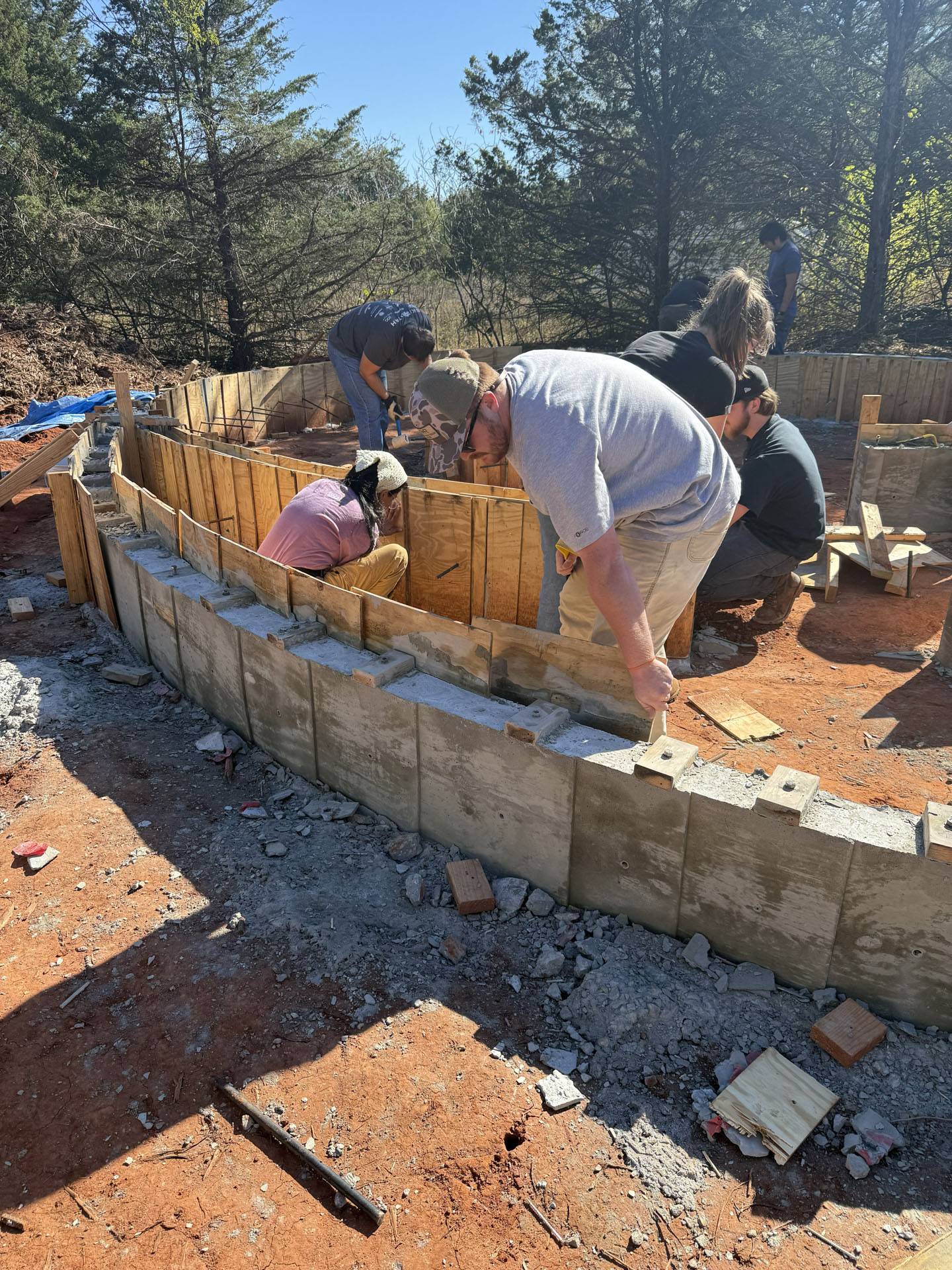
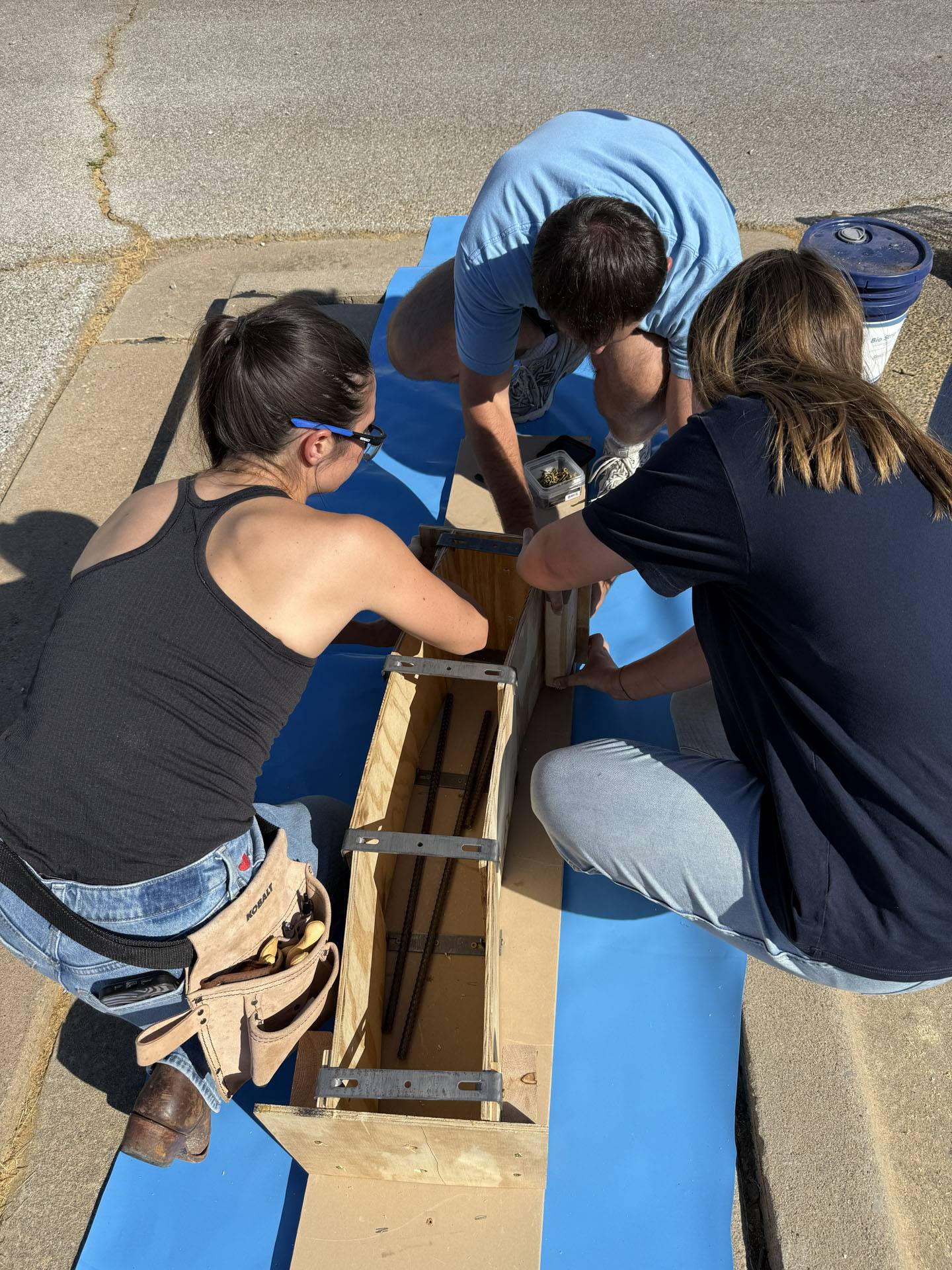
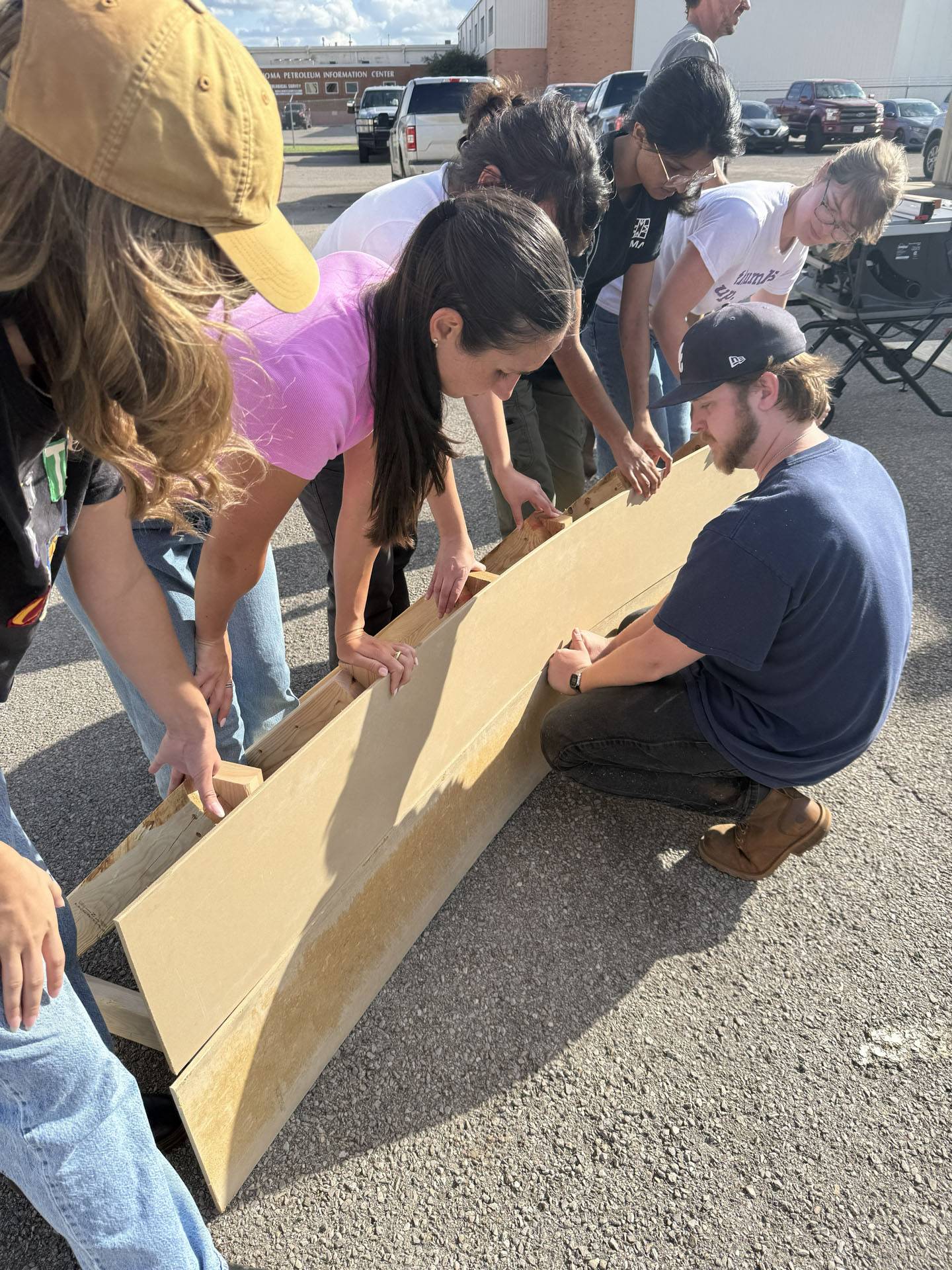
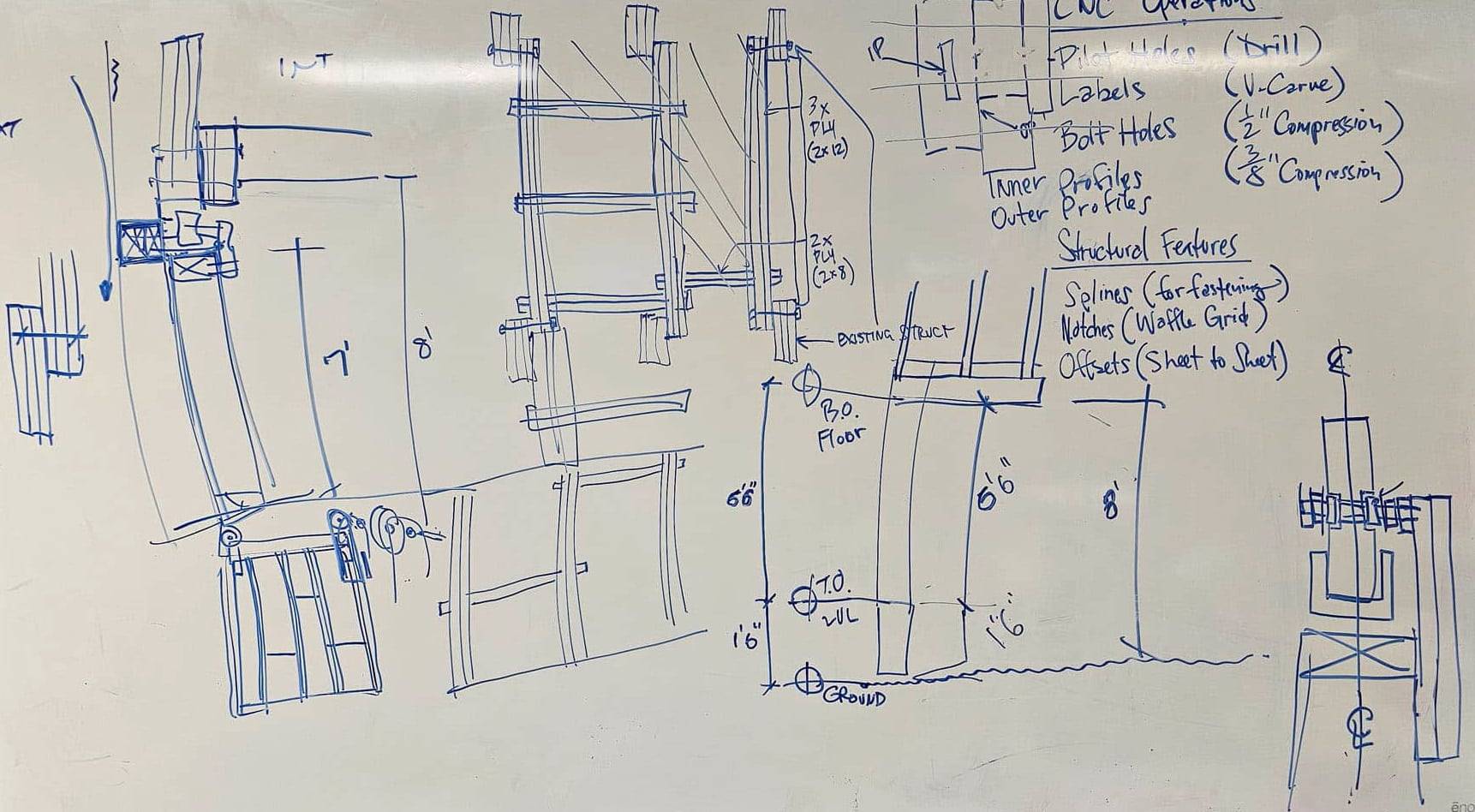
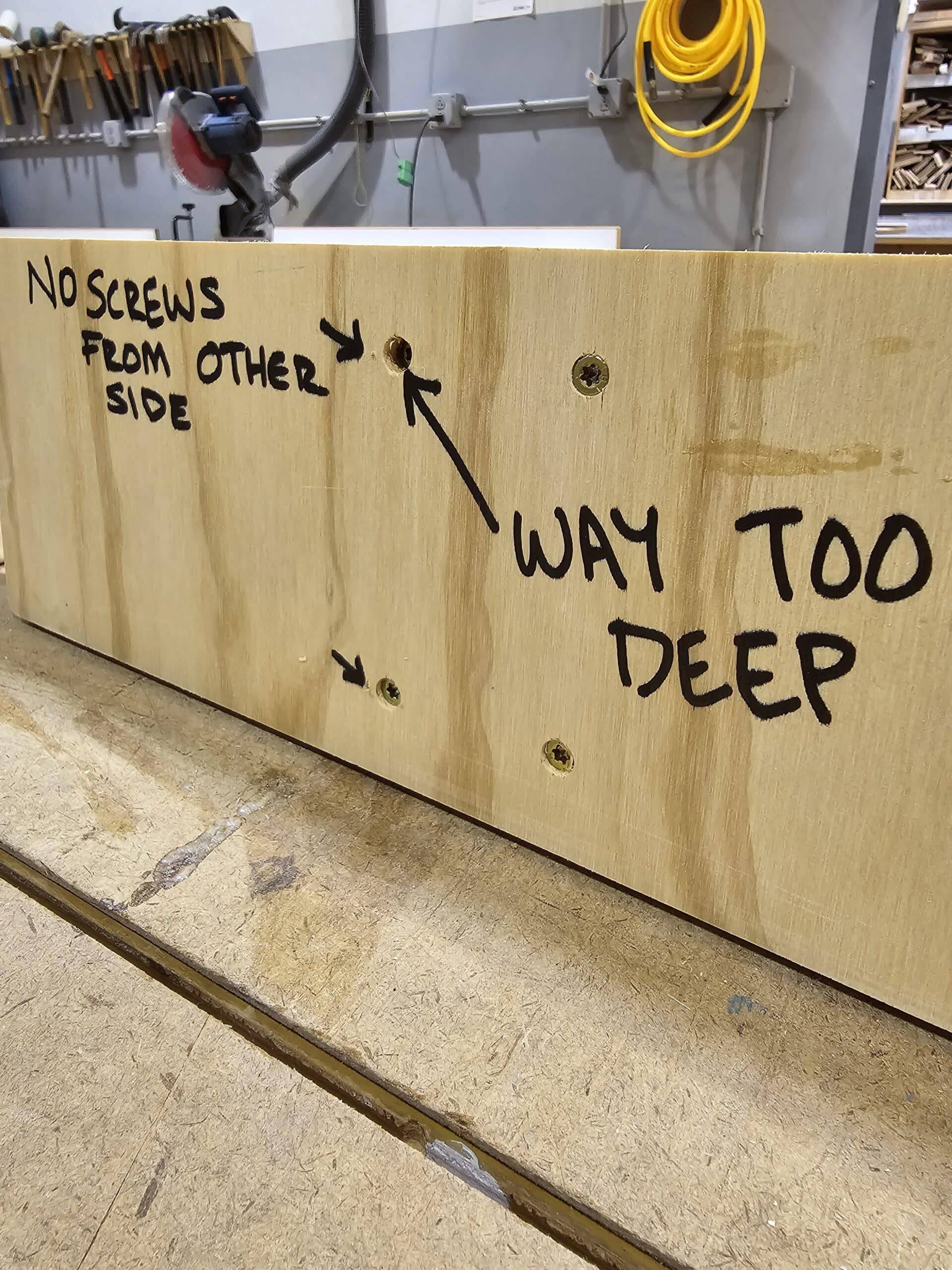
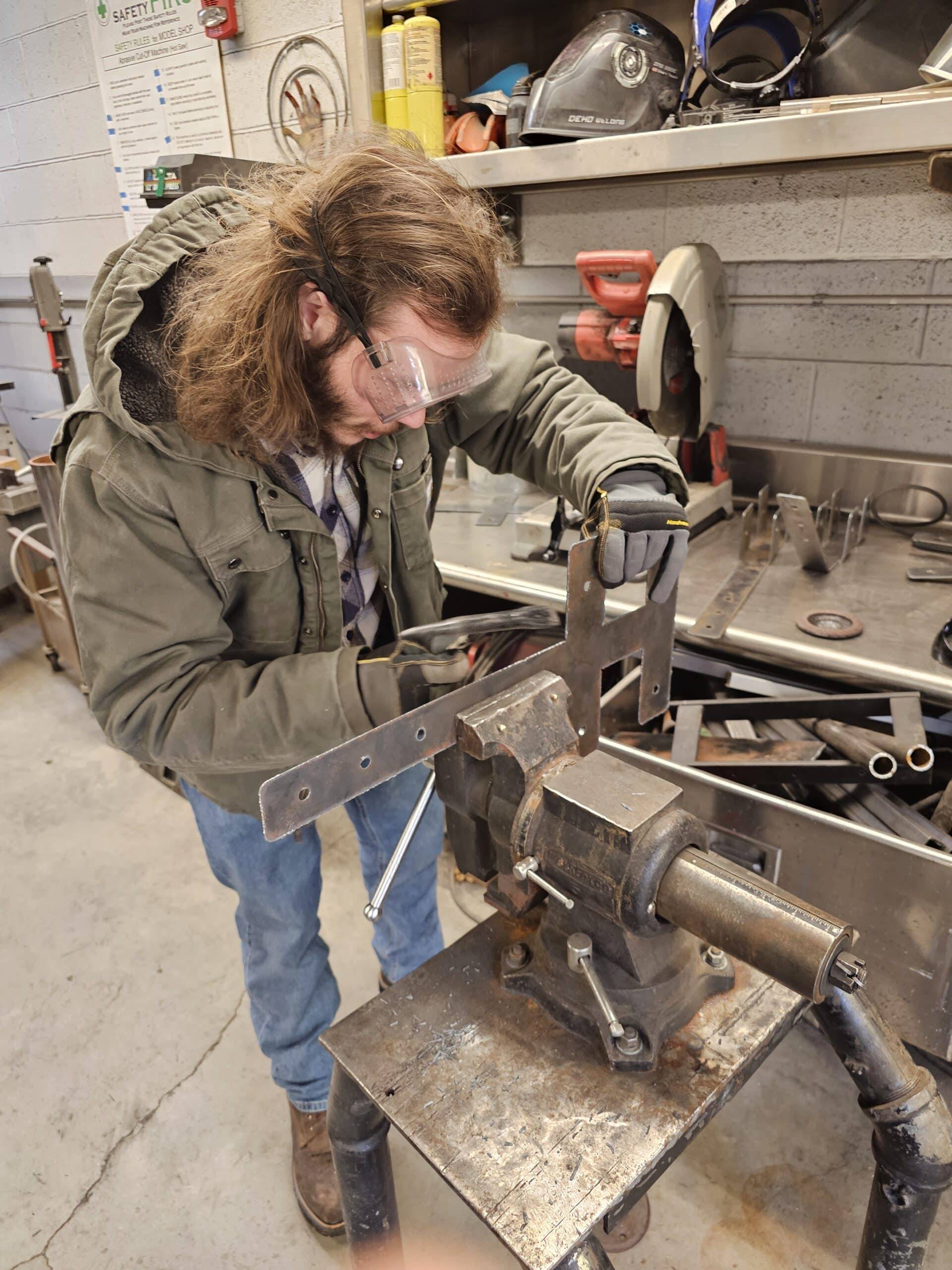
A defining feature of the project is its experimental stem wall system, developed through full-scale mock-ups and iterative on-site fabrication. Rather than relying on conventional flat formwork, the design team employed layered dimensional boards with variable offsets to cast a wall that captures light, shadow, and texture across its surface. The result is a three-dimensional concrete facade that reads as both structure and ornament — an architectural record of the building process itself.

Each segment of formwork was hand-fitted, producing subtle shifts in depth that give the wall a tactile rhythm echoing the natural stone formations and stratified soils of Oklahoma. The embedded J-hooks, rebar ties, and reinforcement boards were meticulously placed to ensure both strength and aesthetic precision.

This approach transformed the foundation phase into a design research exercise, exploring how construction logic and aesthetic expression can converge through material intelligence. The wall now stands as a crafted threshold — grounding the future enclosure while marking a pedagogical milestone in ASDB’s ongoing exploration of fabrication as research.


Construction Progress (Fall 2025)

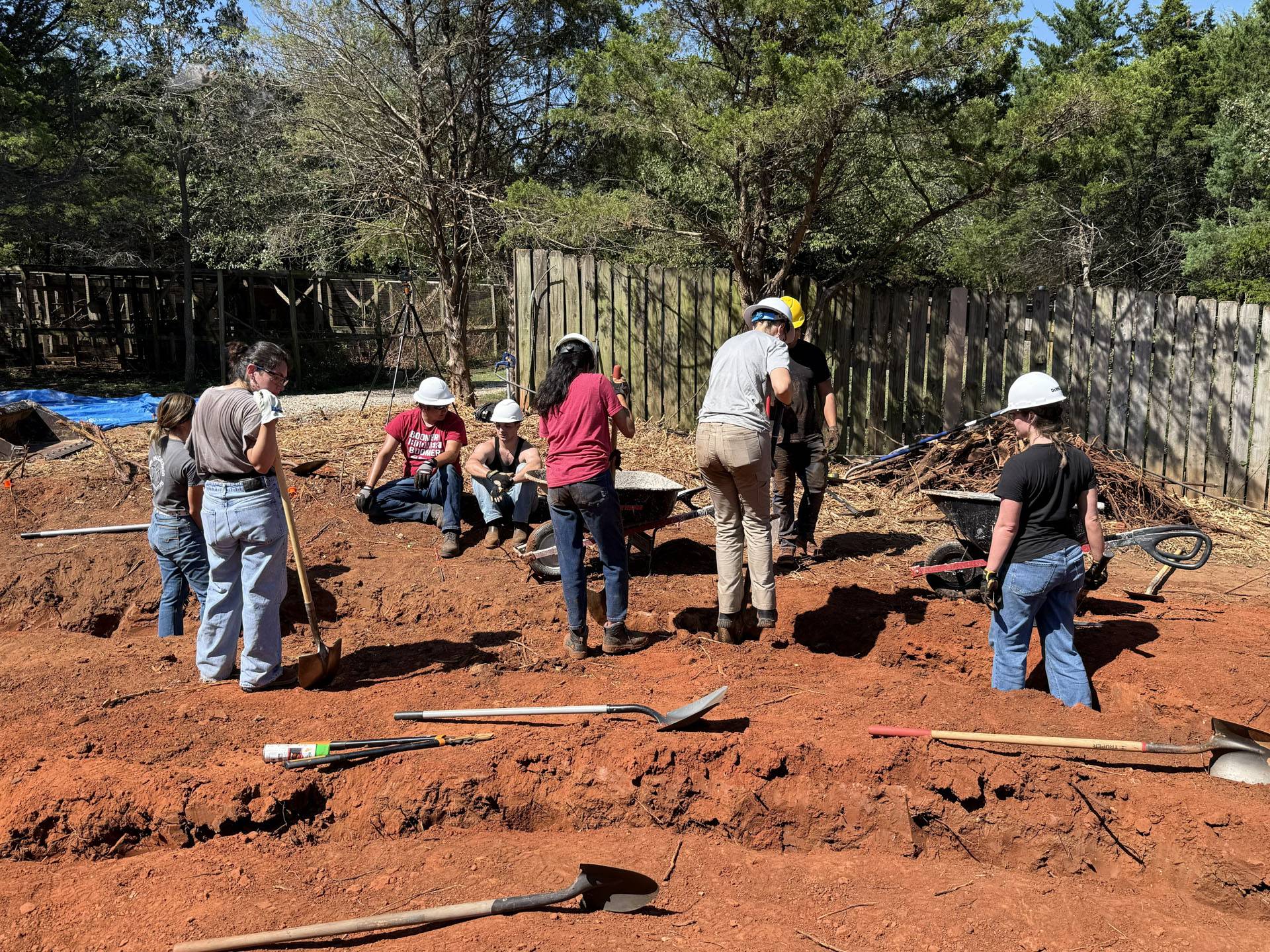
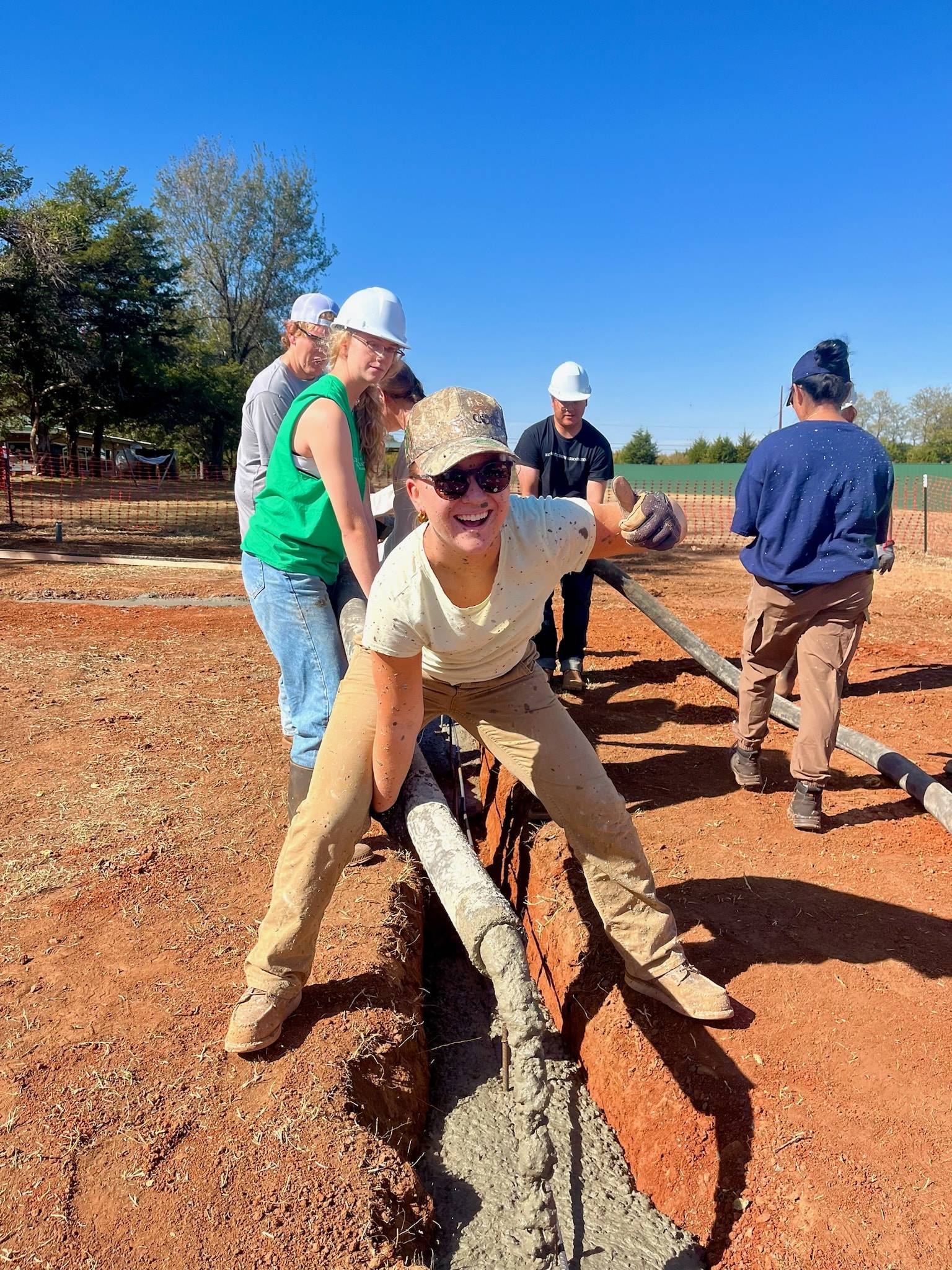
The fall semester focused on site preparation, rebar layout, and concrete work. Teams collaborated across architecture and construction science to execute precise foundation detailing, culminating in the pour of the multi-layered stem wall that defines the building’s base geometry. These foundational experiments in dimension and texture allowed students to test advanced techniques in forming, bracing, and sequencing while developing a deep understanding of tolerance and craft.

This first phase established the groundwork for the next stage of vertical construction, setting both physical and conceptual footing for the project’s continuation in Spring 2026.


Next Phase (Spring 2026)

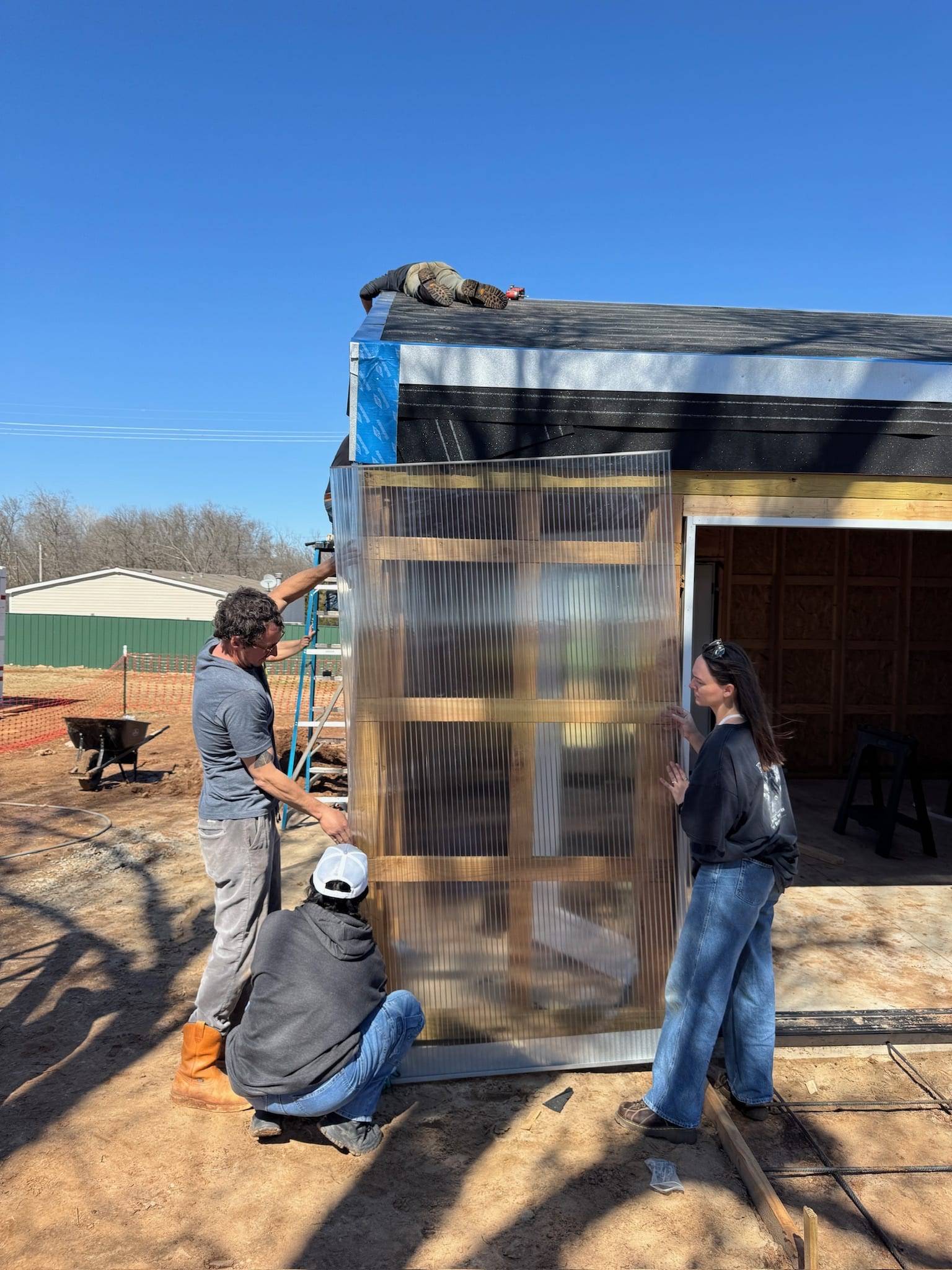
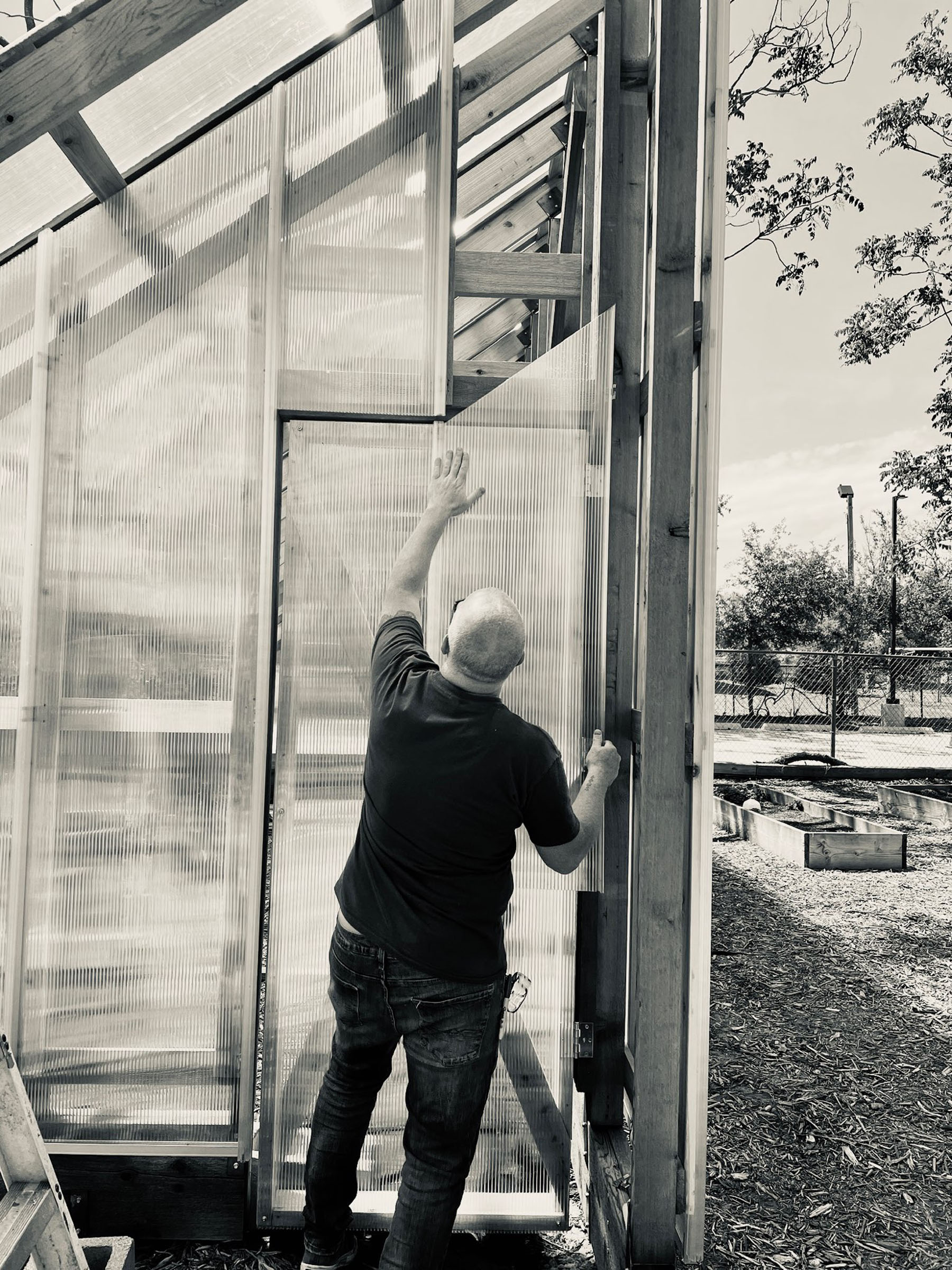
The 2026 spring semester will advance into framing, roof structure, and enclosure. Students will erect the curved framing system, integrate Brava synthetic cedar shingles, and install polycarbonate roof panels to achieve a translucent, lightweight shell responsive to daylight and climate.

The emphasis will remain on precision, sequencing, and sustainable assembly, leading to final enclosure, site grading, and habitat integration before the Spring 2026 Open House at WildCare.


Educational Impact

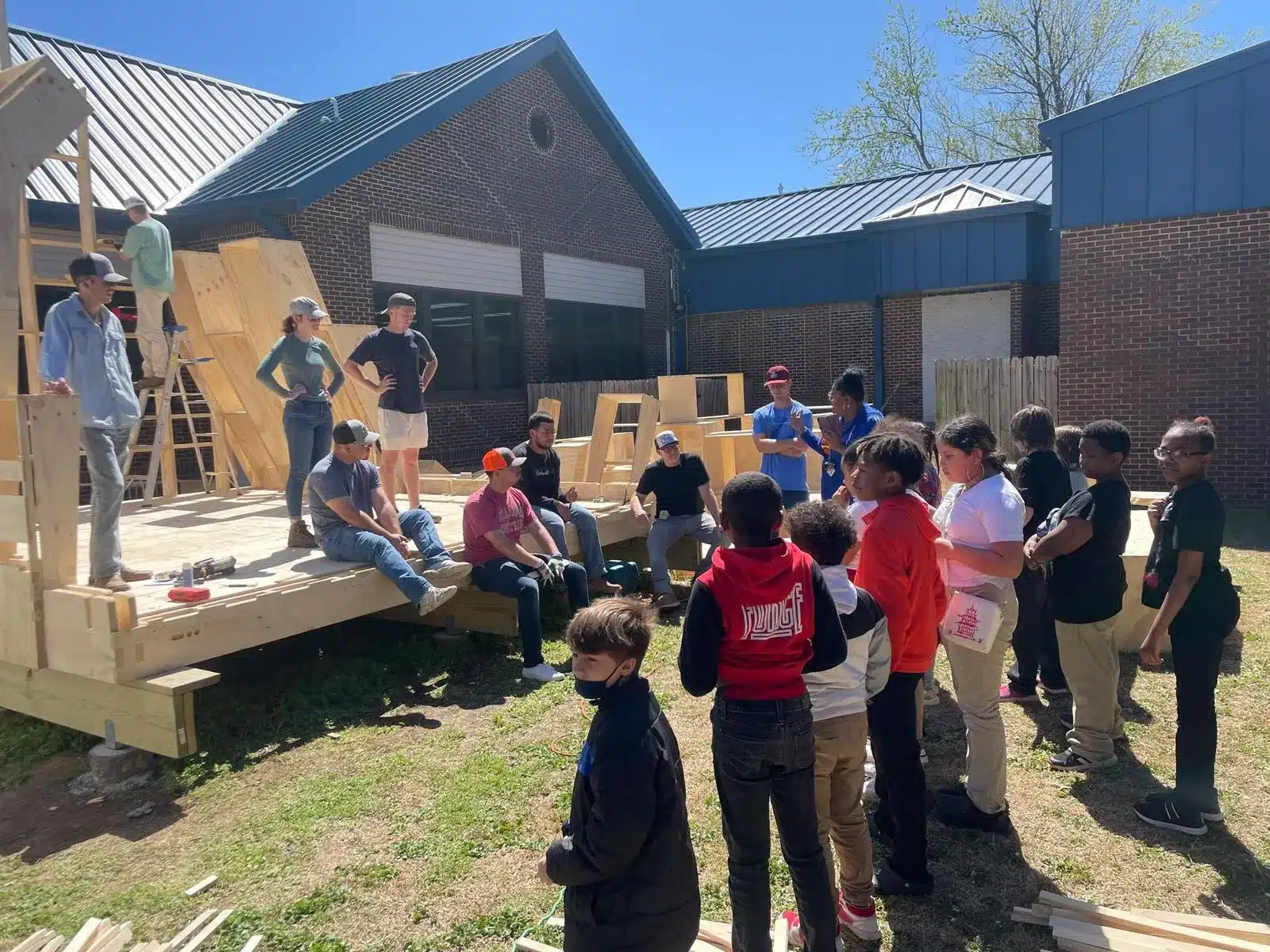
This project exemplifies ASDB’s Design Together, Build Together ethos, bringing architecture and construction science students into direct collaboration with a living client and ecosystem. Each phase of construction becomes an educational instrument, teaching craft, coordination, and empathy through making.

The partnership with WildCare transforms the design-build process into an act of service, building not only for community use but for the coexistence of species. It embodies ASDB’s broader belief that architecture can be both habitat and healer, a convergence of environmental responsibility, technical rigor, and human compassion.


Timeline Snapshot

  • September 2025: Site clearing and foundation layout

  • October 2025: Rebar, formwork, and dimensional stem wall pour

  • November 2025: Slab preparation and surface refinement

  • January–March 2026: Framing and roof assembly

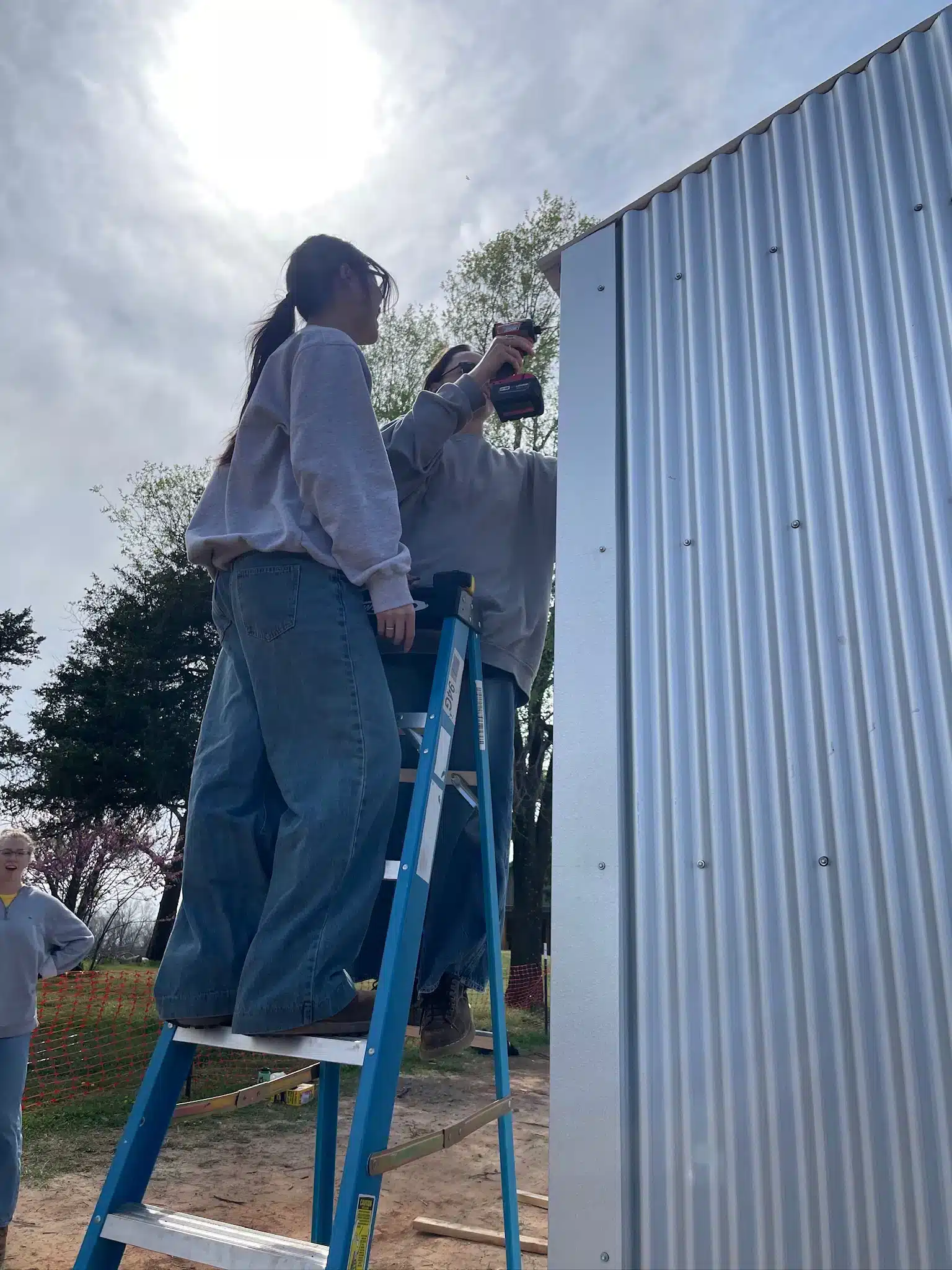
  • April 2026: Enclosure, mesh systems, and finishes

  • May 2026: Final site work and open house presentation


More Work


Architecture

Art + Code

Design + Fabrication

Courses + Student Work

© Ken Marold USA, Inc. All rights reserved.

Continue reading

SunHive Collective Community Space

SunHive Collective Community Space

Norman, OK
Construction Completed: May 2025

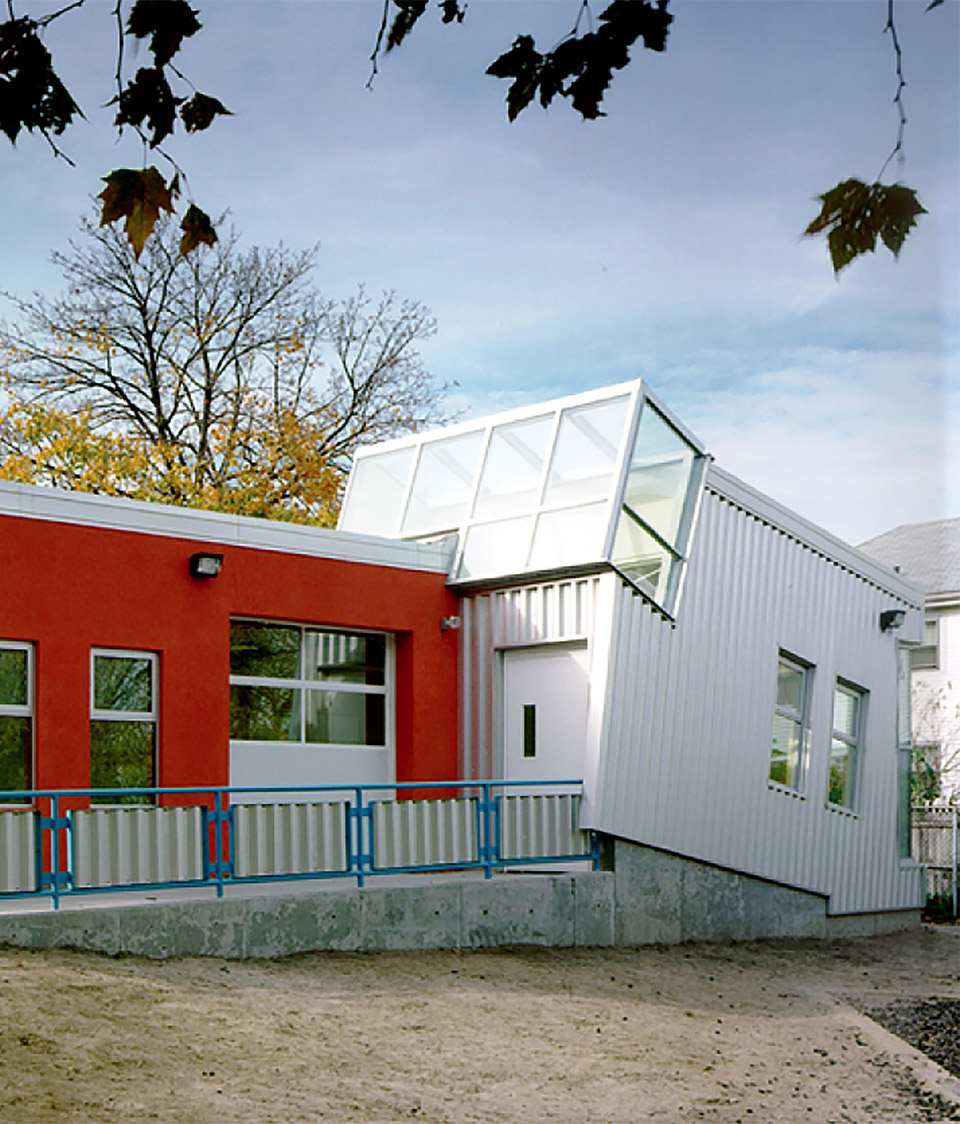
The SunHive Collective Community Space is a light-filled, adaptable facility designed to support connection, skill-building, and independence for young adults with disabilities. Its barn-inspired gable form, clad in corrugated metal, references Norman’s agricultural landscape while signaling durability and familiarity. A translucent polycarbonate vestibule regulates southern sunlight at the entry, while a continuous north-facing skylight washes the interior with diffuse light, creating a consistent, welcoming
atmosphere.

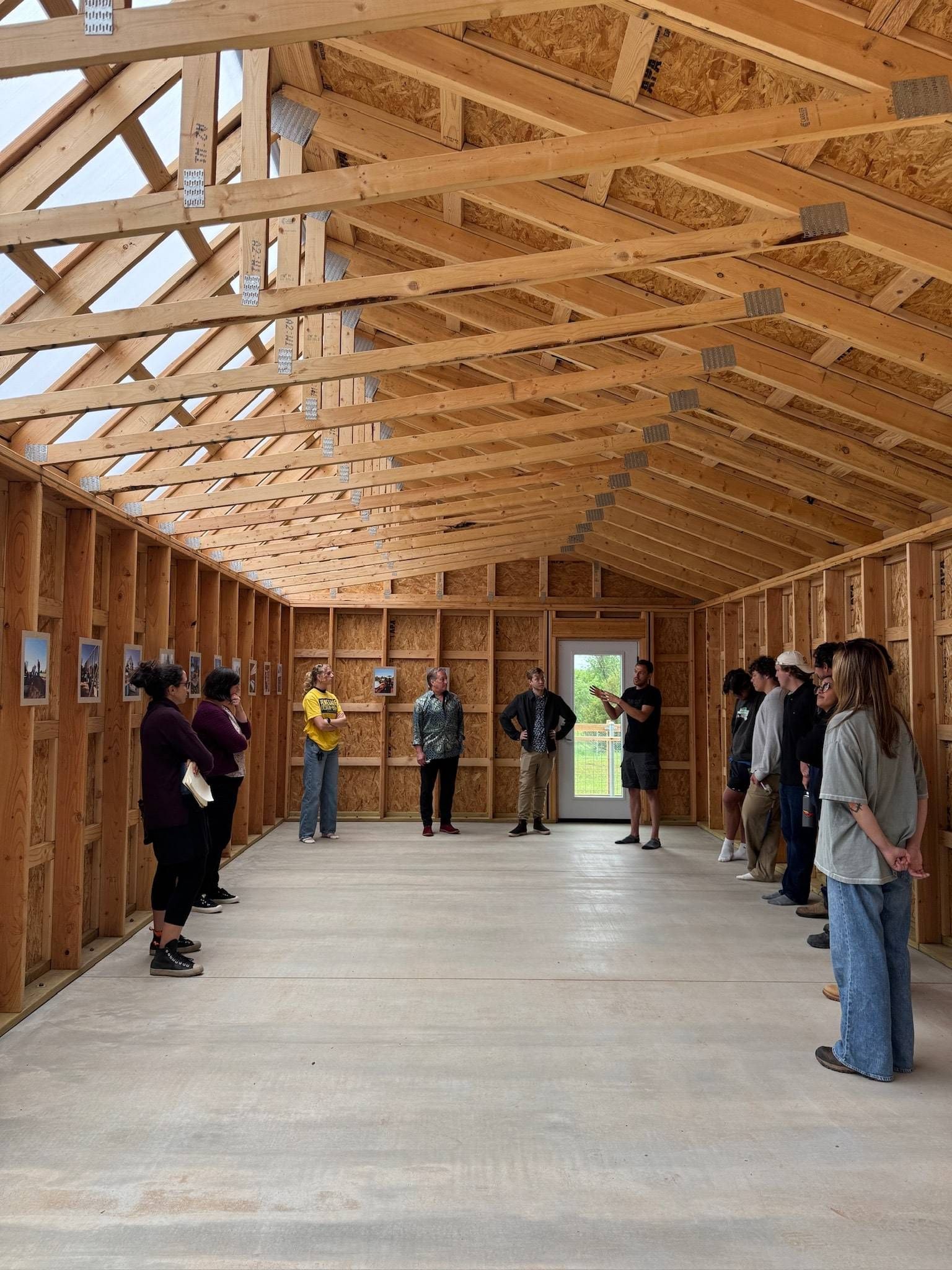
Inside, the space is defined by an open-span truss roof, exposed wood framing, and a concrete floor, producing a durable and flexible environment suited to gatherings, workshops, art projects, and quiet reflection. The natural richness of the wood grain is set against a grid of regulating lines that organize the structure and provide attachment points for sheathing. The layering of structure and enclosure creates a dimensional spatial experience that responds to shifting daylight. Material choices are intentionally straightforward—wood, metal, and concrete—for their clarity, ease of maintenance, and symbolic connection to resilience and authenticity.


SunHive Collective Community Space

Norman, OK
Construction Completed: May 2025

The SunHive Collective Community Space is a light-filled, adaptable facility designed to support connection, skill-building, and independence for young adults with disabilities. Its barn-inspired gable form, clad in corrugated metal, references Norman’s agricultural landscape while signaling durability and familiarity. A translucent polycarbonate vestibule regulates southern sunlight at the entry, while a continuous north-facing skylight washes the interior with diffuse light, creating a consistent, welcoming
atmosphere.

Inside, the space is defined by an open-span truss roof, exposed wood framing, and a concrete floor, producing a durable and flexible environment suited to gatherings, workshops, art projects, and quiet reflection. The natural richness of the wood grain is set against a grid of regulating lines that organize the structure and provide attachment points for sheathing. The layering of structure and enclosure creates a dimensional spatial experience that responds to shifting daylight. Material choices are intentionally straightforward—wood, metal, and concrete—for their clarity, ease of maintenance, and symbolic connection to resilience and authenticity.

Construction Process

The project was realized through a practical approach that emphasized cost-efficiency, durability, and long-term stewardship. Light wood stud framing paired with pre-engineered trusses provided an economical and efficient structural system, while corrugated galvanized steel siding and roofing offered permanence and weather protection. Translucent polycarbonate was strategically integrated at the entry and roof ridge to maximize daylight and minimize artificial lighting. At the site scale, a rainwater collection system supports adjacent gardens, and a custom entry garden wall provides opportunities for climbing vegetation and seasonal growth. These features link the building to SunHive’s outdoor programs and reinforce lessons in environmental care and stewardship.

Sustainability & Material Strategy

The project’s sustainability strategy balanced pragmatic constraints with intentional choices. Durable cladding reduced long-term maintenance, while locally sourced materials minimized transportation impacts. The north-facing ridge skylight delivers consistent, glare-free daylight throughout the interior, while polycarbonate panels at the entry extend natural light deeper into the building. Combined with the rainwater collection system and garden wall, these strategies established the building as both functional shelter and an active teaching tool, integrating environmental performance into everyday use.

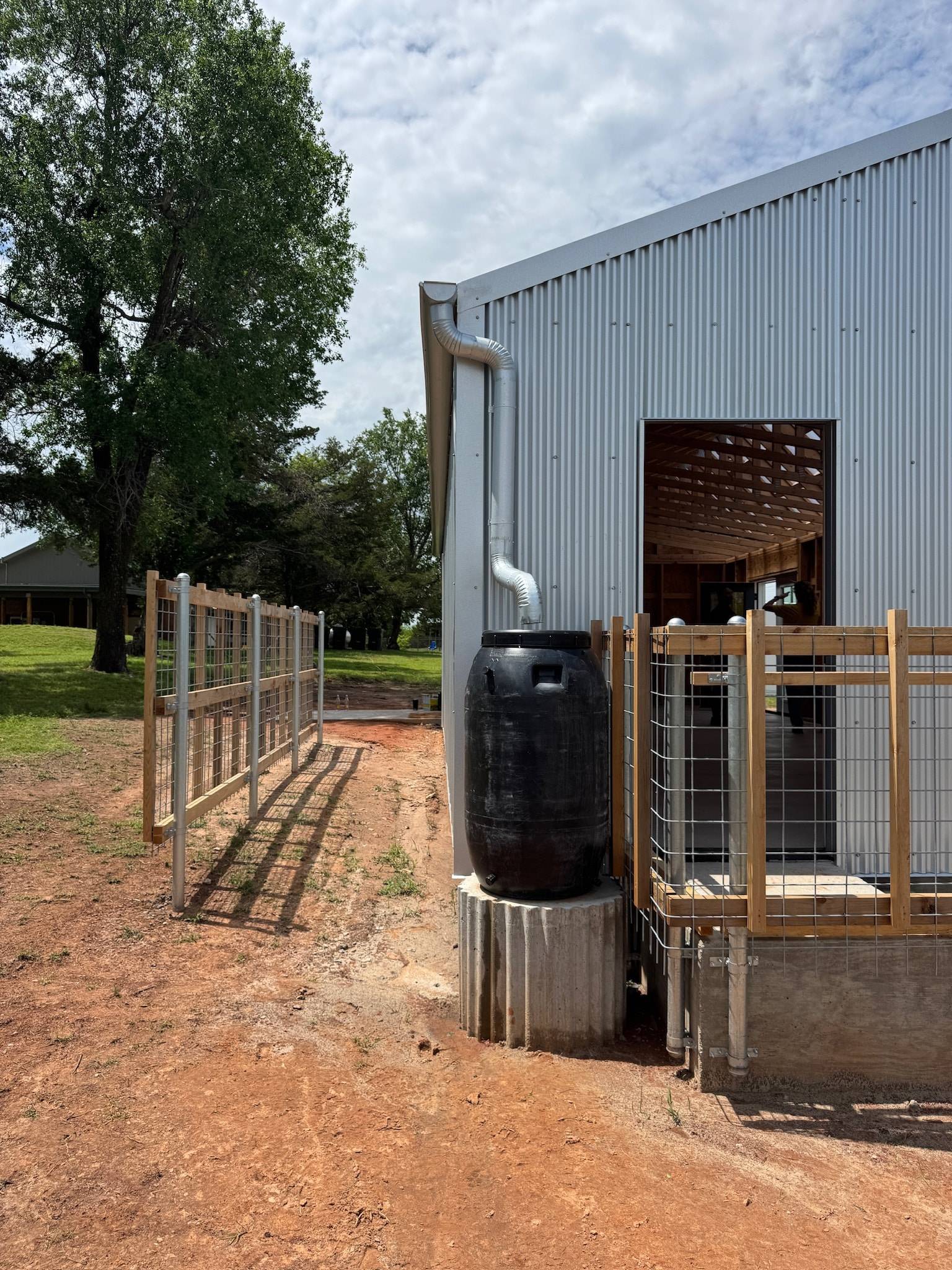
ABOVE: A rainwater collection system captures runoff to irrigate gardens, linking the building directly to SunHive’s outdoor programs.

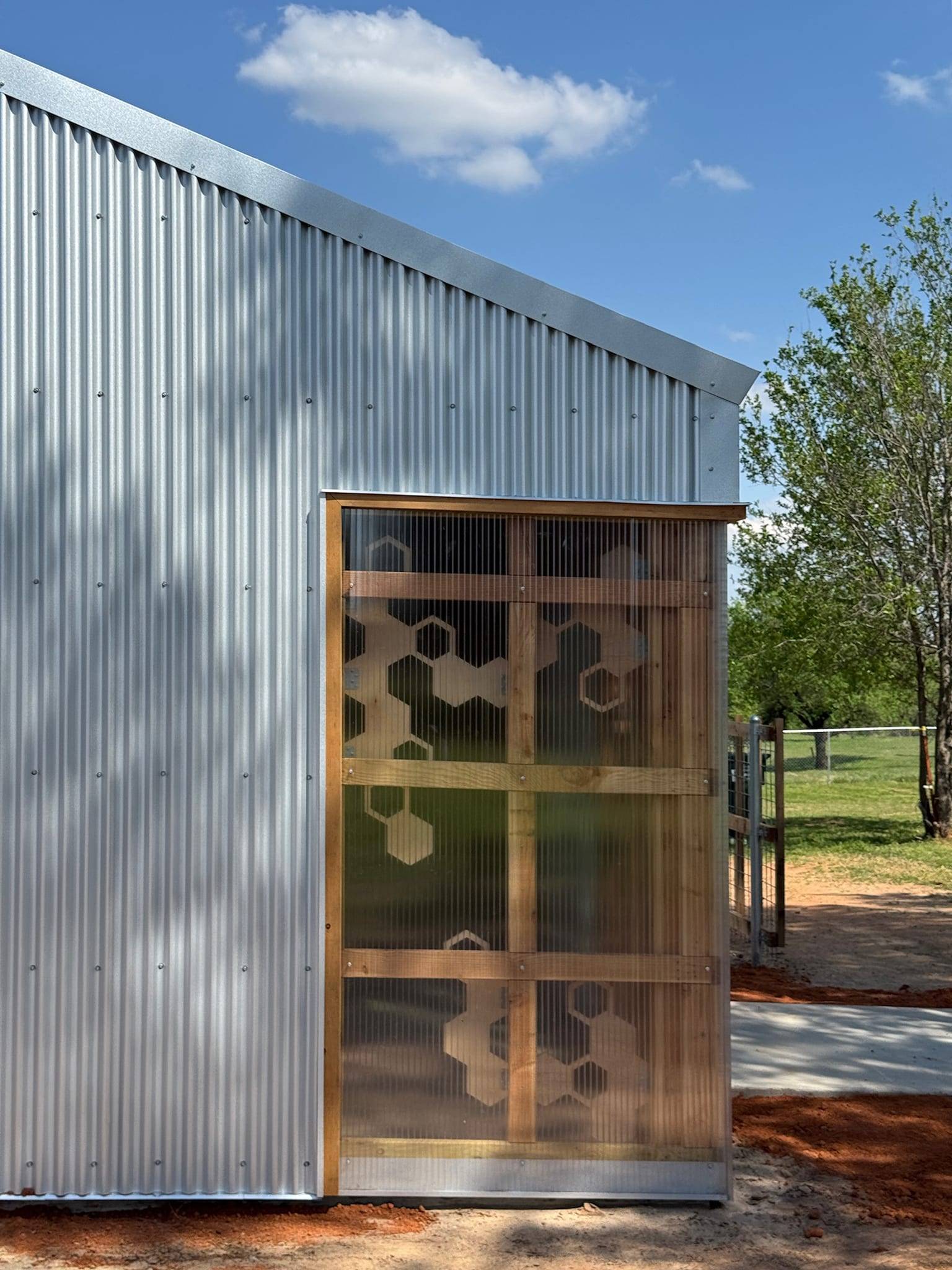
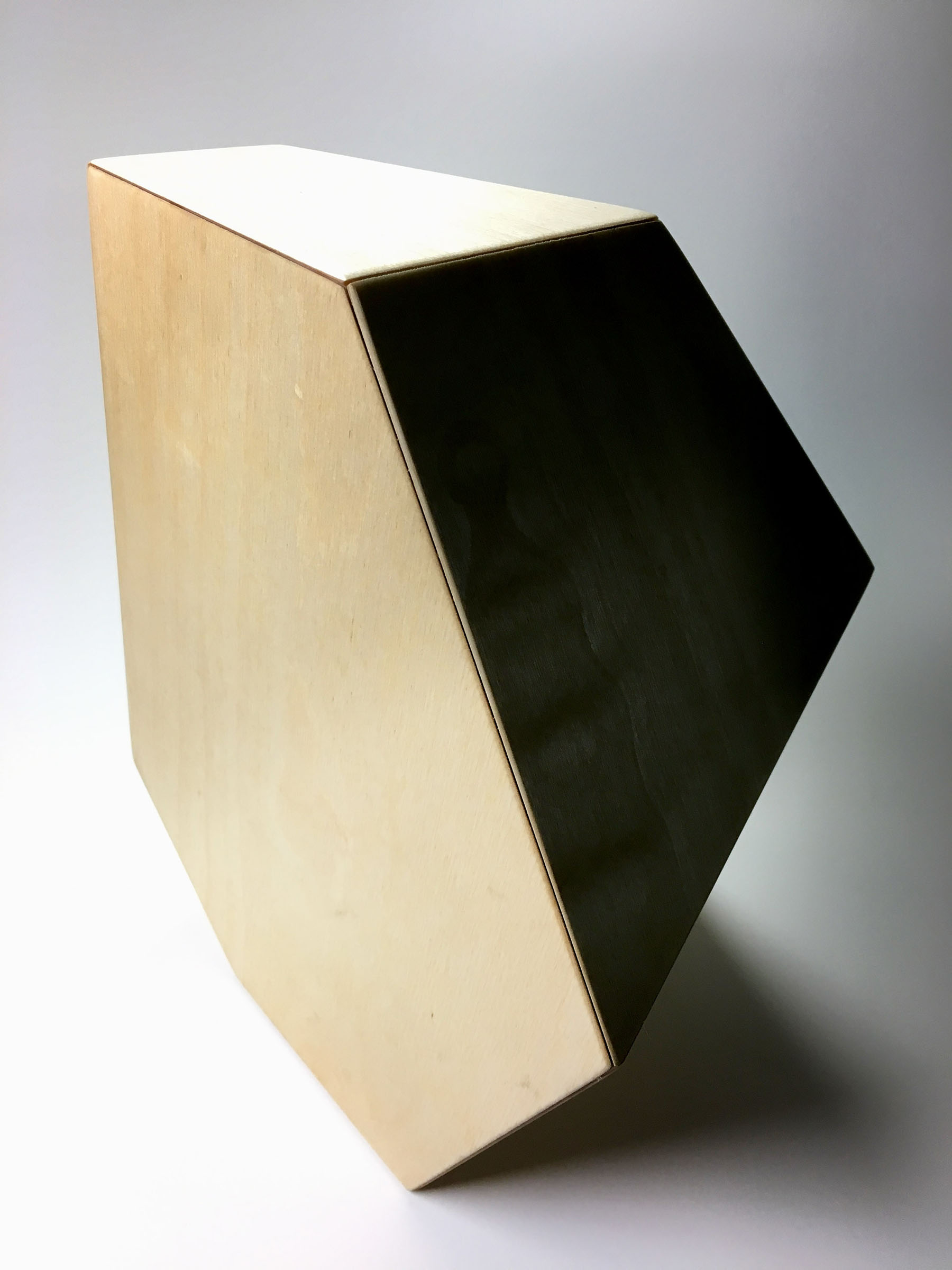
ABOVE: Custom CNC-milled hexagonal donor wall along the entry highlights community support; students executed digitas fabrication and assisted with fundraising to bring SunHive to life.

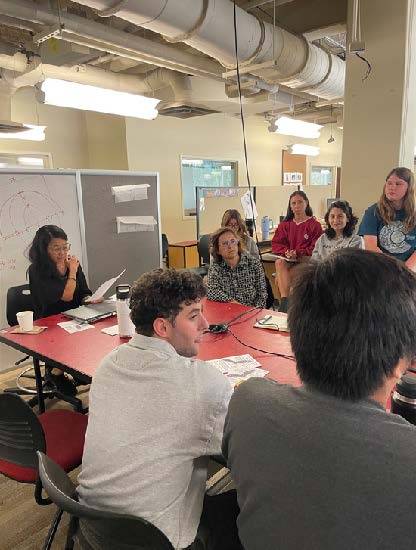
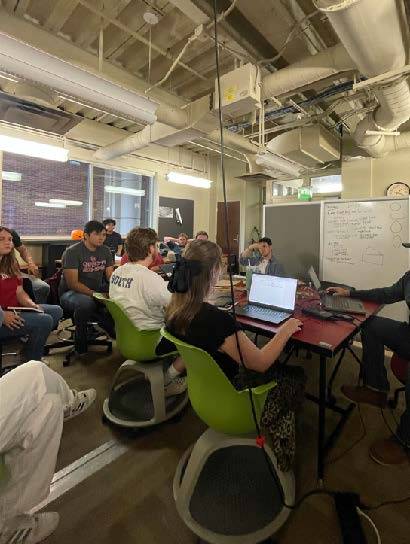
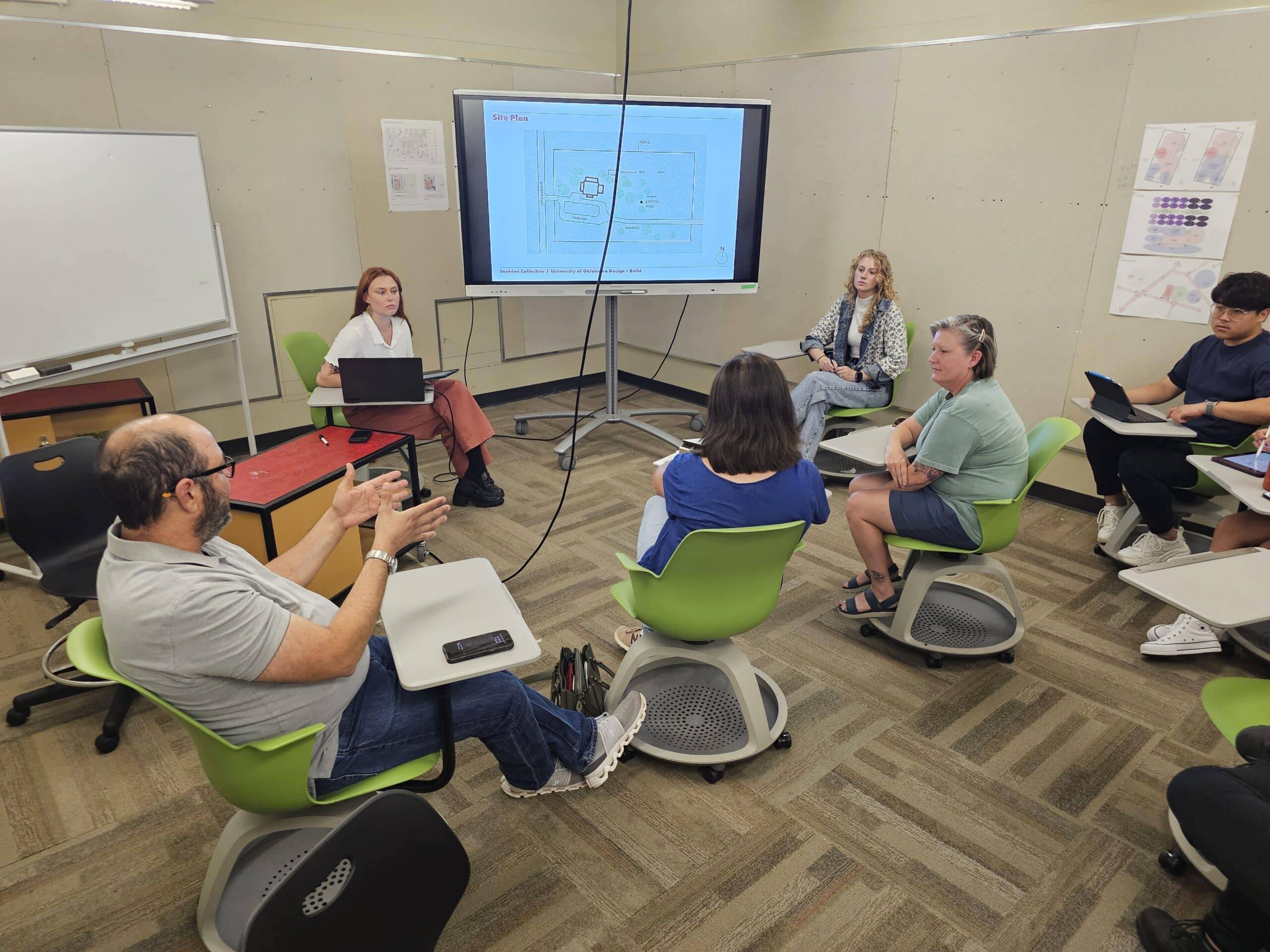
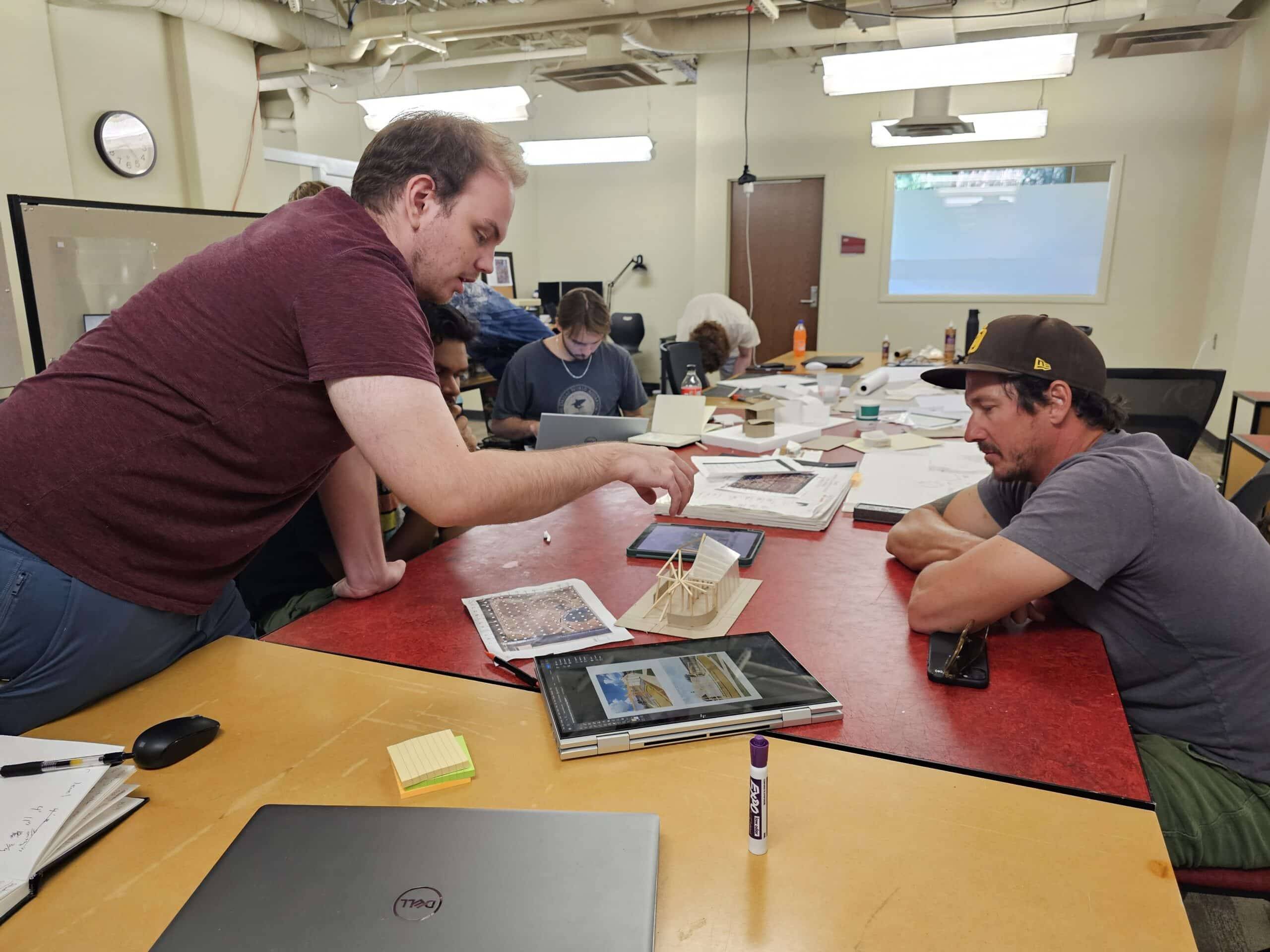
ABOVE: Architecture and construction science students engage in collaborative design meetings with clients, bridging ideas across disciplines.

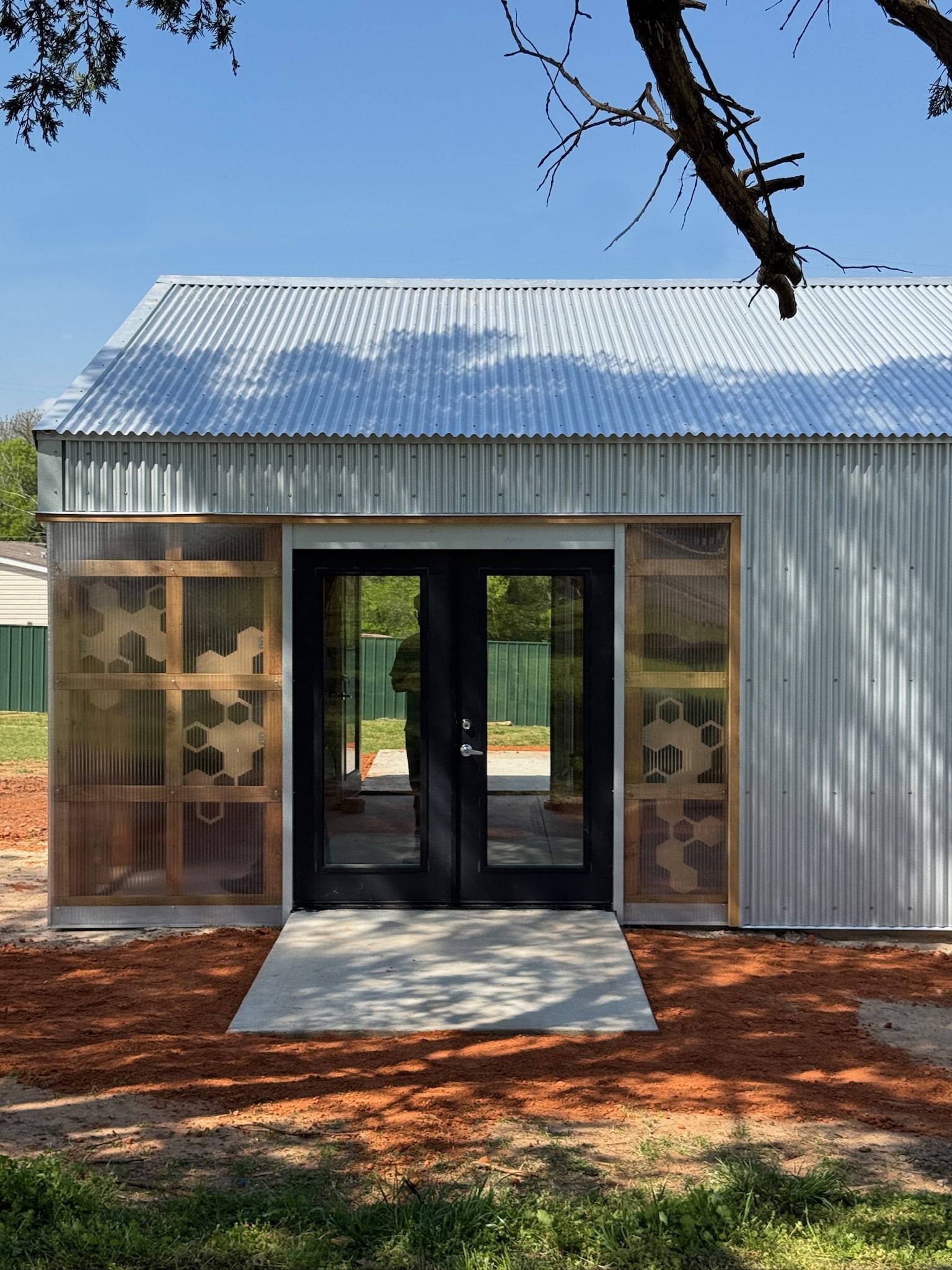
ABOVE: The barn-inspired gable form, clad in corrugated galvanized steel and translucent polycarbonate, reflects both resilience and welcome.

Community Impact

The SunHive Collective Community Space was developed to provide continuity for young adults with disabilities as they transition from high school into adulthood, offering a place to build life skills, foster social connections, and engage in creative and environmental programs. The building is designed to support a range of activities, with openness for interaction, durable materials for active use, and direct connections to outdoor areas for gardening and workshops. Its flexibility allows programming to evolve as community needs change.

Since opening, the facility has expanded its capacity to serve more than thirty participants each day, supported by families, volunteers, and local partners. It has become a recognized resource for the community, operating as both infrastructure and civic gathering place.

ABOVE: The project anchors itself in Norman’s agricultural landscape while serving as a flexible hub for community gatherings.

American School Design Build & Student Involvement

The project was completed through the American School Design Build program at the University of Oklahoma, where students design and construct projects for real clients. Ten architecture students participated through two six-credit studio courses, alongside six construction science students in a special topics course, creating a collaborative and interdisciplinary framework.
Students contributed at every stage, from schematic design and client meetings to fabrication, assembly, and finish work on site. The process required them to adapt drawings to material constraints, sequence construction activities, and coordinate with community members and tradespeople. This direct involvement provided practical skills in project delivery while reinforcing the program’s ethos of “learning through making.” For students, the project functioned simultaneously as classroom and construction site, linking education to service and grounding architectural design in community engagement.

ABOVE: From design through contruction, ADSB students participated and took leadership roles through all phases of the project.


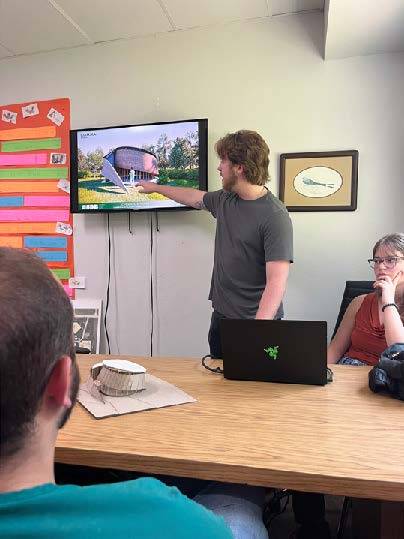
ABOVE: Final design review inside the completed SunHive, where students presented their work to Gibbs College faculty and community partners.


More Work


Architecture

Art + Code

Design + Fabrication

Courses + Student Work

© Ken Marold USA, Inc. All rights reserved.

Continue reading

Outre West

Outré West

Oklahoma Contemporary Arts, Center, Oklahoma City, OK
Exhibited: Aug 22, 2024 – Jan 27, 2025

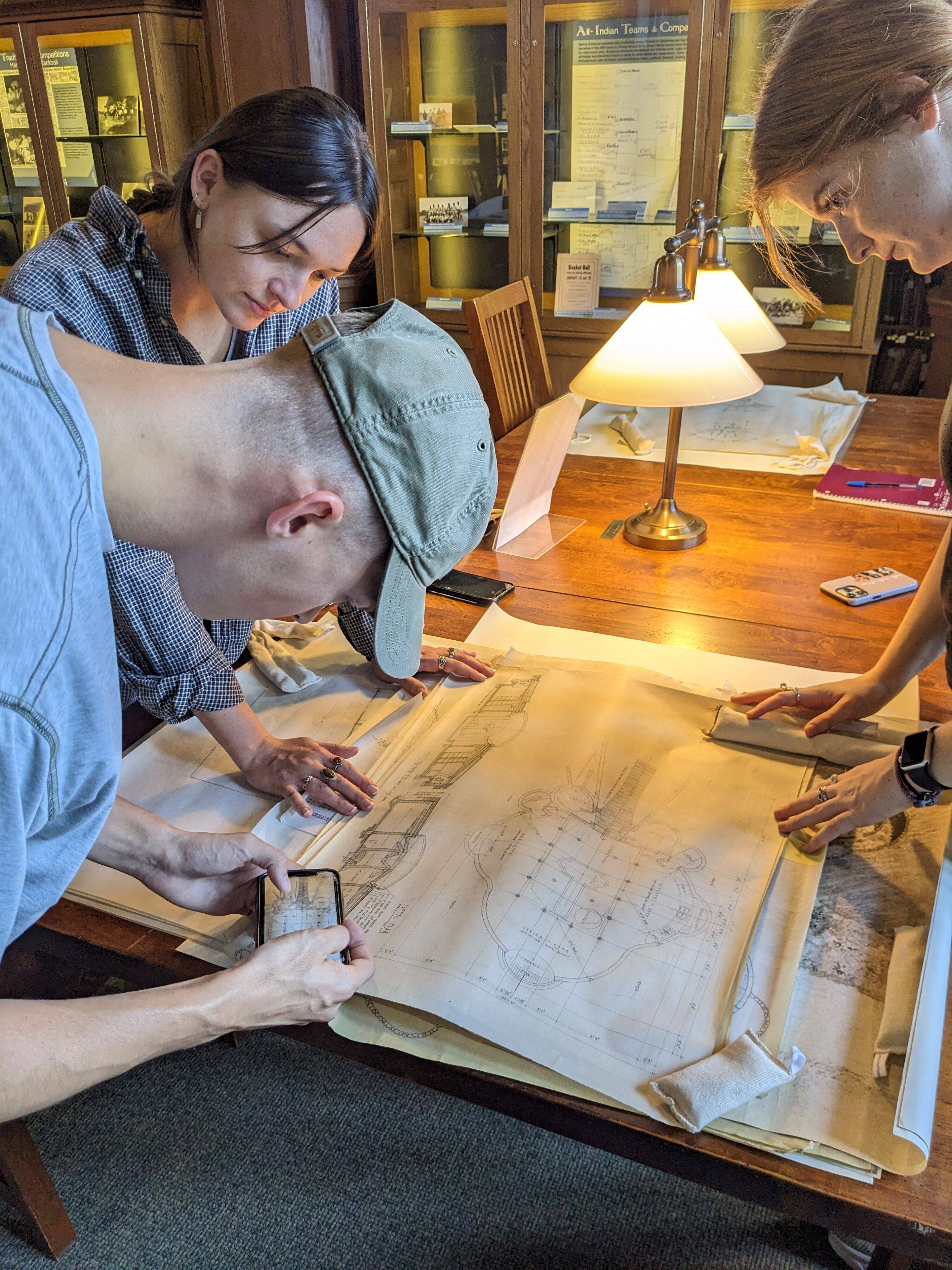
Outré West: The American School of Architecture from Oklahoma to California was a curated exhibition that examined the work of architects educated in the Midwest during the 1950s and 1960s who later developed experimental practices on the West Coast. As part of this larger show, a 3-credit undergraduate and graduate research and digital fabrication seminar contributed three full-scale installations that translated archival precedents into inhabitable exhibition experiences.

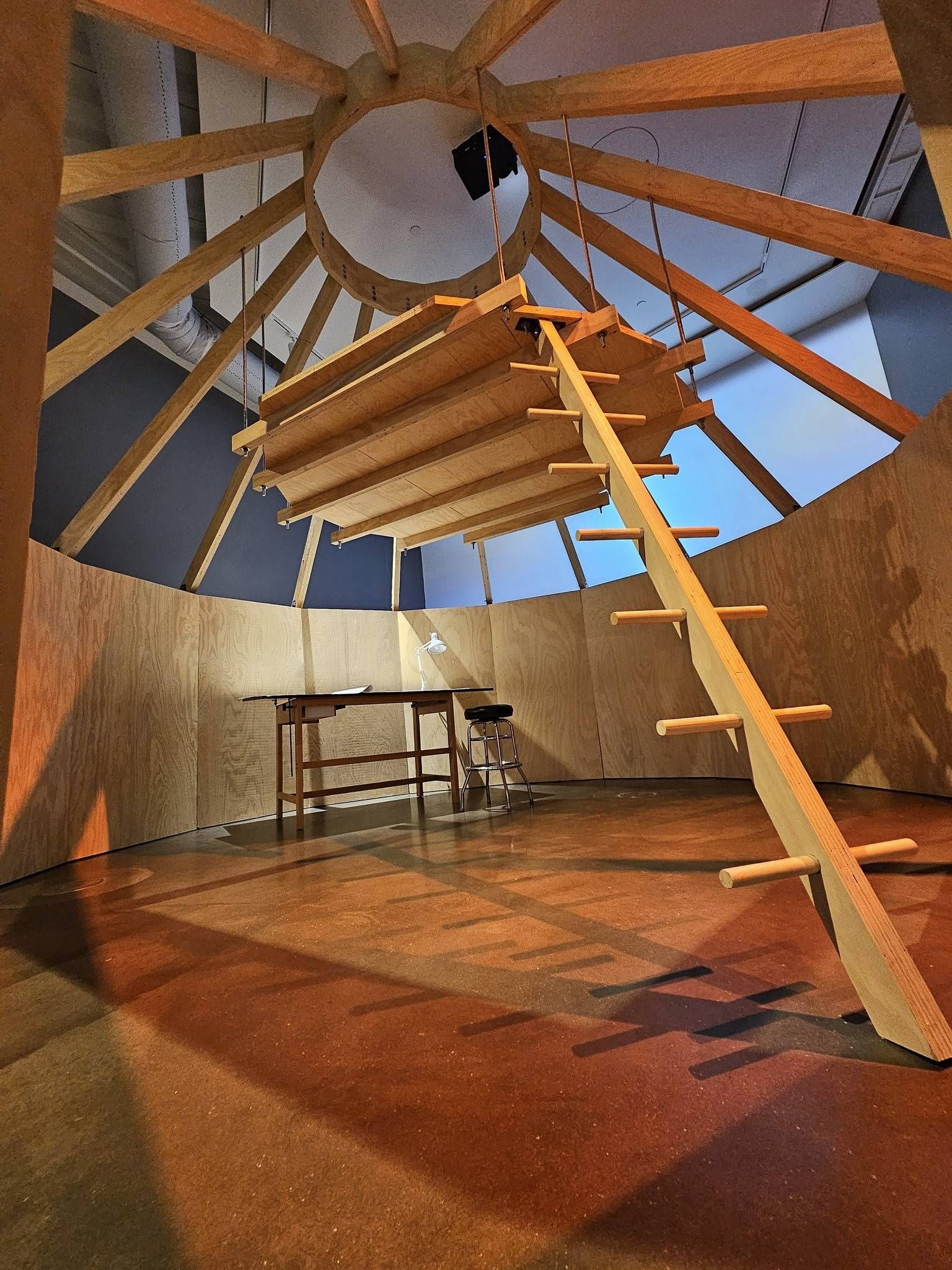
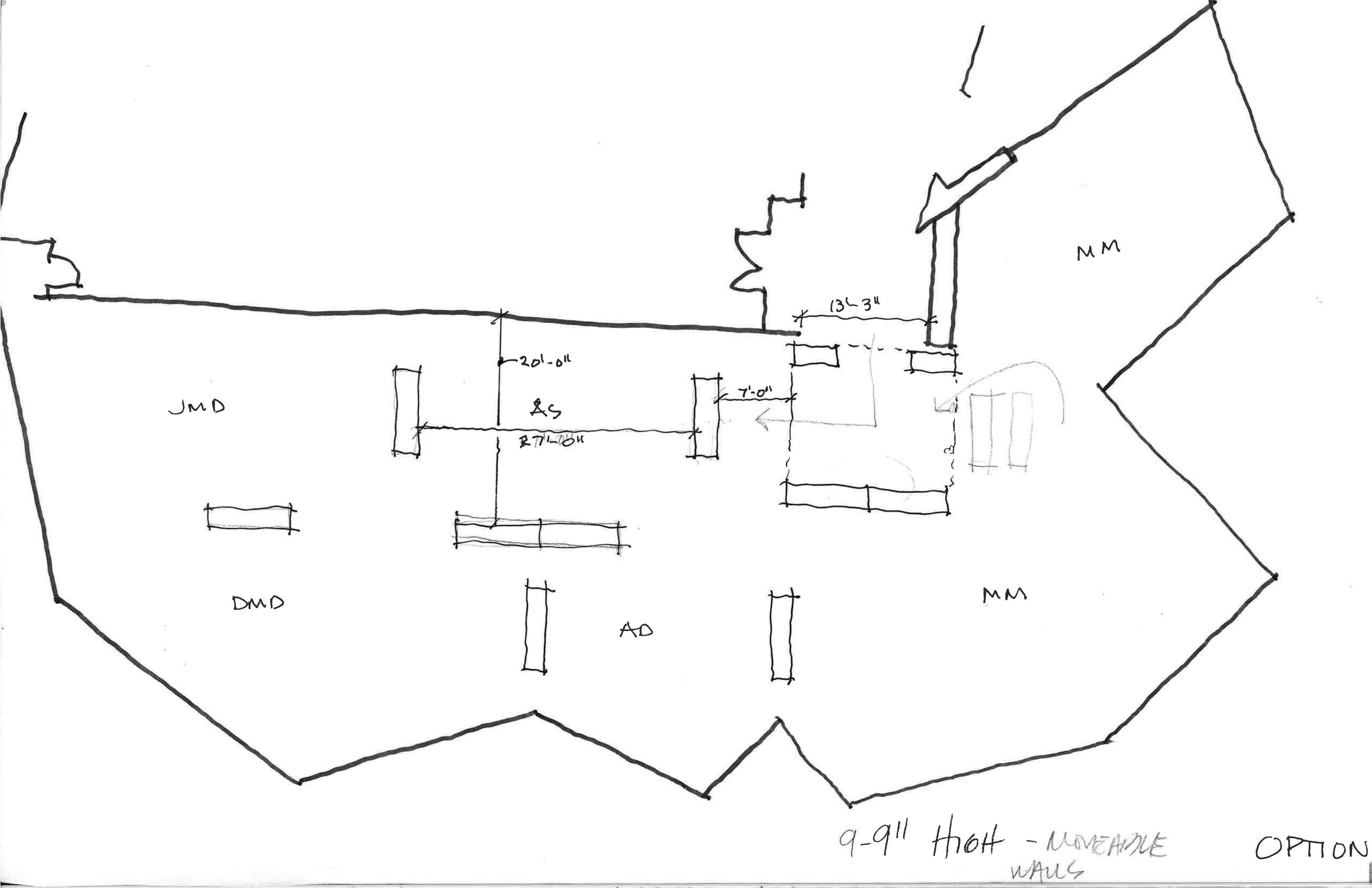
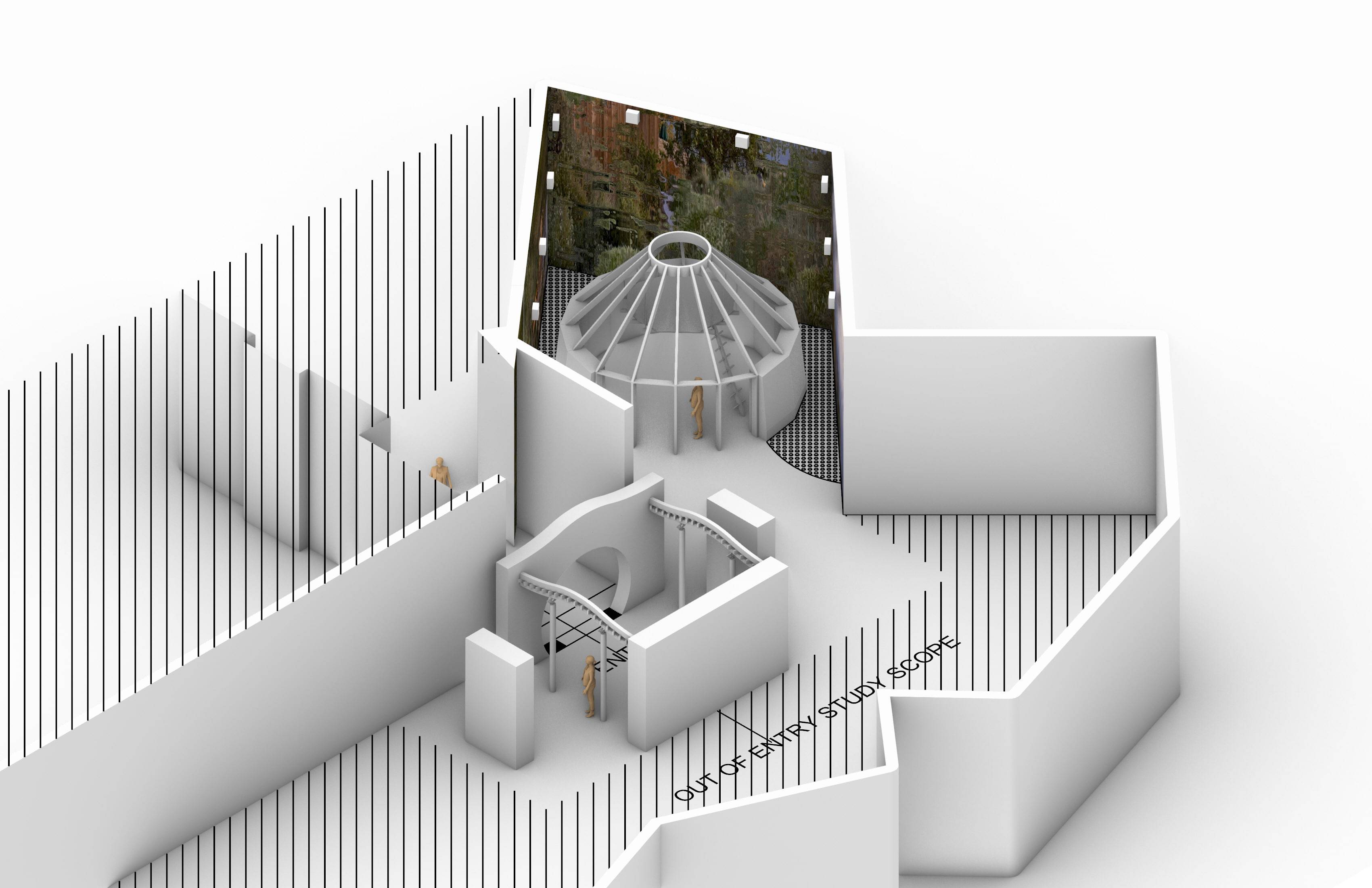
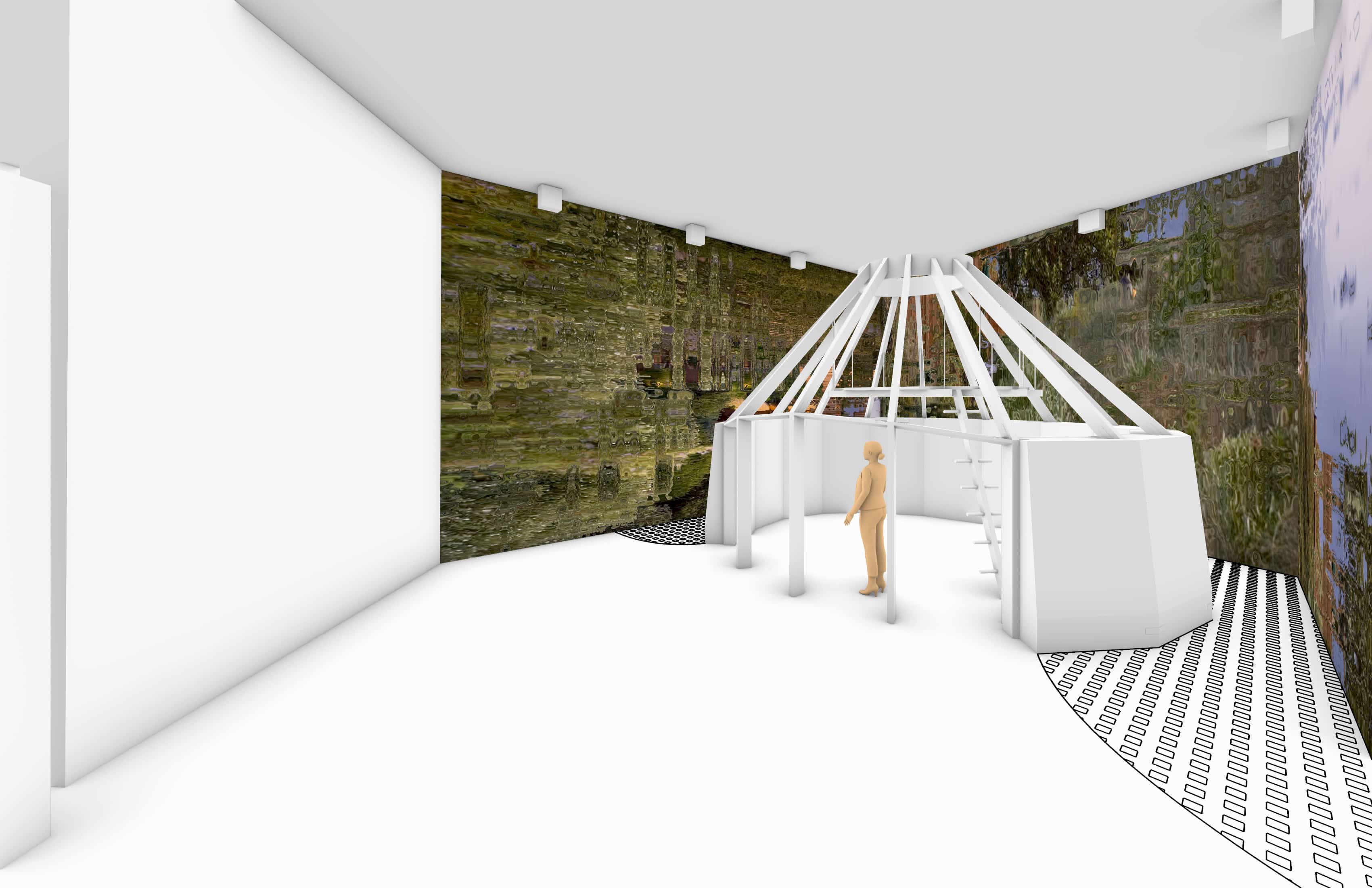
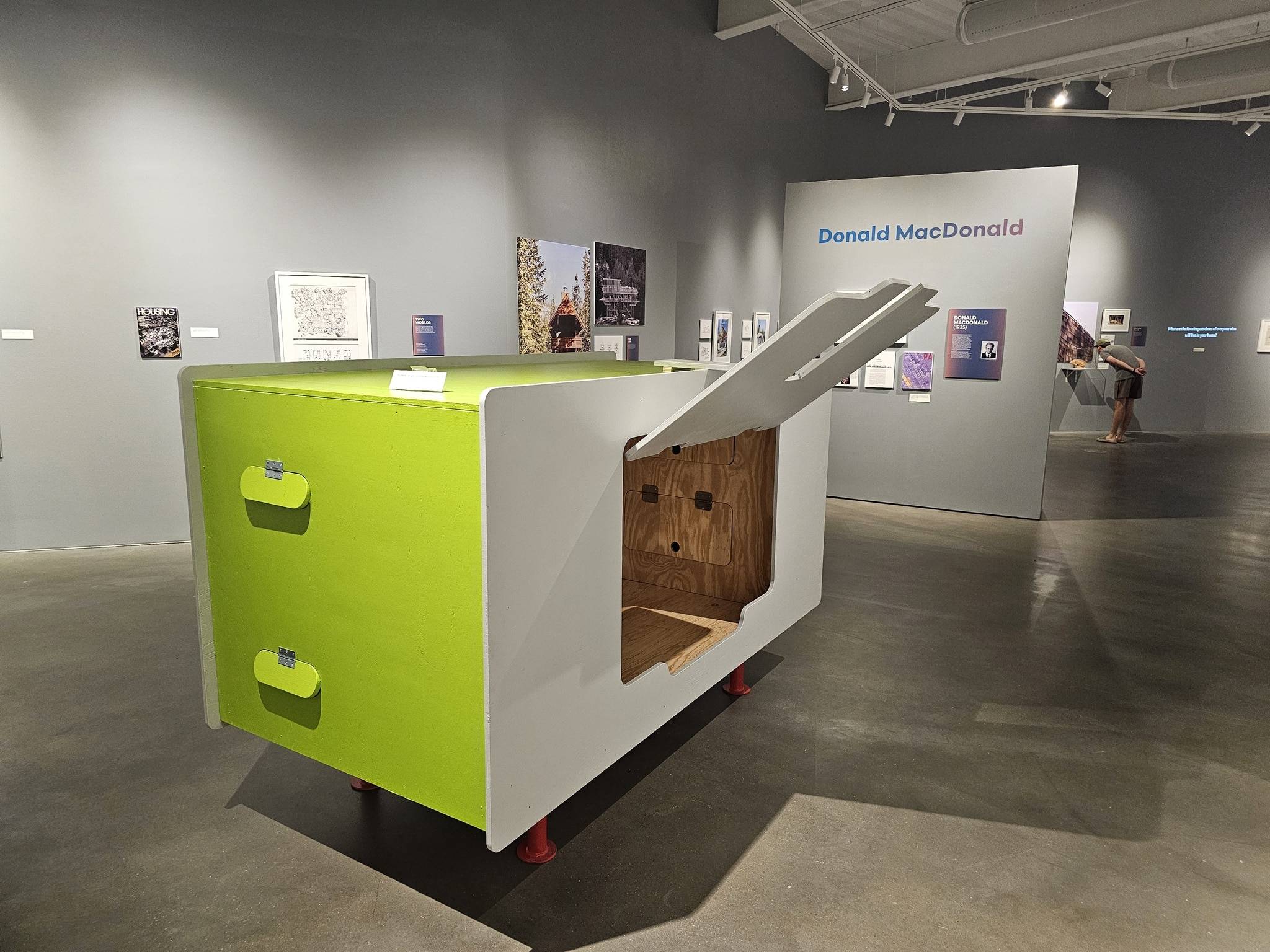
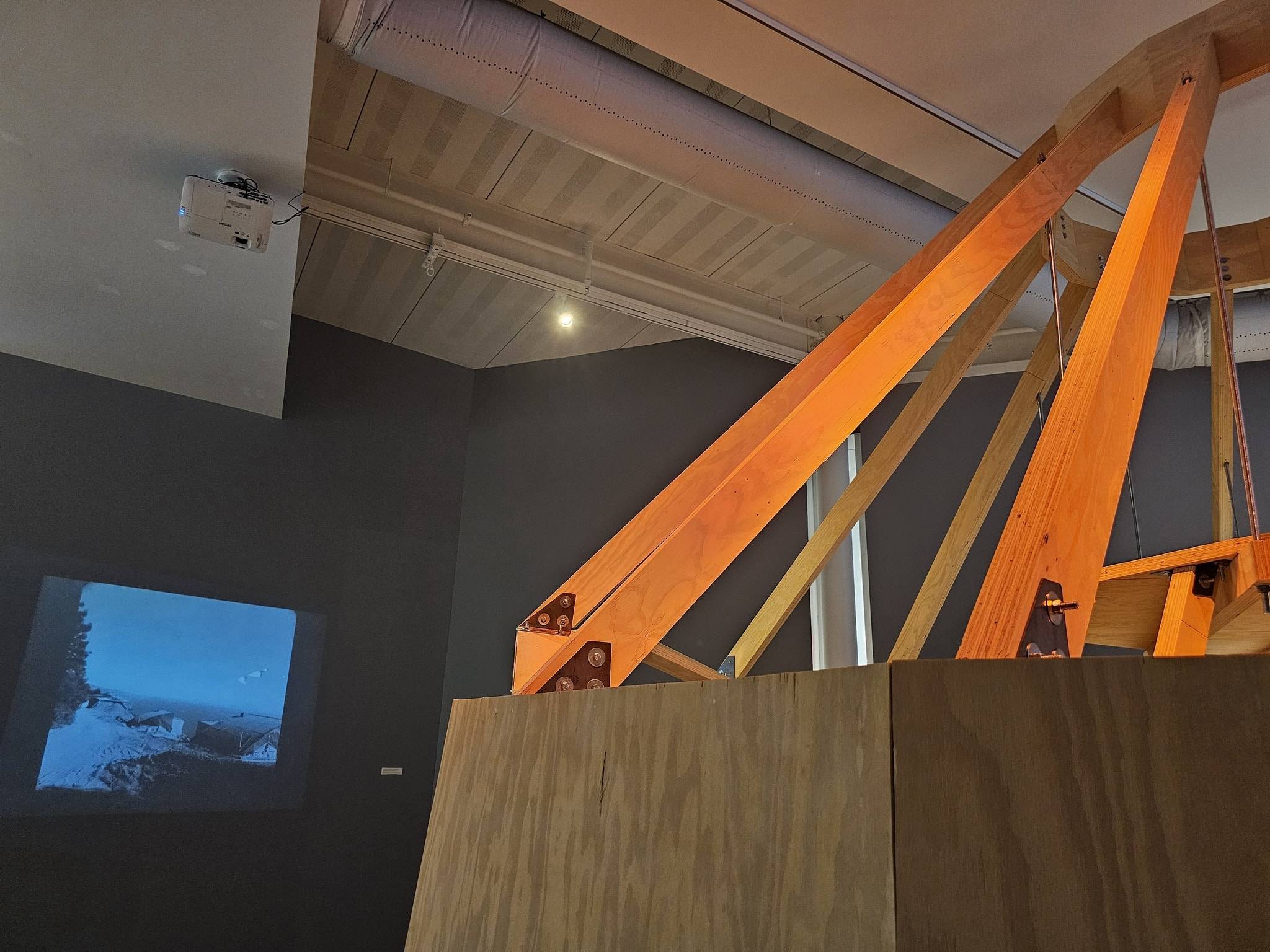
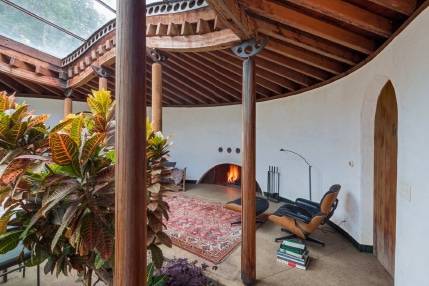
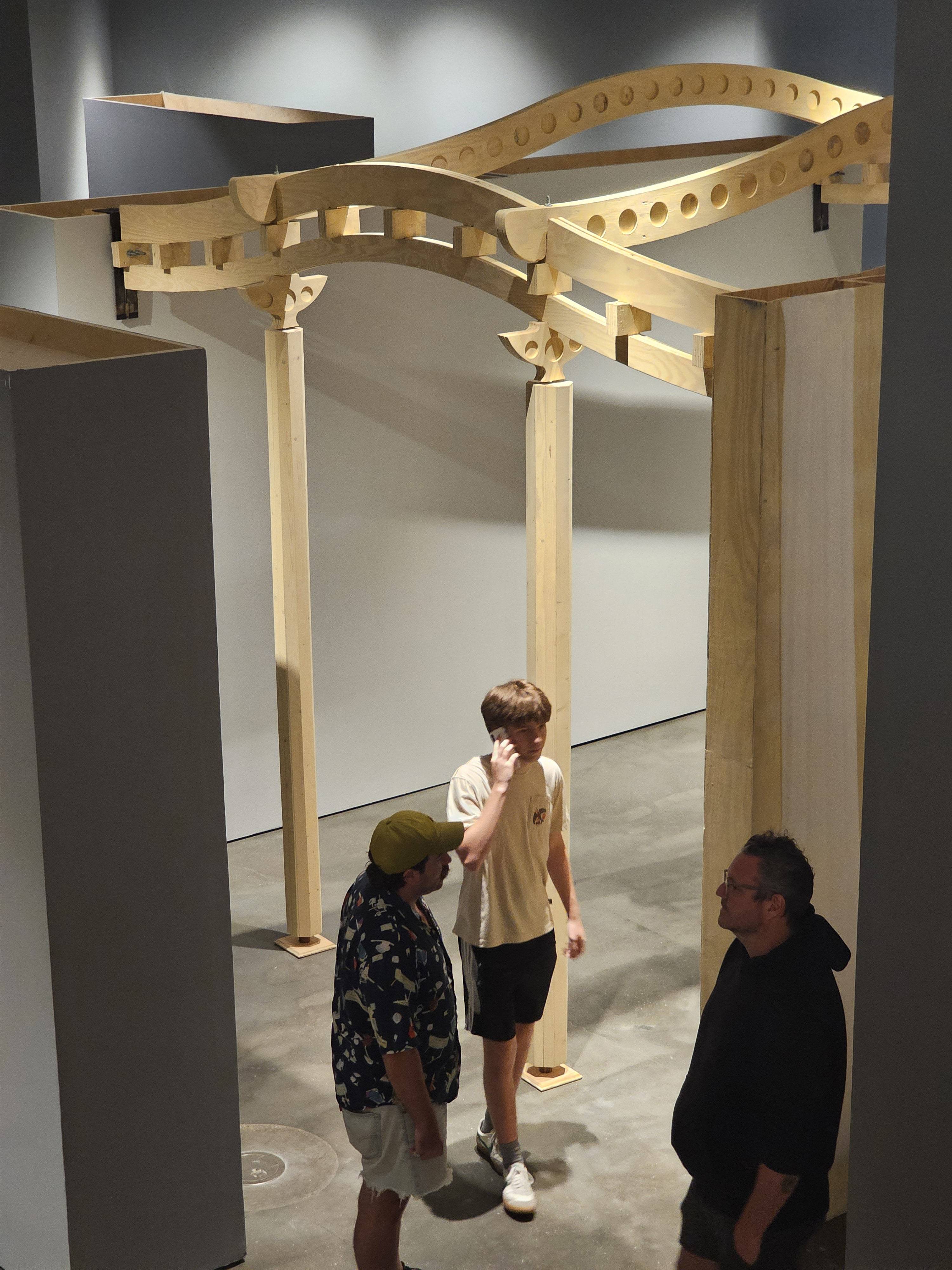
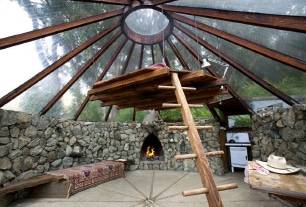
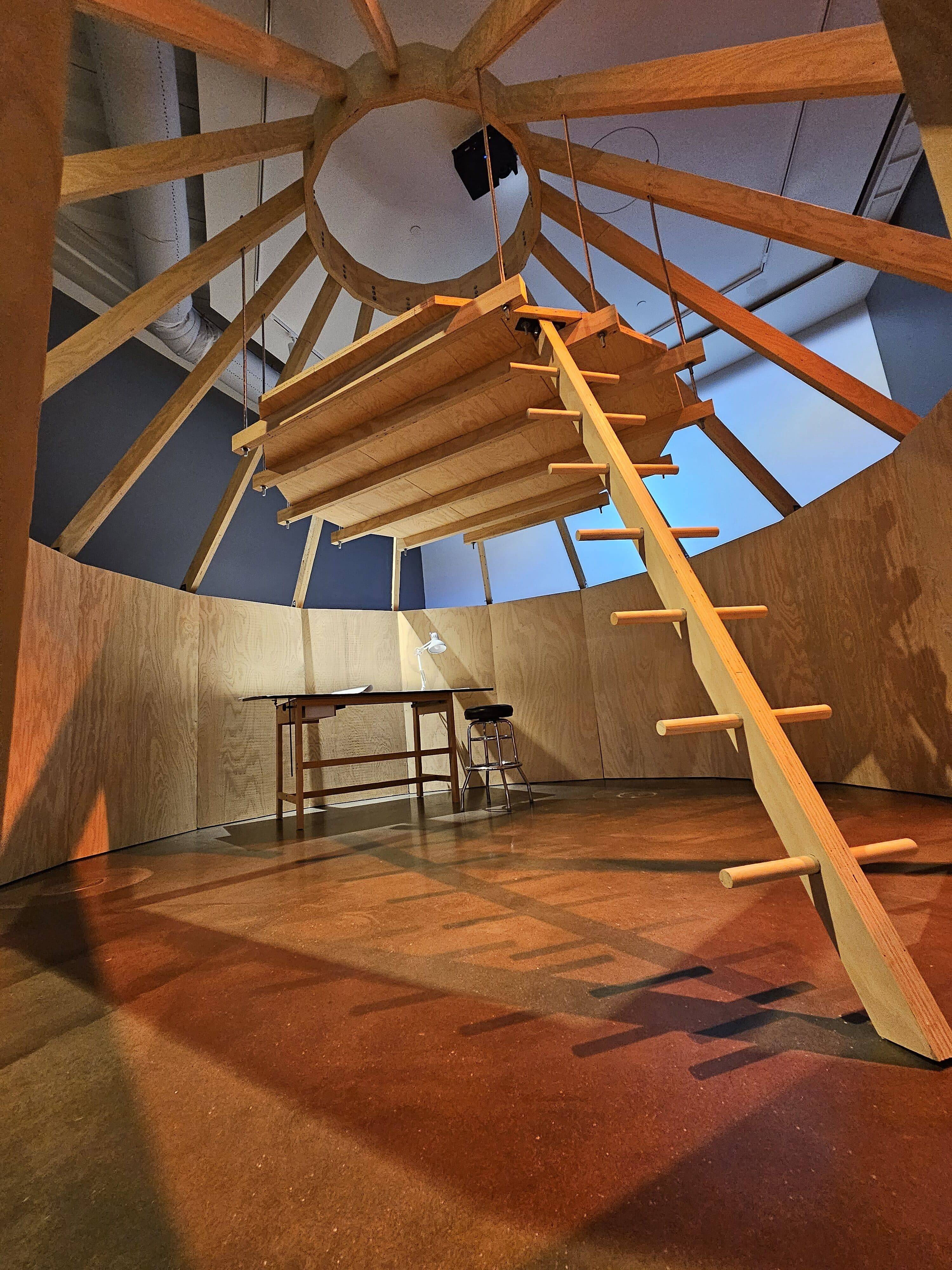
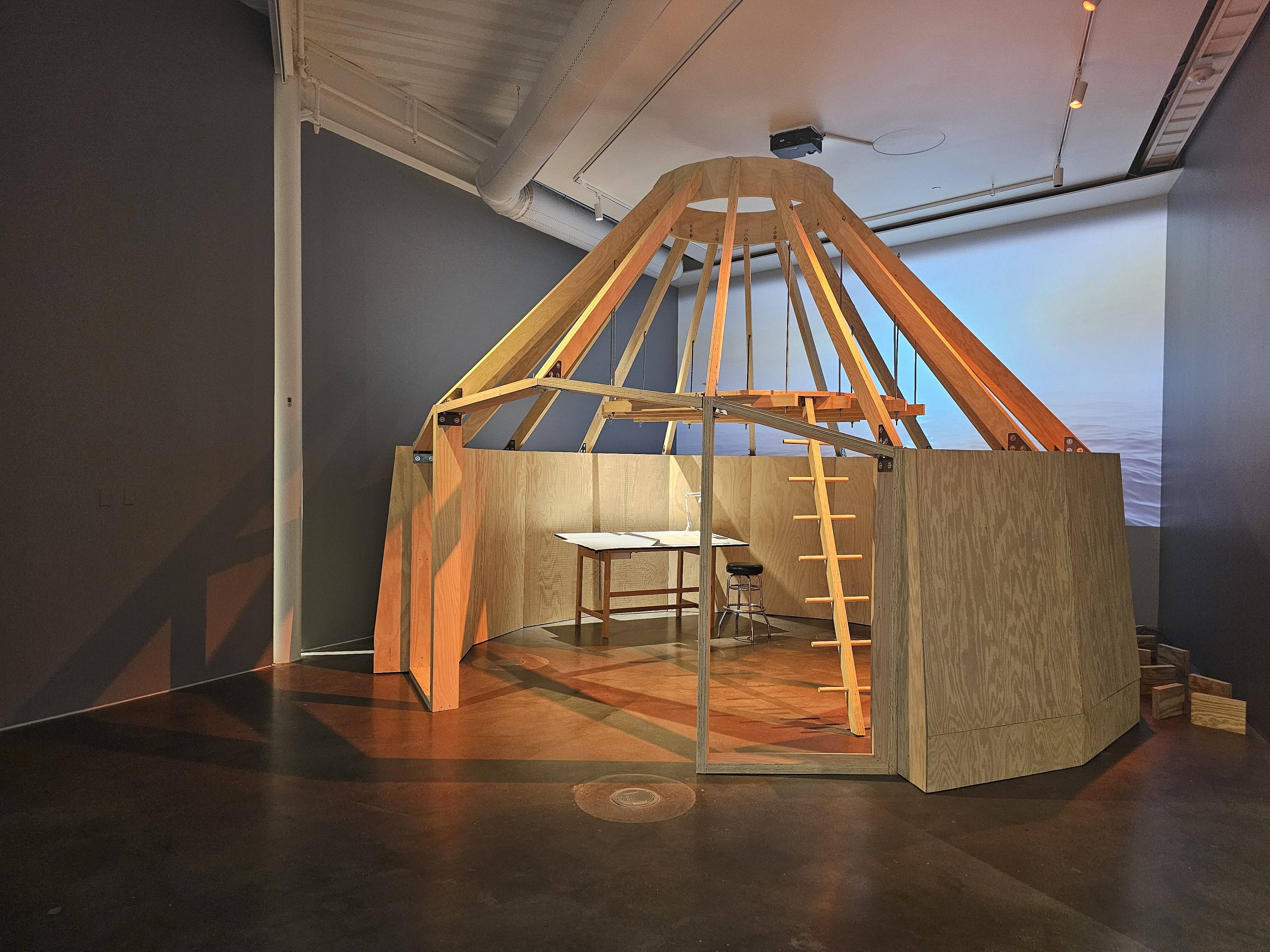
Working from original blueprints of Mickey Muennig and Donald MacDonald, students transformed drawings into contemporary tectonic systems through computational modeling and CNC fabrication. The seminar’s contributions formed a sequence within the exhibition. At the entry, students abstracted Muennig’s house, rationalizing its circular threshold and colonnaded interiors into CNC-milled plywood components that created a portal. At the midpoint, another team reconstructed MacDonald’s City Sleeper, a portable shelter designed for unhoused residents in San Francisco. Reimagined as a flat pack kit-of-parts, the installation preserved its humanitarian intent while testing prefabrication and assembly. The sequence concluded with a reinterpretation of Muennig’s studio, built as an inhabitable pavilion of CNC-milled ribs and lofted forms that immersed visitors in tectonic experimentation.


Outré West

Oklahoma Contemporary Arts, Center, Oklahoma City, OK
Exhibited: Aug 22, 2024 – Jan 27, 2025

Outré West: The American School of Architecture from Oklahoma to California was a curated exhibition that examined the work of architects educated in the Midwest during the 1950s and 1960s who later developed experimental practices on the West Coast. As part of this larger show, a 3-credit undergraduate and graduate research and digital fabrication seminar contributed three full-scale installations that translated archival precedents into inhabitable exhibition experiences.

Working from original blueprints of Mickey Muennig and Donald MacDonald, students transformed drawings into contemporary tectonic systems through computational modeling and CNC fabrication. The seminar’s contributions formed a sequence within the exhibition. At the entry, students abstracted Muennig’s house, rationalizing its circular threshold and colonnaded interiors into CNC-milled plywood components that created a portal. At the midpoint, another team reconstructed MacDonald’s City Sleeper, a portable shelter designed for unhoused residents in San Francisco. Reimagined as a flat pack kit-of-parts, the installation preserved its humanitarian intent while testing prefabrication and assembly. The sequence concluded with a reinterpretation of Muennig’s studio, built as an inhabitable pavilion of CNC-milled ribs and lofted forms that immersed visitors in tectonic experimentation.

The seminar framed exhibition making as both pedagogy and public contribution. By rationalizing curves into flat stock, designing joinery for repeatable assembly, and treating archival drawings as living design material, students confronted material limits, structural realities, and visitor safety. They left with technical fluency in digital fabrication, a resilient approach to iteration, and the collaborative habits required to deliver work that could stand alongside professional and academic contributions in a cultural setting.

Pedagogical Highlights

  • Invited contribution to a larger curated academic exhibition.
  • Worked directly from original historic blueprints of Muennig and MacDonald.
  • Contributed three full-scale installations as inhabitable experiences within the exhibition.
  • Balanced archival research, computational modeling, fabrication, and public engagement.

Project Data

Project Title: Outré West
Location: Oklahoma City, Oklahoma
Semester/Year: Fall 2023 – Spring 2024
Completion Date: August 2024
Exhibition Dates: August 22, 2024 – January 27, 2025

Collaborators & Funding

Primary sponsor: $12,000. Faculty and administrators supported curricular alignment, project consultation, and exhibition curation; community partners advised on accessibility and program needs.

Student Participation

11 undergraduate and graduate students in a 3-credit research and digital fabrication seminar, plus 5 independent studies. All students received academic credit; no unpaid labor.

Project Type: Full-scale exhibition installation, research and digital fabrication pedagogy, CNC-milled plywood assemblies

Duration: Two semesters, including archival research, parametric modeling, prototyping, fabrication, and on-site installation under institutional deadlines.

Learning Outcomes

The seminar established clear objectives centered on technical fluency, conceptual depth, and public engagement through research and digital fabrication:

  • Translate archival precedents into contemporary prototypes by working directly from the original blueprints of Mickey Muennig and Donald MacDonald.
  • Develop computational literacy through parametric modeling, unfolding complex geometries, and sequencing assemblies for CNC milling.
  • Advance material intelligence by investigating plywood’s renewable and expressive potential through joinery, efficiency, and tolerance testing.
  • Engage exhibition-making as pedagogy, designing for public audiences while meeting professional institutional standards.
  • Foster collaboration across academic levels, integrating digital research, material experimentation, and fabrication into cohesive, full-scale installations.
  • Explore equity and humanitarian design, using Donald MacDonald’s City Sleeper as a platform to connect digital fabrication to social and cultural responsibility.
Precision and Fit
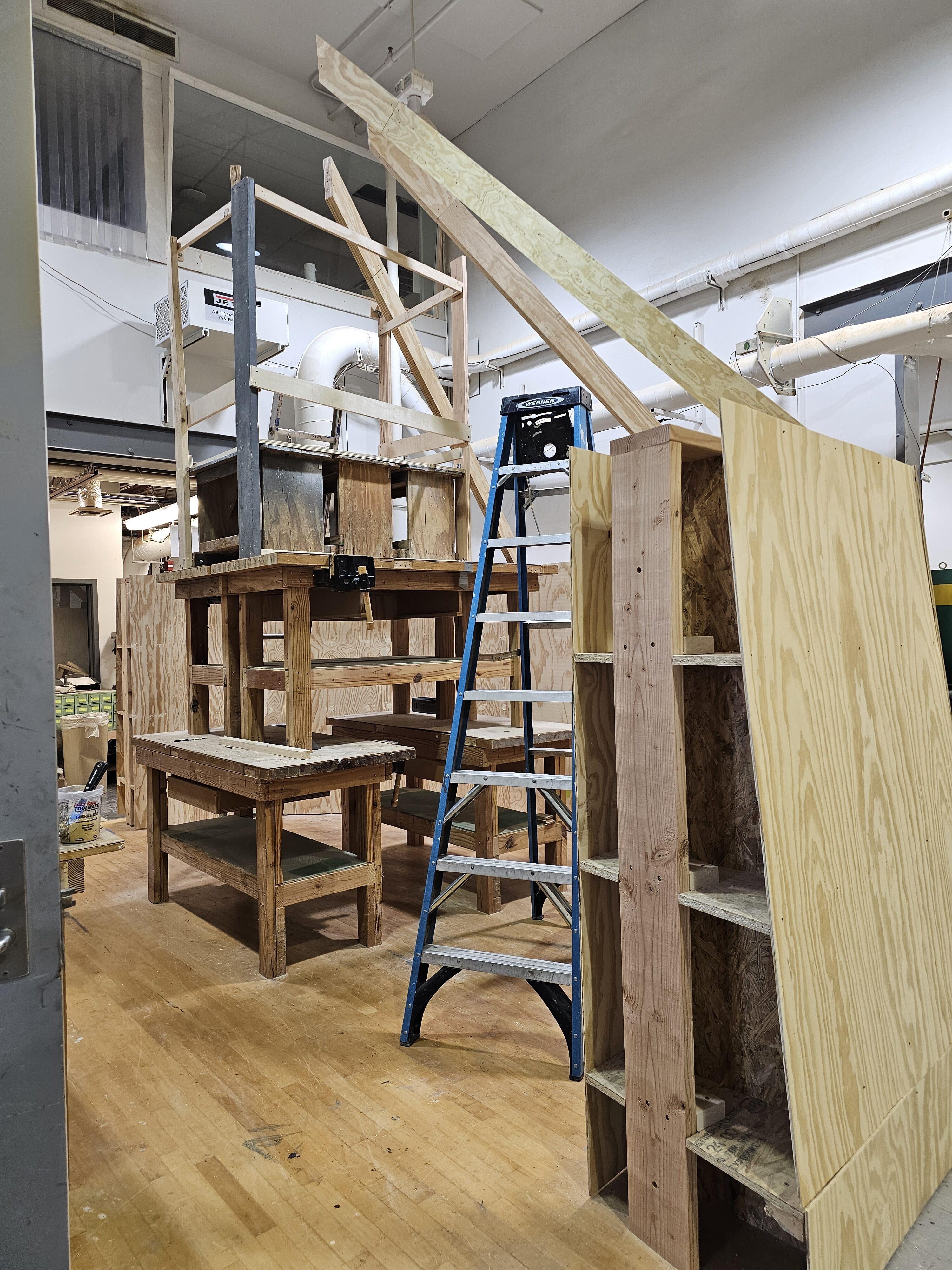
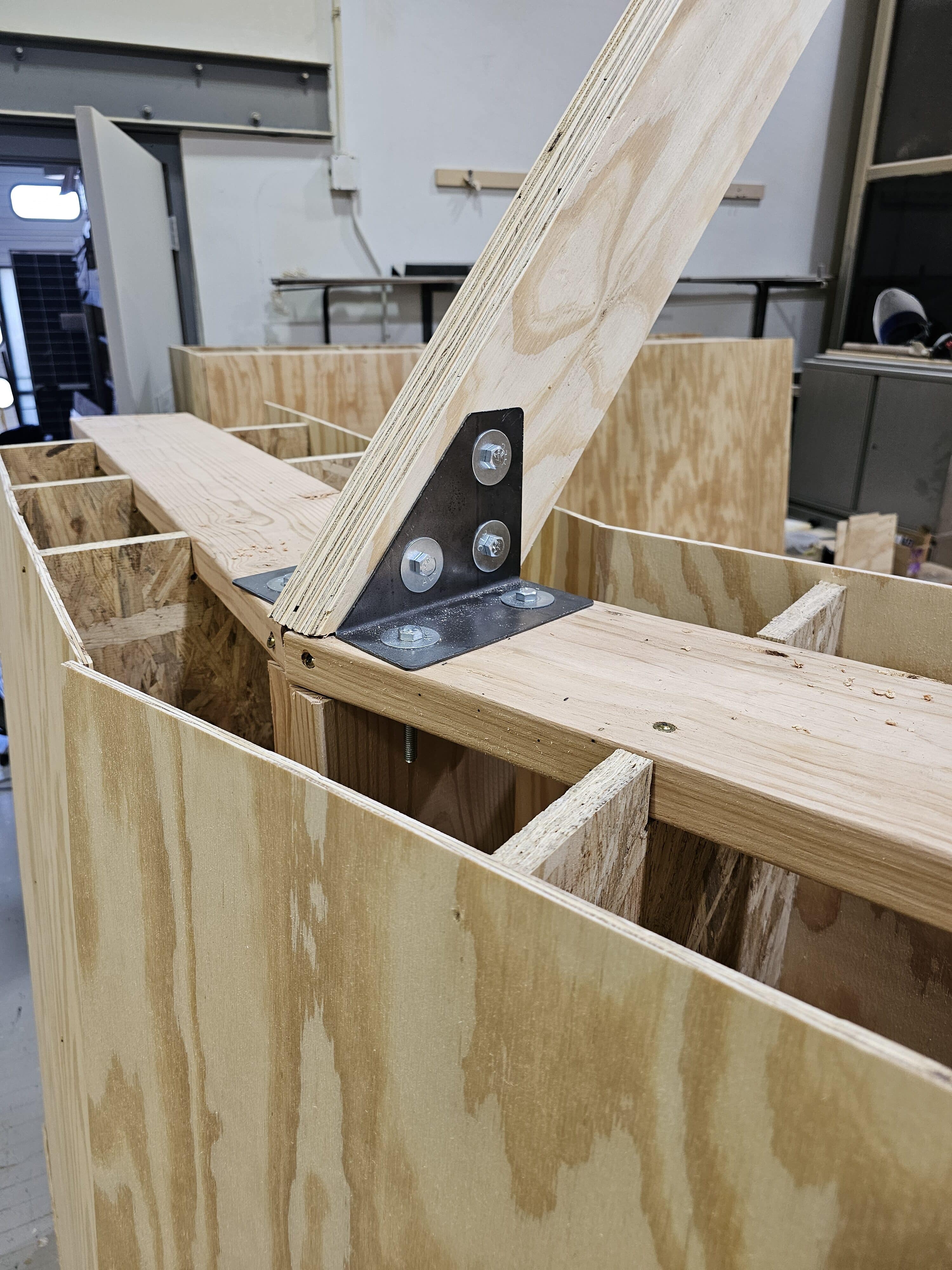
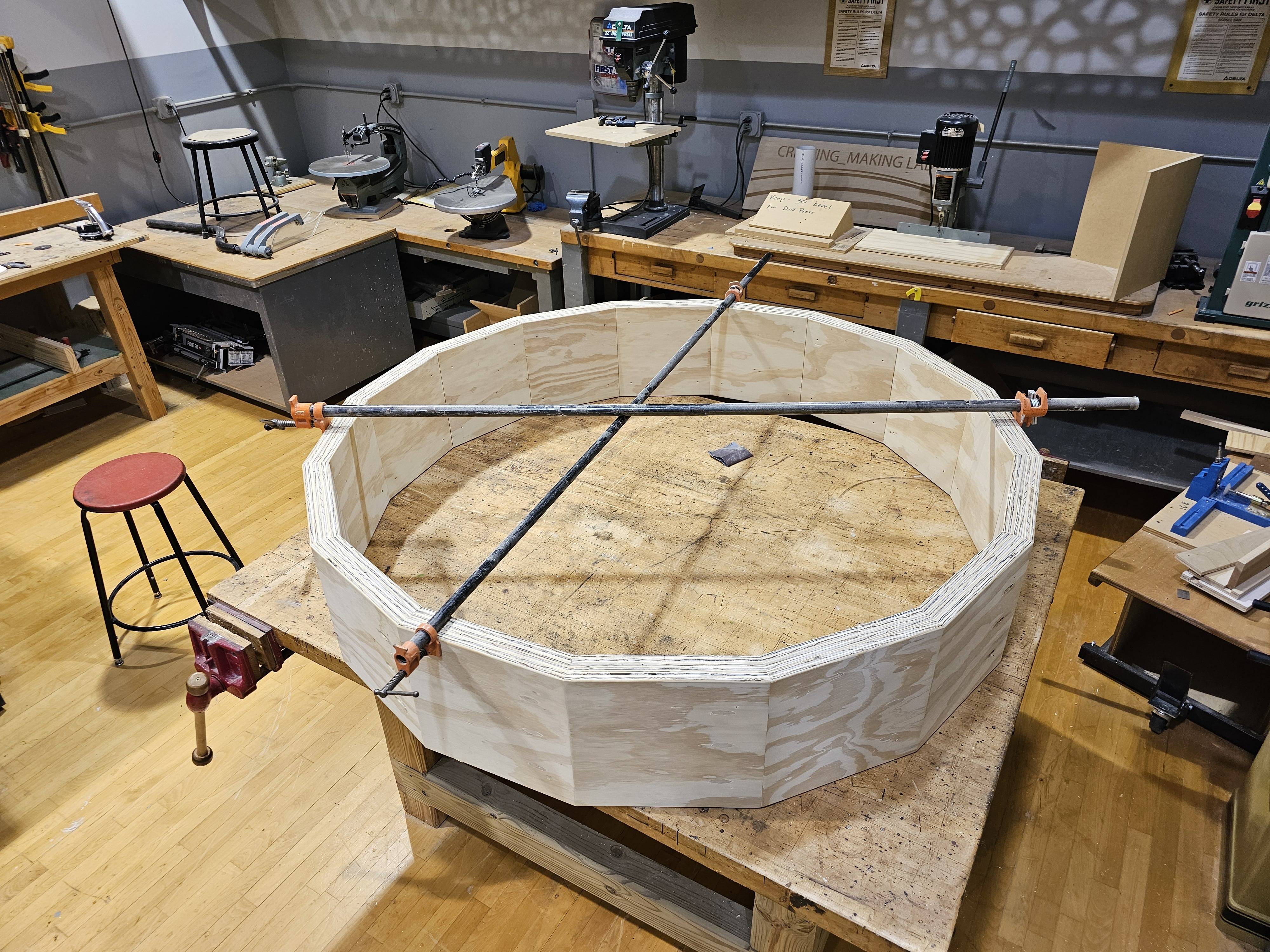
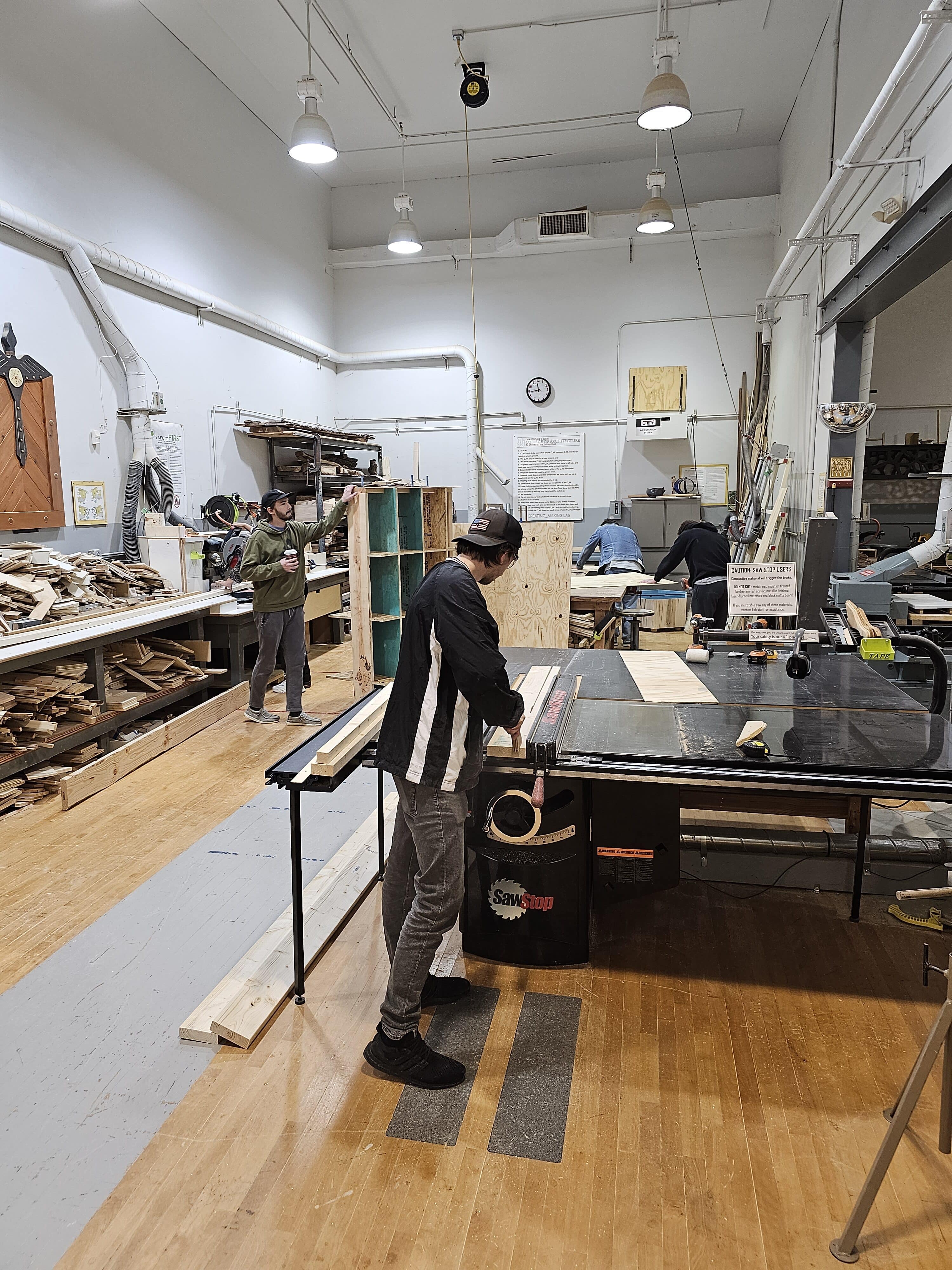
Workshop images document joinery refinement and assembly sequencing. Assembly simulation and prototypes enabled students to evaluate fabrication tolerances and test construction outcomes before museum installation.

Exhibition as Pedagogy

The design-build and digital fabrication seminar’s participation in Outré West demonstrated how academic work can operate simultaneously as precedent study, material research, and public scholarship. Unlike site-based projects, this effort required students to situate their work within a curated exhibition, meeting expectations of durability, clarity, and interpretive strength. Inclusion in a professional museum context extended the reach of academic making, positioning design-build pedagogy as research through making—a framework where design inquiry, construction, and cultural engagement intersected through integration of design and construction.

Making as Inquiry
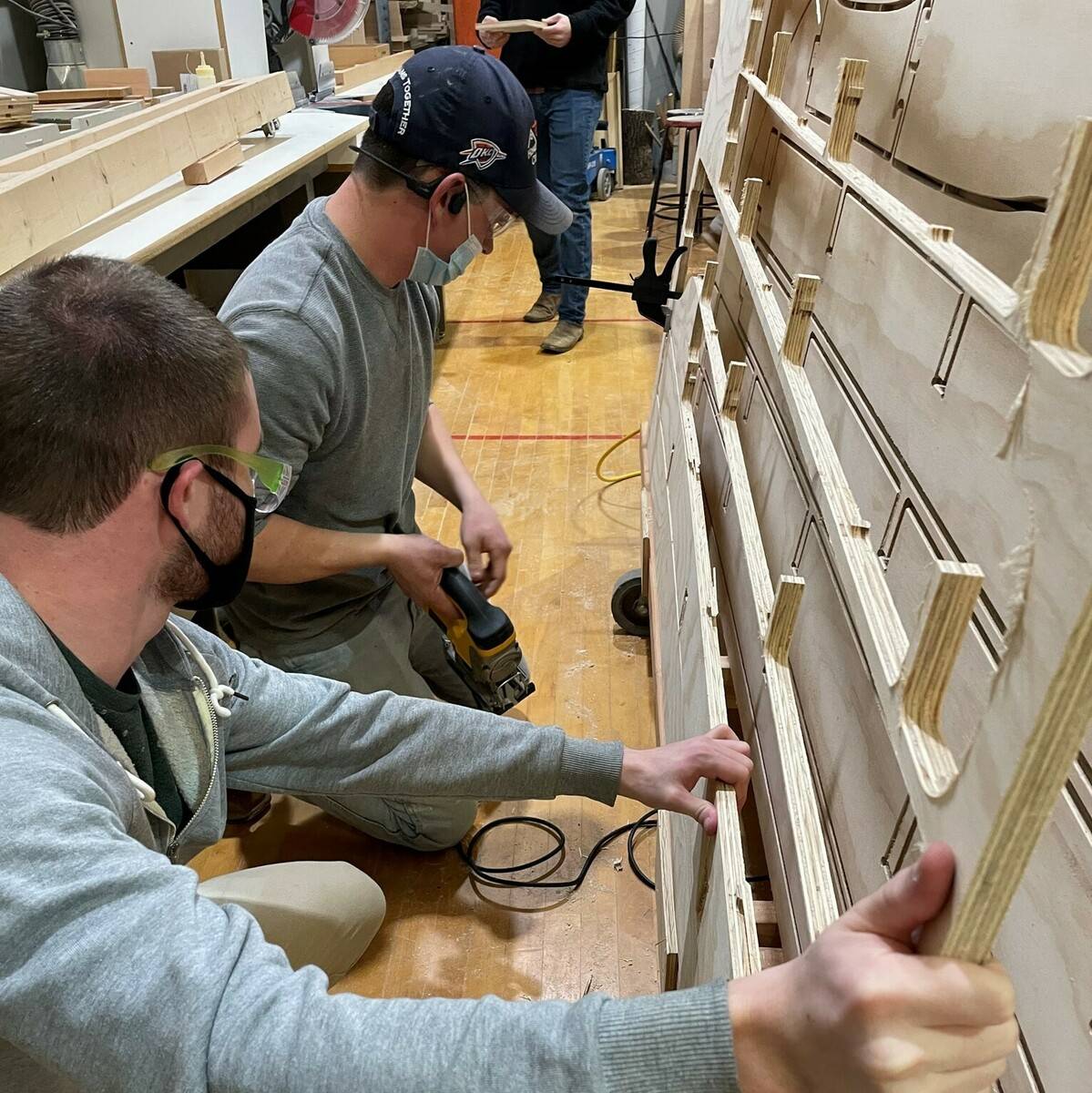
Students fabricate wall modules in the workshop, transforming research into material experimentation. The process framed making as a form of inquiry, testing how design-build pedagogy operates within exhibition contexts.
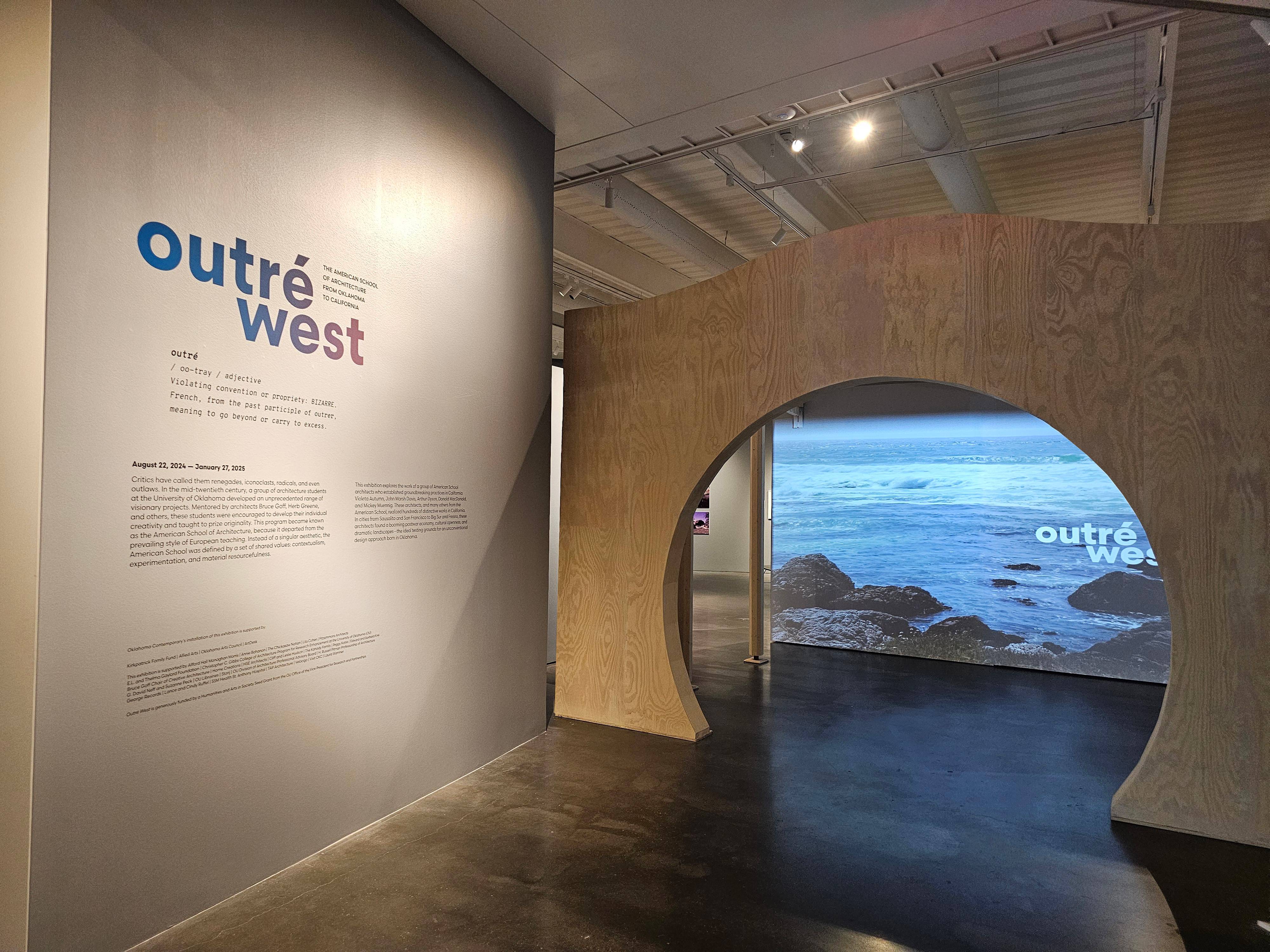
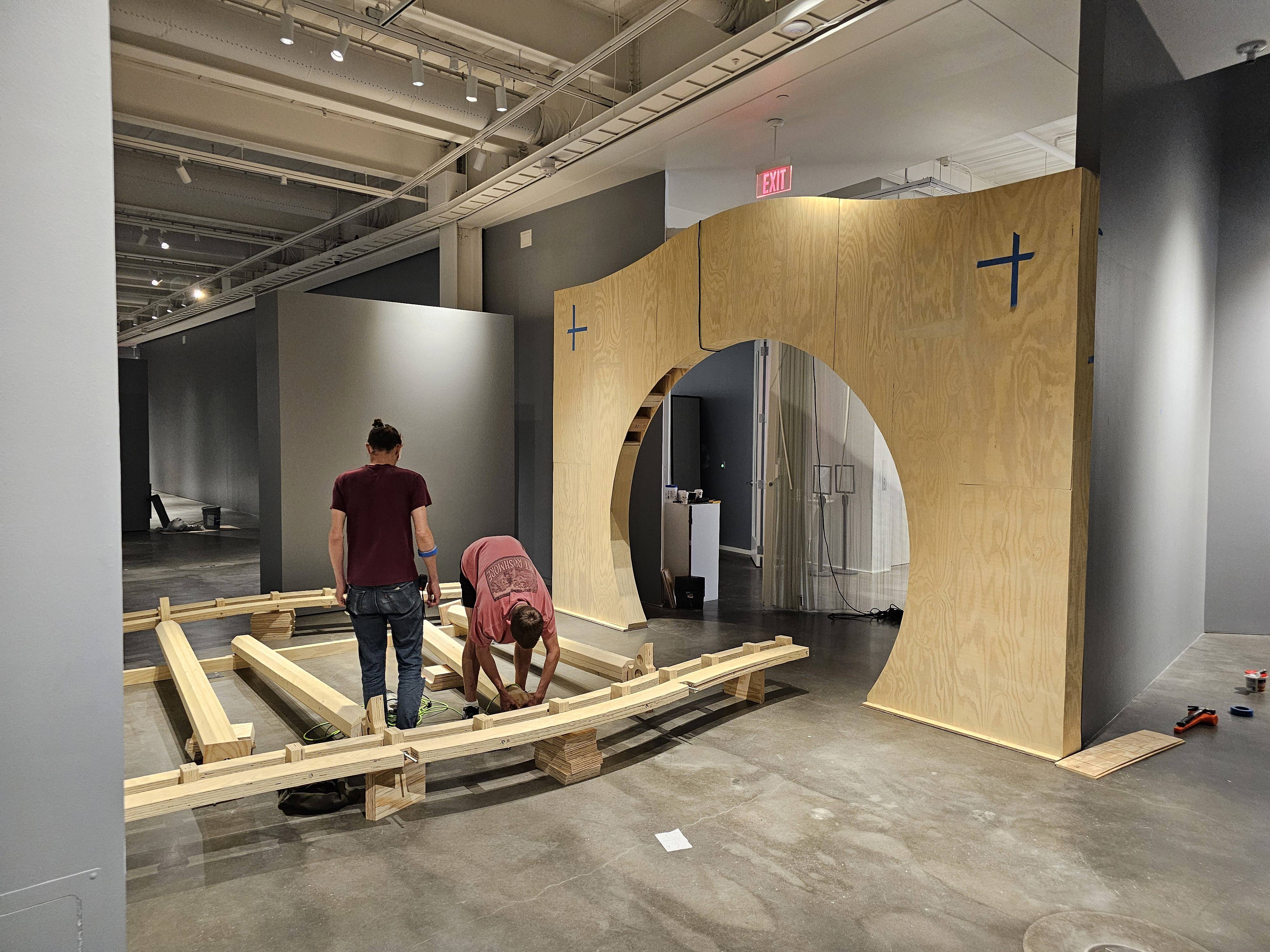
Design-Build Threshold
The CNC-milled portal inspired by Muennig’s house introduces the exhibition. Its circular geometry and vertical rhythm reinterpret historic precedent as contemporary craft and computational precision.


Full-Scale Design-Build Installations: From Archive to Experience

The seminar’s contributions unfolded as a spatial sequence within the exhibition. At the entry, students reinterpreted Muennig’s house, condensing its circular threshold and colonnaded spaces into CNC-milled plywood components that formed a welcoming portal. At the midpoint, another team reconstructed MacDonald’s City Sleeper, originally designed as a portable plywood shelter for the unhoused. Reimagined as a flat-pack kit-of-parts, the installation retained its humanitarian intent while testing prefabrication, rapid assembly, and construction precision. The sequence culminated in a reinterpretation of Muennig’s studio, fabricated as an inhabitable pavilion of lofted ribs and interlocking joints. This immersive space provided the exhibition’s finale, enveloping visitors in a demonstration of digital fabrication, material experimentation, and full-scale realization.

Each installation translated archival research into tactile experience, forming a continuum of investigation—archival data modeled computationally, tested through iterative prototyping, and realized through design-build workflows.
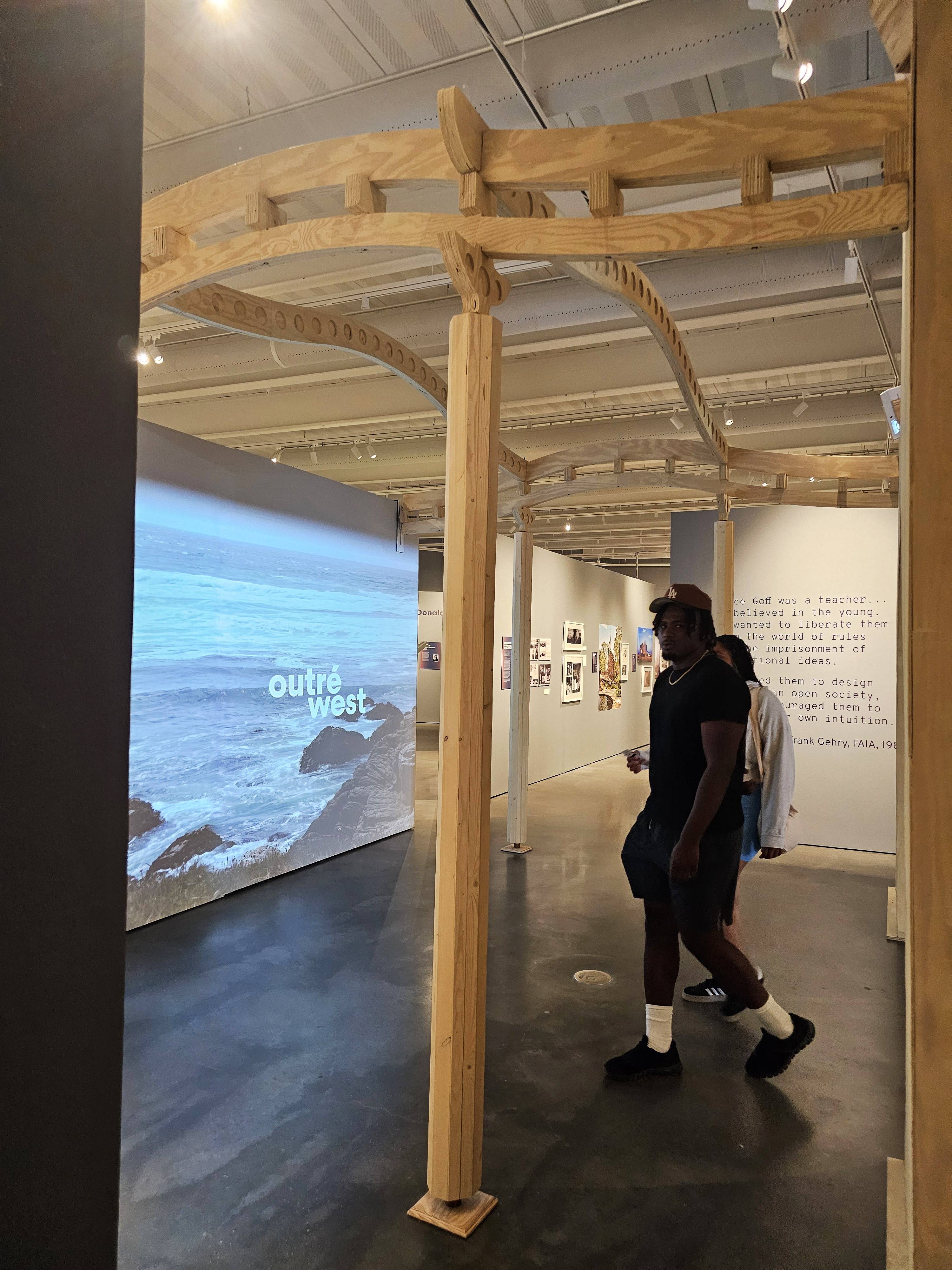
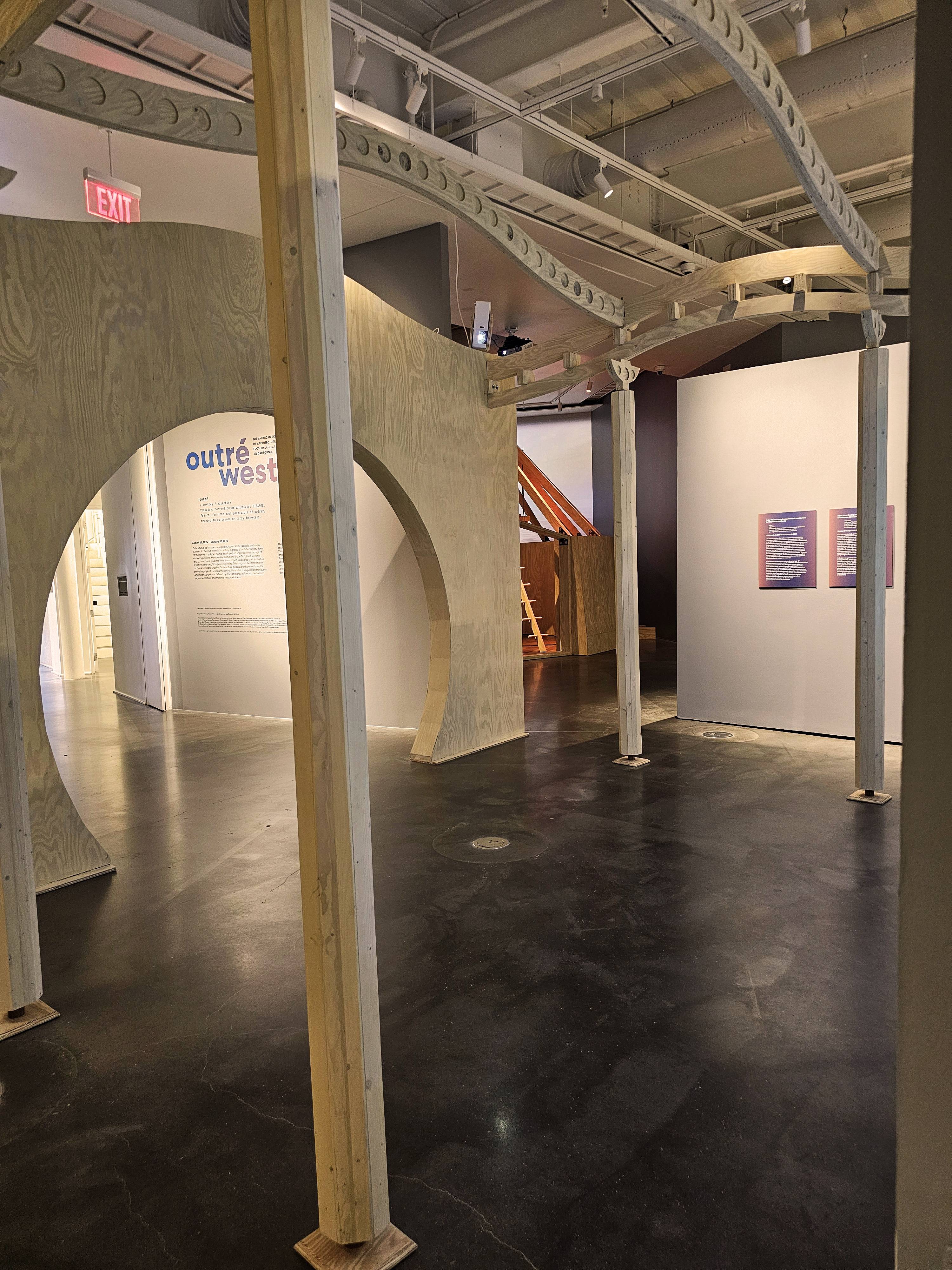
Threshold to Colonnade
After passing through the circular entry, visitors enter a field of CNC-milled columns. The installation transforms compression into openness, echoing Muennig’s spatial language through rhythm and light.
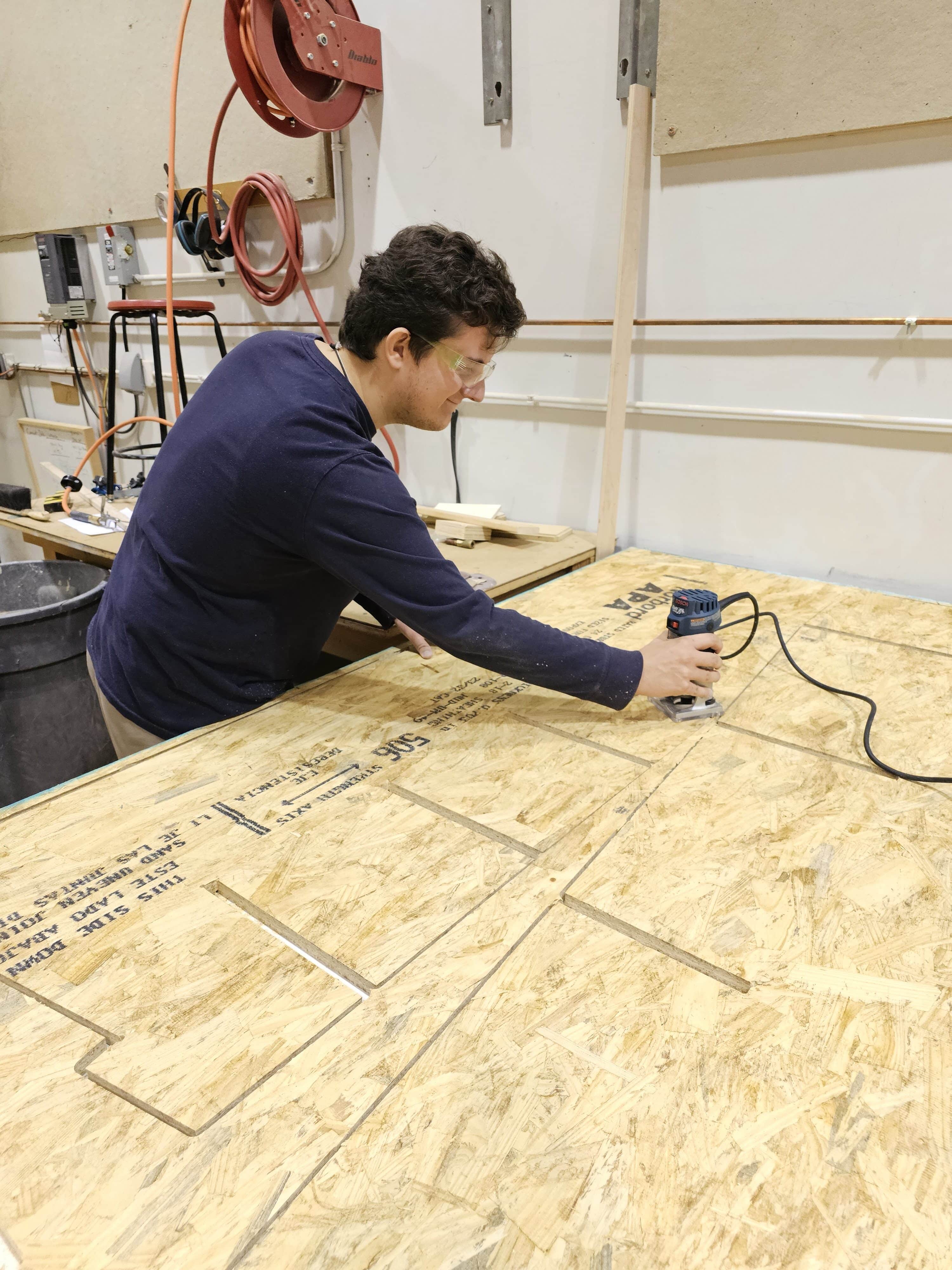
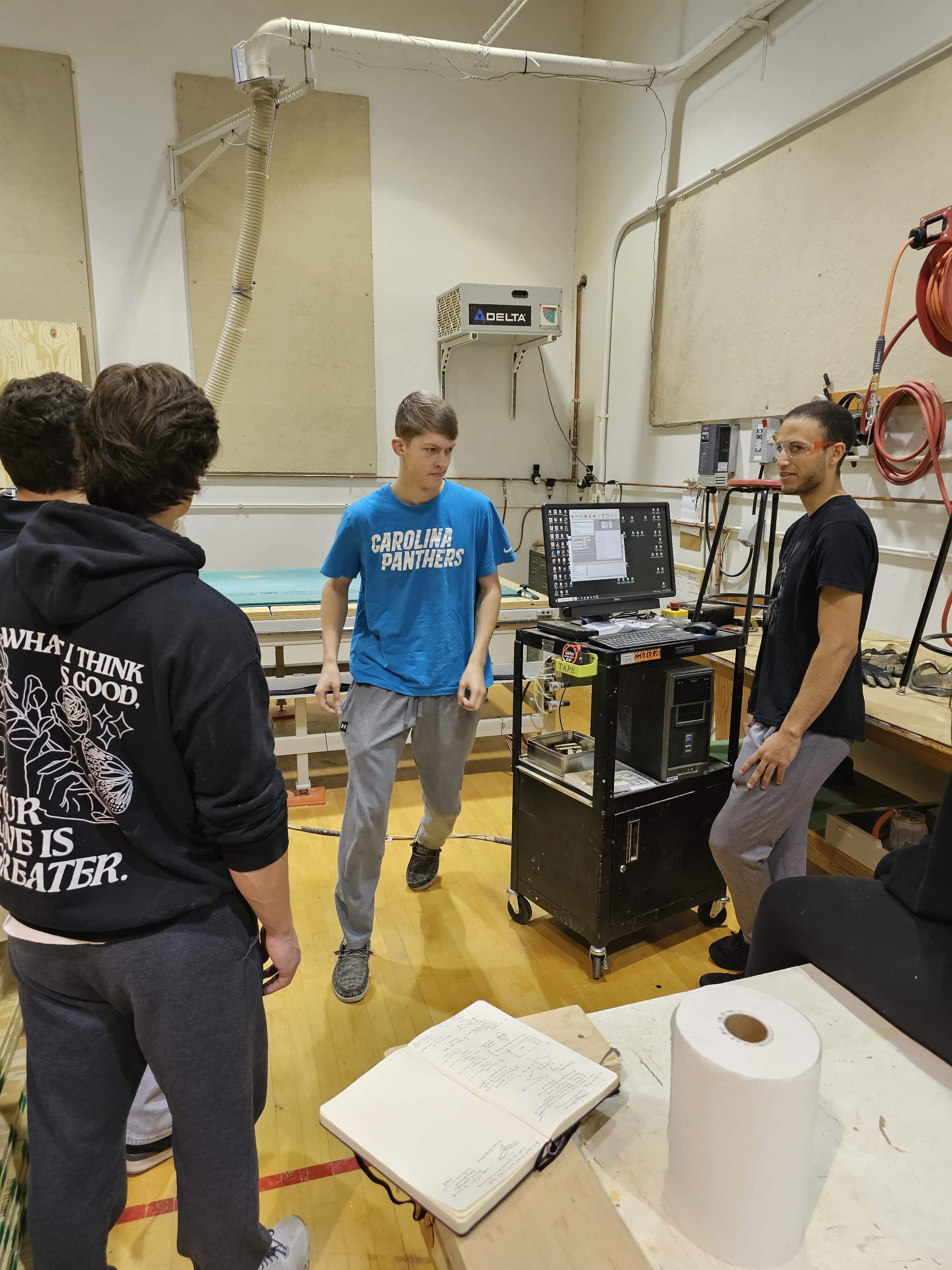
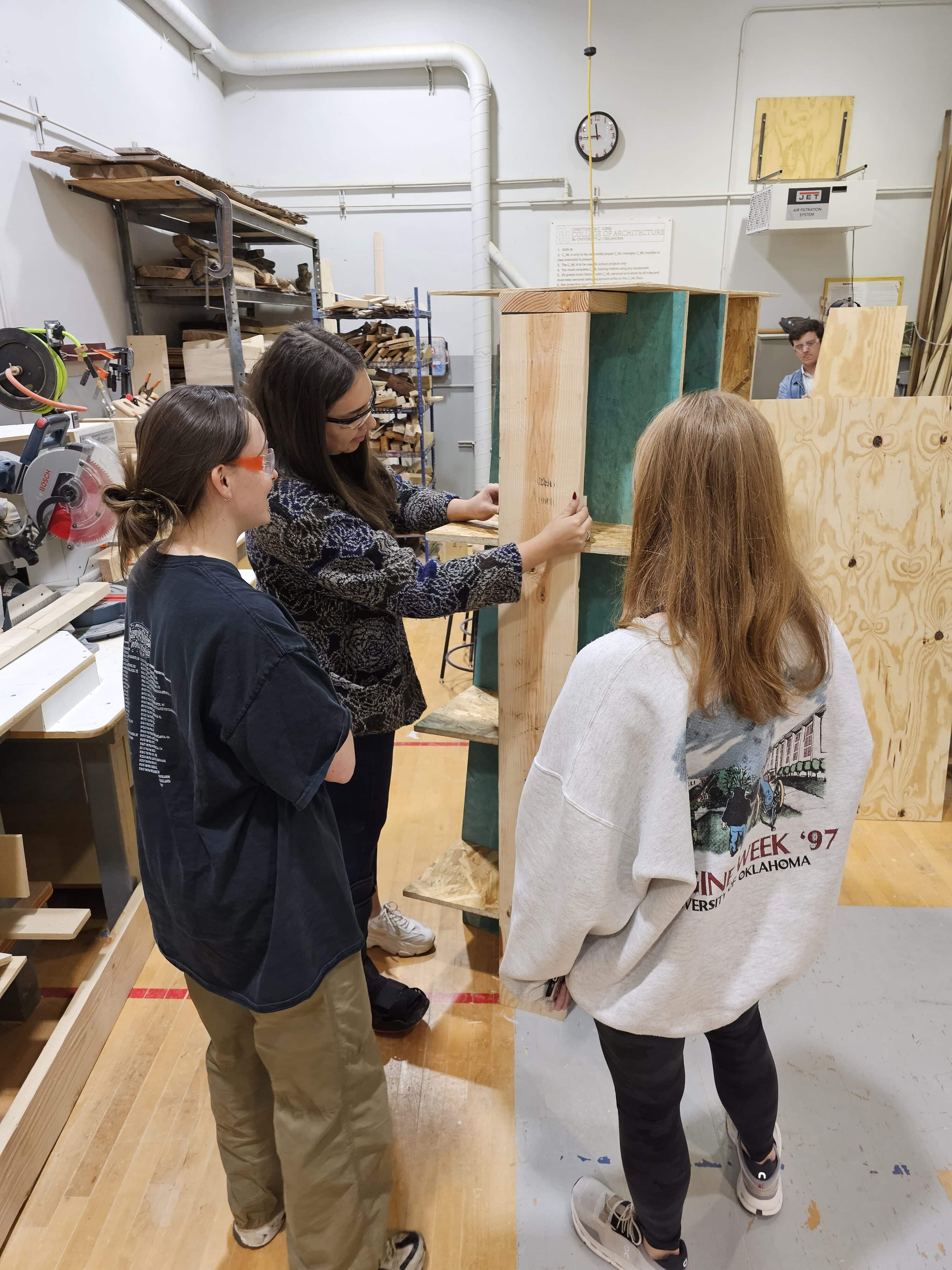
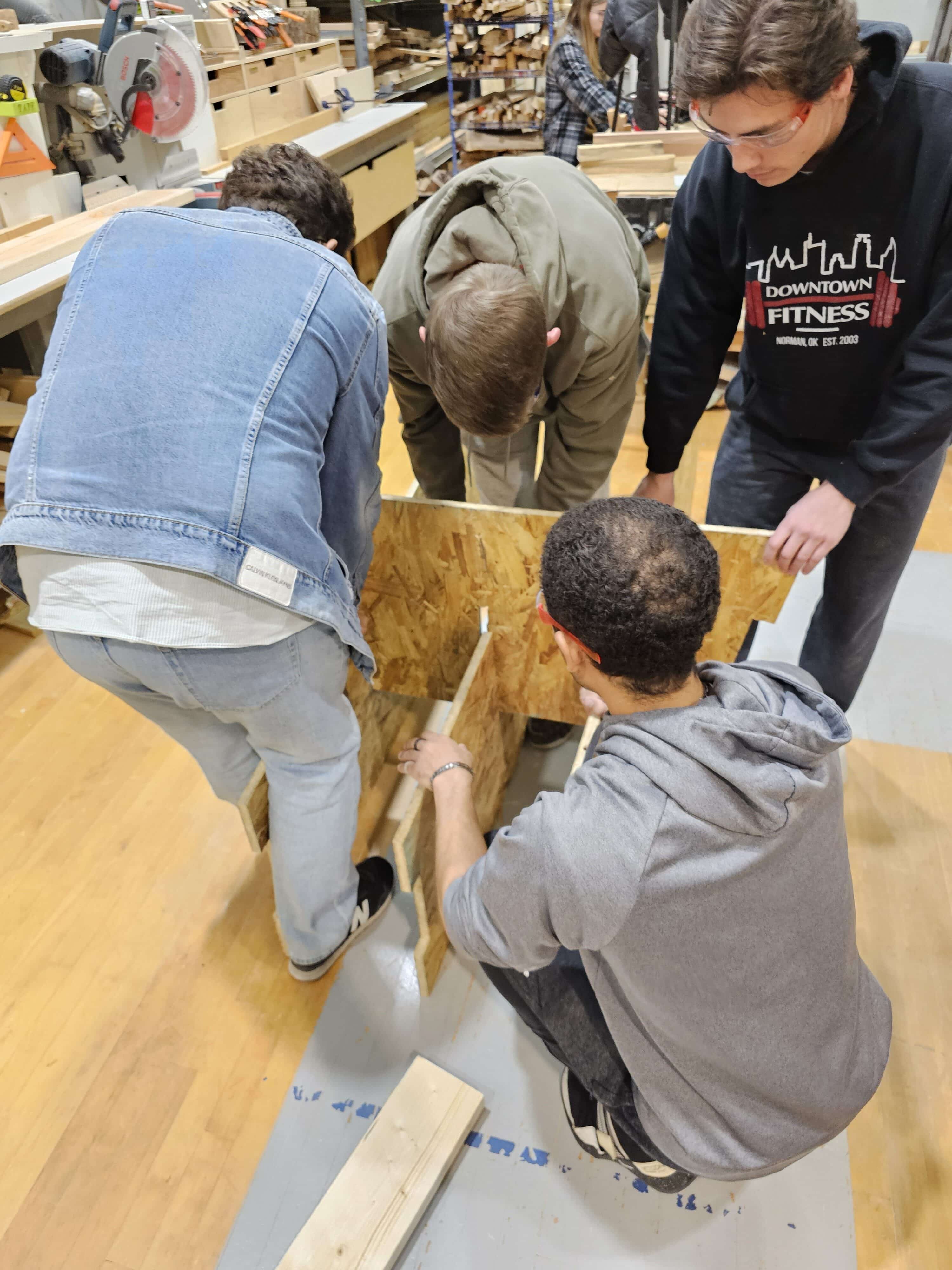
Collective Construction
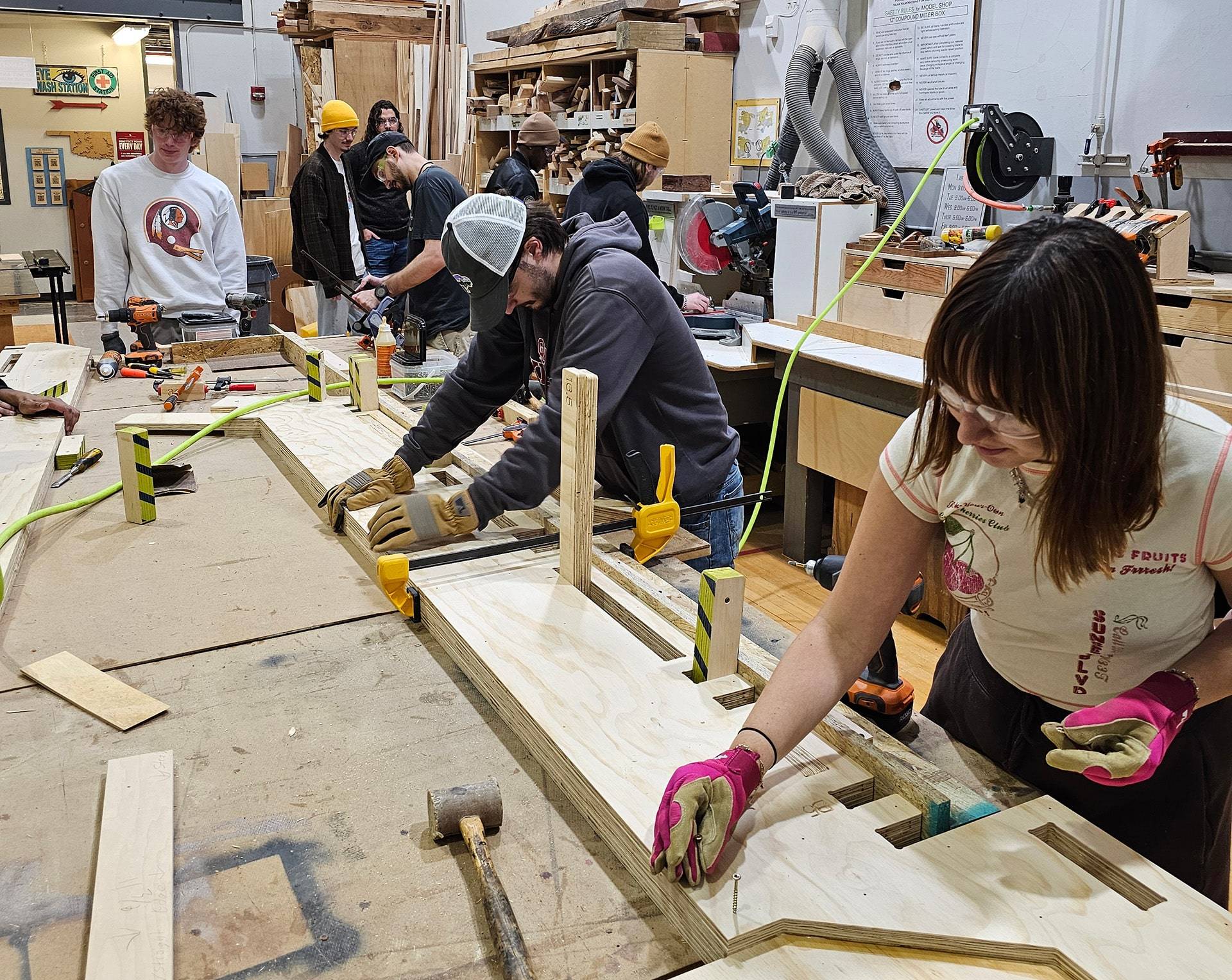
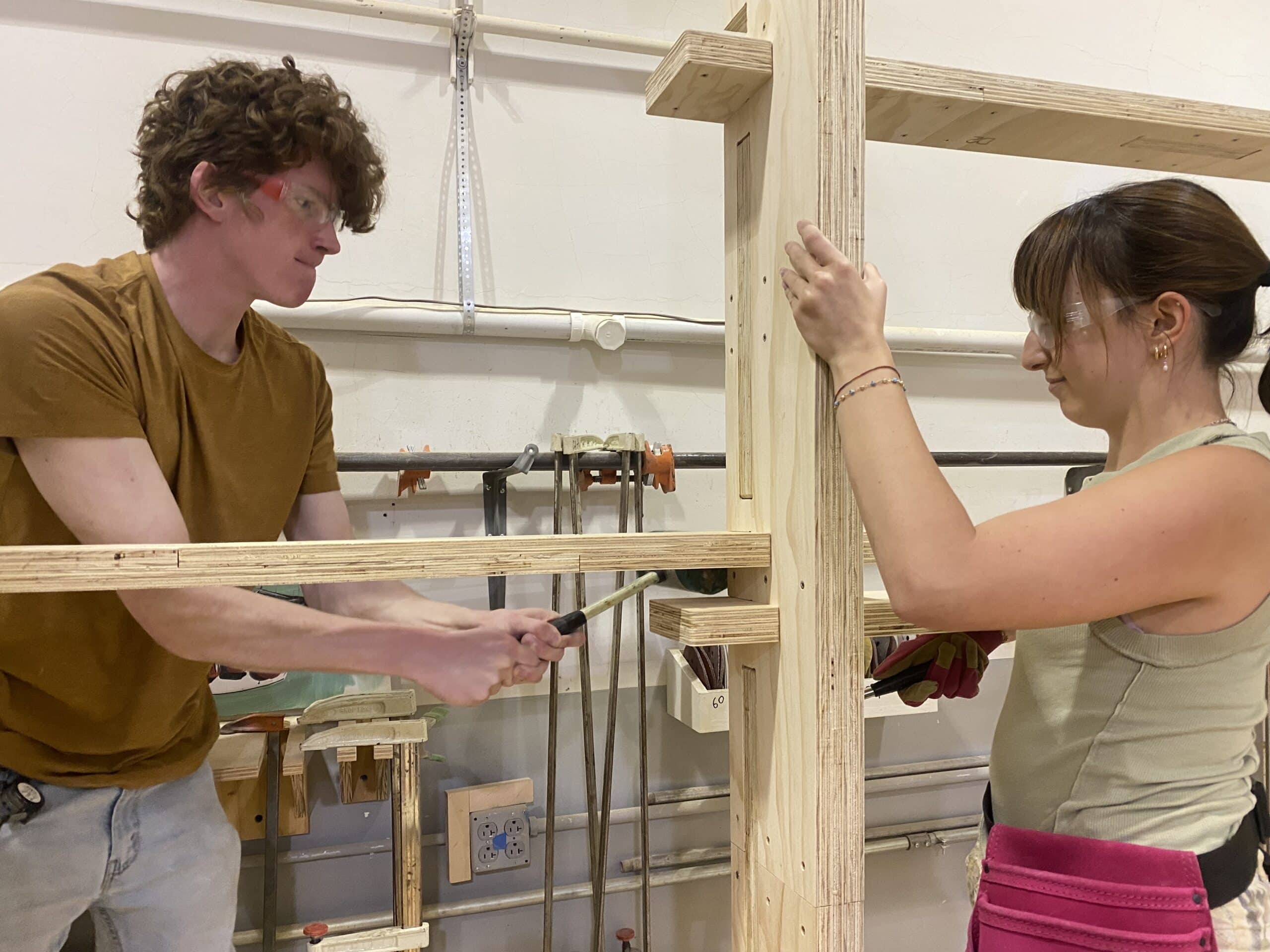
Students collaborate on cutting, fastening, and assembling structural components. The shared workflow modeled professional coordination between design, fabrication, and installation teams.


Building as Research

The seminar emphasized building as a mode of research. Students cycled between archival drawings, computational models, study models, and full-scale prototypes, testing translations from blueprint to digital file to CNC-milled part. Small-scale simulations provided a low-stakes environment for exploring toolpaths and sequencing, enabling feedback between digital design and physical construction. Full-scale fabrication underscored the unforgiving nature of material, demanding precision, resilience, and adaptability.

Students treated plywood as both structure and language—its surface, grain, and modularity becoming tools for expressive, sustainable construction. Through precision joinery and nested assemblies, they explored tectonic detail as both technical and cultural inquiry. To professionalize their work, students produced assembly manuals for each project, ensuring museum staff could reassemble components as needed. Exhibition-making thus extended beyond fabrication into documentation, accountability, and institutional collaboration—a synthesis of design, research, and public communication.
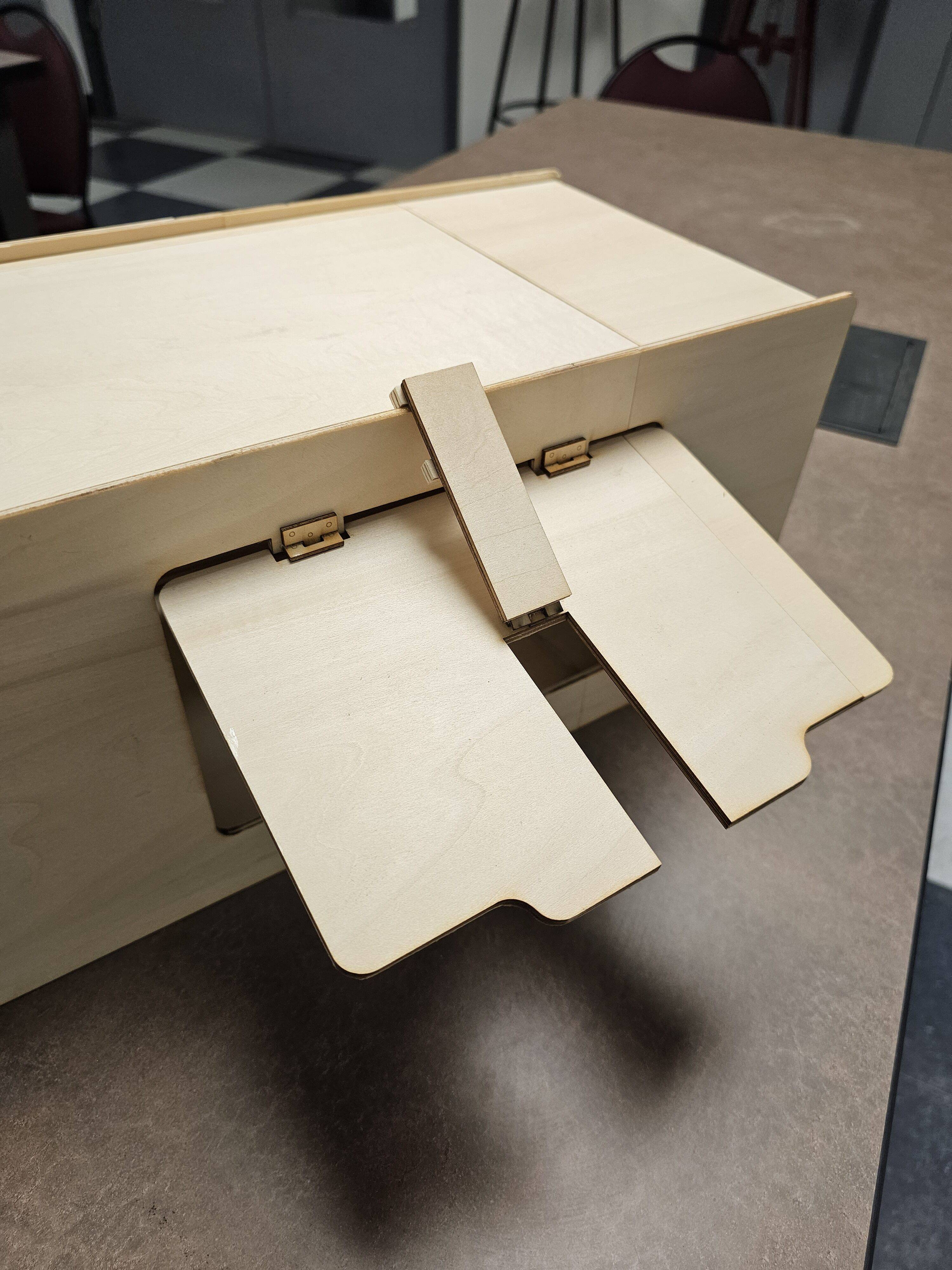
From Model to Mock-Up
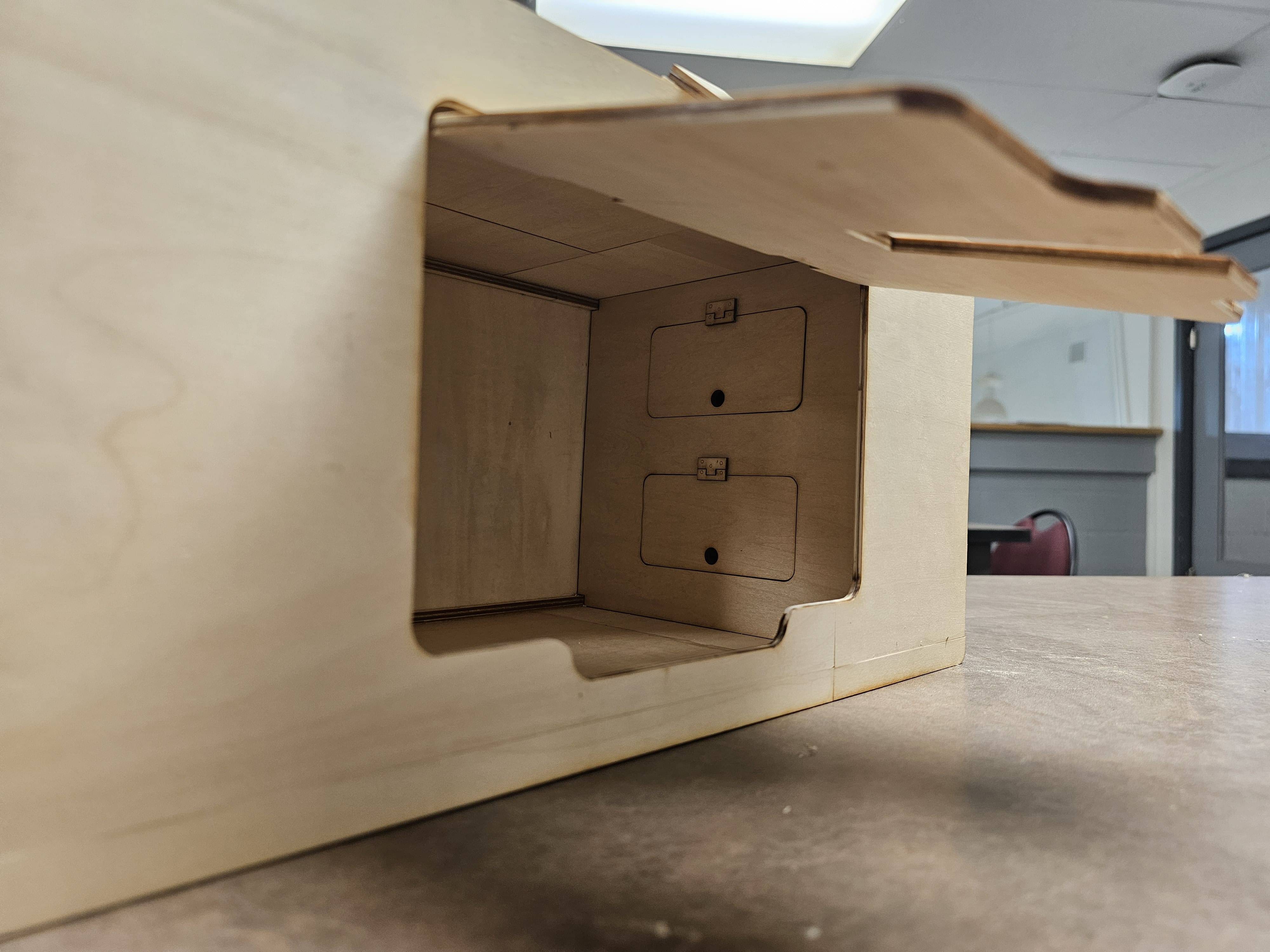
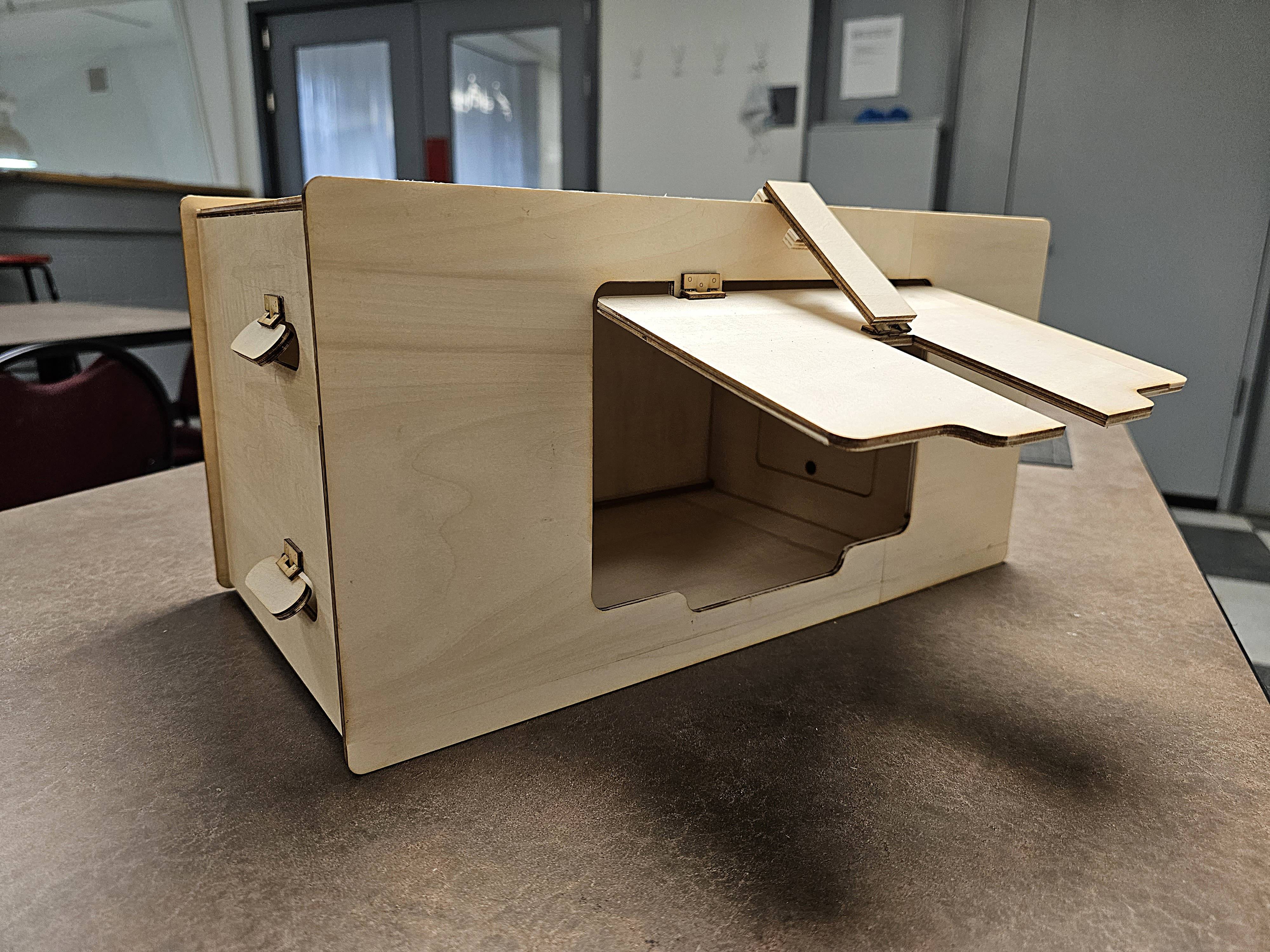
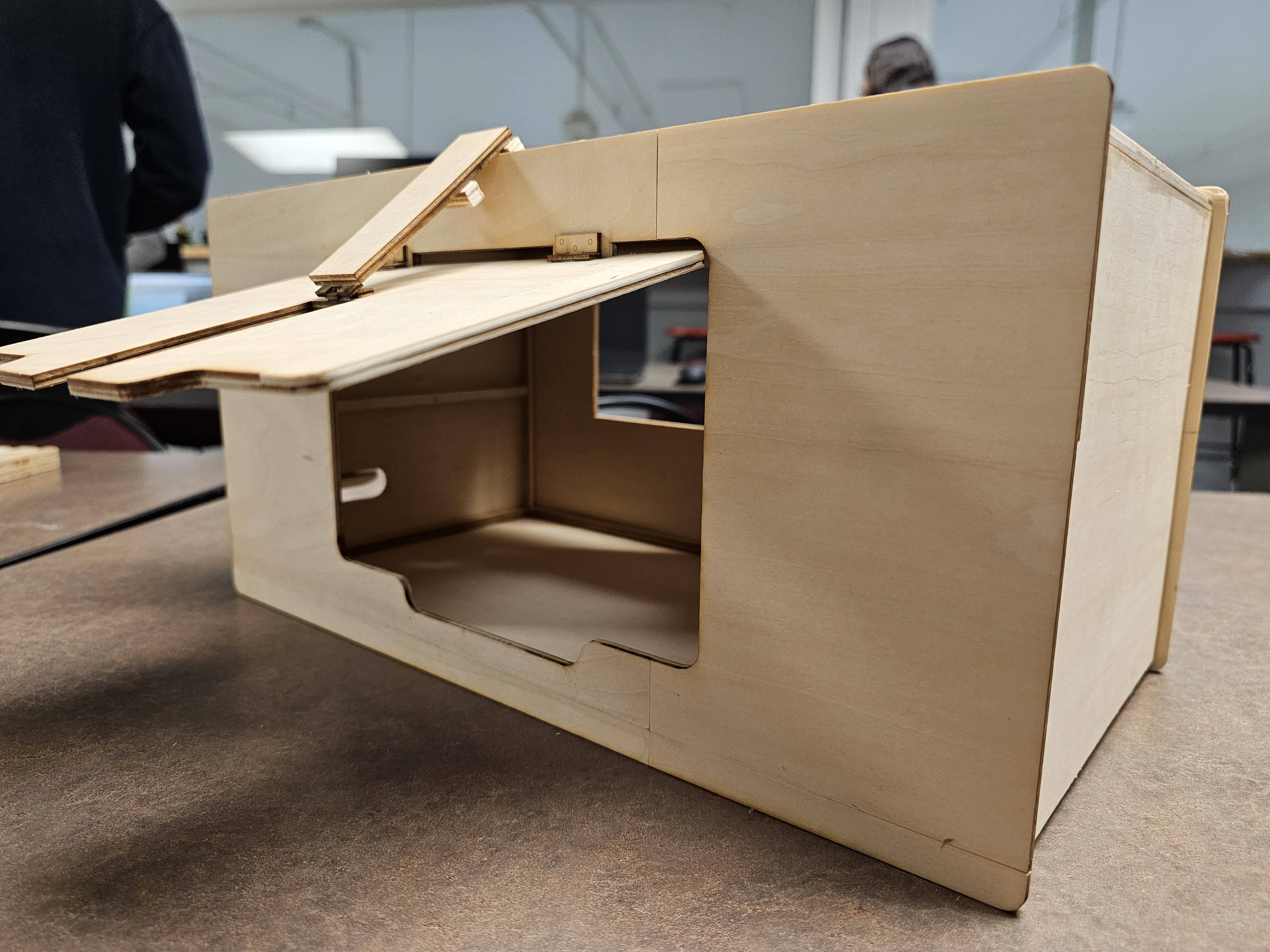
Students refined City Sleeper through study models and a full-scale plywood prototype. The iterative process tested fabrication tolerances, structural logic, and material efficiency prior to exhibition installation.

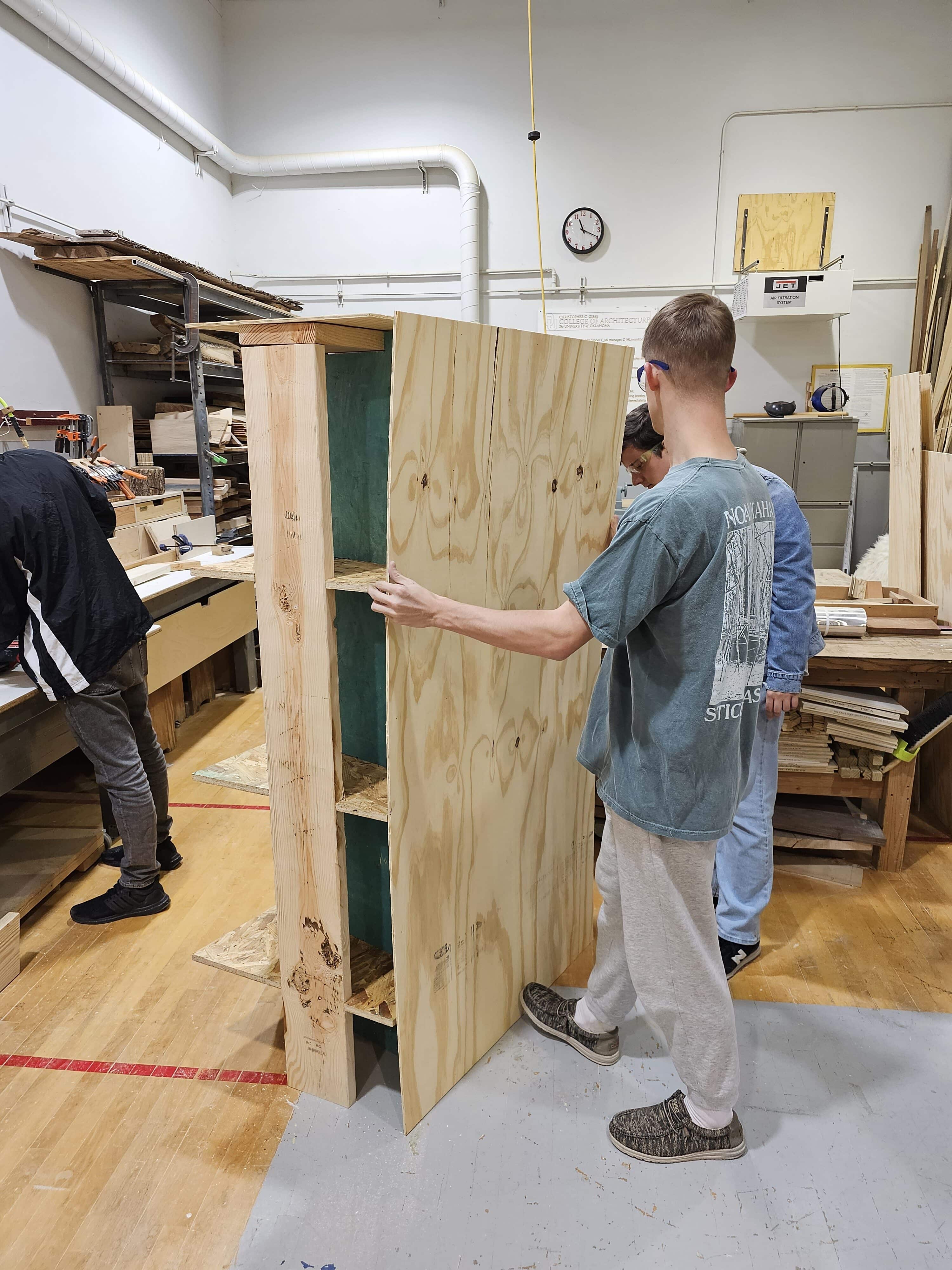
Collective Authorship

Collaboration defined the seminar. Undergraduate and graduate students worked side by side, guided by faculty and exhibition curators. Faculty provided instruction in digital-to-physical workflows, while curators advised on sequencing, audience engagement, and interpretive framing. Students coordinated fabrication and installation schedules, negotiated between curatorial expectations and architectural intentions, and engaged in collective authorship that blurred distinctions between designer, builder, and researcher.

Student reflections described the experience as transformative—“the moment when research became physical space.” This multi-layered collaboration fostered interdisciplinary learning and modeled a replicable framework for design-build partnerships between academic programs and cultural institutions.
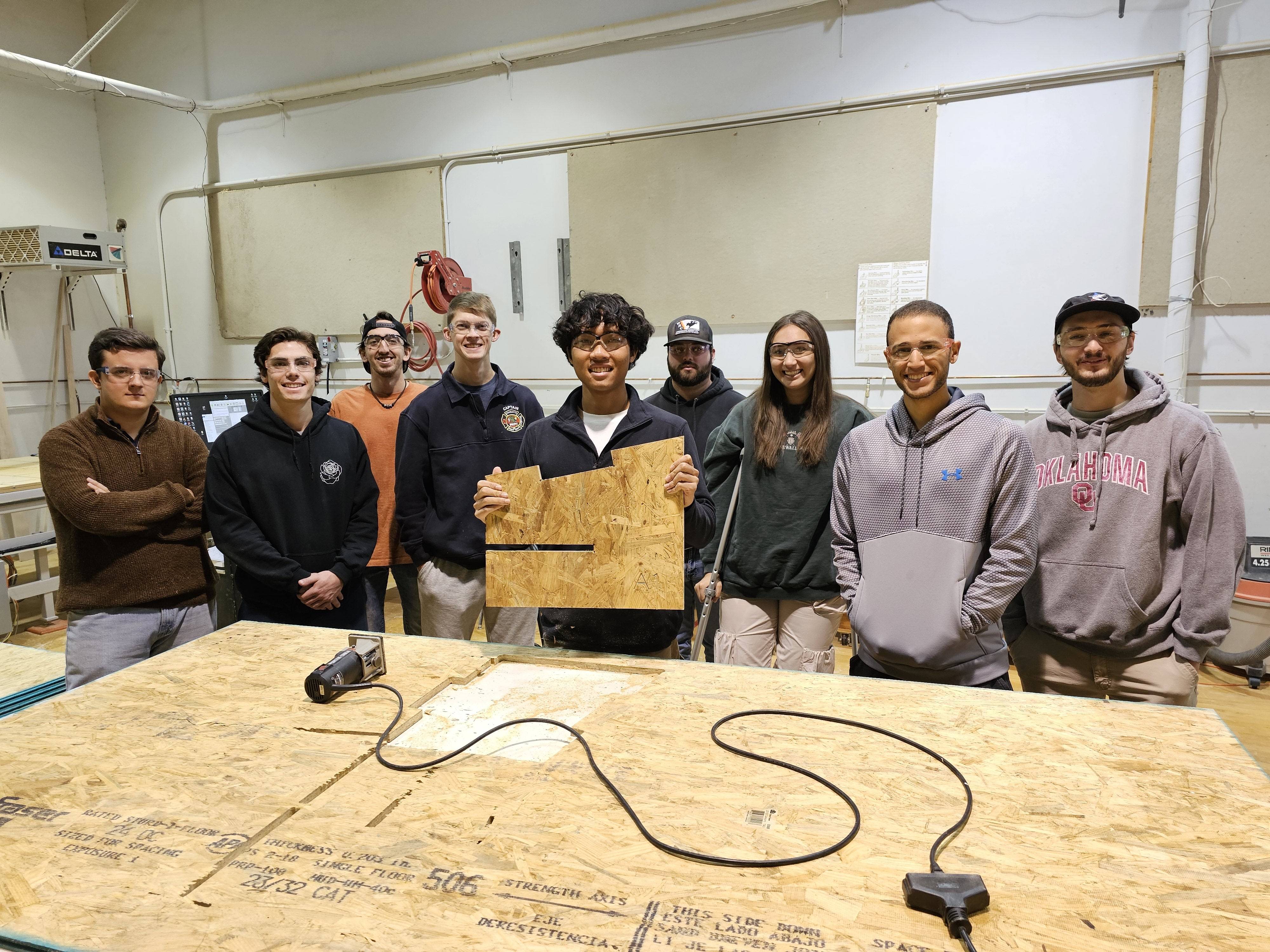
Collective Authorship in Action
Undergraduate and graduate students collaborate in fabrication and assembly, guided by faculty and curators. The process exemplifies shared responsibility and interdisciplinary teamwork within the design-build seminar.
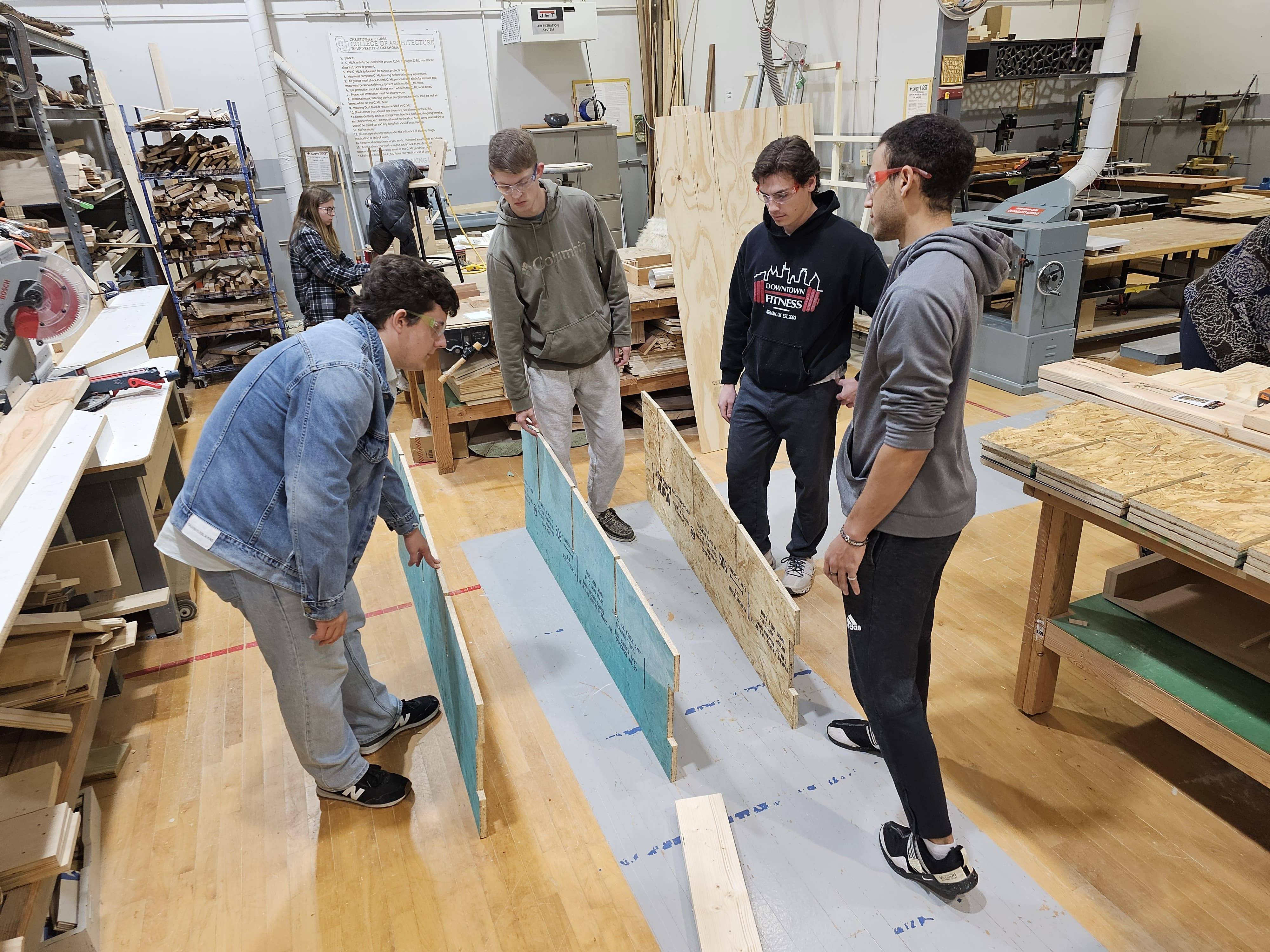
Collective Authorship

Collaboration defined the seminar. Undergraduate and graduate students worked side by side, guided by faculty and exhibition curators. Faculty provided instruction in digital-to-physical workflows, while curators advised on sequencing, audience engagement, and interpretive framing. Students coordinated fabrication and installation schedules, negotiated between curatorial expectations and architectural intentions, and engaged in collective authorship that blurred distinctions between designer, builder, and researcher.

Student reflections described the experience as transformative—“the moment when research became physical space.” This multi-layered collaboration fostered interdisciplinary learning and modeled a replicable framework for design-build partnerships between academic programs and cultural institutions.
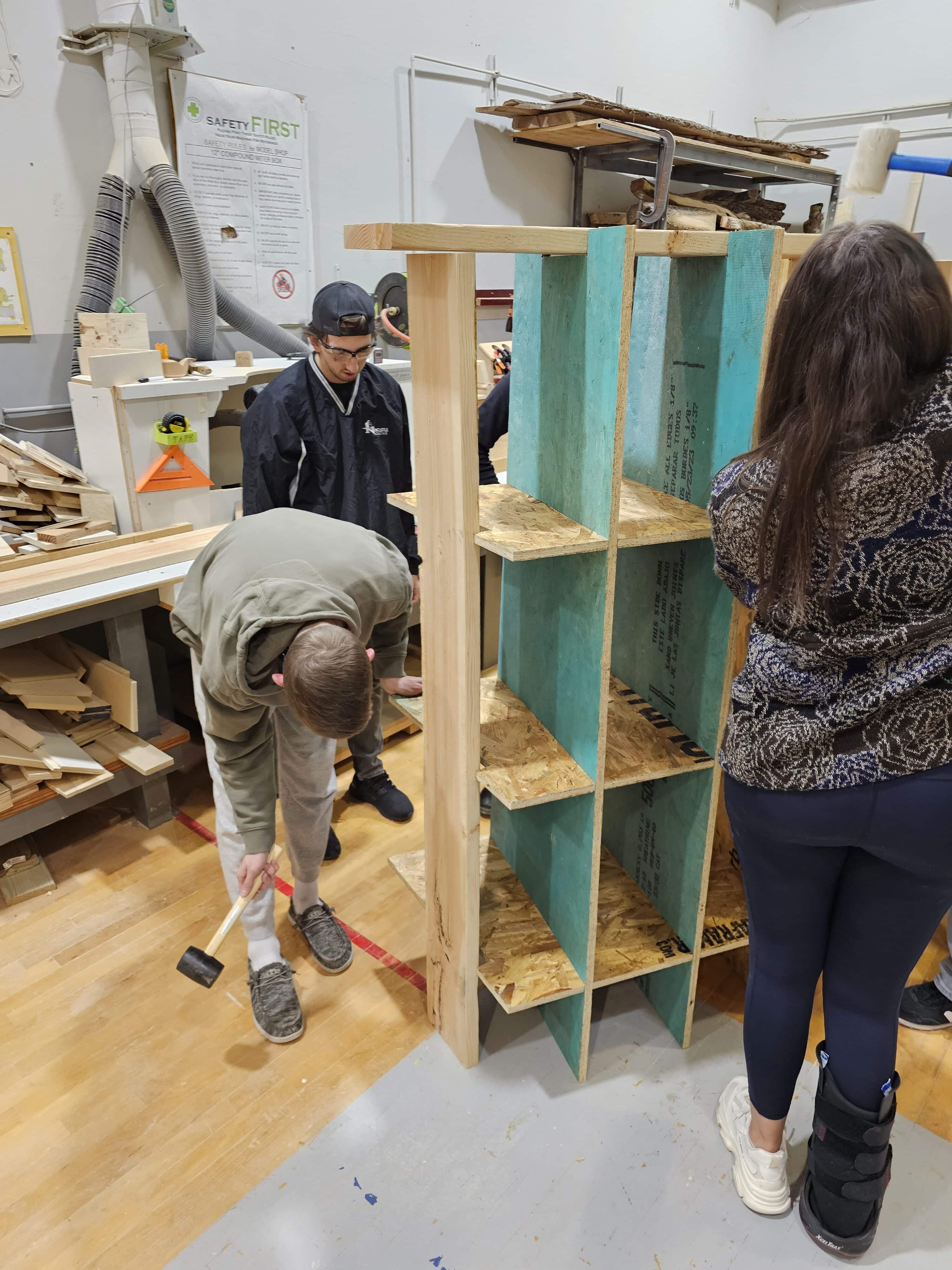
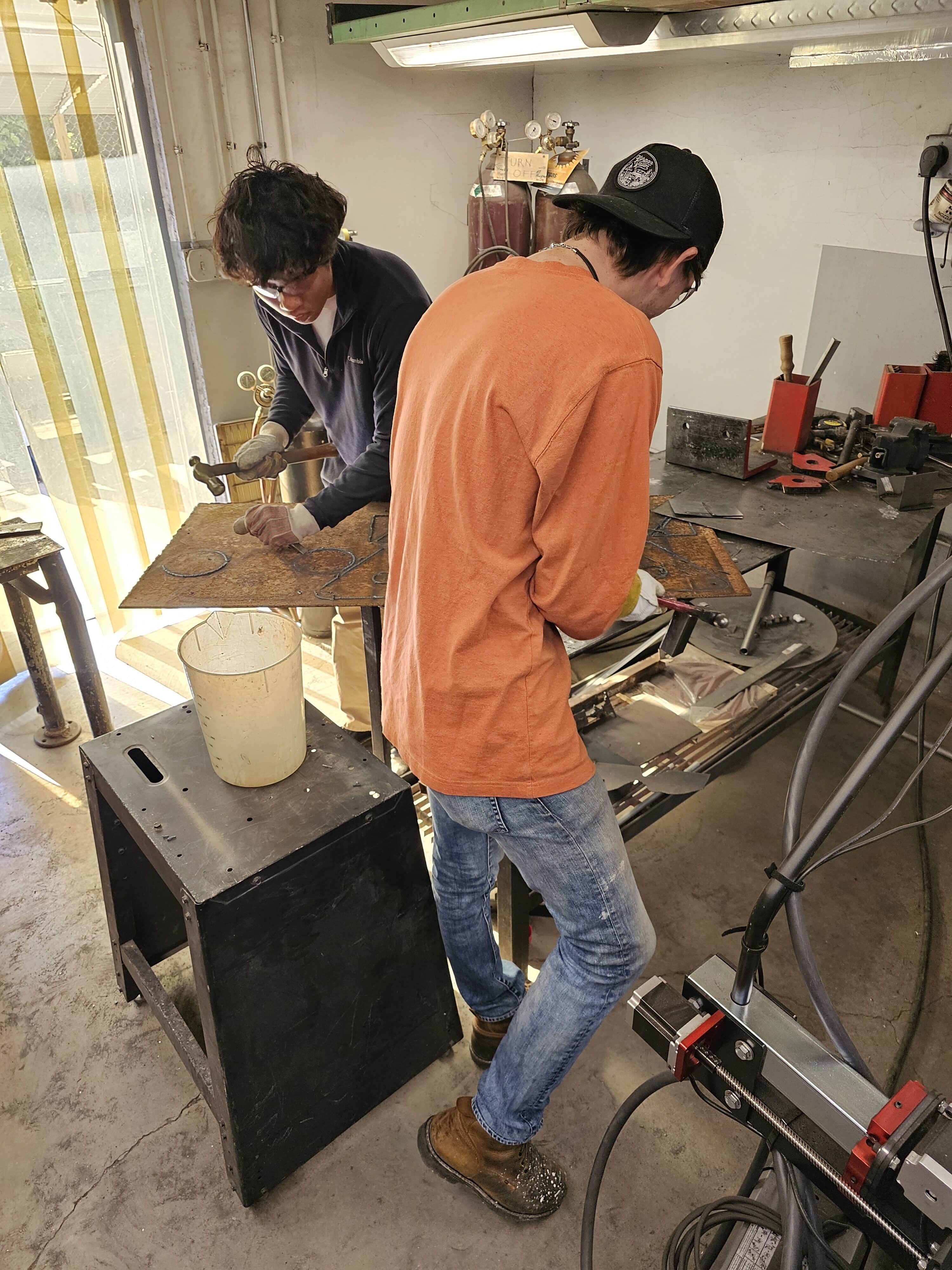
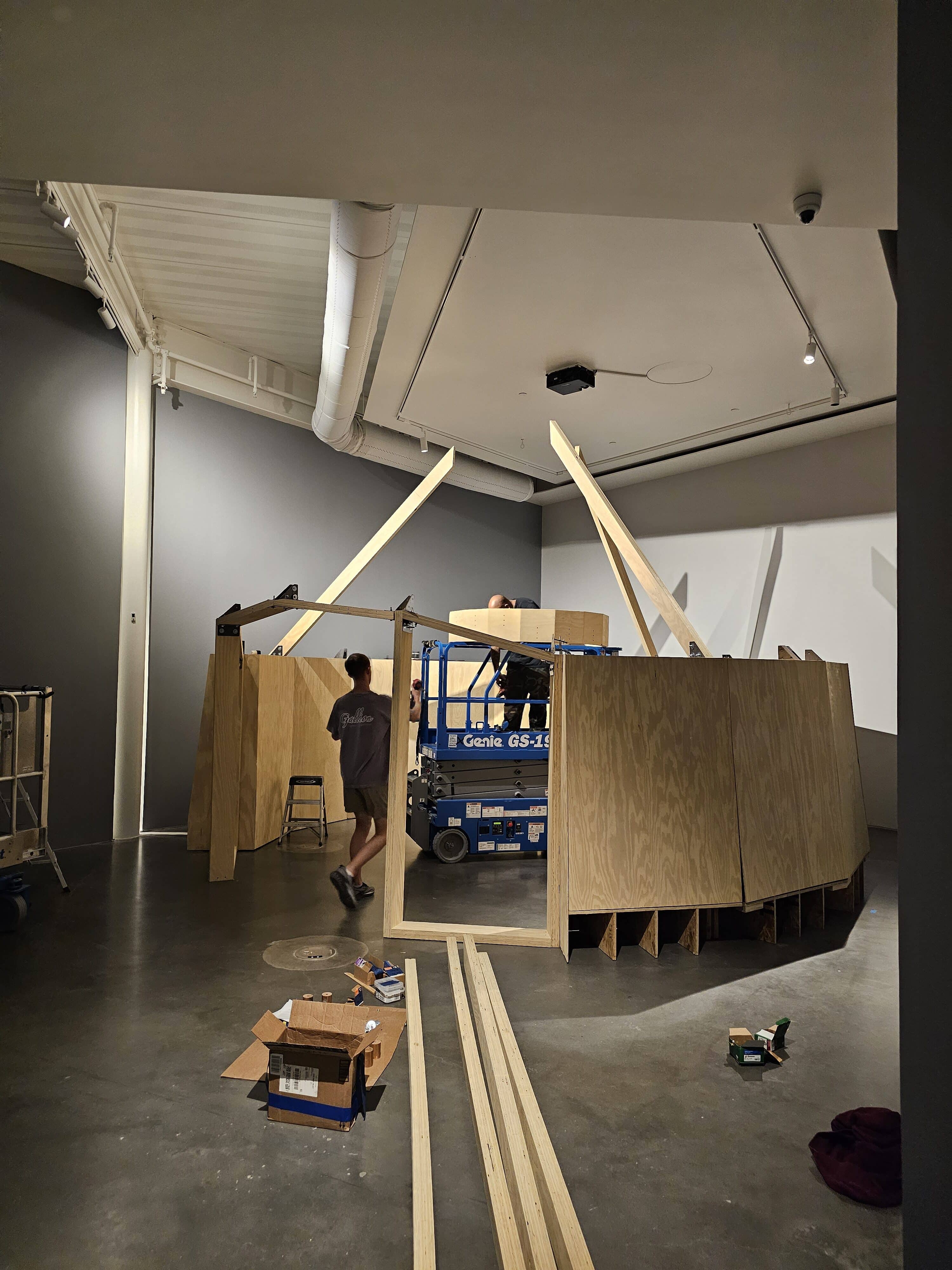
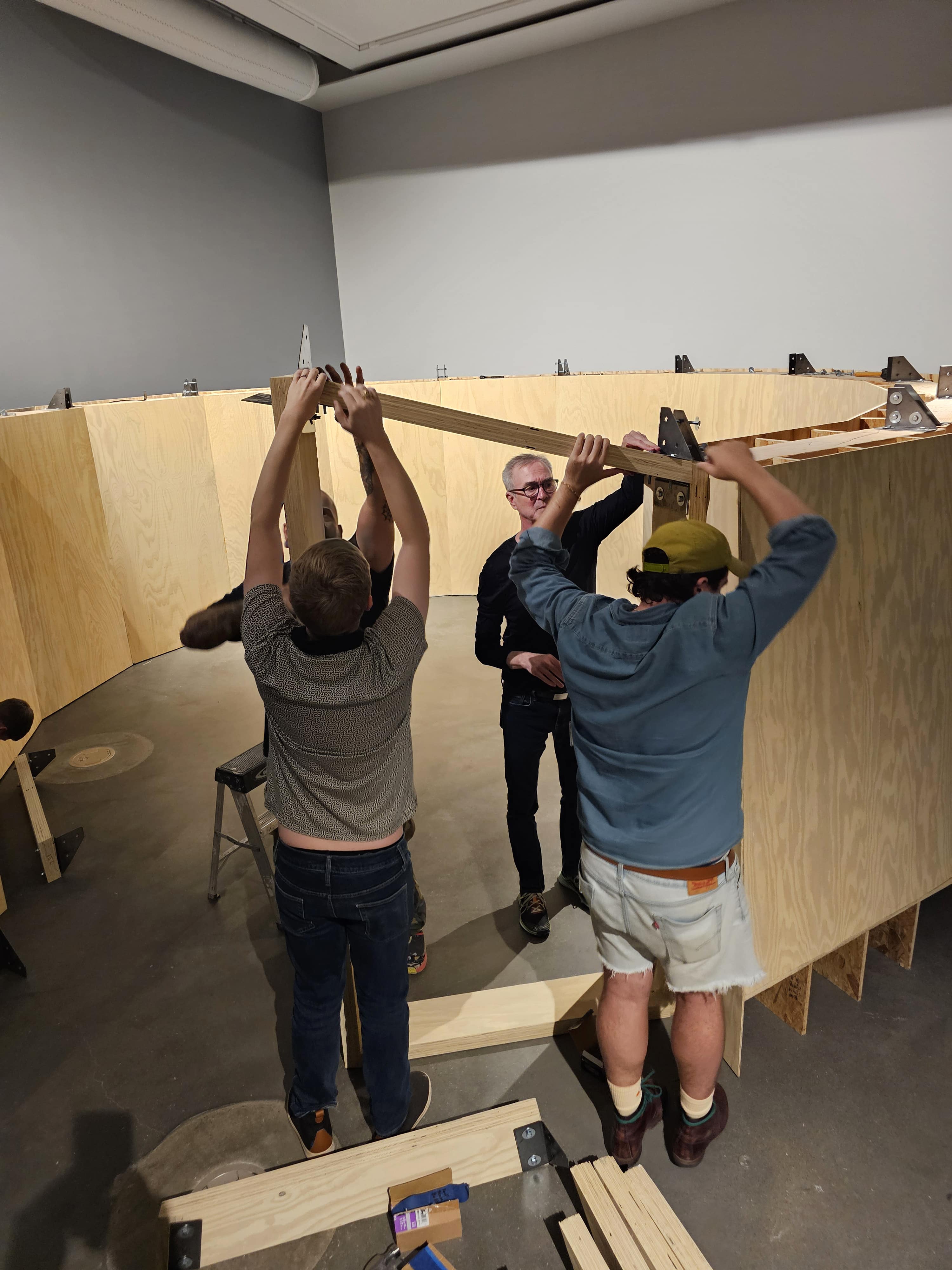
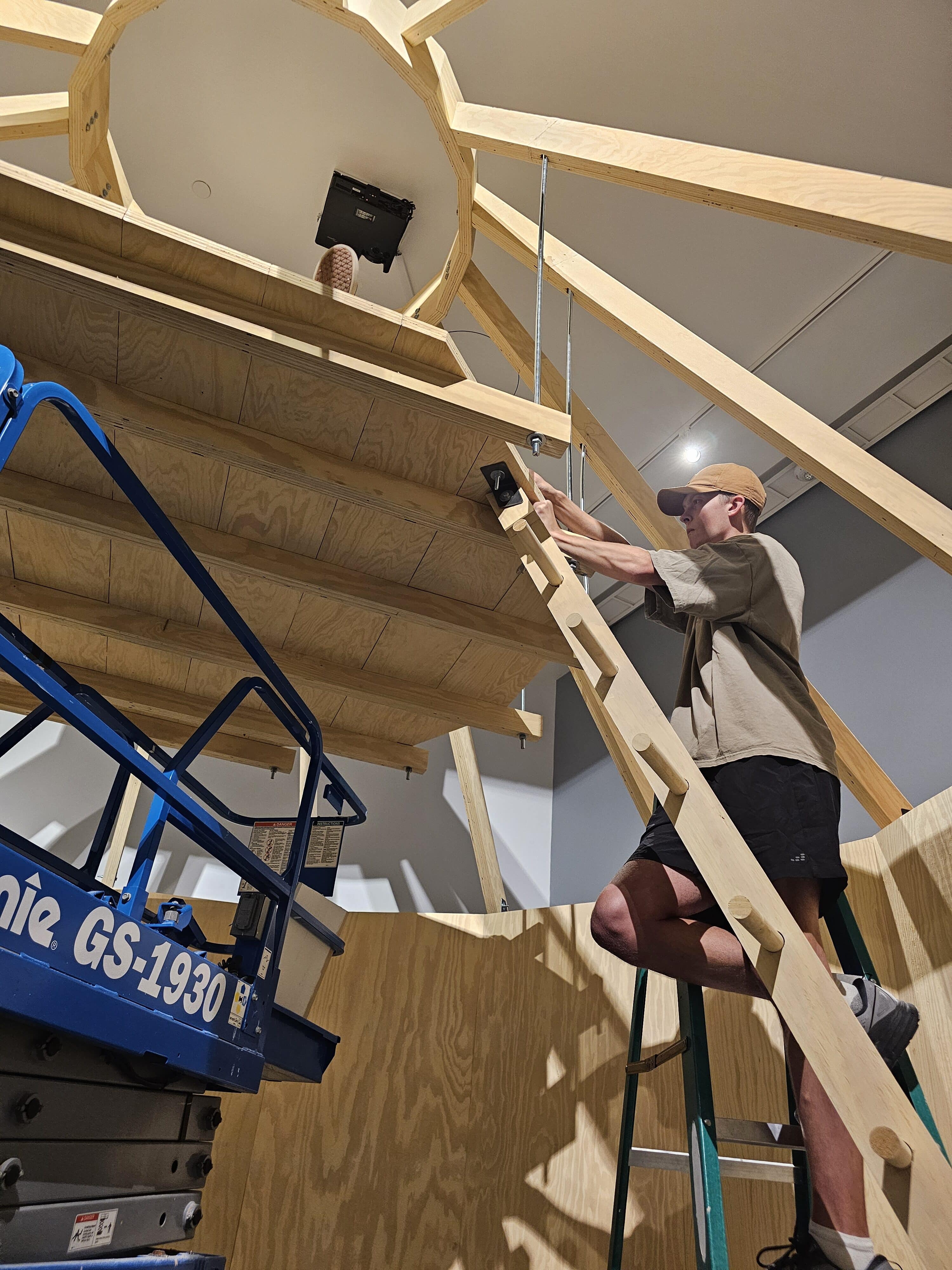
Installation in Progress
Students, curators, staff, and volunteers position component modules, aligning parts through numbered joinery. The on-site phase reinforced teamwork, sequencing, and the realities of construction under institutional deadlines.
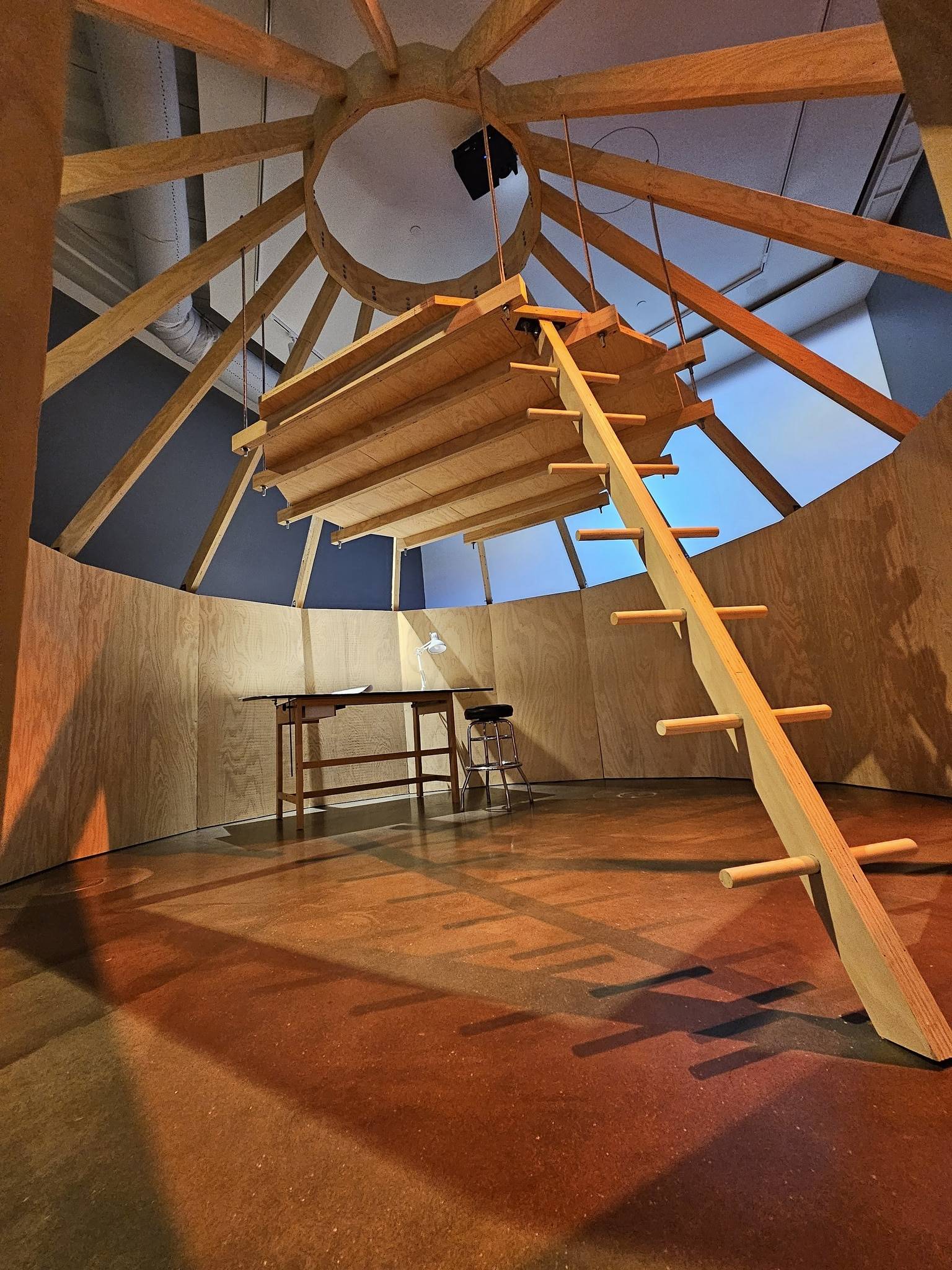
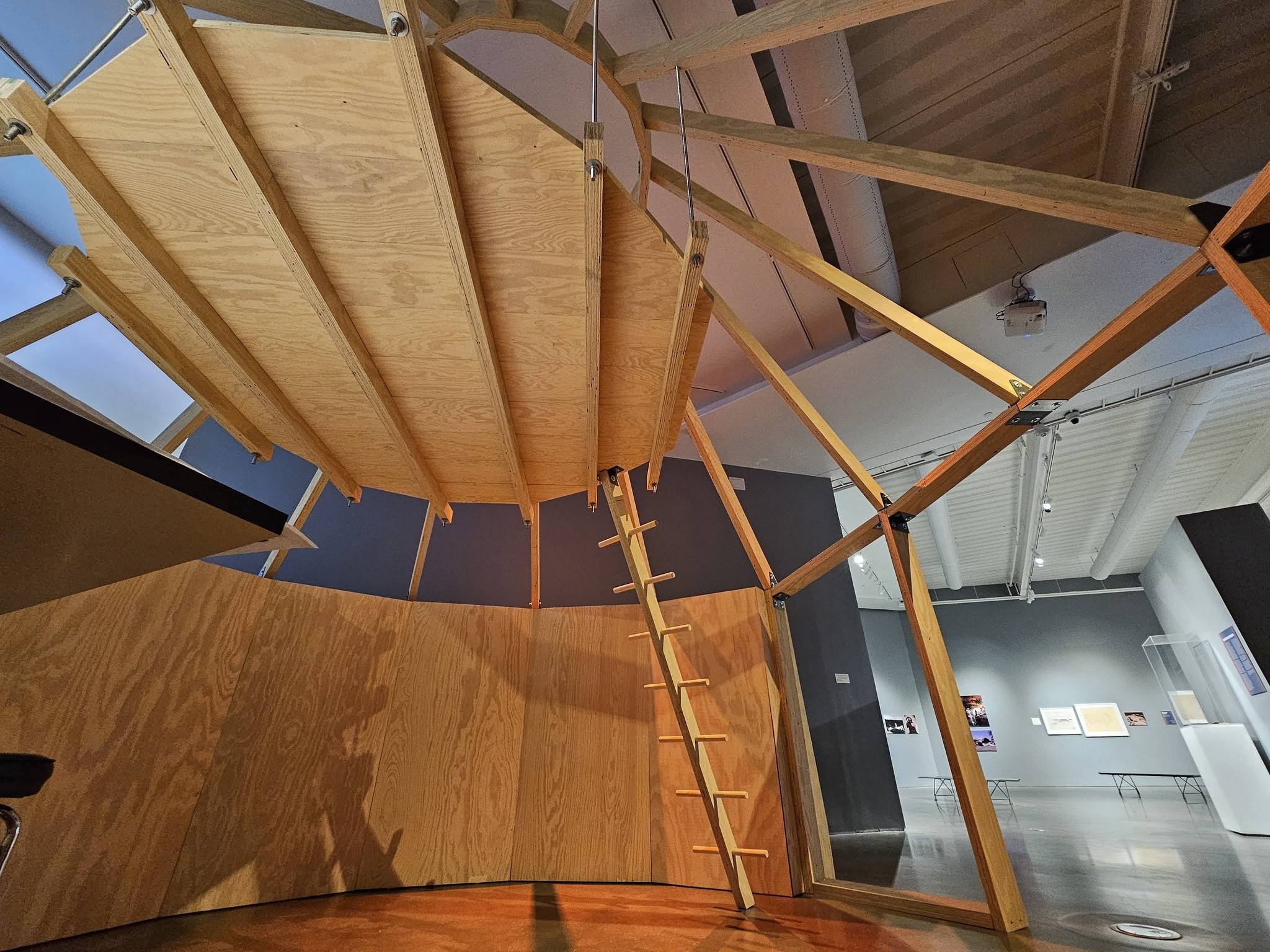

Immersive Spatial Experience
Views of the reconstructed studio highlighting light, proportion, and structure. The project translated digital fabrication into a spatial experience emphasizing fabrication innovation and craft, tectonic rhythm and material warmth.


Reconstructing the Archive
Historic photographs above and student-fabricated installations below illustrate the transformation from precedent to practice. The paired images embody research, material translation, and the public reach of design-build education.


Educational and Public Impact

The project’s outcomes extended beyond technical proficiency. Students gained confidence in design-build workflows, developed material intelligence, and experienced the demands of working within a public cultural institution. For visitors, the installations offered inhabitable encounters with architectural precedents, demonstrating how historic ideas can be reinterpreted through contemporary fabrication systems. For architectural education, the project underscored the value of design-build pedagogy as creative scholarship, merging fabrication, research, and civic engagement.

Its methodology—integrating archival interpretation, iterative prototyping, and institutional collaboration—offers a replicable model for educators seeking to connect academic inquiry with public impact. Outré West demonstrates that design-build education can operate as both technical training and public scholarship, advancing the broader mission of architectural education toward innovation, material intelligence, and social relevance.

More Work


Architecture

Art + Code

Design + Fabrication

Courses + Student Work

© Ken Marold USA, Inc. All rights reserved.
Continue reading

Urban Learning Greenhouse

Urban Learning Greenhouse

Urban Learning Greenhouse

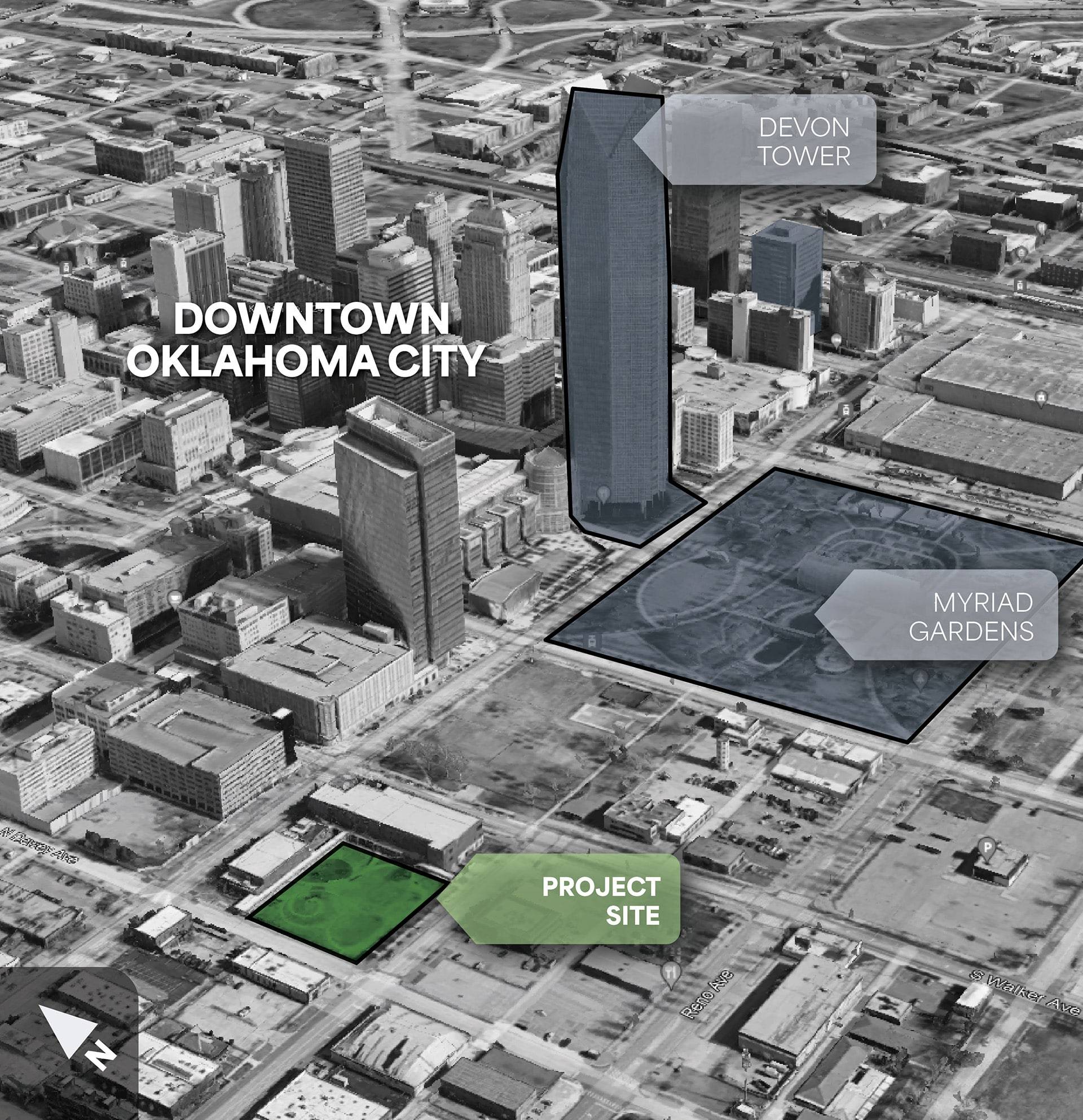
John Rex Charter School, Oklahoma City, OK
Construction Completed: June 2024

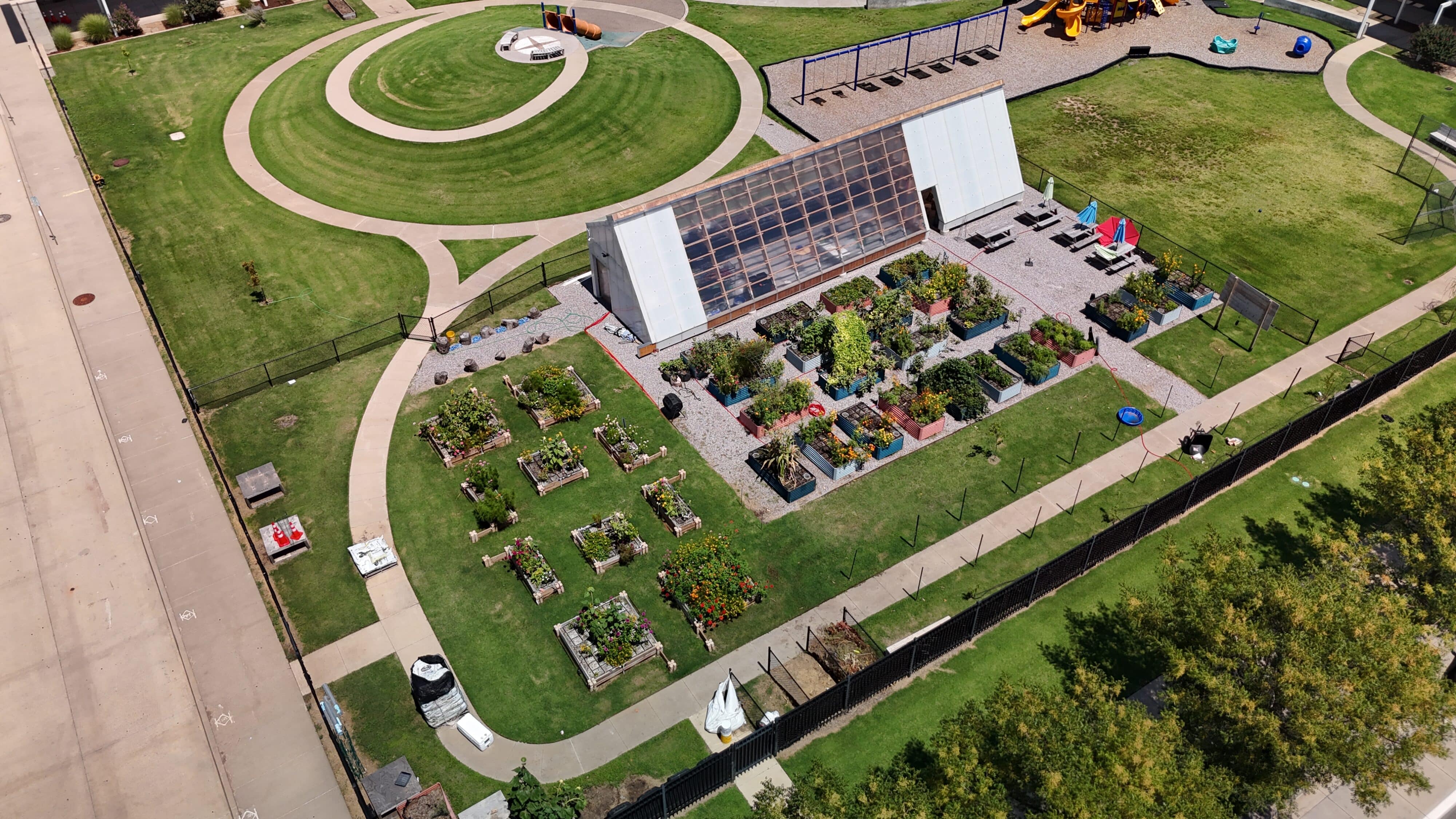
Pollinator gardens and food cultivation plots extend ecological learning beyond the greenhouse, linking design and stewardship through daily observation.


Project Overview

The Urban Learning Greenhouse reimagines a vacant urban corner of the John Rex Charter School campus as a civic classroom for environmental education, agriculture, and design literacy. Developed through an interdisciplinary collaboration between the University of Oklahoma’s Architecture and Construction Science programs, the project connects computation, fabrication, and community engagement through a two-semester design-build process.

The 1,020-square-foot structure is both a greenhouse and an educational hub. Its lightweight modular framework, transparent polycarbonate cladding, and layered structure create a daylight-filled space for teaching horticulture and environmental systems. Beyond its role as a community resource, the project serves as a testbed for interdisciplinary pedagogy—linking academic research, digital fabrication, and public impact through built work.

Pedagogical Highlights

  • Interdisciplinary Design-Build Pedagogy:
    Established a fully integrated workflow between Architecture and Construction Science programs, allowing students to collaborate across disciplines through every phase of research, design, fabrication, and construction.

  • Applied Research in Digital Fabrication:
    Advanced a faculty-led research agenda in CNC-milled plywood assemblies and modular digital-to-analog workflows, translating computational design methods directly into scalable, real-world construction.

  • Ecological Literacy Through Design:
    Positioned architecture as an educational interface between built form and ecology, linking greenhouse design to lessons in sustainability, pollination, food systems, and environmental stewardship.

  • Professional Practice Simulation:
    Structured as a two-semester, full-scale studio replicating the professional project delivery process—integrating documentation, scheduling, budgeting, permitting, and client communication into the curriculum.

  • Community-Based Learning and Impact:
    Developed in direct collaboration with John Rex Charter School educators and students, the project reinforced civic engagement as a core competency of architectural education and established a replicable model for community-centered design-build practice.


From Vacant Corner to Ecological Classroom

Occupying an underutilized edge of the John Rex campus, the greenhouse transforms an overlooked patch of land into an active site of ecological engagement. Early site research addressed solar gain, urban water flow, and circulation, ensuring the greenhouse performed as an integrated component of the school’s landscape. The design merges architecture with agricultural systems, framing the act of cultivation as both ecological and pedagogical.

Developed in direct dialogue with school administrators and teachers, the project integrates raised beds, pollinator gardens, and outdoor learning stations to support hands-on environmental education. The site plan encourages movement between interior and exterior learning spaces, turning the greenhouse into a living curriculum—an evolving classroom where students can see environmental systems at work.

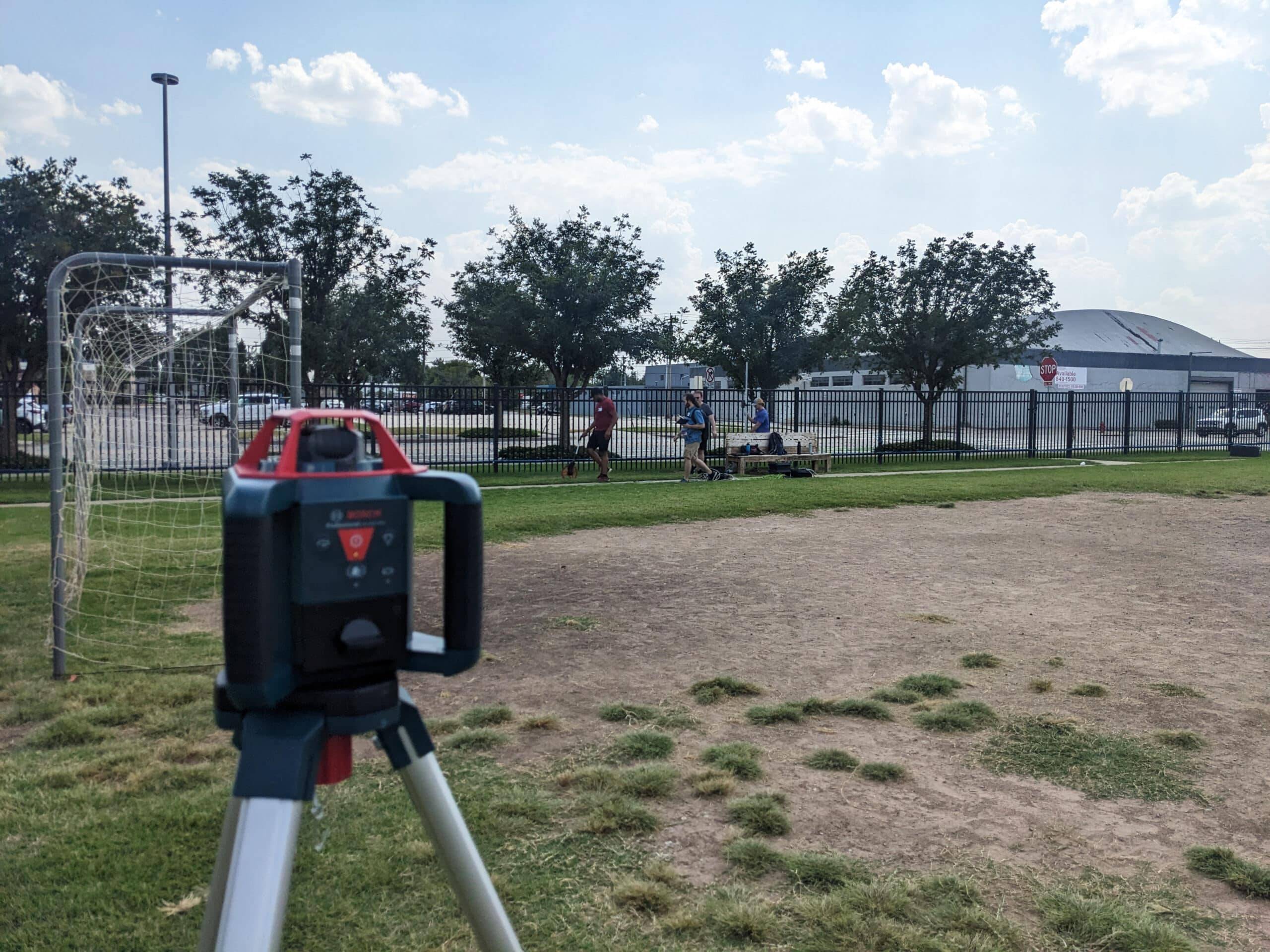
Early survey work identified environmental conditions—sun path, vegetation, and drainage—guiding the greenhouse’s final placement and form.


Community Collaboration and Curricular Integration

The design process was anchored by stakeholder collaboration and iterative engagement. Faculty and students conducted participatory workshops with educators and administrators to align architectural design with curriculum goals. These conversations informed the project’s flexible programming—accommodating lessons in botany, sustainability, and nutrition—while reinforcing its accessibility as a shared community asset.

Through this process, the design-build team developed a deeper understanding of how architecture functions as a facilitator of learning. The project not only generated a physical greenhouse but also cultivated a framework for interdisciplinary collaboration, empathy, and civic engagement. Each design decision—from spatial organization to construction sequencing—was informed by both environmental logic and the lived experiences of the students and teachers who would occupy the space.

Design development combined pollinator-friendly planting research with classroom engagement to align ecological goals with educational programming.


Professional Practice as Pedagogy

Structured as a full-scale design-build studio, the project mirrored professional workflows. The fall semester focused on site research, conceptual design, and prototyping, while the spring semester transitioned to construction management and on-site fabrication. Architecture students coordinated digital design and documentation; Construction Science students led field operations and assembly.

This collaboration required the team to operate across disciplines, integrating scheduling, budgeting, and fabrication sequencing into a unified workflow. Faculty oversight emphasized leadership, accountability, and reflection as educational outcomes, ensuring that process and product held equal weight. Through this framework, students experienced the project not as a simulation of practice, but as practice itself.


Architecture and construction science students collaborate during early site preparation, linking classroom research to real-world construction processes.


Digital Fabrication and Interlocking Structural Systems

Students used Rhino, Grasshopper, RhinoCAM, and Revit to generate parametric models, toolpaths, and construction documents. CNC-milled plywood, CNC-plasma-cut steel, and modular polycarbonate assemblies were fabricated and constructed by the team.

The greenhouse’s modular framework relied on a system of integral interlocking structural components. CNC precision enabled sub-millimeter tolerances, giving students firsthand experience with digital accuracy, craftsmanship, and material logic. This precision allowed assemblies to slot cleanly without field adjustments, reinforcing lessons in design intent, structural performance, and execution.

Students translate parametric models into CNC-milled plywood and modular polycarbonate components, aligning computational precision with material craft.


Iterative Design and Collaborative Problem-Solving

Connection details, fabrication workflows, and prototyping required students to iterate and refine modular assemblies and details. This process fostered problem-solving, adaptability, and collaboration. Peer critique assessed teamwork as students reconciled tolerances, sequencing, and assembly logic.


Parametric models embedding constructibility and connectivity, guiding CNC-milled components and modular assemblies optimized for precision and on-site efficiency.


Systems Thinking and Material Integration

Material strategies for the Urban Learning Greenhouse were guided by a systems-thinking framework emphasizing modularity, efficiency, and environmental responsiveness. The building was conceived as a network of interdependent systems—structure, enclosure, and landscape—each calibrated to influence performance and assembly. Structural rhythm aligned with material module size, joinery precision reinforced fabrication efficiency, and cladding transparency supported daylighting and thermal control.

Students coordinated structure, fabrication, and construction as an integrated loop between digital modeling and field application. CNC-milled plywood ribs, translucent polycarbonate, and steel joinery were designed to function as adaptive systems rather than discrete parts, balancing environmental performance with tectonic clarity. Evaluation prioritized the synthesis of modeling and construction, reduction of material waste, and the performance of assemblies as responsive ecological infrastructure—demonstrating that systemic thinking can transform design-build projects into living, adaptive frameworks for sustainability.

Students evaluate fabrication optimization, modular assemblies and connection details, reinforcing systems thinking as economy, material, assembly, and structure, inform one another.


Construction Management and Field Leadership

On-site construction became a living classroom for collaboration and management. Students led daily operations including sequencing, quality control, and safety coordination, gaining first-hand experience in field management and problem-solving. Faculty guidance emphasized adaptability, requiring the team to respond to site conditions, weather shifts, and logistical challenges in real time.

By bridging digital precision with manual assembly, the project demonstrated how design-build education cultivates both technical fluency and leadership. Students experienced the full project arc—designing, fabricating, and building an environment that will serve the community long after their semester ended.


Students managed scheduling, budgeting, and field coordination, translating classroom planning into real-time construction leadership.


Interdisciplinary Collaboration and Team Learning

Students from architecture and construction science worked side by side through every phase of the Urban Learning Greenhouse—from research and design to fabrication and field assembly. The course framework emphasized shared responsibility over disciplinary hierarchy, requiring participants to understand the interconnectedness of design intent, digital modeling, material performance, and construction management. Architecture students contributed modeling and detailing expertise, while Construction Science students led scheduling, cost analysis, and field coordination. The overlap between these roles created an environment where collaboration functioned as both a design process and a professional skill.

Team learning was reinforced through peer assessment, documentation, and cross-disciplinary communication exercises emphasizing clarity, adaptability, and mutual respect. Instead of dividing work along conventional lines, students engaged directly with each other’s knowledge, developing a shared vocabulary for design and construction. Faculty evaluation prioritized leadership, communication, and problem-solving as measurable indicators of success, reinforcing teamwork as a critical and transferable learning outcome.


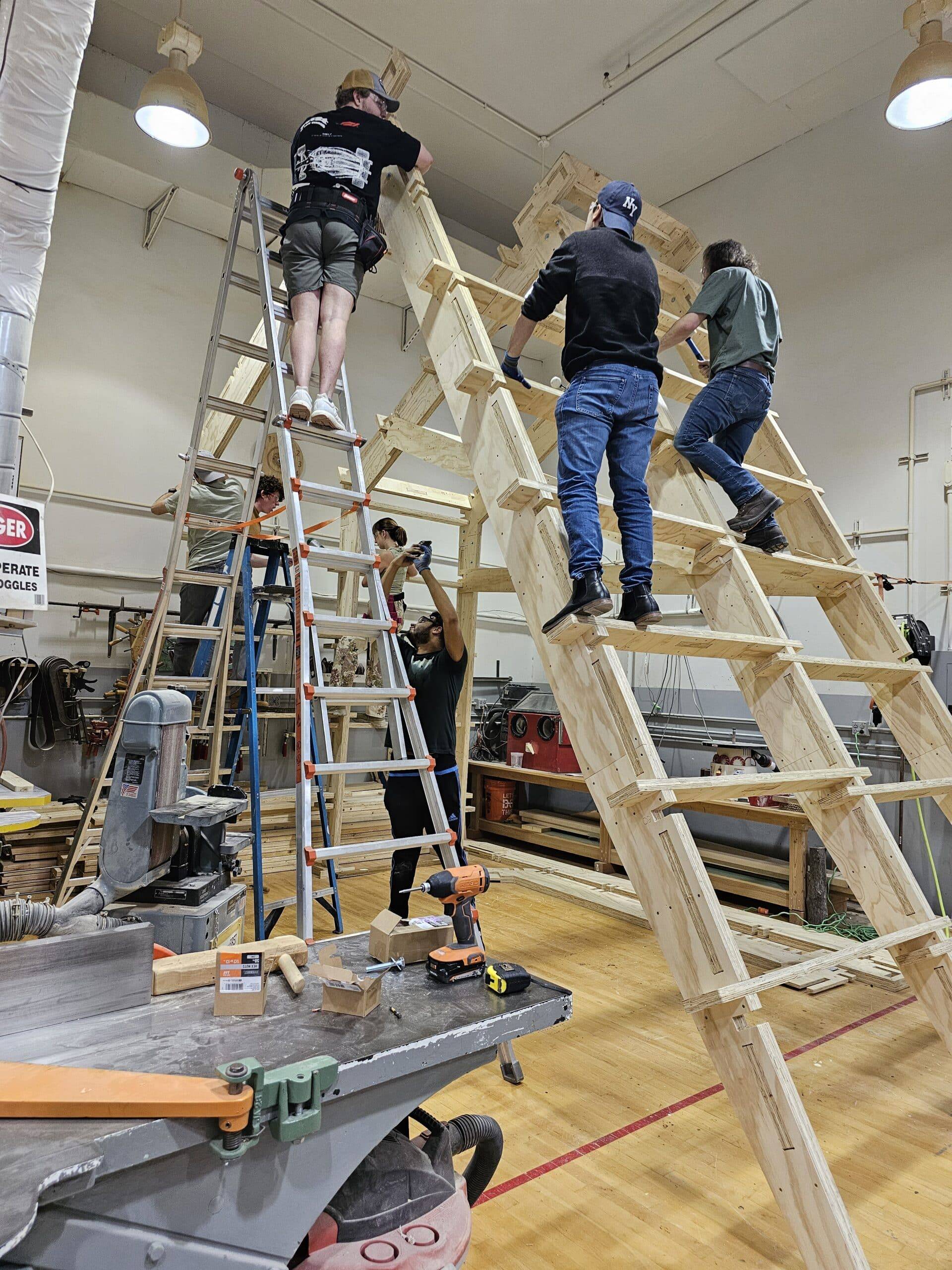
Students assemble and raise the frame, aligning prefabricated components with precision learned through digital modeling and precision fabrication methods.


Reflection and Legacy

The Urban Learning Greenhouse marks a key moment in OU’s evolving Design+Build pedagogy. It unites research, computation, and construction within a real-world framework that demonstrates architecture’s capacity to serve communities while advancing academic inquiry.

Through its synthesis of interdisciplinary education, digital fabrication, and civic engagement, the project stands as both artifact and methodology—a built testament to the idea that architecture’s most enduring lessons emerge not from drawings alone, but from the shared act of making.


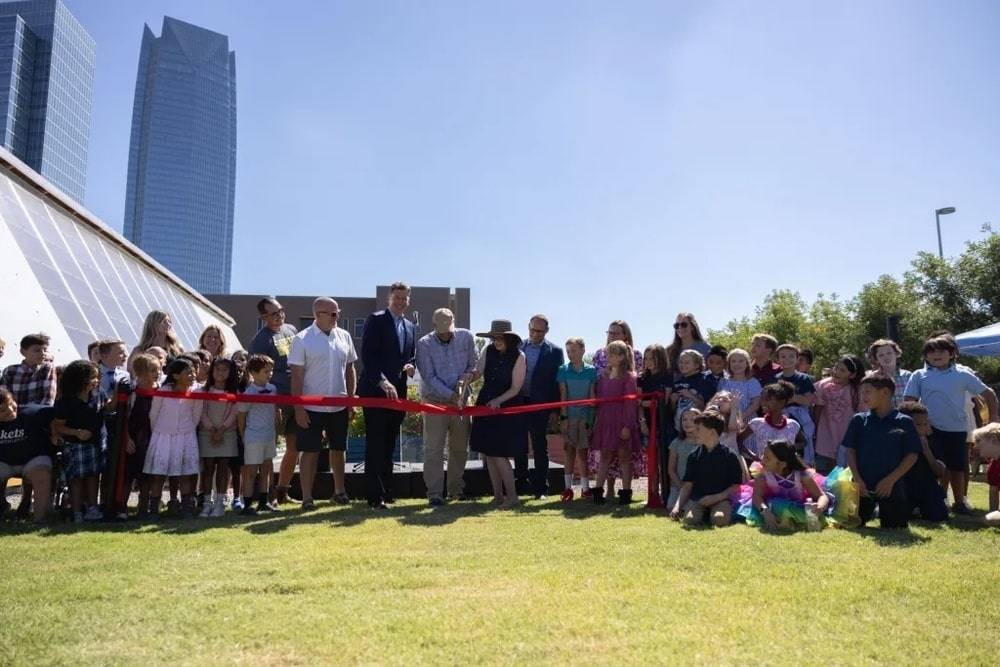
From university student builders to elementary learners, the ribbon-cutting ceremony with Oklahoma City leaders and the mayor celebrated a collective investment in design, ecology, and education.


More Work


Architecture

Art + Code

Design + Fabrication

Courses + Student Work

© Ken Marold USA, Inc. All rights reserved.
Continue reading

Crutcho Elementary Greenhouse Classroom

Crutcho Elementary Greenhouse Classroom

Oklahoma City, OK
Construction Completed: May 2023

The Crutcho Elementary Greenhouse Classroom was designed and built as a pre–American School Design Build project in collaboration with Engage Learning. The initiative provided Crutcho students with a hands-on agricultural learning environment while also serving as a proof-of-concept for new design-to-construction pedagogy at Gibbs College. Unlike later ASDB projects that integrated architecture and construction science, this effort involved construction science students only. I led the project’s digital workflow, developing the cassette-based system, parametric models, and CNC toolpaths that transformed design intent into buildable components.

In many ways, this project was more than a greenhouse—it became a testing ground for how digital design and prefabrication could serve as educational tools. By linking CNC fabrication directly to student construction, the project generated insights that informed later curriculum, learning outcomes, and pedagogical strategies. It demonstrated how modular design, community engagement, and hands-on building could be scaled into a broader educational model, helping to shape the eventual creation of the American School Design Build studio.


Crutcho Elementary Greenhouse Classroom

Oklahoma City, OK
Construction Completed: May 2023

Project Overview

The Crutcho Elementary Greenhouse Classroom was developed as an applied research and pedagogical initiative that explored the intersection of parametric design, digital fabrication, and design-build construction. The project was realized in collaboration with Engage Learning and Crutcho Public Schools in Oklahoma City, an under-resourced district committed to hands-on, STEAM-based education. The greenhouse was envisioned as both an agricultural learning environment and a pedagogical experiment—an opportunity to merge architectural fabrication research with construction science education.

Operating under a hybrid pedagogy model, the project divided responsibilities between design/fabrication and on-site assembly. The design, digital modeling, detailing, fabrication, and analysis were conducted within the Gibbs College of Architecture as part of ongoing research into computational design and modular systems. The final construction was completed by a team of University of Oklahoma Construction Science students, who assembled the prefabricated components on a pier and pressure-treated foundation platform built on site. This collaboration created a full-scale learning experience that linked research-based fabrication with the pragmatism of field construction, testing new methods for cross-disciplinary integration within Gibbs College.


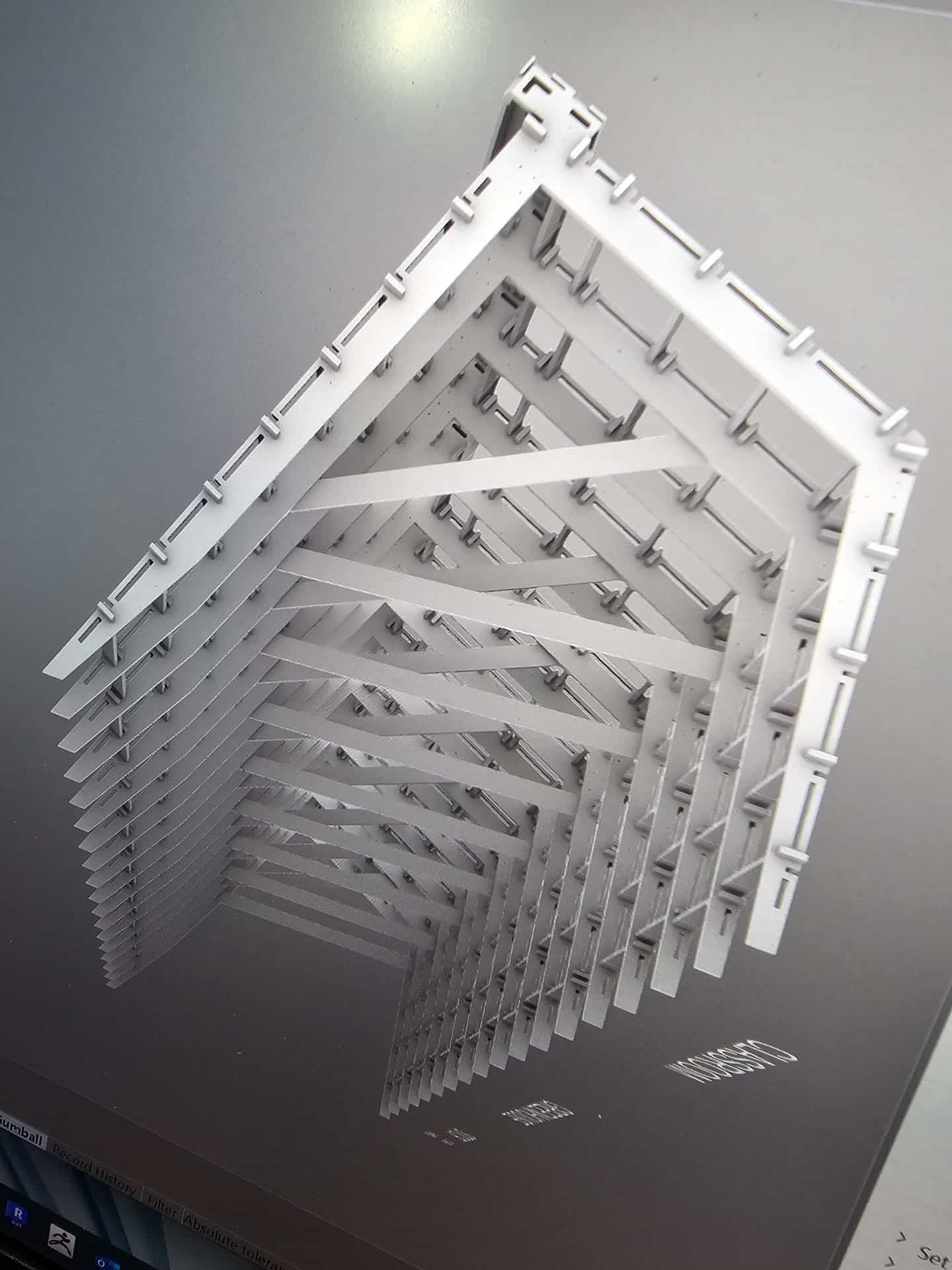
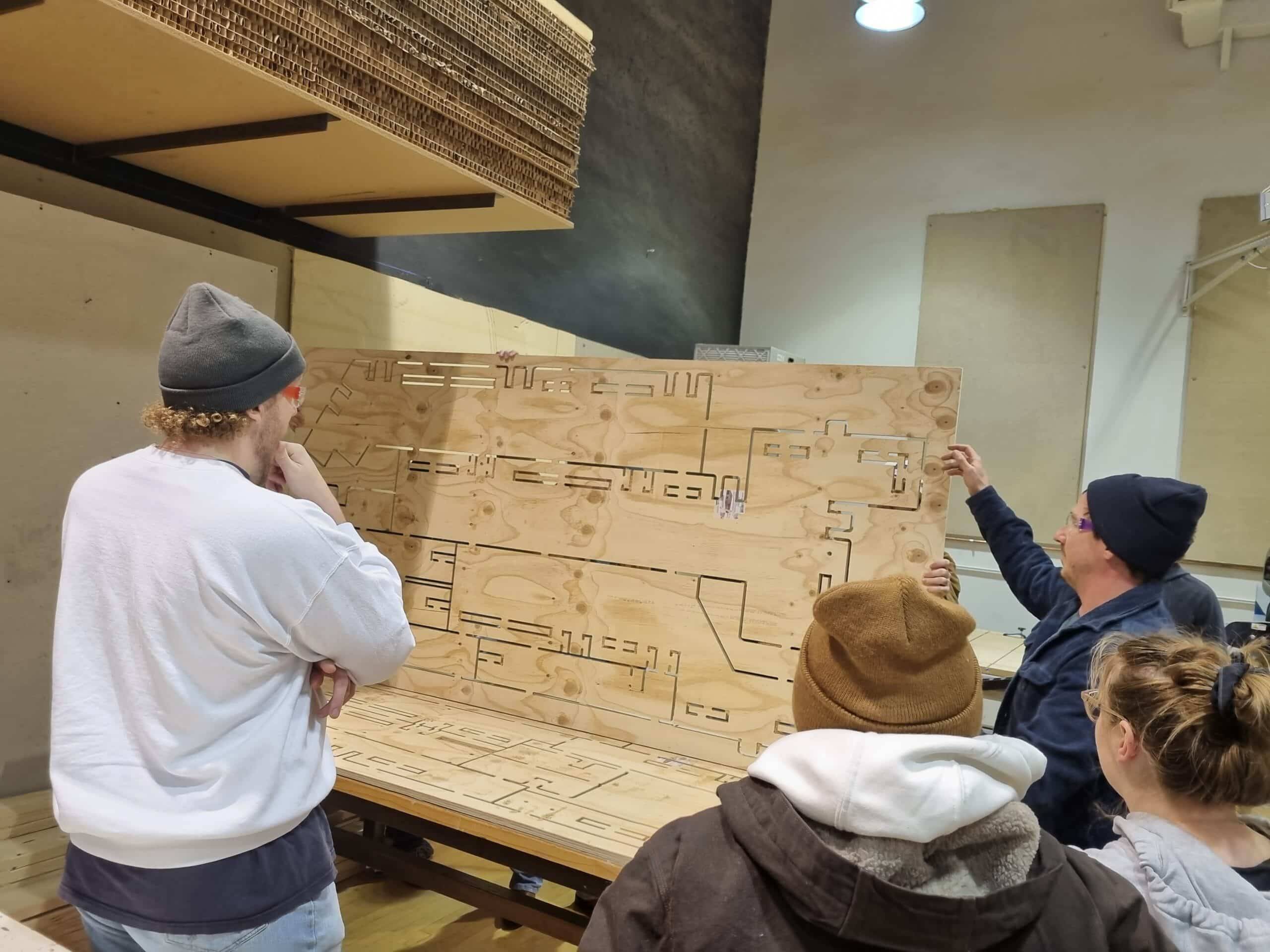
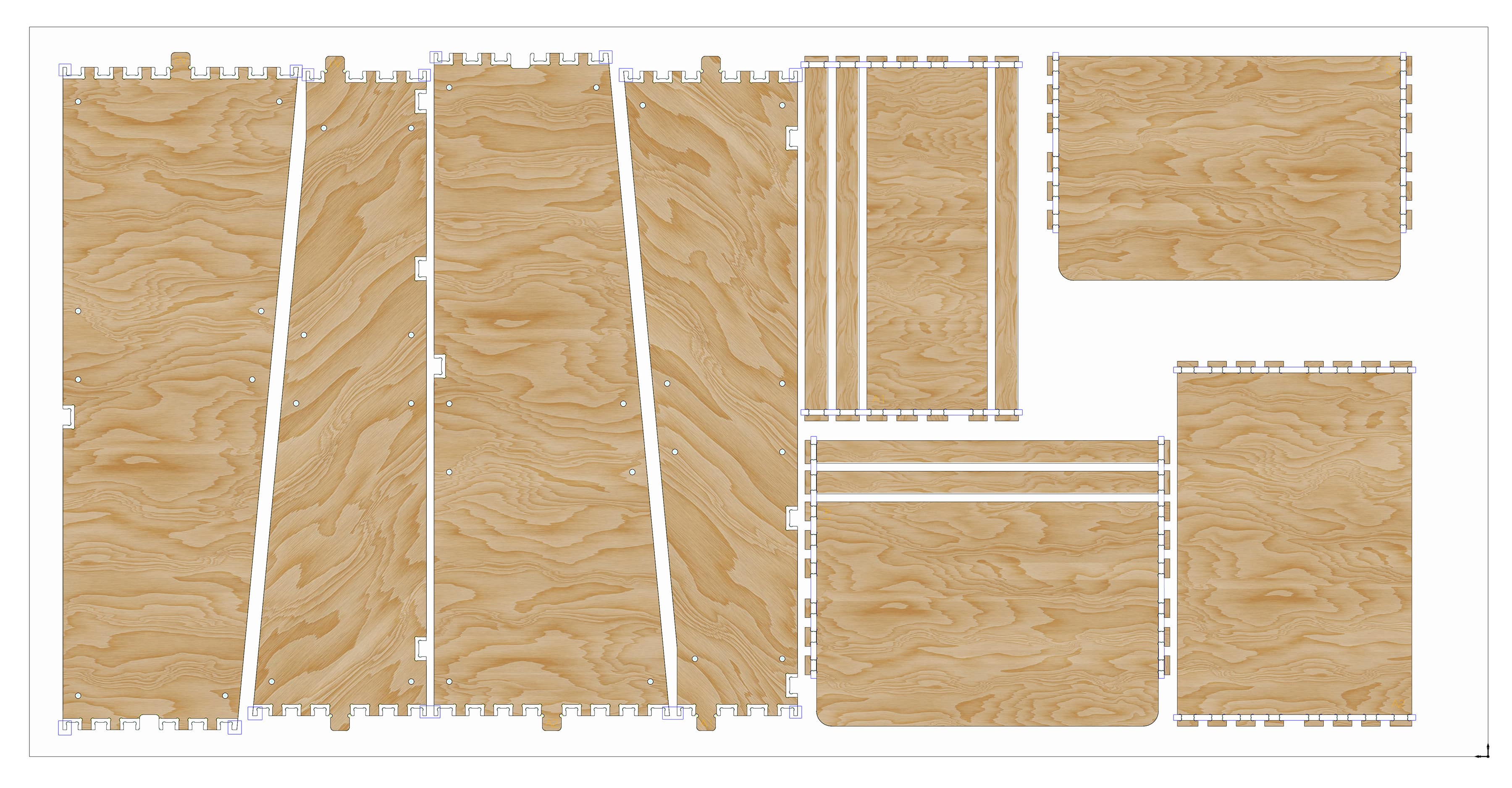
ABOVE: The anatomy of a single ‘cassette’ module, nested in a 4’x8’x.75″ plywwod sheet, ready for milling

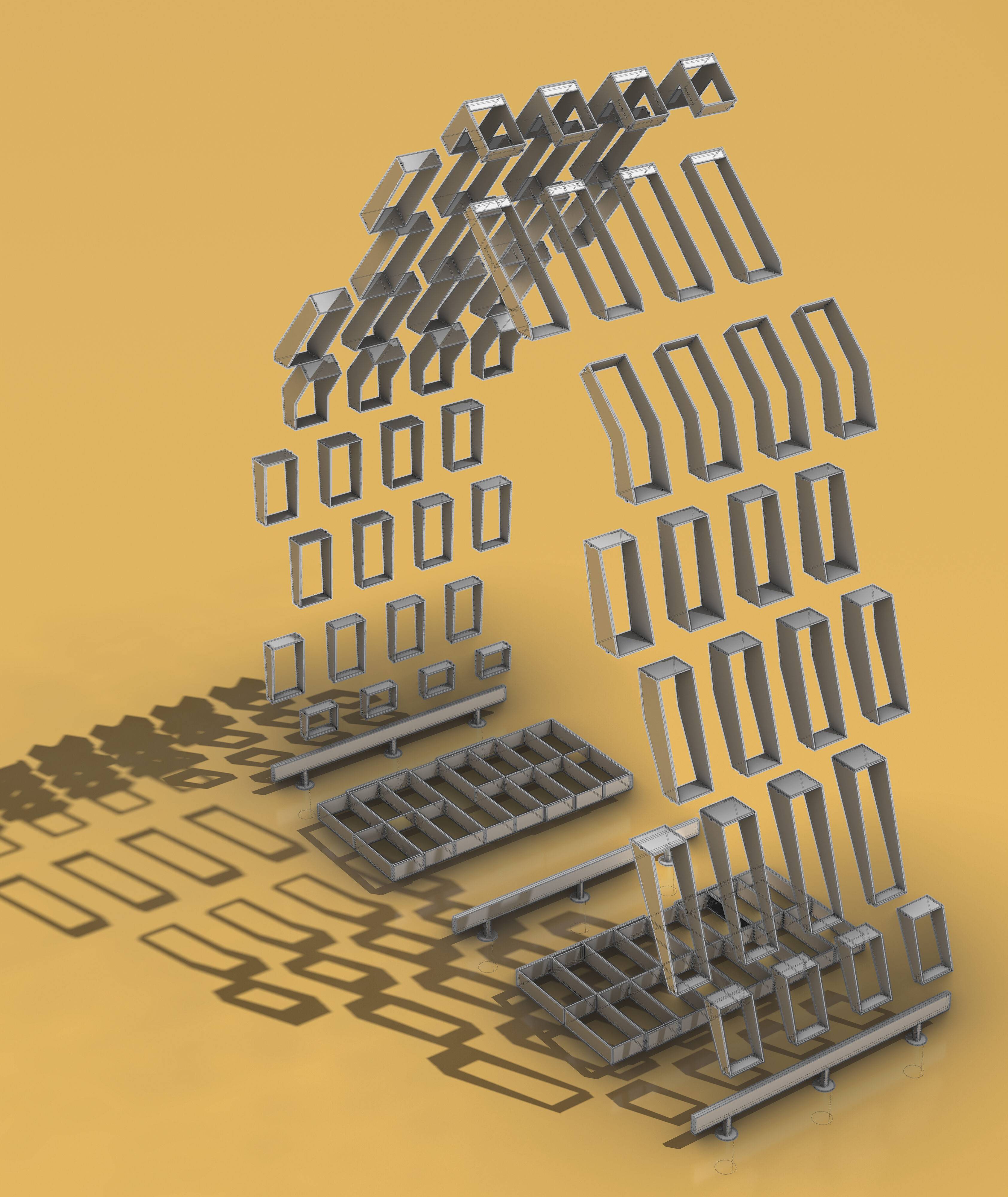
RIGHT: Exploded cassette diagram shows horizontal repetition and vertical differentiation. When assembled each modular unit row ‘tooths’ into the previous installed row below it which forms a robust structural shell when full assembled.


Design Intent and Pedagogical Framework

As a research endeavor, the project investigated how computational modeling and CNC fabrication could produce modular assemblies optimized for rapid field construction. The design prioritized tectonic clarity and modular logic, using a plywood cassette system that integrated structure, enclosure, and built-in furniture. Each wall and floor module was digitally modeled and fabricated, designed to slot together in a sequence that mirrored the logic of a kit-of-parts assembly.

This workflow allowed the greenhouse to function as both a building and a system—each cassette serving multiple roles as structure, storage, and workspace, collectively forming a coherent architectural language. The design also addressed the educational mission of the site: durable, adaptable, and easy to maintain, the greenhouse supported student-led horticulture and environmental learning. The result was a demonstration of how fabrication research could yield a spatial framework that is both functional and pedagogically resonant.


RIGHT: Testing precision-milled plywood cassettes, staged during fabrication, each unit interlocking and auto-aligning like LEGO bricks to form the greenhouse’s modular framework.


Digital Fabrication and Modular Assembly

The fabrication process was grounded in advanced parametric modeling and CNC workflows emphasizing adaptability and precision. Working in Rhino and RhinoCAM, each cassette was digitally nested, milled, and labeled for efficient sequencing and field assembly. The fabrication logic integrated notching, slotting, and “drawer-box-like” interlocking joinery strategies for each ‘cassette’ module resulting in superior joint strength, precision alignment, and repeatability. Fabricated from ¾-inch plywood, every joint was tested and refined to balance friction fit, alignment, and structural performance.

Once fabrication was complete, the prefabricated wall and floor cassettes were organized, labeled, and delivered to the Crutcho site with a detailed set of assembly instructions. The Construction Science team constructed the pier foundation and then assembled the modules in the field. This handoff between fabrication research and on-site construction established a workflow that mirrored professional design-build coordination, connecting computational precision to logistical execution that exceeded typical real-world tolerances achicved by the most skilled professional trades.

ABOVE: Construction science students assembling cassette modules on site, gaining first-hand experience in modular sequencing and field installation.


Educational Model and Student Outcomes

The Crutcho Elementary Greenhouse Classroom tested a new model for interdisciplinary collaboration at the University of Oklahoma, joining faculty-led fabrication research with Construction Science education. The project provided a controlled setting for testing fabrication workflows and field sequencing, generating data about tolerance behavior, assembly order, and communication between digital and physical systems.

For Construction Science students, the experience offered direct engagement with digital fabrication in a field context, strengthening skills in sequencing, leadership, and precision installation. For fabrication research, the project produced a replicable framework for small-scale modular construction, demonstrating how academic research can yield design systems adaptable to a range of educational and civic uses. The greenhouse thus became both a teaching tool and a research artifact—a physical outcome of pedagogical experimentation.


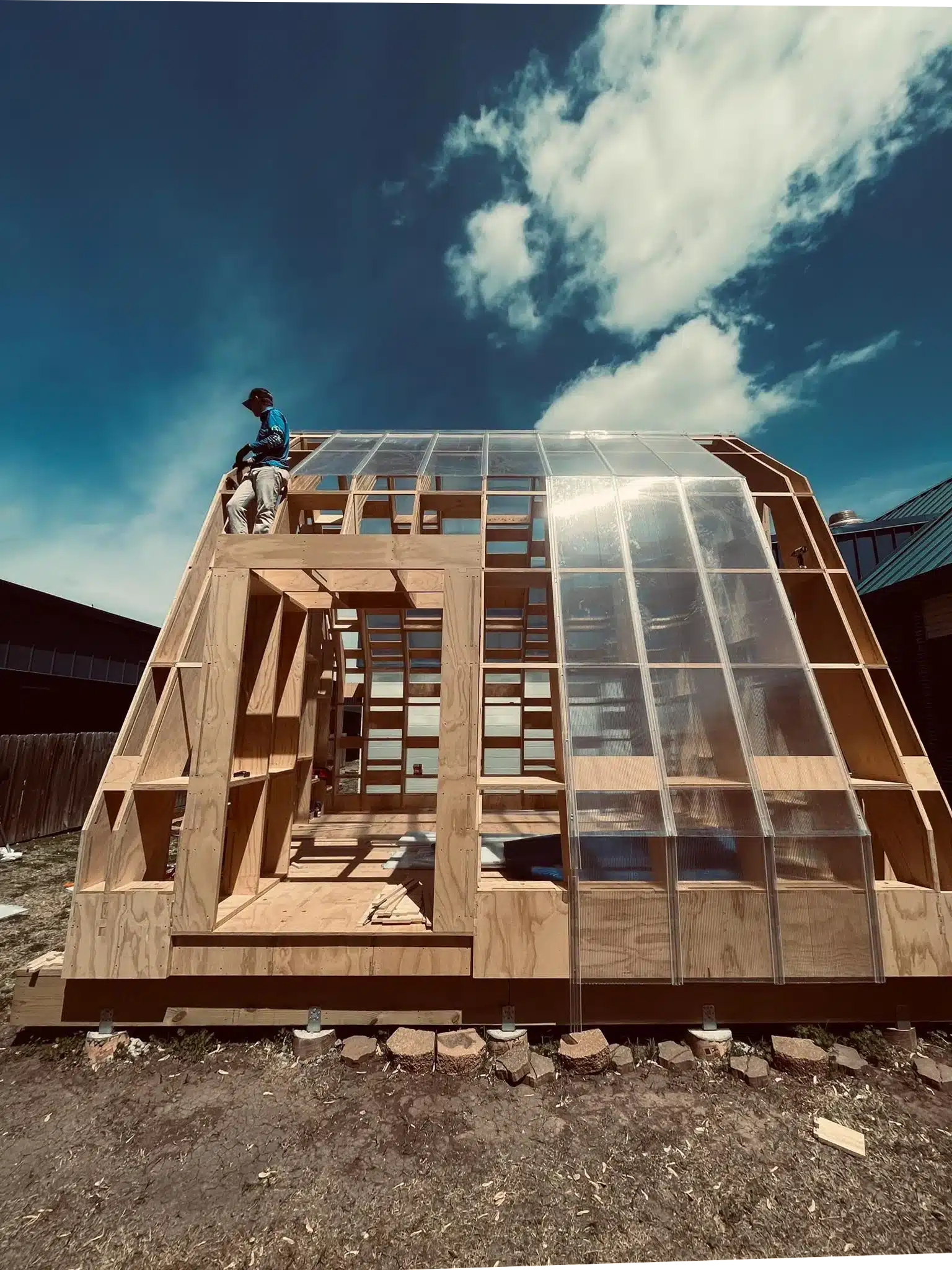
ABOVE: Students erecting CNC-fabricated cassette floors and walls. Collaborative construction in progress, with students working through sequencing, tolerances, and teamwork to bring speculative details into reality.


Community and Institutional Impact

The greenhouse was designed and built for Crutcho Public Schools, a district serving one of the most economically challenged communities in Oklahoma. Beyond its architectural value, the structure functions as a year-round educational environment supporting the school’s curriculum in horticulture, sustainability, and environmental science. Its clarity and material durability allow it to operate as both classroom and laboratory, fostering hands-on learning and environmental literacy.

As reported by local media, the project was recognized as a model for university–community partnership and a precedent for future design-build engagement. It expanded on earlier greenhouse prototypes and became a bridge toward more complex faculty-led research, including the fully integrated John Rex Urban Learning Greenhouse completed the following year. This project reaffirmed the university’s mission of civic collaboration, demonstrating that fabrication research can act as a catalyst for educational equity and community engagement.


Reflection and Legacy

The Crutcho Elementary Greenhouse Classroom remains a pivotal early project in the evolution of Gibbs College’s design-build pedagogy. It established a new hybrid model that merged digital fabrication research with construction science education, balancing computational precision with the coordination required for on-site assembly. The project proved that the success of fabrication research depends as much on collaboration and communication as it does on technical execution.

More broadly, the greenhouse demonstrated how small-scale architecture can achieve disproportionate social and institutional impact. By combining research and service, the project redefined how architectural education can engage the public realm—showing that innovation in digital design can directly contribute to environmental learning, community resilience, and pedagogical advancement.

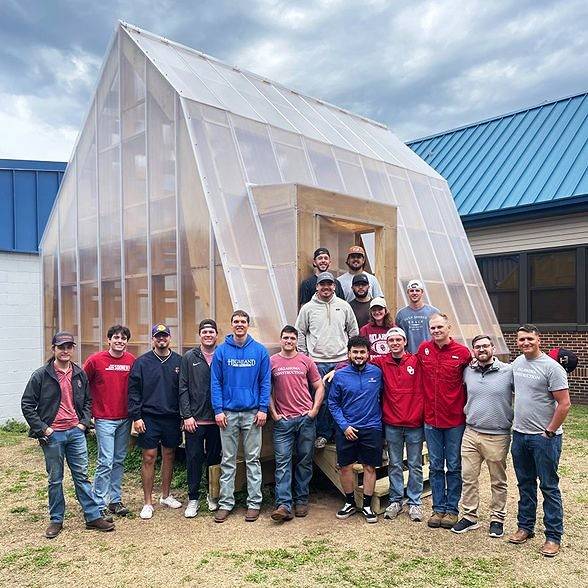
ABOVE: Team portrait of construction science students, in front of the finished Crutcho Greenhouse Classroom, completed in one semester as a proof-of-concept for future ASDB pedagogy.


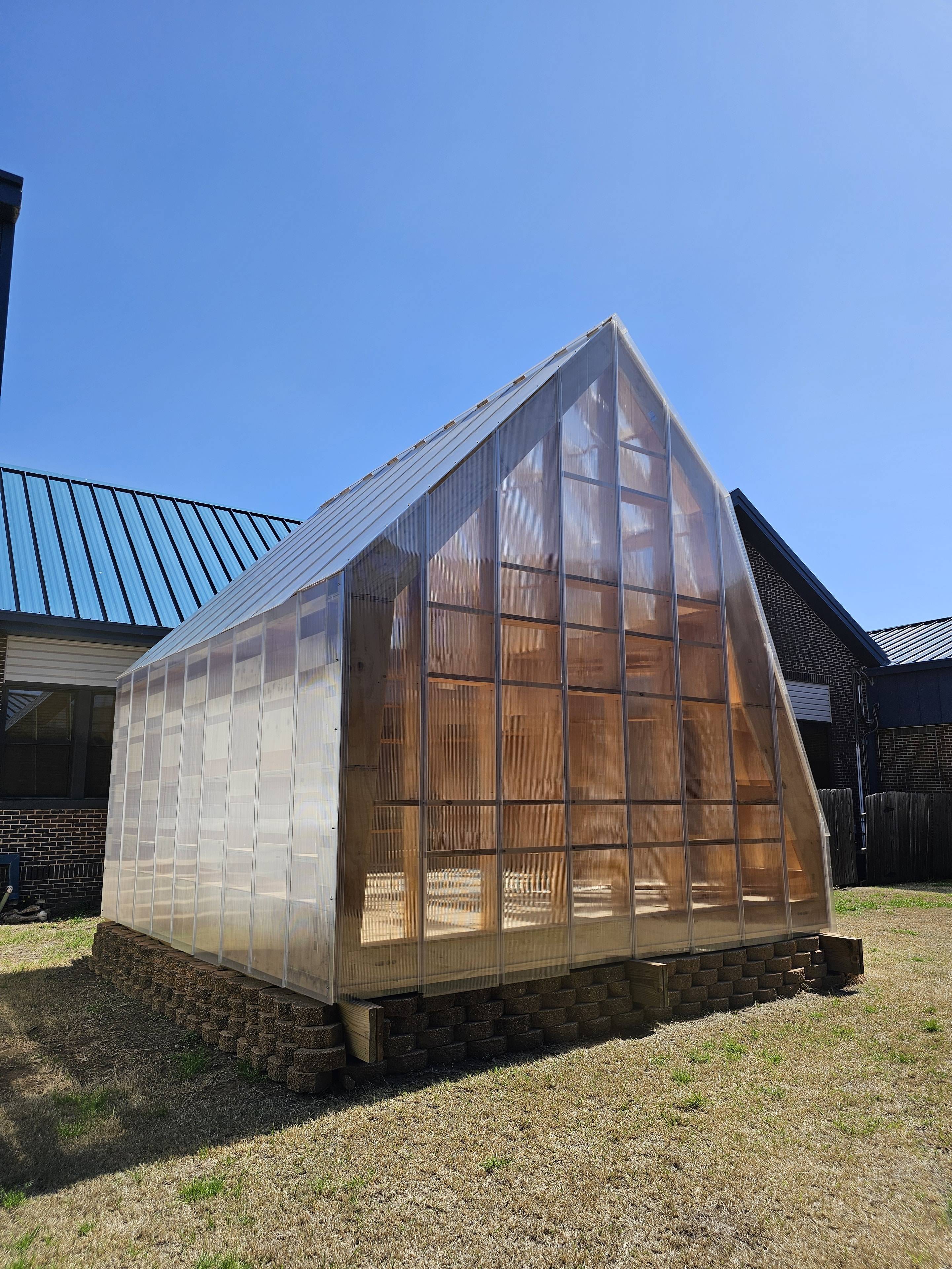
ABOVE: Exterior assembly of the Crutcho Greenhouse Classroom, where CNC-milled plywood cassettes were enclosed with dual-layer polycarbonate to create a year-round grow lab.


More Work


Architecture

Art + Code

Design + Fabrication

Courses + Student Work

© Ken Marold USA, Inc. All rights reserved.
Continue reading

Prairie Slider Grow

Prairie Slider | GROW

Norman, OK

Status : Design On-going

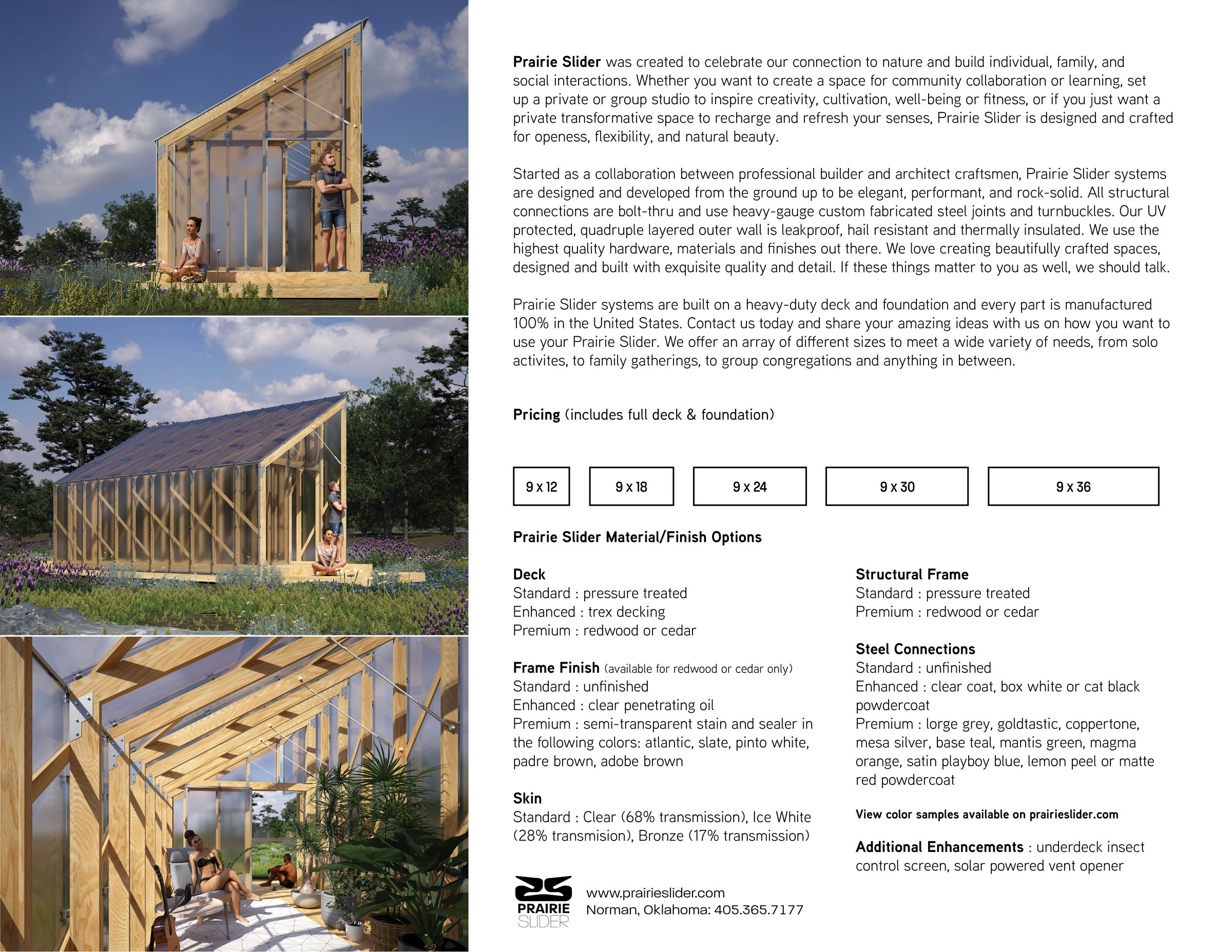
Prairie Slider is a small-scale architectural framework designed for restorative solitude, communal gathering, and adaptable use. Conceived through collaboration between architect and builder, the structure operates as a hybrid enclosure — part greenhouse, part studio, part retreat. Its minimal footprint and crafted detailing allow it to function across diverse contexts while establishing a lasting presence within the prairie landscape.


Prairie Slider | GROW

Norman, OK

Status : On-going

Prairie Slider is a small-scale architectural framework designed for restorative solitude, communal gathering, and adaptable use. Conceived through collaboration between architect and builder, the structure operates as a hybrid enclosure — part greenhouse, part studio, part retreat. Its minimal footprint and crafted detailing allow it to function across diverse contexts while establishing a lasting presence within the prairie landscape.

Spatial Configuration
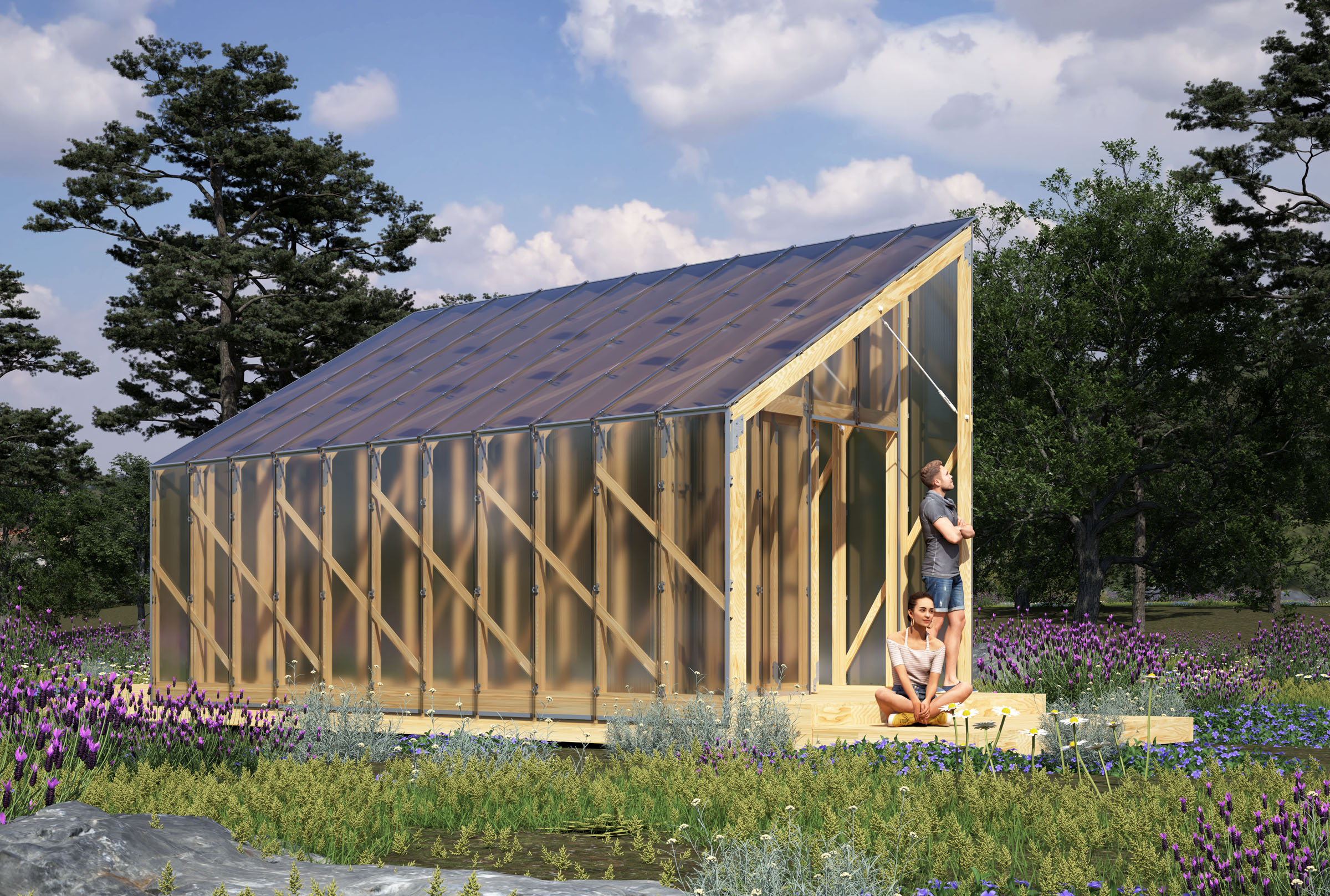
The design is organized around a simple rectangular footprint and a single-pitch roof that mediates light and frames expansive views of the surrounding site. Built entirely as a post-and-beam system, the frame uses dimensional lumber articulated with exposed steel connectors and turnbuckles. This construction logic makes the structural rhythm legible and expressive, aligning with the project’s ethos of openness, functionality, and honesty.

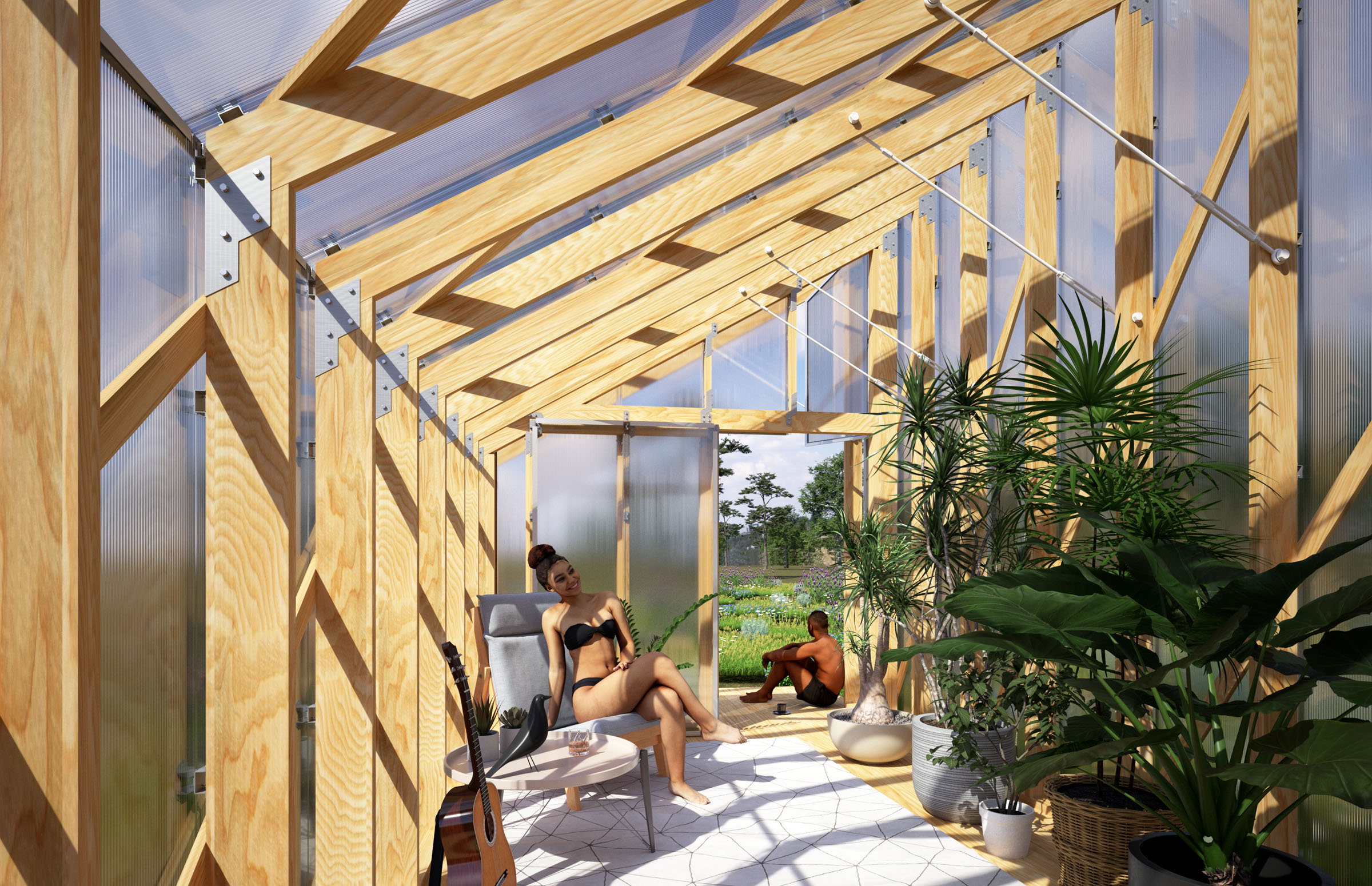
Internally, the space is defined by a single volume animated by shifting light and vegetation. Translucent polycarbonate panels admit diffuse daylight while providing weather resistance and UV protection. Seasonal and diurnal changes transform the quality of interior light, creating zones of warmth, shadow, and brightness. The rhythm of timber framing and diagonal bracing generates a spatial cadence reminiscent of both vernacular barns and modern greenhouse typologies.


Material Strategy
The enclosure is clad in quadruple-wall polycarbonate sheeting, offering insulation, weather resistance, and graduated translucency. This system balances thermal performance with privacy while maintaining a subtle visual connection to the exterior landscape. Precision-fabricated steel plates, brackets, and tensioning systems reinforce the timber frame while also functioning as visible details that highlight the logic of assembly. Collectively, these material strategies underscore durability, craft, and clarity.

Use and Adaptability
The structure is intentionally open-ended in program. It can function as a greenhouse, meditation space, reading room, art studio, or small gathering place. Operable sliding panels and doors allow for ventilation and seasonal adaptation, ensuring that the building remains responsive to changing weather and user needs. Its durability and modular framing system support longevity while leaving room for personalization.

Context and Landscape
Sited within a prairie ecosystem, the building rests lightly on a timber platform that defines a threshold between cultivated wildness and constructed shelter. The surrounding vegetation — native grasses, pollinator plants, and seasonal blooms — plays an active role in shaping the atmosphere of the interior, filtering light and softening views. From within, the space becomes both a lens onto the prairie and a refuge within it, creating an experience grounded equally in architecture and ecology.

Conclusion
Prairie Slider is an exploration of simplicity, adaptability, and presence. By combining vernacular references with precision detailing, the project establishes a framework for connection — between people, landscape, and light. It offers not only a crafted architectural object but also an invitation to inhabit the prairie differently: slower, more attentively, and with renewed appreciation for the relationship between shelter and environment.


More Work


Architecture

Art + Code

Design + Fabrication

Courses + Student Work

© Ken Marold USA, Inc. All rights reserved.
Continue reading

Mark Twain Elementary Greenhouse

Mark Twain Elementary Greehouse

Oklahoma City, OK
Construction Completed: May 2022

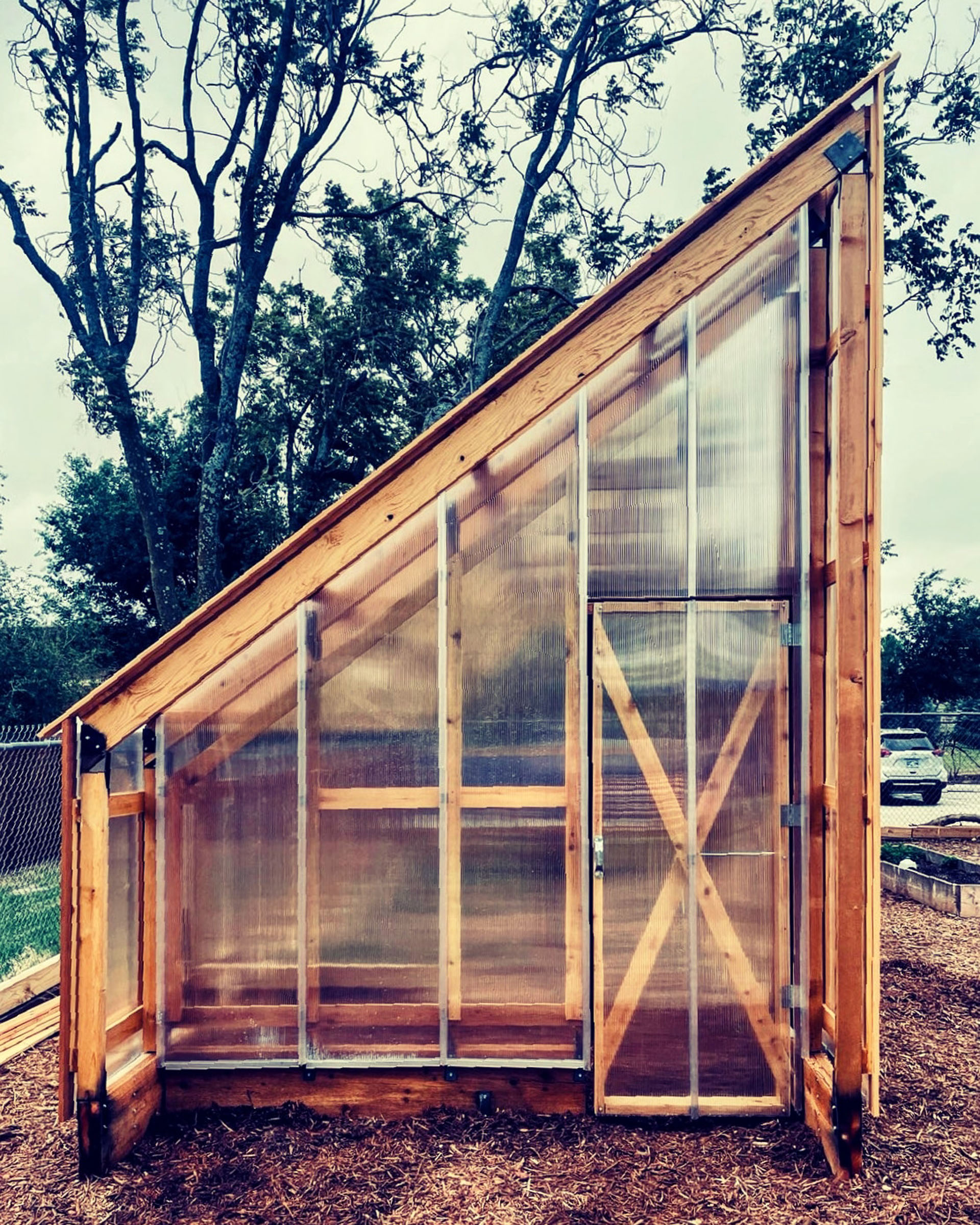
This greenhouse was designed as a purpose-built, utilitarian enclosure to support seasonal plant cultivation and community food production. The structure prioritizes function, economy, and environmental responsiveness, utilizing a restrained palette of raw materials assembled with precision and clarity. Built primarily from off-the-shelf dimensional cedar, mild steel, and translucent polycarbonate cladding, the project reflects a straightforward yet deliberate construction methodology rooted in making with intent.


Mark Twain Elementary Greehouse

Oklahoma City, OK
Construction Completed: May 2022

This greenhouse was designed as a purpose-built, utilitarian enclosure to support seasonal plant cultivation and community food production. The structure prioritizes function, economy, and environmental responsiveness, utilizing a restrained palette of raw materials assembled with precision and clarity. Built primarily from off-the-shelf dimensional cedar, mild steel, and translucent polycarbonate cladding, the project reflects a straightforward yet deliberate construction methodology rooted in making with intent.

Structure and Assembly

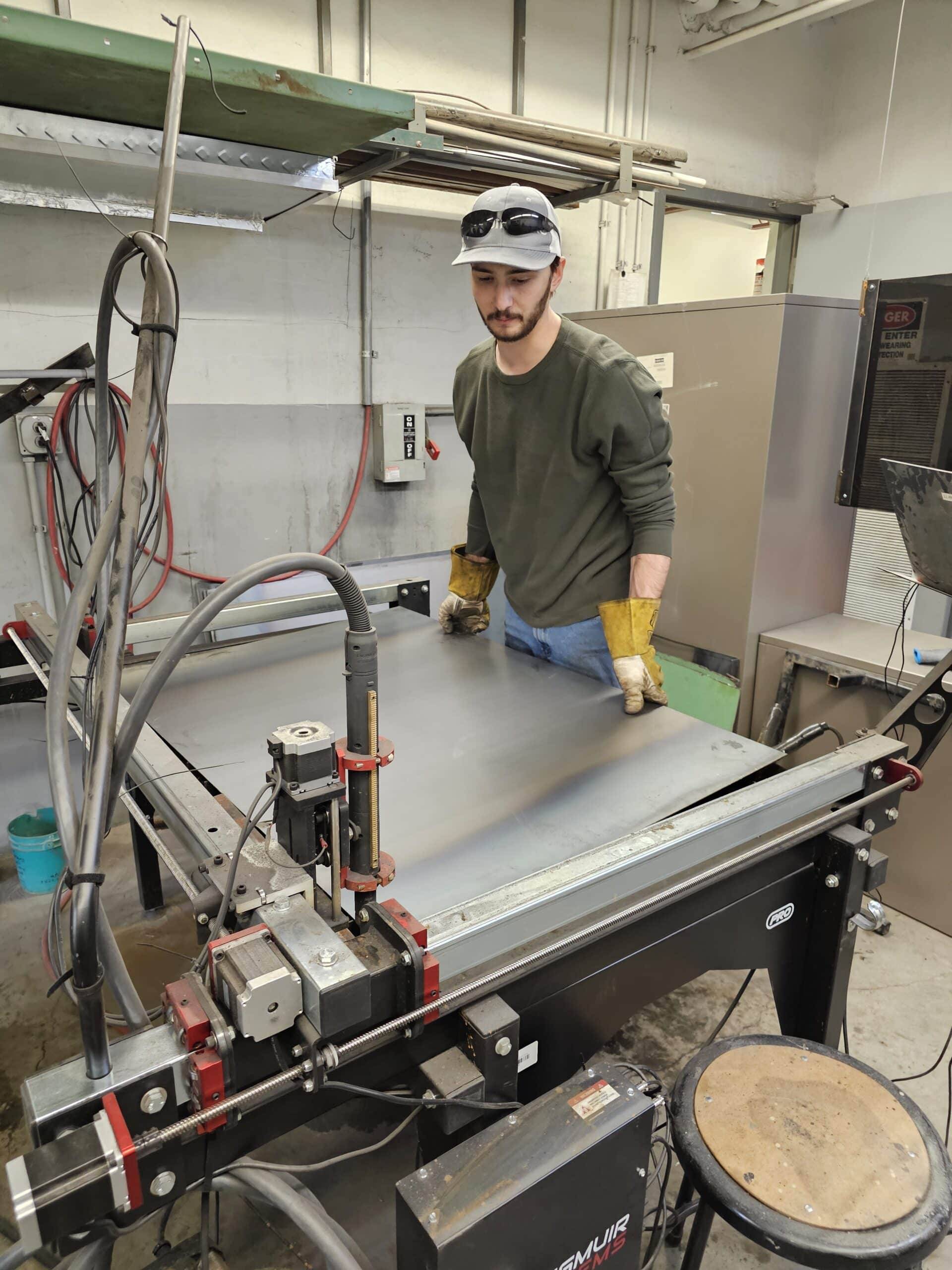
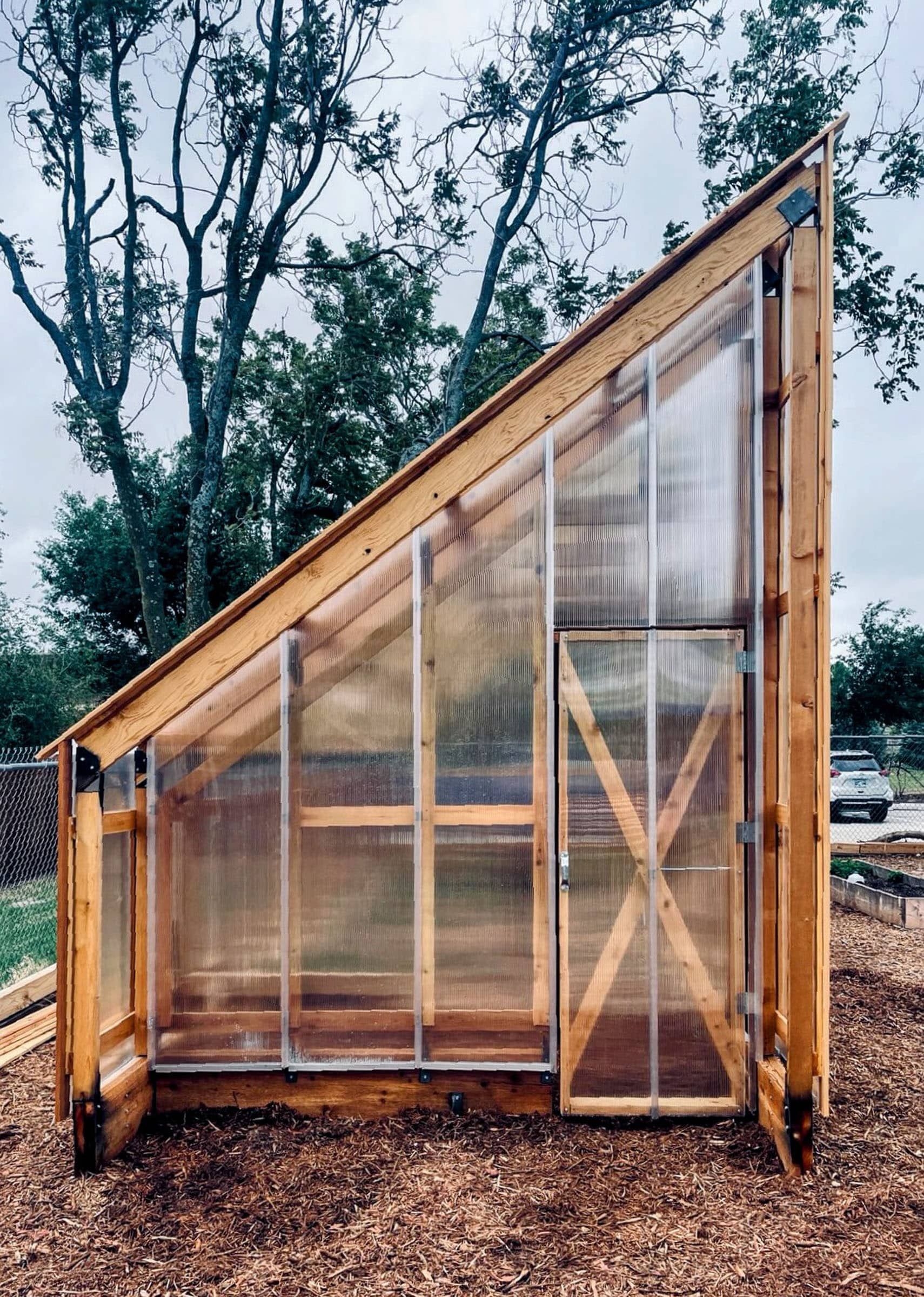
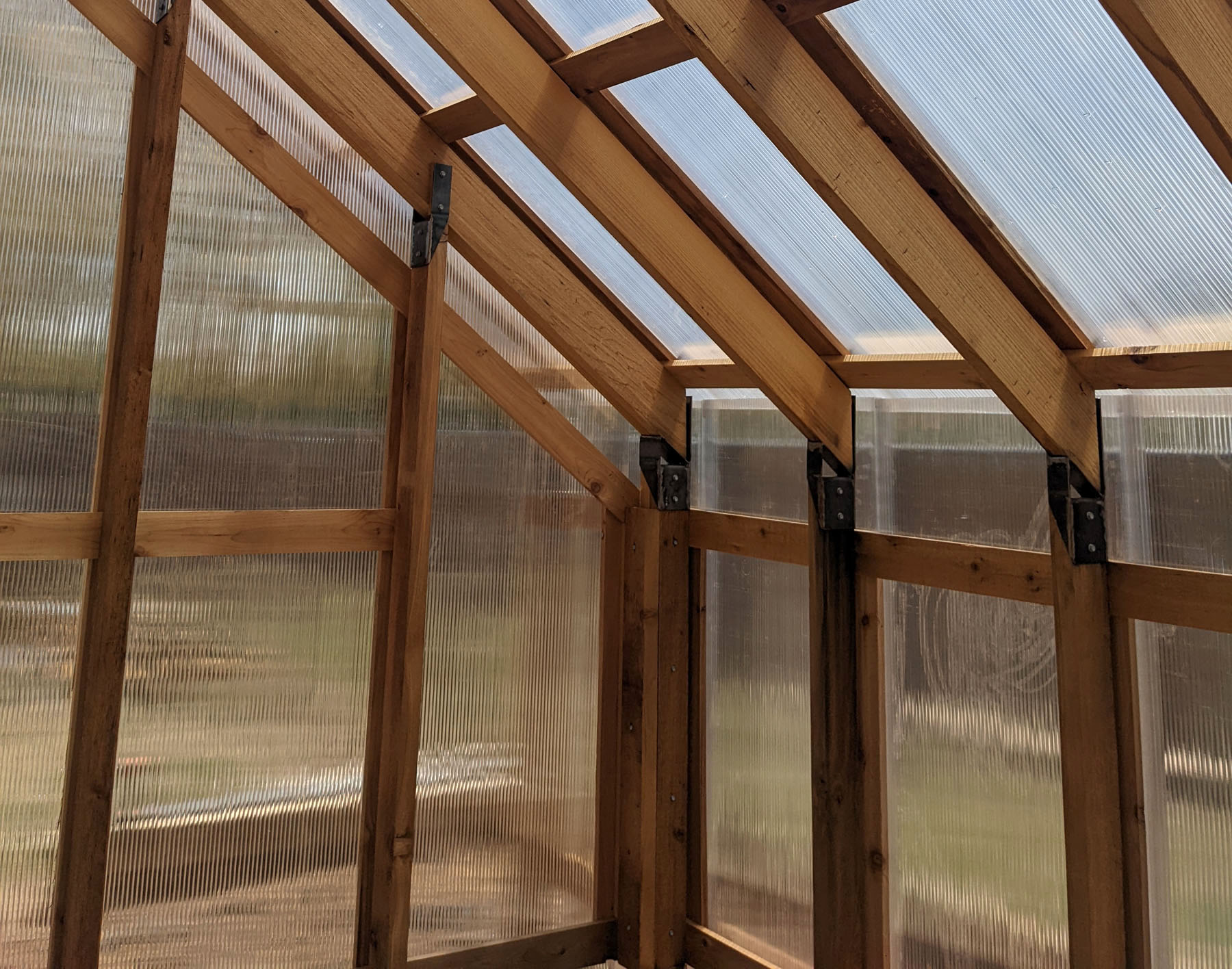
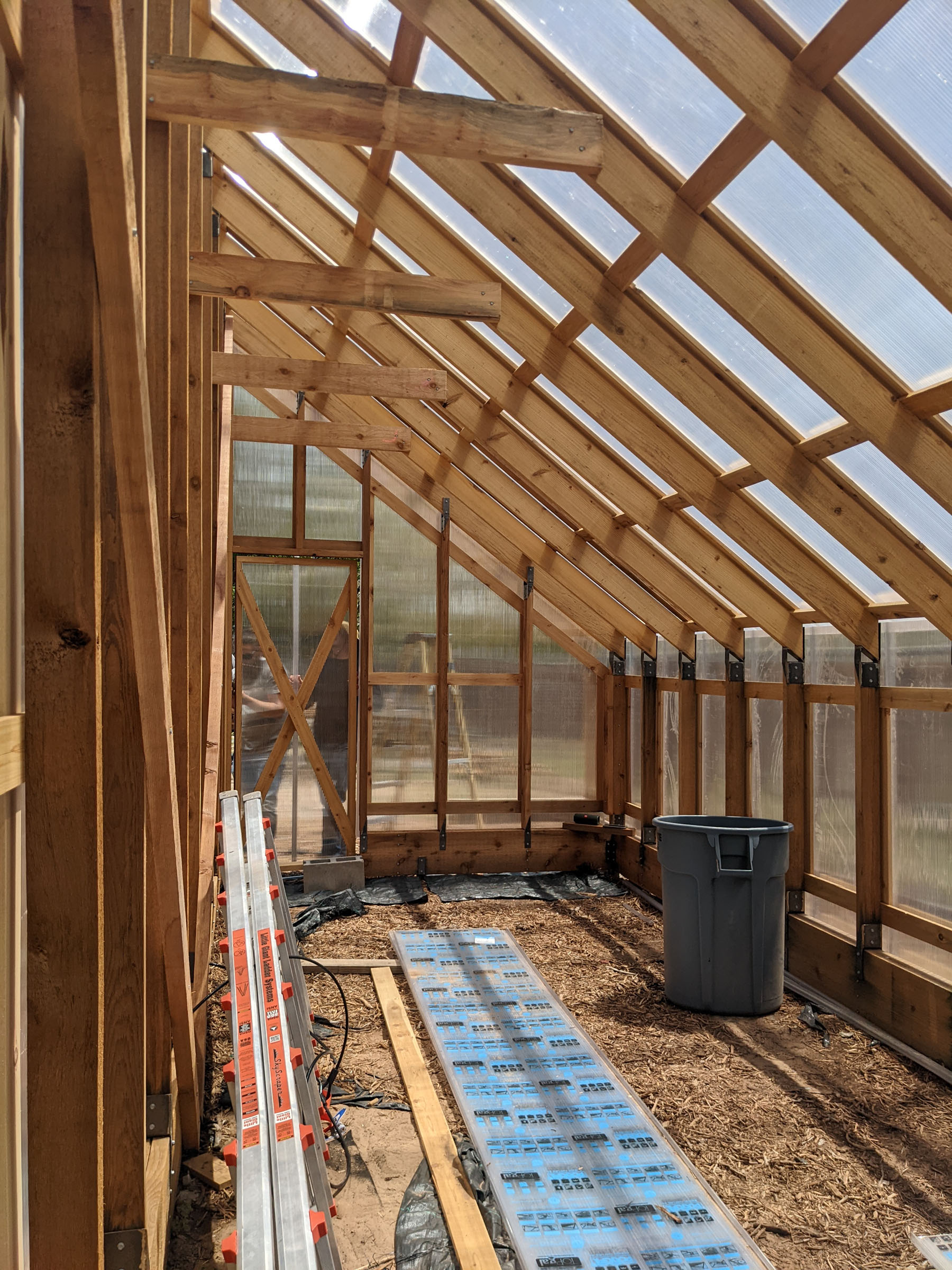
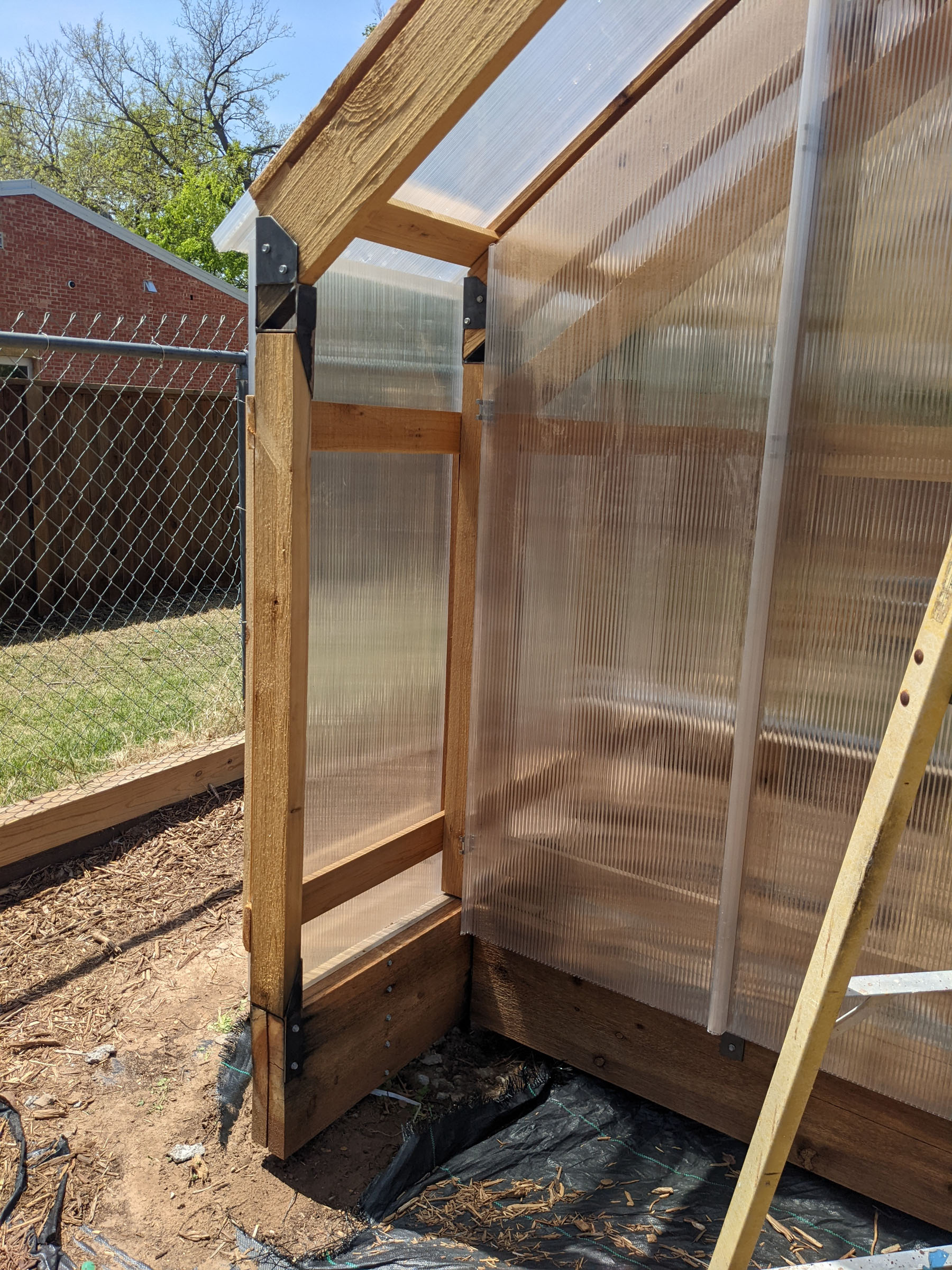
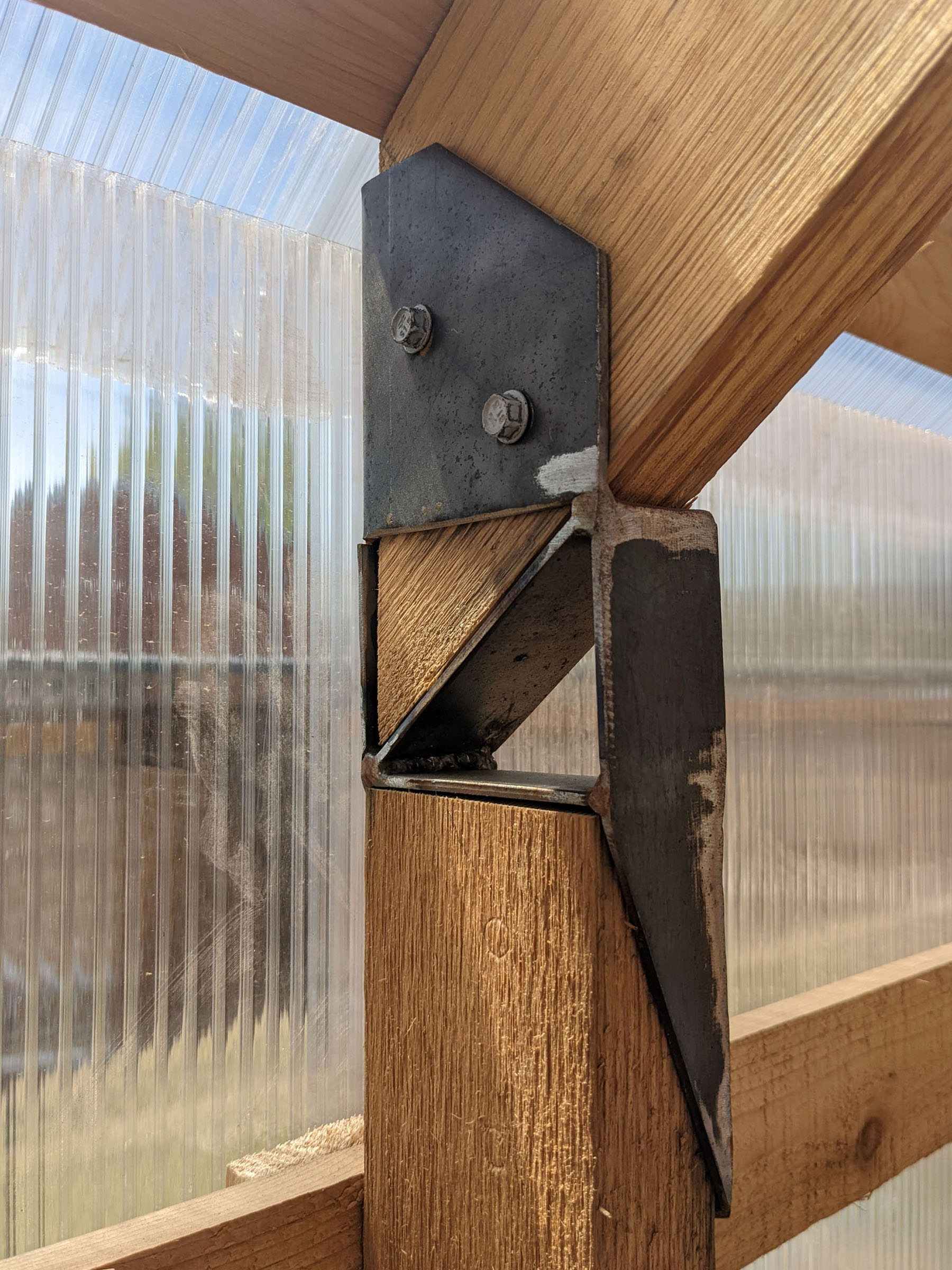
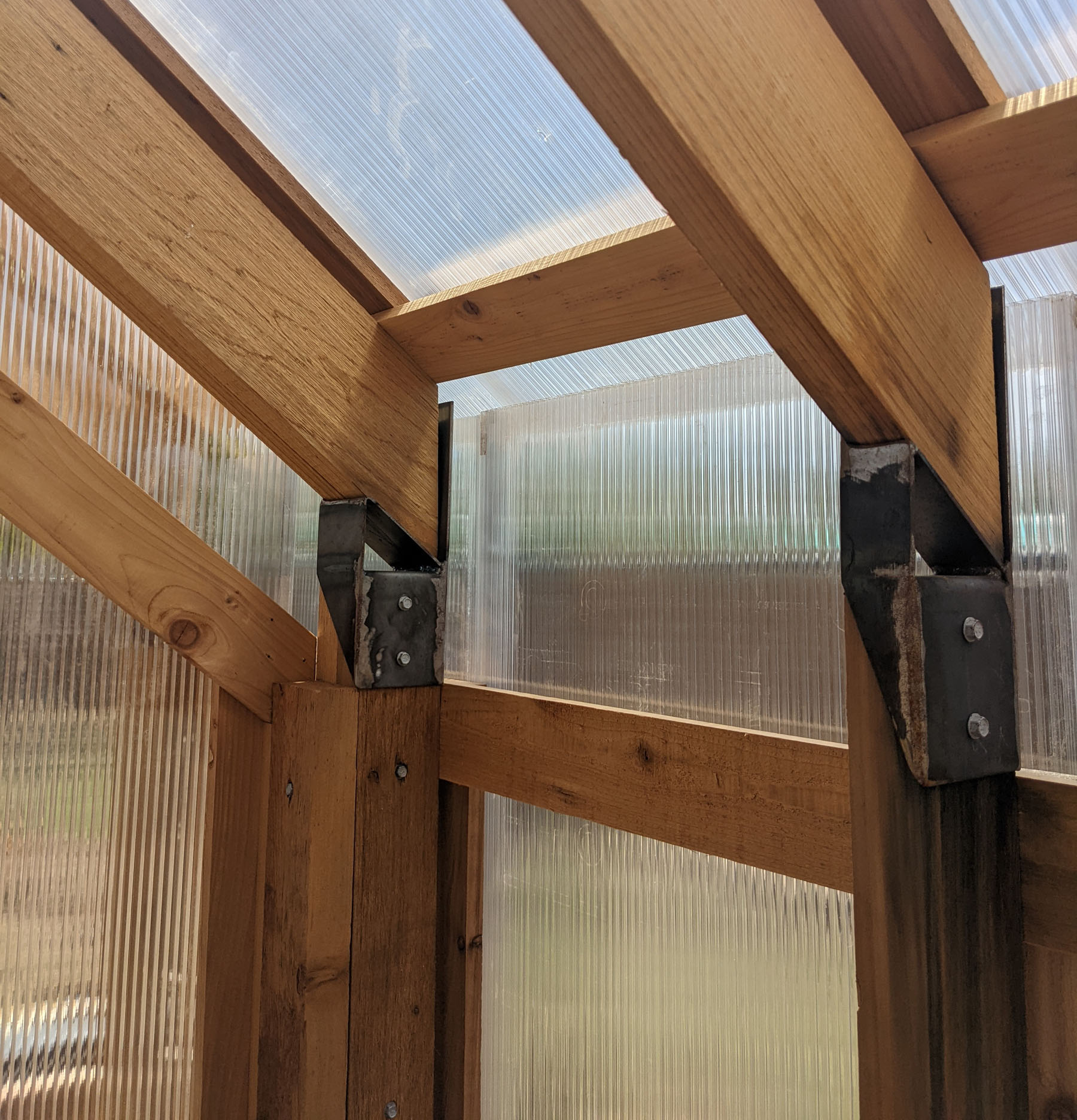
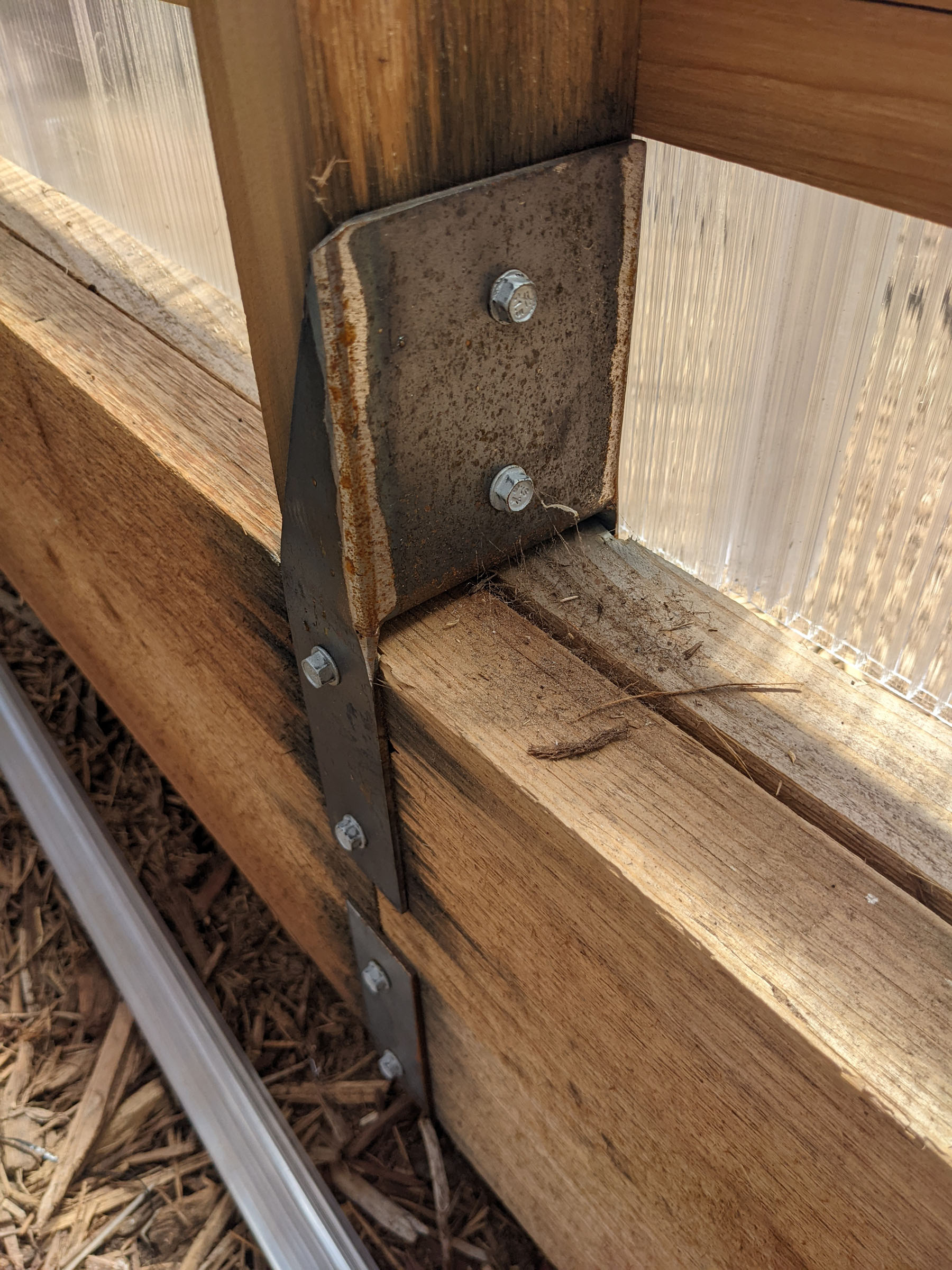
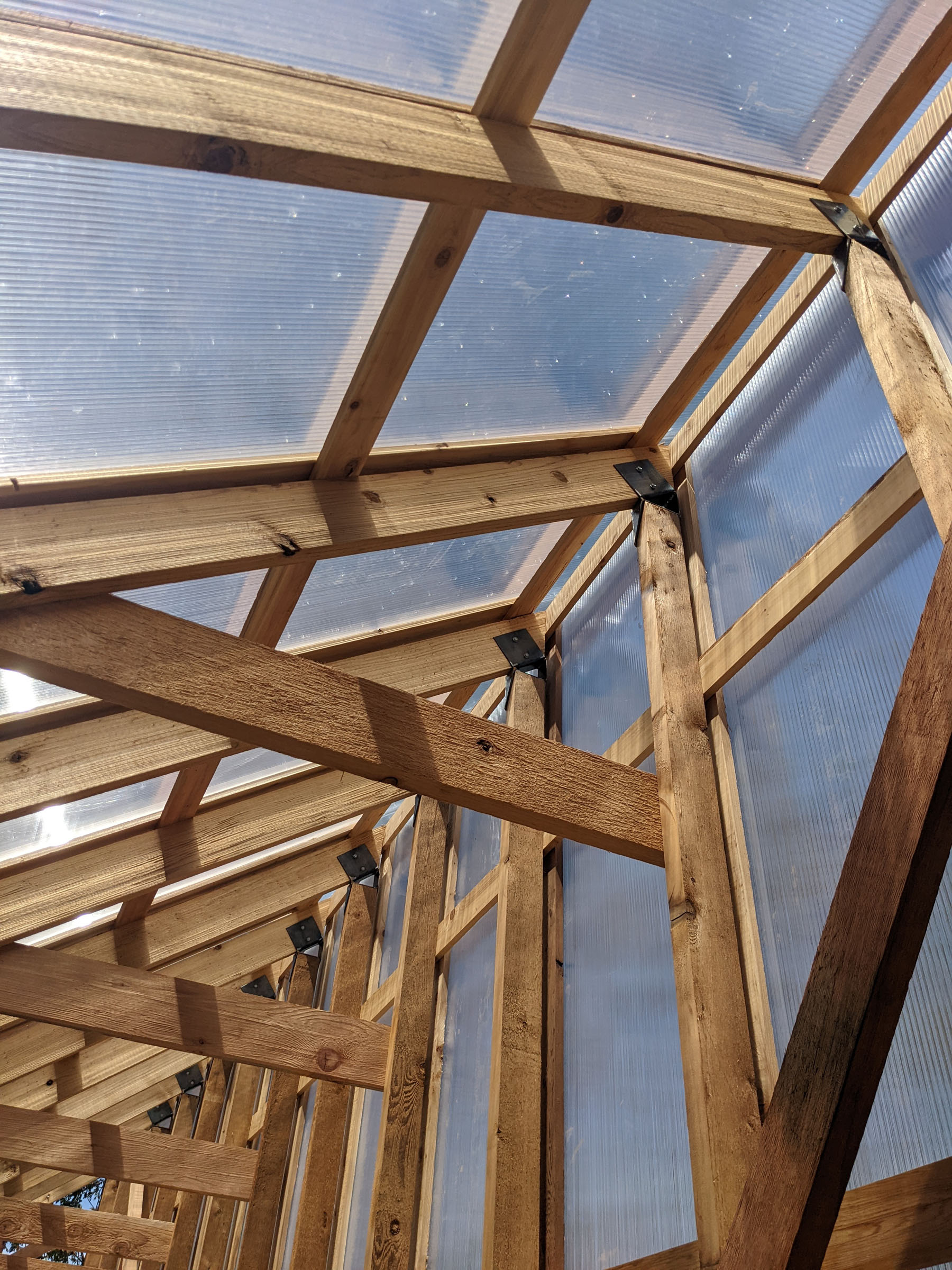
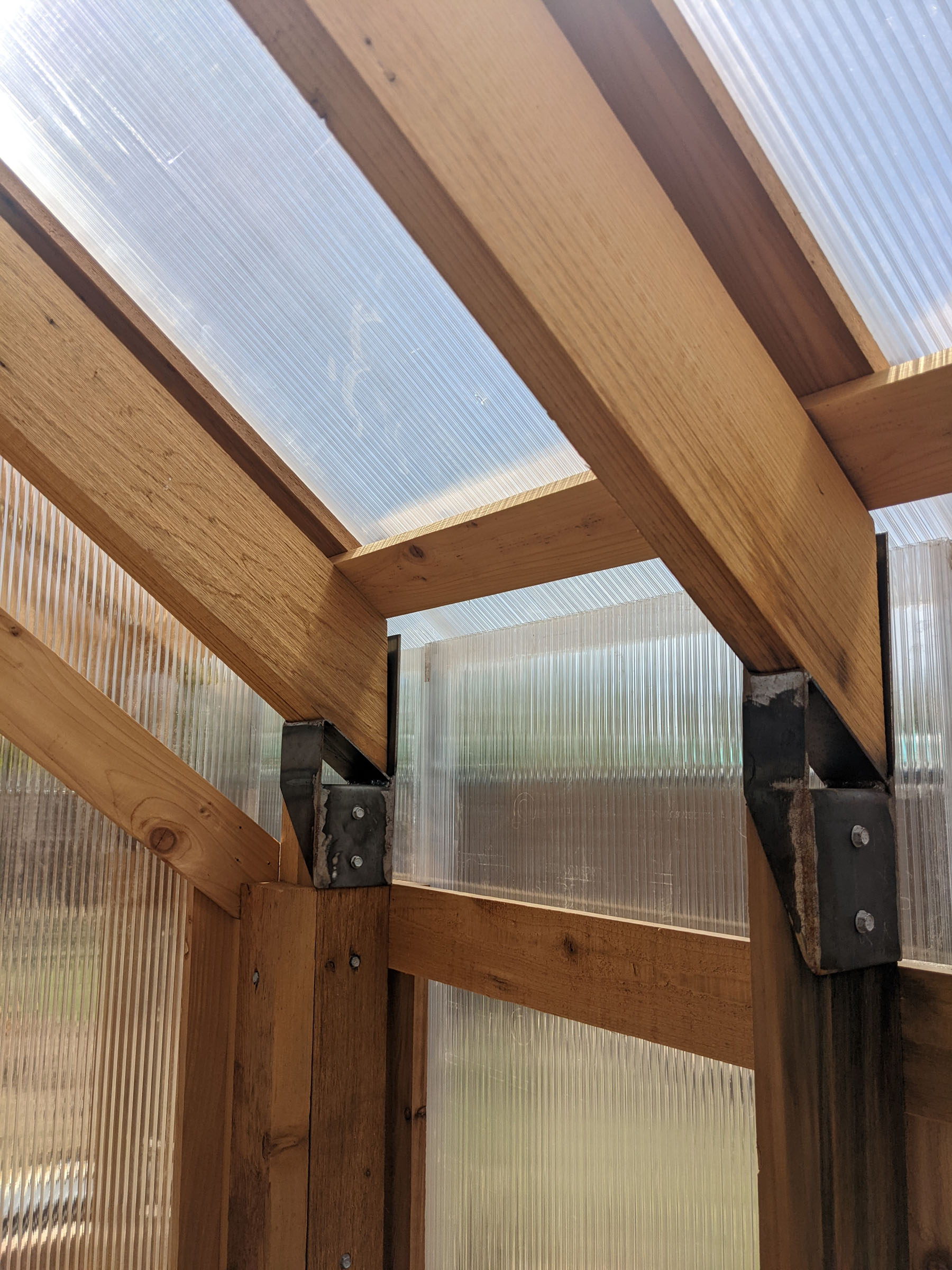
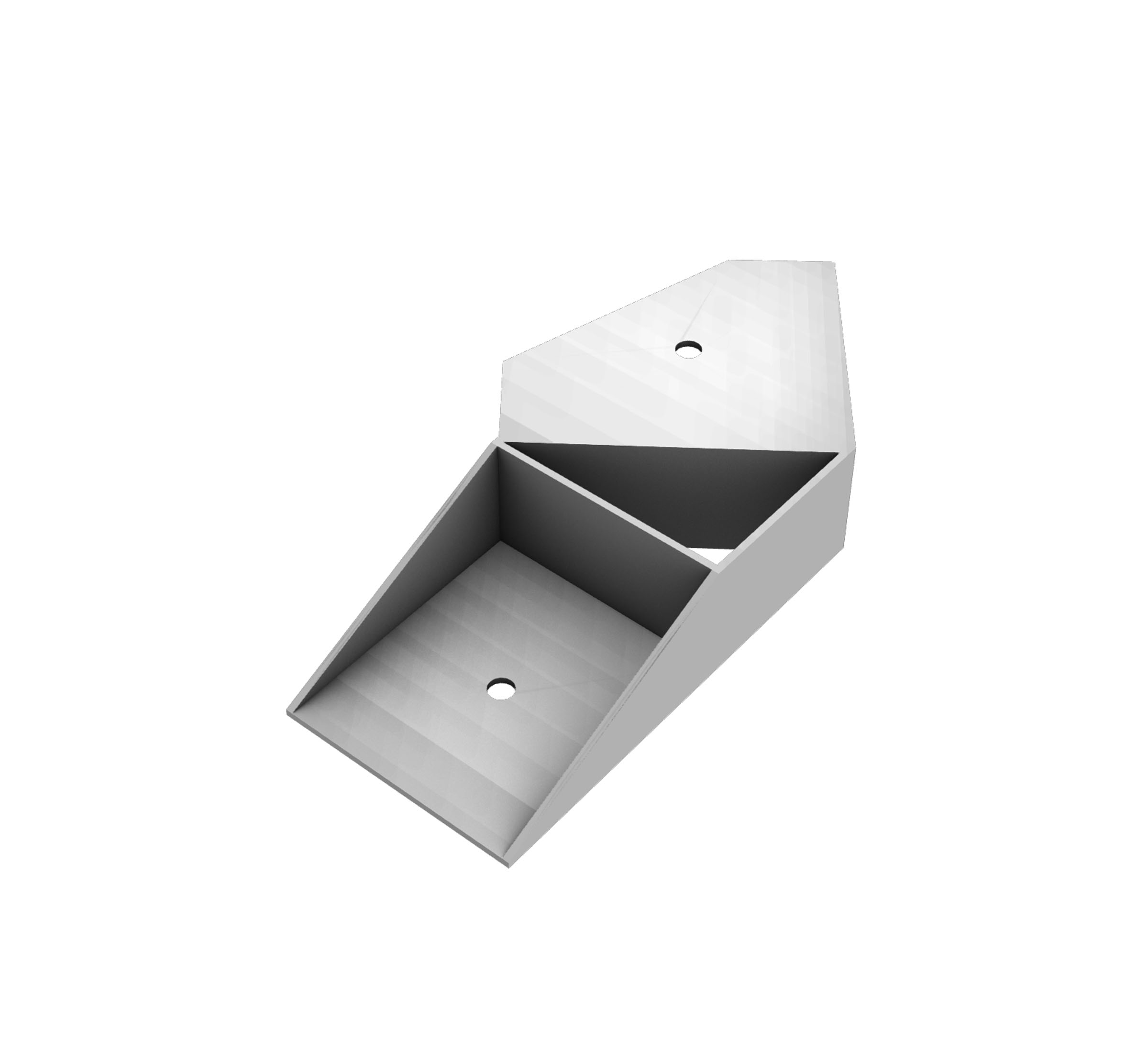
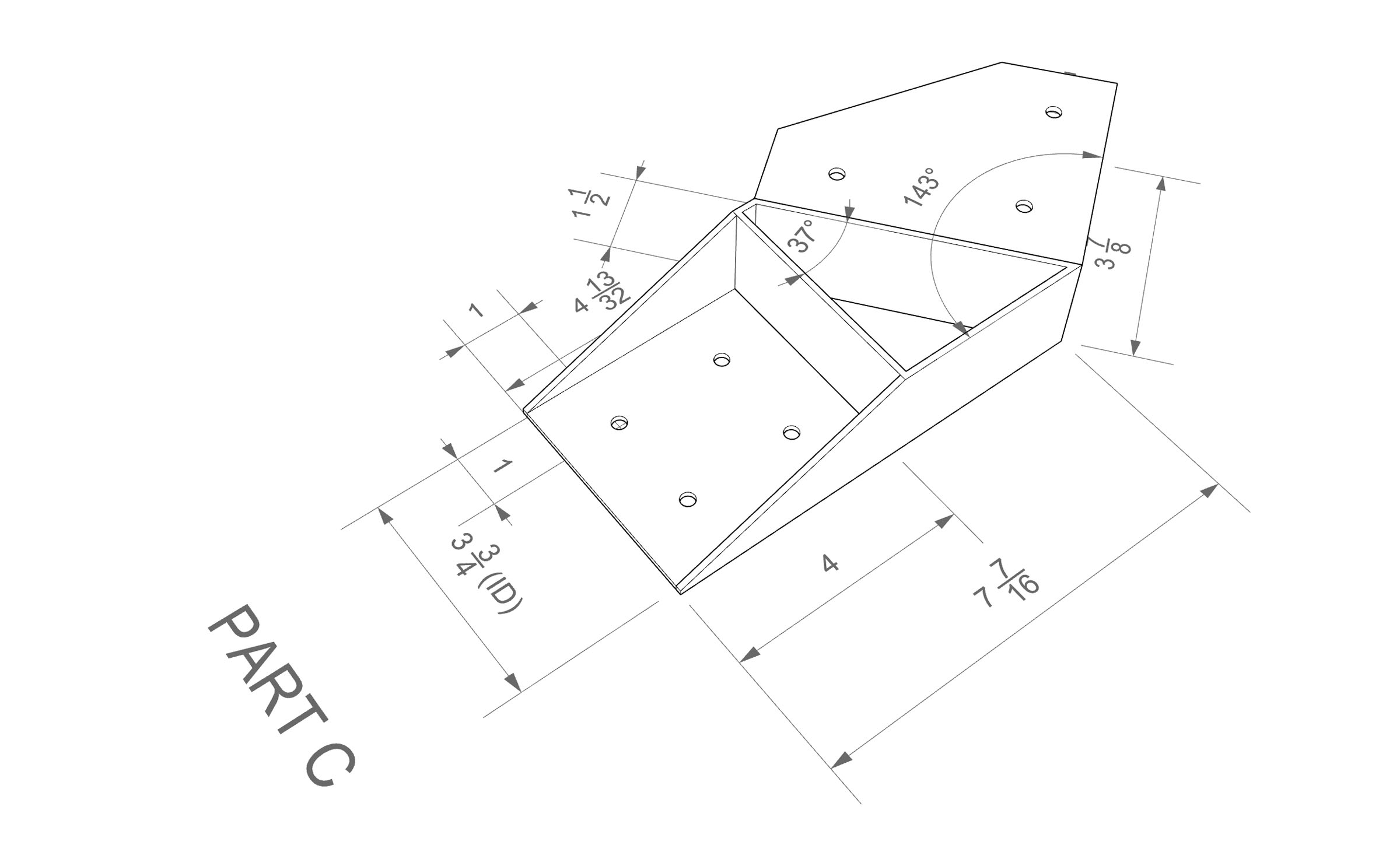
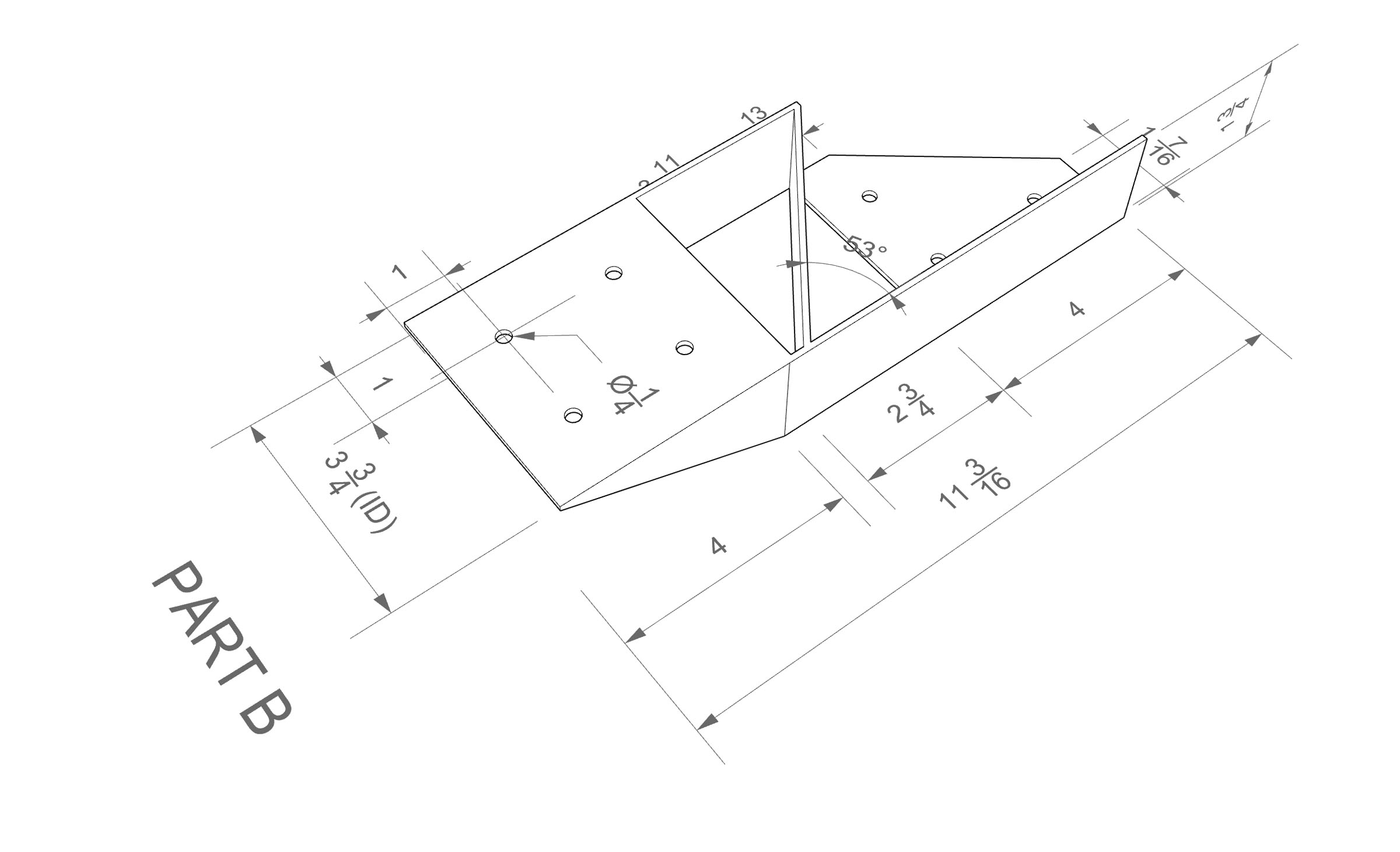
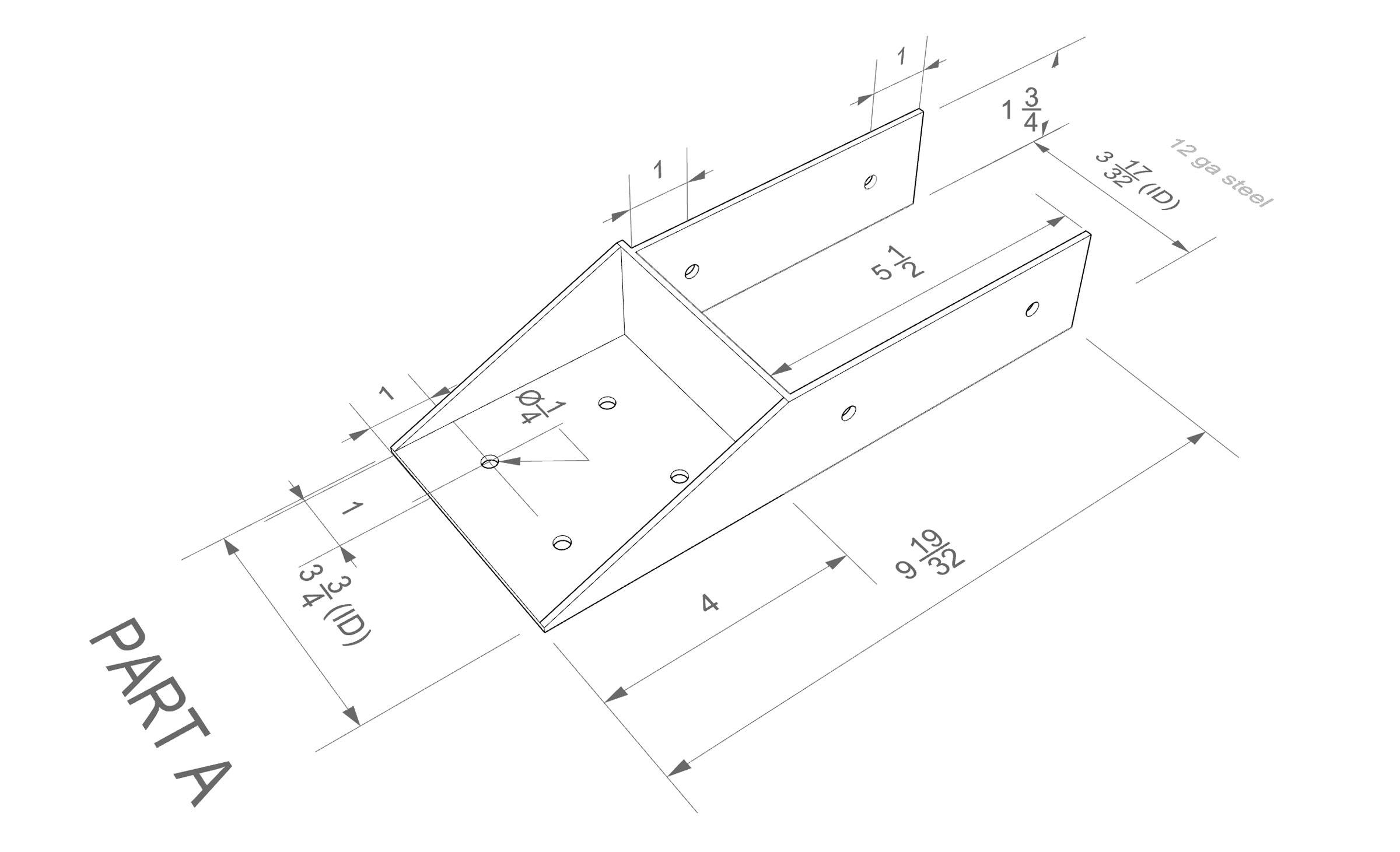
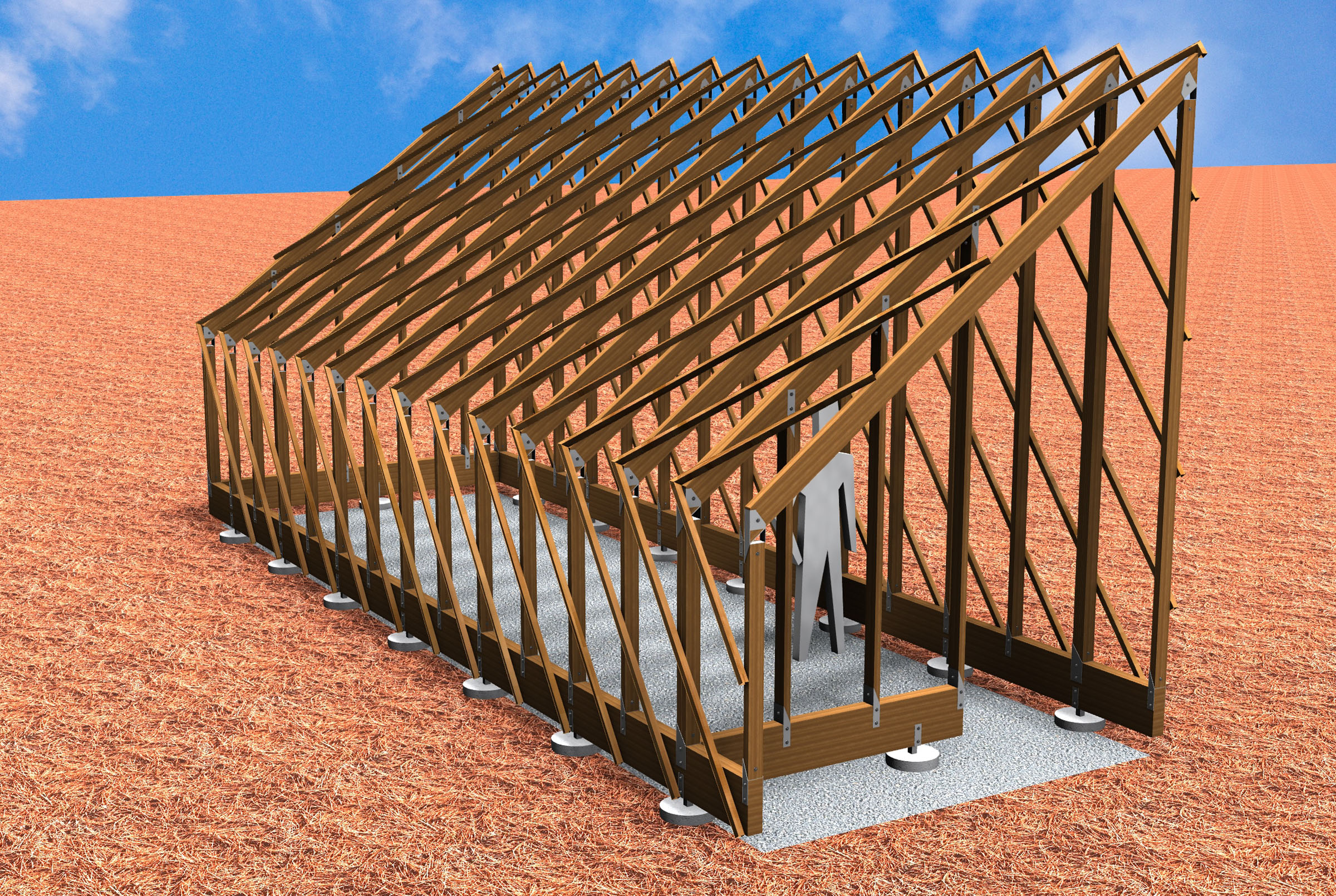
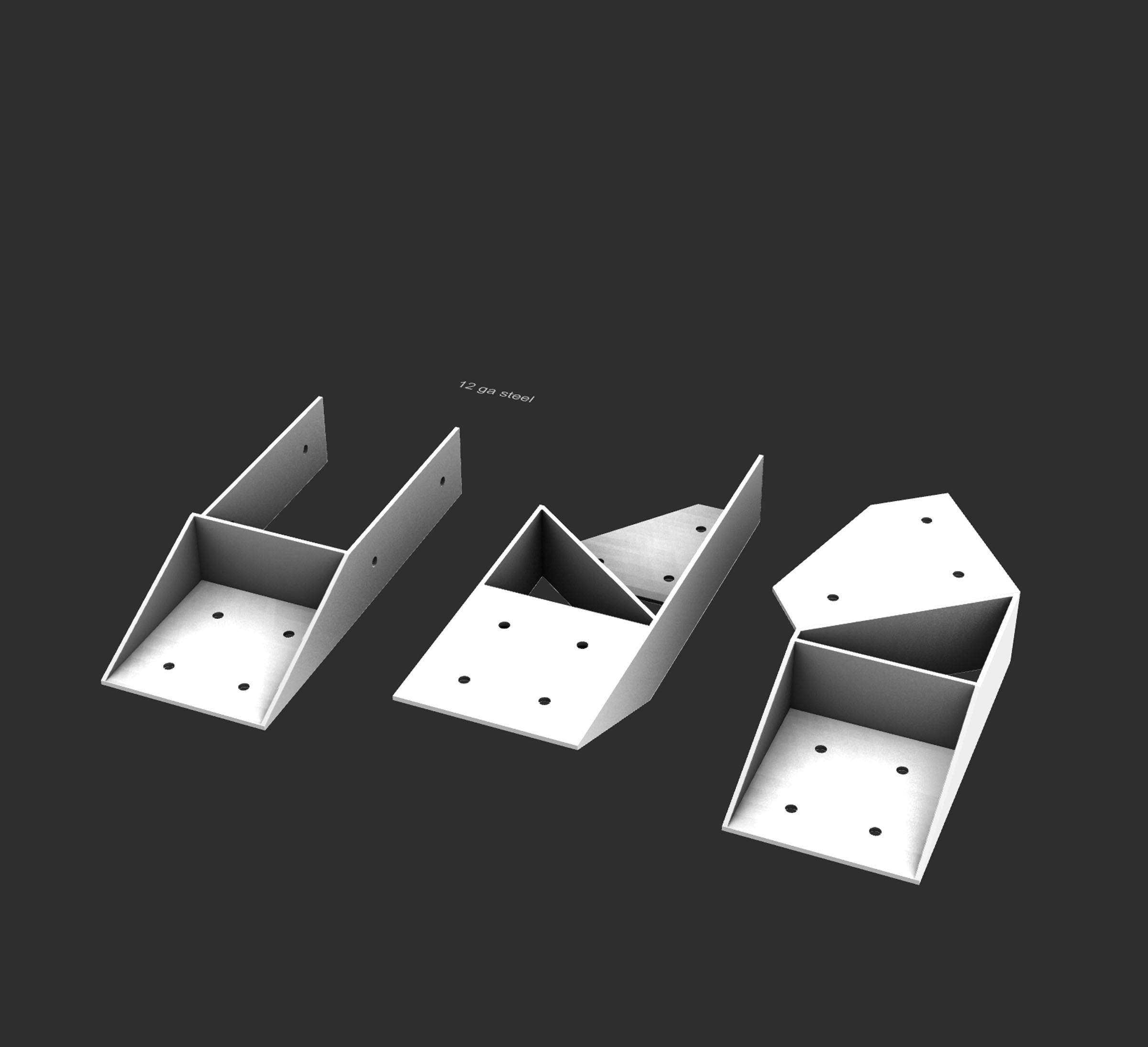
The primary frame is composed of cedar 2x lumber, selected for its resistance to rot and insects and its workability with basic tools. All joints are reinforced using custom-fabricated mild steel plates and brackets, plasma-cut and welded to support the unique geometries of the sloped roof and wall intersections. These connections remain exposed, expressing the joint logic and construction process. Steel plates serve a dual role, providing structural reinforcement while creating a visual rhythm and point of visual interest along the frame.

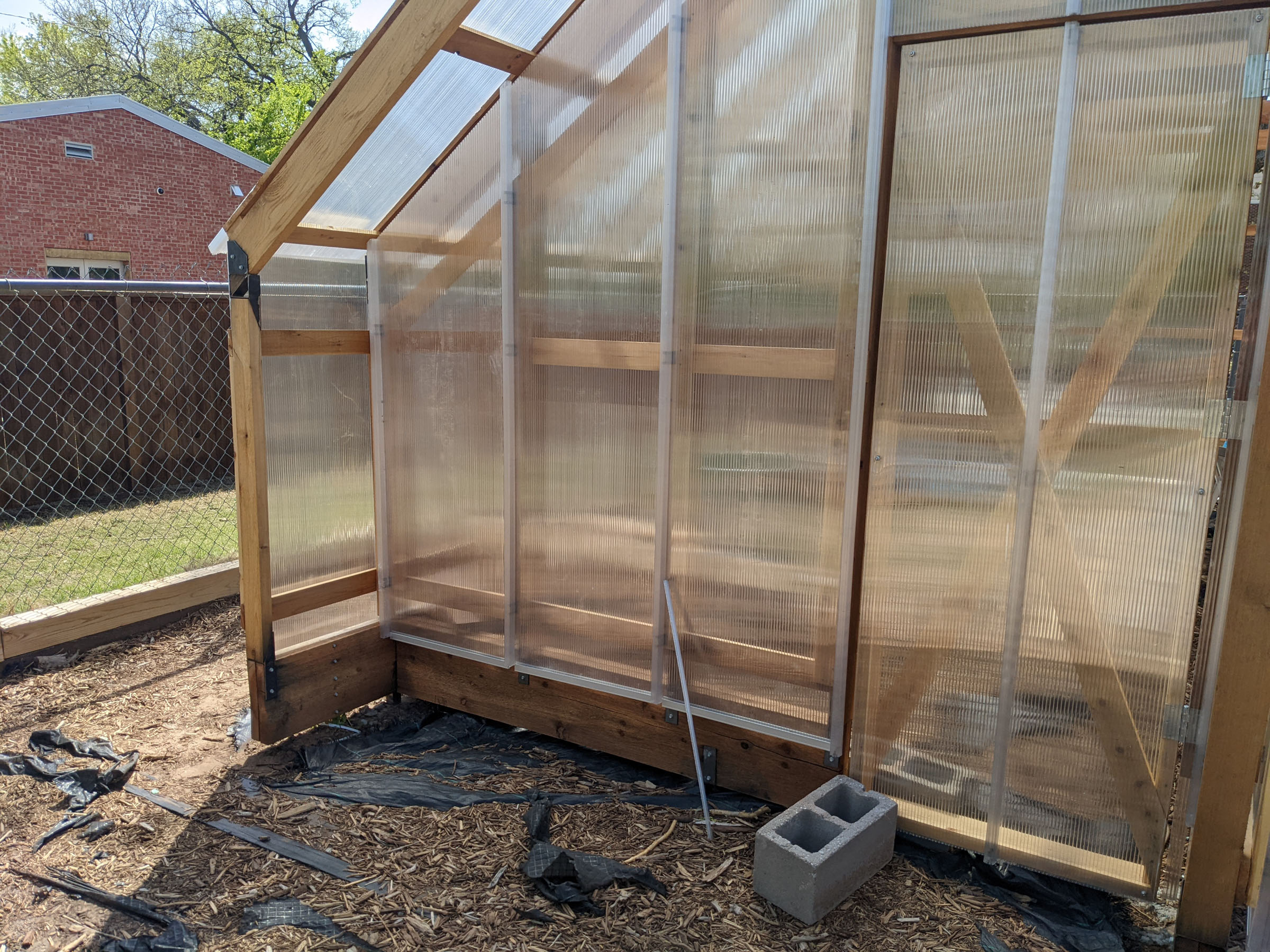
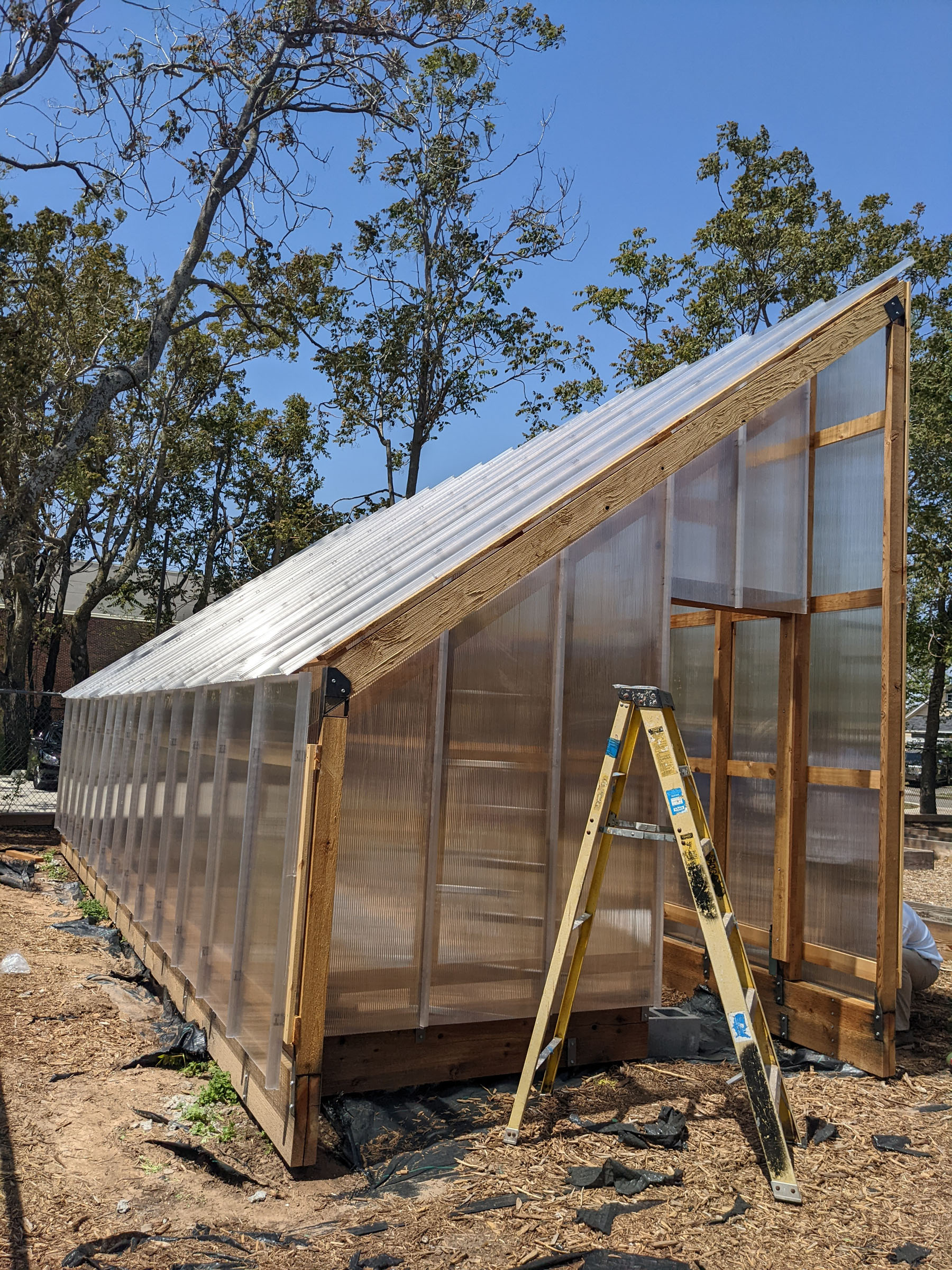
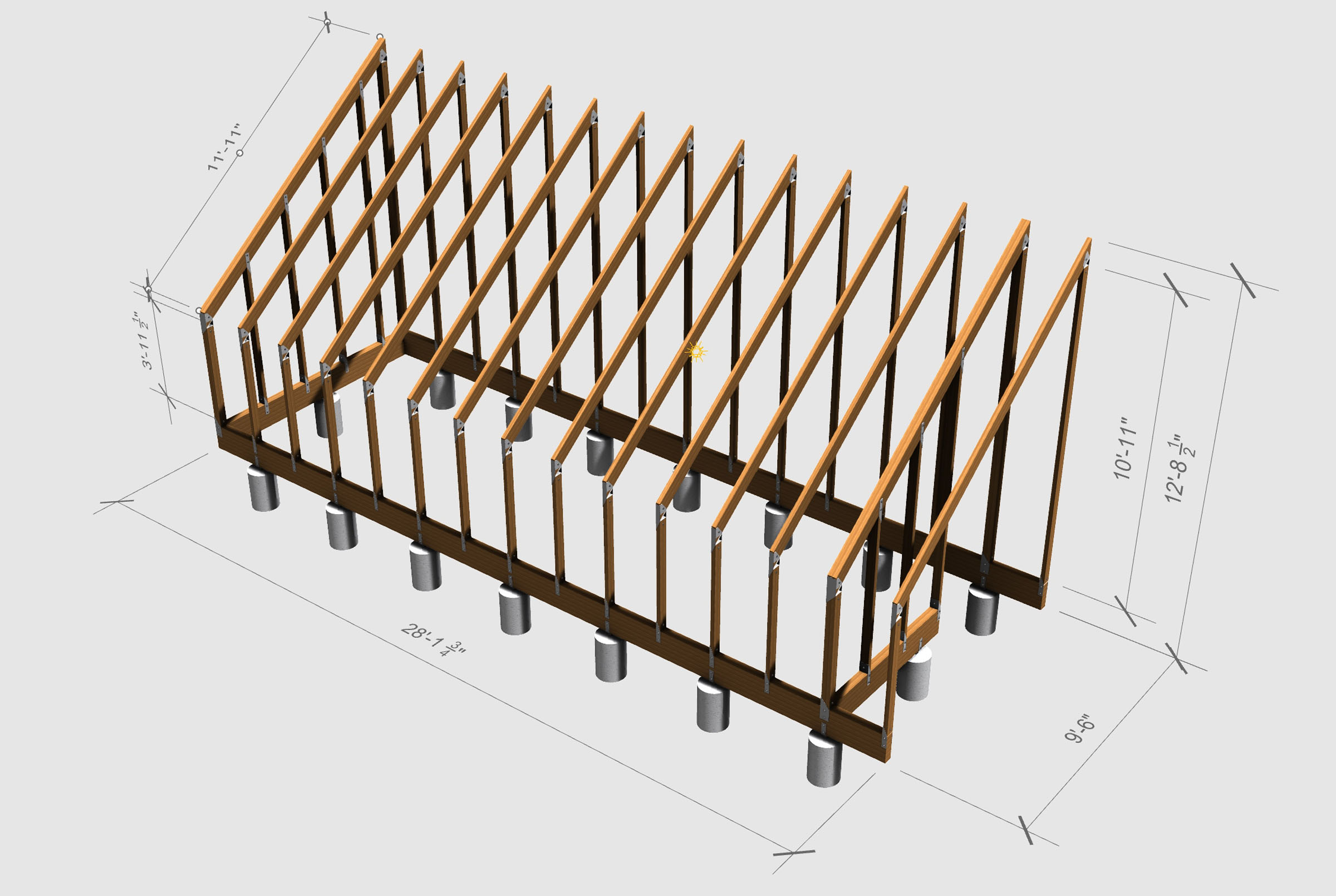
A continuous rafter system, spaced and aligned with agricultural efficiency, establishes the greenhouse’s distinctive sloped roof profile, maximizing solar gain while efficiently shedding rain. The enclosure is clad in celluar, UV-stabilized polycarbonate sheeting, installed as a continuous surface from base to ridge. The translucent panels diffuse light evenly throughout the interior while maintaining thermal insulation and weather protection. At full height, the walls allow for flexible growing arrangements and passive ventilation strategies.


Cedar framing and translucent polycarbonate cladding establish the greenhouse’s distinctive light-filled interior. Exposed steel plates and joints reveal the structural logic and craft of construction, while precision alignment of rafters and panels ensures optimal solar gain, ventilation, and material efficiency.

Details and Environmental Performance

Every element of the project was designed for clarity and repeatability. The detailing is intentionally minimal: the steel hardware is unpainted, allowing it to patina naturally; the cedar is left unfinished to age in response to its environment. A continuous base sill provides a moisture break, while raised floor beds and integrated cross bracing ensure long-term structural stability under wind load and shifting ground conditions.

The project’s approach was not to romanticize the greenhouse typology, but to reengage it through simple material means and tactical construction. There are no redundant formal gestures, only what is needed to create a protected, light-filled volume that supports both growth and maintenance. Doors and vents are sized for access and airflow; diagonal bracing doubles as shelving supports; and all components are assembled with basic tools and hardware, allowing for future repair or modification without specialized labor.

  • IMG_20220504_080903_656
  • PXL_20220425_180020721
  • featured
  • featured
  • PXL_20220425_203545029.MP
  • PXL_20220425_181250627
  • PXL_20220425_181238541
  • PXL_20220425_181221092
  • PXL_20220425_180314119
  • PXL_20220425_180039312.MP
  • PXL_20220425_174336169
  • PXL_20220425_174325602
  • IMG_20220426_083237
  • IMG_20220426_083232
  • IMG_20220426_083223

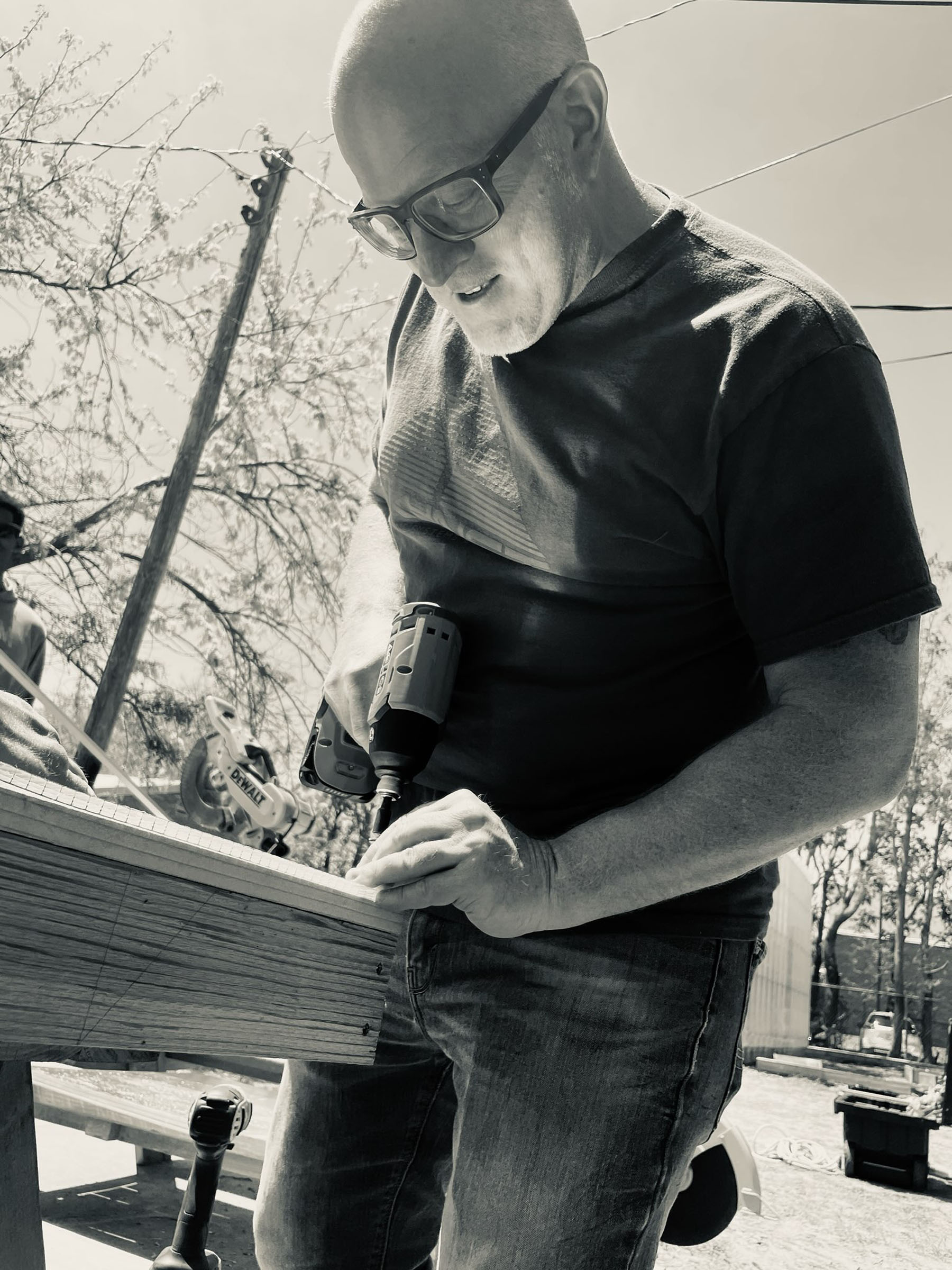
ABOVE: Construction process of the Mark Twain Elementary Greenhouse, showing the assembly of its cedar frame, custom-fabricated steel connections, and translucent polycarbonate cladding. The images document the project’s progression from digital-to-physical translation through hands-on fabrication, where precision detailing, joinery testing, and material craftsmanship merge to create a durable and light-filled educational environment.


Conclusion

This project exemplifies a form-follows-function approach tailored to localized needs and material availability. The result is a refined agricultural infrastructure, unembellished yet intentional, modest in scale yet highly resolved. It operates as a working structure: easy to build, easy to maintain, and always engaged in the process of cultivation.

Connection Modeling


  • plan

  • part_c

  • part_C_axon

  • part_B_axon

  • part_A_axon

  • overall

  • overall_dims

  • greenhouserenderings

  • detail_06

  • detail_05

  • detail_04

  • detail_03

  • detail_02

  • detail_01


ABOVE: Completed Crutcho Elementary Greenhouse Classroom, showing the cedar and polycarbonate structure designed for year-round agricultural learning. The sloped roof and translucent cladding balance daylighting, insulation, and durability, embodying a pragmatic yet elegant early model of a pedagogical educational design-build practice for the future American School Design Build program at OU Gibbs.


More Work


Architecture

Art + Code

Design + Fabrication

Courses + Student Work

© Ken Marold USA, Inc. All rights reserved.
Continue reading

National Institute of Flamenco

Design 4 : Structure and Form

Albuquerque, New Mexico

type: graduate studio project
completed: 2006

Design 4: Structure and Form investigates the relationship between material, structure, and spatial organization as a framework for architectural design. Students explore how geometry, construction logic, and environmental context shape architectural experience. The studio challenges students to move fluidly between conceptual design and tectonic resolution, translating abstract ideas into constructible form.

Through iterative modeling, drawing, and fabrication, students analyze how structure can both define and transform spatial character. Emphasis is placed on clarity of intent, precision of craft, and the ability to communicate architectural systems through visual and material expression. By connecting design research to real-world conditions, Design 4 cultivates a rigorous understanding of how architecture is made—how ideas become space, and how structure drives form.


National Institute of Flamenco

Albuquerque, New Mexico

type: graduate studio project
completed: 2006

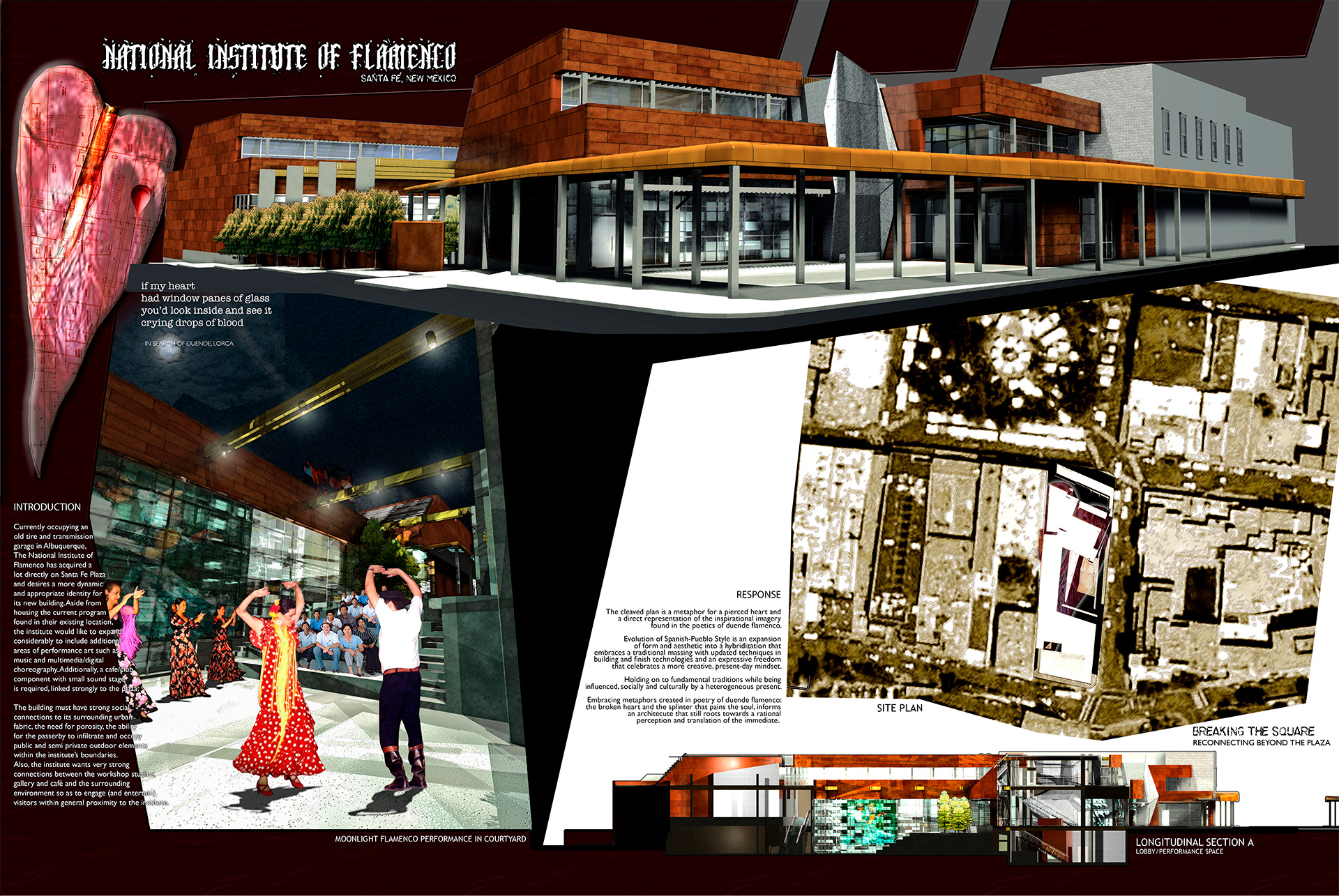
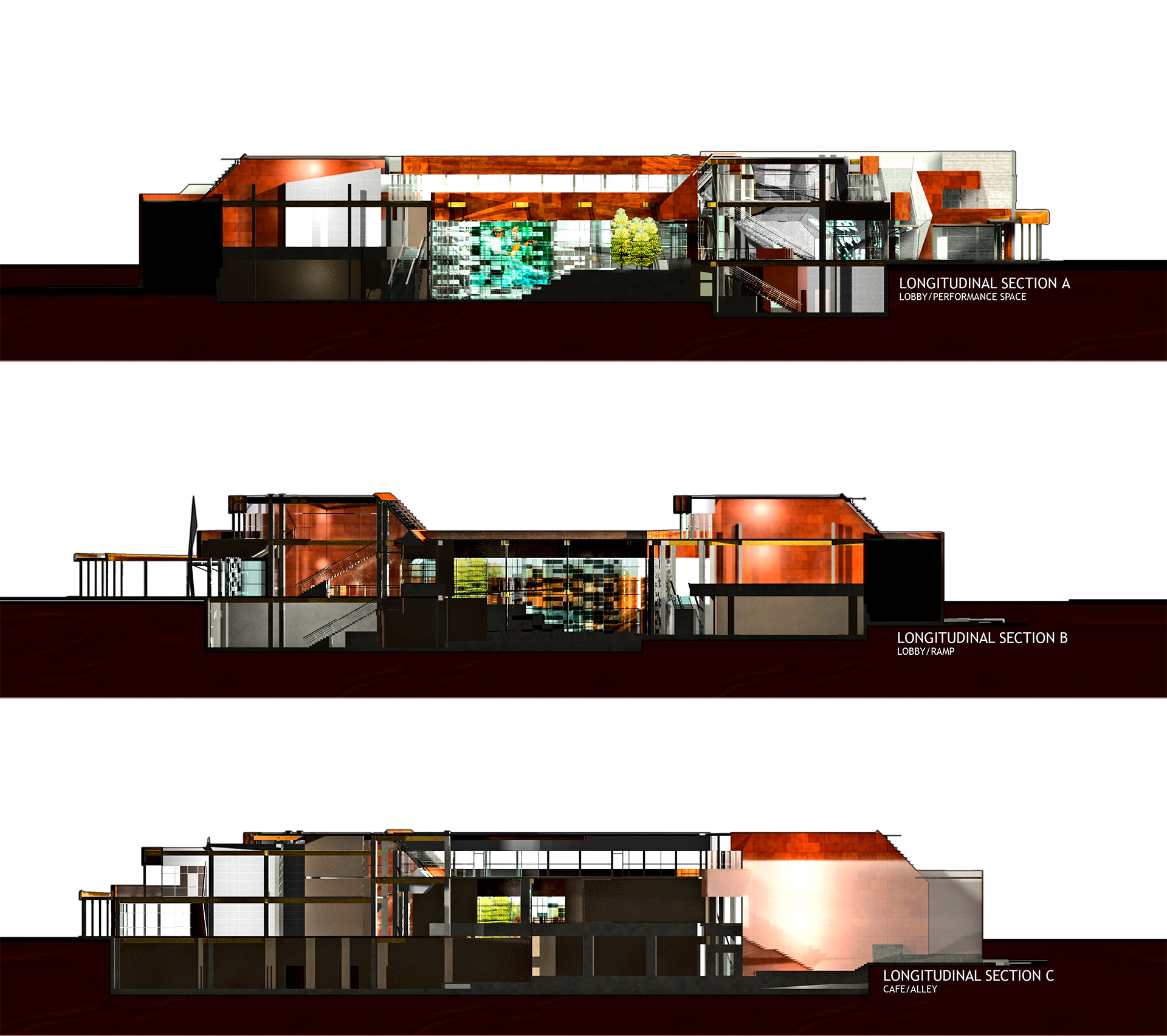
The National Institute of Flamenco, previously housed in a repurposed auto garage in Albuquerque, sought a vibrant new identity when it acquired a corner site adjacent to Old Town’s Santa Fe Plaza in 2006. This significant location demanded an architectural response that not only respected but invigorated its urban surroundings.

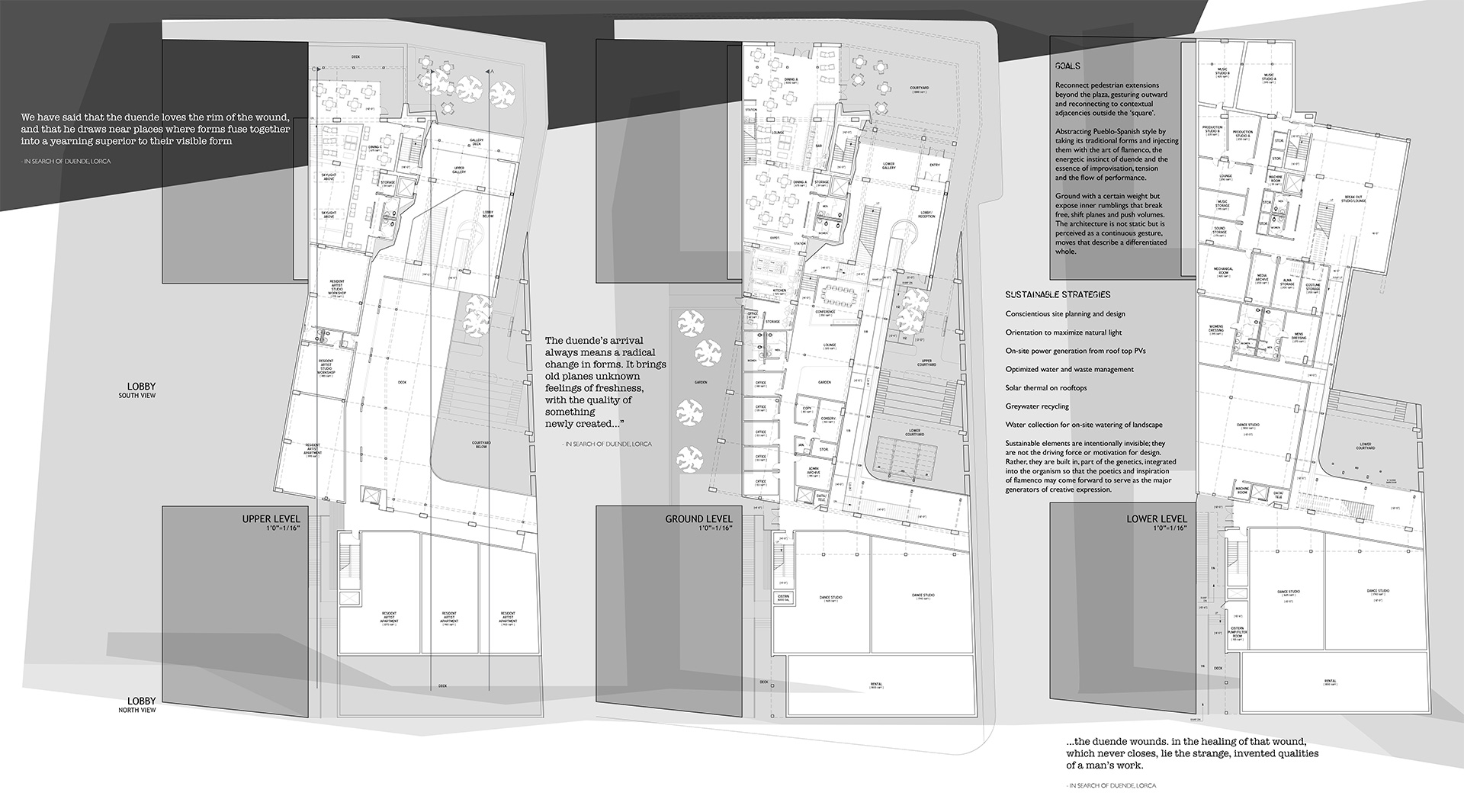
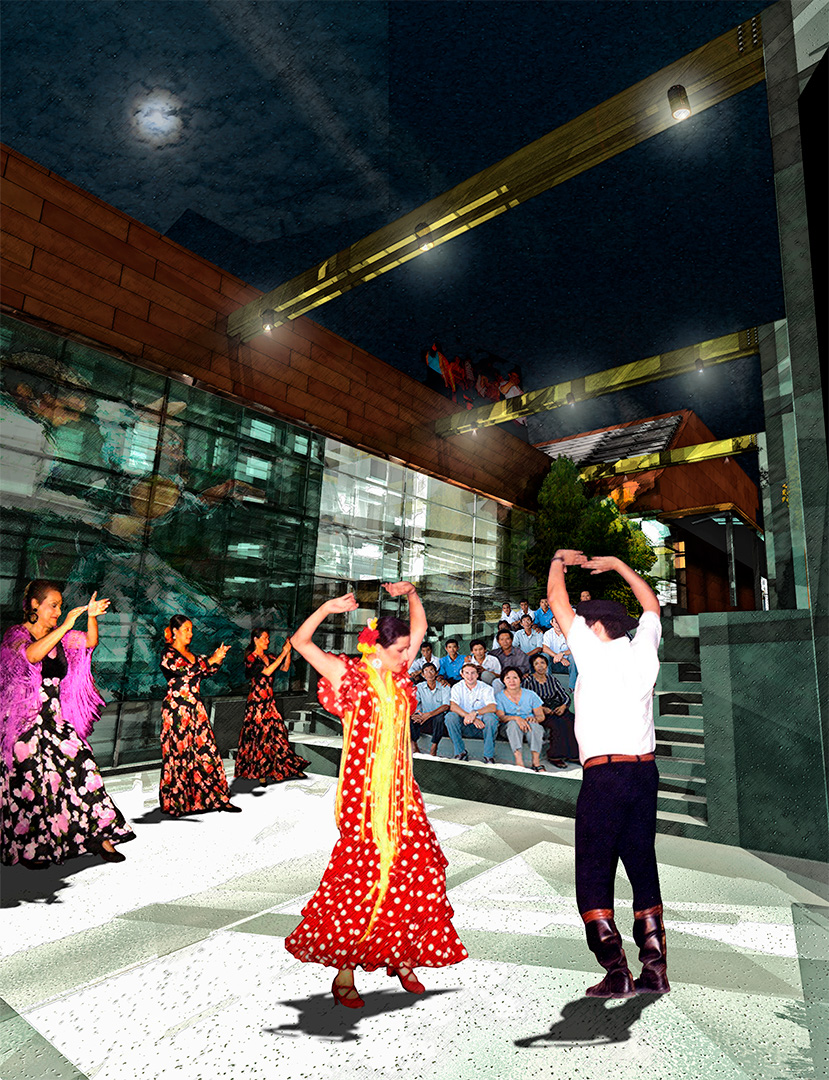
Responding to these needs, the institute’s new design dramatically expands its facilities to encompass additional performance areas, music spaces, and multimedia/digital choreography studios. Central to the institute’s mission is a cafe and club space with a small sound stage that extends a welcoming gesture towards the bustling public plaza.


Integral to the architectural concept is the theme of “duende flamenco,” the deeply emotive and expressive spirit found in flamenco’s poetry and performance. The building’s cleaved plan symbolizes a pierced heart, a vivid metaphor for the emotional intensity of flamenco. This design not only embodies the art form’s passionate roots but also maintains strong connections to the surrounding urban fabric.

Designed with porosity in mind, the structure invites passersby into public and semi-private spaces, fostering interaction between visitors and artists. Embracing and evolving the traditional Spanish-Pueblo style, the architecture employs familiar regional forms integrated with advanced building technologies and a local tectonic language.

This hybrid approach ensures the new National Institute of Flamenco captures both contemporary expressive freedoms and deeply rooted cultural traditions, making it a significant landmark that celebrates artistic performance and community engagement in the heart of Santa Fe.

  • board
  • sections
  • plans
  • performance space
  • lobby 2
  • lobby 1
  • featured-image-1

More Work


Architecture

Art + Code

Design + Fabrication

Courses + Student Work

© Ken Marold USA, Inc. All rights reserved.
Continue reading

Wichita Mobile Clinic

Wichita Mobile Clinic

Anadarko, OK
Construction Completed: May 2021

Developed in collaboration with the Wichita and Affiliated Tribes, based in Anadarko, Oklahoma, this project reimagined healthcare infrastructure through cultural precedent and contemporary fabrication. Conceived during the height of the COVID-19 pandemic, the Wichita Mobile Clinic was designed as a rapidly deployable unit to expand vaccination access and essential medical services across rural and tribal regions of Oklahoma. The initiative sought to strengthen healthcare equity while honoring Wichita traditions of building, community, and stewardship of land.

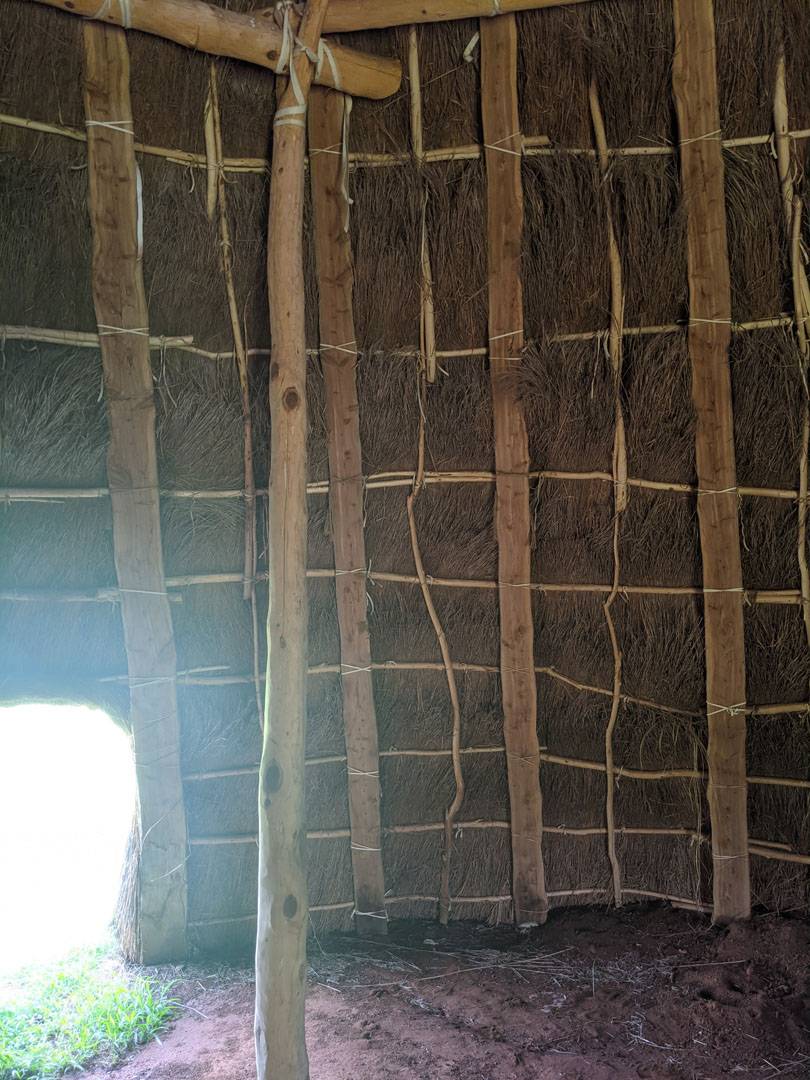
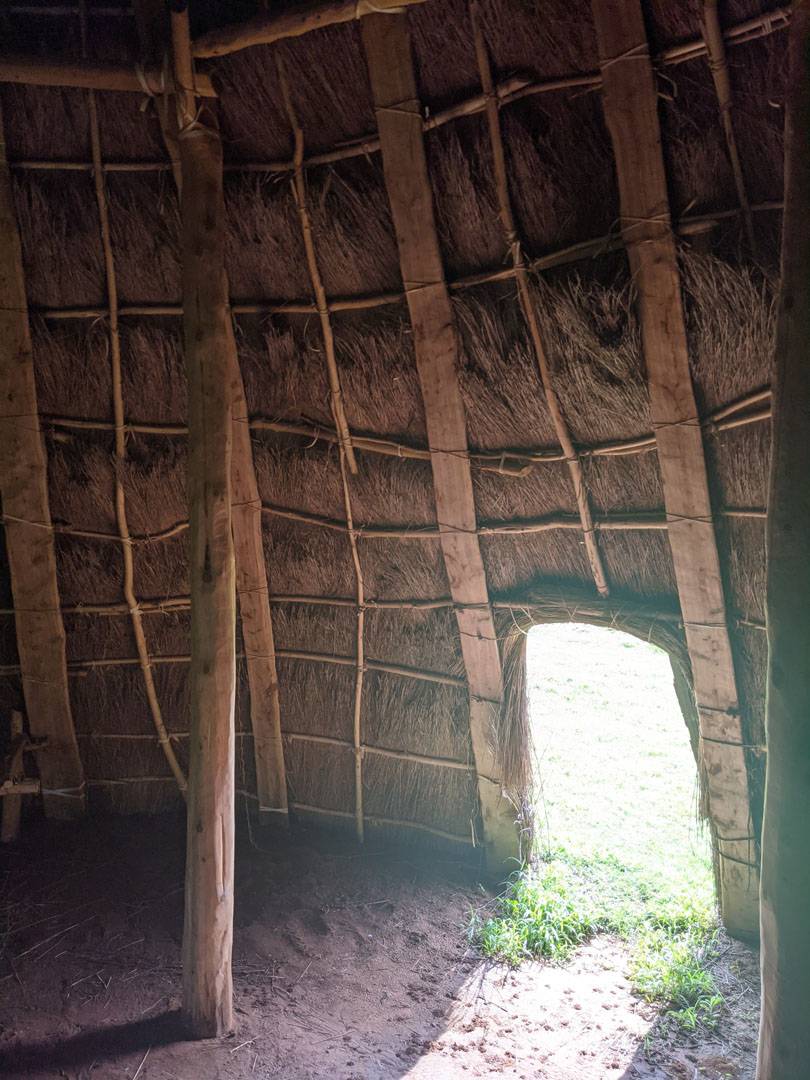
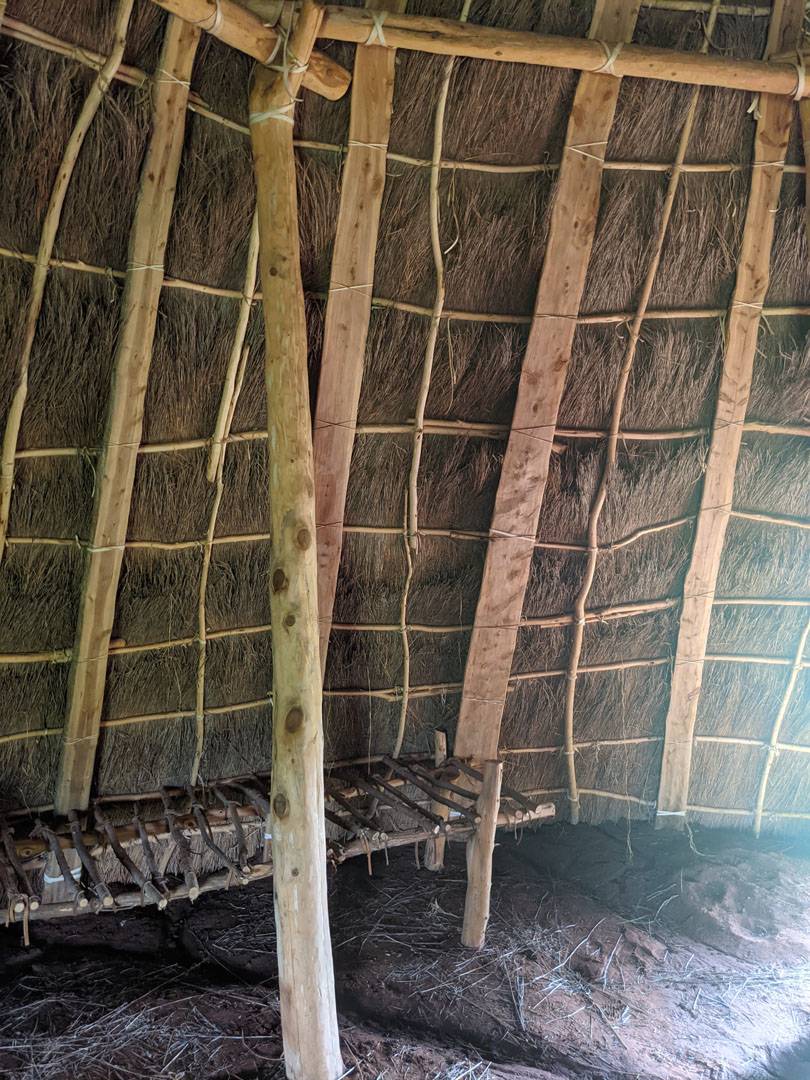
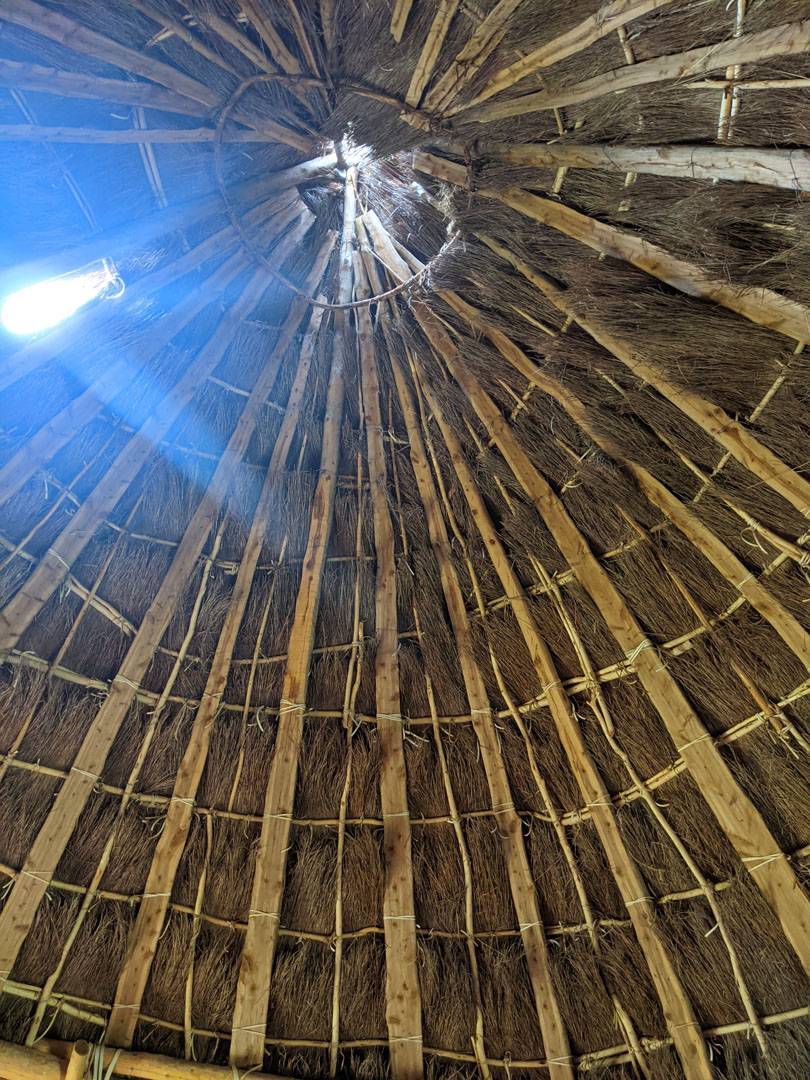
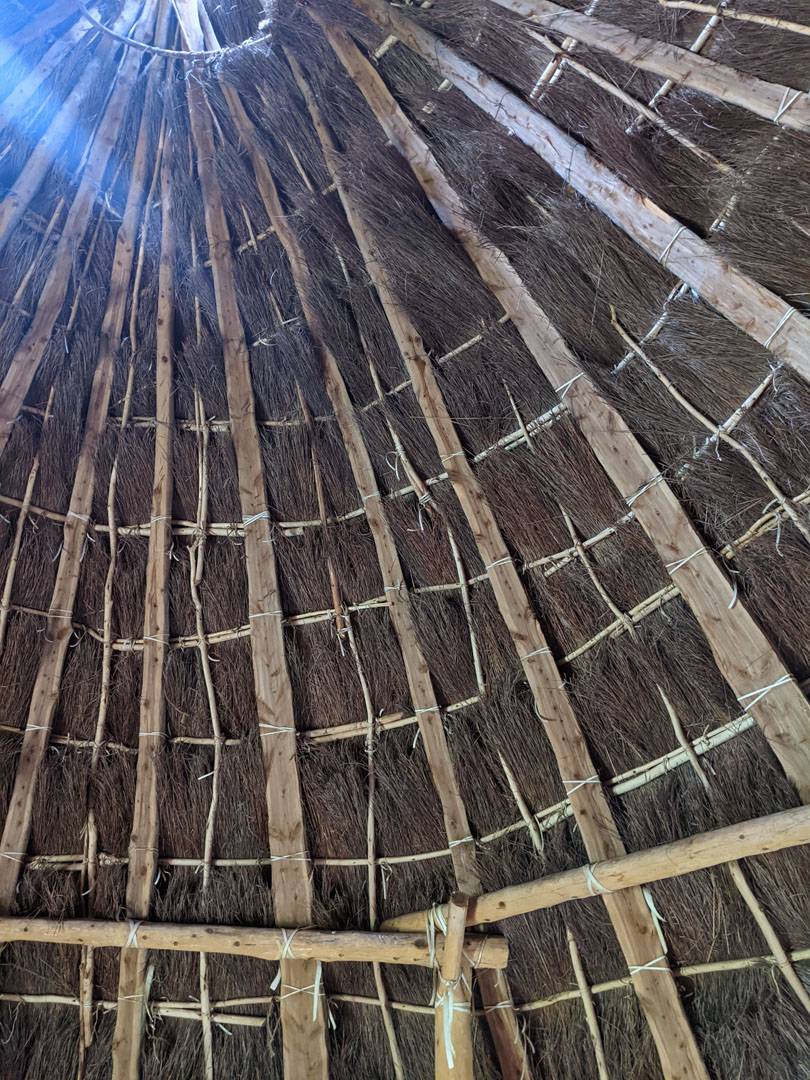
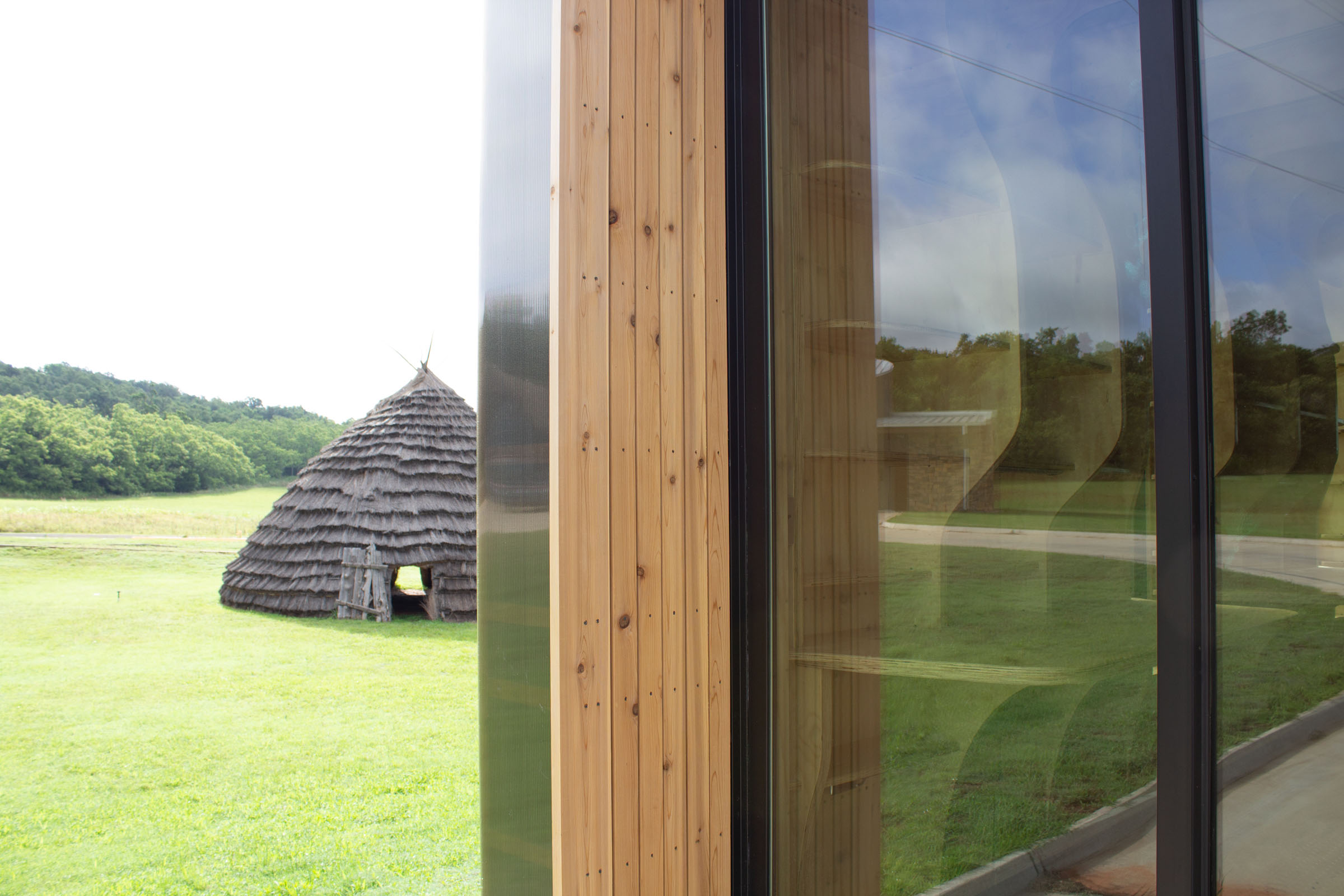
Central to the design study was the Wichita grass house—a domed shelter of cedar, willow, and reed that embodies systemic clarity, resilience, and symbolic connection to place. Inspired by the historic form, the project adapted the patterns and assembly logic of the grass house’s layered construction into a mobile clinic that merged indigenous knowledge with digital fabrication. As a proof of concept, the design team developed the project’s parametric logic, fabrication sequences, and assembly strategies in close collaboration with tribal leaders and elders, supported by student participation in prototyping and testing. More than a functional unit of care, the Wichita Mobile Clinic demonstrated how cultural wisdom and digital tools could converge to produce a responsive healthcare infrastructure while modeling a cross-disciplinary pedagogy that linked design and construction at the University of Oklahoma’s Gibbs College of Architecture.


Wichita Mobile Clinic

Anadarko, OK
Construction Completed: May 2021

Project Overview

The Wichita Mobile Clinic was conceived during the height of the COVID-19 pandemic as part of an applied research initiative investigating the intersection of digital fabrication, modular construction, and community-based healthcare design. Developed in collaboration with the Wichita and Affiliated Tribes, the project produced a rapidly deployable healthcare unit to deliver vaccination access and essential medical services to rural and tribal communities in Oklahoma. Beyond its immediate purpose, the work served as a design research prototype exploring how computational processes and cultural precedent could converge to create responsive, adaptable architecture.

All design, digital modeling, and fabrication were executed within the Gibbs College of Architecture’s digital fabrication lab as part of ongoing research into parametric systems and modular assemblies. Once the prefabricated components were completed, Construction Science students performed the on-site assembly and finishing, developing coordination and sequencing skills through collaboration with fabrication research. This workflow established a hybrid model that united precision-based digital research with construction education in the field, creating a precedent for future interdisciplinary design-build pedagogy.


Cultural and Structural Precedent

The Wichita grass house—a domed, ribbed structure formed from a sequence of vertical stakes, horizontal poles, and lattice weaving—served as both structural and cultural precedent. The project reinterpreted this assembly logic through a CNC-fabricated plywood system, translating the layered, interdependent construction of the traditional grass house into a digitally modeled and prefabricated framework. The result preserved the Wichita tradition’s systemic order and communal assembly process while extending it into a modern context through digital precision and modular adaptability.

A primary design objective was to maintain the logical construction order inherent in the traditional Wichita building method. The project followed this sequence—erecting primary ribs first, then weaving the secondary elements to complete the enclosure. This rational progression was recast in a digital model where each structural layer stabilized the next, producing a holistic and fully encapsulating form. Openings were calibrated within this order, aligning with the rib pattern to modulate light and maintain continuity. The use of translucent cladding across select window areas diffused daylight and reinforced the rhythmic interplay of structure, surface, and illumination found in the original grass house.

  • PXL_20210630_145527425

  • PXL_20210630_145517767

  • PXL_20210630_145632185

  • PXL_20210630_145613491

  • PXL_20210630_145623169

Historic Wichita grass house interior, showing the ribbed assembly of cedar and willow that informed the clinic’s digital reinterpretation.

Hands-on fabrication, assembly-logic and test-fit, highlighting the friction-fit joinery that minimized fasteners while maximizing structural stability.

Digital Fabrication and Programming Workflow

The design was developed through a computational workflow that integrated geometry, structure, and fabrication data within a single parametric model. Generative scripts defined the geometry’s responsive behavior, controlling rib spacing, curvature, and panel thickness to ensure precision during CNC milling. Each connection—every notch, tab, and offset—was embedded within the model to automate fabrication detailing and maintain consistency throughout production.

This process established a feedback loop between design and material performance, allowing rapid iteration and verification prior to fabrication. Once finalized, the panels were milled, labeled, and organized for delivery and on-site assembly. The outcome was a fabrication system where cultural sequence and computational logic operated in parallel—each reinforcing the other to produce an architecture that was both technically advanced and rooted in tradition.

Students and faculty assembling CNC-cut ribs onto the mobile platform, confirming sequencing, tolerances, and joinery strategies in real time.


Assembly Logic

The Wichita Mobile Clinic was designed for rapid on-site assembly with minimal labor and tools. The prefabricated ribs and panels were delivered with detailed instructions, allowing Construction Science students to complete the structural assembly in a single workday. The efficiency of the system reflected the project’s broader research goals—demonstrating how digital precision can accelerate construction timelines while maintaining spatial and material integrity.

Every surface and element was part of an interlocking whole, eliminating the distinction between framing, enclosure, and furnishing. This continuous assembly logic echoed the Wichita grass house, where enclosure and structure were inseparable. The process proved that fabrication-led research can create systems that translate from digital production to field construction seamlessly, providing a model for deployable, community-centered architecture.


Wichita Mobile Clinic during final stages of cladding, demonstrating how digital fabrication workflows translated into field-ready construction.

Concepts + Prototyping


  • PXL_20201230_191653790

  • PXL_20201230_191526268

  • PXL_20201230_185653738

  • PXL_20210106_195401951

  • PXL_20210102_035032070

  • PXL_20210102_034753226

  • IMG_20210130_103431_01

  • IMG_20210130_104534_01

  • PXL_20210115_195851836

  • PXL_20210126_173845135

  • PXL_20210126_173630933

  • PXL_20210115_194430327

Mockup + Testing


  • IMG_20210301_202527

  • IMG_20210313_091229_911

  • IMG_20210313_091229_889

  • IMG_20210313_091229_859

  • IMG_20210313_091229_743

  • PXL_20210225_172519031

Material Expression

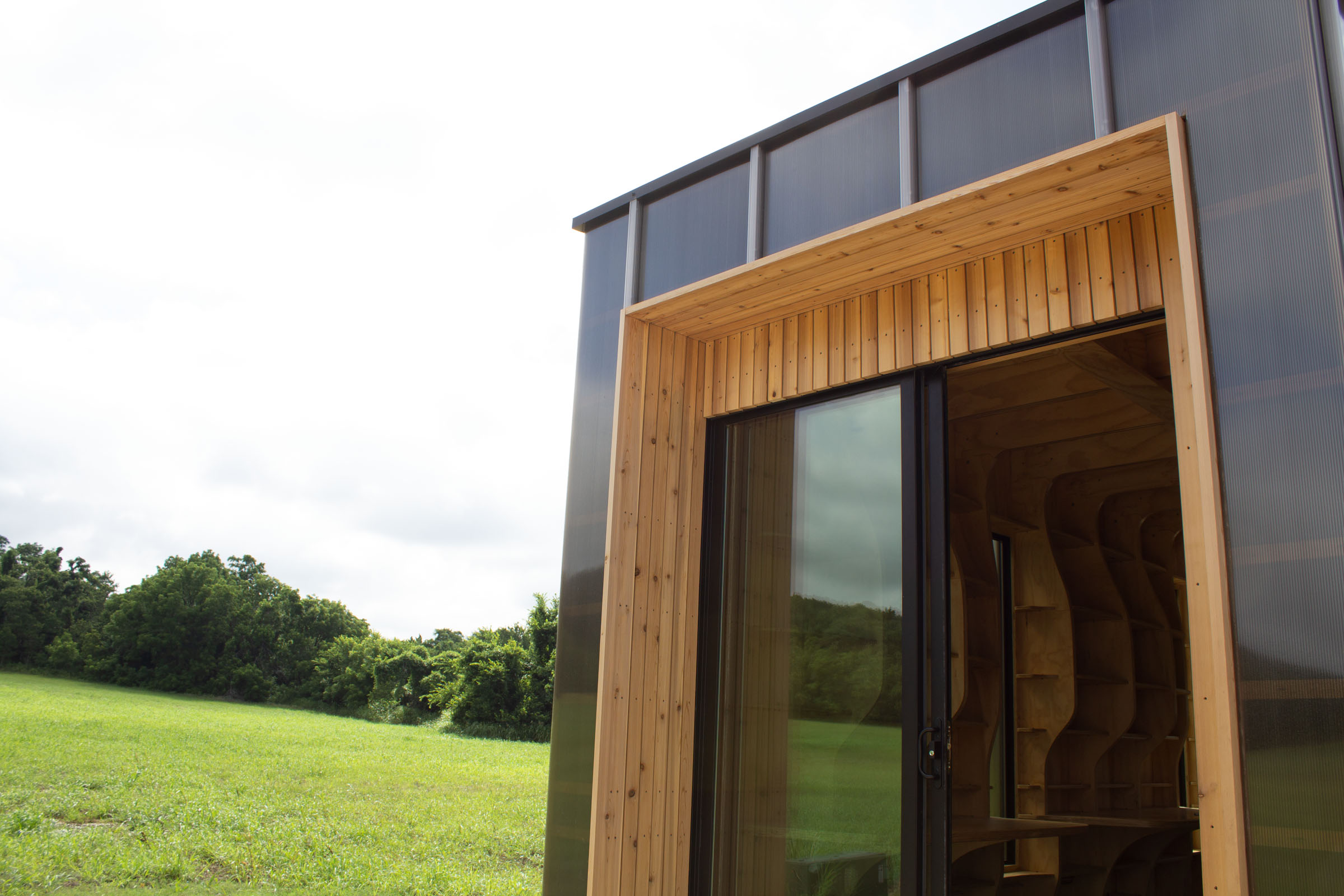
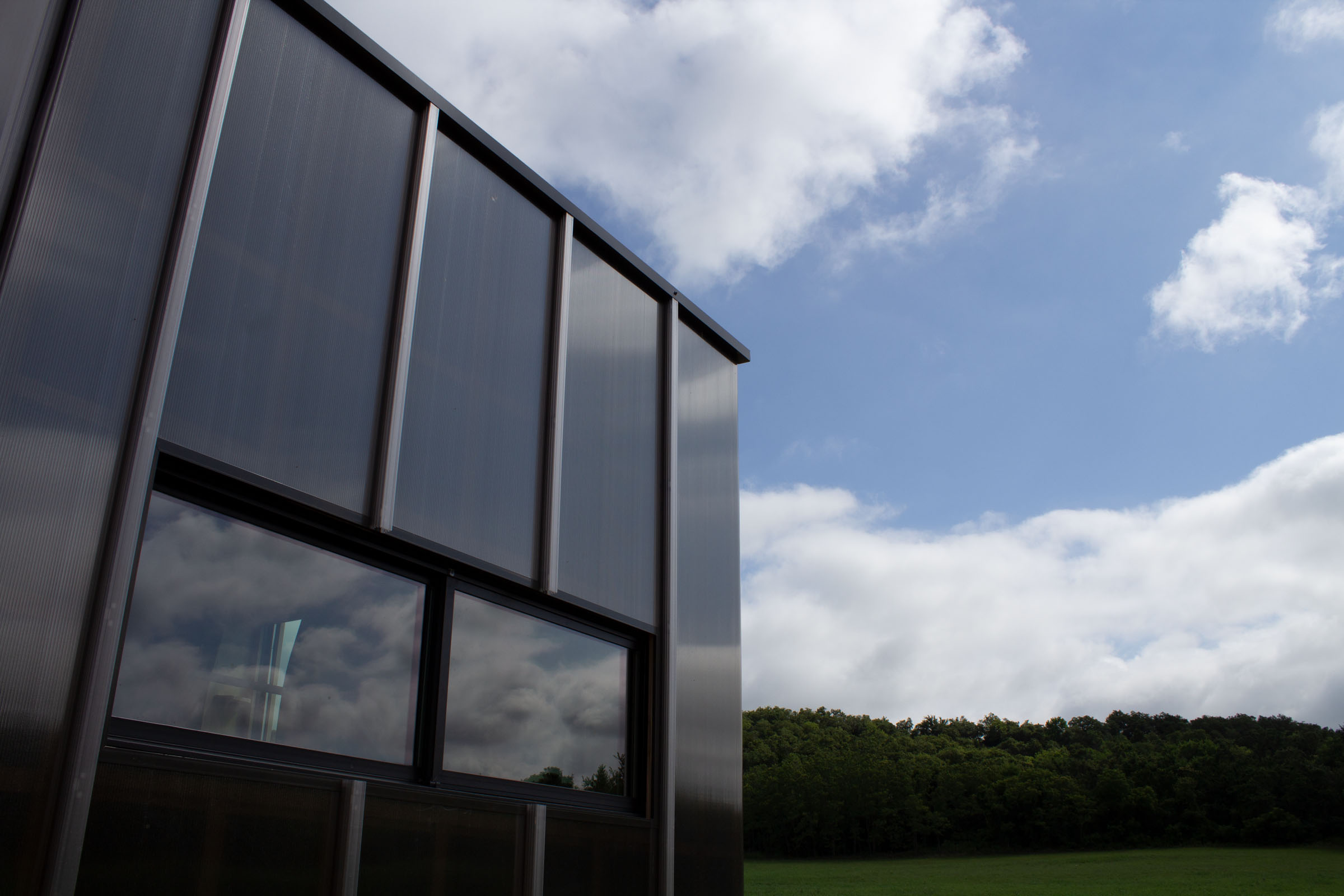
All components were CNC-milled from standard plywood sheets using nested cutting strategies that maximized structural precision and continuity. The exposed plywood grain revealed the logics of fabrication and assembly, while the natural tone and finish created a sense of warmth and legibility throughout the interior. The exterior was clad in translucent polycarbonate panels that provided weather protection and diffused illumination. In specific areas, the cladding extended across windows, creating a screened texture that filtered daylight and preserved the integrity of the structural rhythm.

The cladding system functioned as both surface and environmental register. As light moved across the shell, the structure’s geometry became visible in shadow, transforming the building into a dynamic expression of its own construction. The interplay between structure, light, and surface established an architecture that was simultaneously precise and atmospheric—expressive of both fabrication and environmental performance.

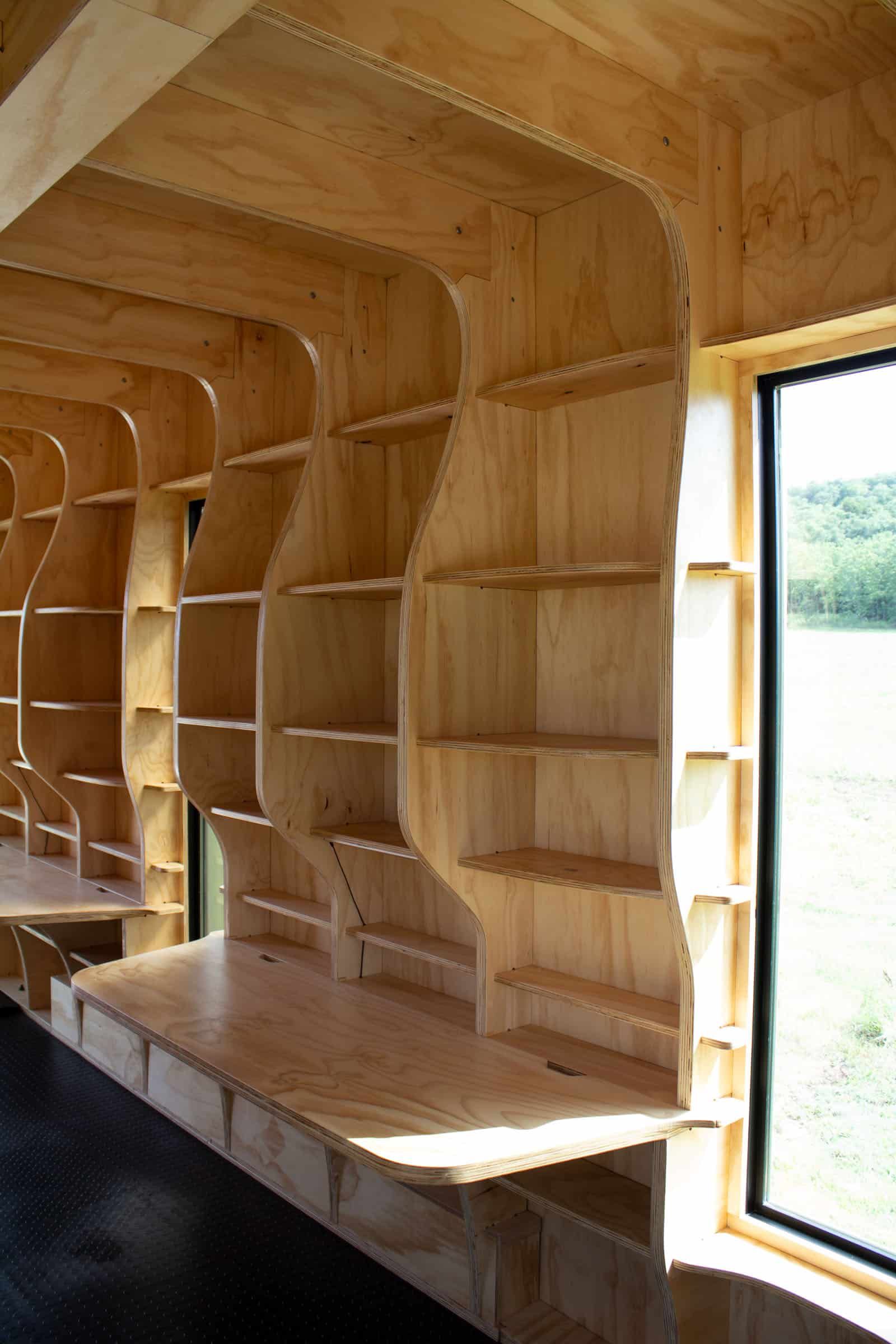
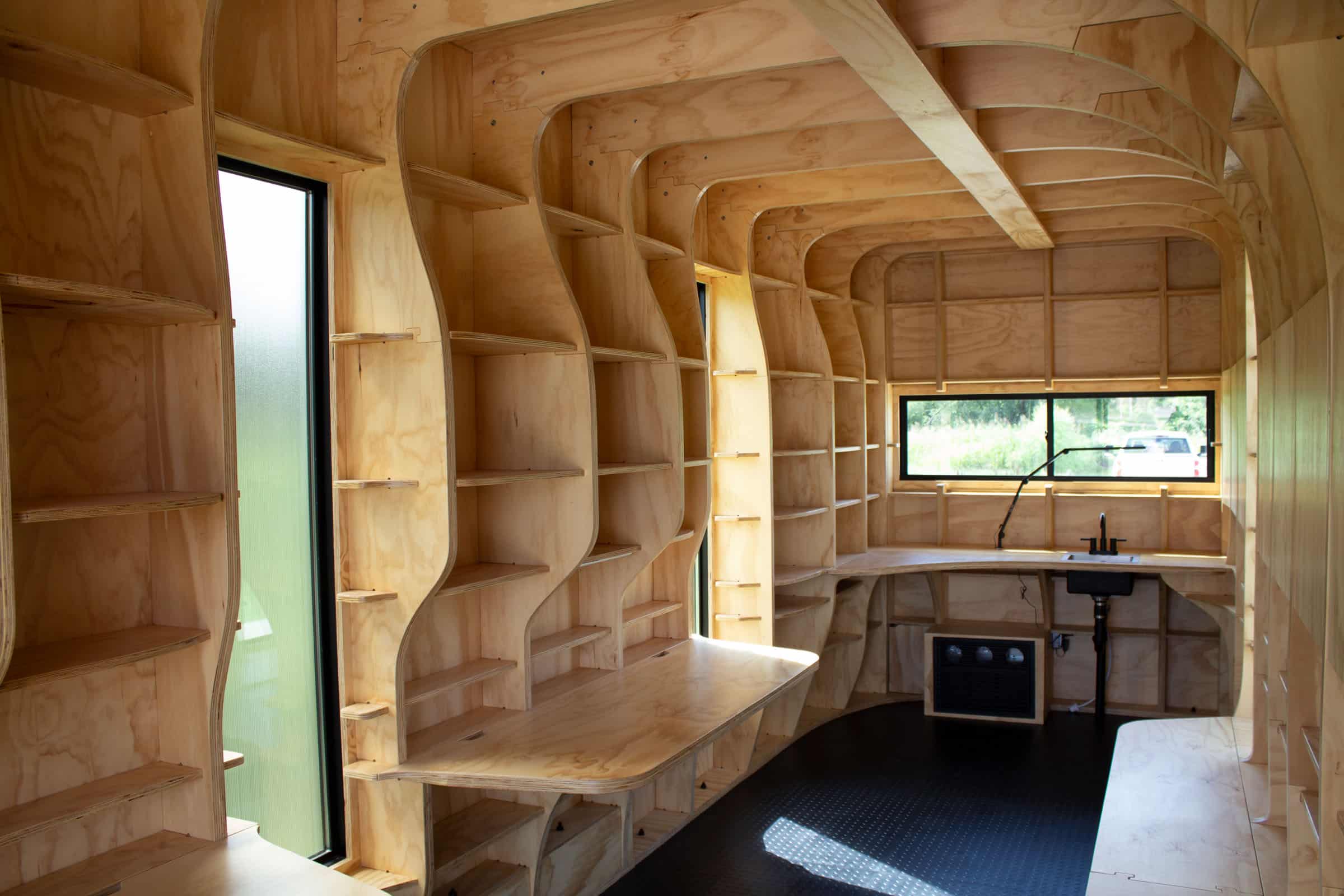
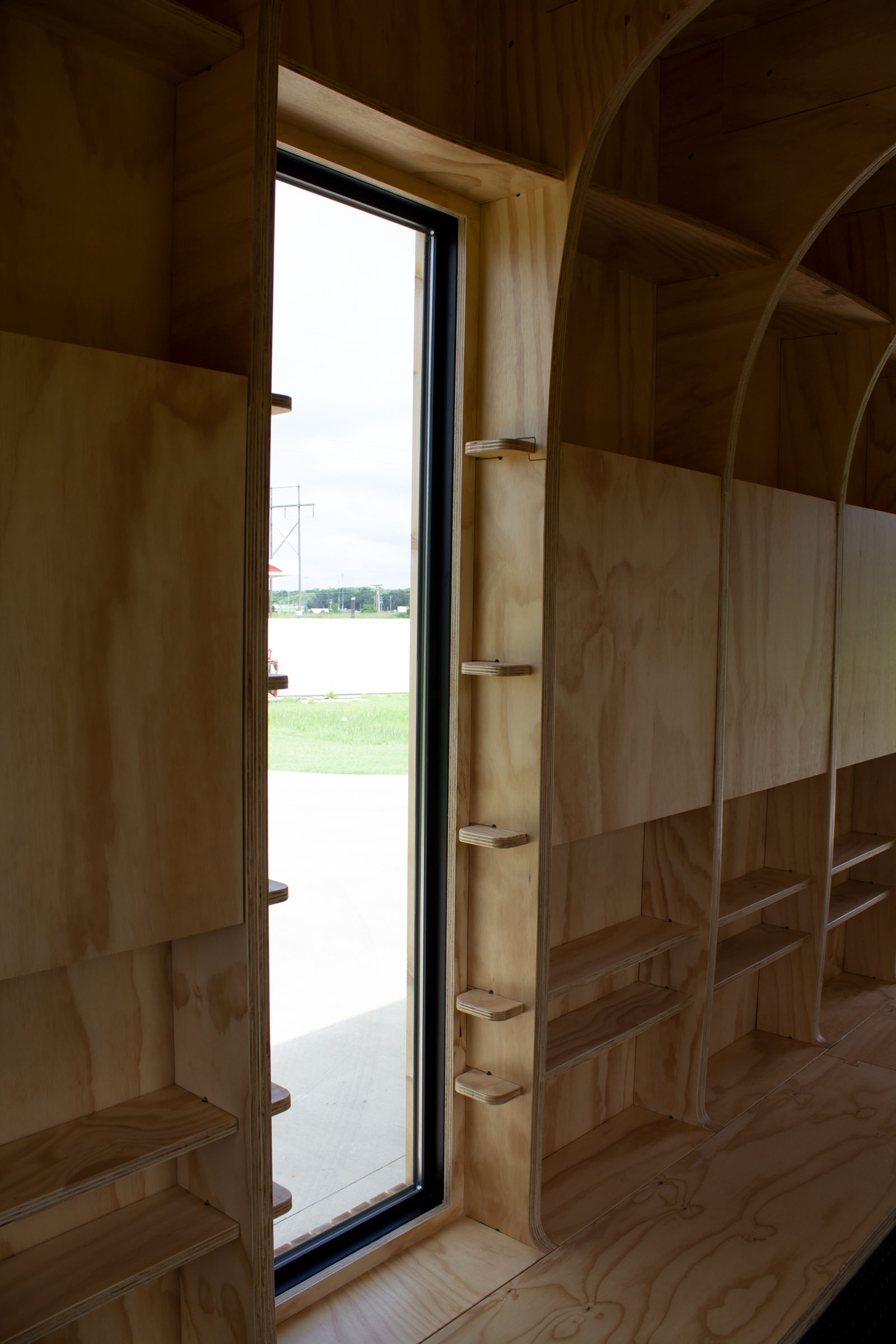
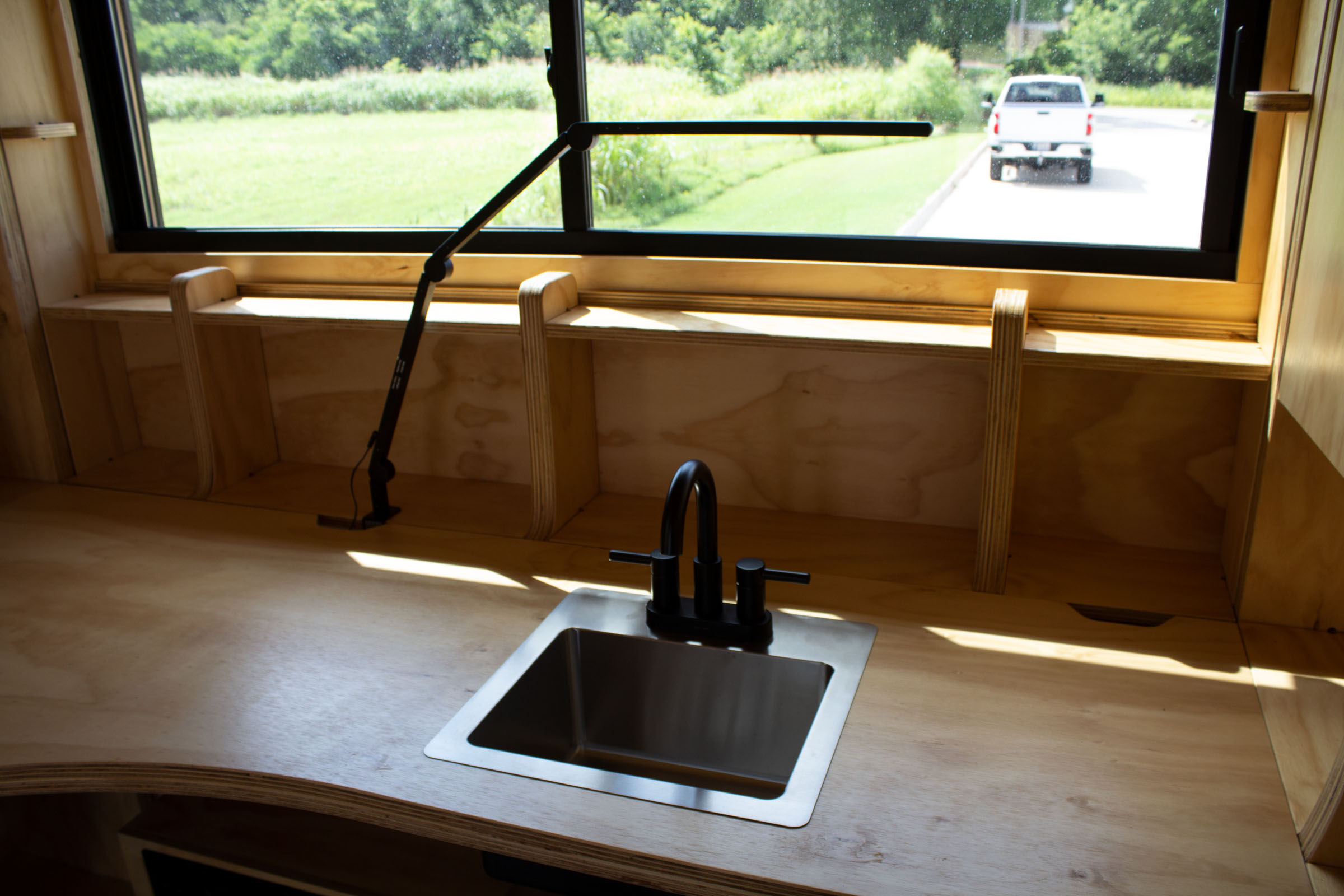
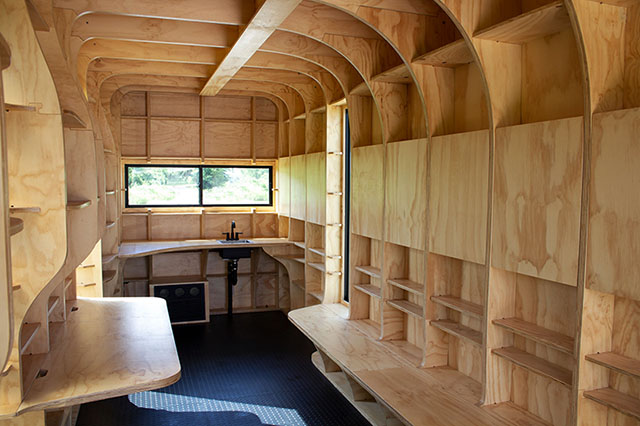
Finished workspace inside the mobile clinic, where integrated plywood cabinetry and a compact plan support healthcare use in rural communities.

Interior Architecture and Integrated Systems

The interior was conceived as a direct extension of the structural system, where geometry, material, and space were unified. The ribbed plywood frame defined both the enclosure and the spatial rhythm of the interior, generating a seamless relationship between structure and inhabitation. The curvature of the panels created a sense of enclosure while directing movement through the space, achieving both intimacy and openness within a compact footprint.

Light became the primary agent of spatial definition. Diffuse illumination, filtered through the translucent shell and screened windows, revealed the geometry and emphasized the continuous rib pattern. Functional elements such as shelving and work surfaces were integrated into the structural system, reinforcing the project’s core principle that space, structure, and detail should operate as one.

Educational Collaboration and Pedagogical Outcomes

The Wichita Mobile Clinic introduced a hybrid model of research-based design-build pedagogy that merged fabrication-led inquiry with construction science education. All aspects of design, digital modeling, detailing, and fabrication were conducted as part of applied research in computational design and modular systems. The on-site construction phase, executed by Construction Science students, provided experiential learning through field assembly, sequencing, and coordination.

This model established a replicable framework for collaboration between research and teaching, demonstrating that advanced fabrication processes can align with construction education to produce socially relevant architecture. The project functioned as both a community prototype and a pedagogical experiment, illustrating how faculty-led research can extend beyond theory to produce tangible, interdisciplinary outcomes.

Cultural and Community Impact

Developed in partnership with Wichita tribal leadership, the mobile clinic translated cultural knowledge into a contemporary healthcare environment. The project’s form and assembly logic drew from traditional Wichita building methods, ensuring that cultural continuity informed every stage of design and fabrication. Its deployment provided a flexible, dignified setting for vaccination and medical outreach during the pandemic, serving communities that often lack access to healthcare infrastructure.

As a collaborative effort, the project modeled how university research can engage directly with cultural and civic needs. It exemplified the role of architecture as both design innovation and public service, expanding the reach of academic research into the realm of social impact and community resilience.


ABOVE: Replica of Donald MacDonald’s City Sleeper, a CNC-cut, kit-of-parts that could be fabricated, transported, and rapidly assembled for the exhibit.

Reflection and Legacy

The Wichita Mobile Clinic marked an important moment in ongoing research into digital fabrication, modular systems, and design-build pedagogy. It demonstrated how fabrication-led inquiry can produce meaningful outcomes that are at once technical, cultural, and educational. By merging computational precision with traditional building logics, the project redefined how architecture can serve as a tool for translation between past and present, research and practice.

As a prototype, the project laid the foundation for subsequent design-build initiatives within the Gibbs College of Architecture, including the Crutcho Elementary Greenhouse Classroom and the Urban Learning Greenhouse. It continues to inform research into computational fabrication and hybrid pedagogy, affirming that architecture’s most significant role lies in connecting technology, education, and community within a single, integrated process.


  • IMG_0120

  • IMG_0139

  • IMG_0171

  • IMG_0166

  • IMG_0163

  • IMG_0157

  • IMG_0153

  • IMG_0142

  • IMG_0146

  • IMG_0147

  • IMG_0158


More Work


Architecture

Art + Code

Design + Fabrication

Courses + Student Work

© Ken Marold USA, Inc. All rights reserved.
Continue reading

Corrales Community Pathway + Pedestrian Park

Corrales Comunity Pathway + Pedestrian Park

Corrales, New Mexico

type : proposal
status : completed in 2008

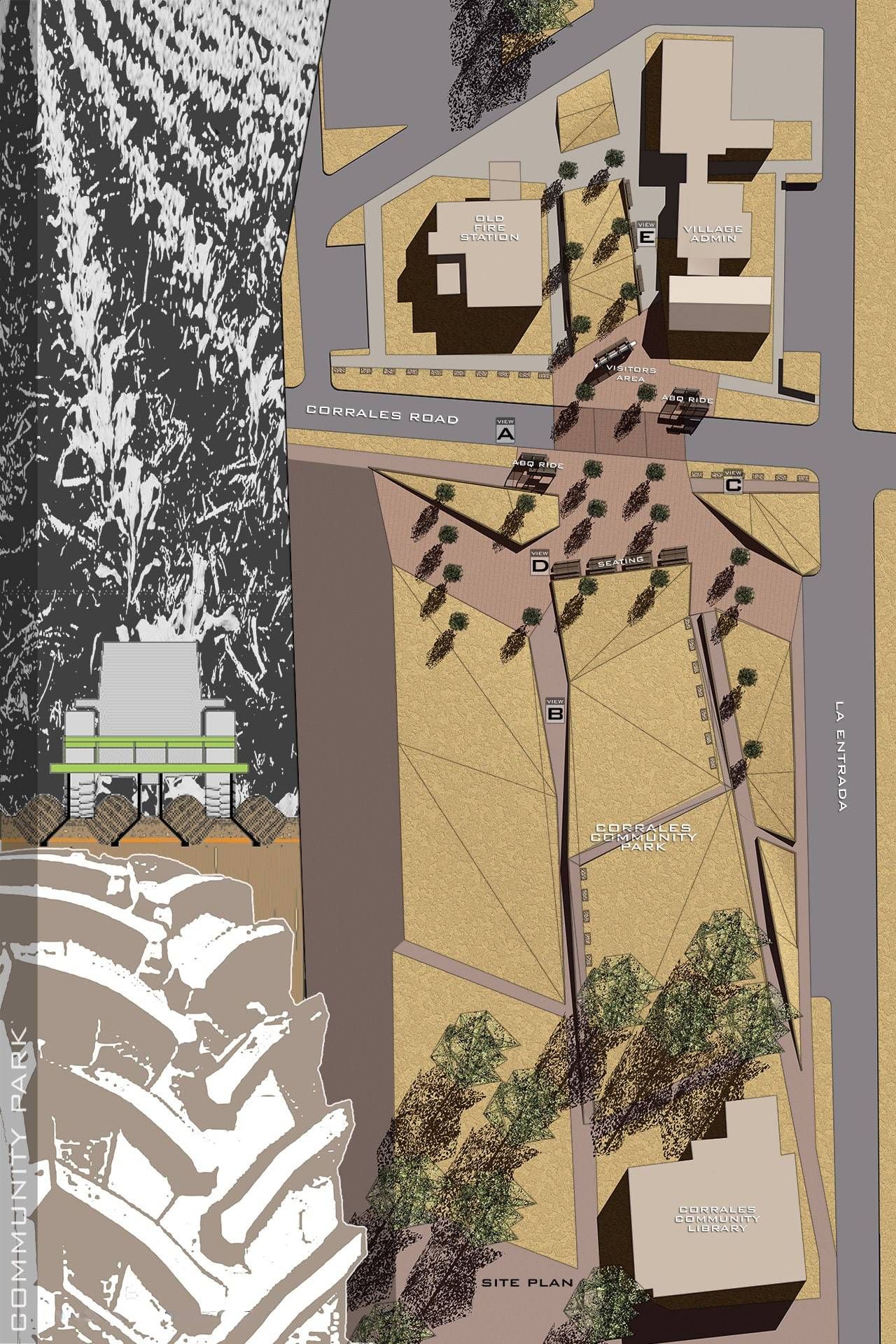
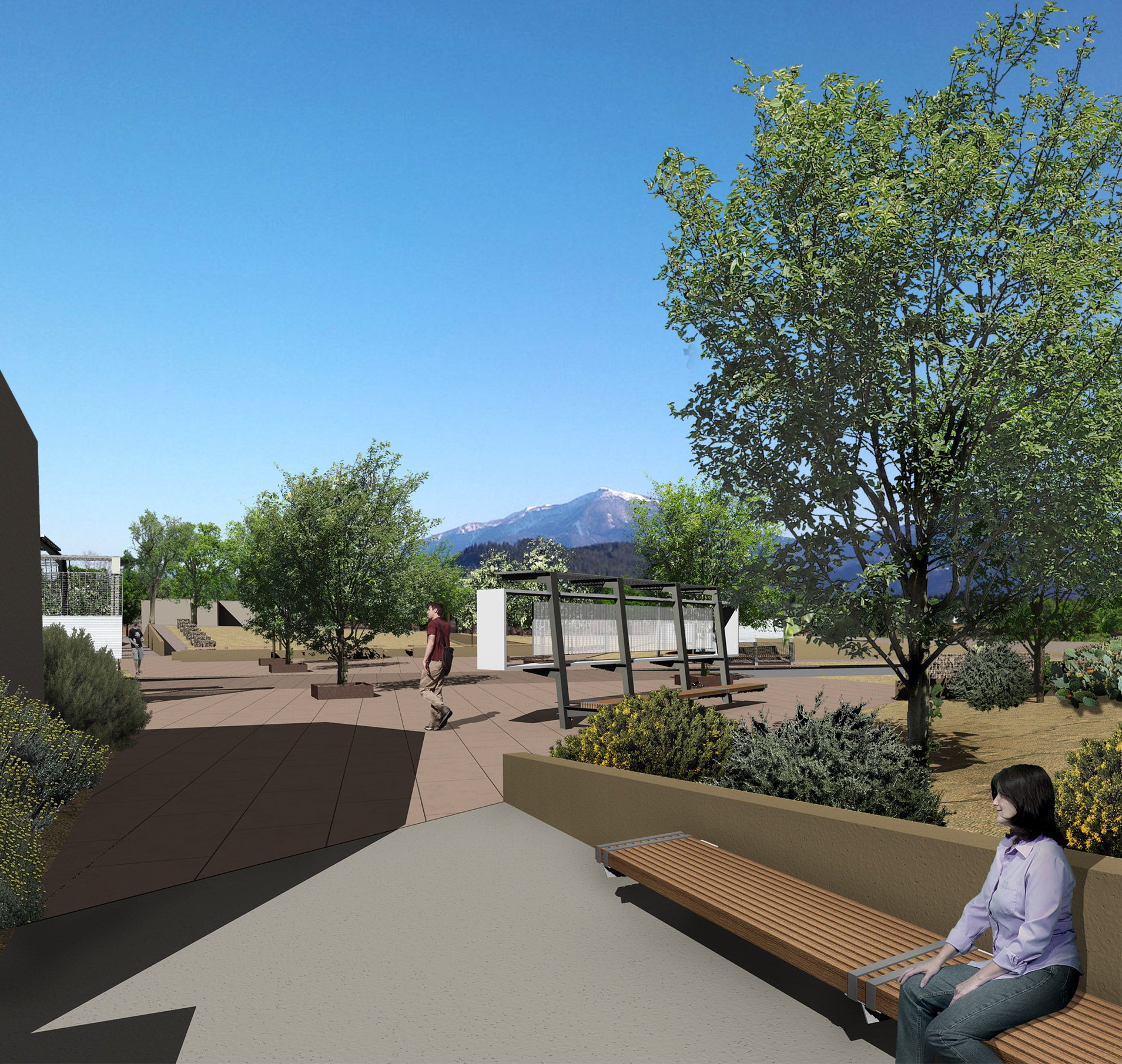
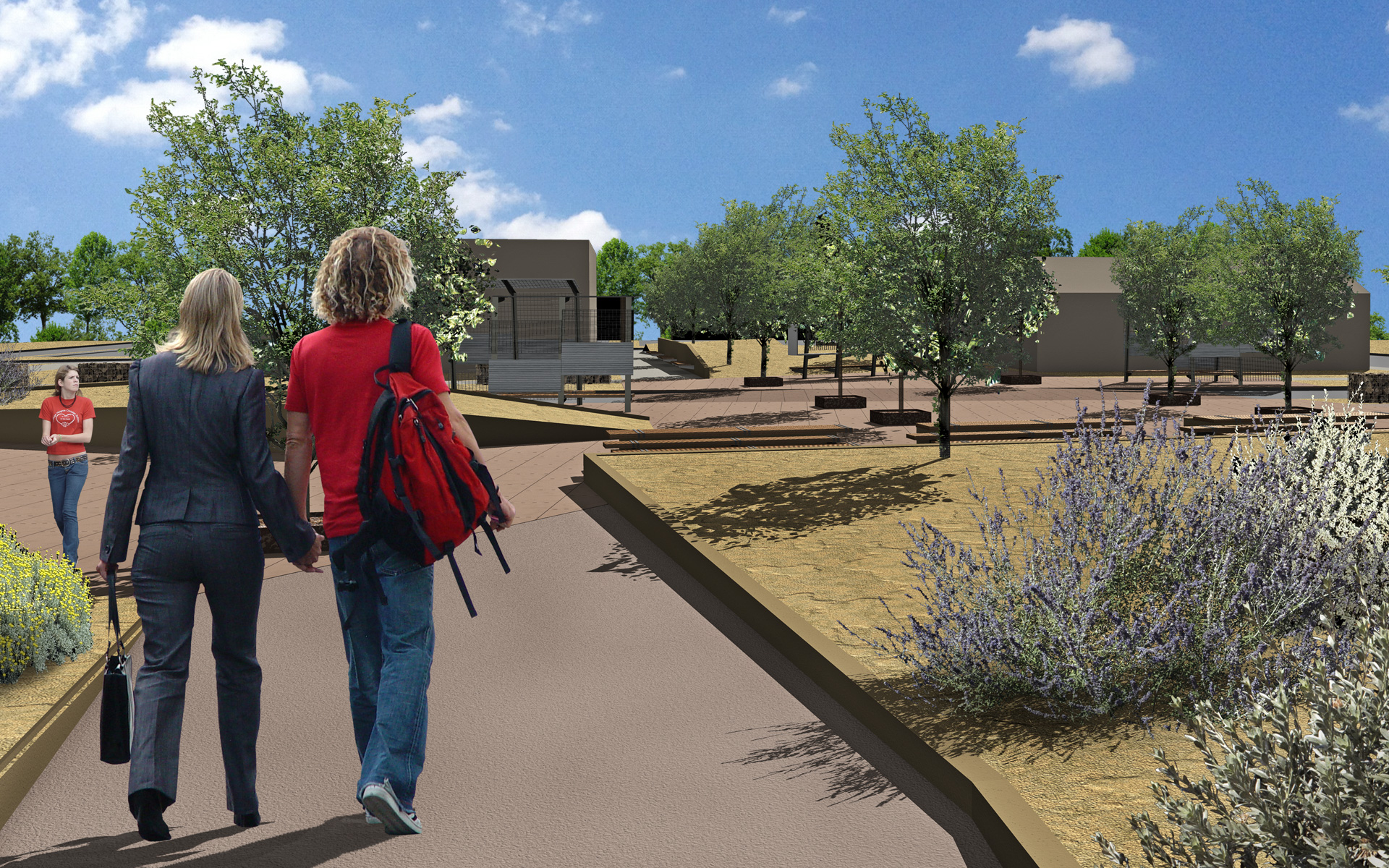
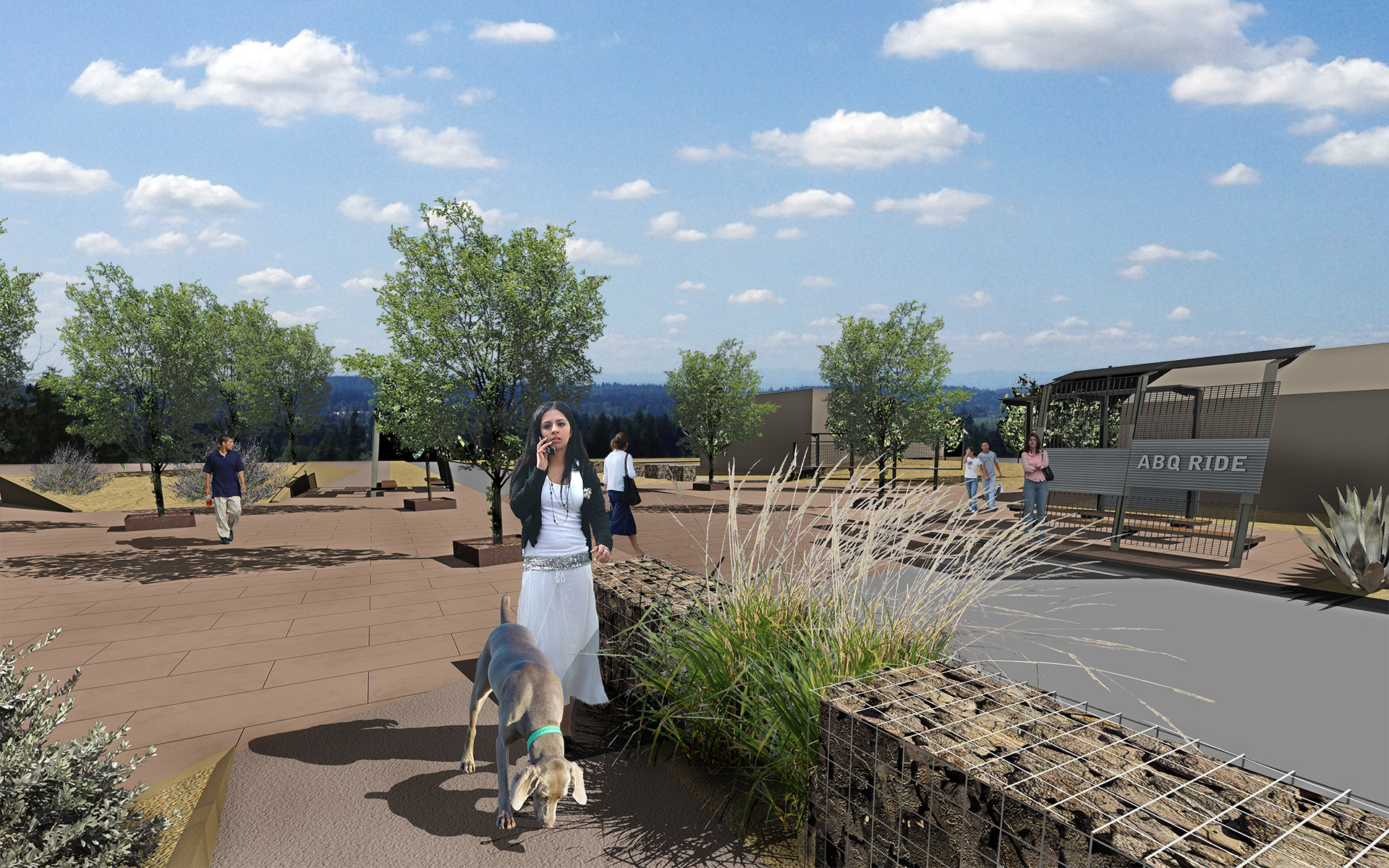
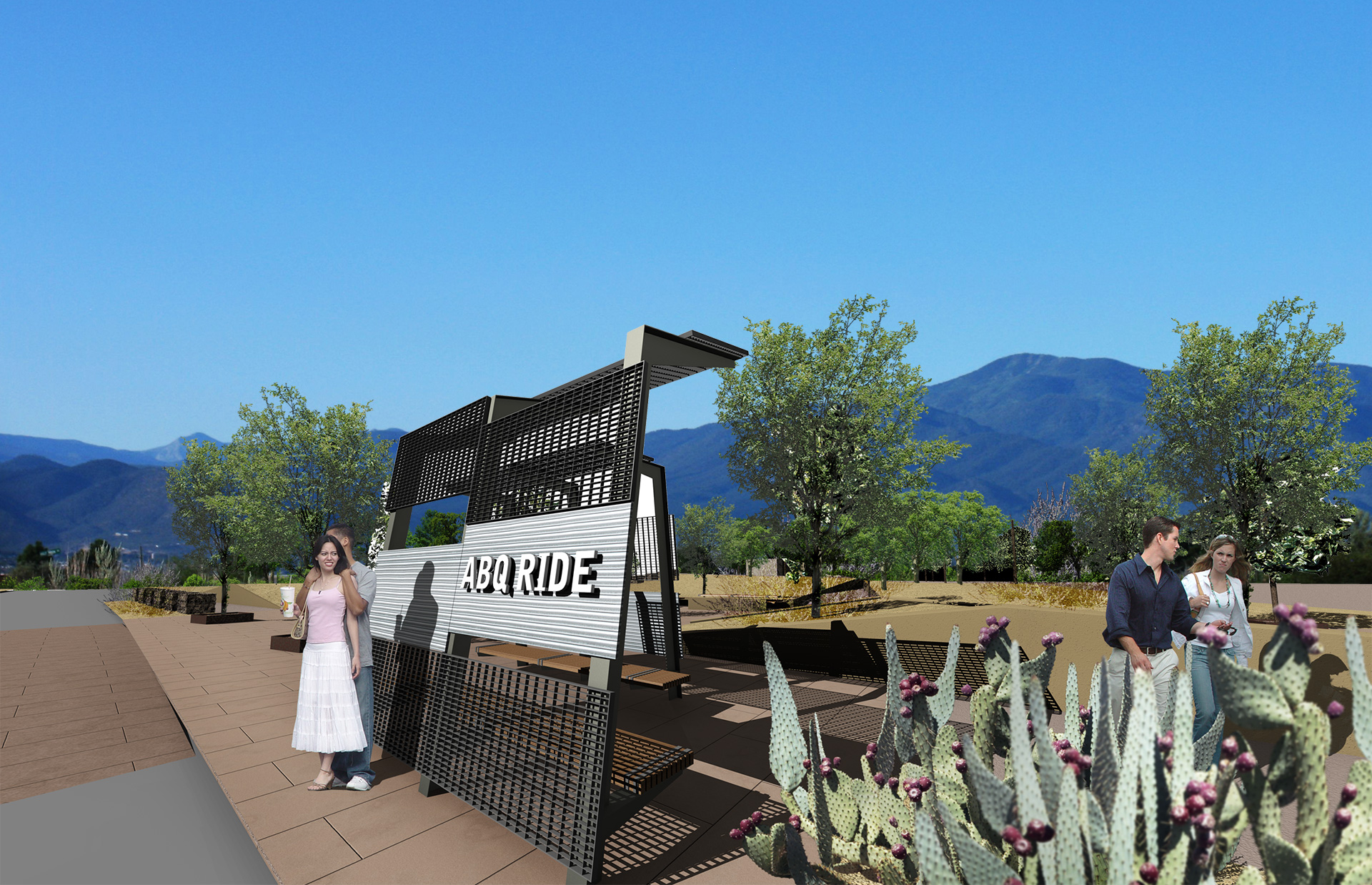
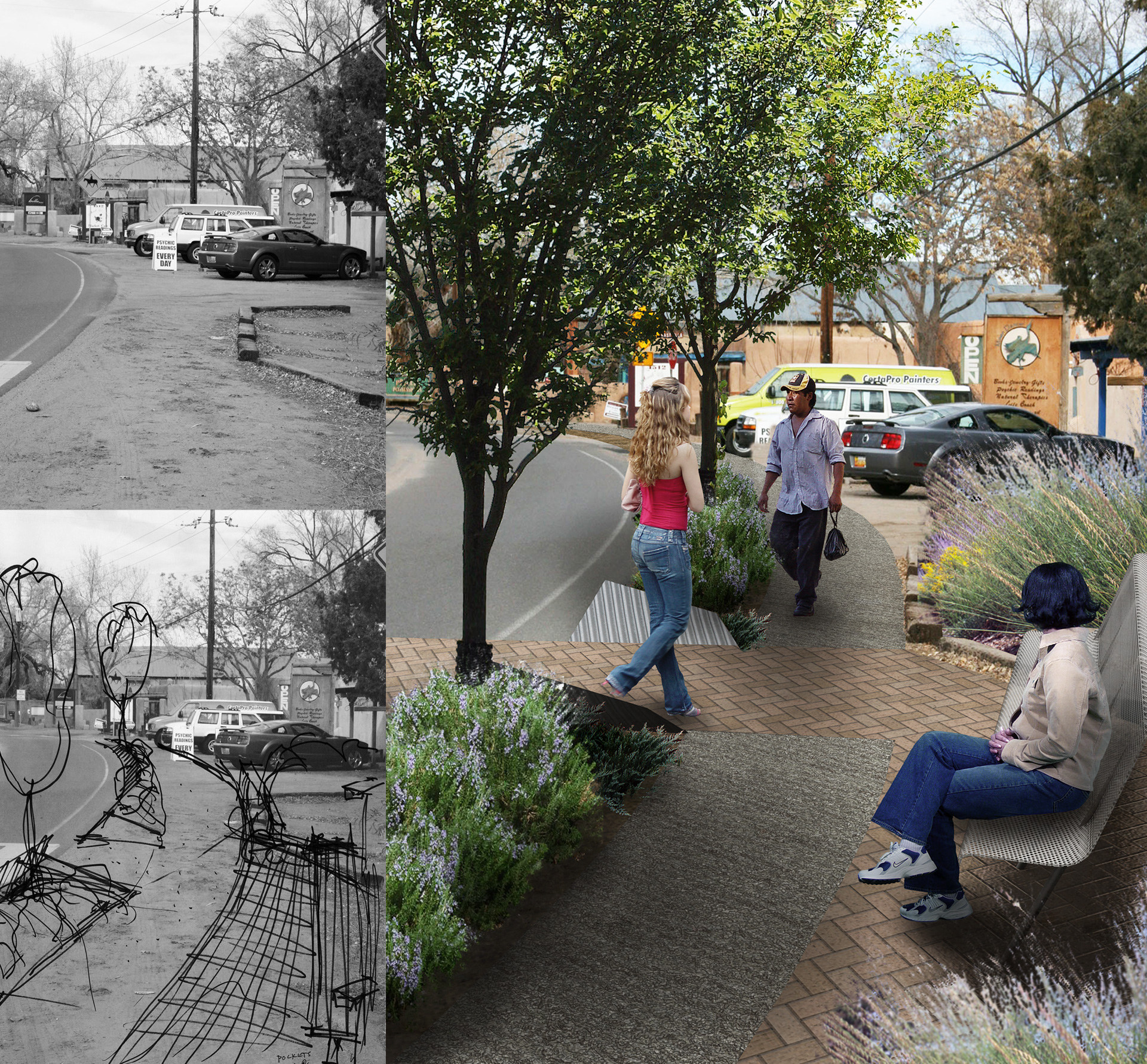
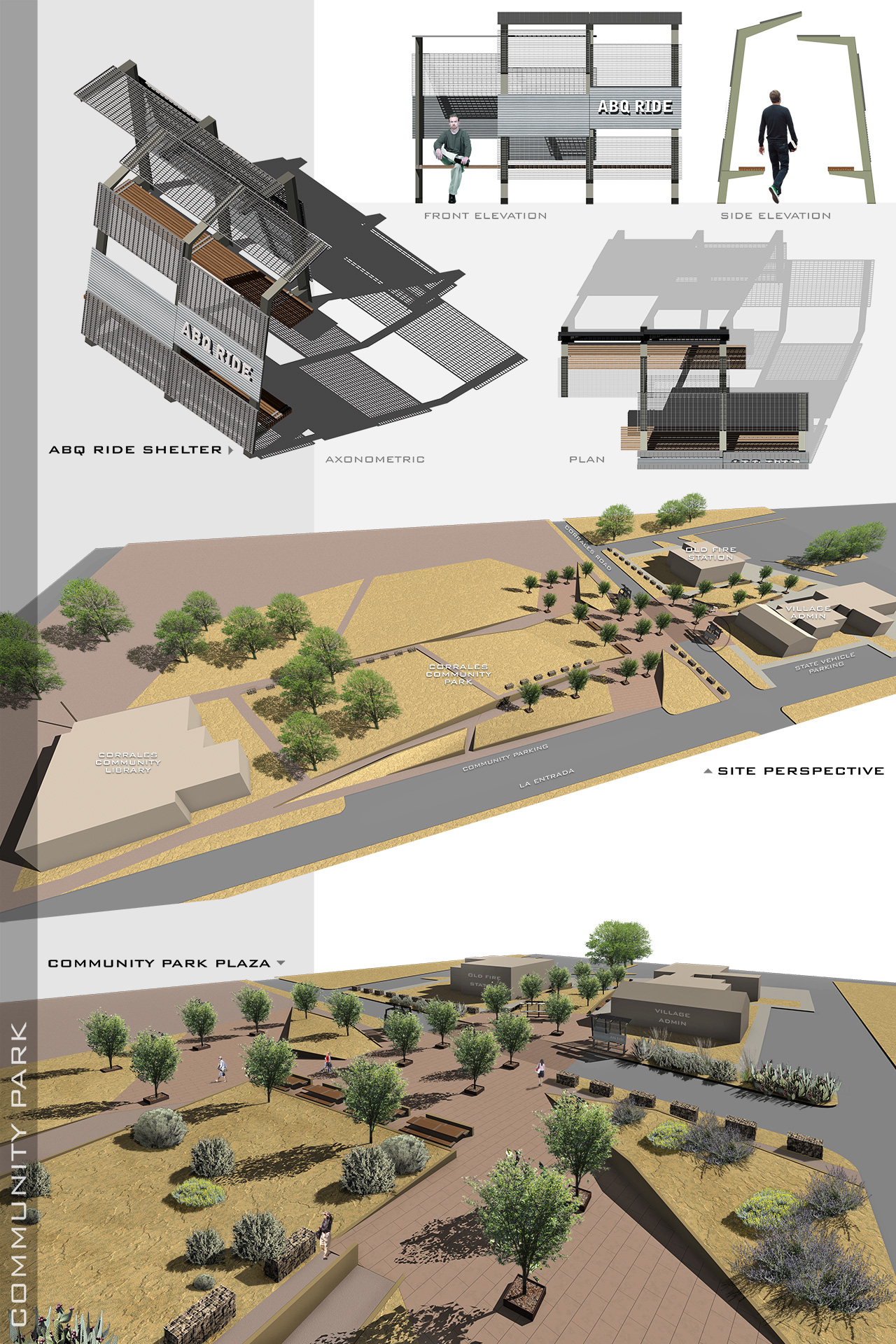
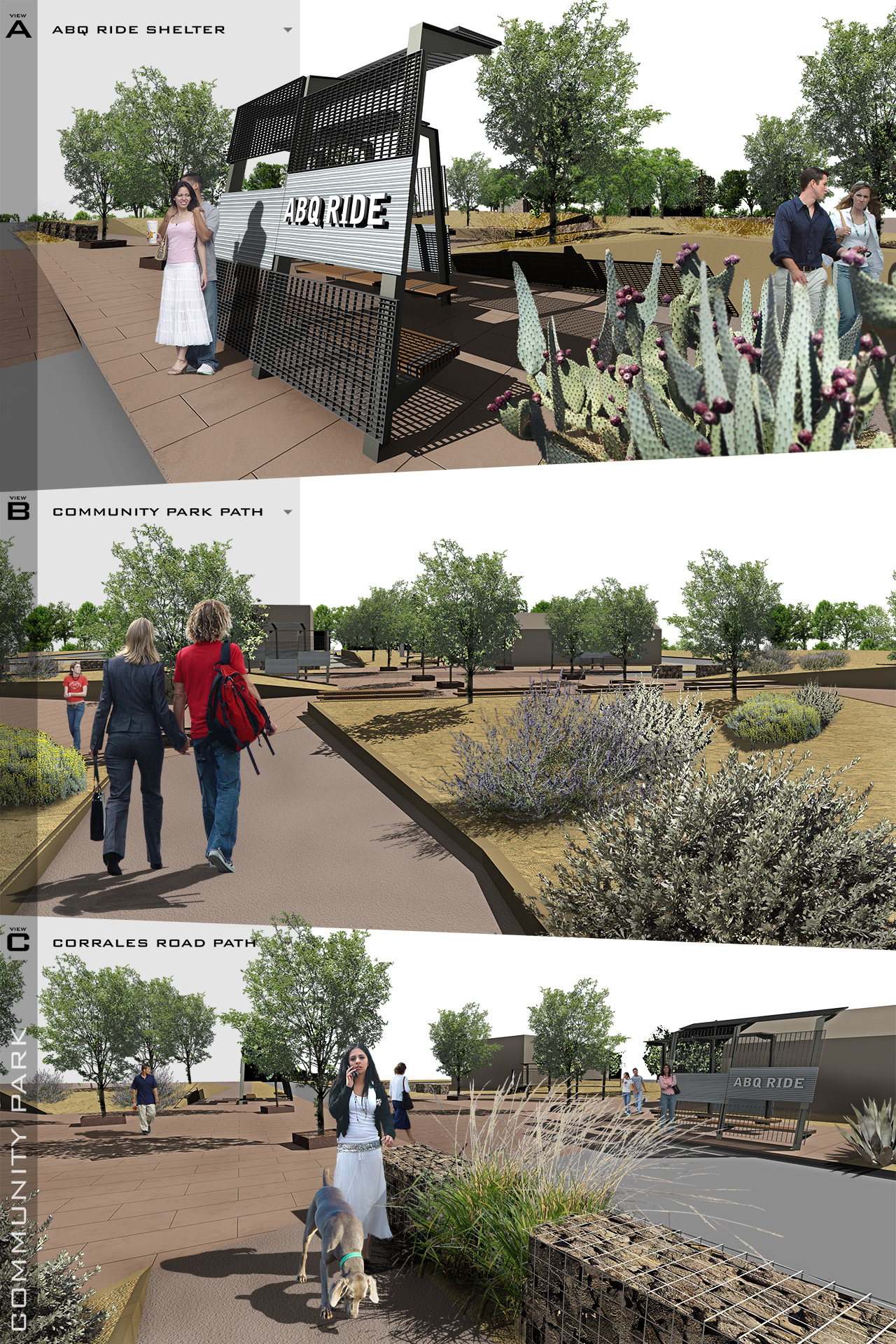
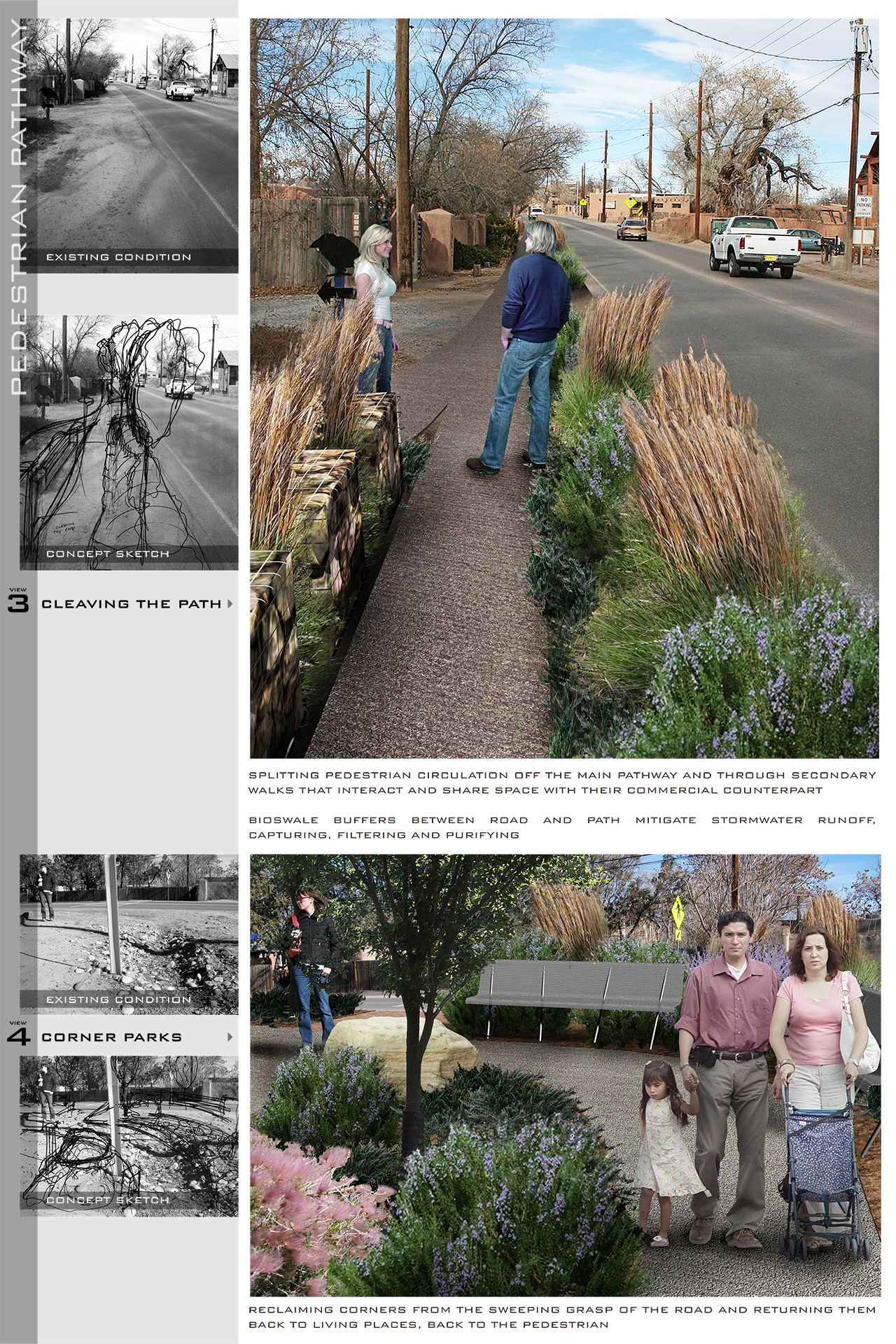
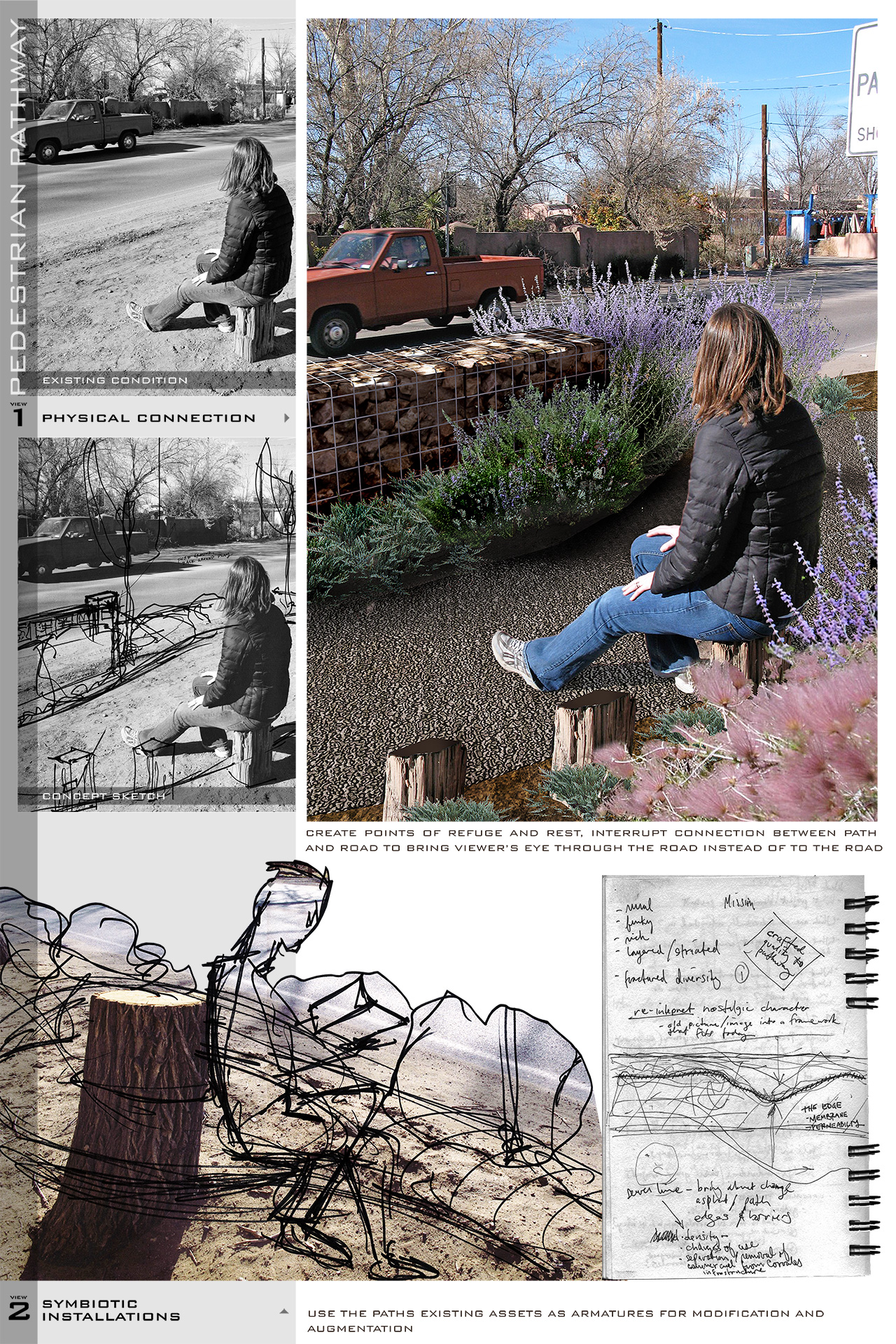
Set within the rural town of Corrales, New Mexico, this project reimagines a neglected highway shoulder as a civic landscape, transforming a space once defined by automobile dominance into one centered on pedestrian experience, cultural continuity, and environmental integration. The proposal includes a new community park and an enhanced pedestrian pathway, each contributing to a broader vision for safe, inclusive, and contextually rooted public infrastructure.


Corrales Comunity Pathway + Pedestrian Park

Corrales, New Mexico

type : proposal
status : completed in 2008

Set within the rural town of Corrales, New Mexico, this project reimagines a neglected highway shoulder as a civic landscape, transforming a space once defined by automobile dominance into one centered on pedestrian experience, cultural continuity, and environmental integration. The proposal includes a new community park and an enhanced pedestrian pathway, each contributing to a broader vision for safe, inclusive, and contextually rooted public infrastructure.

Challenge and Design Approach
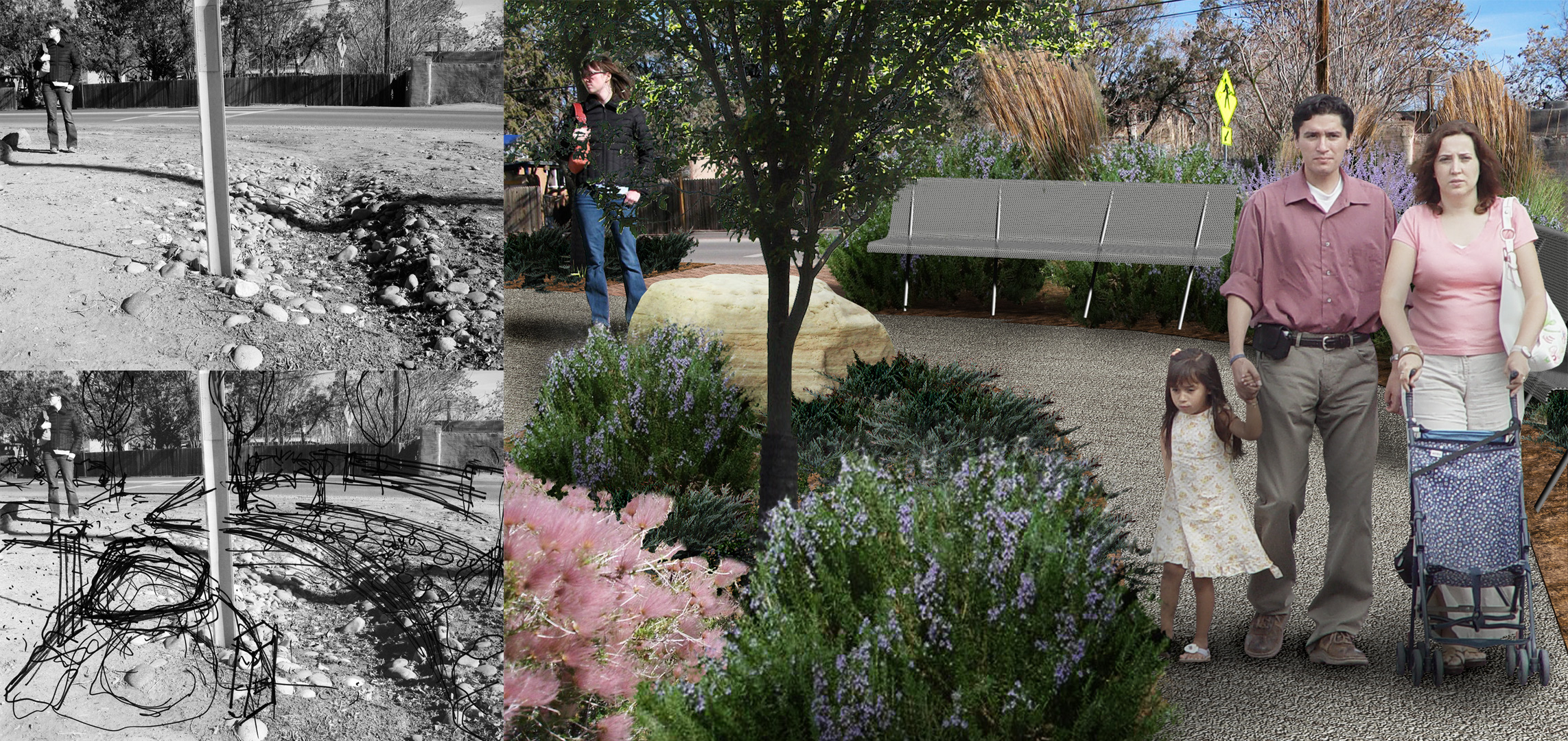
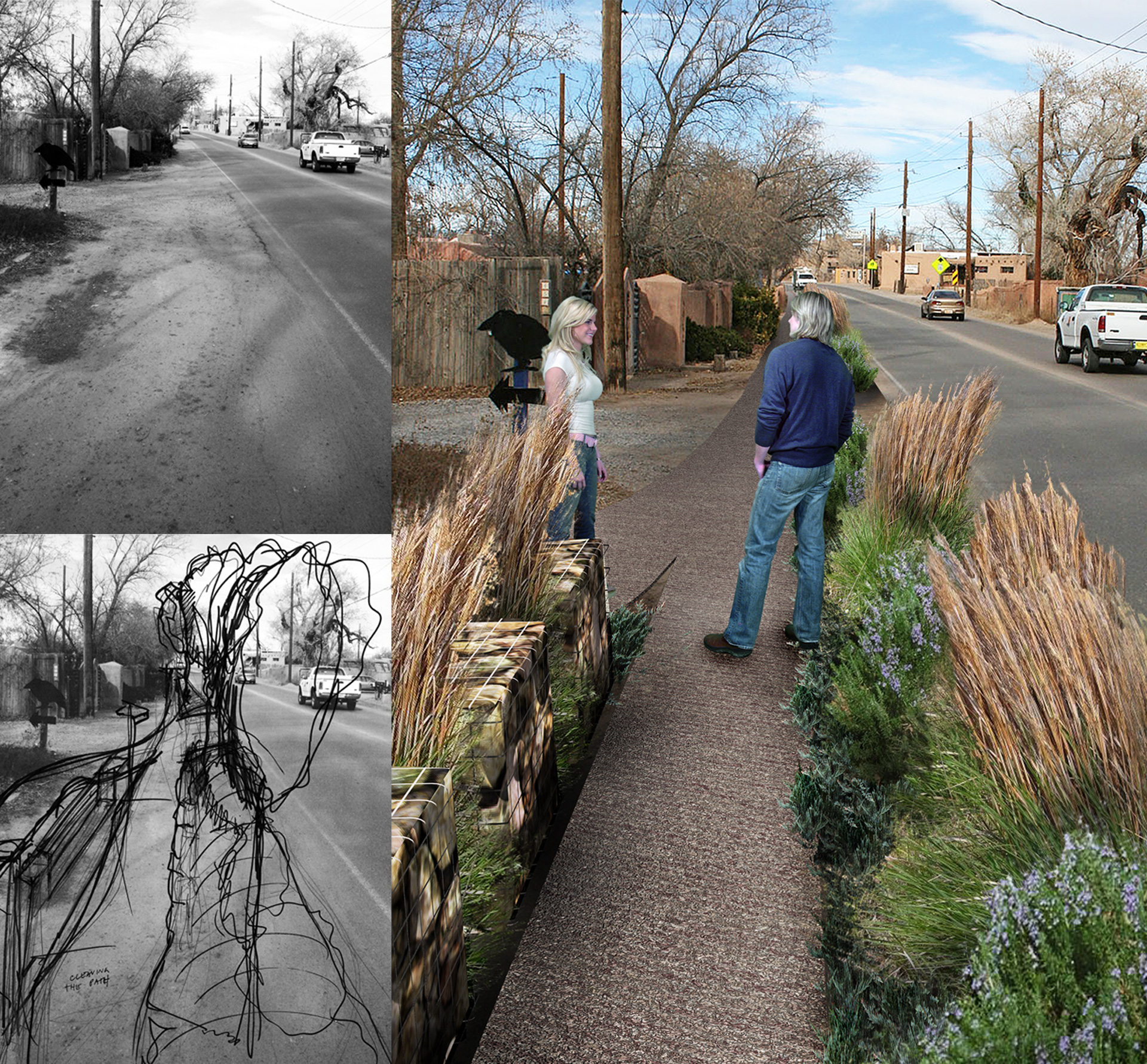
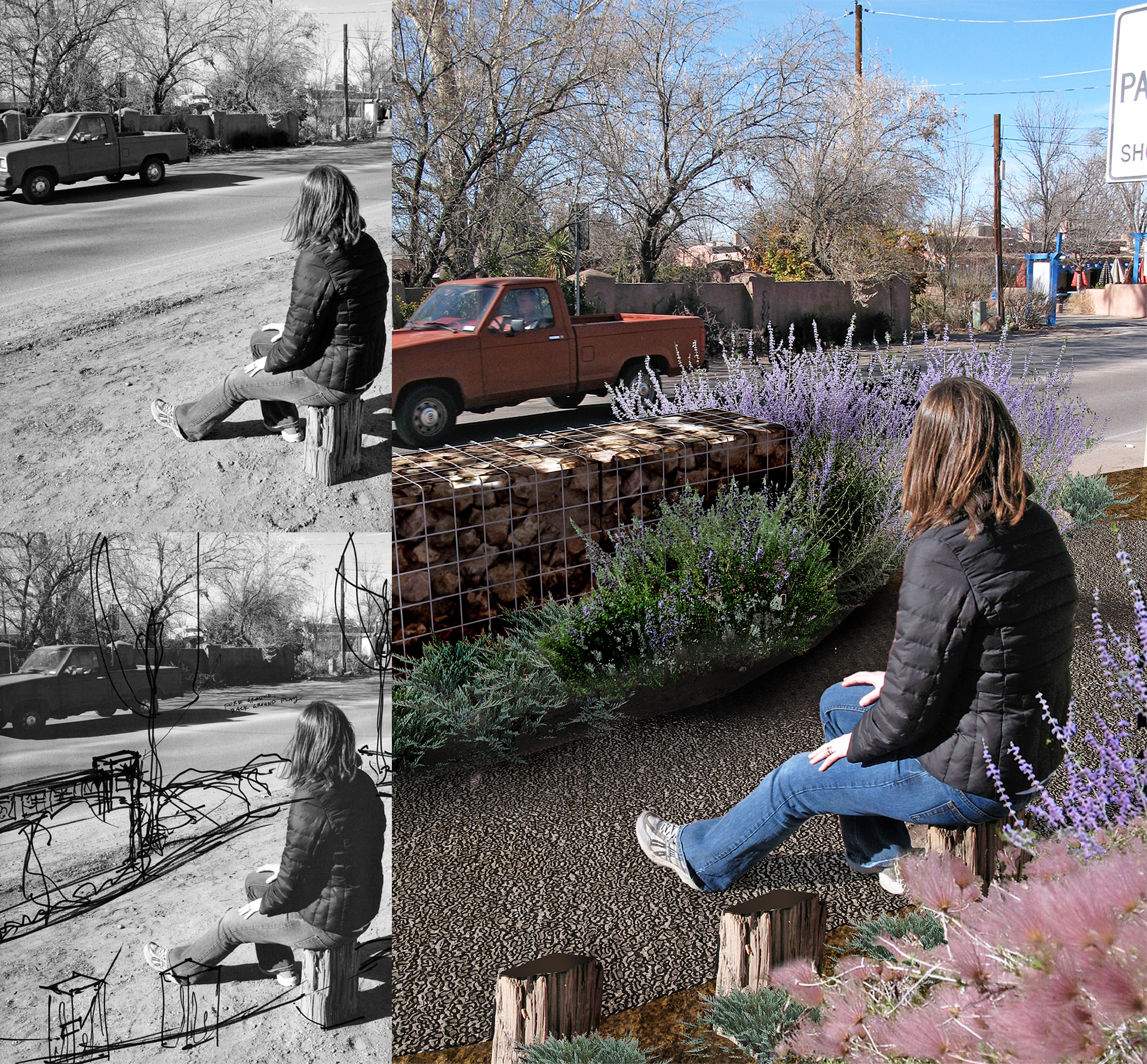
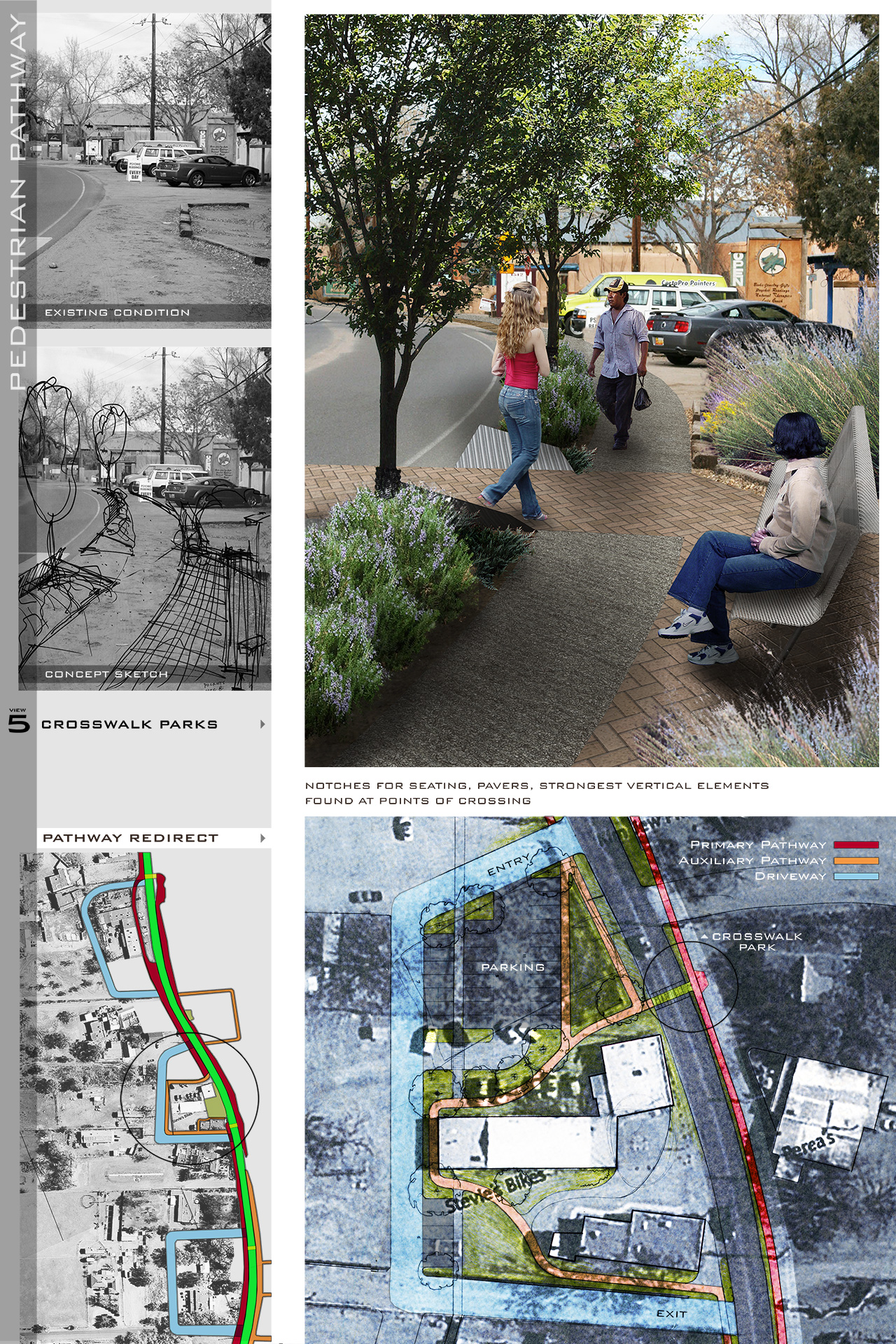
Corrales Road, the village’s main commercial spine, currently functions more as a vehicular conduit than a public street, offering little protection or engagement for pedestrians. The project addresses this imbalance by recentering the corridor around walkability and social exchange. The new pedestrian pathway replaces a hazardous, dust-worn shoulder with a carefully articulated sequence of surfaces, native plantings, seating, and landscape forms that foster both movement and momentary pause.

Vehicular access is restructured to prioritize safety and coherence. Rather than allowing unregulated pull-offs along Corrales Road, secondary automobile circulation is redirected to side streets and shared parking areas, reducing conflict zones and emphasizing pedestrian-first design at the frontages of businesses and civic institutions.

Community Park and Civic Integration
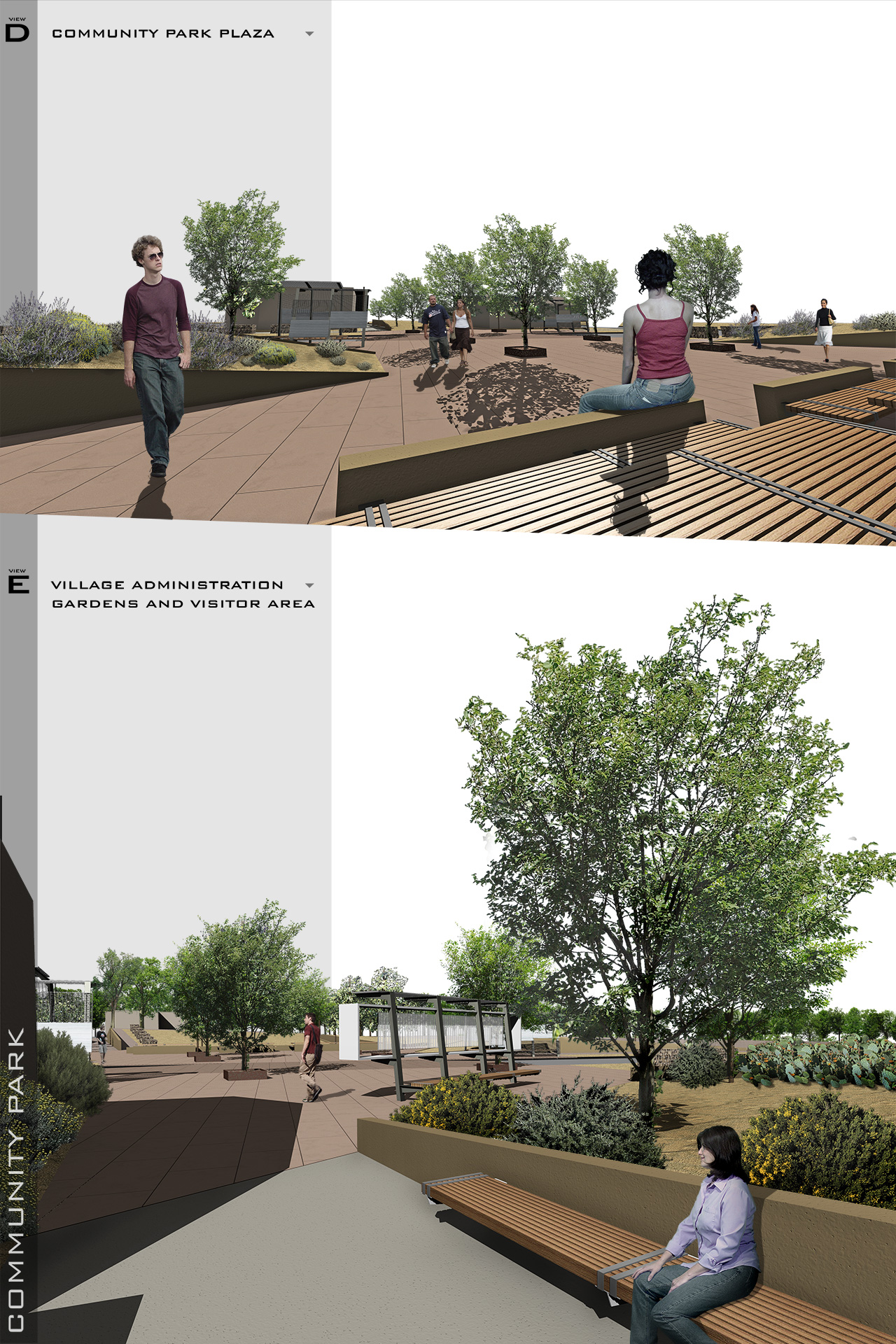
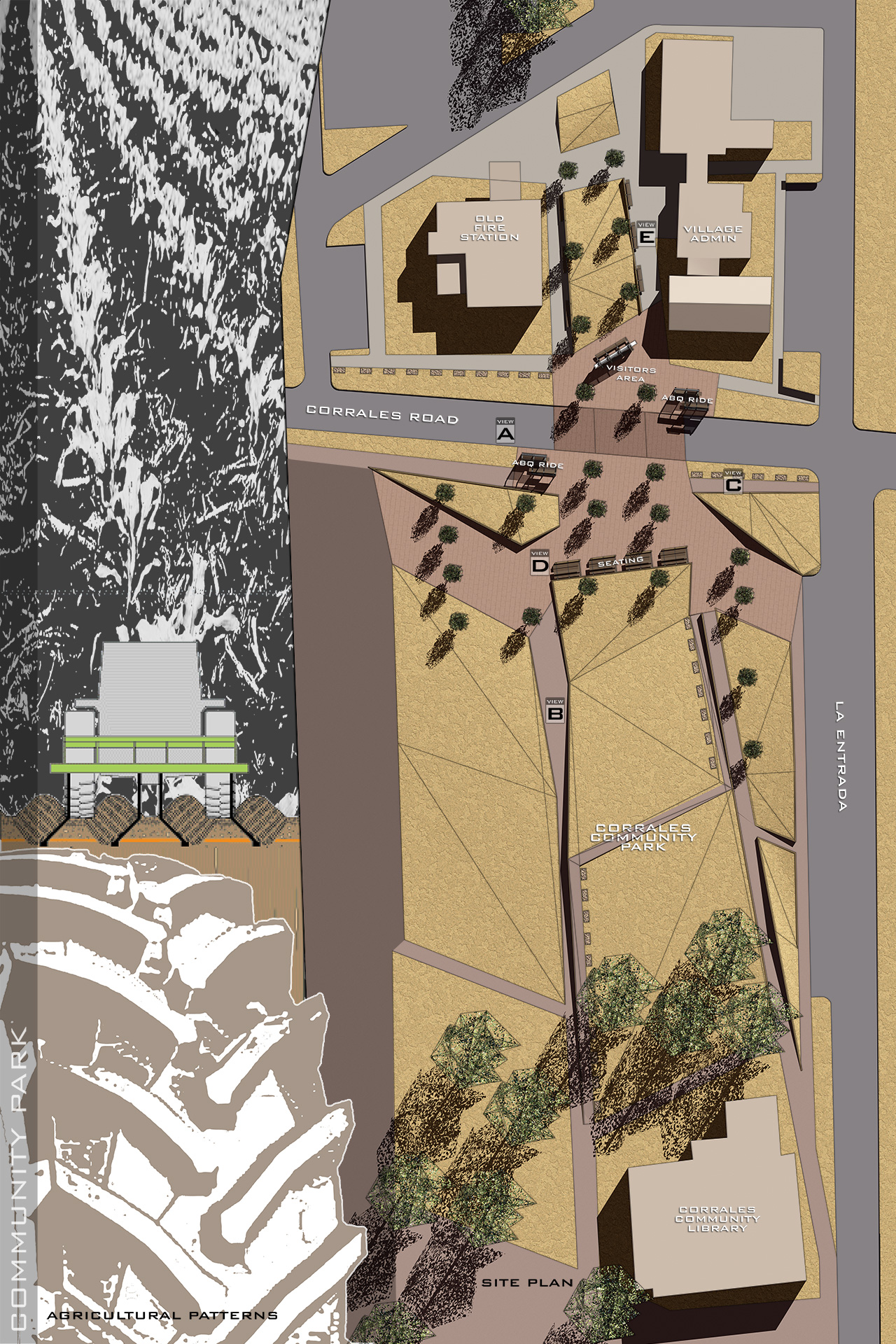
At the core of the proposal is the creation of a new community park, positioned as both a cultural anchor and an infrastructural hinge between the village library, administration buildings, and surrounding commercial activity. The park’s geometry and spatial logic are derived from traditional agricultural systems, specifically the linearity and proportion of acequia-fed farming plots. This formal translation establishes a powerful visual and cultural continuity between past and present land use practices.

The park operates across multiple scales: it supports programmed events and informal gathering, individual contemplation and community interaction. Plantings are regionally adapted and ecologically responsive, reinforcing both sustainability and visual legibility. Gabion walls, shaded seating, and simple furnishings express a material tectonic drawn from soil architecture and rural vernacular construction.

Material Strategy and Pathway Language
The design language is grounded in restraint and regional specificity. Hardscape materials include stabilized decomposed granite and textured concrete, offering durability while recalling the material palette of agricultural working ground. Custom seating, ABQ Ride transit shelters, and pathway installations adopt modular geometries that reflect mechanical forms seen in irrigation and farming equipment.

Landscape strategies merge ecological restoration with pedestrian experience, native shrubs and grasses define spatial boundaries while softening transitions between road edge and walking path. The use of gabions not only anchors seating and shade structures but subtly evokes erosion-control strategies used in nearby arroyos.

Conclusion
The Corrales Community Park & Pedestrian Pathway project is a model for how rural infrastructural interventions can operate as both public space and environmental repair. By drawing from the village’s agrarian history and material culture, the project cultivates a contemporary landscape rooted in identity, resilience, and civic generosity. What was once a fractured, vehicle-oriented corridor is redefined as a shared place, inviting, legible, and socially engaged.

  • Board_01
  • plaza
  • park_shot02
  • park_shot01
  • featured-image-2
  • concept04
  • concept03
  • concept02
  • concept01
  • Board_08
  • Board_07
  • Board_06
  • Board_05
  • Board_04
  • Board_03
  • Board_02

More Work

Architecture


  • Wichita Mobile Clinic

    anadarko, oklahoma

  • SA Architects

    cranston, rhode island

  • OKC Greenhouse

    oklahoma city, oklahoma

  • Pawtucket Day Nursery

    pawtucket, rhode island

  • Meeting Street Center for Excellence

    providence, rhode island

  • Norterly Island Nature Center

    Chicago, Illinois

  • National Institute of Flamenco

    old town plaza, santa fe, new mexico

  • Corrales Comunity Pathway + Pedestrian Park

    corrales, new mexico

  • CRCUIT

    albuquerque, new mexico

  • The Construction of Art

    providence, rhode island

  • Santa Fe Univeristy School of Fine Arts

    Santa Fe, New Mexico

Design + Fabrication


  • Flatpack Foldable Structural Connections

    rhino, grasshopper, mild steel

  • Renegades

    Fred Jones Jr Museum of Art

  • Surface Flux

    python, c#, grasshopper, pla, wood, steel

  • Carbon Fiber Connections

    grasshopper, rhino, pla, carbon fiber

  • Acoustic Diffusion Panel

    grasshopper, rhino, cnc, rigid insulation

  • Hyperbolic Bending

    grasshopper, rhino, laser cut acrylic, bristol board

  • Filtration : Infiltration

    python, grasshopper, rhino, 3d printing

  • Recursive Paneling

    laser cut mylar

  • Sweet Crude

    python, c#, grasshopper, wood, plasti-dip, carbon, gelatin

  • Ruling Lines

    laser cut cell cast acrylic, stainless steel braided wire

  • Volumetric Aggregations

    processing, grasshopper, rhino, cast acrylic, black walnut, hickory

  • Cellulose Bookcase

    pine, black walnut, compressed wood fiber board, stain

  • Asher Chair

    rhino, pla, birch plywood

  • Andraditic Mass

    arduino, firefly, rhino, 3d printed pla, baltic birch plywood

  • Cholla

    grasshopper, rhino, black walnut

  • Folding Attractors

    grasshopper. rhino, white museum board

  • Grain Chair

    rhino, cnc milled birch plywood

  • Tracking Parallelograms

    grasshopper, rhino, hickory

  • Infiltration Table

    processing, spalted birch plywood, poplar, enamel, lacquer

Art + Code


  • Prairie Fire

    acrylic, ink, plywood

  • Surface Flux

    python, c#, grasshopper, pla, wood, steel

  • Dixieland Death Cult

    acrylic, plywood

  • Approximation of a Generation

    private tremendous

  • Elemental Worlds

    science museum oklahoma

  • Gonzo Cubes

    solidity, html, css, javascript, illustrator

  • A Line of Force

    arduino, grasshopper, firefly, java, plywood

  • The Drift

    html, css, javascript

  • Gear Institute

    illustrator, photoshop, php, css, html

  • Prism

    unity, c#, spine2d, illustrator

  • Squall

    petroglyphs national monument, albuquerque, new mexico

  • Galileo’s World Interactive

    c#, unity3d, illustrator, photoshop

  • Steel + Light

    convergence arts festival masterworks project, providence, rhode island

  • The God of Skiing

    book design

© [wpsos_year] Ken Marold USA, Inc. All rights reserved.
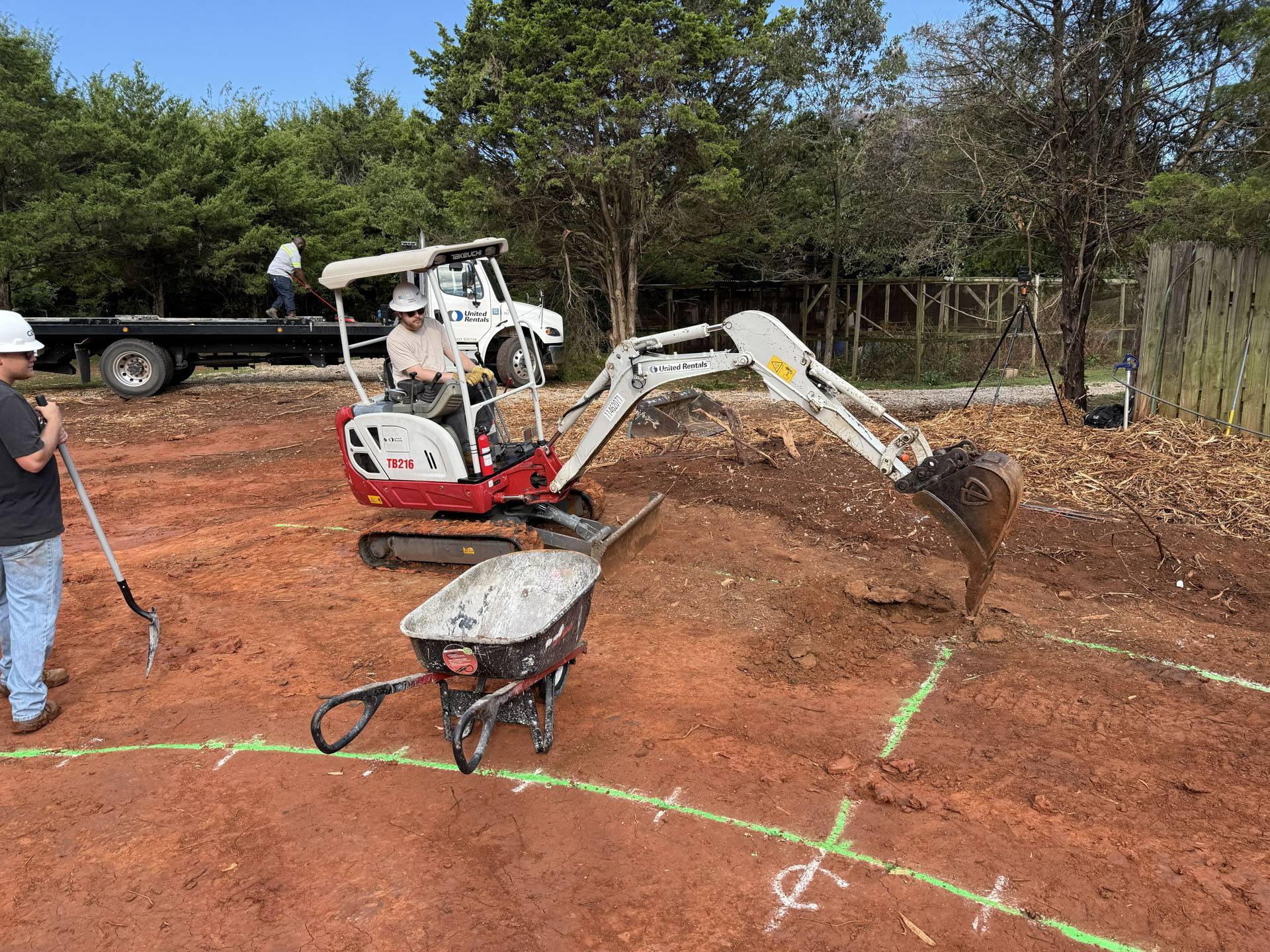
Continue reading

  • 1
  • 2